
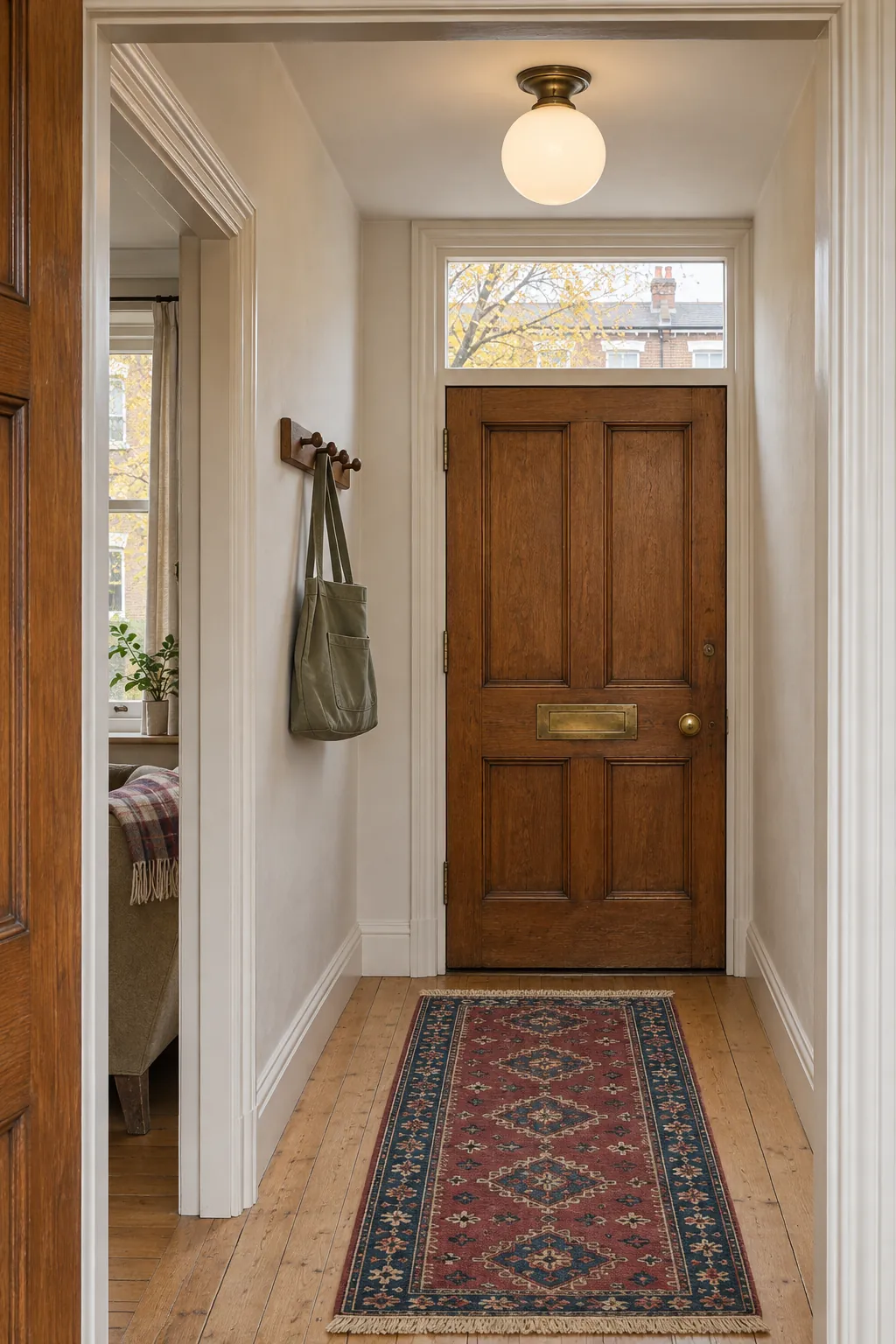
A hallway can feel crowded as soon as one coat sleeve or the corner of a console catches your bag. Walk it once with the front door open and again with the hall lights on. Then choose where you have room to work. The floor, the wall you see from the entrance and the ceiling above the pinch point can each be a good place to start. A little color in the right place can bring out the character of an old rug, a curved light shade or a strip of worn timber.
Lay a Rust and Indigo Runner
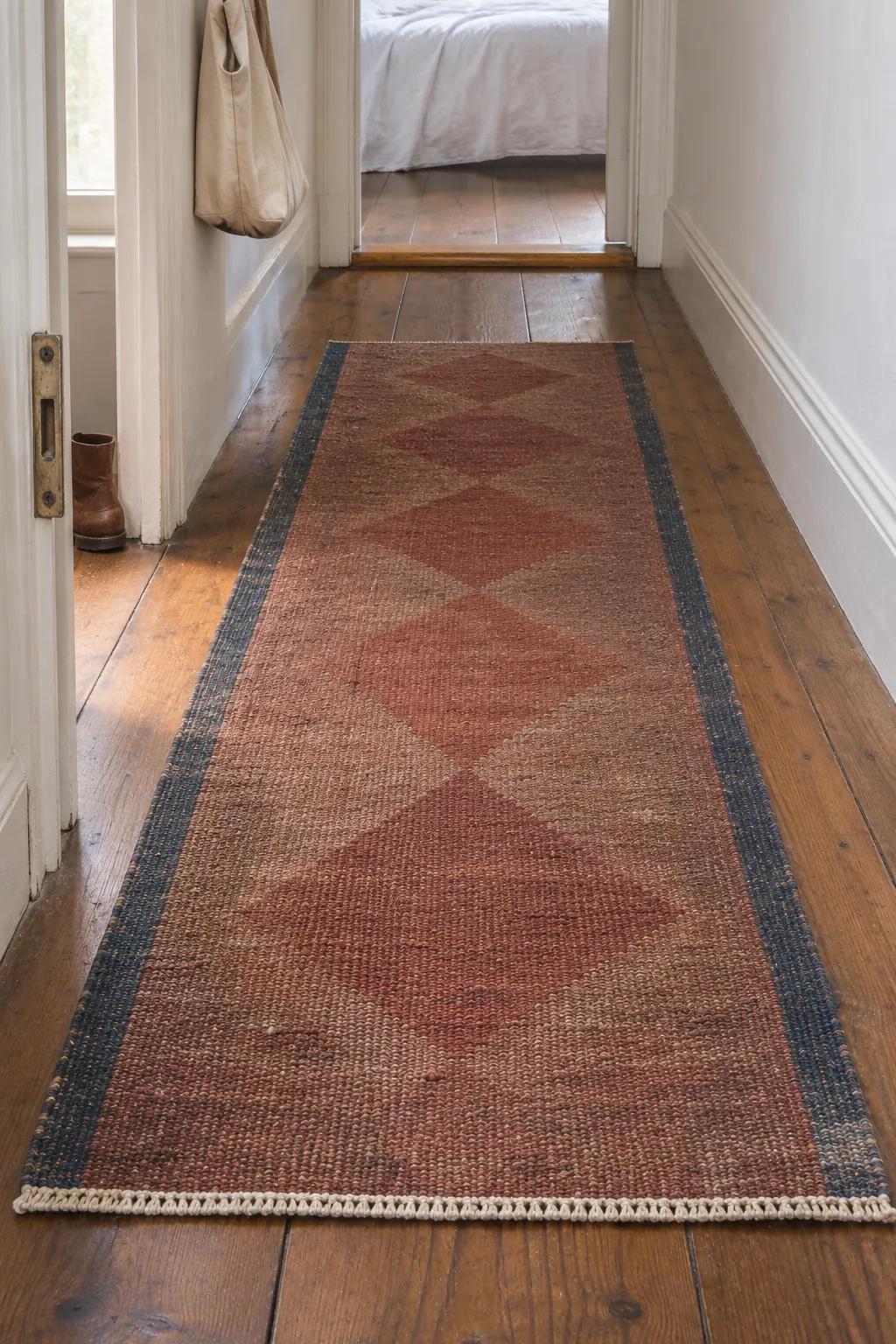
A runner can give a narrow corridor most of its color while keeping the walls quiet. Look for a flat weave with a little rust or faded red and enough indigo to pick up the darker tones in old floorboards. Measure with the doors open and leave a strip of visible floor on both sides, then add a nonslip pad cut just inside the rug edges.
Paint a Deep Green Lower Wall
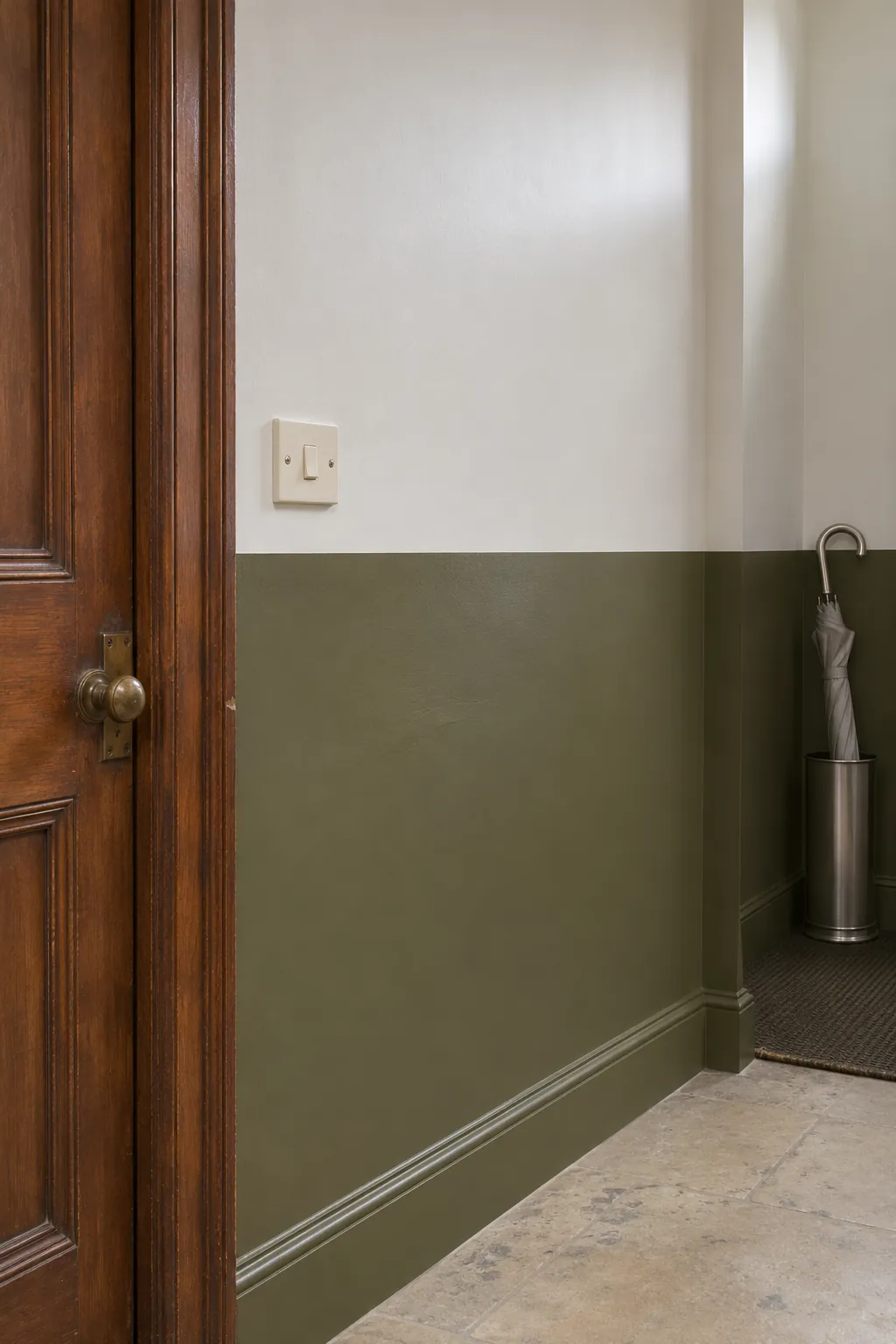
Olive paint below a picture rail or a straight taped line brings some of the warmth of an older home to blank plaster. Set the line by eye against the switches and trim so it clears the switch plates cleanly. A washable finish makes sense near the entry where bags and shoes brush the wall. Try a patch after dark under the light you actually use.
Fit a Milk Glass Ceiling Light
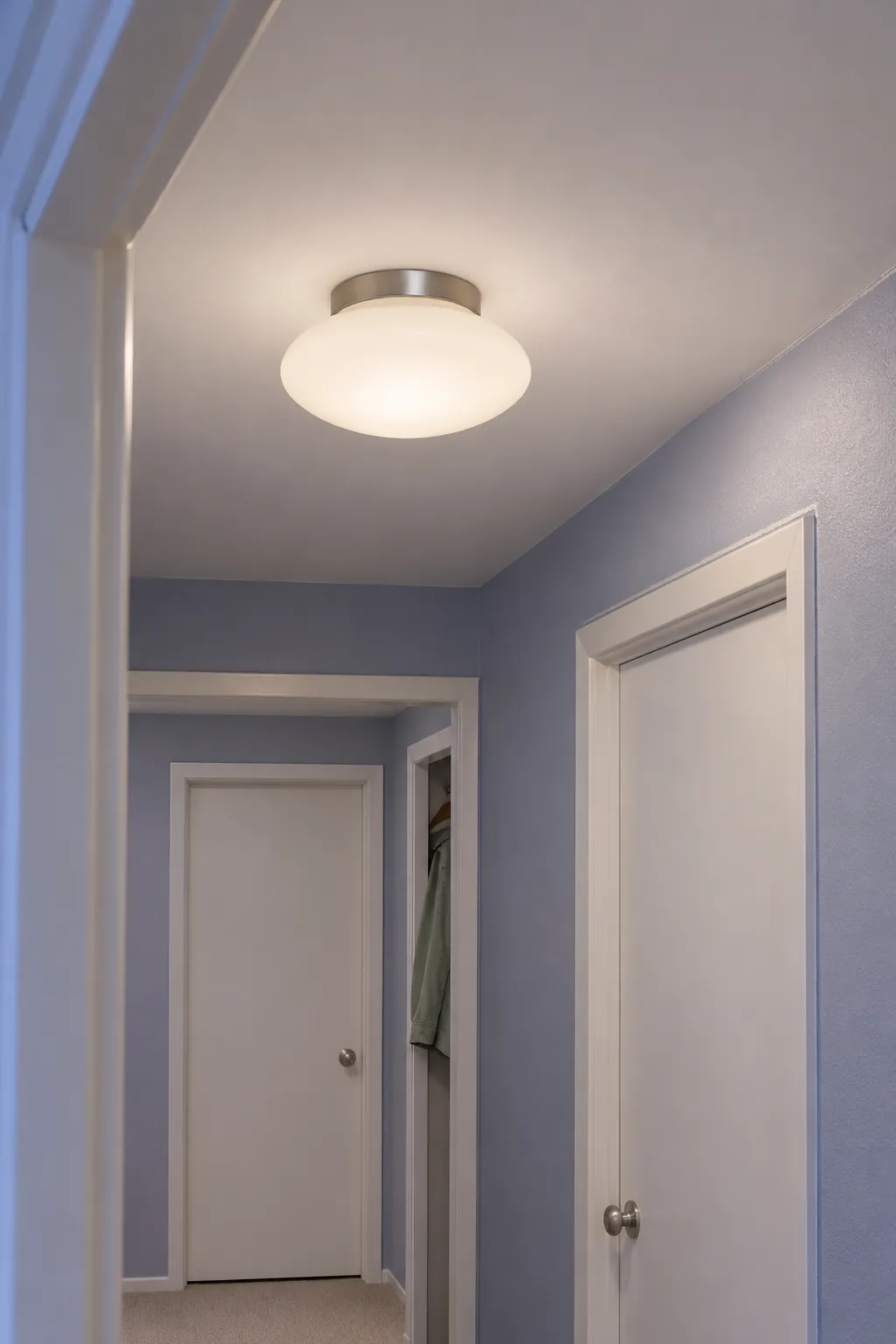
A milk glass globe gives a low ceiling the rounded shape of a vintage pendant with less drop. Check the height of the opened front door and the tallest person who uses the hall before you choose a fixture. Look for an opal shade that hides the bulb from directly underneath. In a long hall, check whether a single fixture leaves the far end in shadow.
Hang a Rounded Rattan Mirror
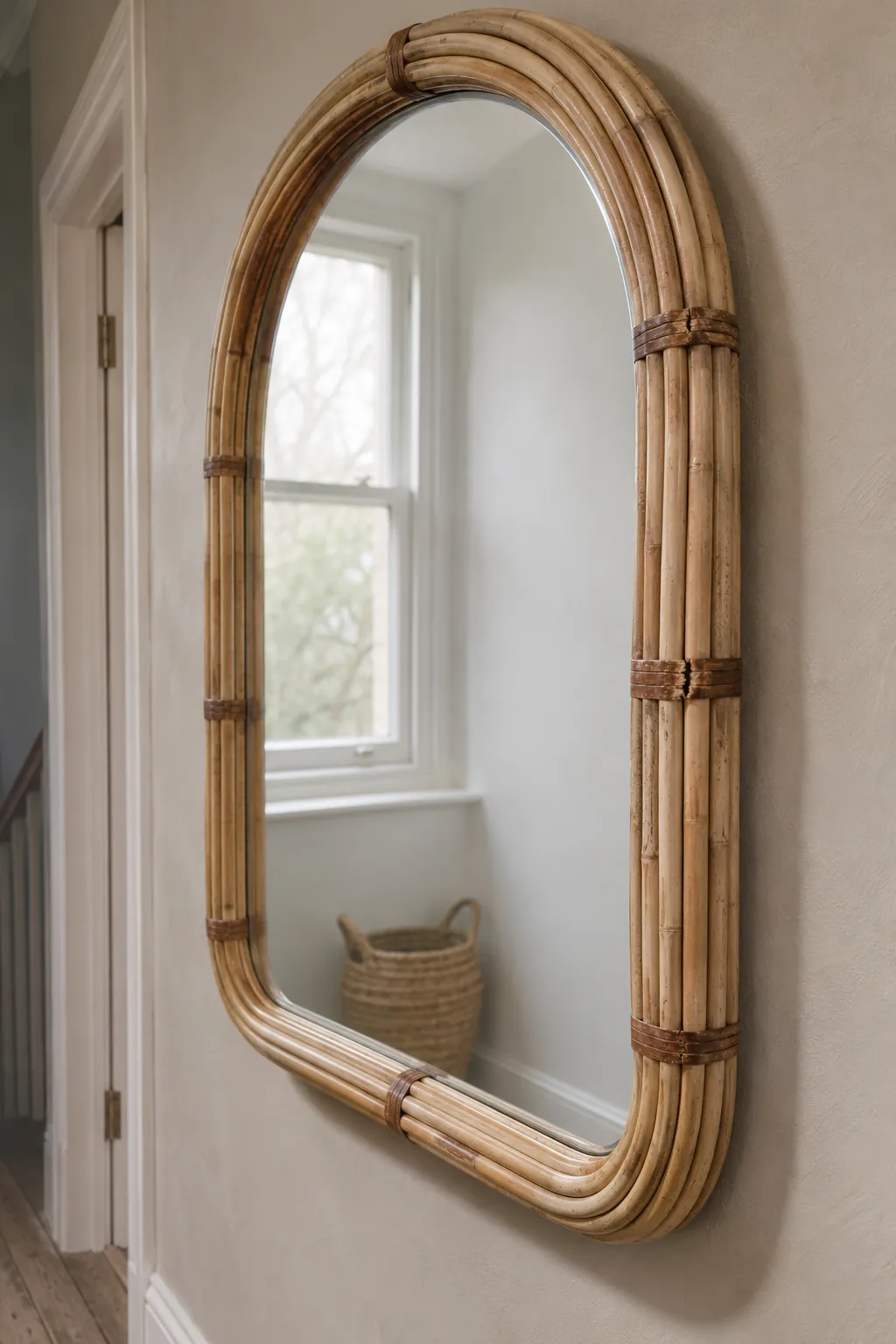
A thick rattan frame brings a woven texture to a short hallway without using floor space. Hang it where the reflection catches a light wall or part of a window. Check the view from the front door, since a mirror doubles whatever sits across from it. Choose a spot where a swinging door handle cannot hit the frame.
Set a Walnut Console in a Recess
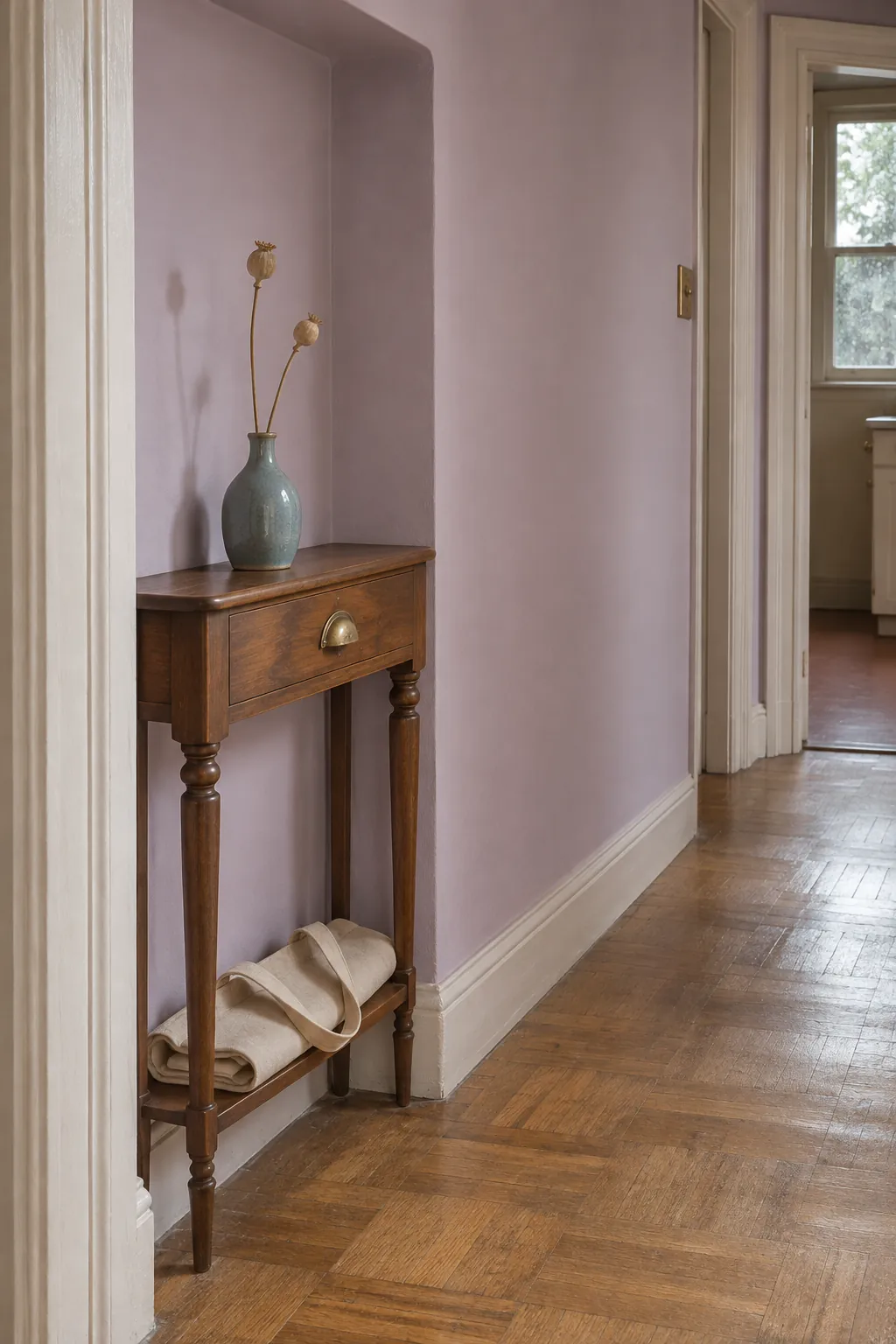
A shallow walnut console looks more at home in an alcove where the side walls frame its silhouette. Mark its depth with tape before shopping and walk past with a laundry basket. A slim drawer gives keys and spare batteries a home when the surface needs to stay clear.
Paper the Wall at the End
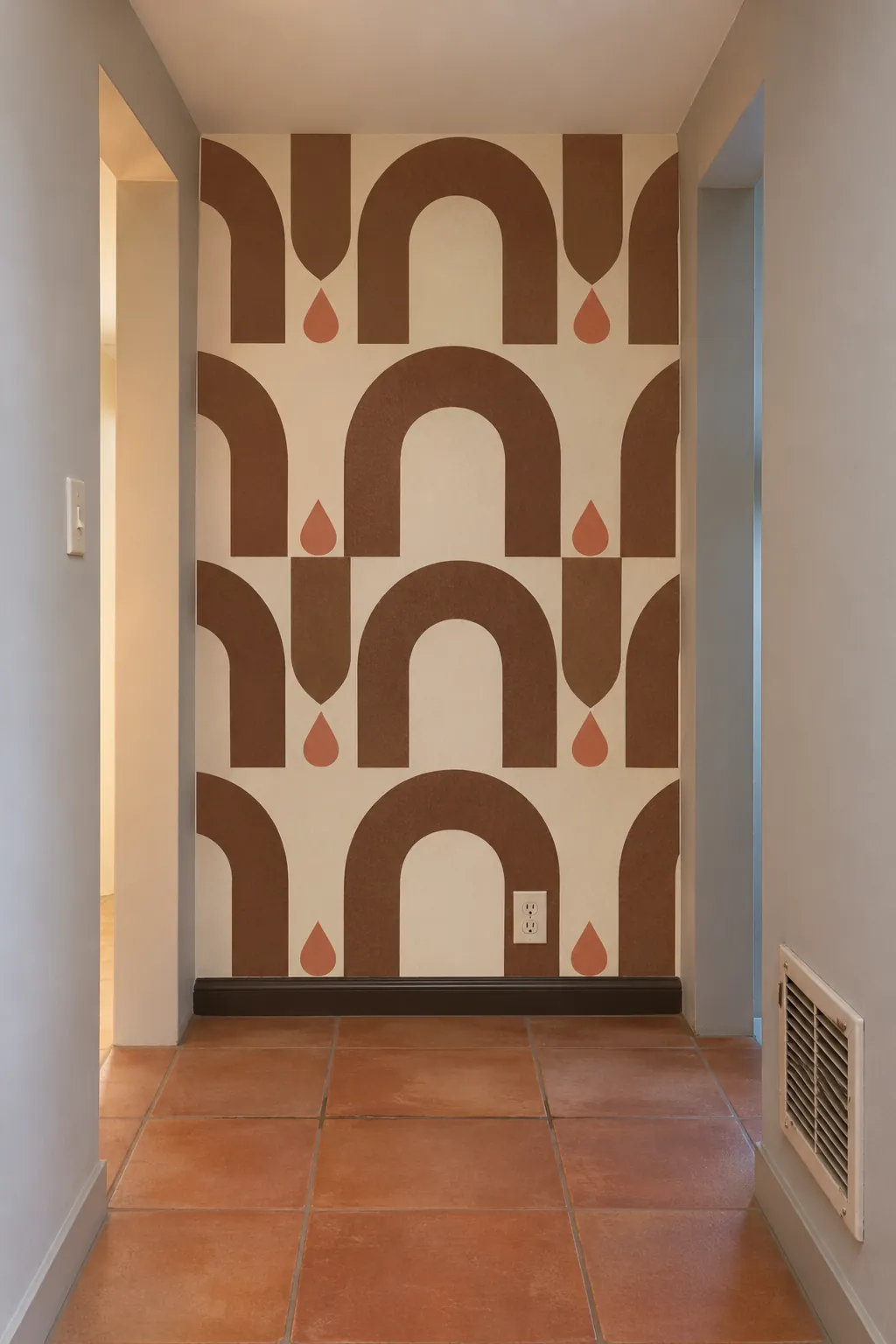
A geometric repeat on the back wall creates a focal point that reads from the entrance. Try rounded brown and cream shapes at a scale you can recognize from across the hall. Start the layout from the middle of the wall if the end is symmetrical, and check where the pattern lands at both corners before you hang the first strip.
Pick Out Doors in Tomato Red
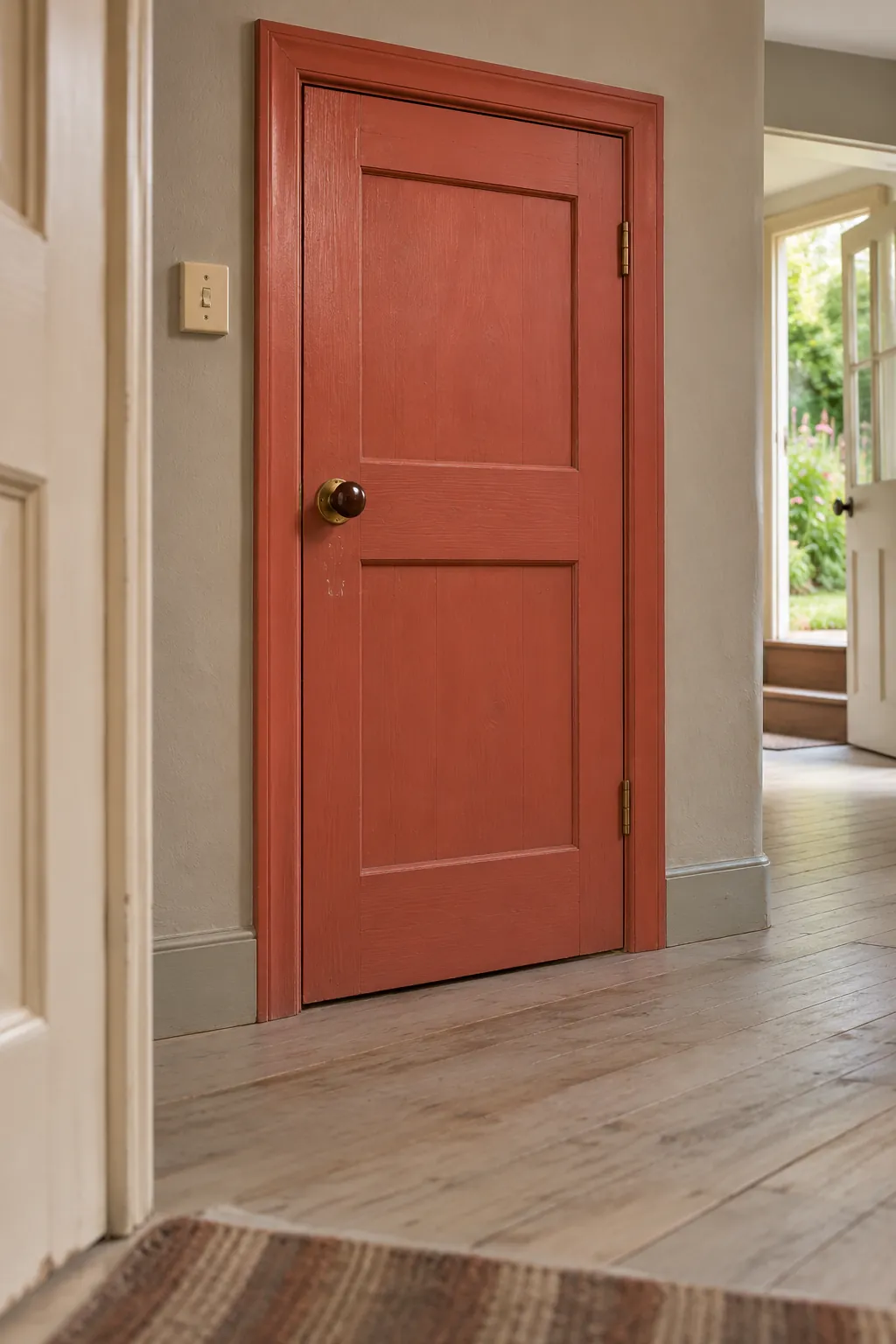
Pick one door you want to draw attention to, such as the one to a coat cupboard at the end of the hall. A little red reads like a strong accent against light walls, especially if the door has simple panels.
Look at a swatch next to the floor at different times of day to see whether the red leans pink or rusty in your light. On a raised panel, test the finish in the recess to see how much it darkens there. Match the paint system to the door material and existing finish.
Use a Checkerboard at the Threshold
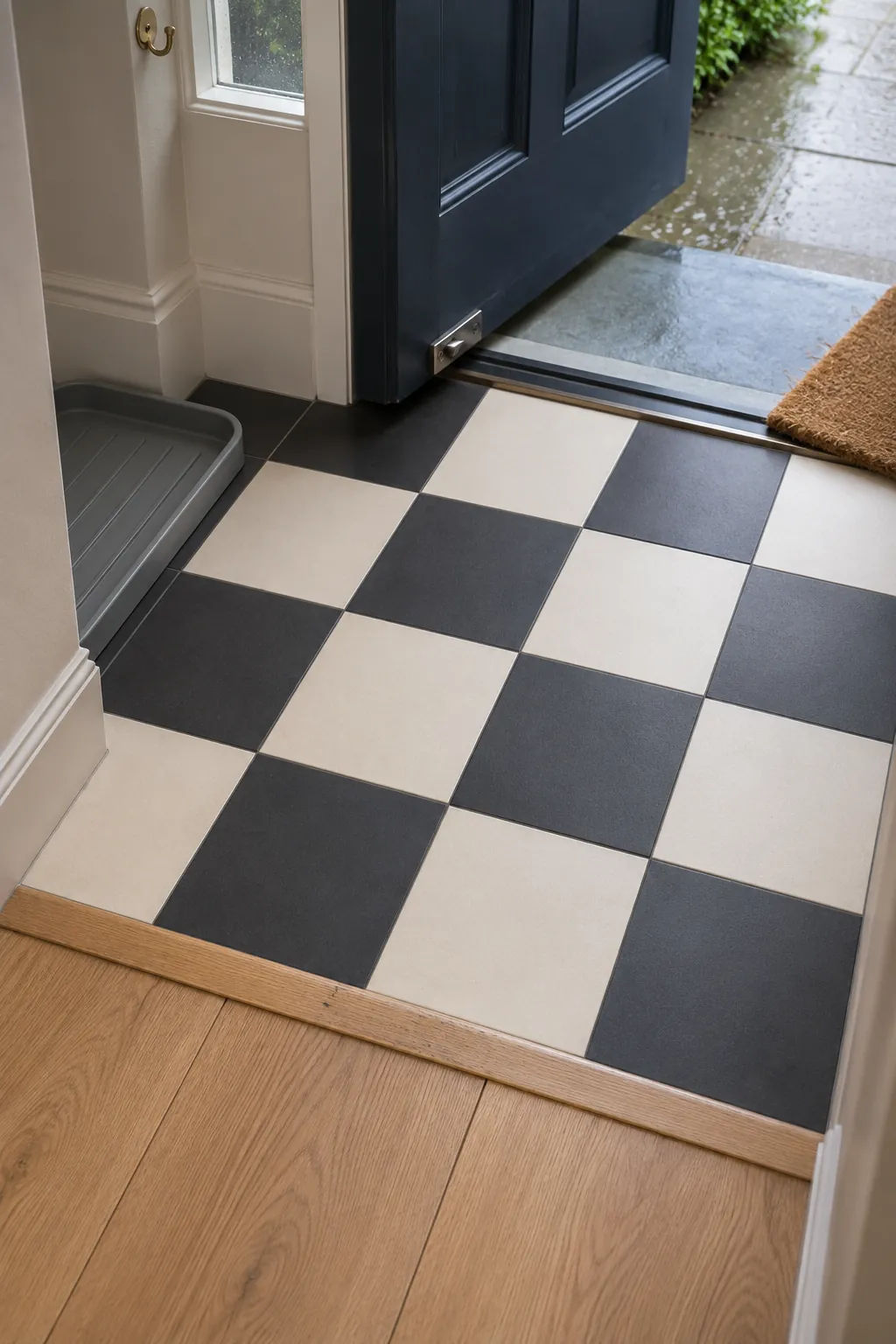
Black and cream squares land well in a small entry because the front mat and the end of the flooring give the pattern a clear boundary. Lay out the grid dry to see which cuts fall along the most visible edge. If the floor transitions to wood, use a flush or gently beveled transition suited to both surfaces. Check the flooring for wet traction where people come in with damp shoes.
Put a Peg Rail Beside the Door
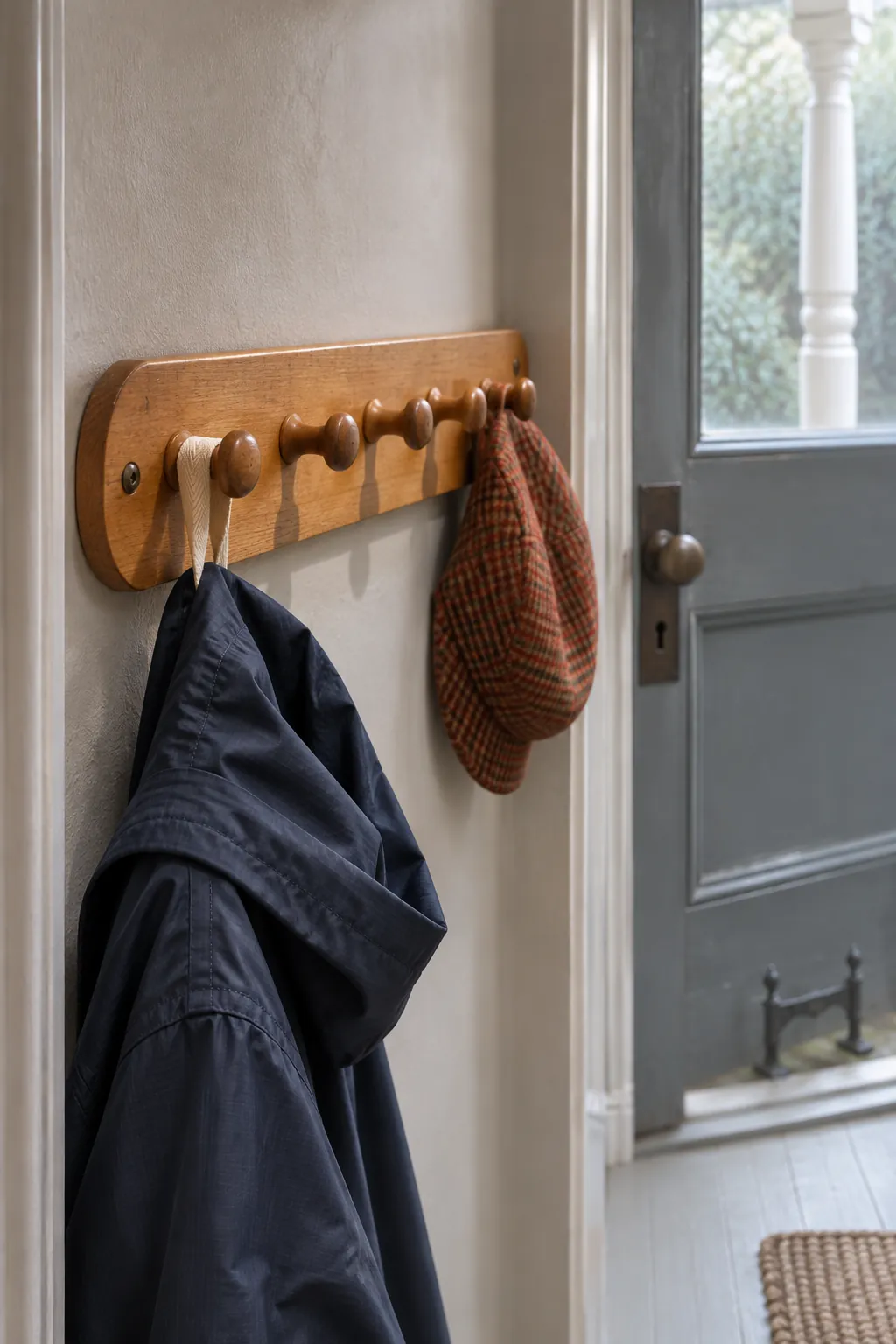
A wooden rail with chunky pegs keeps daily coats at arm height and adds the shape of old school cloakroom fittings. Test the location with your fullest coat hanging up before you drill. If the sleeves lean into the walkway, move the rail to a recess or use it for lighter items like hats and canvas bags.
Aim a Brass Sconce at the Wall
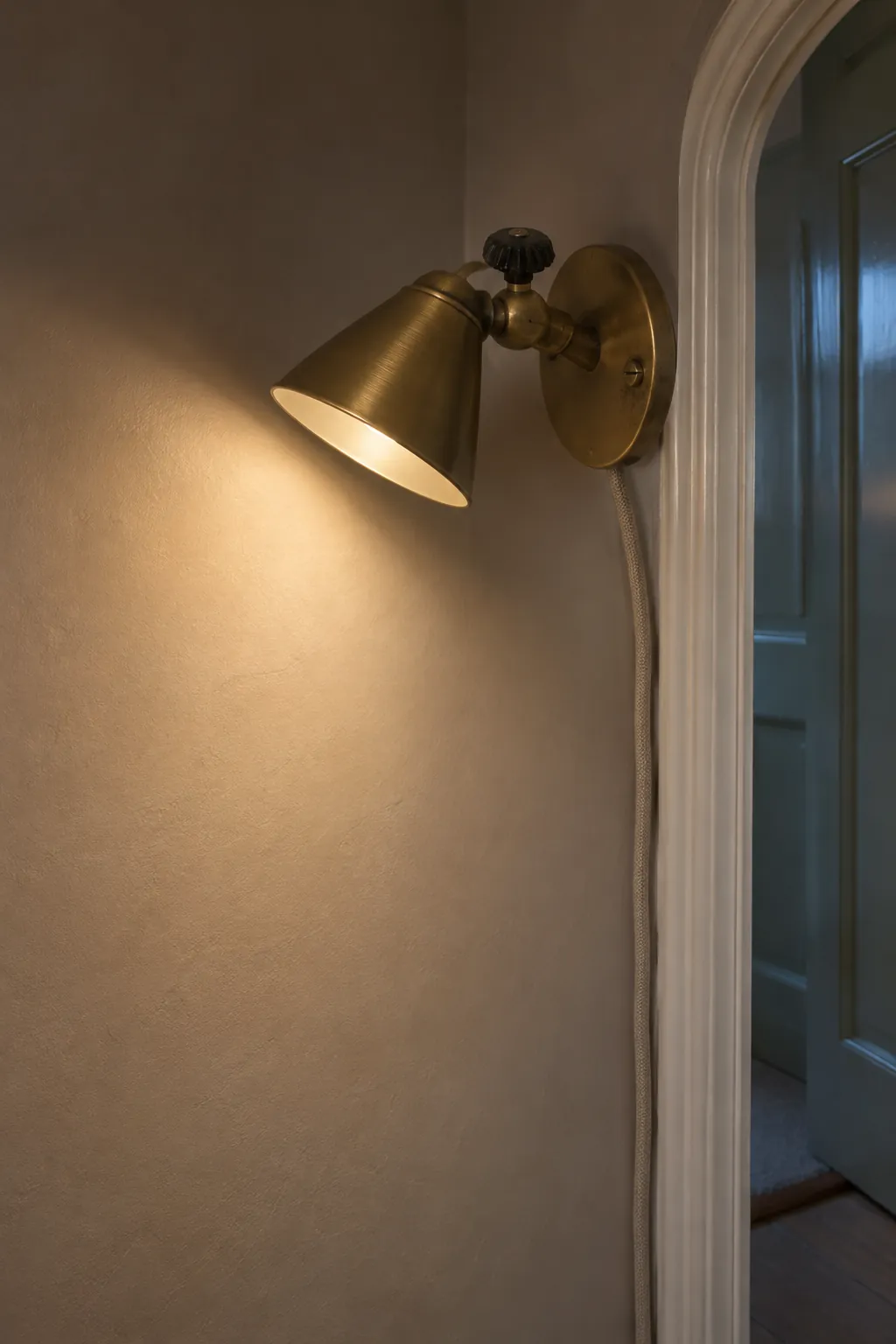
Use a small sconce to bring light to a bend or a stretch the ceiling light misses. An adjustable shade lets you direct the beam onto plaster so the wall gives a soft bounce when you walk past. For a plug in model, plan a tidy cable route along trim away from feet, doors and pinch points. Choose a finish that will still look good with a few fingerprints.
Make a Gallery of Old Magazine Covers
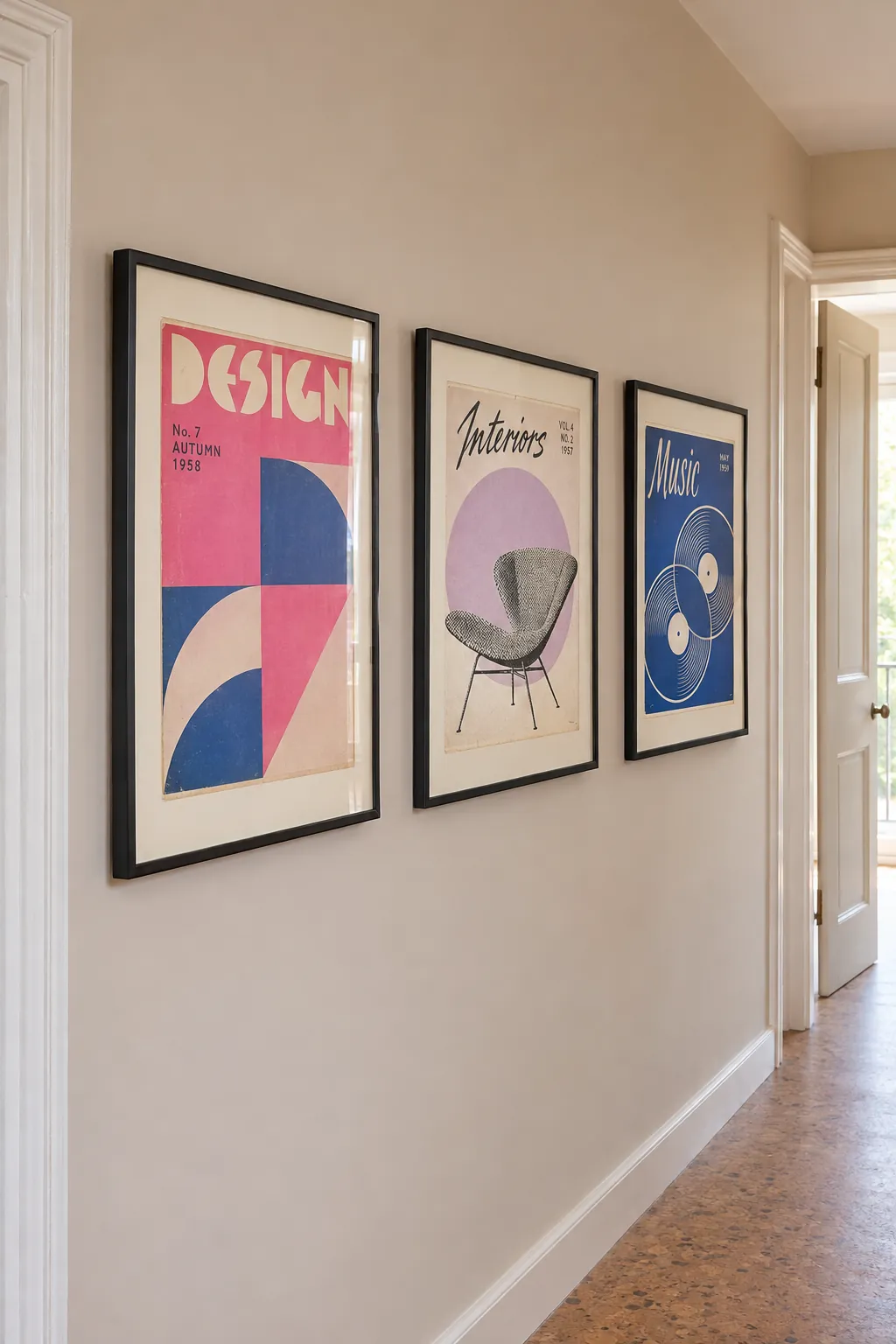
Choose a thread you can spot from the other end of the hall, such as three covers with large blocks of pink, blue and black. Use mats to fit different trim sizes into frames with similar outside dimensions. Lay the group on the floor first and check the outer edges against the nearest door casing. Use copies when an original is fragile or the wall gets direct sun.
Fit a Shallow Shoe Cabinet
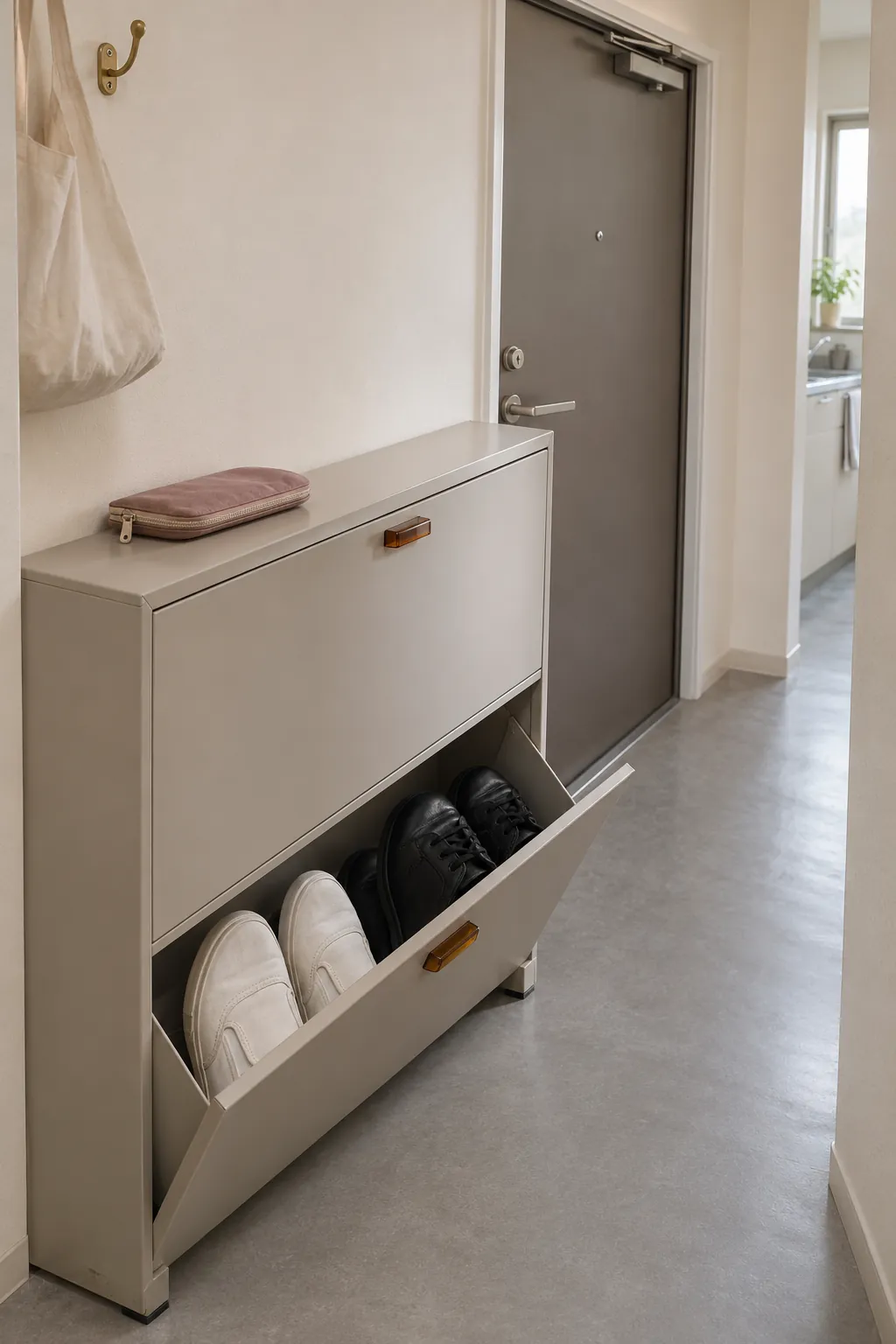
A freestanding shoe rack can consume more space than you expect when toes stick out. A shallow cabinet with tilt fronts keeps the outline clean in an eclectic entryway. Keep the top free for a small pouch or a pair of gloves.
Take your bulkiest pair of shoes when you test one and measure the open front as well as the closed cabinet. Anchor the unit as its maker directs. Check for a projecting baseboard before buying, since it can affect how close the back sits to the wall.
Show the Grain on the Stair Rail
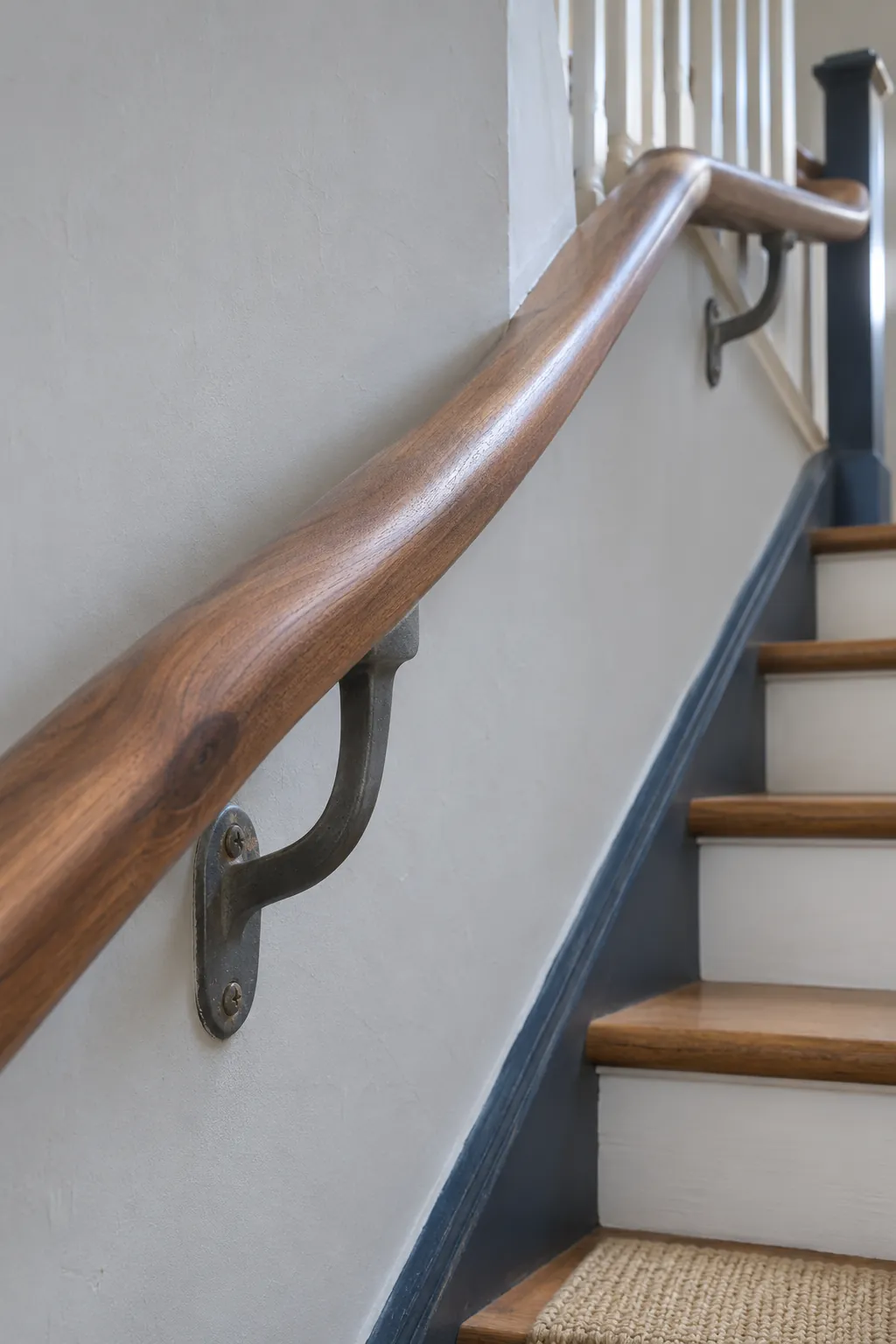
A worn stair handrail can add a walnut or amber stripe that repeats the color of old furniture. Check that the brackets are sound before you spend time on the finish. Choose a finish that feels comfortable under the hand and let it cure as directed. If the old coating might contain lead, get it assessed before sanding or scraping.
Run a Band of Color Across the Ceiling
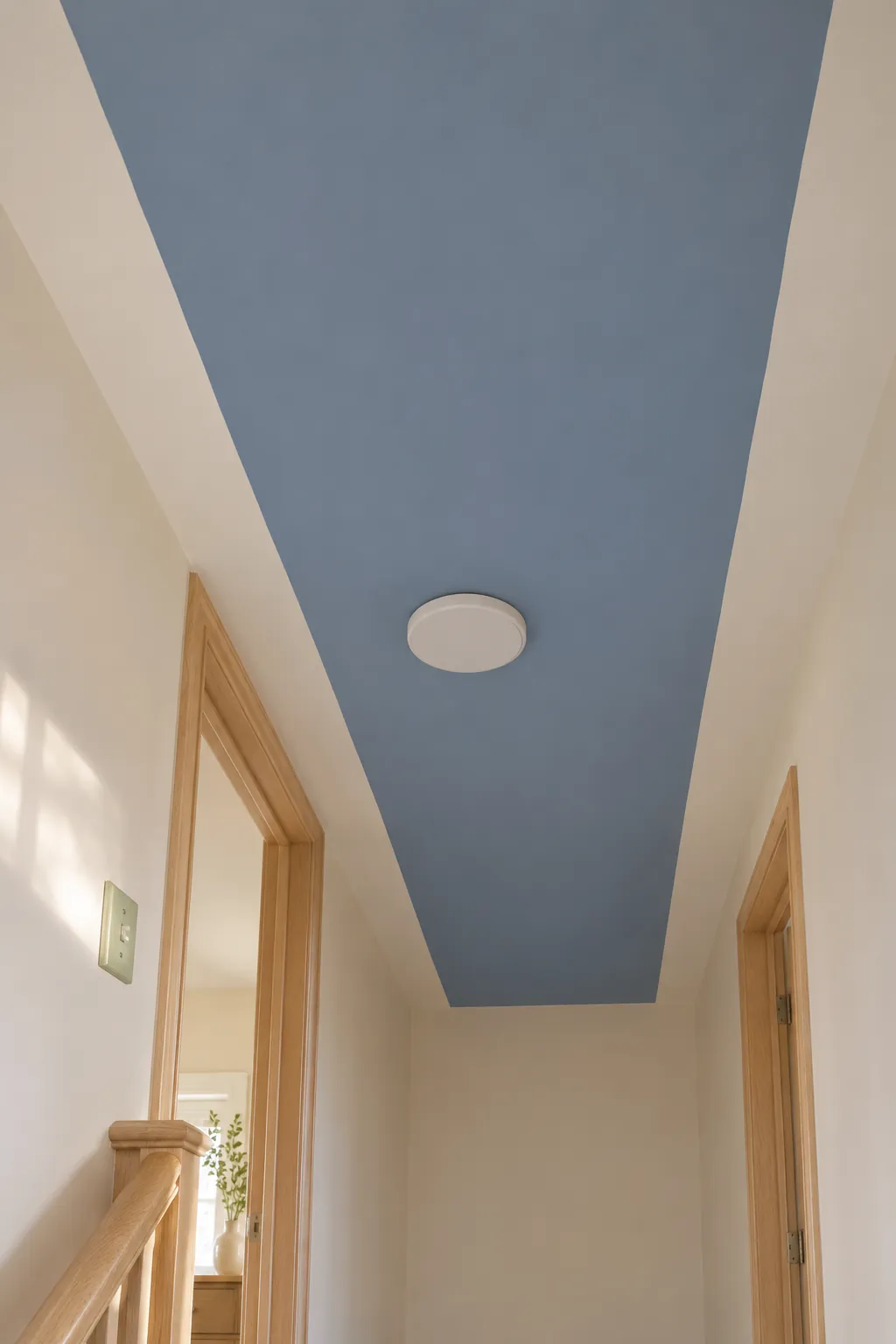
A stripe painted overhead gives a plain hall a strong line and keeps the part of the wall that takes daily knocks easy to touch up. A broad muted blue band works in a short hall where a busy repeat could feel crowded. Use the ceiling light as a visual reference and mark both edges before taping. A sample viewed overhead helps because ceiling color can look darker than the same paint at eye level.
Set a Ceramic Catchall by the Keys
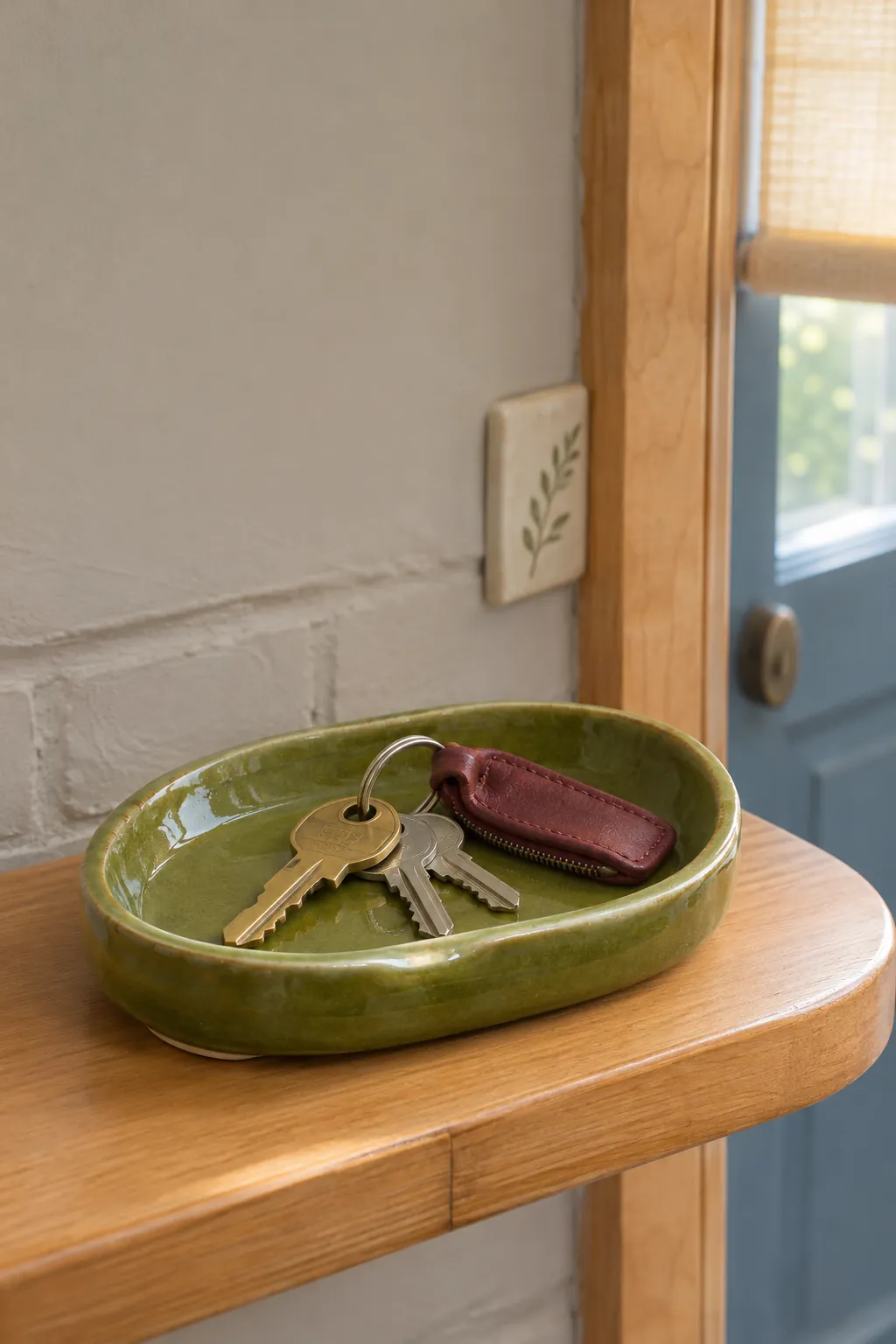
Look for a small glazed dish with a raised rim and a base that sits flat. Speckled stoneware or a glossy avocado green glaze gives a plain ledge a little period color. Put it on the side you naturally pass on your way out, and add a small felt pad if the foot scratches the shelf.
Turn a Landing into a Record Sleeve Display
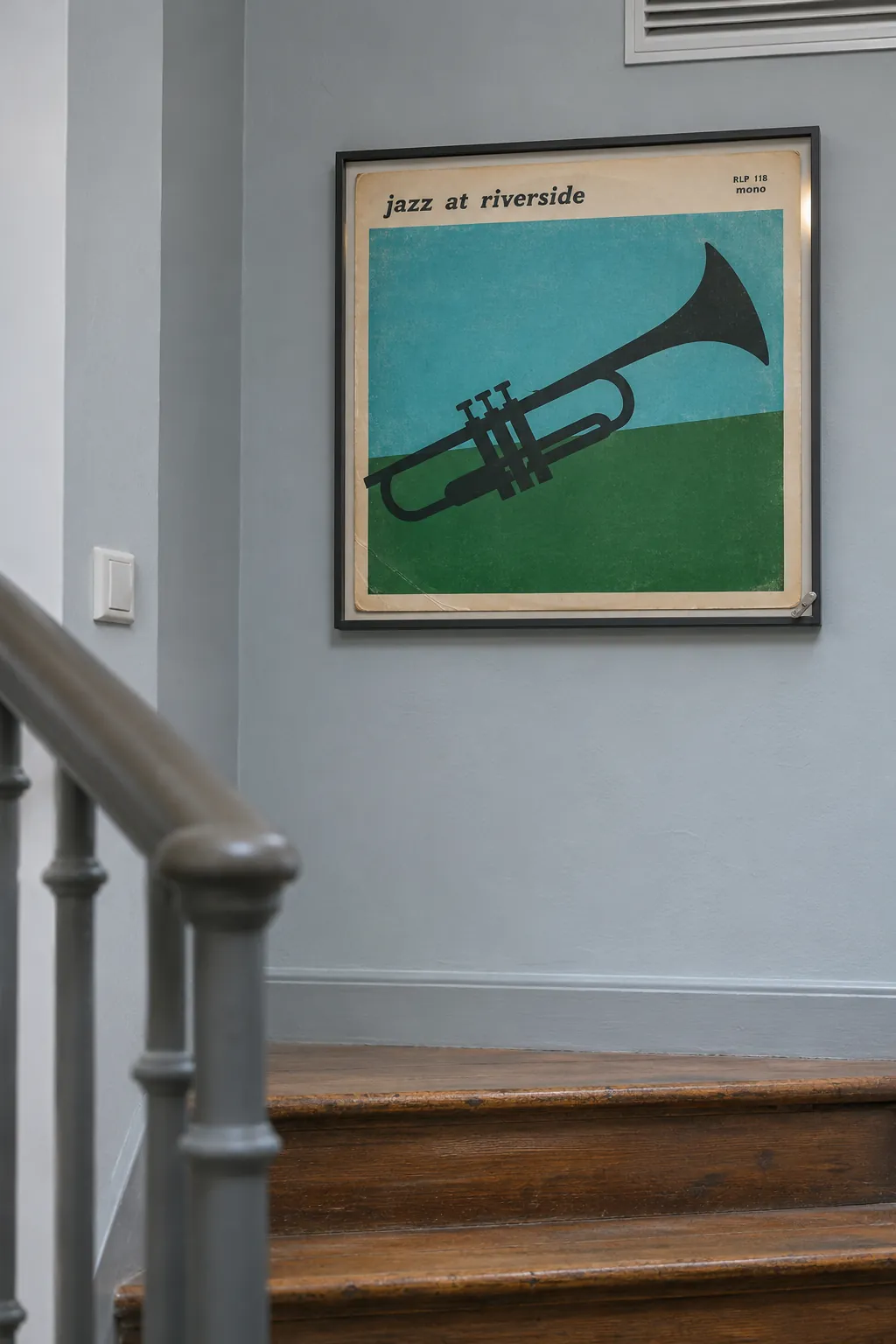
An old record cover brings a big square of color to a landing where you have a moment to see it. Pick one sleeve with a strong graphic motif and use a frame that opens easily if you rotate the display. Keep playable records stored upright elsewhere so the display can sit away from direct heat and sun.
Use a Striped Curtain Across a Coat Nook
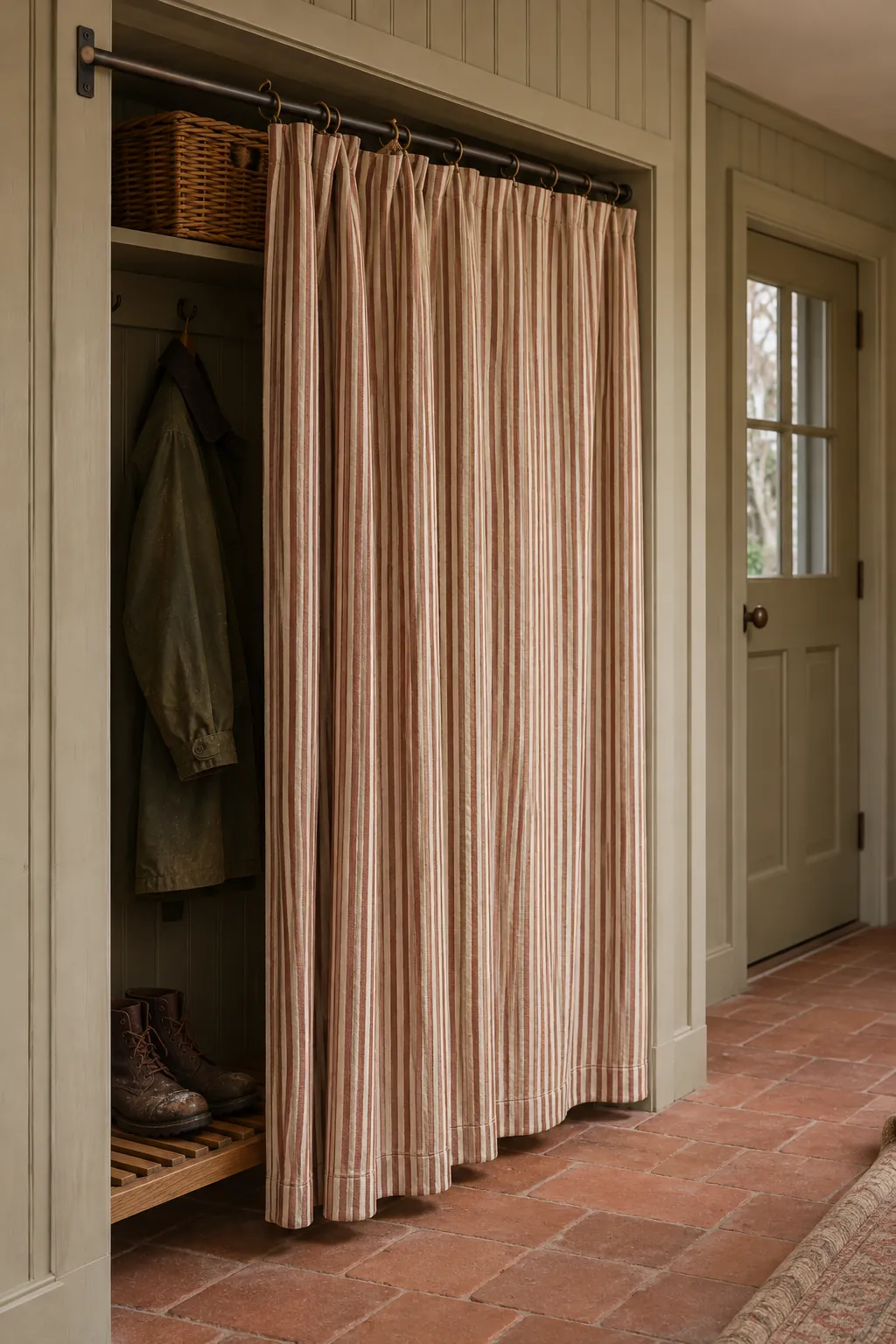
A curtain can soften the look of a coat nook and hide a week of muddy boots in one pass. A narrow stripe in tobacco and ivory looks at home beside older timber fittings. Mount the rod where the curtain can stack clear of the opening, then hem it just off the floor. Choose fabric that can handle washing if the nook gets daily use.
Give a Bench a Vinyl Seat
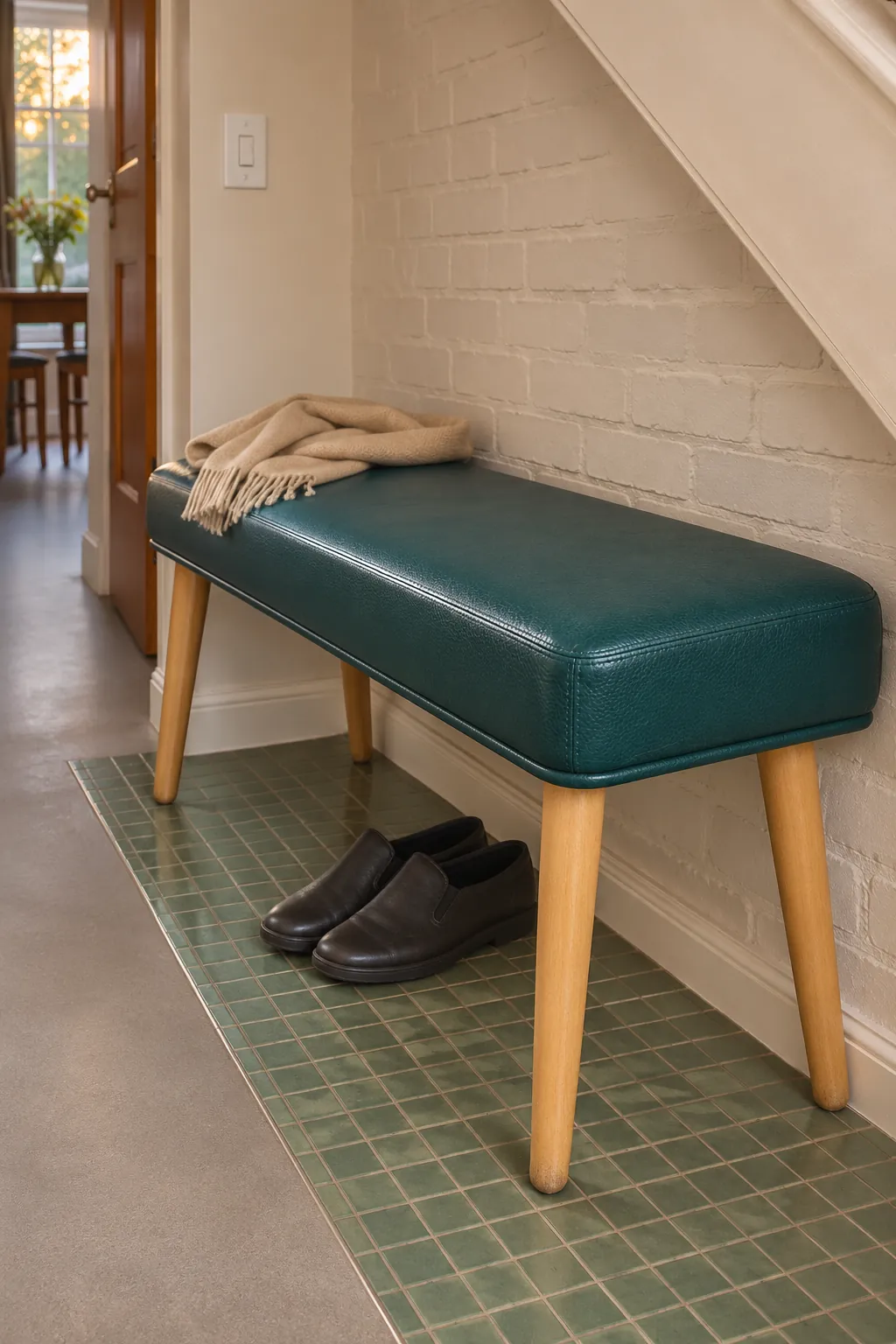
A wipeable vinyl seat suits a bench tucked off the traffic path where wet coats and bags tend to land. Deep teal or oxblood works well with plain beech legs and a simple shape. If you are reusing a frame, check for movement at the joints before replacing the seat. Test the finished height with the shoes you usually put on there.
Add Frosted Glass to a Dark Passage
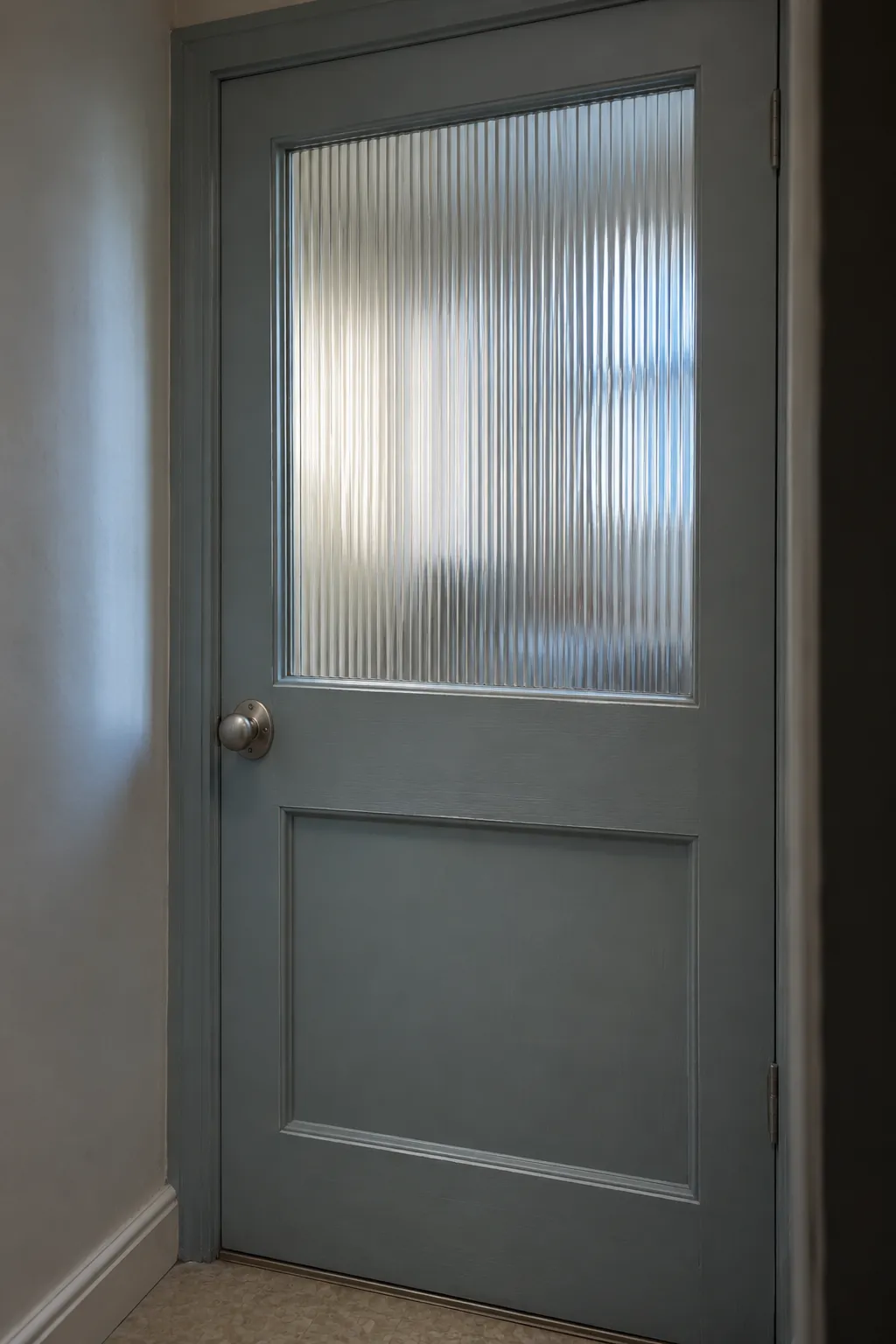
A frosted panel can borrow daylight from an adjoining room while keeping the view through the door soft. Reeded glass adds the fine vertical texture often seen in older interior doors. Ask a qualified installer whether the existing door can take a panel and which safety glazing is required. Check how the glass looks with a light on behind it at night, when silhouettes can be easier to see.
Work a 1970s Floral into a Single Bay
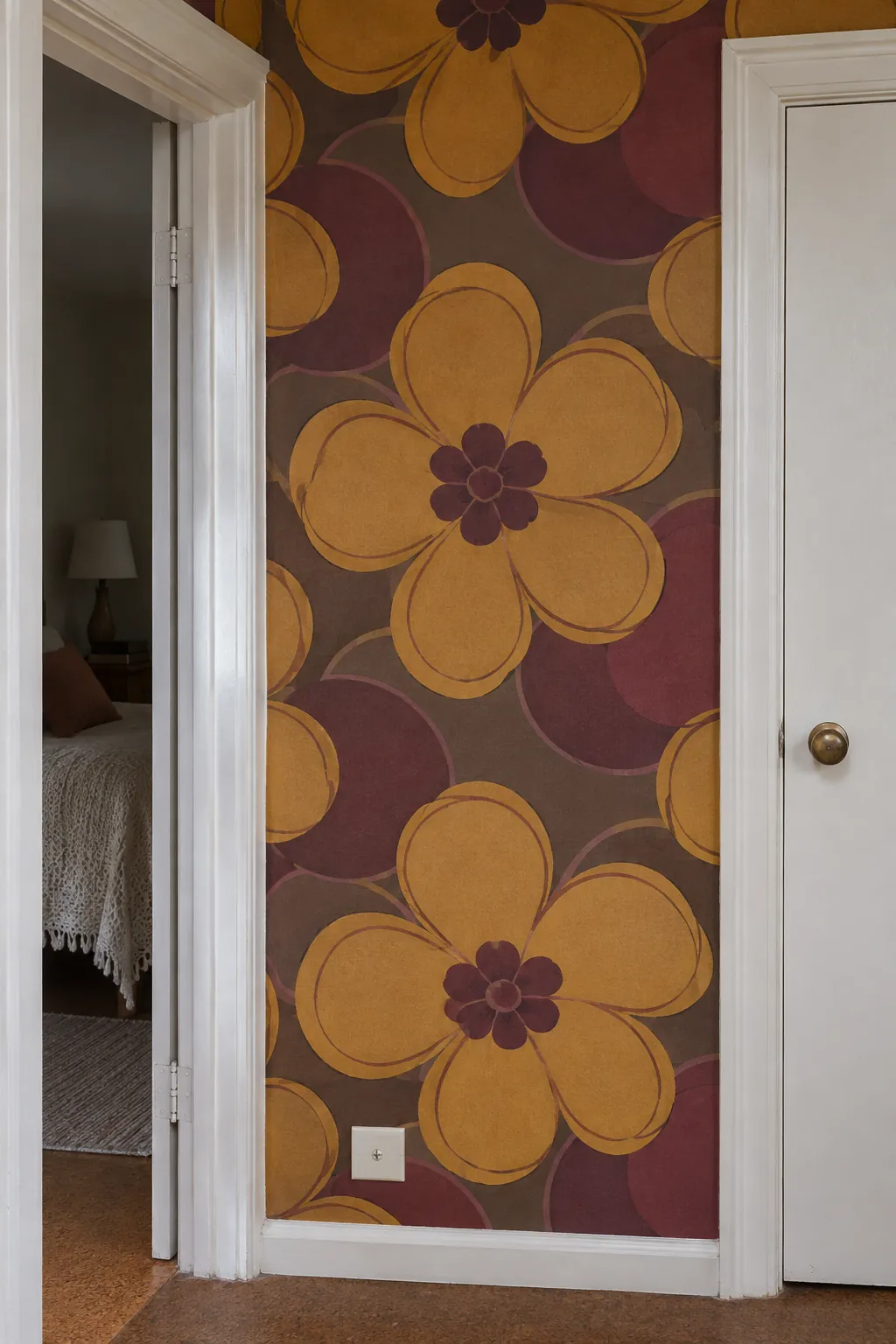
A bold floral reads from a distance when it has a clear edge, such as the space between two door casings. Try oversize ochre and plum petals with a low contrast ground for a colorful hallway that still has quiet surfaces. Sample a piece large enough to show the full repeat. Check the sample beside the floor and trim before you commit to the whole bay.
Hang an Old School House Clock
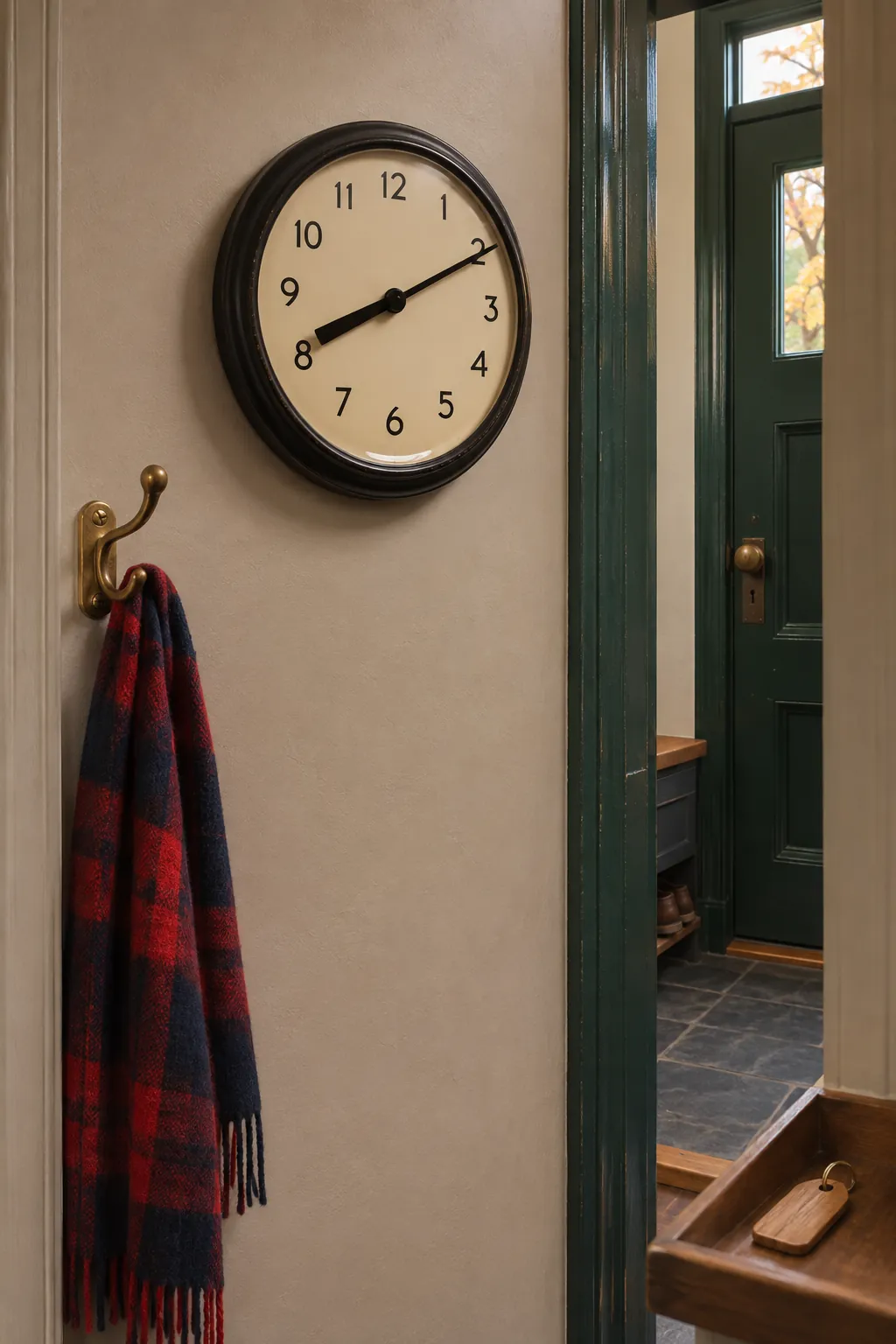
A clock near the exit answers a practical question while you are hunting for your coat. Look for plump black numerals on a light dial that you can read from the farthest doorway. If the sound of a ticking movement will reach a bedroom, try it in a quiet room before installing it. Stand where you first reach for your keys and check that you can see the face without stopping in the doorway.