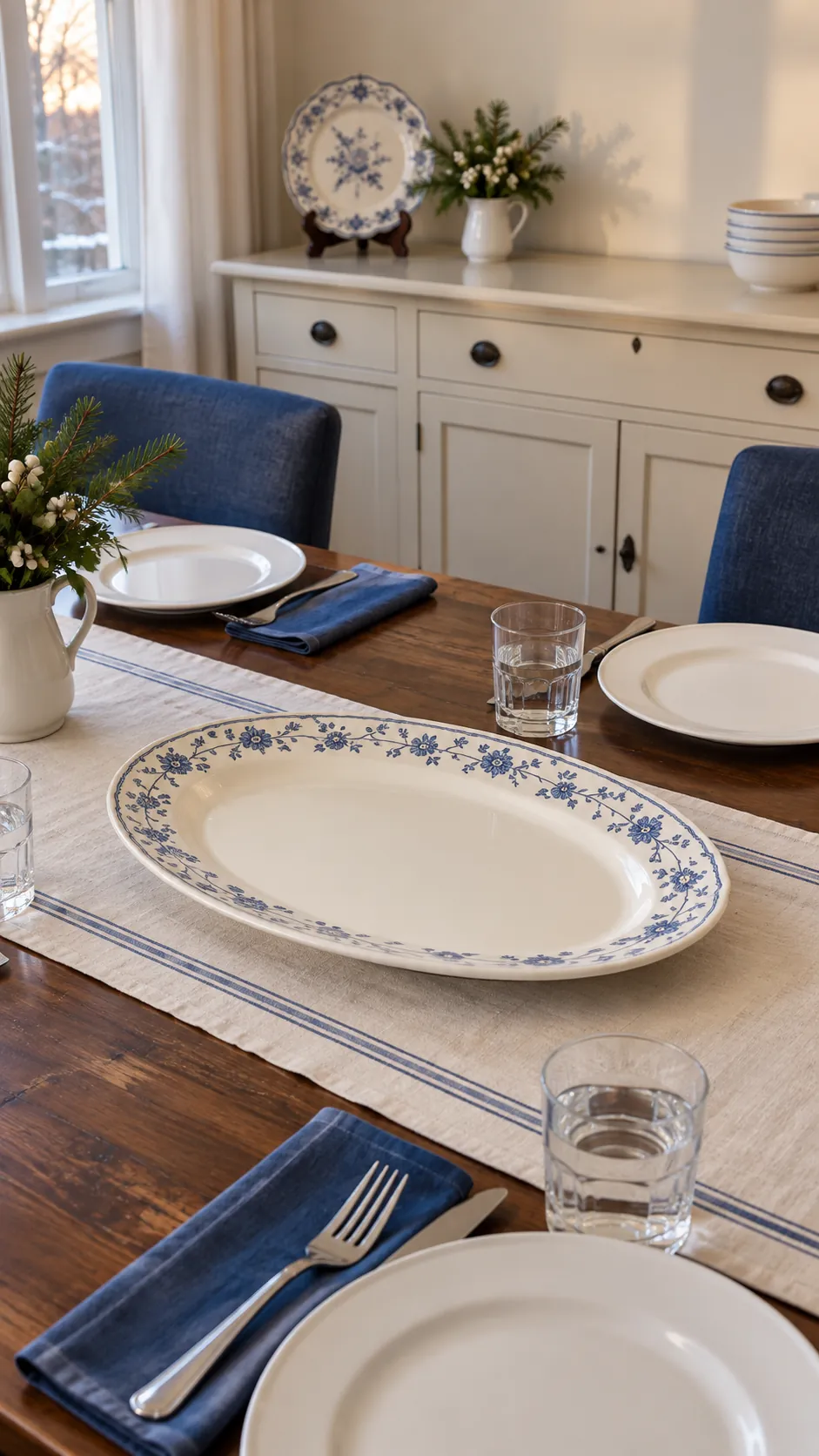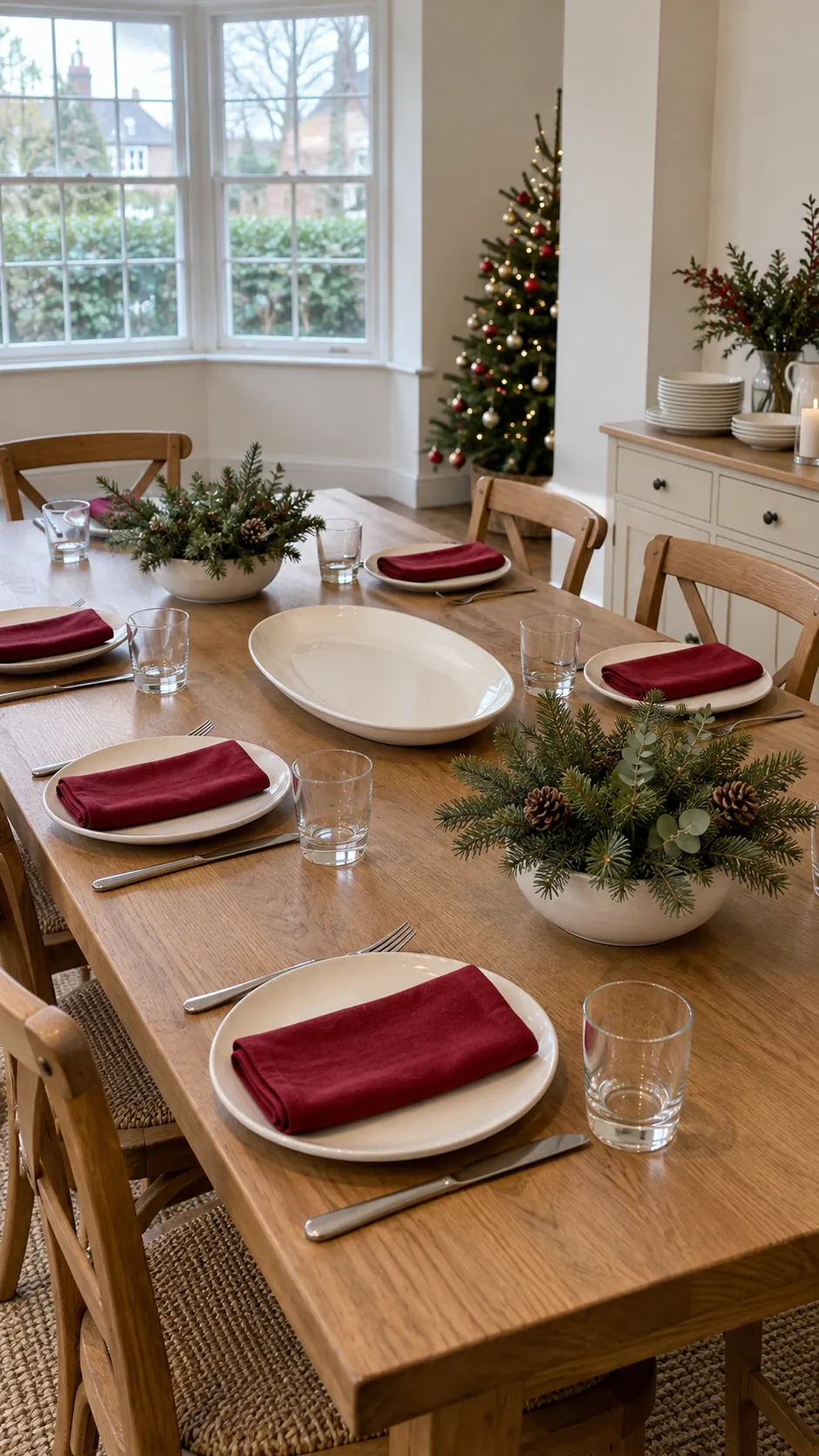
A beautiful centerpiece loses its appeal when there is nowhere to put the potatoes. Start by setting the plates and reserving space for the food, then decorate the area that remains. One clear pattern, a limited palette and a centerpiece you can move will do more for a comfortable gathering than a crowded display.
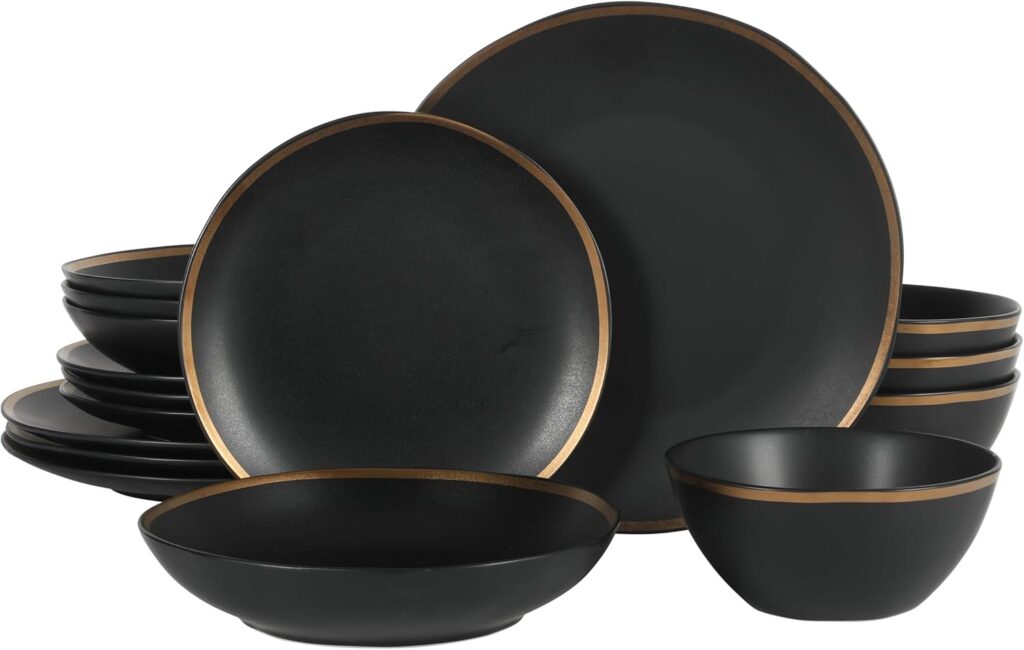
 Check on Amazon
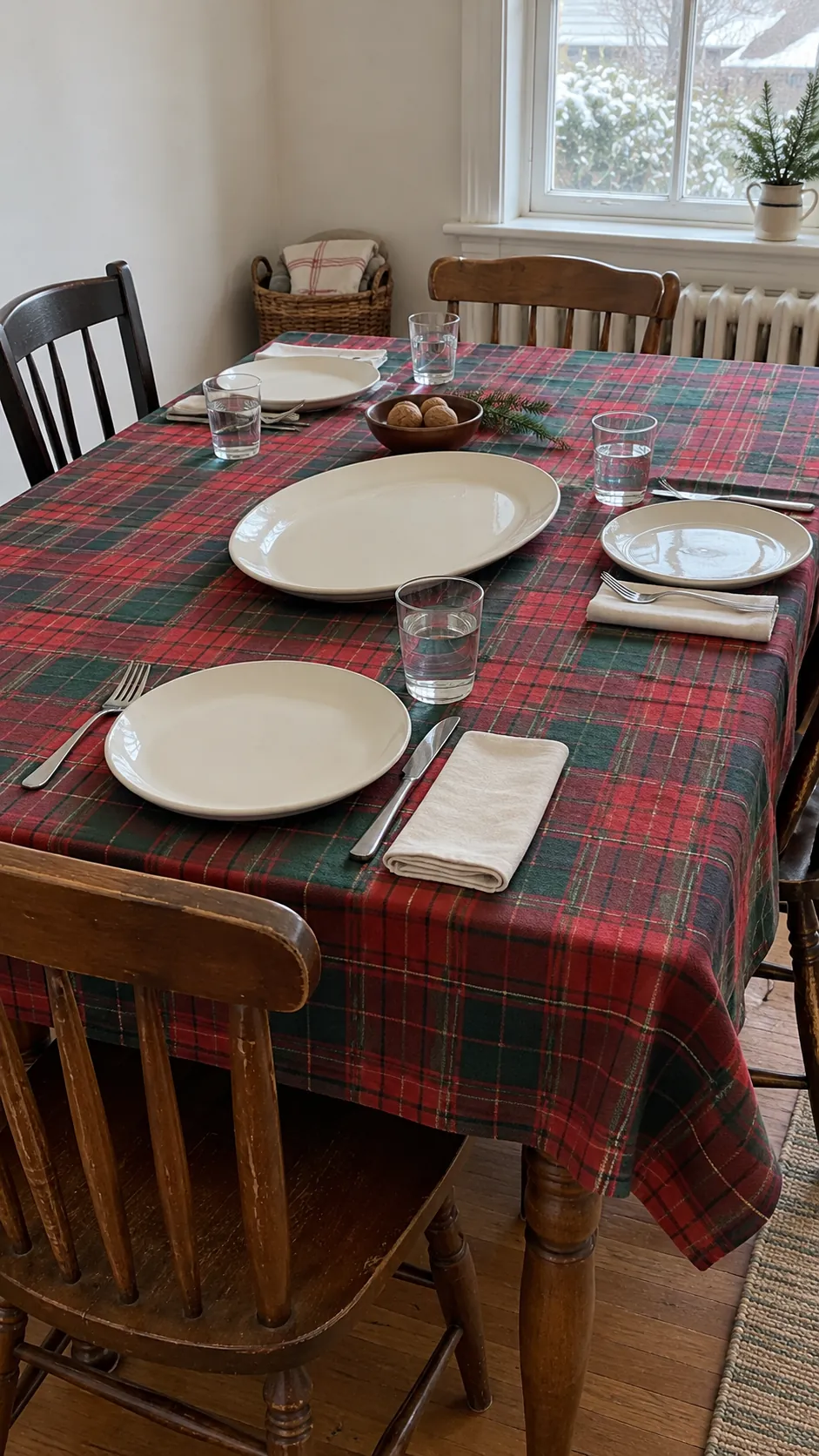
Plaid cloth with restrained plate layers
Let the plaid supply the pattern, then keep the dishes plain so a busy cloth does not compete with the meal. Put one dinner plate and a folded cream napkin at each seat, adding a smaller plate only if the menu needs it. Before placing the centerpiece, set out your widest serving dish to check the space that remains. A cloth that hangs evenly also makes mismatched chairs look more connected.
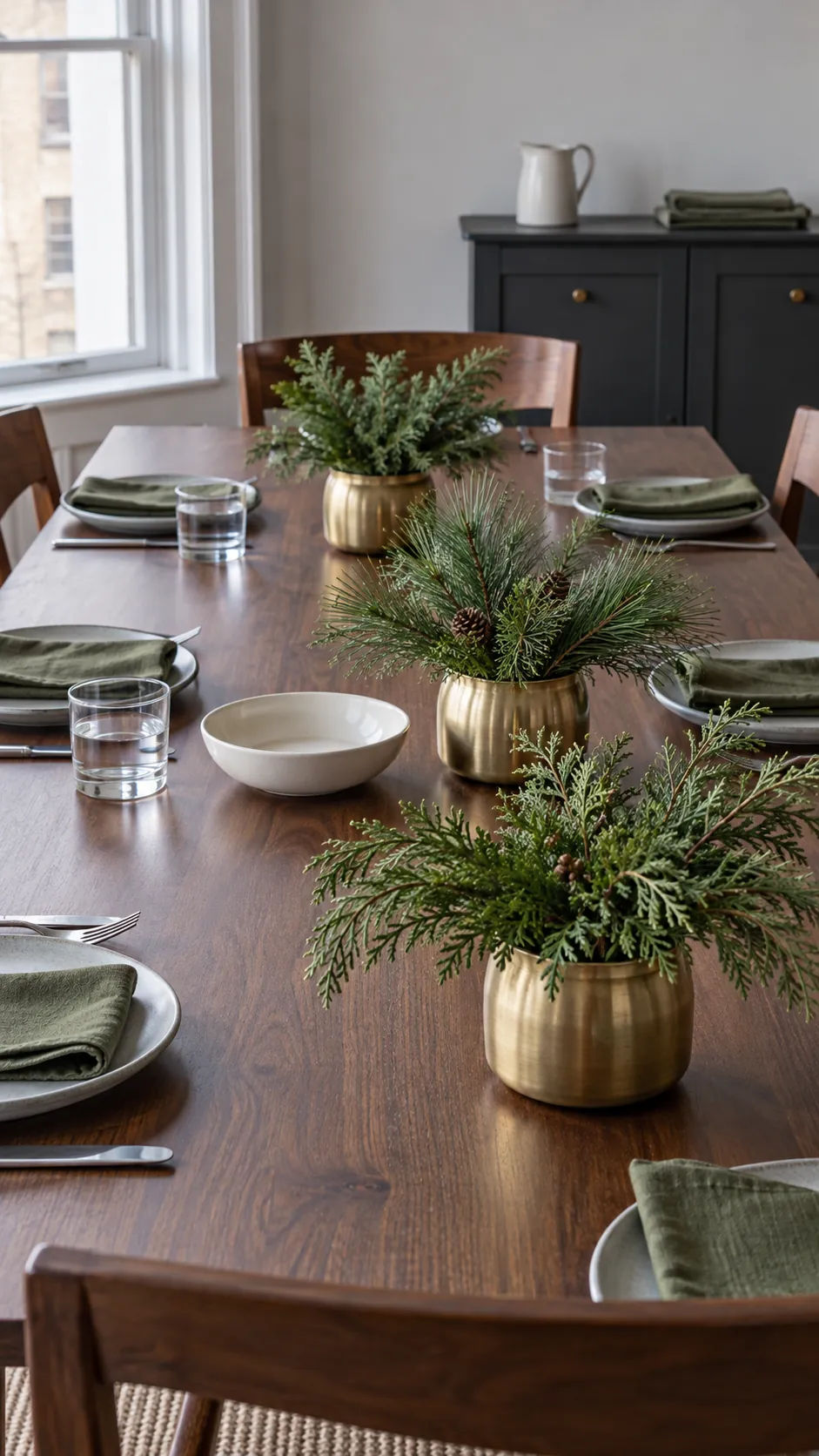
Low gold vases with clipped evergreens
Three short gold vases can give a long table rhythm without requiring a continuous garland. Cut the branches so their spread stays inside the middle strip of the table and guests can see over them while seated. Use watertight inserts if the decorative vessels are not intended to hold water. Leave a gap between each vase for bowls that arrive during dinner.
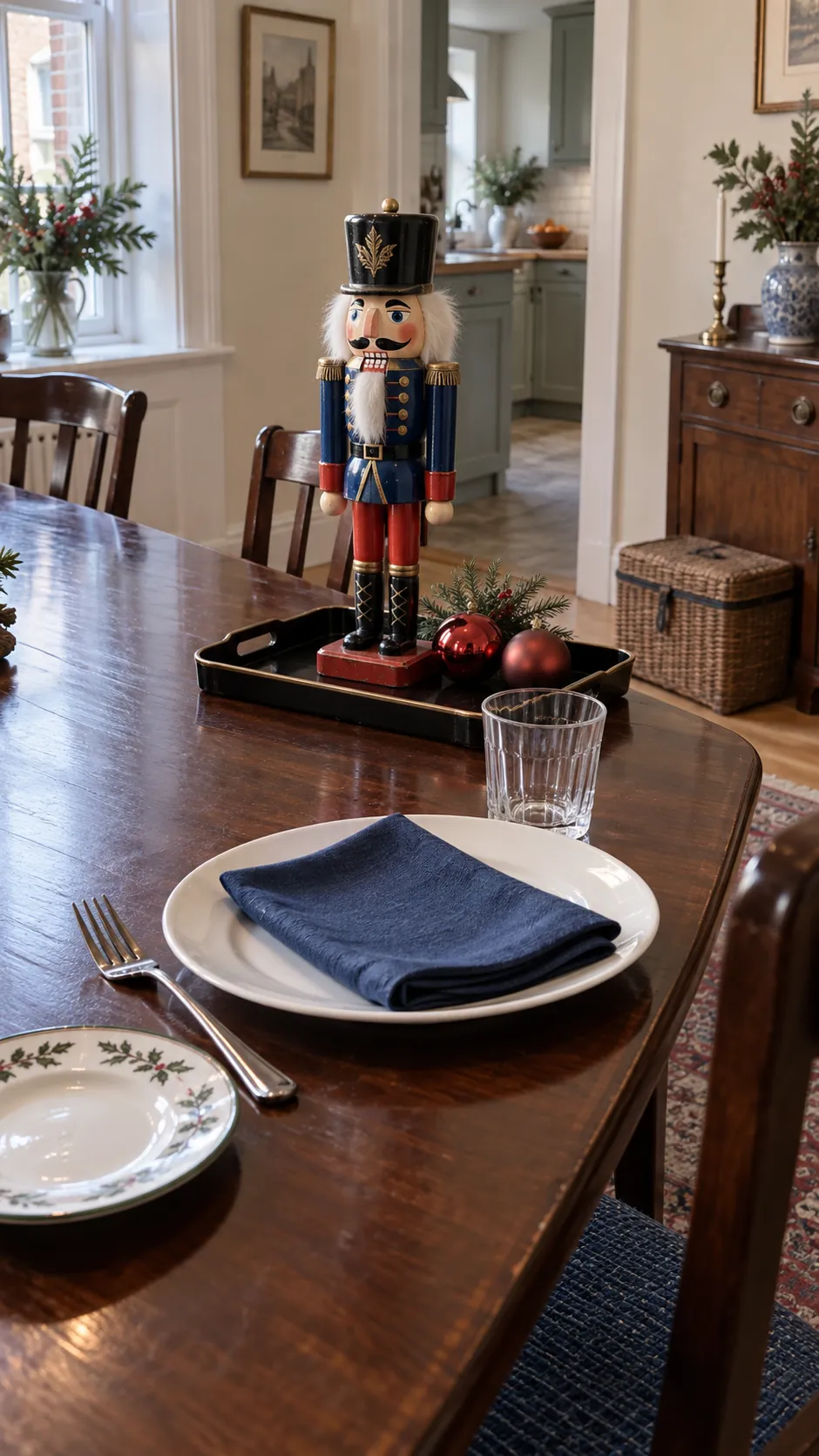
A nutcracker at the head of the table
A single nutcracker creates a clear focal point without crowding every place setting. Stand it on a stable side tray at the end of a rectangular table, where its height will not divide guests. Repeat one color from its uniform in the napkins. If children will handle the figure, choose a sturdy decorative version and keep loose small pieces away from their seats.
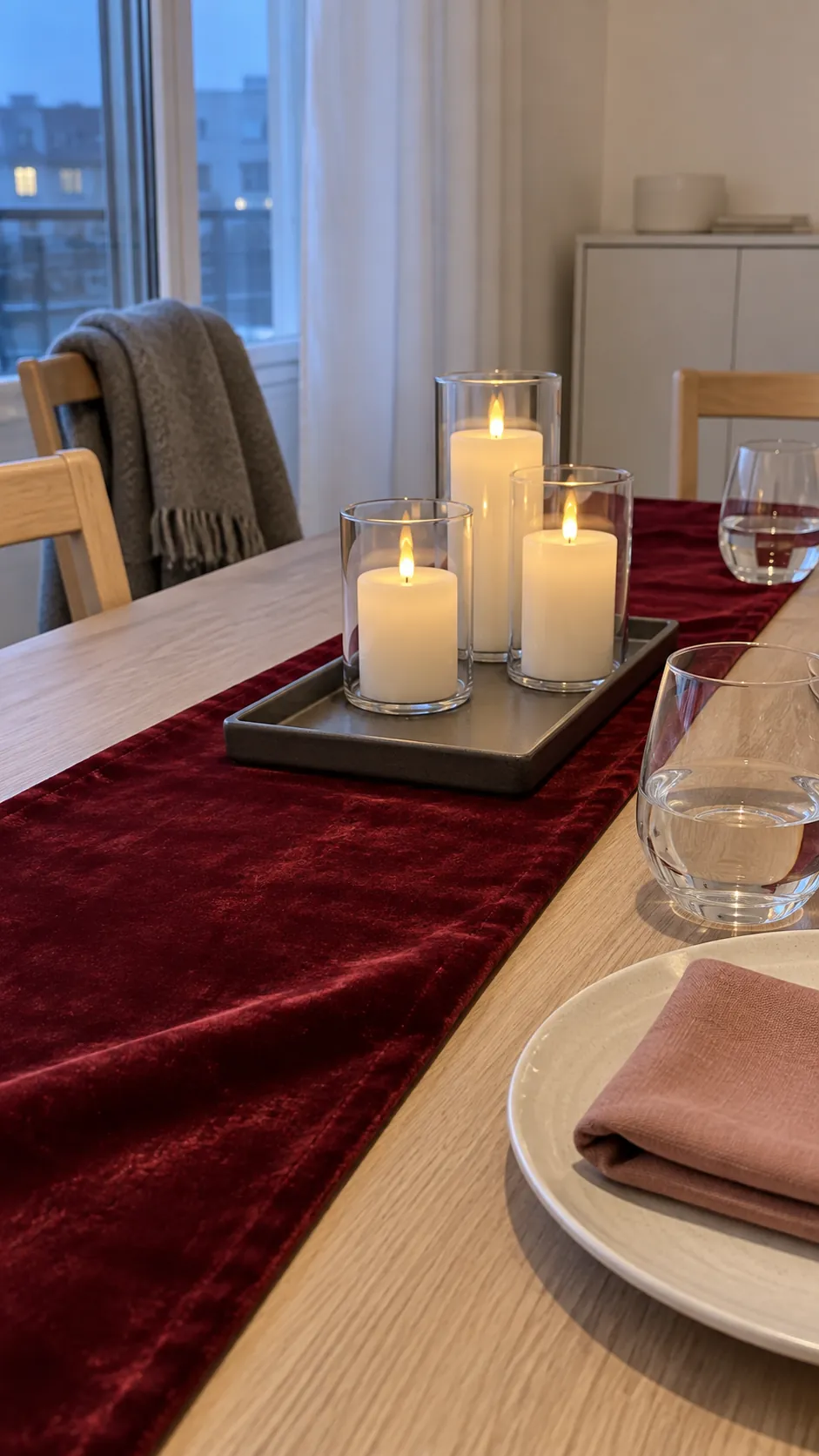
Burgundy velvet with flameless candlelight
A burgundy velvet runner brings depth to plain dishes, especially in a room with pale walls. Keep the velvet down the center rather than beneath glasses, where its pile can make a base less stable. Set battery candles in holders on a firm tray instead of placing flames beside the fabric. Brush the runner in one direction before guests arrive so its surface catches light evenly.
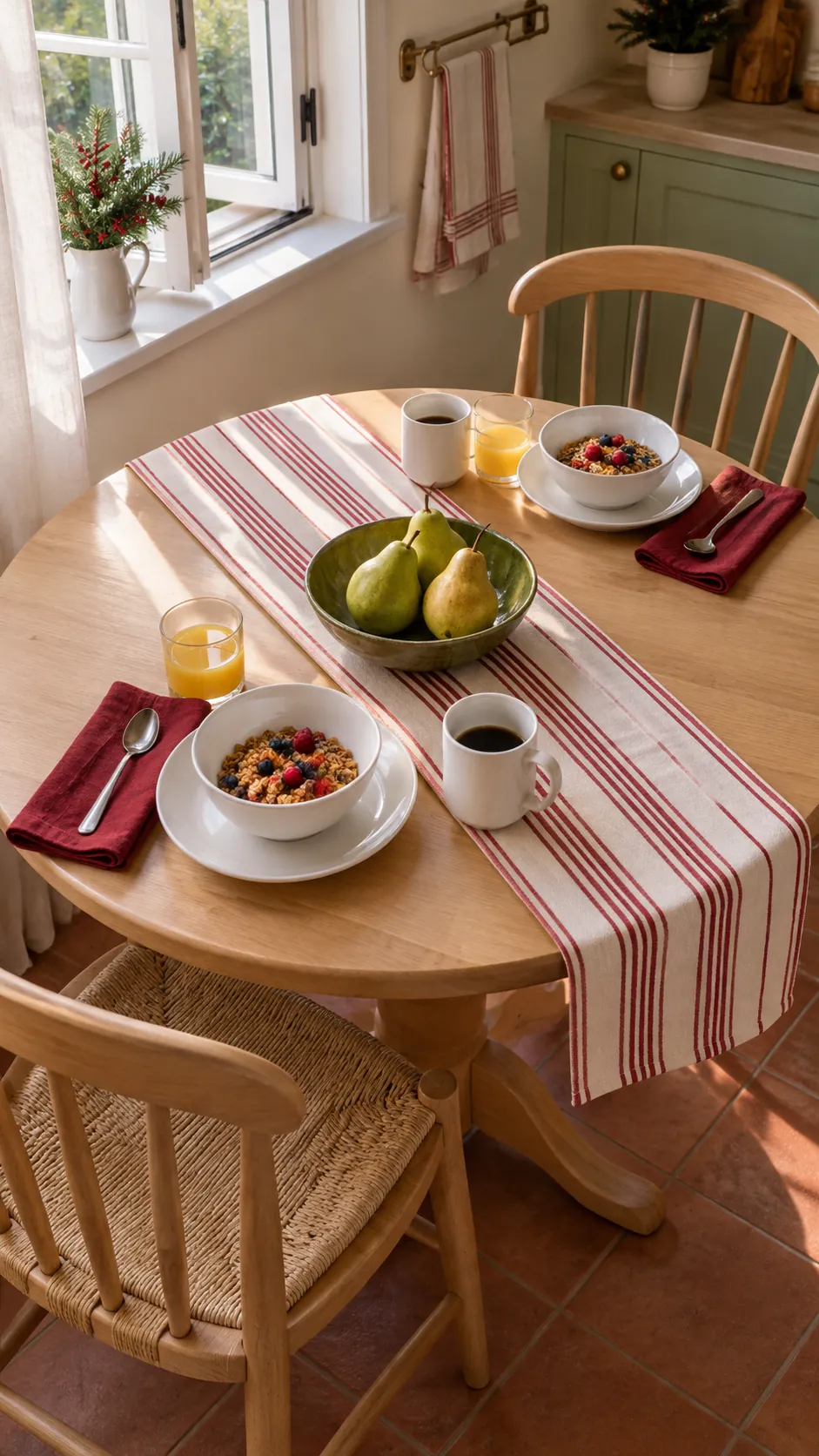
A striped runner across a small round table
On a round table, a narrow striped runner draws the eye across the diameter without hiding all the wood. Use red and cream stripes for a cheerful breakfast or an informal supper, then choose solid napkins. Position a shallow serving bowl in the center rather than a tall arrangement. Turn the runner so its ends fall between seats rather than across a guest’s lap.
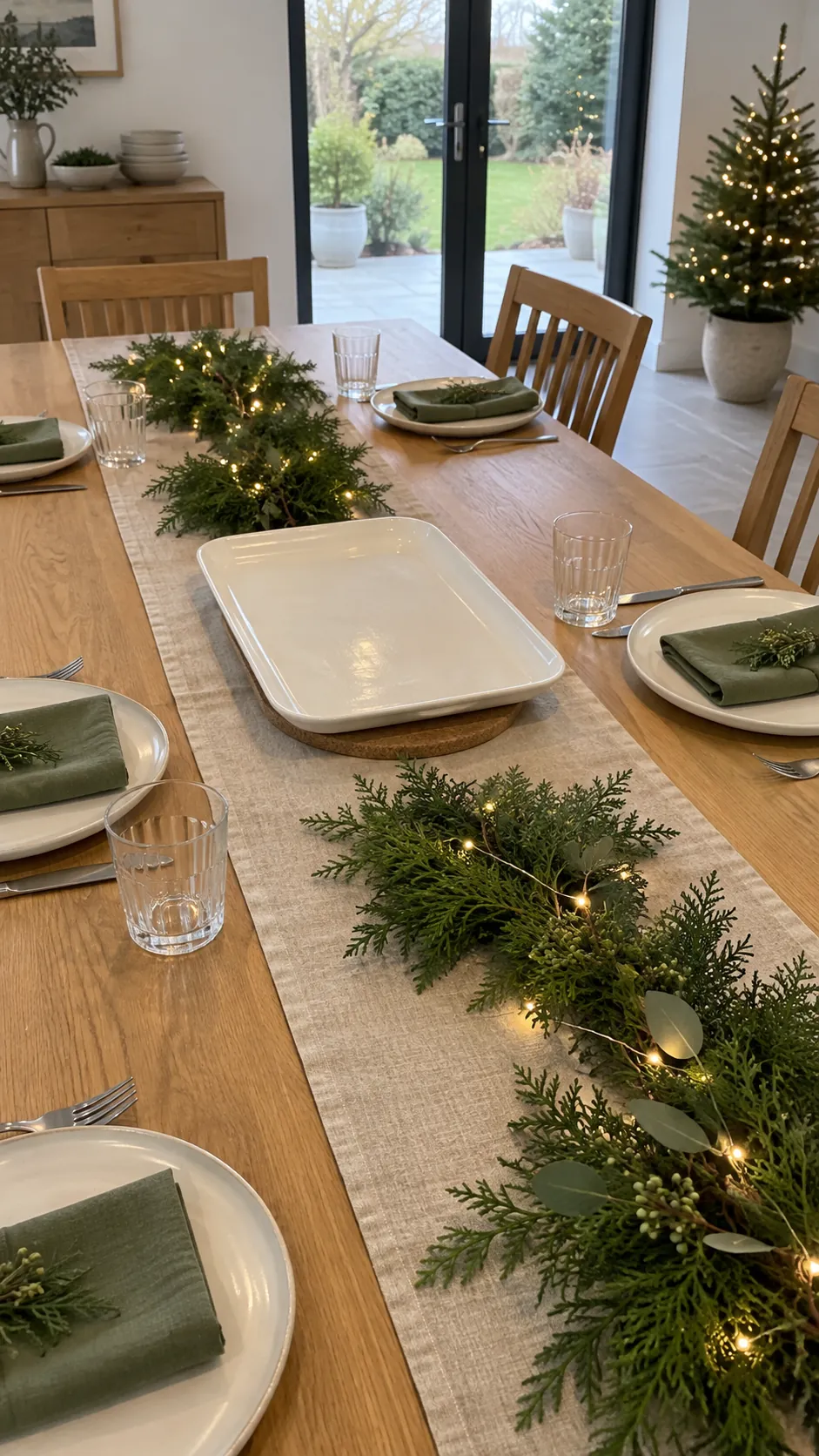
A narrow garland with deliberate serving gaps
A table garland works best when it follows the meal plan rather than covering every available inch. Lay short lengths of greenery between the positions reserved for serving platters, leaving the place settings completely clear. Contain shedding stems on a washable runner and use battery lights if you want a glow among the branches. For a narrow table, move the largest greenery arrangement to the sideboard.
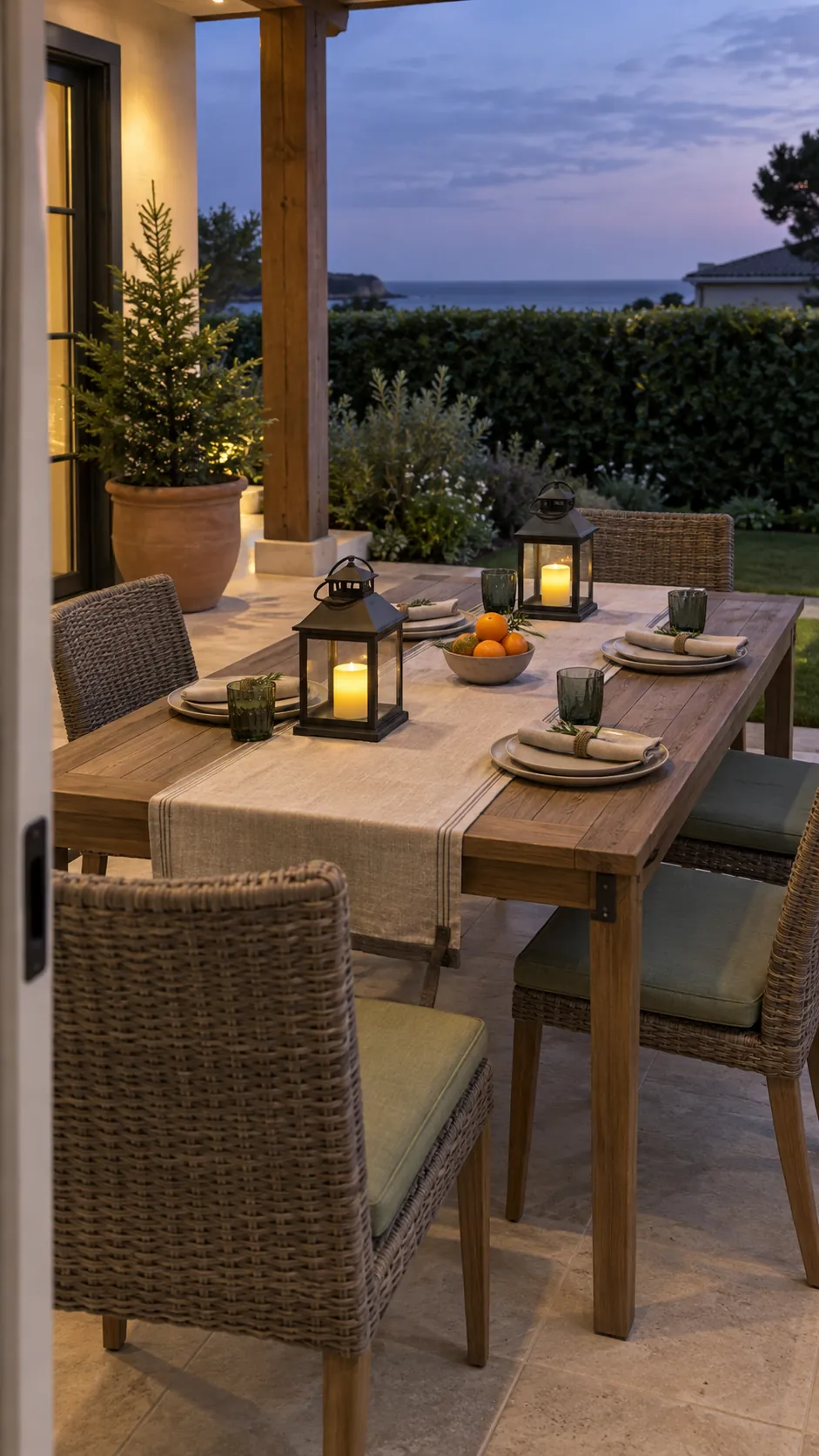
Lanterns for a sheltered outdoor supper
In a mild climate, a sheltered outdoor table can feel festive with just two enclosed battery lanterns. Place the lanterns away from elbows and use sturdy glasses that will not tip easily in a breeze. Clip the tablecloth underneath if wind is likely. Matching evergreen porch pots can connect the dining area to the entrance, but they should stay outside the walking route.
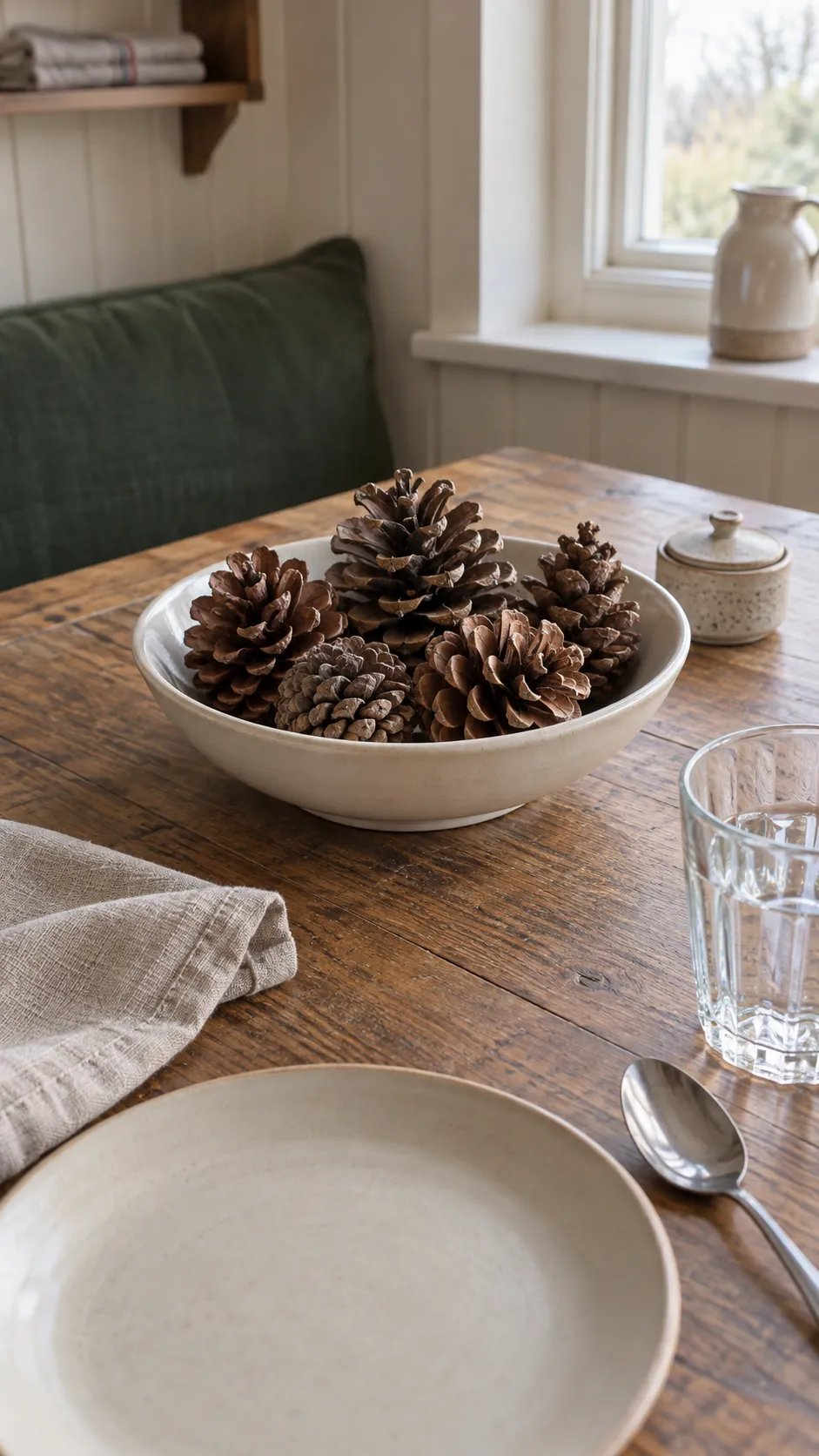
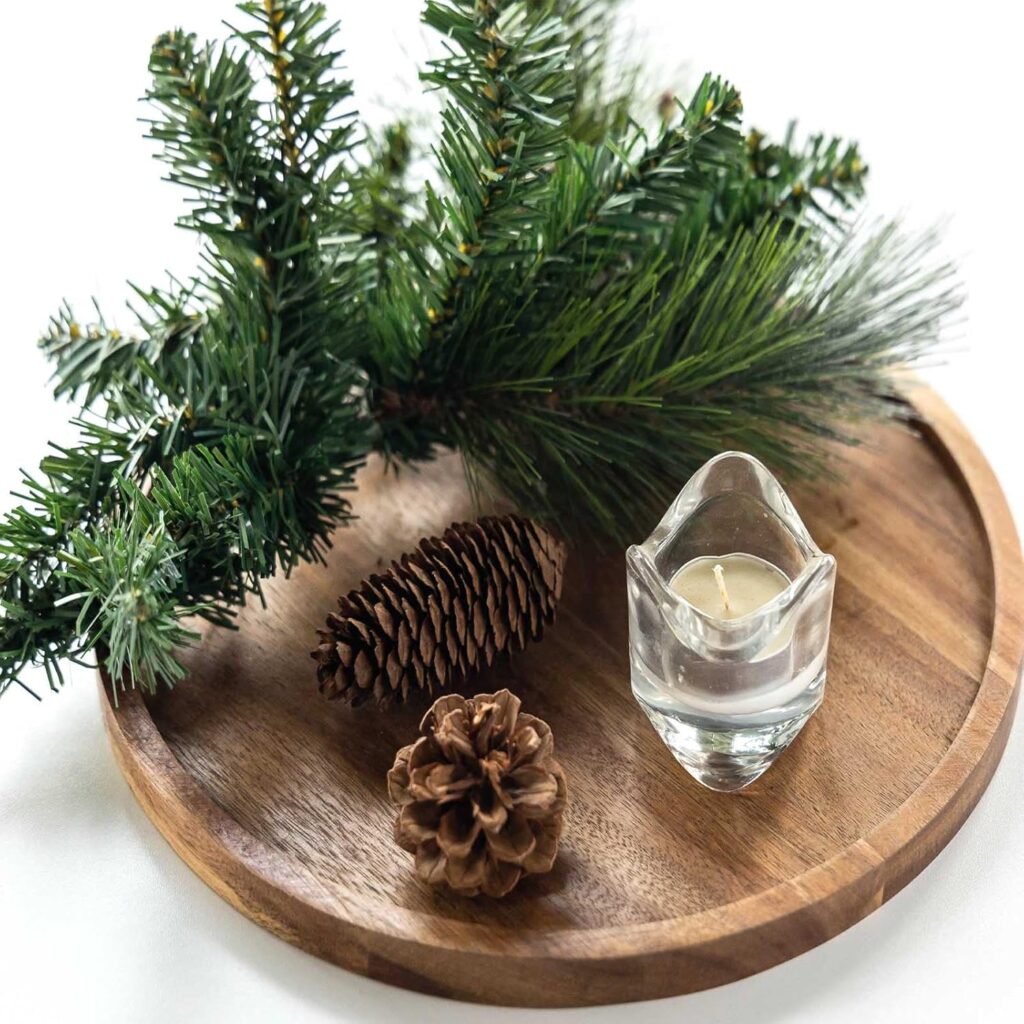
Pinecones contained in a shallow bowl
A shallow ceramic bowl keeps pinecones from rolling between plates and makes the arrangement easy to remove. Use clean, dry cones reserved for decoration rather than putting gathered material directly on dinnerware. Fold oatmeal napkins loosely beside plain plates to echo the natural texture. This is a useful choice when you want a centerpiece that can be stored intact after the meal.
White dishes with one quiet green accent
White tableware can carry the whole setting when the room already has a decorated tree. Add a sage napkin and one small evergreen arrangement, then leave the rest of the table open. Different white ceramics need not match exactly if their shapes are simple. Check the setting under the light you will actually use, because a very cool bulb can make the whites feel stark.
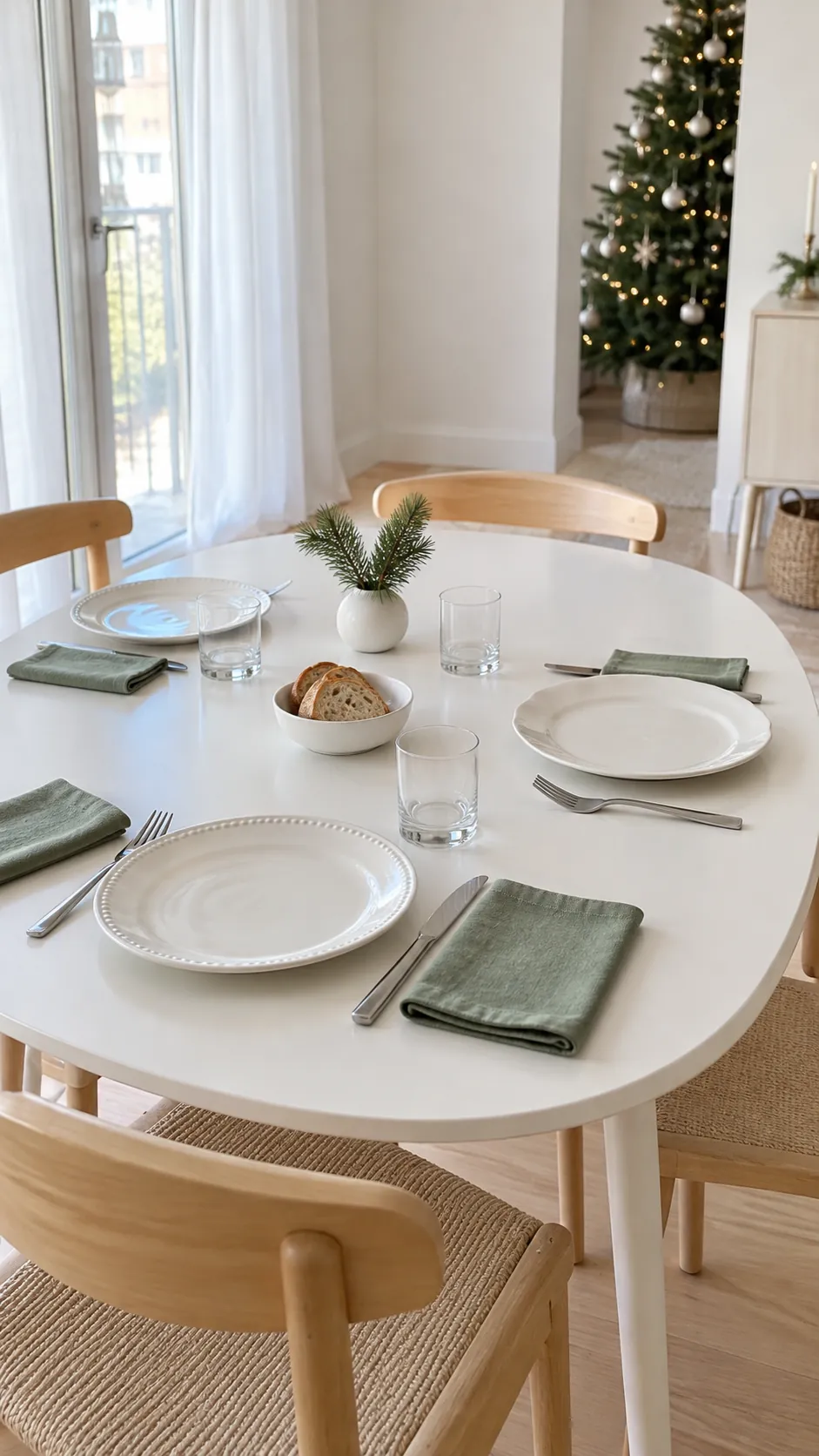
Red glasses against a muted tartan
Use red glassware as the strongest color on a muted green tartan cloth. A small water tumbler at each place gives a more relaxed result than several colored stems. Keep any additional wine glasses clear so guests can tell the drinks apart. Wash and polish the red glasses before setting the table, since fingerprints show clearly against their deeper color.
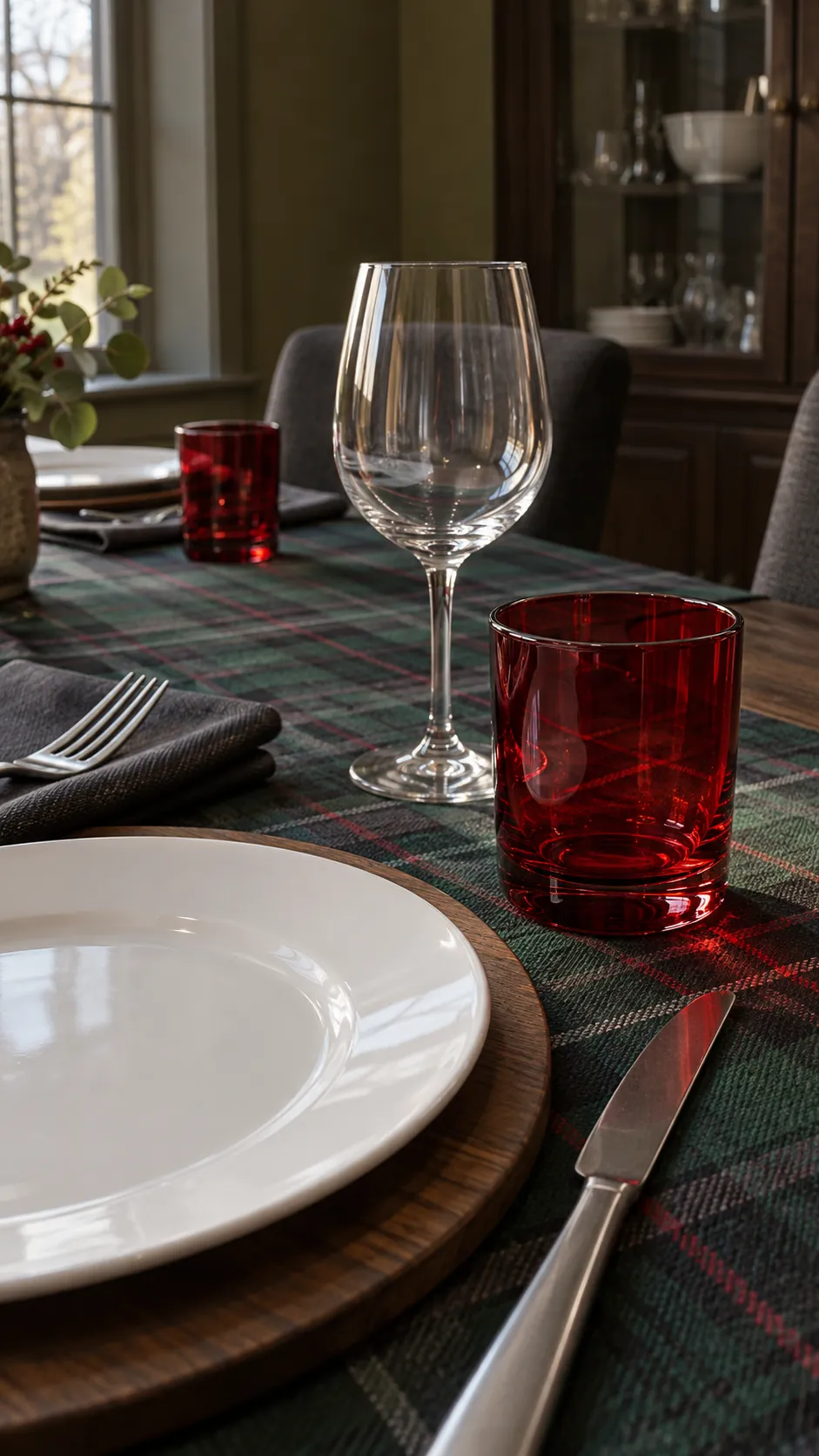
Dark red tapers on an open center strip
Burgundy tapers and brass holders make a spare table feel dressed for an evening meal. Arrange stable holders on a noncombustible surface with clear space around the flames, following the candle maker’s spacing instructions. Keep greenery, paper and loose sleeves well away, and never leave lit candles unattended. Unscented candles allow the food to remain the main aroma in the room.
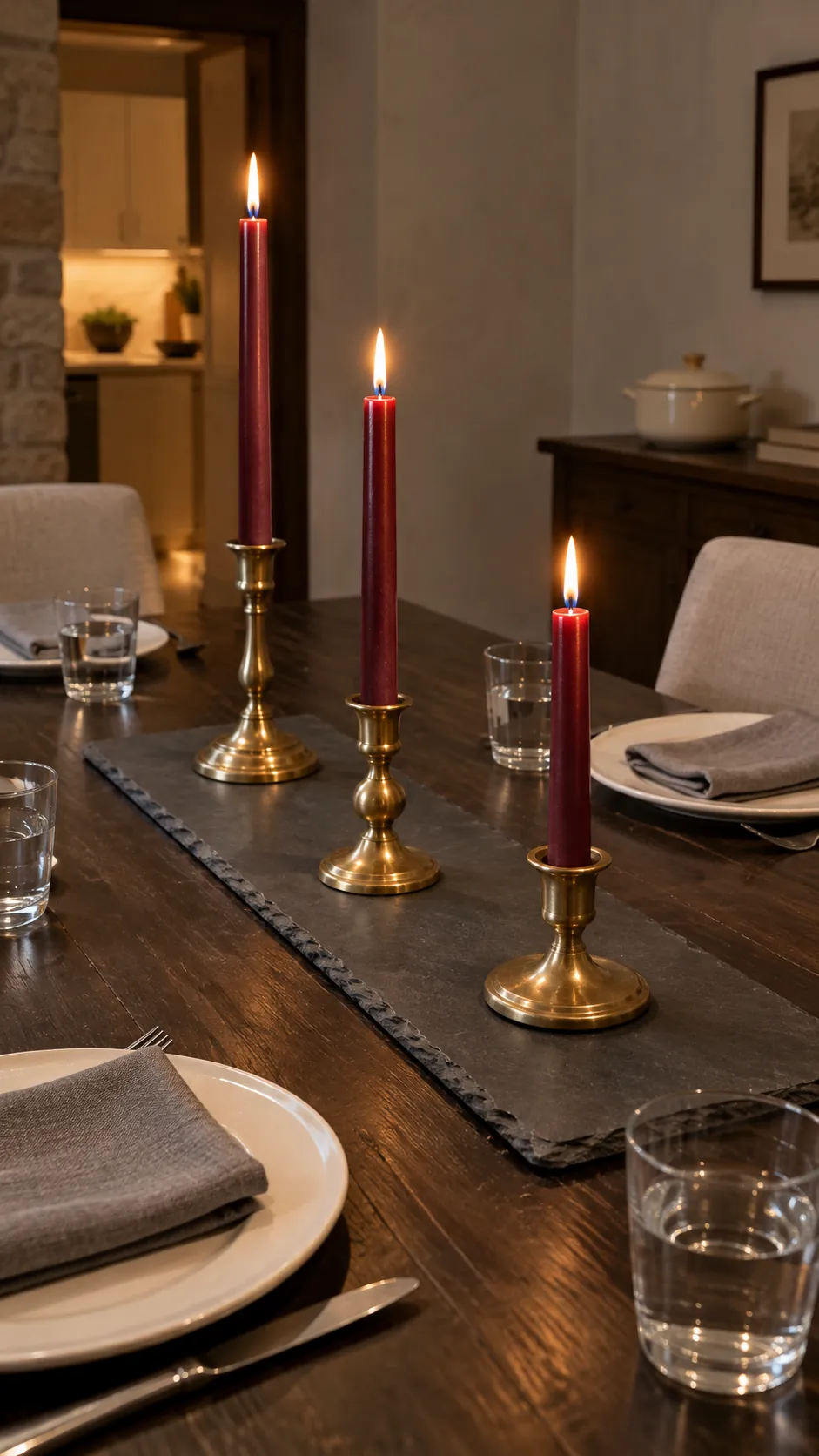
An elevated floral arrangement for a formal dinner
A tall arrangement only works if its narrow stand leaves a clear view beneath the flowers. Test it from seated eye level on both sides of the table before committing to the design. Place the widest foliage above that sightline and use a secure base that cannot wobble when the table is nudged. For a smaller gathering, the same flowers in a low bowl will usually be easier to manage.
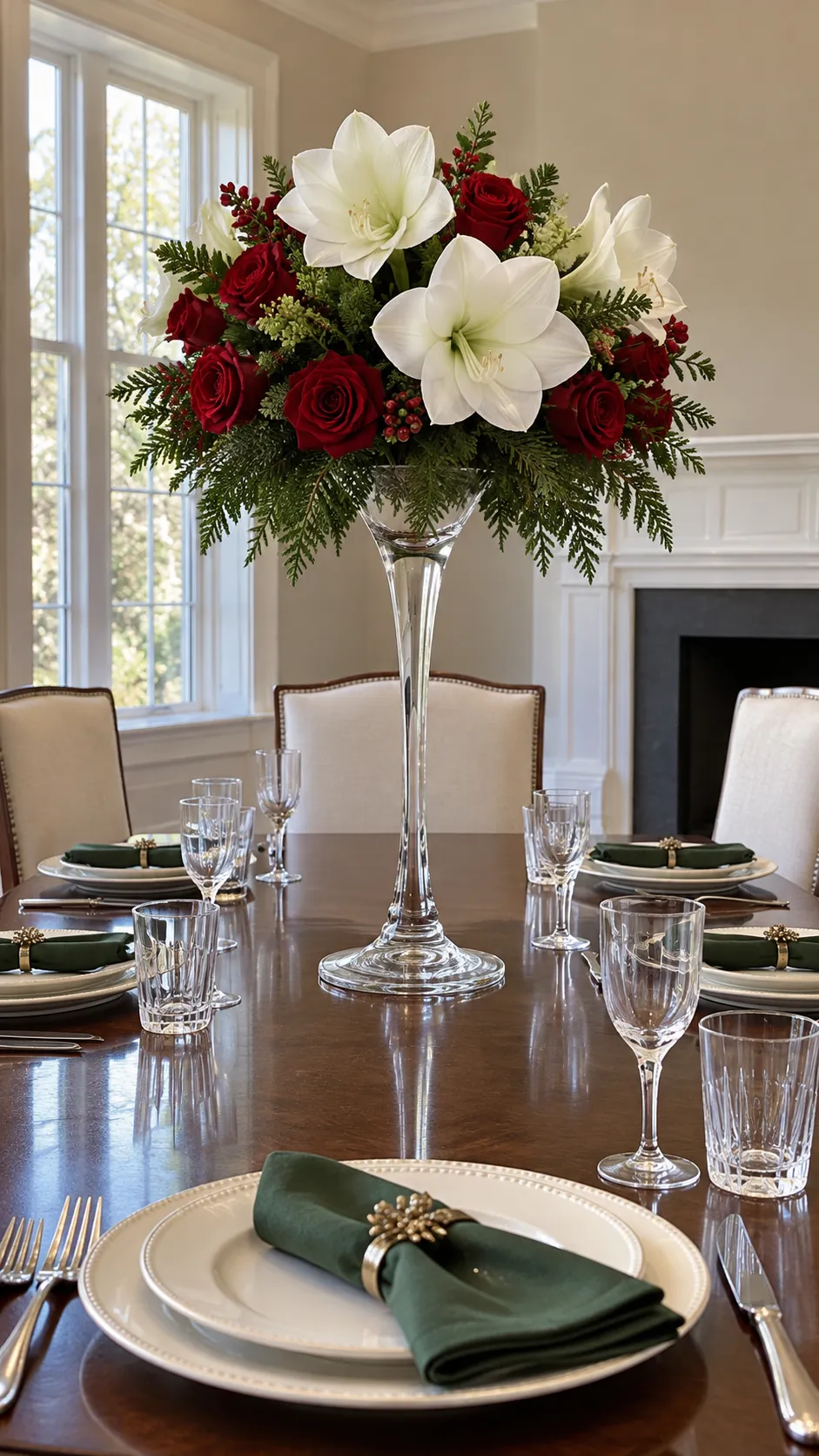
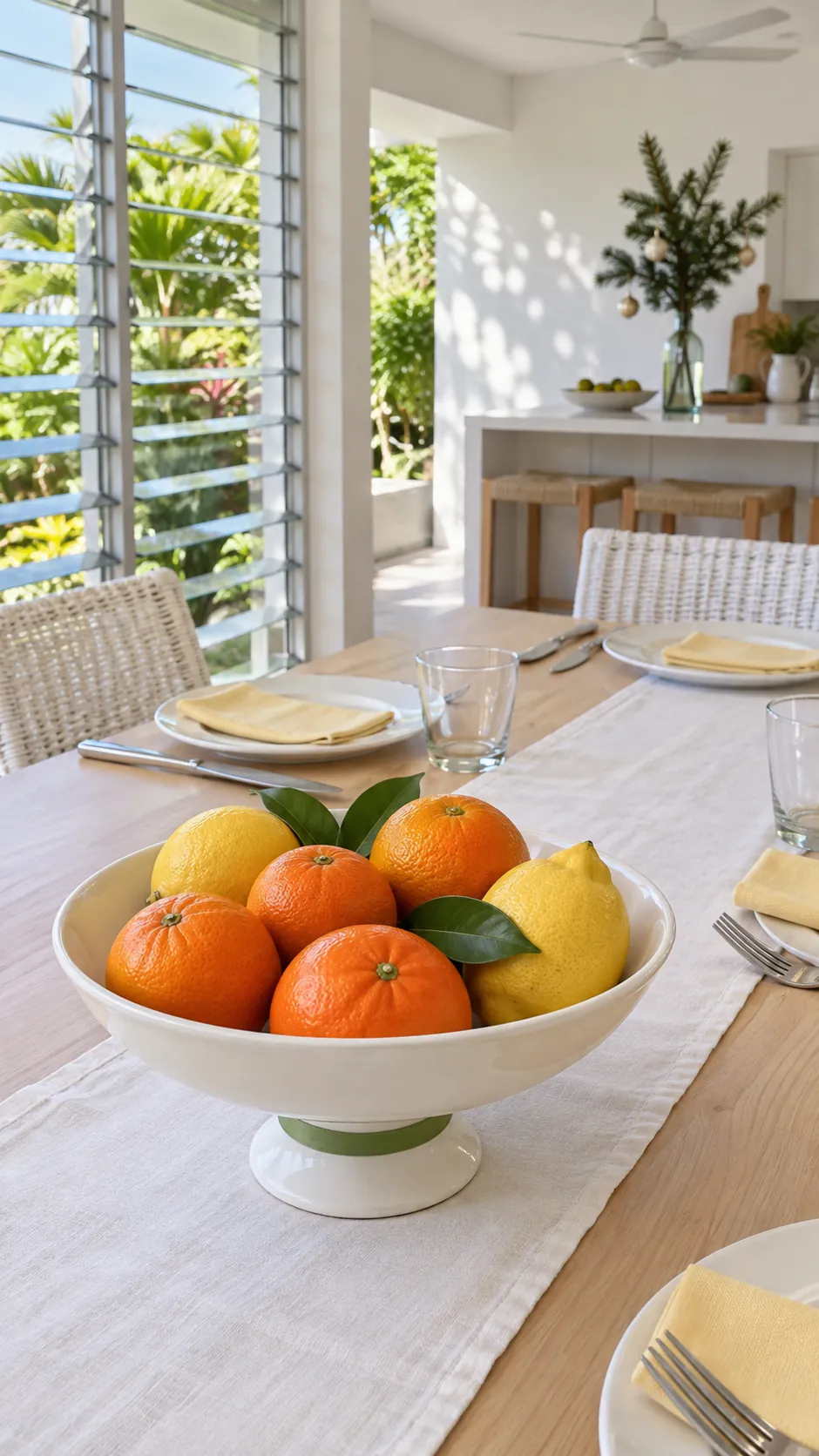
Whole citrus for a summer Christmas lunch
Whole mandarins and lemons bring color to a Christmas lunch in warm weather without needing heavy fabrics. Gather them in a clean footed bowl with a few leaves rather than scattering cut fruit along the cloth. Add pale yellow napkins and ordinary white dishes for a fresh, practical setting. Keep the fruit out of direct sun and separate any decorative foliage from food that guests may eat.
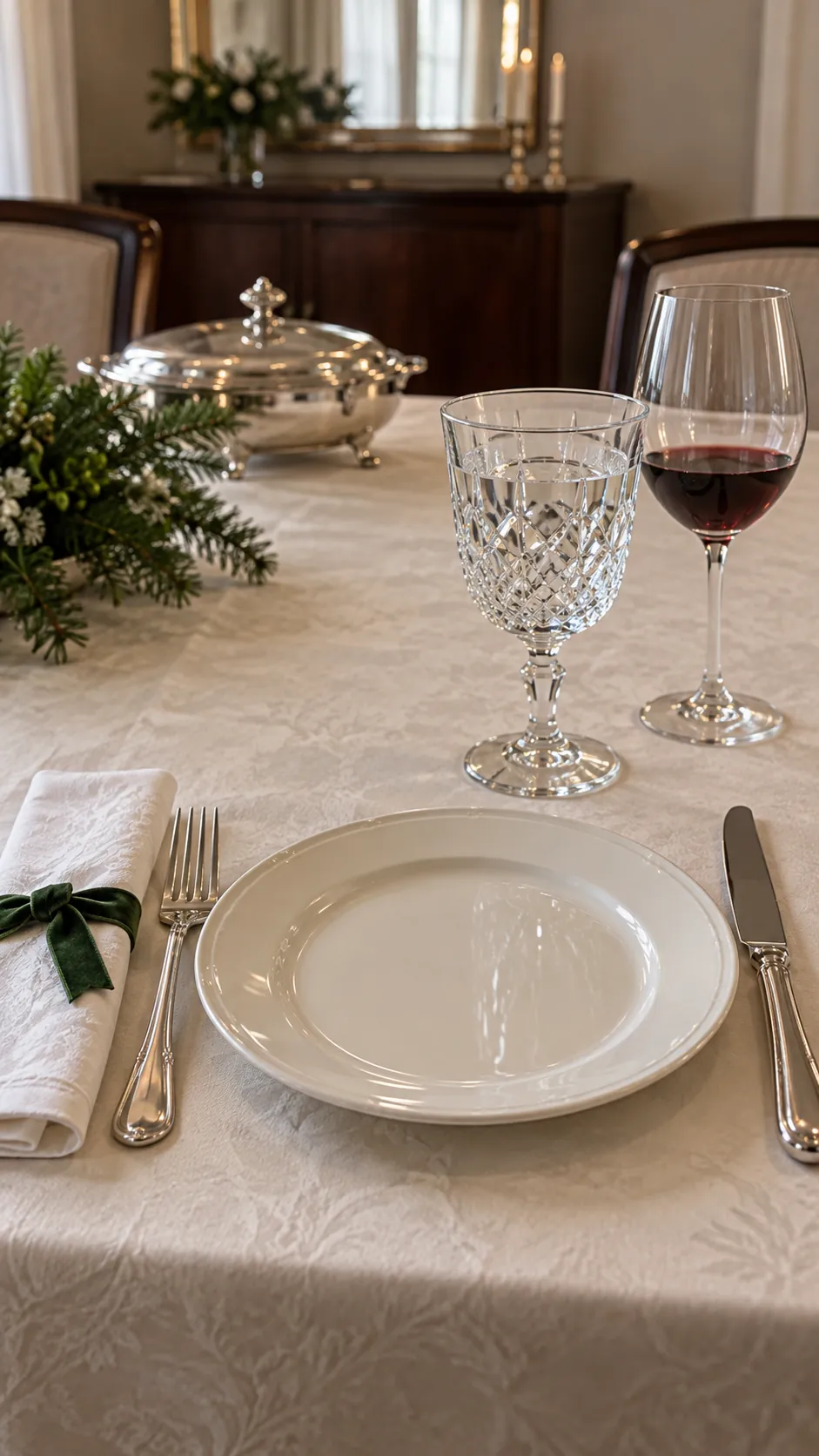
Crystal glasses with a simplified formal setting
Use the sparkle of clear cut glass as the main decoration for a formal dinner. Set only the glasses and utensils needed for the dishes you plan to serve, which keeps the table readable as well as elegant. A plain ivory cloth gives the glass patterns enough contrast. Inspect older glasses for chips and save delicate pieces for display if their condition is uncertain.
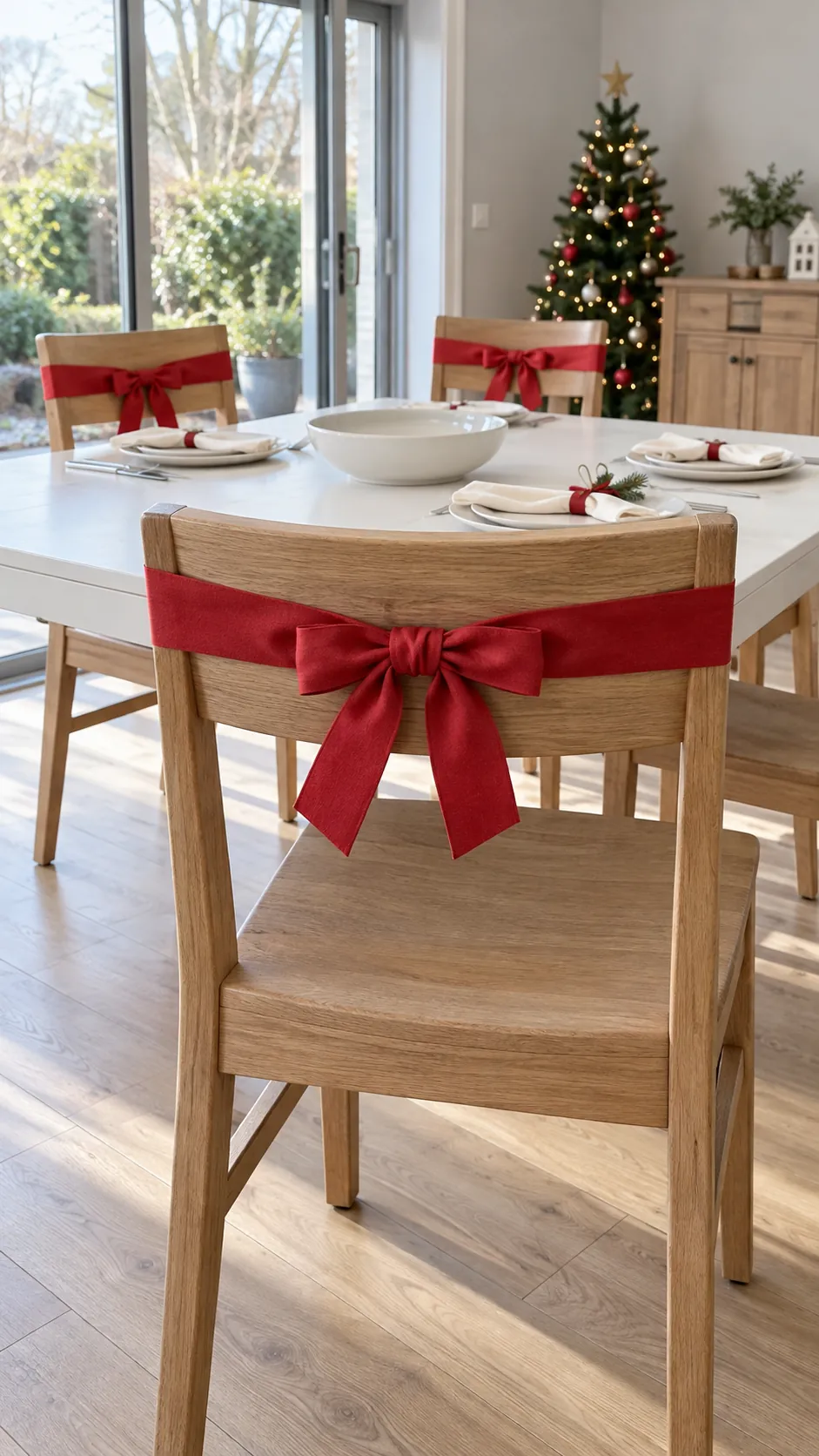
Chair bows that free the tabletop
Chair backs offer decoration space when the table itself must hold a large family meal. Tie a broad red ribbon around each back with a short bow that will not drag on the floor or catch on clothing. Repeat the ribbon color in a small napkin detail instead of adding another centerpiece. Check that the ties do not interfere with folding mechanisms or the way a chair slides under the table.
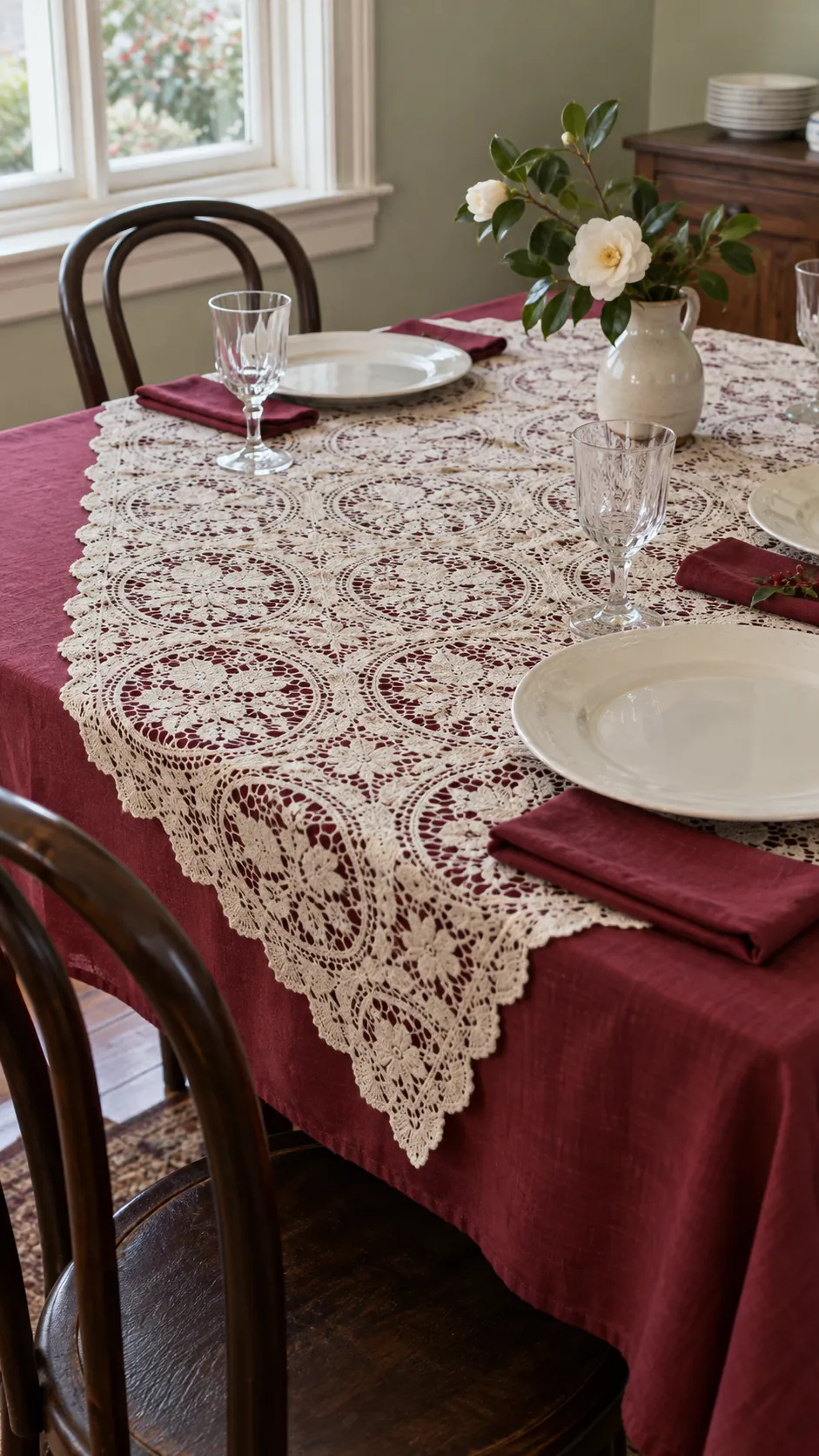
Lace layered over a washable base cloth
An inherited lace cloth can look festive over a solid cranberry base. Let the lace pattern be the focal detail, using plain plates and clear glasses to avoid visual clutter. Put a protective layer beneath valuable fabric if the meal includes sauces or red wine. A smaller lace overlay is easier to lift away than a full cloth when dinner gives way to board games.
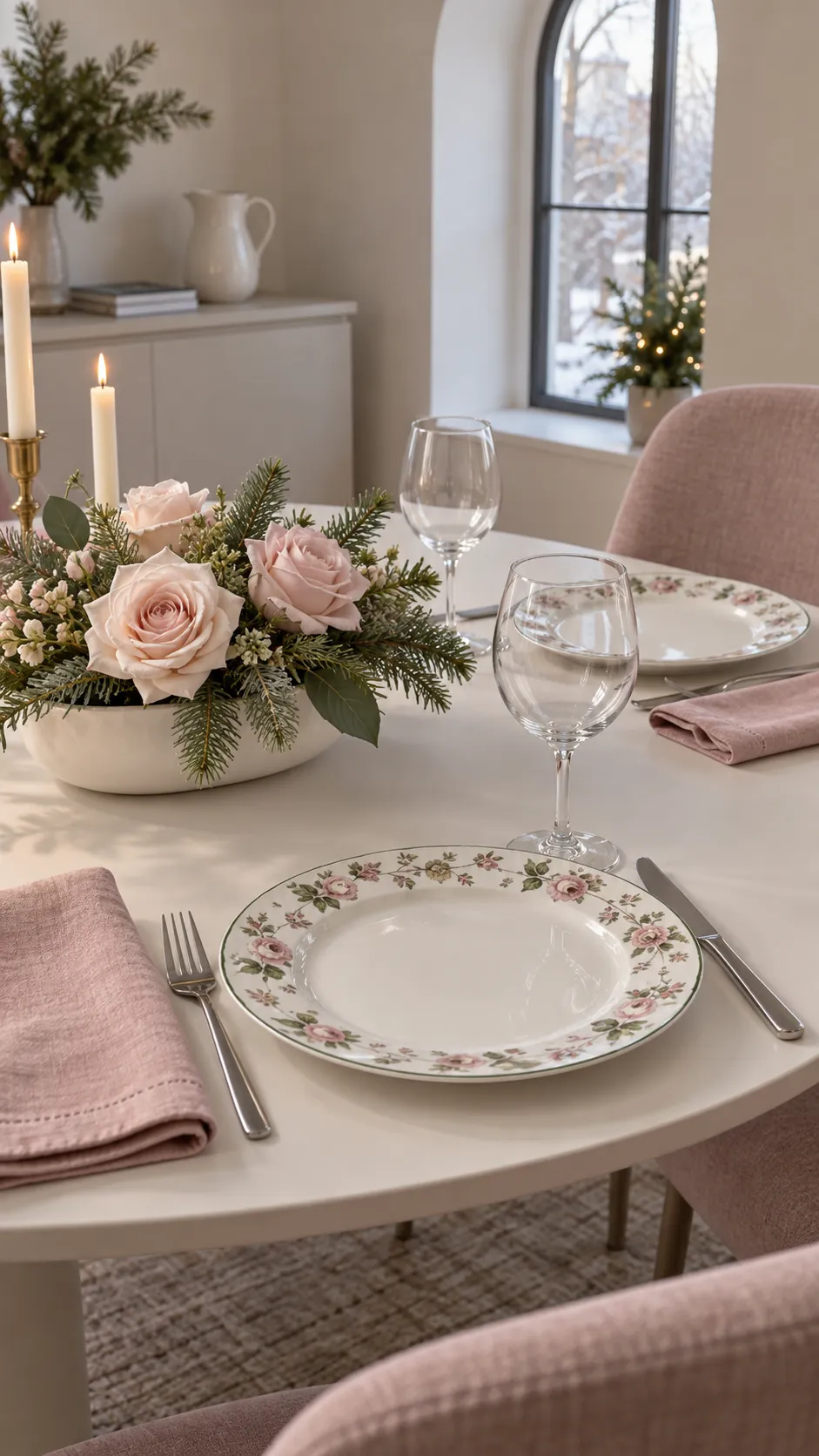
Romantic floral china with winter roses
A floral pattern and a low bowl of pale roses can create a romantic holiday table without elaborate props. Pick one flower color from the plates and repeat it in cloth napkins. Use modern dinnerware verified for food use when the age or glaze of decorative china is unknown. A few evergreen tips beside the roses will make the arrangement feel seasonal while preserving its delicate scale.
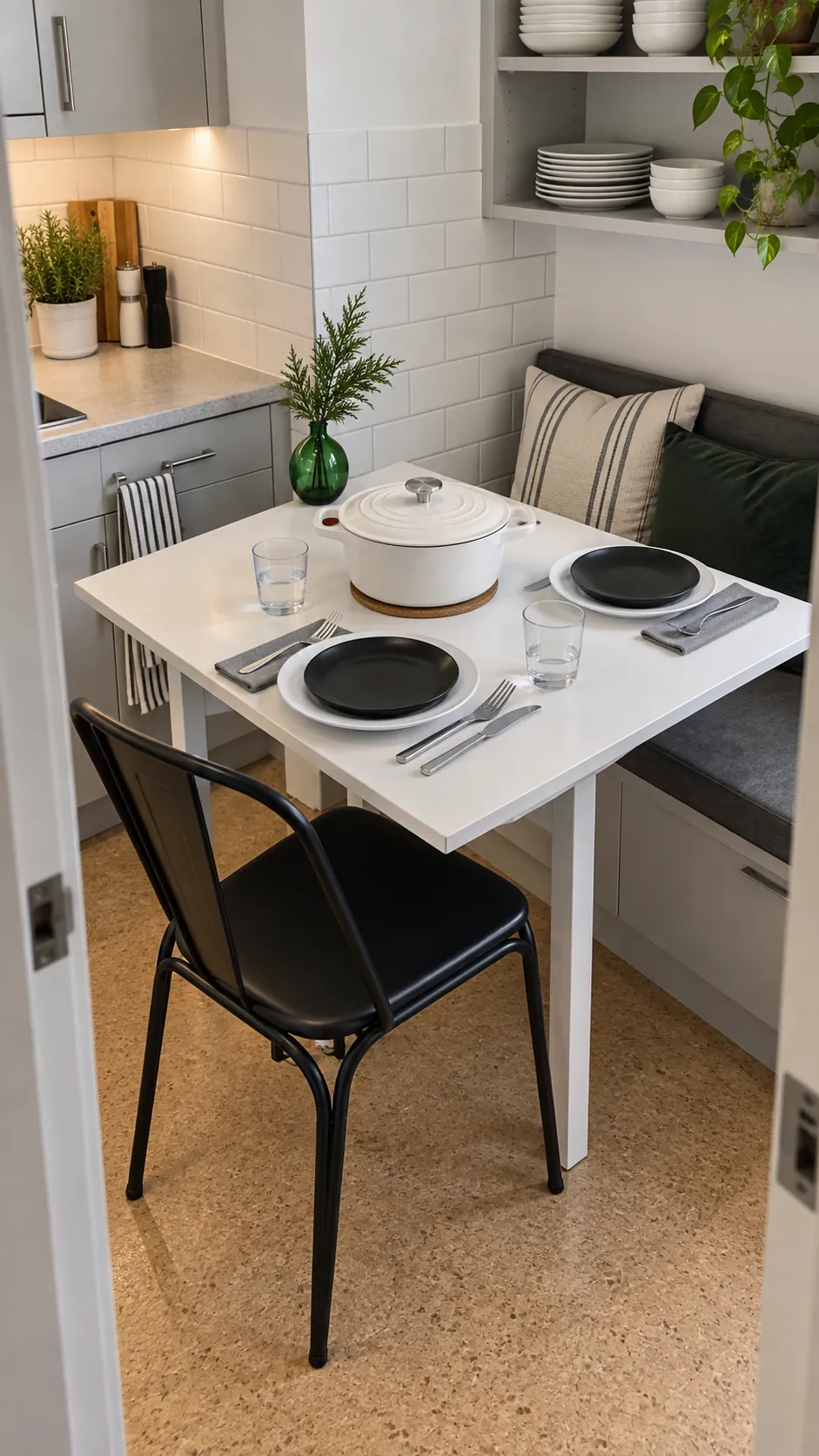
Black and white dishes for a kitchen nook
A compact kitchen table benefits from a simple graphic setting that clears away quickly. Pair white dinner plates with black side plates and use a single green glass bud vase near the wall. Keep the center free for a casserole or breakfast board. Stack spare dishes on a nearby shelf rather than building tall decorative piles where people eat.
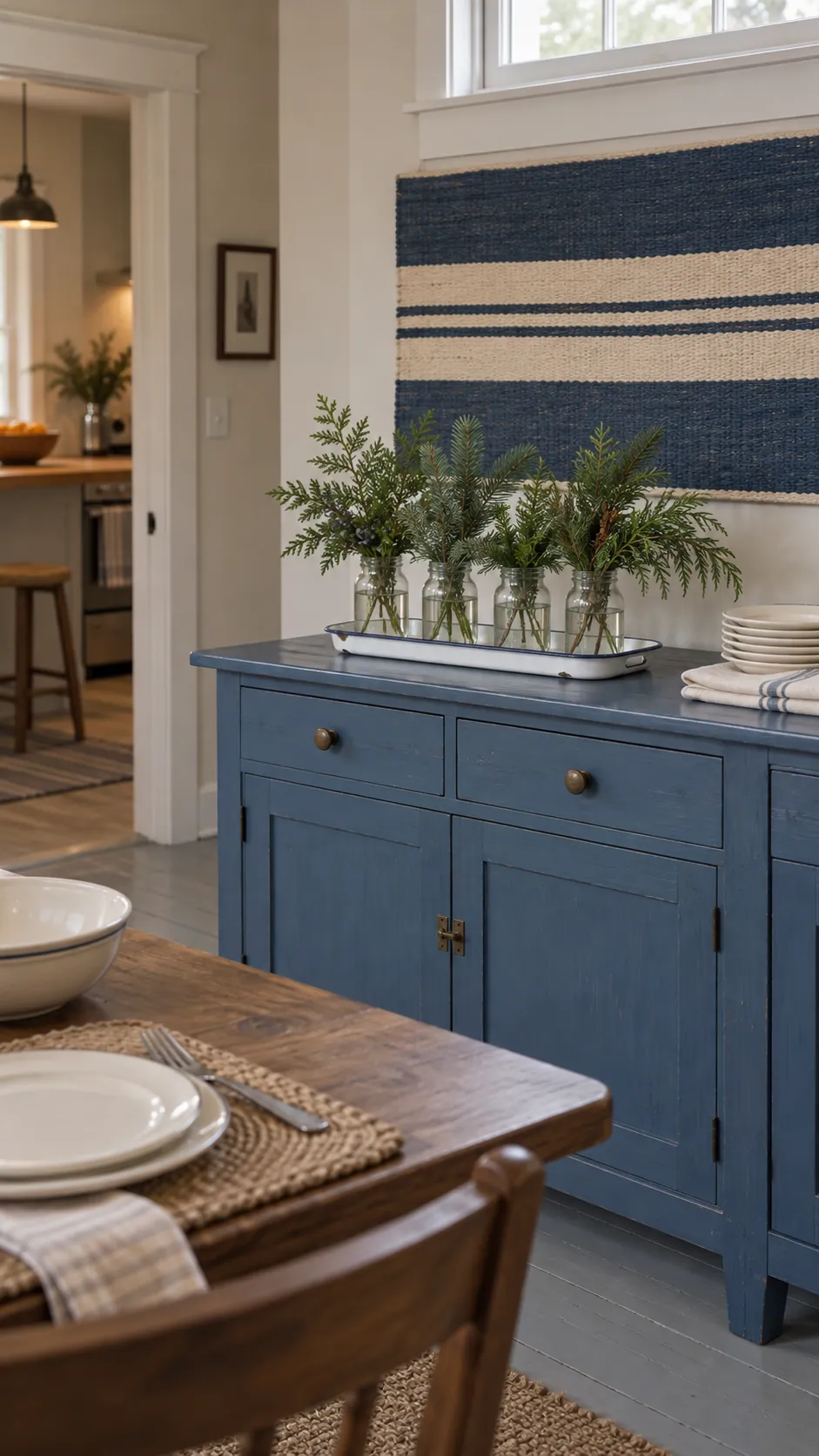
Mini evergreen jars on the dining sideboard
Move a cluster of small evergreen jars to the sideboard when serving space matters more than a centerpiece. Vary the branch shapes while keeping the jars similar in size so the group feels connected. Set them on a washable tray to catch water marks. This gives the dining area a festive backdrop while leaving the main table available for shared dishes.
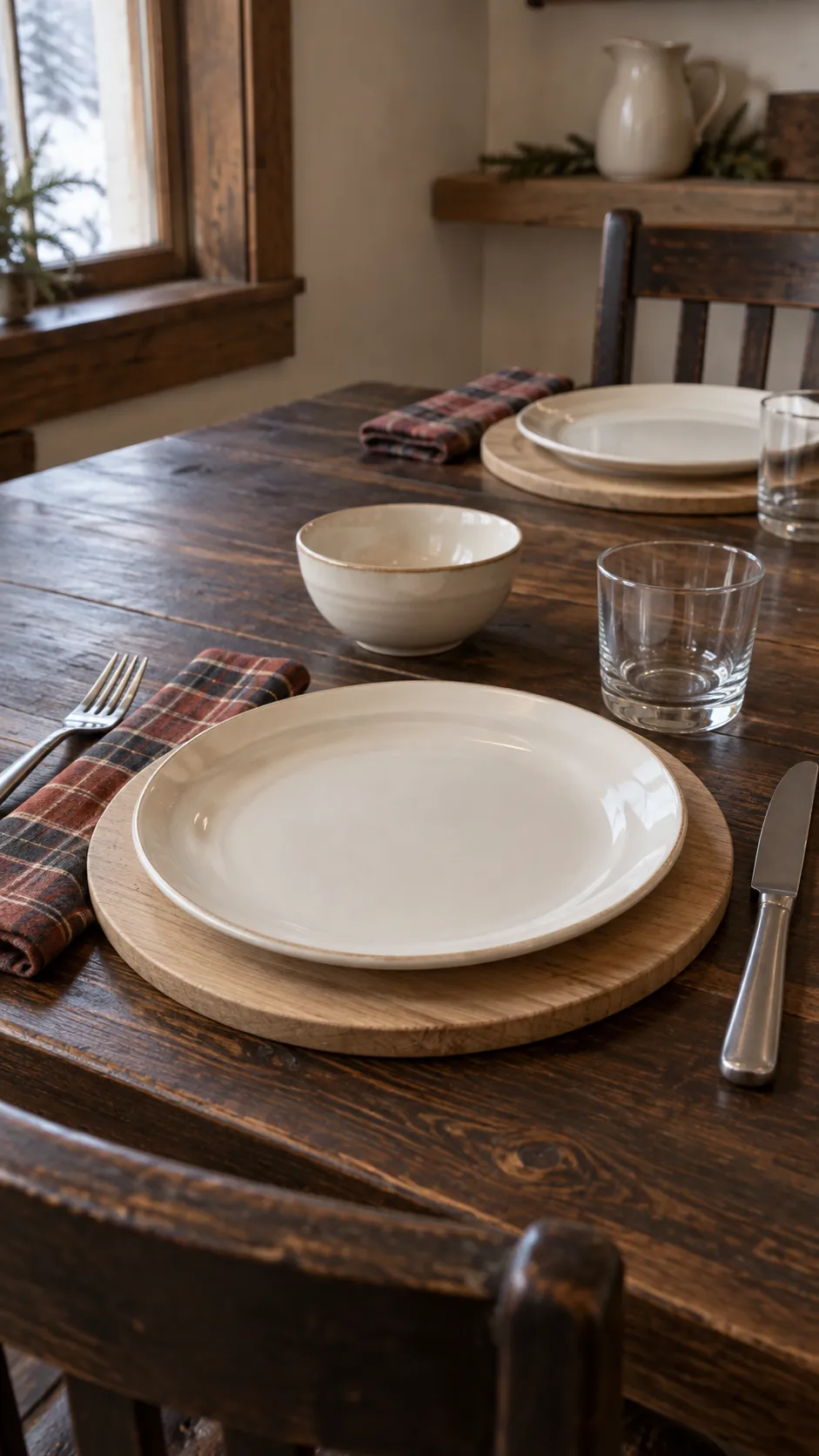
Wooden chargers for a cabin supper
Wooden chargers make a simple place setting feel substantial without requiring more china. Choose flat, sealed chargers that sit steadily beneath your dinner plates and wipe them according to their finish. A narrow plaid napkin provides enough pattern against the wood. Leave the larger centerpiece off the table if the chargers already occupy most of its width.
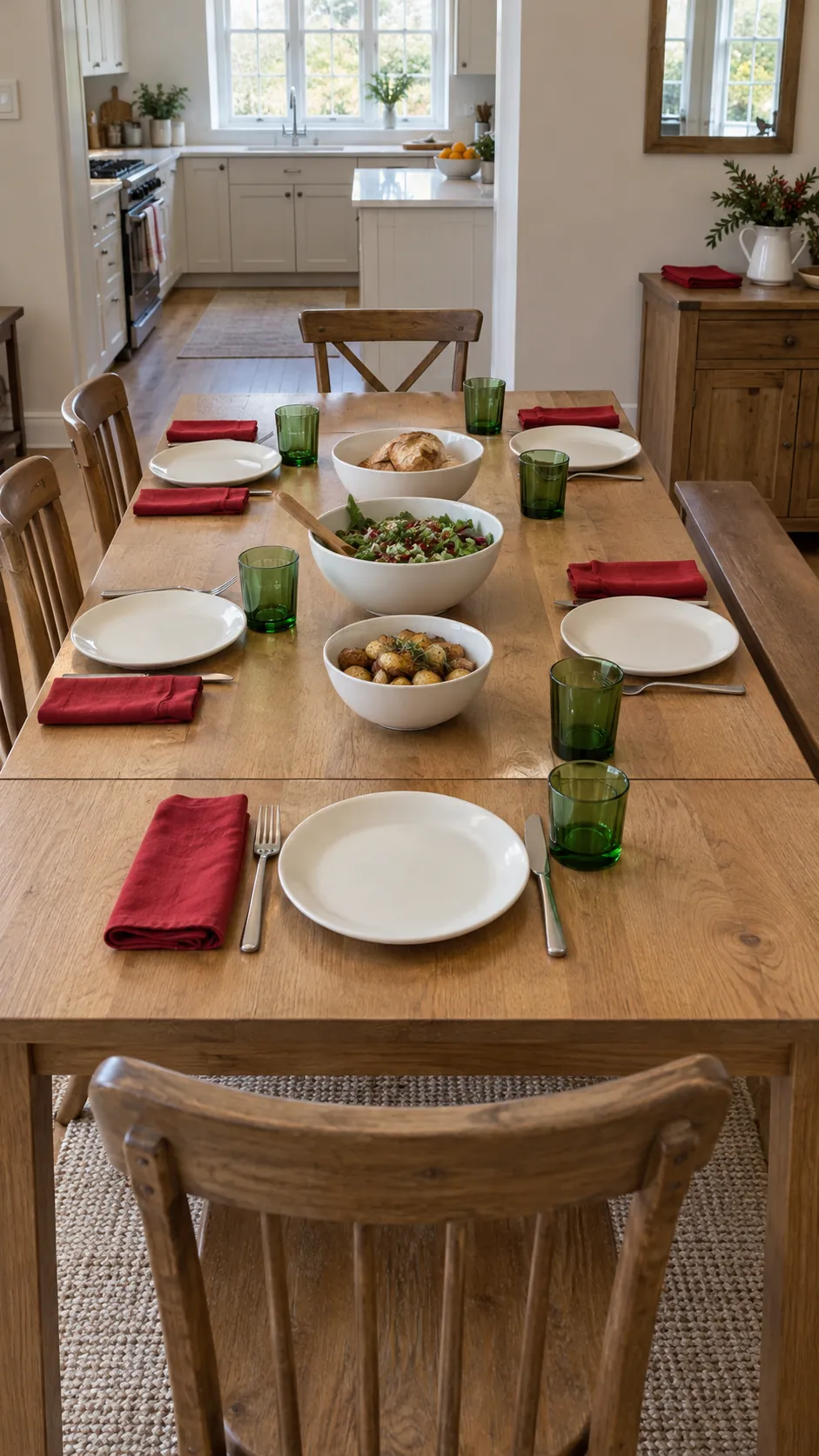
Red napkins and green glasses on bare wood
Red and green feel less busy when each color has a clear job. Use red for the napkins and green for the water glasses, keeping plates and serving bowls neutral. The exposed wood between settings gives the palette breathing room. This approach is easy to repeat across extra seats when the guest list grows.
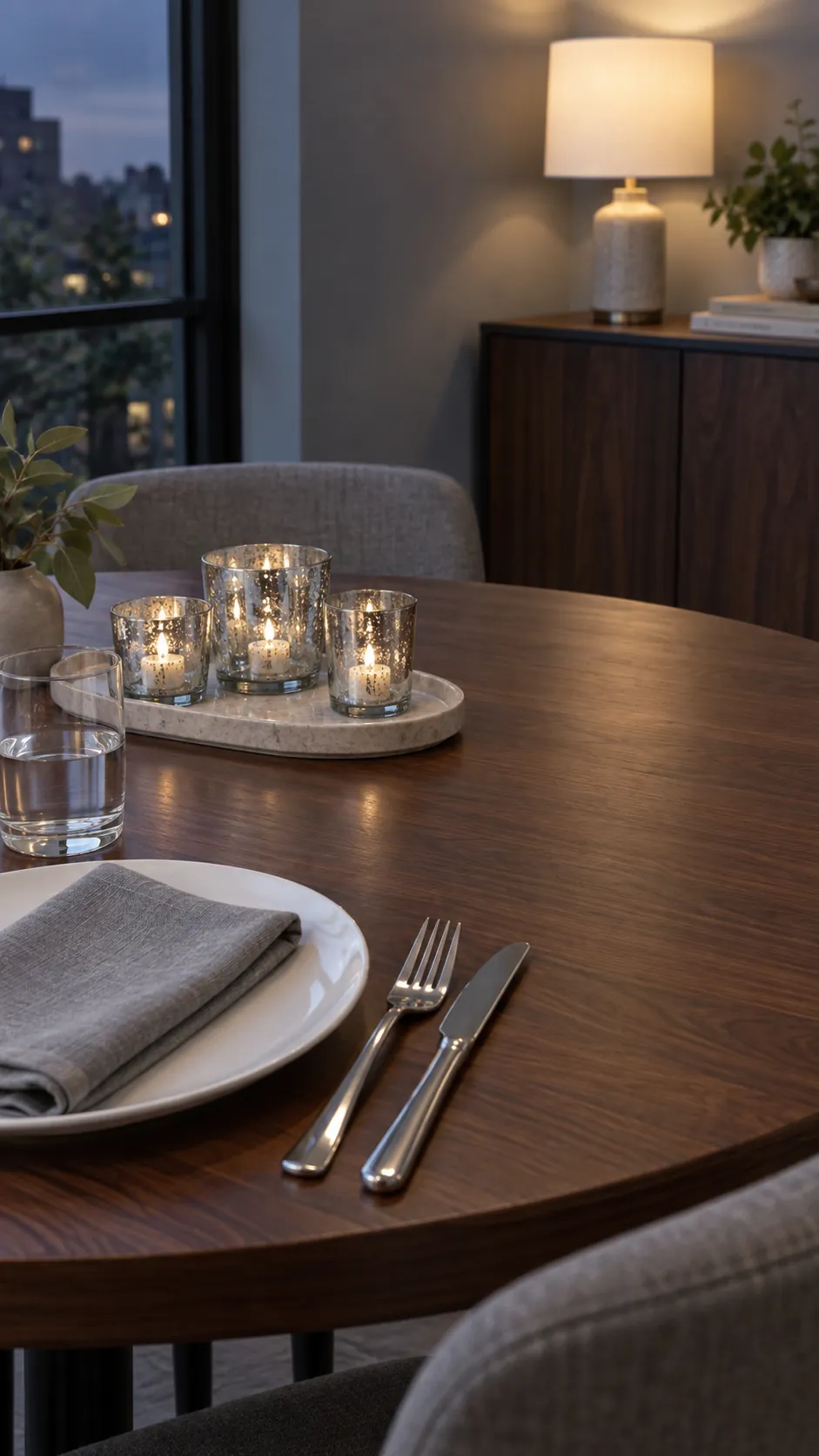
Silver reflections for an evening table
Silver accents can brighten a dim dining corner without covering it in glitter. Combine polished cutlery with a small group of silvered glass votive holders, using battery inserts near linens. Keep a large serving area uncovered so reflections remain a detail rather than a distraction. A soft grey napkin makes the metal feel quieter than a fully metallic place setting.
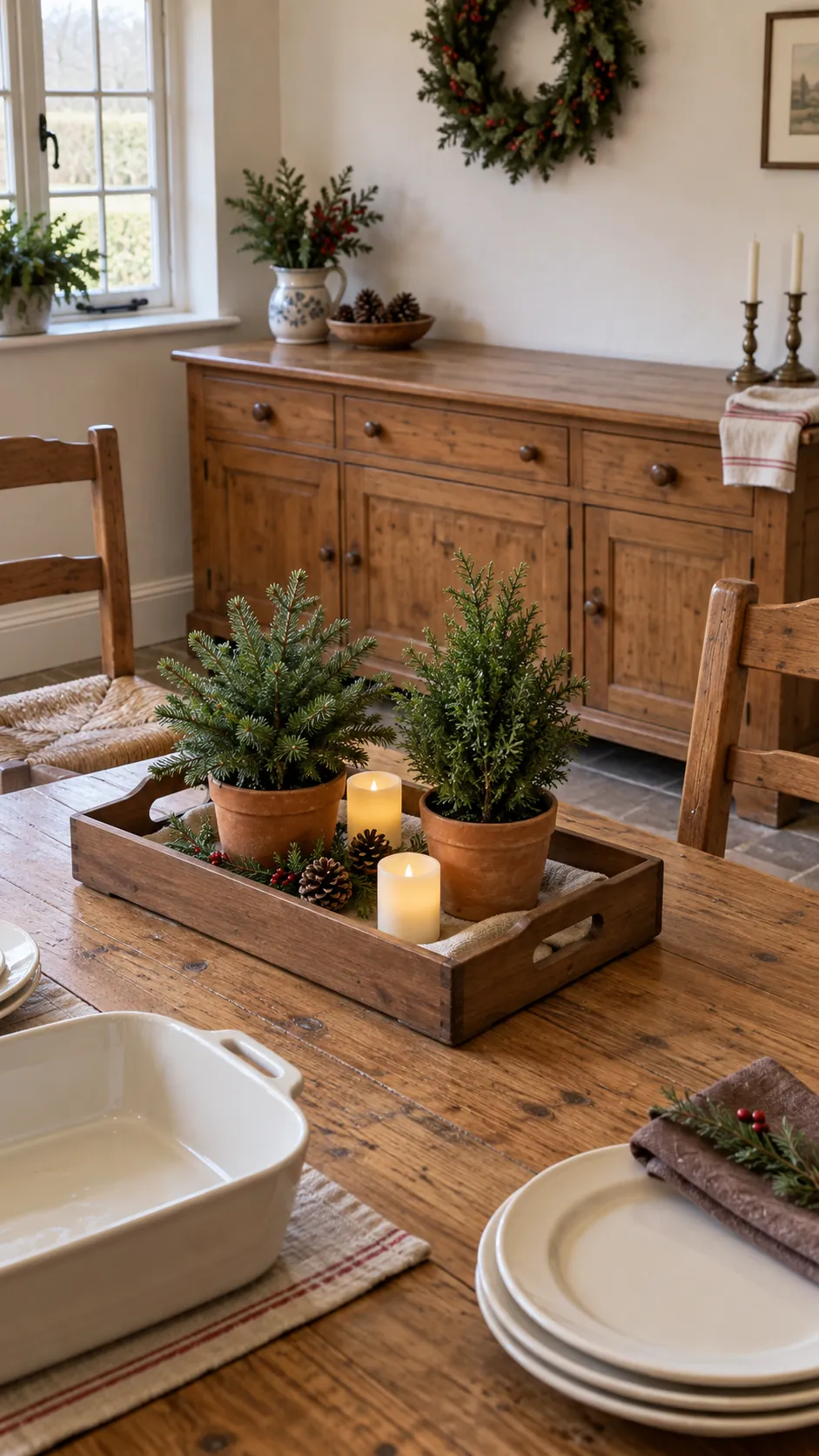
A rustic tray that lifts away in one move
Build a compact centerpiece inside a wooden tray so you can remove it when the food arrives. A linen strip, two small evergreen pots and battery votives give a rustic look without loose burlap fibers near plates. Keep the tray light enough for one person to lift comfortably. Store it on the sideboard during dinner, where it can continue to decorate the room.
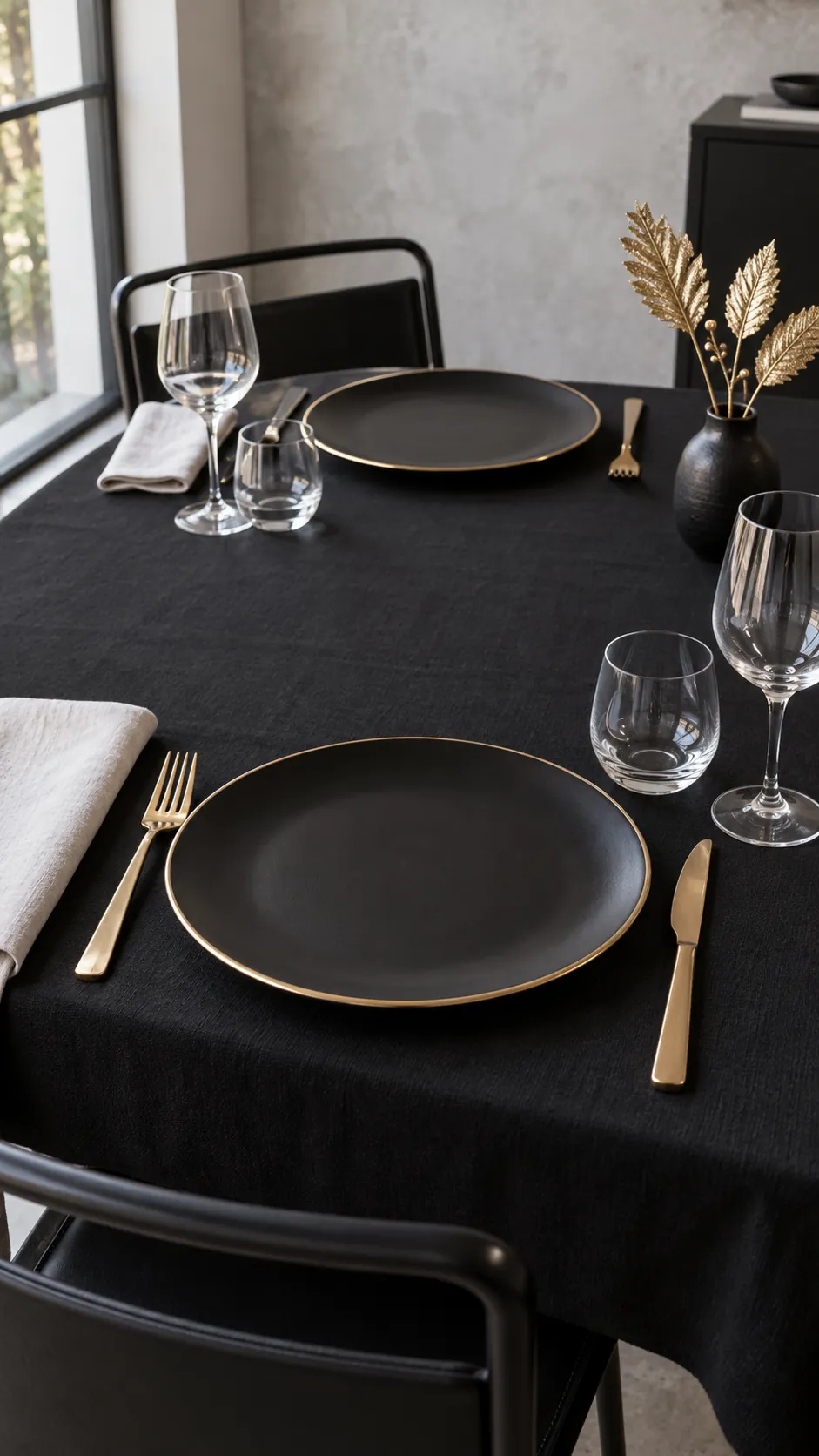
Black and gold with a clear focal point
A black and gold setting needs only a few reflective details to feel complete. Put gold rimmed plates on a plain black cloth and choose clear drinking glasses to lighten the composition. Confine any decorative gold picks to a small vase, away from food and utensils. Matte napkins help balance shiny metal so the table remains comfortable to look across.
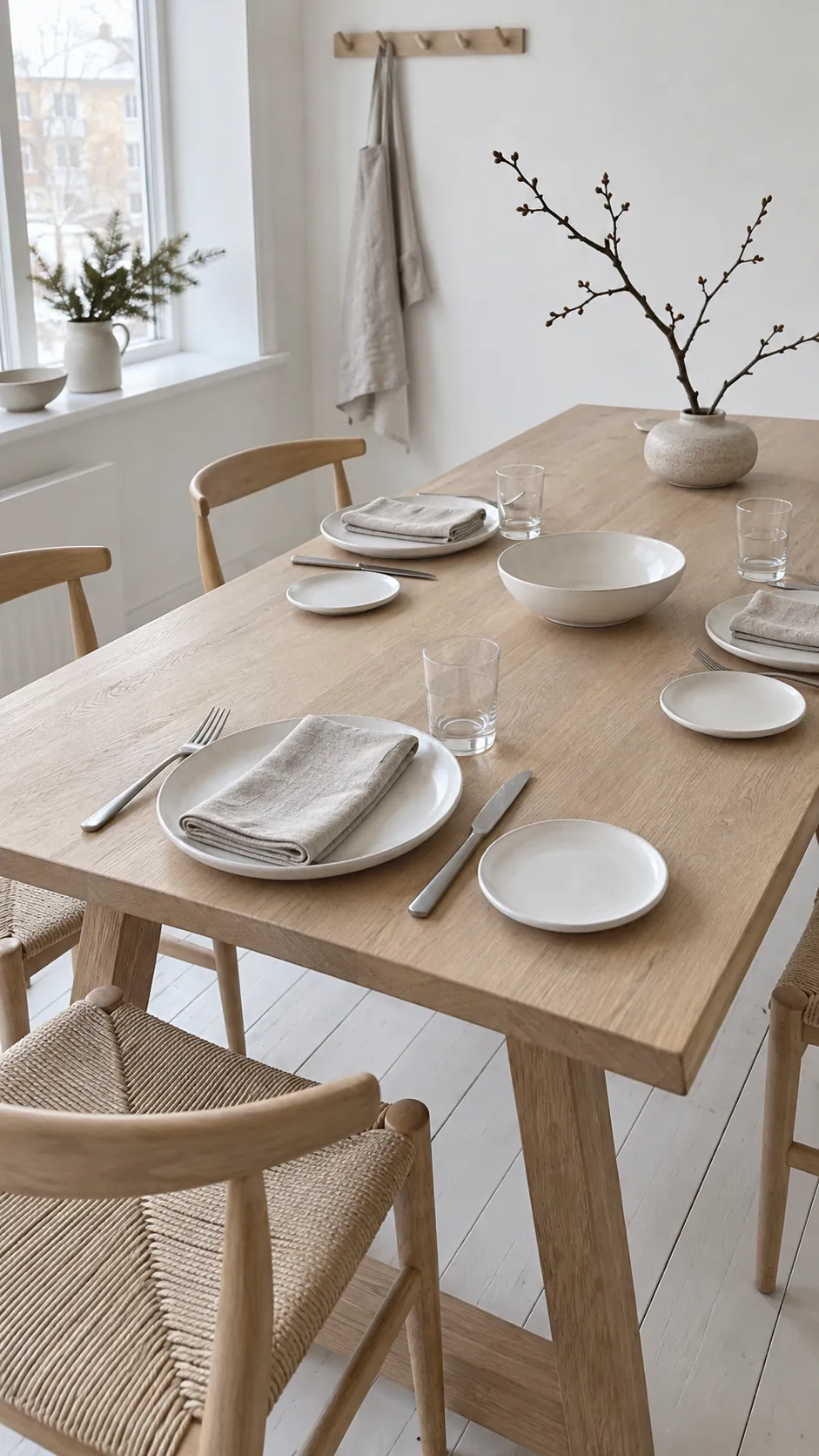
Scandinavian neutrals with folded linen
Oatmeal linen, pale wood and simple white dishes create a quiet setting for a bright dining room. Fold the napkins into plain rectangles instead of elaborate shapes, leaving space for a small bread plate. One bare branch in a low stoneware vessel adds structure without a full garland. The restrained palette works particularly well when colorful food will supply the strongest accents.
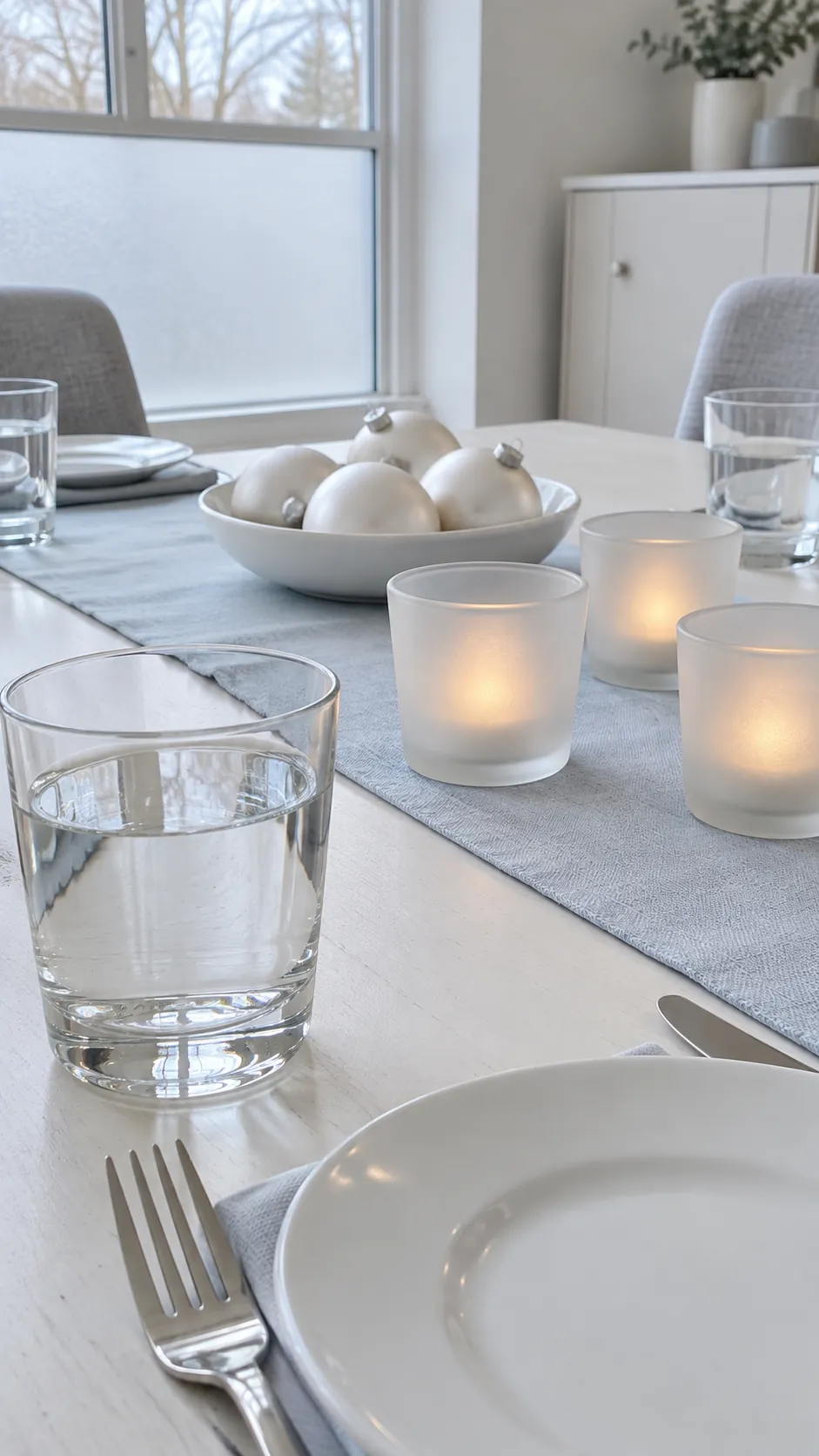
Frosted glass without loose artificial snow
Frosted glass votives suggest winter without scattering material that could reach food. Place white ornaments in a shallow dish and use a smooth pale runner to link the pieces. Battery candles keep the translucent holders glowing without open flames beside decorations. Contrast the frosted surfaces with clear water glasses so the table does not become visually flat.
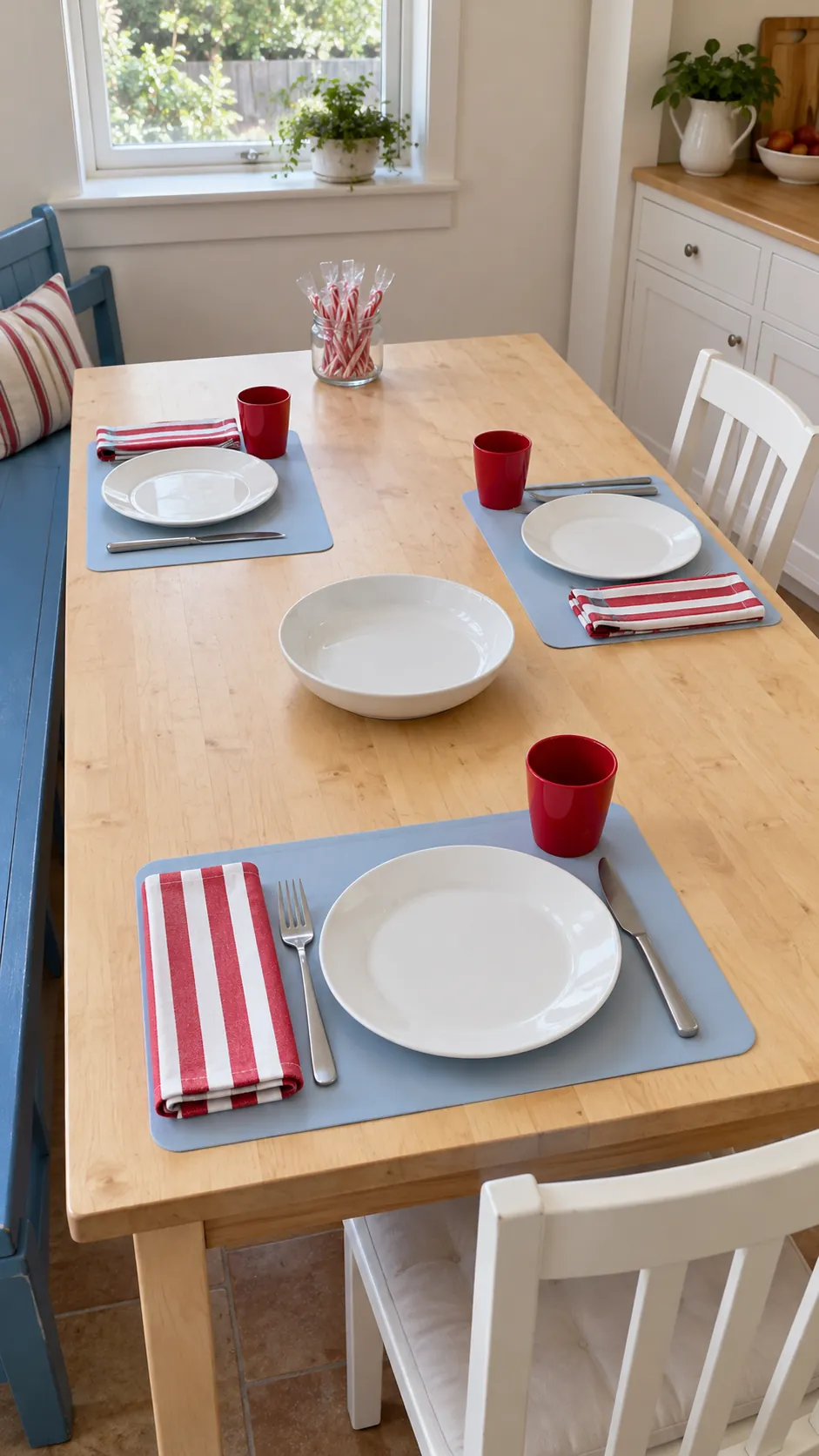
Candy cane stripes for a family lunch
Red and white napkins bring a candy cane theme to the table without covering it in sweets. Put individually wrapped peppermint sticks in a small jar on the dessert end, where guests can choose one later. Use plain red cups and washable placemats for an informal meal. Leaving the main center space open makes this cheerful setting easier to use with children.
A gingerbread house on the dessert table
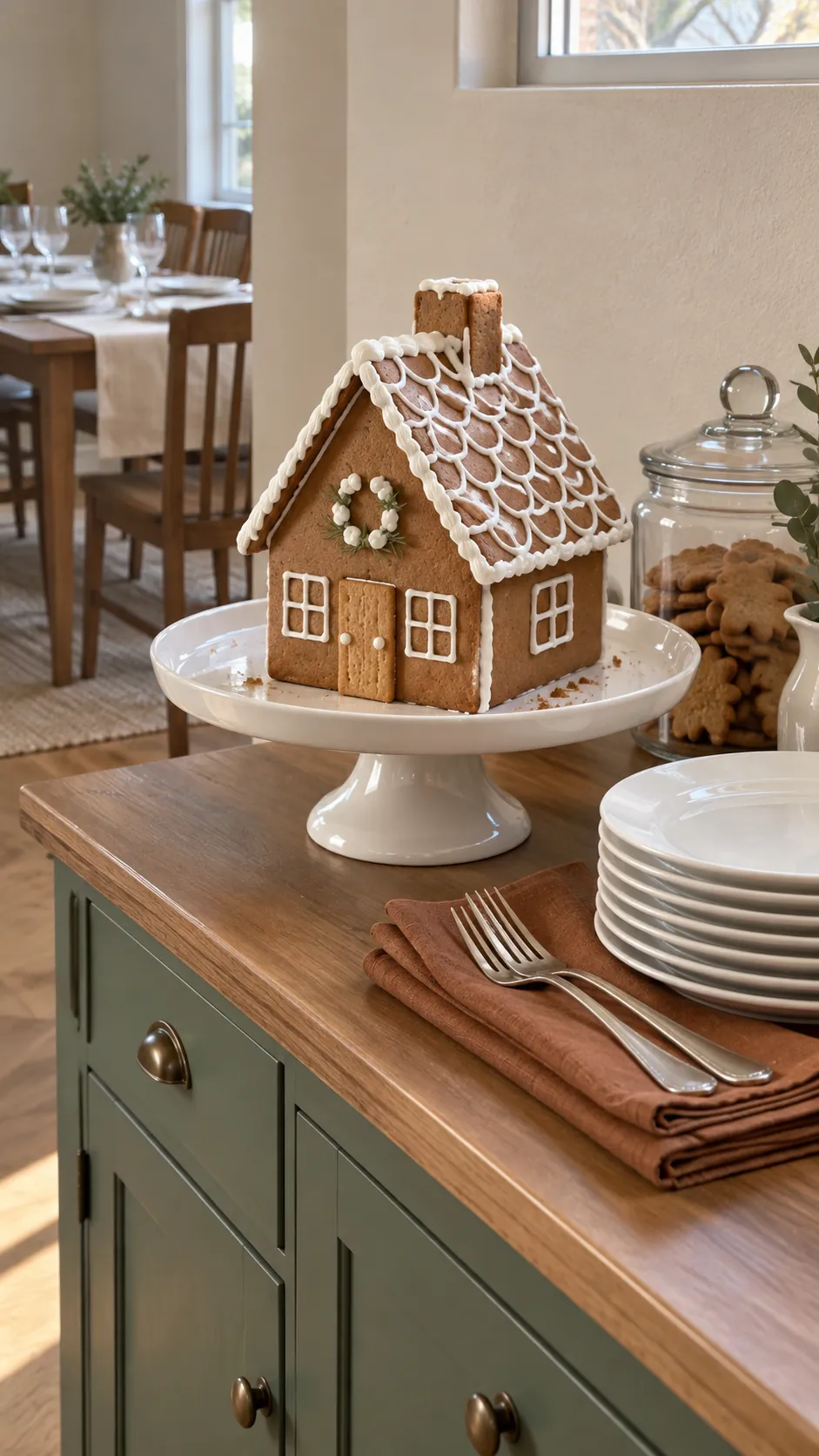
Make one gingerbread house the centerpiece of a separate dessert station rather than the dining table. Set it on a clean cake stand with a rimmed base that catches crumbs. Ginger colored napkins and white plates can carry the theme back to the meal. Skip scented candles near the food, allowing the actual baking to supply the aroma.
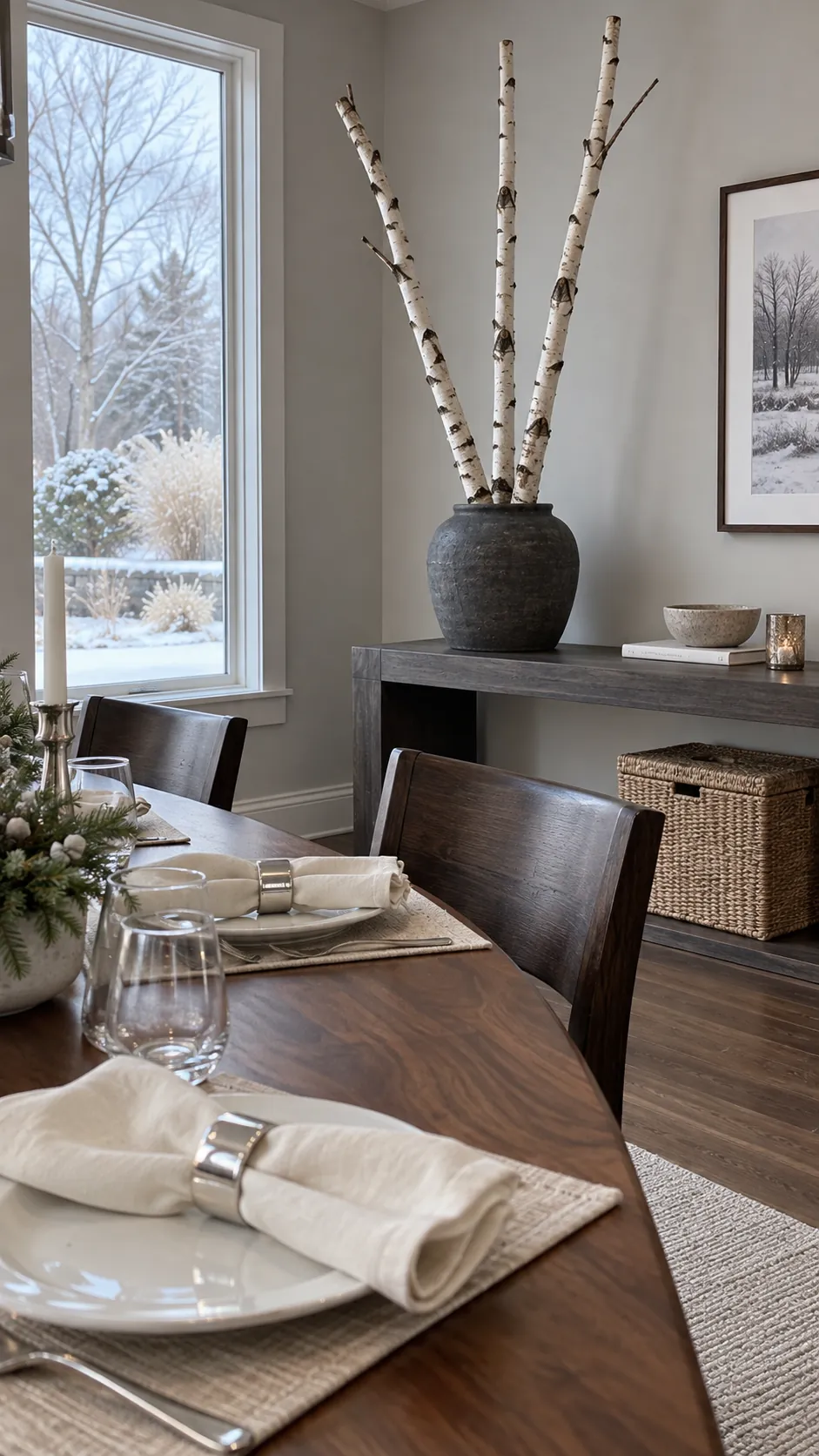
Birch branches in a stable winter vessel
A few slender birch branches can suggest a winter forest without stacking logs where people eat. Anchor them securely in a heavy vessel on a wide end console, not in the middle of a narrow table. Use silver napkin rings on the dining table to connect the two zones. If you already have pine and birch winter planters outside, this smaller indoor arrangement can echo their materials.
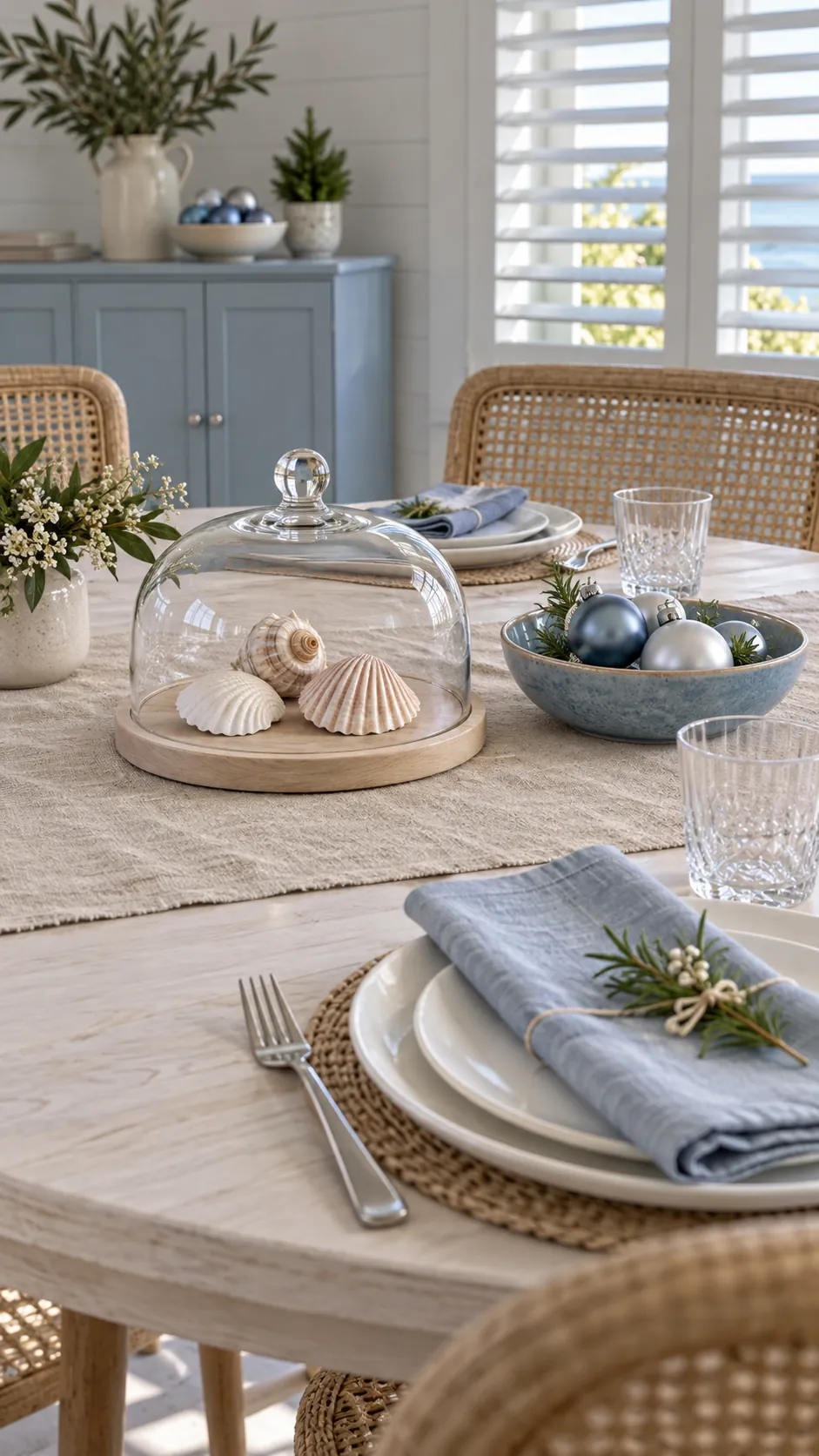
A coastal palette with shells under glass
Sand colored linen and pale blue napkins make a coastal Christmas setting feel natural to the room. Keep a few clean shells beneath a clear glass cloche rather than scattering them among dishes. Add a small bowl of blue ornaments to signal the season. Choose a low cloche that allows conversation across the table, or place it on the adjacent buffet.
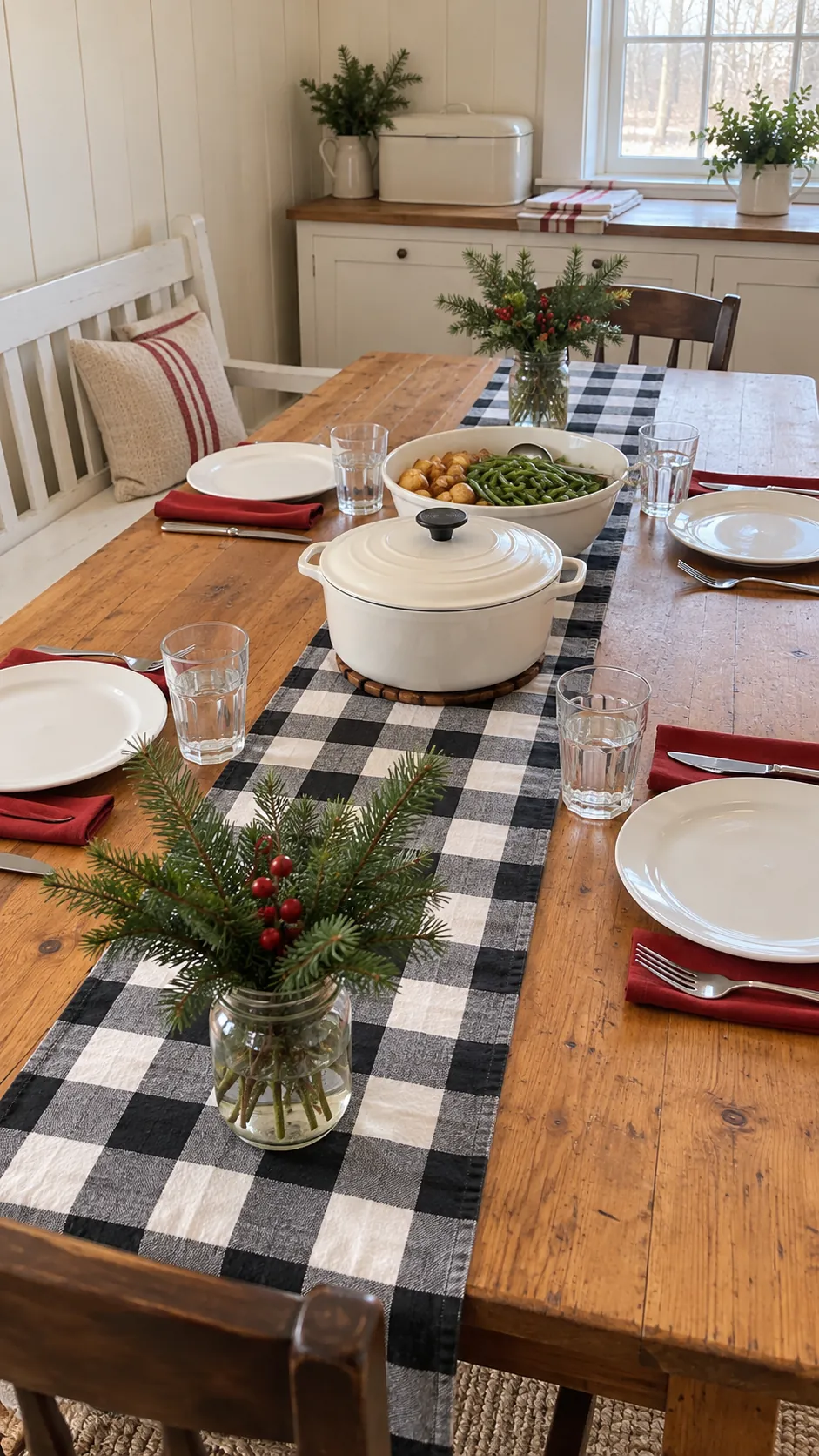
Buffalo check at an informal farmhouse table
A black and white checked runner gives a long wooden table a strong center line. Use ordinary white dishes and folded red napkins so the setting feels ready for supper rather than a display. Short jars of clipped greenery can sit near the ends, leaving space for shared bowls. Avoid rough galvanized pieces as eating surfaces unless the manufacturer confirms they are food safe.
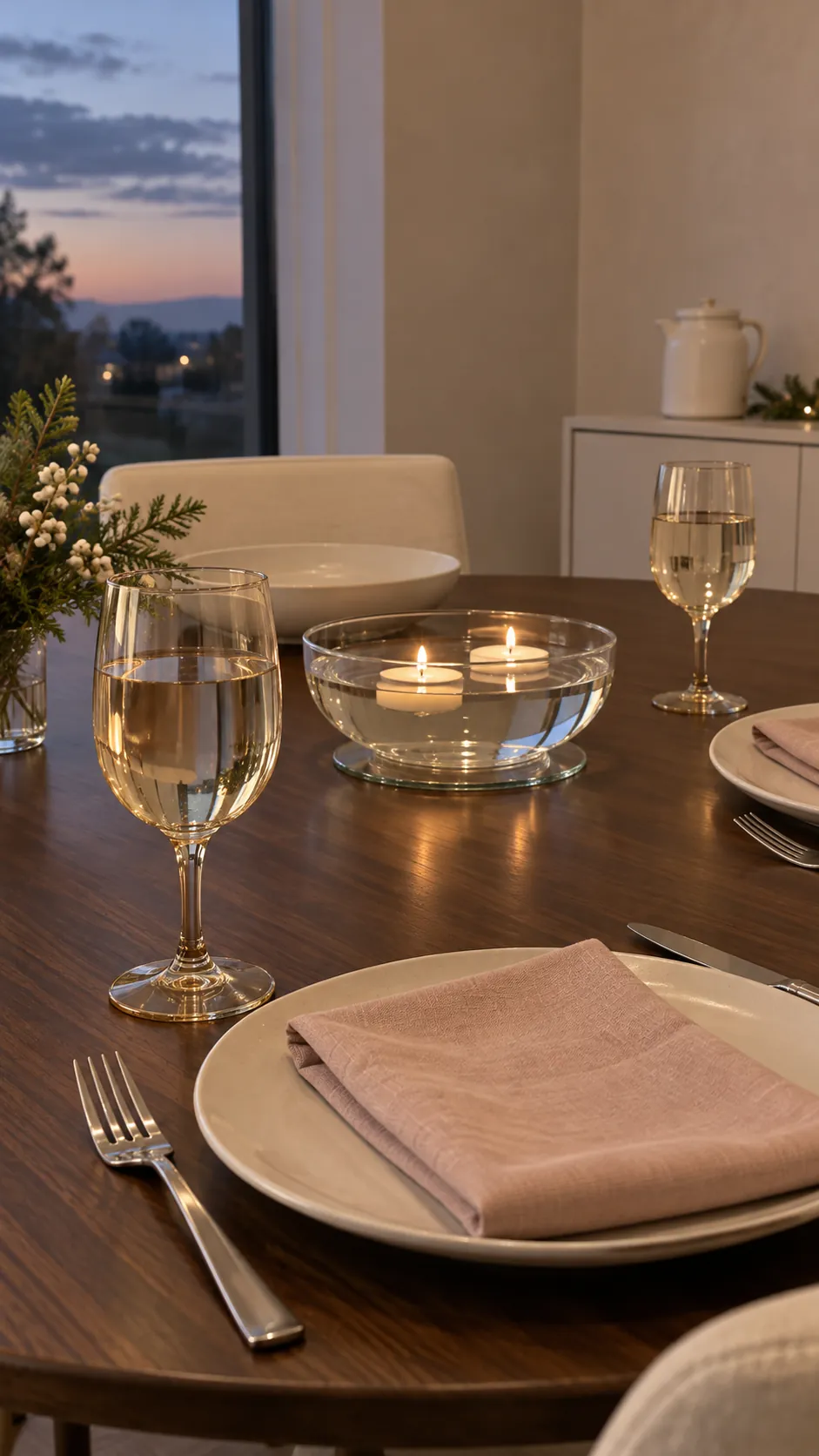
Champagne glass and blush linen
Soft blush napkins and champagne colored glass give a small celebration a gentle metallic note. Put the shimmer in one material, then keep chargers and dishes plain to avoid competing finishes. A low clear bowl with floating unscented candles can work on a stable surface with generous clearance, or use battery alternatives. Check that guests can pass dishes around the bowl without reaching across it.
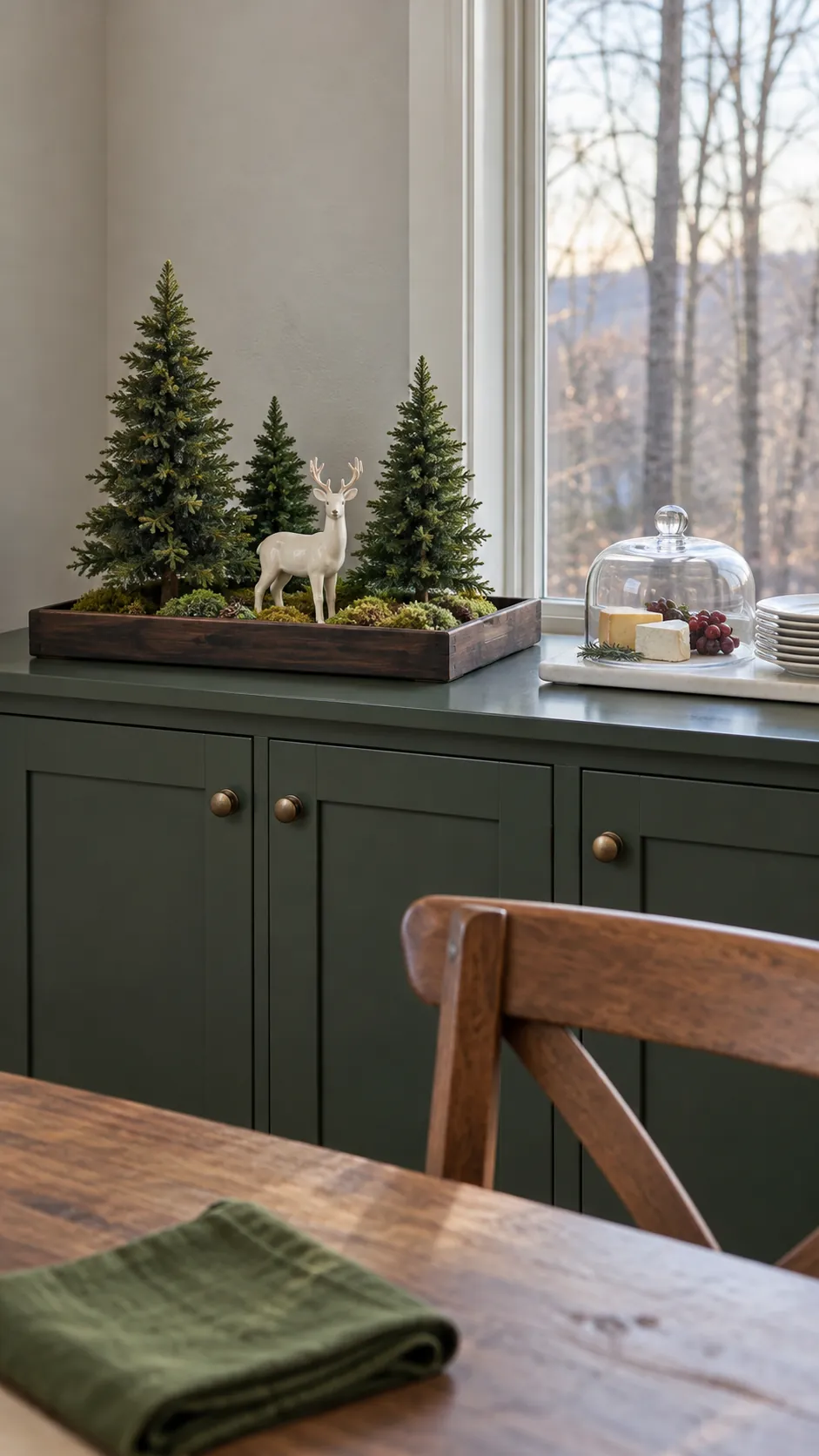
A contained woodland scene for the buffet
Miniature trees and a small deer figure make a woodland scene more useful on a buffet than between dinner plates. Arrange them in a shallow tray with preserved moss kept fully inside the edge. Use a separate clean surface for food, and avoid loose artificial snow. A single moss green napkin at each dining seat links the scene to the meal without duplicating all its props.
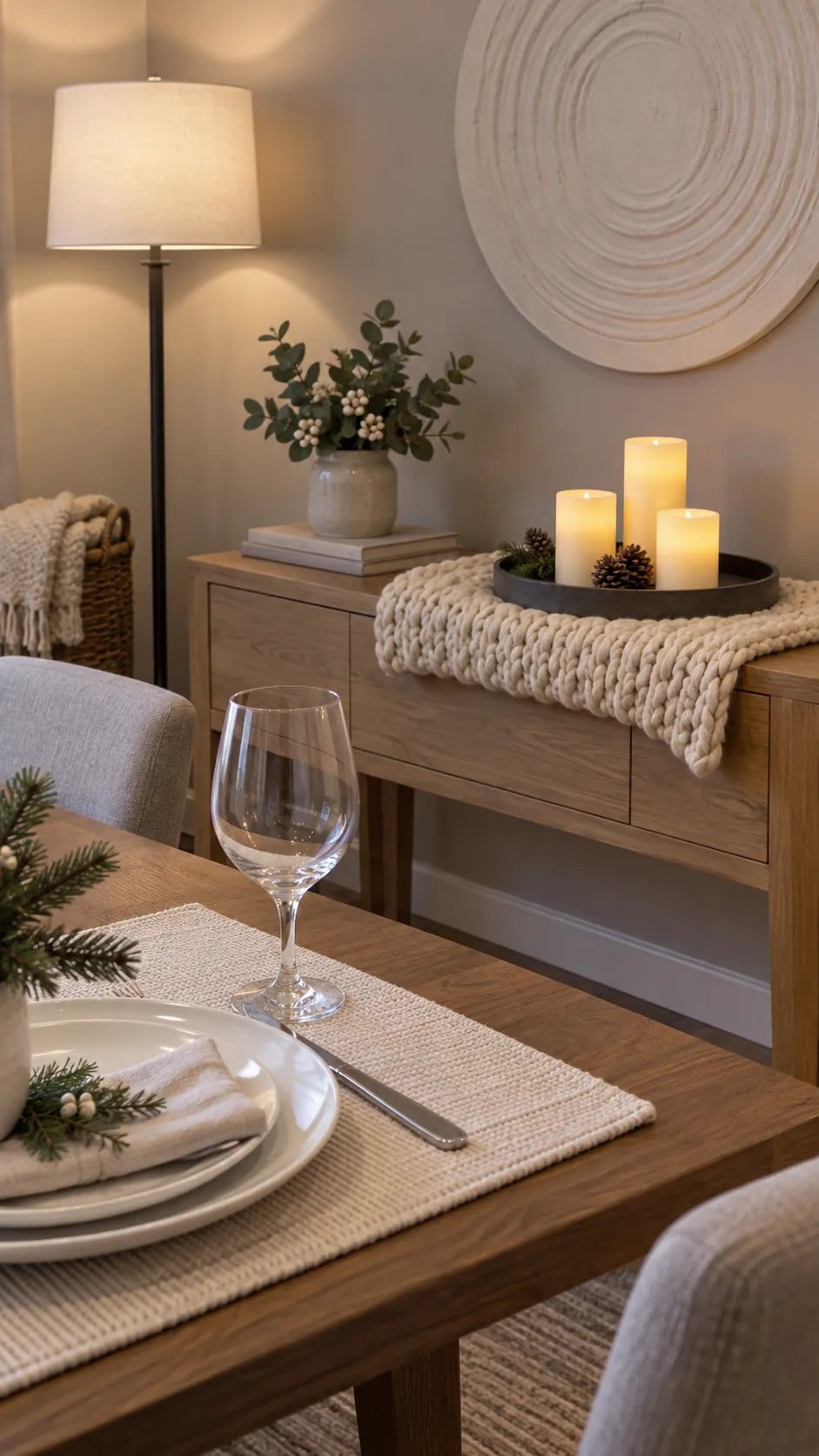
A knit accent beyond the serving area
A knit runner looks inviting but is not a steady base for stemware or hot dishes. Fold a short piece across the unused end of a console and group battery pillar candles on a rigid tray above it. Set the dining table with smooth cream placemats instead. The room still feels soft and wintry, while the eating surface remains easy to use and clean.
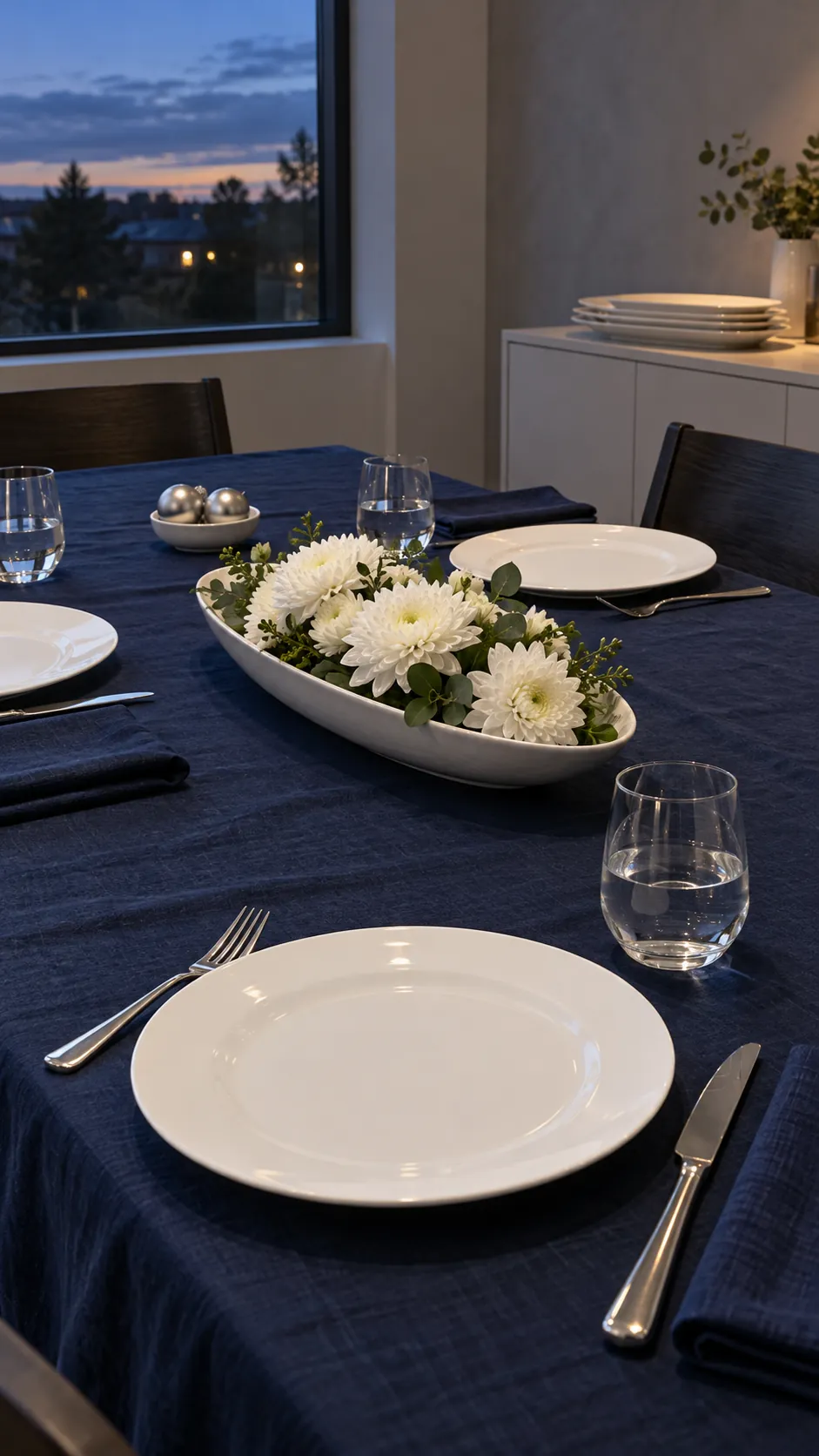
Navy linen with crisp silver details
Navy cloth gives white plates a strong outline and suits an evening gathering. Limit silver to the cutlery and a few small ornament accents so the dark fabric stays visible. White flowers in a shallow oval bowl can sit lengthwise without blocking faces. Lift the bowl away before shared platters arrive if your table has little spare width.
Heirloom pieces used with a practical plan
Choose one family piece to shape the setting instead of trying to use every inherited item at once. A serving platter verified for food use can sit beside modern plates in a related color. Display china with unknown glaze, cracks or damaged decoration on the sideboard rather than serving from it. Before guests arrive, decide where the platter will move when the table fills, so the piece remains part of the gathering without becoming an obstacle.