
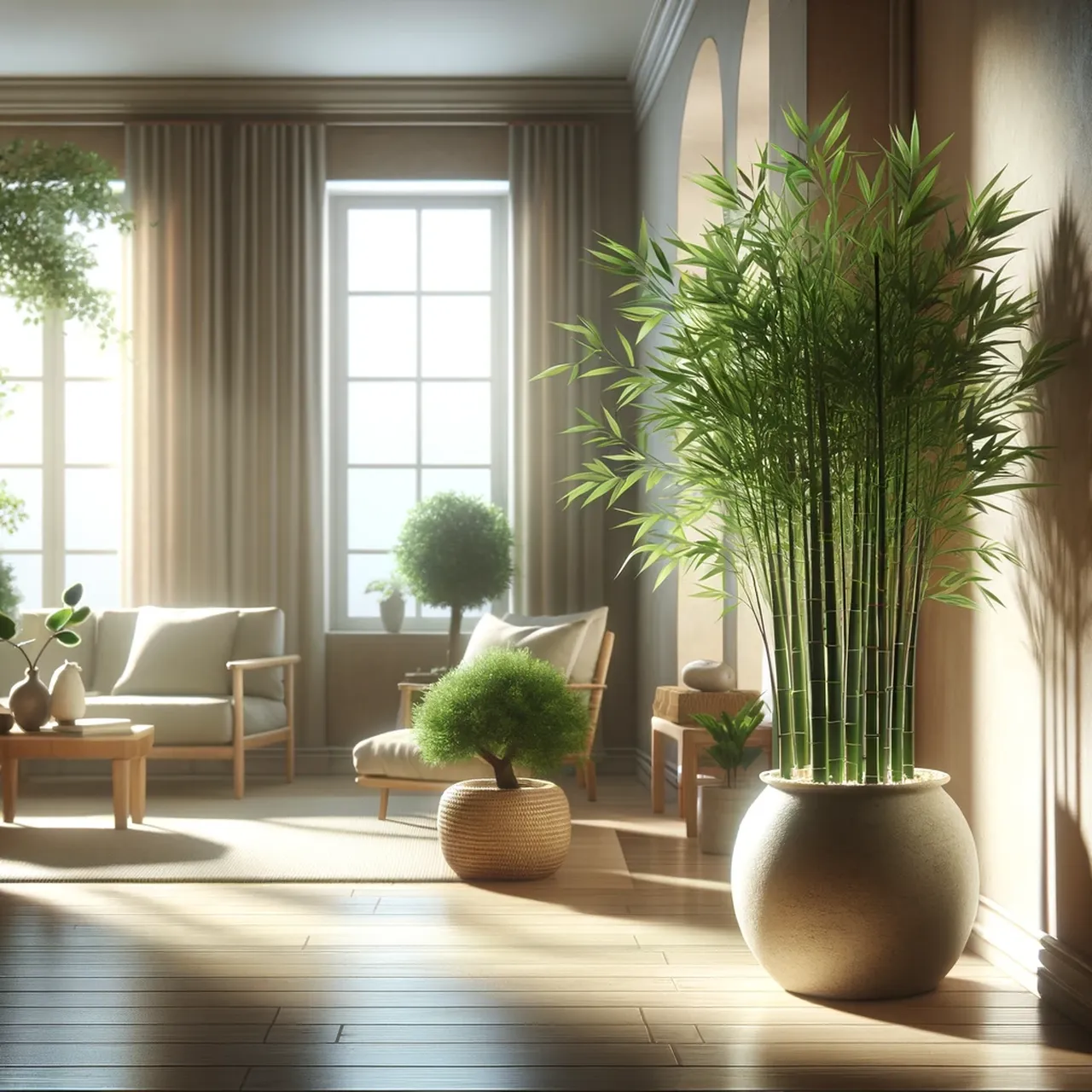
Renowned for its speedy growth, DIY versatility, and aesthetically pleasing nature, bamboo is popular in many homes across the US and globally. Bamboo grows exceptionally well in many environments; however, most plants require sufficient sunlight to truly “shine.” So, is bamboo a cut above the rest? Can bamboo grow in the shade?
While not all bamboo plants thrive in the shade, several species are shade tolerant. Most bamboo plants require at least 6 hours of sunlight, while the shade-tolerant varieties need at least 4 hours of filtered sunlight. Bamboo varieties do better with more, rather than less, sun.
Although some bamboo species are shade tolerant, they require some sunlight for photosynthesis. Below, we’ll investigate which species are shade tolerant, what makes them better adapted to shade, what some benefits vs. drawbacks of growing bamboo in the shade are, and how to tell if your bamboo is getting enough sun.
Bamboo Growing 101: Shade Vs. Sun Loving Plants
While most people know what bamboo is, many don’t know that the name “bamboo” does not refer to one plant. It is a collective term for the more than 1500 distinct species of grass across 123 genera, which belong to the subfamily Bambusoideae.
Bamboo plants grow in tropical, subtropical, and mild temperate climates across Africa, Asia, and North and South America.
Almost all bamboo species survive in partial shade; however, some are better adapted to low-light conditions. While most species prefer at least 6 hours of exposure to sunlight, some species are adapted to grow in 4 hours of filtered sunlight.
It’s important to note that even shade-tolerant species prefer partial shade to full/deep shade, as they also need to photosynthesize.
When purchasing a bamboo plant, please take notice of the label and what their sunlight preference is.
- Full sun – plants receive 6 or more hours of direct sunlight.
- Partial sun – plants receive between 4 and 6 hours of direct sunlight.
- Partial shade – plants receive between 2 and 4 hours of direct sunlight.
- Full shade – plants receive 2 or less hours of sunlight daily.
There are varying degrees of shade:
- Light shade – is when there are patches of shade and sunlight through gaps in the canopy.
- Moderate shade – is when light is mostly reflected off taller trees’ leaves onto the ground.
- Heavy shade – is when there is no light (dense growth or obstacles block the light).
Which Bamboo Species Are “Shade Loving?”
Many species are shade tolerant (while they are not shade-loving, their growth is not as negatively impacted by the shade as sun-loving species) and shade “loving” (species that prefer to grow in shady areas vs. sunny areas).
The table below examines some of the most popular shade-loving/tolerant species.
|
Scientific name |
Common name |
|
Borinda fungosa |
Chocolate bamboo |
|
Chimonobambusa tumidissinoda |
Walking Stick bamboo |
|
Fargesia papyrifera |
Blue Dragon |
|
Fargesia robusta |
Umbrella bamboo |
|
Himalayacalamus hookerianus |
Himalayan Blue |
|
Indocalamus tessellatus |
Giant Leaf |
|
Pleioblastus pygmaeus |
Dwarf fern leaf |
|
Pleioblastus viridistriatus |
Compact Golden Striped bamboo |
|
Pseudosasa japonica |
Arrow bamboo |
|
Phyllostachys dulcis |
Sweet Shoot bamboo |
|
Sasa veitchii |
Kuma bamboo grass |
|
Sasaella masamuneana |
Albostriata |
Why Do These Species Tolerate Shade?
Most shade-tolerant species grow in forests/jungles in dense clusters. Thanks to the high competition for sunlight, these plants adapt to receiving less (particularly shorter plants).
The age of the bamboo plant and its generation also influence the amount of shade it tolerates, particularly in these species. Bamboo reproduces vegetatively, with each generation growing taller than the previous (up to the maximum height for the species).
This turnover is another coping strategy for shade (the taller the plant, the more likely it is to find sunlight).
Aside from strategies to eventually reach the sunlight, many shade-tolerant/preferring species have less chlorophyll in their leaves (an essential component for photosynthesis).
Chlorophyll in plant cells makes them green, so less means plants are “duller” in color but are better suited to shady conditions.
Other Factors Which Influence Bamboos Sun Vs. Shade Loving Nature
While the bamboo species plays a significant role in how well it grows in the shade, several other environmental factors influence the success rate of these plants.
Soil
Fortunately, bamboo is a hardy group of plants that survive in most soil types. However, if you’re planting in the shade, try giving your plants a “fighting chance” by using the best soil (for that species).
The soil type influences the temperature, moisture content, anchoring, and nutrients available for your bamboo, which are essential for the plant’s survival.
Nutrients
While you might get away with less sunlight, you must compensate by supplying the plant(s) with sufficient nutrients.
Bamboo plants require enough nitrogen to support their speedy growth. Bamboo planted outdoors receives most of its nutrients from the soil, but indoor bamboo and bamboo in the shade may require additional compost/fertilizer to sustain it.
Climate Zone
The climate (temperature, weather, etc.) Influences how well your bamboo adapts to the shade.
If you live in a hot climate area (out of the US or in the South), your bamboo might prefer more shade, while shade in colder climates might be too stressful for your bamboo plants.
When planting bamboo in shady areas, you must be mindful of the particular species’ hardiness and which zone it’ll work best in. Planting in the shade strains the plant, so selecting a less-than-hardy plant for your zone might spell disaster.
Rainfall/Watering
Like all plants, bamboo requires enough water. However, too much water has detrimental effects on your bamboo.
When planting in shady areas, it is essential to remember that evaporation and transpiration (when plants lose water through their leaves, almost like “sweating”) are lessened, and water accumulates, which might lead to roots rotting.
The Benefits And Drawbacks Of Growing Bamboo In The Shade
Before planting bamboo in the shade, it’s wise to consider the pros and cons and to make an informed decision.
What Are The Benefits Of Bamboo Growing In The Shade?
- If you live in a very hot climate (semi-arid), your bamboo plant may die in direct sunlight. Growing bamboo in the shade will improve its survival chances (less evaporation and transpiration).
- Less sunlight causes physiological changes in many bamboo species. Most notable are the different colors bamboo turns when grown in the shade, including blues, reds, and white stripes.
- Many bamboo species grow taller in the shade (the internodes grow longer) to reach the sunlight above other trees, which is great if you want tall bamboo.
- Shade-tolerant bamboo plants are fantastic for pot plants that receive partial daily shade. They are aesthetically pleasing and relatively easy to manage.
What Are The Drawbacks Of Bamboo Growing In The Shade?
- The shade-tolerant/loving varieties may not be the bamboo species you want.
- Growing bamboo in the shade may require significantly more input and effort to ensure the plants survive.
- The bamboo plants may not receive enough sunlight (too much shade), particularly if you live in a colder climate region. These plants may die, even with other interventions.
- Your bamboo plants may try to invade other areas of greater sunlight.
- The physiological adaptations to growing in the shade may not be appealing. They develop long culms (stems) with fewer leaves.
- Most bamboo species grow slower in the shade because of limited photosynthesis.
How Do I Know If My Bamboo Is Getting Enough Sunlight?
Although bamboo is a hardy grass with phenomenal growth, it is not indestructible. While several environmental factors contribute to bamboo’s success, the correct amount of sunlight is quintessential.
Finding the “sweet spot” is often challenging, but fortunately, bamboo (like most plants) provides us with signs and symptoms.
Signs Of Bamboo Getting Too Little Sunlight
- Your bamboo is pale and “sickly” in color.
- Stunted growth and limited growth rates.
- Yellow leaves may indicate root rot from excess water (not photosynthesizing quickly enough).
- Too little sun produces taller plants with fewer leaves and a “stretched-out” appearance.
Signs Of Bamboo Getting Too Much Sunlight
- Wilting, yellow leaves/stems (culms) due to desiccation.
- Scorched leaves (brown around the edges) from excess transpiration.
- Infestation by other diseases and pests.
Conclusion
While most bamboo species manage to grow in the shade, certain species are more shade-tolerant and shade-loving than others. Although these plants are better adapted to growing in less light, all bamboo grows better when exposed to enough light. An average bamboo plant typically needs at least 4 to 6 hours of sunlight for healthy growth.