
A modern holiday table works best when its clean lines survive the arrival of dinner. Start with the dishes, glasses, and serving route, then choose a few seasonal materials that fit the space left over. These ideas keep simple fall tablescapes personal while making room for conversation, shared food, and the furniture you already own.
A Narrow Linen Runner with Brass Flatware
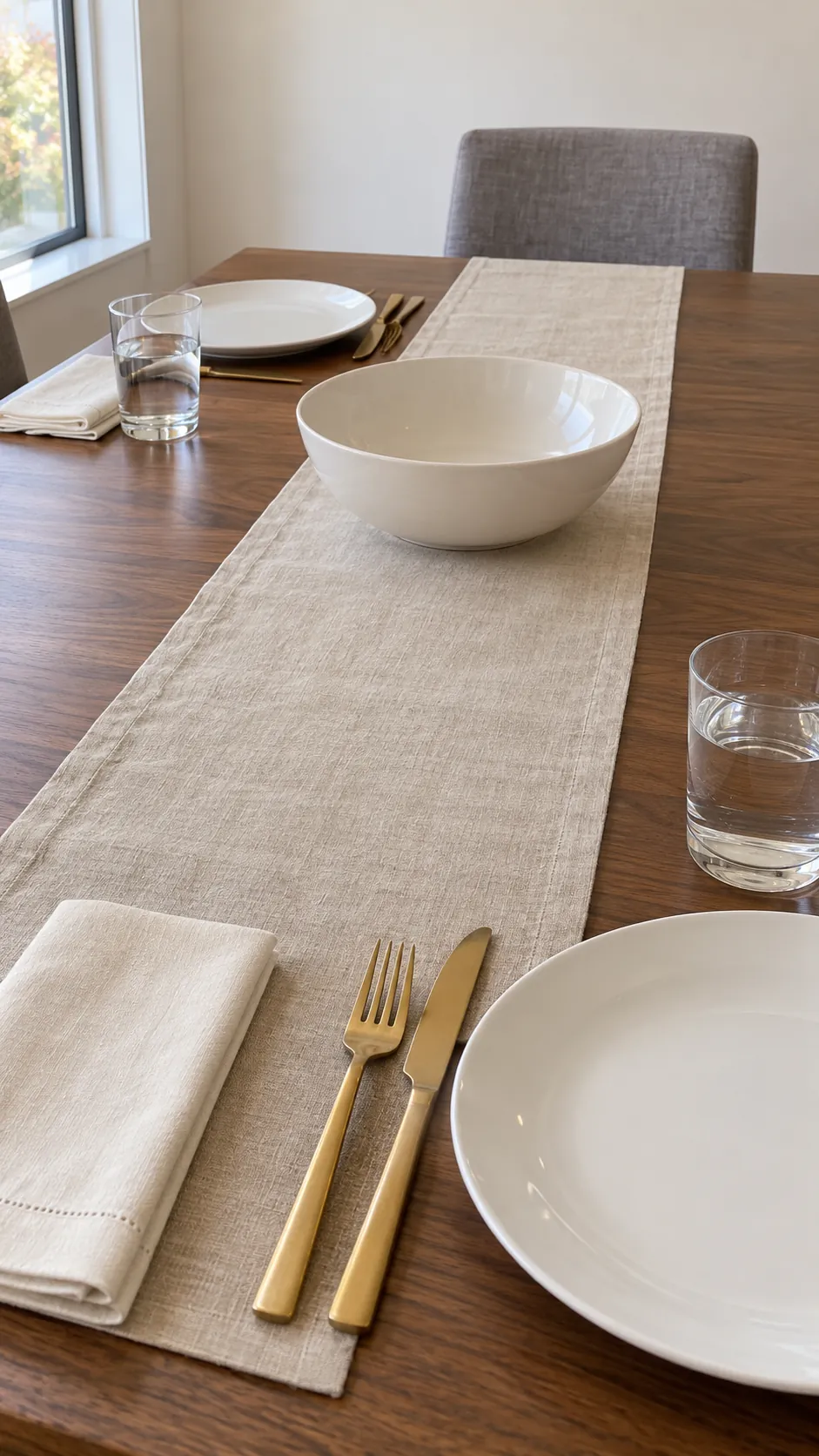
Lay a narrow linen runner lengthwise so each guest still has a flat surface for a glass. Brass colored flatware gives the neutral fabric one bright detail without requiring a collection of matching candleholders. Test your largest serving dish in the remaining center space before deciding how wide the runner should be.
Small Pumpkins beside the Place Setting
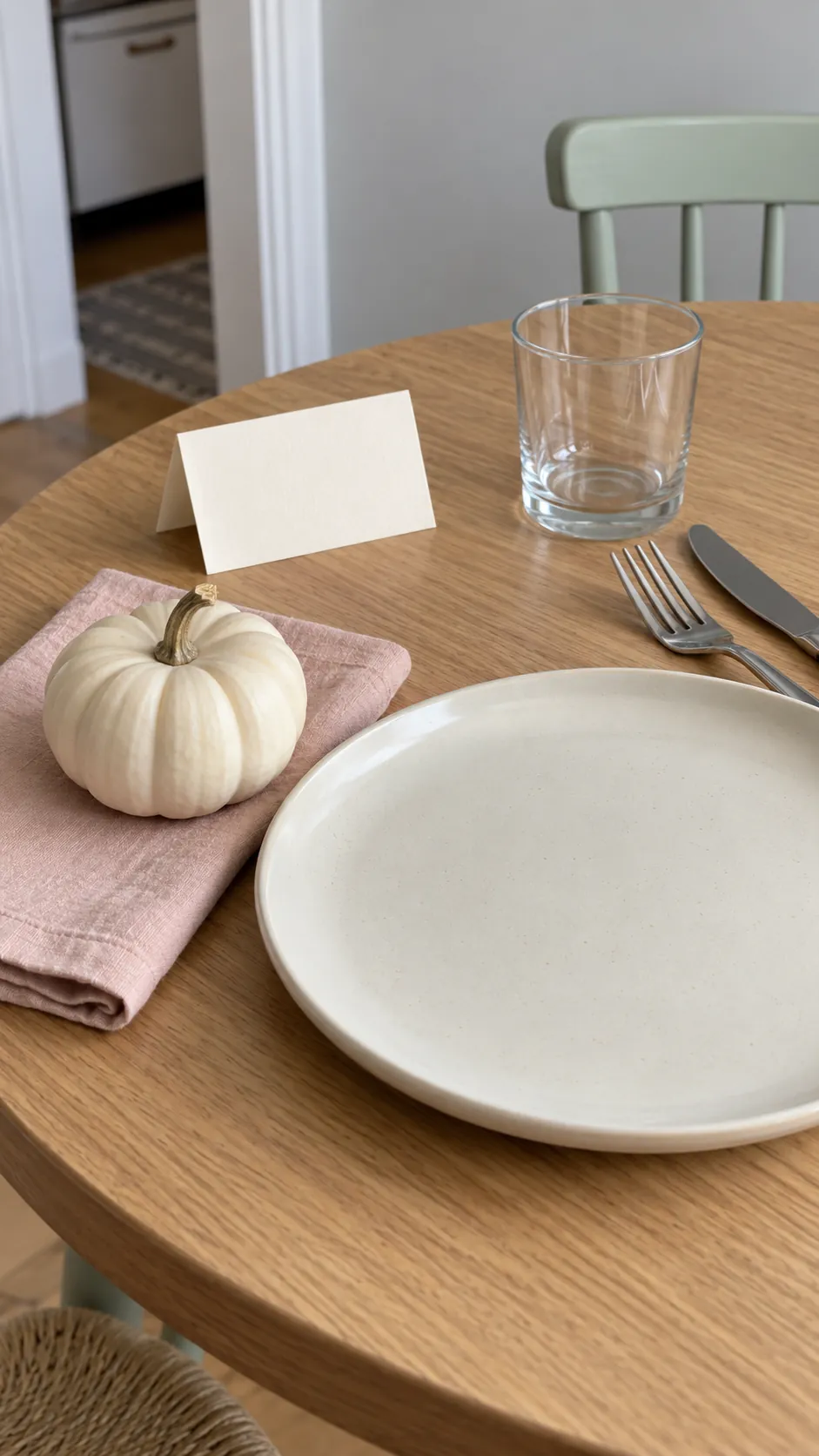
Set a small pumpkin beside the napkin rather than in the dinner plate. Add a separate name card if you need assigned seats, keeping ink and decorative attachments away from food surfaces. Give guests a clear spot to move the pumpkin before the first course arrives.
Thin Wood Chargers with Black Cutlery
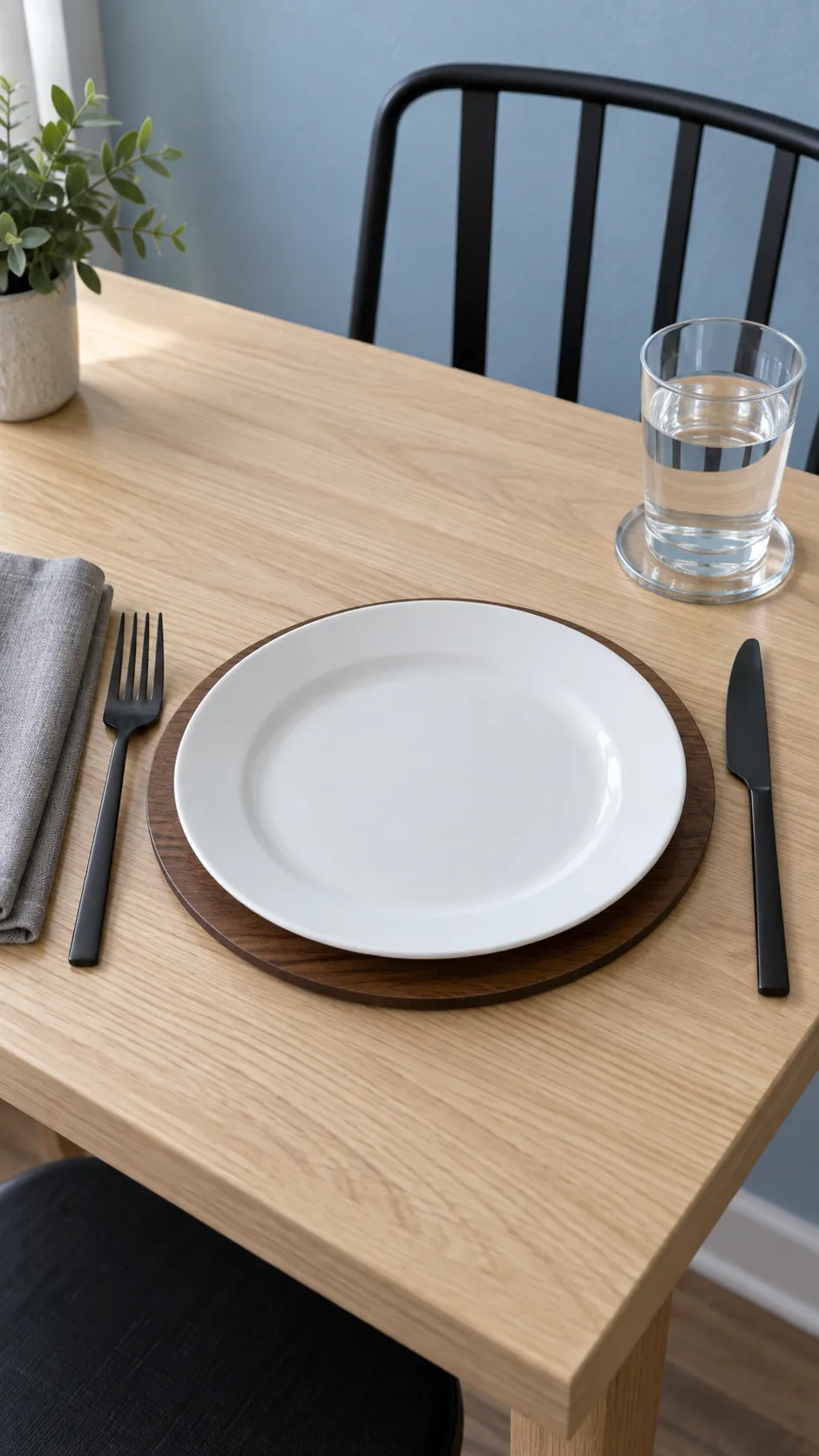
A thin, smoothly finished wood charger can contrast with a white plate and matte black cutlery. Check that the plate sits level and that the charger does not crowd the glass or neighboring setting. Skip this extra layer if it leaves too little room for your actual dinner dishes.
Two Bud Vases with Short Flower Stems
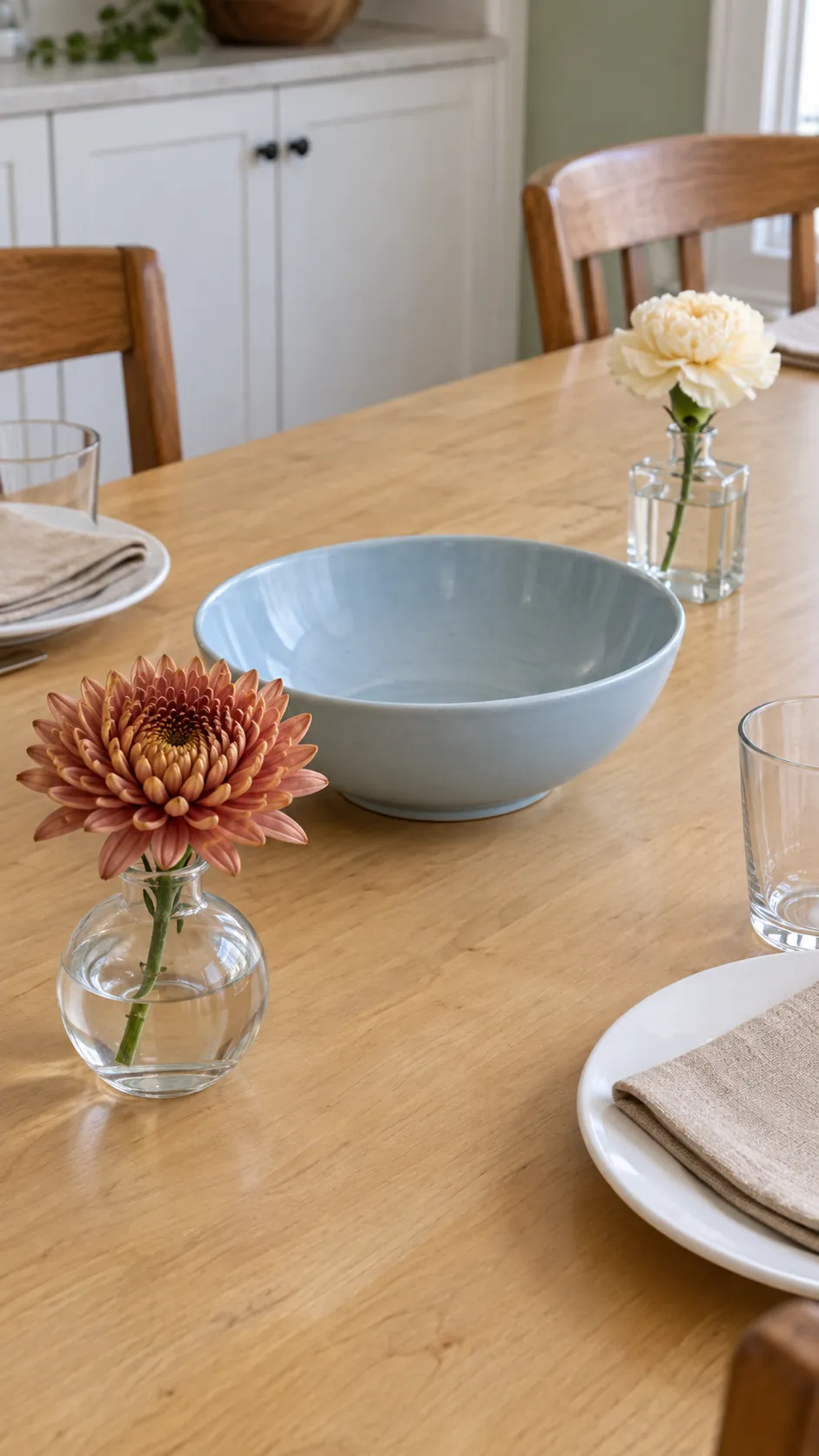
Choose two small bud vases and trim the flowers so guests can see across the table. Separate the vases with a usable gap instead of turning them into a continuous row. One stem in each vessel is enough to introduce seasonal color while keeping refilling and removal simple.
Contained Greens with Battery Tealights
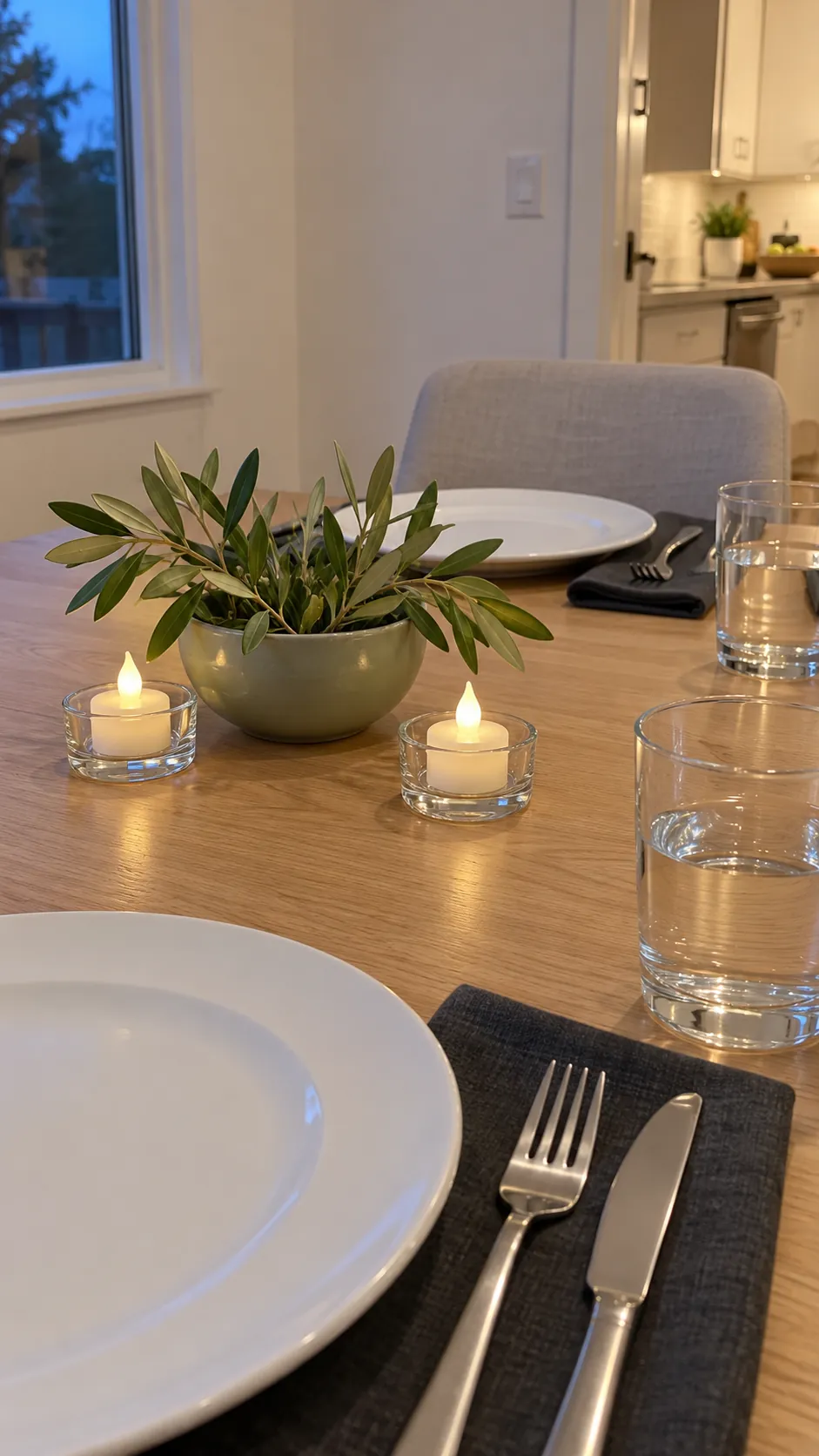
Keep short greens in one shallow bowl and place battery tealights in separate low holders nearby. This preserves the soft evening effect without weaving dry foliage around open flames. Leave enough distance between the holders and bowl that you can lift either one without disturbing the other.
A Ceramic Pitcher on the Sideboard
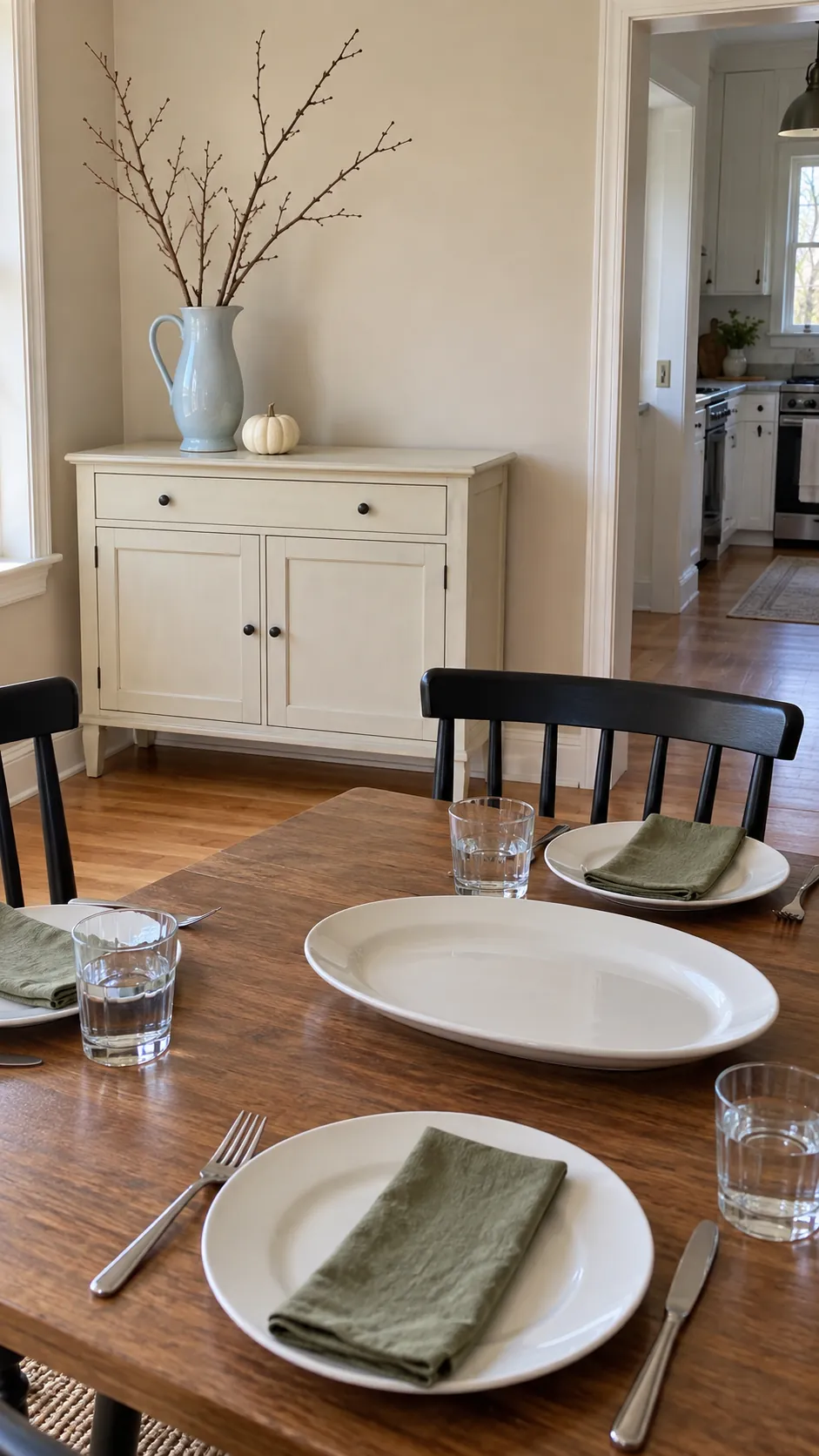
Move a taller ceramic pitcher and branches to the sideboard when the table needs clear conversation space. Its height can still contribute to the room while the dining surface holds the meal. Position the display away from chair backs and the route guests use to reach the kitchen.
Amber Tumblers with White Napkins
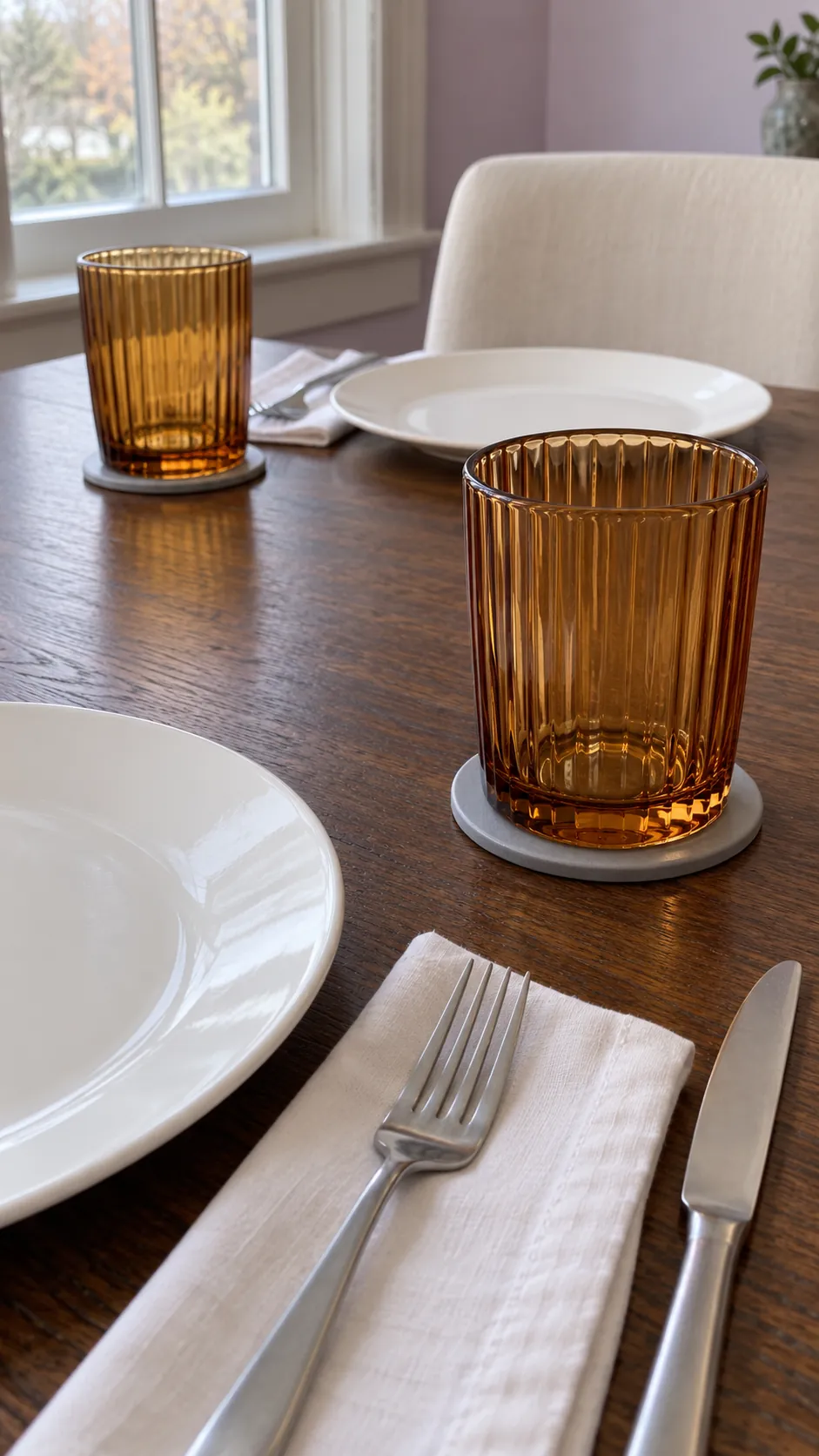
Amber tumblers bring fall color to ordinary white plates and napkins. Set each glass on a stable coaster when the table finish needs protection, and check that the coaster fits comfortably beside the plate. Keep other accessories quiet so the glass color remains the useful focal detail.
Smooth Woven Mats with Separate Glass Bases
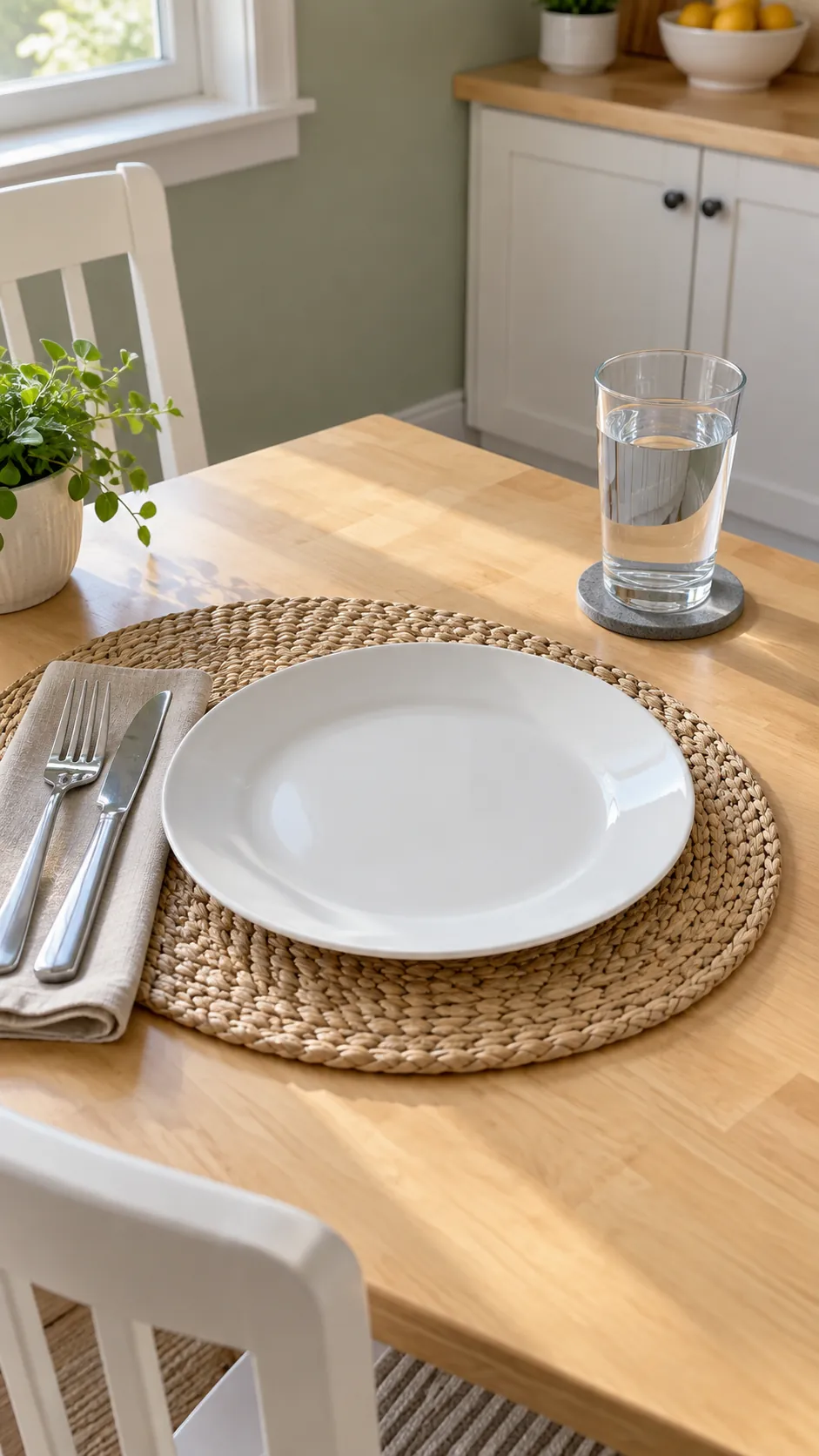
Use a tightly woven placemat under the plate to add texture without building several fabric layers. Rest glasses on a smooth table surface or a stable coaster instead of a lumpy mat edge. Shake out and inspect woven pieces before setting the table so loose fibers do not end up beside food.
Muted Battery Tapers without Foliage
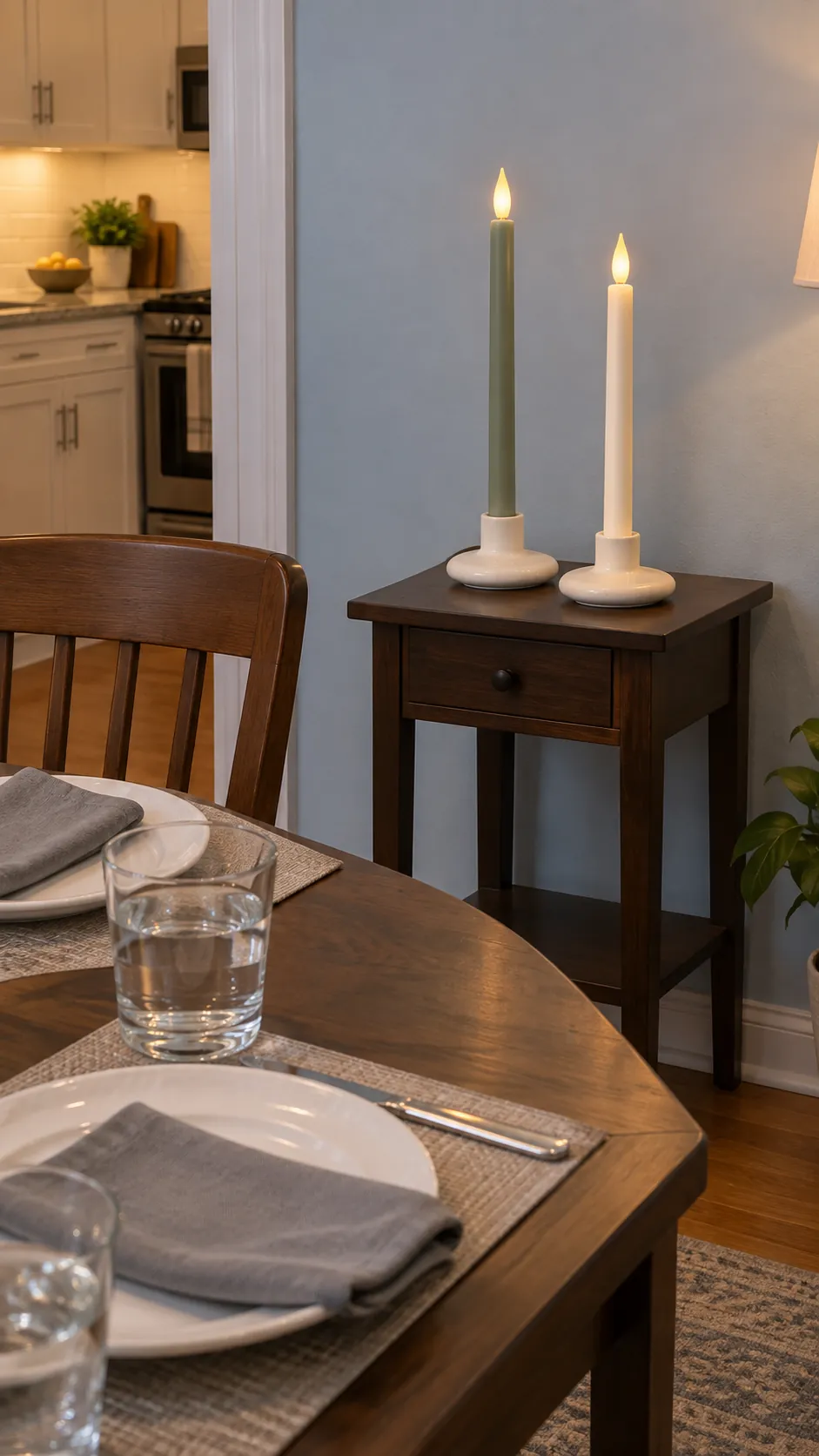
Battery tapers in sage and cream can create a taller light accent without an open flame. Use holders with broad bases and test the arrangement from a seated position before dinner. Place this pair at a table end or side surface if its height interferes with seeing other guests.
White Serveware with a Dedicated Bread Board
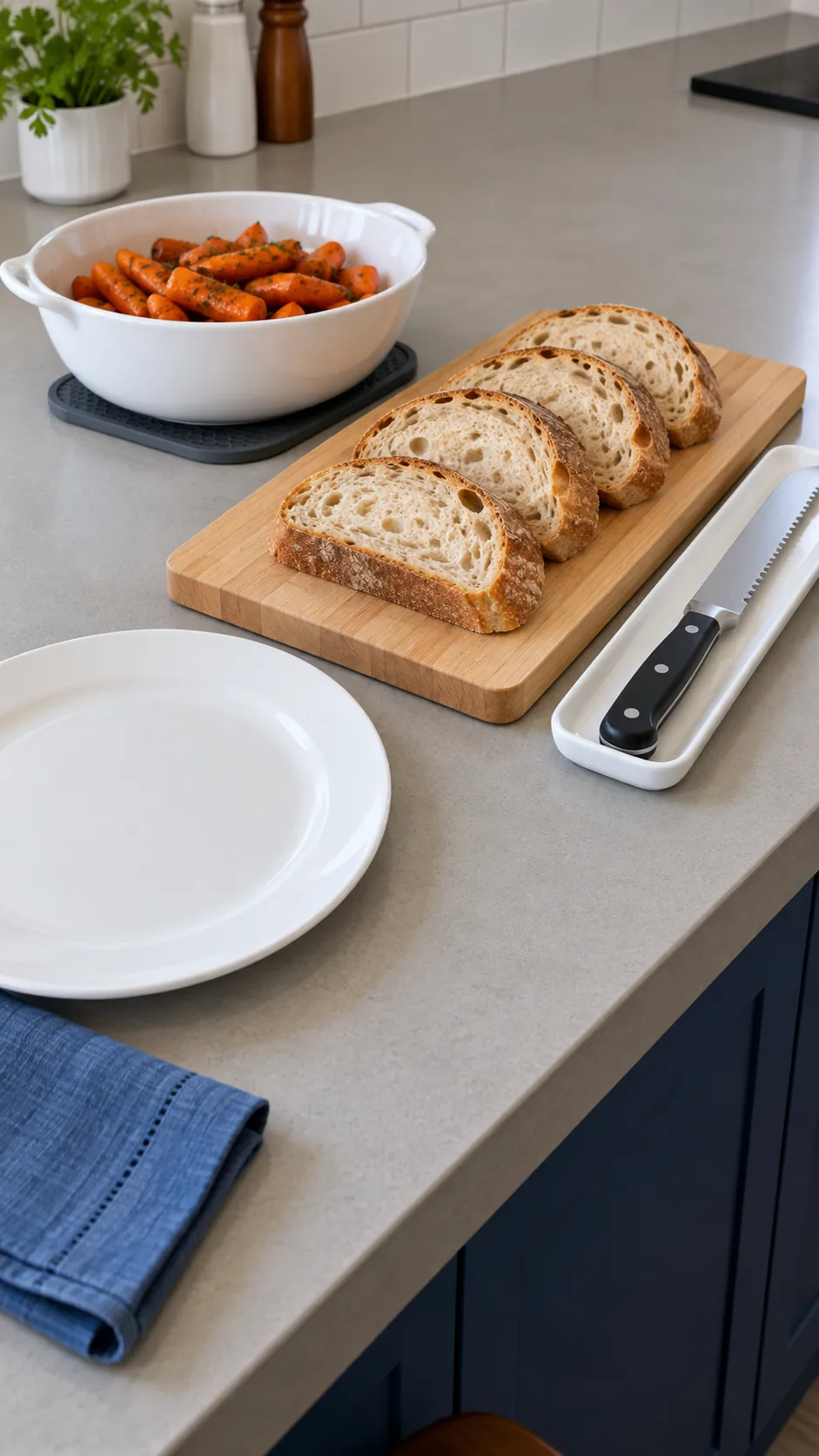
Let white serving dishes carry the main meal and give a clean wood board a specific job, such as holding sliced bread. A board is not automatically a suitable trivet for a hot casserole, so use protection intended for the dish and table finish. Keep the bread knife on a separate rest with its handle accessible.
Velvet Ribbon That Slips off Easily
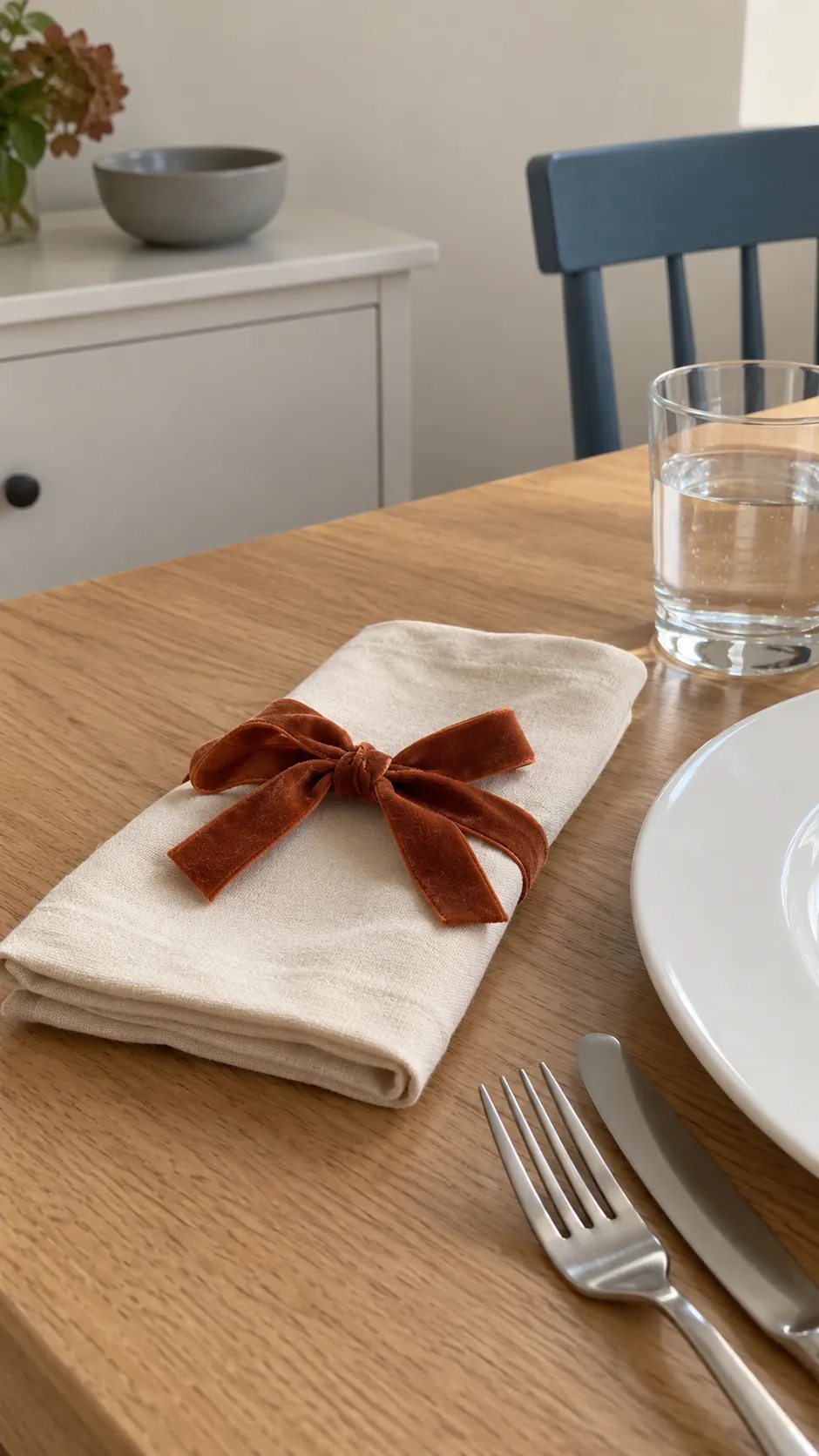
Tie a short velvet ribbon loosely around a plain folded napkin for a small autumn accent. Avoid tight knots or long tails that guests must untangle before eating. Provide an empty bowl on the sideboard for removed ribbons so they do not gather around glasses or serving dishes.
A Low Bowl of Washed Seasonal Fruit
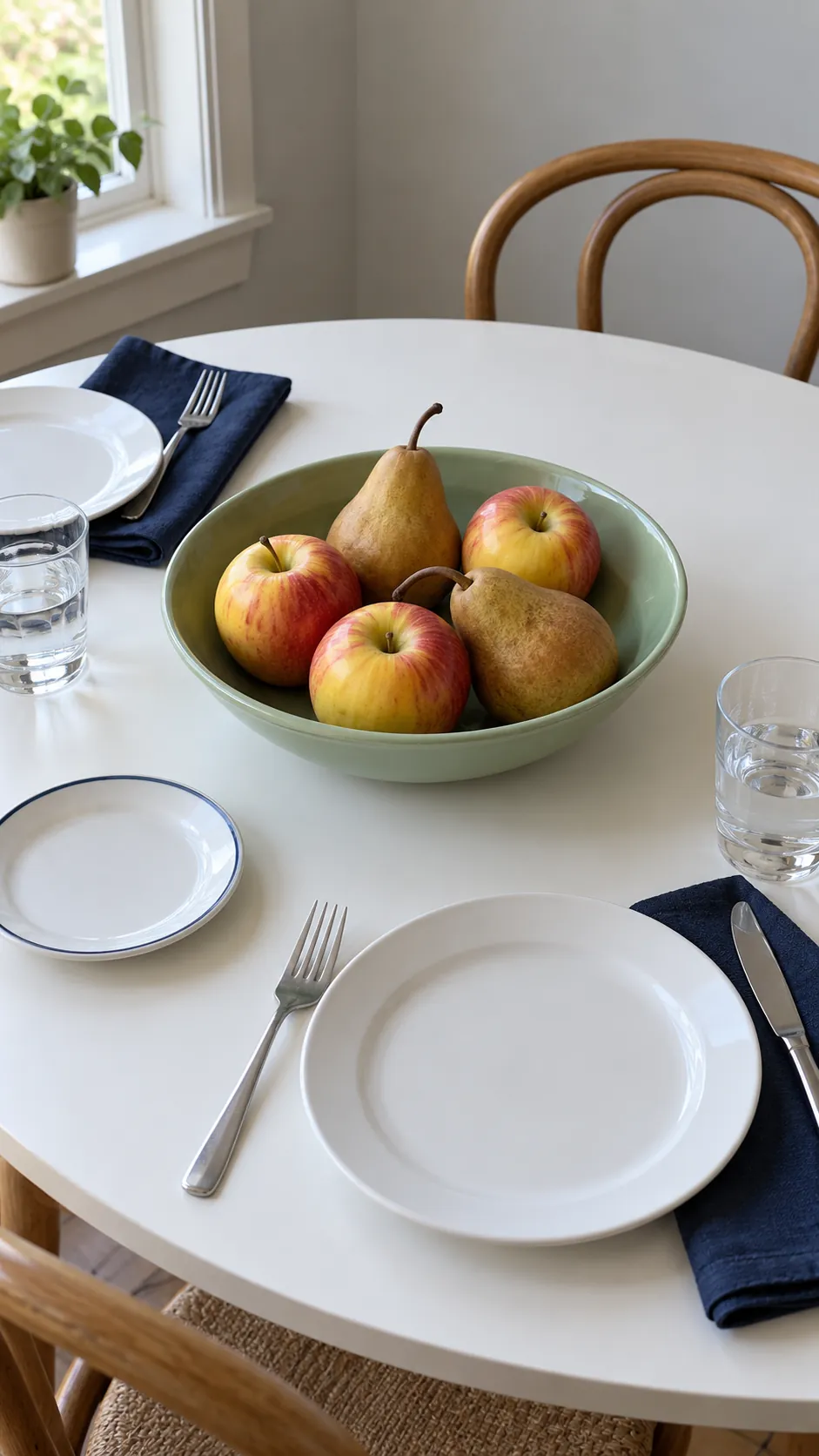
A low serving bowl of washed pears and apples offers color that can become part of the meal. Keep the fruit inside the bowl rather than scattering it between place settings. Use a separate dish if you also want decorative dried leaves, which should stay out of the edible arrangement.
A Round Table with One Offset Accent
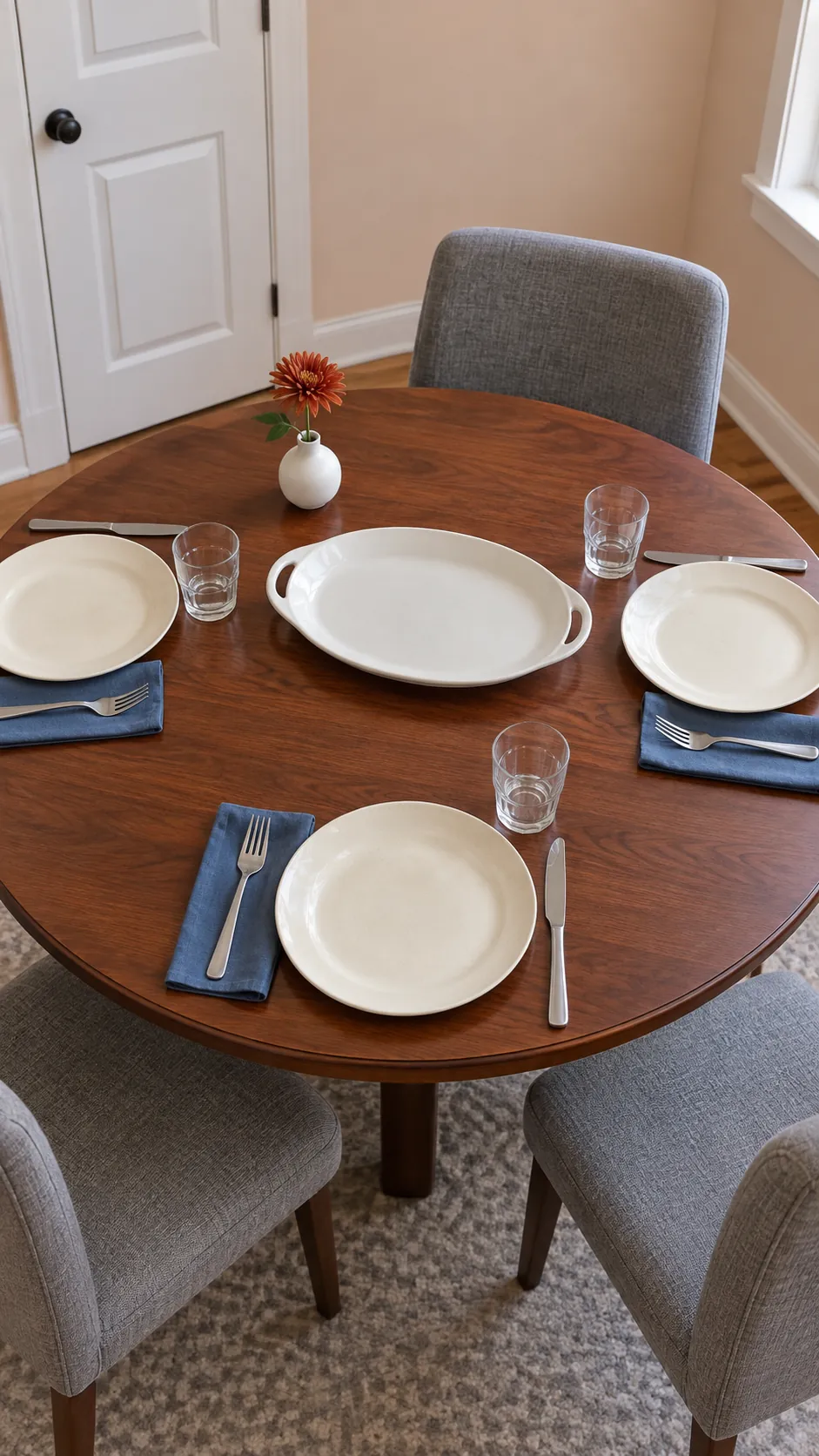
On a round table, move one small centerpiece slightly away from the main serving position. Lay out the actual plates and bowls first, since a circle gives each seat a different relationship to the center. An offset accent works only when every guest still has comfortable reach and elbow room.
Rust Napkins across Mixed Plates
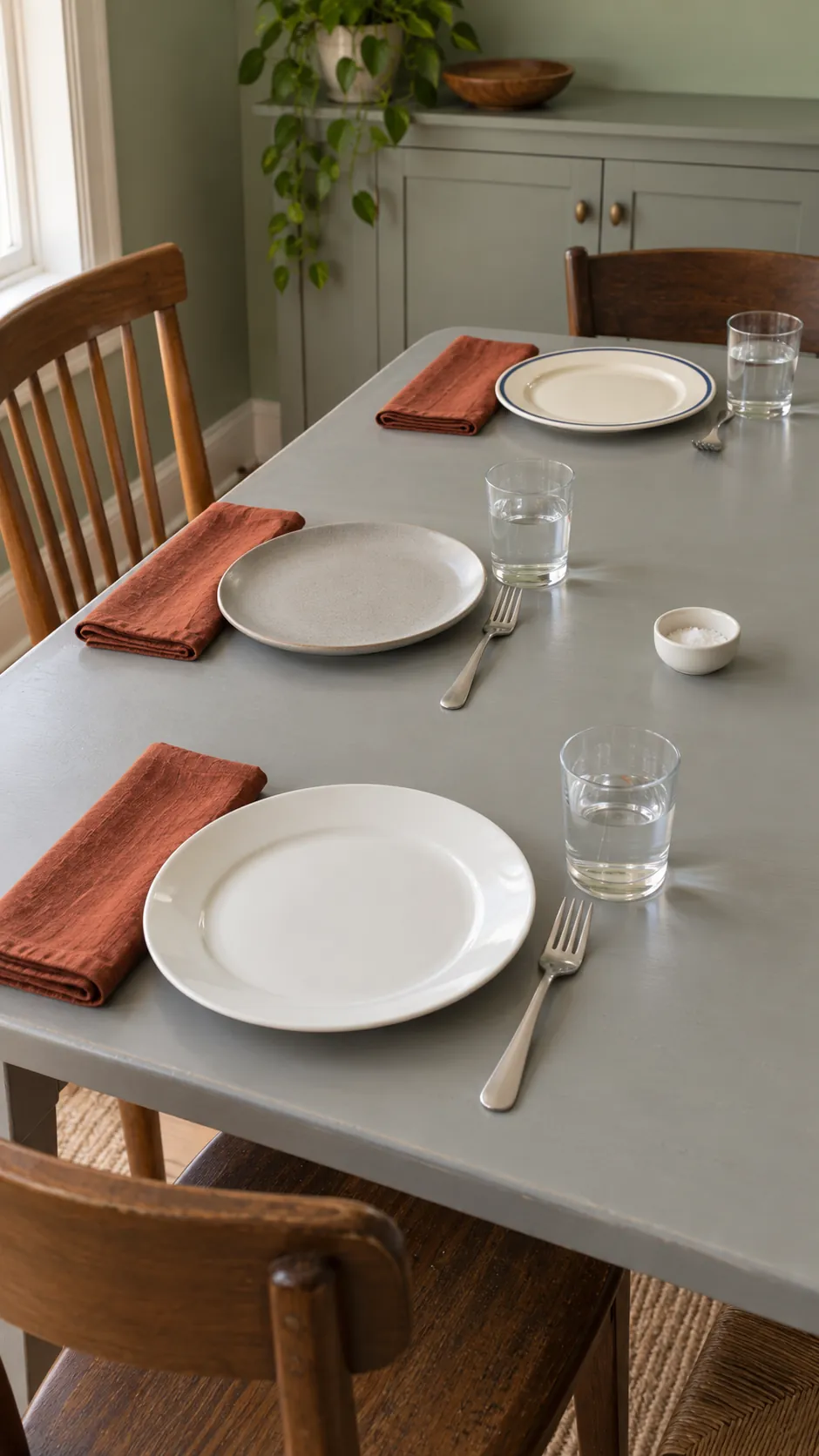
Repeat rust napkins across existing white, gray, or cream dinnerware to create a modern fall palette. Let the plate differences remain visible rather than trying to disguise them with large chargers. Similar glass shapes and straightforward folds can bring order to a collected Friendsgiving tablescape.
A Protected Surface beneath Hot Dishes
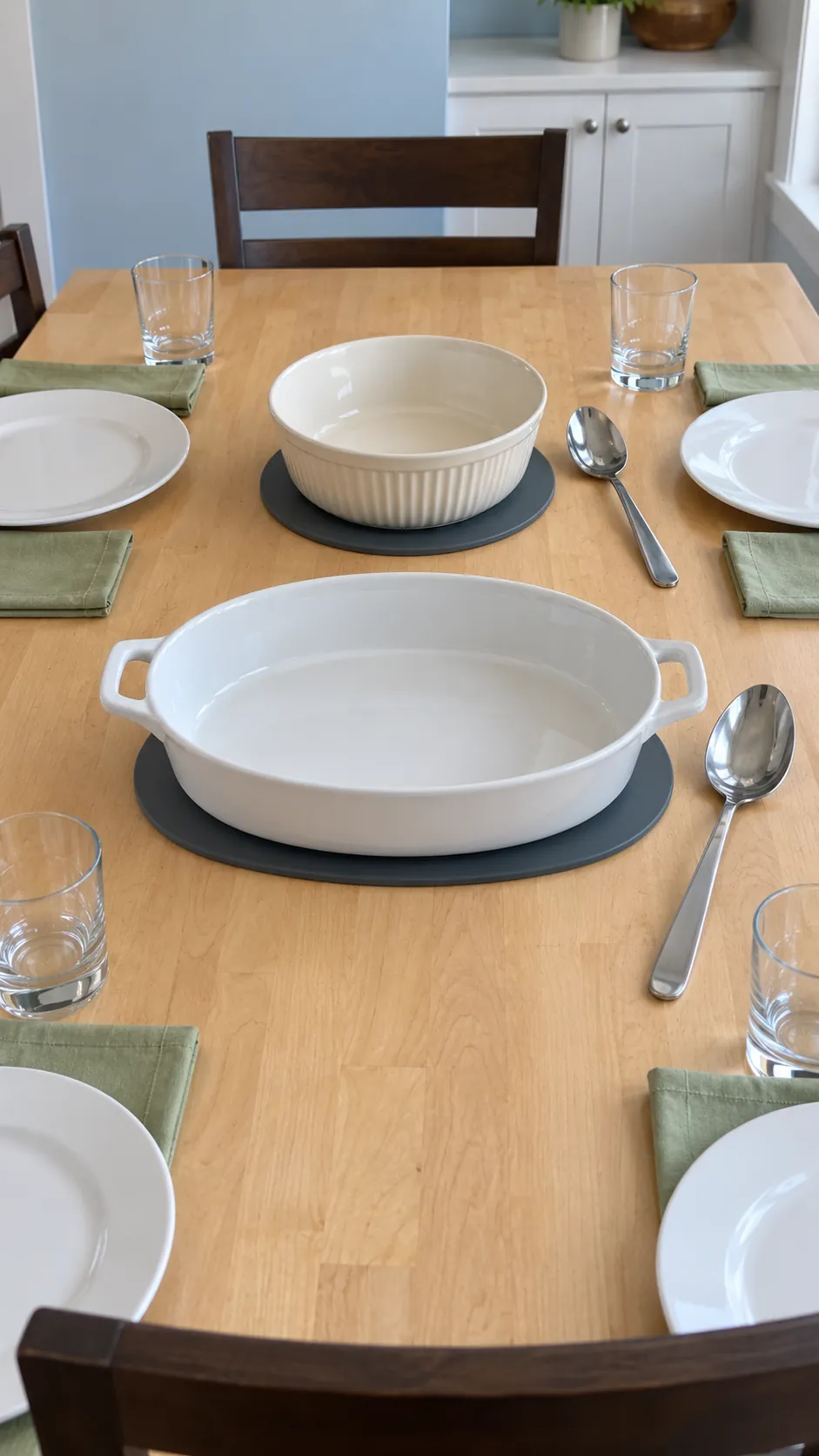
Include low heat protection that suits your table finish and the cookware you plan to serve. Set empty dishes on it during your layout test so you can check handles, reach, and clearance before food is hot. A decorative cloth alone should not be treated as a substitute for protection rated for that use.
A Buffet with Room for Utensil Rests
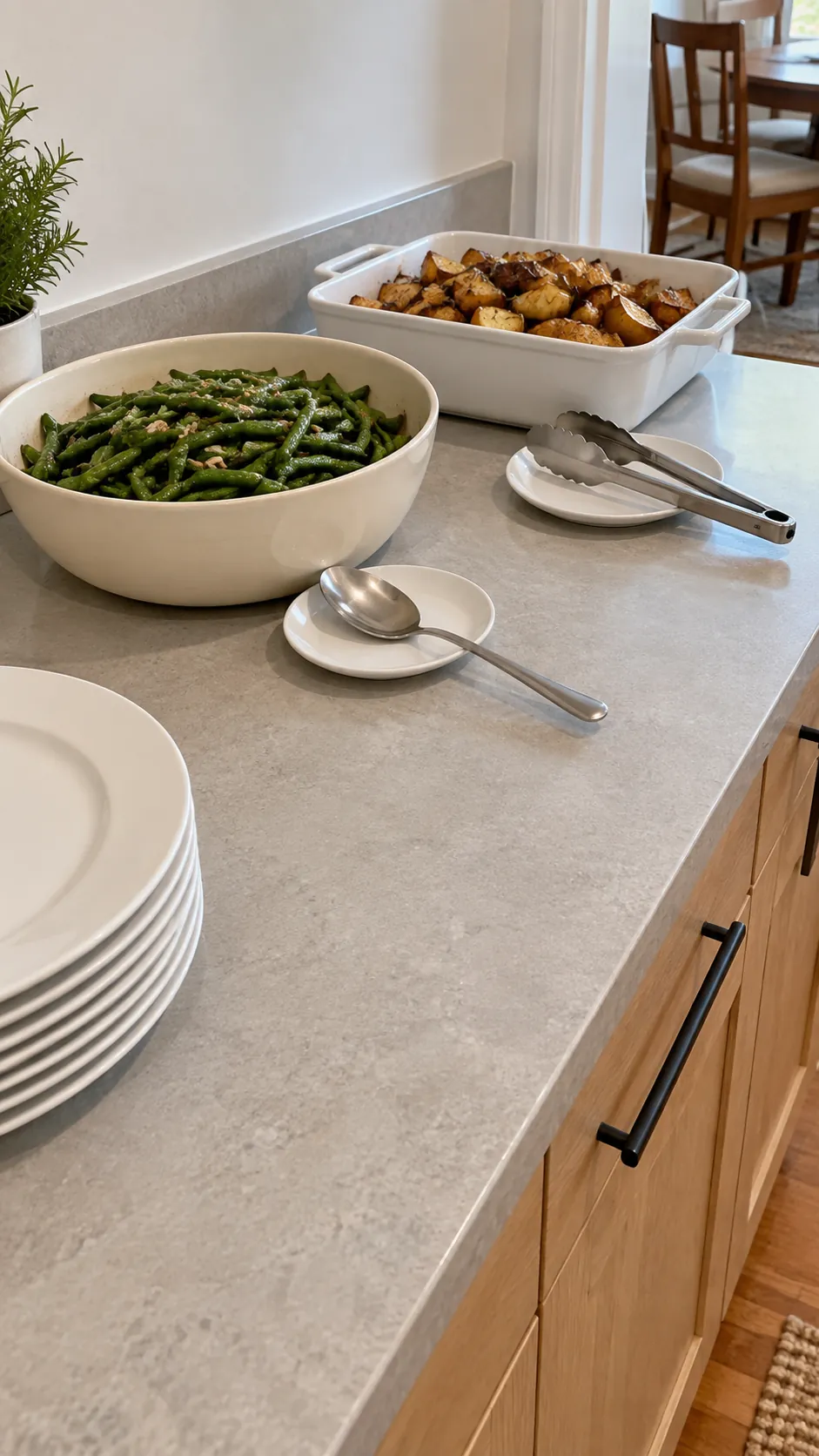
Arrange a buffet so each serving utensil has its own small plate or rest beside the relevant dish. Leave a clear landing area at the start for guests to hold or set down a plate while serving. Keeping food on the buffet can free the dinner table for a single low seasonal accent.
Matching Details across an Extra Table
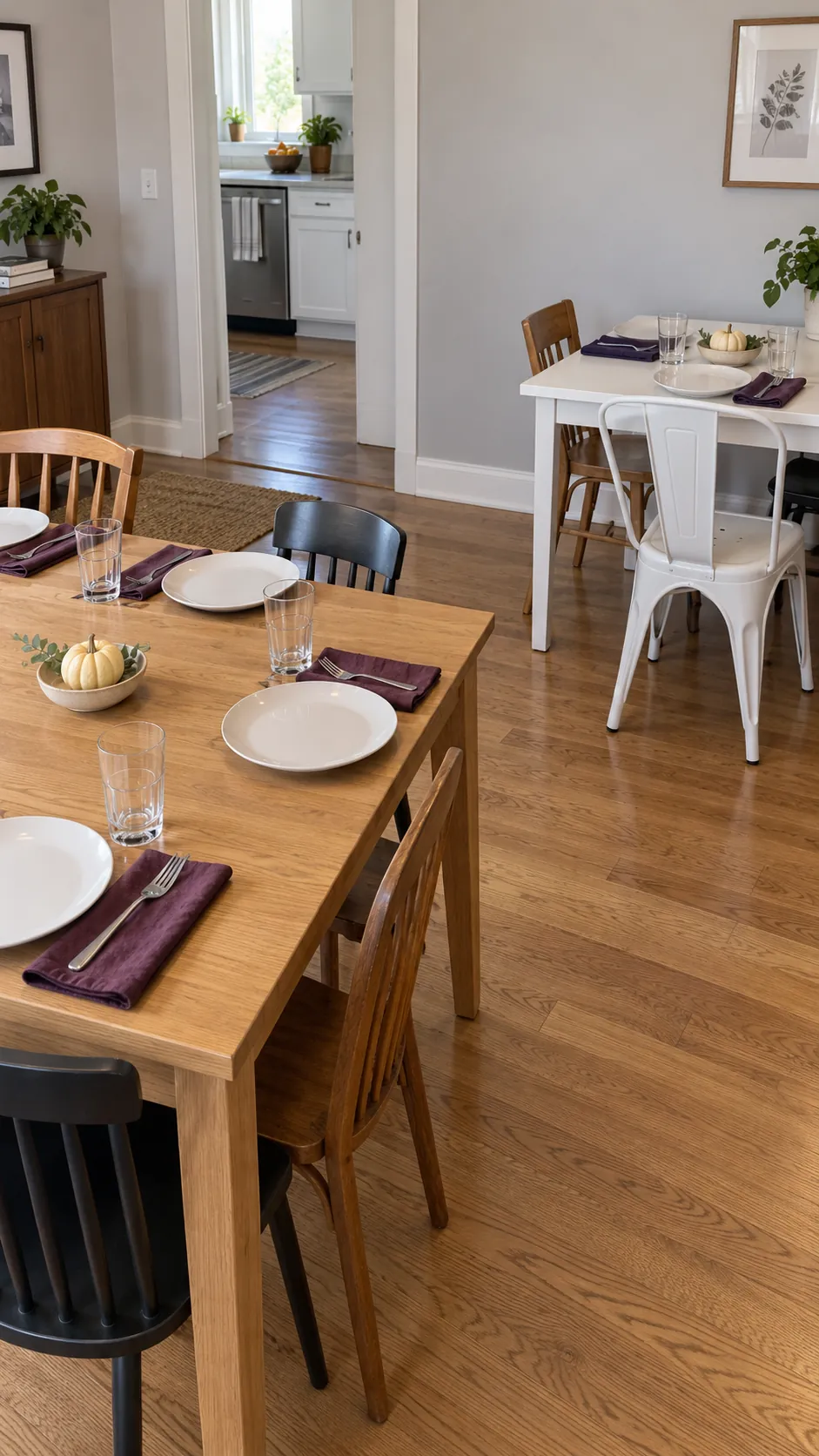
Repeat one napkin color and similar glassware on an additional table when your guest list grows. Check chair positions and walking routes before decorating, rather than assuming every available surface creates a comfortable dining seat. Separate centerpieces let both tables feel considered without needing one oversized arrangement.
A Small Table with One Glass per Seat
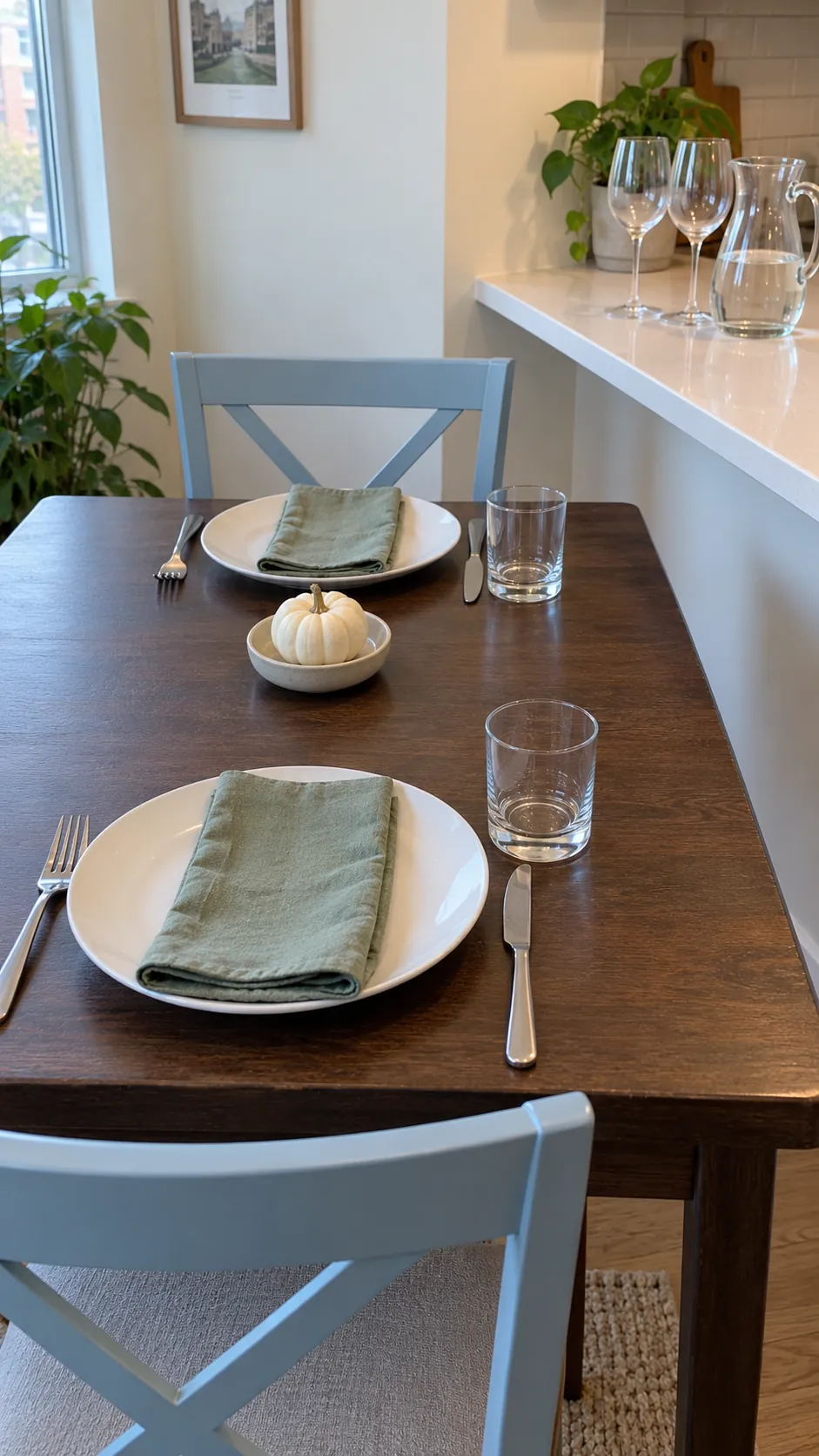
Set only the glasses you expect guests to use at a compact table. Keep additional drinkware at a nearby drinks station so it is available without occupying every setting from the start. This simple edit creates more space for Thanksgiving table settings that still feel deliberate and welcoming.
Neutral Textiles with a Plum Accent
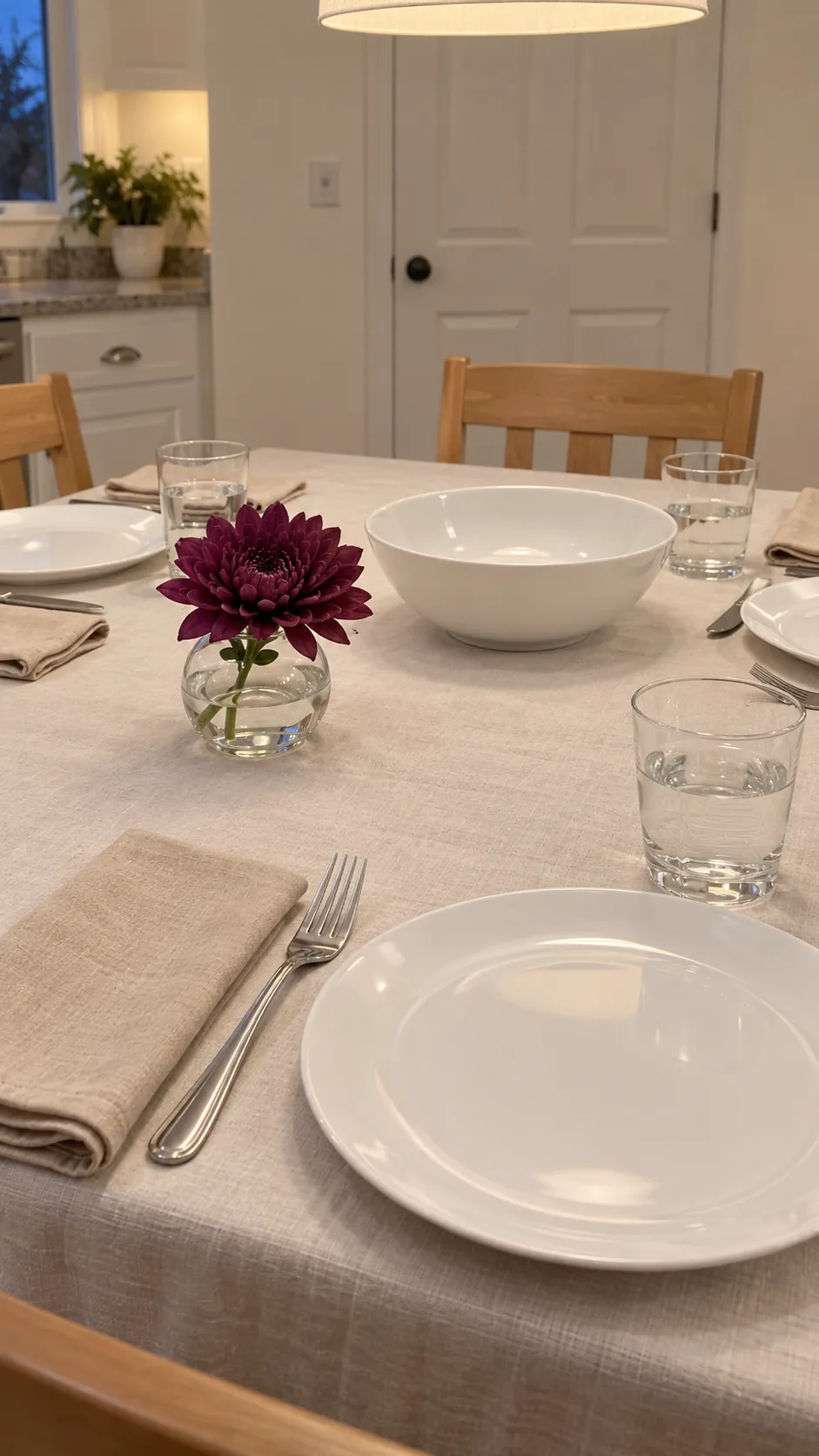
Use a neutral cloth and add plum through one small textile or flower detail. Check the color under the room lighting you will actually use, because a very dark accent can disappear in dim evening conditions. Keep the remaining surfaces light enough that guests can easily see dishes and utensils.
A Setup Test before the Holiday
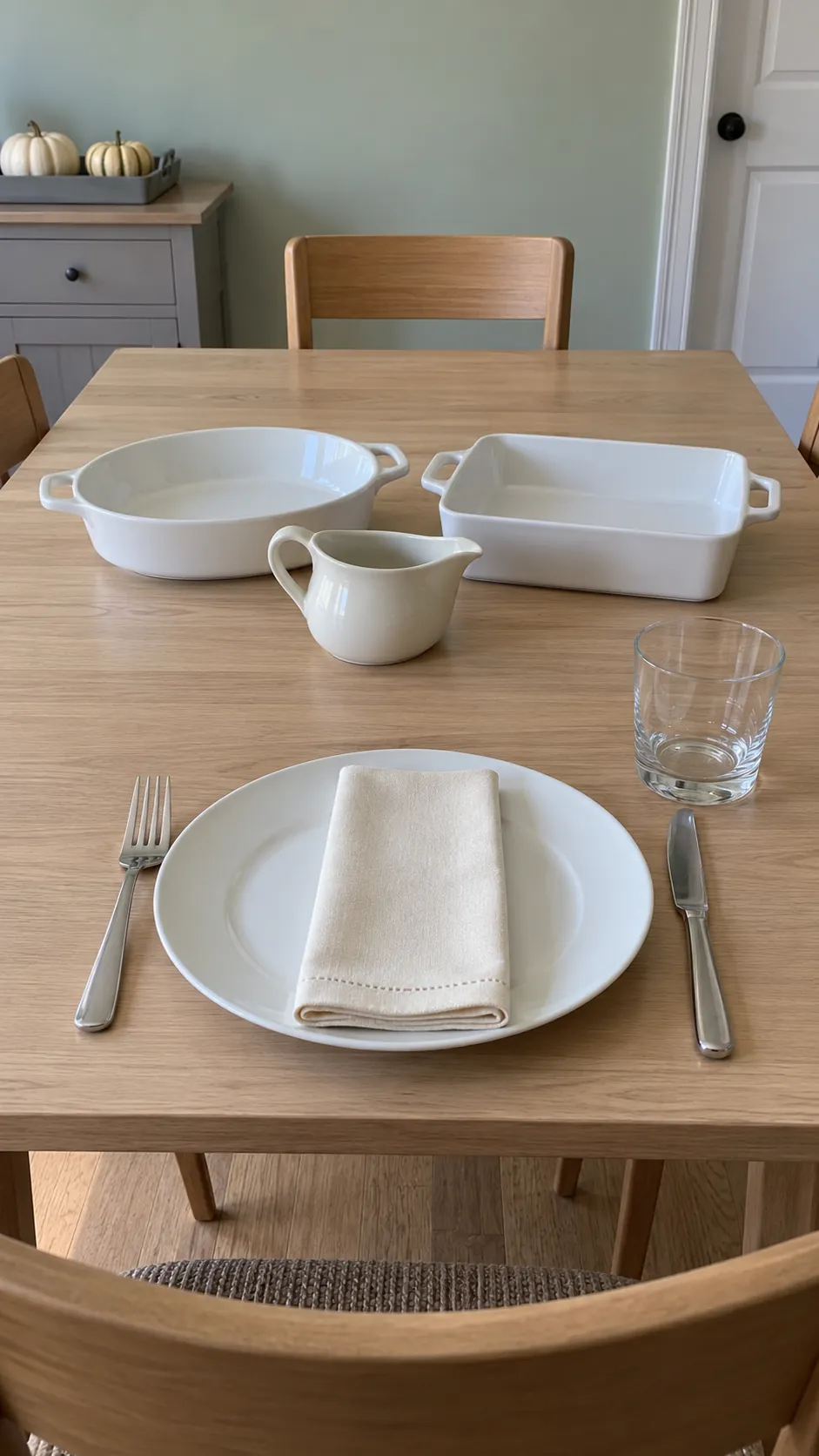
Rehearse one complete setting with your largest empty serving dishes before finishing the decor. Sit in the chair, reach for a glass, and check whether the centerpiece blocks the person opposite. Photograph the arrangement for yourself, then pack small accents together if the table must return to daily use before Thanksgiving.