
A room can look warm and still feel awkward when guests have nowhere to set a drink or move around a chair. Start with seating, light, and clear routes before adding seasonal texture. Existing textiles and a few contained accents can support the gathering without filling every surface.
A Plaid Throw on the Reading Chair
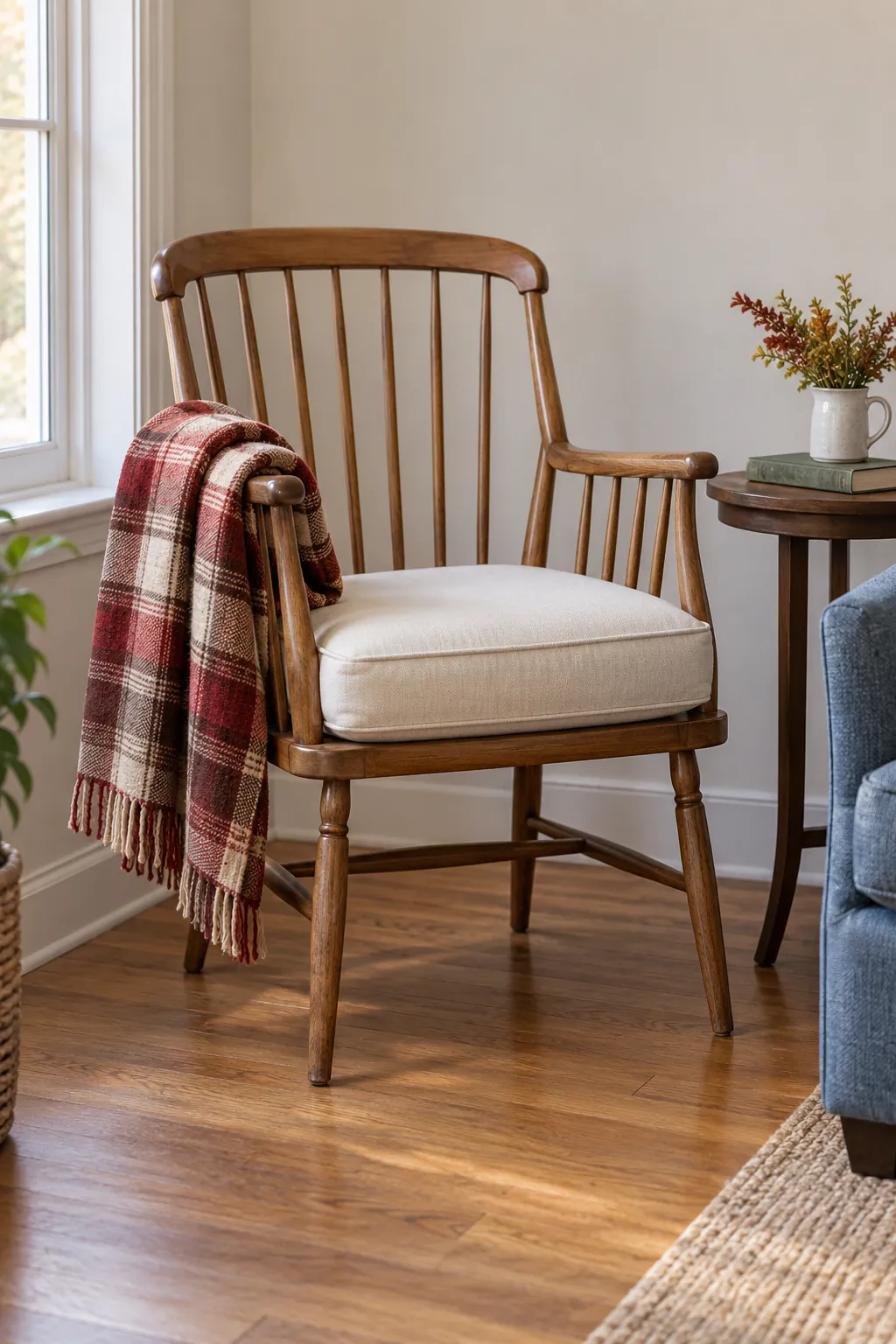
A plaid throw can give a reading chair its own seasonal detail. Fold it over the back or one arm, with the lower edge above the floor. Choose a pattern that repeats a color already in the room so the chair connects with the sofa. Keep the seat itself clear for a guest.
Mini Pumpkins on a Coffee Table Tray
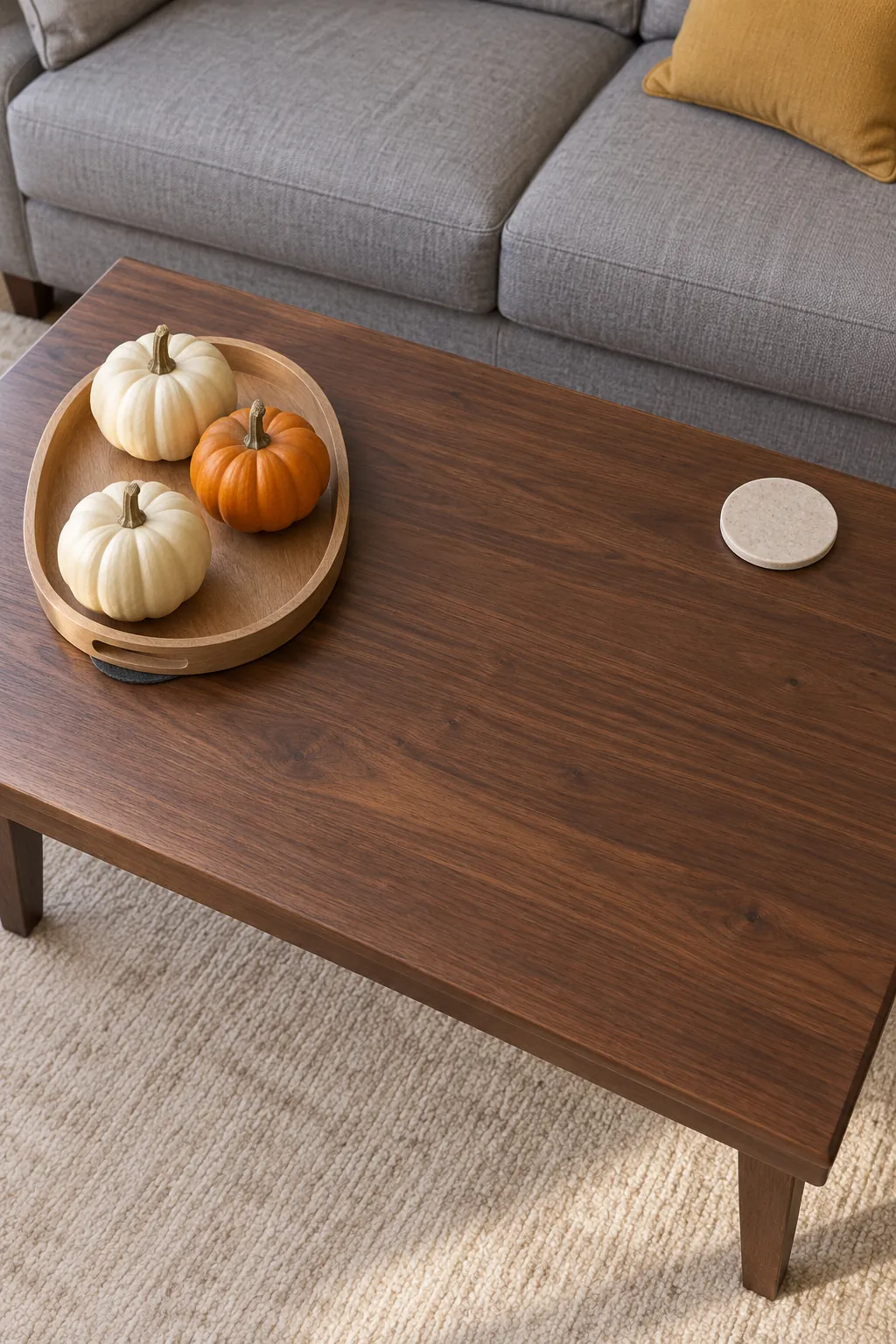
Contain small pumpkins on a tray instead of scattering them across the coffee table. A low rim stops them rolling and makes the group easier to move. Leave an open section for drinks, remote controls, or a dessert plate.
Use firm whole pumpkins and check them during the season. Put a protective base beneath rough trays on delicate furniture. When guests need more room, move the entire display to a cabinet rather than squeezing cups between decorations.
Amber Glass with Battery Light
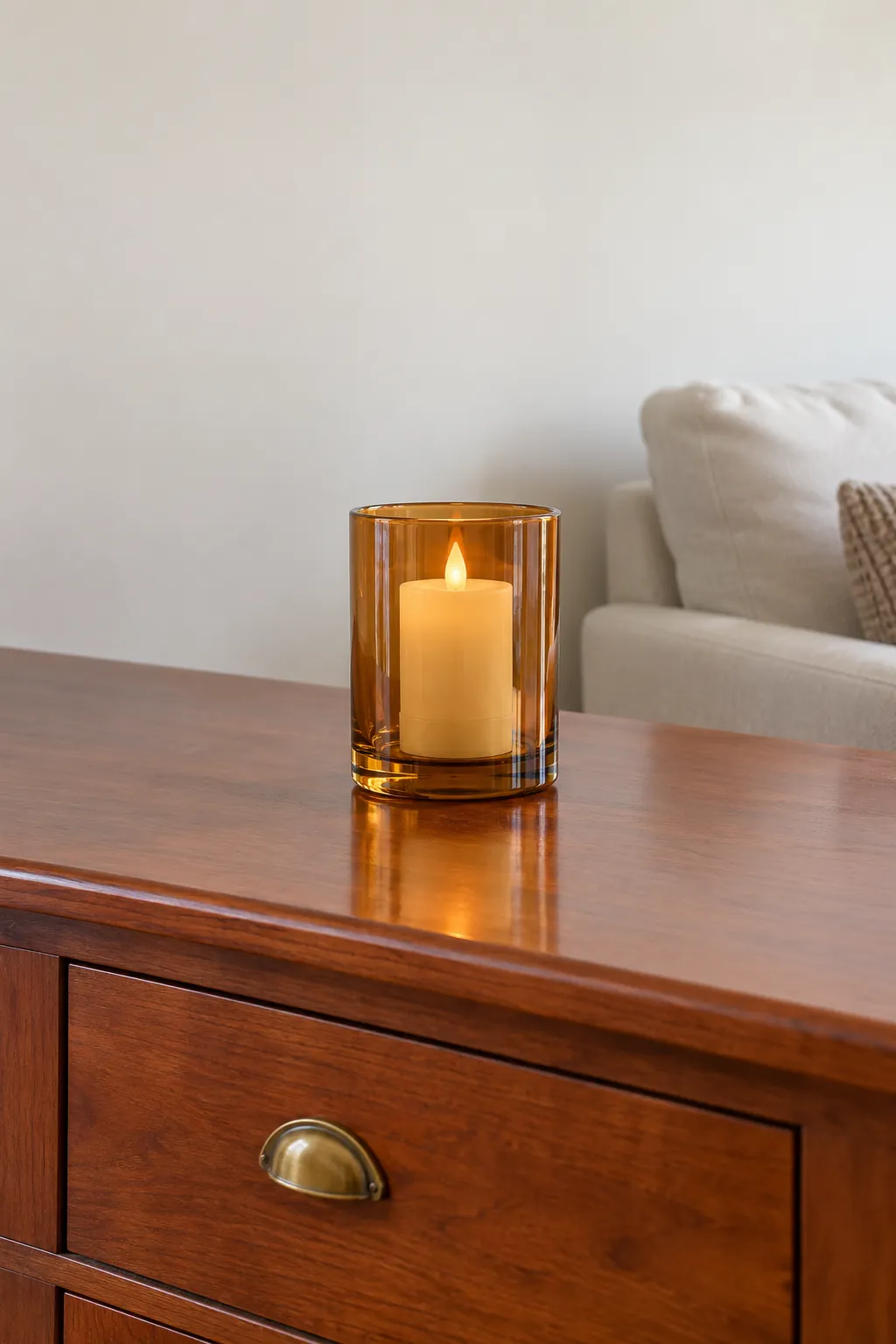
Amber glass can provide warm color beside the sofa even in daylight. Pair a suitable holder with a battery light that fits securely inside it. Keep the holder on a stable surface and leave ordinary room lighting bright enough for guests to move comfortably.
Seasonal Covers for Existing Cushions
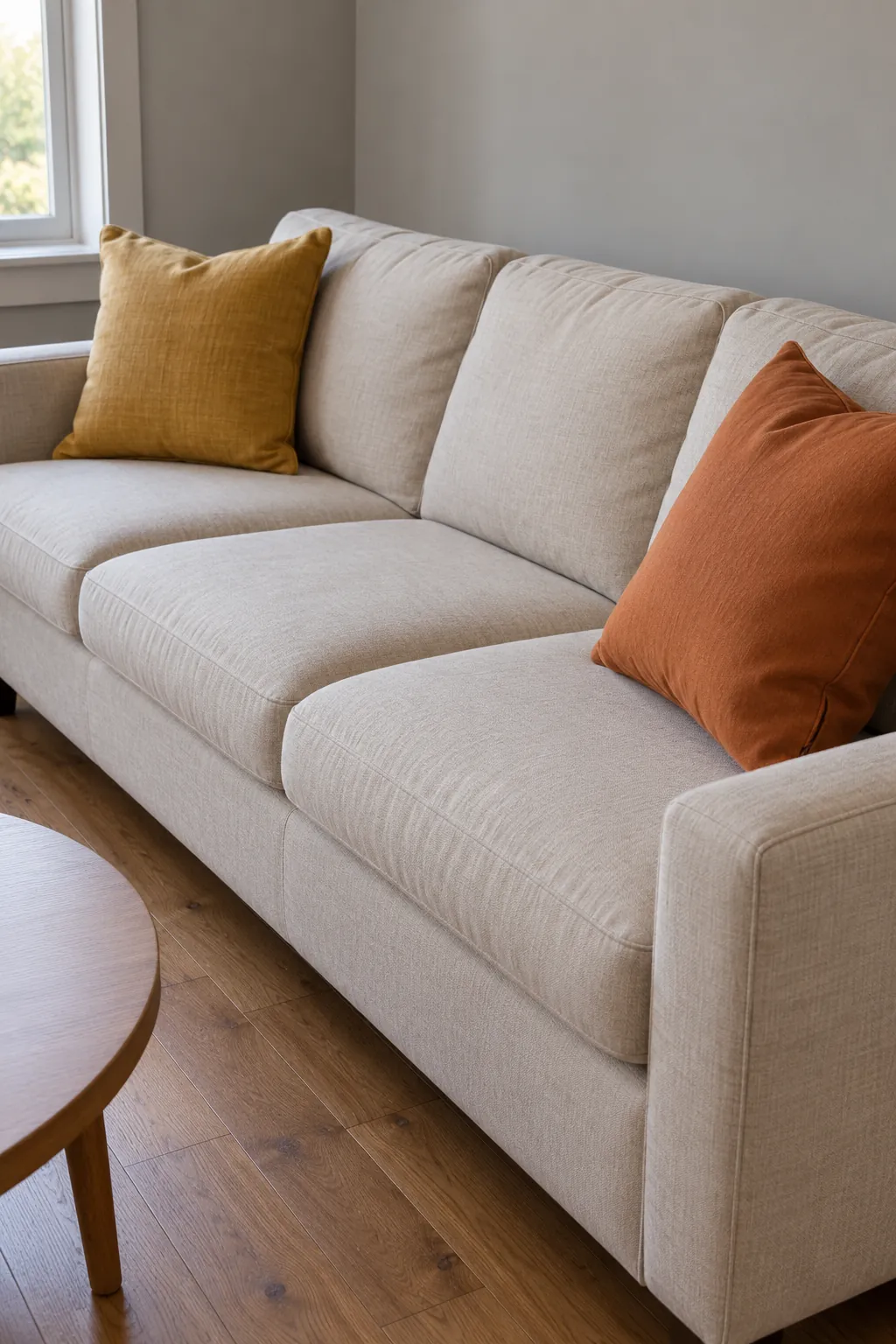
Changing a cushion cover can bring burnt orange or mustard into a neutral sofa. Measure the insert and choose a cover that fits without compressing it into a hard lump. Keep fewer cushions than seats so visitors do not have to clear the sofa themselves. Follow the cover’s washing instructions before storing it after the holiday.
One Flat Rug beneath the Seating Group
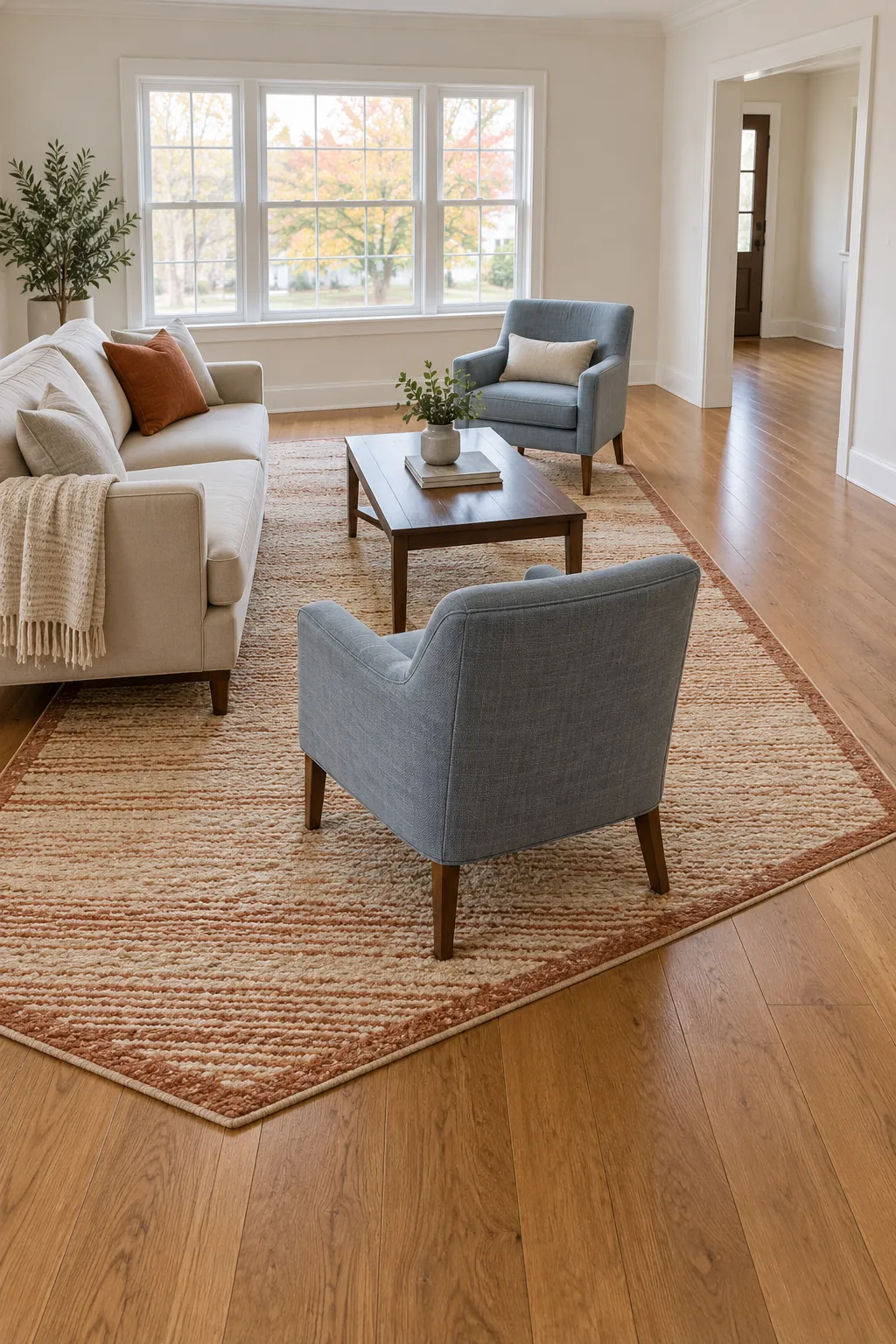
A single flat rug can connect the sofa and guest chairs without several raised edges. Choose a suitable rug pad and check that corners stay down on your flooring. Put furniture in a stable position and walk the route around it before guests arrive. A warm color or restrained pattern can supply the fall detail without another layer.
A Restrained Mantel on an Unused Fireplace
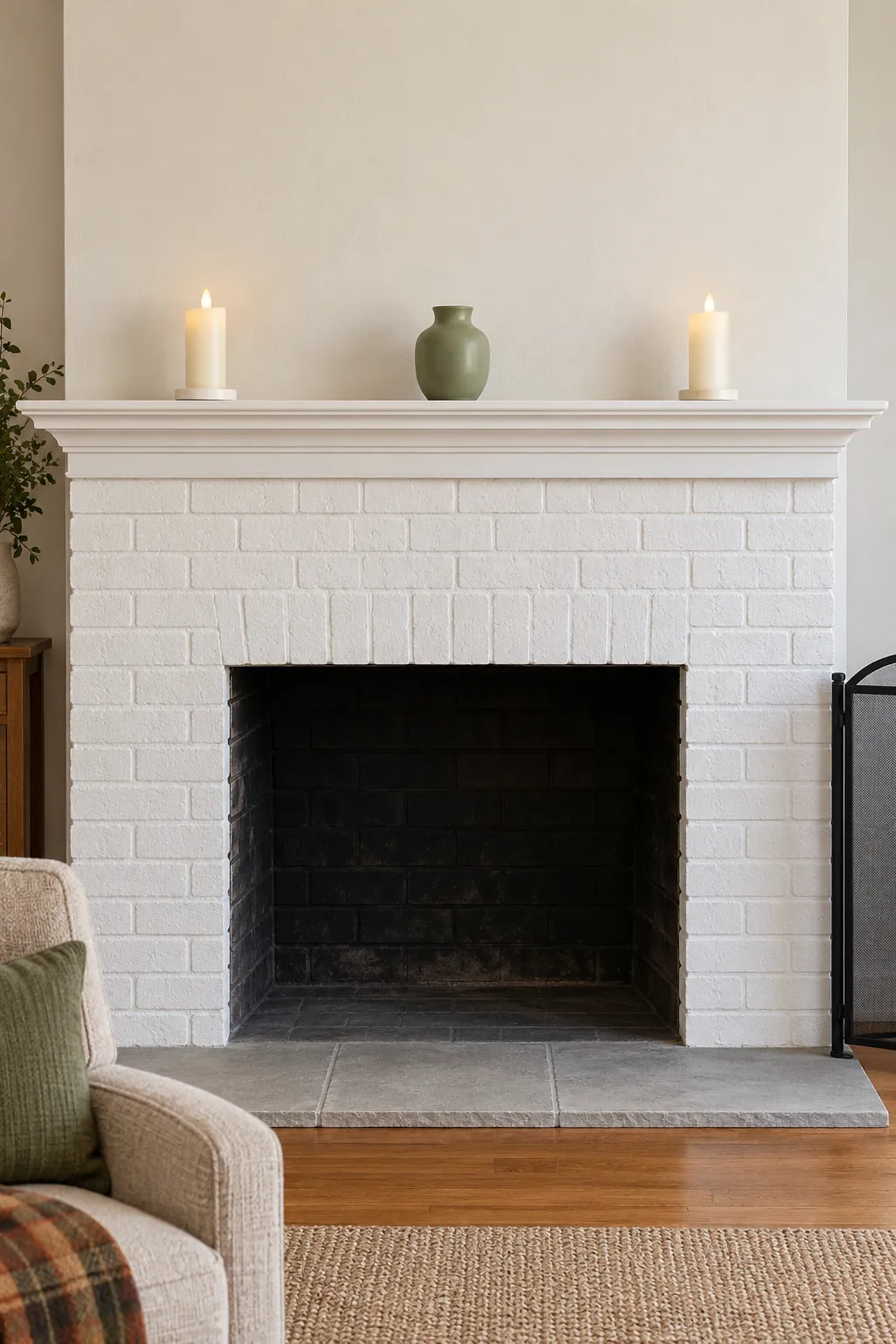
An unused fireplace can give a seasonal display a clear focal point. Put a small ceramic vessel and battery candles on the mantel, keeping every base fully supported. Leave the hearth and opening clear rather than filling them with loose dry material.
If you intend to use the fireplace, follow its instructions and clearances before adding any decoration. Move unsuitable objects elsewhere instead of assuming a high shelf protects them from heat. A nearby cabinet can carry the same color scheme when the mantel must stay bare.
Short Greenery on a Bookcase Top
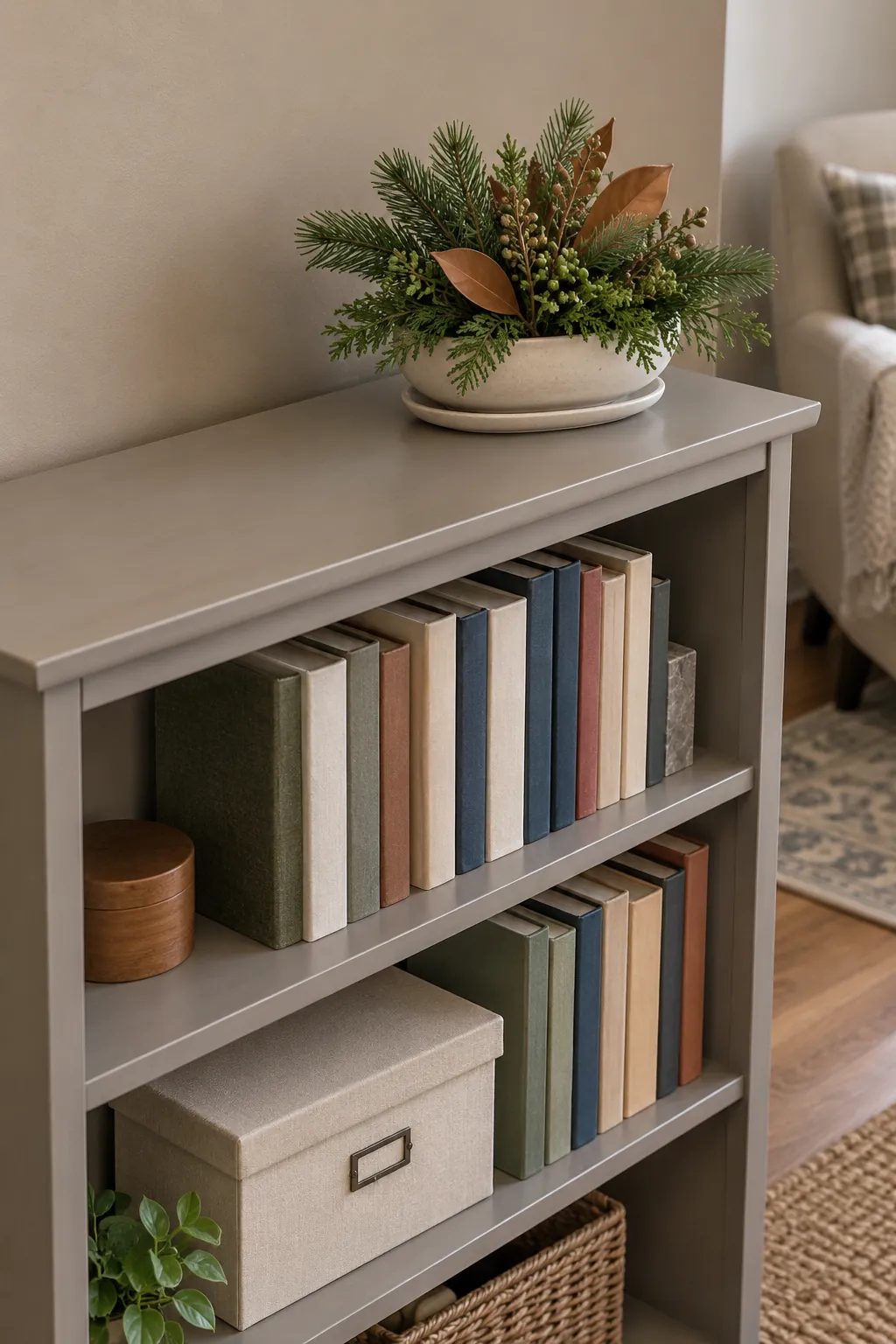
A short contained greenery arrangement can soften a bookcase without covering the shelves. Put it in a stable low vessel and keep leaves away from books and electronics. Use only clean material that does not shed heavily, and protect wood beneath water filled containers. Leave the books you use regularly easy to reach.
A Blanket Crate beneath the Console
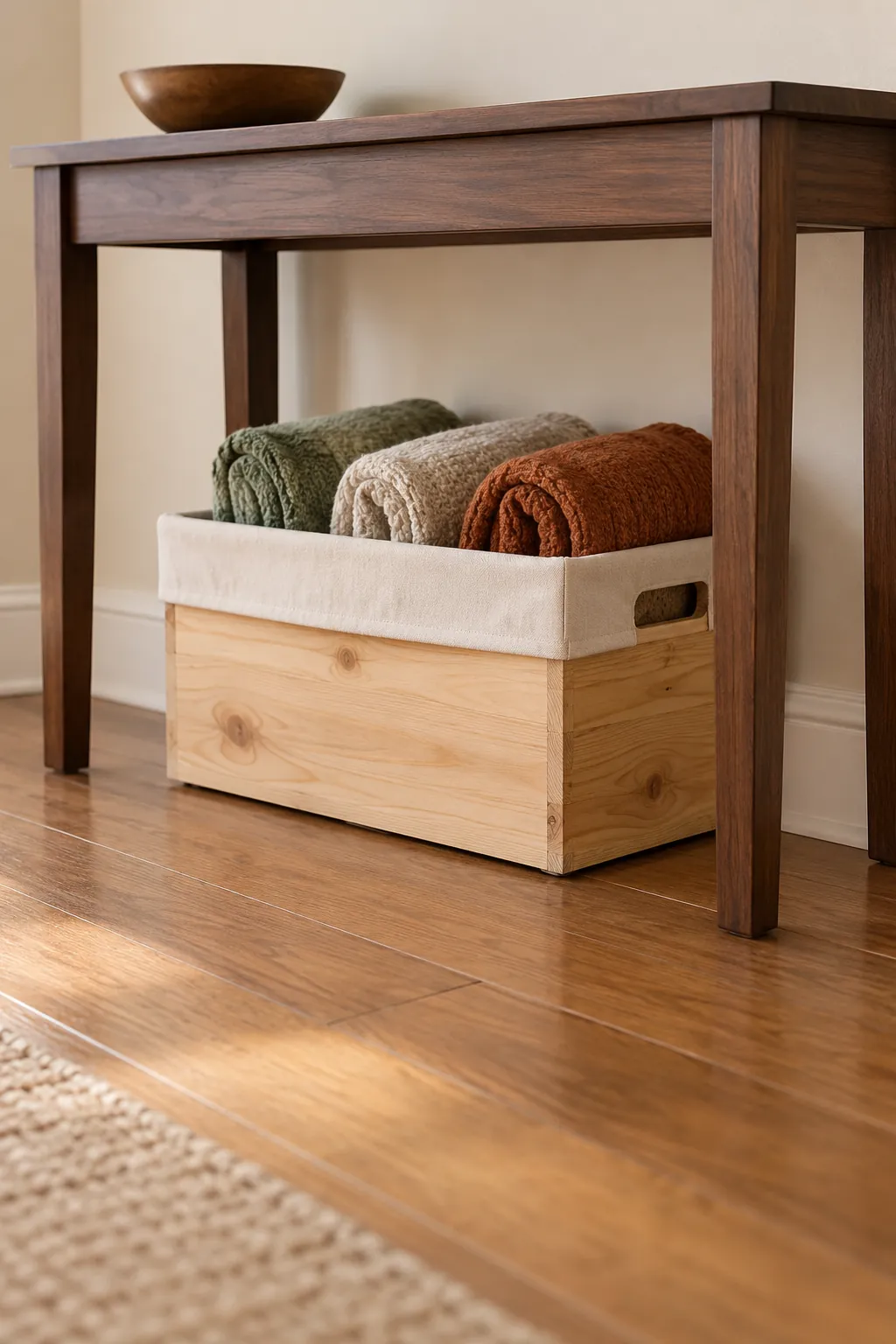
A smooth sound wooden crate can store clean throws under a console. Check it for splinters and line it if rough edges could catch the fabric. Keep its front within the console footprint so it does not become a trip obstacle. Fold the throws with an edge visible so guests can take one easily.
A Lantern across from the Hearth
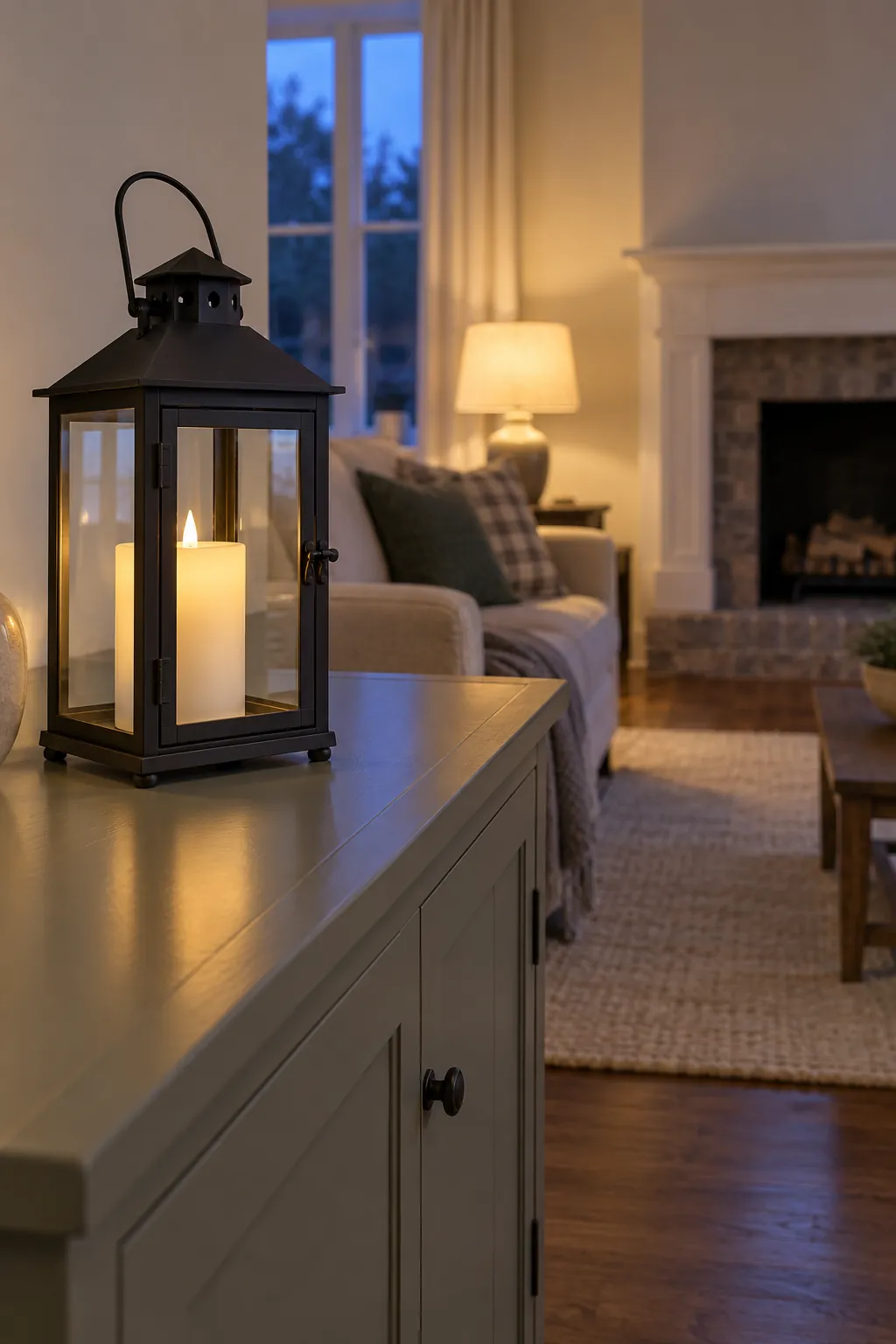
A lantern with a battery candle can give the seating side of the room a quiet evening accent. Put it on a broad side cabinet across from the hearth rather than inside the fireplace’s working area. Choose a stable lantern with an accessible switch. The decorative light should supplement the lamps guests need to see clearly.
A Small Wreath on an Interior Door
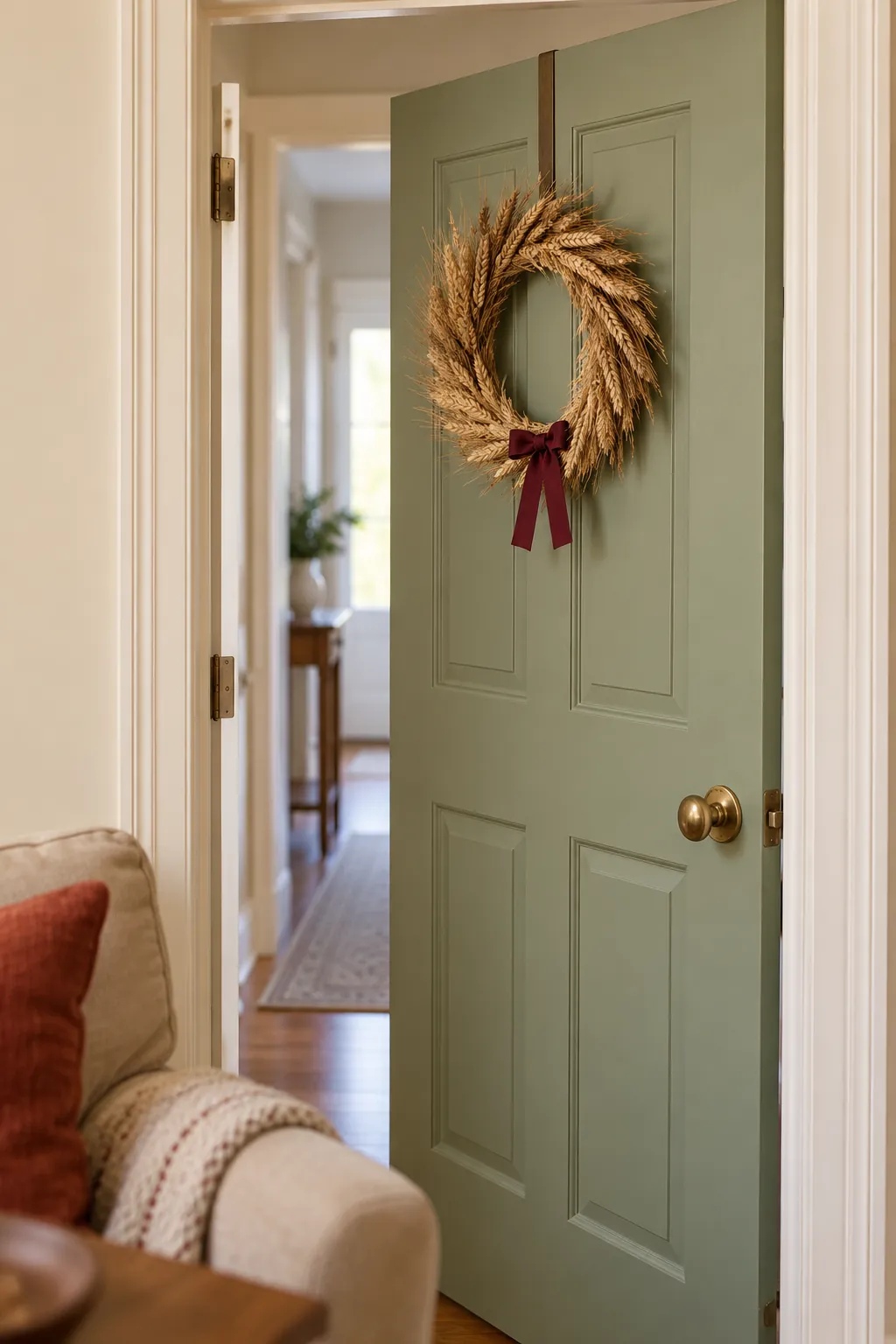
A compact wreath on an interior door brings harvest texture away from the fireplace. Use a hanger suited to the door and check that it can still open without scraping the frame. Keep dry stems contained and the handle accessible. A plain ribbon can connect the wreath with your cushion colors.
Copper Color at the Kitchen Opening
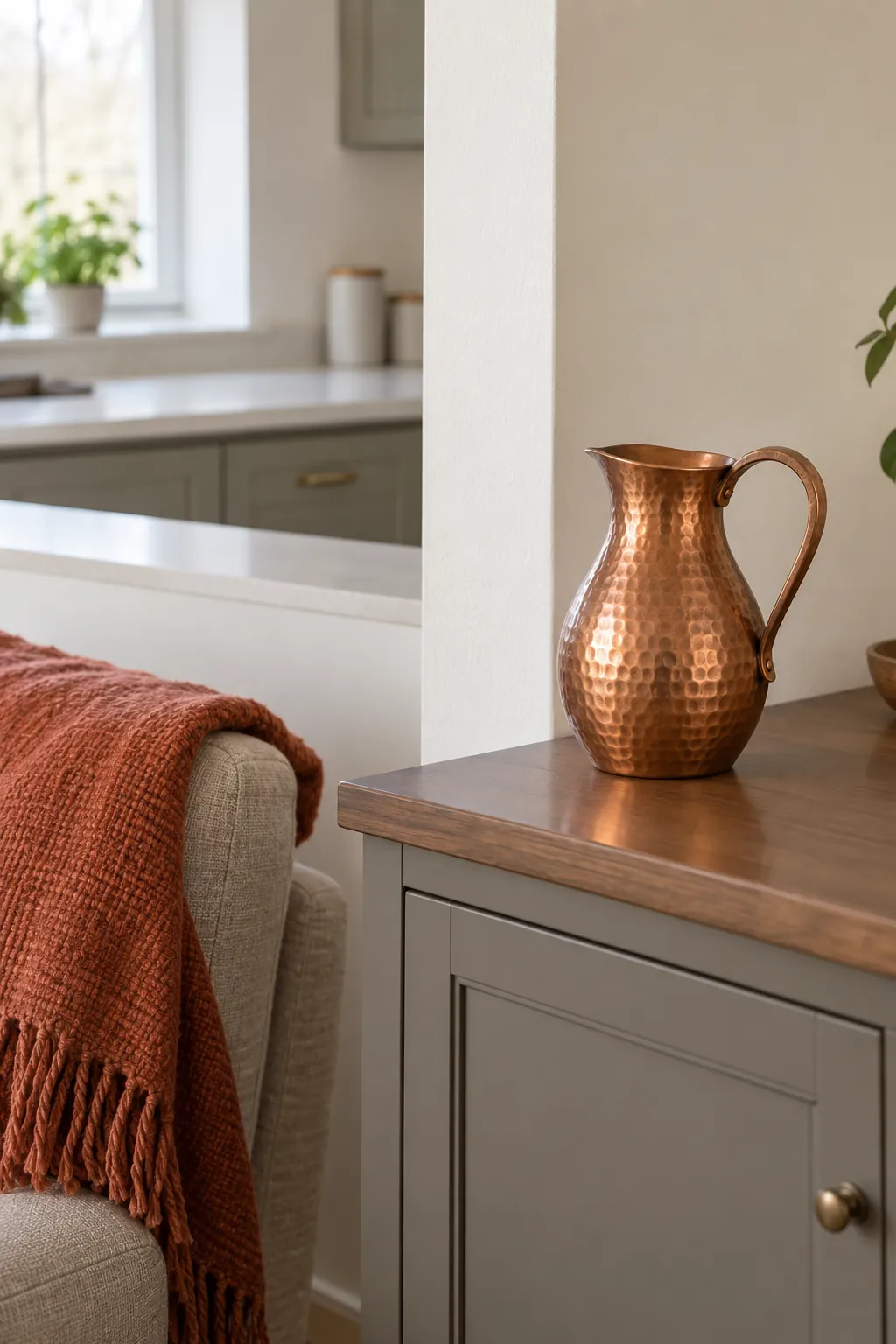
In an open room, a small copper colored vessel near the kitchen opening can connect the two spaces. Put it on a living room cabinet rather than a working cooking counter. Use the vessel decoratively unless it is known to be suitable for food. Repeat its warm tone in one nearby textile instead of displaying every copper item you own.
A Log Bin away from Working Heat
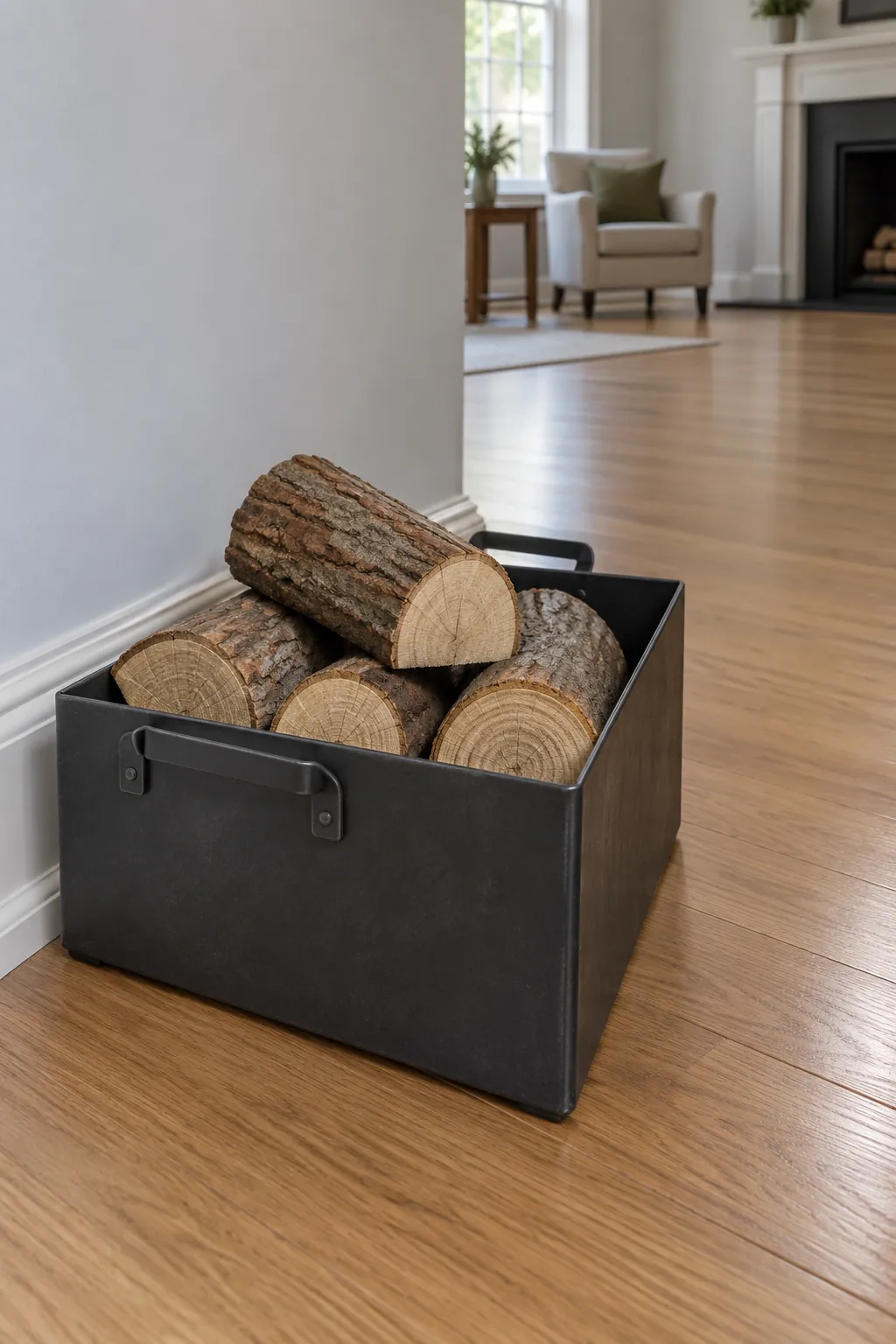
A sound log bin can provide natural texture where it remains outside the fireplace’s required clearances. Keep logs contained and check them for loose bark or insects before bringing them indoors. Do not add blankets, pinecones, or dry branches as filler around a heat source. Choose another seasonal accent if the room lacks a suitable storage position.
A Cream and Gold Dessert Corner
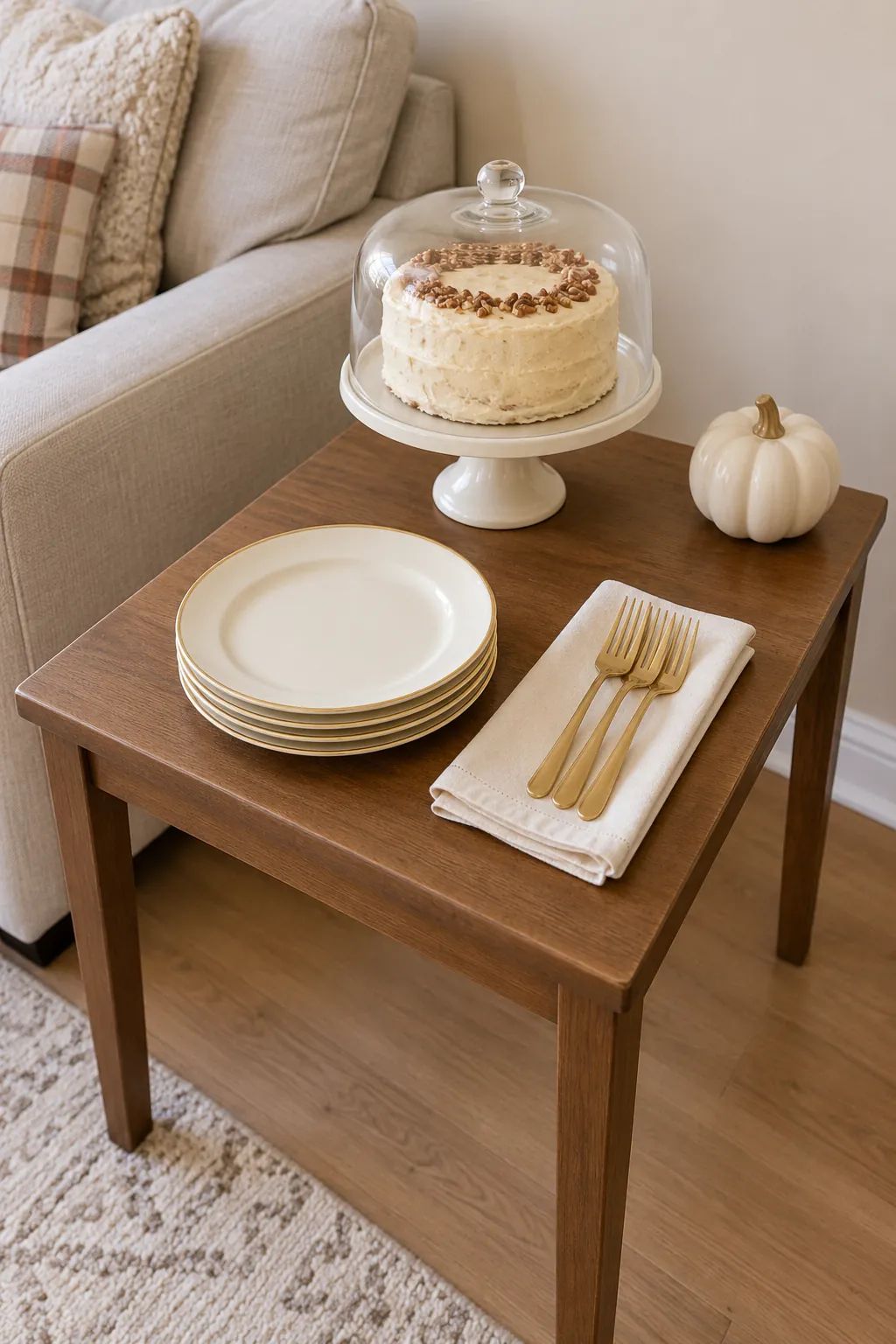
A small dessert corner can coordinate with the living room through cream napkins and food safe gold colored cutlery. Use a firm level table rather than balancing dishes on upholstered furniture. Put plates and utensils where guests can reach them without leaning across decoration.
A single low ceramic pumpkin can sit beyond the serving area. Keep any decorative objects separate from food and remove them when surface space becomes tight. Clear the table between courses so used dishes do not crowd the next guests.
Harvest Curtains That Leave the Window Usable
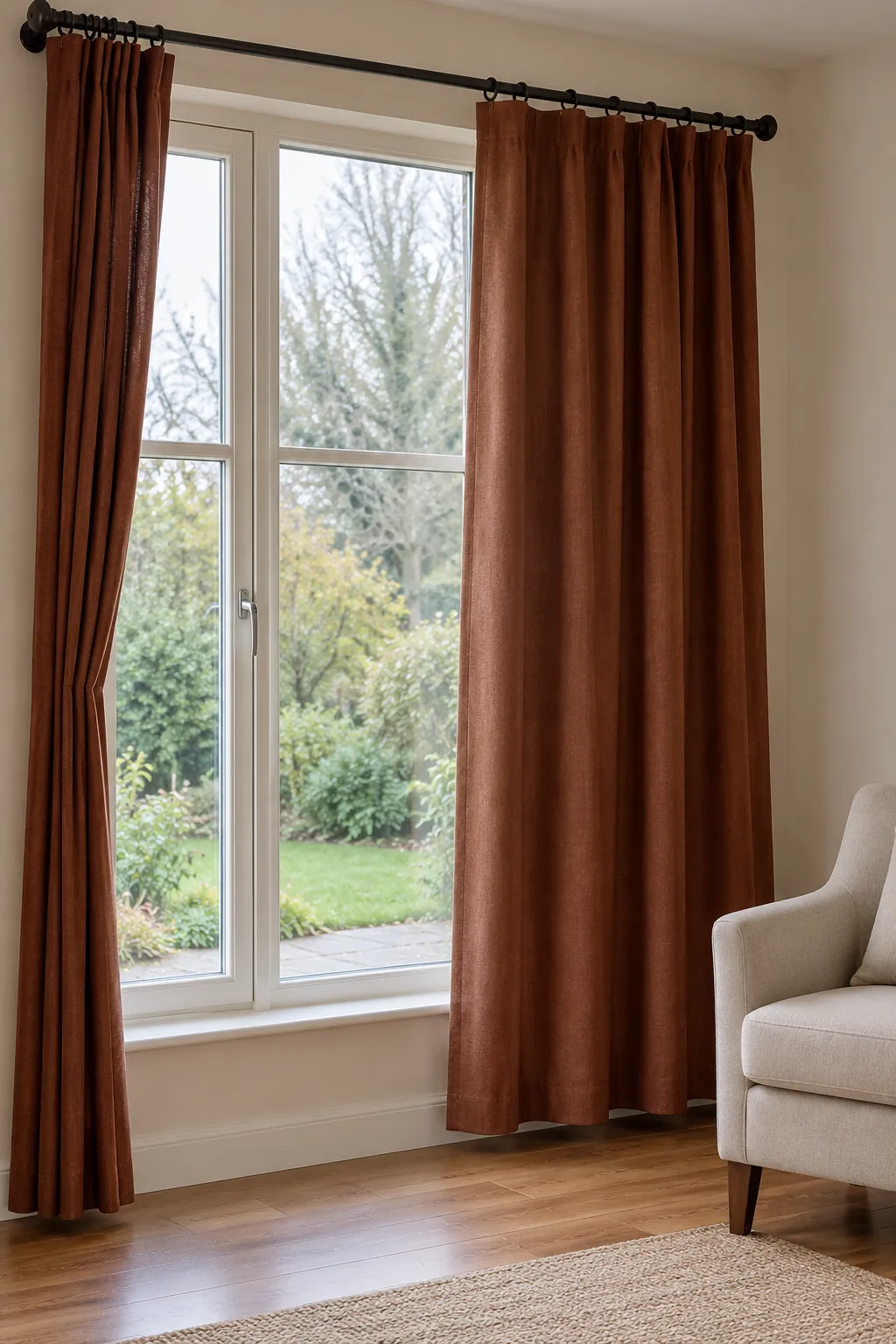
Chestnut or wine colored curtains can bring a stronger fall tone to a plain room. Check that the rod supports the fabric weight and that panels do not obstruct vents or heaters. Keep enough room to open the curtains for daylight. A textile change should suit your room’s everyday light and care needs, rather than promise a particular heating result.
A Framed Botanical Leaf Study
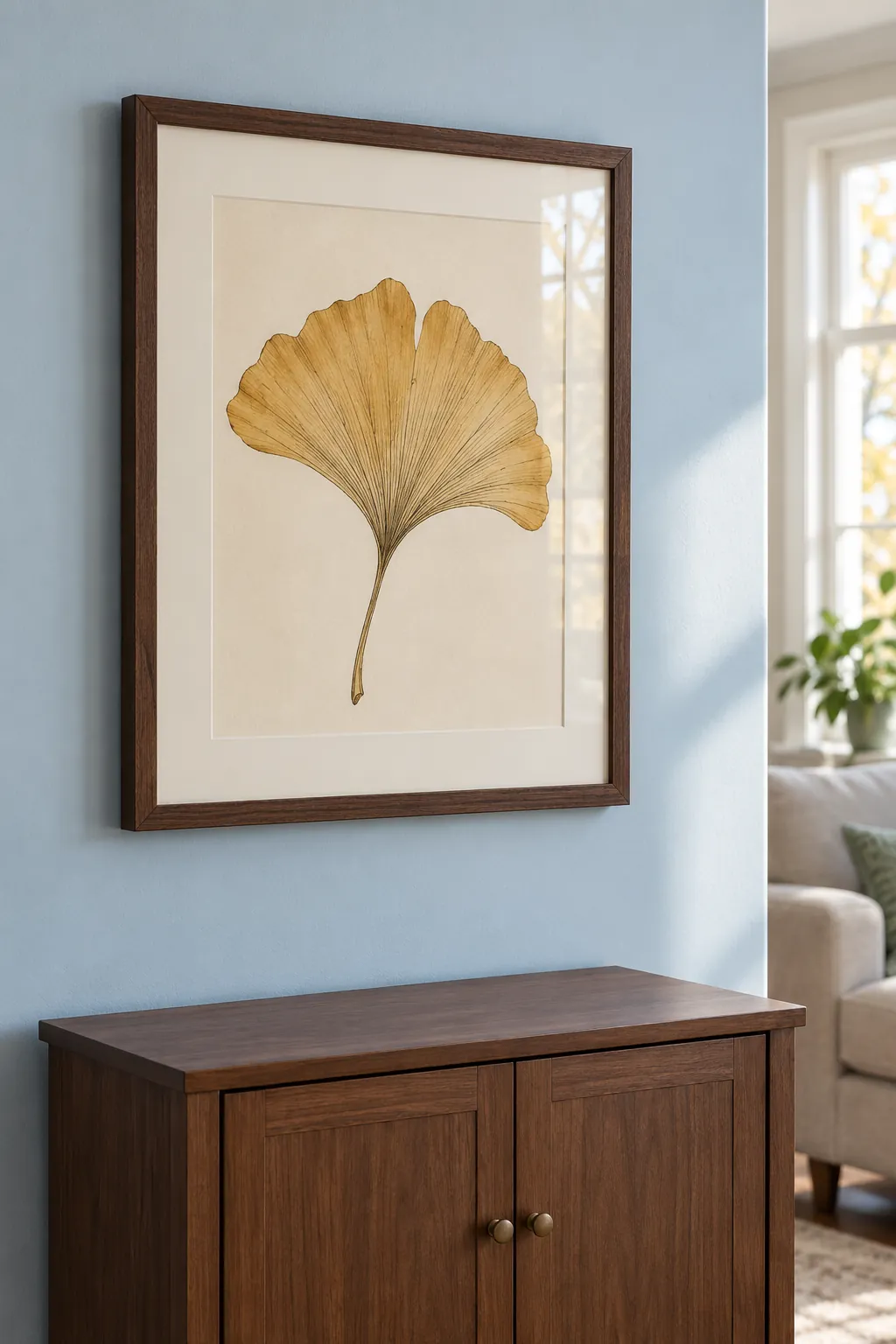
A botanical leaf print can add seasonal color without filling a tabletop. Choose a specific leaf shape or branch study that fits the room’s existing palette. Use a secure fitting suited to the wall and frame weight. Keep the frame at a comfortable viewing height instead of crowding it against the ceiling.
Coasters within Reach of Every Seat
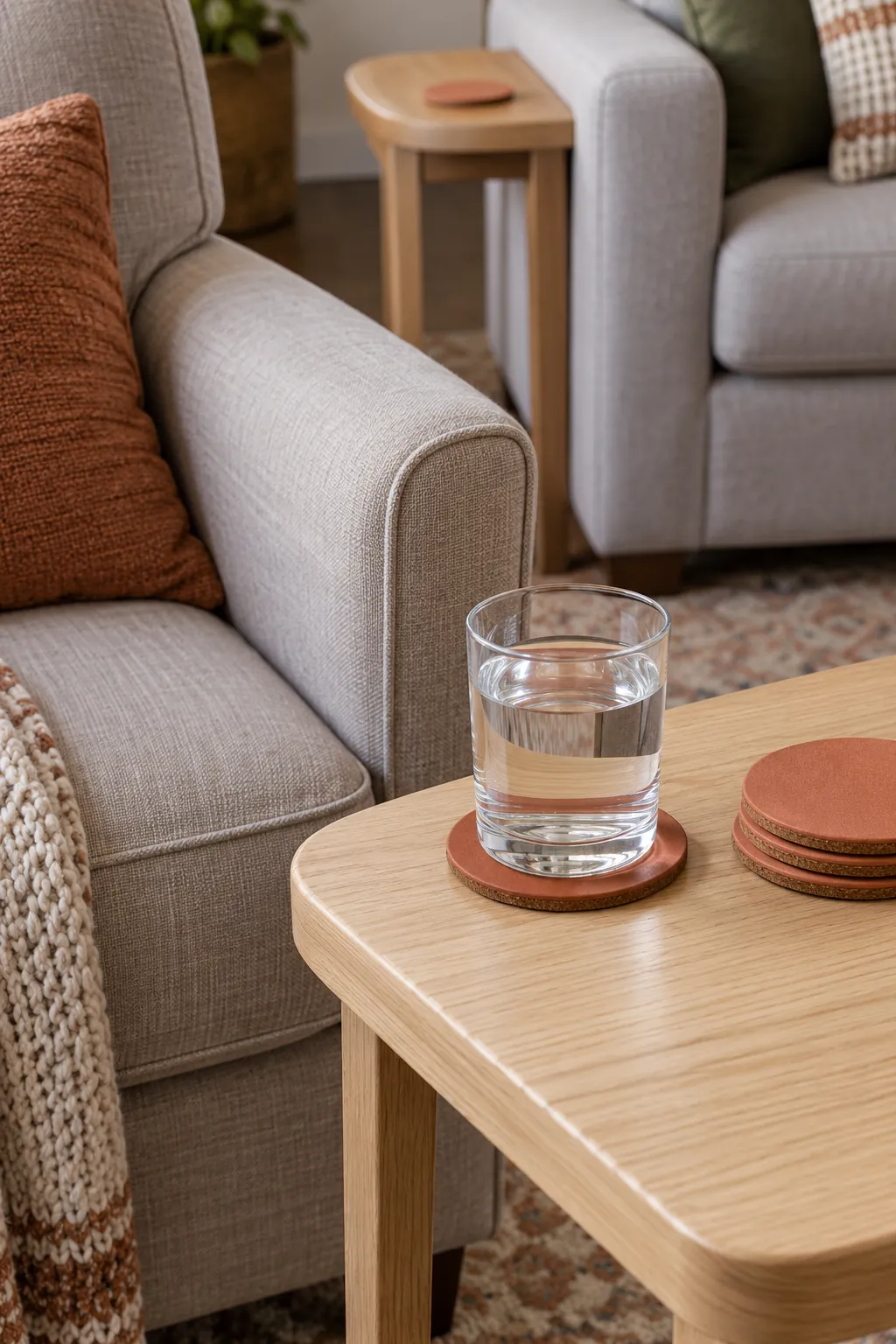
Coasters can become part of the room’s fall palette while protecting useful surfaces. Put a washable or wipeable set where each guest can reach one. Choose coasters that sit flat and suit the furniture and drinkware. A small stack on a side table is more useful than a decorative set hidden inside a drawer.
Nesting Tables for a Narrow Sofa End
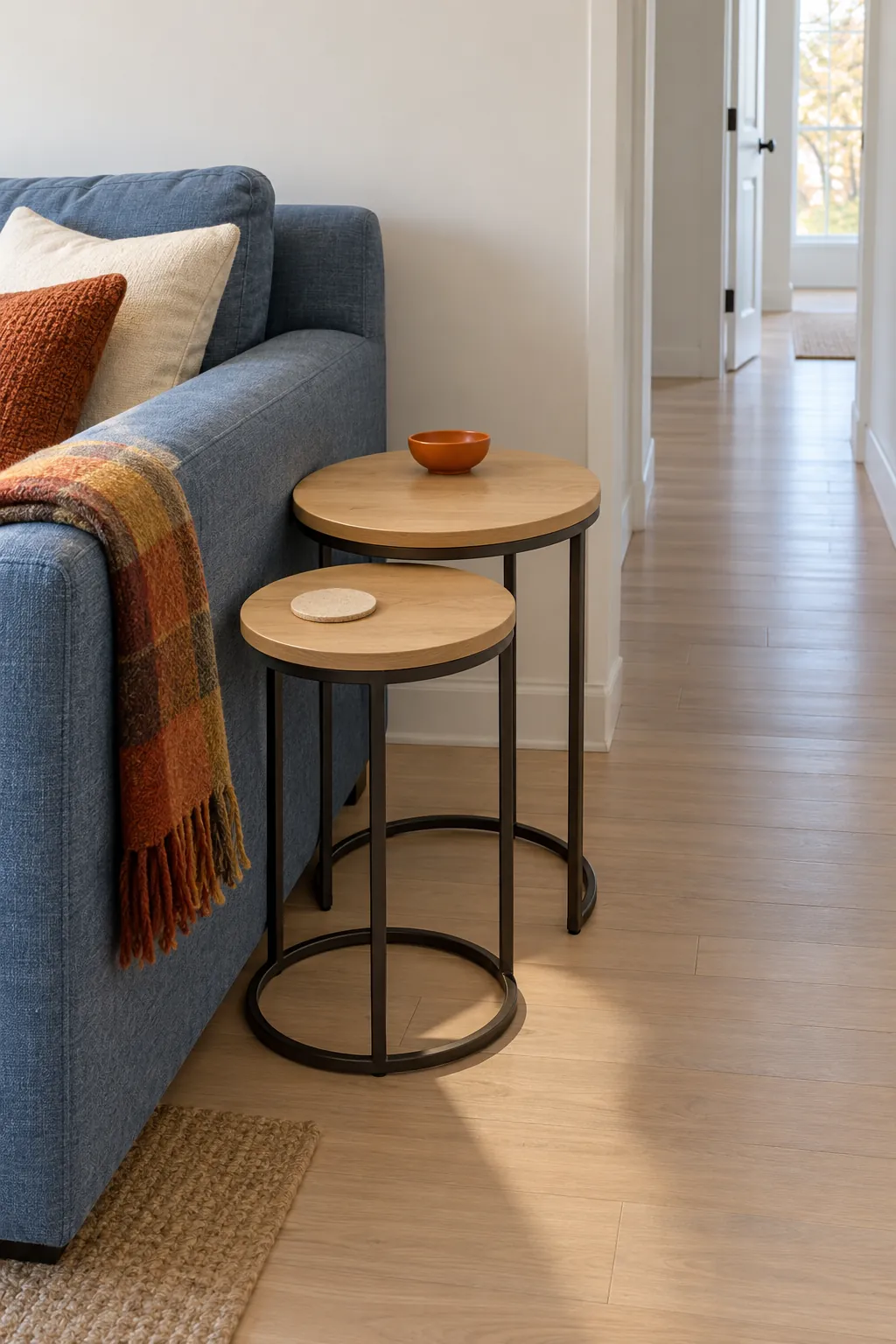
Nesting tables can add drink space when one large side table would block a route. Pull out the smaller table only where it stands securely and leaves room to pass. Keep the tops mostly empty except for a coaster or one low accent. Return them to their nested position after the gathering.
A Stable Extra Chair for Conversation
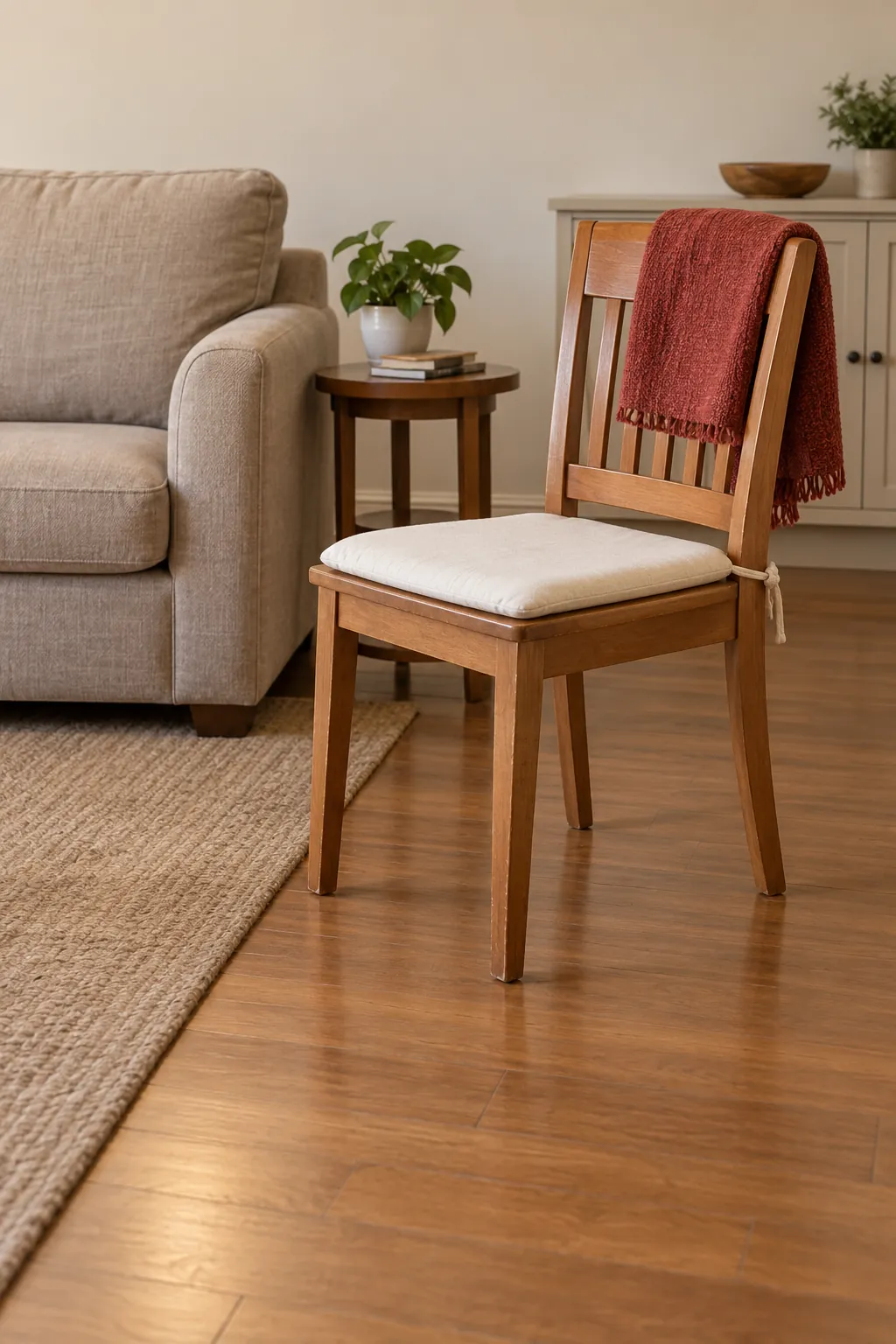
An extra chair can make the holiday living room feel more welcoming than another floor decoration. Choose a sound chair at a useful seat height and angle it toward the conversation area. Keep its legs outside the main route and check that guests can get up easily. A folded napkin colored throw over the back can tie it to the room.
A Firm Tray on a Broad Ottoman
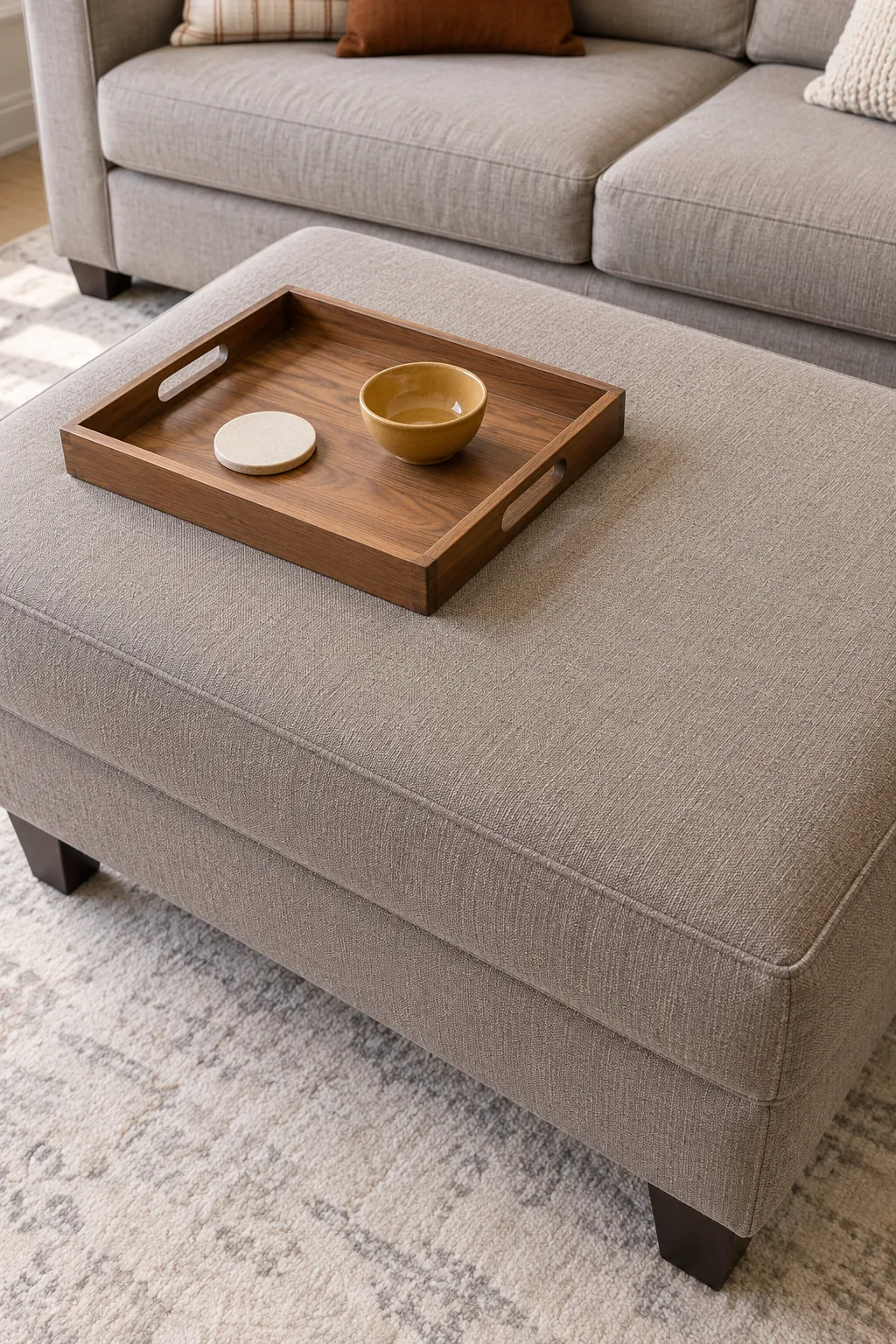
A broad ottoman can hold a tray only when the tray sits firmly without rocking. Test the surface before putting a drink on it and use a separate table if it shifts under pressure. Keep the tray’s load modest and move it before anyone uses the ottoman as a footrest.
A low bowl or coaster gives the tray a practical purpose without adding a tall arrangement. Leave the remaining cushion clear so the furniture does not become an overloaded shelf. Use this option only where the ottoman and tray are stable enough for their intended use.
A Shaded Lamp beside Guest Seating
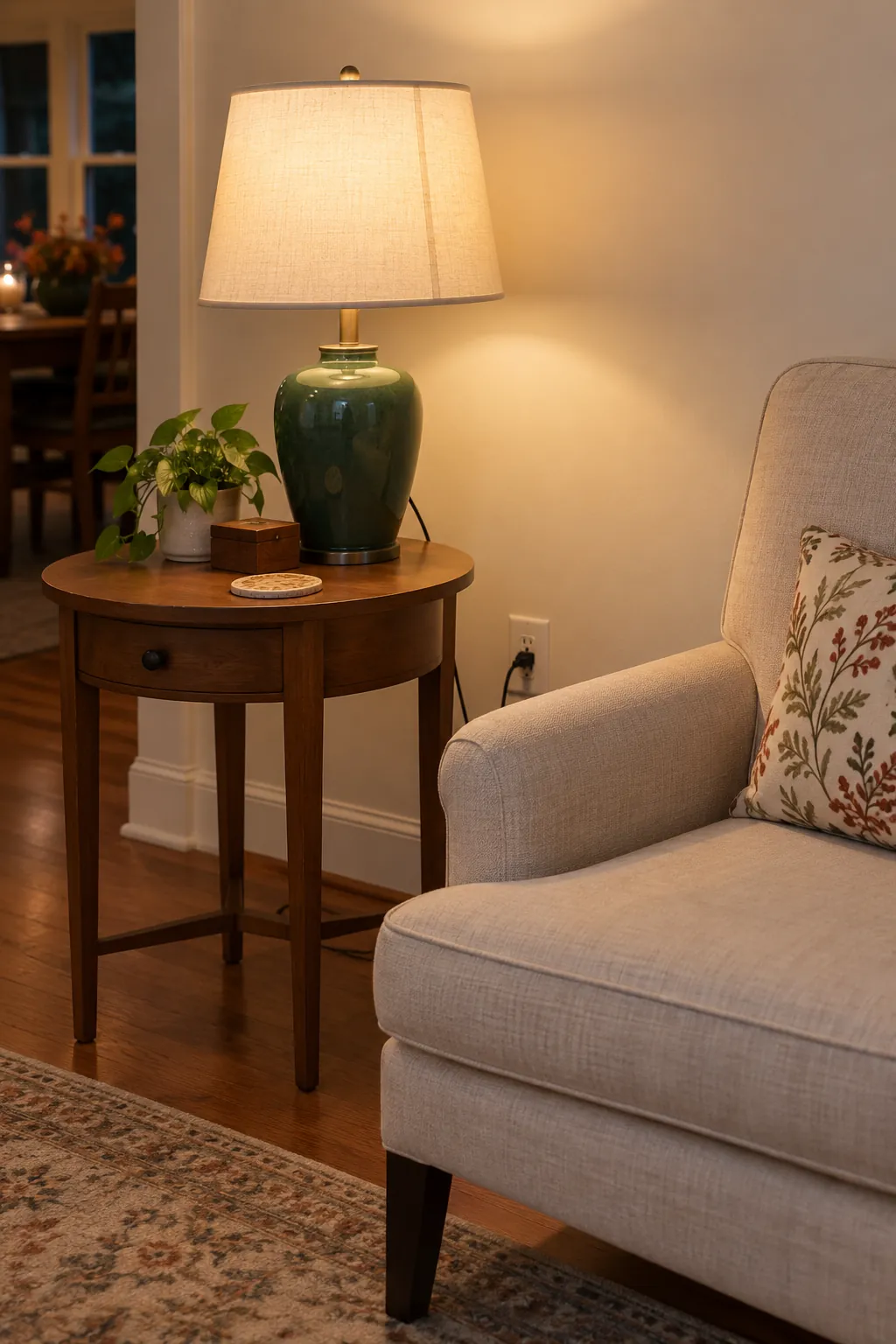
A shaded lamp can make the seating area comfortable after a late meal. Use the bulb type and wattage permitted by the lamp and keep fabric clear of hot parts. Route its cord along the wall or furniture edge where guests will not cross it. Aim for enough light to see drinks and faces rather than relying on decorative candle glow.
Sheer Panels for a Bright Afternoon Room
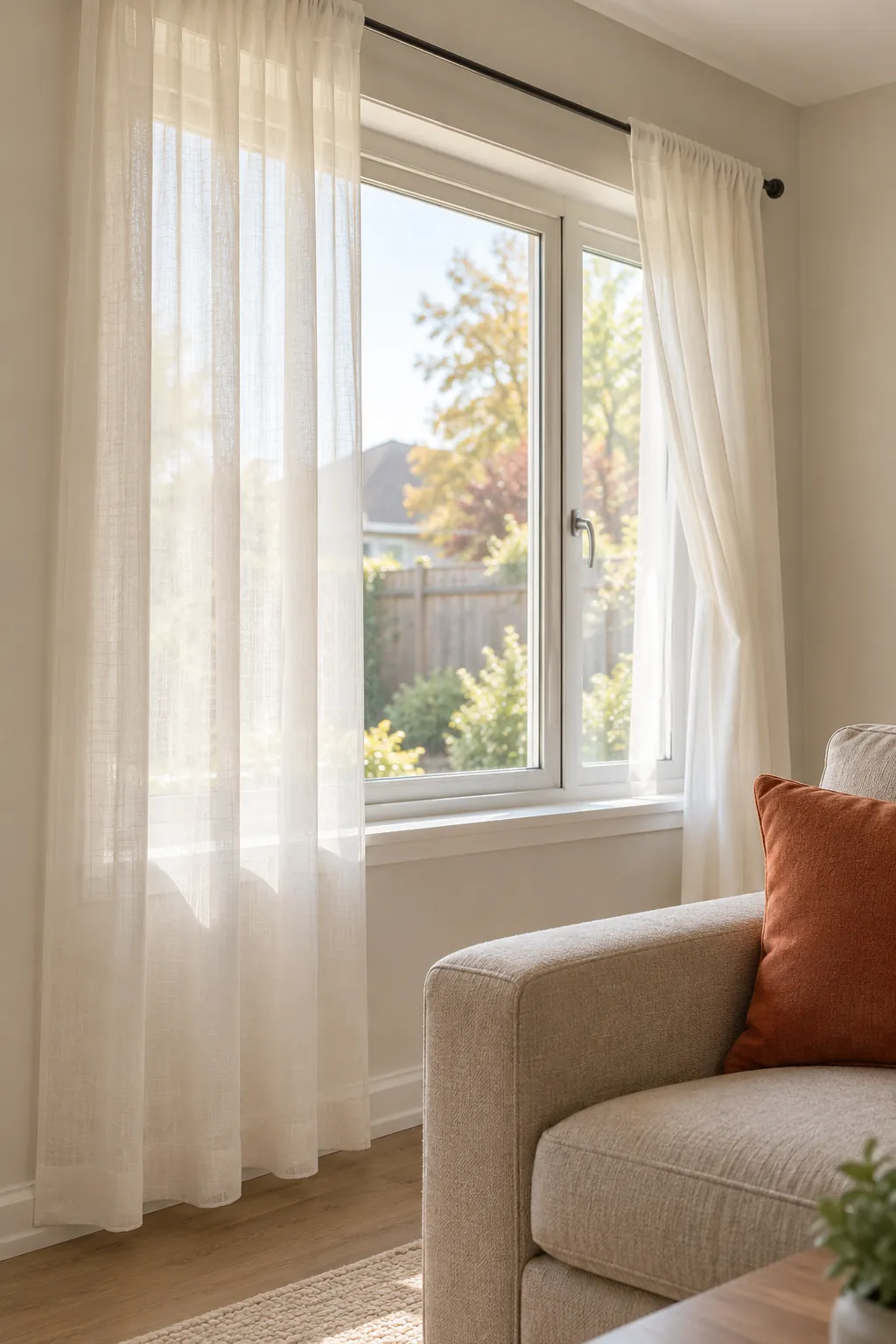
Plain sheer panels can soften afternoon light without making a small room feel closed in. Use a supported rod and keep the fabric away from heaters and the floor route. Pull the panels aside when you need more daylight. Warm cushion colors can provide the seasonal contrast while the window treatment stays quiet.
Low Flowers on a Window Console
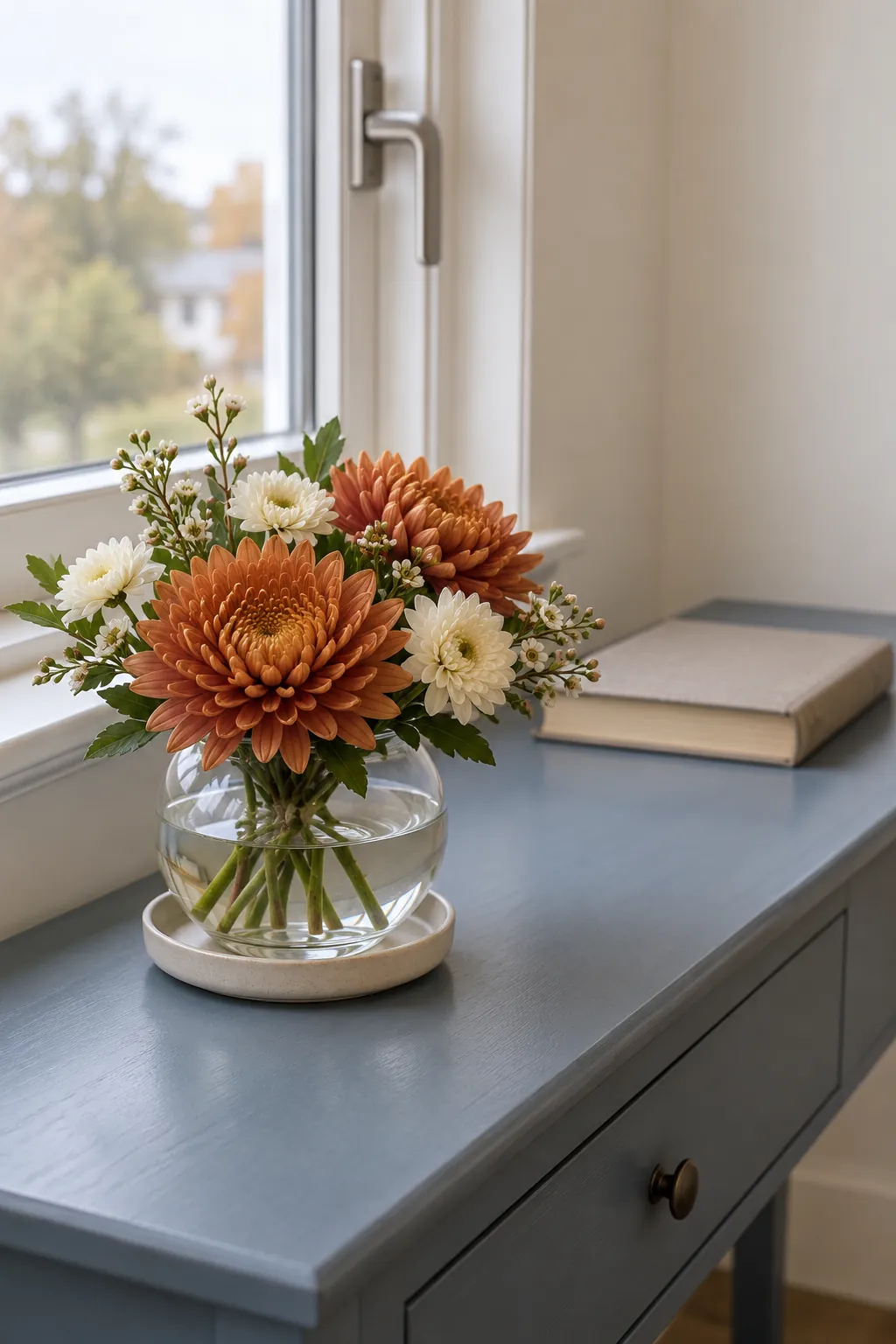
A short flower arrangement can add color to a window console without blocking the view. Put the vase on a waterproof base and keep it clear of window handles. Choose a modest width so the console still has useful surface area. Remove loose petals before they reach books or nearby drinks.
A Secured Rack for Folded Throws
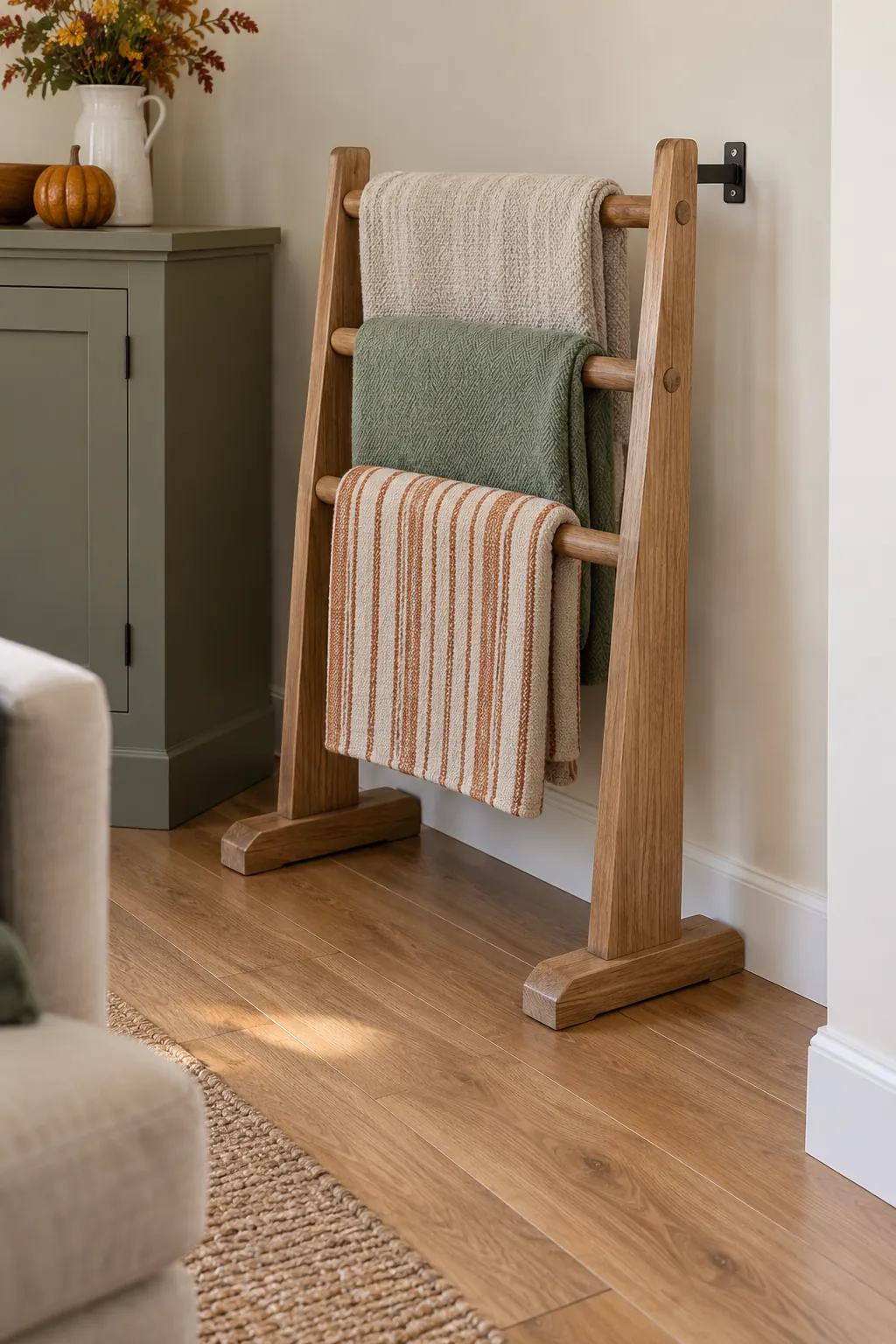
A small throw rack can make textiles visible without piling them onto seats. Choose a sound rack and secure it as its instructions require, especially where children may pull on fabric. Keep it outside the walking route and away from heaters. Fold each throw so its ends stay clear of the floor.
A Lidded Basket for Everyday Clutter
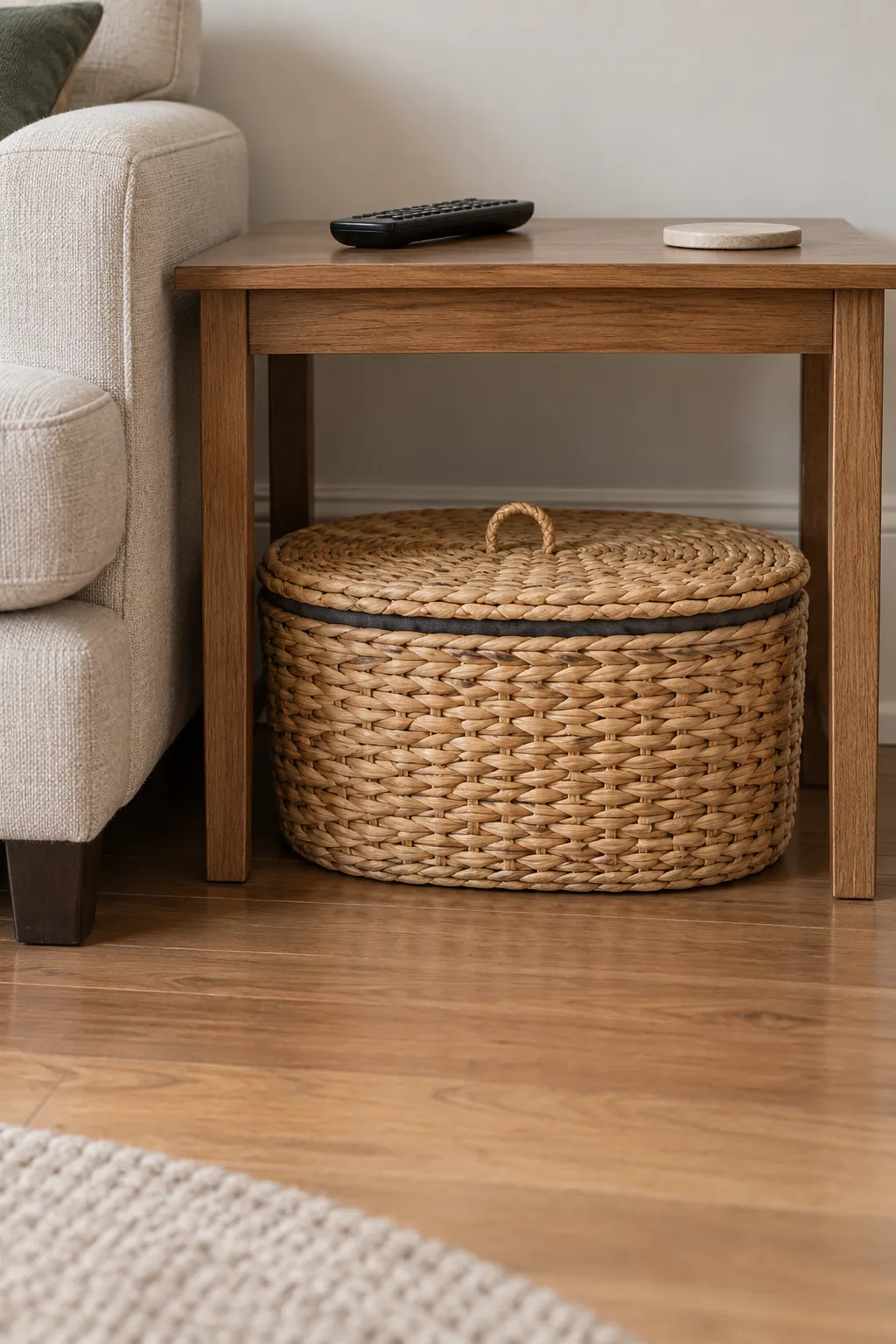
A lidded basket can contain remote controls and small household items before guests arrive. Give it a clear home beside the sofa or beneath a table rather than shifting it into a doorway. Keep useful remotes in a consistent place so the holiday display does not make daily tasks harder. The woven surface supplies texture without another decorative object.
A Slim Cushion on an Accent Chair
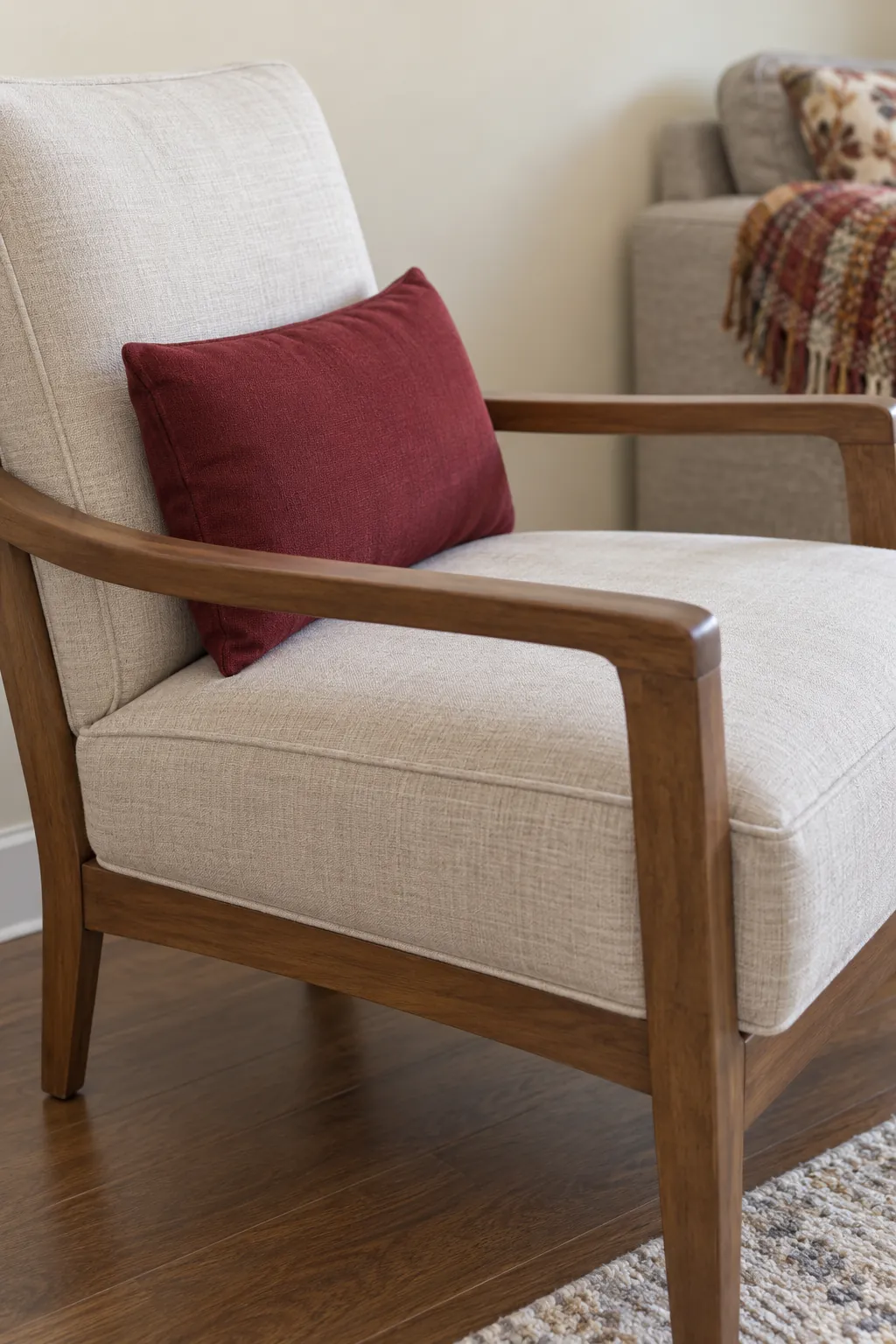
A slim cushion can add fall color to a chair without reducing its useful seat depth too much. Try sitting with it before choosing the final position. Use one supportive shape rather than several decorative pillows that guests must remove. A plain burgundy cover works well beside a patterned sofa textile.
A Warm Border around an Existing Rug
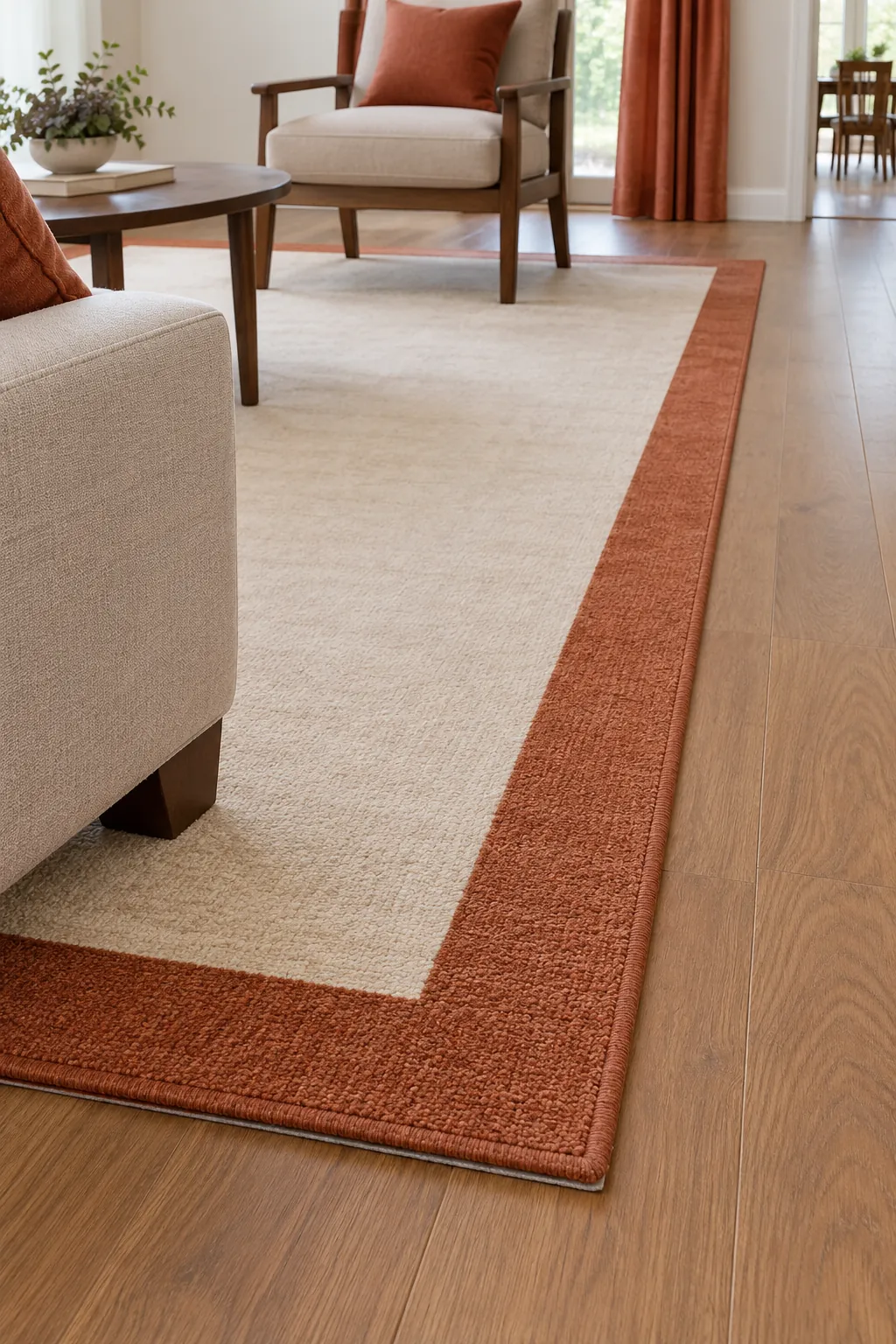
A rug with a warm colored border can frame the seating group while its center stays quiet. Use the right size and pad for your room, keeping edges flat. Let the border repeat a color from the curtains or cushions instead of introducing several new shades. Check the route to the door after moving furniture onto it.
A Short Branch in a Heavy Corner Vase
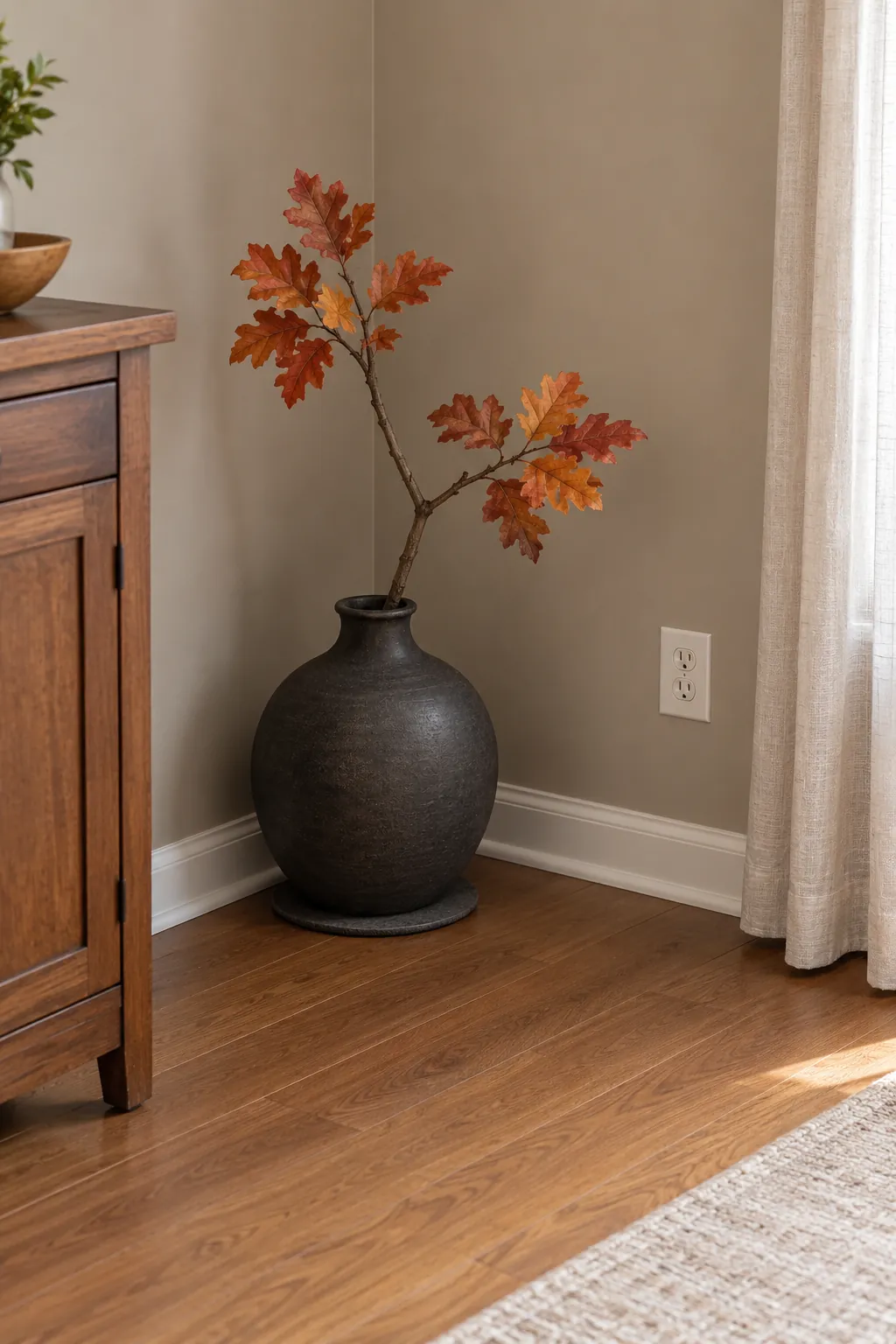
A short branch can bring an autumn shape to an unused corner. Use a heavy stable vase with a protective base, and keep tips away from the walking route. Inspect natural material before bringing it inside and remove loose pieces.
Keep the arrangement modest enough to carry safely when the room needs more space. Leave outlets, curtains, and window handles accessible. Avoid placing a branch where a guest’s coat or bag will catch it.
Warm Book Covers on a Reading Shelf
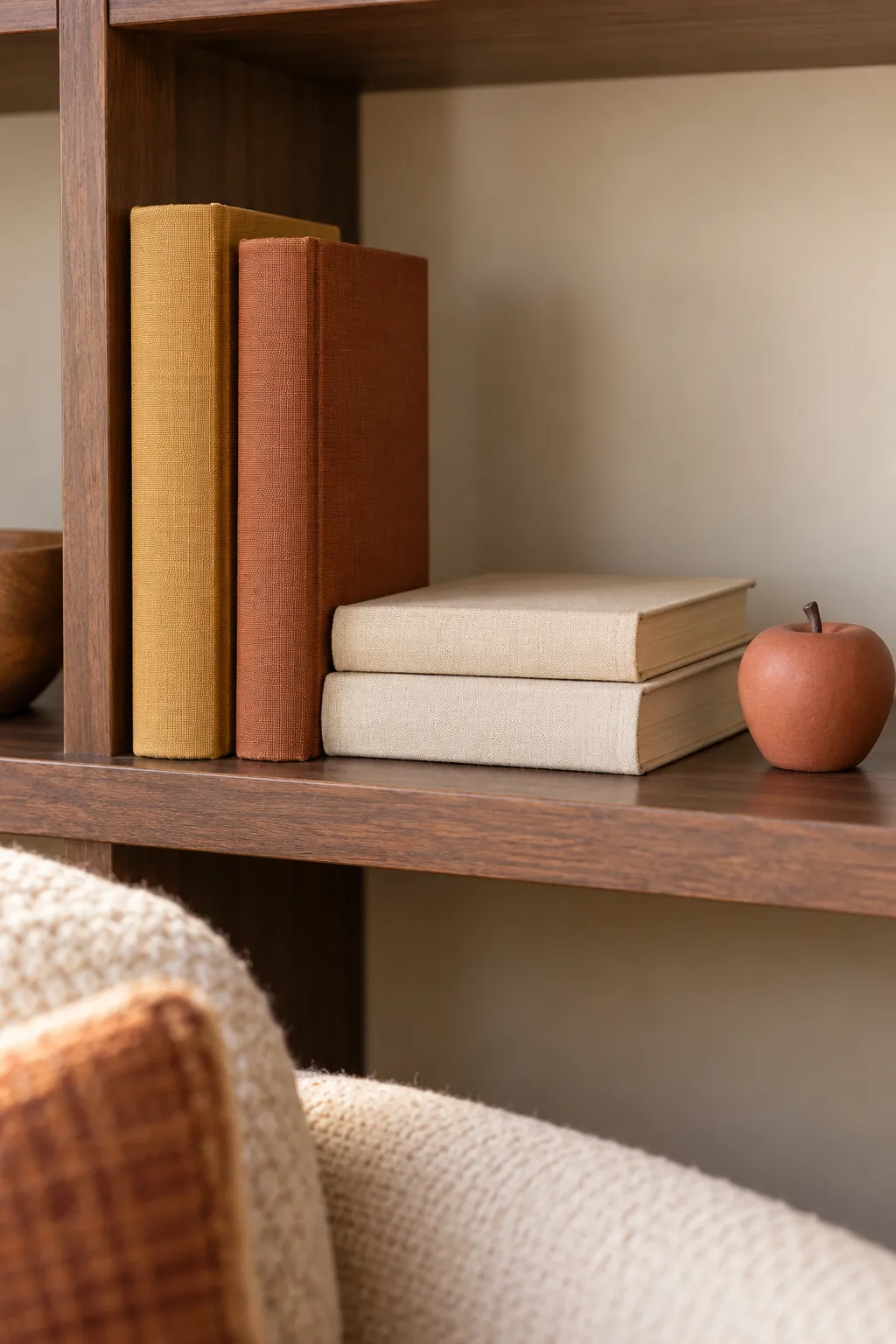
A few existing books with warm covers can connect a reading shelf to the season. Keep them accessible and use a stable short stack if you arrange them horizontally. Put a small ceramic accent beside the books instead of a water filled vase above them. Leave enough open shelf space that the display is easy to undo.
A Narrow Runner on a Storage Cabinet
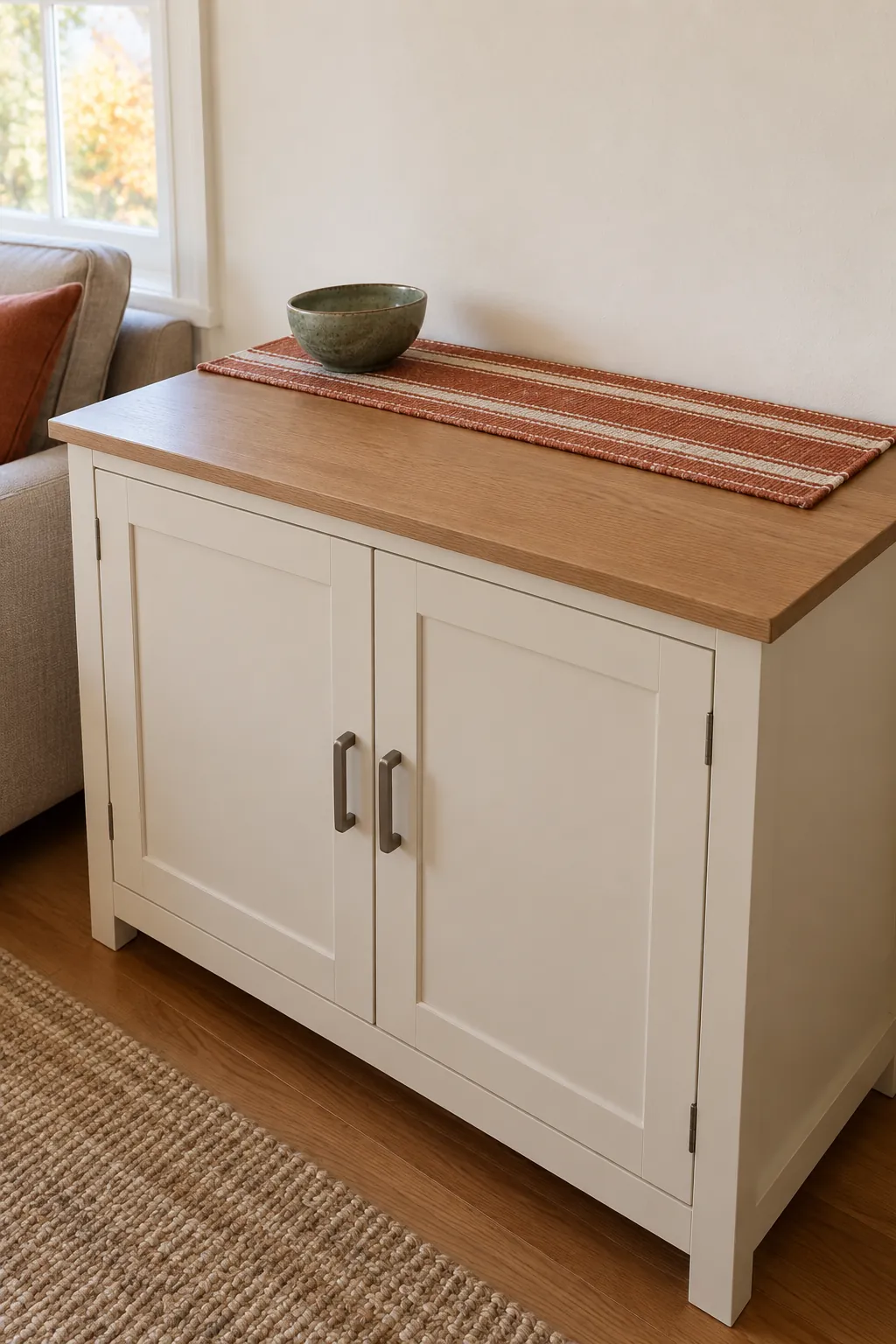
A narrow runner can repeat the room’s fall colors on a plain storage cabinet. Keep it away from electronics, ventilation openings, and hot equipment. Trim its visible footprint so cabinet doors still open freely. One small pottery bowl is enough on top when the cabinet already holds everyday items.
A Washable Throw for a Favorite Seat
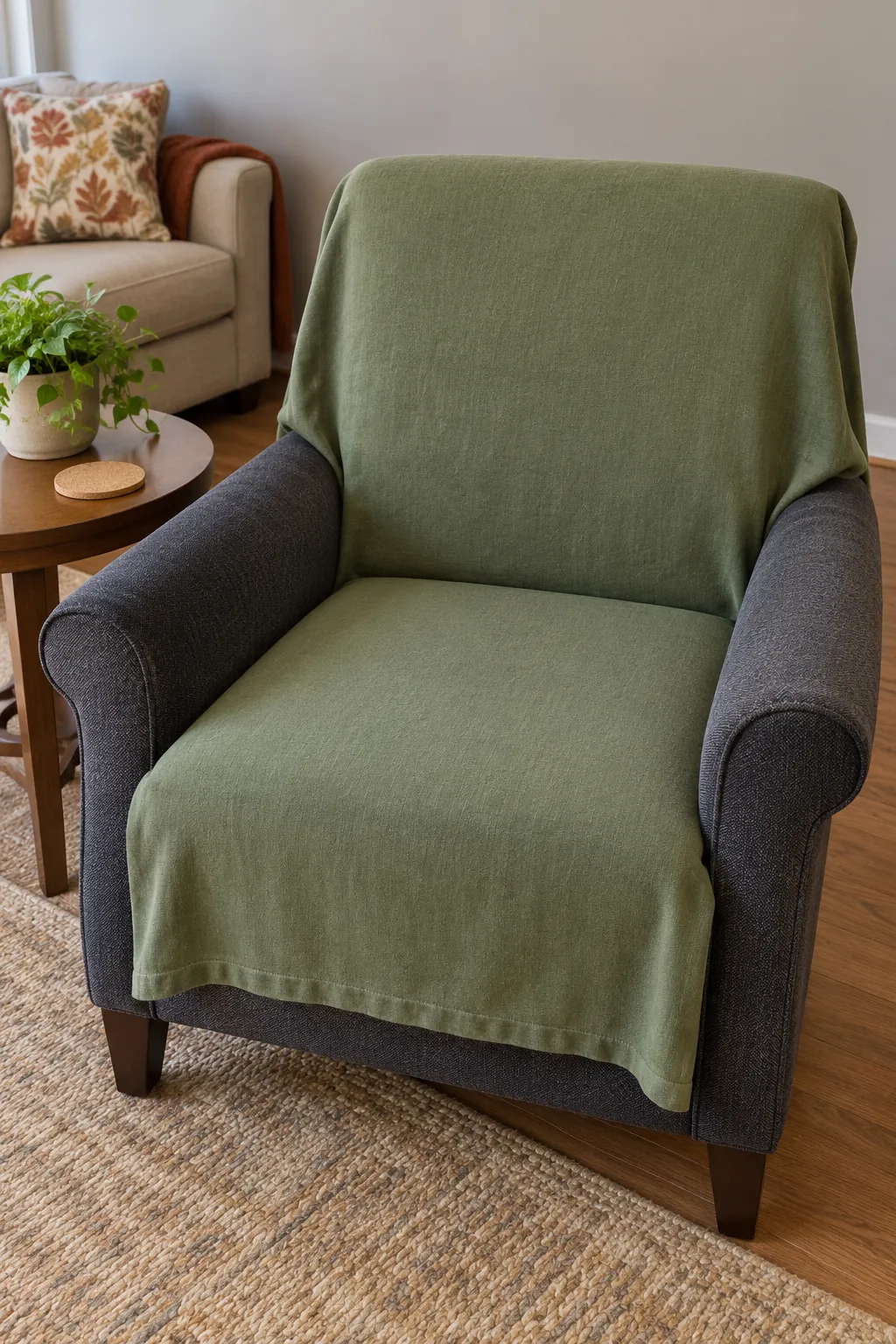
A washable throw can protect a favorite seat while adding a seasonal color. Choose a size that lies smoothly without bunching beneath someone who sits down. Keep its ends above the floor and follow its care instructions after the gathering. A simple solid color suits a room that already has patterned cushions.
A Clear Table for After Dinner Games
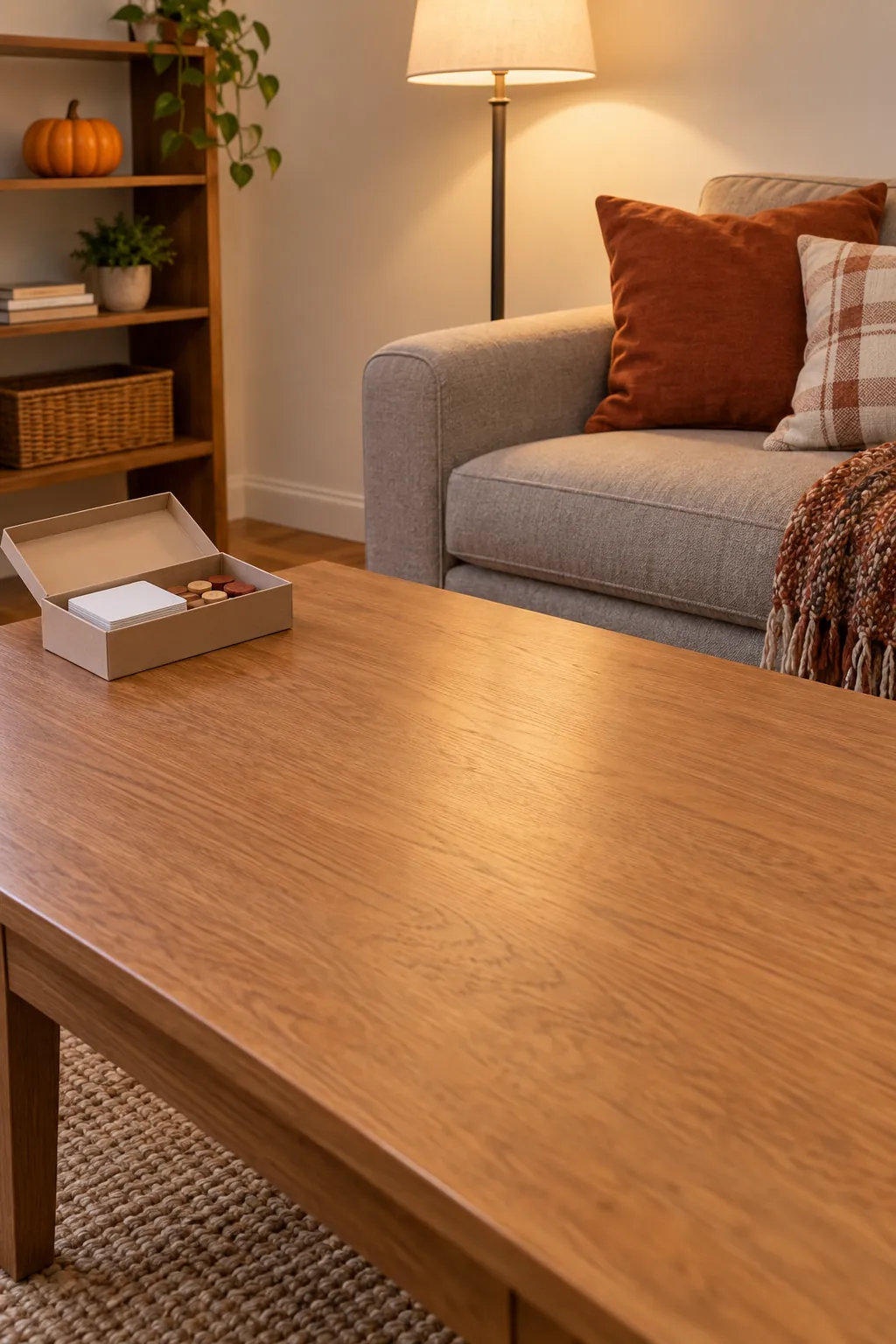
An open table gives guests a useful reason to stay in the living room after dinner. Set out one familiar game that suits the people attending and keep its pieces contained until you play. Move seasonal decoration to a nearby shelf rather than forcing the game between fragile objects. Use enough lamp light to read cards and distinguish pieces comfortably.
A Color Connection to the Nearby Dining Area
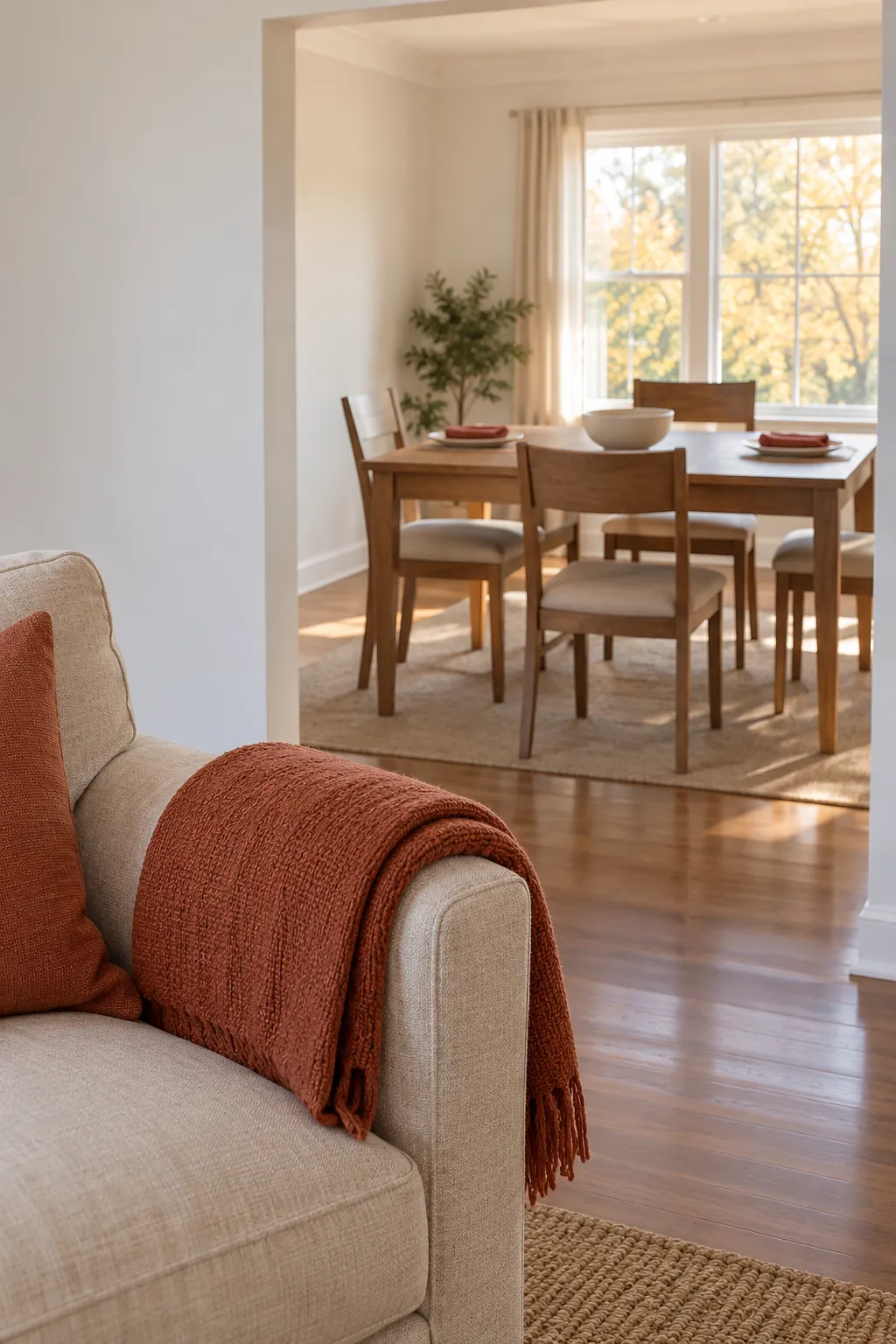
A nearby dining area can echo the living room through one shared textile color. Choose napkins or a narrow runner that relates to the sofa throw rather than duplicating every decoration. Keep the dining surface available for the meal and the seating area available for rest. A restrained connection makes adjoining spaces feel related without buying two matching displays.
A Clear Route from the Door to the Sofa
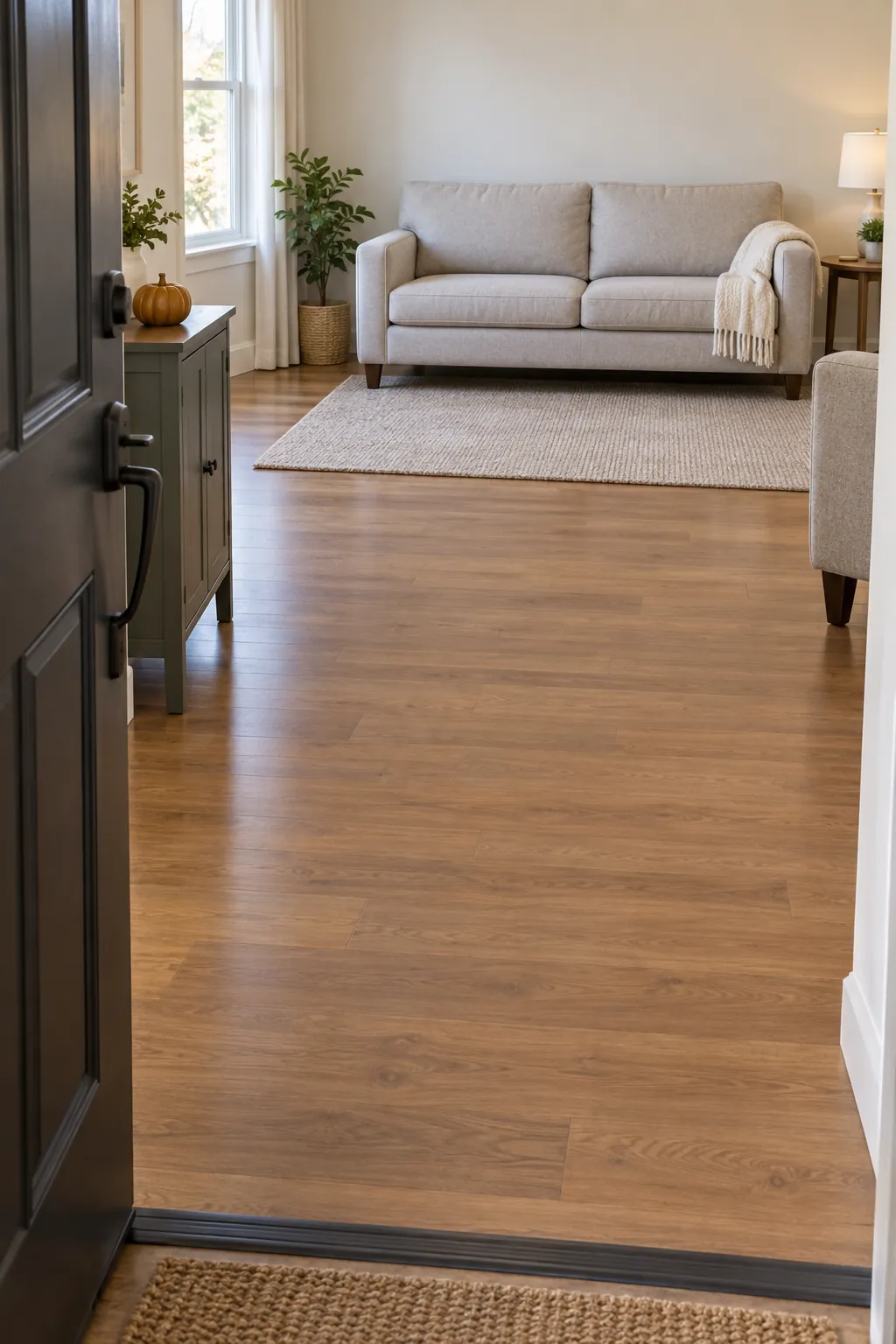
A welcoming room needs a route guests can use while carrying a coat, bag, or drink. Move loose baskets and low decorations out of that route before adding anything new. Keep one simple seasonal accent on a stable cabinet at the edge of the room. Sit in each guest seat and walk to the door to check that the arrangement remains comfortable.