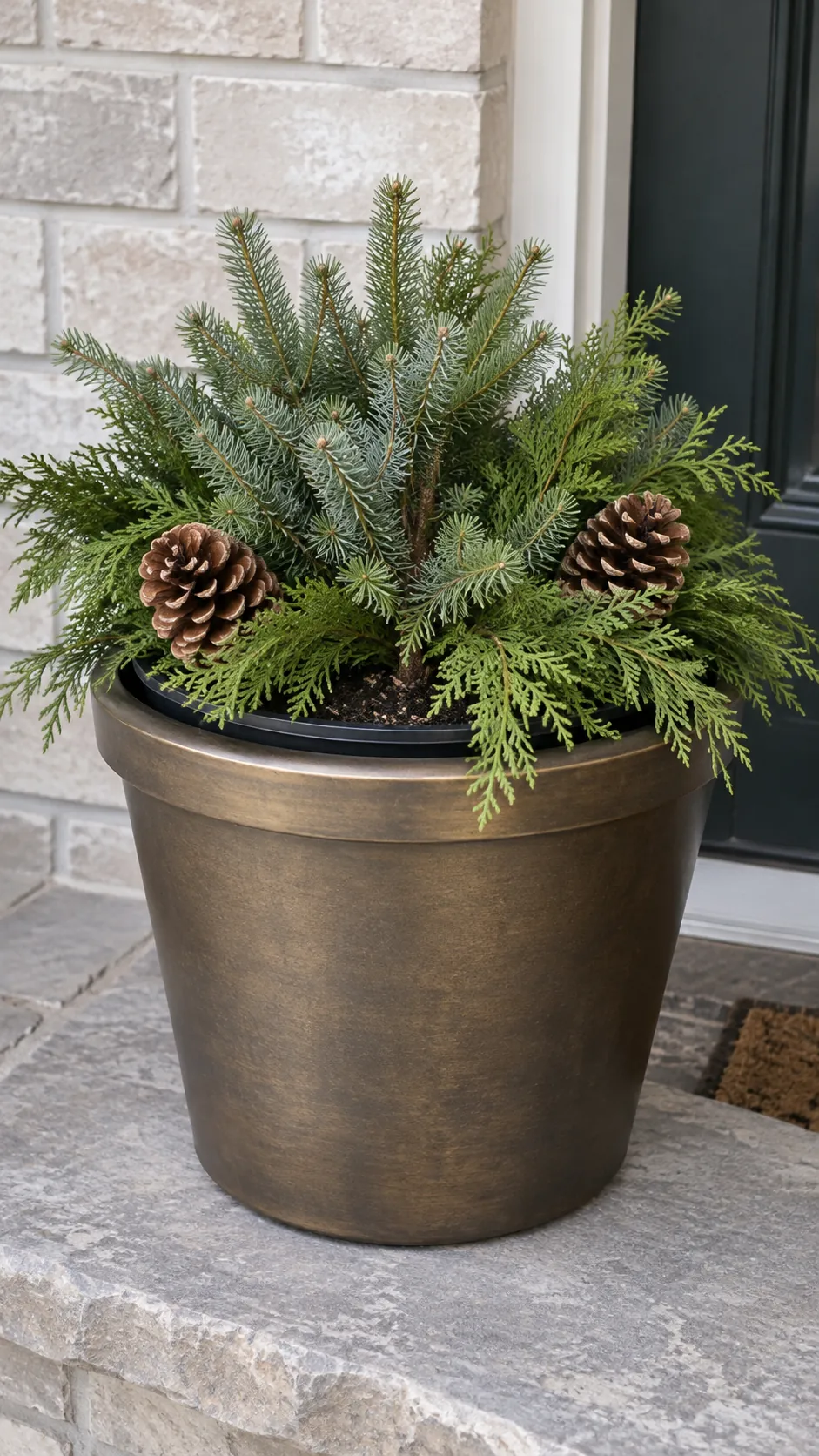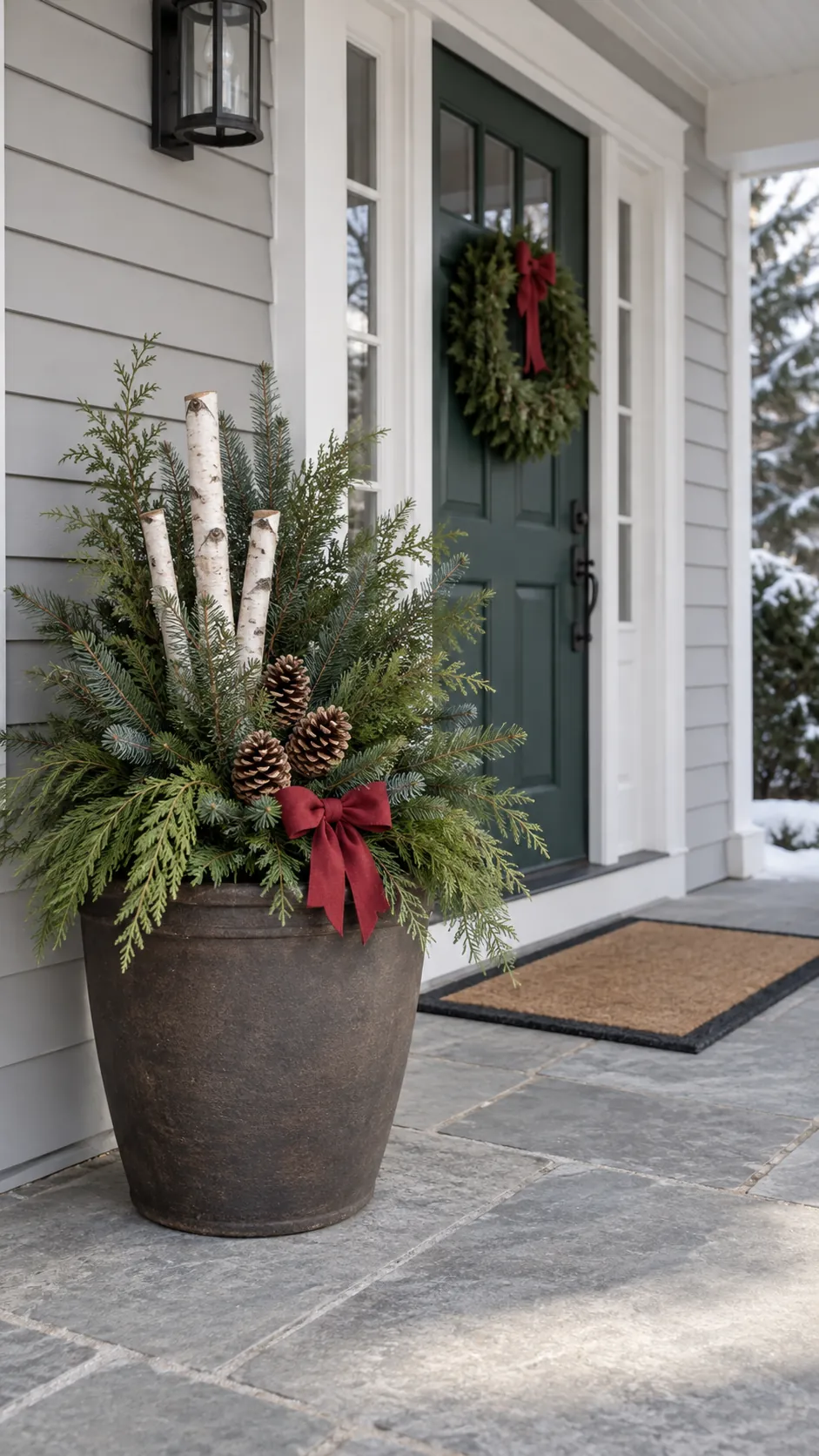
A porch pot must do more than look good on the first afternoon. It needs to leave room for the door, stay steady in wind, and suit the weather where you live. Start with a sound container and decide whether you want living plants or cut greenery before choosing ornaments.
For DIY Christmas planters on front porches, reuse a suitable vessel and spend your attention on support, drainage, and a clear walking route. Fresh cuttings need different care from rooted plants, and outdoor accessories must be made for exposure. A covered entry also gives you more material choices than an open landing.
Evergreen Boughs in Black Urns
A dark urn gives loose greenery a clear outline against pale siding. Push fir branches into moist potting mix, then add cedar around the rim so it falls toward the container rather than into the walkway. Set the tallest branches at the back if visitors see the pot mainly from the steps. Choose a container rated for outdoor winter use and leave its drainage holes open.
Red Berry Stems Above Fresh Pine
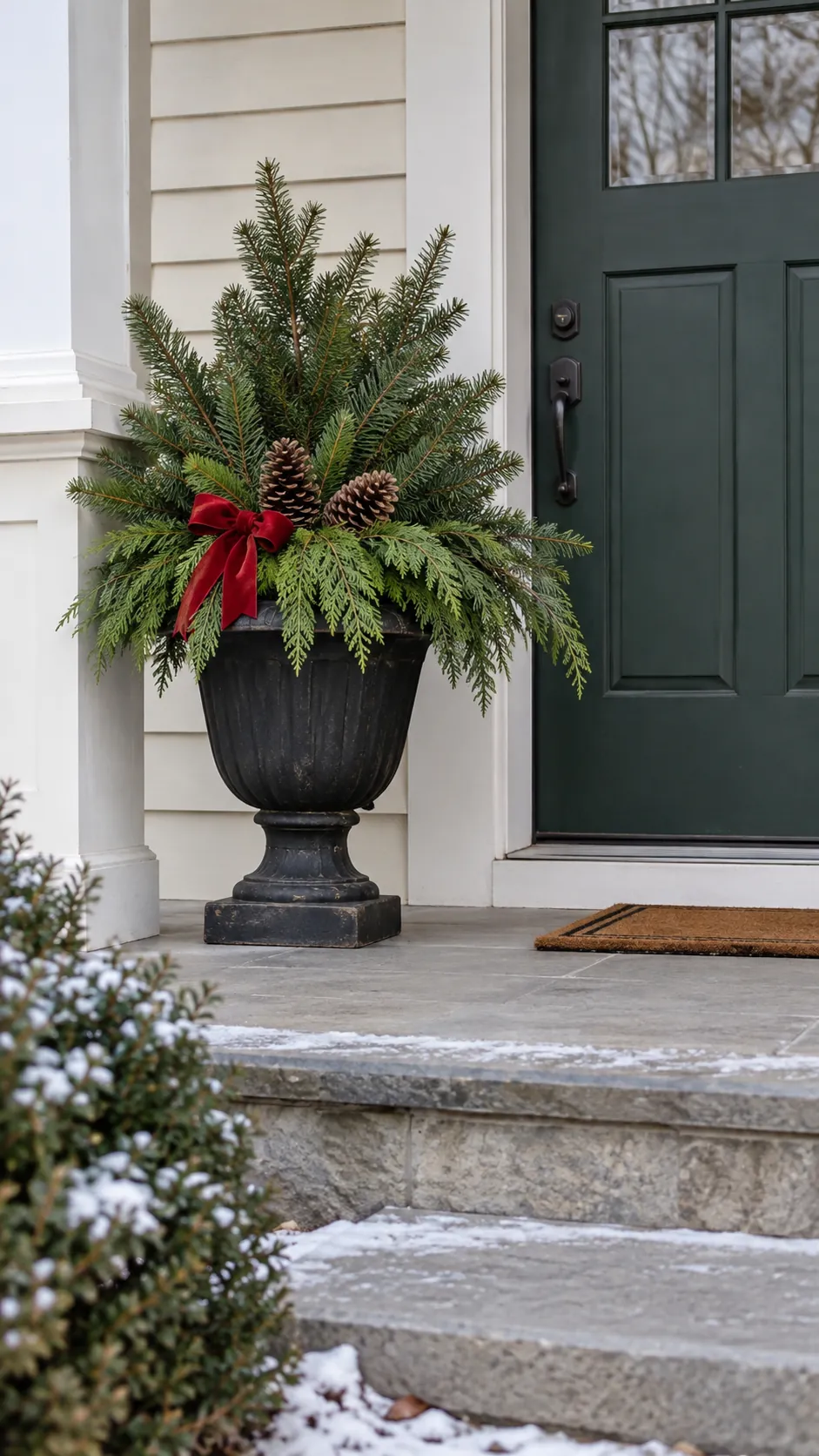
Red stems make a small arrangement visible from the street without needing a large bow. Build a dense pine base, then place berry branches at different heights instead of making one rigid circle. Outdoor rated artificial berries are a useful alternative when fresh branches are unavailable or likely to shed. Keep loose berries away from pets and young children, since decorative berries are not food.
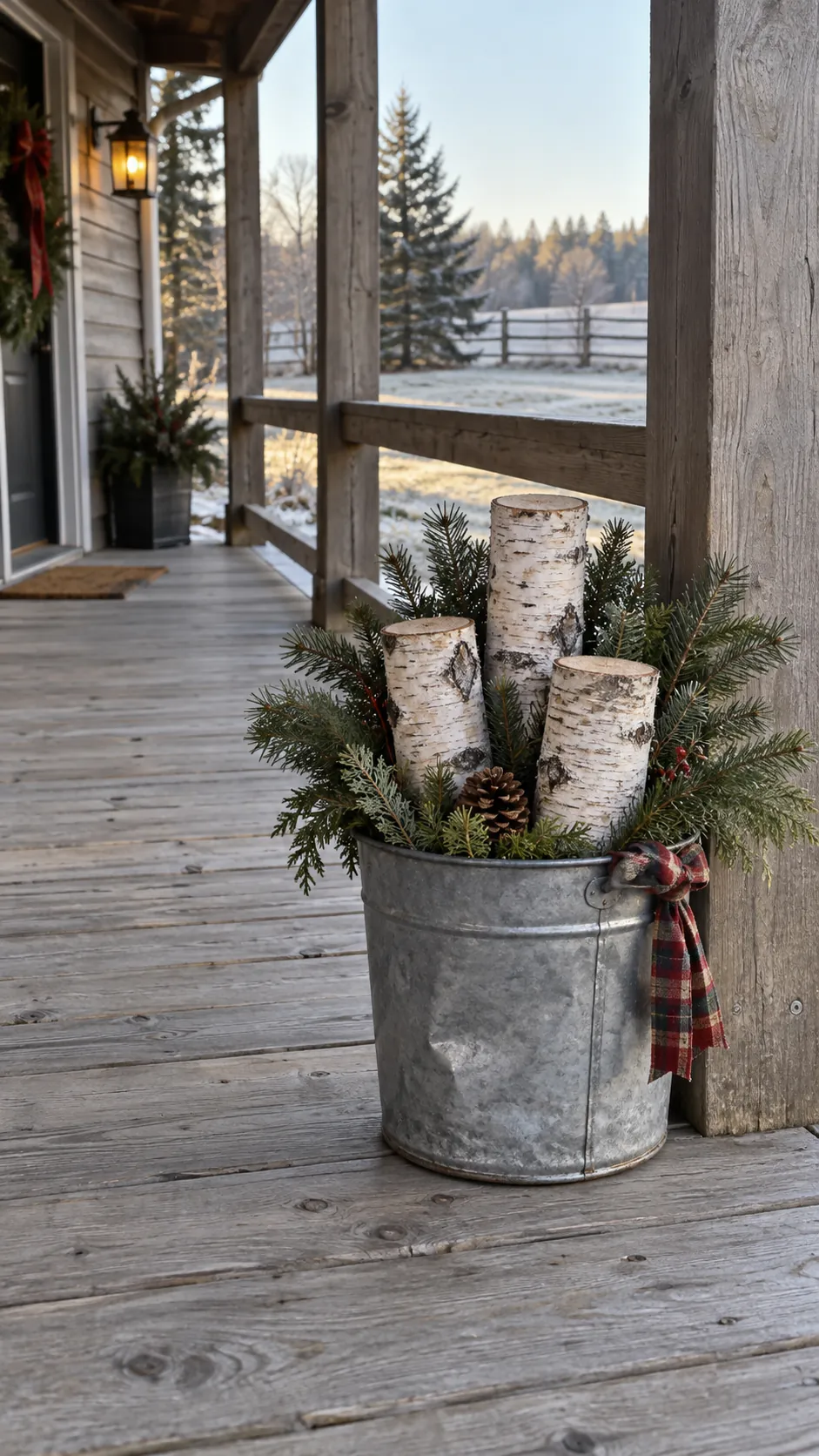
Birch Logs in a Galvanized Bucket
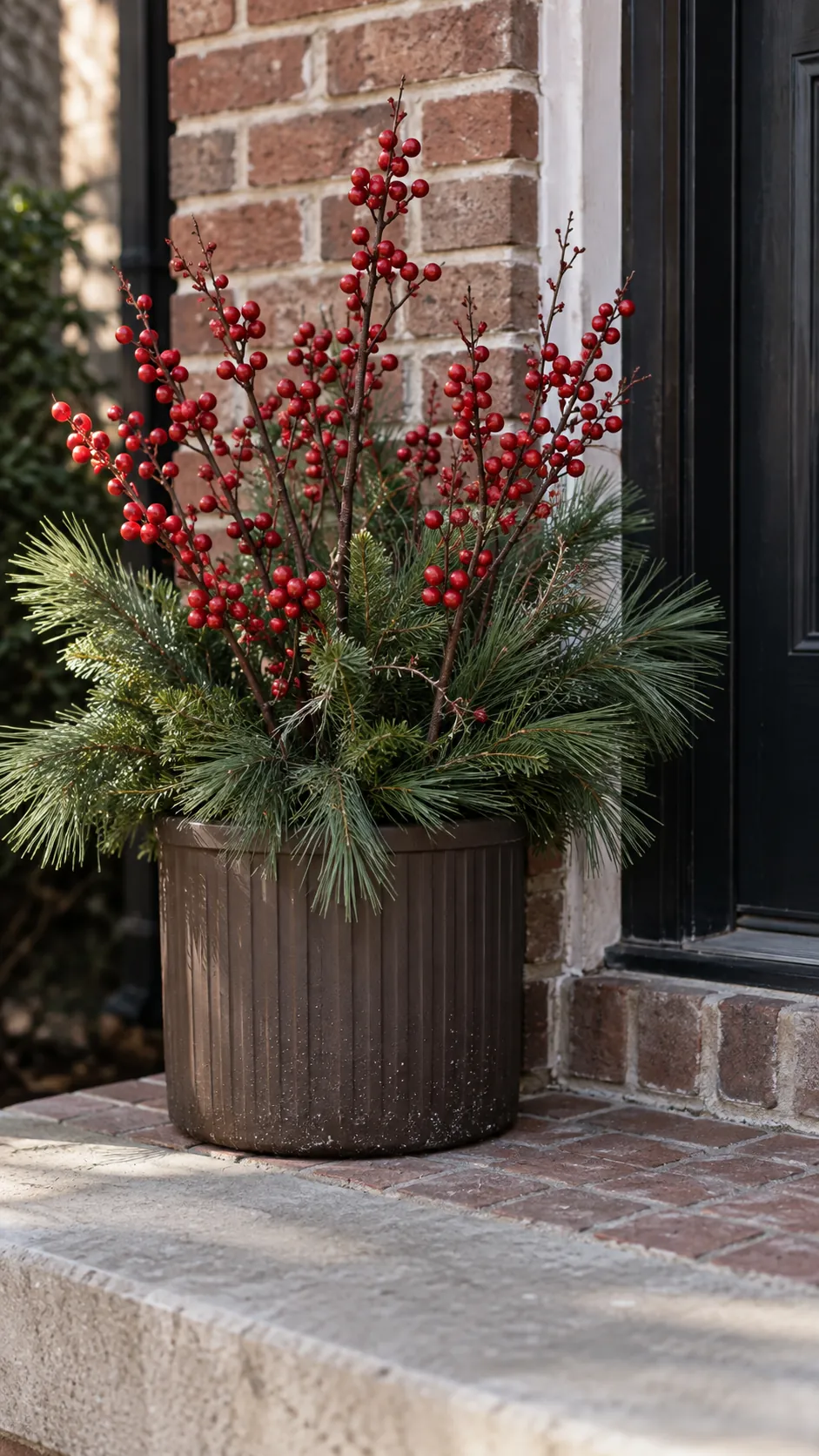
A galvanized bucket brings farmhouse character to a sheltered wooden porch. Stand two or three short birch logs inside a stable inner pot and pack greenery around them to hide the support. Keep the logs low enough that the bucket cannot easily tip when the wind rises. If the outer bucket has no drainage, use it as a cover for a draining insert and check for collected water after rain.
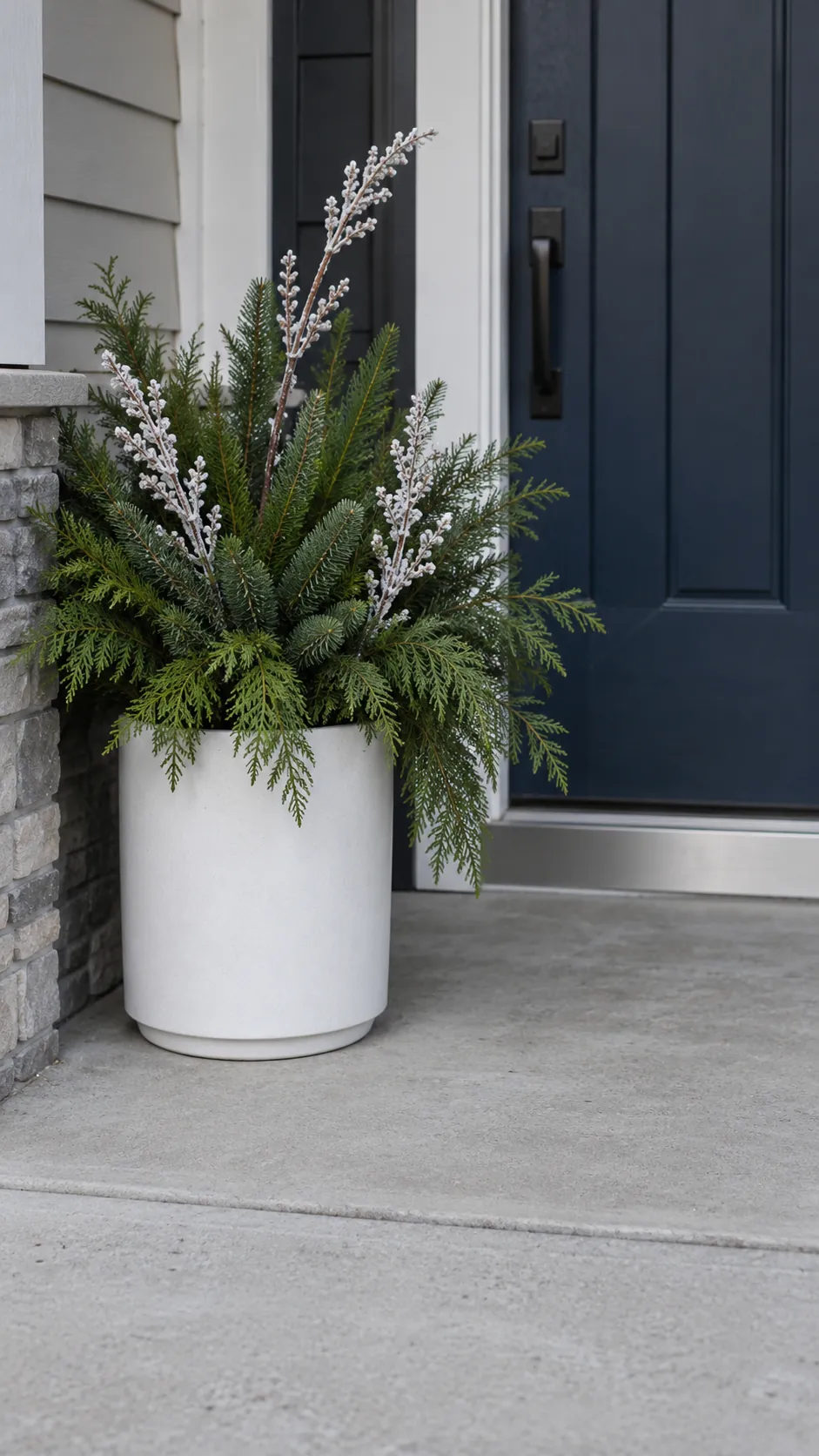
White Pots with Frosted Branches
White containers can lighten a shaded entrance even when there is no snow. Mix green conifer cuttings with a few outdoor rated frosted stems so the arrangement has depth rather than a solid white surface. Pale twig tips look particularly clear against a dark door. Avoid adding loose craft glitter outdoors, where it can wash into the soil and onto the steps.
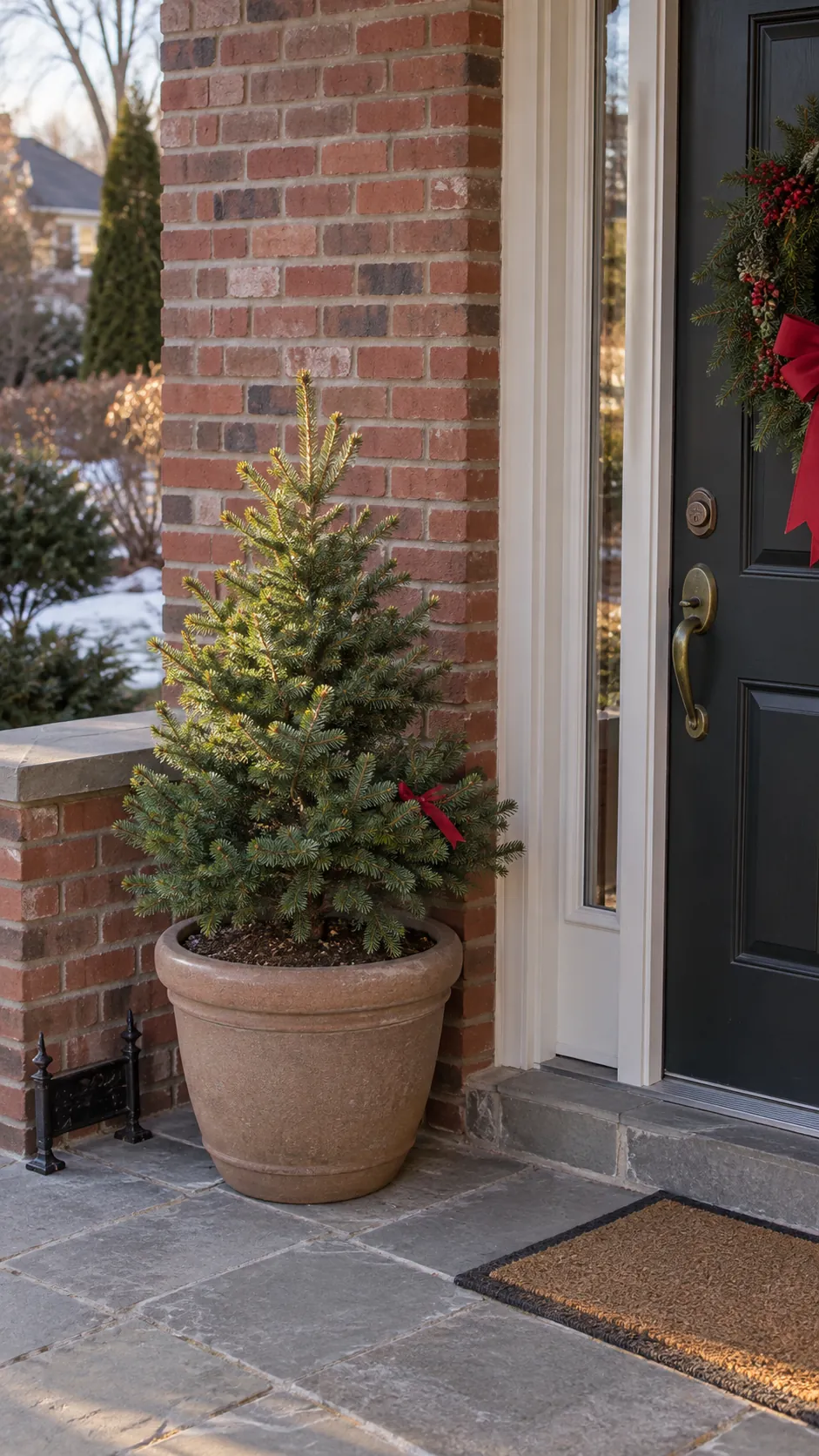
Small Living Conifers Beside the Door
Compact living conifers give a doorway structure that can last beyond December. Choose a locally suitable species and a pot large enough for its root ball, with unobstructed drainage. A plant that survives in the ground may need more winter protection in a container because its roots are more exposed. Check the soil during mild weather and water when needed rather than assuming cold weather removes every watering task.
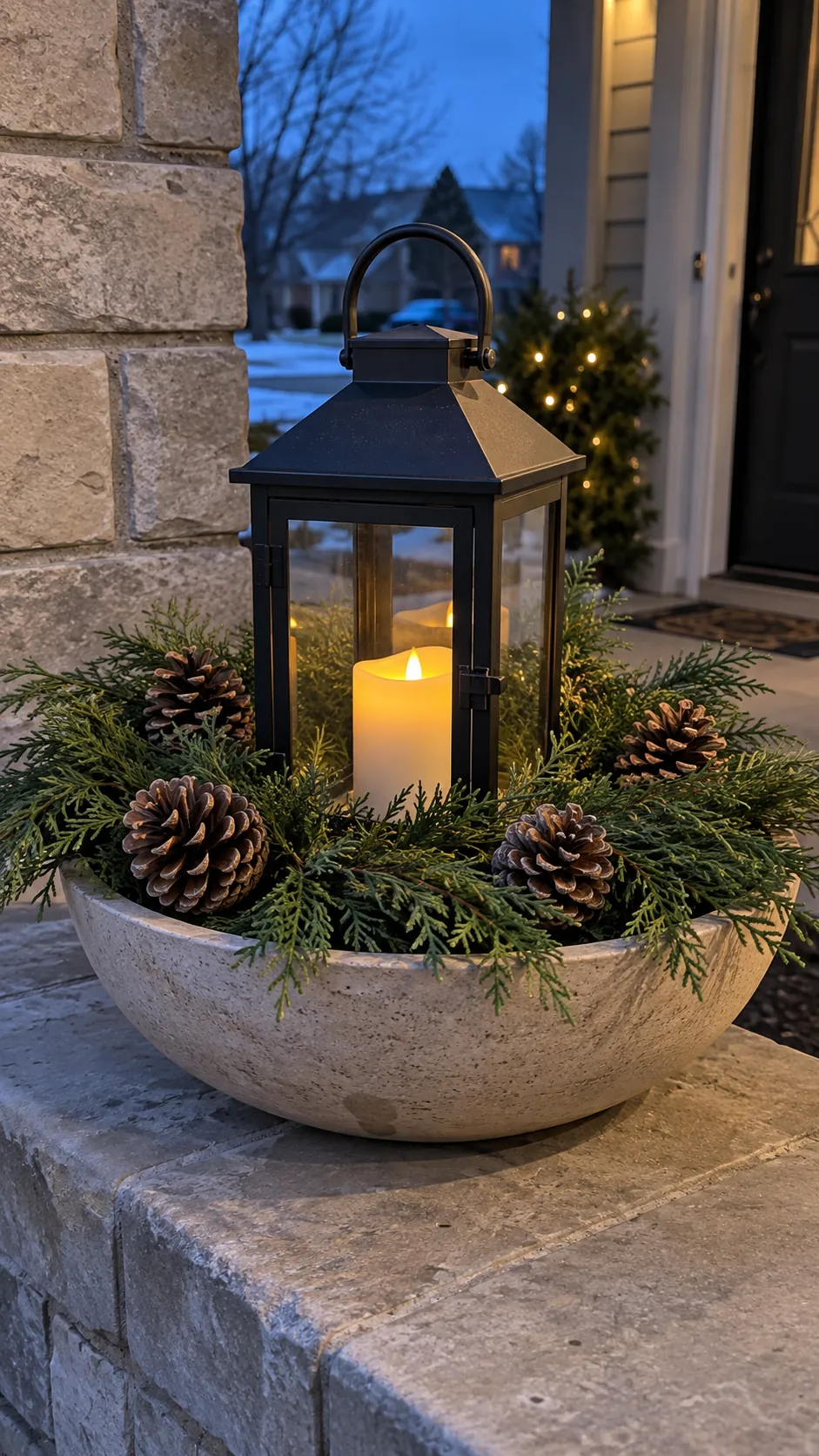
A Battery Lantern in a Cedar Bowl
A broad planter can hold a lantern without blocking the view through a porch railing. Place an outdoor rated battery lantern on a firm raised support, then arrange cedar and pinecones around its base. Keep the lantern doors, switch, and battery compartment accessible for maintenance. Use a flameless light here, since drying greenery should never sit around an open candle flame.
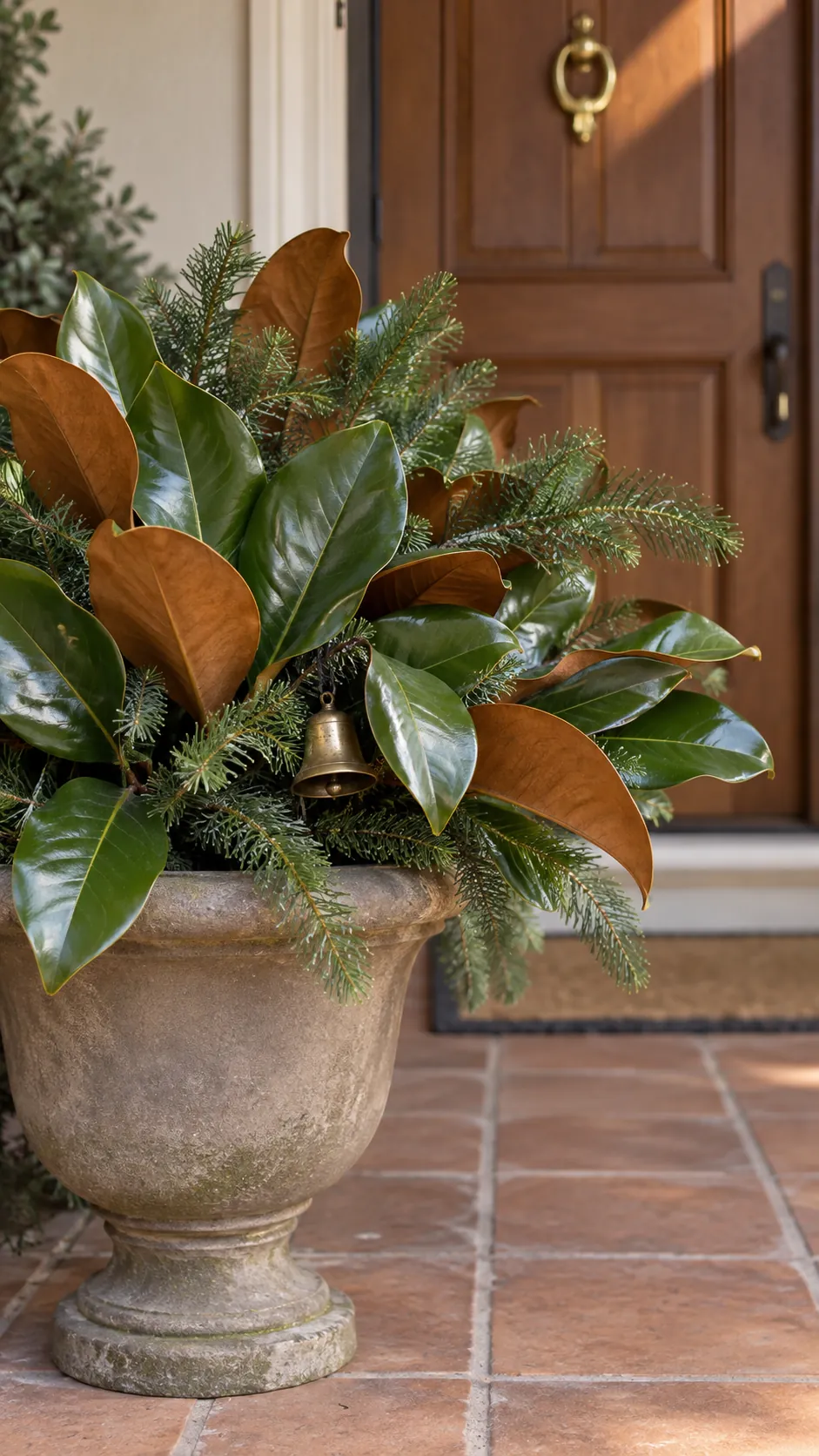
Magnolia Leaves with a Brass Accent
Magnolia foliage offers glossy green fronts and warm brown backs in the same arrangement. Turn a few leaves outward to show both surfaces, then tuck fir between them to soften the broad shapes. A small brass colored outdoor ornament adds shine without covering the natural materials. Put this design under an overhang where rain is less likely to damage the decorative finish.
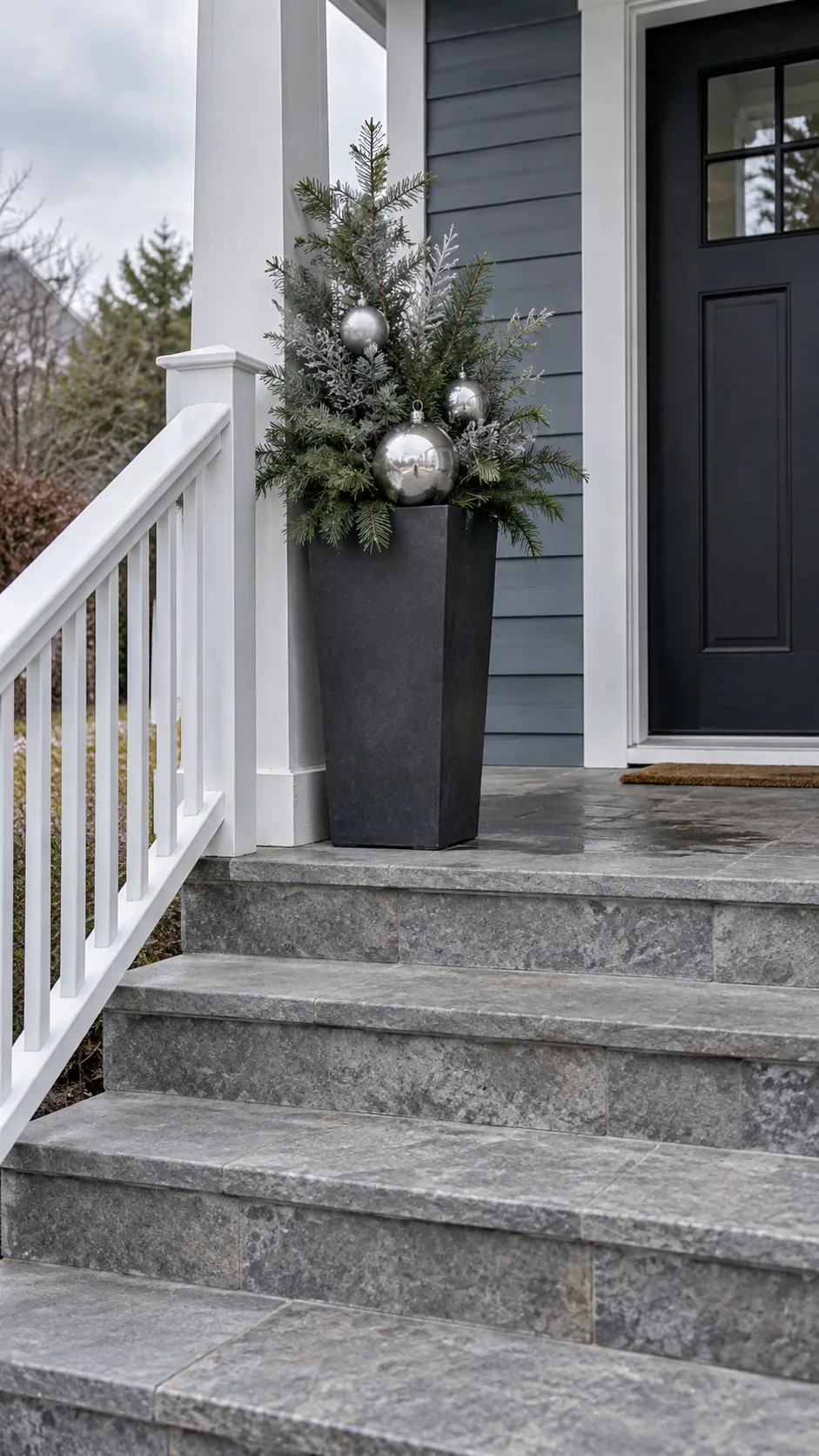
Silver Ornaments in Tall Charcoal Pots
Tall charcoal pots help an arrangement stand above a low porch wall. Use unbreakable outdoor ornaments with secure hanging loops and wire each one to a sturdy branch. Place the largest silver ball lower in the greenery so its weight does not pull a thin tip down. Keep the arrangement clear of stair handrails, which visitors need to grip safely.
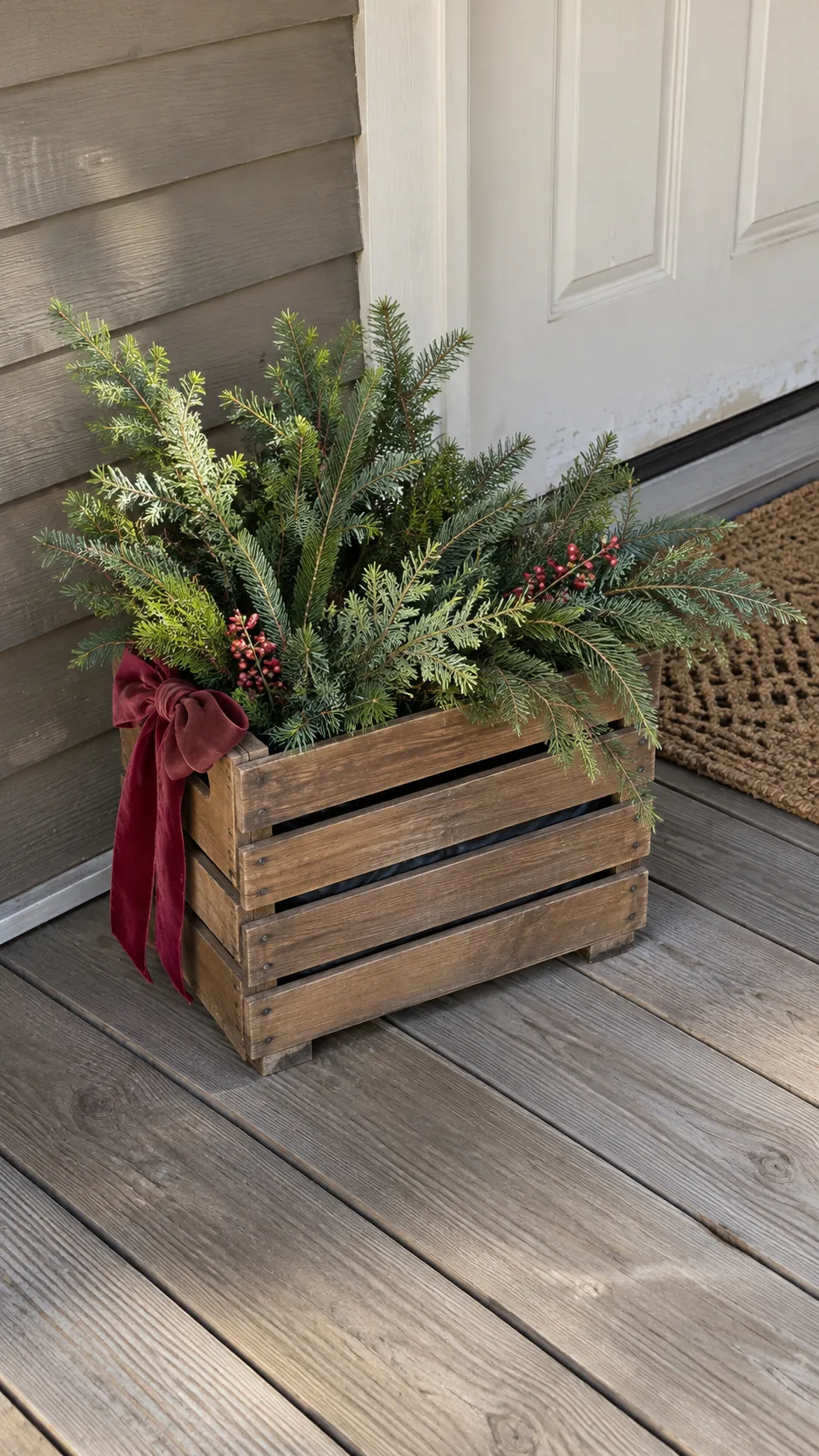
Fir Cuttings in a Wooden Crate
A wooden crate works best as a decorative cover rather than a watertight planter. Slip a draining nursery pot inside, raise it slightly on blocks, and arrange fir until the insert disappears. Let a short fabric ribbon fall over one corner for a relaxed finish. Select a weather resistant crate and leave a route for water to escape instead of lining the whole base with an unbroken plastic bag.
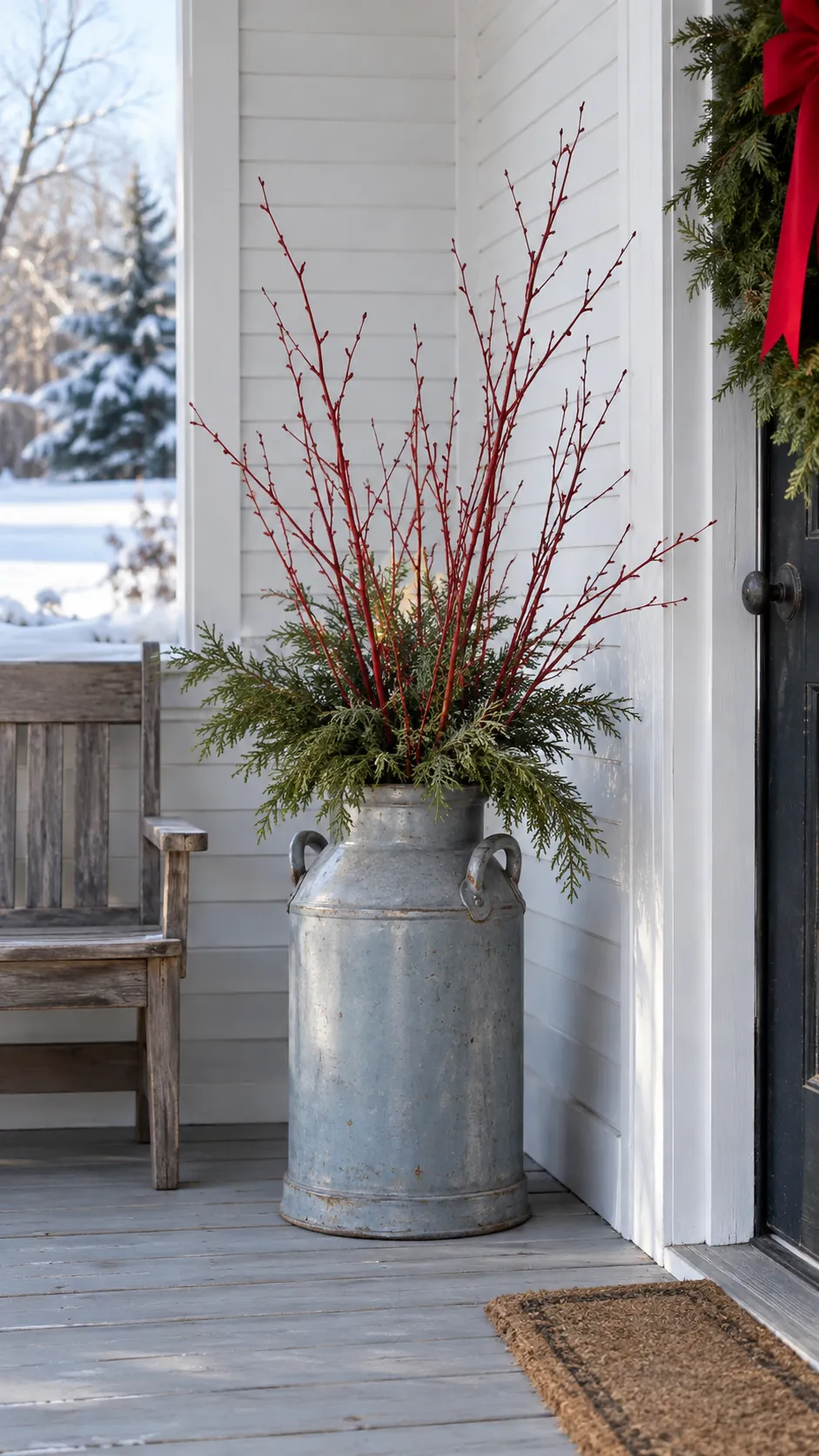
Dogwood Stems in a Vintage Milk Can
Red dogwood stems supply height without relying on fragile hanging ornaments. Gather them loosely in the center of a milk can and surround the lower ends with cedar. A heavy internal support helps keep the narrow vessel stable on a windy porch. Check old metal for sharp edges before placing it beside an entrance used by children.
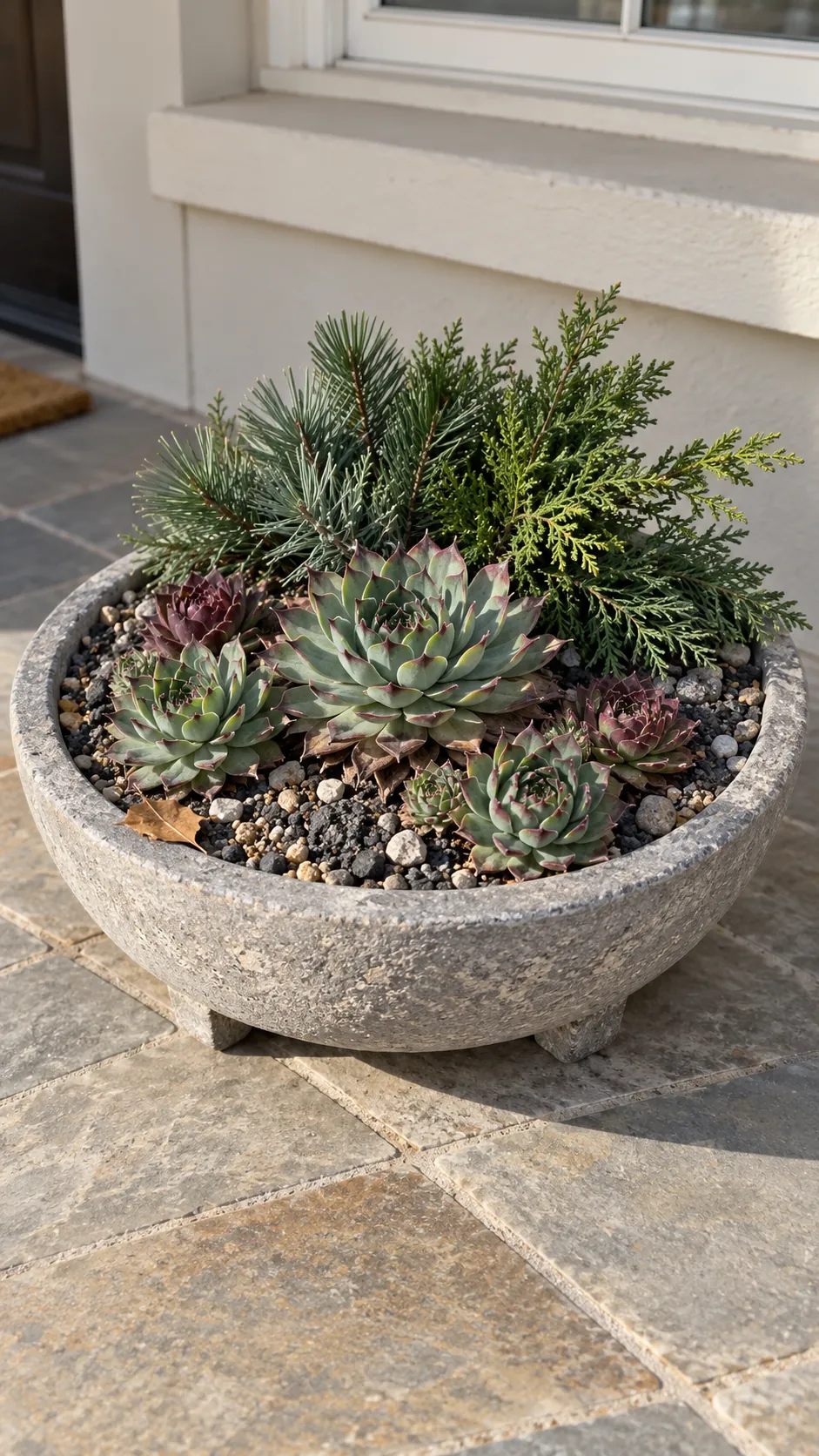
Hardy Succulents in a Low Stone Bowl
A shallow bowl can suit a mild winter porch that needs a low arrangement beneath a window. Use only succulents confirmed hardy in your local conditions and a gritty planting mix that drains freely. Keep cut evergreen stems separate from the living crowns so the foliage does not trap moisture around them. In colder or wetter climates, choose a cut greenery display instead of treating every succulent as a winter plant.
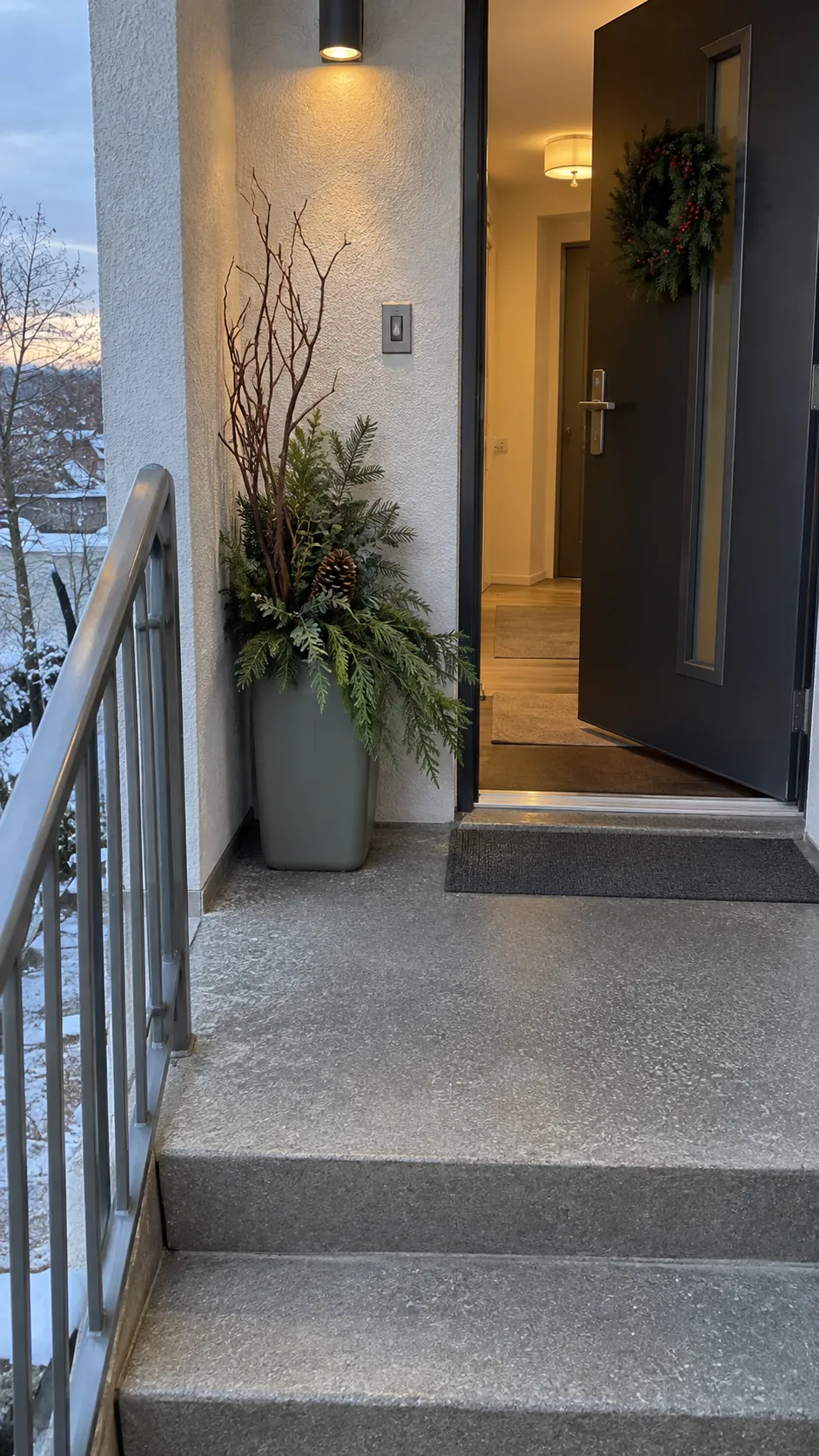
An Asymmetrical Pot for a Narrow Landing
A narrow landing often has room for one planter rather than a matching pair. Place upright branches toward the wall and let softer greenery lean toward the open view, away from the door swing. The uneven outline gives the arrangement movement while preserving the route into the house. Test the door fully open before deciding that the finished pot fits.
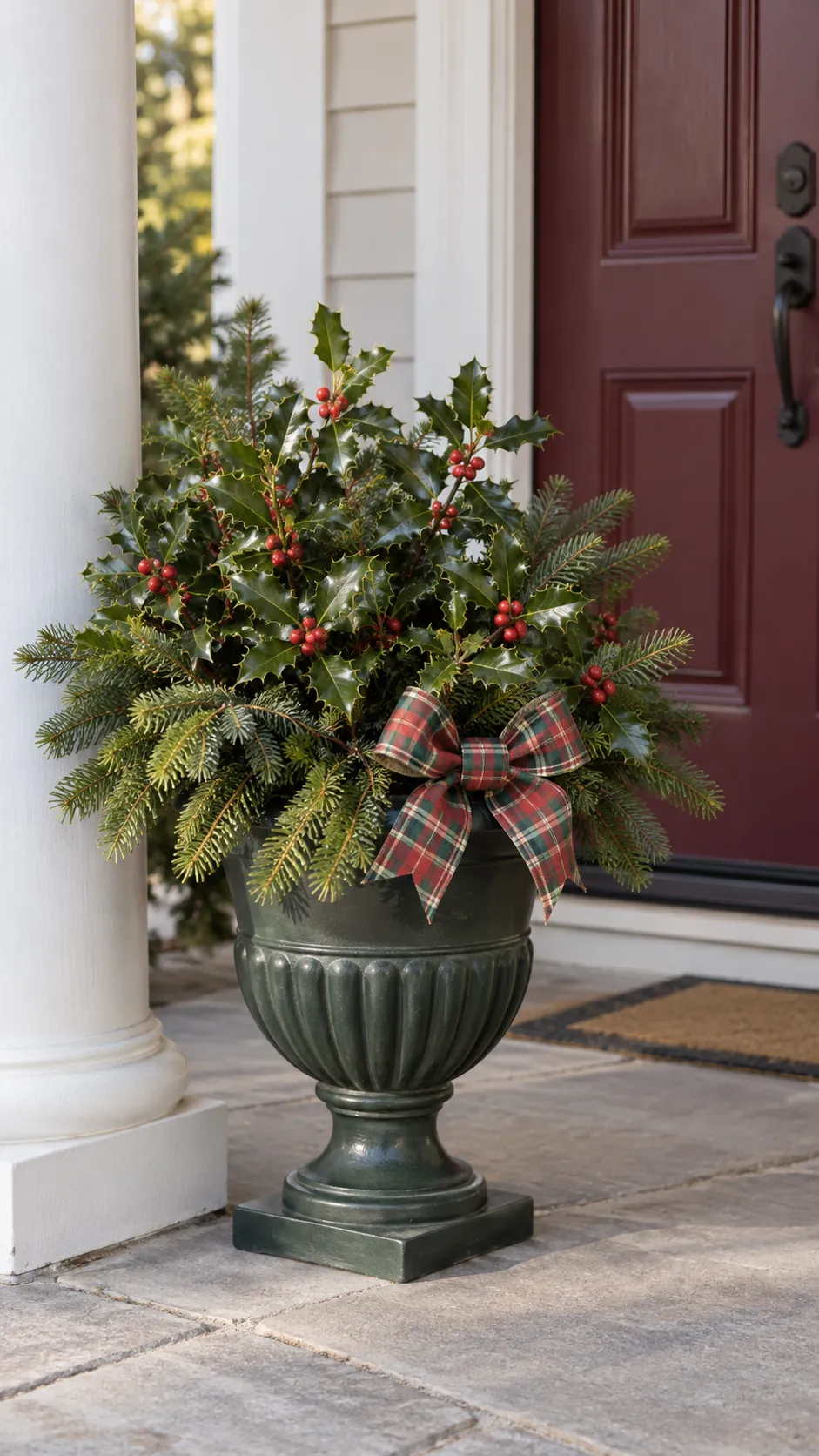
Holly with a Short Tartan Bow
Holly and tartan suit a traditional doorway without requiring decorations across the entire porch. Combine glossy holly with softer fir so the sharp leaves do not form the whole outer edge. Tie a compact outdoor ribbon bow near the rim and fasten its tails against the container. Keep prickly stems and fallen berries out of the path where hands, pets, and shoes will brush them.
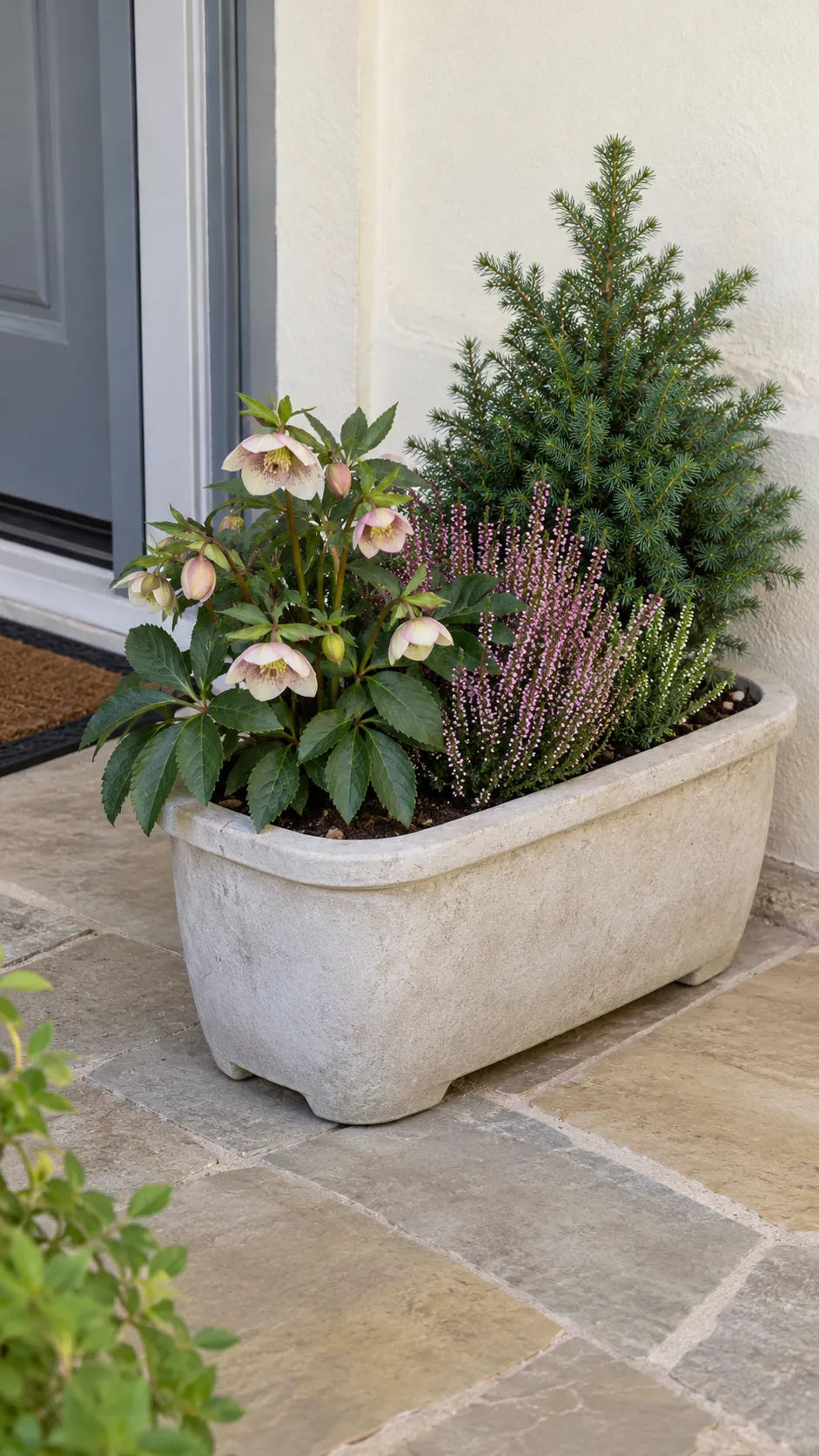
Living Winter Plants in a Sheltered Container
Hellebores, winter heather, and small conifers can create a living display when they suit the local climate. Choose plants with compatible light and moisture needs instead of buying only for matching colors. Use a container rated for freezing conditions rather than assuming a whitewashed clay pot is frost safe. Set it near shelter while keeping it away from roof runoff that can flood the roots.
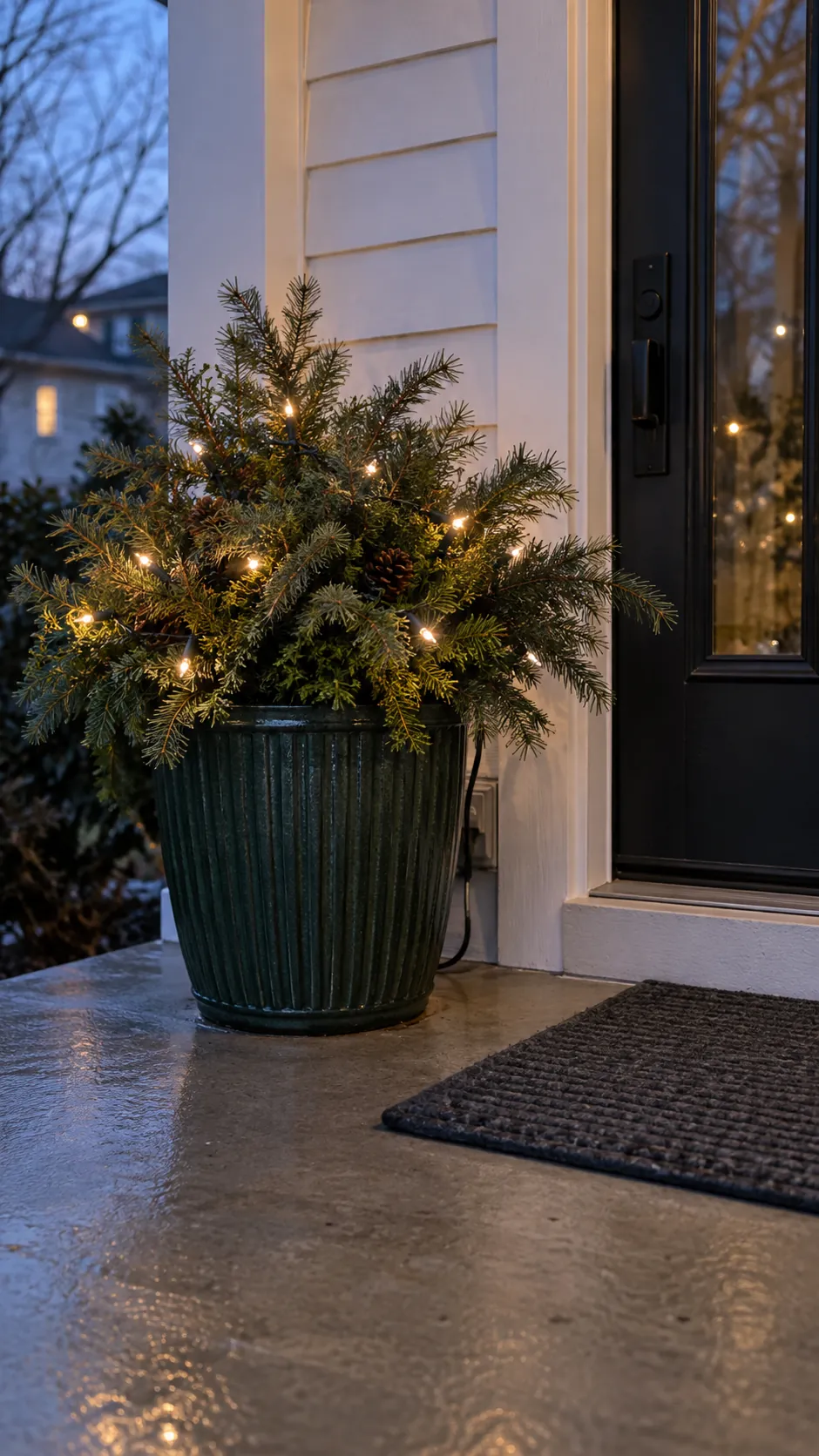
Mini Lights Threaded Through Greenery
A strand of outdoor rated LED lights lets a porch pot remain visible after sunset. Wind the cable loosely along strong branches and avoid tight loops that crush foliage. Follow the light manufacturer’s limits for connected sets and use an appropriate outdoor power supply with required protection. Place the cable where it cannot become a trip hazard, and keep connections off wet ground.
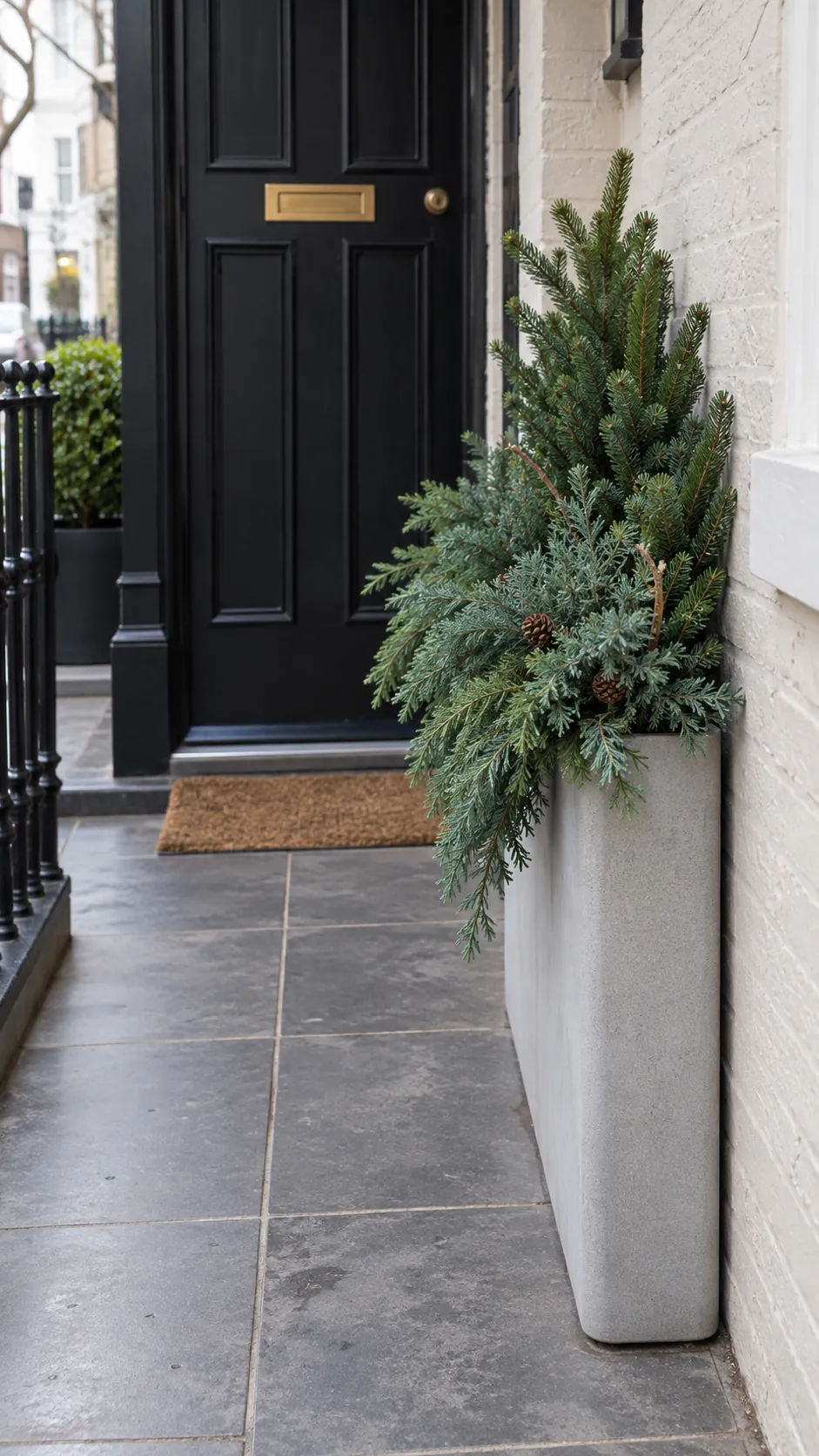
A Slim Wall Side Planter with Juniper
A slim rectangular container can decorate the wall beside a door while leaving the center of the landing open. Layer juniper tips along the front and insert several fir branches vertically at the rear. Their contrasting shapes give a simple front porch Christmas decor arrangement enough interest without ornaments. Measure the planter’s depth against the actual walking space before buying it.
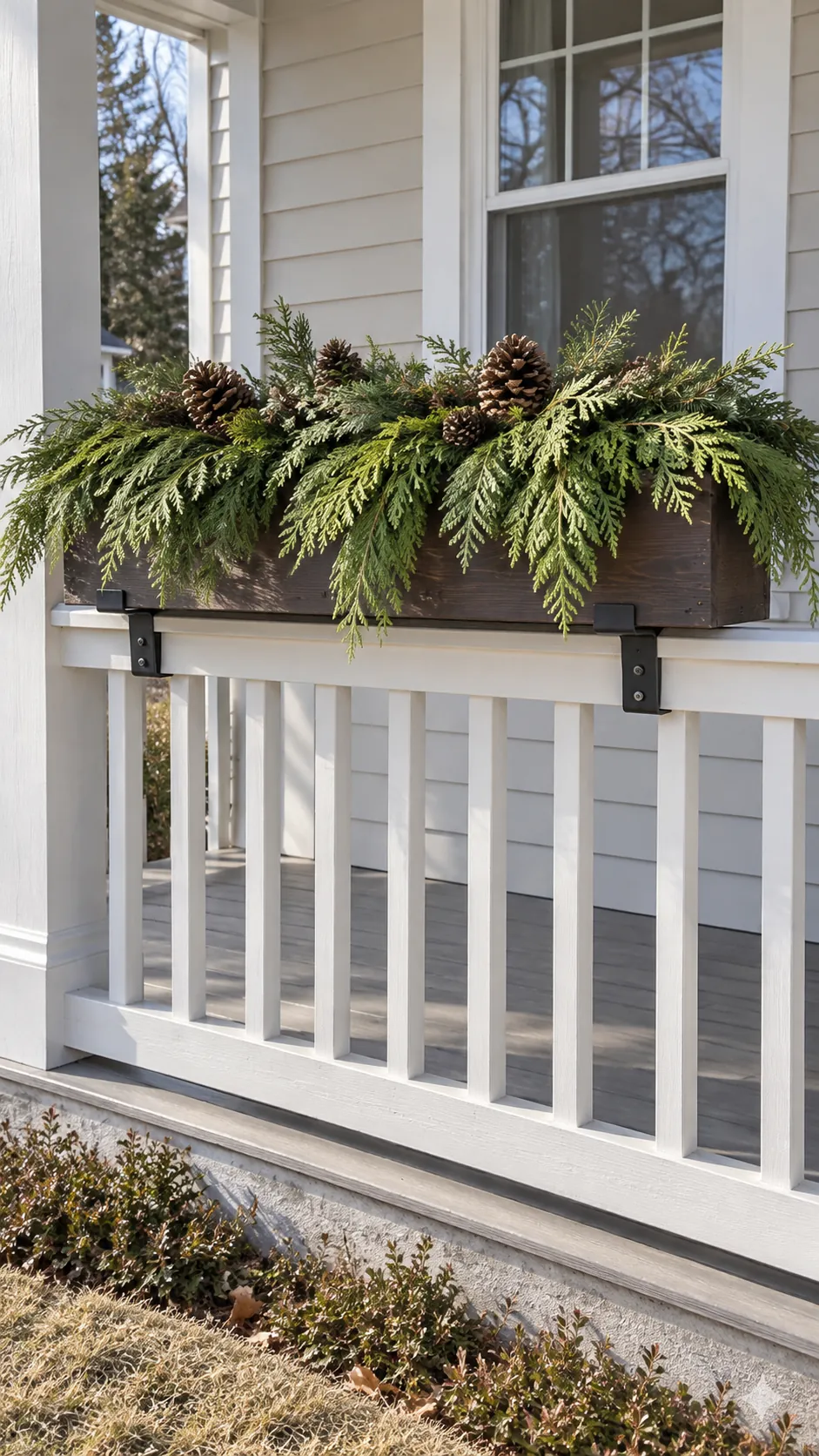
A Porch Rail Box with Cedar Swags
A securely mounted rail box brings Christmas greenery up to eye level on a low porch. Arrange cedar to spill over the outside edge and anchor a few cones inside the box with florist wire. Use brackets rated for the filled container and follow the railing manufacturer’s guidance. This treatment can echo Christmas window boxes outdoors while keeping the floor available for visitors.
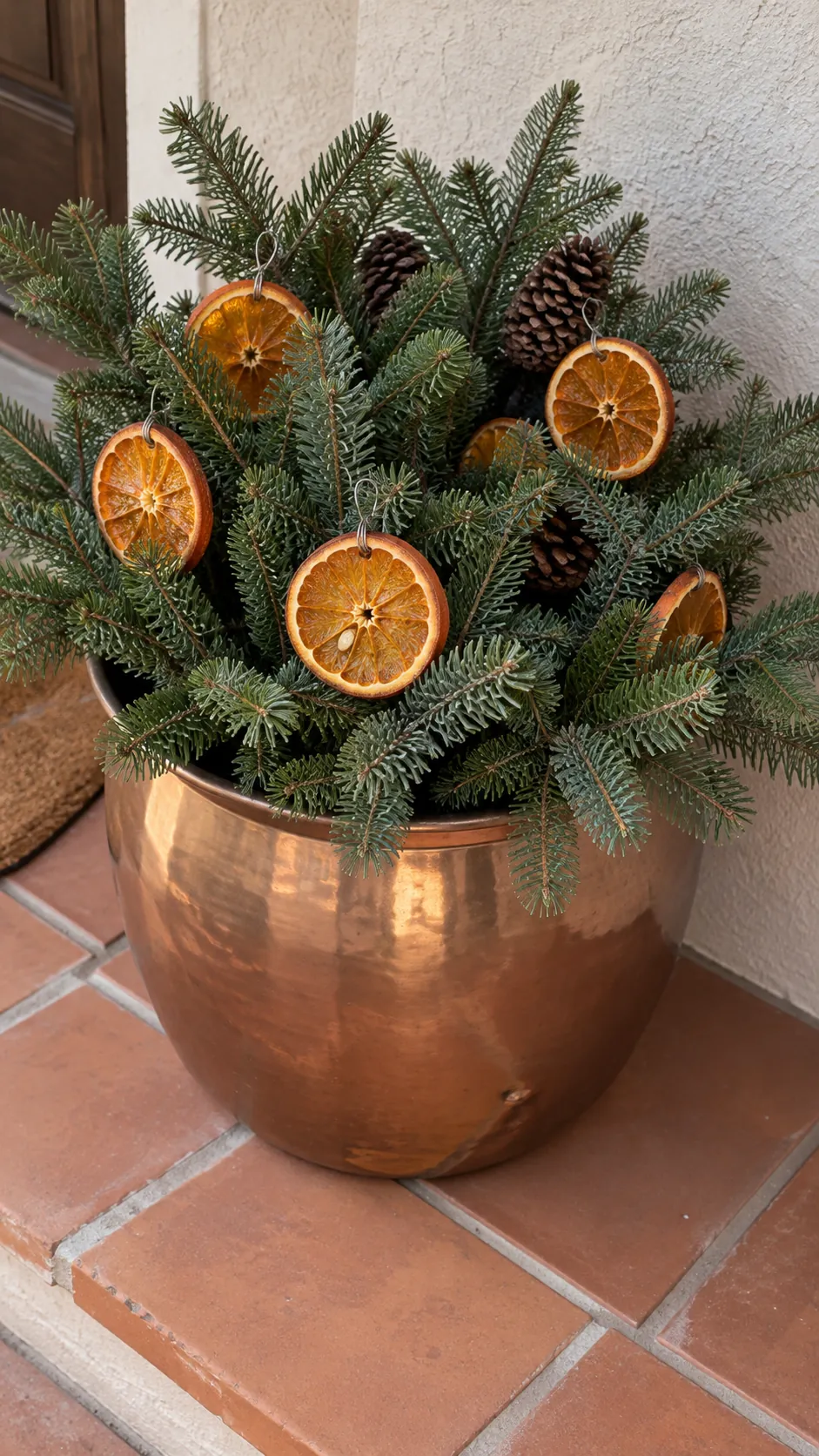
A Copper Colored Pot with Orange Slices
Dried orange slices bring a small warm accent to a green arrangement on a covered porch. Thread the slices onto discreet wire and place them among fir rather than on long dangling strings. A copper colored container makes the fruit feel deliberate without adding more decoration. Expect the slices to weather and replace them if they soften or develop mold.
A Basket Cover Around a Winter Insert
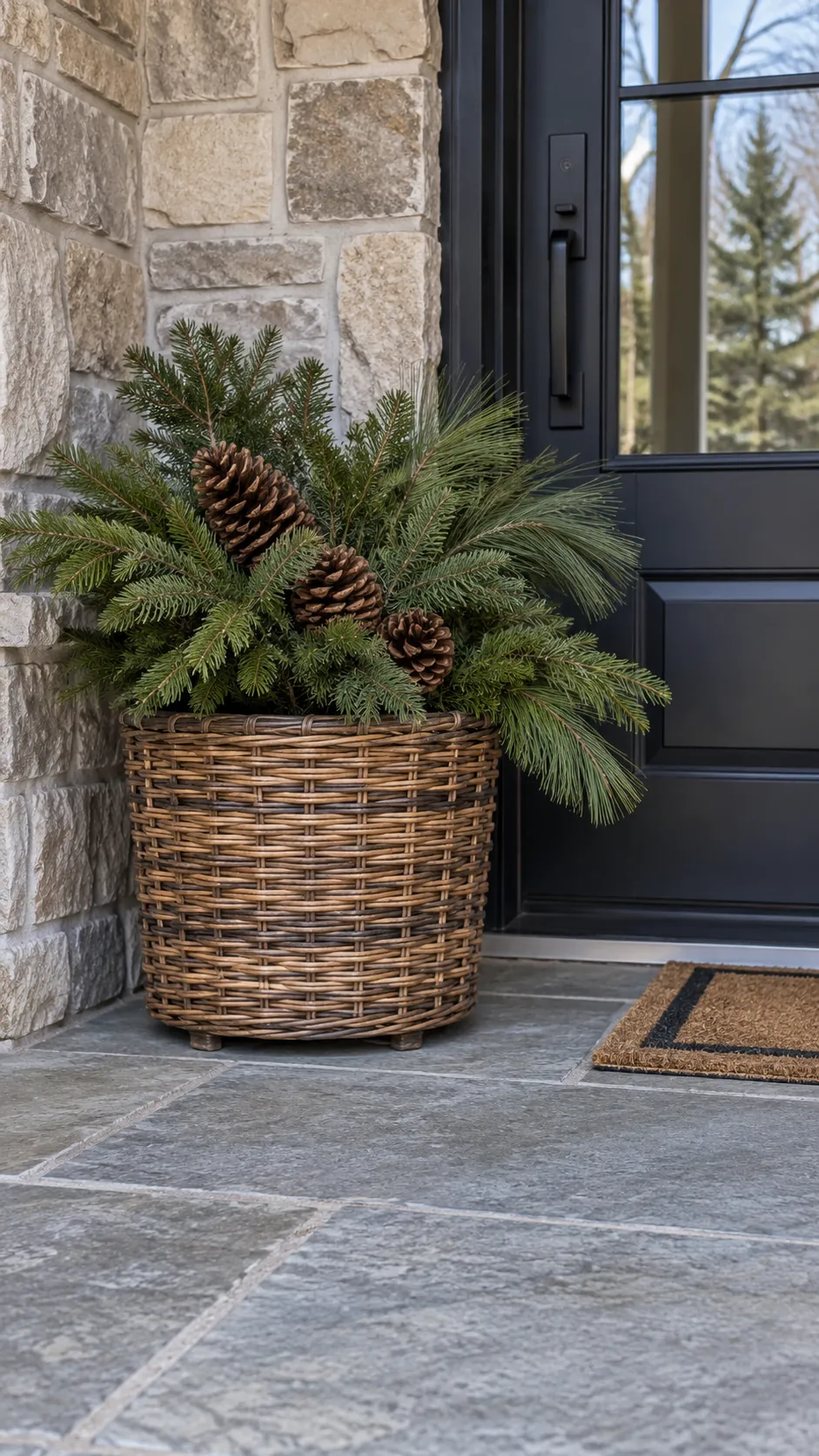
A basket can soften an entrance dominated by stone and metal. Place a draining pot inside a weather suitable basket cover, keeping the bottom raised so it does not sit in collected water. Fill the insert with pine and several large cones for a design that reads clearly from the path. Reserve delicate indoor baskets for a dry covered position rather than exposing them to repeated rain.
A Blue Ribbon Pot for a Coastal Porch
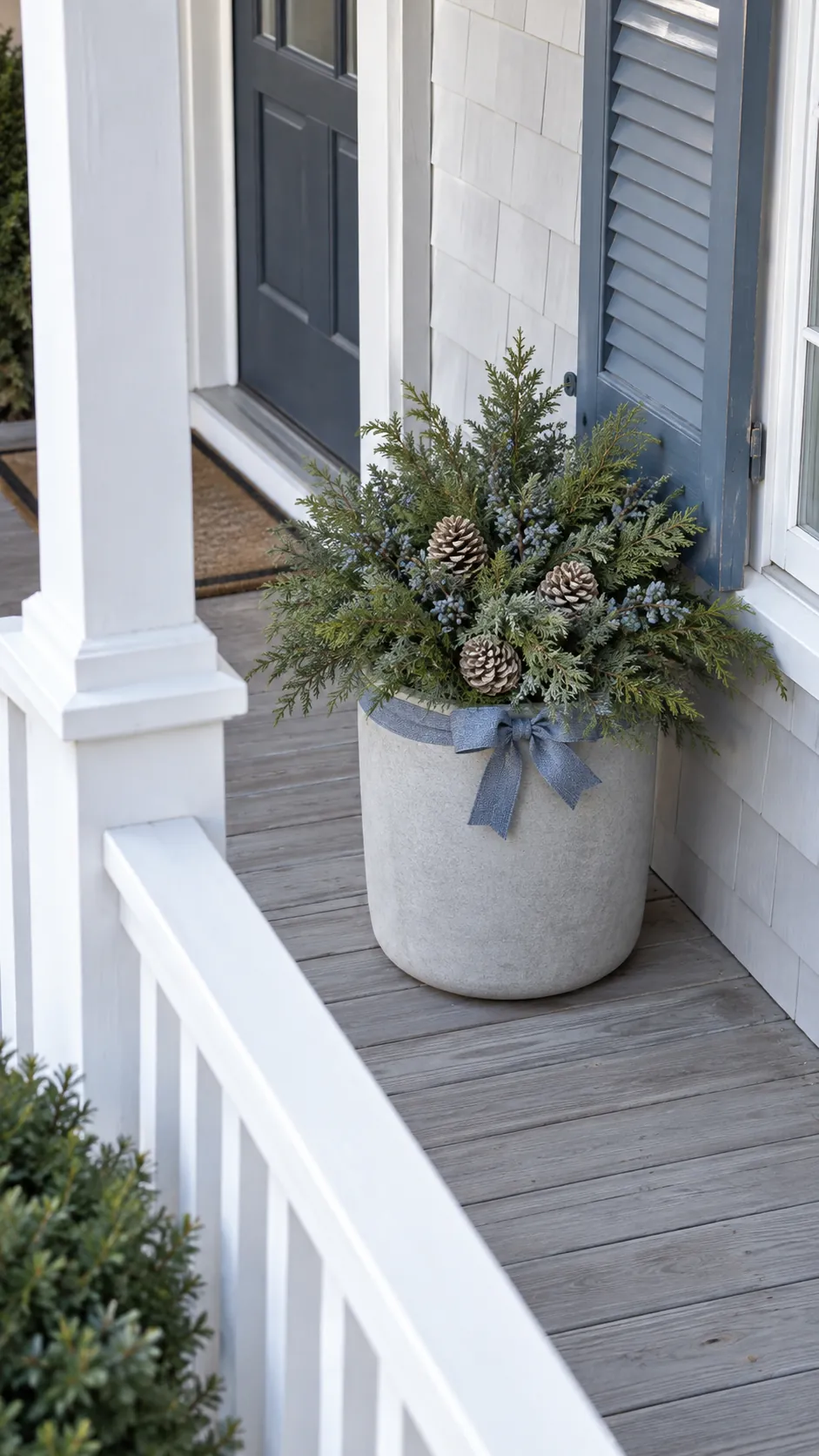
A muted blue ribbon offers an alternative to red when the house already has cool colored shutters or siding. Pair it with juniper, pale cones, and a simple light gray container. Keep the ribbon short and use an outdoor suitable fabric that will not bleed color onto the pot. For an exposed coastal entry, fasten every accent firmly and move the display into shelter before severe winds.
A Removable Greenery Insert for Easy Storage
Build the arrangement in a smaller nursery pot that lifts out of the decorative container. Firm potting mix can hold cut stems while keeping the seasonal assembly separate from a heavy outer vessel. After the holidays, remove ornaments and dispose of spent greenery according to local collection rules. Store the empty decorative pot as its manufacturer recommends, so next December begins with a sound container rather than a cracked one.