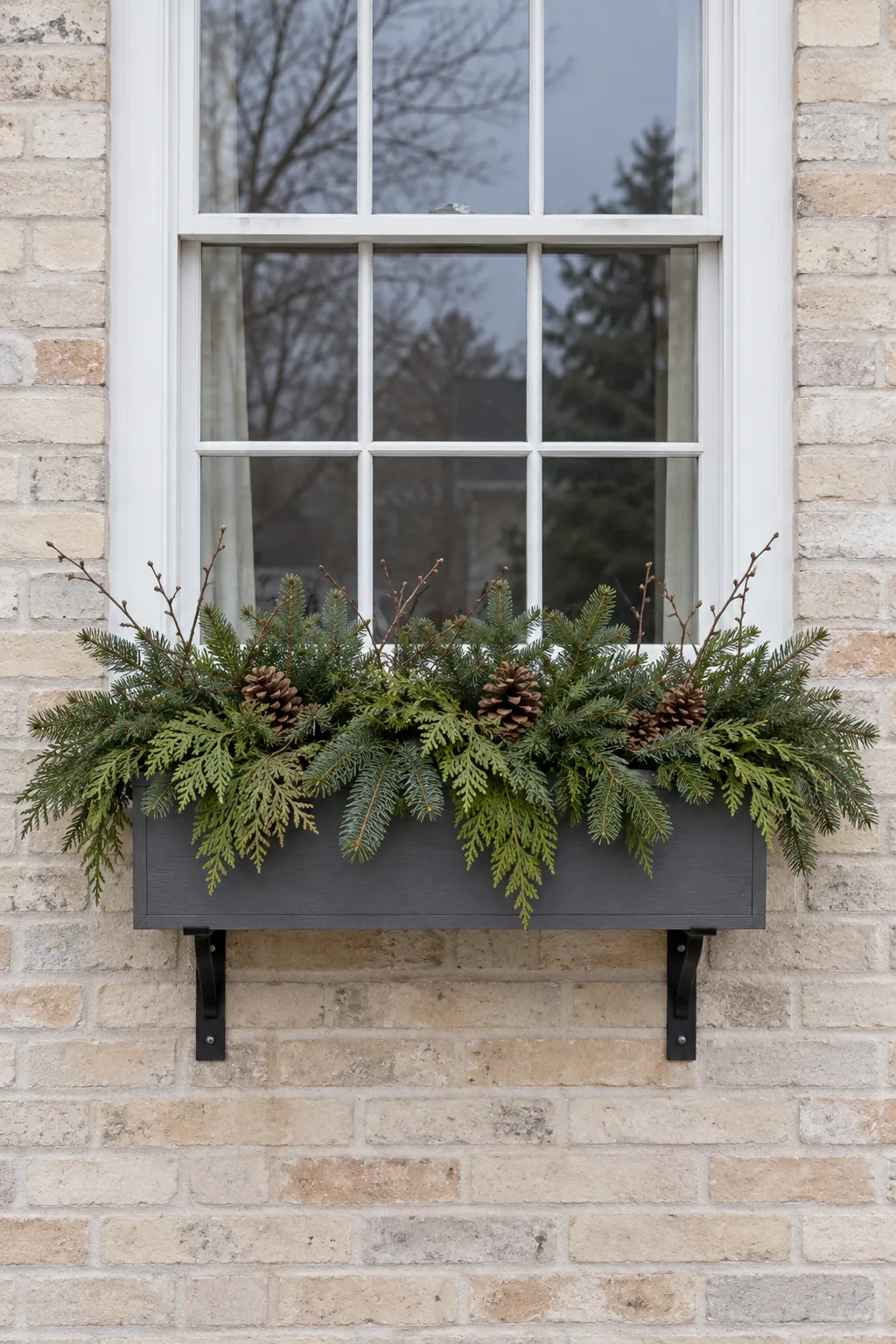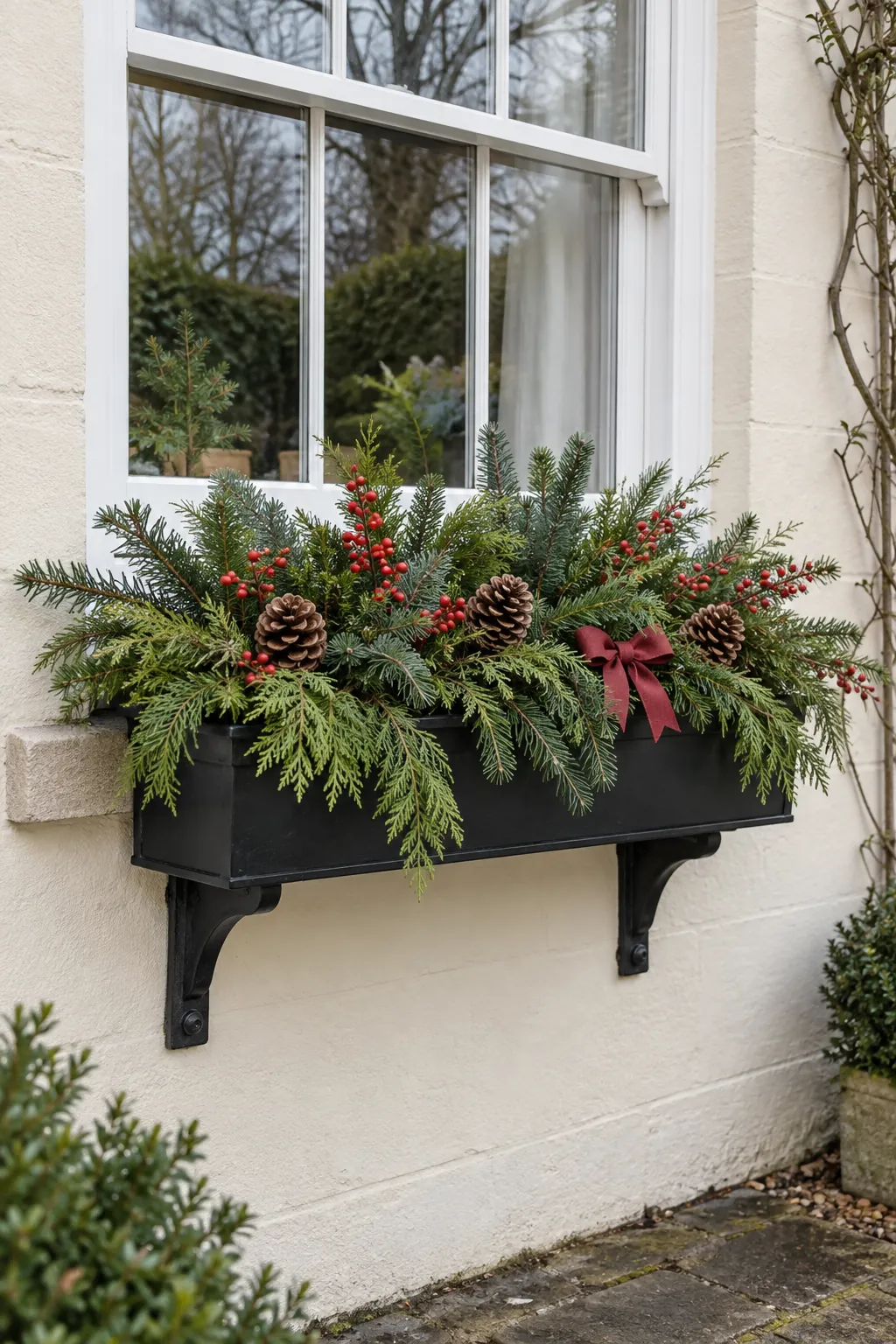
A full window box can look beautiful from the street and still cause trouble when rain collects inside or the sash cannot open. Check the mounting, drainage, and window movement before adding greenery. The safest design is the one your actual box and location can support.
For outdoor window Christmas decorations, distinguish rooted plants from cut branches and decorative picks. Living plants need suitable light and soil conditions, while cut displays need secure stems and occasional replacement. Choose the materials for the exposure first, then select a color theme.
Pine and Red Berry Stems
Pine supplies a loose green base that reads clearly beneath a window. Place berry stems toward the back, where their red clusters can rise above the needles without leaning against the glass. Outdoor rated artificial berries are an option when fresh stems shed too quickly. Wire each stem to an internal support and keep drainage openings clear.
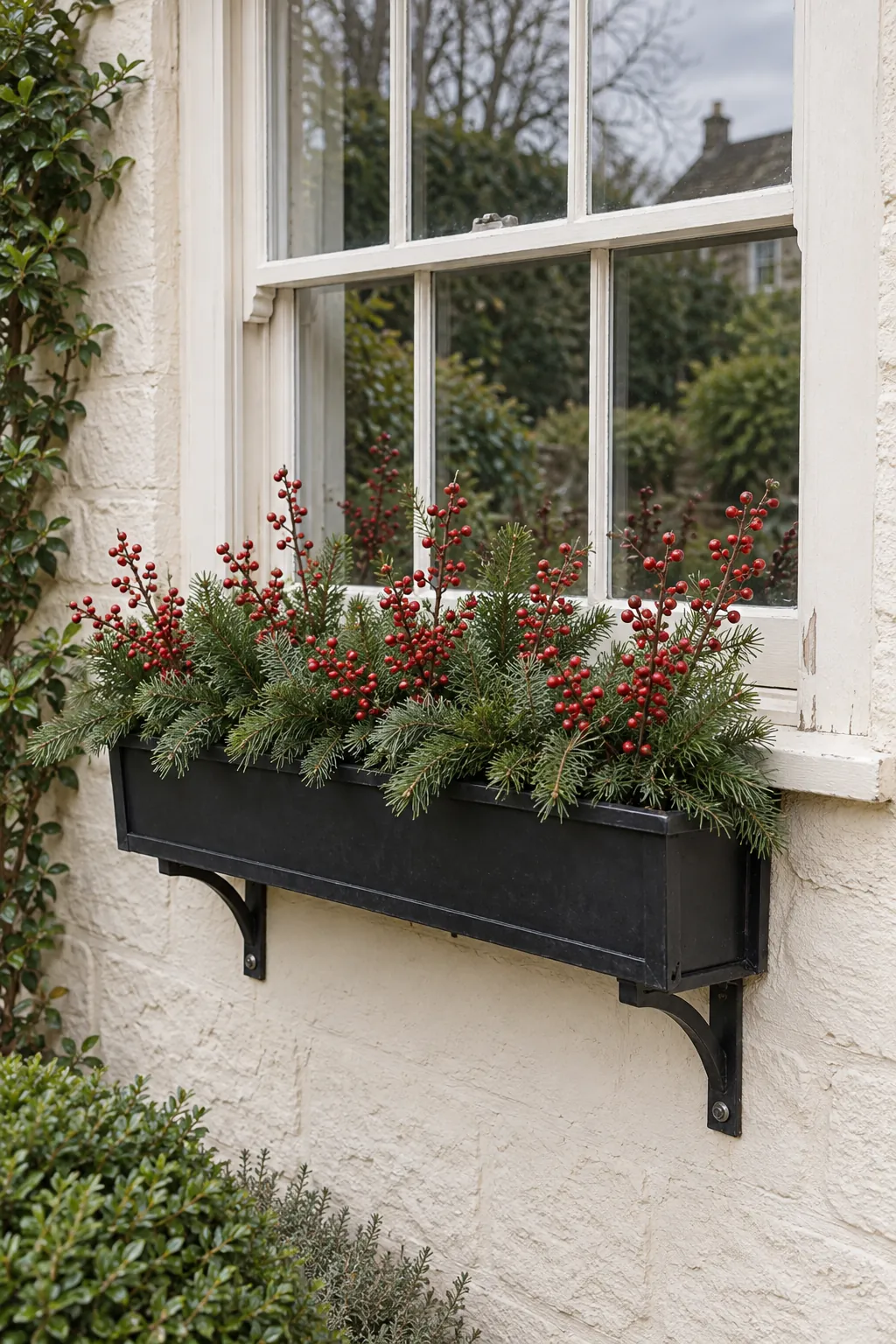
Pinecones with Outdoor Twinkle Lights
Pinecones give a low arrangement structure without hiding the view from indoors. Nestle them among short fir cuttings and fasten them with discreet wire. Use outdoor rated LED lights and follow their connection limits, keeping the cable clear of the window mechanism and raised away from collected water.
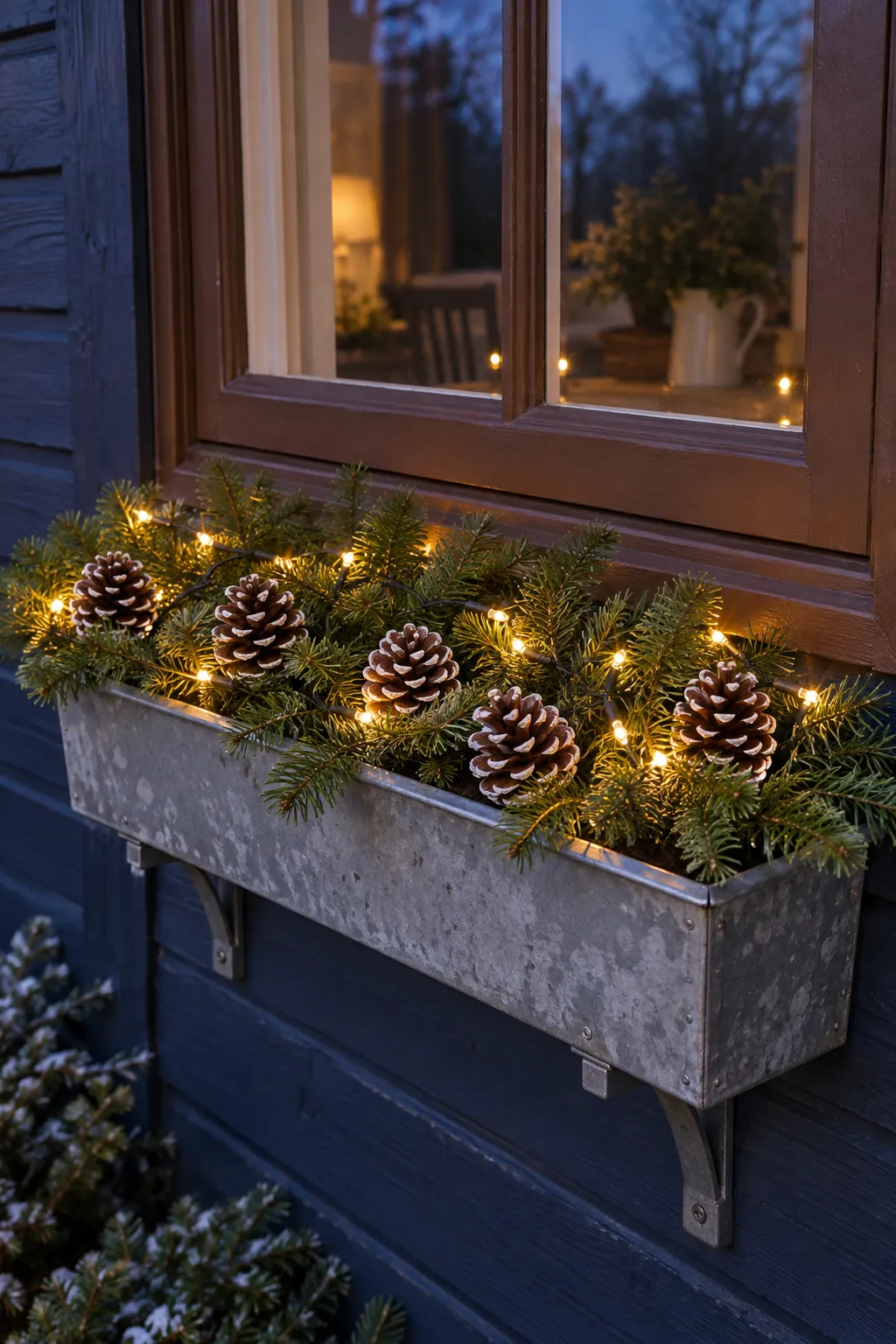
A Small Battery Lantern Among Juniper
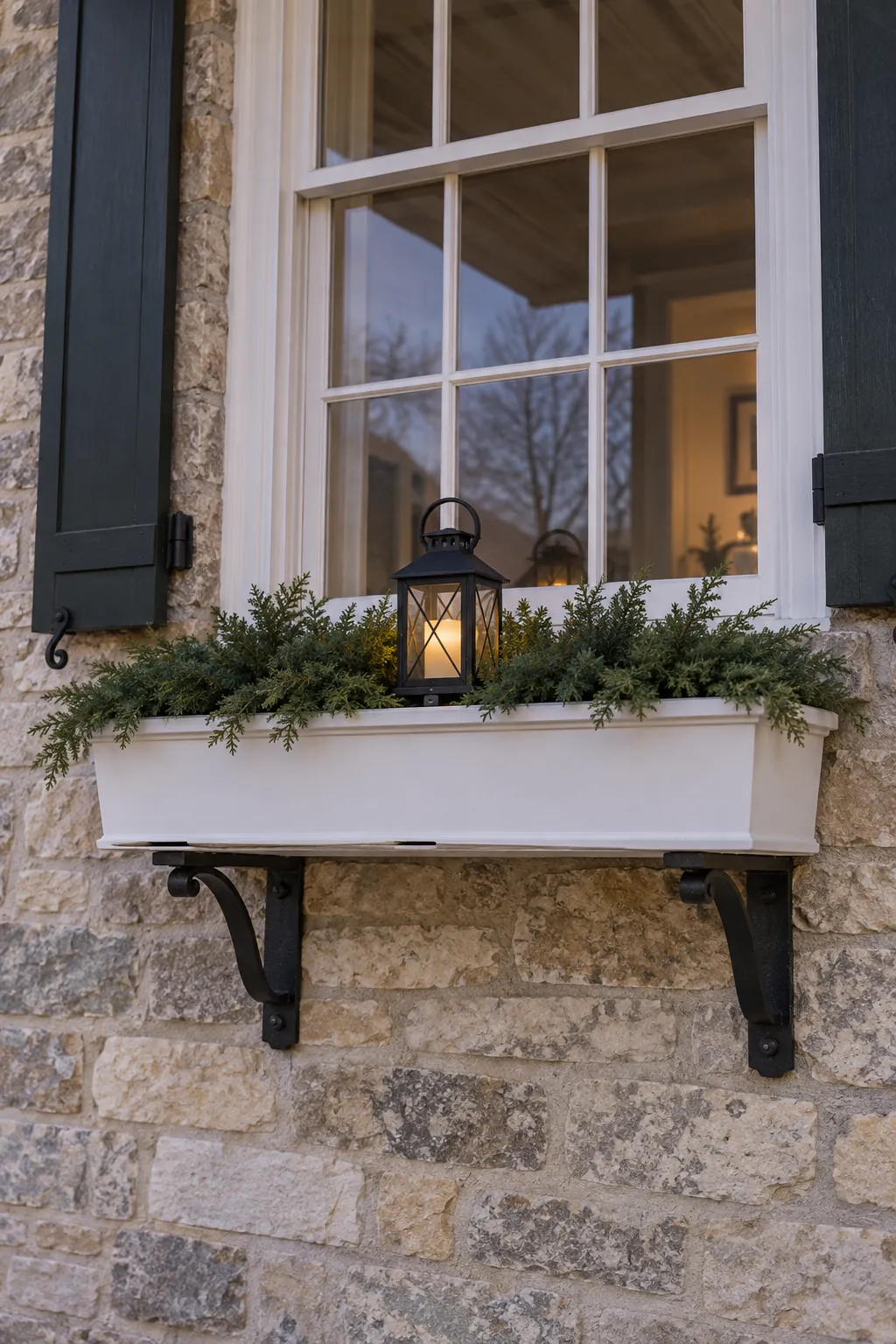
A lantern belongs in a window box only when the box and mounting hardware can safely carry its added weight. Choose a small outdoor battery lantern and secure it to a firm support rather than balancing it on branches. Leave its switch and battery compartment accessible. Use a flameless light because drying foliage must stay away from an open flame. A low juniper border softens the base without covering the glass panels.
Striped Candy Cane Picks
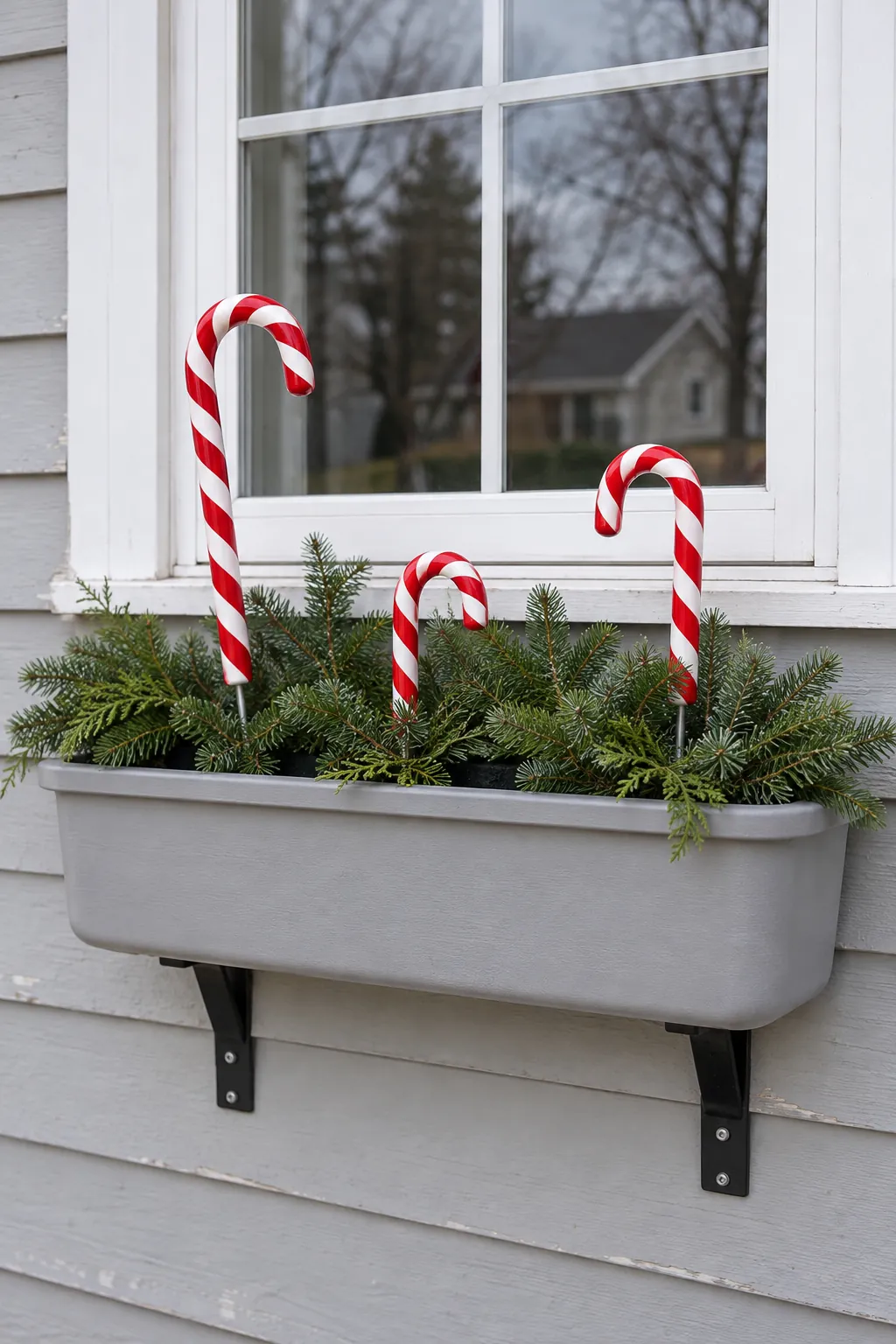
Candy cane shaped outdoor picks bring a clear red and white theme to a shallow box. Secure their stems within the supporting insert, then surround them with plain evergreen cuttings. Use decorative picks rather than real sweets, and skip loose artificial snow that can wash onto the path or into drains.
Vintage Style Unbreakable Ornaments
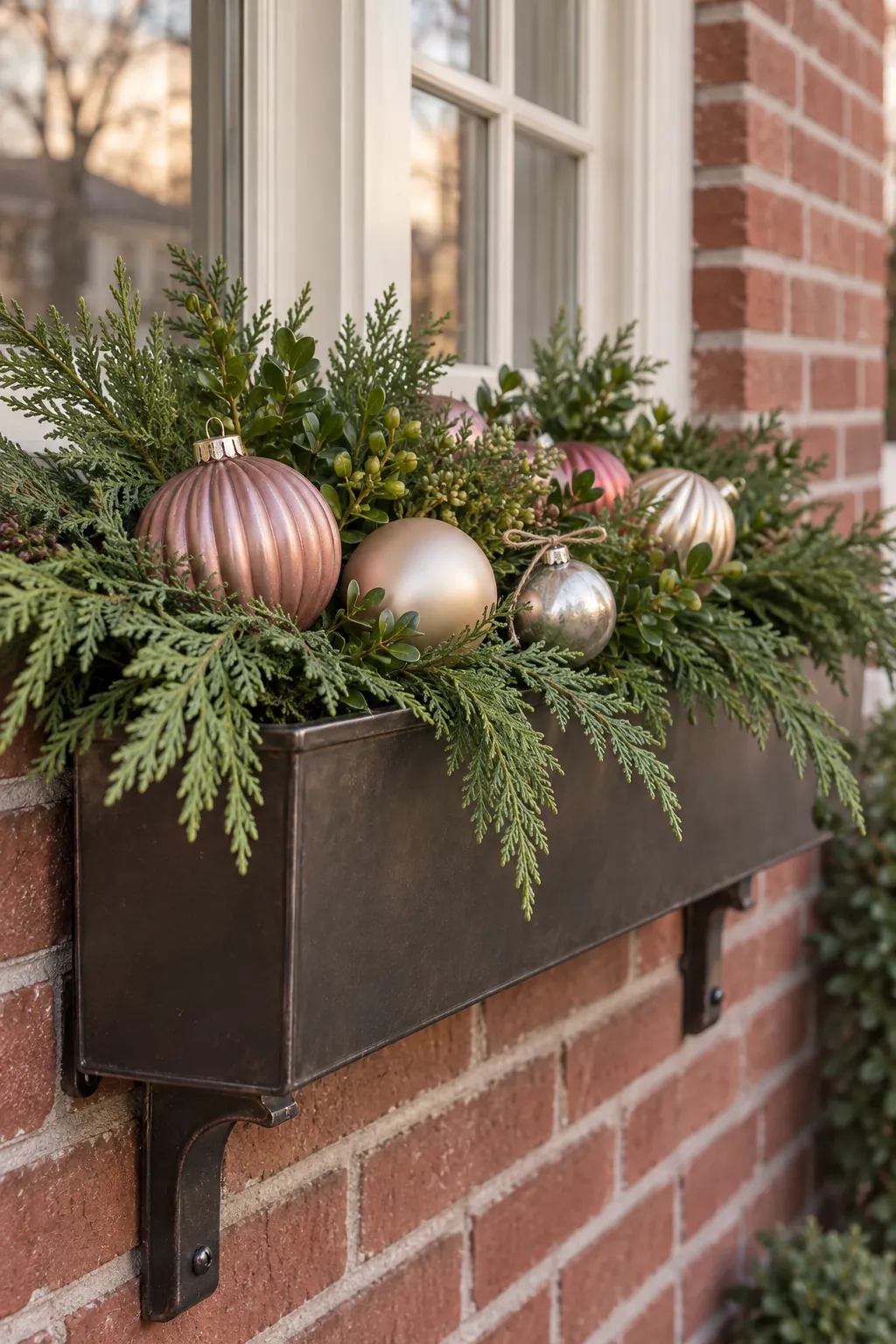
Vintage style ornaments can create a nostalgic display without exposing treasured glass pieces to weather. Choose outdoor suitable unbreakable balls in muted silver, rose, or champagne tones. Tie them to sturdy stems and set larger ornaments low inside the greenery. Keep cracked glass and fragile family heirlooms indoors, where they can be enjoyed safely.
Magnolia Leaves with a Red Bow
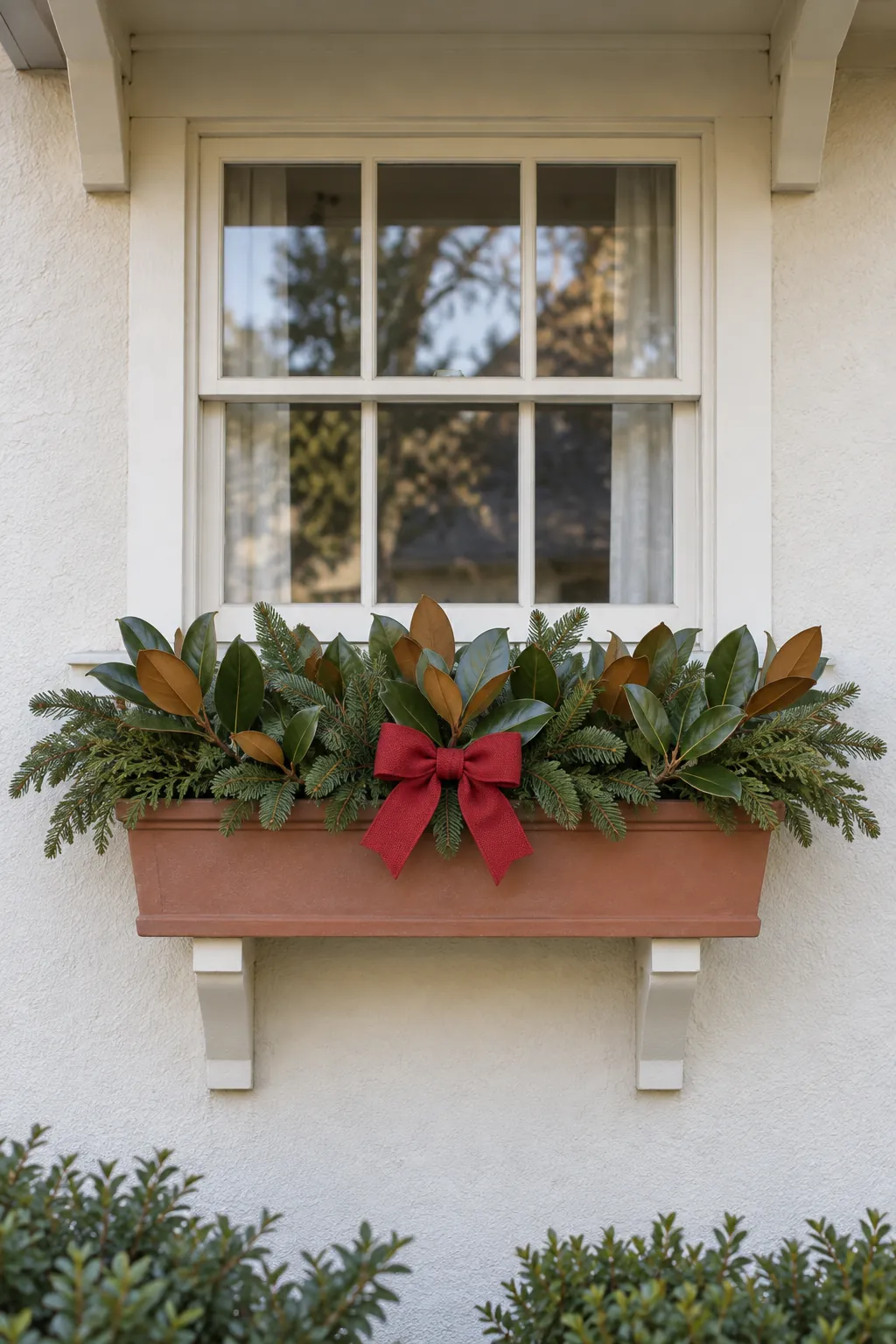
Magnolia fronts and backs provide two colors before any ribbon is added. Turn selected brown backs outward, then use softer fir to fill gaps between the broad leaves. Fasten one compact red bow near the center so it does not cover the window opening. Check the ribbon after rain and shorten any tail that can flap against the glass. A sheltered window keeps this restrained arrangement easier to maintain.
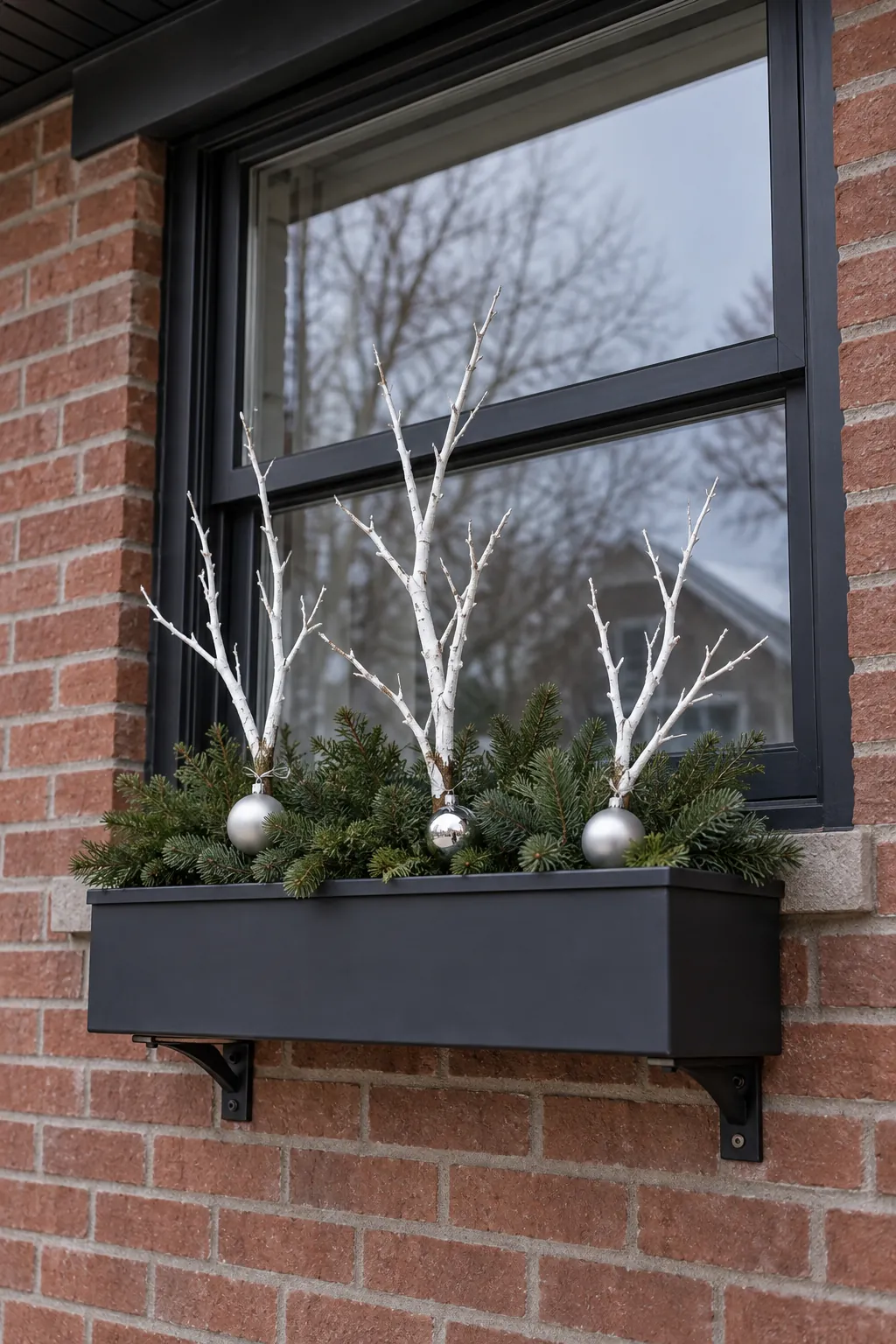
White Twigs and Silver Balls
White painted outdoor twigs can brighten a window beneath a deep roof overhang. Combine them with dark evergreen cuttings and a few securely attached silver ornaments. Keep the twig tips below the opening sash so the display remains decorative rather than interfering with ventilation.
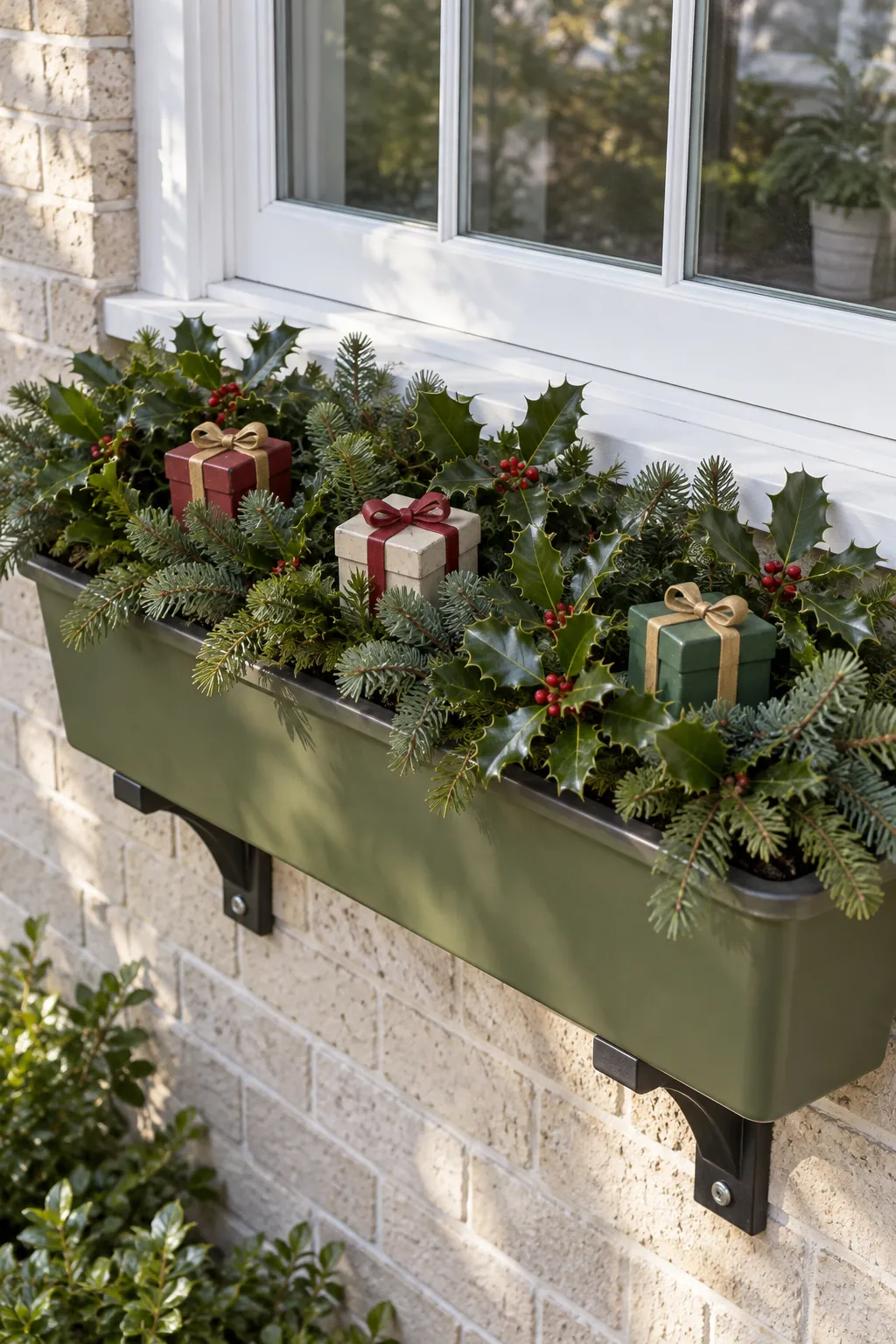
Weather Suitable Gift Box Accents
Small decorative gift boxes add shape to holly and fir without needing a tall centerpiece. Use ornaments made for outdoor display instead of ordinary paper wrapped cartons that will soften in rain. Secure each box within the arrangement rather than resting it on the outer edge. Leave enough greenery between the boxes that the window does not look like a storage shelf.
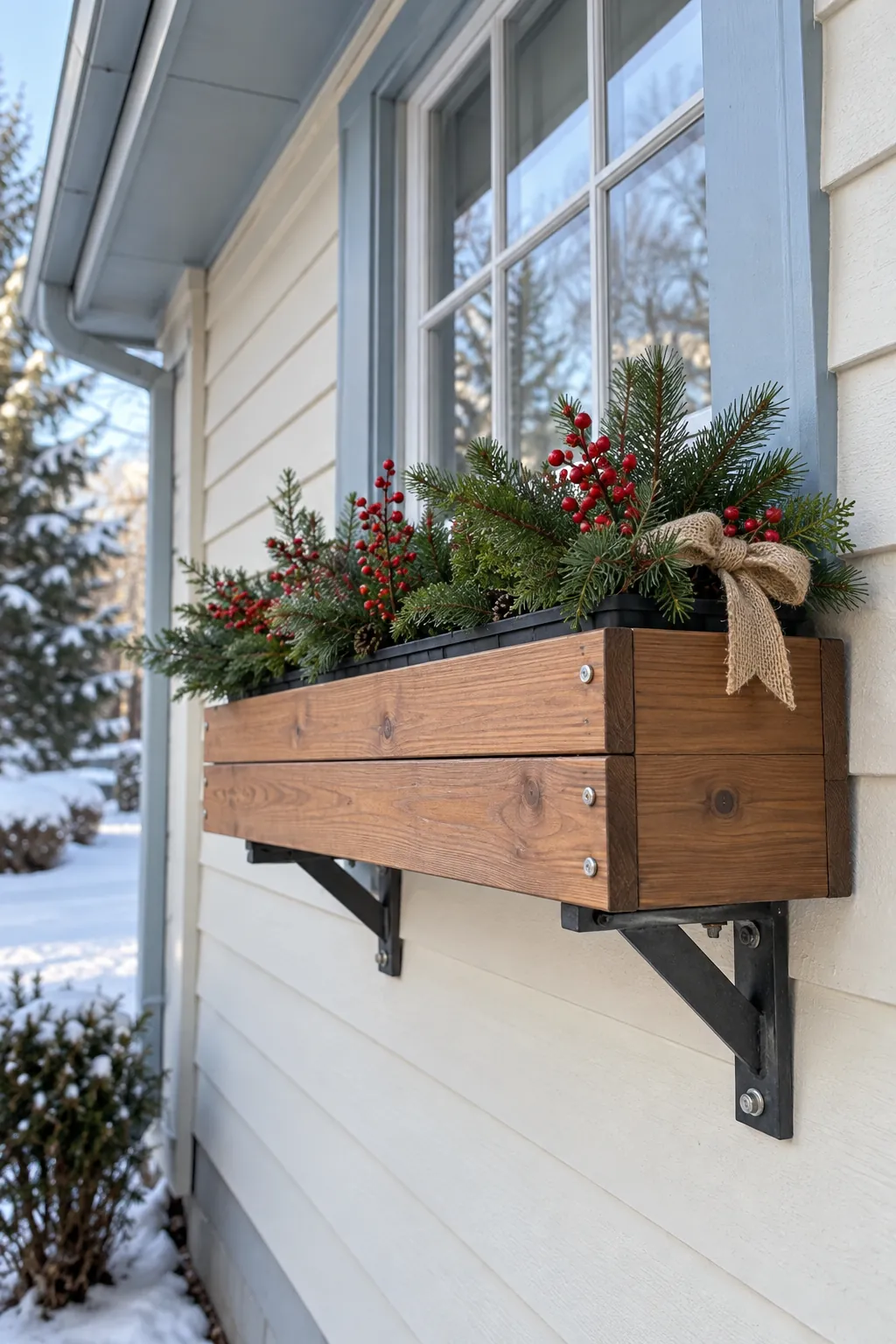
A Wooden Box with a Draining Insert
A wooden outer box can look rustic while a separate insert handles moisture and branch support. Use mounting brackets rated for the complete filled weight and follow the building or window manufacturer’s guidance. Leave a route for water to escape from both the insert and the cover. An unbroken plastic liner can trap water rather than protect the wood. A short burlap style ribbon is best reserved for a sheltered position where it can dry.
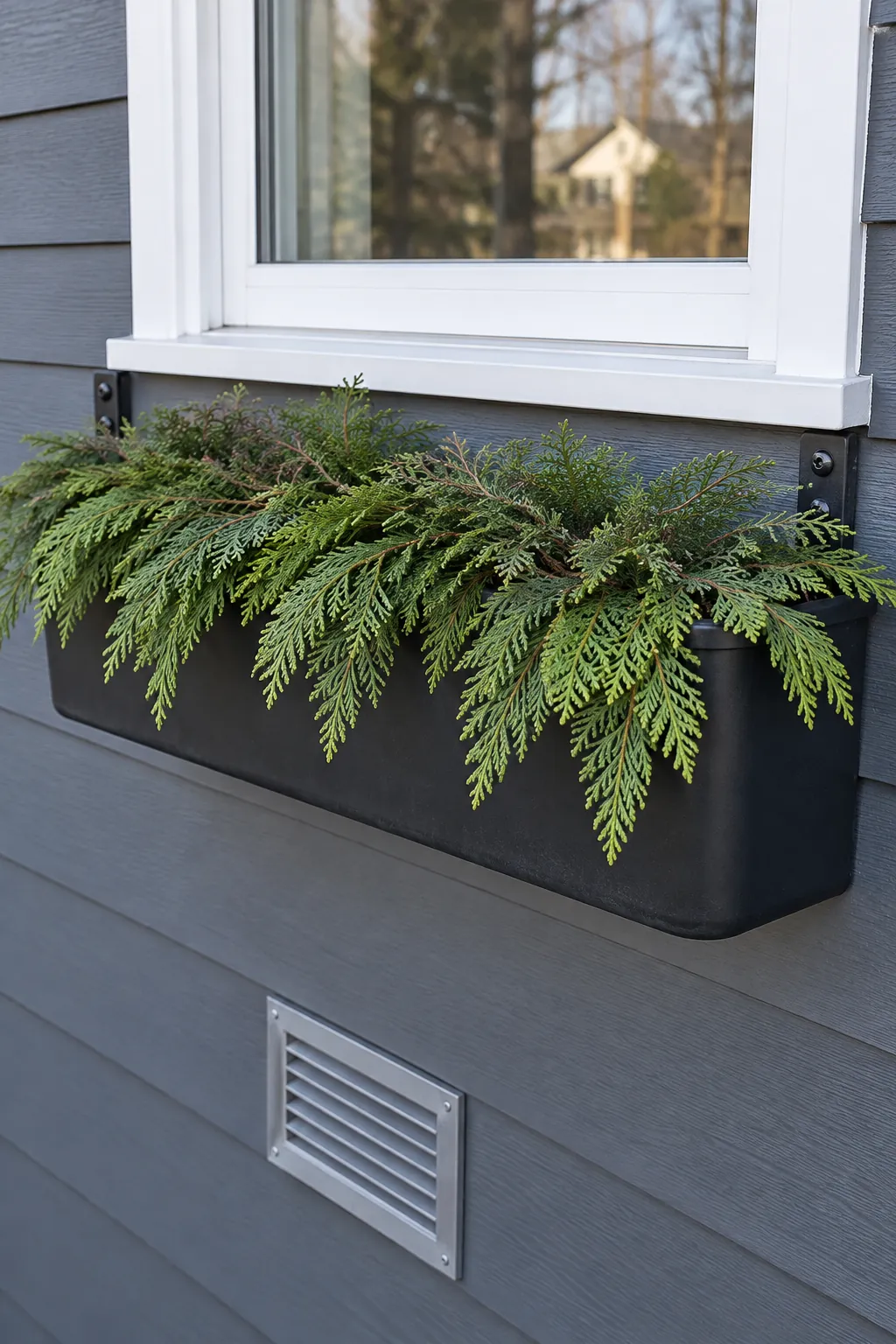
Cedar Draped Over the Front Edge
Cedar’s flexible fans are useful when the box itself needs softening. Anchor the stems inside the container and let a short fringe fall over the front, keeping it away from vents and walking areas below. Leave the rear of the arrangement low enough that the view from the room stays open.
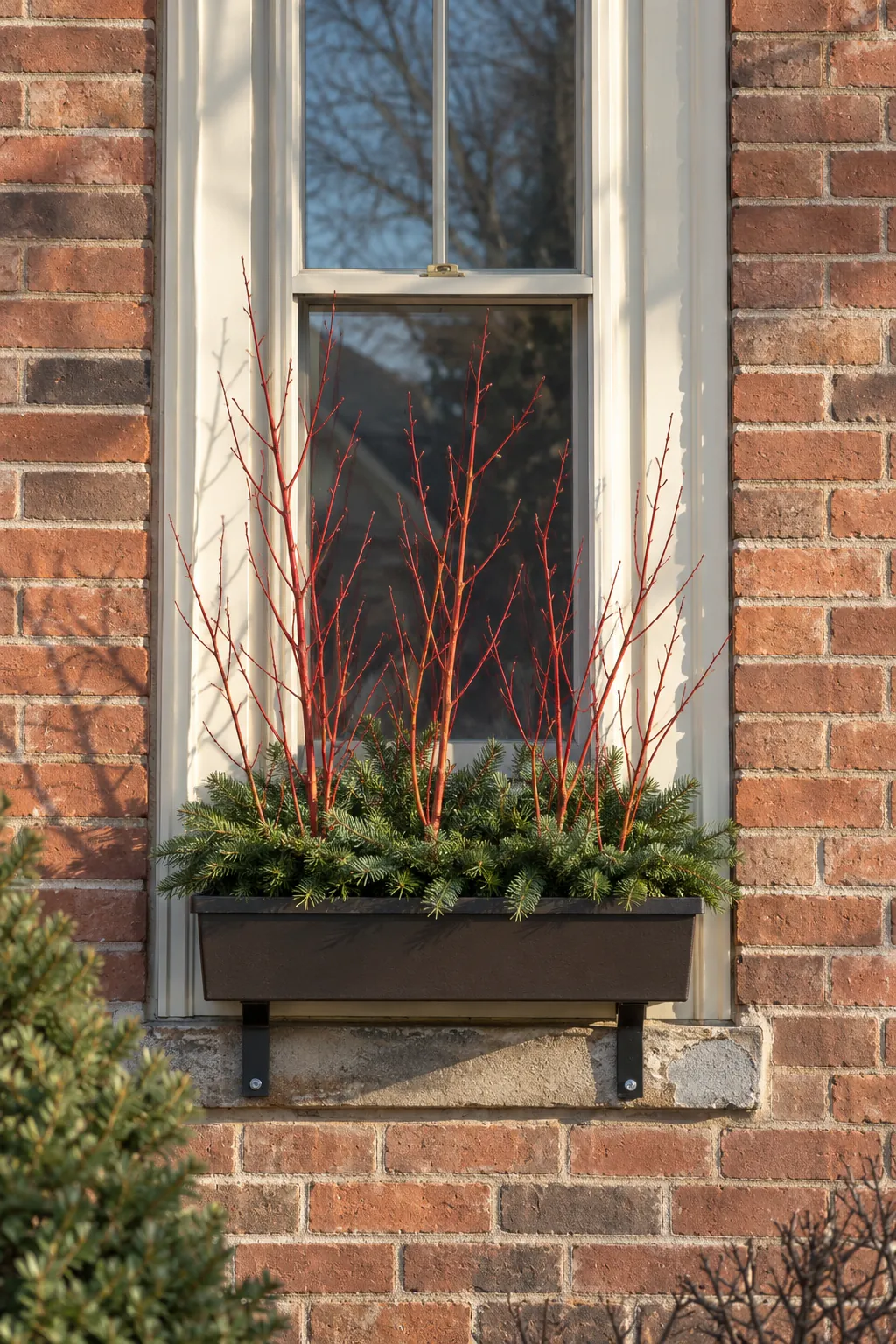
Dogwood Stems for a Narrow Window
Red dogwood gives height with a light outline, which suits a narrow window where bulky decorations feel crowded. Insert stems at different depths so their forks do not form one rigid flat row. A base of spruce hides the support and contrasts with the red bark. Trim branches before installation and keep their ends clear of glass and opening hardware.
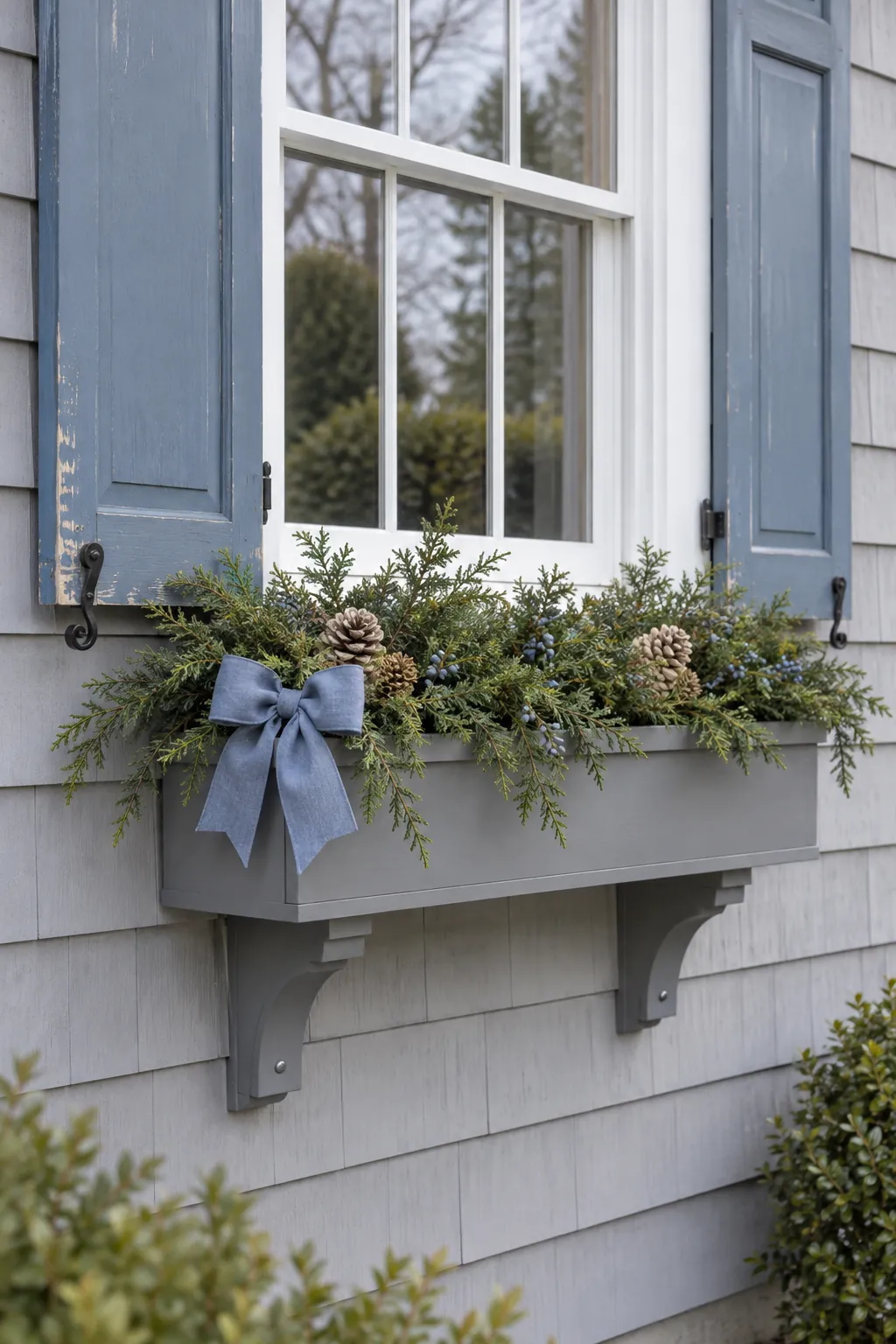
A Blue Ribbon and Juniper Palette
Muted blue ribbon works well beside gray siding or cool colored shutters. Pair it with juniper and pale natural cones, using one short bow rather than a ribbon along the entire sill. Check that the fabric is suitable for exposure and does not bleed color onto the box. This palette can remain useful after Christmas if the ribbon is removed. Keep the arrangement compact on windows exposed to wind.
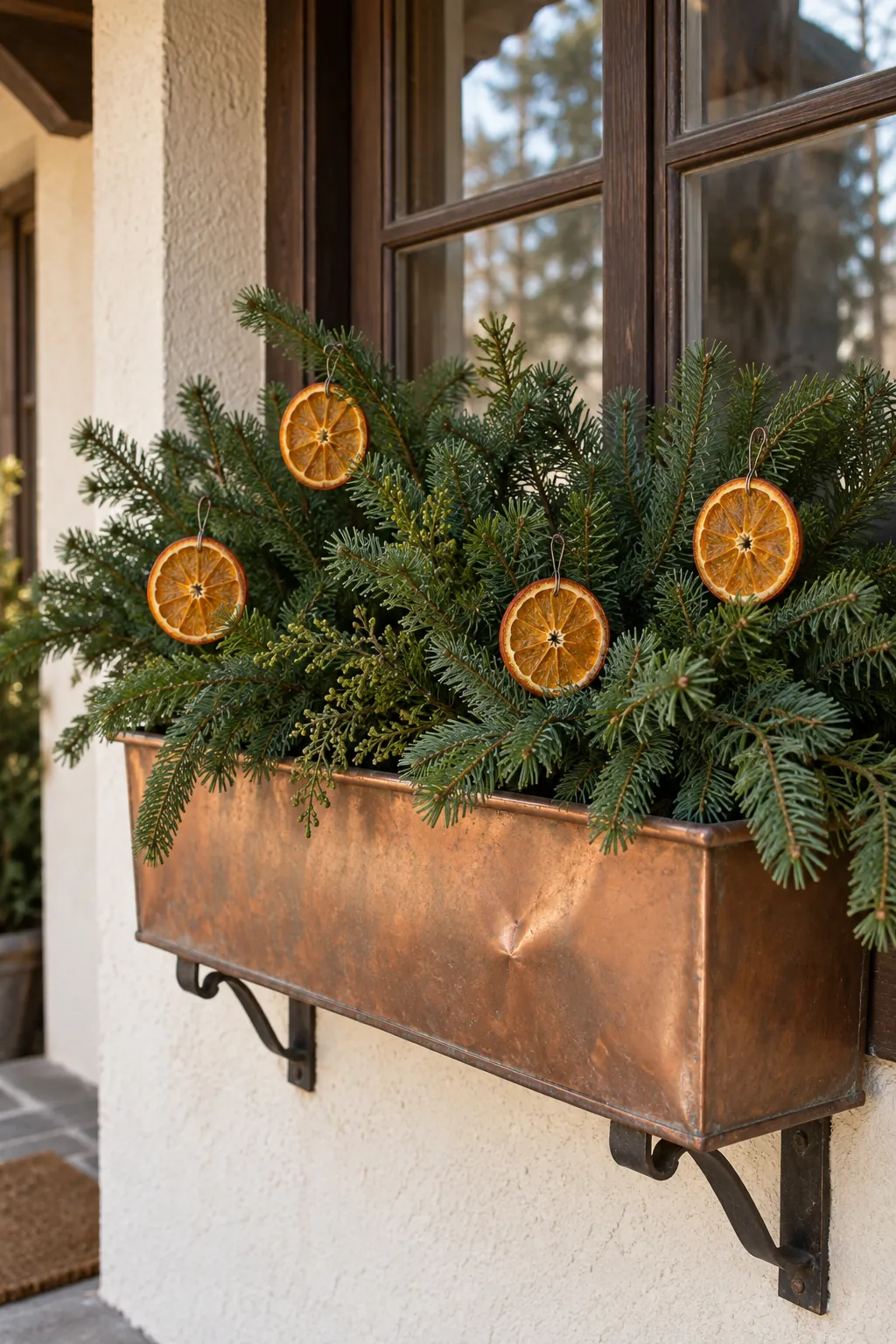
Dried Orange Slices in a Sheltered Box
Dried orange slices add a warm accent where a deep eave keeps direct rain away. Attach each slice with fine wire and place it within fir branches rather than hanging it against the window. Replace slices that soften or develop mold, since natural fruit decorations do not remain unchanged throughout wet winter weather.
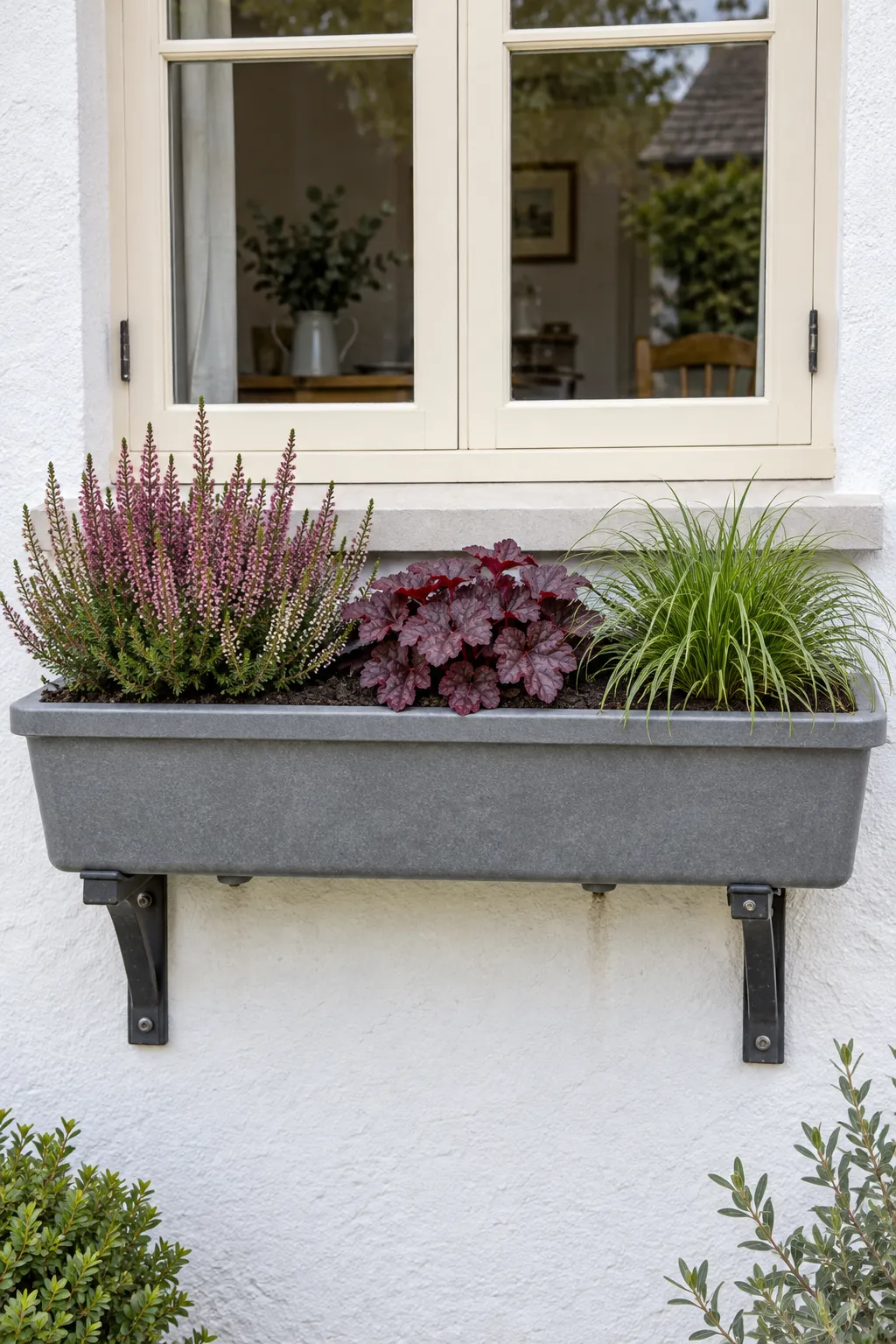
Living Winter Plants for a Mild Climate
A living window box requires plants suited to the local winter, available light, and limited root space. Ask a nursery about compatible small plants instead of treating every evergreen as suitable for a shallow container. Use proper potting mix and open drainage, and continue checking soil moisture. In harsher conditions, a cut greenery display may be more practical than trying to keep exposed roots alive.
A Removable Tray of Cut Greenery
A removable tray lets you build a seasonal arrangement at a comfortable working height. Fit it inside the installed box without blocking the drainage route or exceeding the mounting load. Anchor the stems in the tray, then add lightweight accents before putting it in place. Keep it small enough to lift safely. After the holidays, the tray can come out without requiring you to remove the permanent outer box.
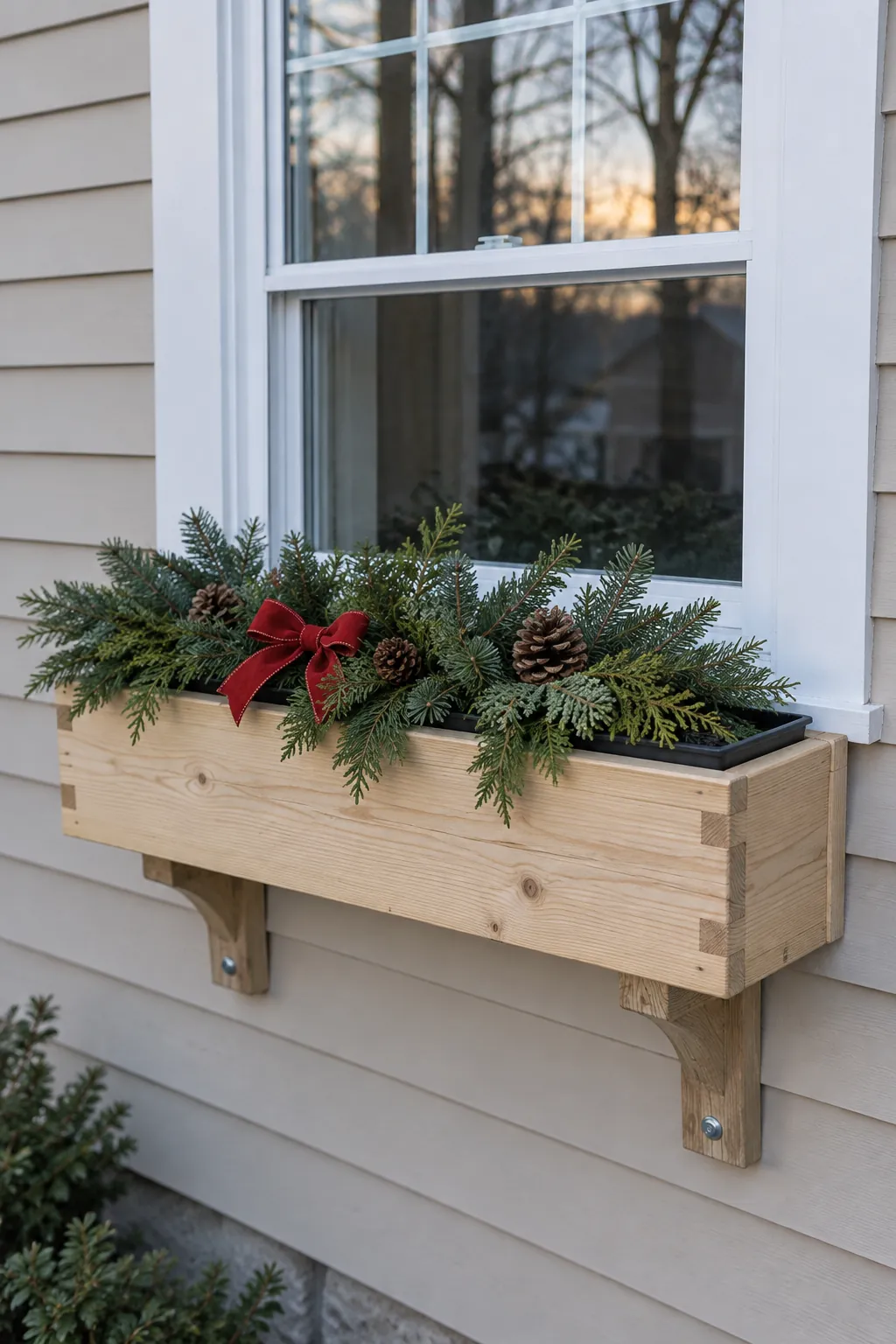
A Low Arrangement Beneath an Opening Window
A window that opens outward needs a low display with clear space around the moving sash. Use short fir tips, small cones, and one low ribbon instead of upright branches. Open the window fully before installing the finished arrangement, and keep required ventilation or emergency access unobstructed.
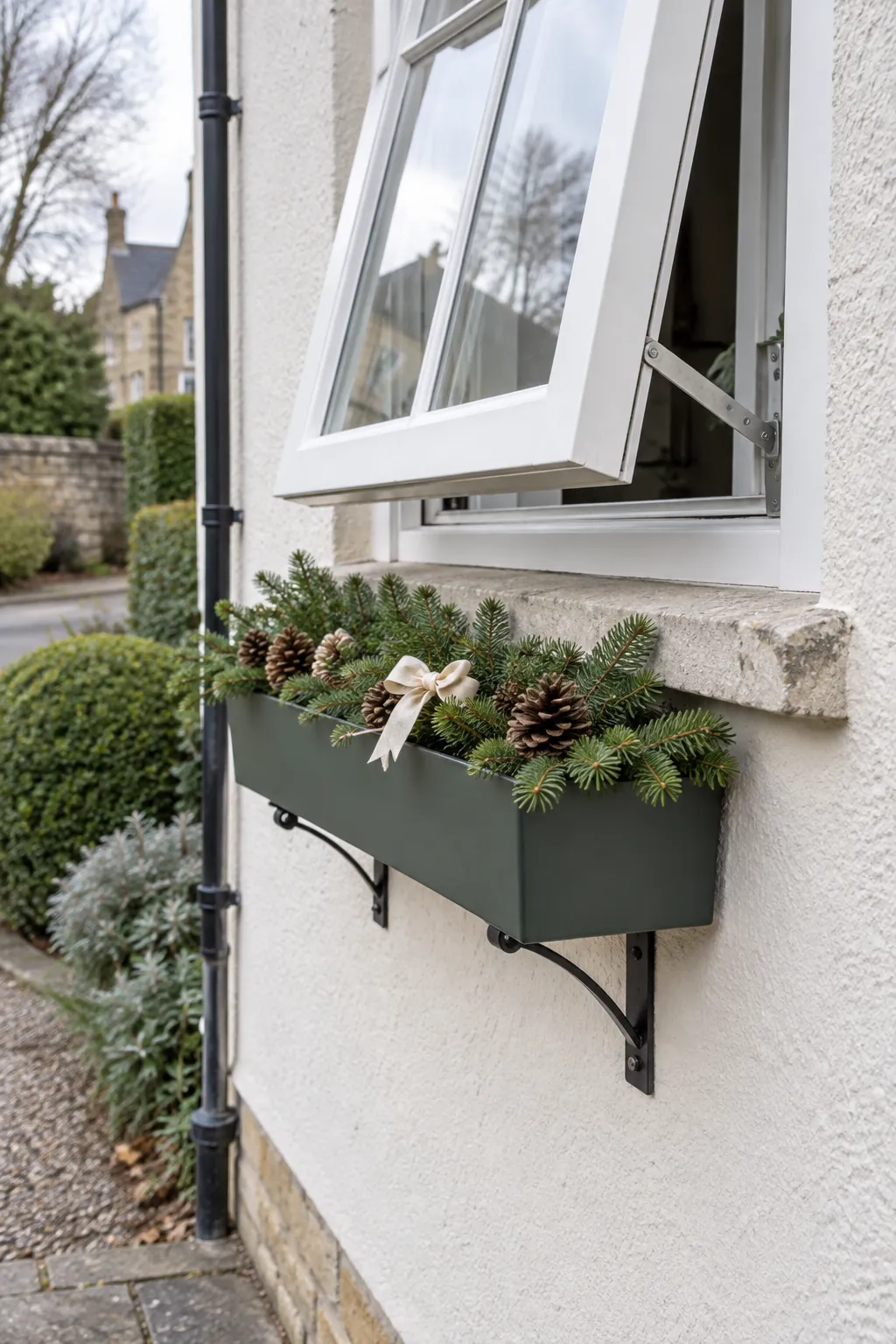
Natural Greens That Continue into January
Plain fir, cedar, cones, and bare twigs can outlast the Christmas color scheme visually. Put bows and ornaments on removable ties so the seasonal accents come off without pulling the whole arrangement apart. Check cut foliage regularly and replace material that becomes brittle or untidy. Keep stems secured and drainage open as the weather changes, so the box remains manageable beyond the holiday display.