
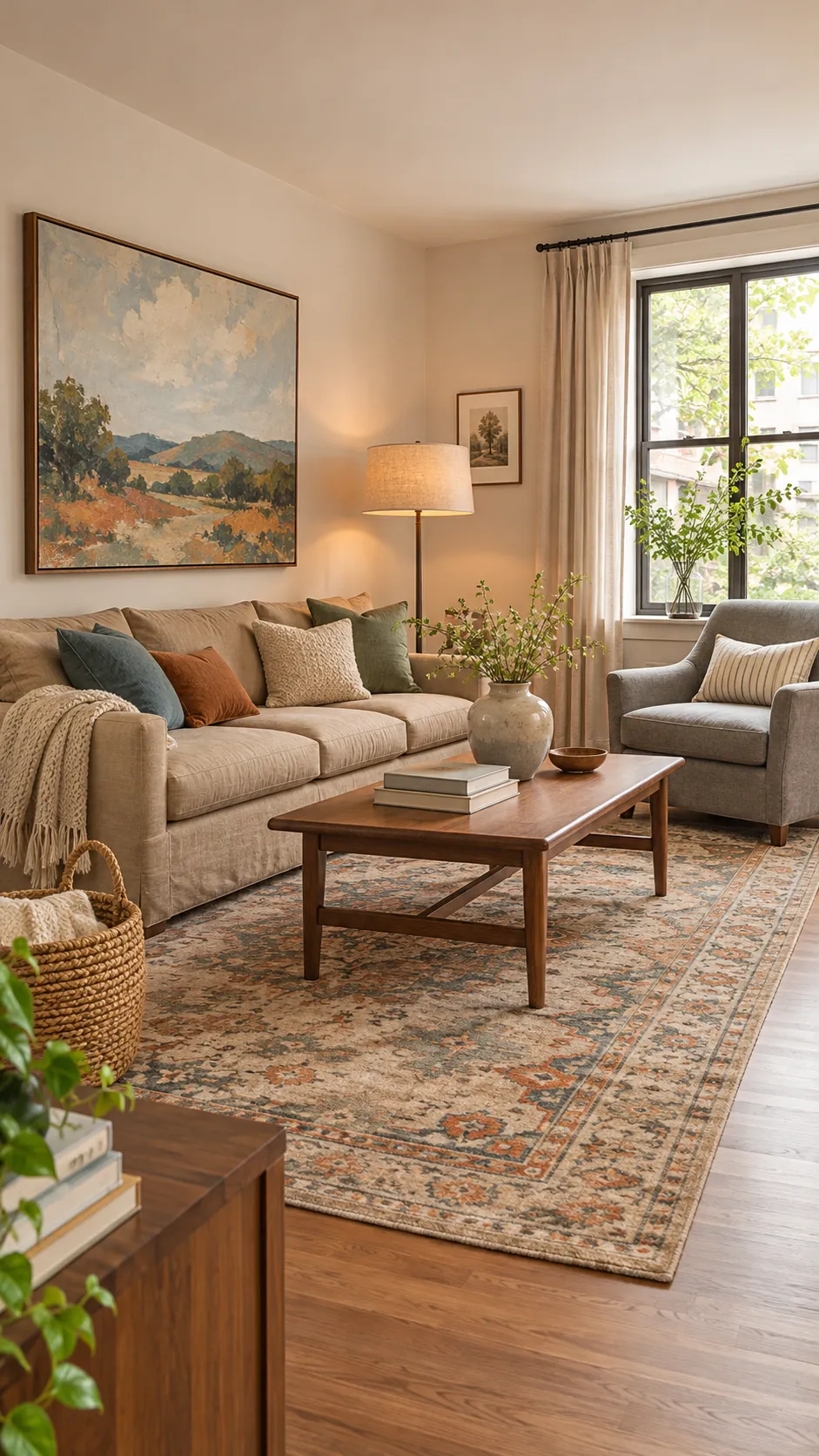
Existing finishes rarely arrive as one perfect neutral palette. A gray sofa, beige chairs, pale tile, and warm wood can still belong together when one rug or artwork repeats their colors and the room includes clear value contrast. Work from the fixed pieces first, then add only what connects them.
Bridge Gray and Beige with One Rug
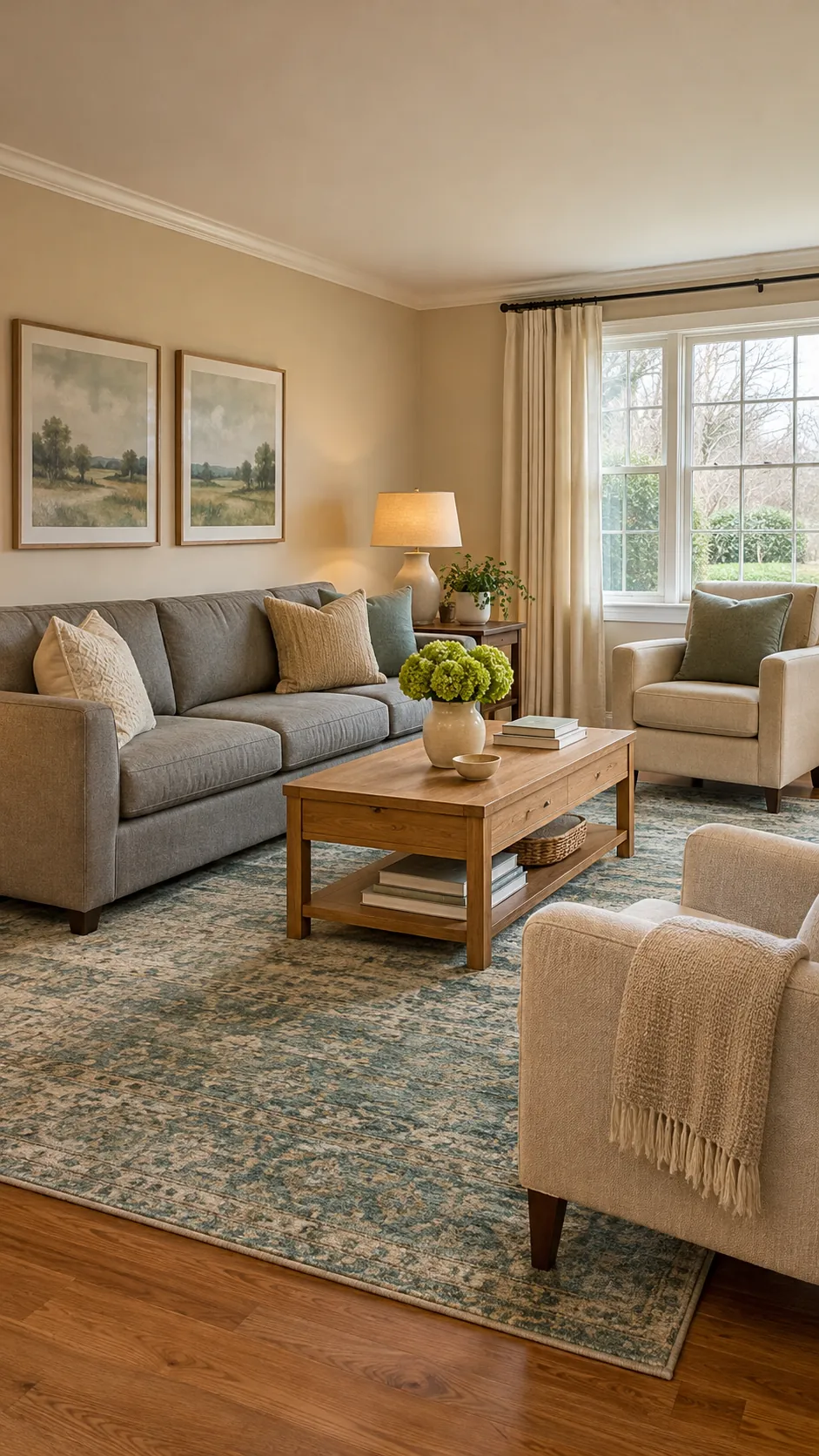
A rug can connect furniture that looked unrelated in separate product photos. Choose a pattern that contains the sofa gray, the chair beige, and one blue green or rust accent. Keep the pattern medium in scale so it reads across the seating area rather than as tiny noise. Repeat the accent once in a cushion and once in artwork, then stop.
Zone a Pale Studio with Dark Edges
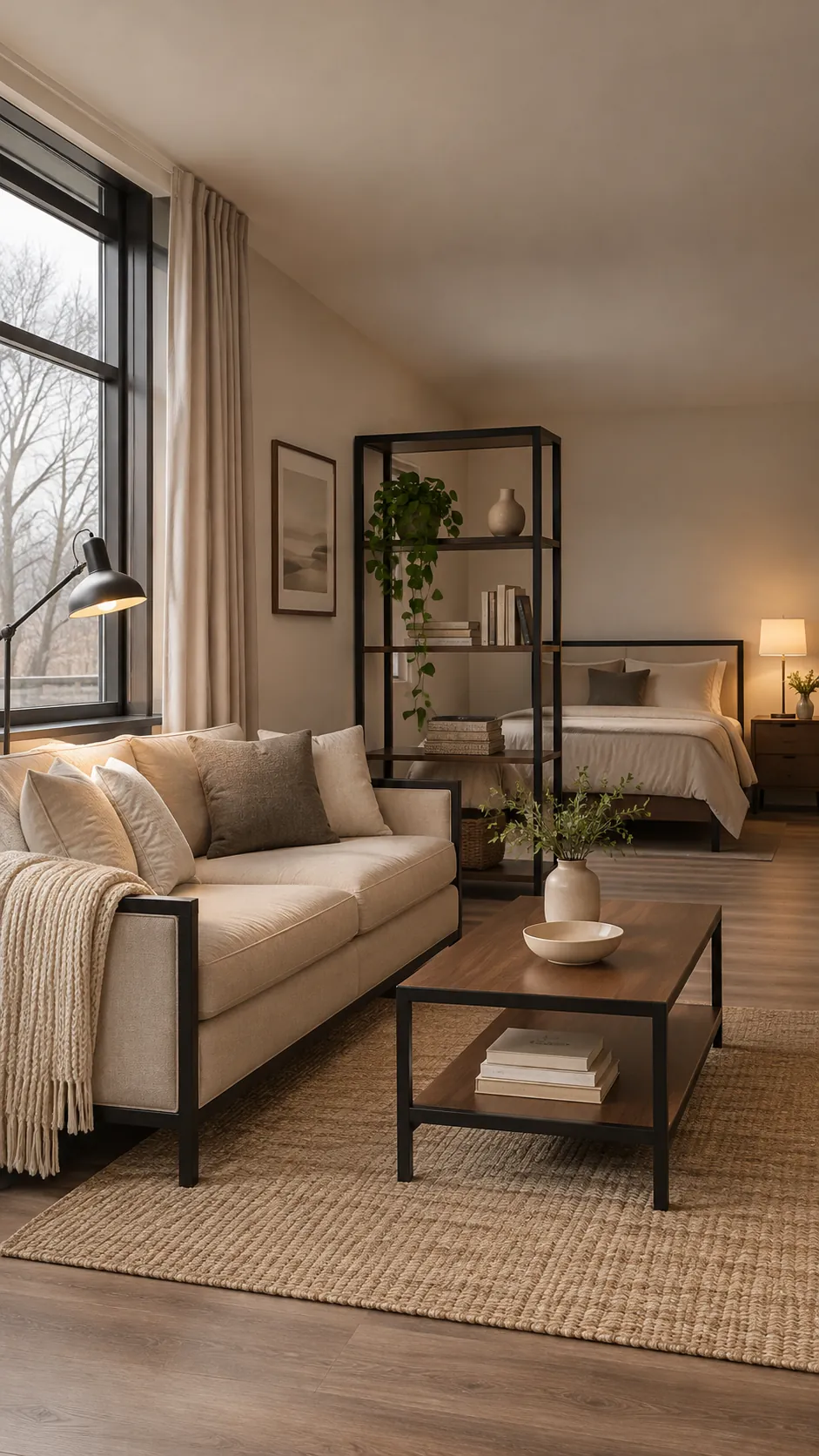
Beige furniture can disappear in a studio with pale tile and white walls. Define the living zone with a dark walnut table, charcoal lamp, and a rug border that creates a visible perimeter. Keep tall pieces near the wall so the center stays open. The repeated dark edges give the pale sofa and bed separate identities without a divider.
Warm Gray Seating with Camel Leather
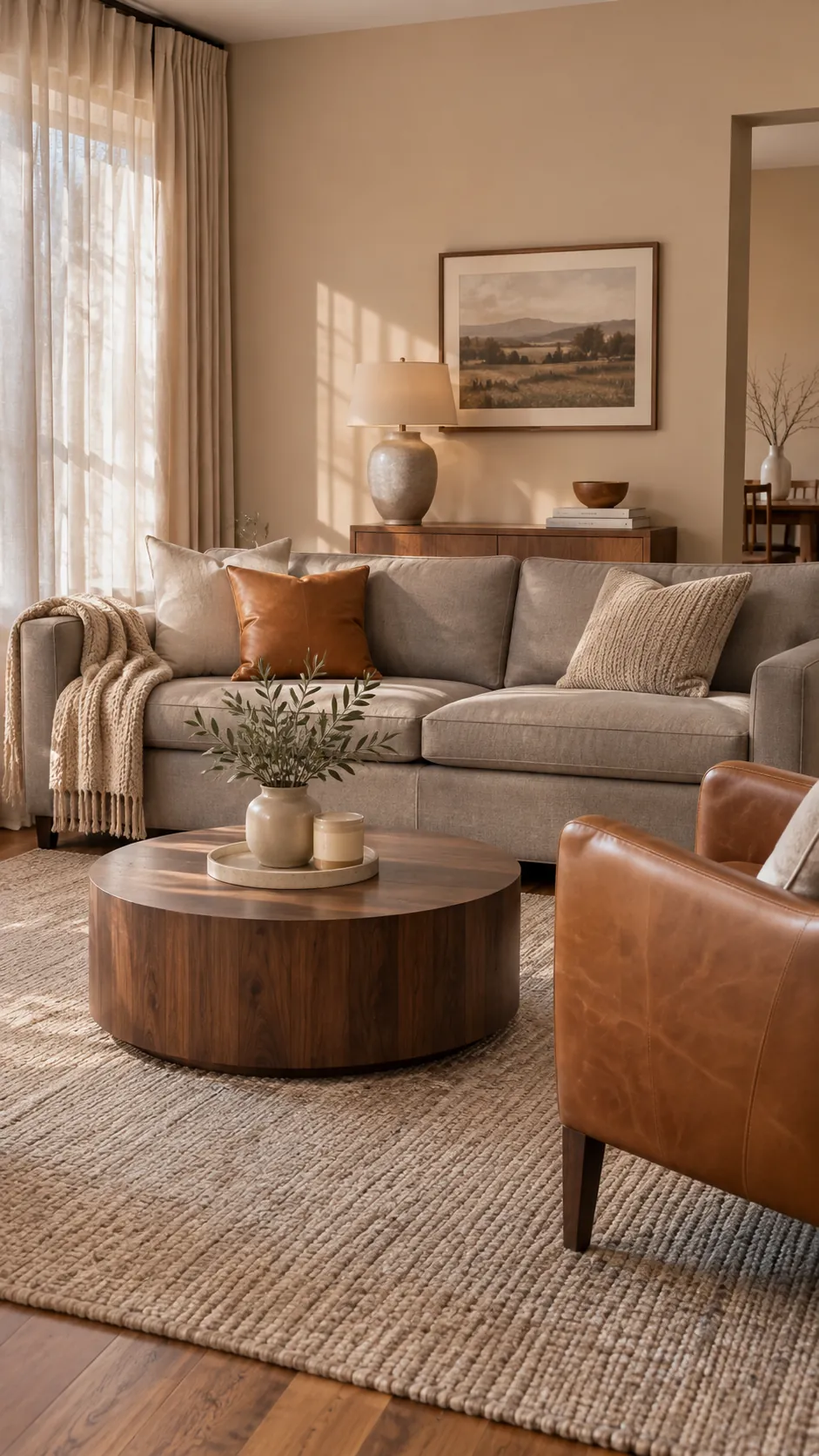
Camel leather introduces a clear warm note beside a gray sofa and beige walls. Use it on one chair or ottoman rather than a full matching suite. Walnut, cream wool, and a small black detail can repeat the temperature range. Choose a gray with brown or green undertones so it does not turn blue beside the leather.
Hang One Oversized Personal Artwork
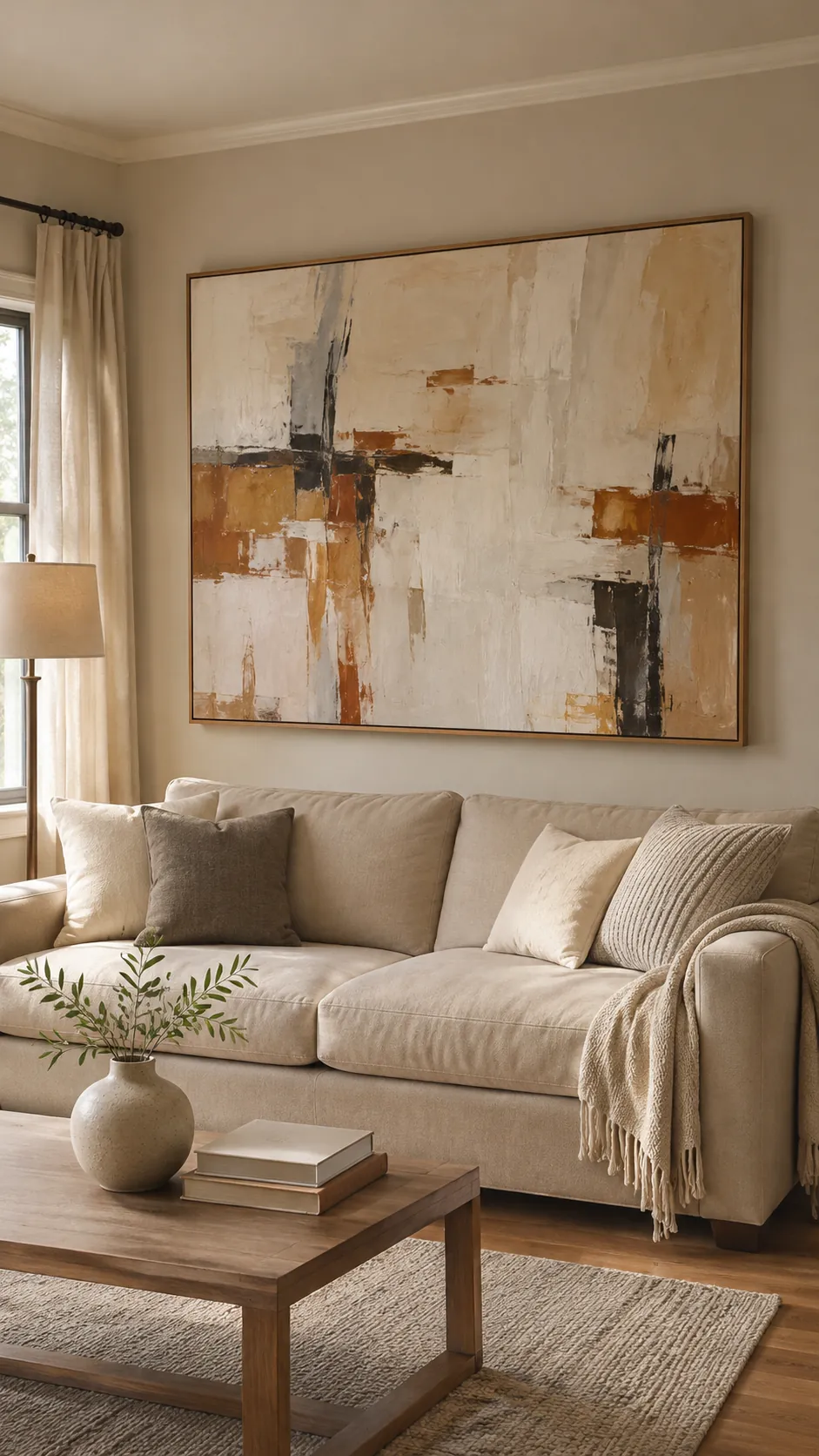
A single large artwork can give a neutral room more identity than many small generic prints. Select a piece that includes one room neutral and at least one color you genuinely like. Size it to relate to the furniture beneath it, not the entire wall. Leave open wall around the work so its scale feels deliberate.
Build Depth with a Full Bookcase
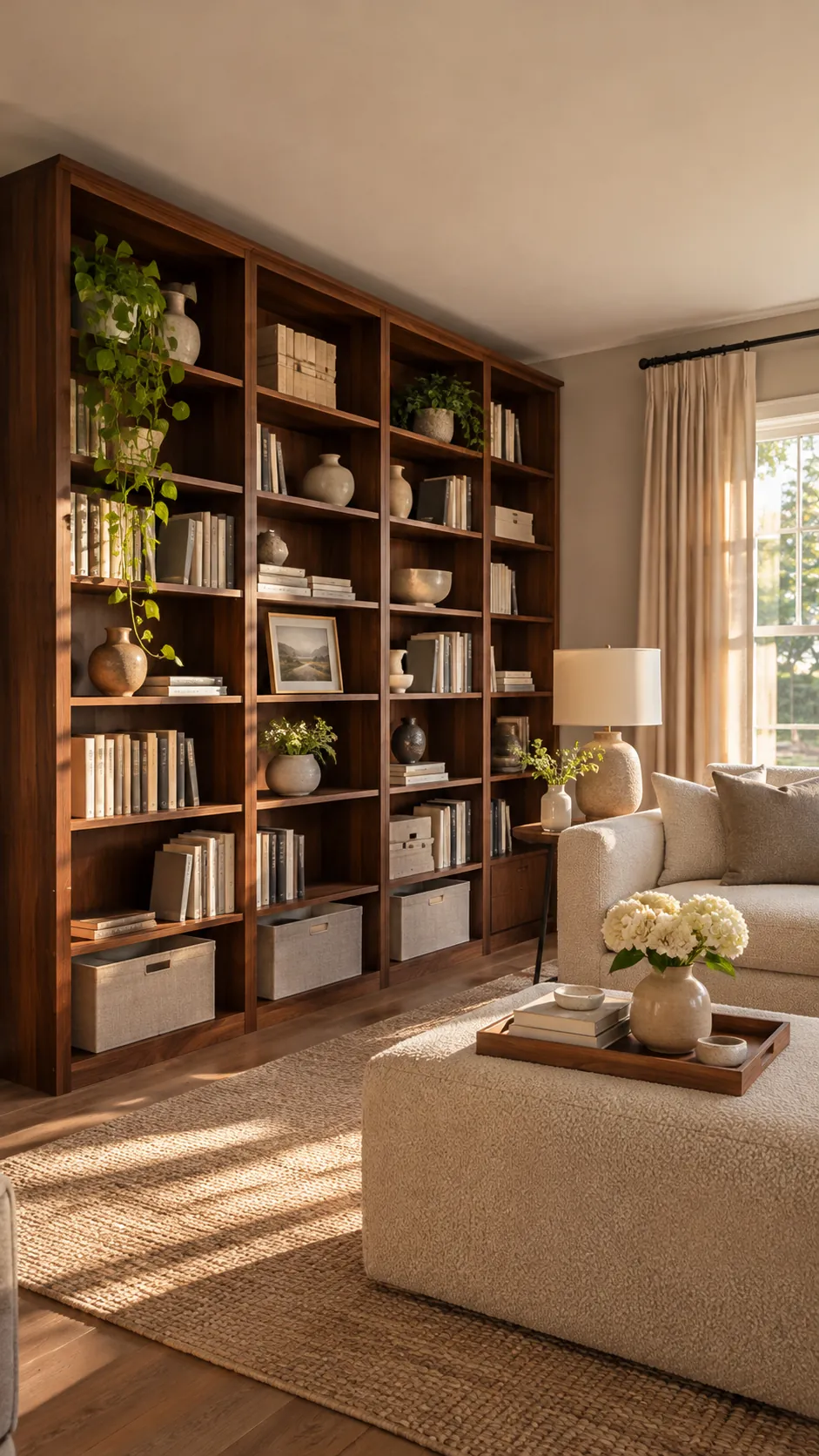
A large beige room often needs visual weight at the perimeter. Fill one wall with a walnut or painted bookcase and arrange books by use rather than by decorative color. Mix open book rows with a few closed boxes for cables and games. Keep the top shelf lighter so the unit does not become a dark ceiling to floor block.
Turn the Window into a Reading Seat
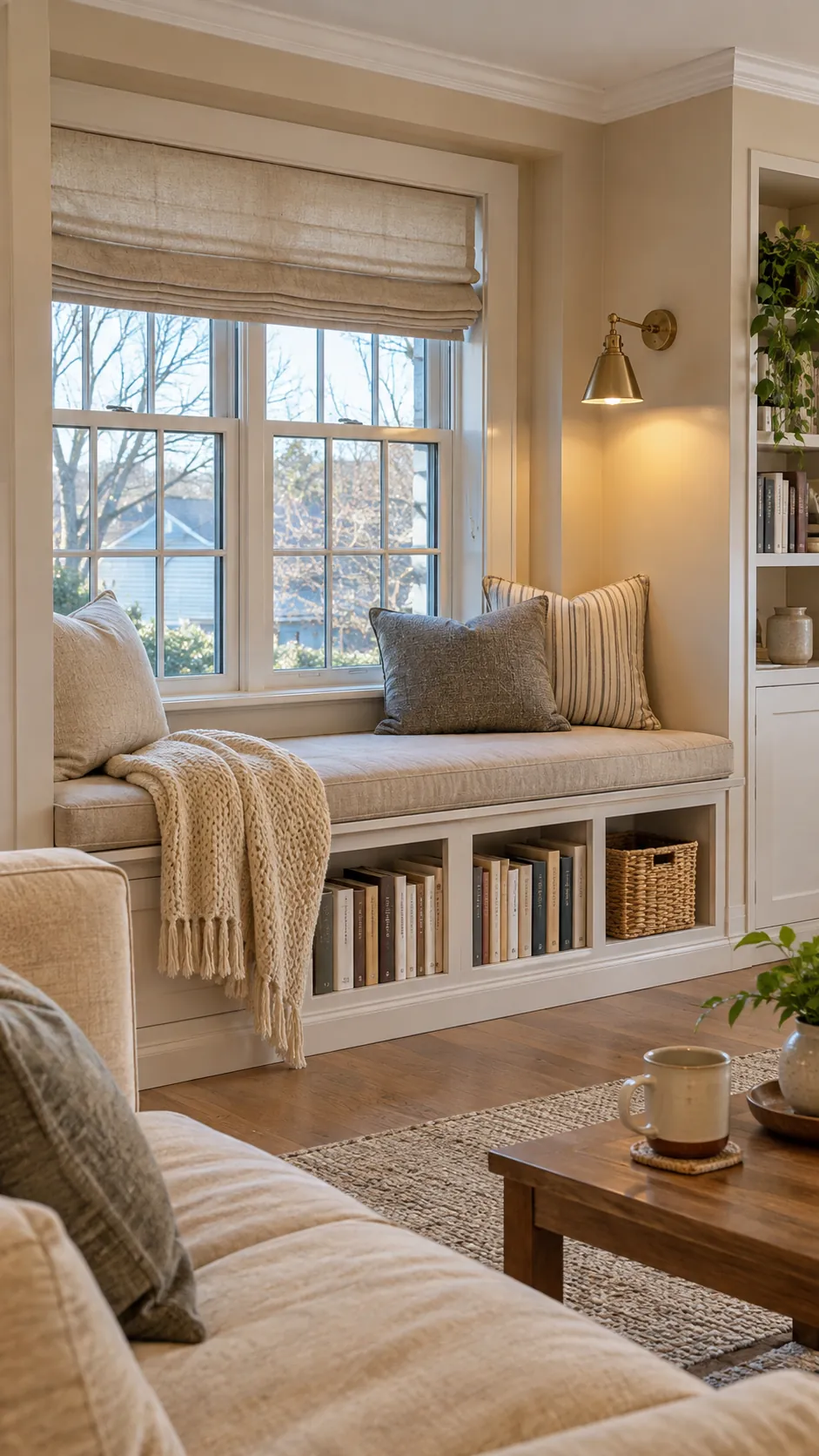
A window bench adds useful seating without another large chair in the room. Use a firm fitted cushion, two supportive pillows, and drawers below for books or blankets. Keep fabric clear of a radiator or heating vent. A small wall lamp makes the seat useful after daylight fades without taking floor space.
Choose a Storage Ottoman with Structure
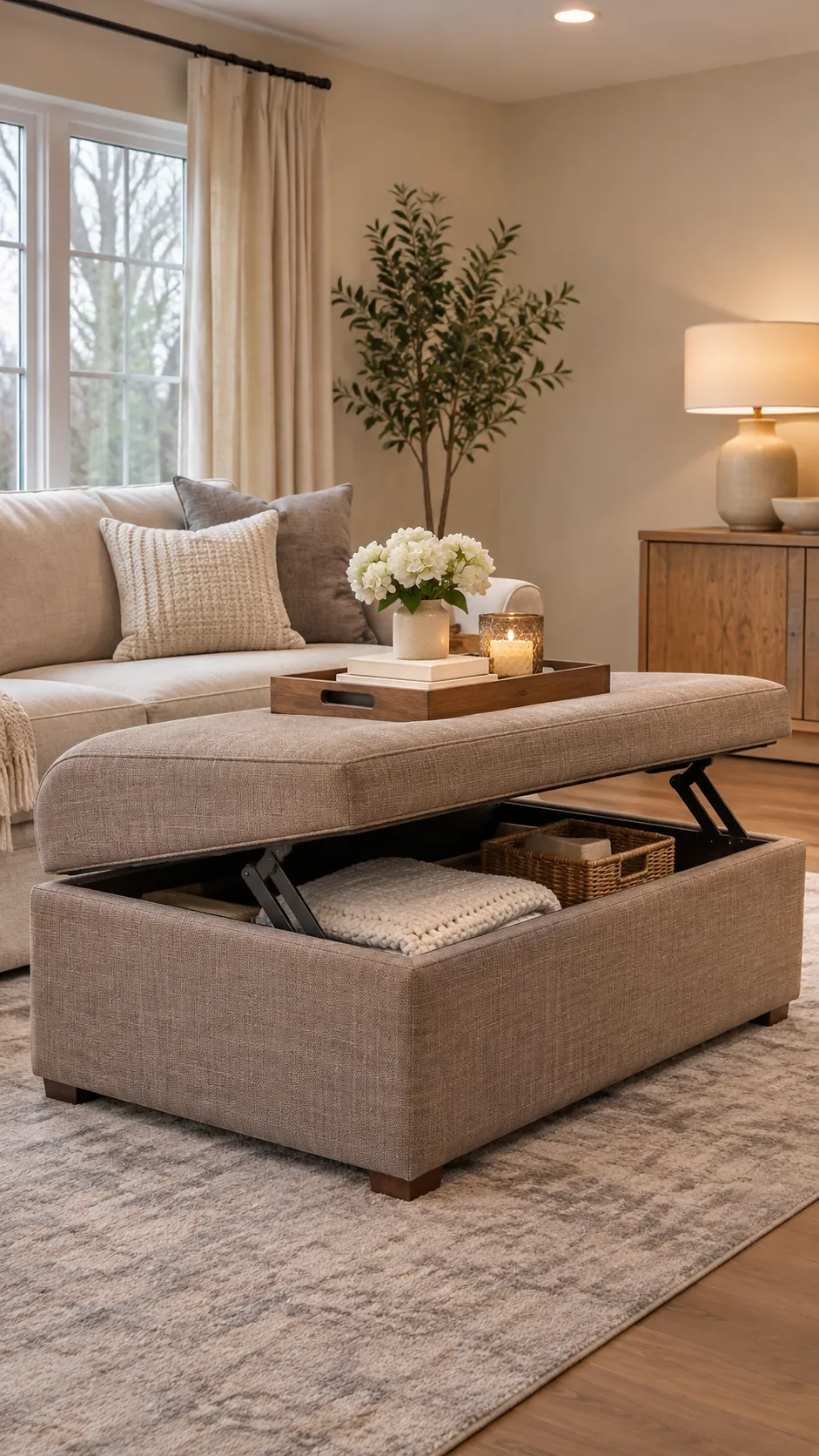
A storage ottoman suits a relaxed room when its shape stays crisp. Choose firm upholstery, a lift top, and a stable tray for drinks or remote controls. The ottoman should leave the same circulation space as a coffee table. Use a slightly darker taupe than the sofa so the two pieces do not merge.
Use Striped Curtains to Add Rhythm
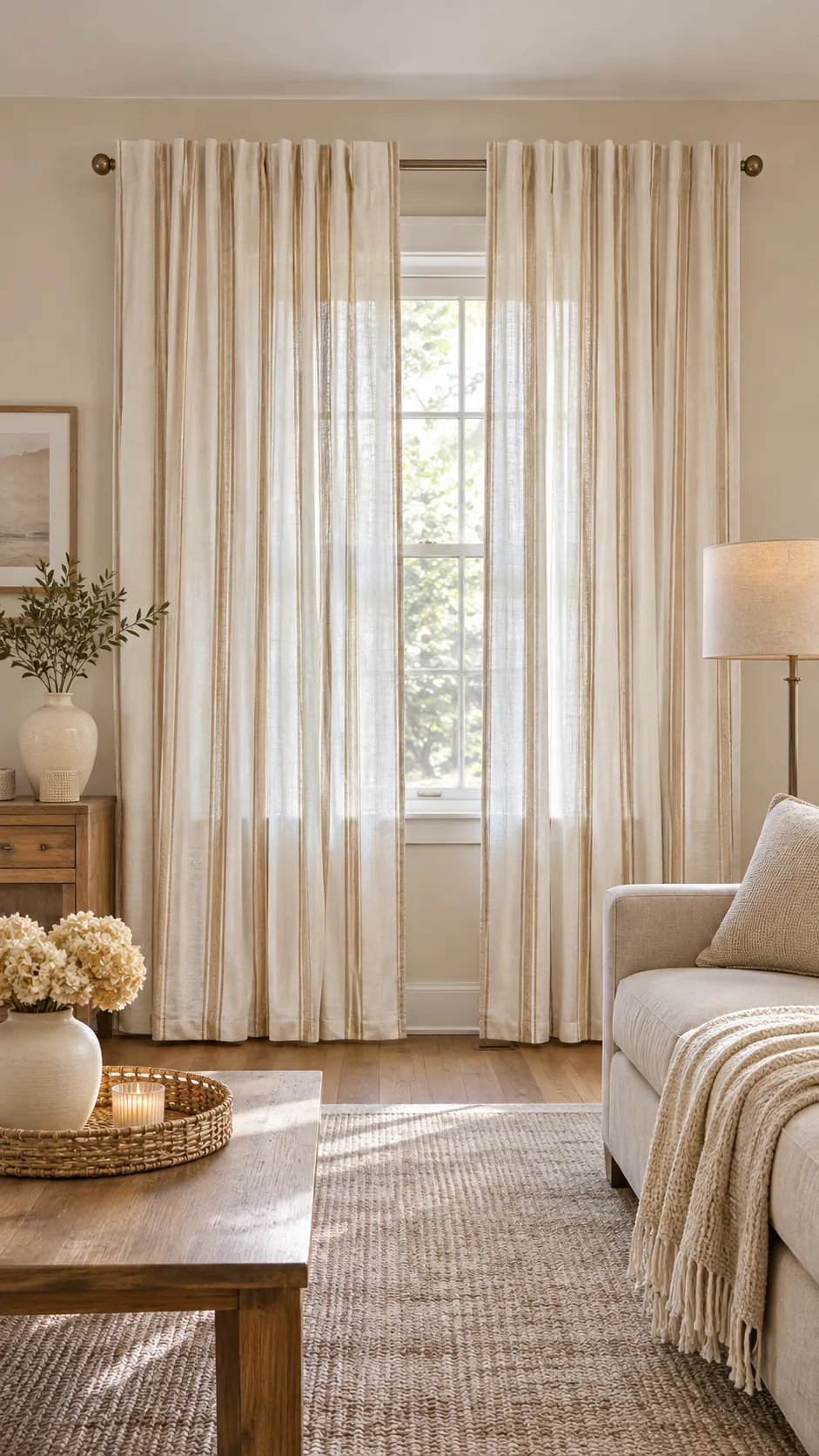
A narrow woven stripe adds rhythm without competing with other patterns. Hang the curtains high and wide, then repeat one stripe color in the rug or seating. Avoid a high contrast stripe if the room already contains bold artwork. The fabric should filter daylight while retaining enough body to form clean folds.
Give Beige Walls Vertical Structure
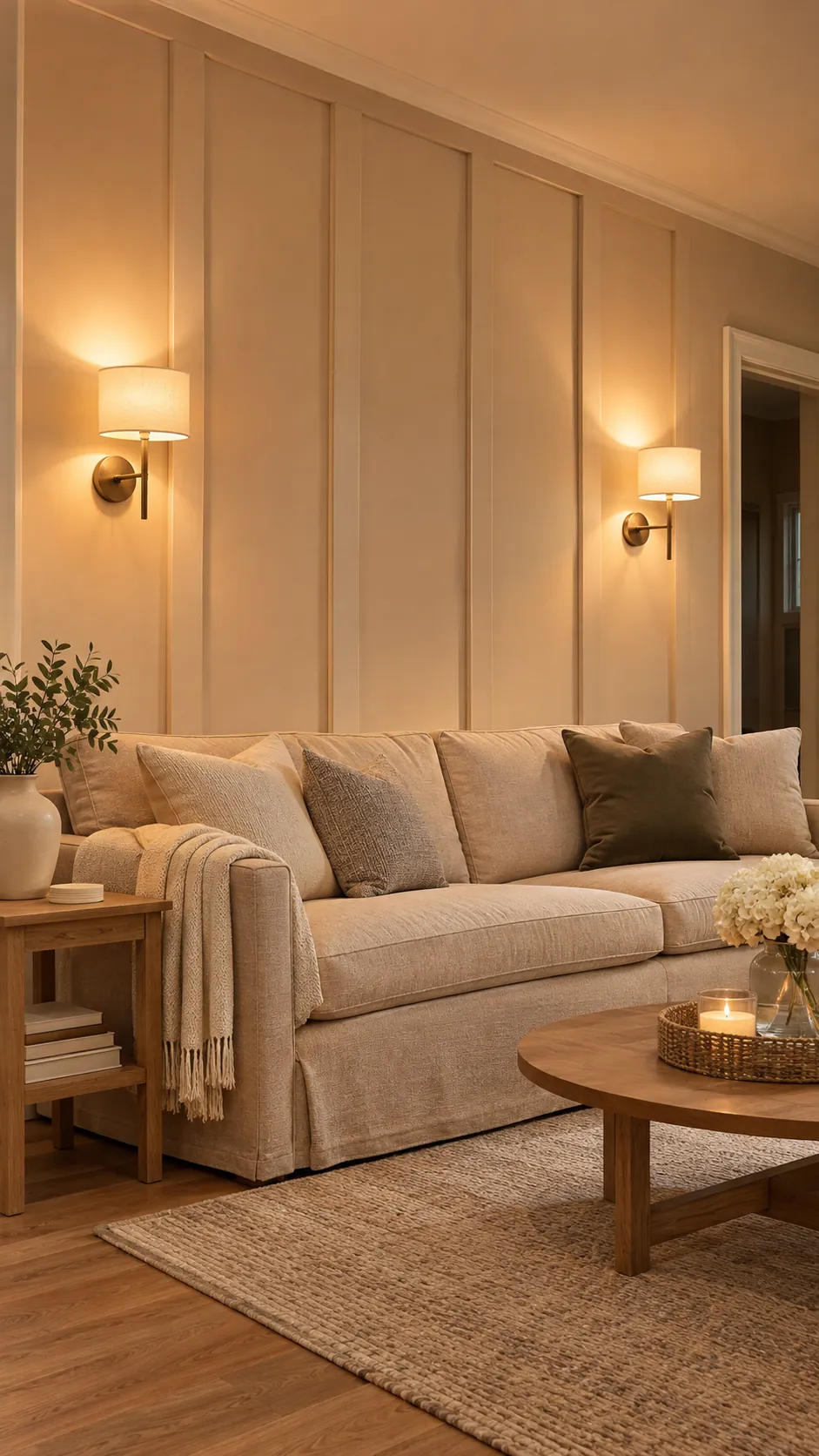
Shallow wall panels create shadow lines that change through the day. Keep the panel profile simple and paint it the same beige as the wall so structure does not become a competing pattern. Align the panel layout with the sofa or console below. In a rental, a removable freestanding slat panel can create a similar effect.
Shape a Soft Plaster Fireplace
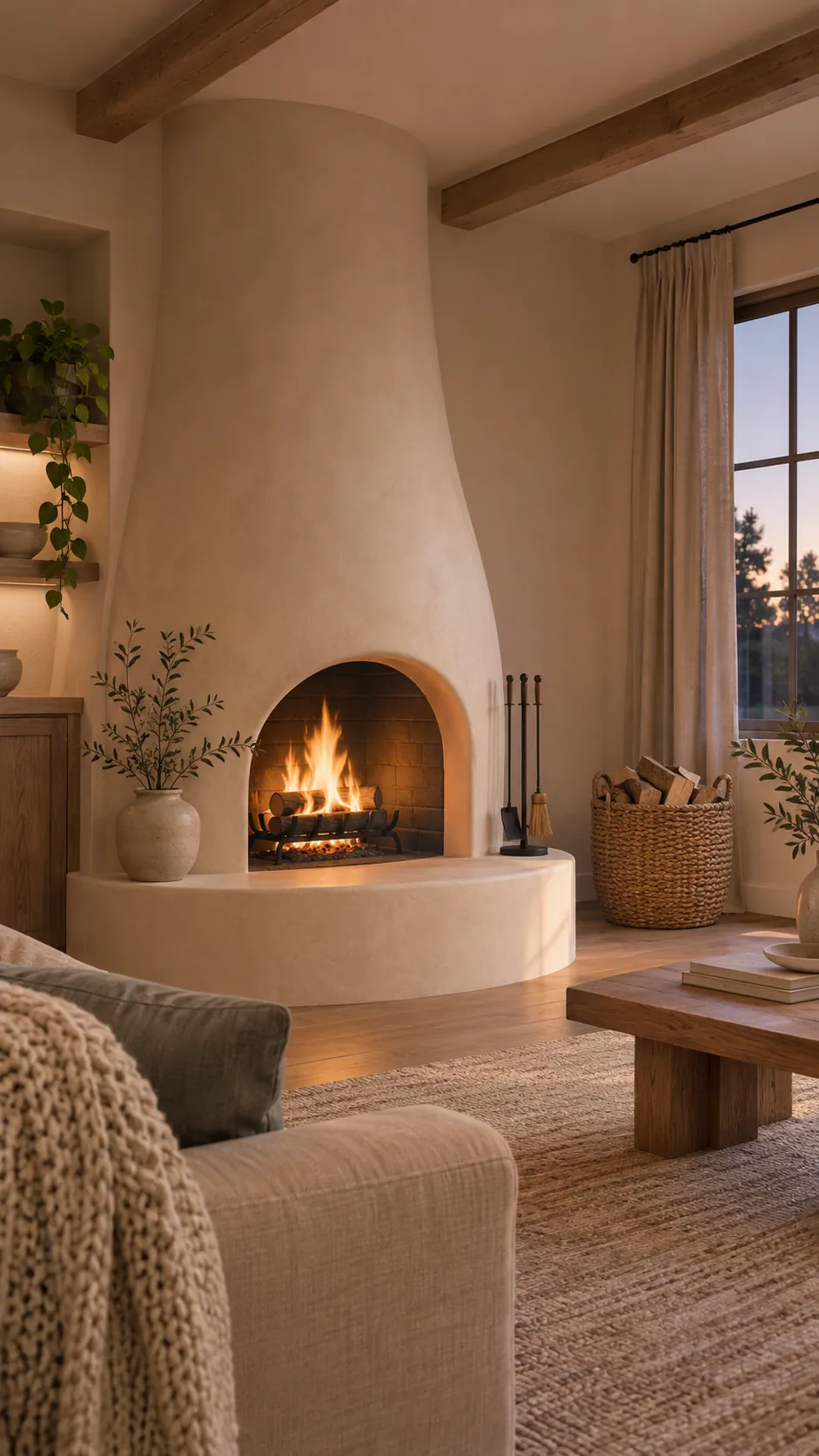
A rounded plaster surround makes a strong focal point without hard color contrast. Use a slightly deeper beige than the adjacent wall so the form remains visible. Keep the mantel empty or add one low object that does not interrupt the curve. Maintain required clearance around the firebox and furniture.
Layer Jute Beneath a Soft Wool Rug
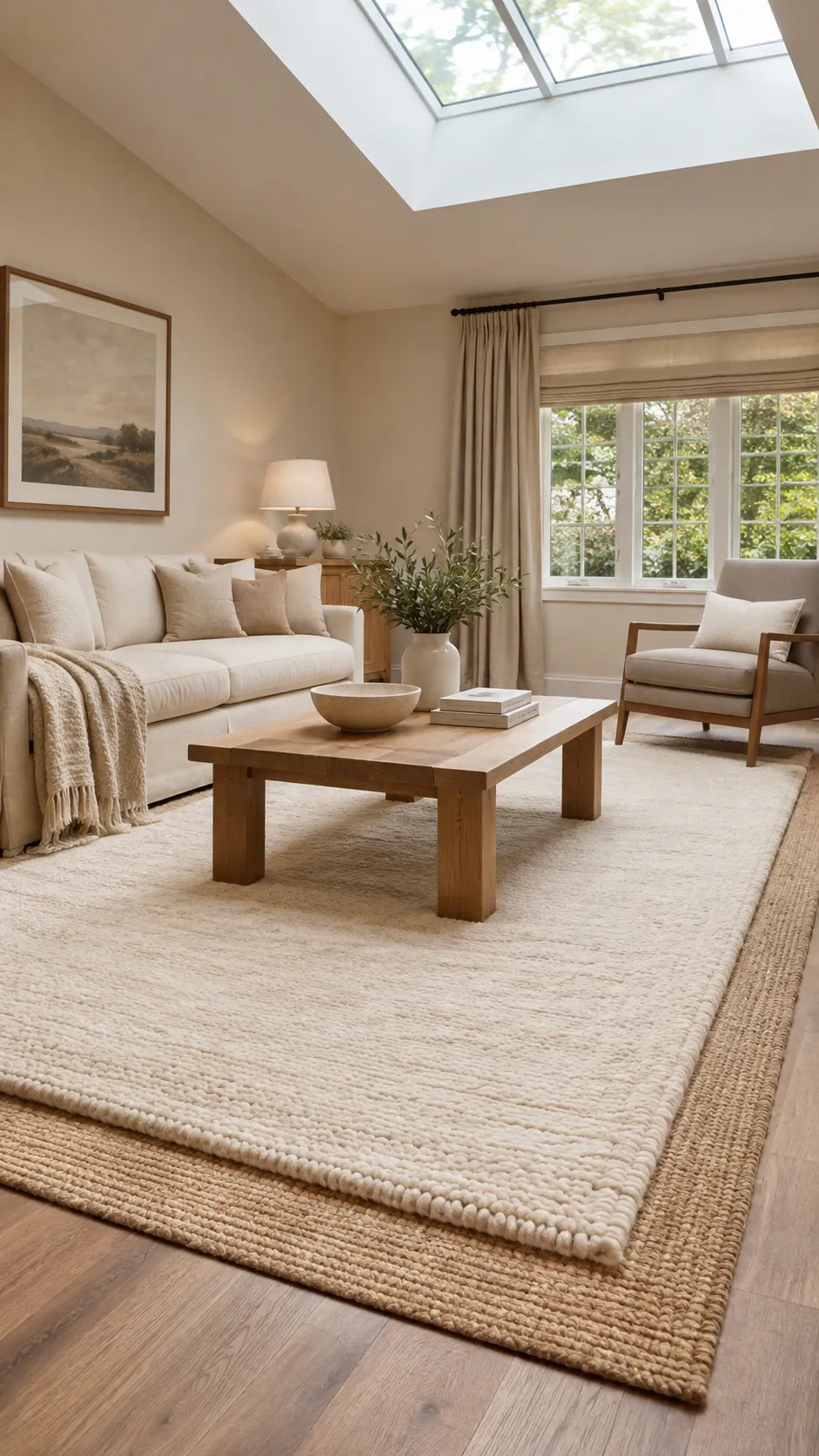
Layered rugs can define a large seating group without requiring one expensive oversized wool rug. Use a broad flat jute base and place a smaller soft wool rug where feet land near the sofa. Keep both layers flat with suitable pads. Leave enough jute visible on each side for the border to look intentional.
Collect Hand Thrown Beige Ceramics
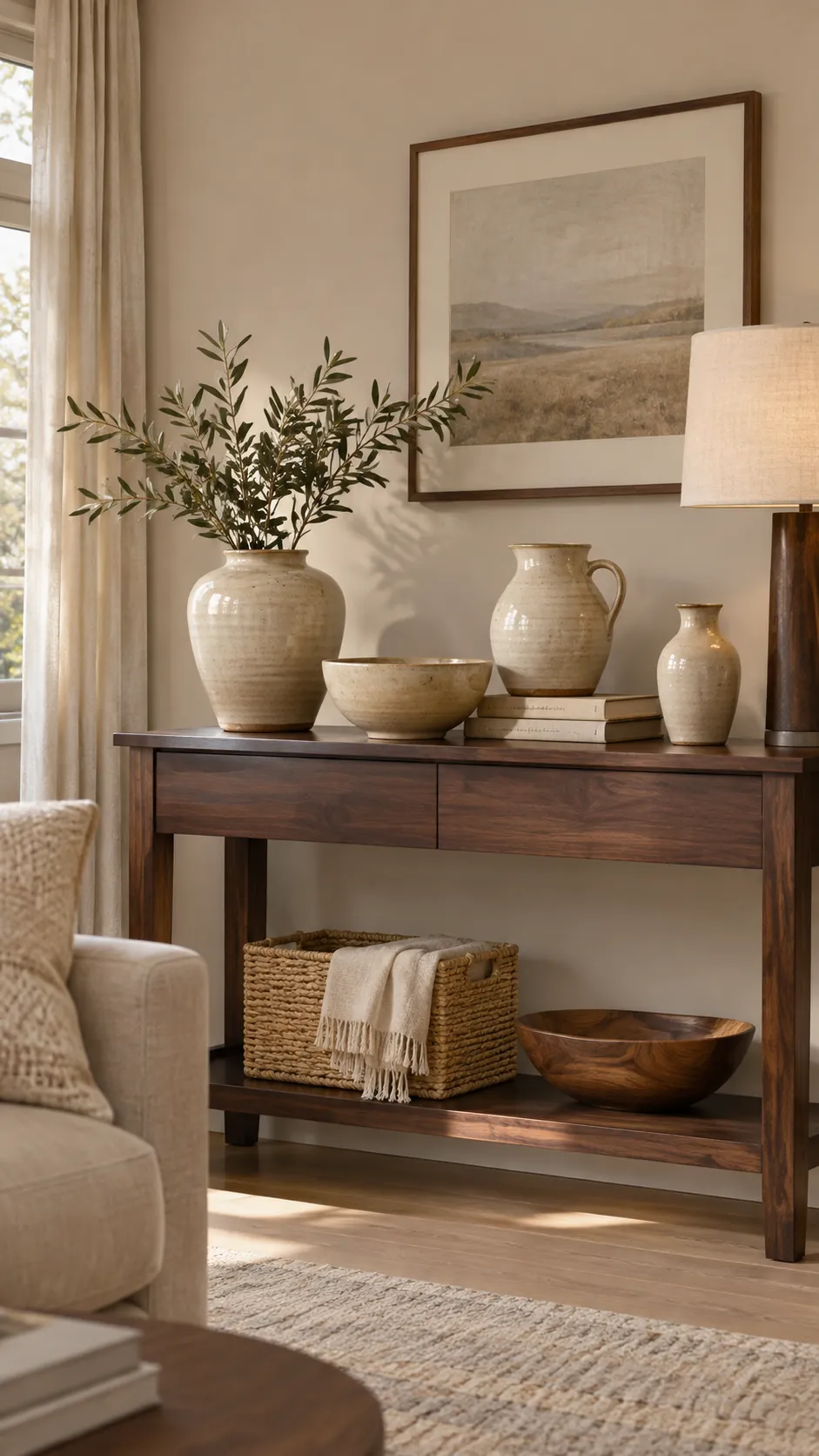
Ceramics add variation through shape and glaze even when their colors stay neutral. Group three pieces with different heights on a dark wood console and leave the rest of the surface clear. Choose handmade forms with visible throwing lines rather than identical retail sets. Use one vessel for a practical purpose such as holding a branch or keys.
Wash a Textured Wall with Light
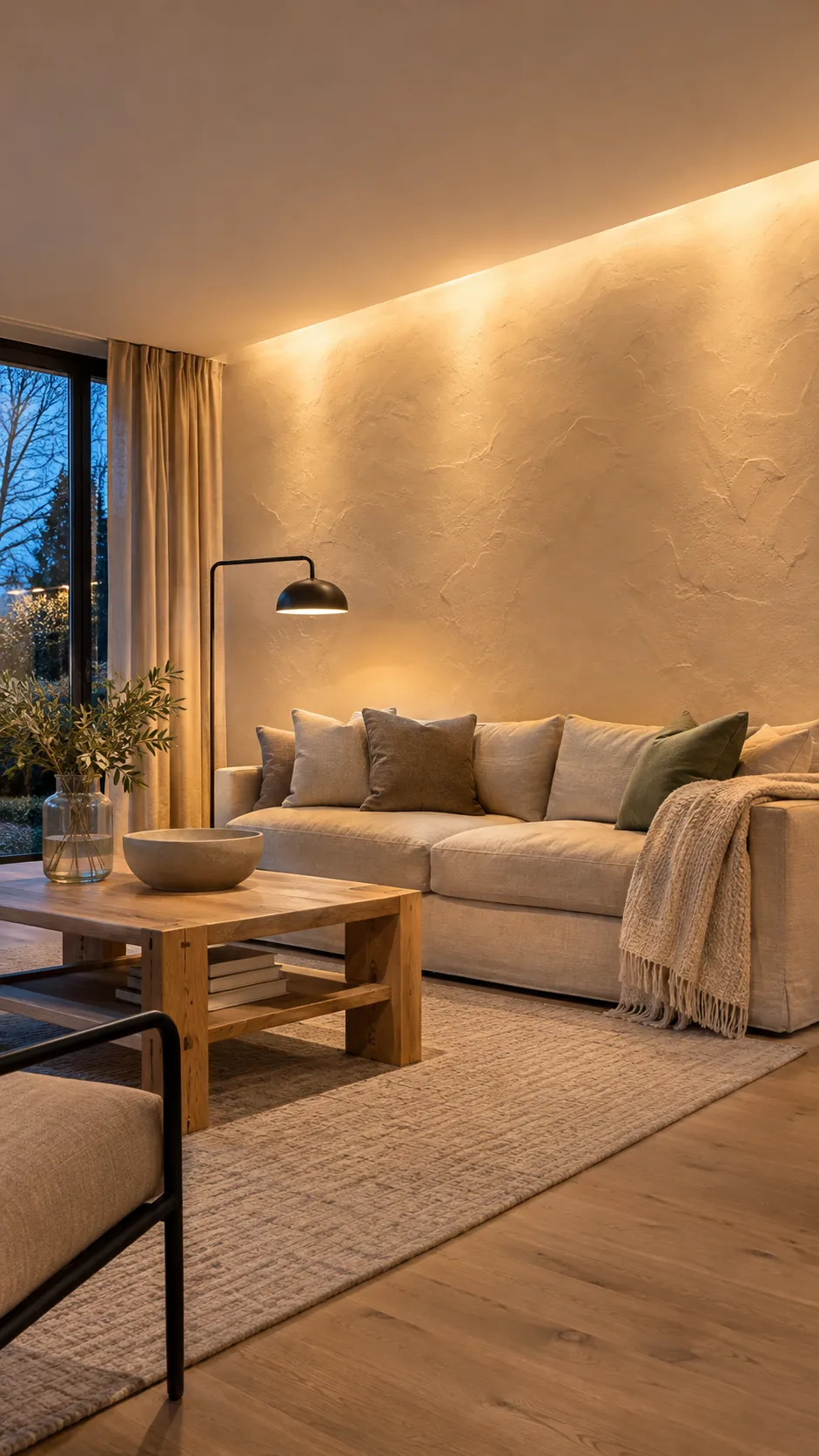
A wall wash reveals texture more effectively than a bright fixture aimed into the room. Place a floor or ceiling light close enough to graze plaster, brick, or panel detail without creating a narrow hotspot. Use the same warm white bulb color as the other lamps. Keep the illuminated wall mostly clear so the shadow variation remains visible.
Lift Pale Furniture on Dark Legs
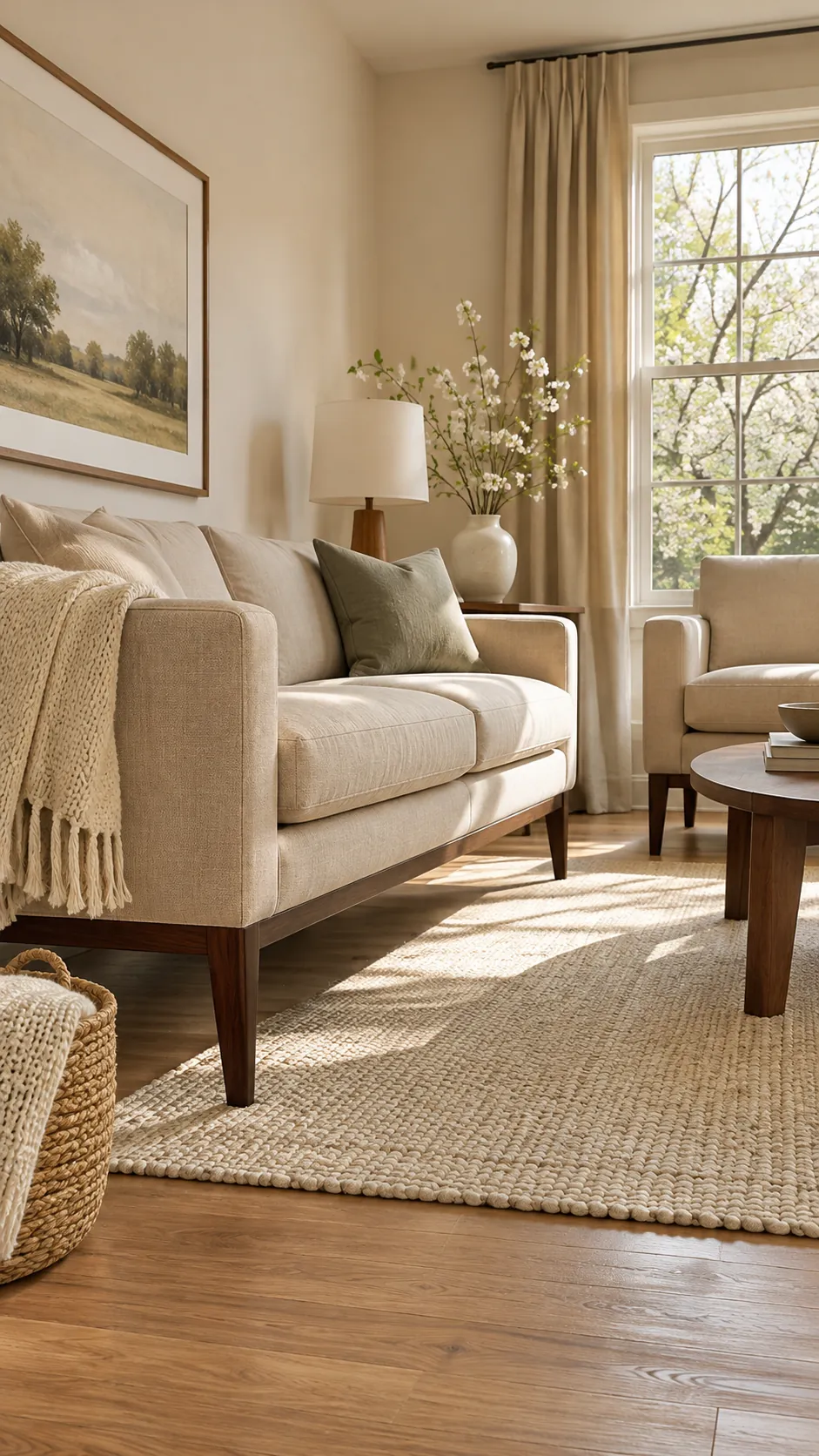
Dark legs outline pale seating and reveal more floor, which helps a small room feel less solid. Repeat the leg tone in the coffee table or a slim frame. Keep the furniture height consistent enough that the seating group feels connected. Check that every leg stands fully on the rug or floor rather than catching an edge.
Paint the Ceiling a Lighter Cream
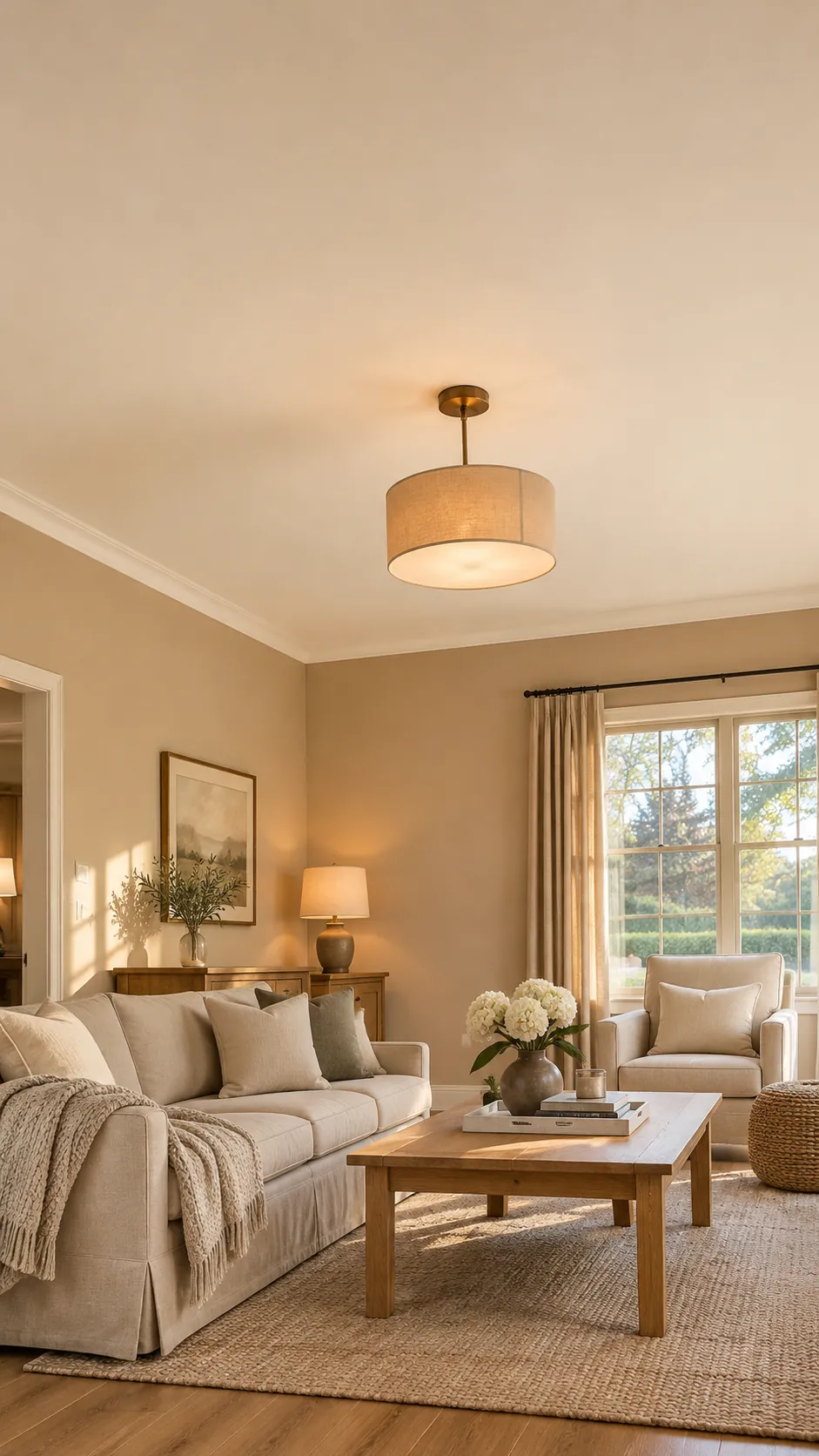
A light cream ceiling can feel softer than stark white above warm beige walls. Choose a cream that shares the wall undertone but is clearly lighter. Paint the trim in the ceiling color to create a clean upper edge. Test a large sample because evening bulbs can turn some creams too yellow.
Let a Vintage Rug Carry the Color
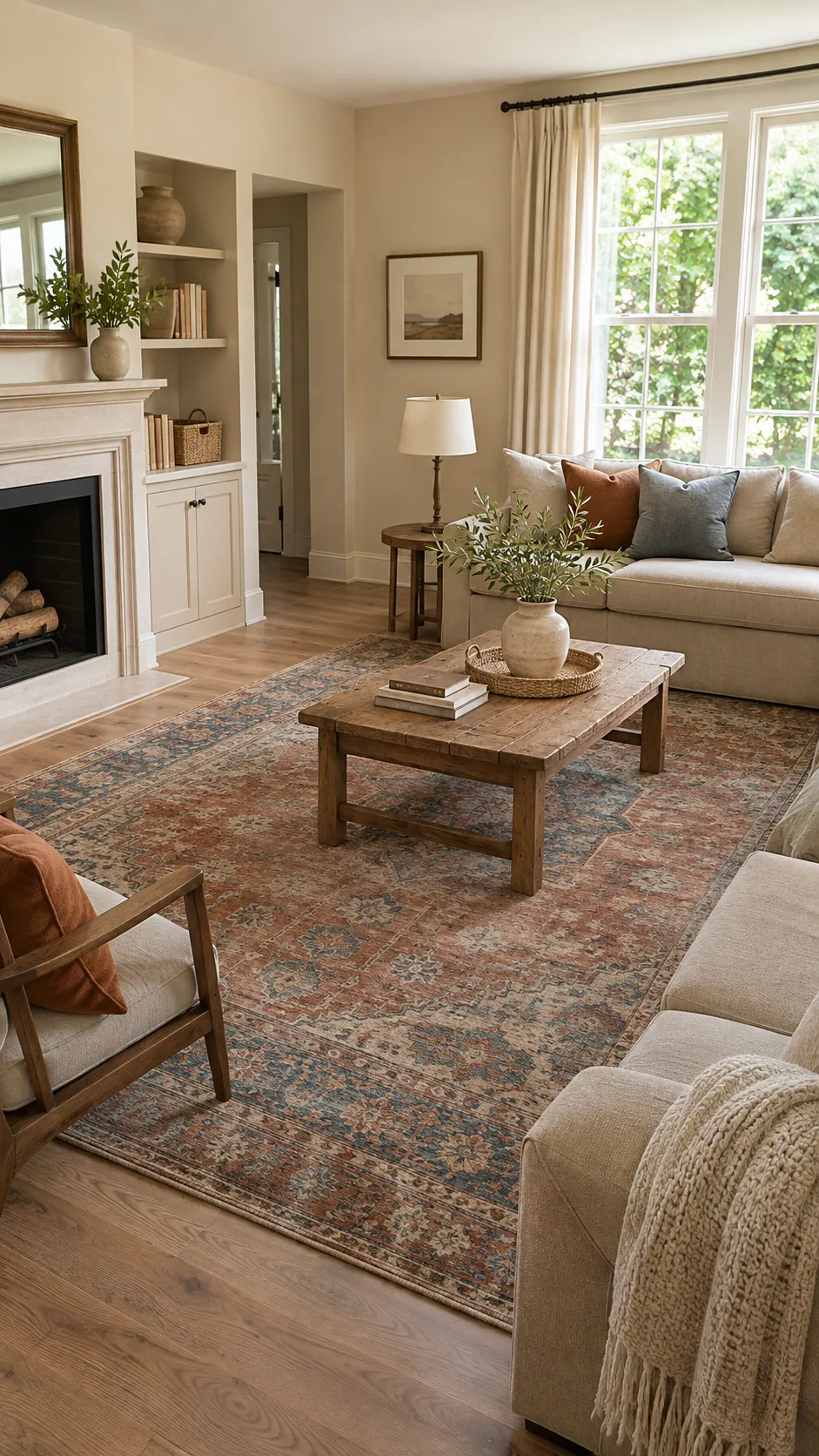
A faded vintage rug can carry more color than the rest of a neutral room combined. Look for muted rust, blue, olive, or plum that connects existing furniture and art. Keep large upholstery plain so the rug remains the main pattern. Verify size and condition before buying because small damaged rugs do not anchor heavy seating.
Hide Daily Clutter in Woven Baskets
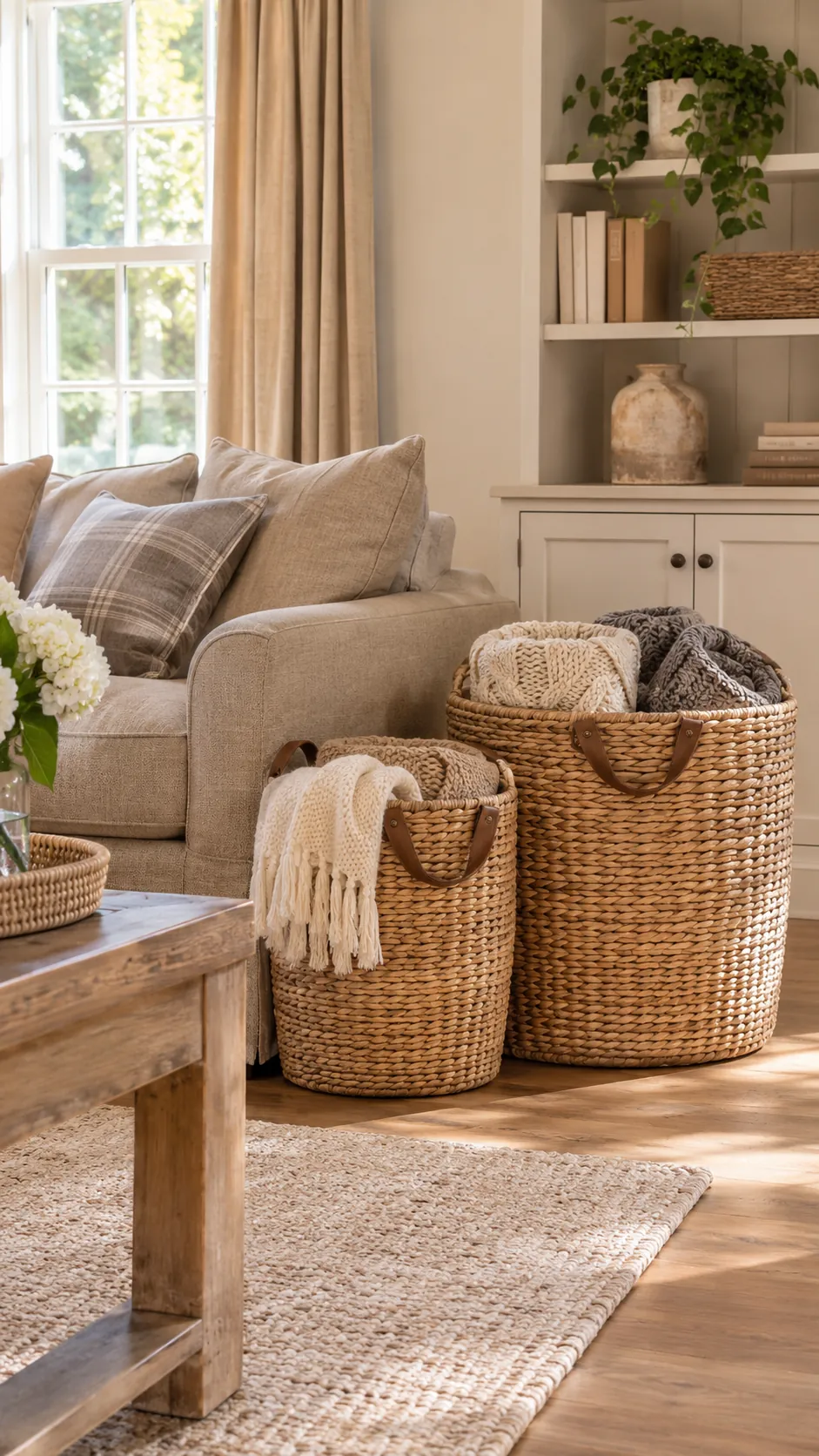
Large woven baskets add texture only when they also solve storage. Use one for blankets and one for toys or games, then give both a lid if visual calm matters. Choose handles that can carry the filled weight. Keep baskets beside a cabinet or sofa rather than scattering several small versions around the room.
Build an Earthy Accent Palette
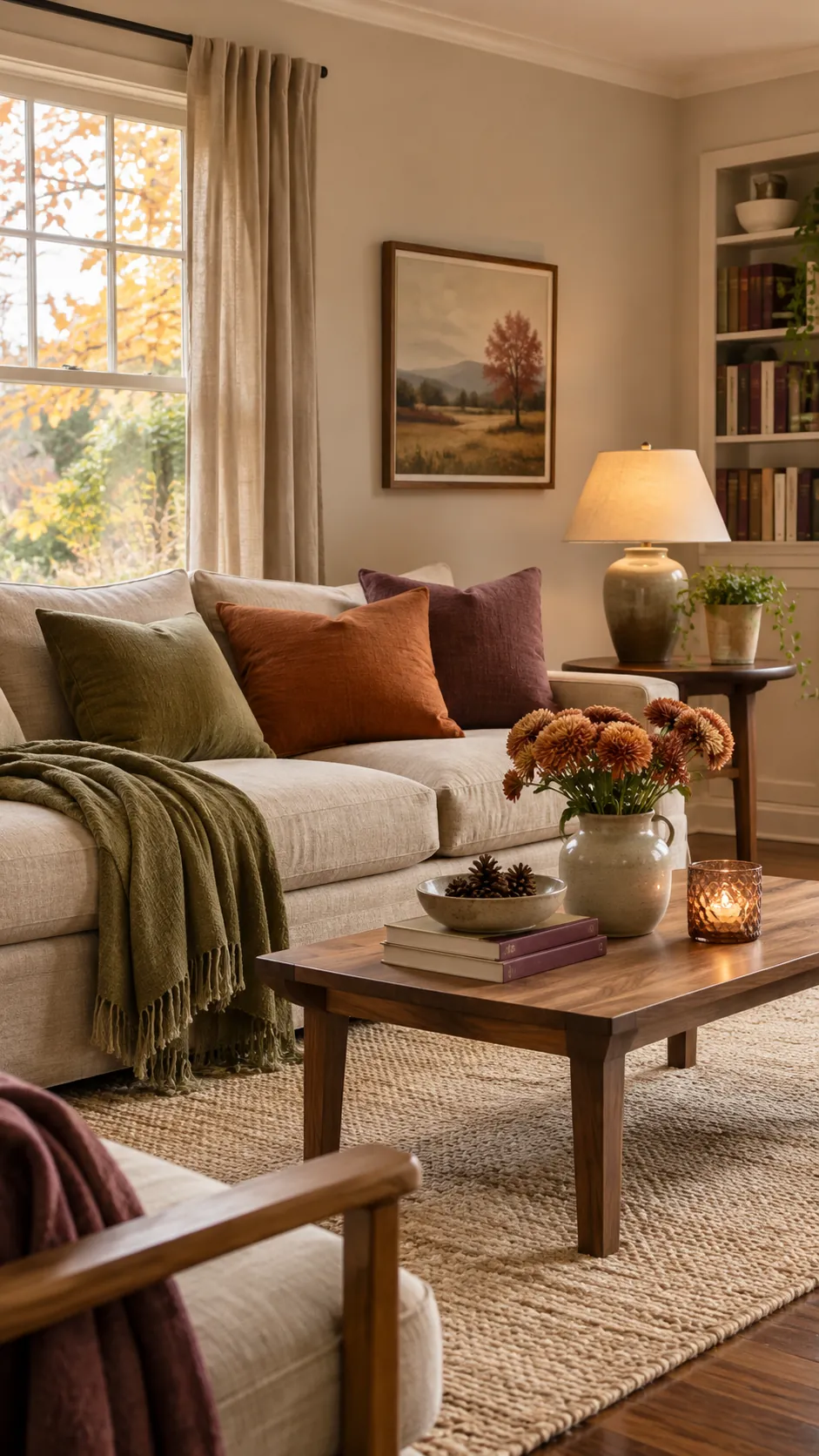
Olive, rust, and muted plum can warm beige without making the room look seasonal. Choose one as the lead accent and use the other two in much smaller amounts. Repeat each color in a different material such as fabric, ceramic, and paper. The varied surfaces keep the palette collected rather than coordinated.
Mix Curves with Straight Architecture
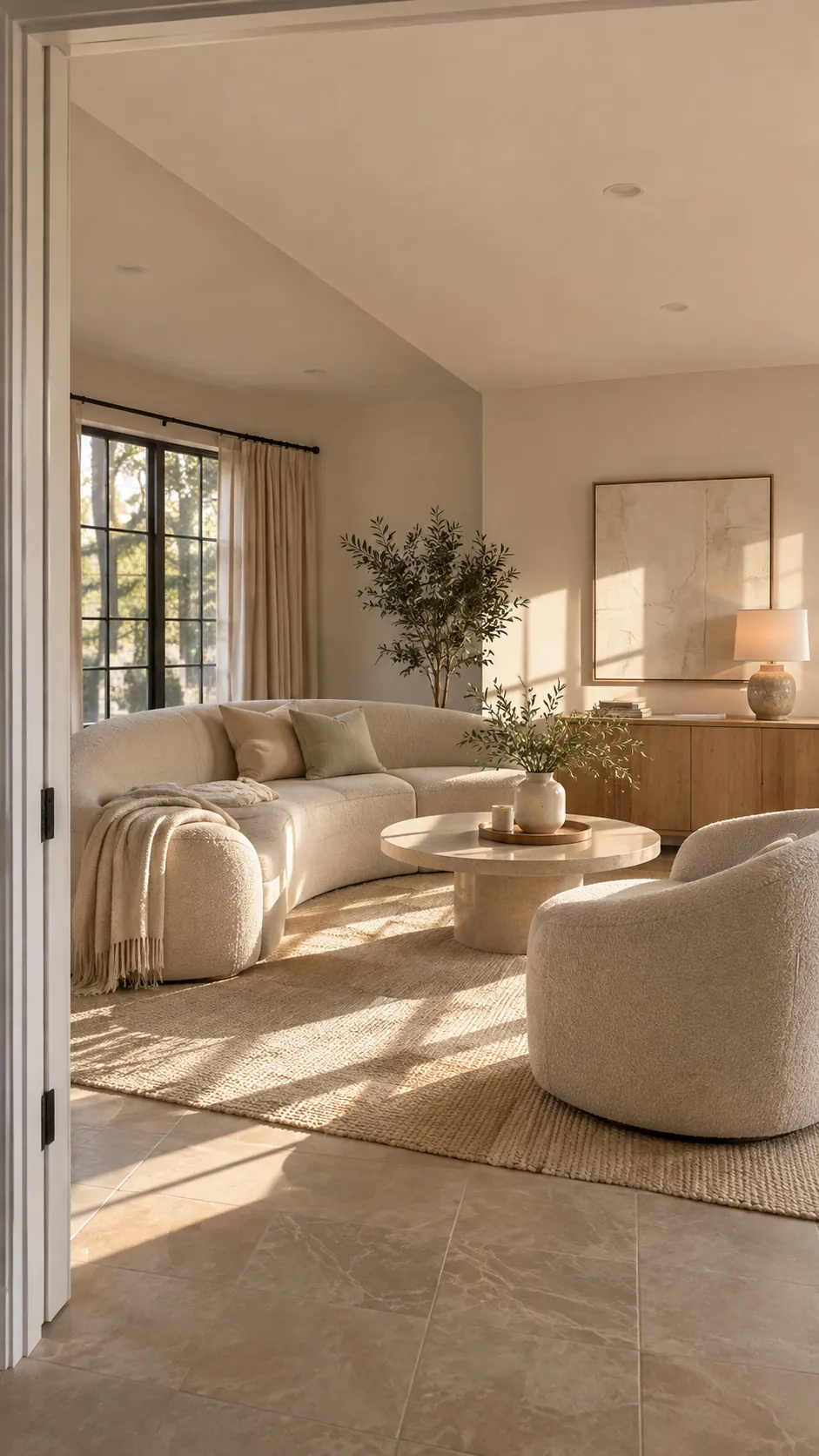
A curved chair or oval table can soften a room filled with rectangular windows, shelving, and tile. Use one or two rounded shapes rather than making every piece sculptural. Keep their upholstery and finish related to the existing palette. Leave enough open floor around the curve for its outline to remain visible.
Create a Moody Neutral Reading Nook
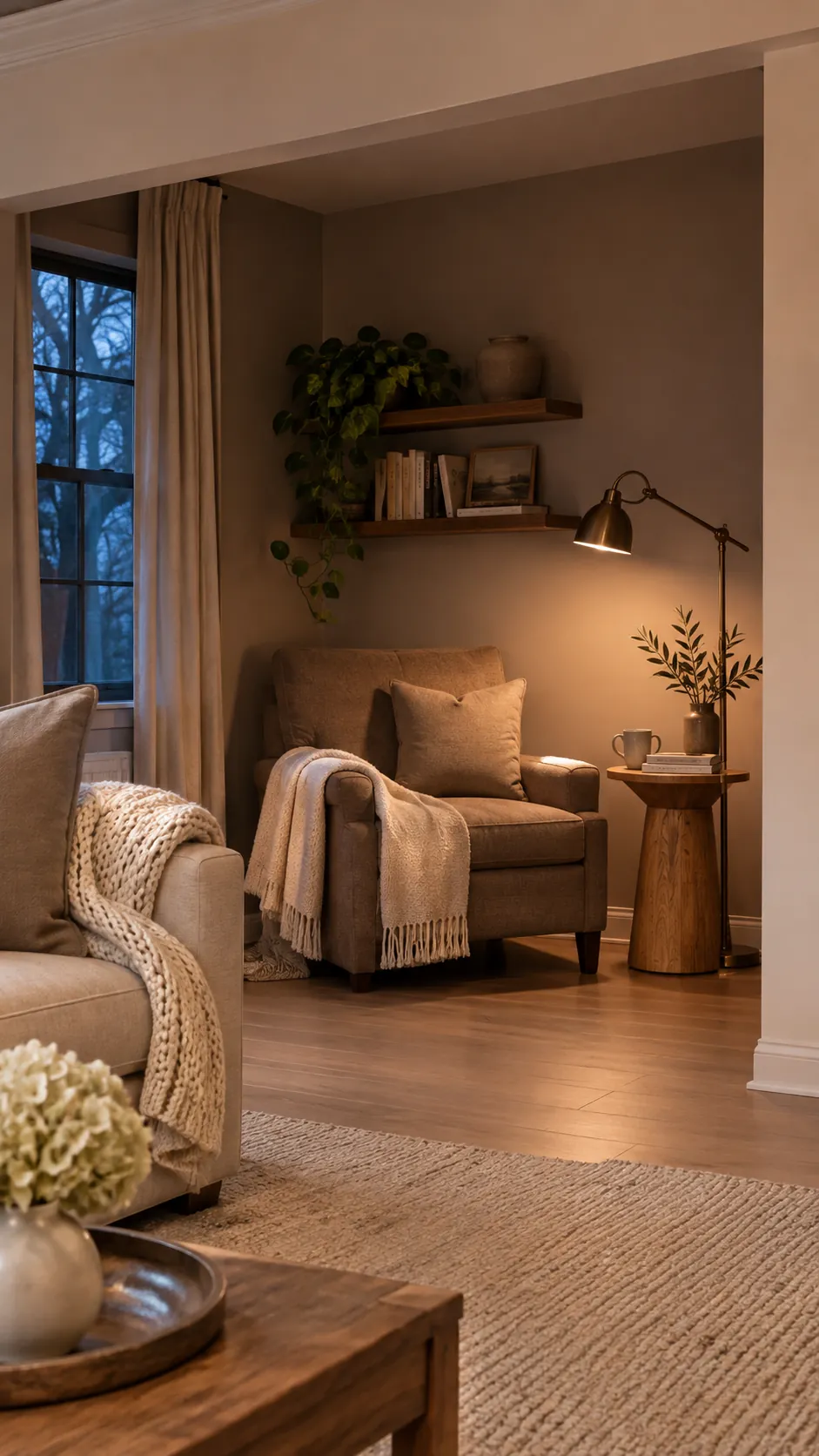
A deeper taupe corner can give a pale beige room a place to settle. Use a dark chair, focused lamp, and small side table within an existing alcove or window corner. Repeat the darker tone once across the room so the nook does not feel detached. Keep task light warm and direct while the surrounding room stays softer.
Keep a Small Beige Room Visually Light
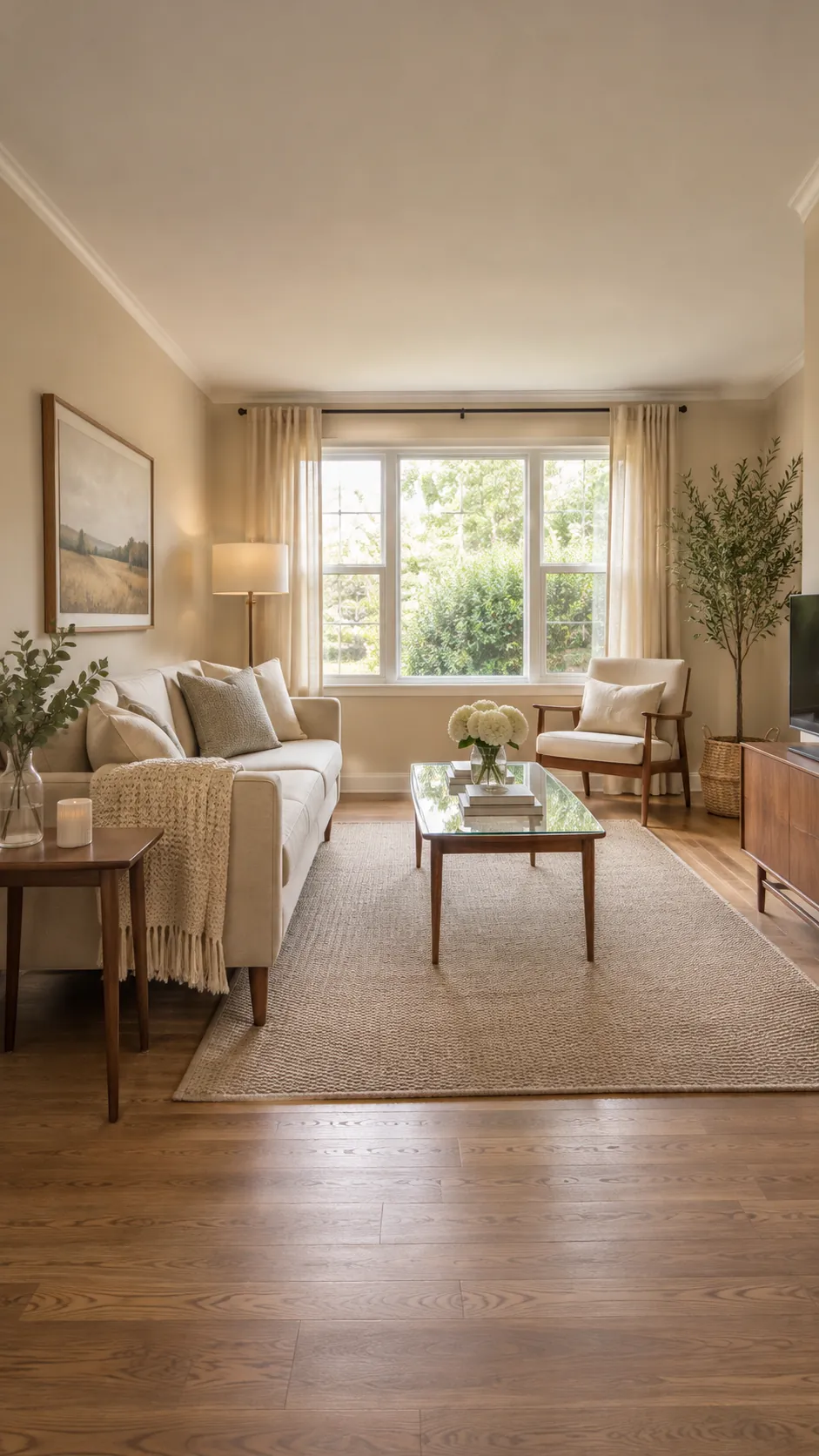
Small rooms need fewer well scaled pieces, not miniature versions of every category. Choose a compact sofa with visible legs, one movable chair, and nesting tables that can separate when needed. Use one large rug instead of several small mats. Protect a clear route from the door to the window so the neutral palette supports openness rather than crowding.