A decoration that looks good indoors can become a wet, swinging nuisance on an exposed boundary. Start with the fence material, the wind it receives, and the space needed to open the gate. Choose one focal point and repeat only a few supporting details, using suitable outdoor materials and secure fixings. For anything electrical, follow its exposure and connection limits, use suitable GFCI protection, and keep leads away from walking routes and standing water.
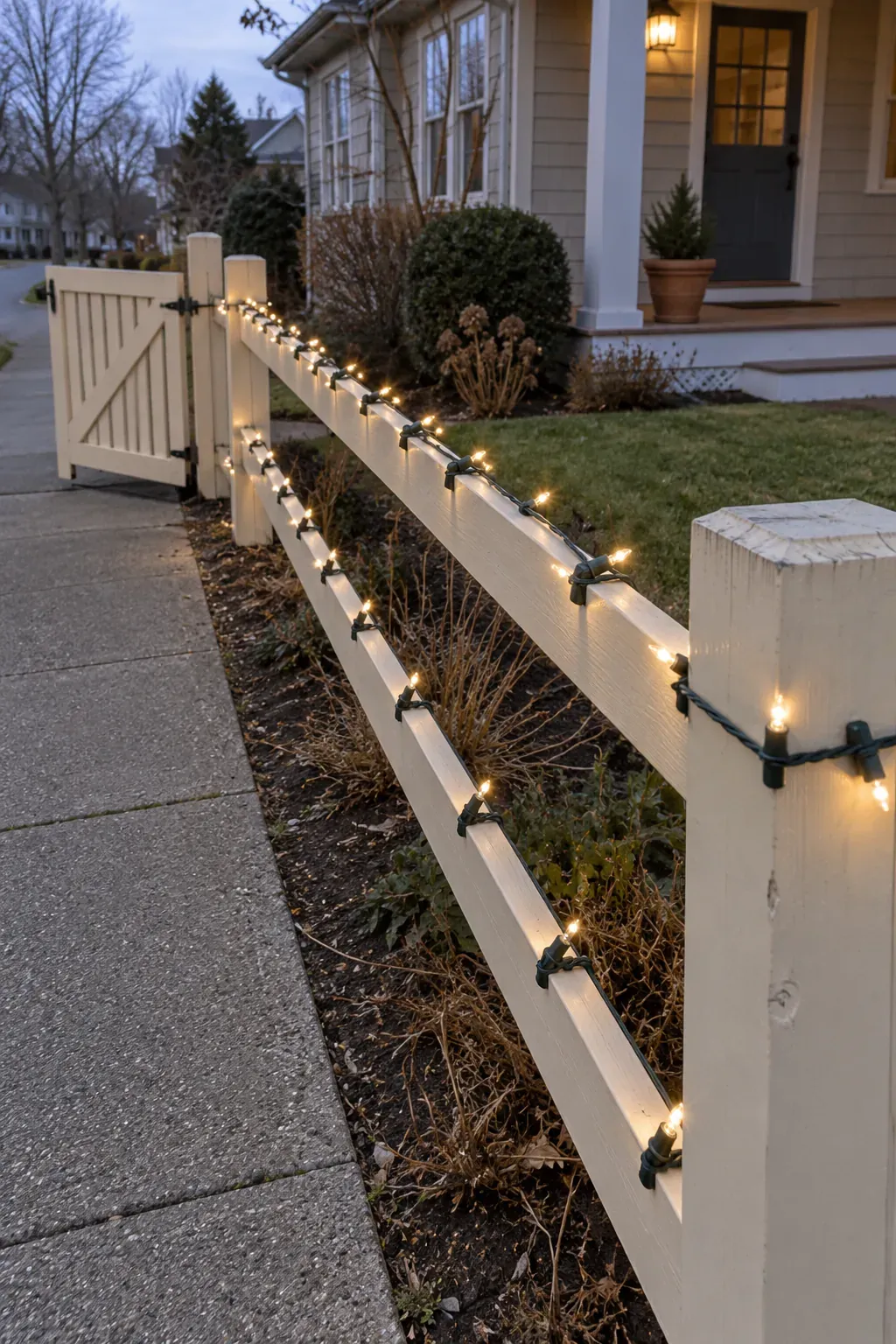
Outline the Rails with Outdoor Lights
A light outline works well when the fence already has a strong shape. Follow one rail instead of wrapping every board, and use clips that fit the actual material. Check the maximum connected set count and route the unlit supply away from foot traffic. Keep a separate break at a moving gate so its hinges never pull on the strand.
Repeat Small Wreaths on Sturdy Posts
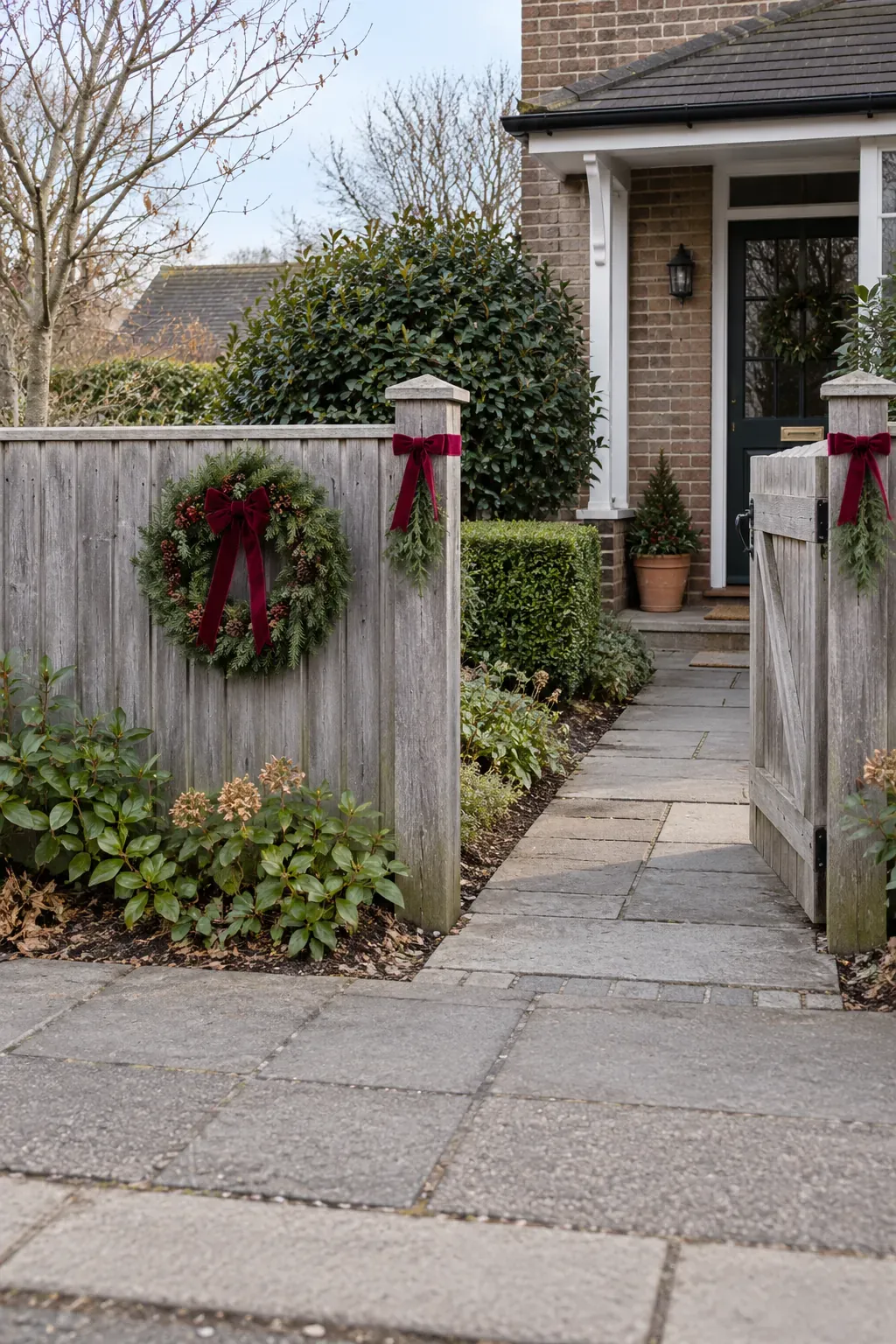
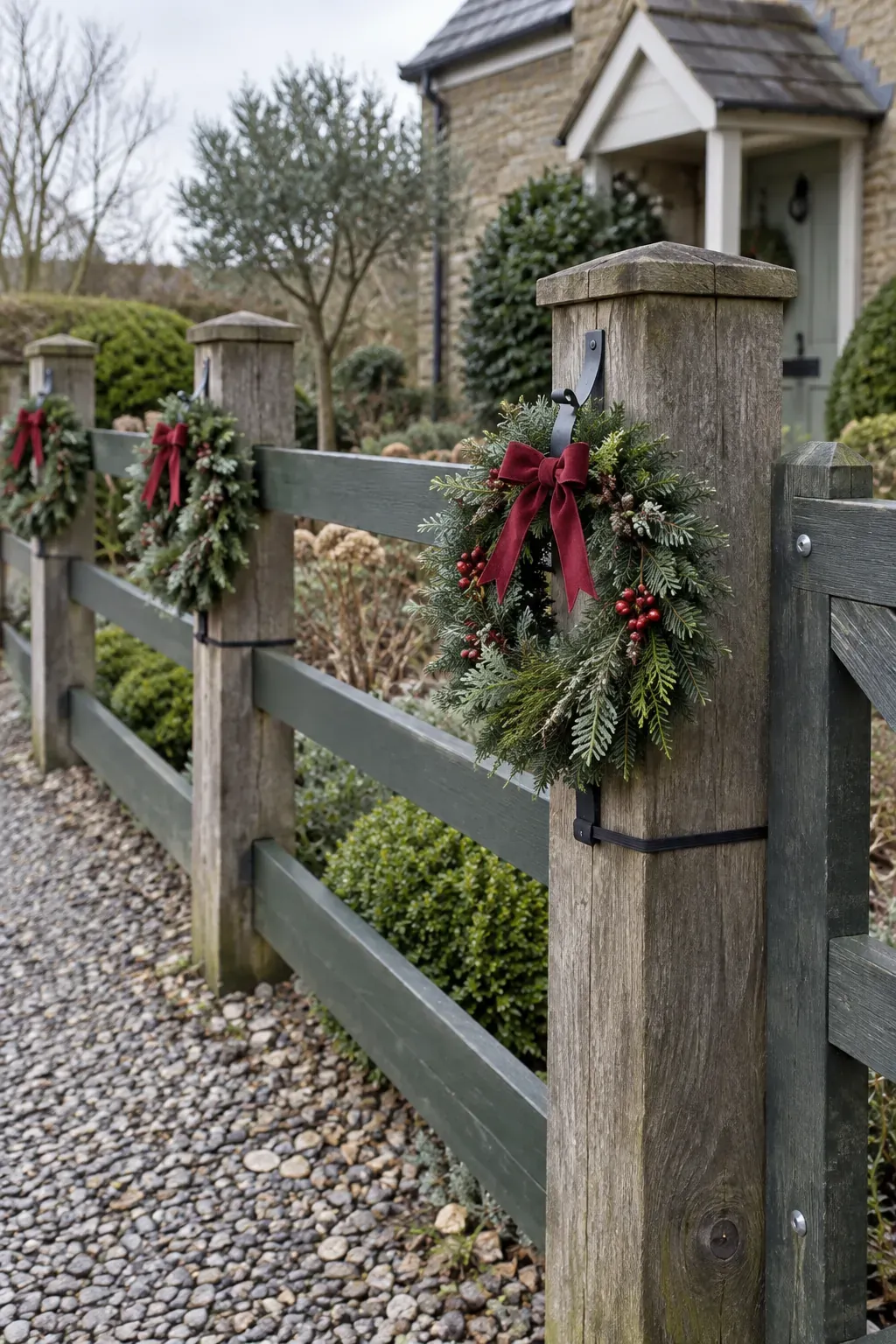
Small wreaths make a long fence feel coordinated without covering its open spaces. Choose a diameter that leaves each post and its neighboring panels visible. A restrained palette of evergreen and red reads clearly from the street.
Use a proper hanger with a lower stabilizing tie where wind could lift the wreath. Attach both to sound structure and check that the ties do not rub the finish. Soft indoor felt decorations belong under cover unless their materials are suitable for the actual outdoor exposure.
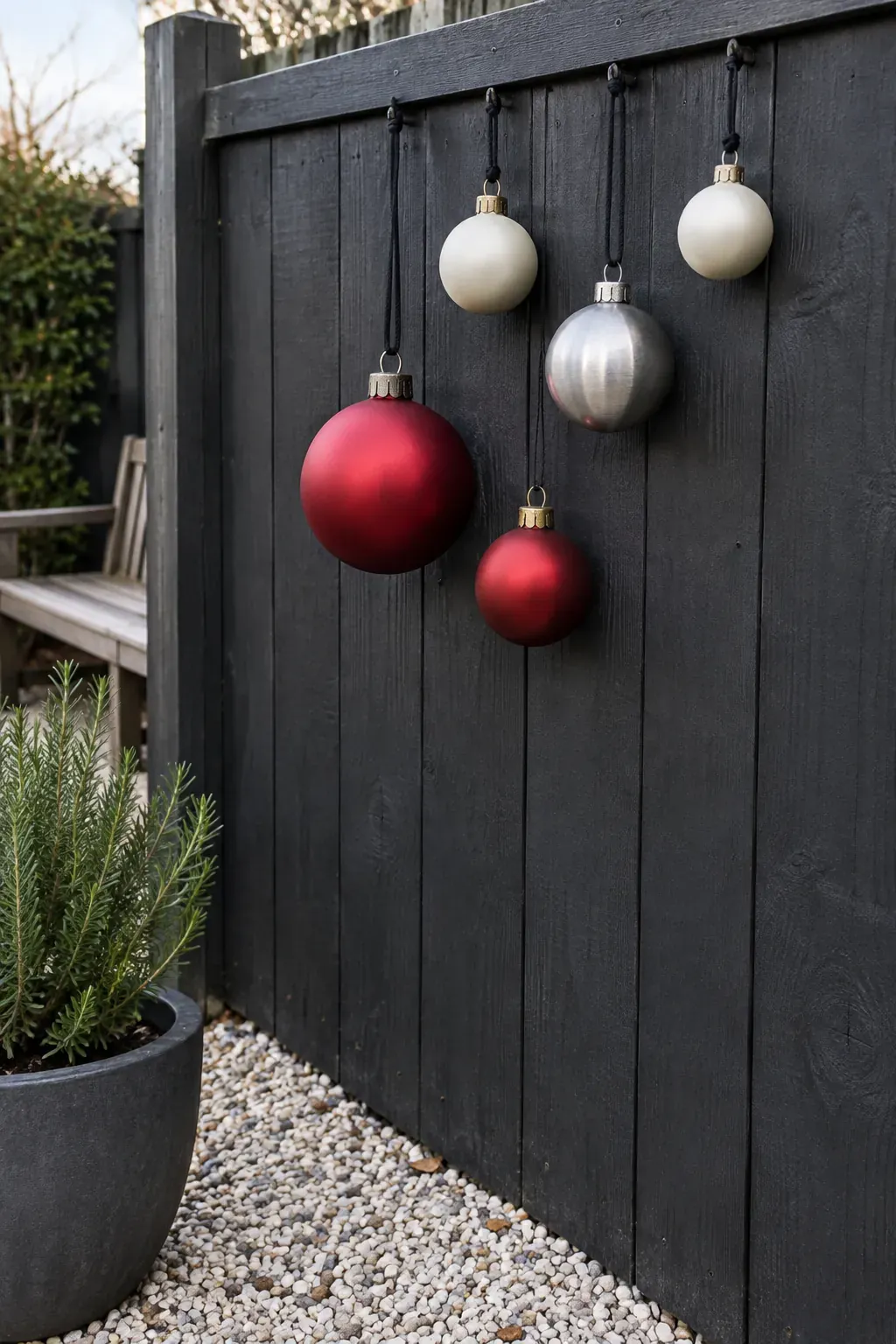
Group Outdoor Baubles on a Fixed Panel
Three or five large ornaments create a clearer focal point than tiny baubles scattered everywhere. Select shatter resistant outdoor pieces and fasten each one separately. Short ties reduce swinging, while generous gaps prevent neighboring ornaments from knocking together.
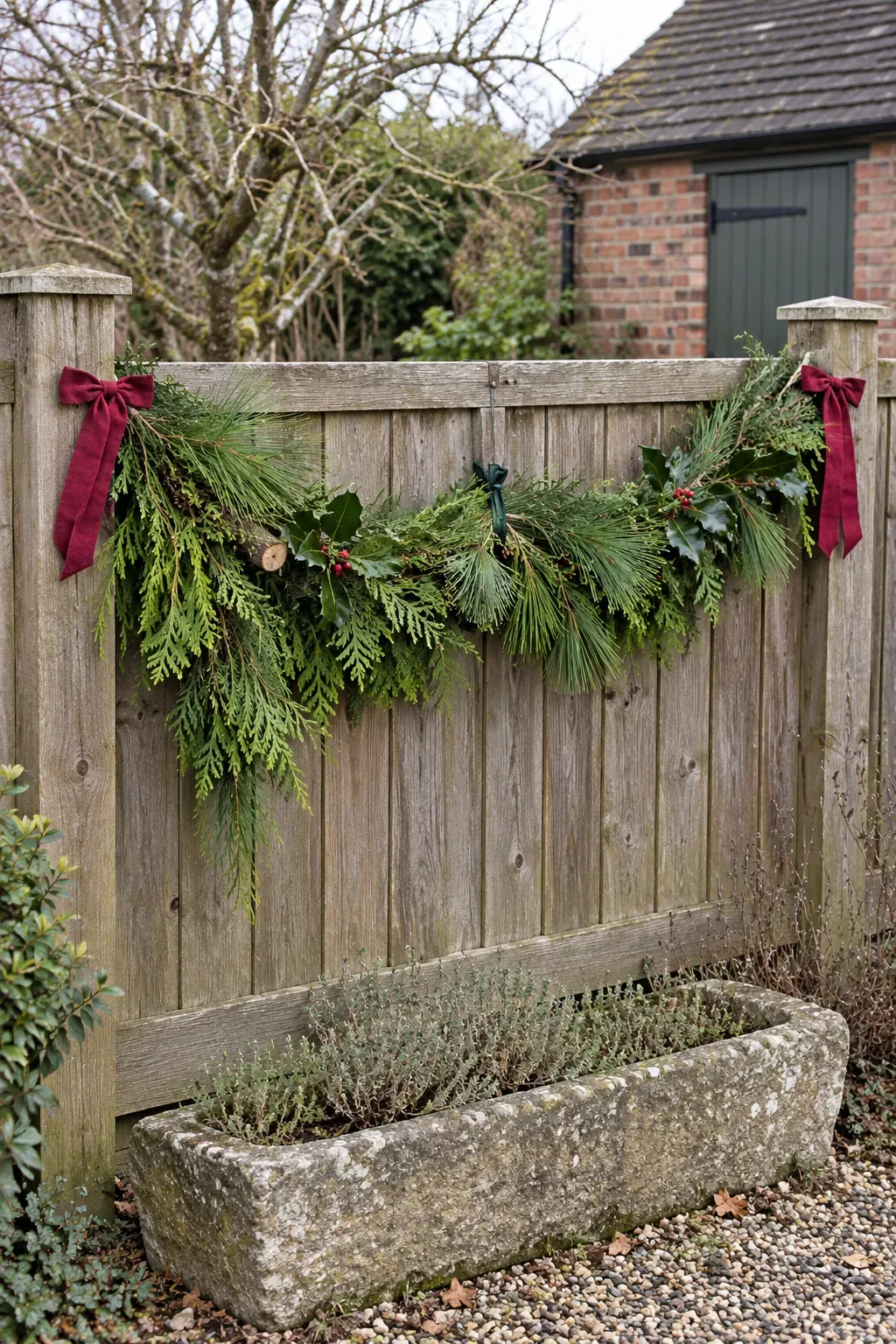
Drape Greenery in Shallow Swags
Greenery gives a fence depth even before evening lights come on. Hang shallow swags from structural posts, with extra support wherever the material becomes heavy. Keep cut branches out of the latch and choose ties that will not cut into the wood. If you add a light strand, support its cable separately and follow the product instructions around foliage.
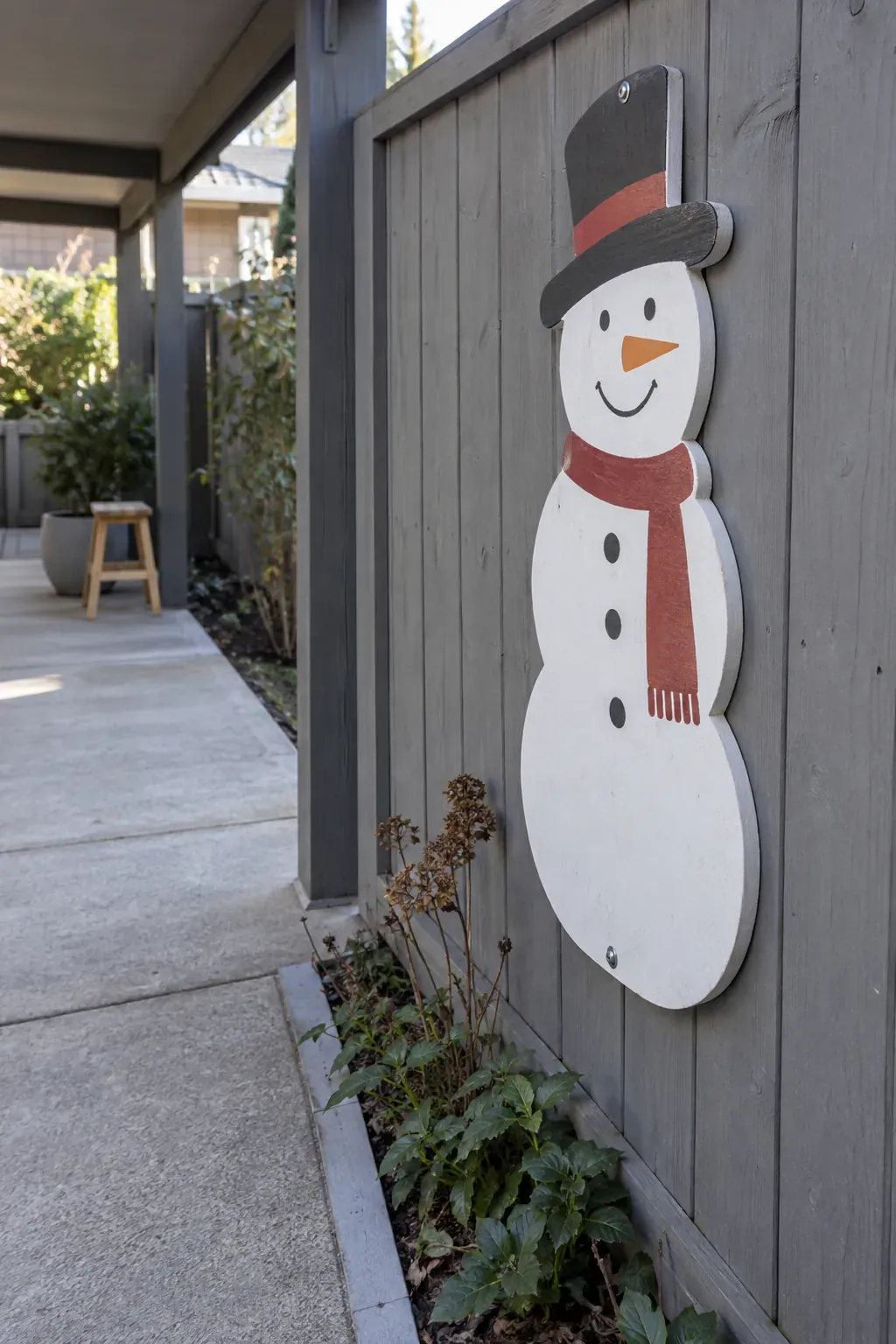
Mount a Painted Wooden Snowman
A flat wooden snowman offers a playful shape without filling a narrow garden path. Use exterior suitable timber or board, seal the exposed edges, and let its finish cure before installation. Attach it at more than one point so wind cannot make it bang against the fence. A painted scarf is easier to keep tidy than a long loose fabric tail.
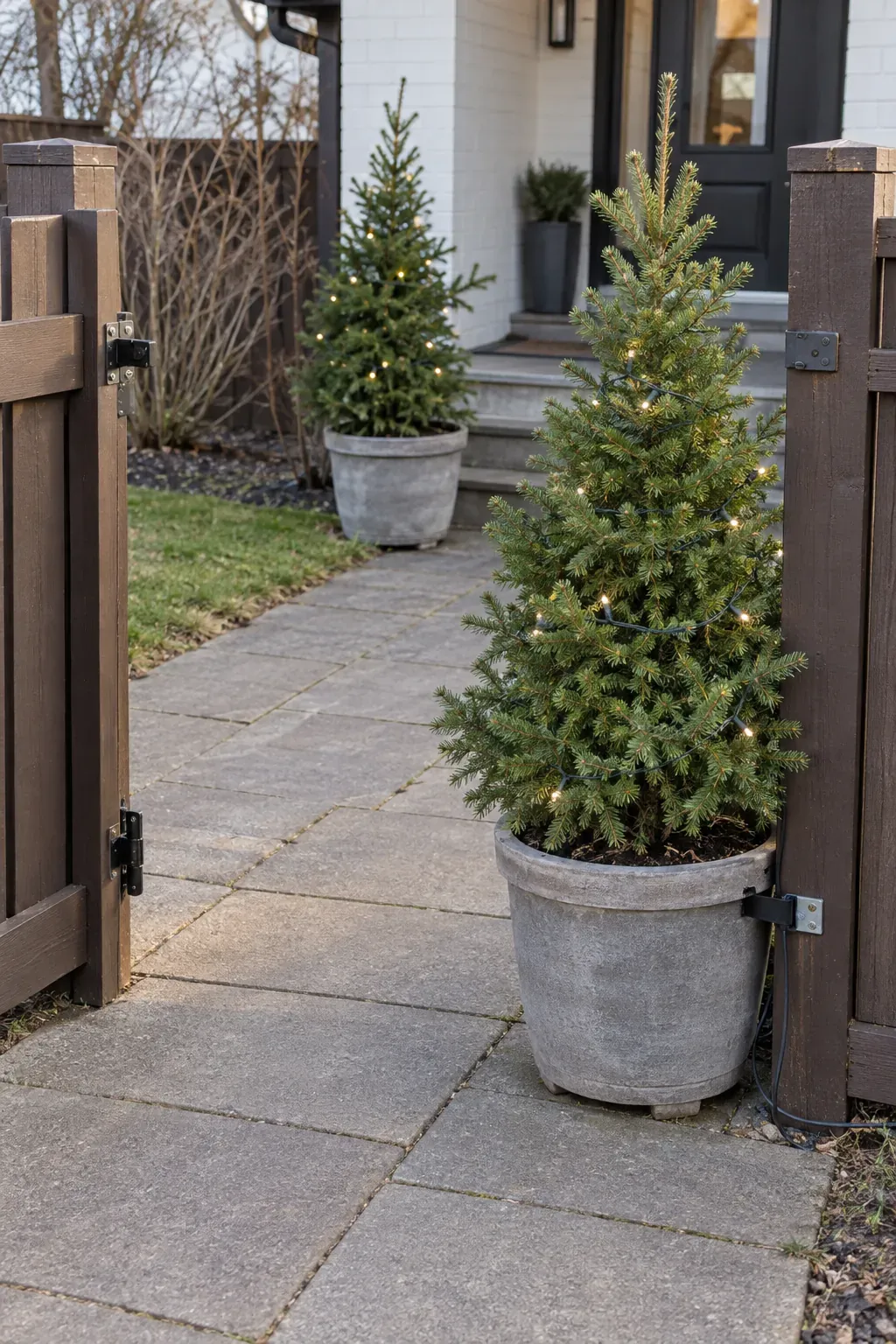
Stand Mini Trees beside the Fence
Compact potted trees can mark the boundary without asking thin fence slats to carry their weight. Put them on level ground outside the gate swing and stabilize their containers for your wind conditions. Keep the tree size in proportion to the fence so the display frames the entrance rather than hiding it.
For living plants, select a species suited to your local winter and maintain its watering needs. Check drainage after heavy rain instead of leaving a decorative cover to trap water around the roots. Outdoor lights should sit on the branches with the supply lead routed away from the path.
Line a Garden Bed with Candy Cane Stakes
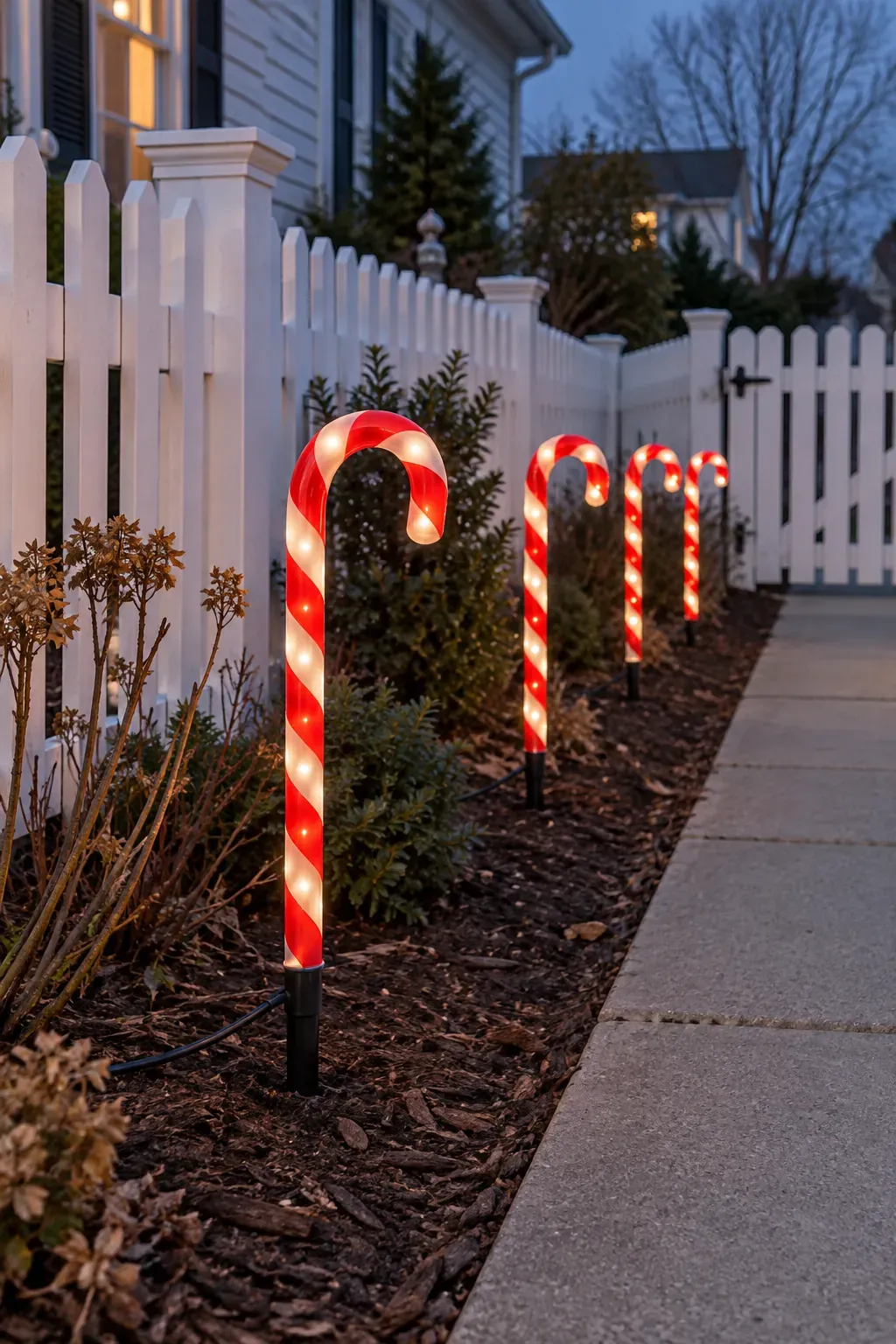
Candy cane stakes suit a playful front yard where the fence provides a calm backdrop. Place them inside the planted border, not along the edge where visitors need to walk. Use the product stakes and keep any electrical connections in the position required by their instructions. Repeating a small number with even spacing is easier to read than crowding every gap.
Frame a Family Name Plaque with Greenery
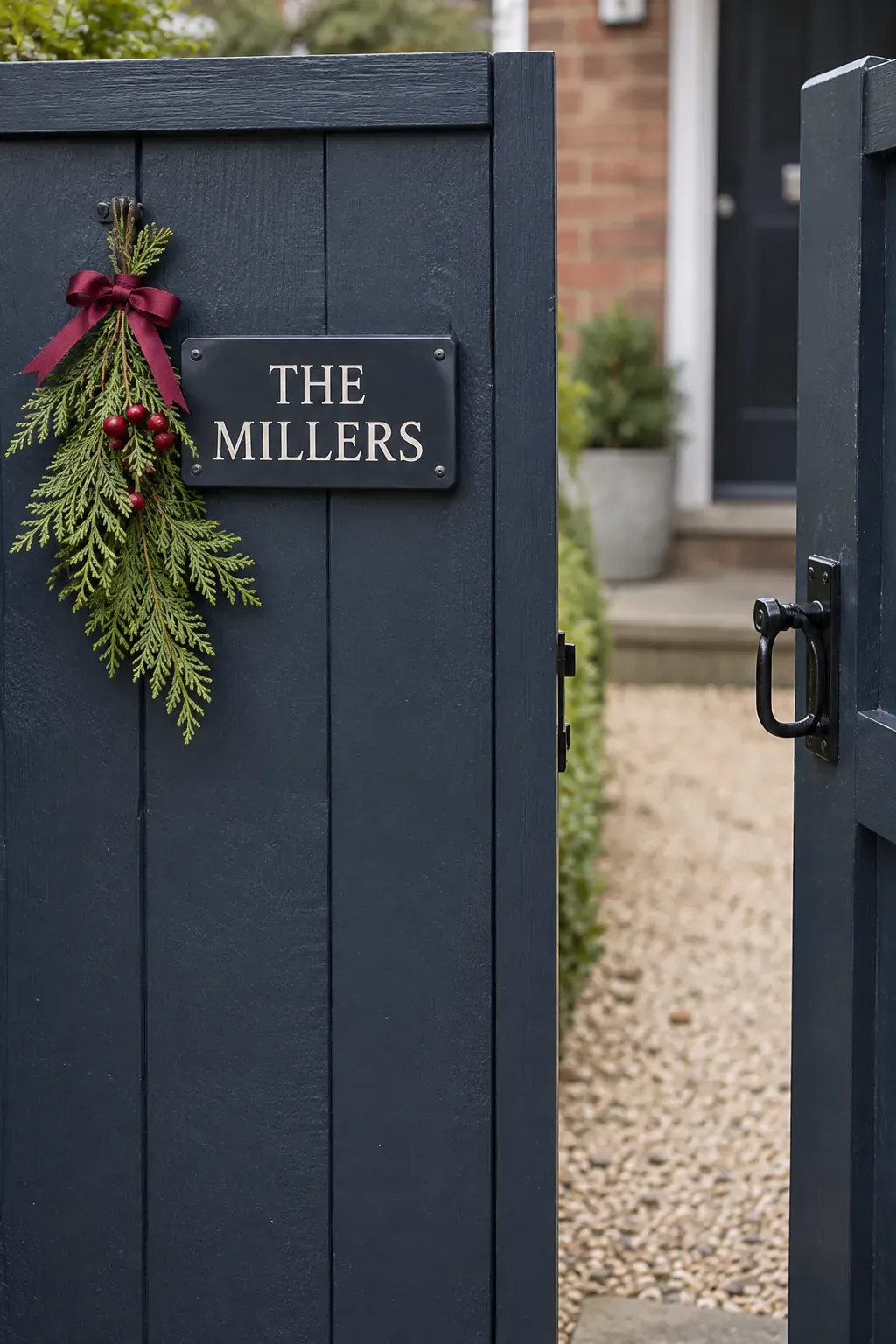
An existing family name plaque can become seasonal with a small evergreen spray beside it. Keep the name fully visible and use a finish suitable for outdoor exposure. Fasten the greenery independently so removing it later does not loosen the plaque. A protected gate side panel is more practical than a moving leaf that will shake the decoration.
Hang One Short Christmas Greeting
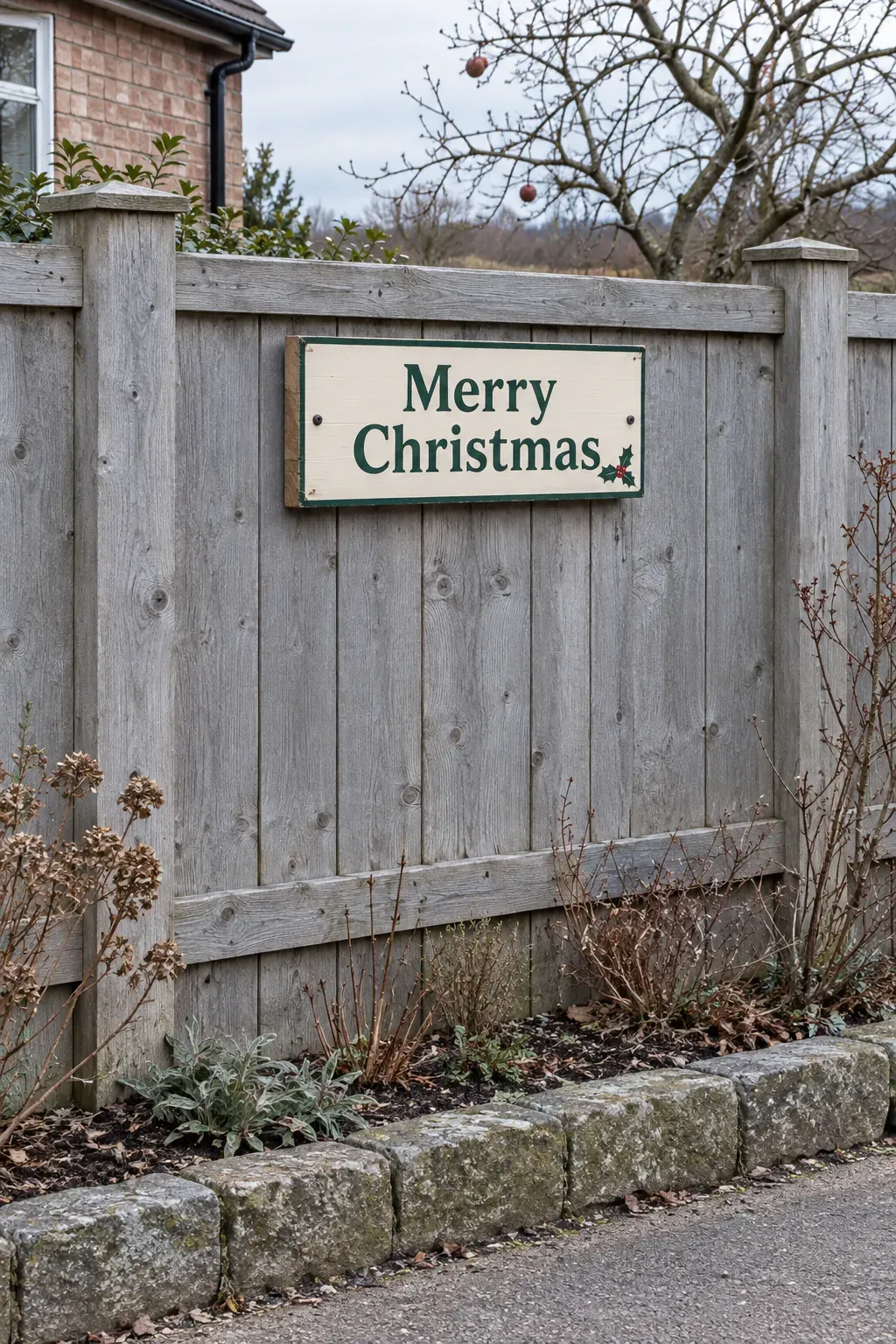
A simple greeting gives a solid fence bay a focal point during daylight. Choose a short message with large letters and enough contrast to read from the usual viewing distance. Fix the sign to existing strong framing and protect the back as well as the front. Reclaimed wood needs checking for splinters and loose fasteners before it goes beside a path.
Place Weather Suitable Gift Boxes at the Base
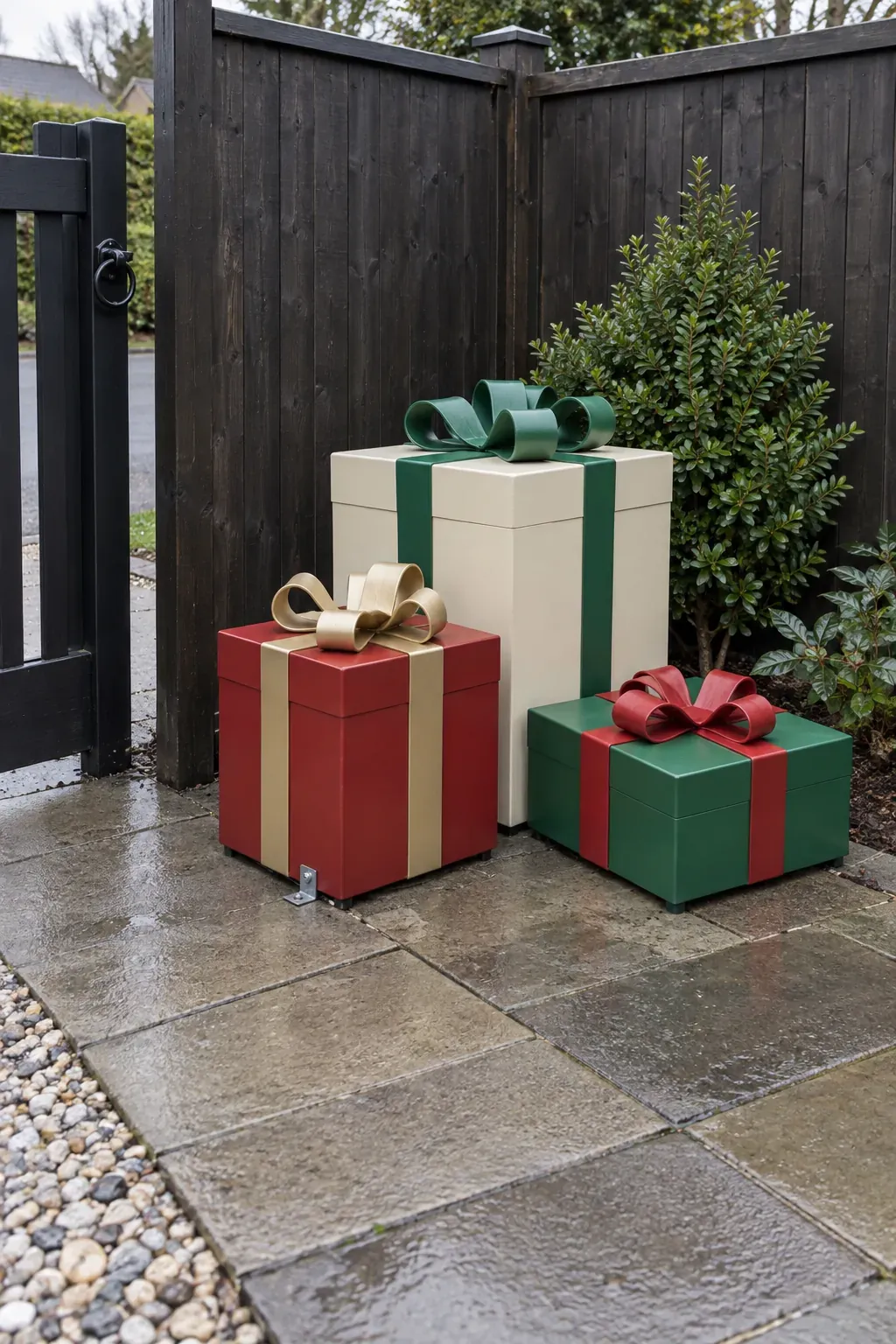
Decorative gift boxes can fill a bare corner without a large electrical display. Use outdoor display boxes or rigid weather suitable shells rather than paper wrapped cardboard left in rain. Anchor lightweight units and keep them off soil that could soften or stain their bases. Leave drains, vents, and walking space clear around the group.
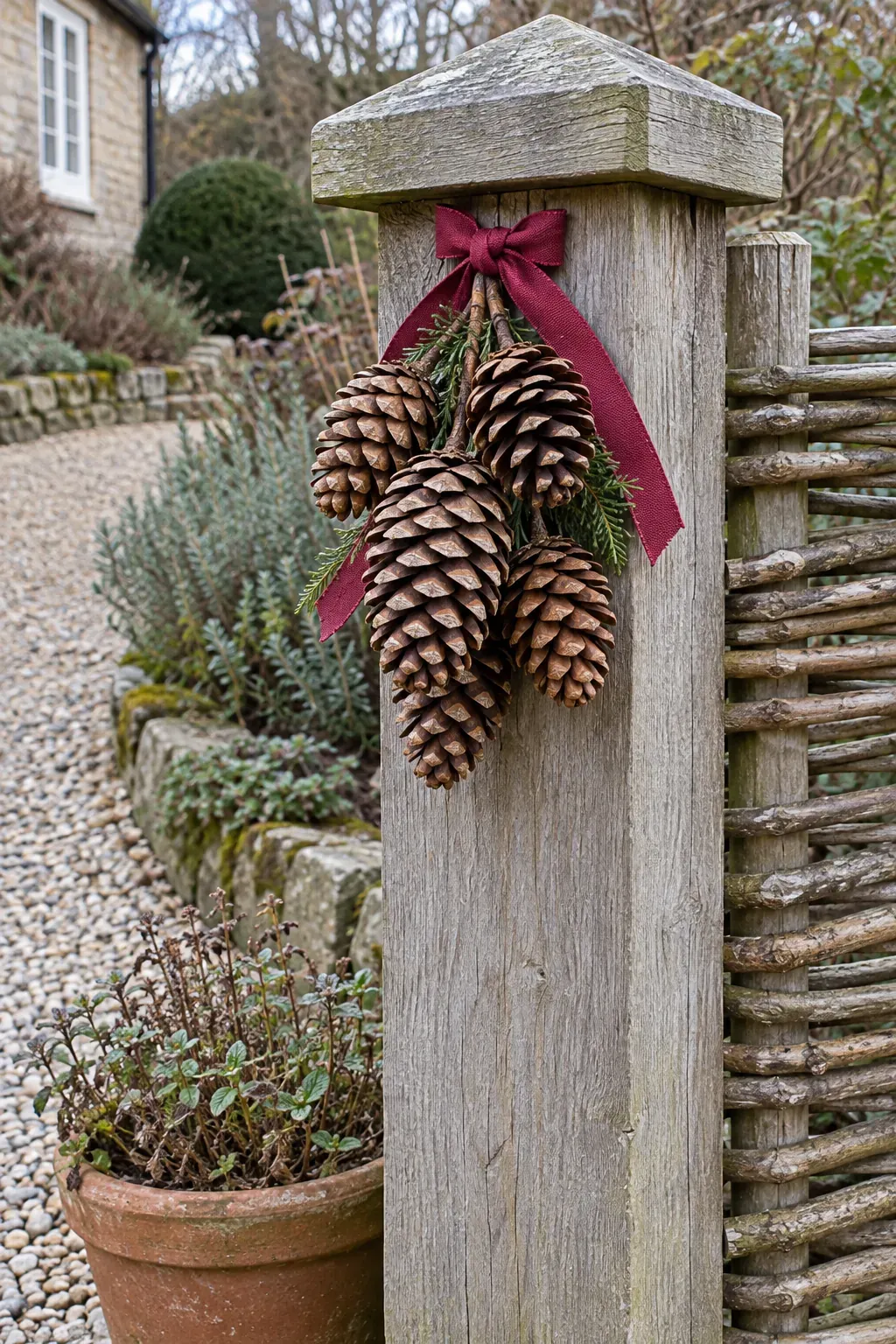
Tie Pinecone Clusters beneath Post Caps
Pinecones add texture to a plain fence with little visual weight. Bind a small cluster securely and hang it below a broad post cap with short outdoor ribbon. Keep the attachment visible enough to inspect after windy weather. Avoid loose glitter, fragile ornaments, and long trailing loops where birds or pets could become tangled.
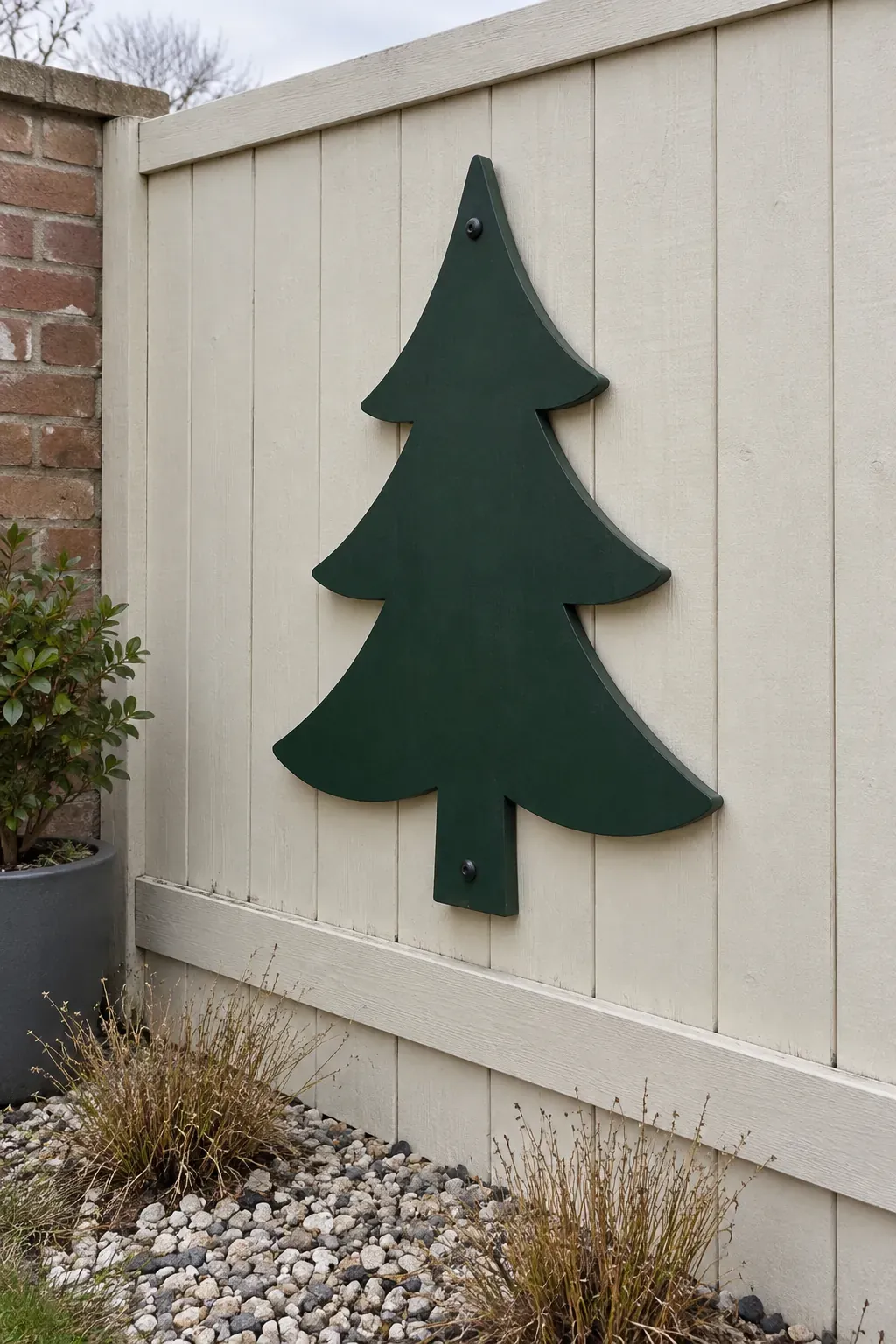
Add a Simple Winter Tree Silhouette
A flat tree silhouette creates a strong shape on a quiet fence panel. Cut it from exterior suitable material, soften sharp edges, and seal cut surfaces before mounting. Leave a small gap where needed for drainage rather than trapping wet debris behind the whole shape. Black on pale timber or cream on dark stain gives clear contrast without intricate painted detail.
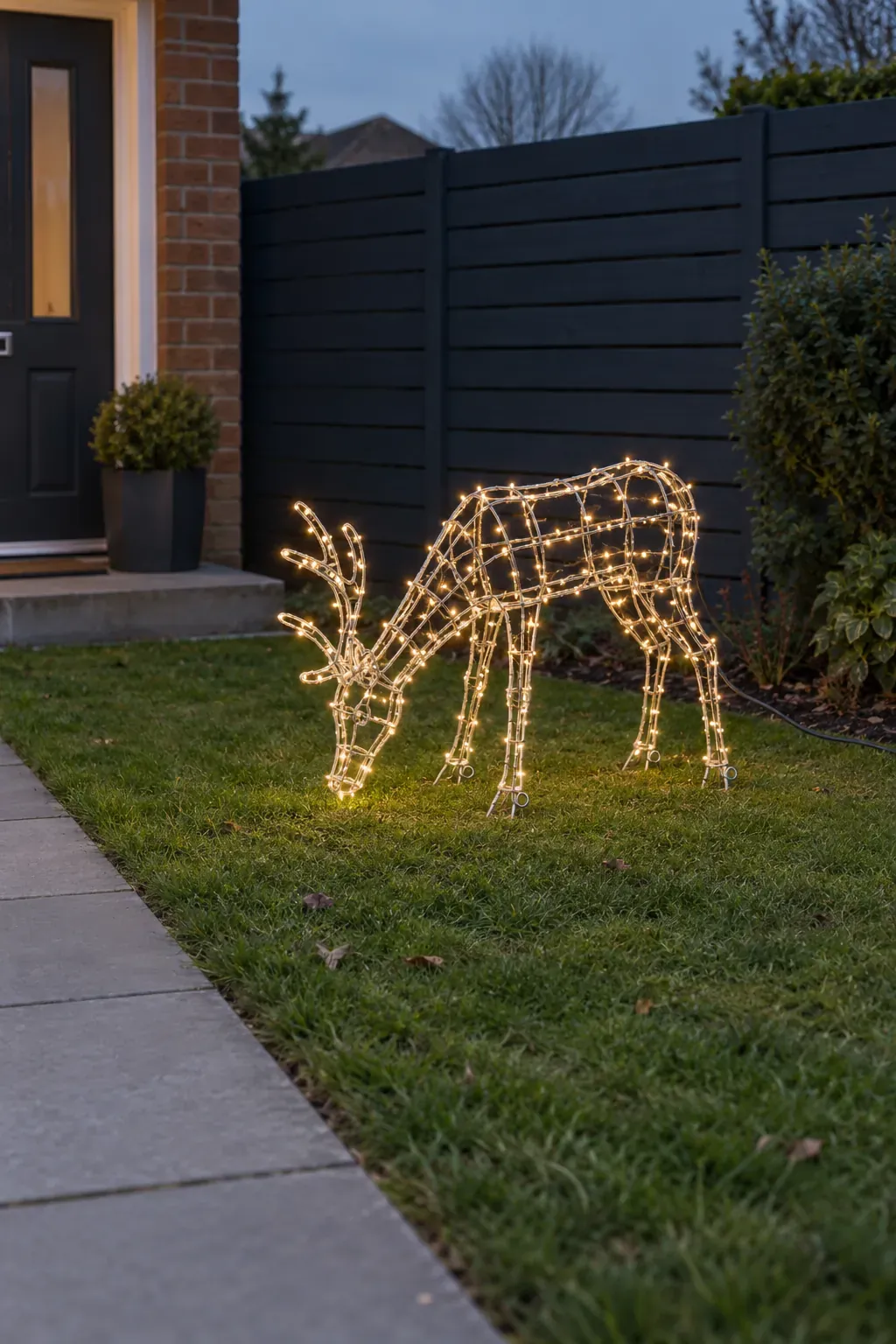
Use One Anchored Lighted Reindeer
A single lighted reindeer can act as the main Christmas lawn decoration in a front yard. Position it in front of an unlit fence so its outline remains distinct. Secure the supplied anchors properly and keep the feed outside the route used by visitors. Leave enough space around the feet to inspect the installation after wind or rain.
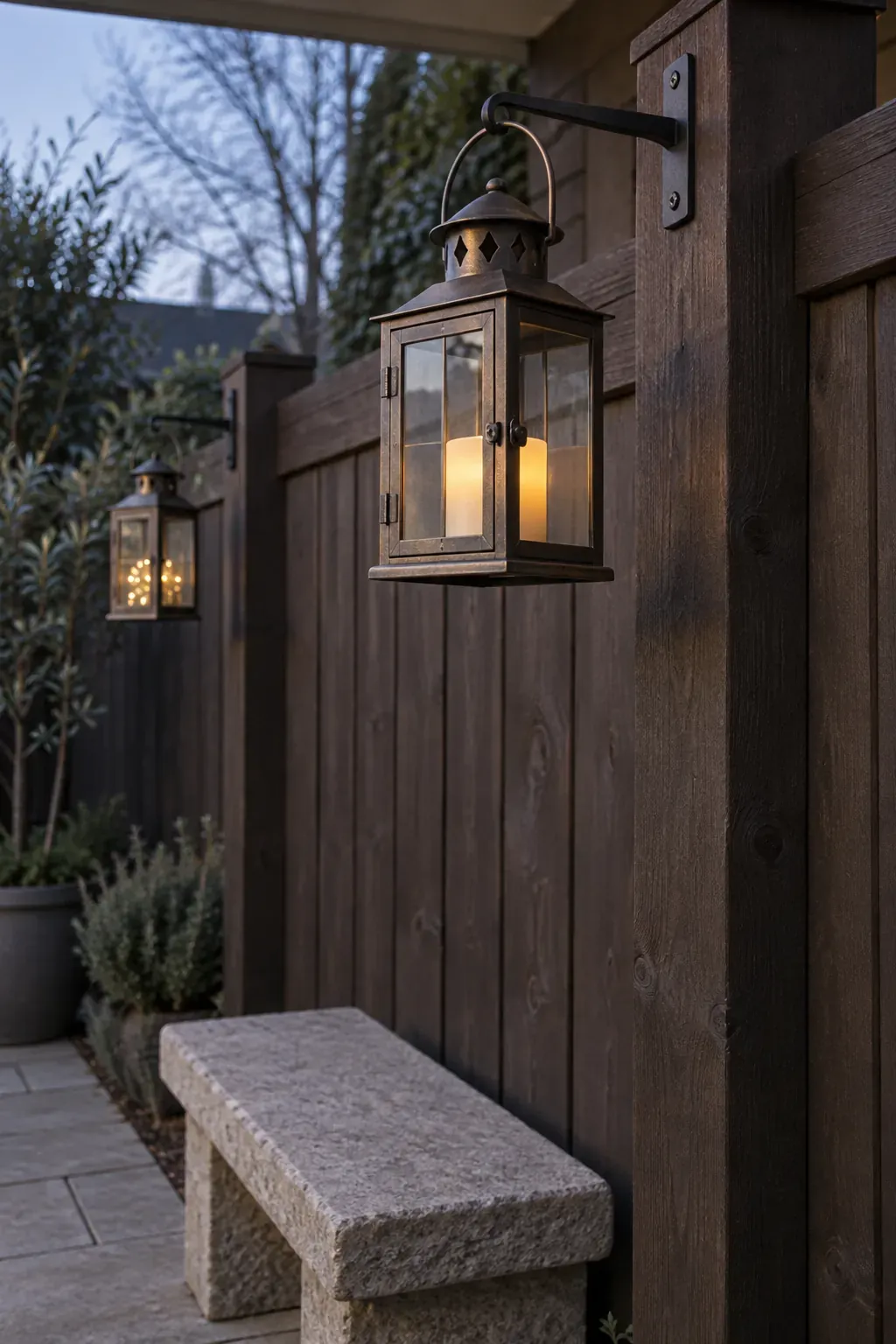
Hang Closed Outdoor Lanterns
Closed lanterns provide small pools of light in a sheltered garden corner. Choose purpose made outdoor units with secure handles and suitable flameless lights, rather than putting an indoor battery pack in an open jar. Brackets must attach to sound posts, and the vessels need room to move without striking the boards. Keep real flames away from timber and seasonal greenery.
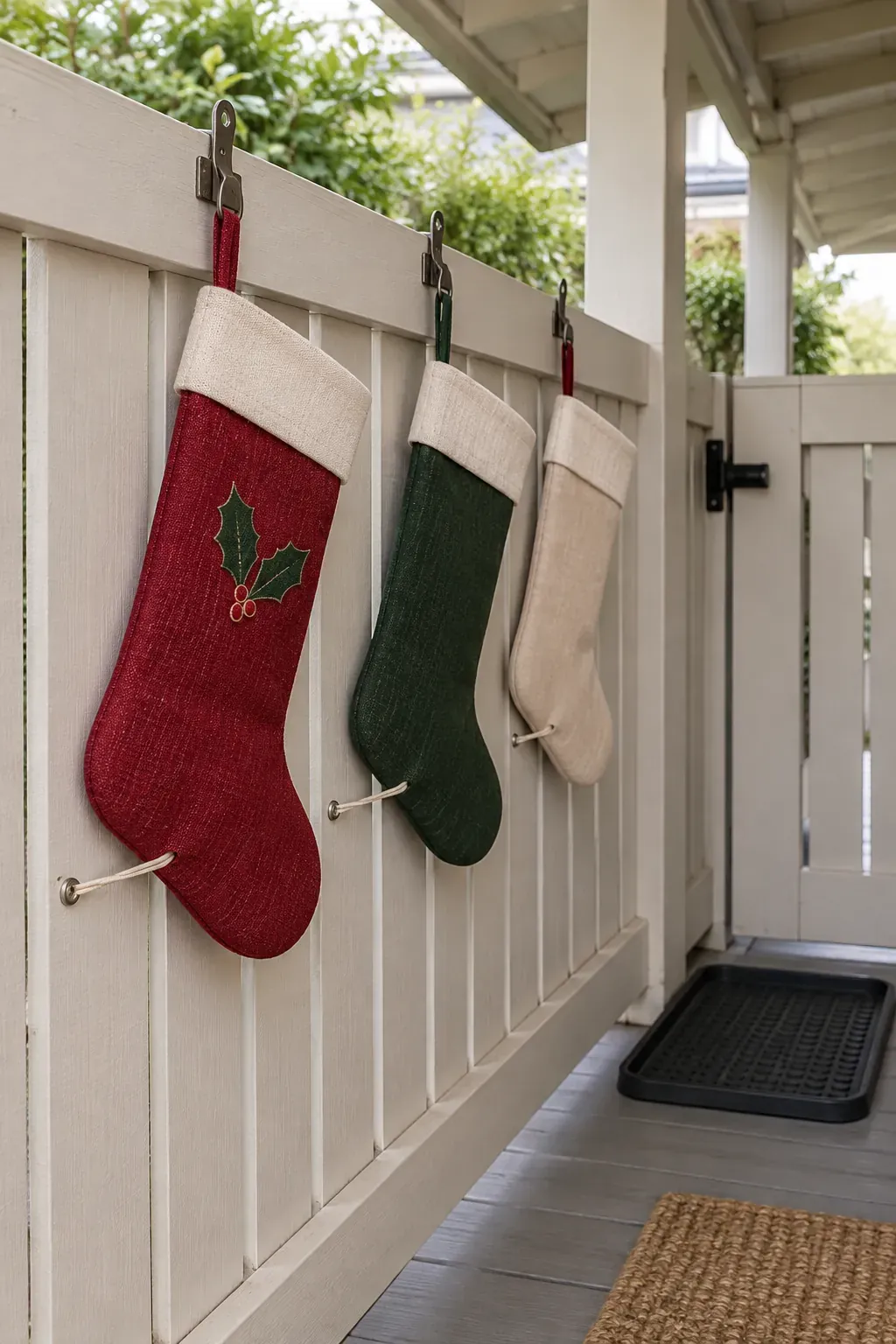
Clip Decorative Stockings under Cover
Stockings suit a covered fence section or the sheltered edge of a porch. Use decorative pieces intended for that location and secure both the top and a discreet lower point. Leave them empty outdoors, since treats can attract animals and moisture can damage small gifts. Bring vulnerable fabric inside before wet or windy weather.
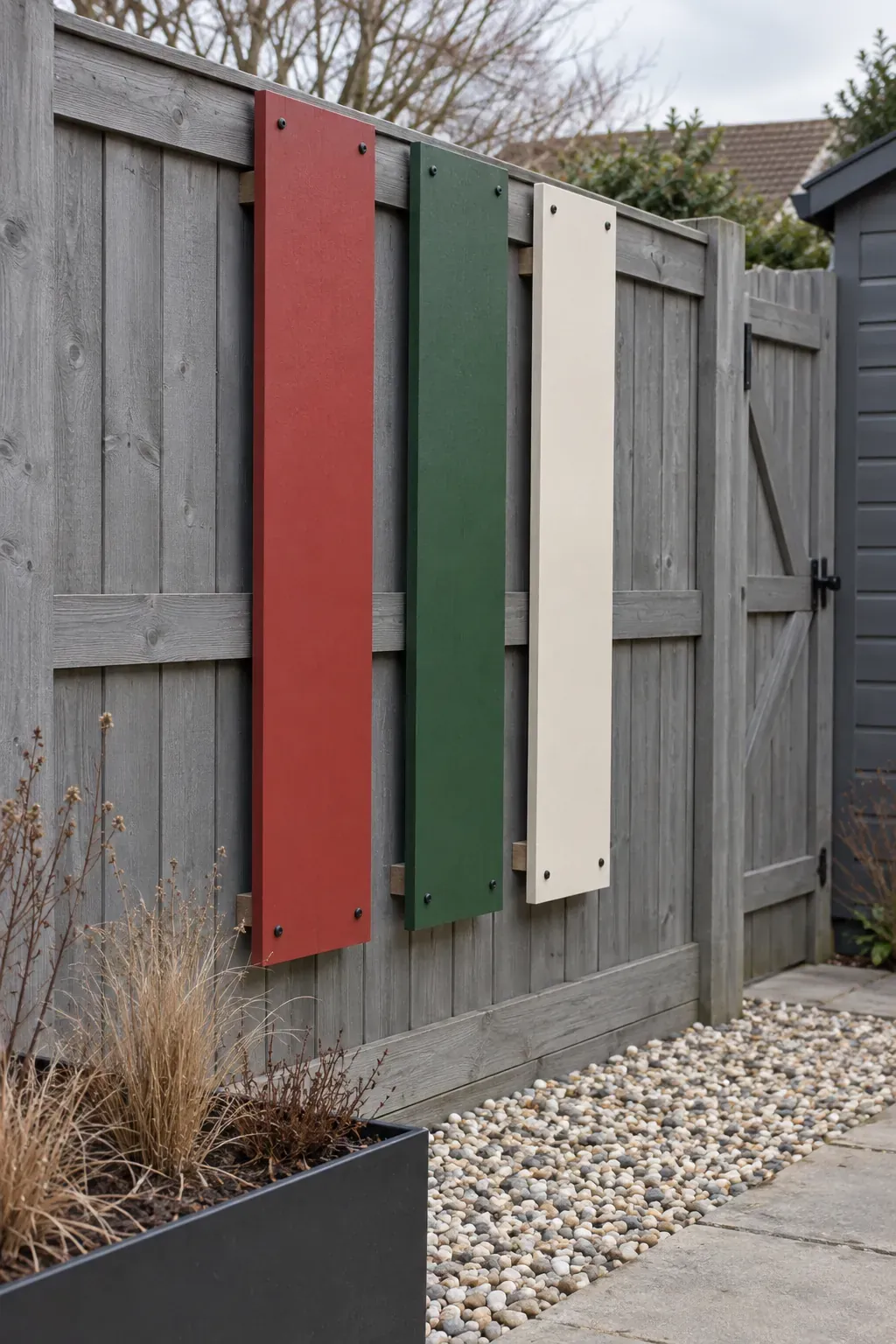
Add Removable Color Panels
Separate painted panels can add Christmas color without repainting the permanent fence. Finish exterior suitable boards in restrained red, green, or cream and secure them to existing framing. Leave drainage gaps and keep the panels small enough for their supports. Remove them after the season rather than leaving moisture trapped behind temporary overlays.
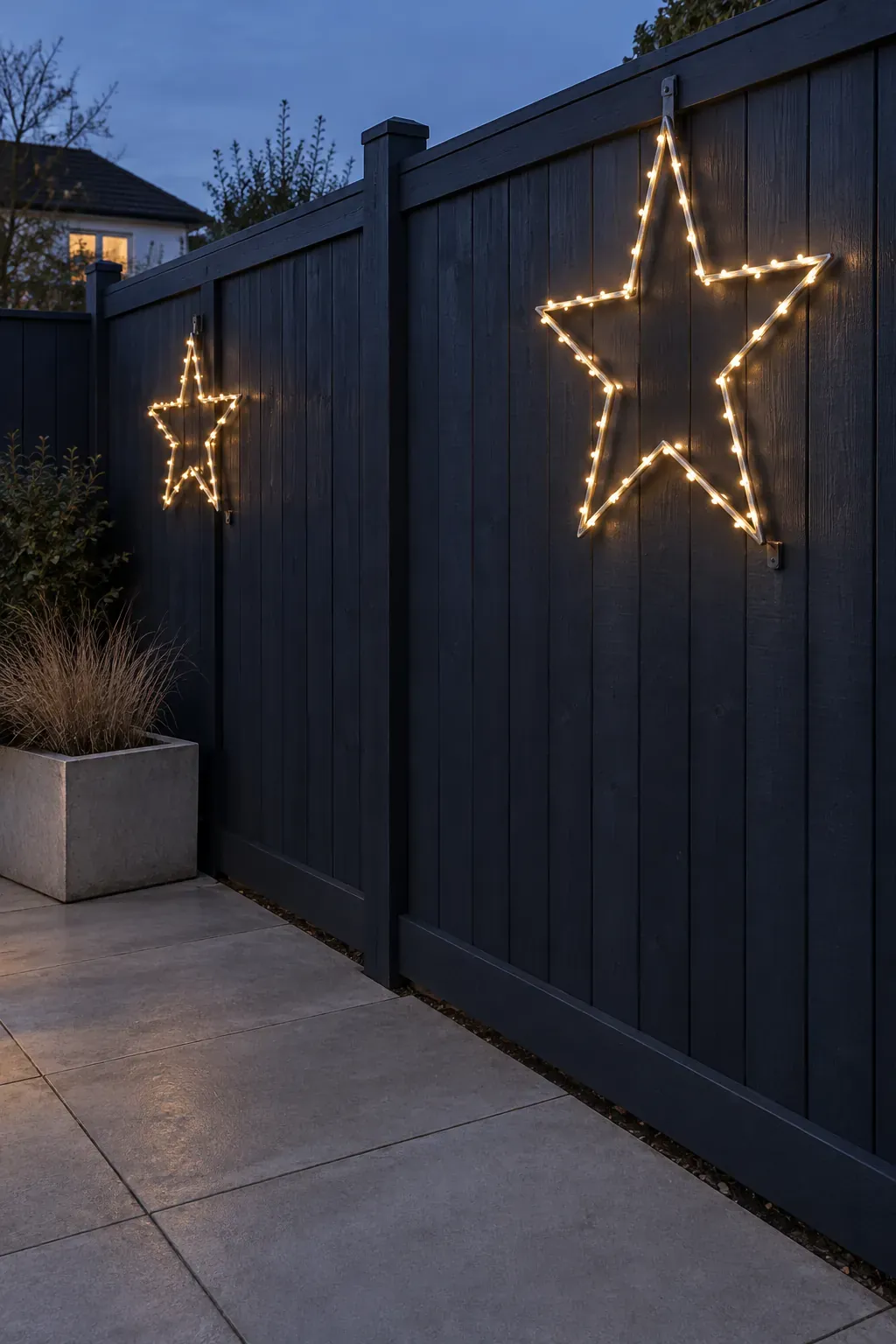
Space Lighted Stars across a Dark Fence
A dark fence makes a few illuminated stars easy to recognize. Use complete outdoor rated decorations and the mounting points specified by their manufacturer. Vary their height while leaving enough blank space to separate each shape. The supply leads should follow fixed structure instead of hanging visibly between the stars.
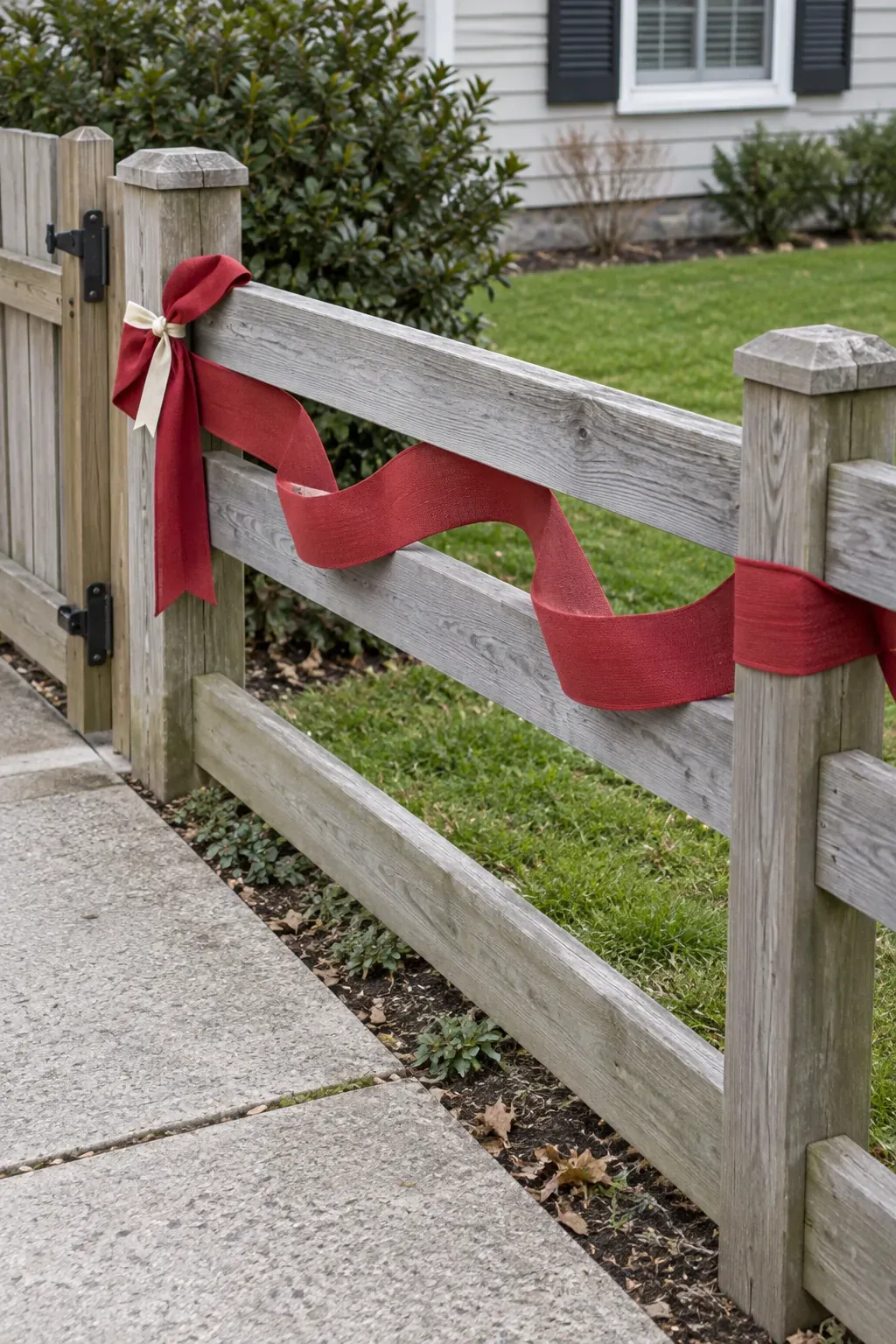
Weave Broad Ribbon through Open Rails
Broad outdoor ribbon gives an open fence a visible daytime pattern. Use short controlled runs with secure ends rather than loose tinsel that can tear and scatter. Check the ribbon after wind because a long strip can rub against the finish. Keep every loop away from gate hardware, sharp edges, and places where animals pass.
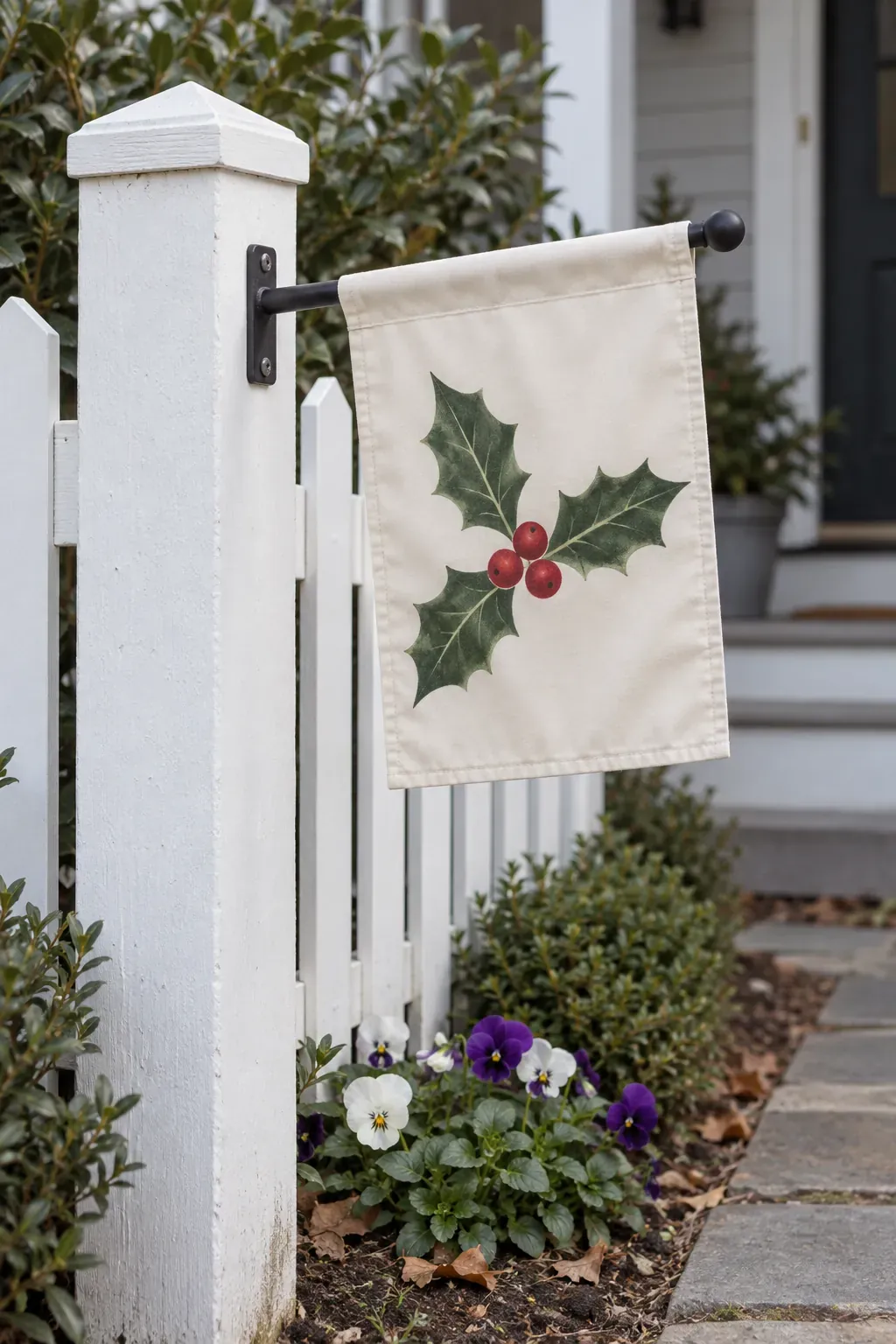
Hang a Small Seasonal Flag
A small outdoor flag adds movement where a sheltered fence corner needs color. Choose a simple motif such as a holly sprig or Christmas tree that remains readable without tiny lettering. Fix its bracket to a solid post and keep the fabric inside your boundary. Remove the flag when conditions exceed the product guidance rather than leaving it to pull on the support.
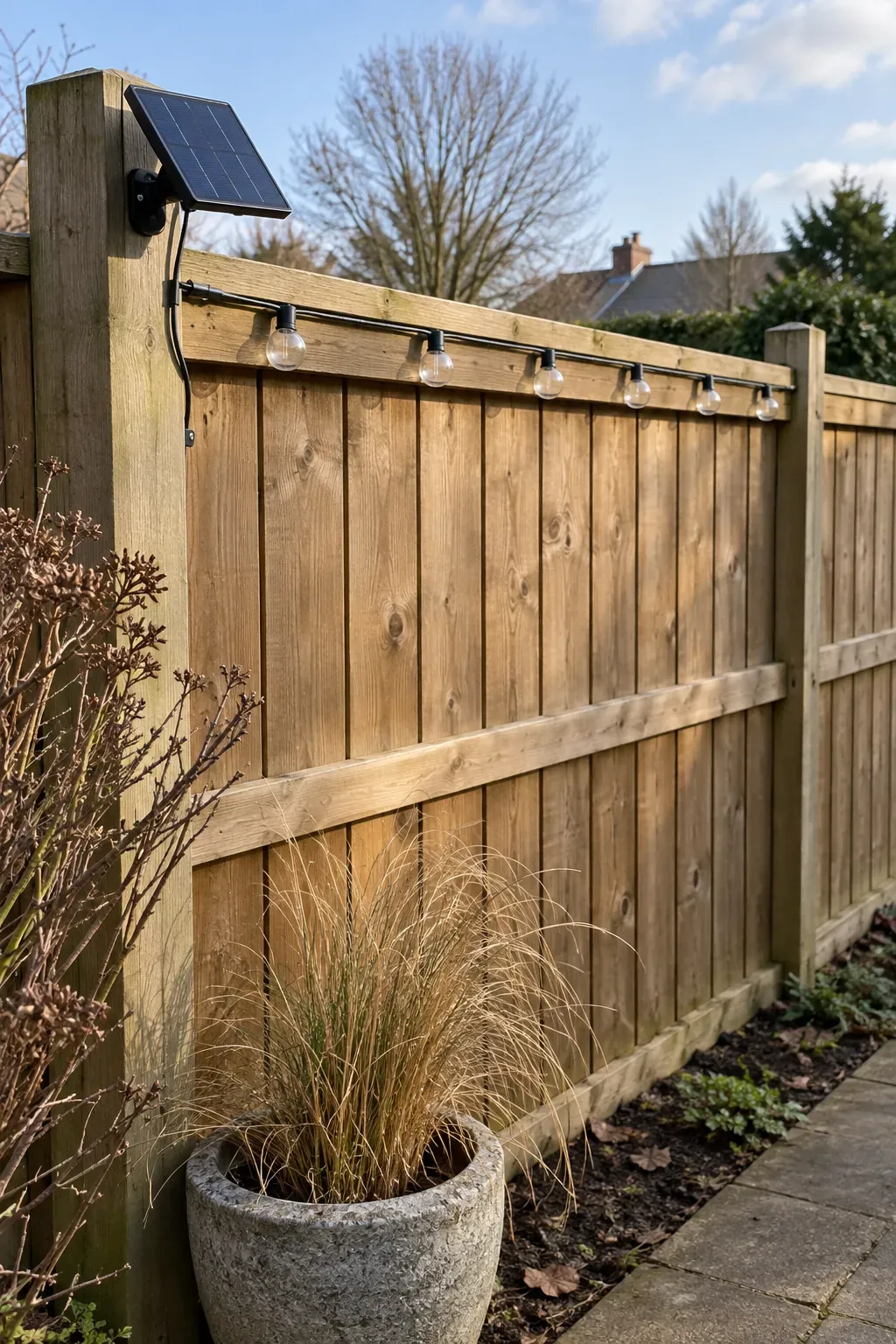
Use Solar Lights for One Sunny Section
A short solar strand can suit a fence far from a power outlet. Give its panel the winter sun exposure recommended by the product instructions and keep leaves from covering it. Treat it as a modest decorative option because cloudy days can reduce its evening running time. Test one section before expanding to a larger display.
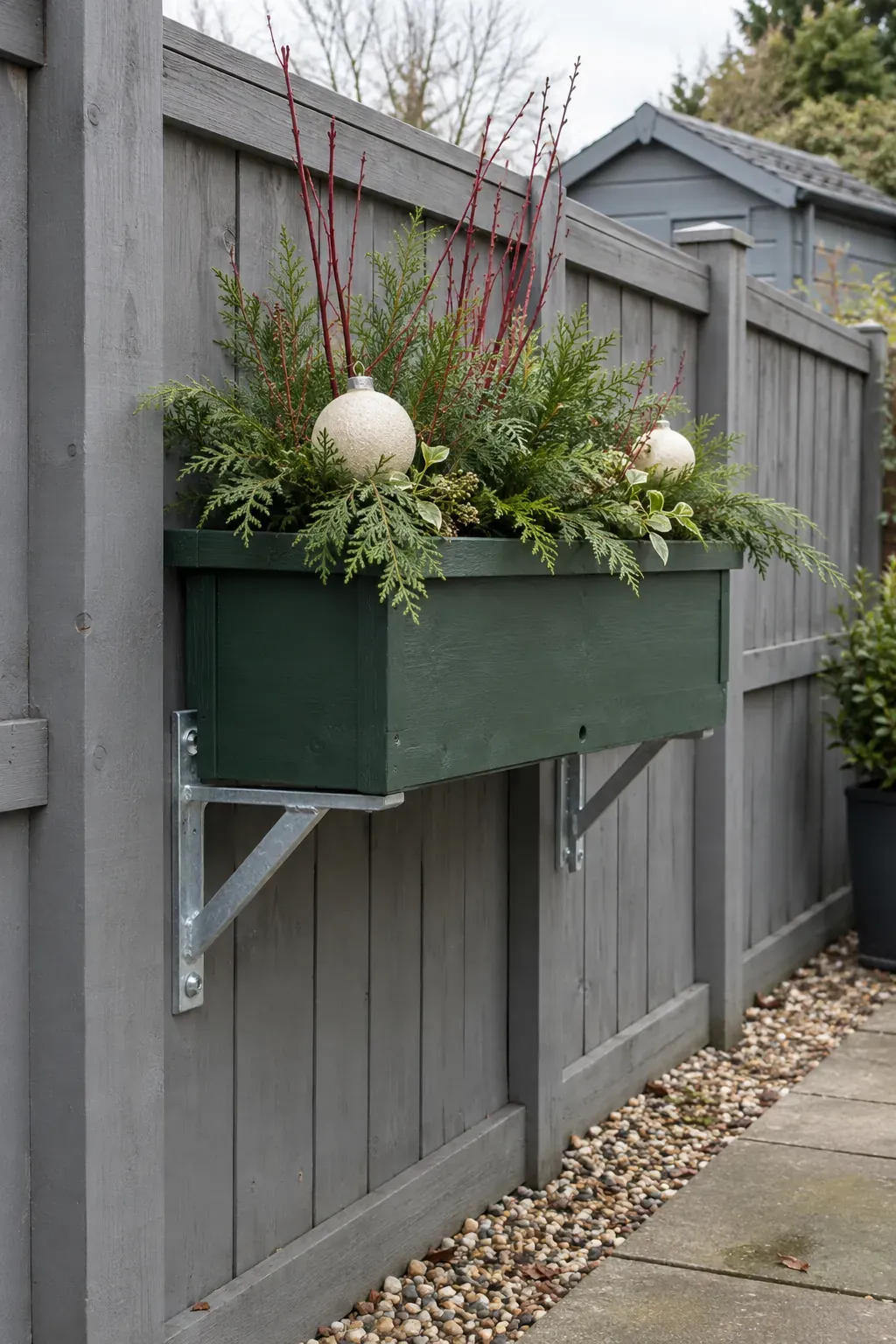
Arrange Evergreen Cuttings in a Fence Box
A well supported fence box can hold evergreen cuttings, bare twigs, and a few large weather suitable accents. Check the brackets and allow drainage before filling it. Wet compost and branches add weight, so use the actual support limits rather than judging by the empty box. Keep light components above damp growing medium and inspect the mounting after heavy rain.
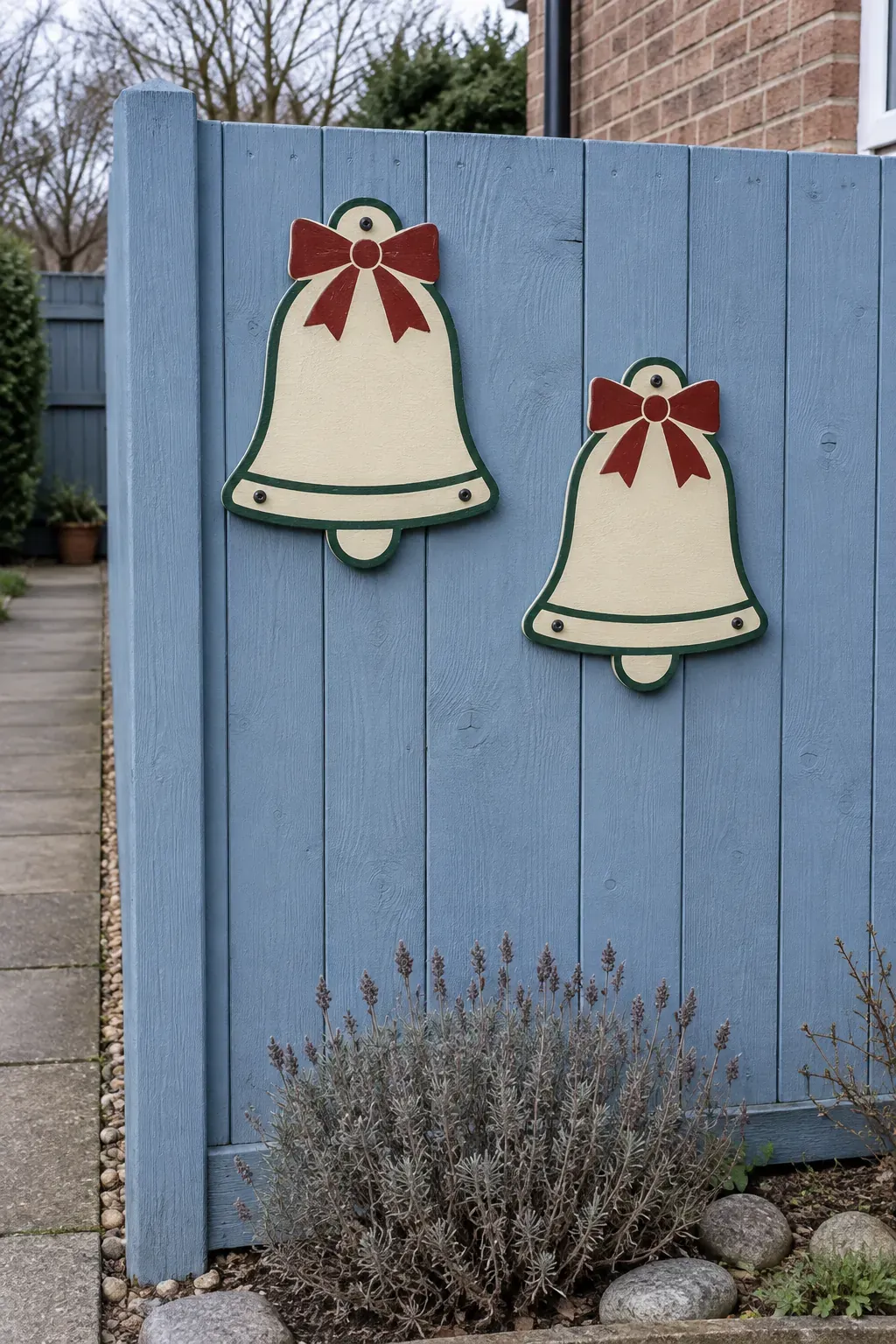
Attach Painted Wooden Bells
Two simple wooden bell shapes give a small panel a festive identity without real metal bells ringing in wind. Use smooth exterior suitable cutouts and fasten them securely at separate points. Paint a restrained bow shape onto the top rather than adding long loose ties. Leave space around the pair so their outlines remain clear from the house.
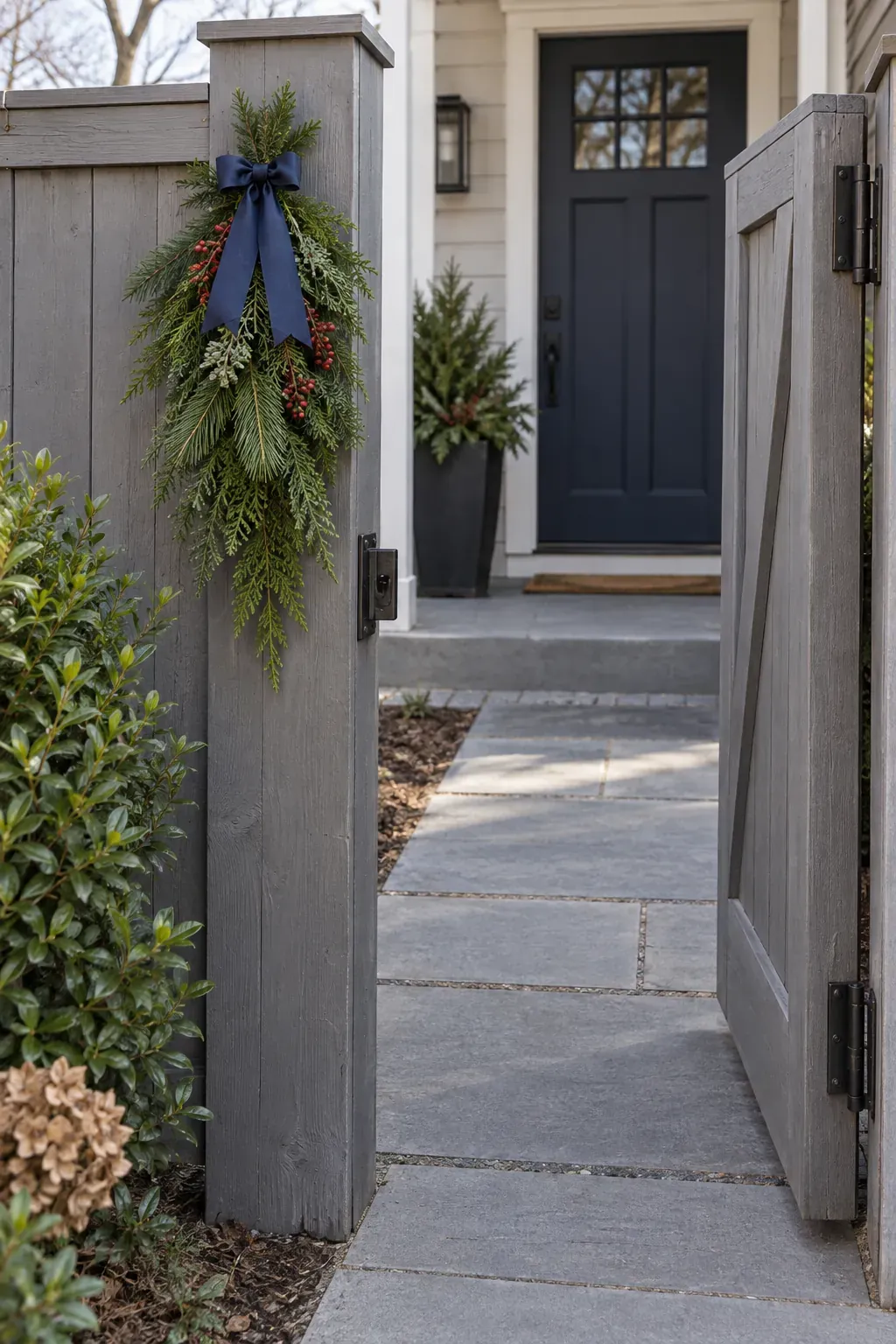
Finish the Gate with a Greenery Spray
A single vertical greenery spray can be enough when the entrance is small. Attach it to the fixed panel beside the gate, with its lower stems clear of the latch. Use the colors already visible on nearby porch decorations so the two areas feel related. Open the gate fully after installation and remove anything that catches before the display is finished.