
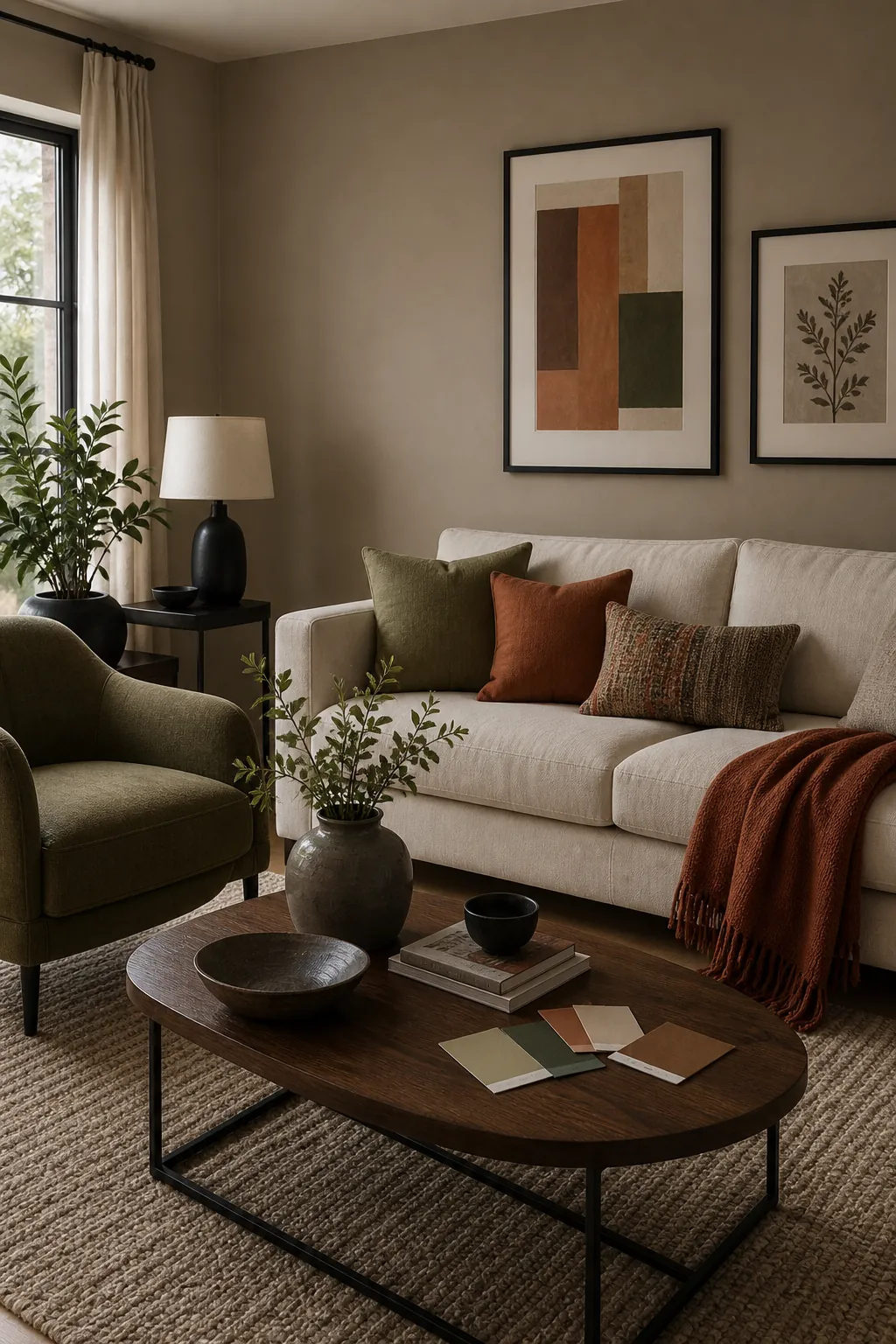
A good living room color idea is not just a pretty wall shade. It is a decision that helps everything else make sense: the sofa, the rug, the art, the lamps, the wood tones, and the view into the next room.
When a living room feels scattered, the fastest fix is usually to choose one clear color direction and repeat it with restraint. The room can be neutral, earthy, modern, dramatic, or soft. It just needs to stop arguing with itself.
Choose the Mood Before the Color
Start with the feeling you want. Calm rooms often use mushroom, warm white, sage, stone, or blue-gray. Cozy rooms can handle clay, olive, rust, camel, and deeper wood. Modern rooms usually need cleaner contrast: pale walls, black accents, warm wood, and one earthy color.
This keeps you from collecting random good living room colors that do not work together. A color can be beautiful and still be wrong for the mood of your room.
Make Small Rooms Clear, Not Busy
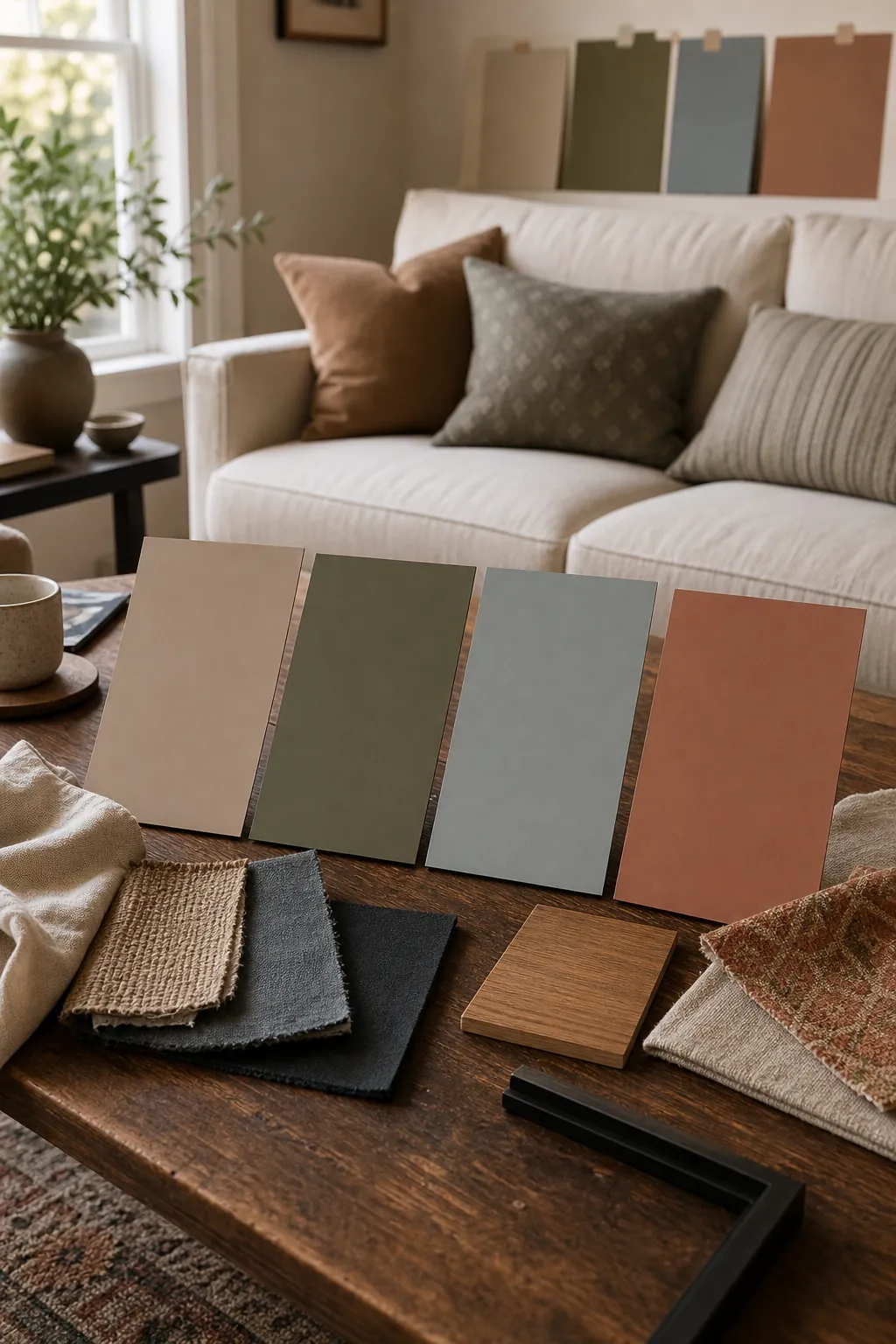
For small living room colors, clarity matters more than brightness. A compact room does not need every wall to be white. It needs a simple palette: one warm wall color, one light upholstery color, one dark contrast, and one soft accent.
Warm greige with cream, oak, black, and muted green can feel larger than a room full of unrelated pale colors. The dark accent gives the space shape, while the repeated muted accent keeps it from feeling plain.
Use Modern Contrast Without Making the Room Cold
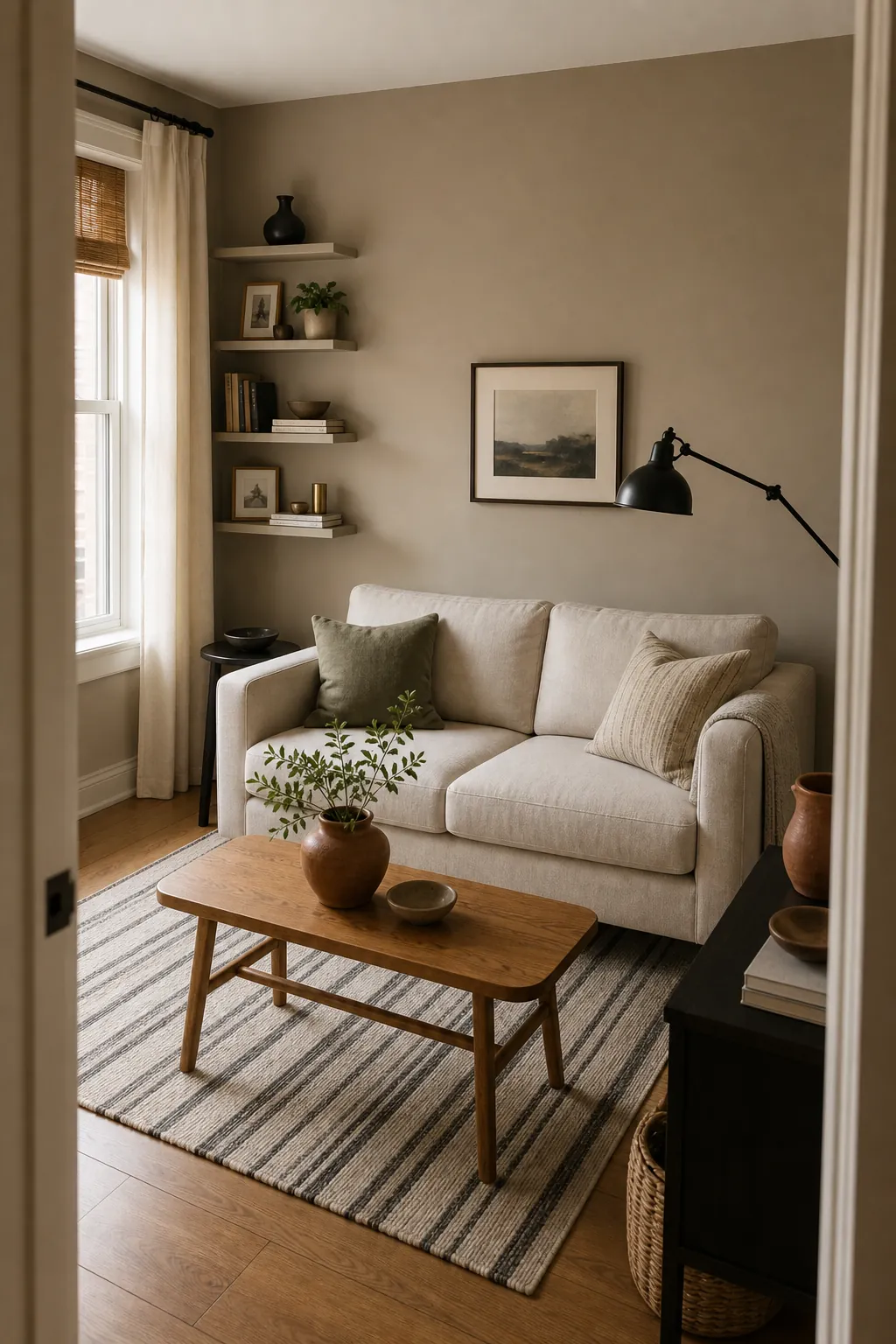
Modern living room colors work best when they balance clean contrast with warmth. Pale stone walls, cream upholstery, black accents, walnut, and one terracotta or olive piece can feel current without becoming sterile.
The mistake is using only white, gray, and black. That can look sharp in photos but cold at home. Add wood grain, wool, linen, leather, or clay so the palette has a human texture.
Repeat the Main Accent Three Times
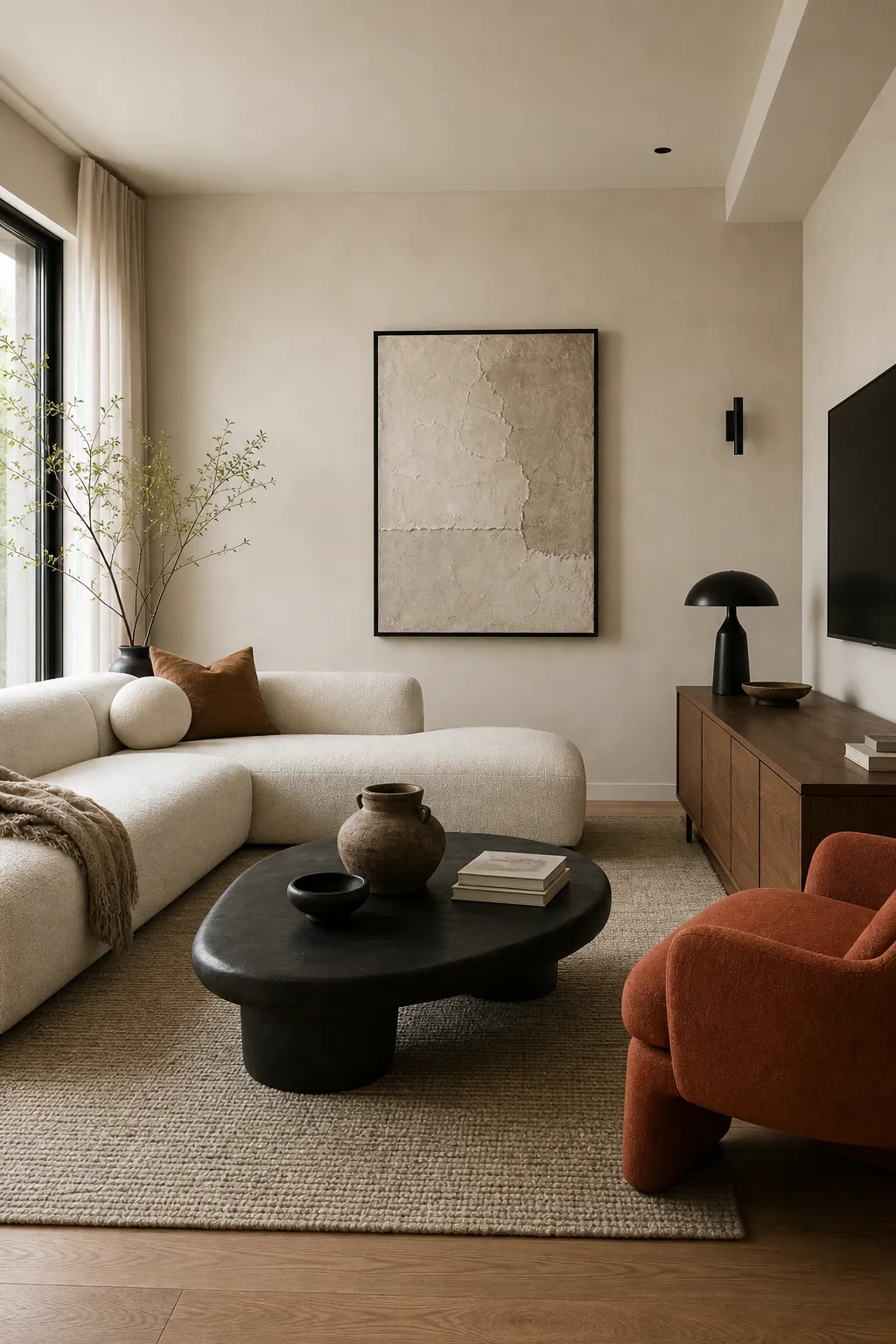
A living room color idea becomes visible when the accent repeats. If sage is your color, let it appear in art, pillows, a vase, or an ottoman. If clay is your color, repeat it in a throw, rug detail, or wall art. The room should not rely on one object to explain the whole palette.
This is one of the easiest home decor ideas to apply without buying new furniture. You can often make the color story stronger by editing what is already in the room and moving repeated colors closer together.
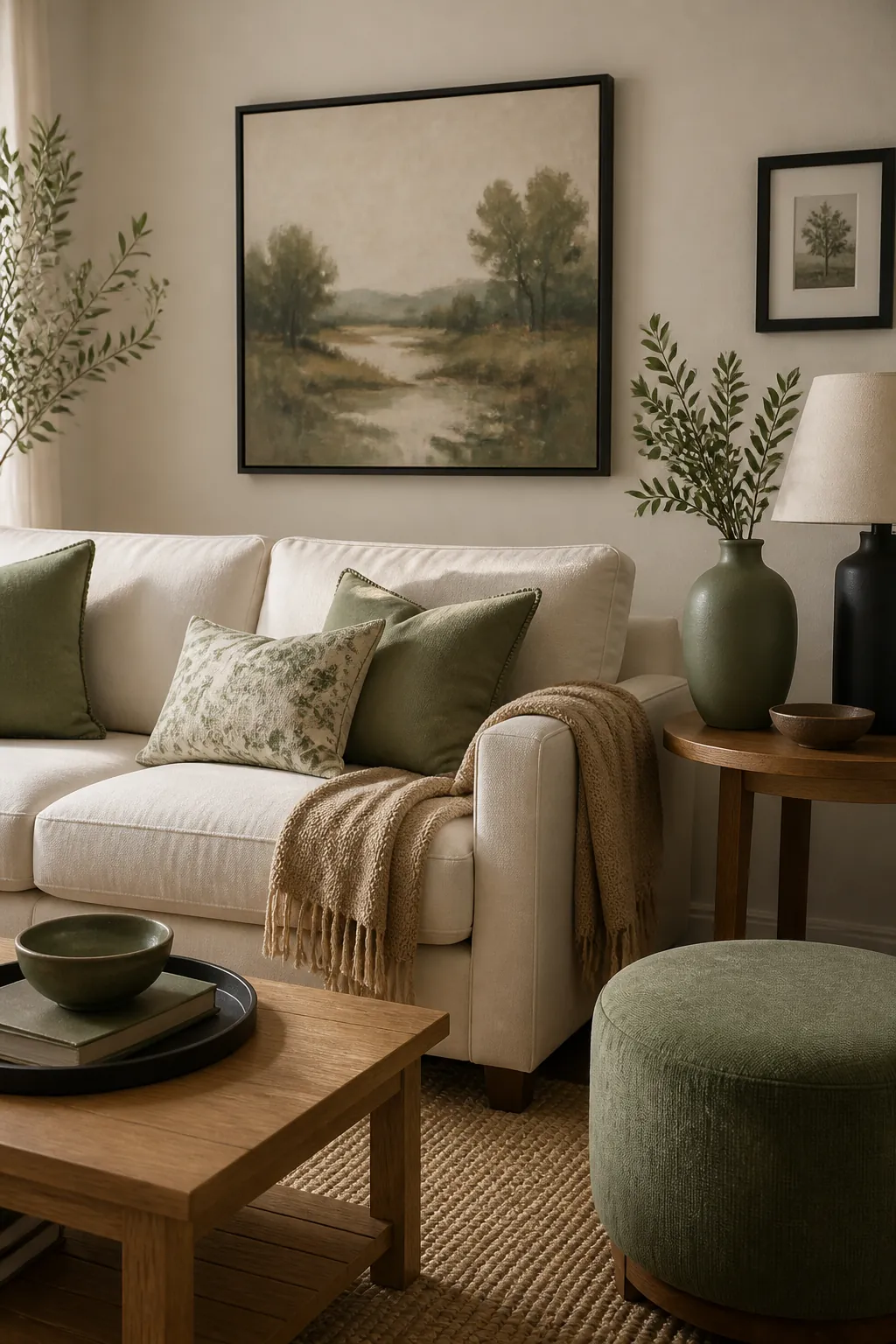
Try a Muted Wall Color Instead of Another Accent Pillow
Sometimes the wall is the missing piece. A muted clay, soft olive, warm taupe, smoky blue, or mushroom wall can make furniture look more intentional. This works especially well when the sofa is neutral and the room needs warmth.
For home painting ideas living room projects, choose a wall color that is muted enough to live with every day. If the color feels exciting only on a tiny chip, test a quieter version before painting the room.
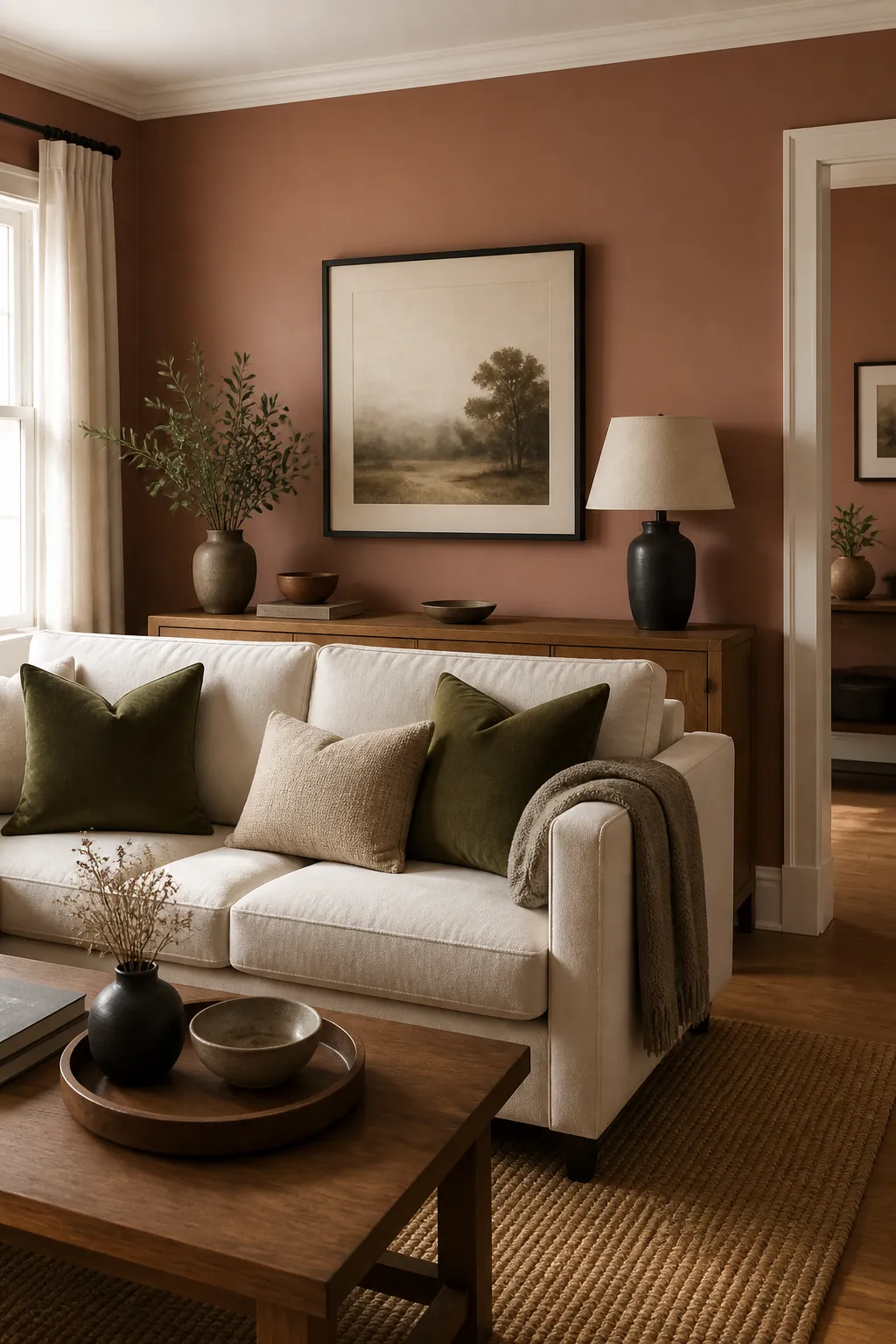
Check the Whole Palette at Night
A color idea is not finished until it works under your real lamps. Many interior wall colors living room choices look clean during the day but turn muddy or yellow at night. Look at the wall, sofa, rug, art, and pillows together after sunset.
If the room still feels connected under lamp light, you have a strong direction. If one color suddenly looks wrong, adjust the accent first before repainting. A pillow, throw, rug detail, or lamp shade can often fix the palette faster than a new wall color.
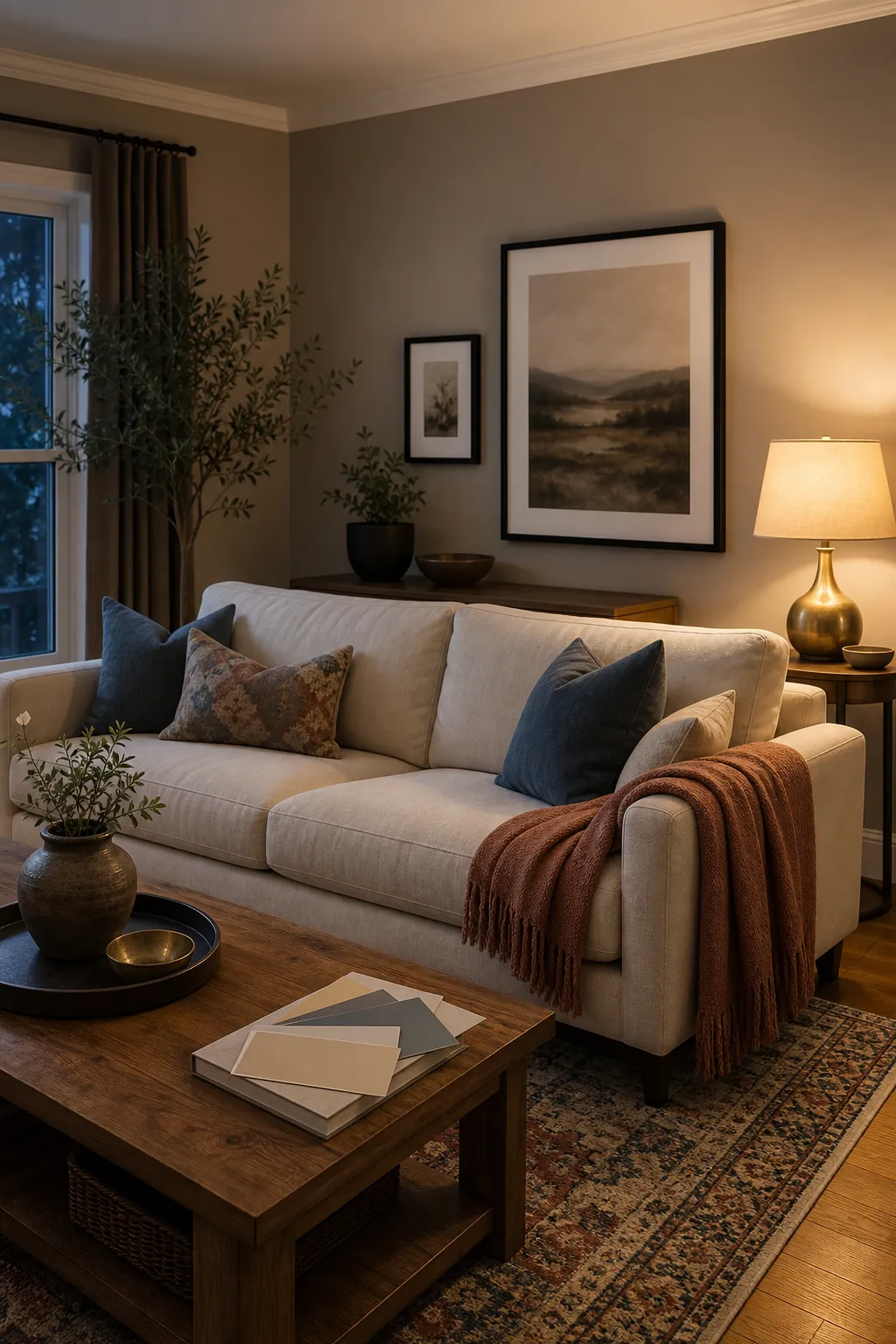
The best color idea is the one that makes the room easier to finish. Once the direction is clear, every choice has a test: does it support the palette, repeat the mood, or add useful contrast?