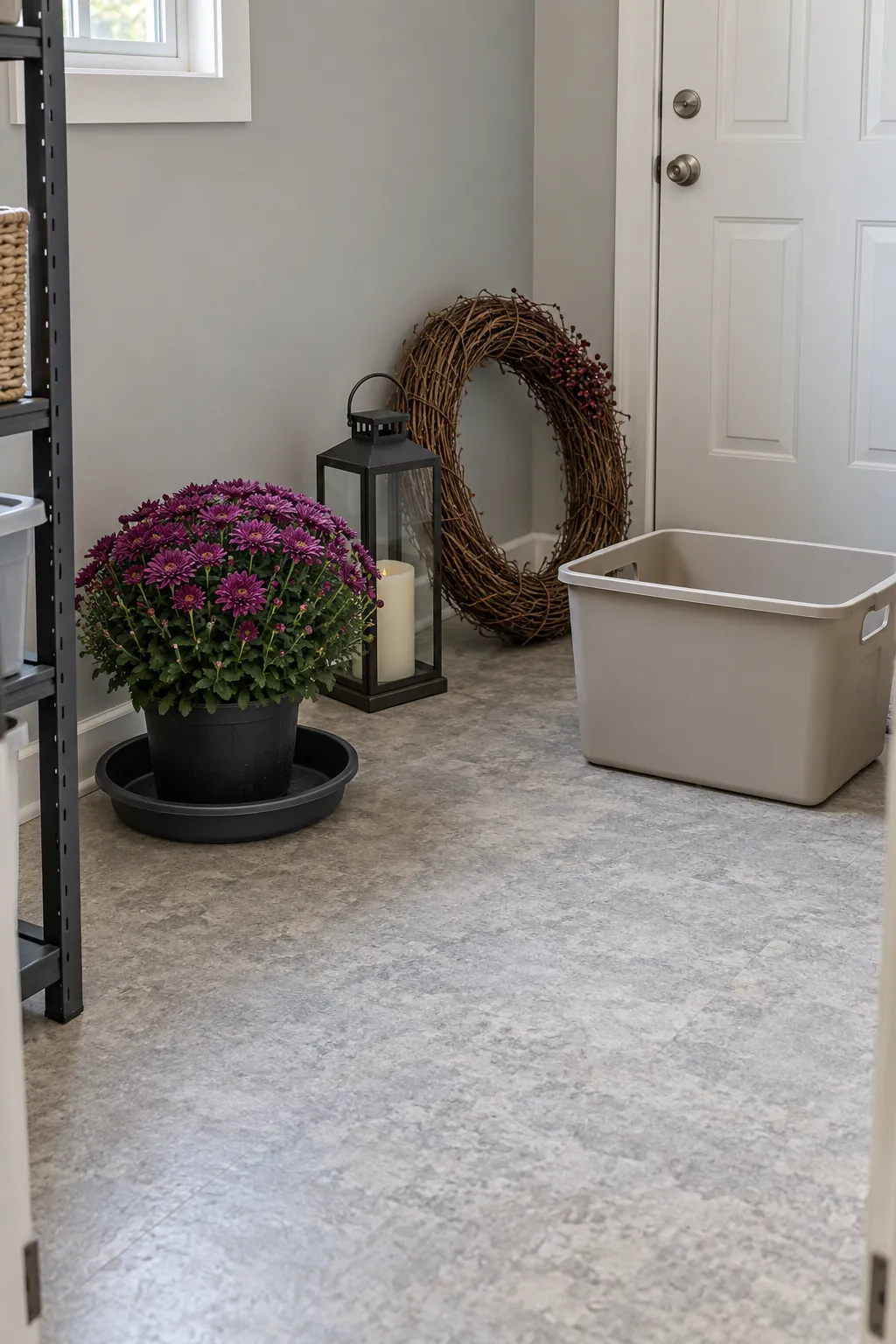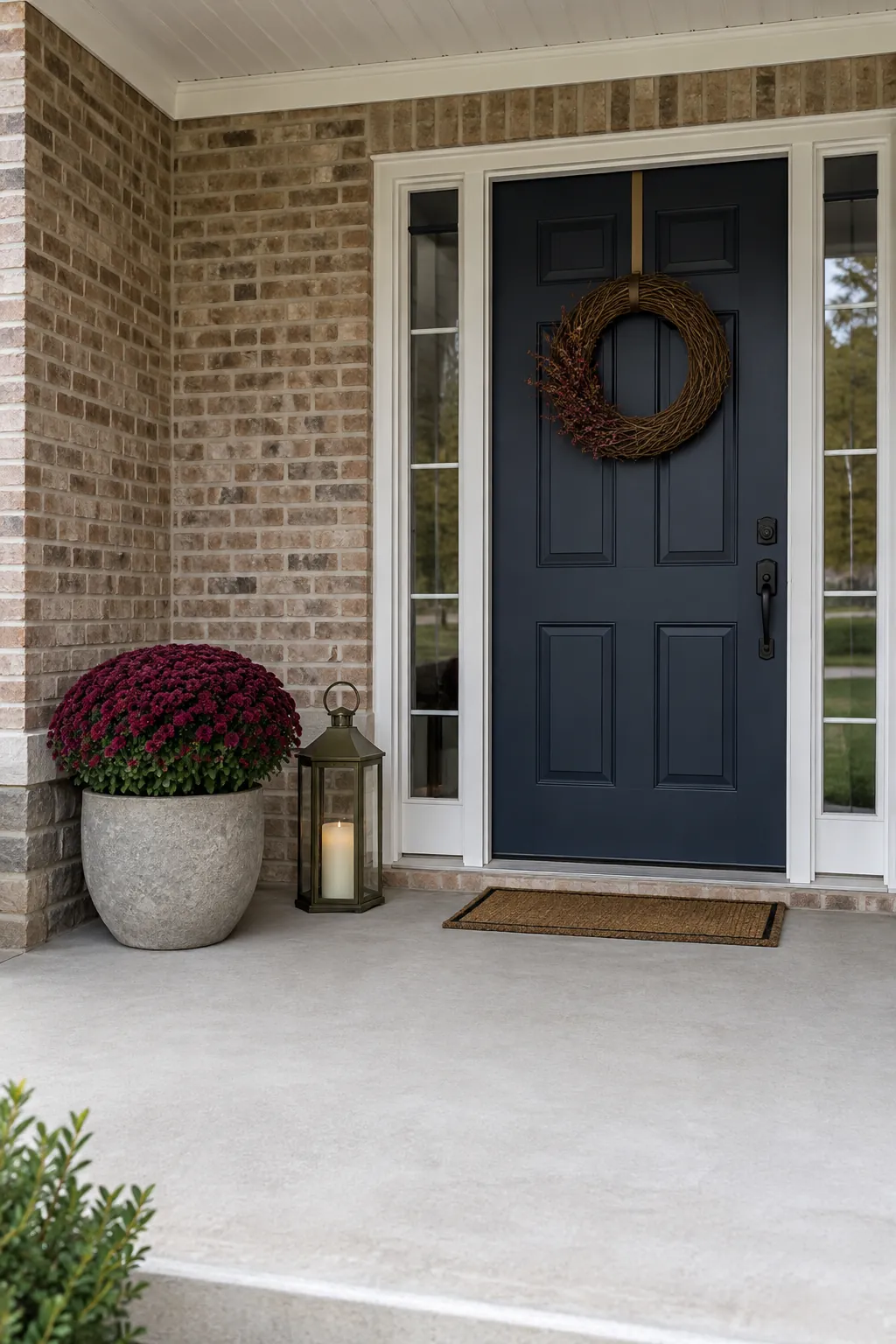
A flower pot that stays upright on a calm afternoon may behave differently when a gust catches its blooms. The useful question is what can tip, slide, swing, or detach on your particular porch. Start with the base and the attachment surface, then decide which pieces should come indoors when the forecast changes.
Find the Places Where Wind Catches Your Display
A porch roof keeps some rain away, but it does not prevent wind from entering through the sides. Corners, gaps between buildings, and open railings can expose decorations that look sheltered from the street. Watch which objects rock during ordinary breezes, and note whether a wreath lifts away from the door or a pot slides before it tips.
Keep the route to the door and any handrail clear while you rearrange the display. Move tall, light pieces farther inside the covered entry instead of concentrating them along the outer edge. Wind resistant porch decor begins with reducing exposure, not with adding more fasteners to every object.
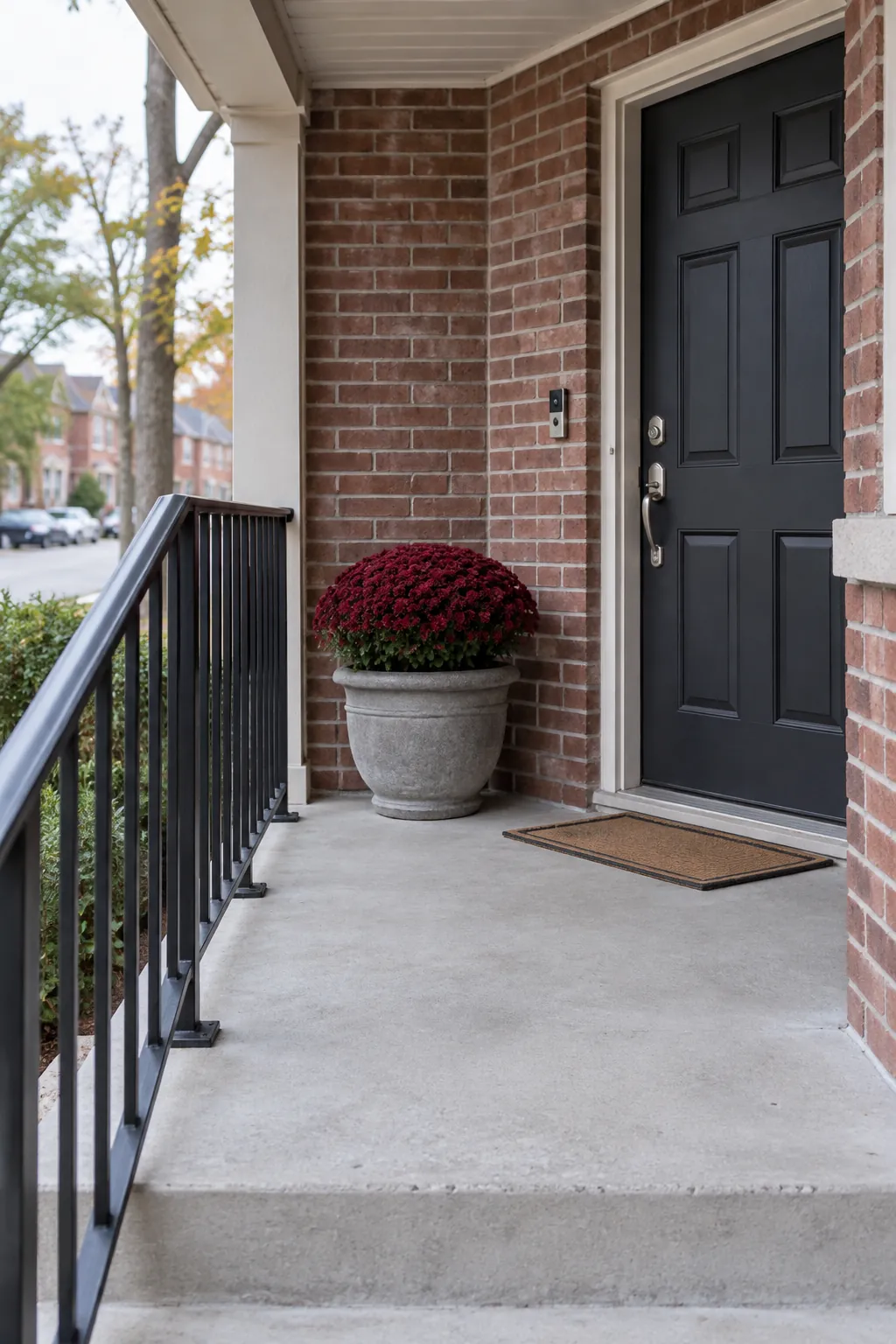
Give Mums a Broad Base Without Blocking Drainage
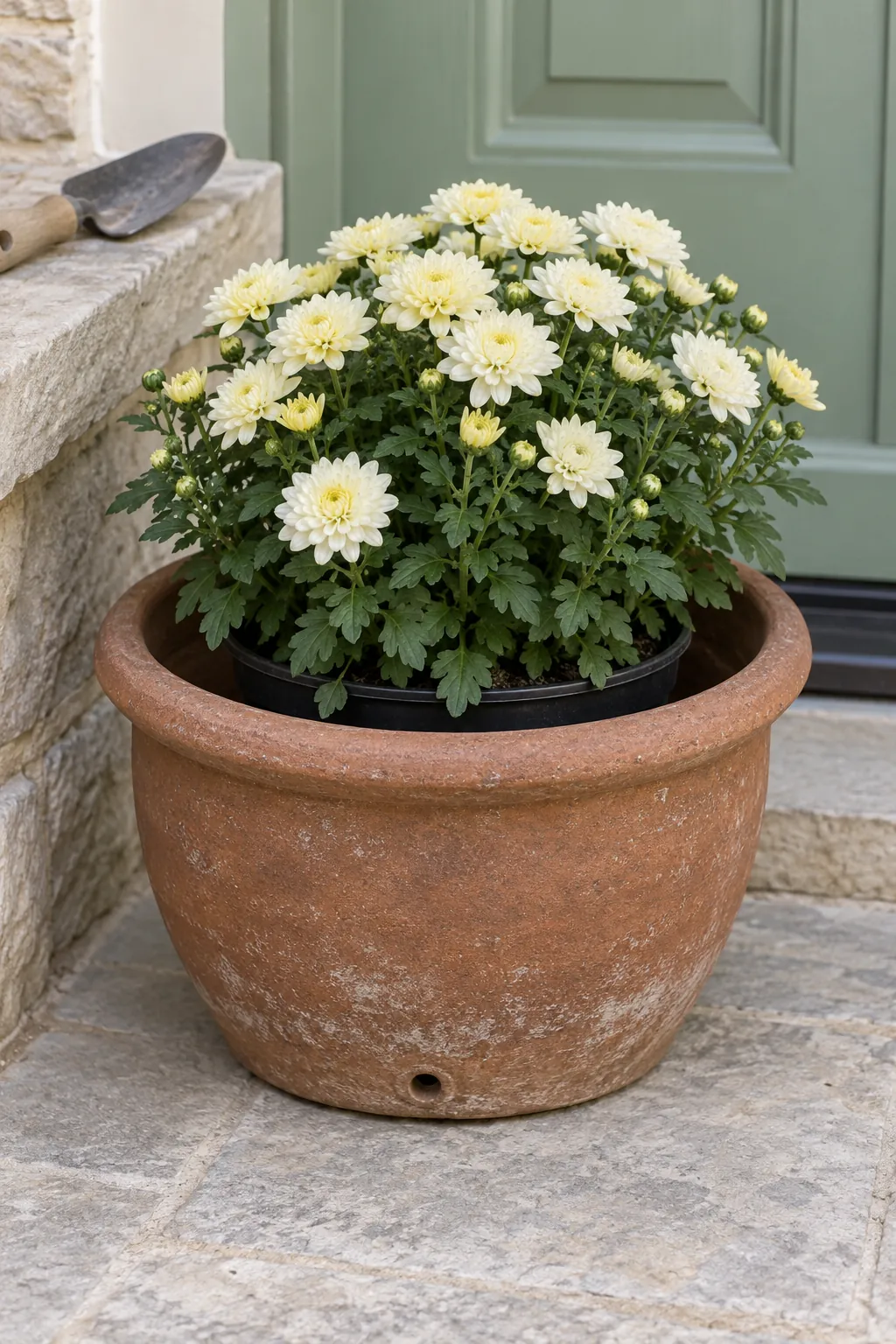
A broad, heavy outer container is usually a better starting point than a narrow plastic pot with a large flower canopy. Set the nursery pot inside a stable outdoor planter that sits level and fits its footprint. Check the combined weight before choosing its position, especially on an elevated porch or shelf.
If you need ballast, place it in the outer container according to that container’s design, separate from the nursery pot’s growing medium. Do not bury the mum’s root ball under stones or cover drainage openings to make the display heavier. A removable weight can make seasonal changes easier, but it must not create trapped water or make the container unsafe to move.
Water should be able to leave both the nursery pot and the outer container. Empty a saucer after watering rather than letting roots sit in collected water. Large decorative planters can still tip in strong gusts, so a weighted flower pot is not a substitute for bringing plants inside before a storm.
Attach the Wreath to the Actual Door Surface
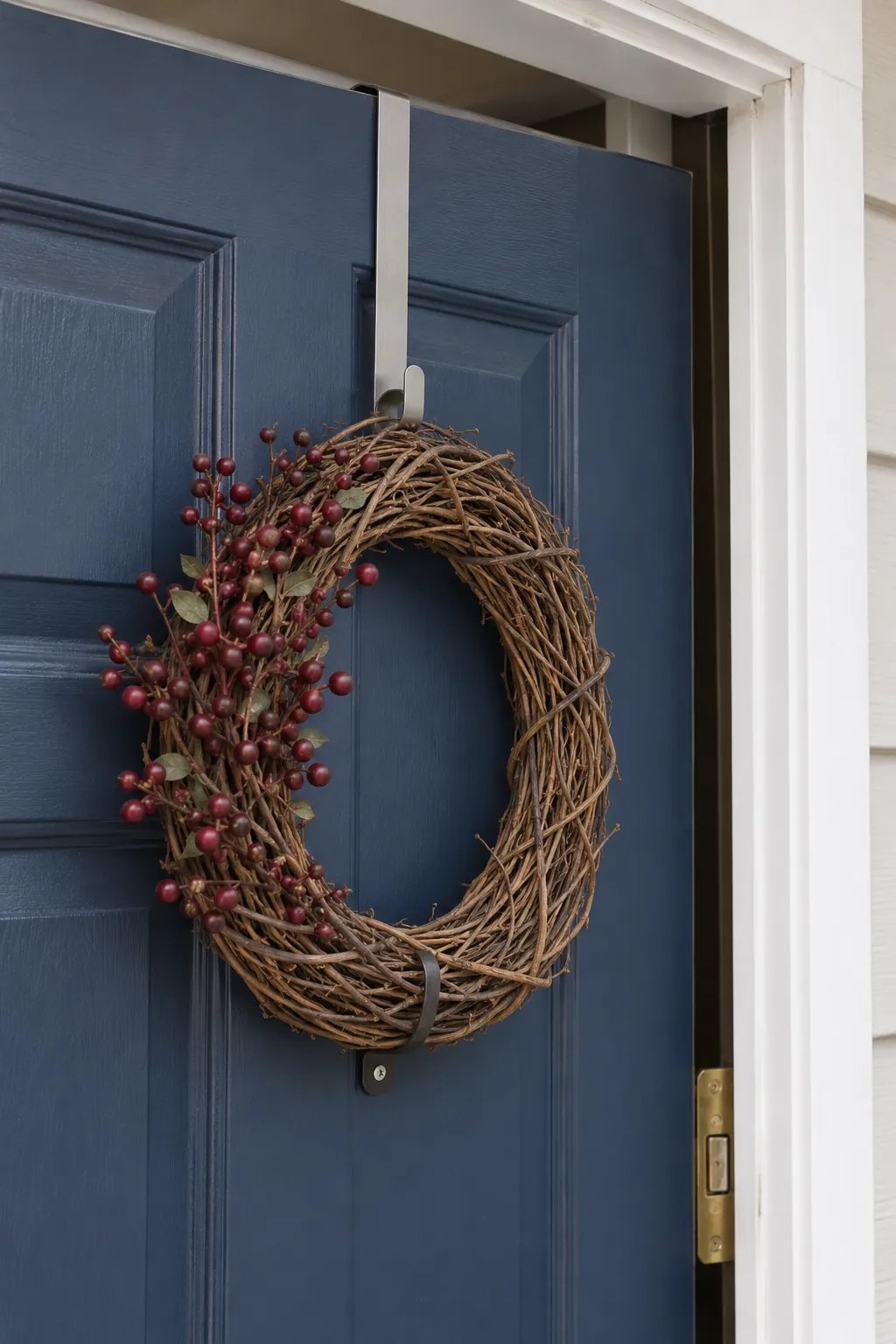
Choose wreath attachment hardware for the material of your door, the wreath’s weight, and outdoor exposure. A hook rated for a smooth sheltered surface may not work on textured paint, glass with condensation, or a hot sun facing door. Follow the manufacturer’s cleaning, temperature, curing, and load instructions rather than assuming every adhesive hook is interchangeable.
A door hanger can work when its thickness allows the door to close and latch normally. Add a suitable lower restraint if the wreath swings, but do not fasten anything where it blocks the lock, damages weather seals, or prevents escape. For a rental, get permission before drilling, and use only a removable method suitable for the finish.
Put Lanterns on the Floor and Protect Their Contents
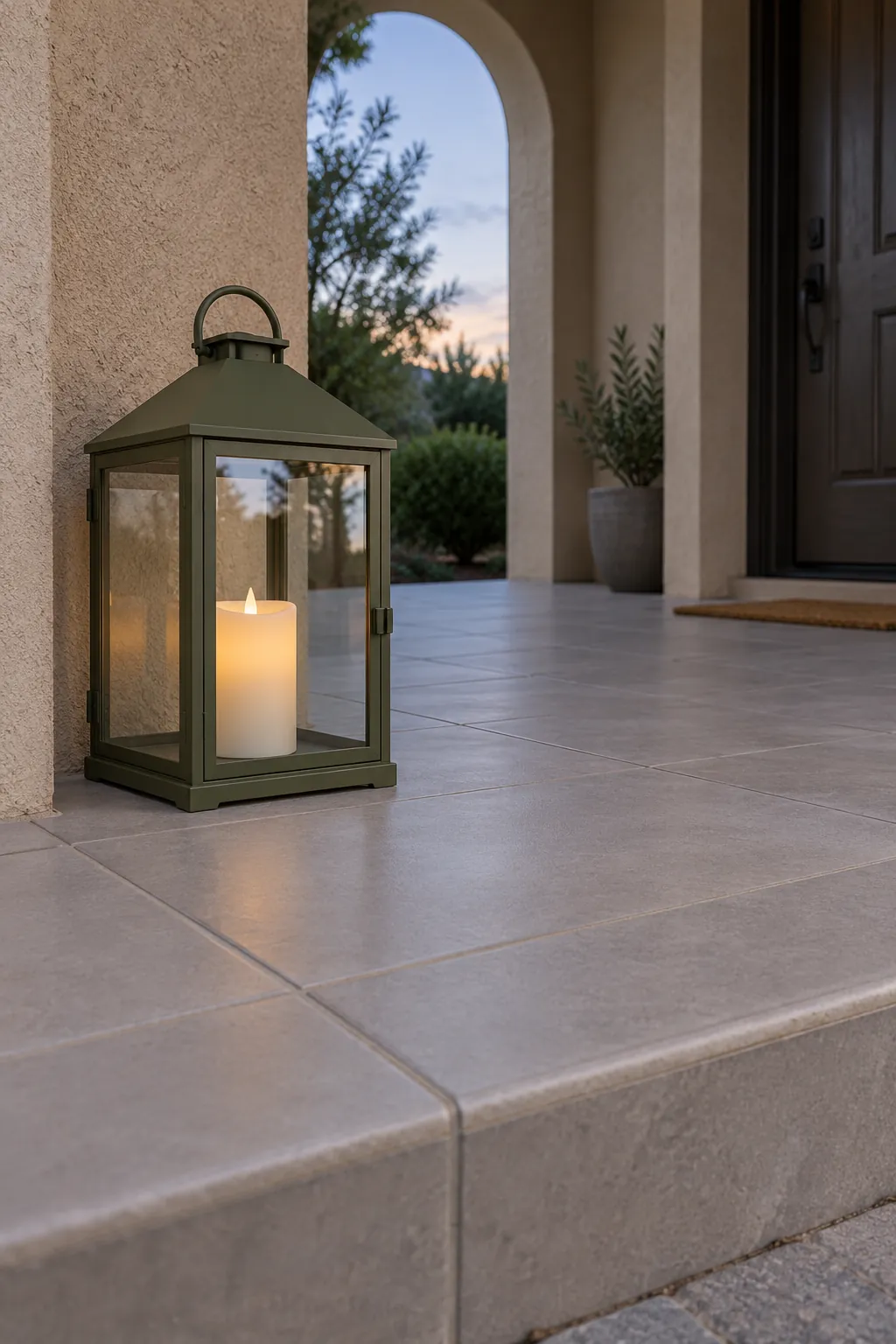
A lantern with a broad base belongs on a level floor area away from steps and the main walking route. Use a battery candle and an outdoor rated lantern appropriate to its exposure; an attractive glass enclosure alone does not make a candle or battery compartment weatherproof. If the lantern can slide, tip, or swing into a wall, relocate it rather than balancing it on a shelf or suspending it from a light hook. Keep lanterns and electrical accessories away from standing water, and follow their product instructions.
Reduce Loose Layers Before Adding More Ties
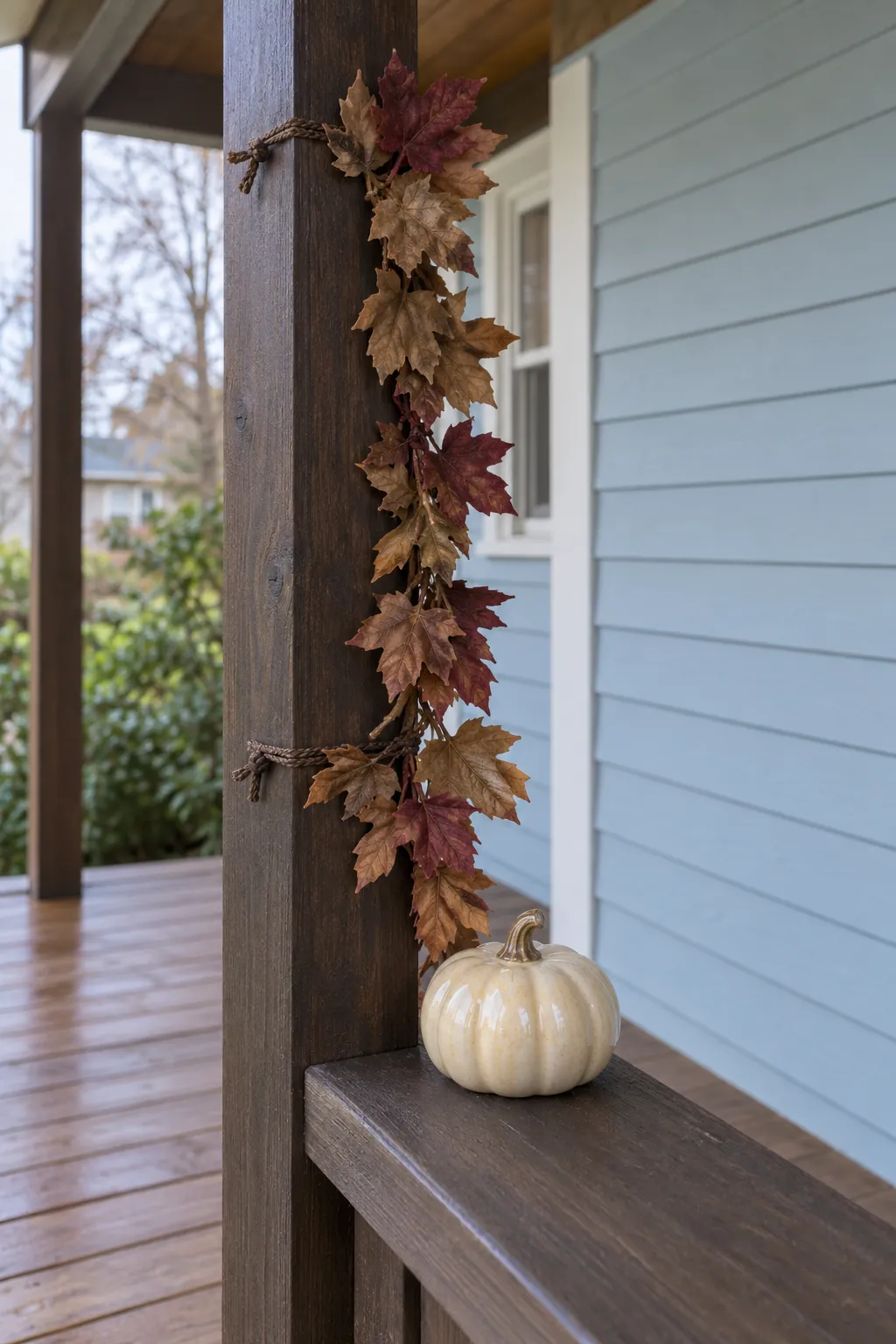
Loose bows, long garlands, and fabric throws give wind more edges to lift. Shorten the display to a few securely placed objects, with greenery tied at several suitable points instead of hanging from one weak connection. Use outdoor suitable ties that do not cut into plant stems or damage the mounting surface.
Keep hollow pumpkins and light baskets out of exposed corners unless they have a secure, compatible attachment. Never fill a lantern with improvised weights against its glass or tape over a planter’s drain holes. A smaller weatherproof fall display is easier to check and remove than a layered arrangement with hidden connections.
Make a Storm Removal Plan You Can Actually Use
Use the local forecast and weather alerts to decide when to remove decorations. There is no universal safe wind speed for a porch arrangement, because object shape, exposure, attachment, and container weight differ. Bring movable decor inside before conditions become dangerous to work in.
Set aside a storage spot for mums, lanterns, and the wreath, with a washable tray beneath wet containers. Remove batteries or power accessories as directed by their makers when items will be stored for a while. Put fragile decorations where they cannot fall onto the plants.
After the weather passes, inspect hooks, ties, planter bases, and any damaged finish before rebuilding. Replace a loose connection instead of hiding it behind flowers. A storm ready porch is one you can clear quickly while the weather still allows it.