
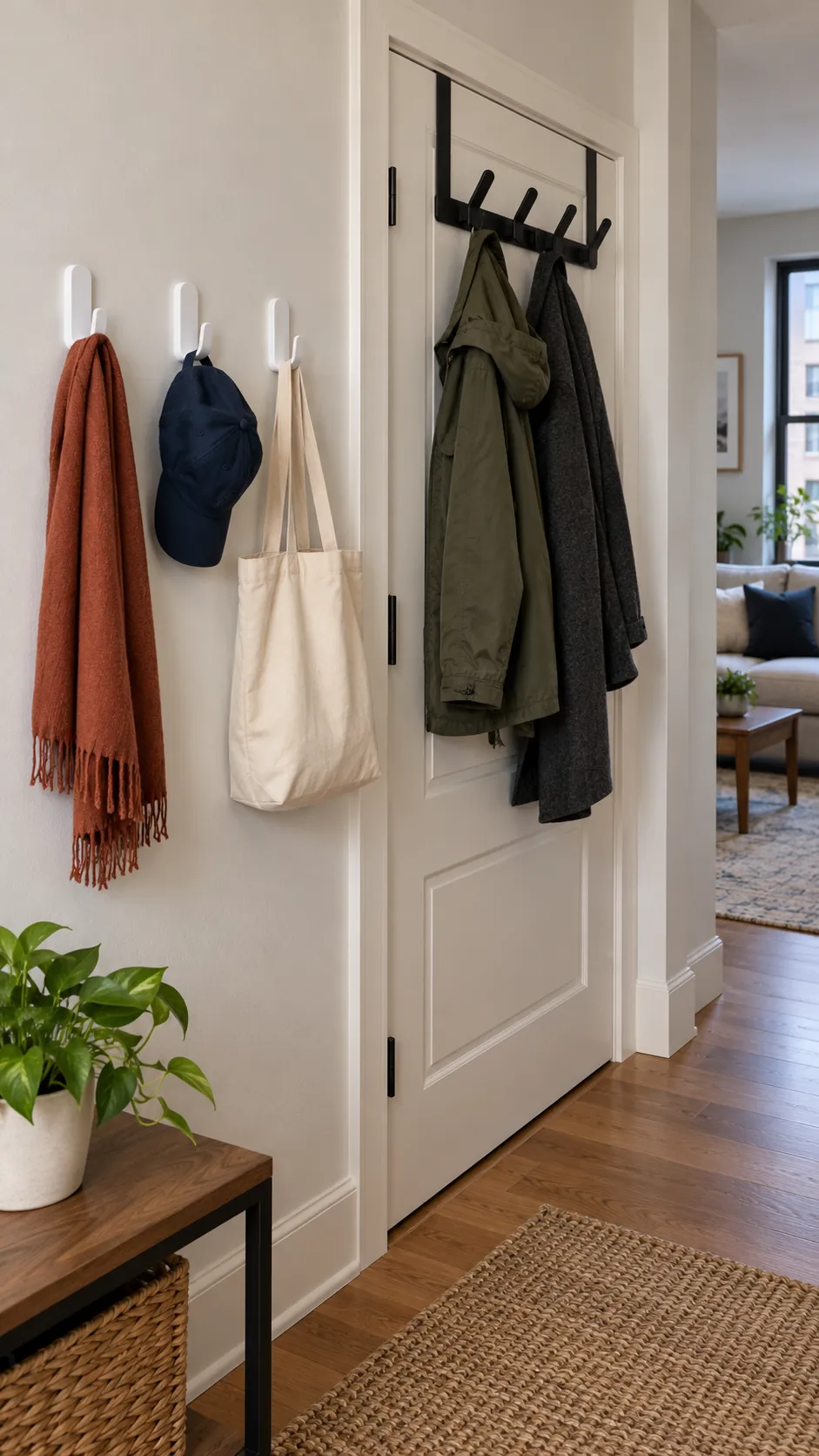
No drill coat storage sounds simple until paint, door clearance, and winter jackets enter the decision. Removable adhesive hooks keep the door free, but they depend on a suitable wall surface and careful installation. Over door hooks avoid adhesive on paint, yet they add thickness, noise, and load to a moving door.
Renters should compare the exact surface, items, and daily movement in their entry. Neither format is damage proof in every home. A good choice follows the product instructions and works without scraping, overloading, or forcing a door.
Check the wall finish before using adhesive
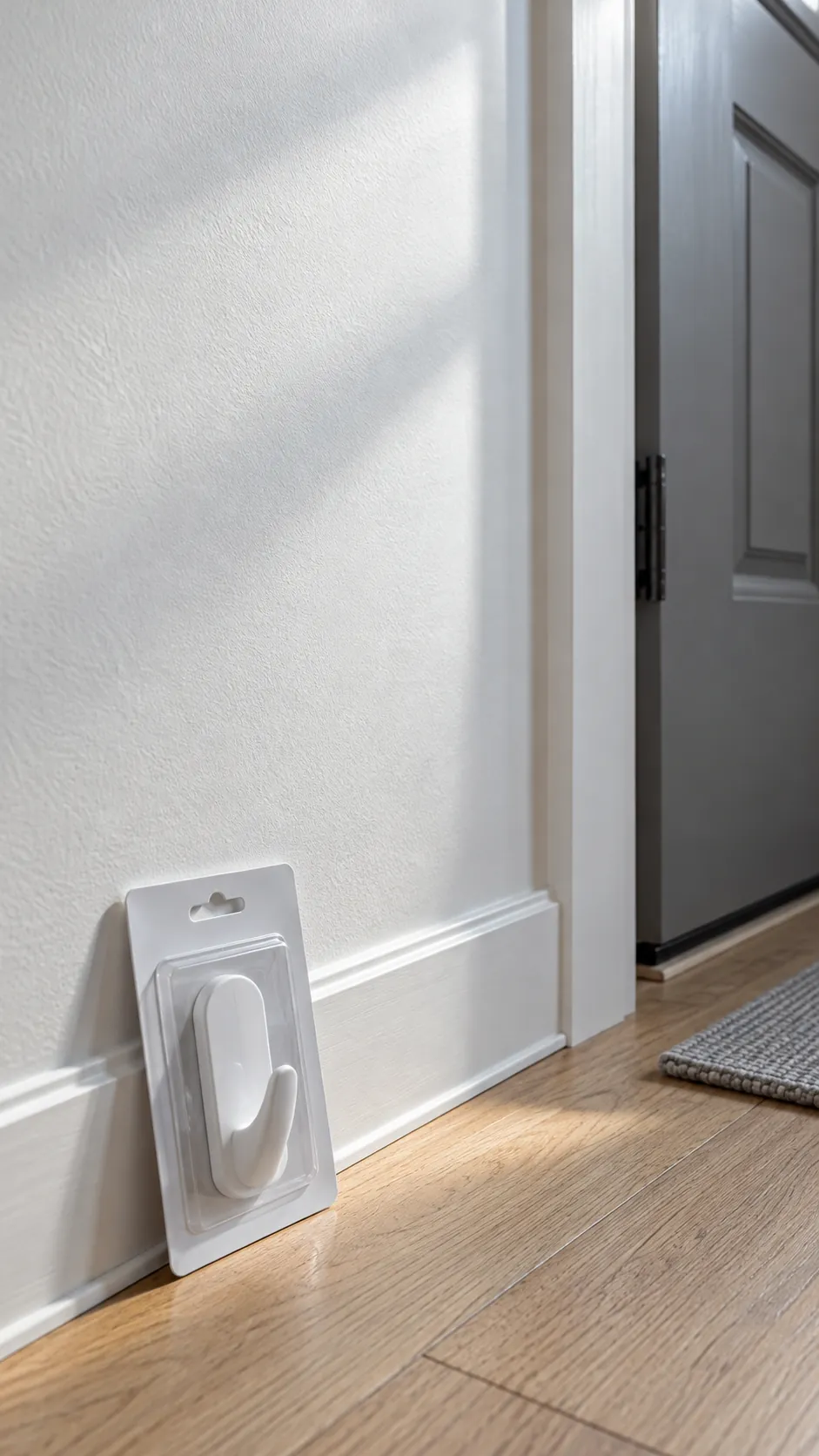
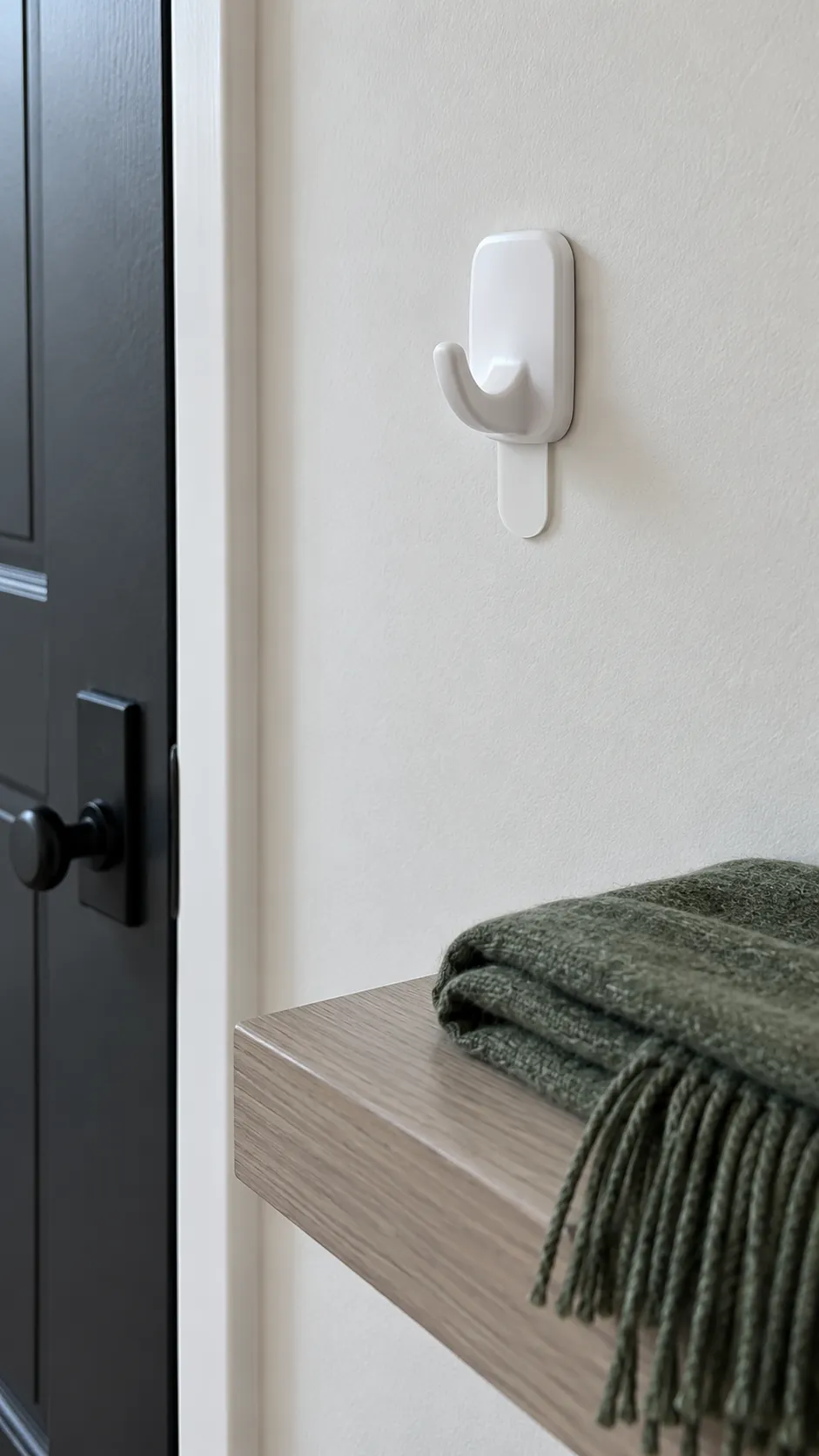
Removable hooks need clean, sound, compatible paint. Fresh paint, chalky finishes, textured walls, wallpaper, and weak previous coats can reduce adhesion or increase removal risk. Read the surface exclusions and required paint cure time. Test only where the product instructions allow, and do not assume a hidden spot proves every painted area is identical.
Match the hook to the real hanging load
A dry scarf and a wet winter coat place very different demands on a hook. Use the manufacturer rating for the exact hook and surface, then leave a sensible margin. Bags can create extra force when someone grabs them quickly. Spread light items across separate hooks rather than stacking several garments on one point.
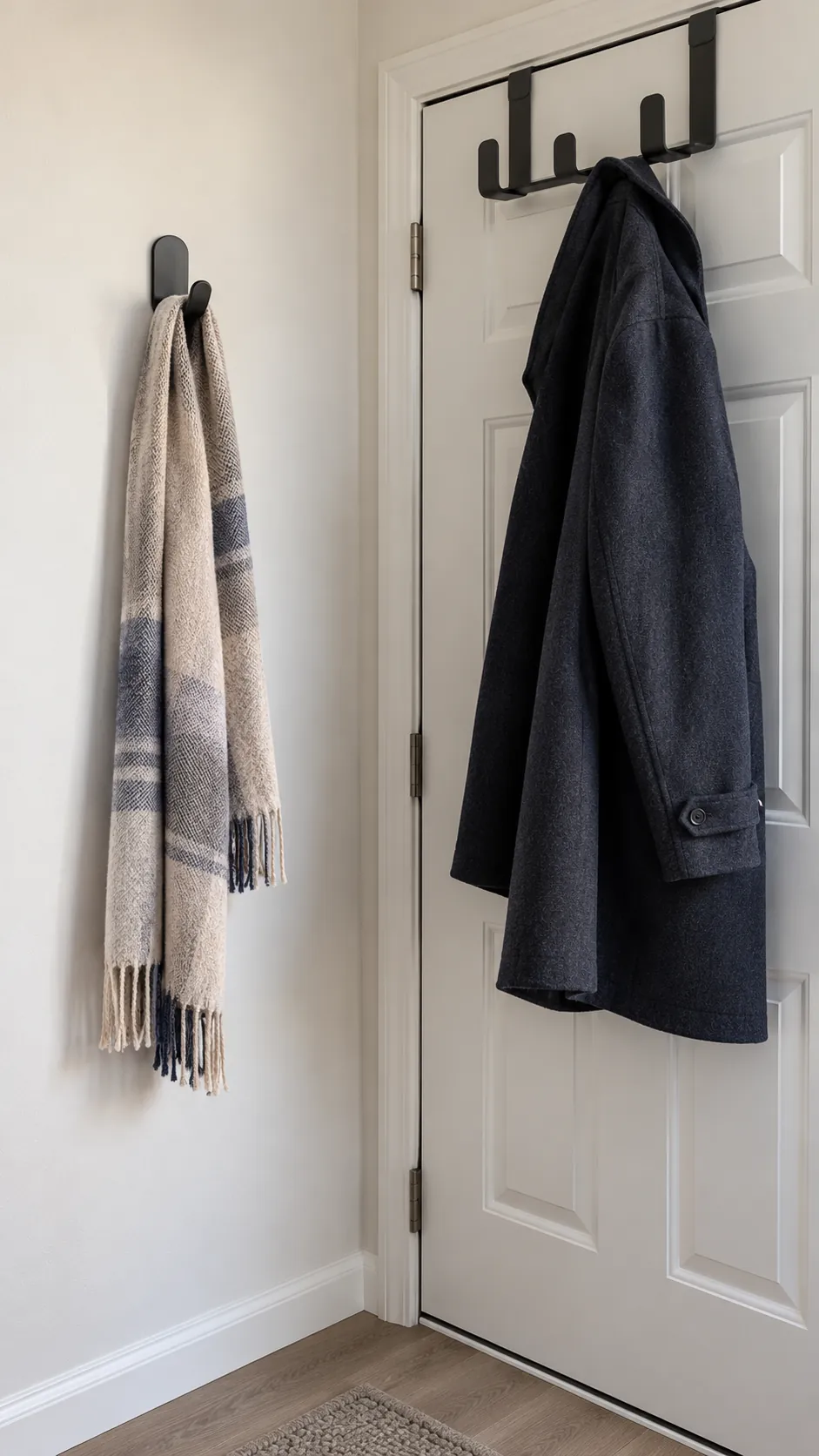
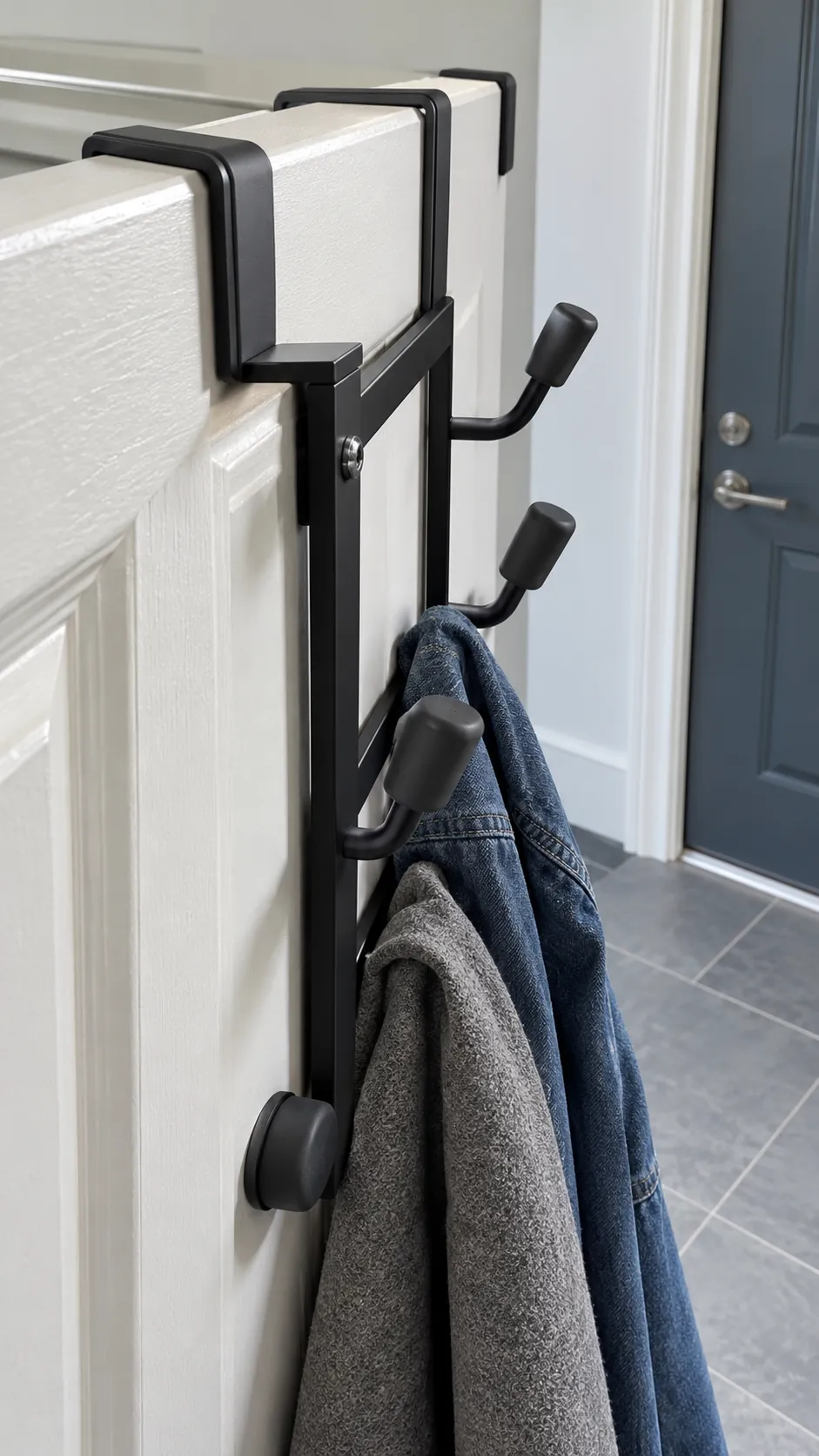
Over door racks transfer load through the top of the door. Confirm the rack, door, hinges, and door type are suitable. Keep heavy items low and balanced when the design permits, and stop using the rack if the door begins to sag, rub, or close differently.
Measure the top and back of the door
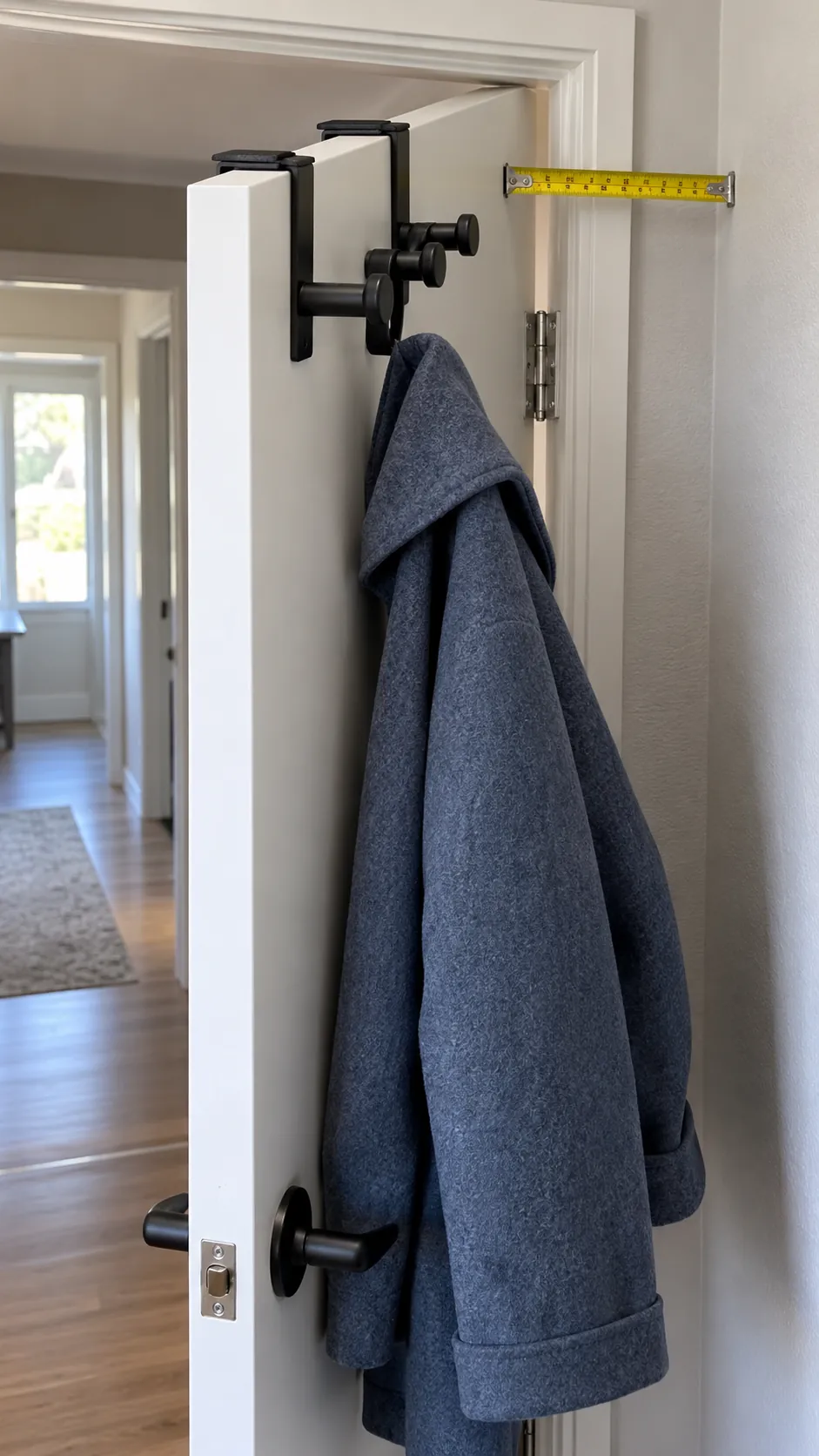
An over door hook must fit between the door and frame while the door moves. Check hook thickness, casing clearance, weather seals, the closer, and any wall behind the open door. Hanging coats also project into the room or closet. Test the full swing with the bulkiest garment you expect to store.
Reduce rattles, rubbing, and paint marks
Hard metal against a painted door can click with every movement and slowly rub the finish. Look for padding at the top and rear contact points. A lower stabilizing pad can limit swinging when it is part of the product design. Keep hooks away from handles and make sure hanging hardware does not strike the wall.
Adhesive hooks should sit where garments will not brush a corner or drag across trim. Give each item room to hang naturally. Crowding adds sideways force and makes a small entry feel less usable.
Install and remove exactly as directed
Clean the approved surface with the specified method, respect the waiting period, and press the adhesive for the stated time. Do not substitute household cleaners or shorten the cure period. When removing the hook, support the base and pull the release tab in the required direction, slowly and close to the wall. Pulling outward can damage paint or break the strip.
Choose the option that suits daily movement
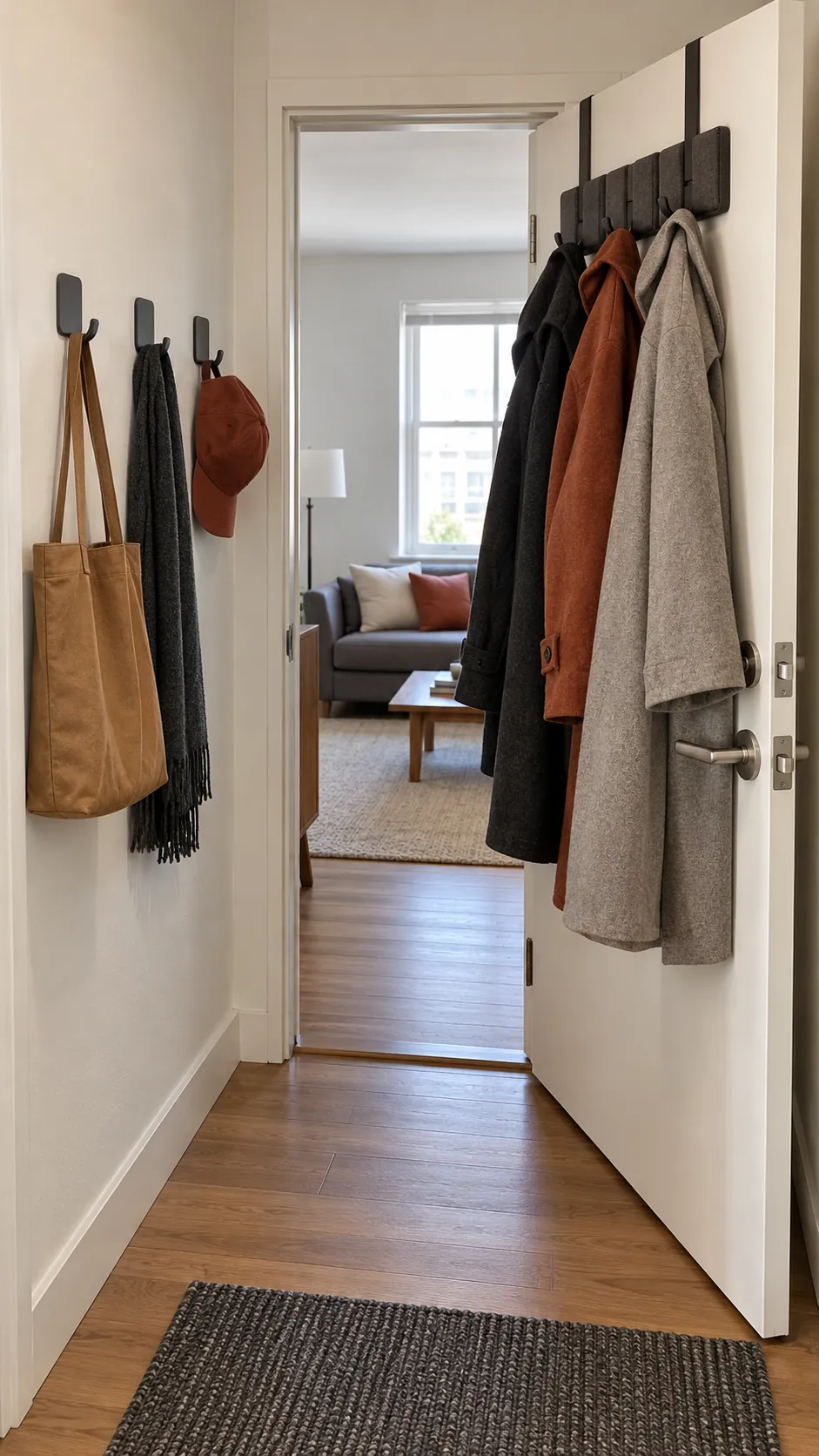
Choose removable adhesive hooks for compatible smooth walls, light separate items, and locations where the door must stay completely unobstructed. Choose over door hooks when the wall finish is unsuitable, the door has verified clearance, and the rack is approved for the intended load. A mixed approach can also work, with light accessories on approved adhesive hooks and coats on a suitable padded door rack.
Before buying, check the lease, product instructions, wall condition, door movement, and the heaviest item you will hang. The best system is not the one with the largest claimed capacity. It is the one that stays secure, keeps the entry clear, and can be used without creating a new repair problem.