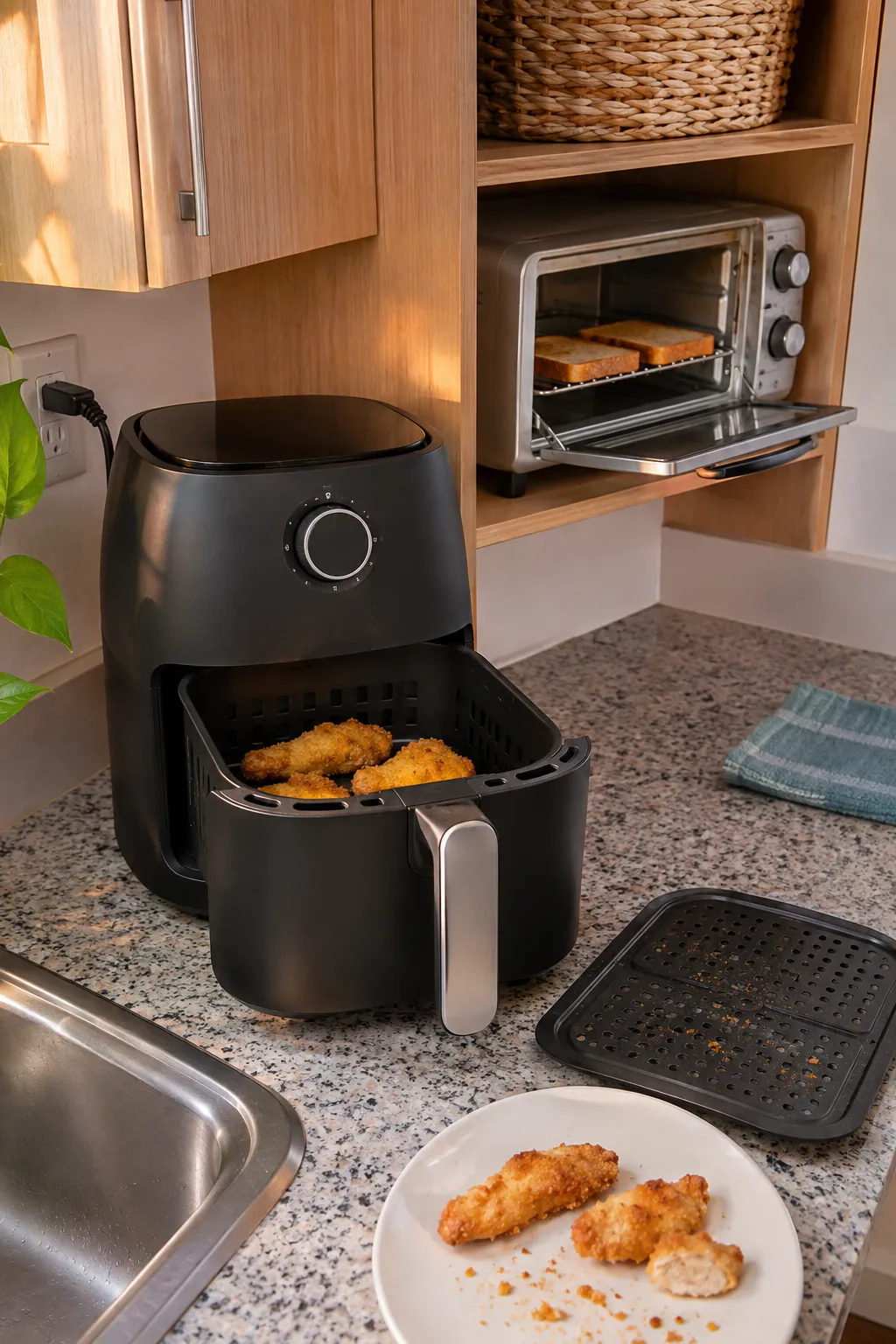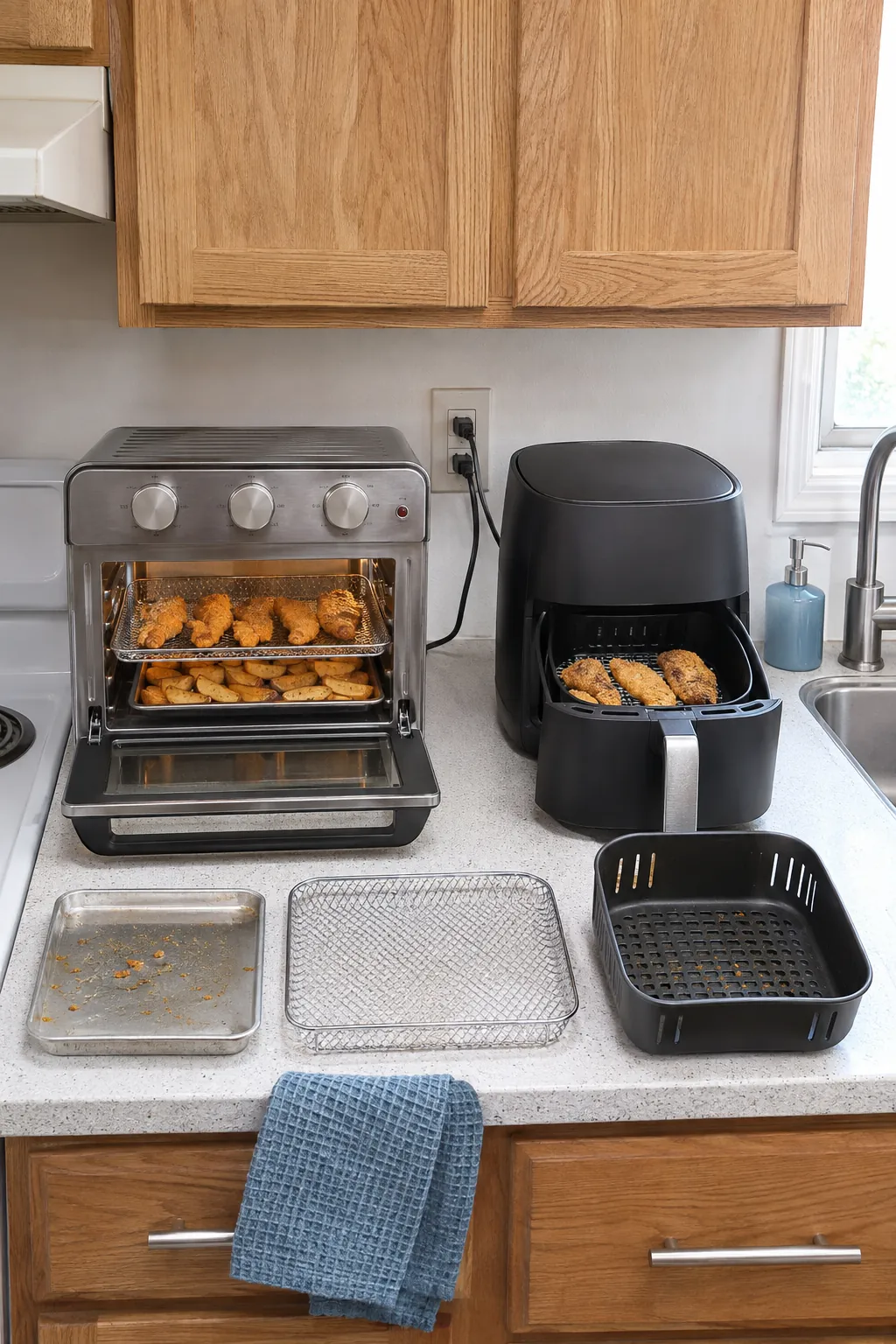
The best air fryer for a small kitchen is not automatically the smallest machine. A basket model can crisp quickly and clean easily, while an air fryer toaster oven can replace a toaster and handle flat foods. The wrong format leaves you with an appliance that occupies prime counter space but still sends common meals back to the main oven.
Choose by the food shapes and cleanup you repeat each week. Capacity labels alone do not show usable cooking surface, and a multifunction control panel does not guarantee that every mode performs equally well.
Compare the working footprint
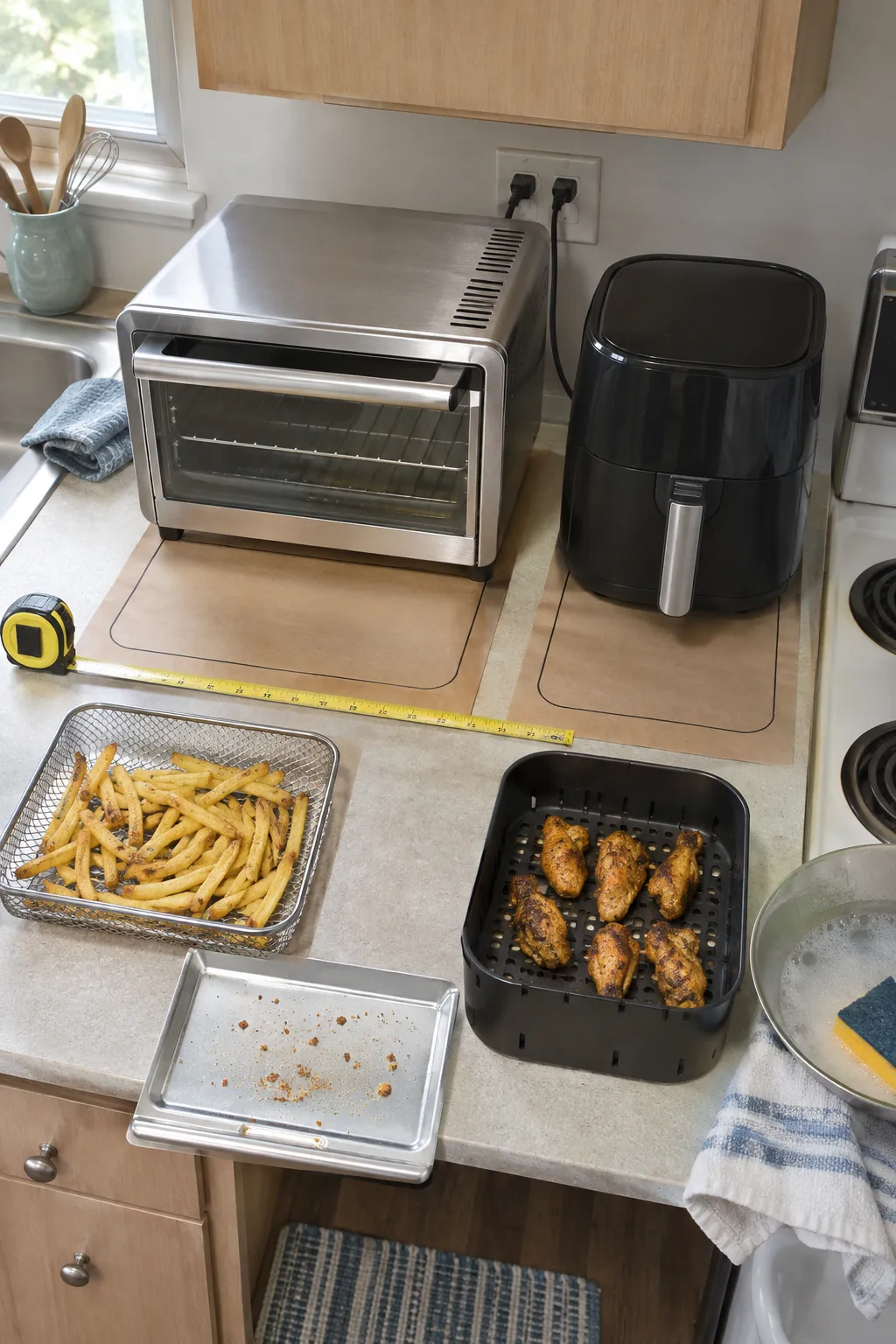
Measure width, full depth, and height with the required ventilation gaps. Then add the space needed to pull out a basket or lower an oven door. A short appliance can still block a drawer or remove the preparation zone in front of it.
A basket format often has a smaller body but needs clear space in front during loading. A toaster oven format is usually wider and may be too tall under a cabinet, yet it can replace a separate toaster. Count the appliances that leave the counter, not only the one that arrives.
Choose a basket for focused crisping
A basket air fryer moves hot air through a compact chamber around a perforated basket. This layout often suits fries, roasted vegetables, wings, and small reheated portions. A quick shake redistributes pieces without opening a large door or moving a tray.
The useful limit is surface area. Food piled deeply can steam and brown unevenly, even when the volume claim sounds generous. Compare the flat basket dimensions with the portion you cook, and expect more than one batch when pieces cannot sit in an open layer.
Choose an oven format for flat foods
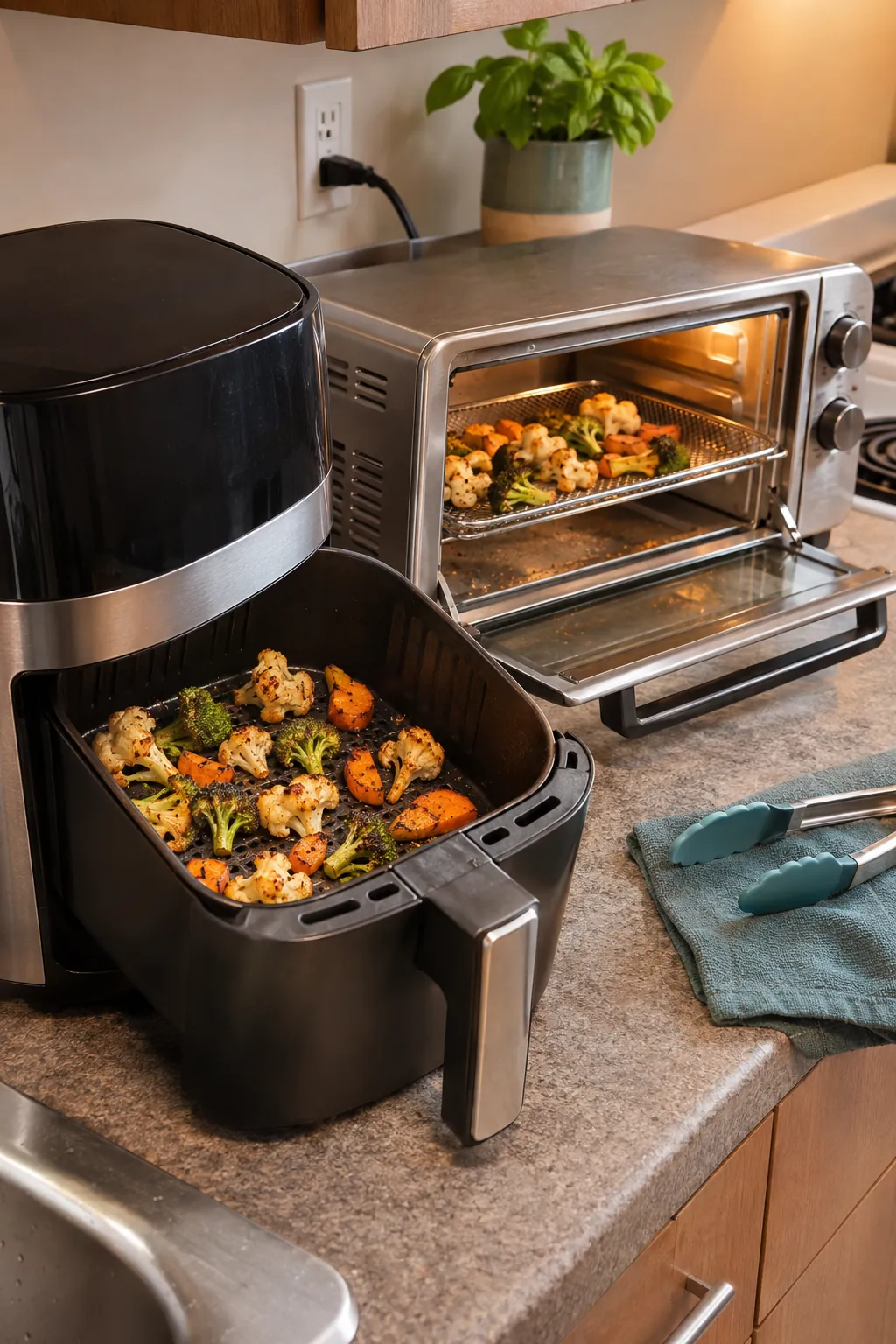
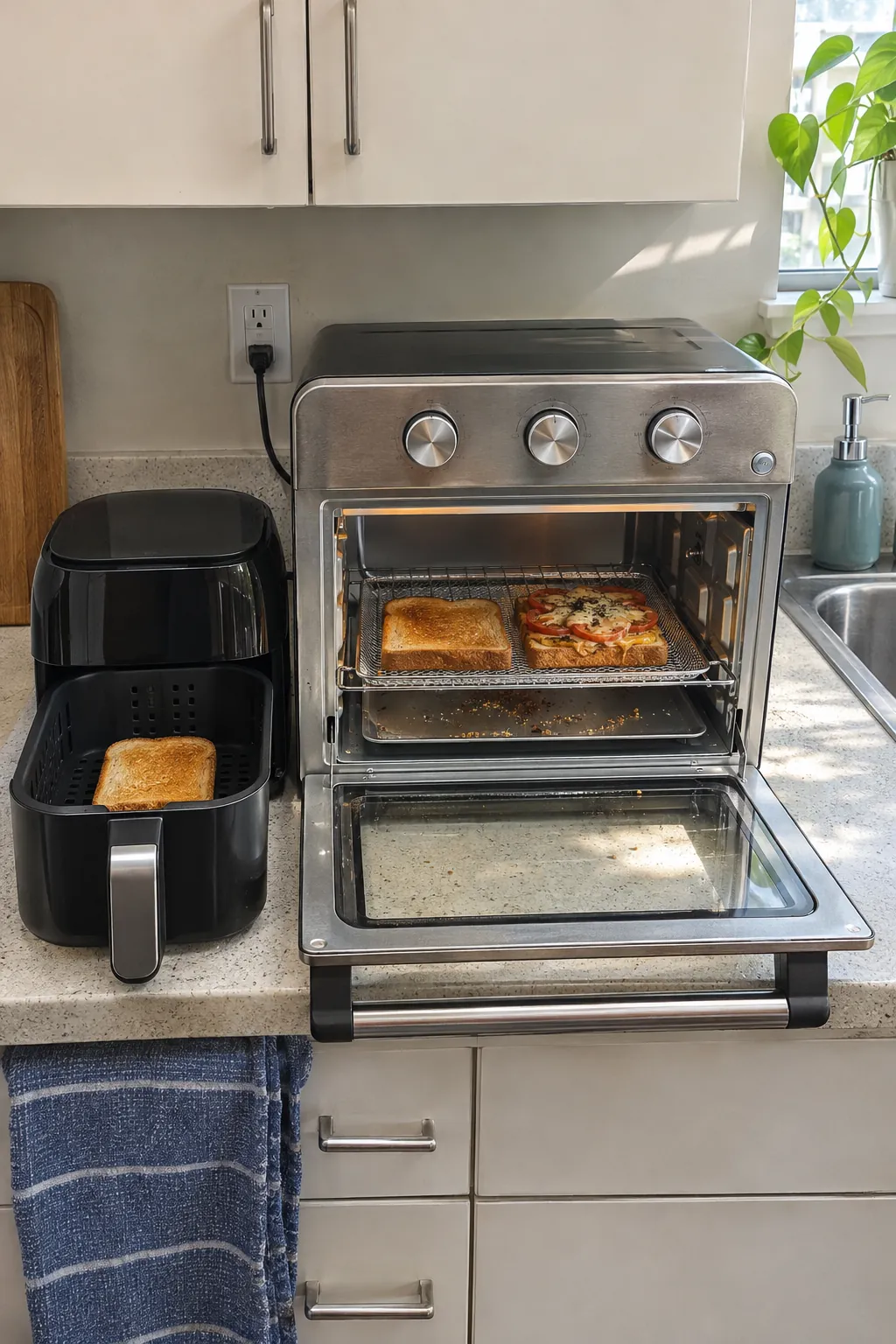
An air fryer toaster oven accepts toast, open sandwiches, small pizzas, nachos, and food arranged on a shallow tray. The wide cavity can be more useful than a deep basket when the meal should stay flat. It may also cover basic baking and broiling tasks when the model performs those modes well.
Airflow and browning can differ by rack position. Check whether the manual asks you to rotate a tray or flip food. A larger cavity may take longer to heat and may deliver a different crisp result from a compact basket, so decide whether versatility matters more than speed.
Judge usable capacity by a real meal
List one meal you expect the appliance to cook from start to finish. Measure the food in a single layer on a plate or sheet of paper, then compare that area with the basket base or included tray. Do not treat total interior volume as usable browning space.
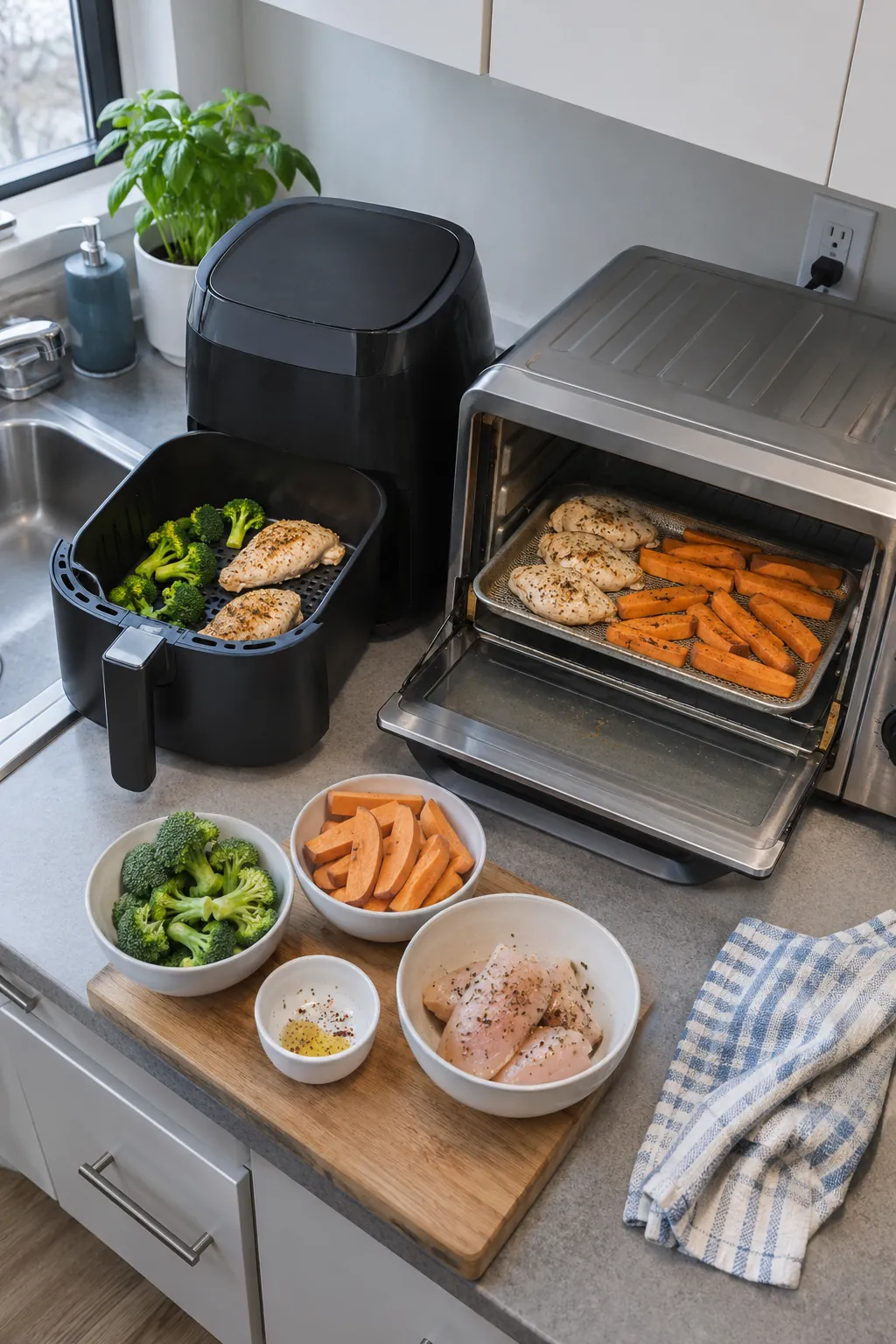
A couple may prefer a wider basket that finishes one crisp side dish at once. Someone who makes toast and sandwiches may gain more from a broad oven rack. If you cook several components, check whether they require different times and temperatures before assuming one large cavity solves the whole meal.
Make cleanup part of the choice
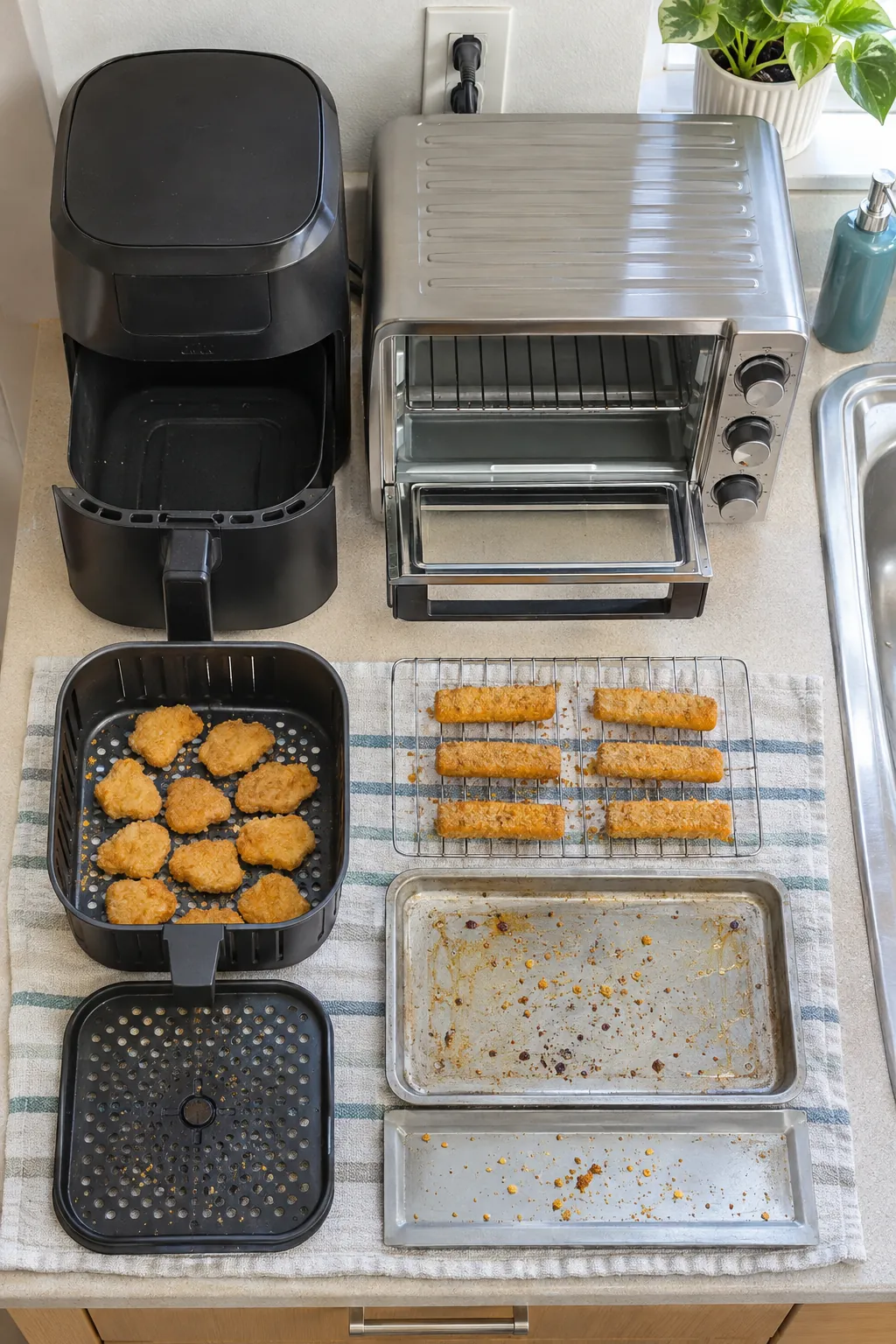
A basket and crisp plate usually lift out, which limits the greasy surfaces that need attention. Confirm whether the parts are dishwasher safe and whether the coating requires gentle tools. Deep corners and a fixed heating area still need wiping.
An oven format can expose a rack, mesh tray, drip tray, crumb tray, door glass, walls, and ceiling to splatter. Removable trays help, but the interior may take longer to clean. If difficult cleanup makes you avoid the appliance, its extra cooking modes have little practical value.
Pick the format that removes more friction
Choose a basket air fryer when crisping and reheating are the main jobs, portions fit in one open layer, and simple removable parts matter. Choose an air fryer toaster oven when toast and flat foods are frequent, one appliance can replace a toaster, and you accept the wider footprint and longer cleanup.
Before buying, map the installed footprint, front opening space, ventilation, outlet, normal food surface, and cleaning parts. That comparison turns a small kitchen appliance choice into a daily routine decision. The better machine is the one you can leave safely, load easily, clean promptly, and use for the meals you already cook.