
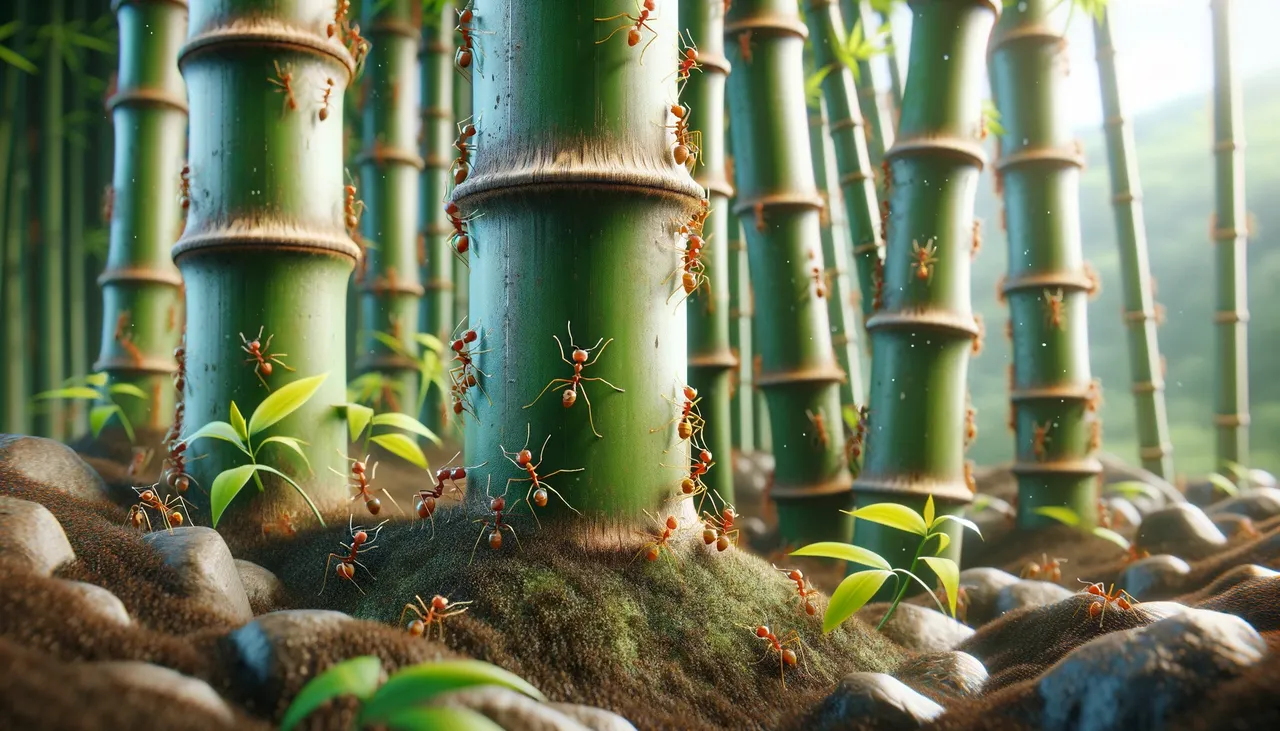
As a gardener, a few bugs bring a sense of dread, and in this case, finding ants on your bamboo is rather unsettling. While many are “benign,” ants are usually a foreboding sign (particularly if you’re also the homeowner). But are ants bad for bamboo? Or does this amazing plant take the small pests in its leafy strides?
Ants and other insects are a normal part of bamboo’s existence; however, surplus ants may indicate the presence of aphids, mealy bugs, or scale insects, which can cause damage to the plants. Some ant species build nests around the roots, destabilizing the plants, particularly in pots.
The relationship between plants and insects may be mutualistic (everyone benefits), commensalism (one party benefits while the other is unaffected), or parasitic (where one benefits at the other’s expense). While ants on bamboo are a concern, not all ant species indicate infestations. But what are the problems? What are the cons of ants on bamboo? And how best to remove them?
The Relationship Between Ants And Bamboo Explained
While bamboo plants are resilient, the presence of ants is not unusual (ants interact with many species in nature). However, when their numbers swarm on these plants, it may indicate a scale bug, mealy bug, or aphid issue.
What Interactions Do Ants Have With Bamboo Plants?
Ants collect honeydew (a sweet liquid) from insects like aphids, mealy bugs, and other scale insects. These insects live on and feed off bamboo plants, and the ants protect them from predators like ladybirds.
Additionally, some ant species build their nests in bamboo plants (living and dead). A study in Brazil concluded that 36 ant species used Clumping Bamboo (Guadua paniculata).
While many generalist ants occupied dead bamboo, Azteca fasciata preferred living plants, where it dominated.
Other ant species of consequence to bamboo plants include:
- Camponotus depressus
- Camponotus longipilis
- Camponotus mirabilis
- Cataulacus muticus
- Polyrhachis arachne
- Polyrhachis hodgsoni
- Polyrhachis schellerichae
- Tetraponera allaborans
- Tetraponera binghami
Across the pond, Asian ants live in the bamboo Gigantochloa scortechinii, and common species include:
- Crematogaster spp.
- Dolichoderus spp.
- Pheidole spp.
- Polyrhachis arachne
- Polyrhachis schellerichae
- Tetraponera attenuata
While ants benefit greatly from bamboo (a food source and shelter), bamboo plants don’t benefit greatly from the ants and, in some cases, are negatively affected (their relationship is commensalism at best and parasitic at worst).
Why Are Ants Bad For Bamboo?
Although ants don’t typically damage bamboo plants, their presence may lead to several undesirable effects.
Aphids, Mealy Bugs, And Scale Insects Cause Black Sooty Mold
The primary issue of ants on bamboo plants is how they facilitate other insects to acquire honeydew.
Aphids, mealy bugs, and many scale bugs in low concentrations don’t have much effect. However, as their numbers increase, they excrete significant volumes of honeydew, which builds up on the plants. Eventually, the honeydew leads to black sooty mold setting in.
Black sooty mold is caused by fungi (mycelium) growing on the leaves and culms (stems) in dark, soot-like threads. This mold grows on the honeydew and does not penetrate the plants.
While these issues are more of a cosmetic concern (the plant looks unattractive), when enough mold accumulates on the leaves, it prevents the plants from effectively photosynthesizing, which leads to a loss of condition, slower growth, and weaker plants that are susceptible to other diseases.
Aphids And Other Insects Suck Bamboo Sap
Aside from the mold that develops from their honeydew, the insect invaders feed on bamboo plant sap, which they extract with their proboscises. These long, needle-like mouth parts penetrate the plant’s outer stem, and the insect sucks the sap from inside.
One insect (or a small group) sucking sap won’t cause too much damage to a plant. When there is an infestation, these insects can weaken a plant, making it more susceptible to disease and other pests and less resilient in poor environmental conditions (e.g., drought).
Saplings are particularly at risk and begin to show signs of wilting when Antonia sp. (bamboo node mealy bugs) and others attack the culms.
These insects’ numbers are usually kept in check by their natural predators, but with the ant’s protection, they can thrive on the bamboo plants.
Ant Nests Add Stress To Bamboo
When ants build nests in the plant, they place extra stress on the growing parts. Ants chew tiny holes through living plants’ hard, woody stems (culms) or enter through existing holes (particularly in dead plants). Their nests are frequently in the internodes of bamboo plants.
While there are few issues in healthy plants, if the environmental conditions change (drought, nutrient deficiencies, etc.), plants may wither and die quicker.
Some ant species eject additional water from their nests (and therefore the bamboo’s culm).
Ant Tunnels May Damage Bamboo Roots
Ants don’t generally eat bamboo roots or rhizomes, but they frequently make their nests in pot plant pots, providing a wonderful haven from heavy rains and other adverse conditions.
The tunnel network causes water to quickly drain from the roots, leaving the pot dry, resulting in the plant wilting /losing condition.
This nesting behavior is less of an issue in the soil where bamboo roots have space to spread, but it may happen when the nest is big enough or the bamboo plant is small/a sapling.
Do Ants Provide Any Benefits To Bamboo?
Although ants seem more of a hindrance than a help to bamboo, they provide a critical service in decomposition and nutrient recycling. Ants that nest in dead bamboo assist in the process of breaking down the lignified culms.
Once broken down, the nutrients return to the soil for new shoots to use.
In some situations, ants may protect the bamboo plant from other insect attackers, but several species show no interest in assisting the plant.
How To Control Ants On Your Bamboo
The only long-term solution for ants supporting aphid or mealybug populations is to remove the food source (pests) and then remove the colony.
Remove Ant Colonies From Around The Roots
If you have bamboo as a pot plant and ants moved in, the simple solution is a deep flush (of water). The excess water disturbs the colony, which quickly leaves the pot.
Once removed, keep watering on a weekly schedule to prevent their returning.
Remember that the colony will move to a new “safe” location, so inspect your other plants lest they establish themselves there.
The alternative measure is to use chemical control, which is not limited to pesticides (which kill all insects).
Diatomaceous earth is a fantastic alternative to poison, as it “saps” moisture from the ants, which kills them.
Remove Aphids And Scale Bugs
The best way to mitigate (and remove) an ant problem on bamboo plants is to remove the food source. While bamboo nesting ants still colonize the culms, you’ll deter those species after honeydew.
There are several control methods, including:
- Remove infested plant parts, then use Neem oil (2.5%) or Rogor (between 0.05% and 0.075%).
- Use a mild antibacterial (liquid) soap and wipe down the affected areas (in mild cases).
Using pesticides is not ideal as they remove the beneficial insect predators of these pests.
Preventing an infestation is significantly better than removing one. Be observant, and inspect your bamboo plants frequently. Act in due haste if you see ants tending to smaller insects on your bamboo!
Should You Remove Ants Living In/Around Bamboo?
Whether you should remove ants from your bamboo depends on several factors.
- The ant species and lifestyle. Are they a bamboo nesting species, or are they farming honeydew?
- The extent of the invasion – are there many ants and their food sources on the bamboo?
- Where is the bamboo, and what purpose does it serve? If the plants in question are pot plants around your house, removing ants is essential to prevent further issues and invasions.
Although many species naturally inhabit bamboo plants, we don’t necessarily want them in our gardens, and the rule of thumb is to remove them before they cause issues.
Conclusion
Although ants don’t typically damage bamboo, their activities on and around these plants may produce undesirable effects. Most damage ants cause is through tunneling activities and protecting sap-sucking insects, which secrete a sticky-sweet substance the ants collect. The effects are mostly cosmetic, but the plant may deteriorate under severe infestations.