
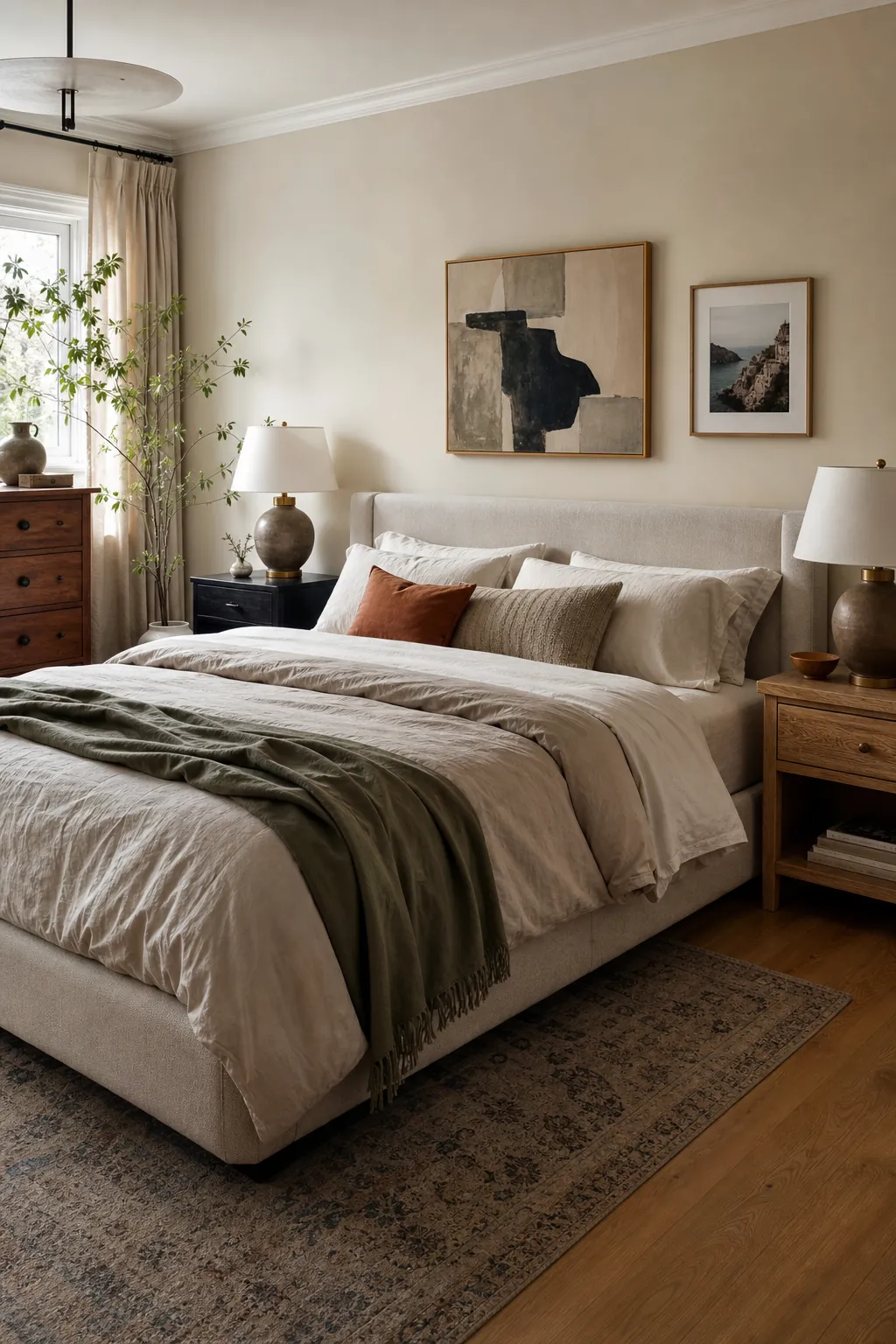
The hardest part of designing a shared bedroom usually is not choosing between modern, vintage, boho, minimal, or romantic decor. It is the quiet feeling that one person will have to disappear for the room to look finished. A good couple bedroom does the opposite: it gives the room one calm visual language, then makes deliberate space for both people to show up.
If you and your partner like different styles, start with this rule: large pieces should create peace, small pieces should carry personality. That one shift keeps the bedroom restful while still making it feel like a real shared bedroom, not a hotel room one person tolerated.
Start with the overlap, not the argument
Before buying anything, each person should collect 10 to 15 bedroom images they genuinely like. Do not filter for budget, size, or whether the other person will agree. Then look for repeated overlap: warm wood, linen bedding, black metal, curved lamps, green plants, framed art, muted color, clean lines, vintage texture, or cozy lighting.
This turns the conversation from “your style versus my style” into a shared vocabulary. Maybe one person calls their taste modern bedroom decor and the other calls theirs cozy bedroom decor, but both keep choosing walnut furniture, soft white bedding, and low warm light. That overlap is the design brief.
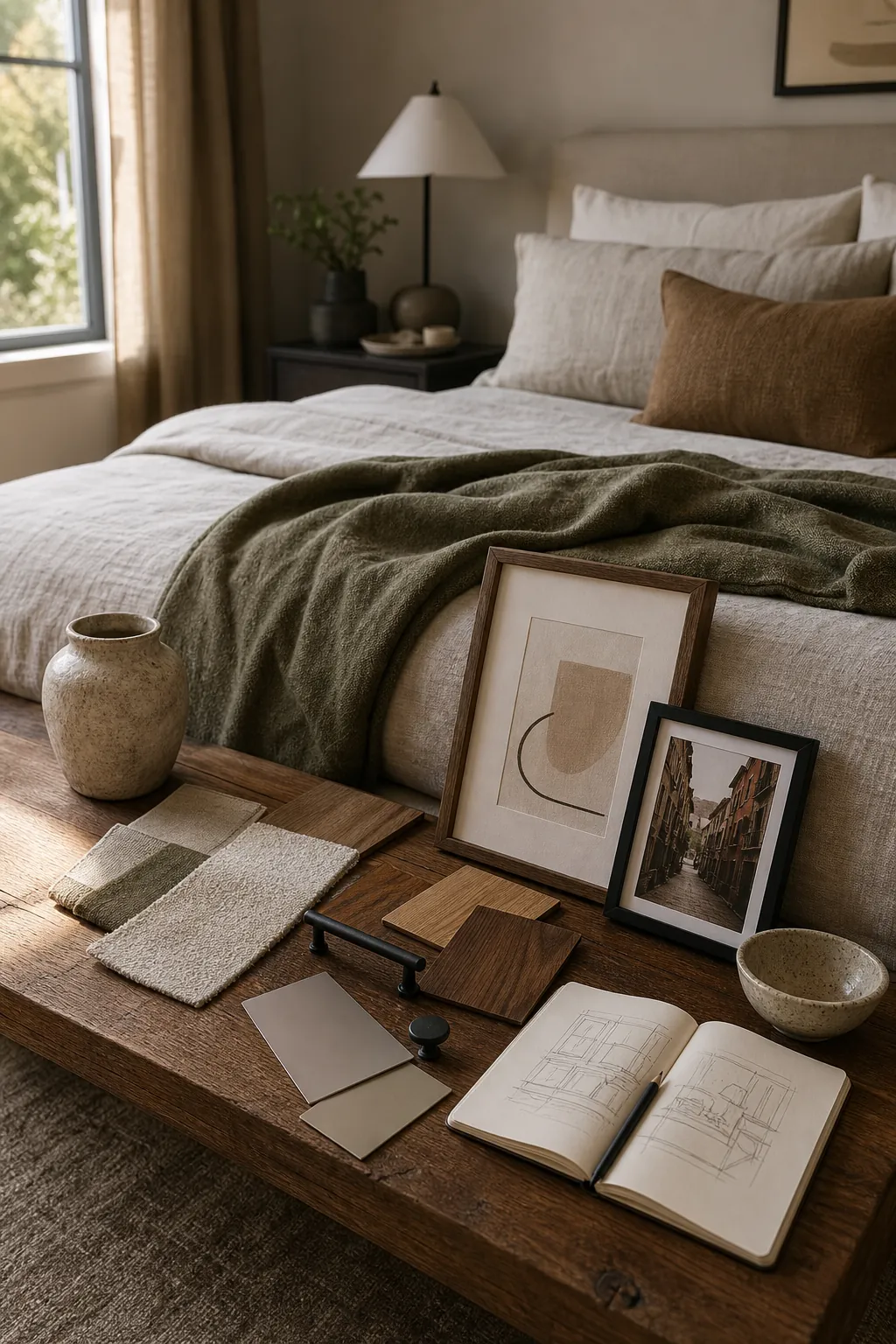
Use a neutral bedroom base so both styles have somewhere to land
When two people disagree on color, the wall color and bed frame are not the best places to settle the score. Those choices dominate the room every morning and every night. A warm neutral bedroom base gives mixed style decor a stable background: ivory, oatmeal, greige, mushroom, soft taupe, clay, muted olive, or charcoal can all work when the undertones feel warm and calm.
Neutral does not mean bland. It means the room has a quiet foundation. Add personality through pillows, art, side tables, a throw, a small upholstered bench, or one strong accent color. If the base is restful, the accents can be more expressive without making the bedroom feel chaotic.
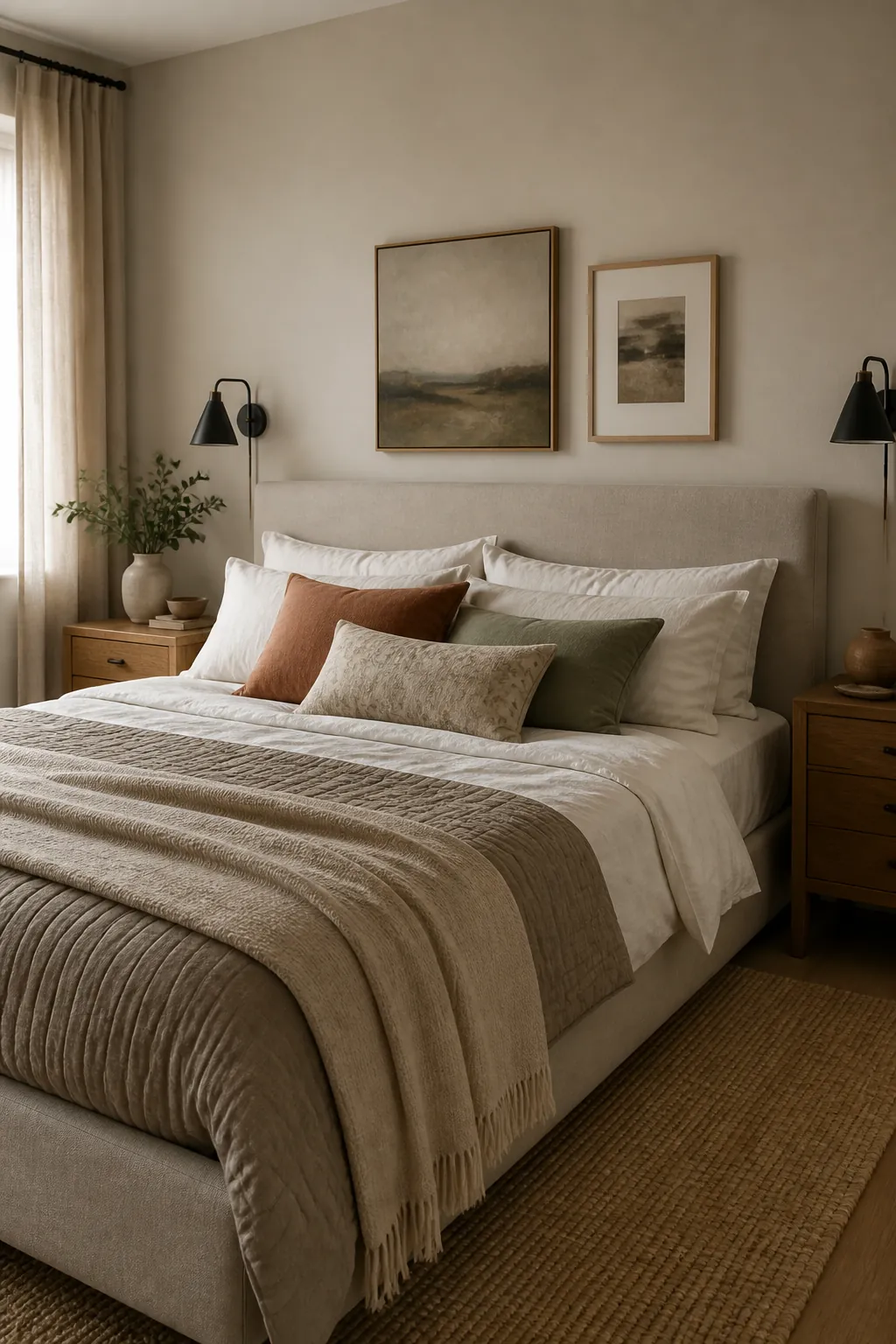
Give each side of the bed a little independence
A bedroom does not need matching nightstands to feel intentional. In fact, perfectly matching sides can make compromise decor harder because every difference looks accidental. Try a coordinated-not-identical approach: one streamlined black metal table, one warmer wood table; one sculptural lamp, one classic fabric shade; one framed abstract print, one personal photograph in the same frame finish.
The trick is to repeat at least one element on both sides: height, color, metal finish, lampshade shape, or frame style. That shared detail makes the differences look designed. Each person gets a side that feels like them, and the whole room still reads as one cozy bedroom.
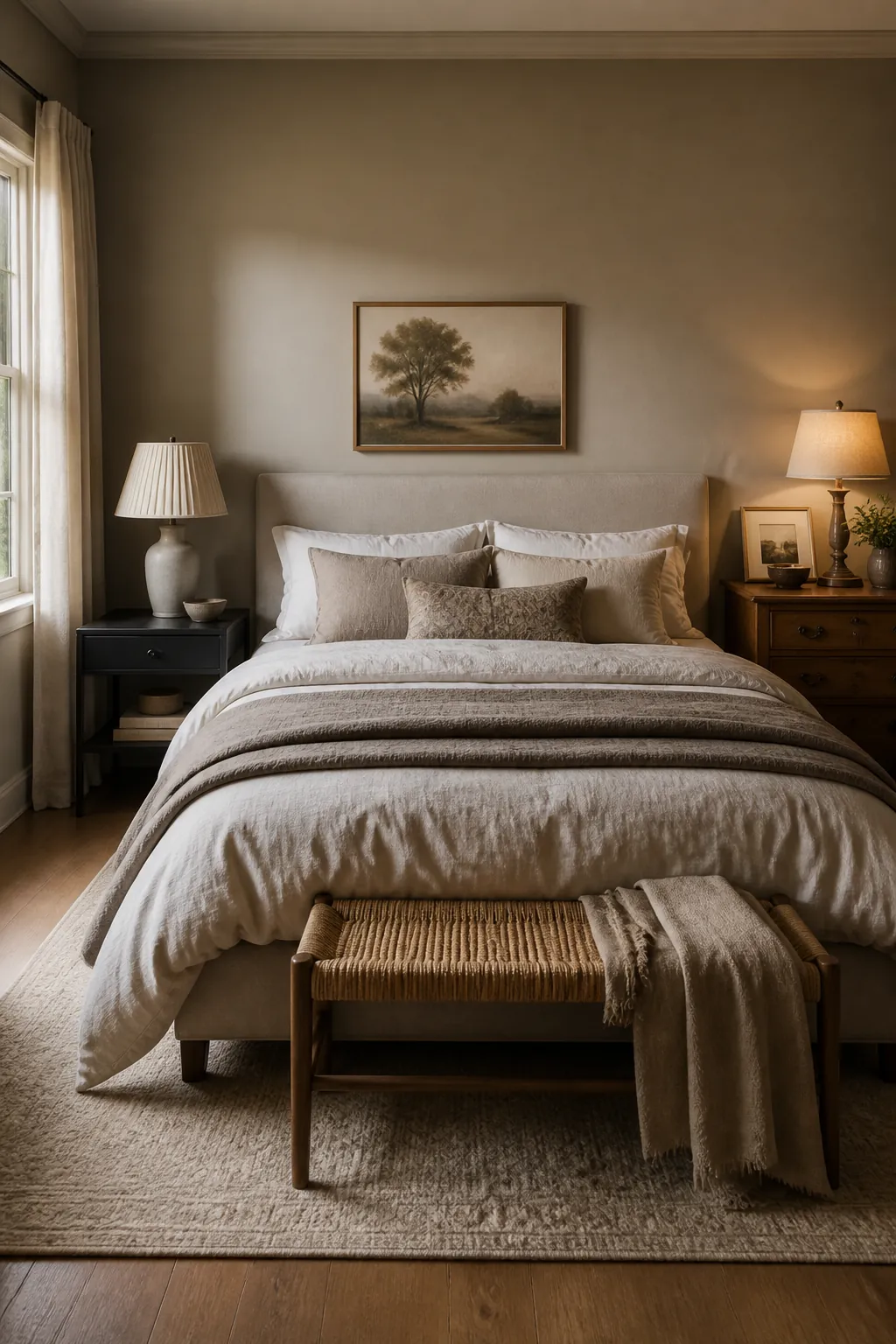
Choose one bold personality piece, then let it breathe
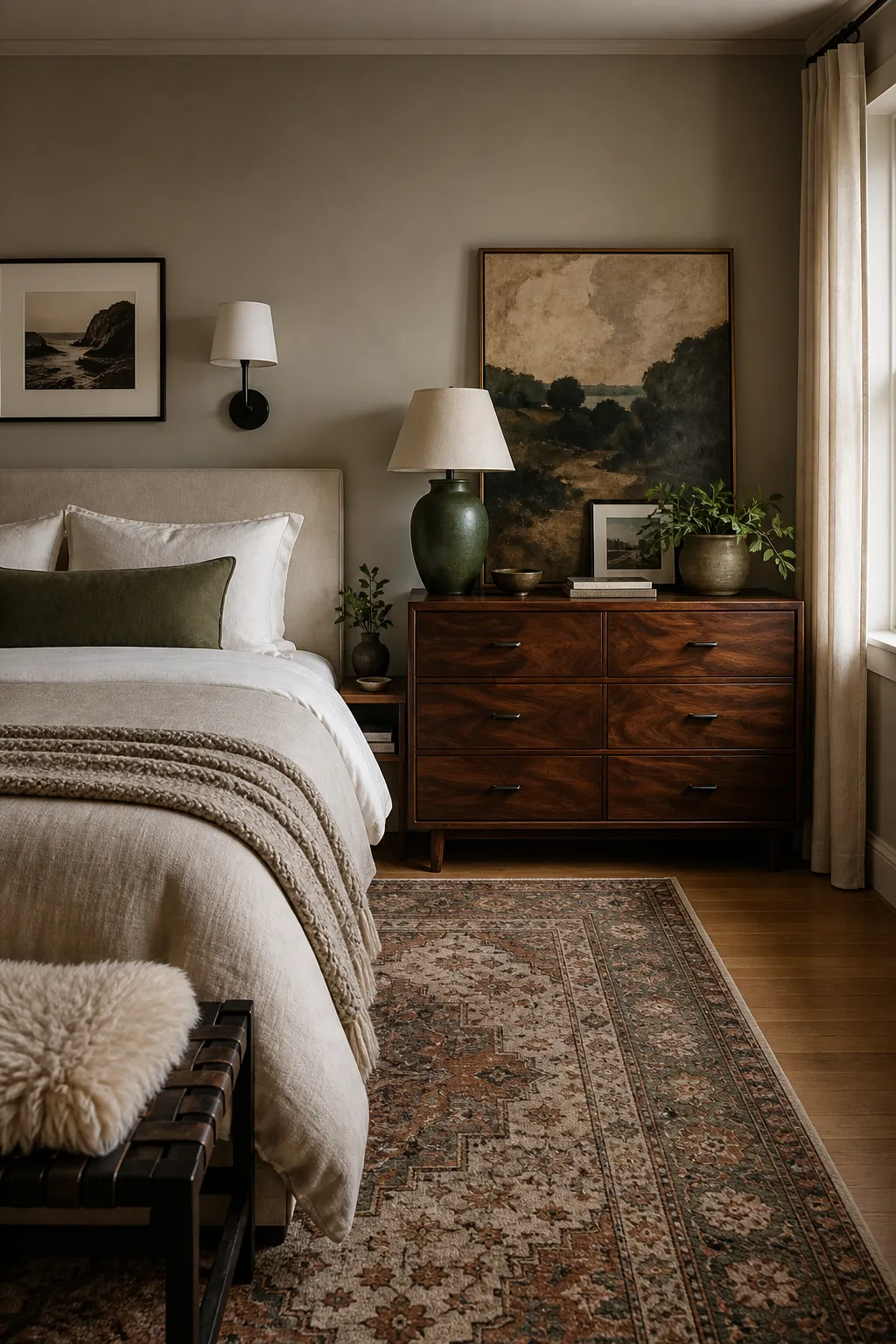
Most clashing bedroom decor comes from too many small objects competing for attention. Instead of sprinkling five watered-down compromises around the room, choose one piece with real personality: a vintage dresser, a colorful textile, a moody landscape print, a handmade ceramic lamp, or a patterned rug that both people can live with.
Then protect it with restraint. Keep the bedding simple. Leave negative space on the wall. Use fewer objects on the dresser. A bold piece looks more sophisticated when the rest of the room gives it air. This is especially helpful when one partner loves collected, expressive decor and the other needs visual calm.
Solve routines before styling the room
Different styles are visible. Different routines are what actually create resentment. One person reads late, one wakes early, one needs more drawer space, one leaves shoes out, one wants a fan, one wants total darkness. If the room ignores those habits, even beautiful bedroom styling will feel wrong.
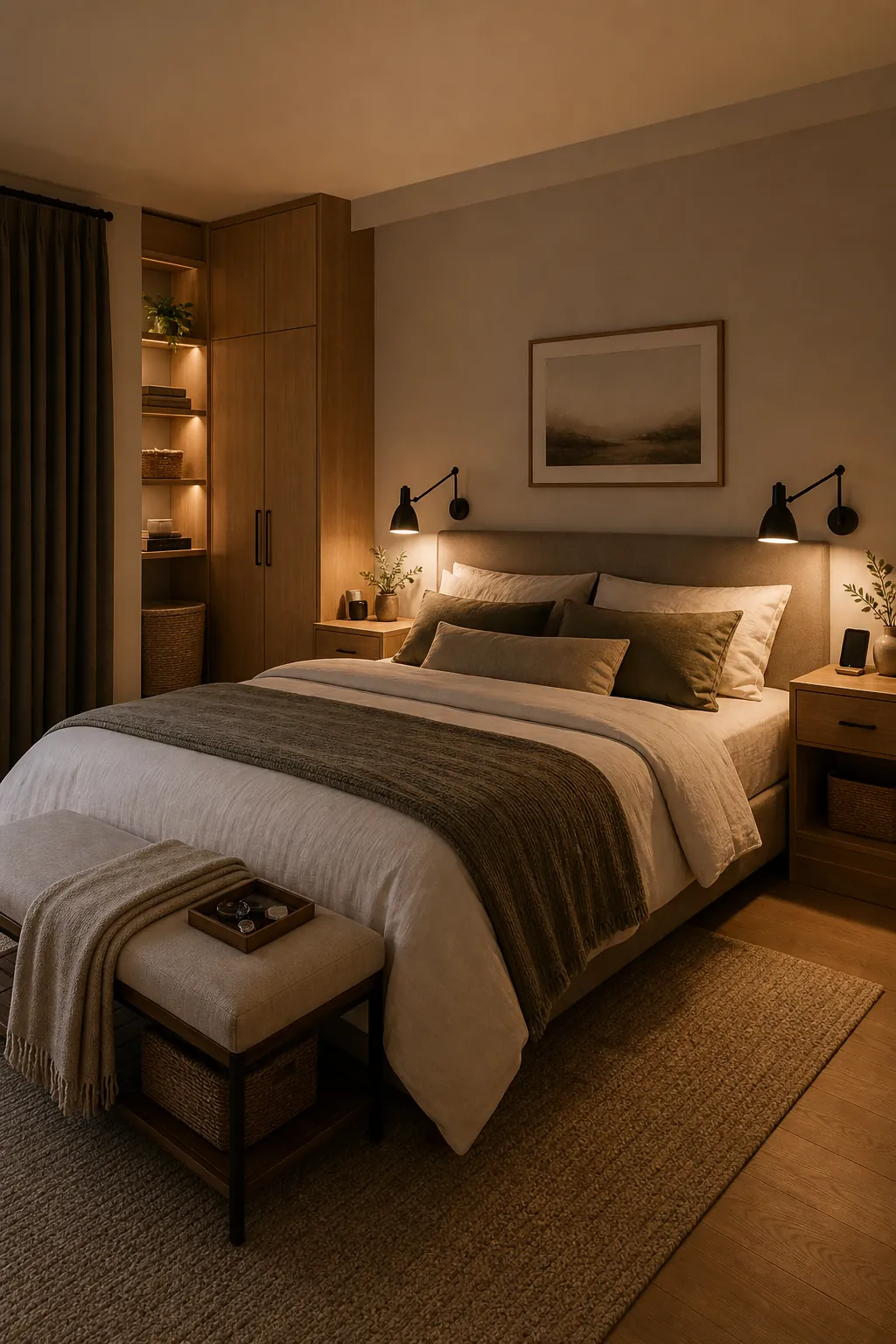
Build the layout around everyday peace: separate reading lights, reachable charging, equal bedside storage, a landing spot for jewelry and watches, a laundry basket that is easy to use, and curtains that support the lightest sleeper. A shared bedroom becomes easier to decorate after it becomes easier to live in.
Make a fair editing rule for decor objects
Compromise can feel unfair when it only means one person removes things. Make the editing rule visible and mutual. For example: each person gets one bedside surface and one shelf area to style freely; the dresser top gets three shared objects; sentimental pieces must be displayed with intention, not scattered everywhere; anything that affects sleep, walking space, or cleaning needs both people to agree.
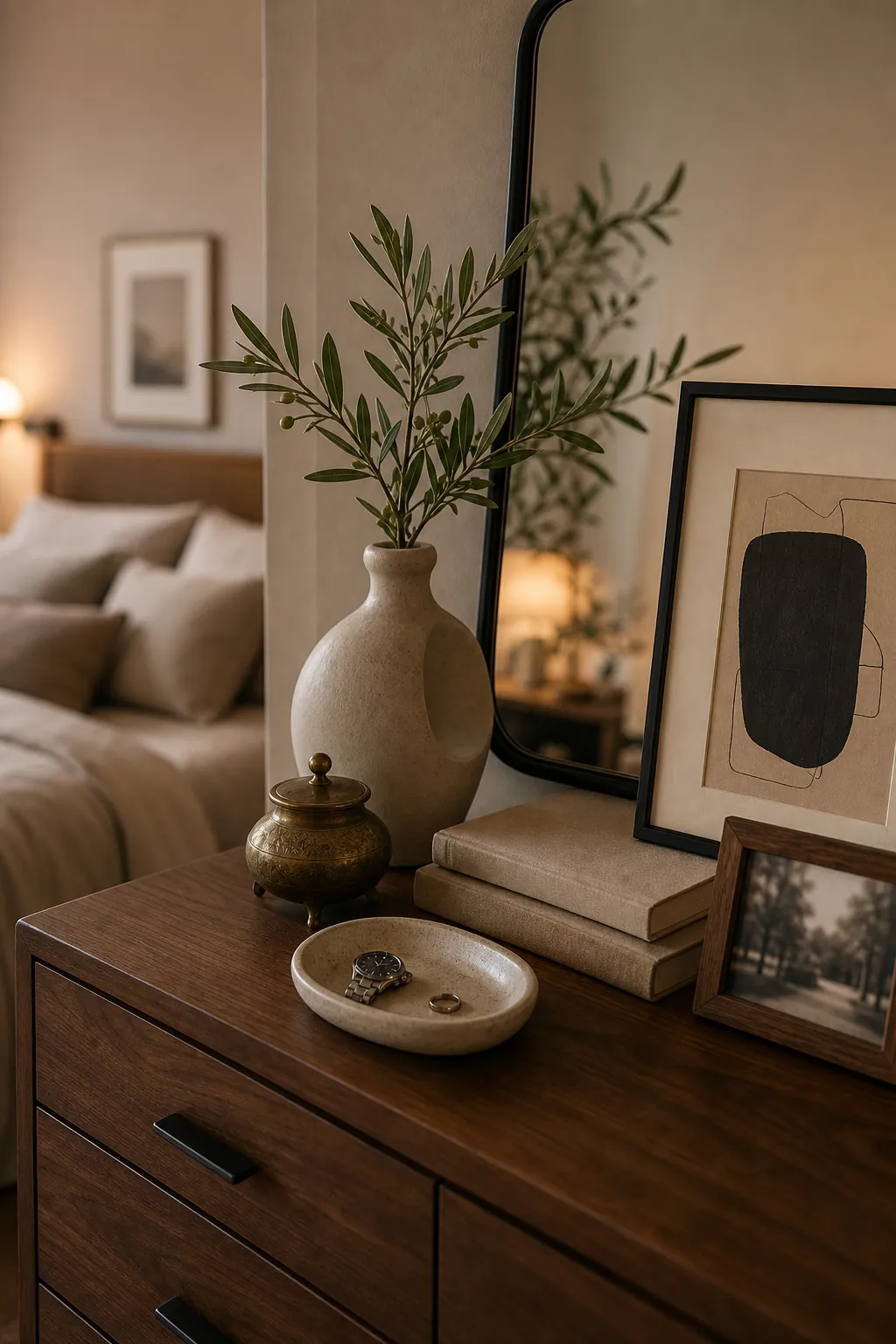
This kind of rule is not cold. It protects the relationship from constant tiny negotiations. The room can hold personality, but it should not become a daily argument about clutter. A decorative tray, picture ledge, or glass-front cabinet can turn collections into a designed moment rather than a pile of mismatched things.
A simple formula for mixed style bedroom decor
- Pick one shared mood: calm, romantic, earthy, tailored, collected, or cozy.
- Keep the biggest pieces quiet: bed frame, rug, curtains, and main storage should not fight each other.
- Repeat two finishes: such as warm wood plus black metal, brass plus linen, or oak plus ceramic.
- Give each person one visible win: art, color, lamp, chair, textile, or object they truly love.
- Edit together after a week: live with the room, then remove what feels noisy or unused.
The most successful couple bedroom is not a perfect 50/50 split of two styles. It is a room where the largest choices support rest, the personal choices feel respected, and every difference looks intentional. When you design that way, mixed taste stops being a problem to hide and becomes the thing that makes the bedroom feel shared.