

Beige pillows can make a bed look calm, soft, and expensive. They can also make it look like a pile of almost-matching neutrals with no shape. The difference is not buying more pillows. It is choosing the right tones, sizes, textures, and arrangement for the bed you actually have.
If you like a beige bedding aesthetic, cream bedding aesthetic, white and cream bedding, or a cozy bed that still feels clean, think of pillows as the bridge between the headboard, duvet, sheets, and room color. They should not disappear into the bedding, and they should not fight it. They should create layers your eye can read from the doorway.
Start With a Simple Pillow Formula
The easiest pillow ideas for bed styling begin with a formula. For a queen bed, use two sleeping pillows, two Euro pillows or large square pillows, and one long lumbar pillow. For a king bed, use three sleeping pillows, three Euros, and one long lumbar. If you love a fuller look, add two smaller accent pillows, but stop before the bed becomes a chore to unmake every night.

The back pillows should give height. The front pillow should give shape. That is why a long lumbar often looks more finished than three small cushions scattered across the front. It creates one clean line and keeps a comfy bed from looking cluttered.
Do Not Match Every Beige Exactly
The biggest mistake with beige cushions is trying to match every pillow to the duvet, headboard, or blanket. Near-matches are usually worse than clear variation. If the tones are just a little off, the bed can look faded or dirty. If the tones are deliberately layered, the same neutral palette feels designed.

Try three tones instead: warm white, cream, and taupe; or ivory, oatmeal, and mushroom; or white, beige, and camel. This works especially well with beige and white bedding because the white keeps the bed fresh while the warmer pillows make it feel soft.
Use Texture to Make Neutrals Visible
When the color palette is quiet, texture has to do more work. A linen pillow beside a bouclé pillow reads differently even if both are beige. A ribbed cotton cover, slub fabric, waffle weave, velvet, nubby wool, or embroidered stripe adds shadow and depth without making the bed feel busy.
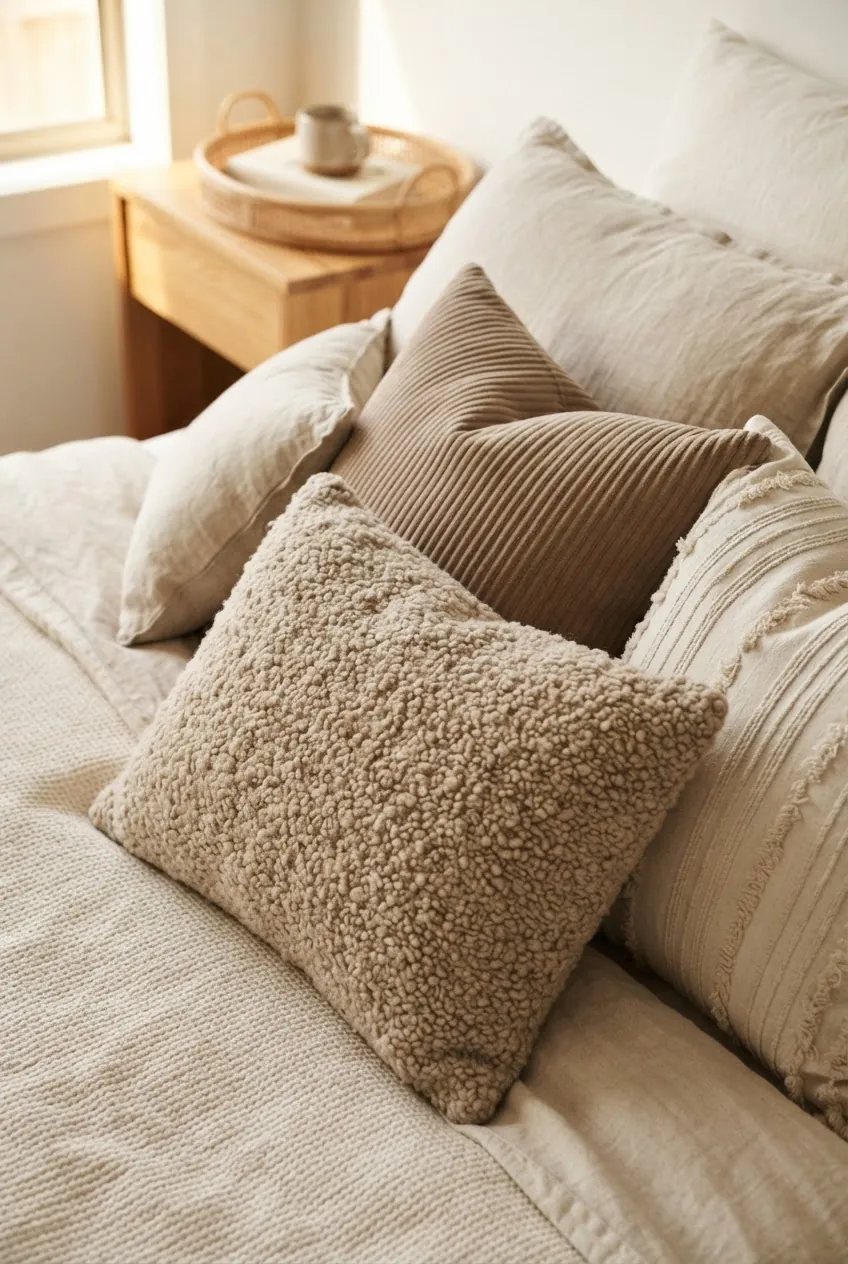
Texture is the reason a cream and white bedding combination can feel layered instead of plain. If your bedding is smooth, choose pillows with more surface. If your duvet is already textured, use calmer pillow covers and let one accent piece carry the interest.
Pick One Accent Color, Then Repeat It
Beige pillows do not mean the bed has to be colorless. One muted accent makes the whole arrangement look intentional. Olive, clay, rust, soft blue, chocolate, dusty rose, or charcoal can all work with beige bedding. The trick is repeating the color somewhere else in the room: art, a throw blanket, a lamp, a rug, or a small vase.

If the bed feels too pale, add a mid-tone accent instead of a bright one. A camel lumbar pillow, olive velvet square, or rust stripe gives the bed depth while still keeping the soft neutral mood.
Use Sofa Pillow Lessons, But Change the Scale
People often search cream couch pillows and beige couch pillow combinations because sofas teach the same lesson: mix scale, shape, and texture. The bed version just needs more order. A sofa can handle a casual cluster. A bed usually looks better with a clear back row, middle row, and front accent.

If you already own cream couch pillows, do not automatically move all of them to the bed. Check the size first. Small square pillows can look lost on a queen or king bed. A larger lumbar or two oversized squares usually feels cleaner.
Make White and Cream Bedding Feel Deliberate
White and cream bedding can be beautiful, but it needs a warm bridge. Put the brightest white closest to the sheets, then move warmer as the layers come forward: ivory duvet, beige pillows, taupe lumbar, tan or camel throw. That sequence keeps the white from making the cream look yellow.

Lighting matters too. Cool bulbs can make cream bedding look dull. Warm bedside lamps, linen curtains, and wood nightstands help beige pillows look cozy instead of gray. If the bed still feels flat, add one darker detail such as a charcoal trim, brown throw, or patterned pillow.
How Many Pillows Is Too Many?
The right number is the number you can remove without feeling annoyed every night. For most bedrooms, five decorative layers is the upper limit: back pillows, a middle row, and one front accent. If every pillow has to be moved to a chair before sleep, the bed may photograph well but live badly.
For a minimal bed, use two large beige pillows behind the sleeping pillows and one long lumbar. For a cozy bed, add two textured square pillows in front. For a fuller guest-room look, use Euro pillows across the back, sleeping pillows in front, and a patterned lumbar. Keep at least one row simple so the arrangement has room to breathe.
Easy Beige Pillow Combinations
- Clean and calm: warm white sheets, ivory duvet, oatmeal Euro pillows, taupe lumbar, light wood nightstands.
- Cozy natural: cream bedding, beige linen pillows, olive velvet accent, chunky tan throw, woven rug.
- Modern neutral: white bedding, beige pillows with black piping, charcoal lumbar, walnut nightstands, simple art.
- Soft cottage: cream and white bedding, ruffled beige pillow covers, muted floral lumbar, brass lamp, faded rug.
- Warm minimal: ivory duvet, two oversized taupe pillows, one camel lumbar, no extra cushions.
The Takeaway
Beige pillows work best when they are not treated as filler. Give them a job: height, softness, contrast, texture, or color repetition. Use a simple formula, vary the neutral tones on purpose, and let one pillow shape lead the arrangement. That is how beige and cream bedding starts to look cozy, finished, and easy to live with.