
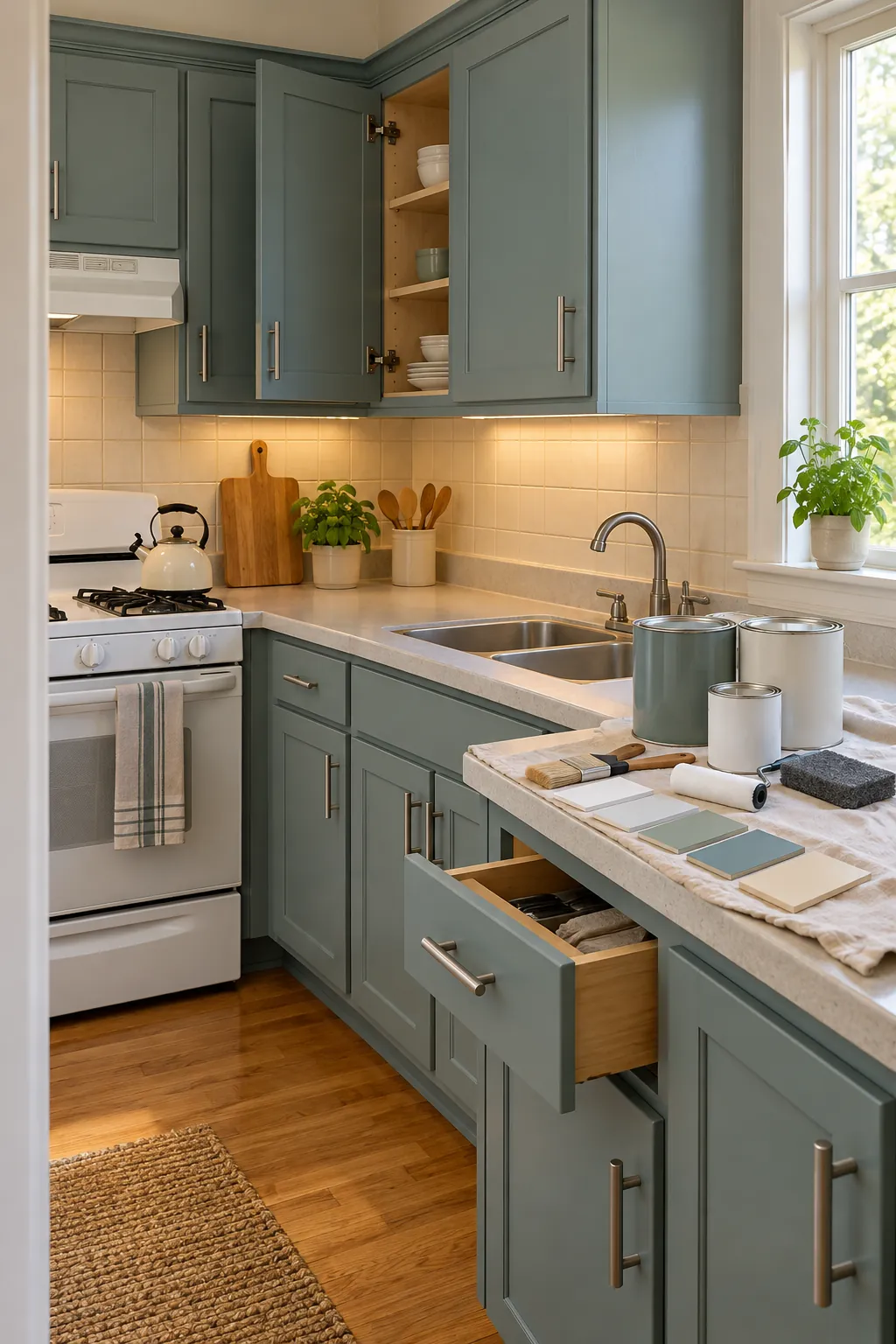
If you are choosing paint for kitchen cabinets on a budget, the smartest purchase is not always the cheapest can. It is the coating that gives you enough working time for a smooth finish, cures hard enough for daily handling, and does not force you to buy a complicated set of solvents and tools.
For most DIY cabinet projects, a quality waterborne alkyd enamel is the best balance. It behaves much like water-based paint during cleanup, but its alkyd resin helps it level and cure into a tougher film. A straight water-based acrylic enamel can still be the better buy when fast recoat time, low odor, and easy touch-ups matter most. Traditional solvent-based alkyd remains durable, but slow drying, stronger odor, yellowing risk, and mineral-spirit cleanup make it harder to recommend for an occupied kitchen.
The short answer: choose the system, not the label
Paint names are confusing because “enamel” describes the intended hard finish, not one fixed chemistry. “Alkyd” can mean an older solvent-based coating or a newer waterborne hybrid. Read the technical data sheet and can label. Look for cabinet, trim, or door use; the correct primer; recoat and cure times; and whether the product cleans up with water or mineral spirits.
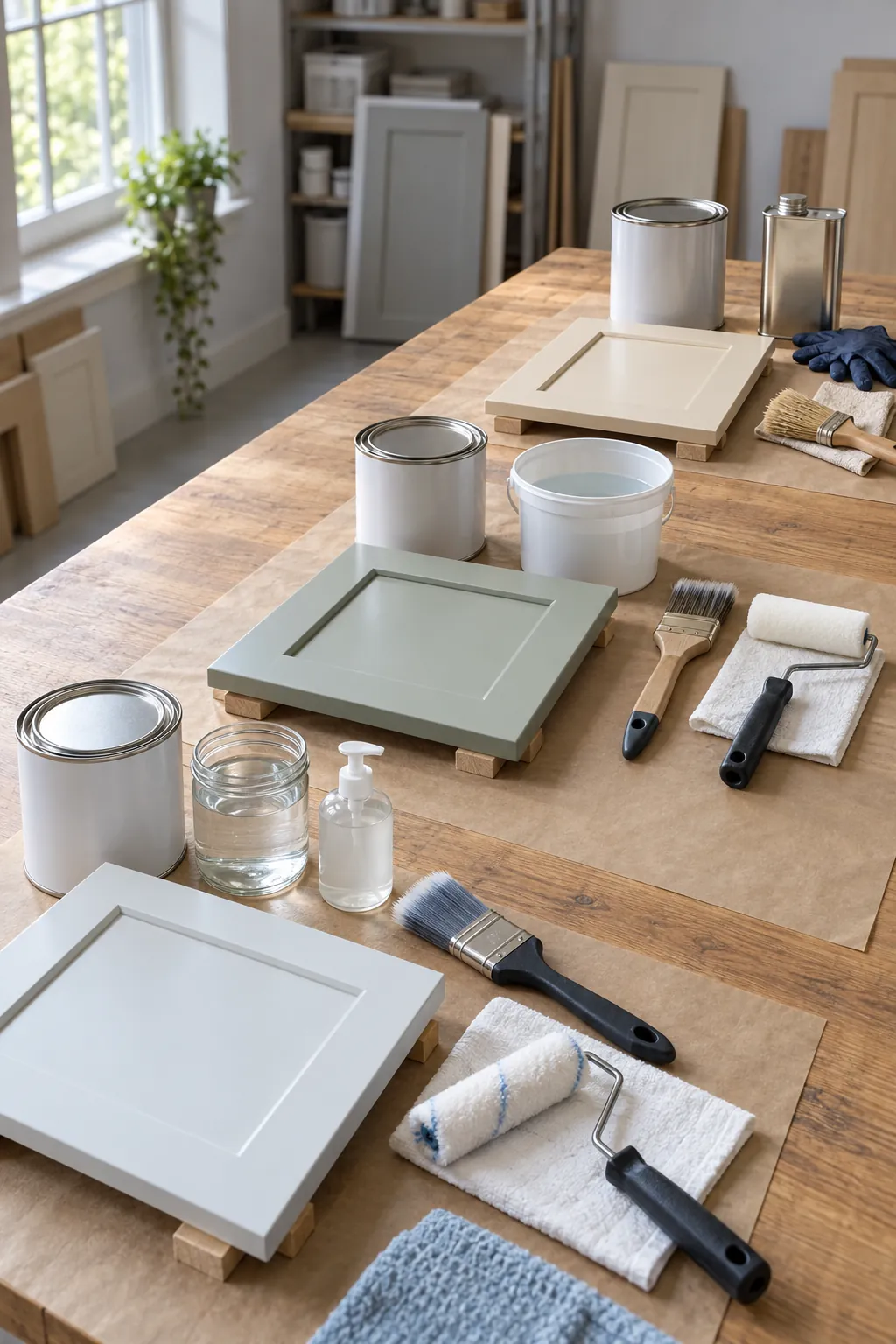
| Paint type | Best budget use | Main tradeoff |
|---|---|---|
| Water-based acrylic enamel | Fast DIY work in an occupied home | May show brush marks and stay softer than a good hybrid |
| Waterborne alkyd enamel | Best overall mix of leveling, durability, and cleanup | Longer dry and cure time; usually costs more per gallon |
| Traditional solvent alkyd | Special cases where a hard, slow-leveling coating is appropriate | Odor, solvent cleanup, yellowing, and long downtime |
What water-based cabinet enamel does well
Acrylic cabinet enamel dries quickly and has low odor. Brushes and rollers wash with soap and water. Light colors usually keep their color well. These features are valuable when the kitchen must return to service quickly or when you are painting indoors with limited ventilation.
The weakness is not that all water-based paint is fragile. The weakness is that inexpensive wall paint is often mistaken for cabinet enamel. Wall paint is designed for broad surfaces, not greasy fingers, knobs, drawer edges, and repeated cleaning. Buy a product made for trim, doors, or cabinets. A small price increase here prevents a large amount of repair work later.
Why waterborne alkyd is often the sweet spot
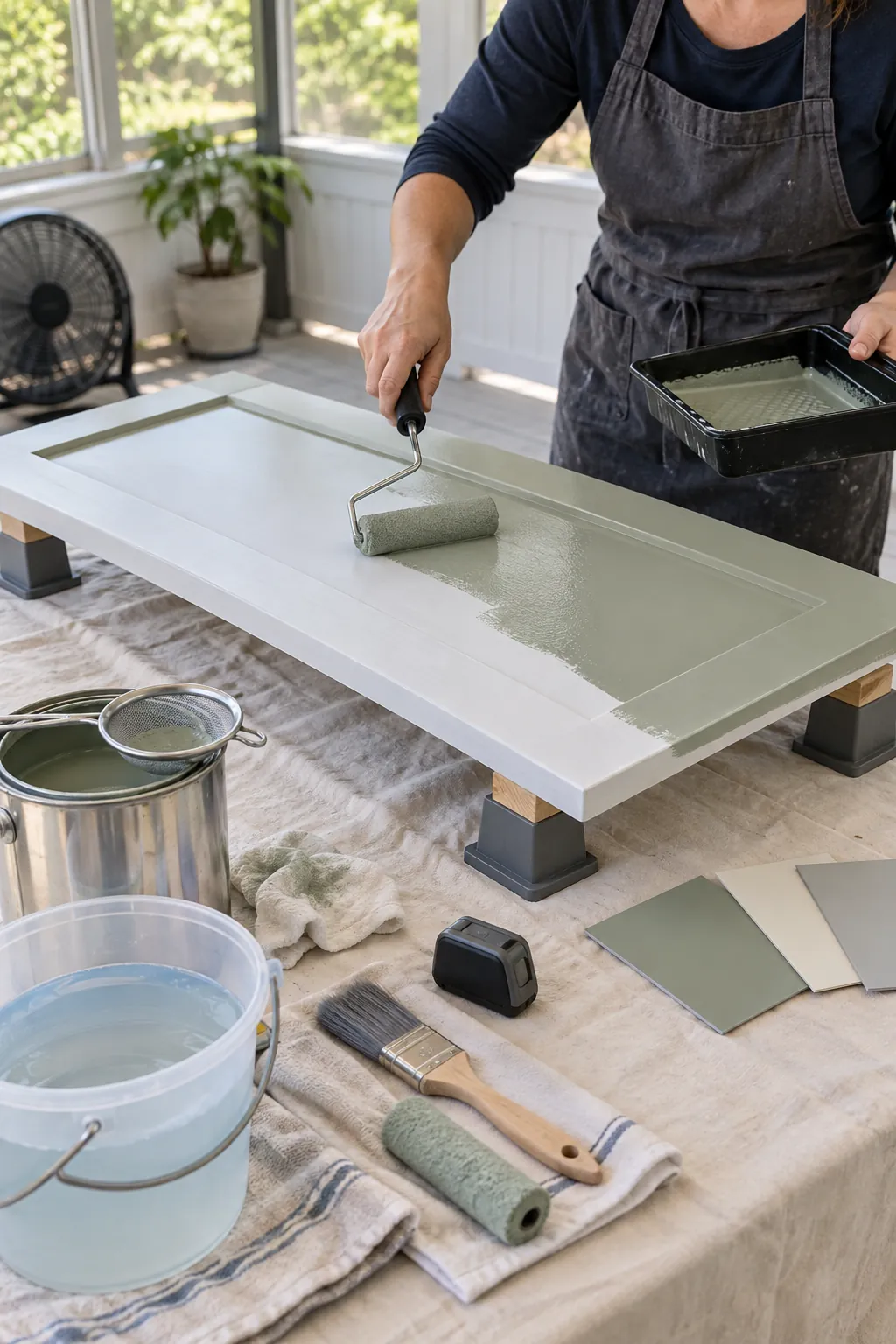
A waterborne alkyd uses water as the main carrier but includes alkyd resin. It usually stays open longer than fast acrylic, so roller texture and brush marks have more time to settle. After curing, the film feels harder and more furniture-like. Cleanup is normally water-based, although you should always follow the product instructions.
This is the category many DIYers mean when they praise “alkyd cabinet paint.” It gives much of the smoothness associated with older oil coatings without the same solvent burden. The tradeoff is patience. A door may feel dry while the film is still vulnerable to blocking, fingerprints, or a hard bump. Follow the recoat time, then allow a longer cure before aggressive cleaning.
When traditional alkyd is not the budget choice
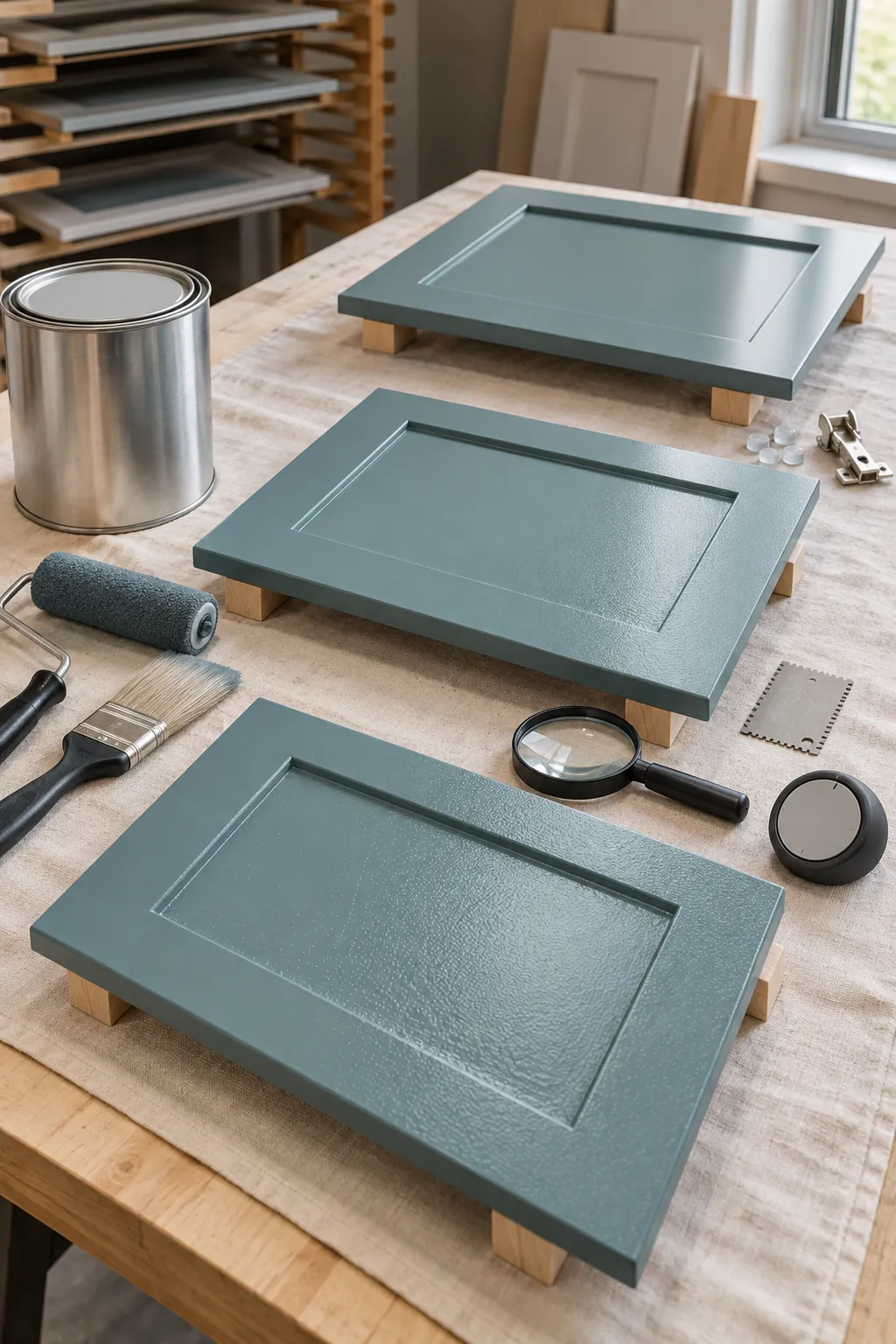
Traditional solvent alkyd can level beautifully and cure to a hard film. It also brings strong odor, mineral-spirit cleanup, slower drying, and stricter ventilation and disposal needs. White and pale colors can yellow, especially in areas with little daylight. Those costs are easy to miss when you compare only the price on the can.
For a homeowner working in a functioning kitchen, the extra downtime can be more expensive than the coating. Doors need protected drying space, the room needs ventilation, and tools need solvent. Unless you already know why the project needs a solvent system, a cabinet-rated waterborne product is usually simpler.
Primer matters more than a premium topcoat
Cabinet failures usually begin below the color coat. Cooking residue, silicone polish, glossy factory finishes, tannins, and laminate can all interfere with adhesion. Clean first, rinse as directed, let surfaces dry, and scuff the finish evenly. Repair dents before primer. Do not use paint to bridge grease, loose coating, or damaged substrate.
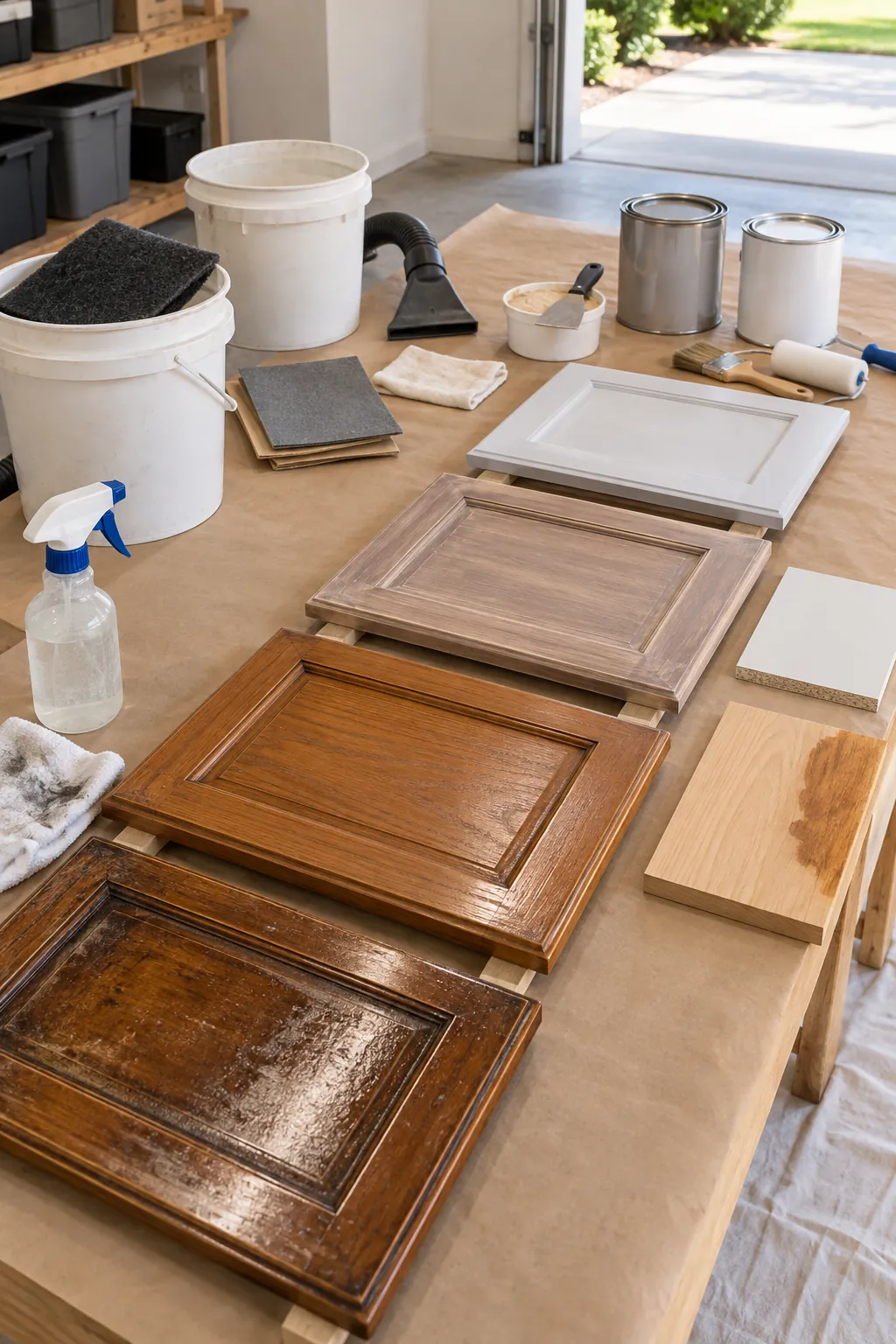
Use a bonding primer for slick surfaces when the paint maker specifies one. Use a stain-blocking primer when wood tannins or old stains can bleed. Laminate requires special care: confirm that the surface is sound and that both primer and topcoat are approved for it. Test the full system on an inconspicuous area, allow it to cure, then scratch it with a fingernail. If the layer peels easily, stop and correct the preparation.
Satin or semi-gloss?
Satin is forgiving. It hides small surface defects and still wipes clean when the product is cabinet-rated. Semi-gloss reflects more light and can feel easier to clean, but it also highlights grain, dents, roller texture, and uneven repairs. Durability comes mainly from the coating formula and cure, not shine alone. For an older budget kitchen, satin is usually the safer finish.
How much paint should you buy?
Do not estimate cabinet paint from the room’s floor area. Count doors and drawer fronts, measure exposed box faces and end panels, then check the product’s stated coverage. Two finish coats are common. Detailed profiles, porous wood, overspray, and practice pieces increase use. A careful small kitchen often needs less than a gallon of finish paint, but buying too little from a custom color can create batch-matching trouble.
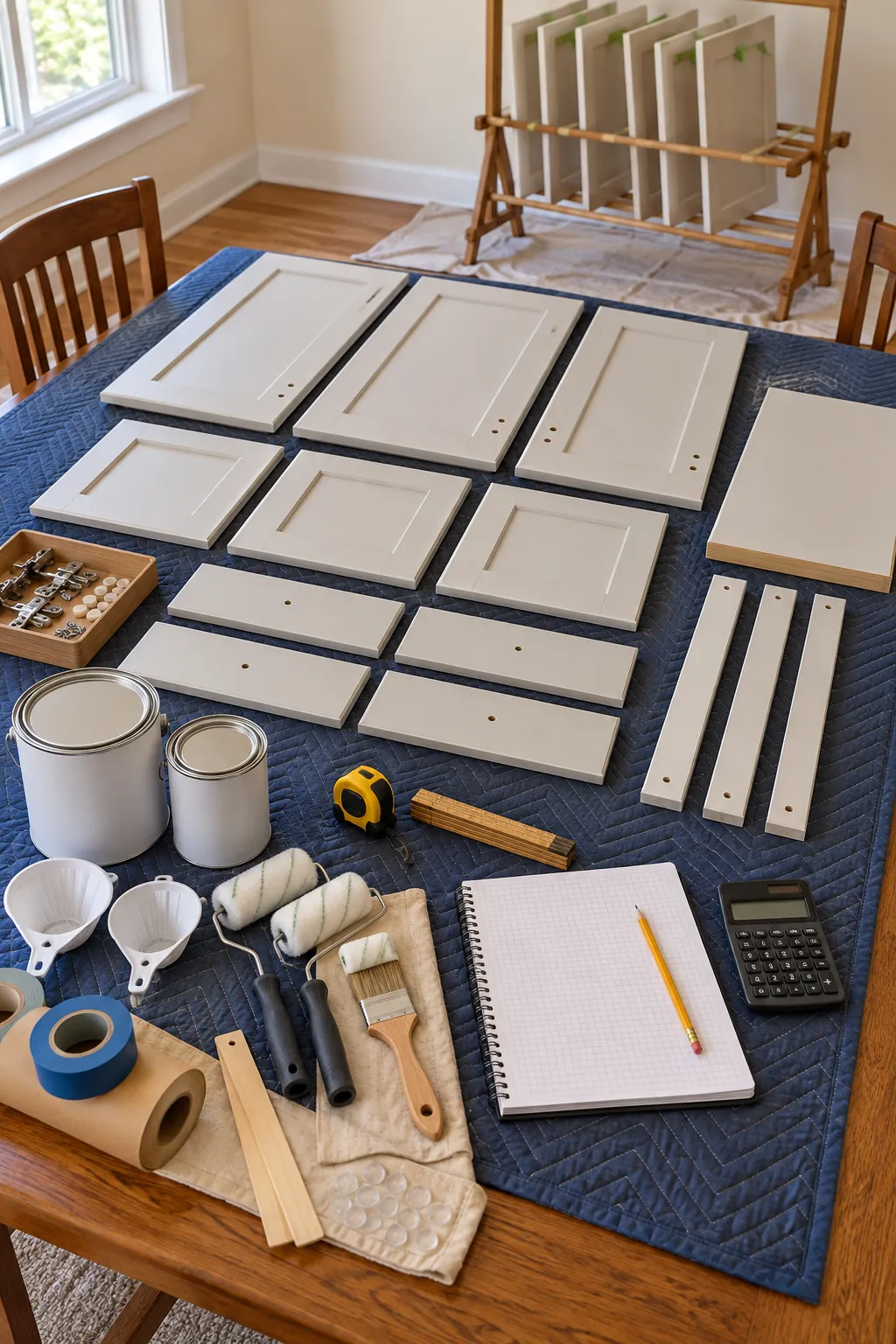
Budget for the complete system: degreaser, abrasive pads or paper, filler, primer, enamel, strainers, quality brush, fine-finish roller covers, trays, masking, door supports, labels, and new bumpers. Reusing poor roller covers to save a few dollars can leave texture across every door.
A practical low-cost application plan
- Remove doors, drawers, pulls, and hinges. Mark every part in a hidden location.
- Degrease before sanding so you do not drive residue into the surface.
- Scuff evenly, remove dust, repair damage, and prime with the correct product.
- Sand the primer lightly if the instructions allow it. Remove all dust.
- Apply thin finish coats with a quality angled brush and fine roller, or spray only if you already have a safe setup and experience.
- Respect the full recoat time. More paint is not a shortcut to better coverage.
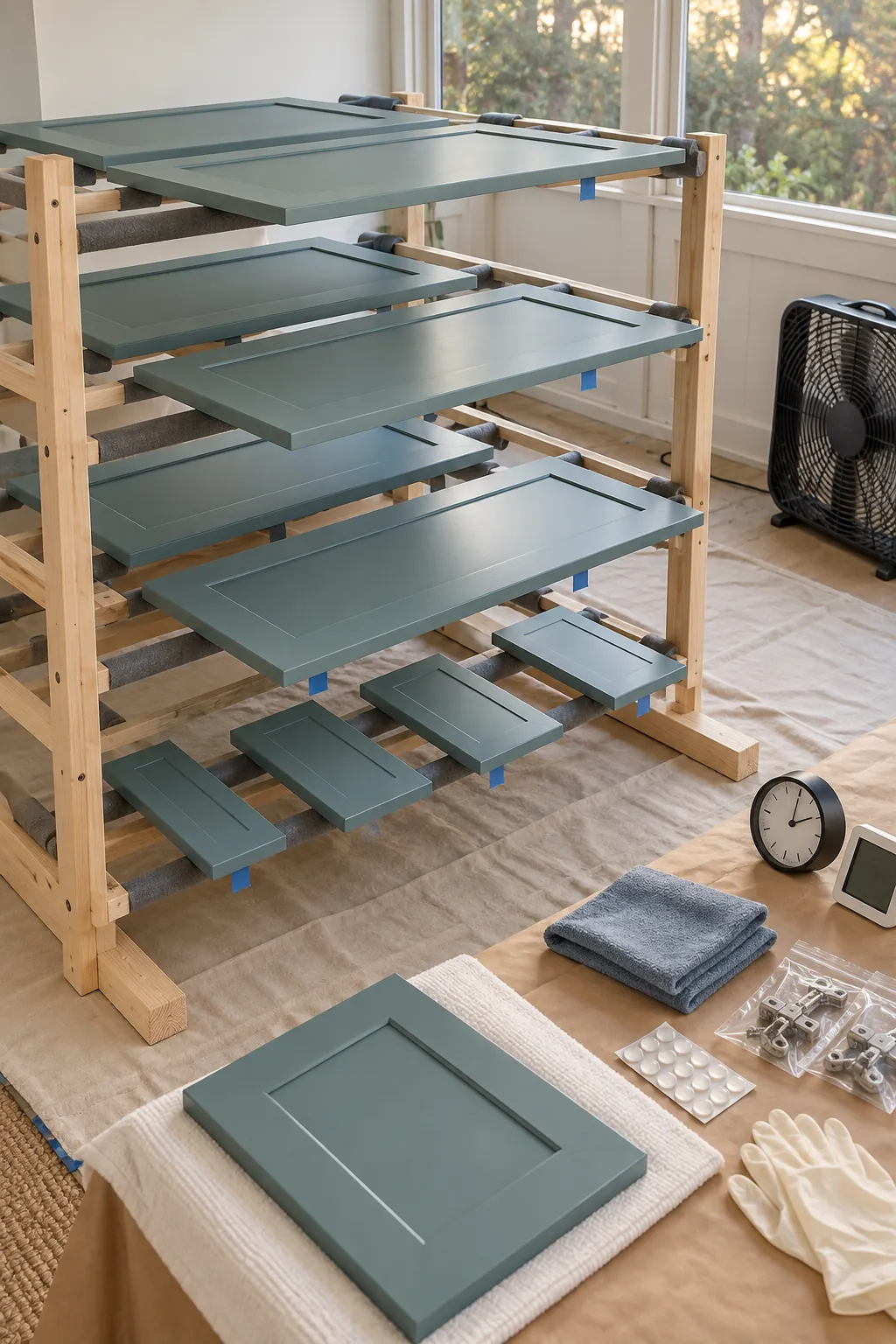
- Let doors cure on stable racks. Reinstall gently with fresh bumpers and avoid strong cleaners during early cure.
My budget recommendation
Choose a cabinet-rated waterborne alkyd enamel when you want the best balance of smooth leveling, hard cure, manageable odor, and water cleanup. Choose a quality acrylic cabinet enamel when fast turnaround and easy indoor work matter more than maximum leveling. Reserve traditional solvent alkyd for a specific, well-ventilated job where its benefits clearly outweigh the extra process.
Then spend your remaining budget on surface preparation and drying space. The can supplies the coating. The durable finish comes from cleaning, adhesion, thin coats, and enough cure time.