
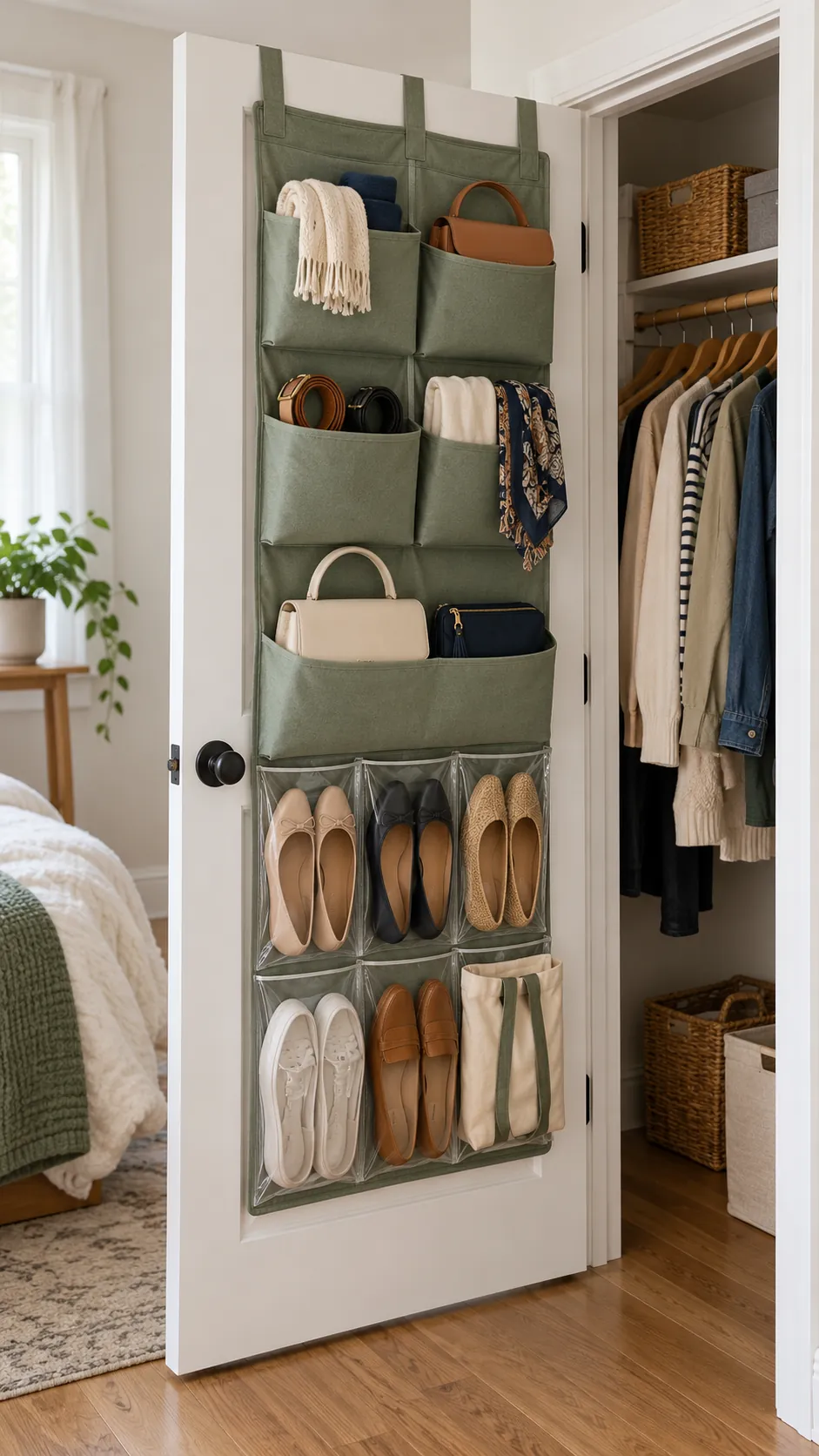
The back of a closet door looks like free storage until a hook scrapes the frame, the pockets block the handle, or the loaded door starts to swing. A useful organizer must fit the door before it fits your belongings.
Indexed Reddit snippets show why renters keep returning to this space: visible shoes, bags, and accessories become easier to reach without using the floor. They also reveal the main disappointment, which is a poorly fitted product that feels temporary or prevents smooth closing. The best choice starts with clearance and one specific storage job.
Measure the Door Before Choosing a Style
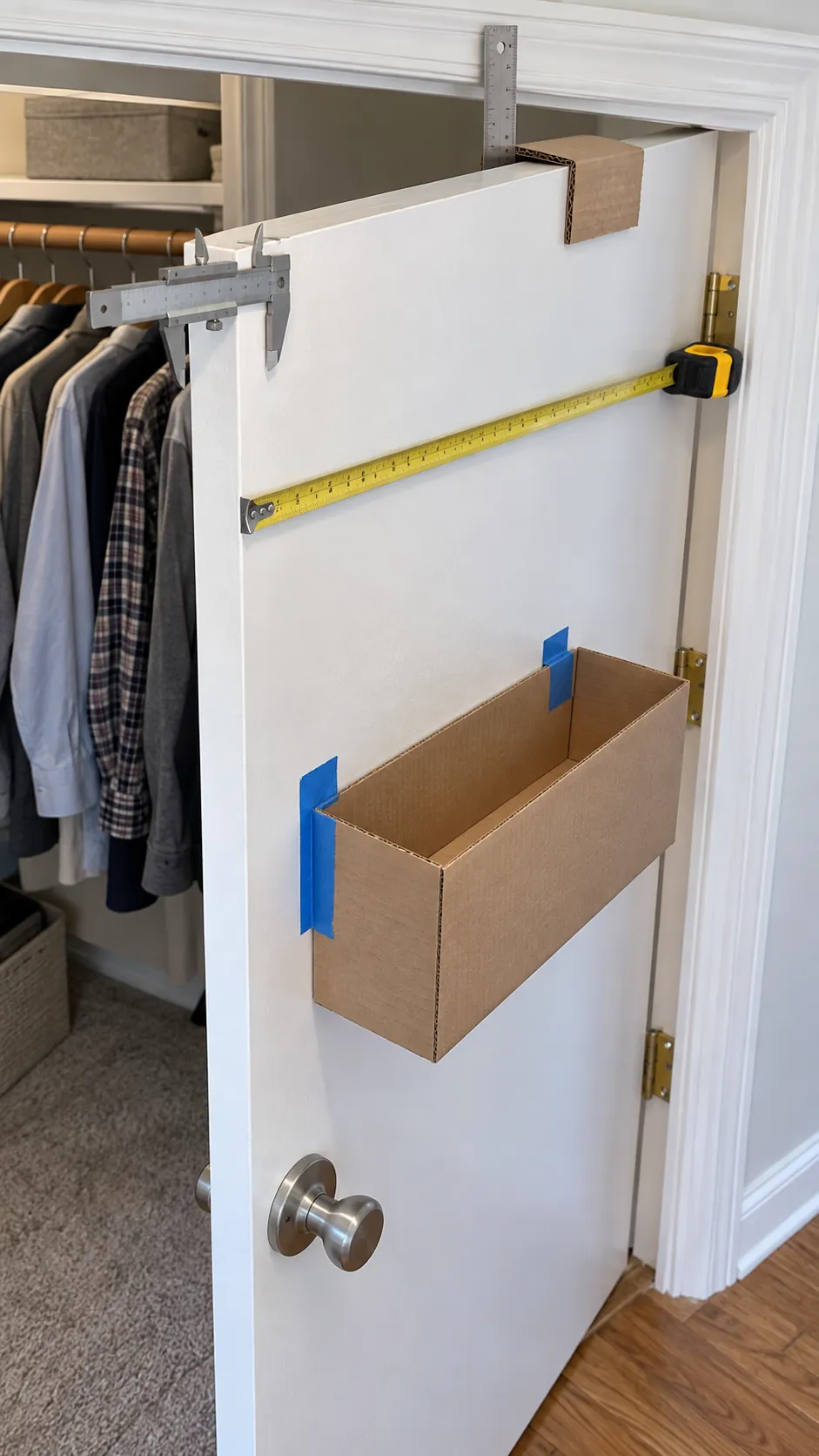
Measure door thickness, usable width, and height from the top edge to the handle. Then measure the gap above the door and the distance between the door face and surrounding trim. A thin hook still needs enough room to pass under the frame without rubbing.
Open the door fully and note what sits behind it. Deep pockets can hit a wall, shelf, hanging clothes, or another door. Use a folded cardboard strip with the proposed hook thickness and a small box with the proposed pocket depth to test movement before buying.
Choose Clear Pockets for Shoes and Small Items
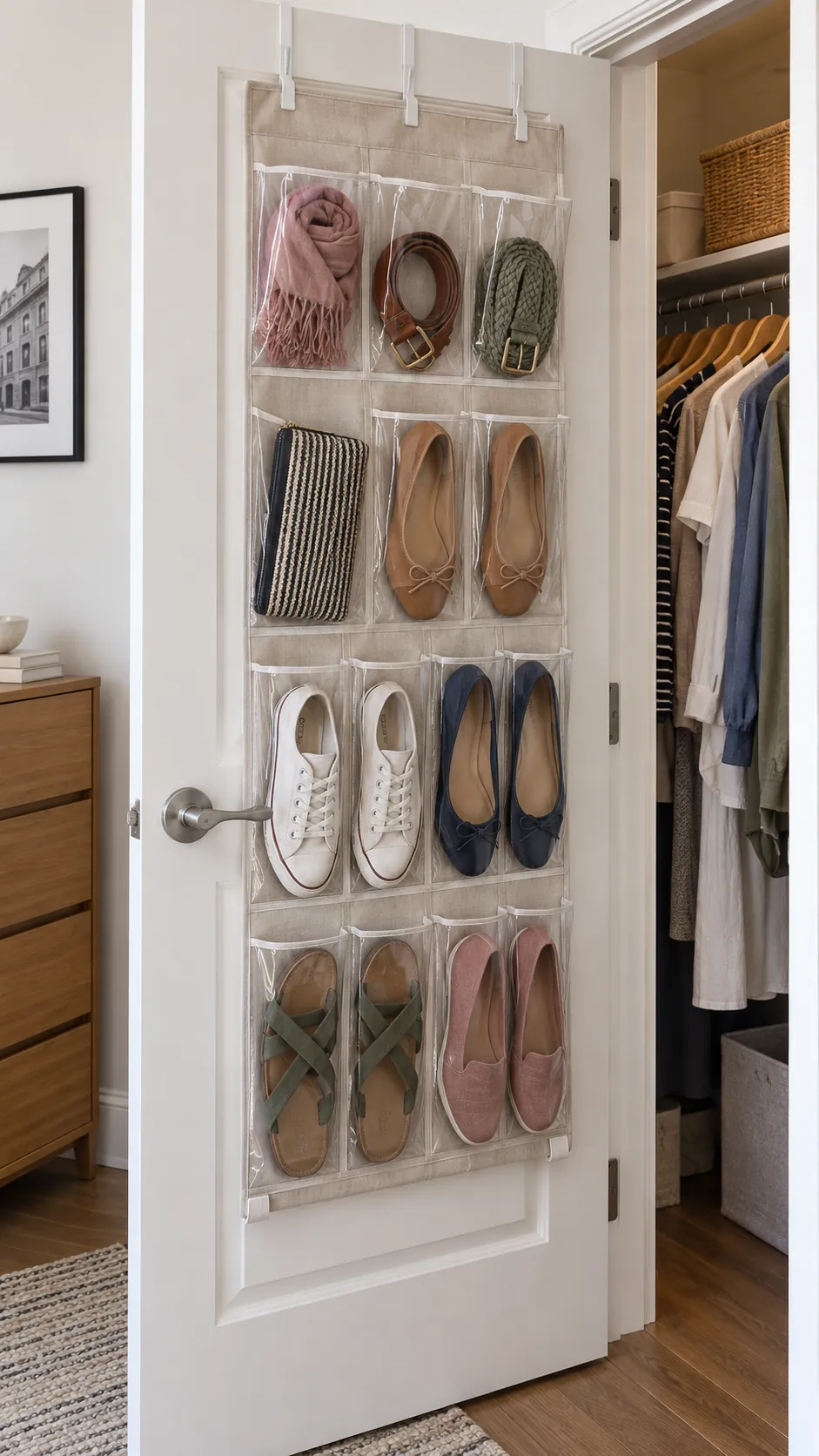
A clear over door pocket organizer makes options visible and uses almost no floor area. It works well for flat shoes, scarves, rolled belts, gloves, and small bags. Match pocket size to the item instead of forcing bulky footwear into shallow vinyl.
Breathable fabric panels help when shoes are not completely dry. Keep frequently used pairs around waist and chest height, then place lighter seasonal items higher. Do not load every pocket merely because it exists, since weight multiplies across the hinges.
Use Structured Fabric Pockets for Bags and Accessories
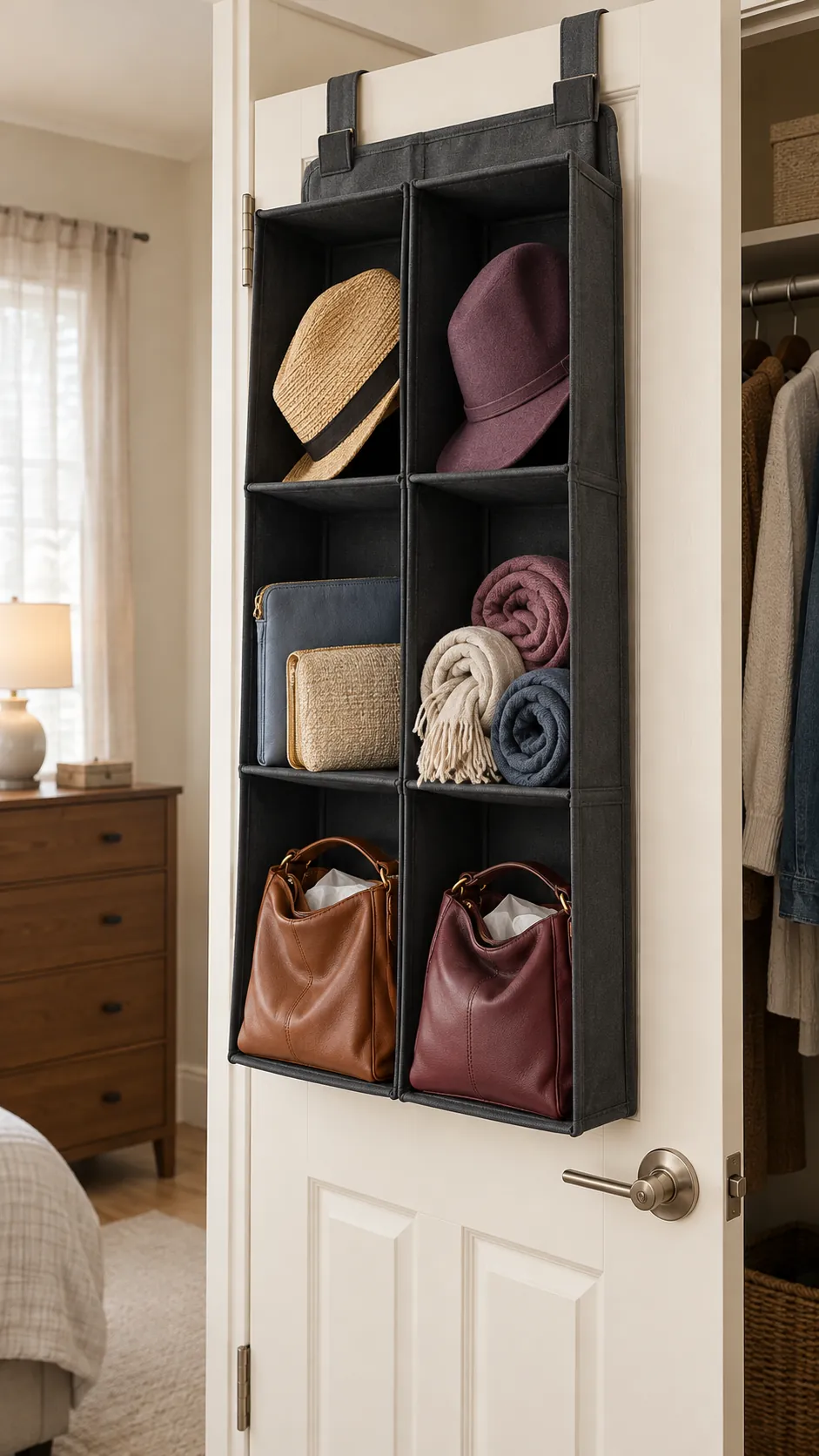
A fabric over door bag organizer suits purses, clutches, hats, and folded accessories when each compartment has a defined shape. Look for reinforced seams, a firm back panel, and openings large enough to remove an item without lifting the whole organizer.
Give each compartment one category. Soft handbags can be lightly stuffed to protect their shape, while straps should remain inside the pocket instead of hanging near the latch. Place the largest bag low so it does not pull the organizer away from the door.
Pick Basket Racks for Folded and Boxed Supplies
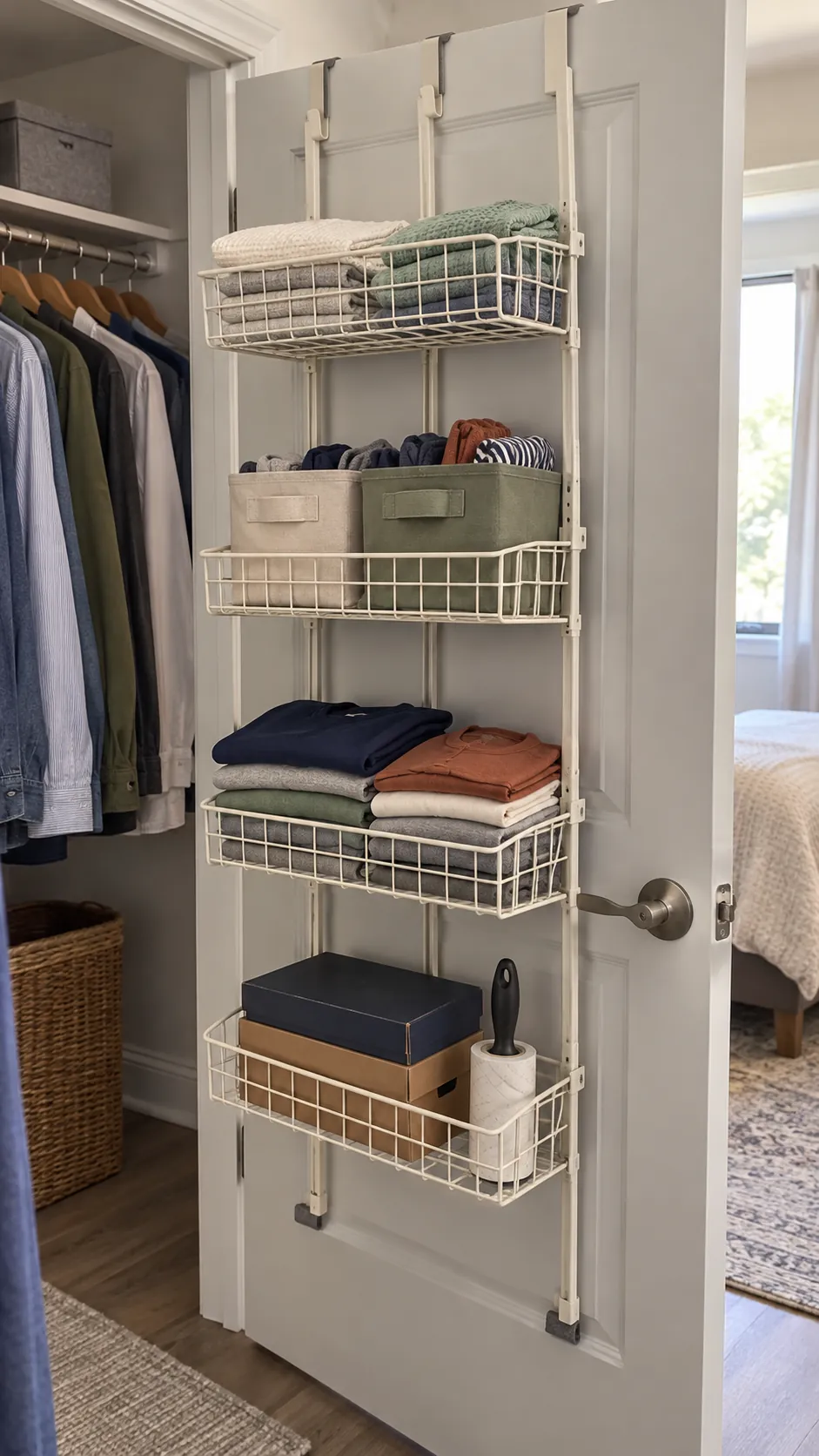
A rigid basket rack is useful for folded tees, hair tools, cleaning cloths, or small boxes that would slump in pockets. Choose shallow baskets for a closet door that opens toward hanging clothes. A raised front edge should retain items without hiding everything inside.
Check how the vertical frame joins and whether the baskets lock into place. Indexed snippets include frustration with products whose parts do not fit together, so inspect connection design and return terms before committing. Keep dense items in the lowest basket.
Reserve Hook Rails for Light Hanging Pieces
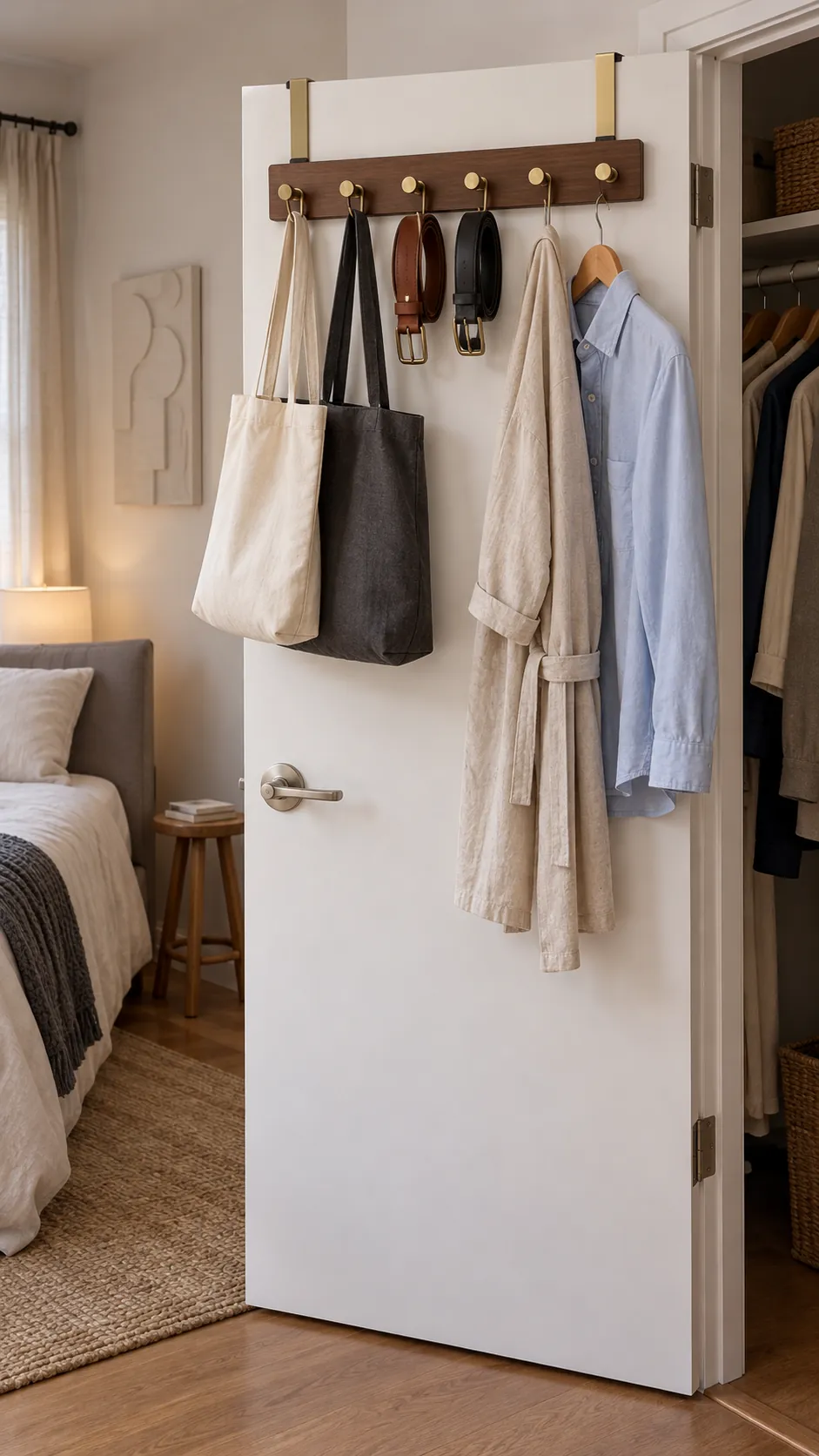
A slim hook rail handles belts, tote bags, robes, and tomorrow clothing with little depth. Wide rounded hooks protect straps better than sharp narrow ones. Space items so they do not cover the handle or catch between the door and frame.
Heavy purses and loaded backpacks create leverage as the door moves. Store those on a supported shelf or floor hook instead. An apartment closet space saver should improve access without turning the door into a moving storage wall.
Reduce Noise and Protect the Finish
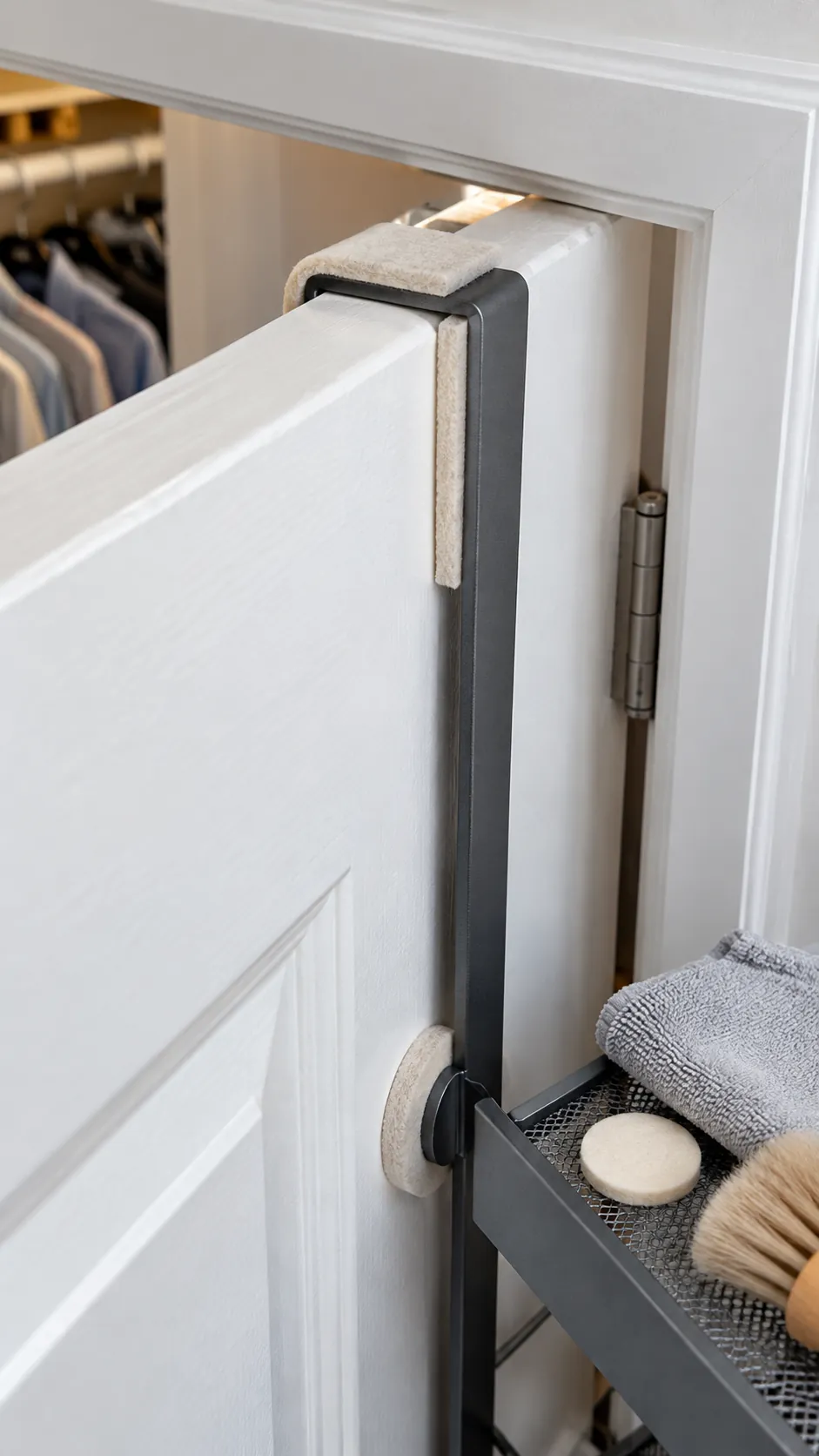
Metal hooks can rattle, slide sideways, or rub painted trim. Use only the included protective pads or a door safe cushioning material approved by the organizer maker. Place pads where the hook contacts the top and where the lower frame rests against the door.
Close the door slowly after loading, then check the latch, hinge movement, and frame contact. If the door drops, binds, or needs force, remove weight immediately. Photograph the original finish and inspect it regularly so a removable organizer stays renter friendly.
Choose the Smallest Organizer That Solves the Problem
Choose clear pockets when visibility matters, structured fabric compartments for bags, rigid baskets for items that need support, and a hook rail for a few light hanging pieces. One well fitted organizer usually works better than several overlapping systems.
The final test is simple: the door must open, close, latch, and clear its surroundings without extra effort. If it fails that test, use a hanging shelf inside the closet or a narrow floor rack instead. Storage only counts as gained when the room remains easy to use.