
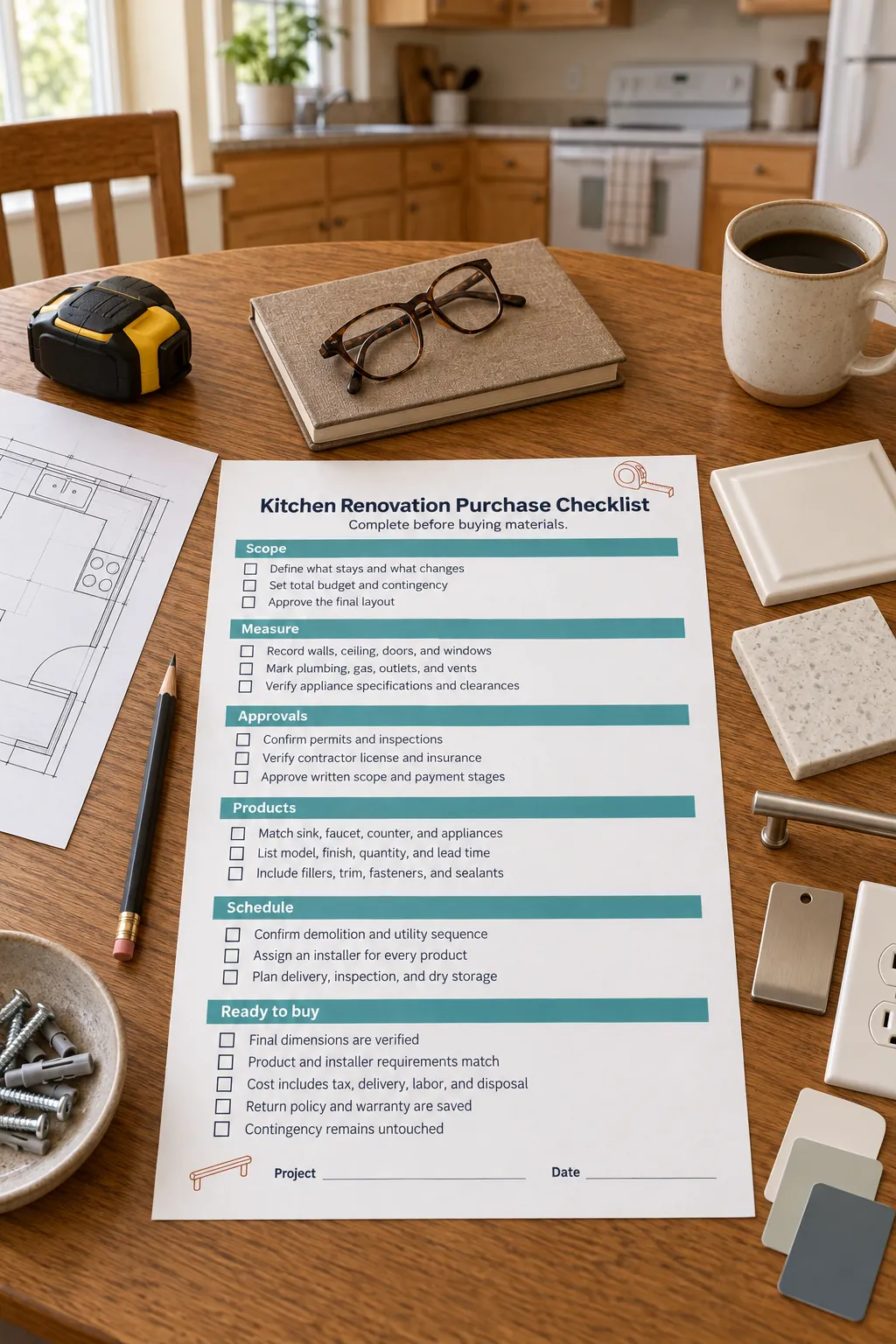
A sale price is not a saving when the cabinet, sink, tile, or appliance does not fit the approved plan. The expensive mistakes usually begin before checkout: an unverified measurement, a missing installer requirement, an unknown permit, or a product that arrives in the wrong part of the schedule.
Use this page before placing deposits or ordering materials. Check every box that applies, record uncertain answers in your project notes, and do not buy dependent products until the earlier decisions are confirmed. Click the preview to open the full size image, or use the download button to open it in a new tab and save it from there.
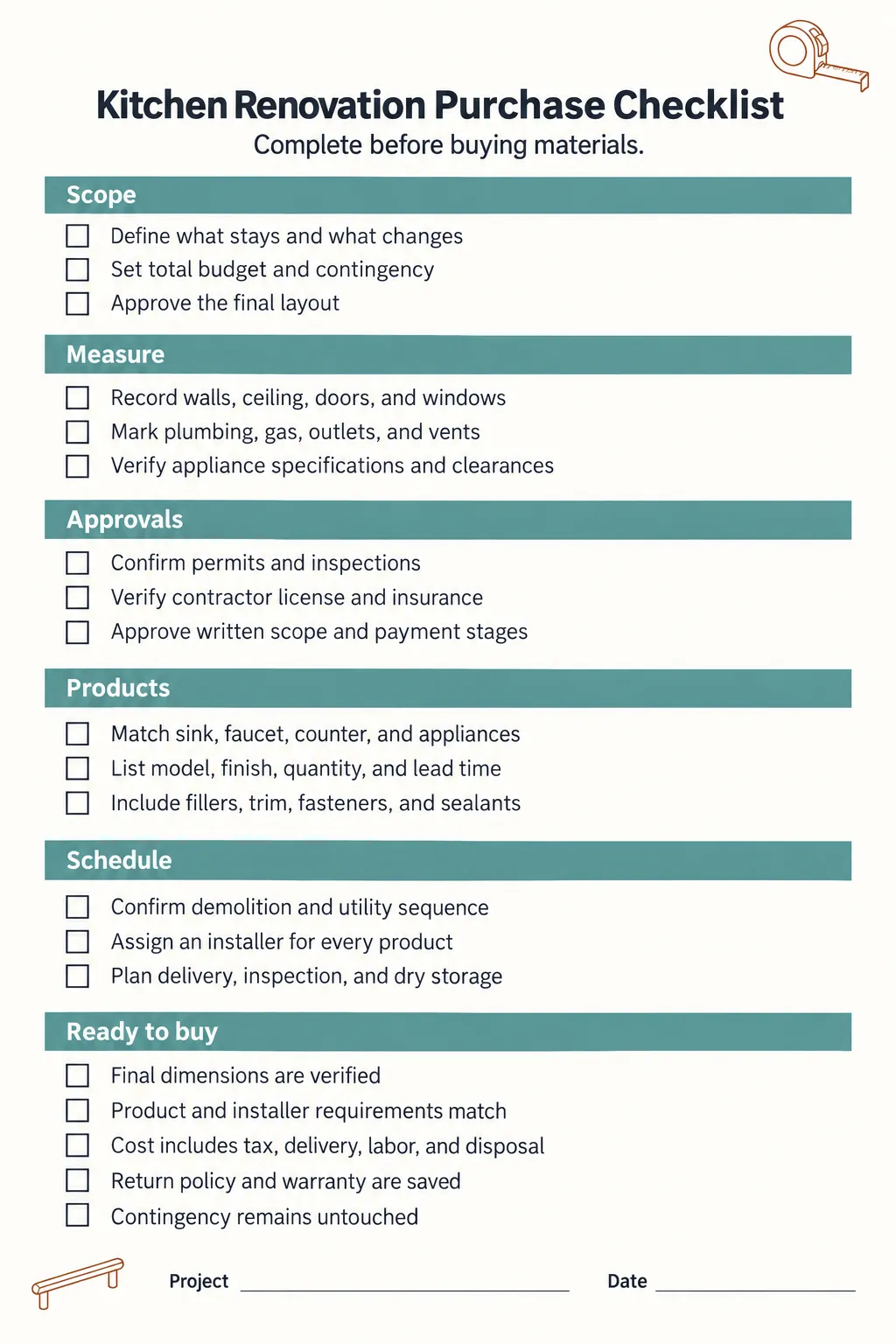
Download high-resolution printable
Lock the project scope
Write what stays, what moves, and what is replaced. A cabinet paint project has a different order, permit burden, and material list from a layout change. Confirm the spending limit and reserve before a showroom choice makes the plan larger.
Photograph the existing room and note every defect that must be repaired. Decide who makes final choices and who can approve a change. When the scope is stable, give the same description to each contractor so their quotes can be compared.
Measure the room and every opening
Measure wall lengths at more than one height because old rooms may not be square. Record ceiling height, doors, windows, trim, vents, radiators, and the direction each door swings. Mark the center line and size of plumbing, drains, gas, outlets, switches, and appliance connections.
Measure appliances from the manufacturer’s current specification sheet, not a store label or memory. Confirm required side, rear, and overhead clearances. A qualified designer or installer should verify final cabinet and counter dimensions before those items are ordered.
Confirm codes, permits, and responsibilities
Permit rules depend on the local authority and the actual work. Contact the authority that has jurisdiction before assuming a cosmetic project is exempt. Ask who applies, who schedules inspections, and whose license appears on electrical, plumbing, gas, or structural work.
Request insurance evidence and a written scope from each contractor. The document should name labor, materials, exclusions, disposal, protection, payment stages, change order procedure, and warranty. Do not use a low allowance as if it were a fixed product price.
Coordinate connected products
Cabinets determine many later measurements. Counter templates depend on installed and level cabinets. Sink, faucet, disposal, dishwasher, and countertop cutouts must work together, while the backsplash follows the finished counter and upper cabinet positions.
Build one kitchen remodel materials list with model numbers, finish names, quantities, lead times, return rules, and installer requirements. Confirm that trim, fillers, panels, fasteners, adhesives, grout, sealant, and transition pieces are included. Small missing components can delay a trade even when the main product is on site.
Build the purchase order around the schedule
Write the kitchen remodel order of operations with the contractor before ordering. A common sequence is protection, disconnection, demolition, repair, rough utilities, inspections, wall preparation, flooring as the plan requires, cabinets, counter template, counter installation, final connections, backsplash, paint touchups, and final inspection. The exact order changes with the project.
Order long lead and dimension critical products only after approval, then schedule delivery before their installation window. Do not store cabinets, wood flooring, or appliances in damp or unconditioned places. Inspect every delivery promptly and record damage before the return period closes.
Release the budget one decision at a time
Replace each allowance with an actual quote that includes tax, delivery, installation supplies, labor, and disposal. Keep the contingency outside committed spending. If a quote grows, reduce optional scope before using money reserved for hidden conditions.
Review the completed checklist with the designer, contractor, or relevant trade. Purchase only when the item has an approved specification, verified dimension, assigned installer, confirmed lead time, safe storage place, and clear position in the project timeline. That pause is often the cheapest step in the renovation.