
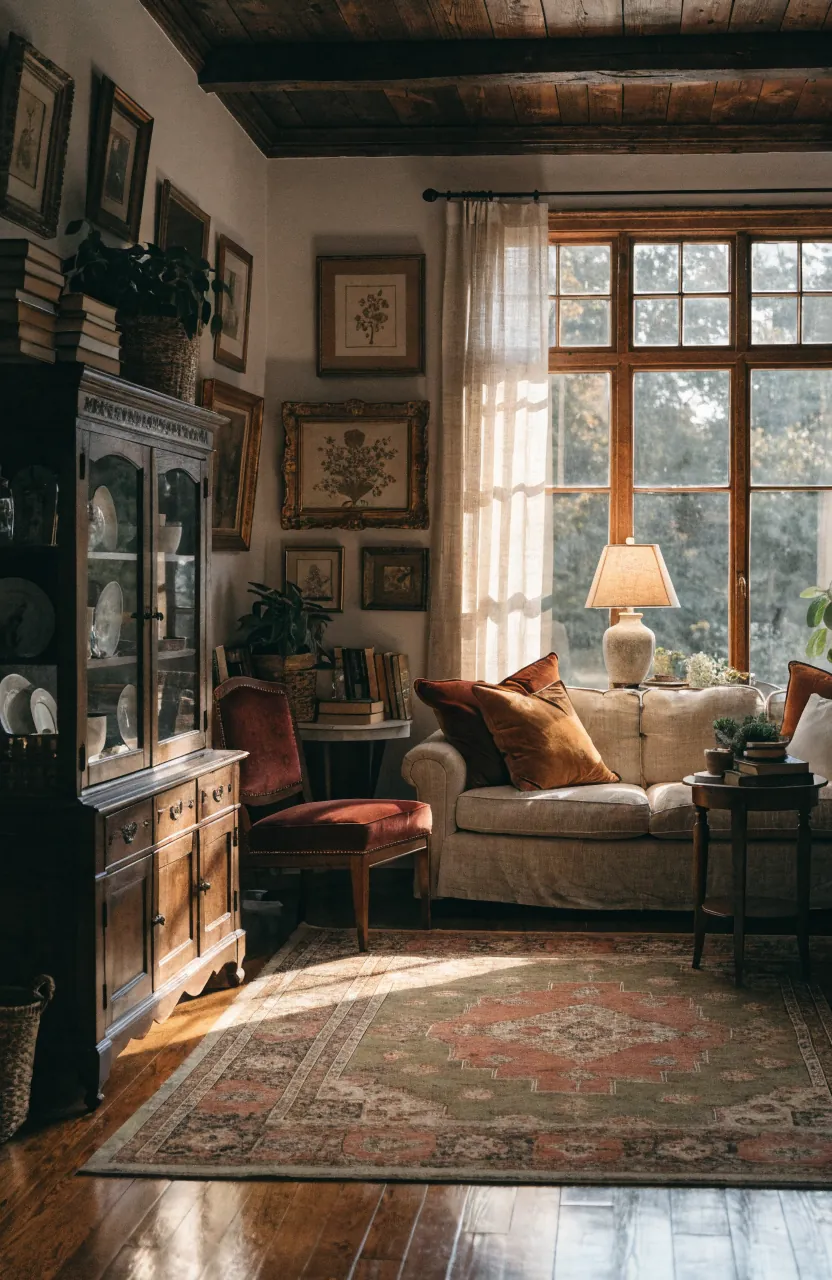
A plain room rarely feels bad because it is simple. It feels bad because it looks undecided. The sofa is fine, the walls are fine, the table is fine, yet nothing in the room tells you who lives there.
That is the real promise of a character home. It is not about filling every surface or buying a full vintage decor scheme in one weekend. It is about adding enough age, texture, color, memory, and odd little details that a room starts to feel collected instead of assembled from one cart.
If you hate plain rooms, start with this rule: every space needs something soft, something old, something personal, something useful, and one small visual surprise. The mix can be cottage decor, retro home decor, thrifted decor, or a quieter old house charm look. The point is to make the room feel warm without making it feel messy.
Start With One Piece That Has a Past
A room begins to change when one object refuses to look generic. It might be a carved wood side table, a vintage mirror, an old trunk used as a coffee table, a bentwood chair, a painted cabinet, or a framed landscape that looks like it came from a hallway in someone else’s grandmother’s house.
You do not need every piece to be old. In fact, a room often looks better when the practical pieces are simple and the character comes from a few stronger finds. A clean-lined sofa beside a worn wood table can look more interesting than a full matching furniture set. A basic white kitchen can soften quickly with a vintage runner, brass lamp, wooden bowl, and framed art leaning on an open shelf.
For a plain room makeover, choose one anchor piece first. Let it set the mood before you buy more. If the piece is dark wood, repeat that wood tone somewhere else. If it has a warm red, moss green, ochre, or faded blue, let that color reappear in a pillow, book spine, vase, or small painting. Repetition makes thrifted decor look intentional.
Warm Up the Big Flat Surfaces First
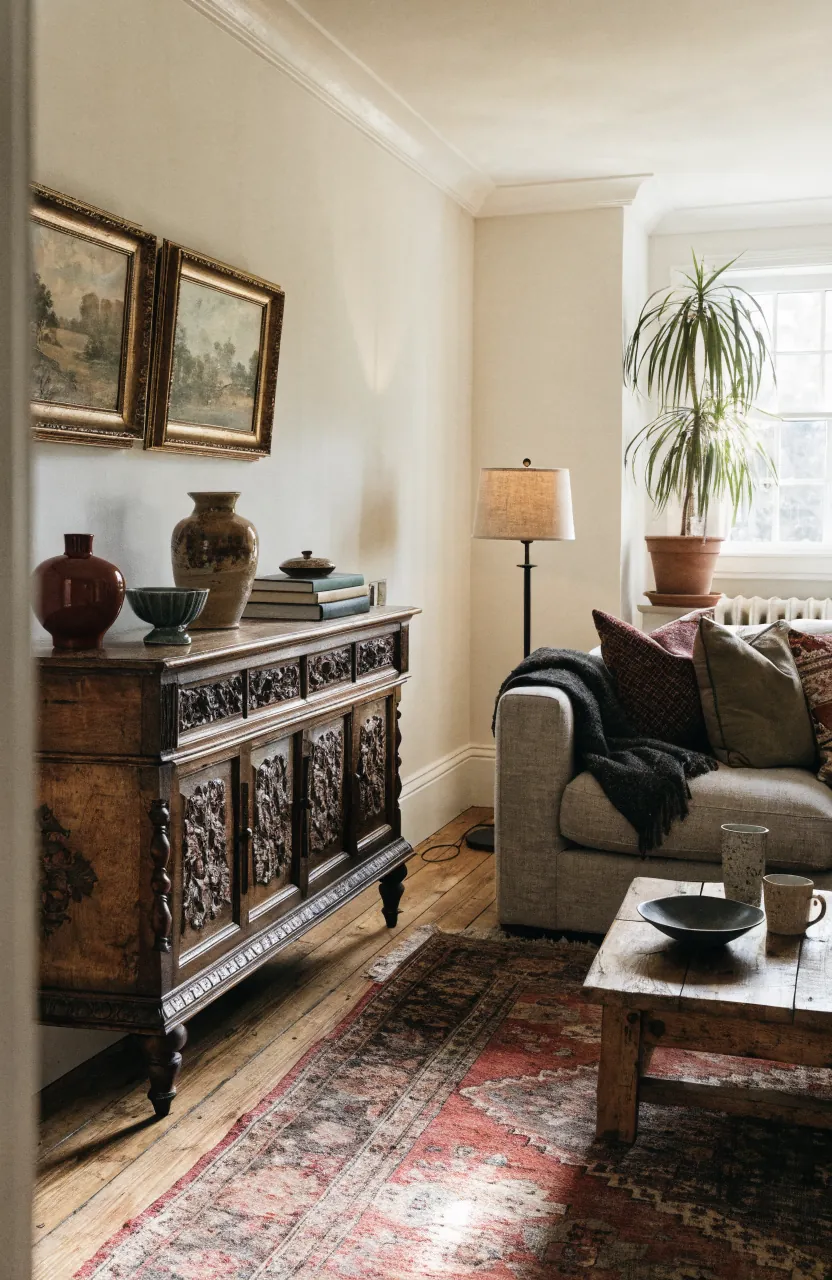
Plain rooms often have the same problem: too many hard, flat, empty surfaces. Bare windows, blank walls, pale floors, and smooth furniture can make even expensive rooms feel unfinished. Before you add ten little accessories, fix the large quiet areas.
Curtains are one of the fastest ways to add old house charm. Hang them wider and higher than the window frame so the wall feels taller and softer. Choose linen, cotton, velvet, or a small vintage-inspired print instead of a shiny synthetic panel. A rug does the same work on the floor. It gives furniture a place to land and keeps the room from feeling like a waiting area.
Wall color helps too, but it does not have to mean a dramatic paint job. A creamy off-white, soft mushroom, muted sage, dusty blue, or warm clay can make vintage living room pieces feel calmer. If you rent, bring the same effect through curtains, removable wallpaper, art, and textiles.
Use Lamps Instead of Letting the Ceiling Light Decide the Mood
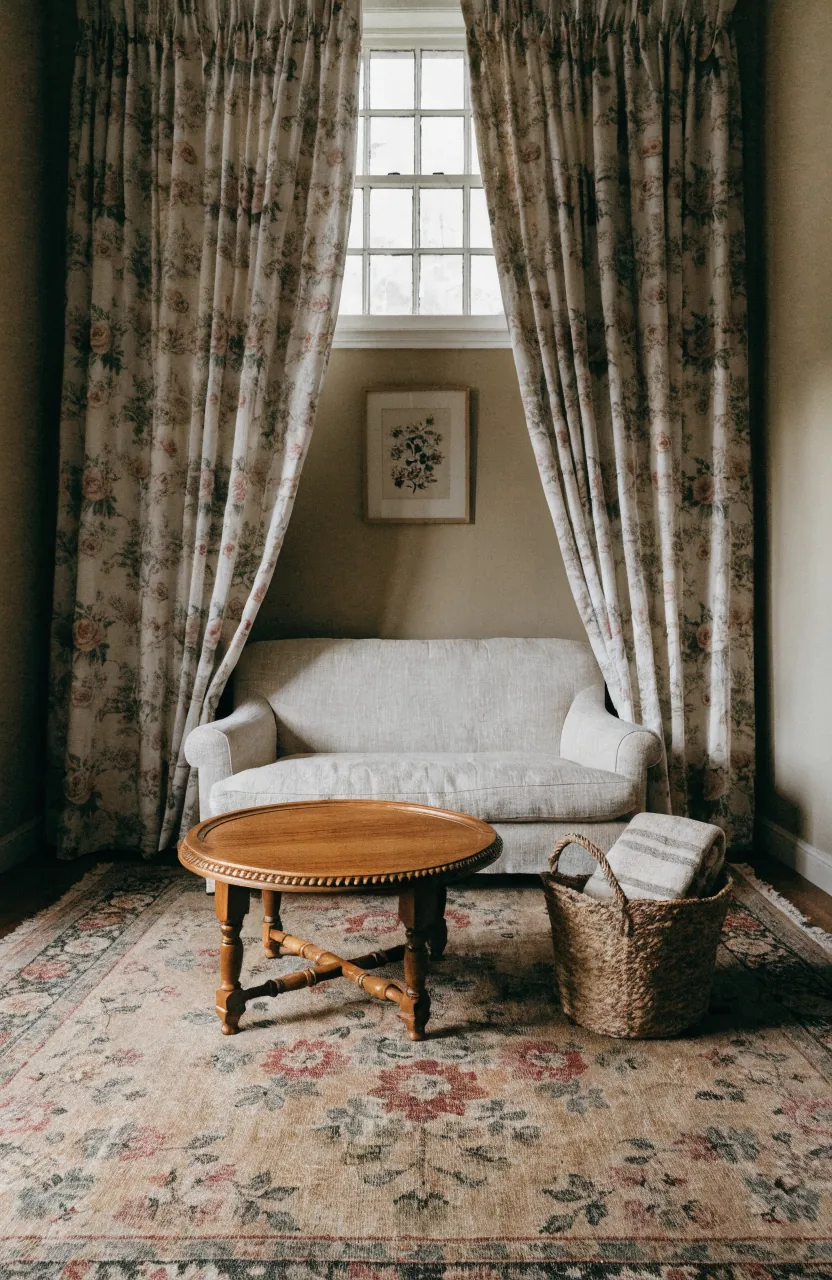
Nothing flattens a character home faster than one harsh overhead light. Lamps create corners, shadows, and atmosphere. They make a room feel lived in because the light comes from the same places life happens: beside a chair, near a bookshelf, on a console, by the bed, or beside the dining table.
Look for lamps with ceramic bases, pleated shades, brass details, painted metal, turned wood, or colored glass. Even a simple thrifted lamp can change the whole room if the shade is warm and the bulb is soft. In a collected home, lighting is not only functional. It is part of the decor.
Try three light levels in any main room: one taller lamp for general glow, one table lamp for a softer pool of light, and one small accent light for a shelf, art wall, or dark corner. This is especially useful for retro home decor because warm lighting makes color, wood, and pattern feel rich instead of loud.
Build a Wall That Looks Collected, Not Filled
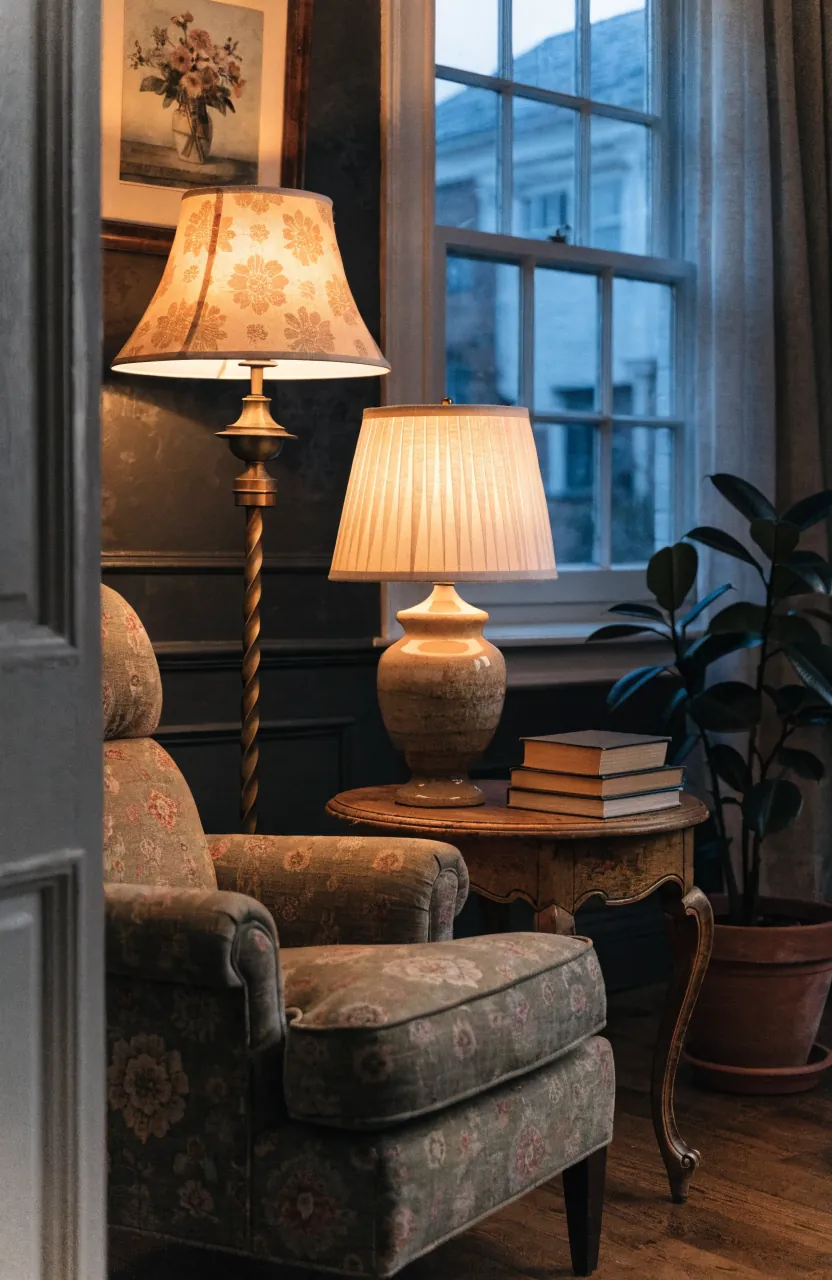
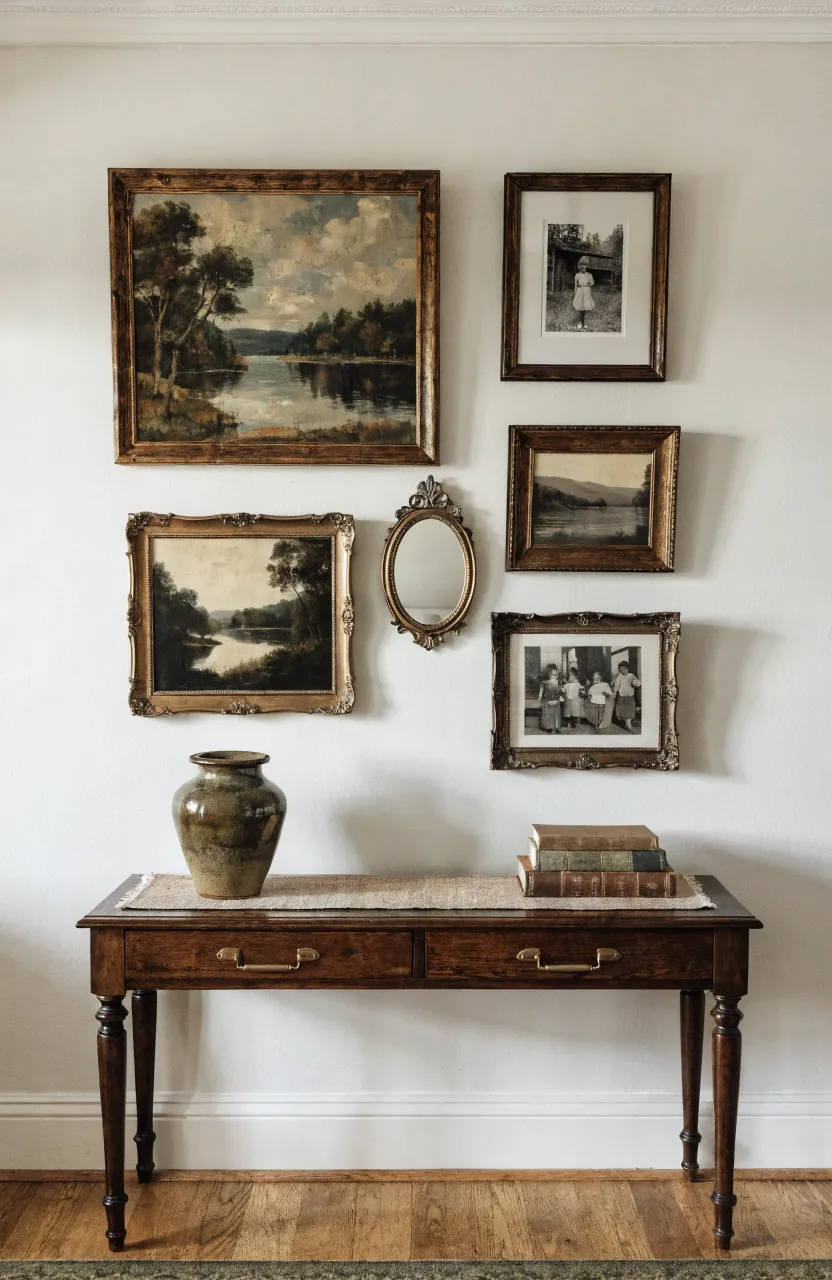
A blank wall makes a room feel temporary. A rushed gallery wall can make it feel chaotic. The middle ground is a collected wall: a mix of art, family photos, small mirrors, textiles, postcards, and frames that share a few quiet connections.
Start with three to five pieces instead of covering the whole wall. Mix frame sizes, but repeat one thing: black frames, gold frames, wood frames, a color family, or a subject. Vintage landscapes, botanical prints, family black-and-white photos, and small oil paintings work well because they add story without needing bright colors everywhere.
If the room already has a lot of pattern, keep the art calmer. If the room is neutral, let the art bring in the strongest color. Character filled home ideas work best when each piece has a job instead of every piece shouting for attention.
Let Useful Things Become Decor
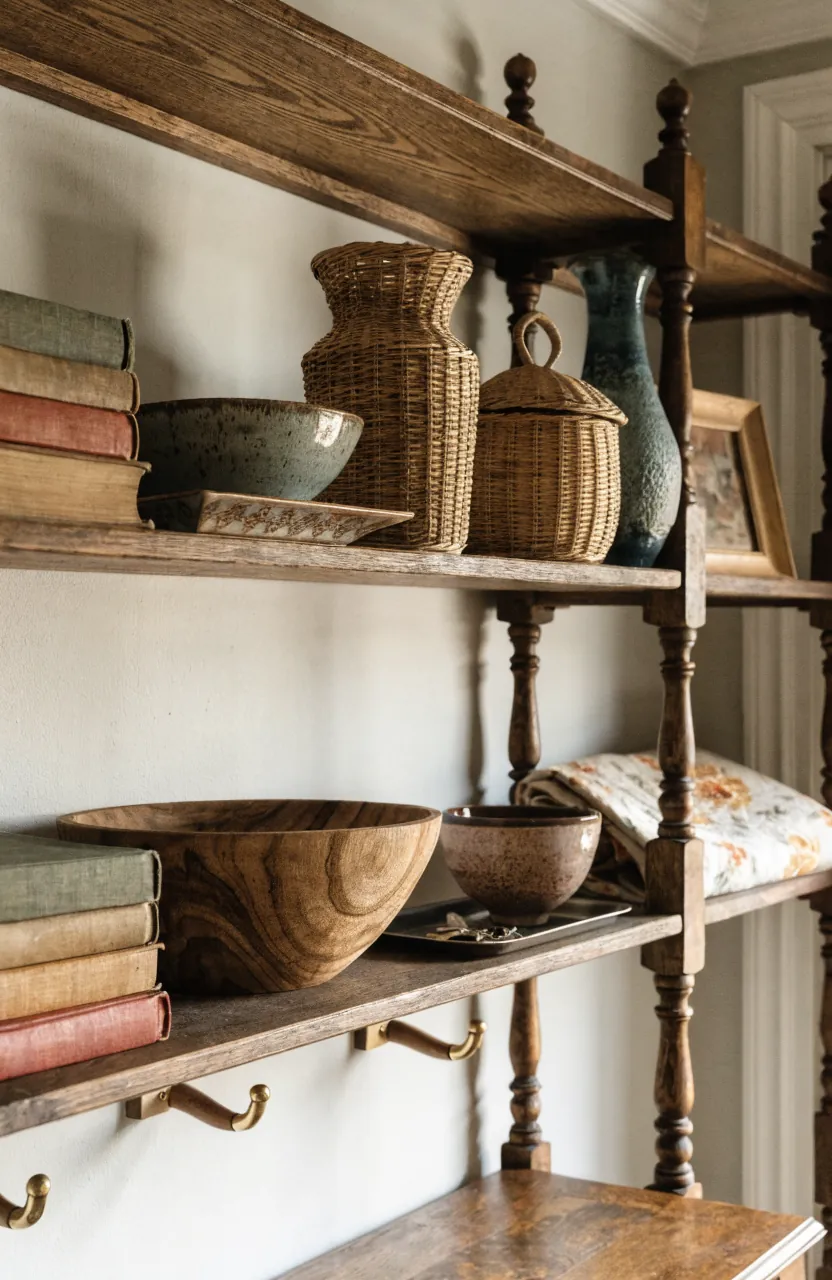
The easiest way to make a room feel human is to stop hiding every useful thing. Books, baskets, trays, quilts, bowls, hooks, stools, and ceramics can all work as decor when they are chosen with care. This is why older homes often feel charming even when they are not perfectly styled. The useful objects have texture.
A stack of books under a lamp, a woven basket for blankets, a tray for remotes, a crock for wooden spoons, or a peg rail by the door adds more warmth than another random ornament. It also keeps vintage decor from feeling like a display case. The room still works.
If you are worried about clutter, group small items on trays or inside baskets. Keep some surfaces nearly clear, then let one shelf or corner carry the collected look. Character does not require every inch to be busy.
Add One Retro Color and Repeat It Gently
If your home feels too plain but you are nervous about color, do not start with every color you like. Pick one retro color and repeat it three times. Mustard, olive, rust, burgundy, dusty blue, raspberry, and deep teal all pair well with warm wood and vintage pieces.
The color does not have to be on a wall. It can show up in a pillow, lampshade, art print, dish, throw blanket, striped curtain, or painted side table. Repeating the color makes the room feel designed. Keeping it to a few moments makes the room feel relaxed.
This is especially helpful in a vintage living room. A floral pillow, a small red lamp, and a faded rug with the same red can make a neutral sofa feel charming instead of bland. The room still has breathing room, but now it has rhythm.
Bring in Pattern Without Losing the Room
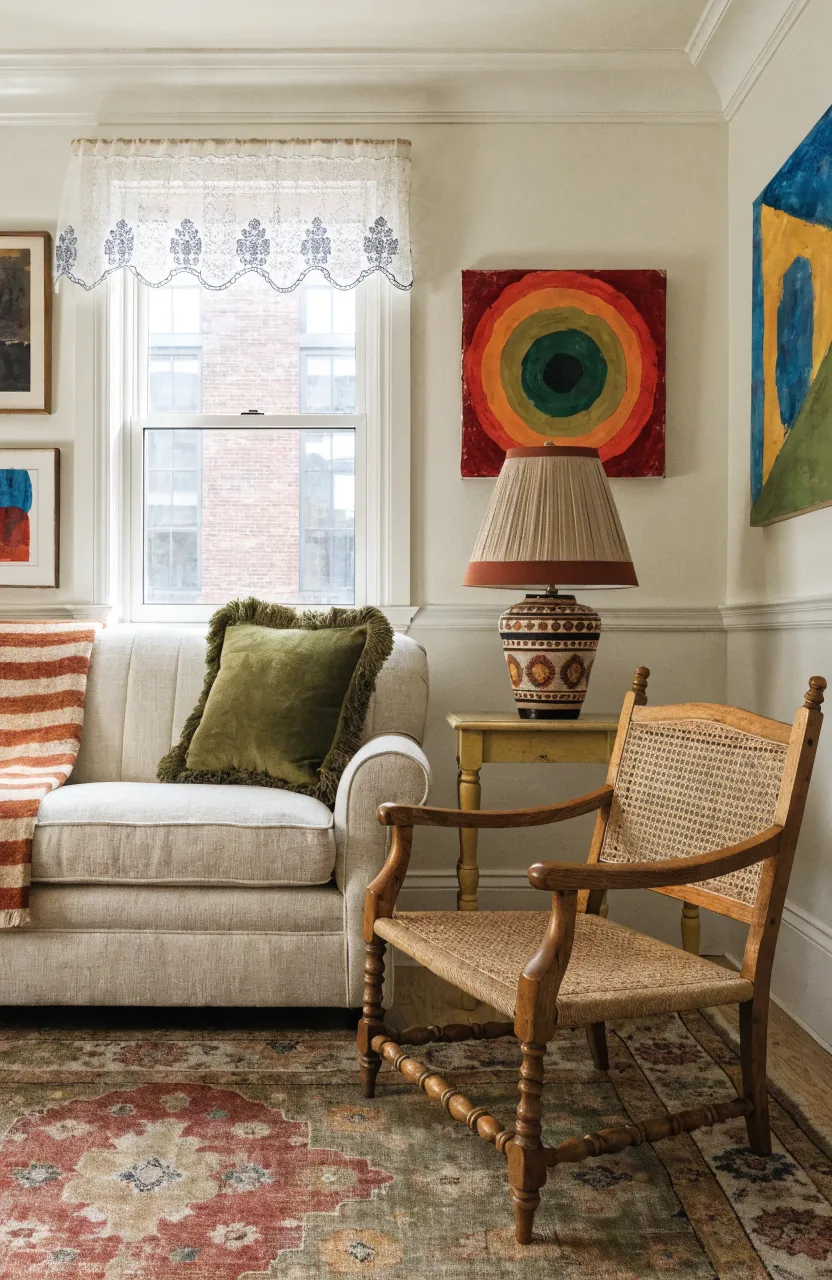
Pattern is where many plain rooms finally wake up. It can also be where a room starts to feel noisy. The trick is to vary the scale. Pair one larger pattern, one smaller pattern, and one simple texture.
For example, use a faded floral curtain, a narrow striped pillow, and a nubby linen throw. Or try a Persian-style rug, a small check cushion, and a velvet chair. When patterns are different sizes, they do not compete as much. When they share a color, they feel related.
Cottage decor depends on this kind of layering. It is not about matching. It is about giving the eye enough connection that the mix feels cozy instead of accidental.
Shop Slowly So the Room Can Develop a Point of View
The most convincing character homes usually look like they happened over time because they did. That is hard to fake in one shopping trip. If you buy every accessory at once, the room may become more decorated, but it will still feel flat.
Make a short thrift list instead: one lamp, one real piece of art, one wood table, one mirror, one basket, one textile. Visit thrift stores, estate sales, antique malls, flea markets, and local resale groups with those categories in mind. Do not buy something only because it is cheap. Buy it because it would still interest you if it were sitting alone on an empty shelf.
Over time, your home will start to show patterns: the woods you like, the colors you keep choosing, the eras you lean toward, the shapes that make you pause. That is where personal style comes from.
Use This Simple Character Check Before You Buy More
- Is there softness? Add curtains, a rug, pillows, bedding, or a throw.
- Is there age? Bring in one vintage, antique, inherited, or secondhand piece.
- Is there personality? Use photos, art, books, travel pieces, handmade items, or collections.
- Is there warm light? Add lamps before adding more small decor.
- Is there contrast? Mix smooth with rough, new with old, light with dark, plain with patterned.
- Is there breathing room? Edit one surface before filling another.
A warm home decor style is not a pile of stuff. It is a set of repeated choices. When the same wood tone, color, texture, or mood appears in different places, even quirky pieces begin to belong together.
Final Thought
If a room feels plain, do not assume it needs a full redesign. It may only need a few signs of life: a lamp with a softer glow, a rug with age, a wall that holds real art, a shelf with books, a color that repeats, and one object that could not have come from a matching set.
The best character filled home ideas do not make your rooms look perfect. They make them feel specific. That is the difference between a room that is simply decorated and a room that feels like home.