
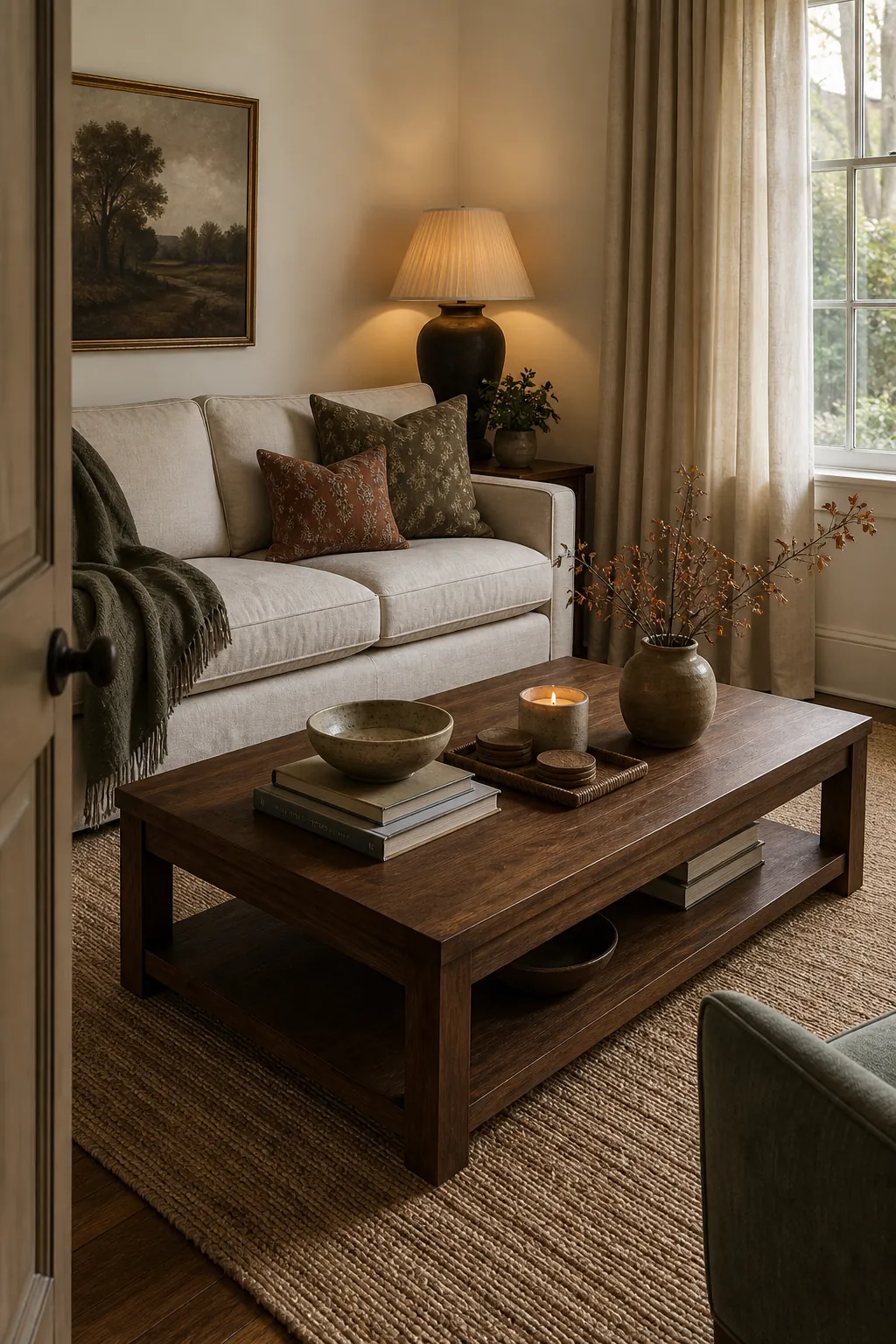
The coffee table is often the place people blame last. The sofa is in, the rug is down, the TV wall works, and the room still has that oddly unfinished feeling. So the instinct is to buy more pillows, another throw, or a larger piece of art. Sometimes those help. But in a living room that feels almost done, the coffee table is usually the easiest place to make the whole space look intentional.
Think of it as the room’s center punctuation. It tells the eye where the seating area begins, how the colors connect, and whether the space is meant for real daily life or just waiting for something. A finished coffee table does not need to be crowded. It needs scale, layers, texture, and one or two details that make the living room feel like someone actually lives there.
Use these coffee table ideas as a practical room refresh, not a shopping list. The goal is better coffee table styling that helps finish the room you already have.
Start by fixing the visual anchor
If the living room feels unfinished, look at the space from the main doorway and ask one question: does the seating area have a clear middle? A coffee table that is too small, too far from the sofa, or visually too light can make every other choice feel scattered. Reddit room-advice threads often come back to this same issue: the room is not missing random decor, it is missing a grounded center.
The coffee table should feel connected to the sofa and rug, not stranded between them. Pull it close enough to use comfortably from the sofa. Let it sit mostly on the rug if you have one. If the table is tiny compared with the sectional, consider nesting tables, a larger rectangular table, or a pair of small ottomans that read as one surface.
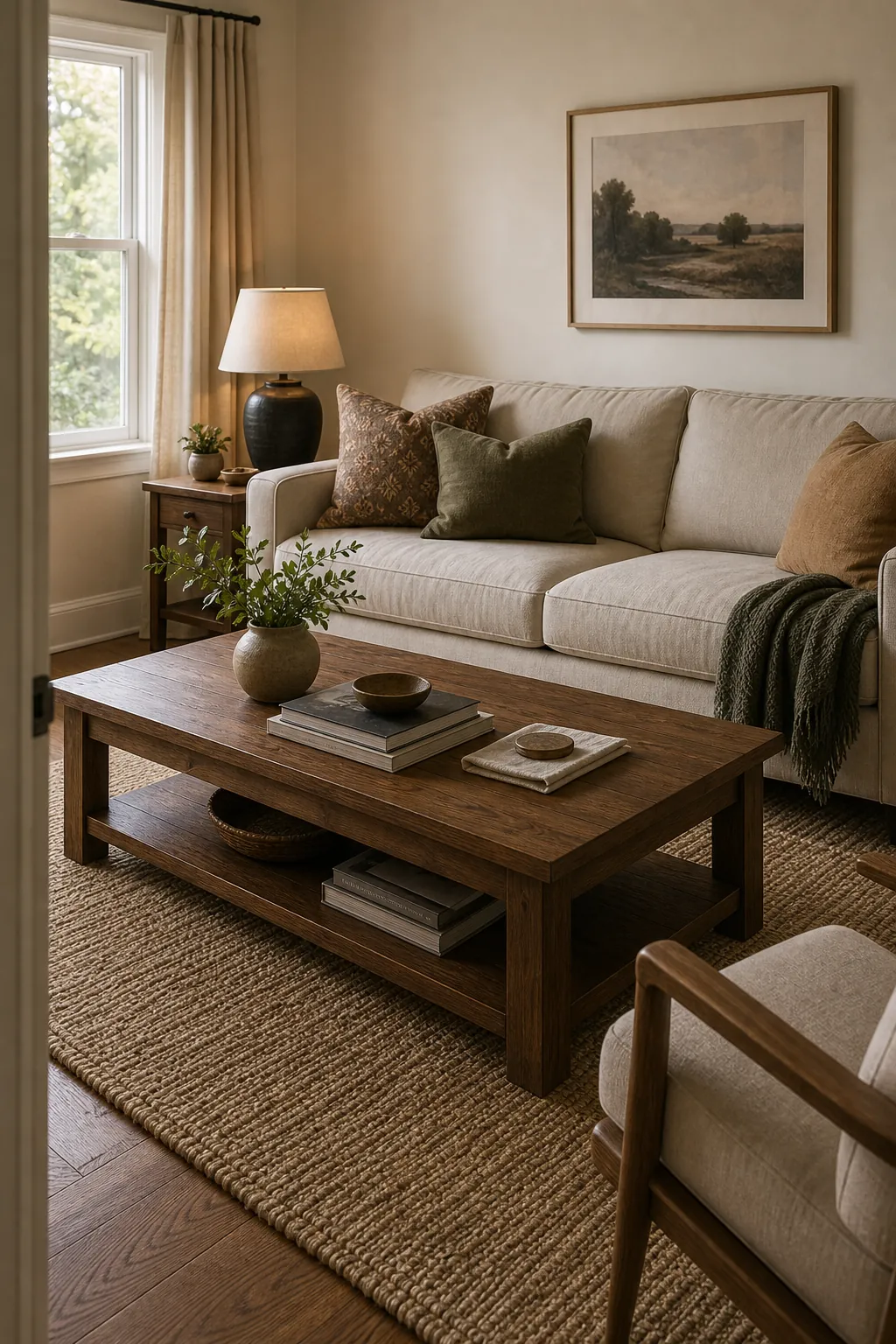
This is also where shape matters. A square sectional can look softer with a round table. A long sofa often feels more balanced with an oval or rectangular table. A small apartment living room may need a table with visible legs so the floor still shows through. Before you add coffee table decor, make sure the table itself is doing its job.
Build one simple styling zone
A bare table looks temporary, but a table covered edge to edge looks like storage. The middle ground is one clear styling zone. For most homes, that means a tray, a low stack of books, or a shallow bowl that gathers the smaller pieces. Grouping is what turns everyday objects into coffee table decor instead of clutter.
Try this easy formula: one flat layer, one useful item, and one living or sculptural detail. The flat layer might be two coffee table books. The useful item could be a small lidded box for remotes, a ceramic dish for matches, or a tray for coasters. The living detail might be flowers, a small plant, clipped branches, or a handmade object with an irregular shape.
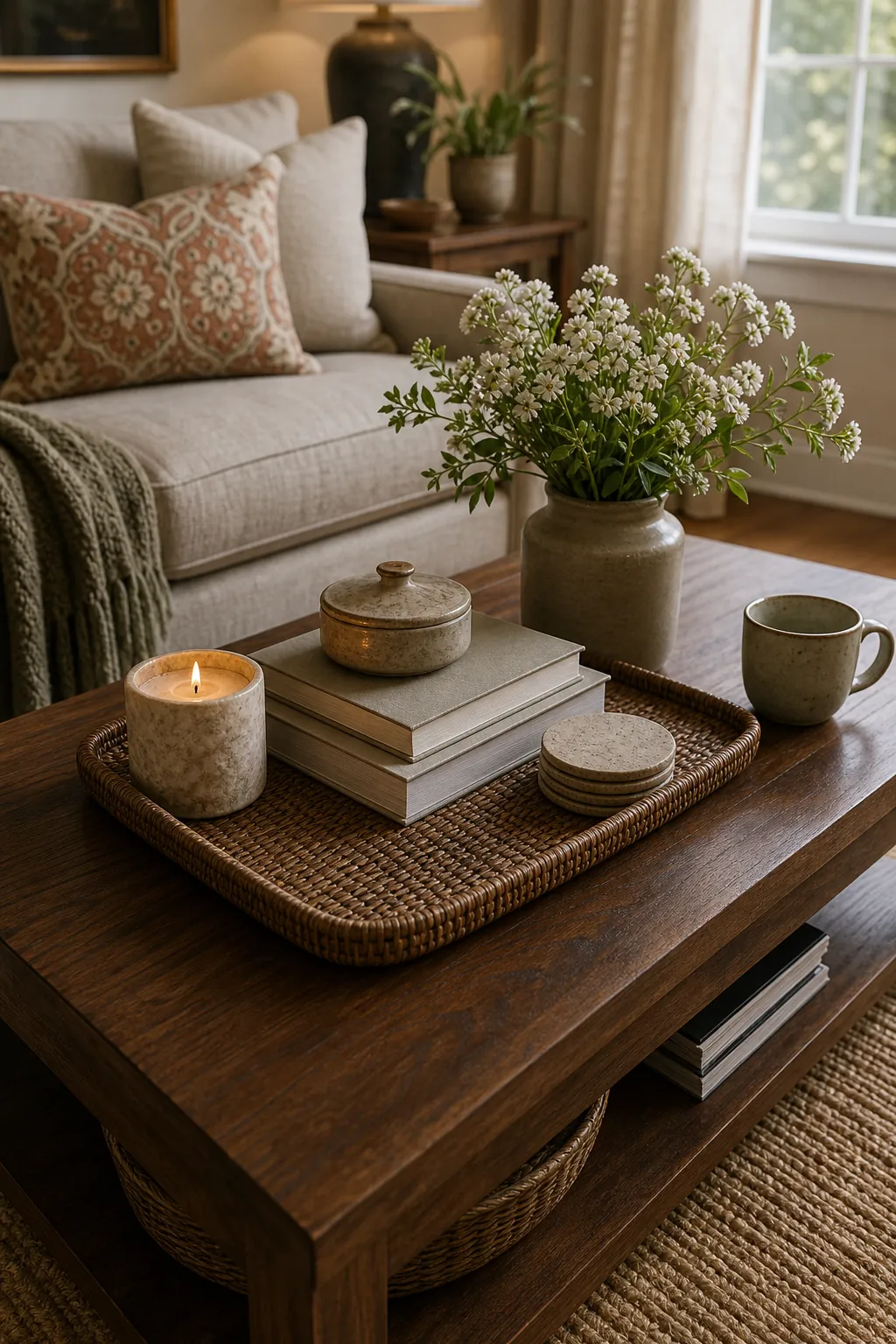
Do not make every object the same size. A candle, a book stack, and a vase all at similar height can feel flat. Add a taller moment, a low bowl, and a soft textile nearby. That difference in height and texture gives the eye somewhere to move.
Use height carefully
Height is the fastest way to make coffee table styling feel designed, but it is also the easiest way to make the room annoying. A tall arrangement can be beautiful in a conversation room. In a TV-focused living room, it can block sightlines and feel fussy by the second night.
Choose height that matches how the room is used. For a cozy living room where people watch movies, use lower branches, a squat vase, a sculptural bowl, or a candle inside a hurricane glass. For a formal sitting area, you can go taller with seasonal stems, leafy branches, or flowers that rise above the table and connect visually to art, lamps, or curtains.
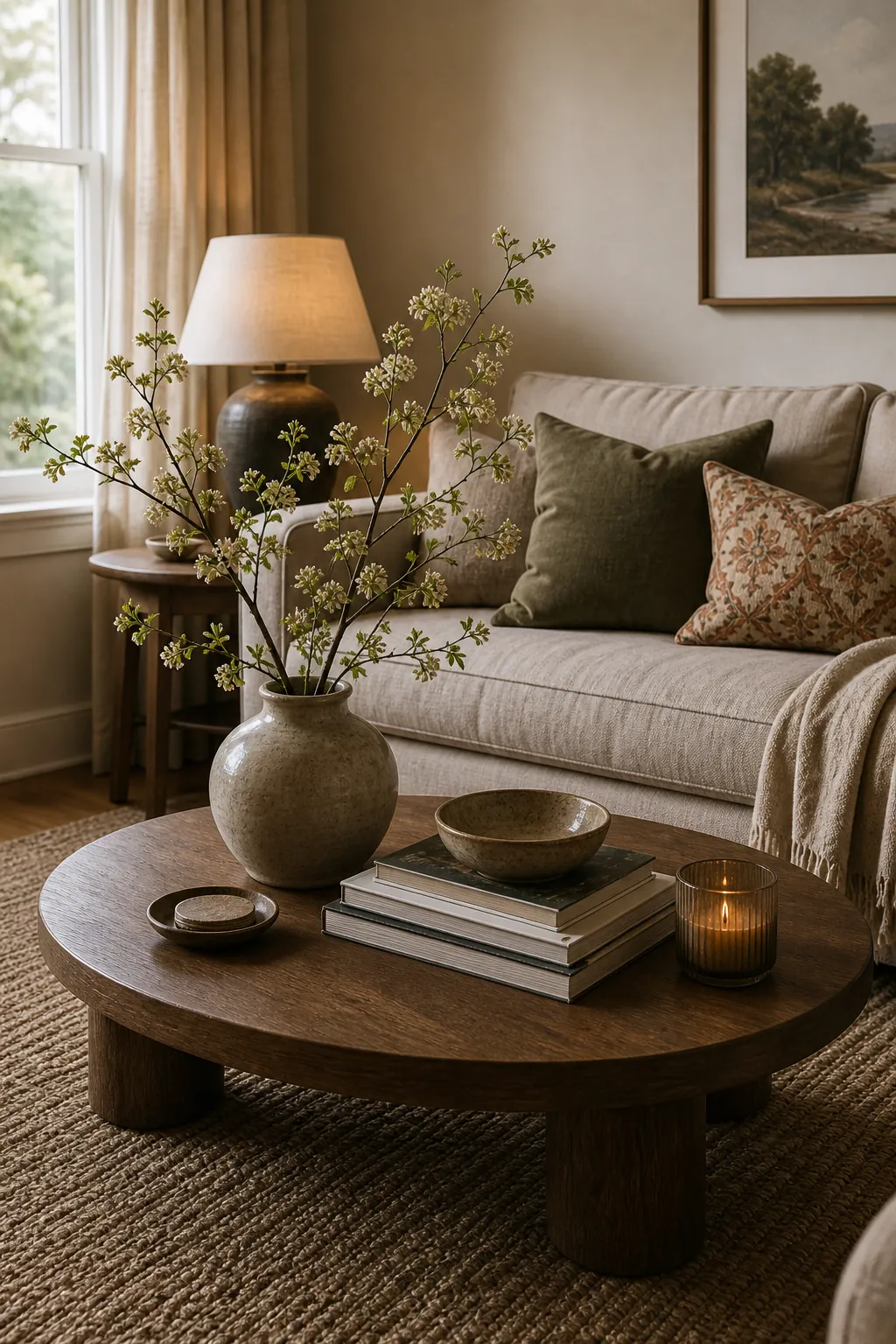
If the room still feels unfinished after you style the table, scan upward. Bare windows, small art, or a missing floor lamp can make the coffee table work harder than it should. The table can finish the center of the room, but it should not be the only vertical detail.
Repeat one color from the room
An unfinished living room often has good pieces that do not speak to each other. The sofa is one color, the rug is another, the art has a third palette, and the coffee table is blank. The fix is not to match everything. The fix is to repeat one color on purpose.
Pick a color that already exists in the room and bring it to the table in a small way. If your rug has rust, use a rust-toned book spine or small ceramic dish. If your throw pillows have olive, use greenery or a vase with a muted green glaze. If the art has black lines, repeat black in a tray, taper holder, or picture frame nearby. One repeated color can make separate living room decor choices look like a plan.
This is especially helpful in neutral rooms. Beige, gray, and white spaces can look calm or unfinished depending on contrast. Add one deeper material, such as walnut, blackened metal, aged brass, dark green ceramic, or a richly colored book cover. A small note of contrast makes the room feel edited instead of empty.
Keep real life visible
The most believable rooms leave space for how people actually use them. If the coffee table is where remotes, reading glasses, kids’ toys, snacks, laptops, and mugs land every night, styling has to absorb that reality. Otherwise the table looks good for one photo and falls apart by dinner.
Give everyday items a good-looking destination. A woven tray can hold remotes and coasters. A lidded box can hide charging cables. A lower shelf can take magazines or a folded throw. An ottoman coffee table can use a firm tray so drinks feel stable. This is where home styling becomes practical instead of performative.
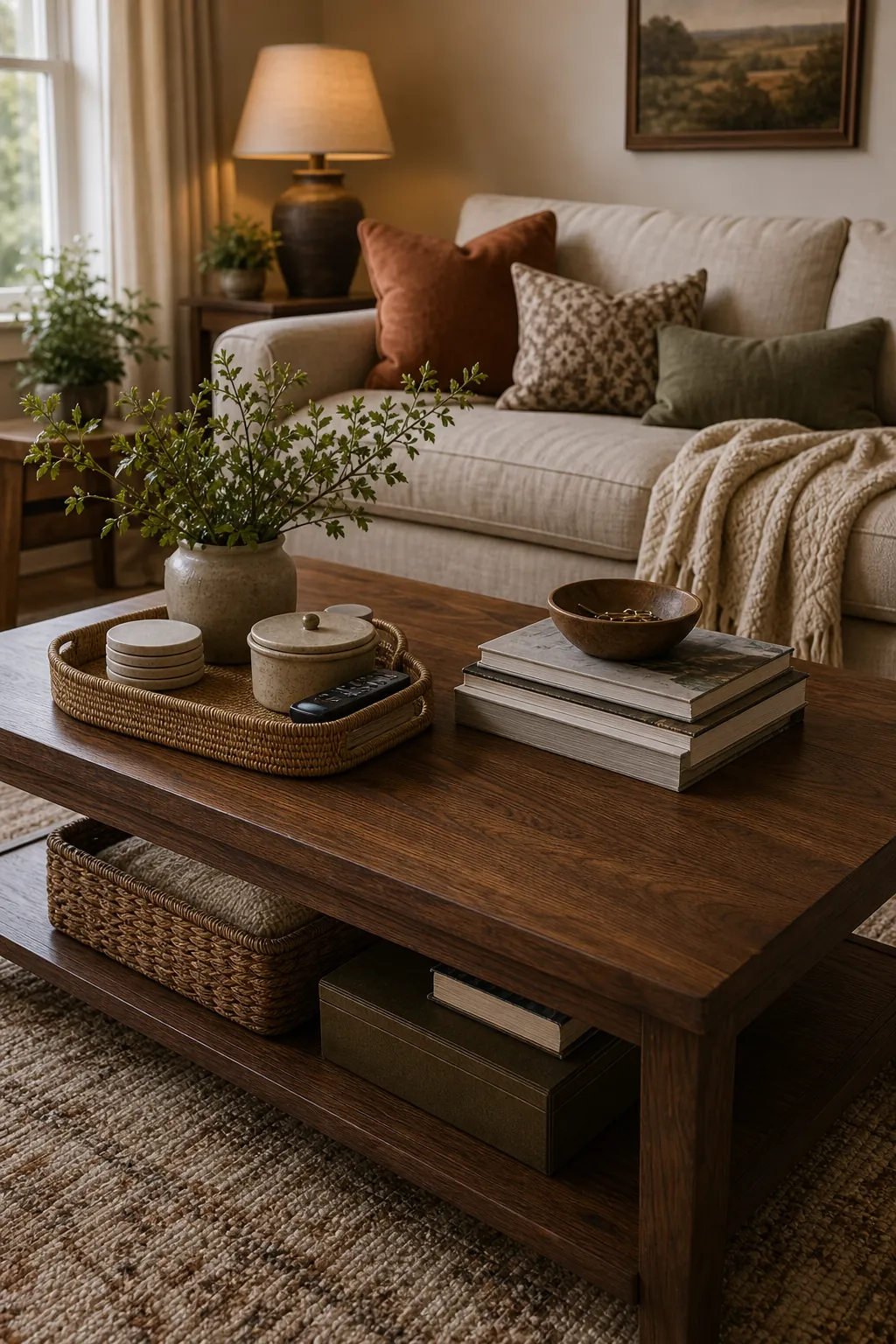
If you have children or pets, style lower and sturdier. Use a heavy bowl, washable tray, faux stems, soft-edge objects, and LED candles. A finished room should not require everyone in the house to behave like a guest.
Match the idea to the table shape
Different tables need different styling. A round coffee table looks best when the arrangement does not hug the edge. Keep the grouping slightly off center and use one object with height so the surface does not feel like a dinner plate. A rectangular table can handle a longer composition: books at one end, a tray in the middle, and a lower bowl or candle at the other.
A glass table needs texture underneath or nearby because the surface can visually disappear. Try a woven tray, ceramic bowl, wood beads, or books with matte covers. A heavy wood table may need lighter objects, such as glass, linen, pale stone, or greenery, so the center of the living room does not feel too visually dense. The table shape should decide the styling, not the other way around.
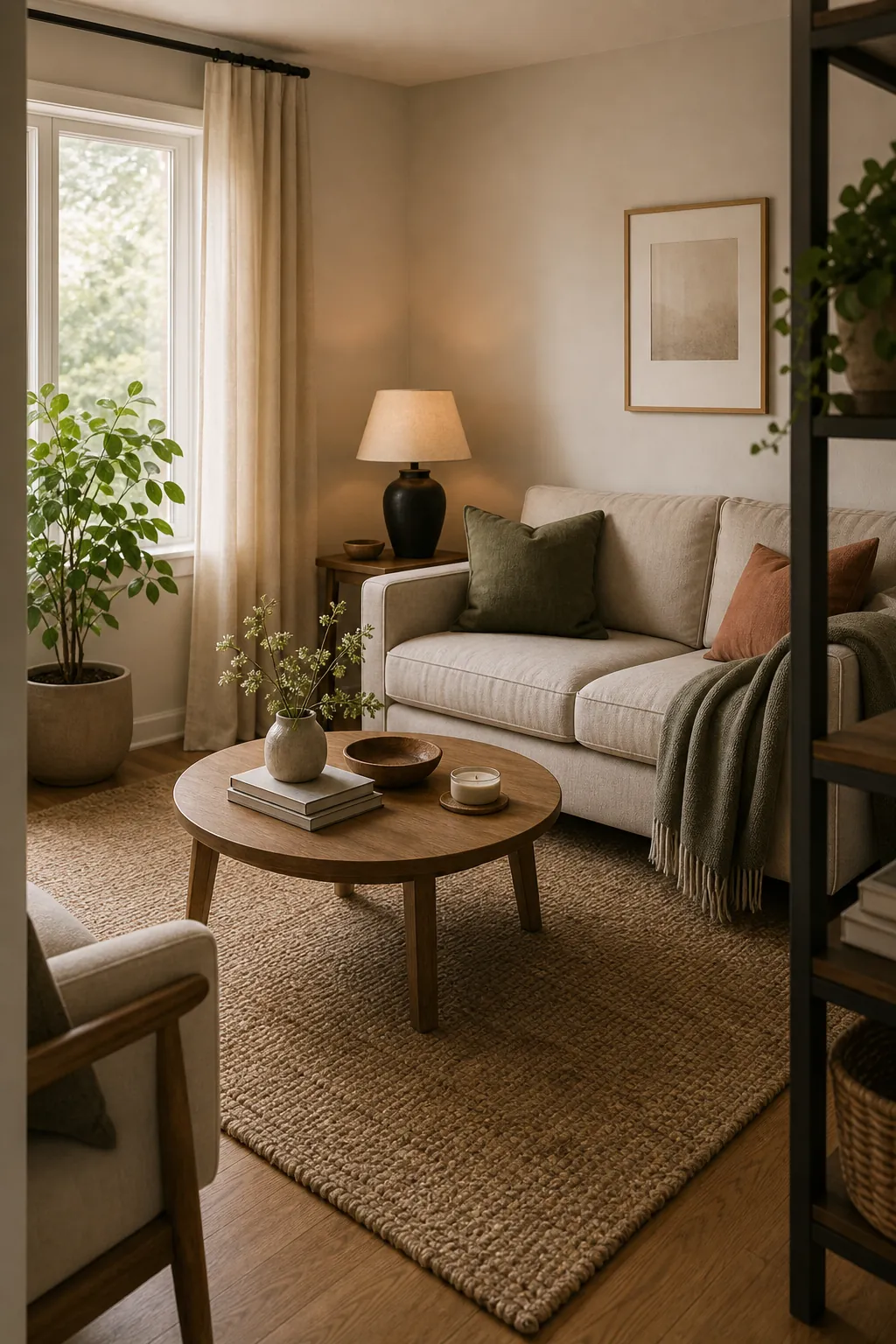
If the living room makeover budget is small, this is good news. You can often make the table feel better by changing the mix rather than buying all new pieces. Move a vase from a shelf. Borrow a book from the bedroom. Bring in a small bowl from the kitchen. The best coffee table styling usually looks collected, not purchased in one afternoon.
Make the sofa area feel connected
A coffee table cannot finish a room if the sofa area around it is still floating. After you style the table, check the surrounding pieces. Are the throw pillows connected to the colors on the table? Does the side table have a lamp or plant that balances the height? Does the rug reach far enough under the seating? Is there one soft element, such as curtains, a blanket, or a textured pillow, that makes the room feel warm?
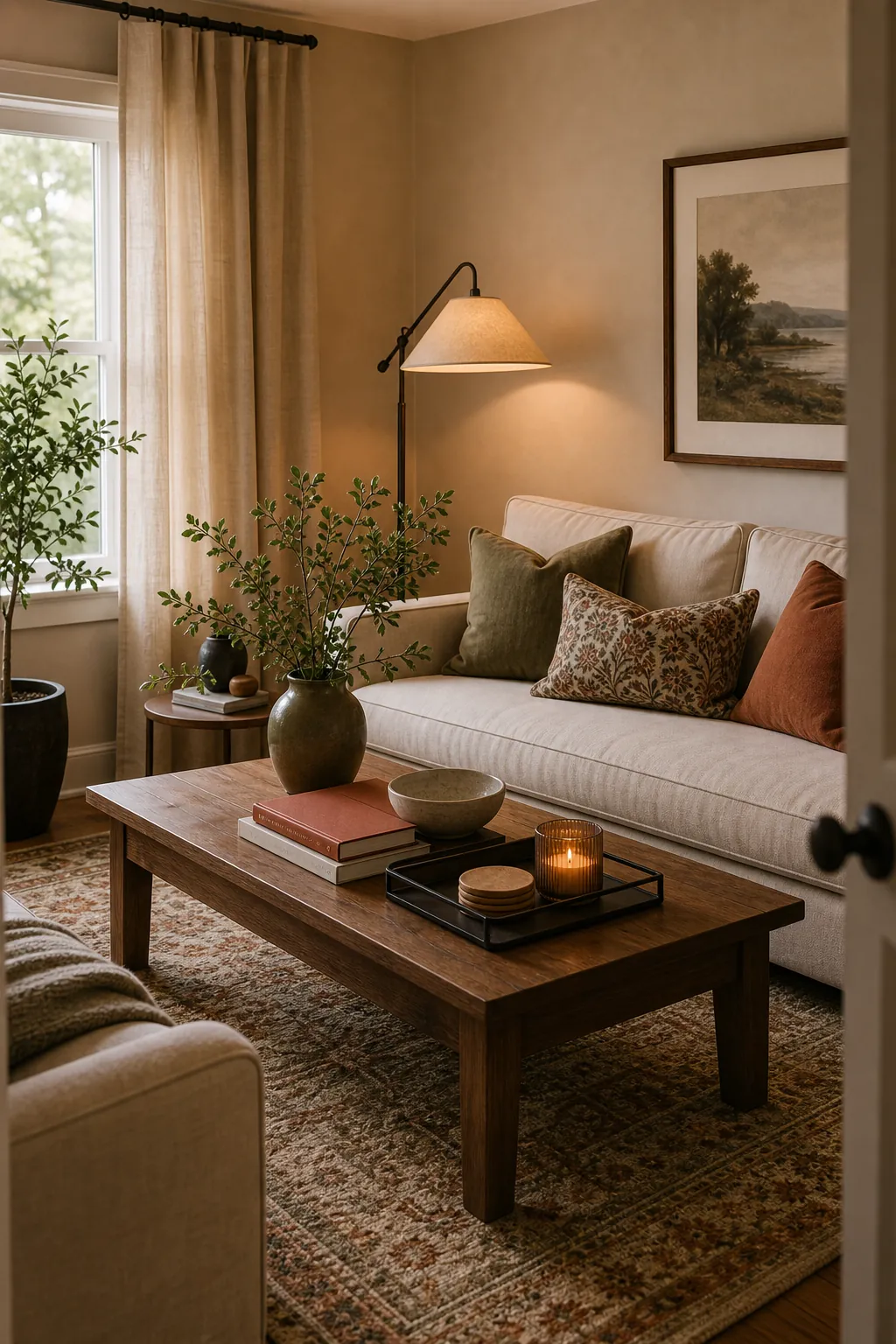
The finished look comes from repetition around the seating zone. A brass candle on the coffee table can echo a floor lamp. A green vase can echo a pillow. A stack of books can repeat the colors in the artwork. This is the quiet difference between coffee table decor that sits on a surface and living room styling that pulls the whole room together.
A quick formula to finish the room
When you want a fast finish-the-room test, clear the coffee table completely and rebuild it in five steps.
- Place the table correctly first. It should feel useful from the sofa and visually connected to the rug.
- Add one grounding layer. Use a tray, books, or a shallow bowl to create a clear styling zone.
- Vary height and texture. Mix low, medium, and slightly taller pieces with wood, ceramic, glass, metal, greenery, or woven materials.
- Repeat one room color. Pull from the sofa styling, rug, artwork, curtains, or pillows.
- Leave usable space. A finished coffee table still needs room for a mug, a book, or a relaxed evening.
The right coffee table ideas do not make the living room busier. They make it more resolved. When the center of the room has scale, function, color, texture, and a little personality, the sofa stops looking stranded, the rug feels anchored, and the whole space finally reads as finished.