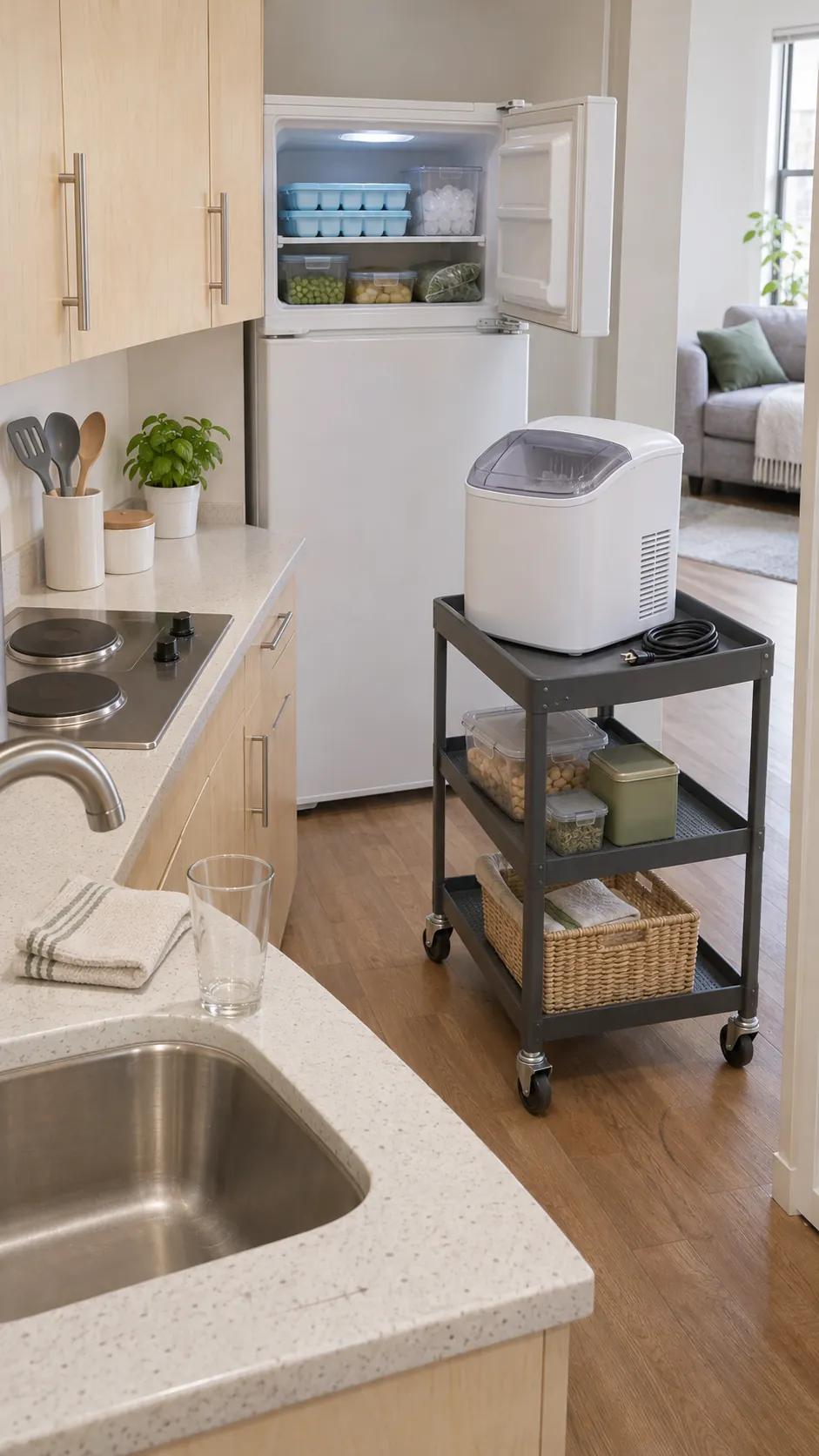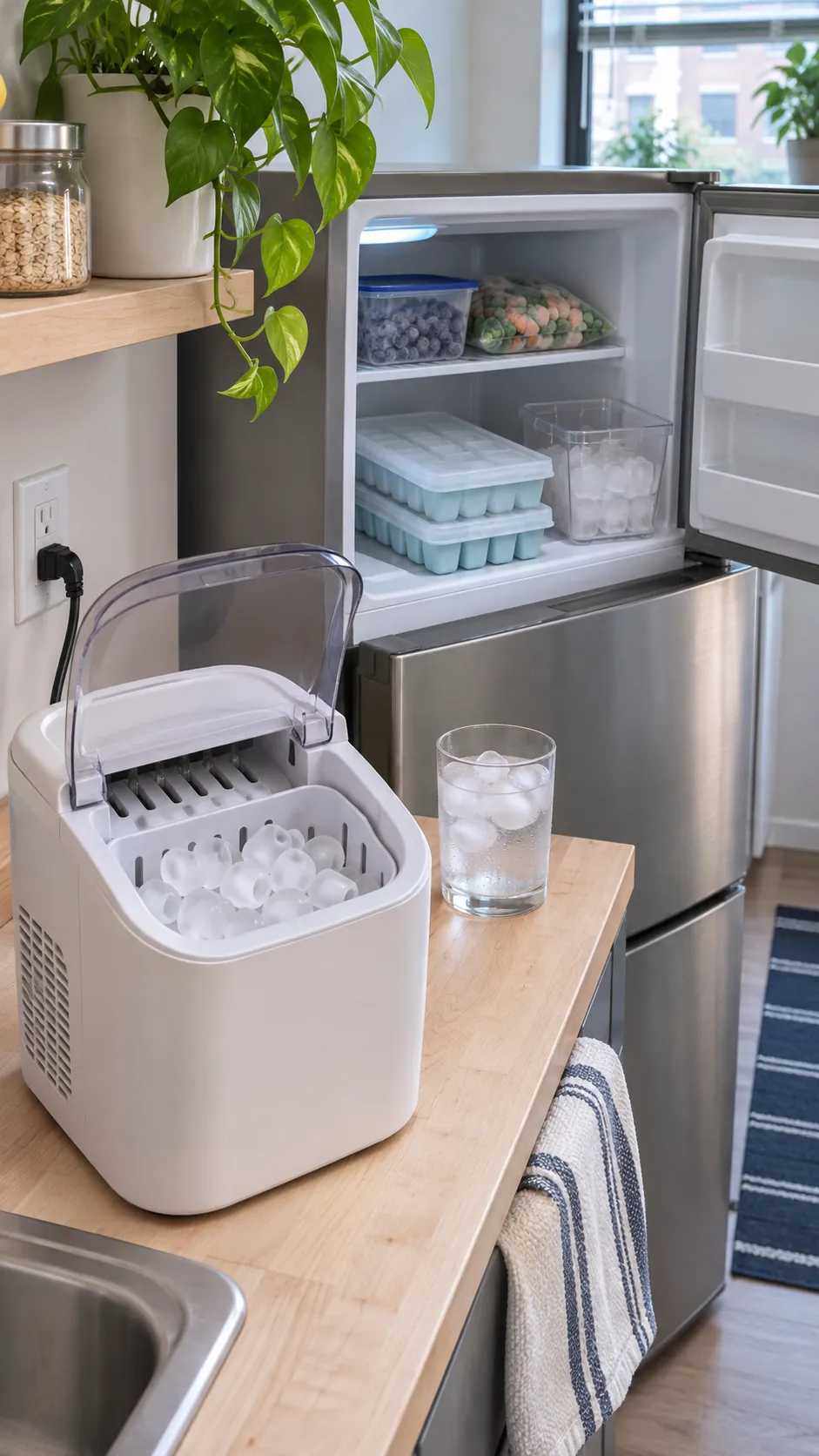
Ice can occupy more space than expected in a small apartment. Trays compete with frozen food, while a countertop machine competes with the work surface used every day. The useful choice comes from measuring those two zones and matching them to how much ice the household actually uses.
Measure the Complete Footprint First
Measure the counter width and depth, then include the clearance needed to open the ice maker lid, refill its reservoir, remove its basket, and let warm air escape. Check the outlet location and keep the cord away from the sink. A machine that fits only when another appliance moves is not a permanent space solution.
For trays, measure a level freezer shelf or drawer with normal food in place. Include the height of lids, any storage bin for finished cubes, and the room needed to slide each tray out without tipping it. This gives you the real footprint instead of the dimensions of one empty tray.
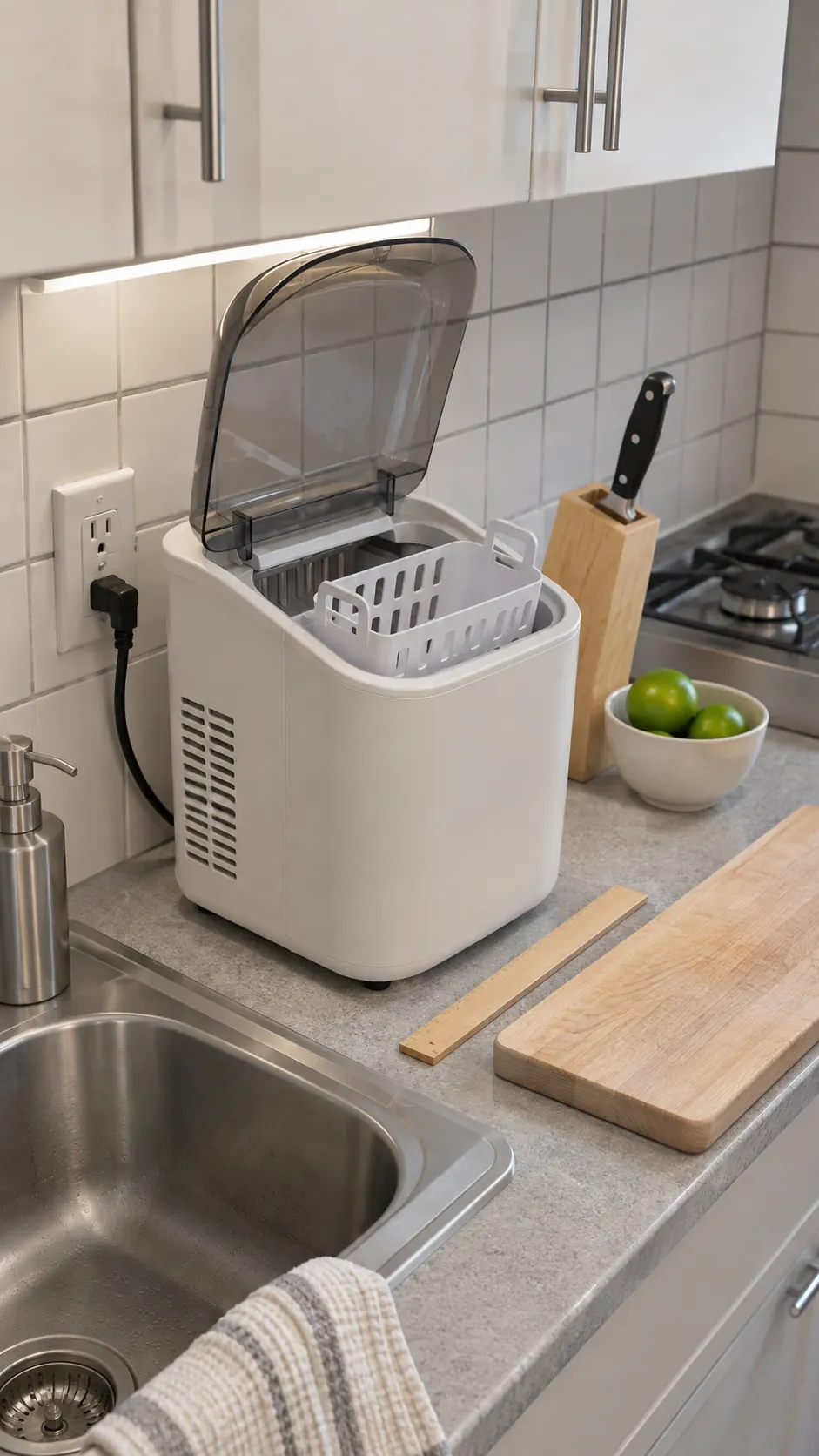
Match the Method to Daily Ice Demand
One person who uses a few cubes in an insulated cup can often stay ahead with two lidded trays and a small freezer bin. Refill a tray as soon as it empties, then rotate the frozen cubes into the bin. This simple routine costs little and leaves the counter free.
A machine becomes more useful when several drinks, smoothies, or guests create demand faster than trays can freeze. Production claims describe output over time, not a full basket ready at once. Compare the first batch time, basket size, and your busiest use period rather than relying only on a daily production number.
Know What a Countertop Ice Maker Stores
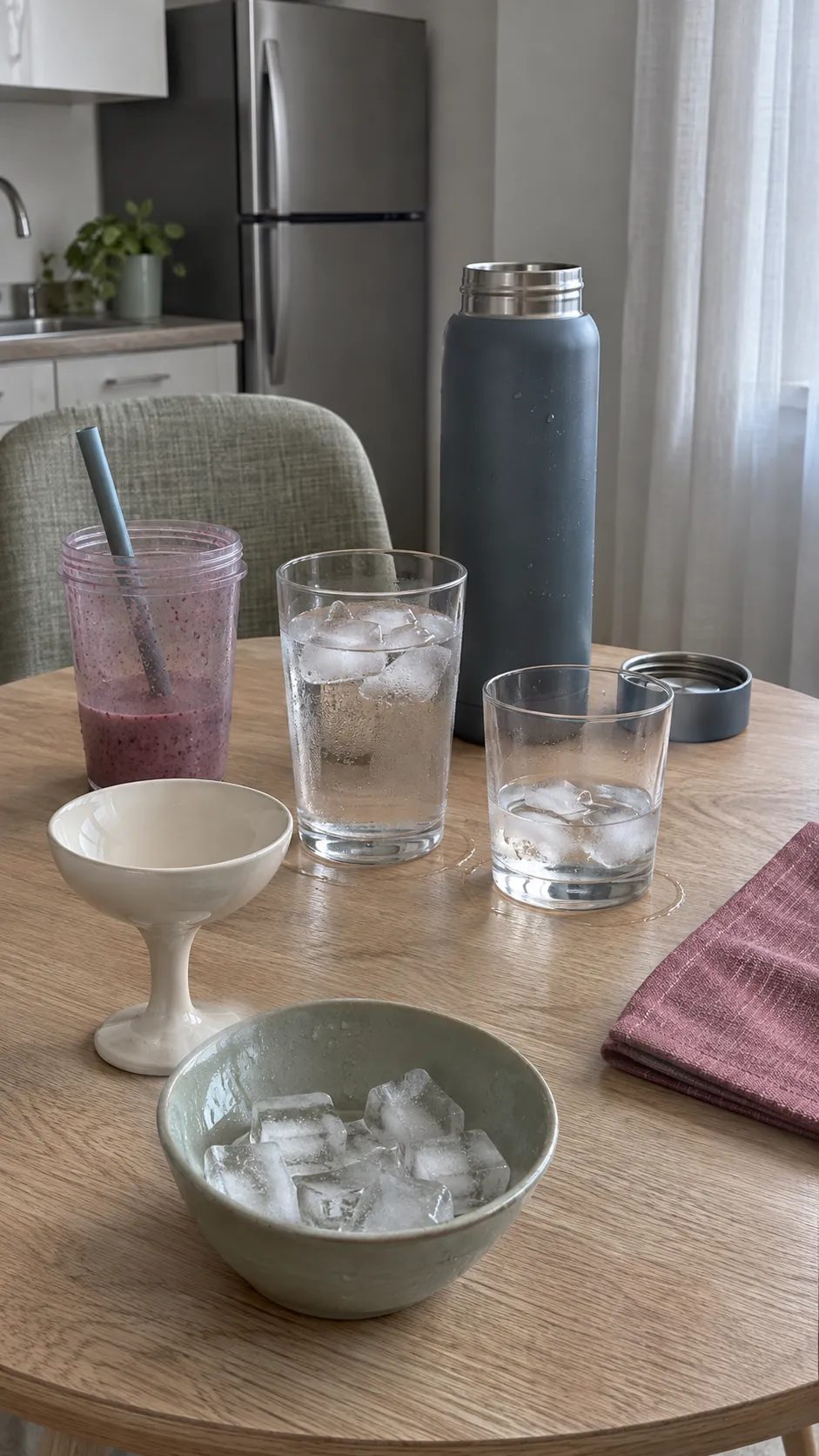
Many portable countertop units make ice in a chilled compartment, but they are not freezers. Finished pieces can soften and melt if they remain in the basket. Meltwater may return to the reservoir for another cycle, which is convenient for production but does not create long term frozen storage.
Plan to serve the ice soon or transfer batches to a freezer container. Fresh pieces can freeze together after transfer, so spread them in a shallow layer at first when practical, then move them into a compact bin. The machine reduces waiting, but it may not eliminate the need for freezer space.
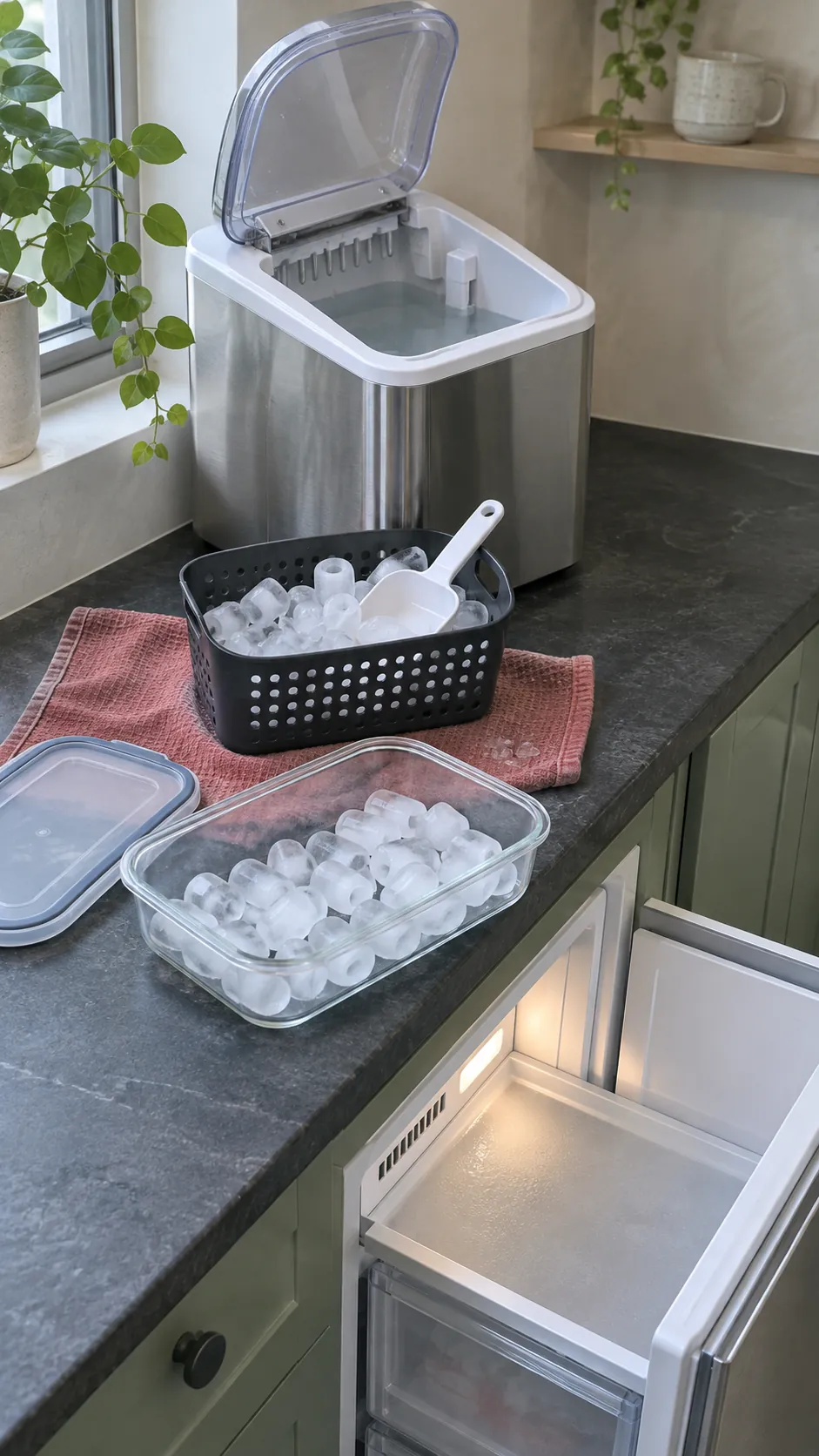
Make Ice Trays Easier to Share With Food
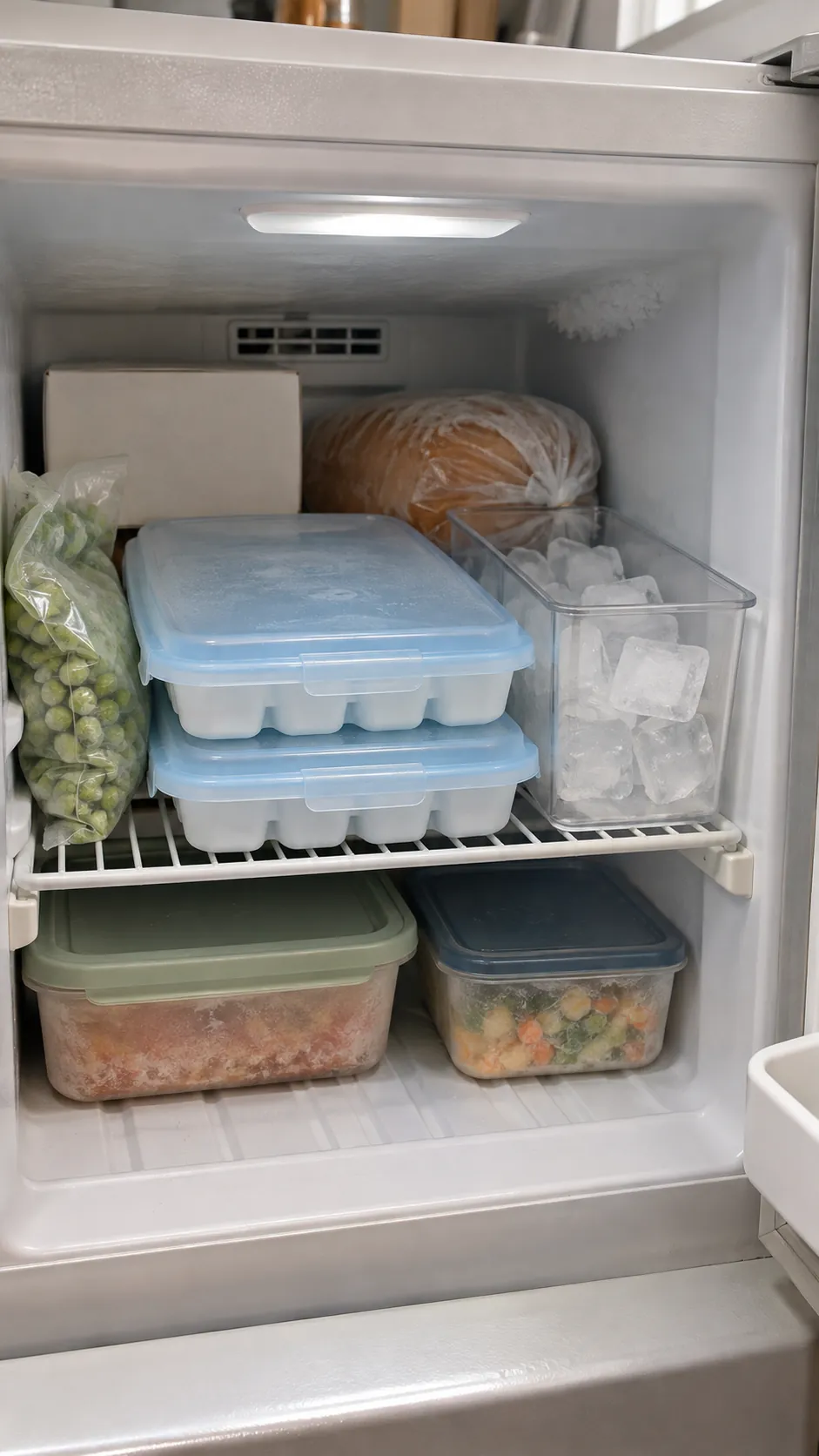
Space saving ice trays work best when they have firm lids and a dedicated level zone. A lid helps protect the water from spills and odors, and it may allow safe stacking when the maker approves it. Do not stack a flexible uncovered tray under heavy packages, because uneven pressure can spill water or deform the cubes.
Use a narrow ice storage bin only if it leaves room for the frozen food you normally buy. Labeling is unnecessary when the bin is clear and easy to identify. The goal is a short repeatable path from filling to freezing to storage, without rearranging the entire freezer every time.
Include Noise, Cleaning, and Storage Between Uses
A countertop ice maker adds pump, fan, and falling ice sounds to a small home. In a studio apartment, those sounds may be close to the desk, sofa, or bed. Check whether you can run it during a convenient period and put it away after the needed batches finish.
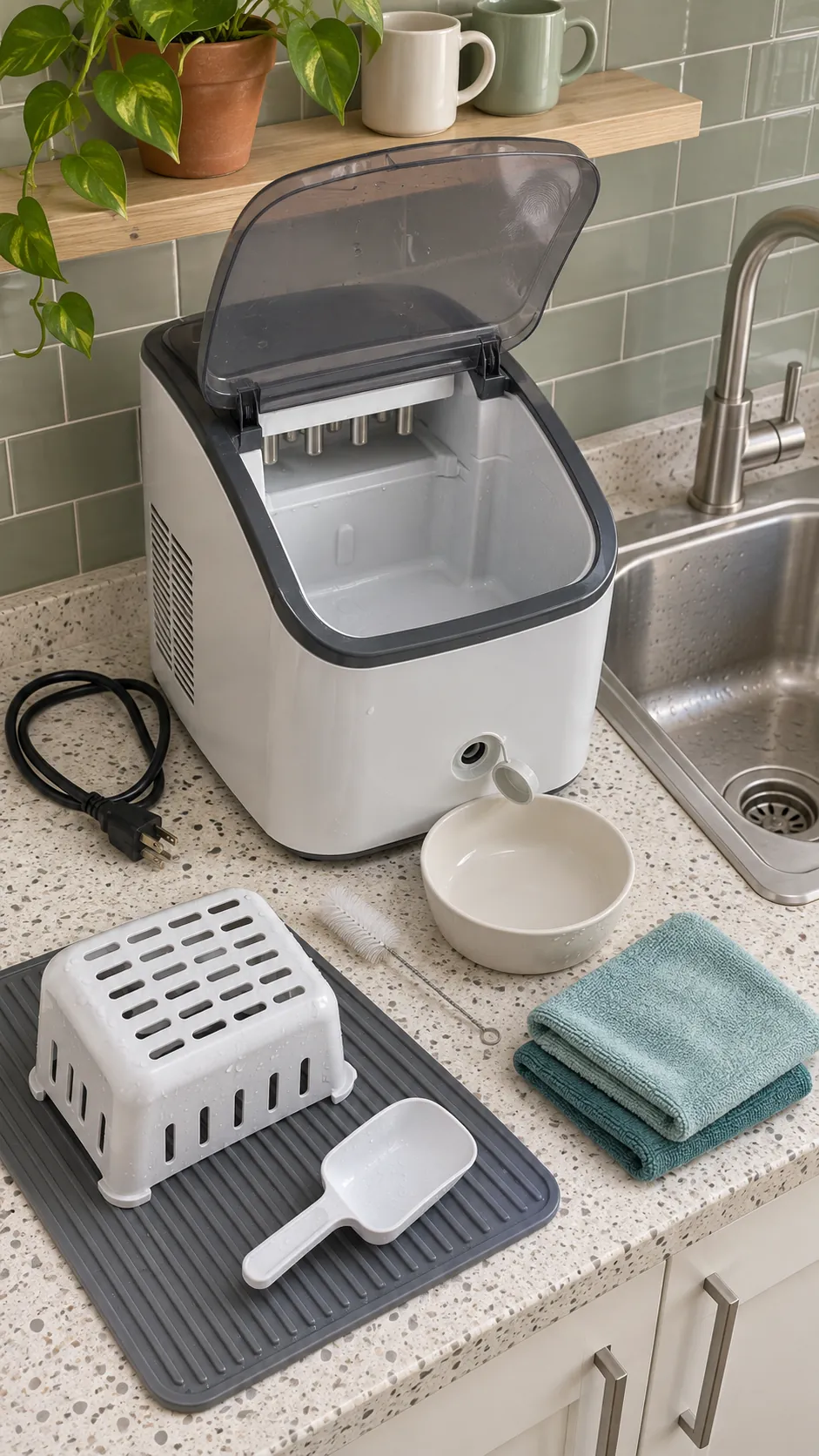
The reservoir, basket, scoop, drain, and interior surfaces also need regular cleaning and complete drying according to the maker’s instructions. Before buying, identify a ventilated storage place that can hold the dry machine without blocking a cabinet. Trays need washing too, but they are lighter and usually easier to store.
Choose the Space You Can Spare
Choose lidded freezer trays when daily demand is modest, counter space is scarce, and a level freezer zone is available. A small rotation of trays and one storage bin can be inexpensive, quiet, and easy to replace. This is often enough for one person who plans refills around a normal routine.
Choose a countertop ice maker when demand regularly exceeds tray capacity and you can dedicate a safe powered work zone to production. Confirm that you have a plan for transferred ice, cleaning, noise, drainage, and storage when the machine is idle. The machine saves freezing time, but it earns its footprint only when that time matters often.