
Your front yard is the first thing people see when they visit, but it should be more than just a pretty view. A well-designed landscape balances beauty with function, making it easy for guests to find your door while reflecting your personal style. Whether you have a massive lawn or a small patch of grass, thoughtful planning can turn a neglected space into a welcoming entrance.
This guide covers the essentials of front yard design, from choosing the right plants to installing durable hardscapes. You will learn how to create a space that looks great year-round and stays manageable without constant work. Key takeaways include prioritizing clear traffic paths, selecting climate-appropriate greenery, and using lighting to improve both safety and aesthetics.
Defining the Entryway with Clear Walkways

A good front yard starts with a clear path to the front door. If guests have to guess where to walk or step over overgrown bushes, the design is failing. Aim for a walkway that is at least four feet wide so two people can walk side-by-side. Straight paths are efficient and modern, while curved paths offer a softer, more organic feel. Use materials that provide plenty of traction, especially if you live in a rainy or snowy climate. Flagstone, pavers, and poured concrete are all reliable choices that keep feet dry and define the transition from the street to your private home.
Selecting Plants Based on Local Climate and Soil
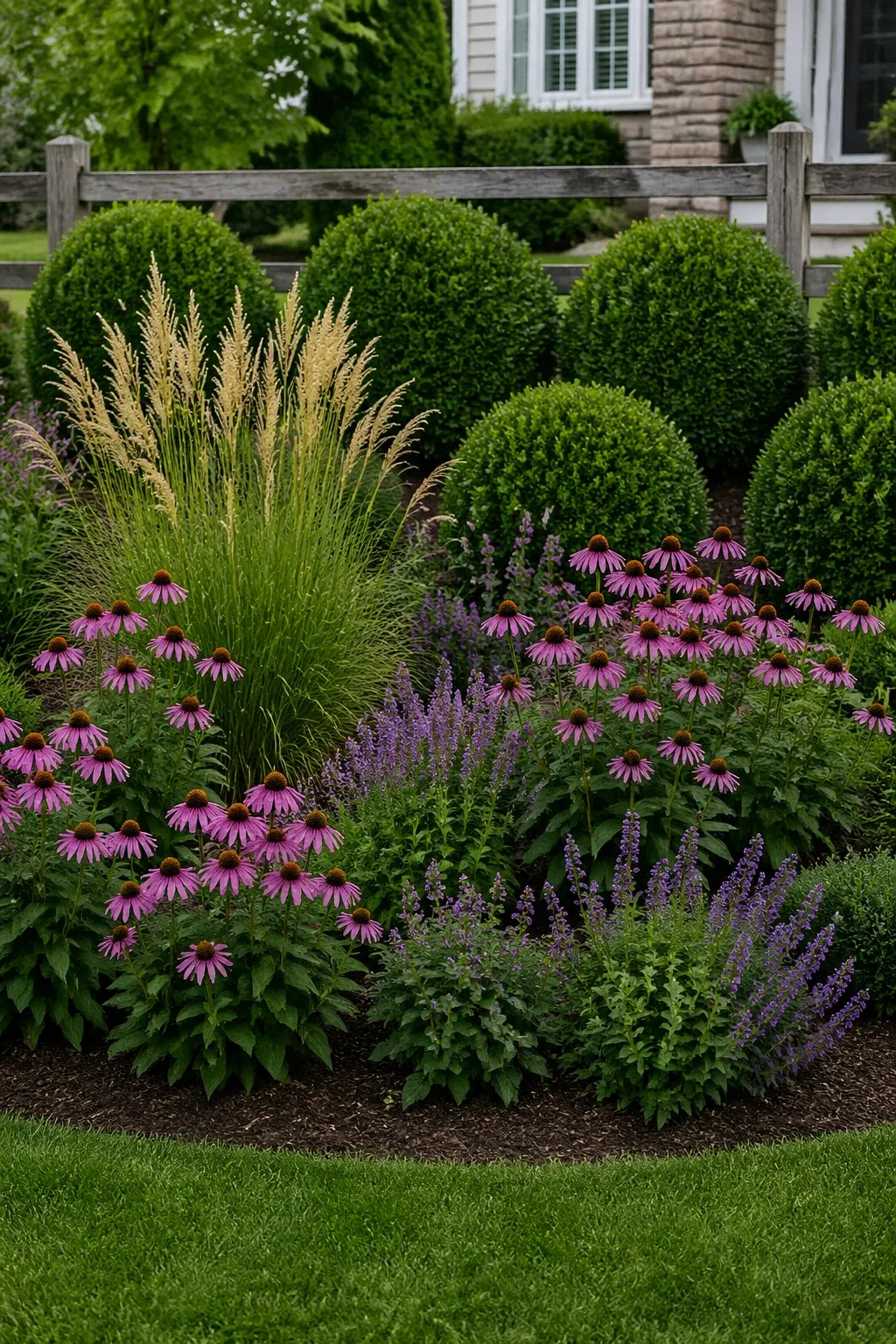
It is tempting to buy whatever looks best at the nursery, but that often leads to plants that die within a season. Check your USDA hardiness zone and test your soil before planting. Native plants are usually the best choice because they are already adapted to your local rainfall and temperature swings. For a balanced look, use a mix of evergreen shrubs for year-round structure and perennial flowers for seasonal color. Put thirsty plants in low spots where water naturally gathers and keep drought-tolerant species on higher ground or near heat-reflecting pavement.
Using Hardscape Materials to Add Structure

Hardscaping refers to the non-living elements of your yard, like stone walls, gravel paths, and wooden fences. These features provide a backbone for your landscape when plants go dormant in winter. A low stone wall can help level a sloped yard or create a physical boundary that feels more open than a tall fence. If you want a low-maintenance option, consider using crushed stone or river rock in place of mulch. These materials don't need to be replaced every year and help prevent soil erosion during heavy storms.
Integrating Layered Lighting for Safety and Visual Appeal
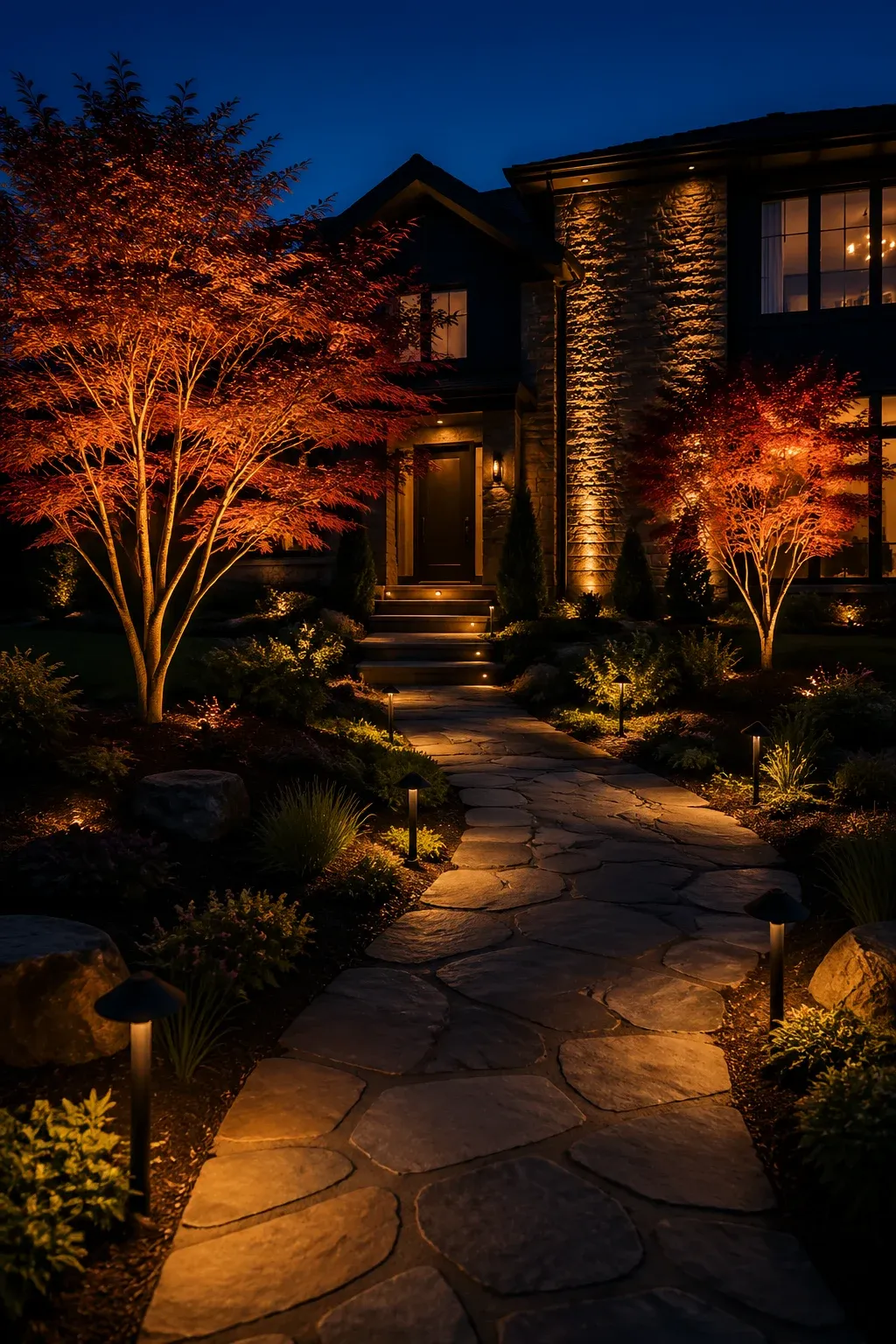
Lighting is often an afterthought, but it is essential for a functional front yard. Instead of one bright floodlight, use layered lighting to create a warm glow. Path lights should be placed along your walkway to prevent tripping, but avoid a perfectly straight line that looks like a runway; staggering them feels more natural. Up-lighting a tree or highlighting the texture of a stone wall adds depth to the house at night. Solar lights are an easy DIY option, but hardwired low-voltage systems are more reliable and brighter for long-term use.
Managing Water and Maintenance with Sustainable Choices
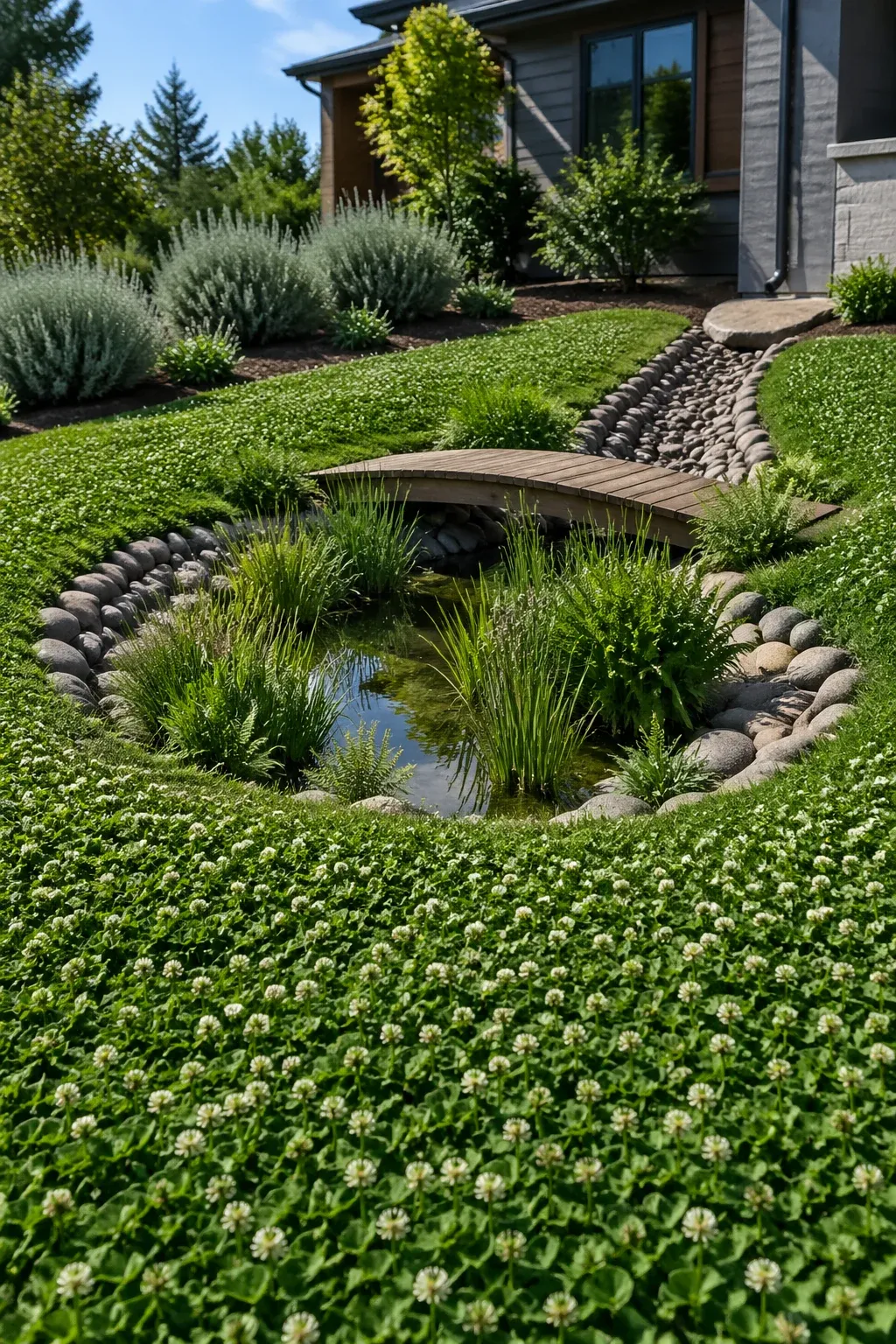
A beautiful yard shouldn't be a burden on your time or the environment. Grouping plants with similar water needs, a practice called hydrozoning, ensures you aren't overwatering one shrub to keep another alive. Consider replacing a portion of your thirsty grass lawn with groundcovers or clover, which require less mowing and water. If you have drainage issues, a rain garden filled with water-loving plants can catch runoff from your roof and filter it back into the ground naturally. This reduces your water bill and keeps your yard looking healthy during dry spells.
Creating Privacy and Curb Appeal with Natural Borders

You can create a sense of privacy without building a fortress. Use natural borders like tall ornamental grasses, bamboo in contained planters, or a row of boxwoods to define your property line. These soft barriers block the view from the street while still feeling neighborly. For better curb appeal, layer your plants by height: put the tallest species in the back near the house or fence, and shorter flowers near the front of the beds. This creates a visual frame that draws the eye toward your front door and makes the yard feel larger.
Designing your front yard is about creating a balance between your home’s architecture and the natural environment. By focusing on clear paths, sustainable plant choices, and smart lighting, you can build a space that is both practical and beautiful. Take a walk out to the street, look at your home from a visitor's perspective, and start with one small change today to improve your home's first impression.