
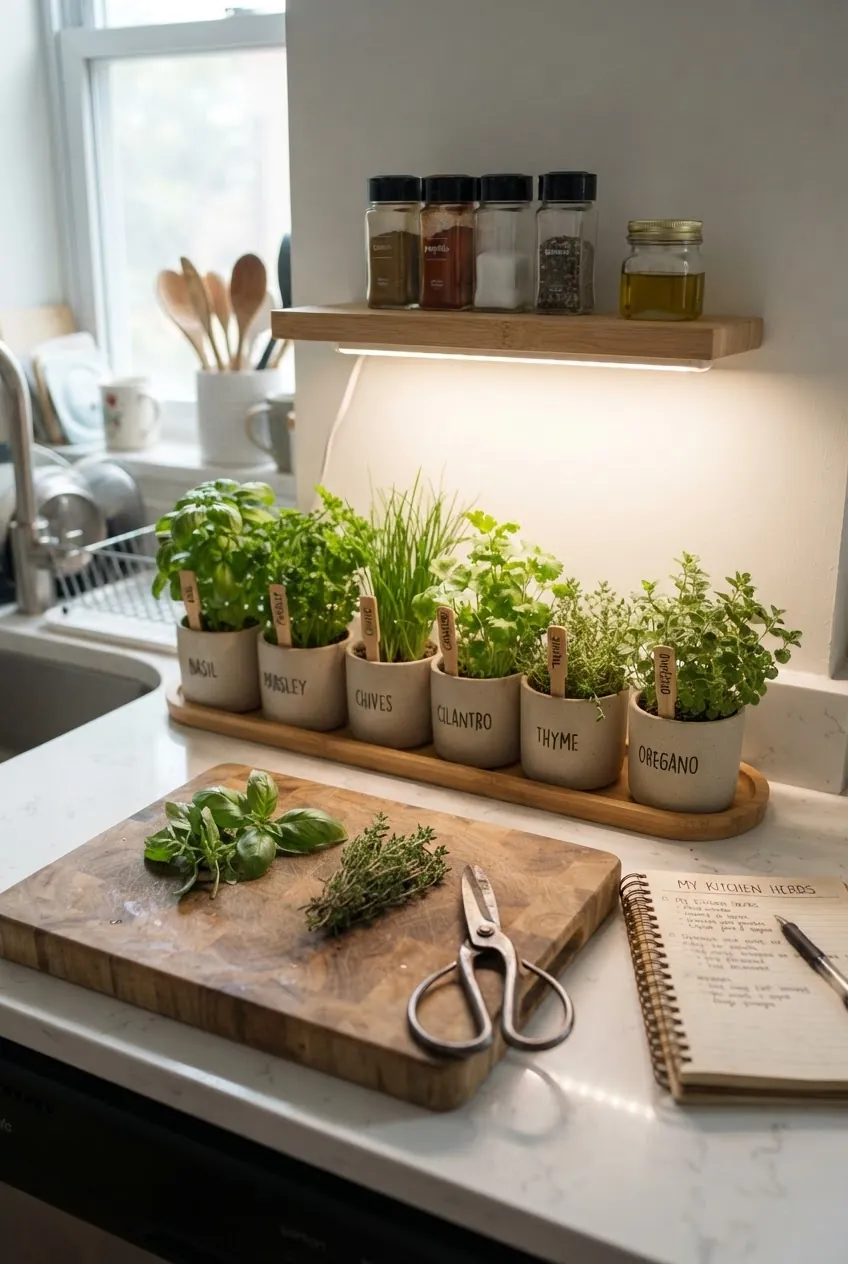
A DIY indoor herb garden works better when you treat it like a small food garden, not a shelf decoration. Start with the herbs you actually cook with, then design the pots, light, watering tray, and harvest tools around that routine.
This approach keeps the project small enough for apartment herb gardens but useful enough to earn counter space. You are not building a miniature farm. You are building a steady source of flavor for weeknight meals.
Plan The Garden From Your Meals Backward
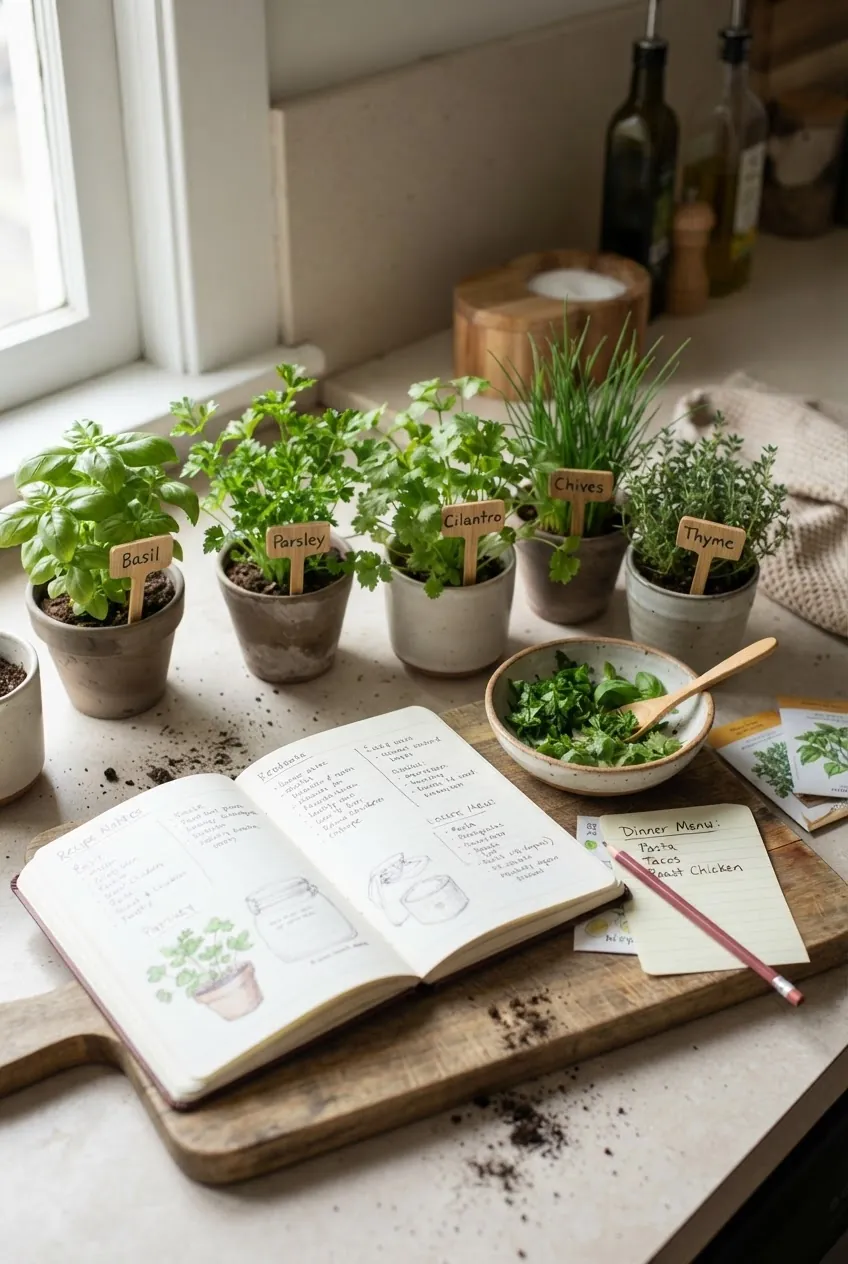
Before buying a planter, write down the herbs you reach for most often. Basil, parsley, chives, cilantro, thyme, and oregano cover a lot of everyday cooking. If you rarely cook with rosemary, do not give it the best light just because it looks good in herb garden design photos.
An indoor food garden should match your kitchen habits. Choose three to six herbs you will cut weekly, then add more only after you know your light and watering routine can support them.
Use A Decorative Sleeve, Not A Sealed Planter
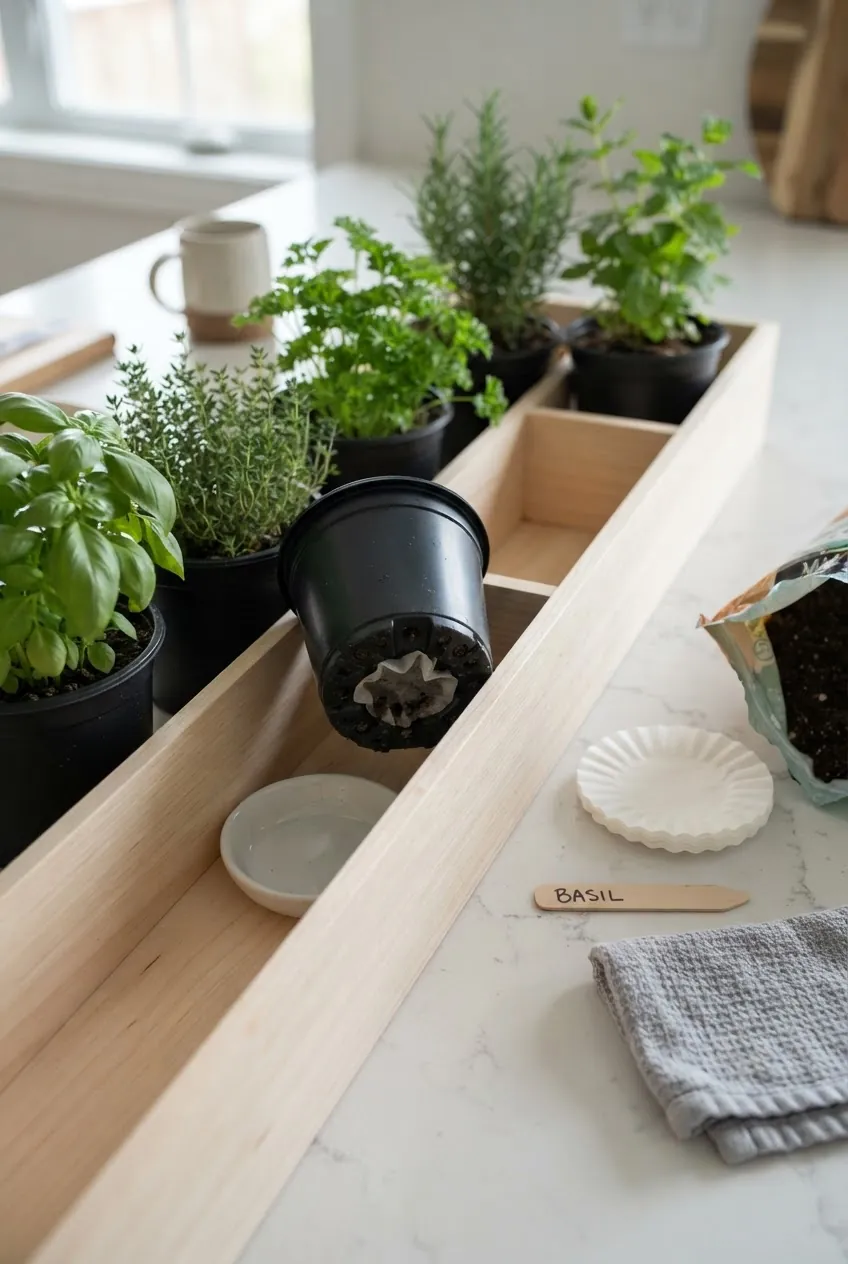
The easiest DIY herb planter is often a sleeve that hides separate nursery pots. You get the tidy look of one long planter, but each herb still drains, lifts out, and rotates. That matters when basil wants more water than thyme or cilantro needs replacing sooner than chives.
Line the sleeve with saucers or a waterproof tray. Add coffee filters or mesh inside individual pots if soil spills from the holes. The decorative piece should hold the garden, not trap the roots.
Make The Setup Mobile If Your Light Changes
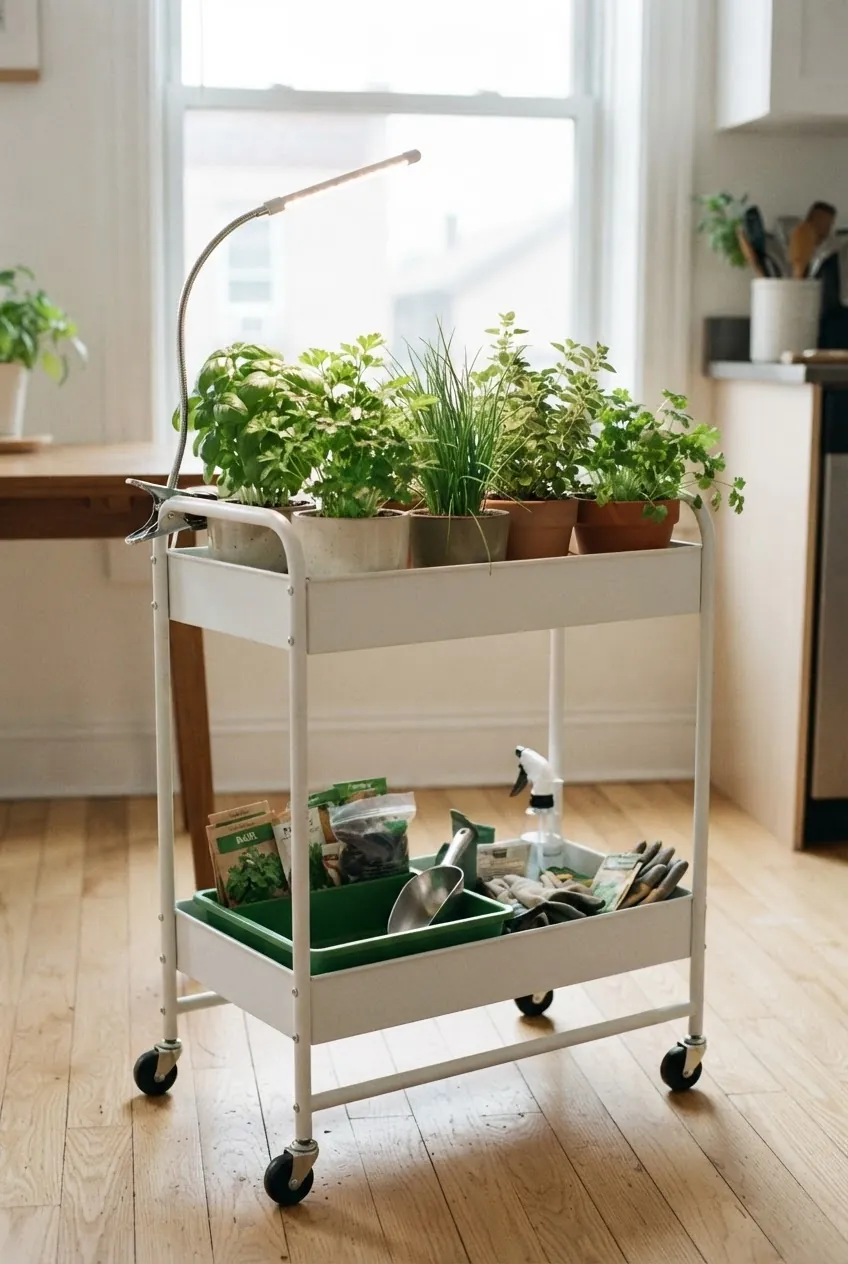
Many inside herb garden ideas assume one perfect window. Real apartments have glare, drafts, radiators, pets, and counters that need to be cleared. A rolling cart lets you chase light during the day, move herbs away from heat, and bring them closer when you cook.
Add a clamp-on grow light if the cart spends time away from strong sun. Keep pots in trays so water does not drip through the shelves. Mobility is useful only if the garden stays stable when the pots are wet.
Keep A Tiny Reset Station For Short-Lived Herbs
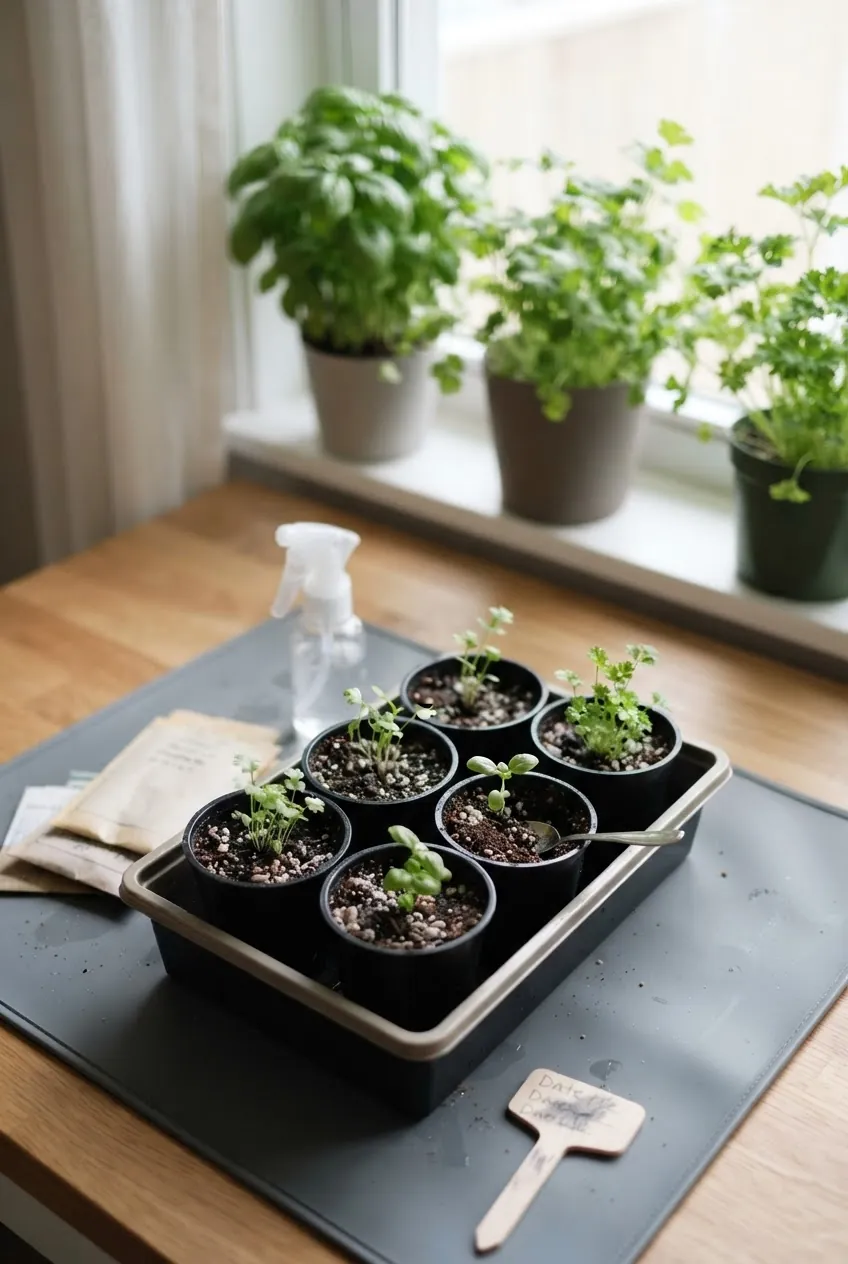
Some herbs are better managed as a rotation. Cilantro can bolt or fade quickly indoors. Basil may need restarting after heavy harvests or cold drafts. A small seedling tray gives your kitchen herb garden a backup plan without turning the project into a full indoor vegetable gardening setup.
Start a few seeds every couple of weeks if you use cilantro often. Keep the tray bright, warm, and lightly moist. When one plant declines, replace it instead of trying to rescue it forever. Replacement is part of smart indoor food gardening.
Design A Watering Tray Into The Routine
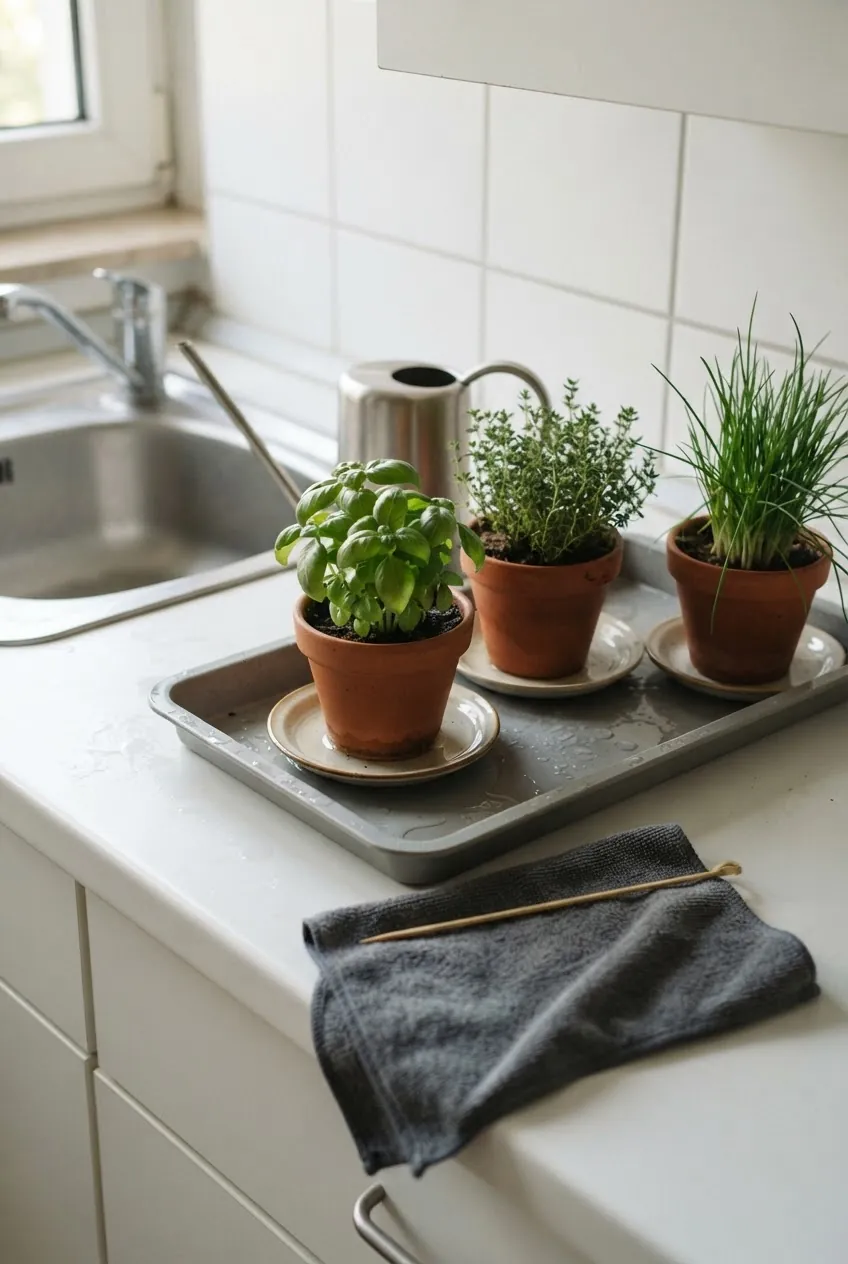
Growing herbs in pots indoors means water has to be managed visibly. Use a tray near the sink, water until the soil is evenly moist, let the pots drain, then empty any standing water. A bamboo skewer or your finger can tell you whether the top layer is dry enough to water again.
This is especially important in rentals, where wet sills and stained counters are not small problems. A good DIY indoor herb garden protects the kitchen as well as the plants.
Harvest Lightly So The Garden Keeps Feeding You
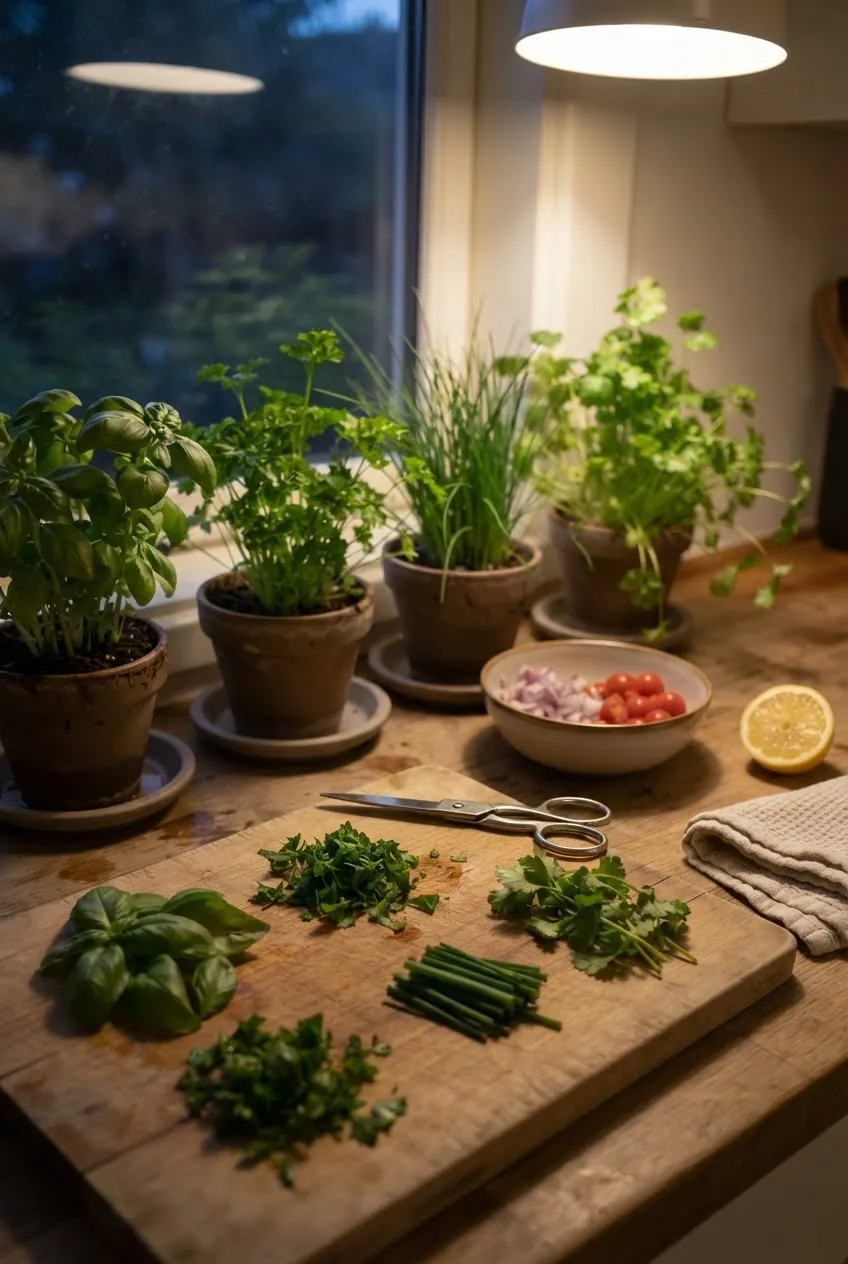
The point of herb planter ideas indoor is not to keep the plants untouched. Snip small amounts often. Cut basil above a leaf pair, trim chives near the base, and take outer parsley stems first. Use the herbs immediately so the garden becomes part of cooking, not another chore.
If a pot stops producing, compost the tired plant and restart that slot. The most useful DIY indoor herb garden is not perfect. It is a repeatable system: plant, light, water, harvest, reset.
Build the first version with removable pots, a protected watering tray, honest light, and herbs you will actually cut. That small system can become the base for bigger herb garden ideas outdoor later, but it should first work on an ordinary kitchen counter.