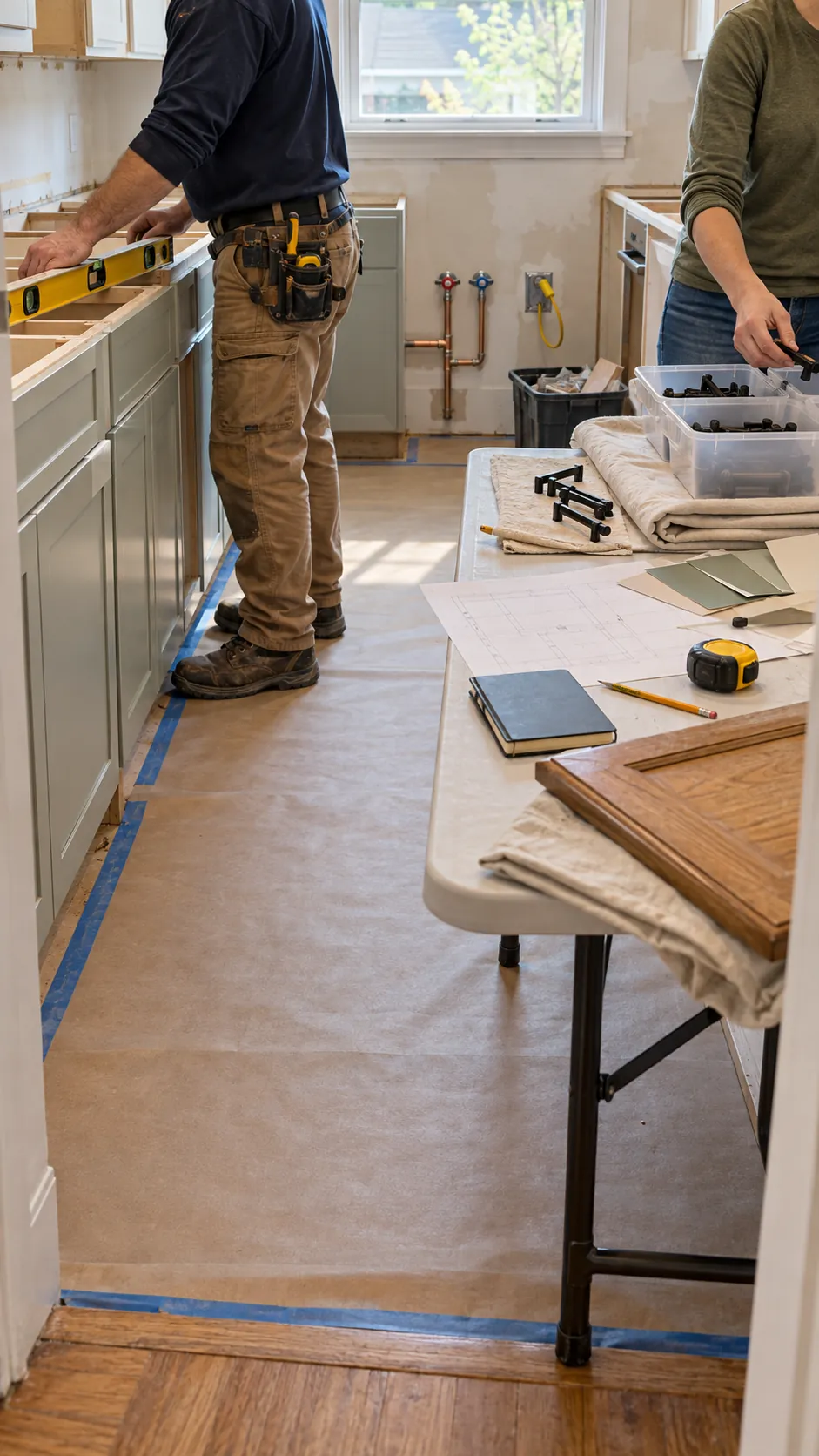
Owner labor saves money only when the finished work is safe, acceptable, and ready when the next trade arrives. A task that takes four weekends, damages a material, or blocks an installer can cost more than the labor quote it was meant to avoid.
Choose work by consequence, not confidence alone. Compare the required skill, permit rules, tools, ability to practice, cost of failure, and effect on the schedule. Local code and licensing rules always take priority over a general guide.
Use a risk test before comparing prices
A strong owner task is reversible, visible, easy to inspect, and inexpensive to redo. Painting walls, installing cabinet pulls in existing holes, assembling organizers, and removing loose decor often fit this description. You can test the method in a small area before committing to the room.
A contractor task has hidden consequences, formal inspection, specialized equipment, or expensive connected materials. Ask what happens if the work fails, who carries liability, and whether a later trade will warranty work installed over it. If a mistake can cause fire, water damage, gas leakage, structural movement, or a rejected inspection, professional labor is usually the better saving.

Save on planning, clearing, and careful preparation
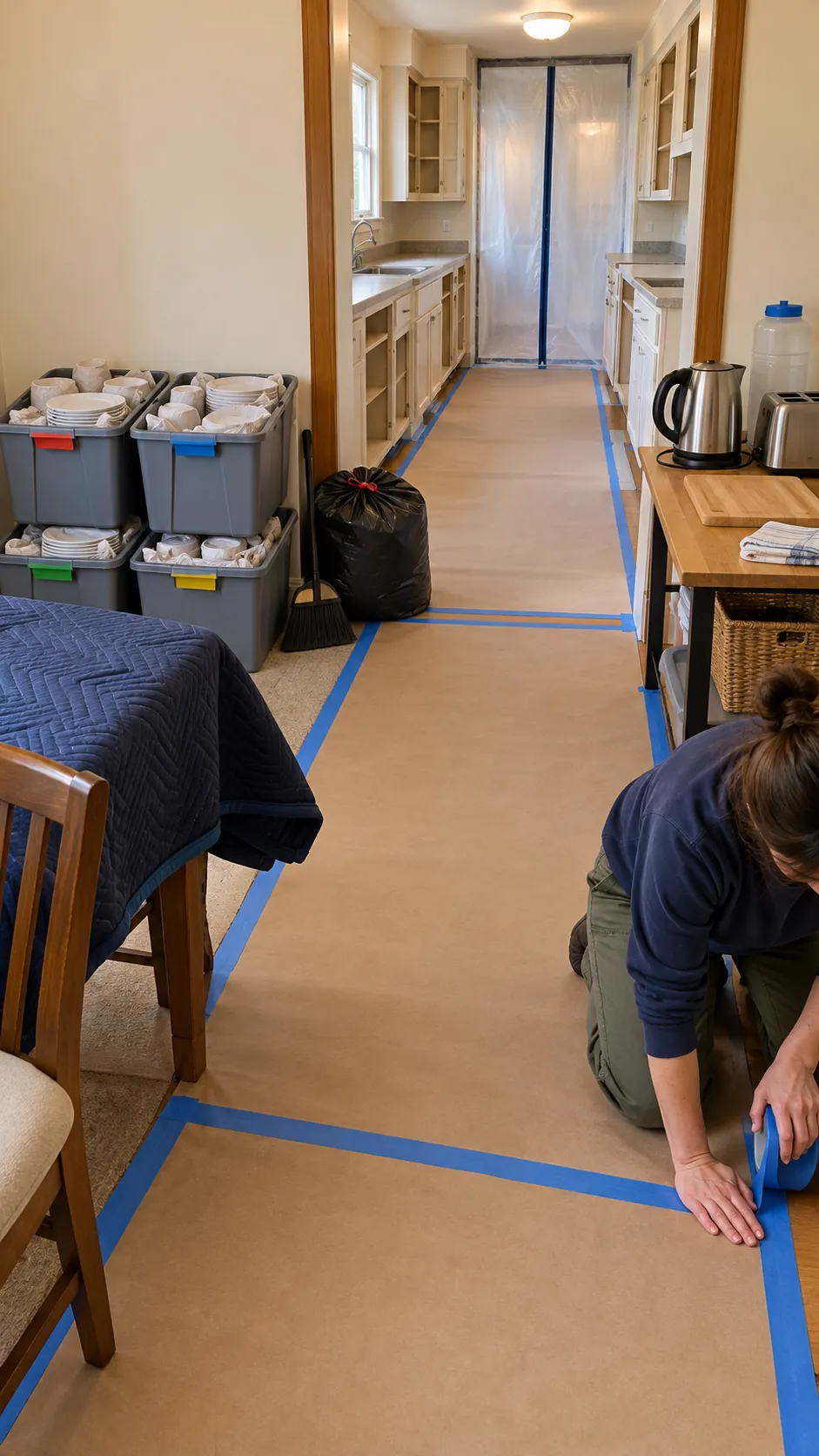
Owners can often photograph the room, inventory contents, compare product specifications, empty cabinets, create a temporary kitchen, and protect belongings. A contractor may also allow the owner to remove simple nonhazardous finishes or complete final cleaning. Agree on boundaries before work begins so owner tasks do not interfere with insurance or the crew schedule.
Do not start demolition until utilities are safely disconnected and possible hazardous materials are addressed. Preserve anything the contractor must measure or verify. Written scope should state who removes debris, who protects floors, and what condition the room must be in when the professional crew arrives.
Treat cabinet painting as a production job
Owner painting can save thousands when boxes and doors are sound, the room is small, and there is a ventilated place for cleaning, abrasion, priming, coating, and curing. Price every supply and the time the kitchen will be disrupted. Test adhesion on one hidden area before preparing the whole set.
Professional cabinet painting cost pays for controlled preparation, spraying equipment, dust management, finish consistency, and faster production. Hire when doors have failing coatings, the material needs specialized adhesion, the color change is demanding, or a flawless sprayed finish matters. Confirm exactly which repairs, hinges, interiors, and touchups the quote includes.

Practice tile and flooring before choosing owner labor
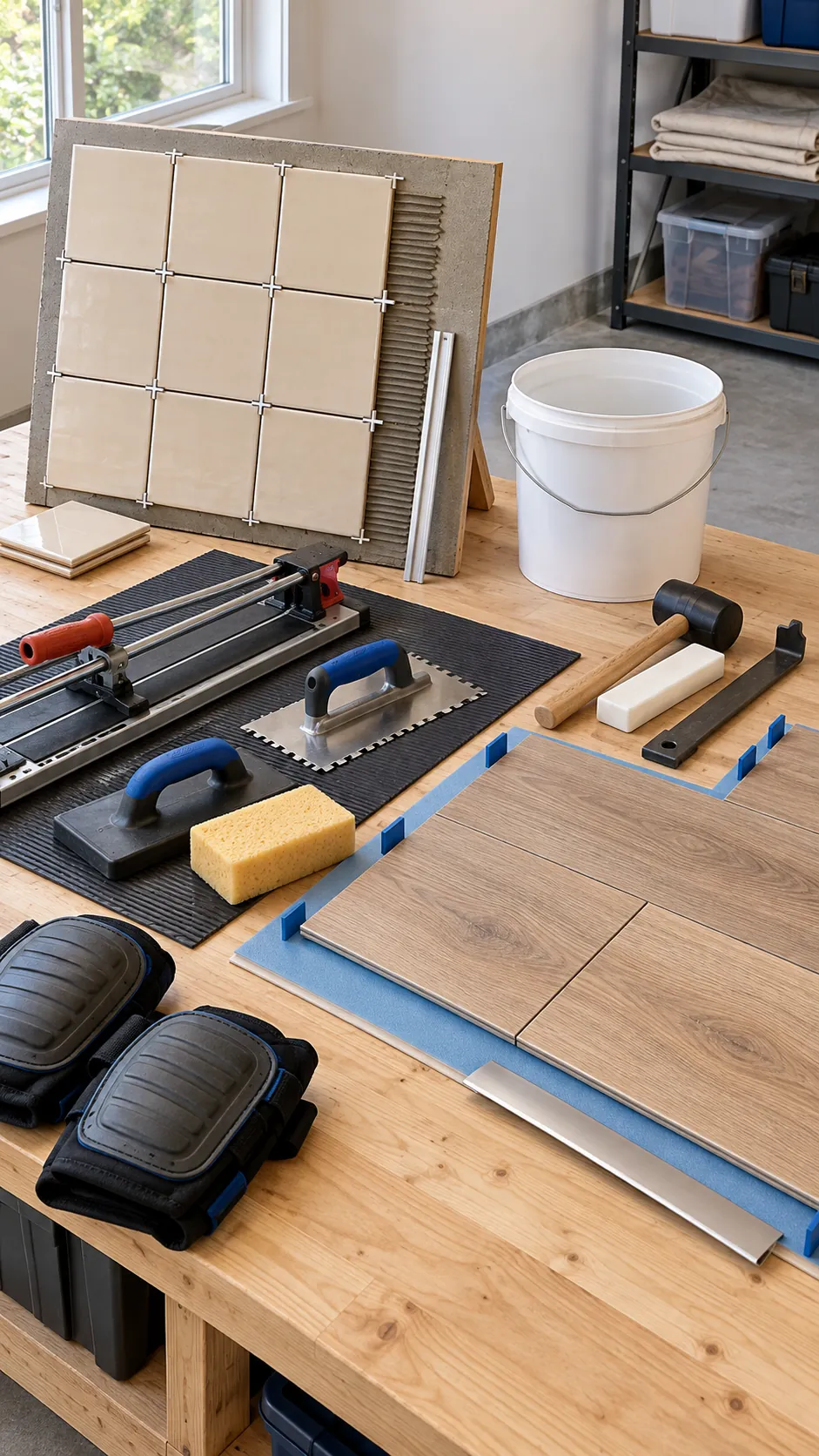
A short straight backsplash can be a reasonable learning project when the wall is sound, the tile is inexpensive, cuts are simple, and electrical requirements are understood. Build a small sample board first. Complex patterns, costly handmade tile, uneven walls, many outlets, or a fixed completion date make professional installation easier to justify.
Kitchen flooring installation labor protects preparation, flatness, expansion space, transitions, cabinet relationships, and appliance clearances. Floating products may suit an experienced owner, but sheet goods, tile, damaged subfloors, and continuous flooring through several rooms raise the consequences. A material warranty may also depend on approved preparation and installation.
Hire licensed utility and structural work
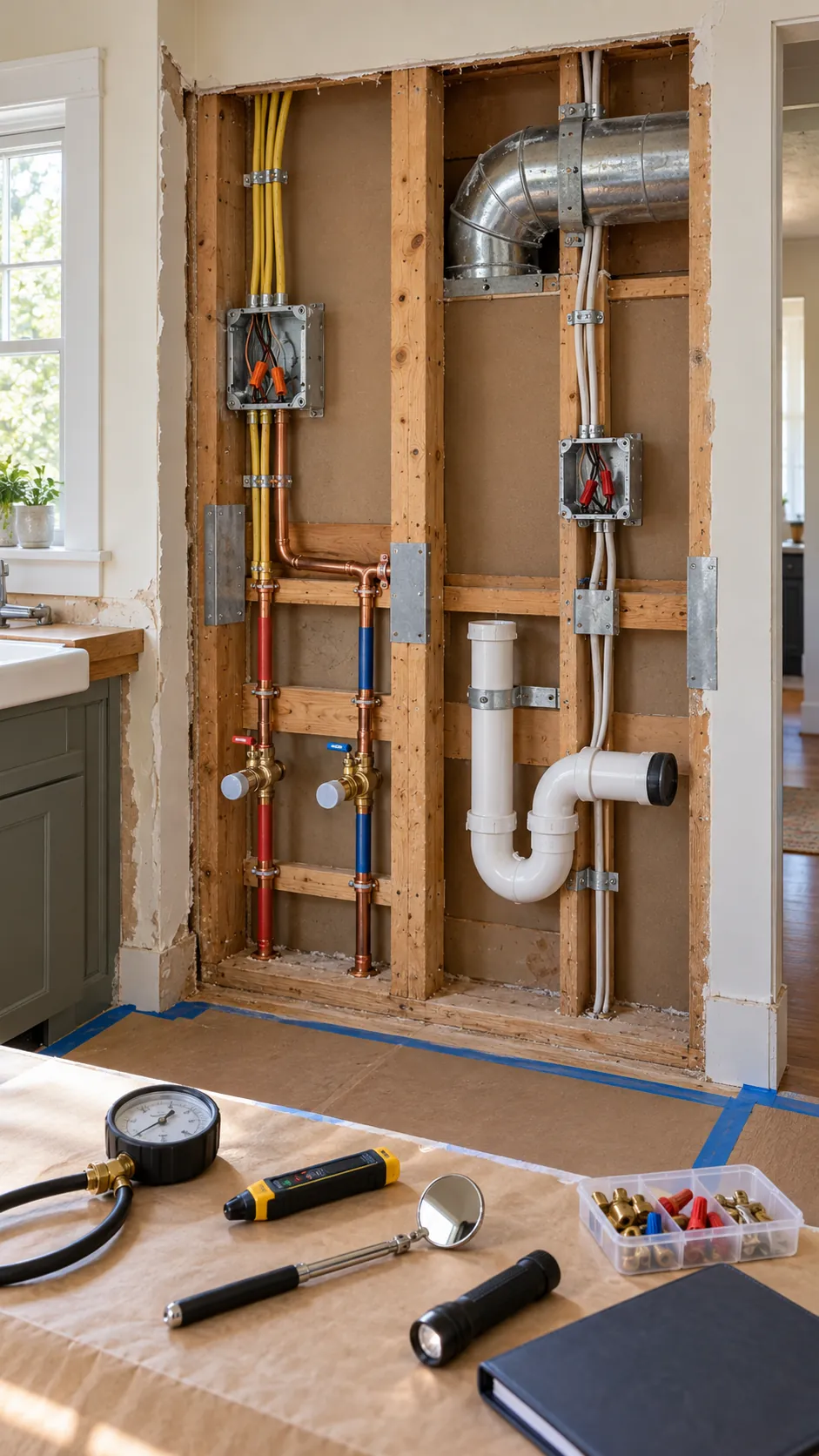
New circuits, panel changes, gas lines, moved drains, hidden supply lines, structural openings, and many ventilation changes need qualified professionals and may require permits. Electrical work for a kitchen remodel has current protection, load, outlet, appliance, and inspection requirements. Kitchen plumbing installation costs also buy correct routing, testing, and responsibility for concealed connections.
Ask each trade to define what is included, who opens and closes surfaces, who supplies fixtures, and who schedules inspection. Keep access open until work is tested and approved. Saving on finish labor has limited value if an uninspected hidden connection must later be exposed.
Price your time and coordination honestly
Calculate owner cost with materials, tools, rentals, delivery, disposal, protective equipment, corrections, and lost time. Add the cost of a delayed countertop template, appliance connection, or trade visit if your task misses its window. Compare that total with the written labor portion of a professional quote, not the entire project price.
A practical hybrid plan gives the contractor control of permits, schedule critical installation, concealed utilities, and warranty sensitive work. The owner handles approved preparation, simple finish tasks, purchasing records, and final organization. Put every handoff and deadline in writing, preserve a contingency, and choose savings that do not transfer hidden risk to the next person.