
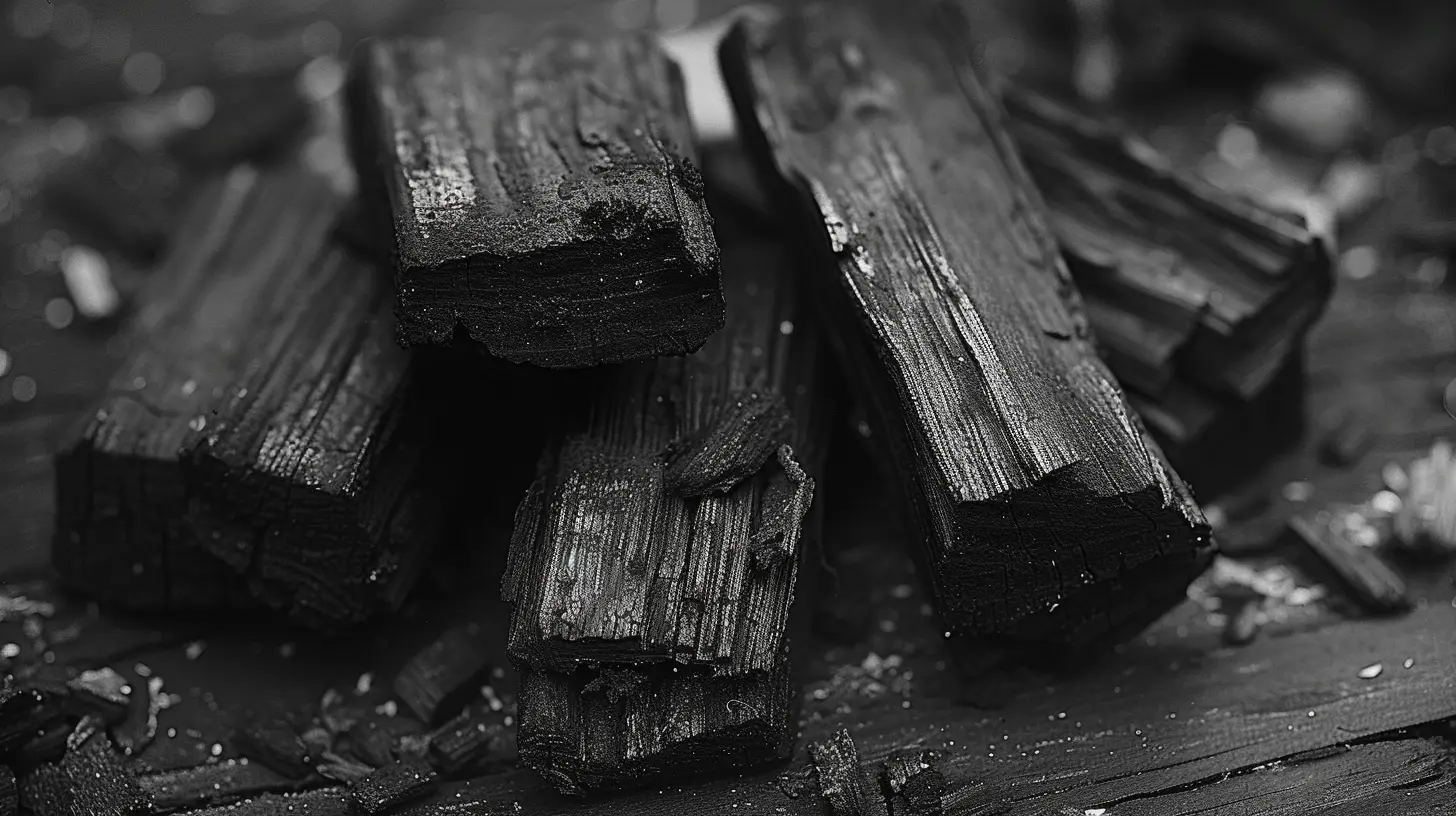
Of the myriad of products derived from bamboo, bamboo charcoal is a contentious topic. Thanks to the bold claims companies make regarding this product, it is challenging to separate fact from fiction. Bamboo charcoal is widely used for air and water purification, skincare, and several other uses.
However, does bamboo charcoal really work? Or are these companies looking for a quick sale while consumers are left with a bag full of empty promises? If you’re interested in this product, this article examines some of its uses and whether the claims have any truth.
Key Takeaways
- Activated bamboo charcoal is used to purify air and water by removing particles. It is also used to absorb extra moisture from the soil, as a livestock food additive, and as a skincare product.
- Regular bamboo charcoal is a popular fuel for cooking.
- While these products work well at removing impurities, they are limited by several factors, and when the surface area is “clogged,” this charcoal becomes less effective.
- The micro-pores found in living, thick culm bamboo are retained in the charcoal form, which is the reason behind the excellent absorbent properties.
- By creating activated bamboo charcoal, manufacturers improve the product’s absorptive capacity.
Bamboo Charcoal’s Functionality: Separating Truth From Fiction
Today’s consumers must be savvy as many “miracle” products are on the market. Companies make exaggerated claims regarding their products’ benefits and effects when they are often far from the truth.
One of the products with many lofty claims surrounding it is bamboo charcoal. To better understand if these grass-derived products work (and work effectively), we need to identify some of the claims ascribed.
An important factor to note is that many benefits are linked to these products’ “activated” form.
For charcoal to become “activated.” The manufacturing process includes:
- The pyrolysis of plant parts (i.e., putting culms, leaves, fragments, and powder into an oven and cooking them at high temperatures without oxygen. This process produces bamboo charcoal and tar.
- The charcoal is crushed into granules and mixed with the tar and water.
- The mixture is heated in an oven with an inert gas to produce carbonized charcoal.
- The product is heated in a gravity kiln with an activator and inert gas to produce highly absorbent charcoal.
Below, we’ll investigate what bamboo charcoal is used for and whether it fulfills that function.
Bamboo Charcoal As A Fuel
While the “wood” derived from these tall grasses is not ideal for cooking (it burns quickly and very hot, making it an excellent fire starter), the charcoal (not activated) burns for longer, making it a better product for cooking on.
This carbonized plant material burns at 600 to 12000F and lasts up to 5 hours (depending on temperature, wind, amount, etc.).
This charcoal is an effective fuel thanks to the high heat and increased burning duration.
Bamboo Charcoal As An Air Purifier And Odor Remover
One of this product’s most commonly touted uses is as an air purifier/odor removal agent. Many agree that these products can extract bad smells from the air, moisture, and certain chemicals
(like ammonia, benzene, and formaldehyde), resulting in a healthier environment.
This product is sold in a porous bag, allowing air to pass easily. Most people use this charcoal in their rooms, fridges, gym bags, bathrooms, garages, and factories to remove bad odors and to “scrub the air.”
How Does Bamboo Charcoal Purify The Air?
This charcoal removes impurities from the air by extracting and trapping them in tiny holes found all over the product. Thanks to the living plant’s structure, tiny holes (pores) of various shapes and sizes within the culm (stem) remain intact after the plants are harvested and carbonized.
Water vapor in the air binds to molecules (smells and harmful chemicals) and then moves into the tiny holes thanks to the force of gravity. The chemicals bind to the plant fibers while the air molecules pass through, effectively “scrubbing” the air clean.
Is Bamboo Charcoal Effective At Air Purification And Odor Removal?
Several factors influence this product’s efficacy, including:
- The size of the area to be purified. The charcoal has limited pores, eventually becoming “clogged” with the noxious molecules. Once full, the product is no longer effective and must be “reactivated.”
Larger areas require more bags. Additionally, it takes longer to “clean” a larger area.
- The number of bags used. More bags speed up the cleaning process, while fewer bags result in a slower reduction of bad smells and chemicals.
- The degree and type of pollution. These products purify the air more slowly in heavily polluted areas.
Does Bamboo Charcoal Reduce/Control Humidity?
While many agree that these products scrub bad odors from the air, it is widely debated that these carbonized grass culms do not control humidity as effectively, particularly not in the short term.
However, over time, these products may reduce the amount of moisture in the air, thanks to their absorptive nature, particularly in dense humidity.
Bamboo Charcoal As A Water Purification Agent
The activated charcoal from these grass plants excels in purifying water. Thanks to the micro-pore structure inherited from the original plant, the carbonized powder “traps” chemicals and tiny particles found in the water as the solution passes through the product.
A study conducted in 2009 examined the efficacy of this charcoal in removing methylene blue from water and found it to remove up to 90% of the dye.
Limitations To Bamboo Charcoal Water Purification Efficacy
As with air purification, several factors limit these products’ efficacy in water purification. These factors include the following:
- Exposure time (how long the water stays in contact with the product). The more contact time, the better the adsorption rate. However, the rate eventually slows as less absorptive area is available (the pores become blocked).
- The pollutant type, size, and amount. Larger particle sizes result in less absorption. Furthermore, there is a higher absorbance rate when there is a greater concentration of pollutants, thanks to diffusion (when particles move from a higher to a lower concentration).
- The temperature and pH. The carbonized powder has greater absorptive rates at higher temperatures.
The solution’s pH influences the absorption characteristics of the charcoal’s surface. While it differs between chemicals, a higher or lower pH often results in better absorption.
The product’s ability to absorb is regulated by how much surface area it has. As the pores begin to fill, the absorption rate slows, eventually ceasing.
Bamboo Charcoal’s Soil Amendment Uses
Adding activated charcoal to the soil provides several benefits to plants and soil biota, including the following:
- Thanks to its absorptive properties, adding this charcoal to the soil removes excess water, pulling it out of the soil.
- Increases the nitrogen, potassium, and phosphorus available to plants (in the soil).
- Improving the soil structure by increasing the organic content in the soil.
- It also increases urease’s presence and activity levels (bacteria that break down urea).
These products work particularly well when combined with an organic fertilizer.
Bamboo Charcoal’s Effectiveness In Skin Care
The absorptive benefits are not limited to water and air purification. Thanks to the cleansing ability of this charcoal, they are frequently used in skincare products.
There is much debate surrounding these products’ efficacy in skin care and other hygiene products, and significant research is required before the debates will abate; however, some of the claims that manufacturers make regarding these products include the following:
- Due to its porous nature, products containing this carbonized plant material exfoliate the skin, easily removing dead skin cells. Research suggests that there is merit behind this claim.
- These products might remove excess sebum, the oily substance essential to hydrating your skin. By removing this oil, pores remain clear, and you have a reduced chance of developing acne, blackheads, or spots.
Unfortunately, with so little known about these products, companies stake large claims on the already established purifying characteristics of bamboo charcoal without considering the potential harmful effects.
Bamboo Charcoal’s Effectiveness As A Livestock Food Additive
A 2013 study discovered that pigs fed with a percentage of bamboo charcoal in their diets experienced improved average daily gains (growth), feed efficiency (more of the food was converted into weight), and beneficial microflora in their fecal matter (poop).
The study also found decreased fecal noxious gas emissions (breaking winds). Other studies found similar beneficial results in other livestock, creating promising perspectives for this charcoal.
Summation: Bamboo Charcoal’s Effectiveness Revisited
Bamboo charcoal is widely renowned for its air and water purification abilities. The tiny pores found in the charcoal excel at trapping molecules, removing bad odors and dangerous chemicals. While this charcoal works well as a fuel and soil amendment product, there is little information regarding its healthcare benefits, and more research is required.