
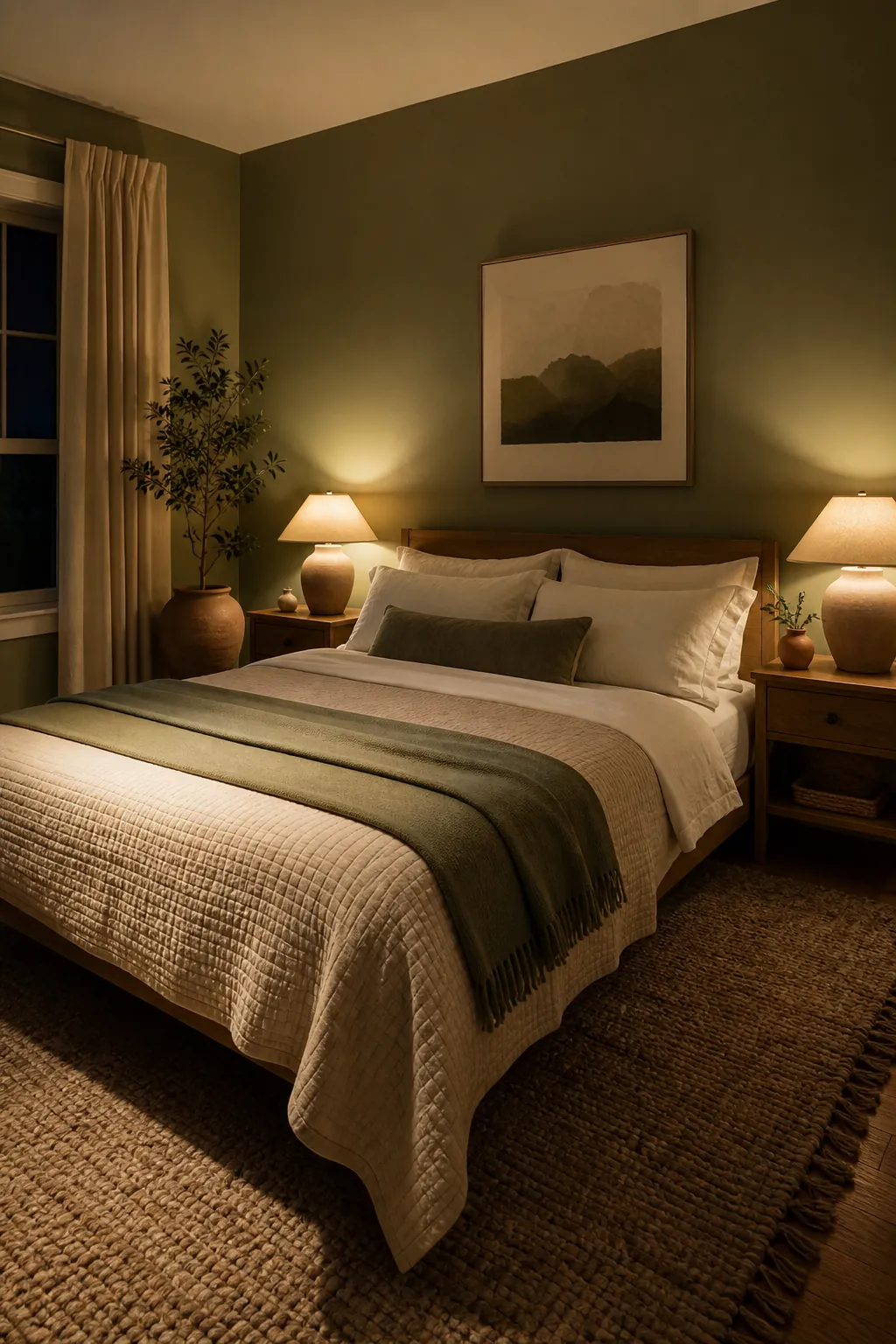
An earthy green bedroom works best when it feels like the room is lowering its voice for the night. The mistake is treating green as the whole design plan. Green sets the mood, but the relaxing feeling comes from what supports it: warm lighting, natural wood, soft textures, quiet contrast, and decor that looks collected instead of staged.
Fresh decorating threads about cozy rooms tend to circle the same worries. People want warmth without a cave effect, color without a childish look, and enough personality that the room does not feel like a catalog. For an earthy green bedroom, that means choosing a nature-based green, softening the edges around it, and building the nighttime decor in layers.
Choose an earthy green that will still feel calm after sunset
The safest green bedroom colors are not the brightest greens. Look for olive, moss, muted sage, eucalyptus, lichen, smoky green, or a soft gray-green. These shades feel grounded because they already have brown, gray, or yellow undertones in them. A clear mint or bright grass green can work in a playful room, but it often fights the warm lighting and earth tone decor that make a bedroom feel restful at night.
If the bedroom is small or has one weak window, use the deeper green with restraint. Paint the headboard wall, a wall-and-trim moment, or the lower portion of the room, then keep the ceiling, bedding, and curtains lighter. If the room gets generous daylight, a full wrap of soft olive or sage can feel enveloping instead of heavy. The goal is not the darkest green possible. The goal is a green that still looks intentional when the lamps are the only light on.
Let the bed carry the softness
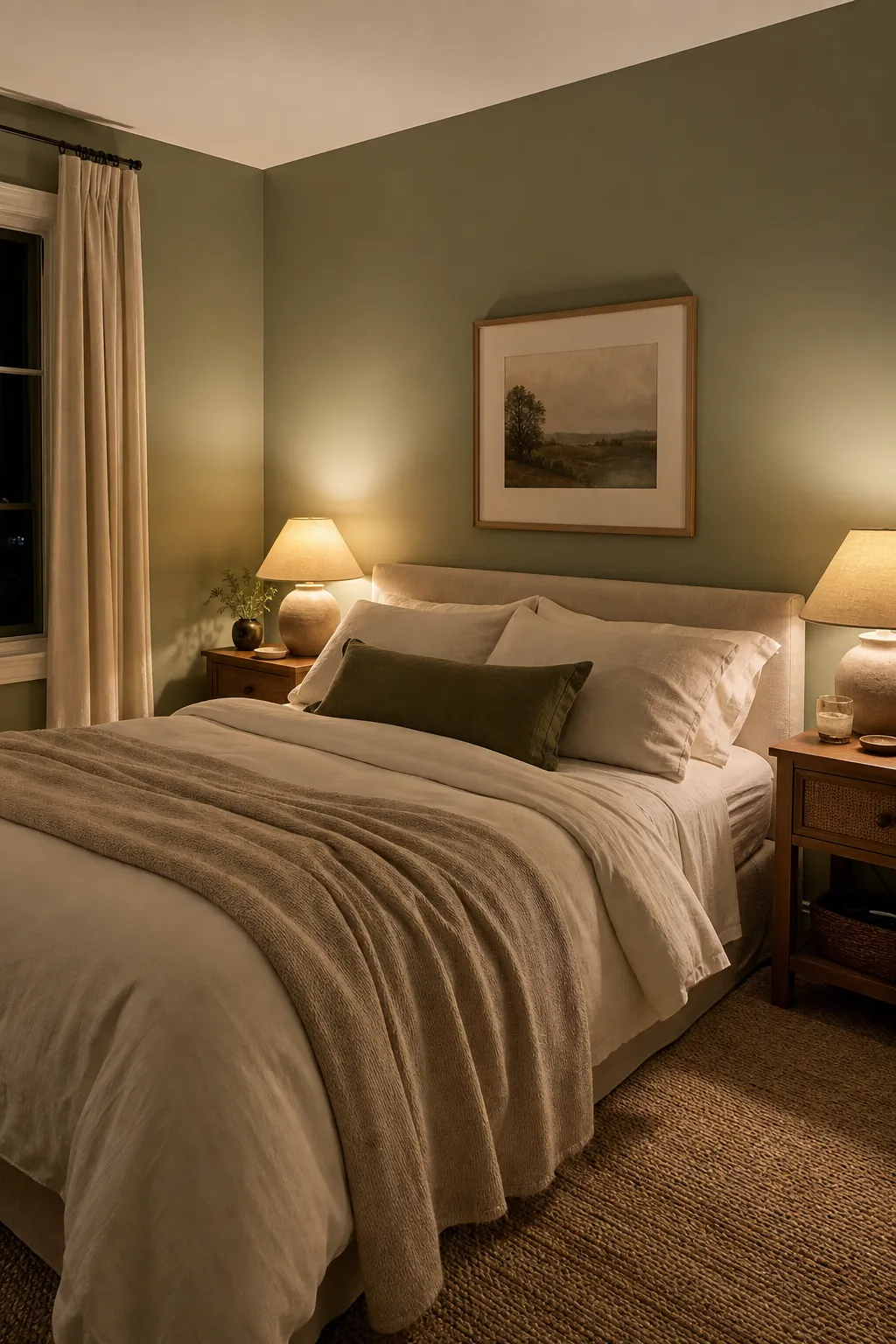
In a relaxing bedroom, the bed should look like the softest object in the room. That does not mean piling on twenty pillows. It means choosing bedding with texture and a little movement: washed linen, cotton percale, a gauze blanket, a quilted coverlet, or a wool throw folded at the foot of the bed.
For an earthy green bedroom, the most forgiving bedding colors are warm white, oatmeal, mushroom, clay beige, soft taupe, warm gray, muted terracotta, and pale olive. These colors keep the green from feeling flat while still preserving a natural bedroom palette. If you already have green walls, avoid making every textile green too. A green room needs breathing space.
The bed is where cozy bedroom styling becomes visible. Keep the sheets lighter than the wall, add one deeper accent through a throw or lumbar pillow, and repeat the wall color only once or twice in a small detail. That small repetition makes the room feel designed without turning it into a matching set.
Build the room around warm lighting, not the ceiling light
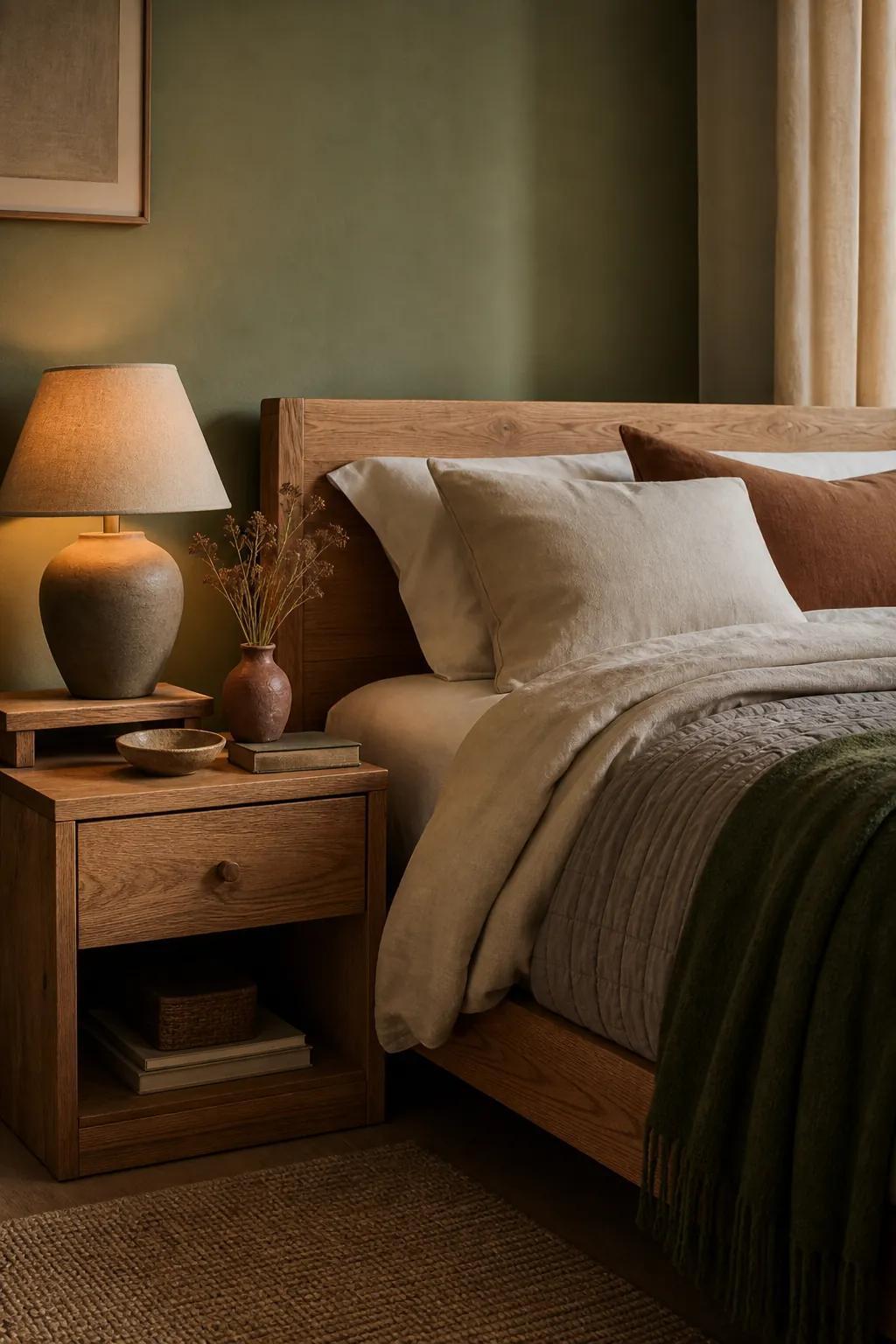
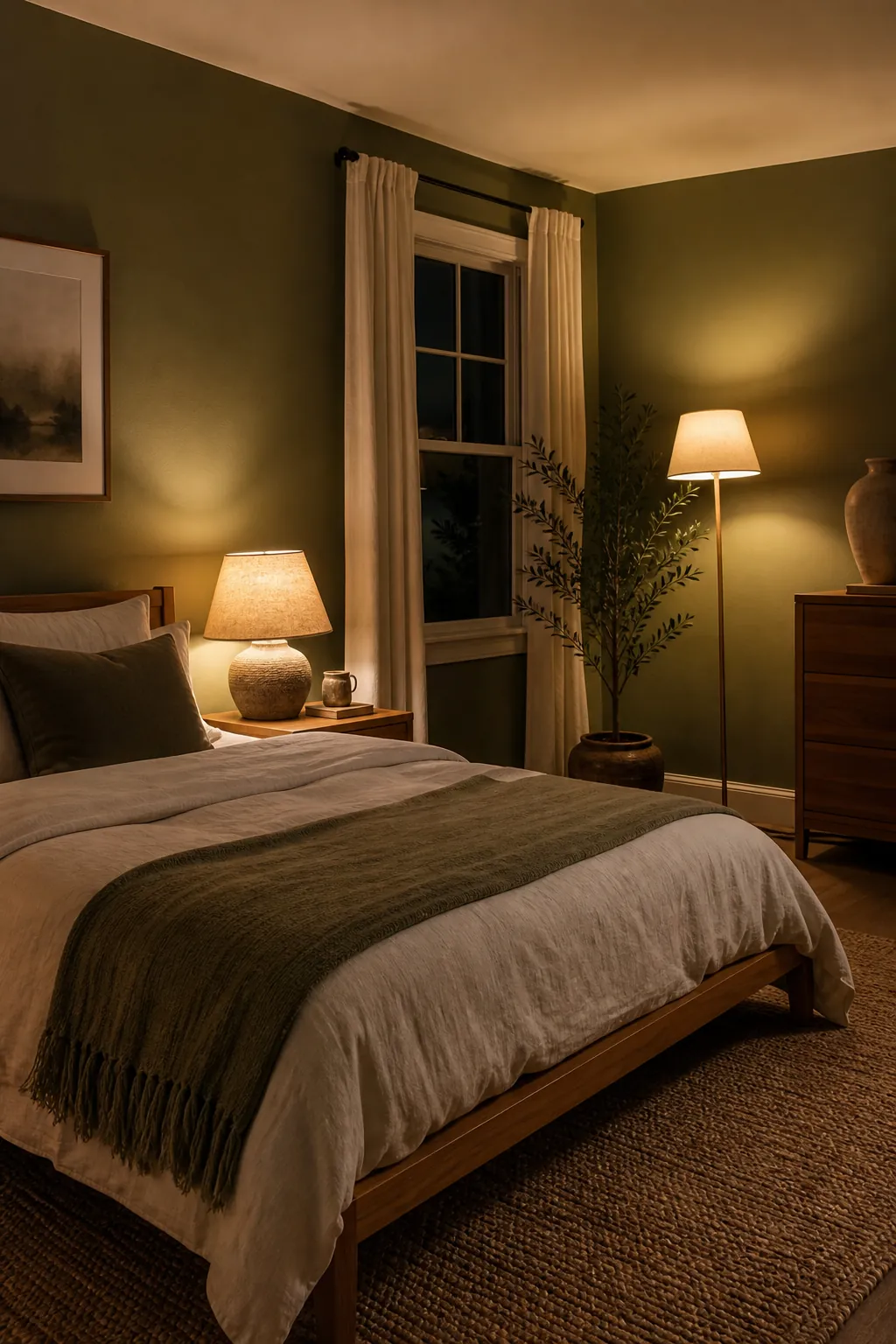
A green bedroom can look completely different at night. Overhead lighting often makes green walls feel sharper, glossier, and less intimate. The better approach is to place warm light around the room at human height: bedside lamps, a shaded floor lamp, a low dresser lamp, a small wall sconce, or a plug-in pendant beside the bed.
For a relaxing bedroom, bulbs in the warm range are usually easier to live with than cool white bulbs. A dimmer or smart bulb helps even more because the room can be bright while you clean and low while you wind down. Nighttime decor is mostly a lighting decision. If the only light source is overhead, even expensive bedding and paint can feel unfinished.
- Use shaded lamps so the bulb is not glaring from bed height.
- Put one light near the bed, one across the room, and one low accent light near art, plants, or a dresser.
- Choose warm bulbs for evening and avoid icy white light unless you need it for cleaning or tasks.
Use wood, but do not let it take over
Wood is one of the easiest ways to make green feel earthy instead of decorative. The risk is using too much heavy wood in one small bedroom. A slatted wall, chunky bed frame, dark dresser, wooden nightstands, and wood blinds can quickly make the room feel dense. The better move is to choose one or two main wood moments and let the rest of the materials lighten around them.
A natural wood headboard, oak nightstand, walnut picture frame, cane bench, bamboo shade, or simple wooden tray can be enough. If the room already has dark wood floors, balance them with lighter bedding and cream curtains. If the furniture is pale oak, a deeper olive wall can create contrast. Wood should add warmth and grain, not visual weight.
Try to keep the wood tones related. They do not need to match exactly, but they should feel like they belong in the same family. One warm oak, one walnut, and one reddish cherry piece can still work if the bedding and rug calmly bridge them. Five competing wood tones in a small green bedroom will make the styling feel accidental.
Make texture do more work than pattern
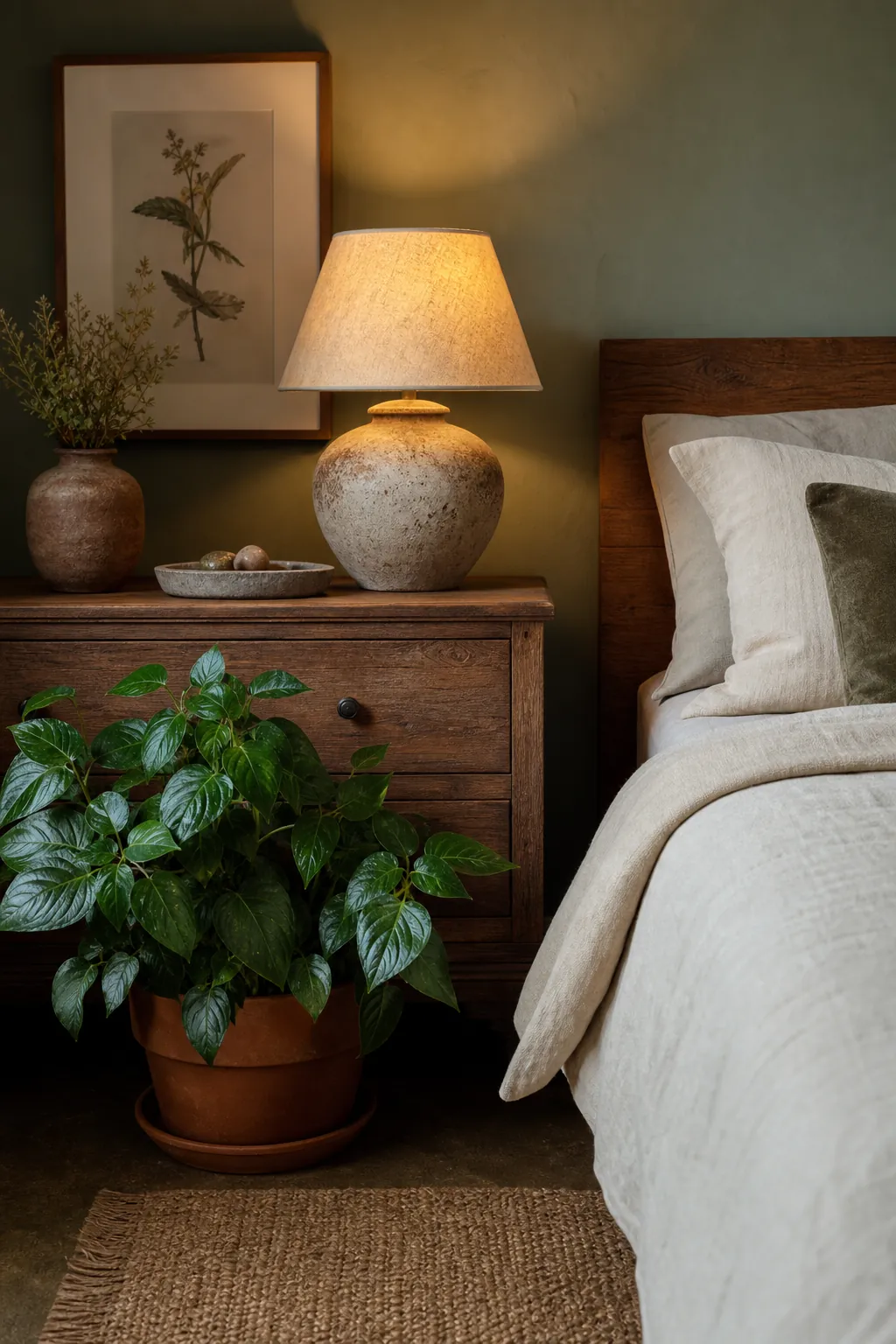
Soft textures are what keep a green bedroom from feeling like a painted box. They also make the room feel finished even when the color palette stays quiet. Add texture through a woven rug, nubby throw, linen curtains, boucle pillow, quilted coverlet, cane drawer front, ceramic lamp, or a matte plaster-style vase.
If you love pattern, keep it low-contrast. A small stripe, block print, botanical sketch, or faded vintage rug can bring personality without making the room visually loud. The most relaxing bedroom palettes usually have one main color, two warm neutrals, one darker grounding note, and several textures that catch the lamp light differently.
This is where cozy bedroom design becomes practical. A soft rug beside the bed changes how the room feels first thing in the morning. Heavier curtains help the wall color look intentional instead of bare. A textured blanket makes the bed look inviting even when the bedding is simple.
Add earth tones so the green feels grown-up
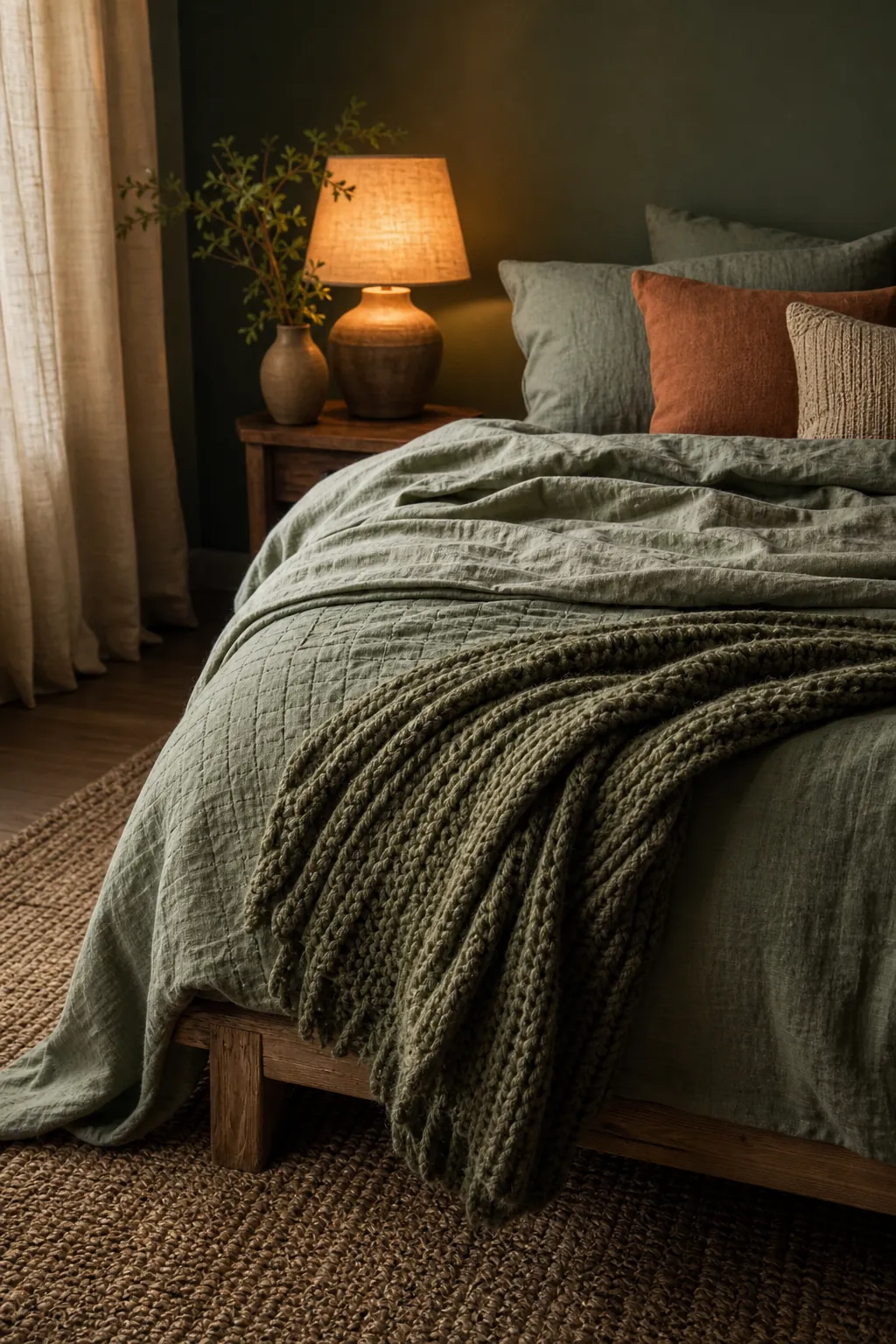
Earth tone decor gives green somewhere to land. Terracotta, rust, ochre, camel, clay, warm ivory, putty, tobacco leather, stone gray, and aged brass all sit naturally beside olive and sage. These colors make the bedroom feel warmer without relying on bright orange or red accents.
The easiest formula is green plus warm white plus one earth accent. For example, moss walls, oatmeal bedding, and a terracotta pillow. Or sage walls, cream curtains, and a tan leather bench. If the room feels too brown, add a cooler counterpoint such as charcoal, misty blue-gray, or a black metal lamp. A relaxing bedroom still needs contrast. It just needs contrast that feels quiet.
When styling shelves or nightstands, repeat the same earth tones in small amounts: a clay vase, an amber glass candle, a wood frame, a stone tray, or a brass pull. These details help the room look layered without adding clutter.
Keep the finish matte and the shapes a little softer
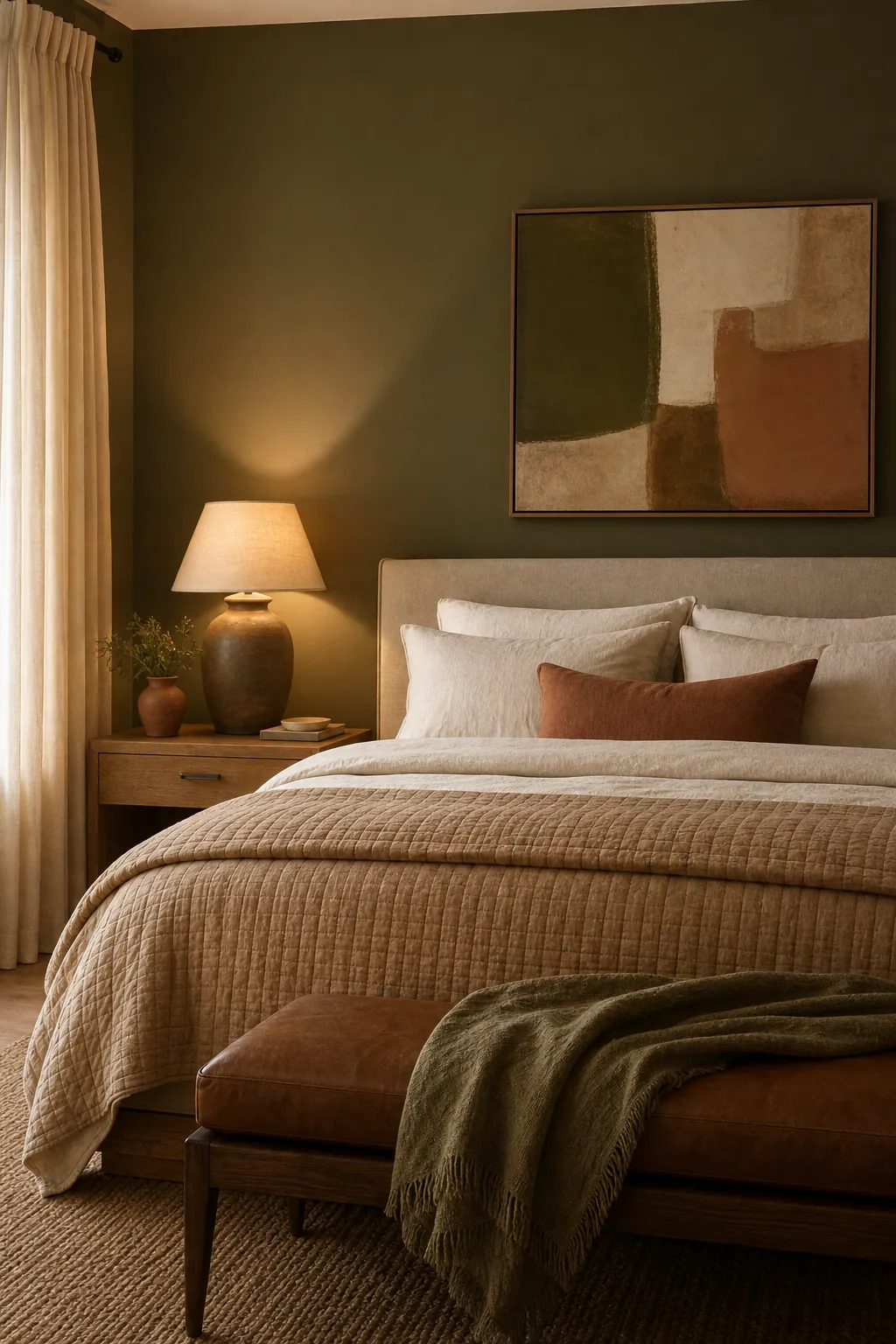
Paint finish matters more in a green bedroom than people expect. A glossy wall can bounce lamp light in a way that feels busy, especially if the wall texture is uneven. Matte, eggshell, or a very soft satin finish usually makes earthy green feel calmer. Trim can have a slightly higher sheen for cleaning, but the walls themselves should not look shiny.
Shape matters too. Green walls with a square bed, square nightstands, square mirror, square dresser, and sharp overhead light can feel rigid. Add one or two curves: a round mirror, arched lamp, drum shade, curved headboard, ceramic bowl, or oval tray. Soft shapes make the room feel less staged and more restful.
If you already own mostly angular furniture, use textiles and lighting to soften it. Let curtains break the vertical lines. Use a rounded lamp shade. Place a trailing plant on a shelf. Add art with organic shapes. These small choices are enough to change the mood.
Use art and plants to avoid the flat green room problem
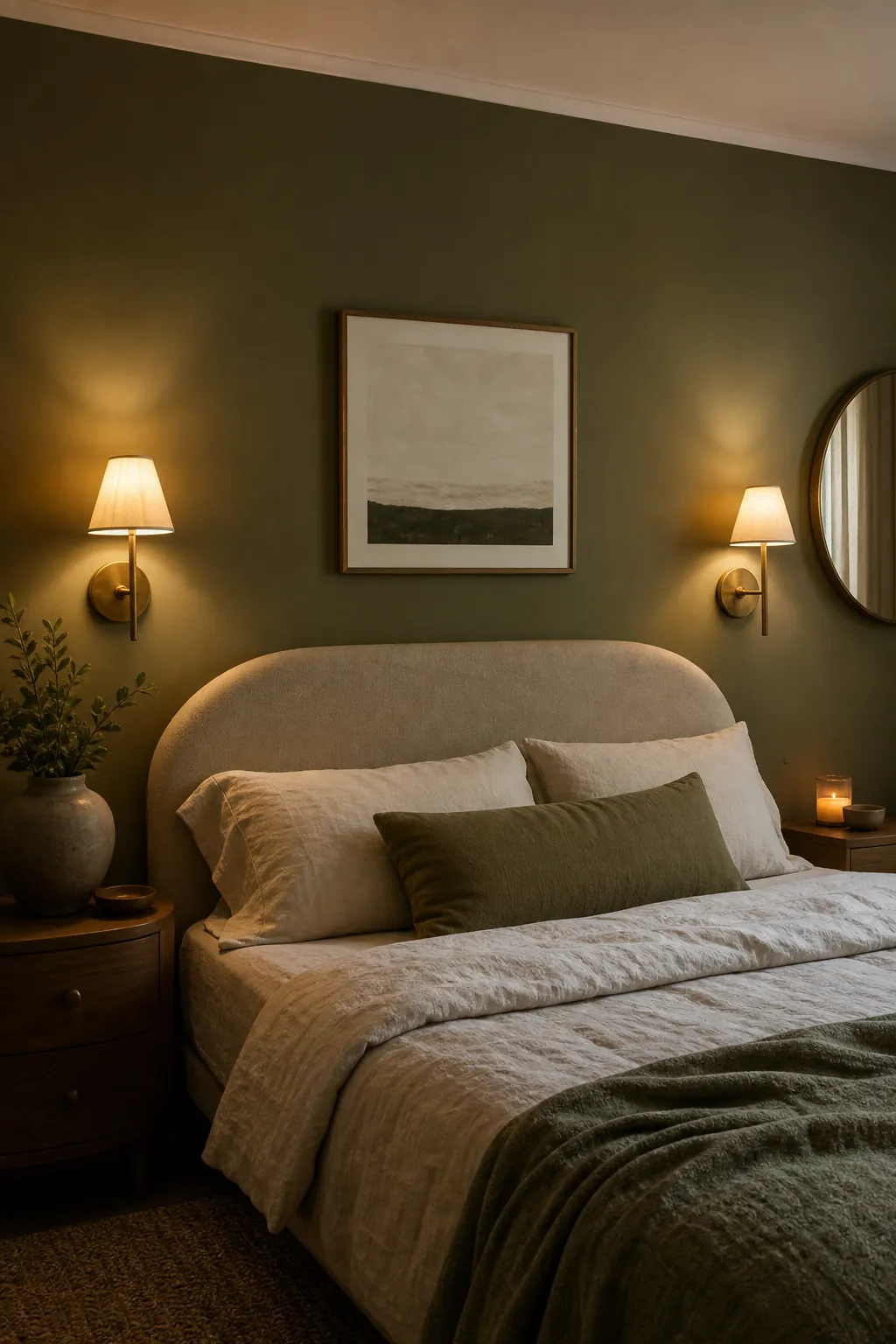
A common reason green rooms still feel unfinished is that all the visual weight sits on the lower half of the room. The bed, rug, and furniture are styled, but the walls above them are blank. Green walls need art, mirrors, plants, or textile pieces to give the eye somewhere to move.
For a natural bedroom, choose art that repeats the palette without copying it too literally. Landscape sketches, abstract earth tones, botanical prints, black-and-white photography, handmade ceramics on a shelf, or a woven wall hanging can all work. Plants are useful too, but they should not be the only decor. A bedroom with green walls and plants but no art can still feel unfinished.
Keep the arrangement simple around the bed. One large piece over the headboard often looks calmer than many small pieces. If you prefer a gallery wall, limit the frame finishes and leave enough breathing room. The goal is personality, not visual noise.
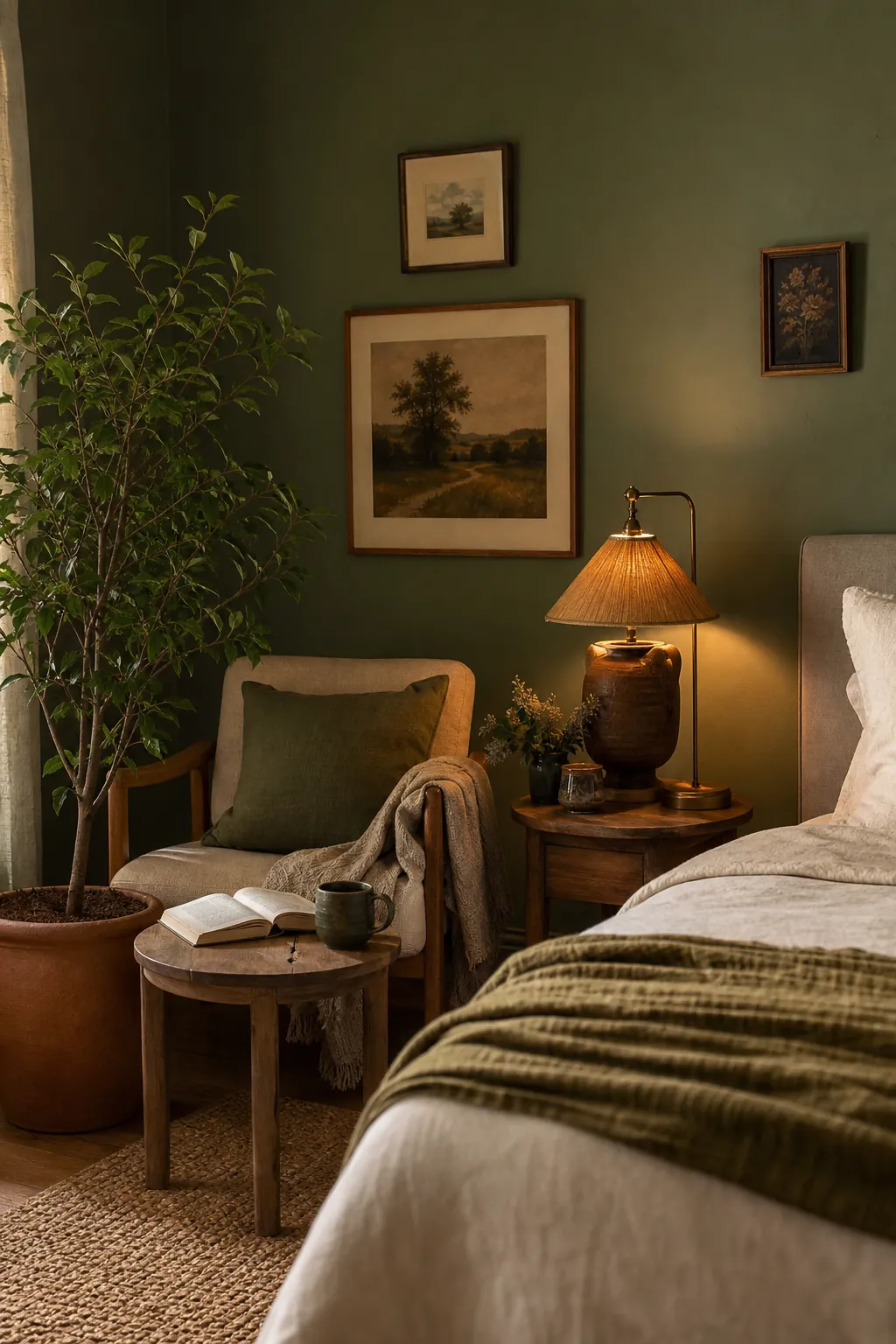
Style the nightstand for the routine you want
The nightstand is a small area, but it carries the relaxing nighttime feel more than almost any other surface. A good nightstand setup has a lamp, a place for the current book or journal, a small dish or tray, and one quiet decorative object. That might be a ceramic vase, a tiny framed photo, a stone object, or a low-maintenance plant.
Keep the nightstand useful first. If it becomes a display shelf, the room may look styled in photos but frustrating at bedtime. Hide cords where you can, choose a lamp that can be switched off from bed, and leave enough surface area for water, glasses, or a phone. A relaxing bedroom should make the last ten minutes of the day easier, not more decorative.
- Use one warm lamp instead of several tiny decorative lights on the same surface.
- Choose one scent, candle, or diffuser instead of mixing several fragrance sources.
- Keep the colors close to the bedding, wall color, or wood tones so the nightstand feels connected.
A simple earthy green bedroom plan
If the room feels cold, start with lighting before repainting. If the room feels dark, add lighter bedding and curtains before buying more decor. If the room feels flat, add art, texture, and one curved shape. If the room feels cluttered, remove small objects and make the bed, lamps, and rug do more of the design work.
Here is a balanced formula that works in many green bedrooms: muted sage or olive walls, warm white bedding, natural wood nightstands, shaded lamps, one woven rug, one textured throw, cream curtains, a terracotta or clay accent, and one piece of art above the bed. It is simple, but it gives the room enough layers to feel warm at night.
The best earthy green bedroom ideas are not about copying a perfect room. They are about making a few clear choices that support the same feeling. Choose the green carefully, keep the light warm, make the bed soft, add natural materials with restraint, and let the room become quieter as the evening gets darker.