

Emerald green can make a living room feel rich fast, but it can also go wrong fast. The difference is rarely the green itself. It is usually the balance around it: enough light, enough warm texture, enough neutral space, and a few metallic details that look aged instead of shiny.
For a rich living room, treat emerald as a high-impact accent rather than a color you have to spread everywhere. The best emerald green decor looks intentional because the color repeats in controlled places: a wall, velvet seating, pillows, curtains, art, or a single painted cabinet. Then cream, walnut, linen, brass, black, and stone keep the room grounded.
Start With One Strong Emerald Moment
If you are nervous about a dark green living room, begin with one clear focal point. An emerald accent wall behind a sofa, fireplace, or media cabinet creates the luxury effect without asking every surface to carry the same weight. This works especially well when the other walls stay warm white, ivory, or soft greige.
The important detail is contrast. Deep green beside pure gray can feel cold, while deep green beside creamy white, oak, walnut, or aged brass feels warmer and more expensive. Green accents need breathing room, so leave part of the room pale and quiet.
Use Velvet When You Want Instant Depth
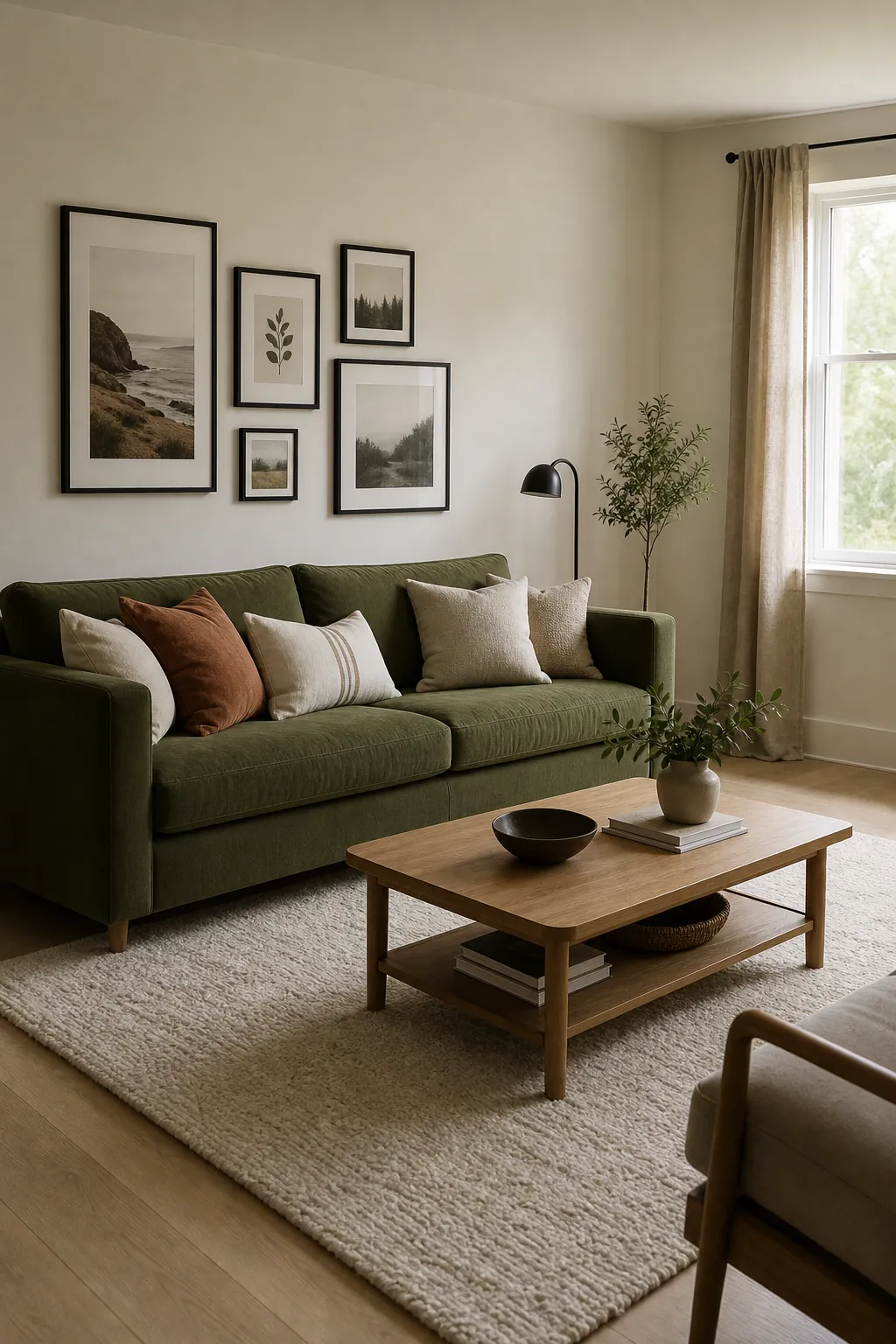
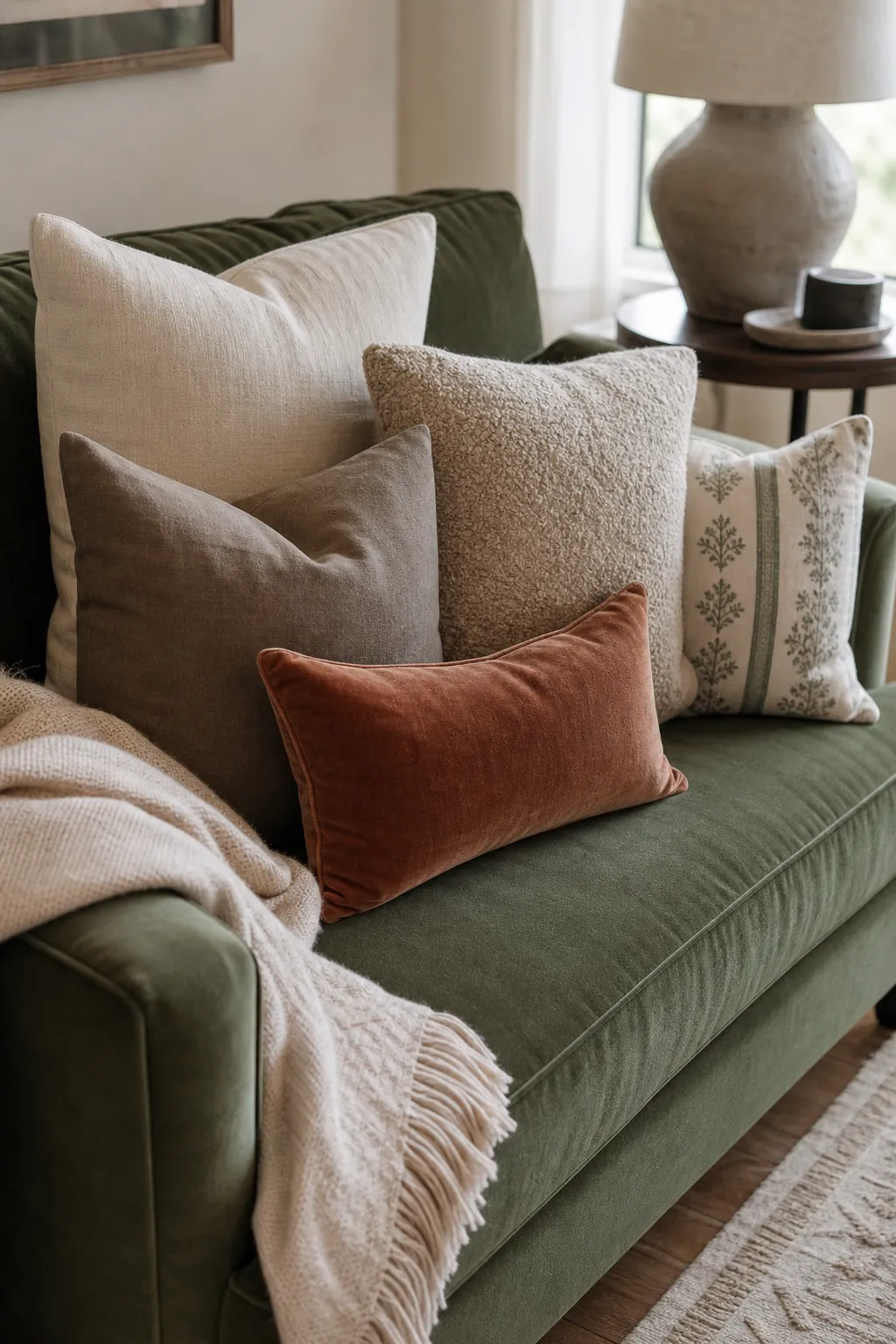
Emerald and velvet are a natural pair because velvet changes with the light. A flat green cotton pillow can look simple; an emerald velvet pillow, chair, or sofa has shadow, sheen, and movement. That is why velvet decor is one of the easiest ways to make jewel tone decor feel layered rather than loud.
If a green sofa feels too committed, use two velvet lounge chairs, a bench, or a set of pillows. Keep the surrounding upholstery simpler: linen, boucle, leather, or a nubby wool blend. The contrast between matte and plush surfaces is what makes the room feel designed.
Choose Gold Accents That Look Aged, Not Flashy
Emerald green and gold accents can look elegant, but only when the metal finish is restrained. Brushed brass, antique brass, and muted gold are easier to live with than mirror-bright yellow gold. Use them in small places: lamp bases, picture lights, cabinet pulls, trays, curtain rods, mirror frames, and side tables.
The goal is not to make the room sparkle. The goal is to add warmth. A little brass beside emerald green decor keeps the palette from feeling flat, especially if the room also has black accents, walnut, marble, or cream textiles.
Plan the Lighting Before You Commit to Dark Green
Most worries about emerald green come down to light. In a room with only one window, a dark green wall can read almost black at night. That does not mean you cannot use it. It means the room needs layered lighting before the color will look rich.
- Wall sconces or picture lights bring dimension to dark paint and artwork.
- Table lamps make seating areas warmer than overhead lighting alone.
- Warm bulbs help emerald feel moody and elegant instead of cold.
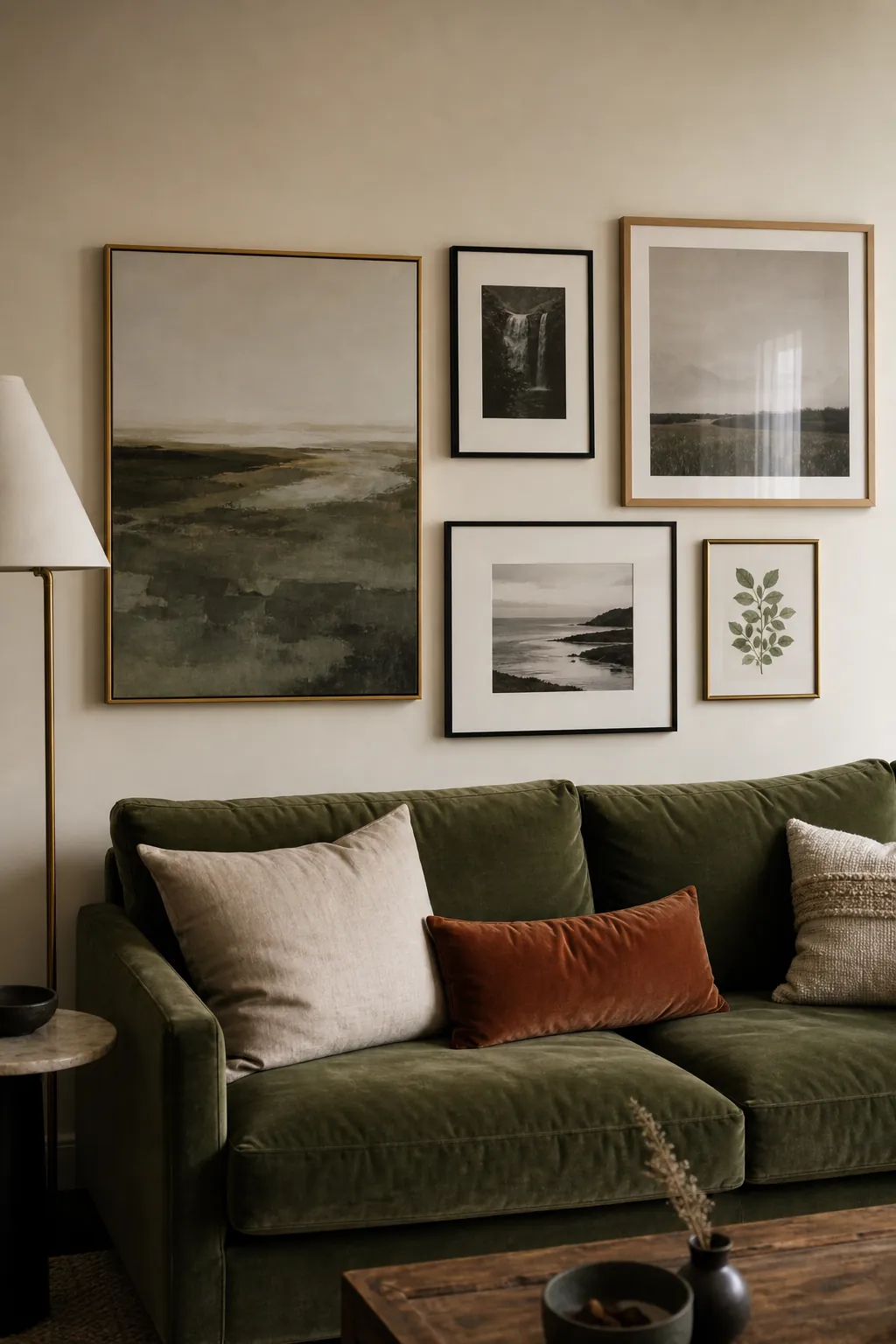
- Lighter art and mirrors break up the wall so the green does not become a heavy block.
Keep Small Rooms Light Around the Edges
Small living rooms can still handle emerald green accents. The trick is to keep the largest flat surfaces from all turning dark at once. If the sofa, rug, curtains, and walls are all deep green, the room can feel smaller than it is. Instead, let the walls or sofa stay light and repeat green in pieces that are easy to move.
Emerald curtains, patterned pillows, a small side table, and a green-accented rug can give you the same green living room feeling without closing the space in. Add a mirror, glass, pale linen, and open-legged furniture so the room still feels airy.
Warm Wood Makes Emerald Easier to Live With
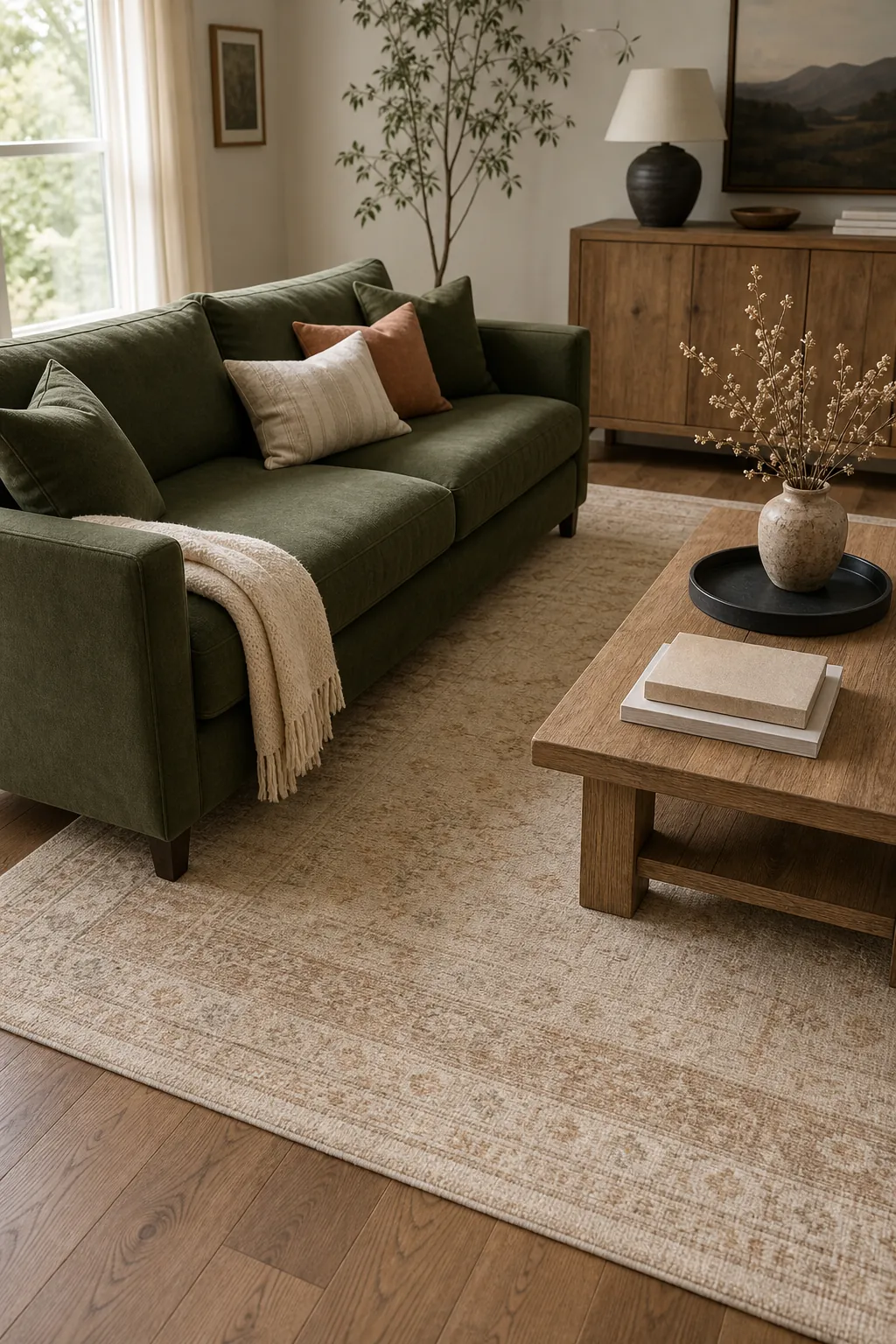
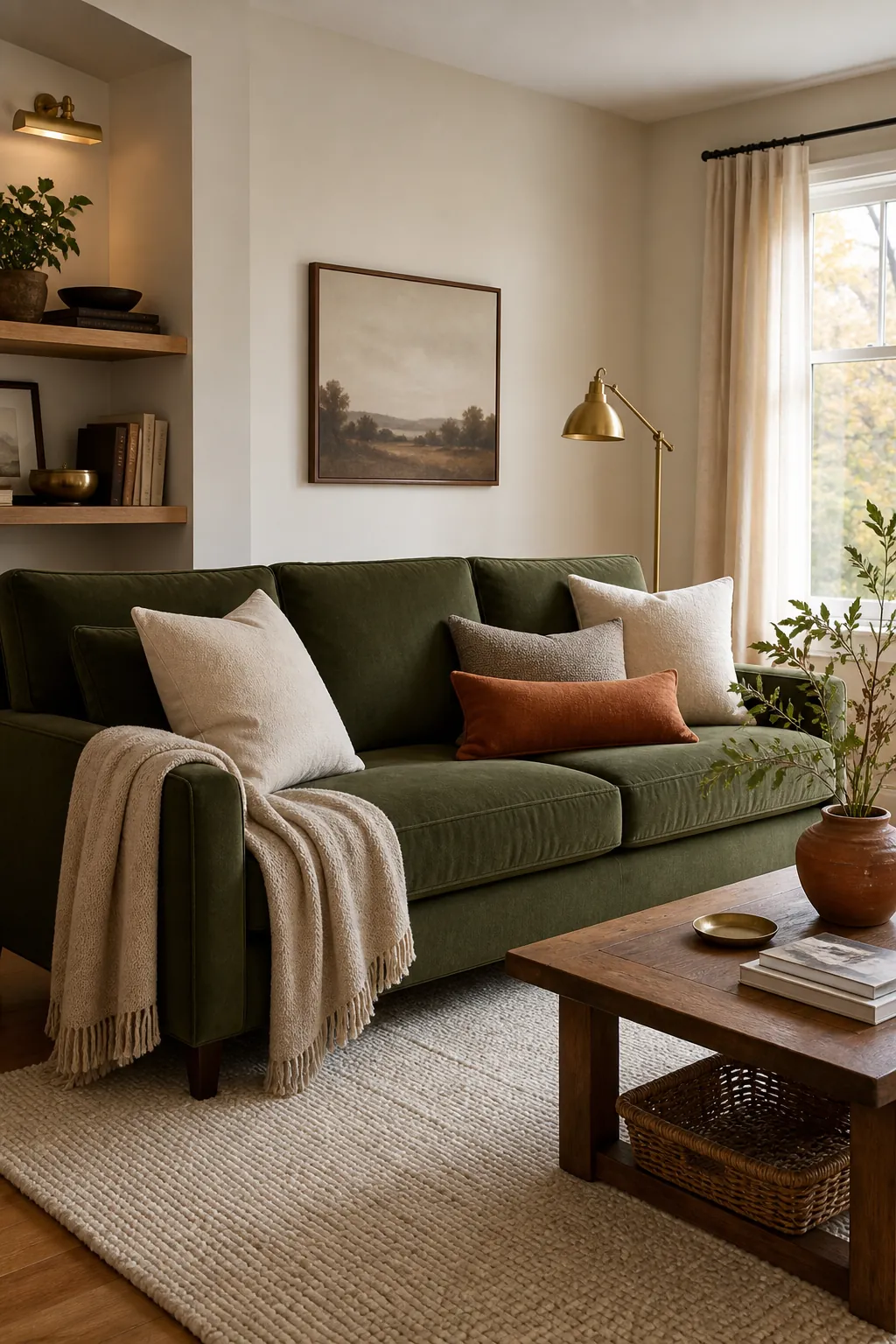
Emerald has a formal side, especially when it is paired only with black, white, and polished metal. Warm wood relaxes it. Walnut tables, oak floors, woven shades, leather, jute, rattan, and cream wool make the color feel connected to a real home instead of a staged showroom.
This is also where undertones matter. If the green leans blue, it can fight with red-orange wood or a red rug. If the room already has warm floors and camel leather, a slightly earthier emerald or forest green often feels easier than a blue-teal version. Good living room styling checks the green beside the furniture you already own, not just against a paint chip in isolation.
Repeat the Color, But Change the Scale
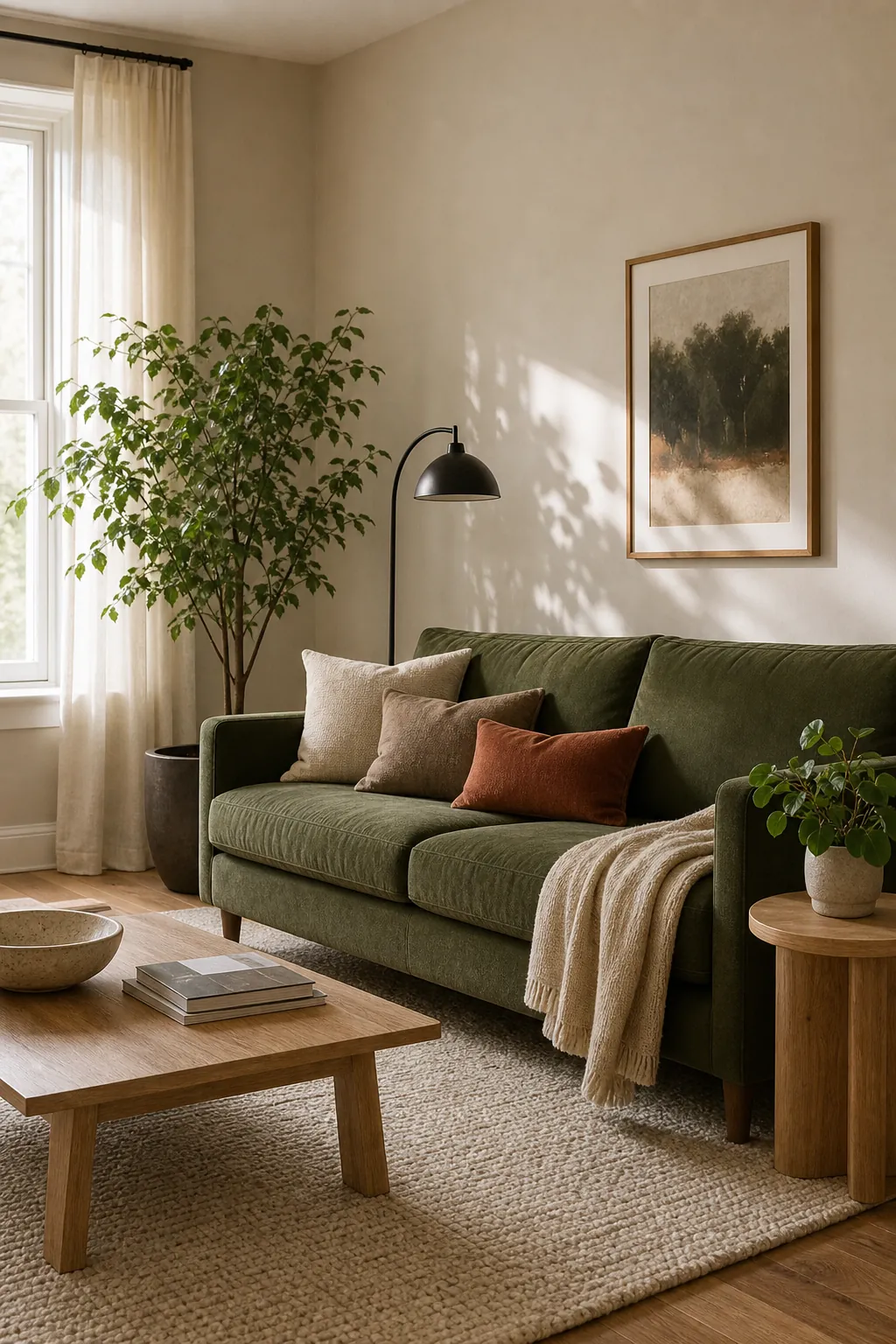
A rich room rarely uses a color once. If you choose an emerald wall, repeat the color in one or two smaller accents across the room. If you choose an emerald sofa, repeat it in artwork, a vase, or a patterned pillow. The repeated note makes the choice feel deliberate.
Do not repeat every green at the same strength. Mix one deep emerald piece with softer moss, olive, or muted botanical tones. This keeps the room from looking like a set and makes jewel tone decor feel more natural.
The Richest Emerald Rooms Are Edited
Emerald green already has presence, so the room does not need every luxury decor signal at once. Choose the best few: velvet, aged brass, warm wood, tailored curtains, soft lighting, and one strong art moment. Leave space between them.
That restraint is what keeps moody decor from feeling heavy. Use emerald where it can be admired, support it with texture and light, and let the rest of the room stay calm enough for the green to look expensive.