
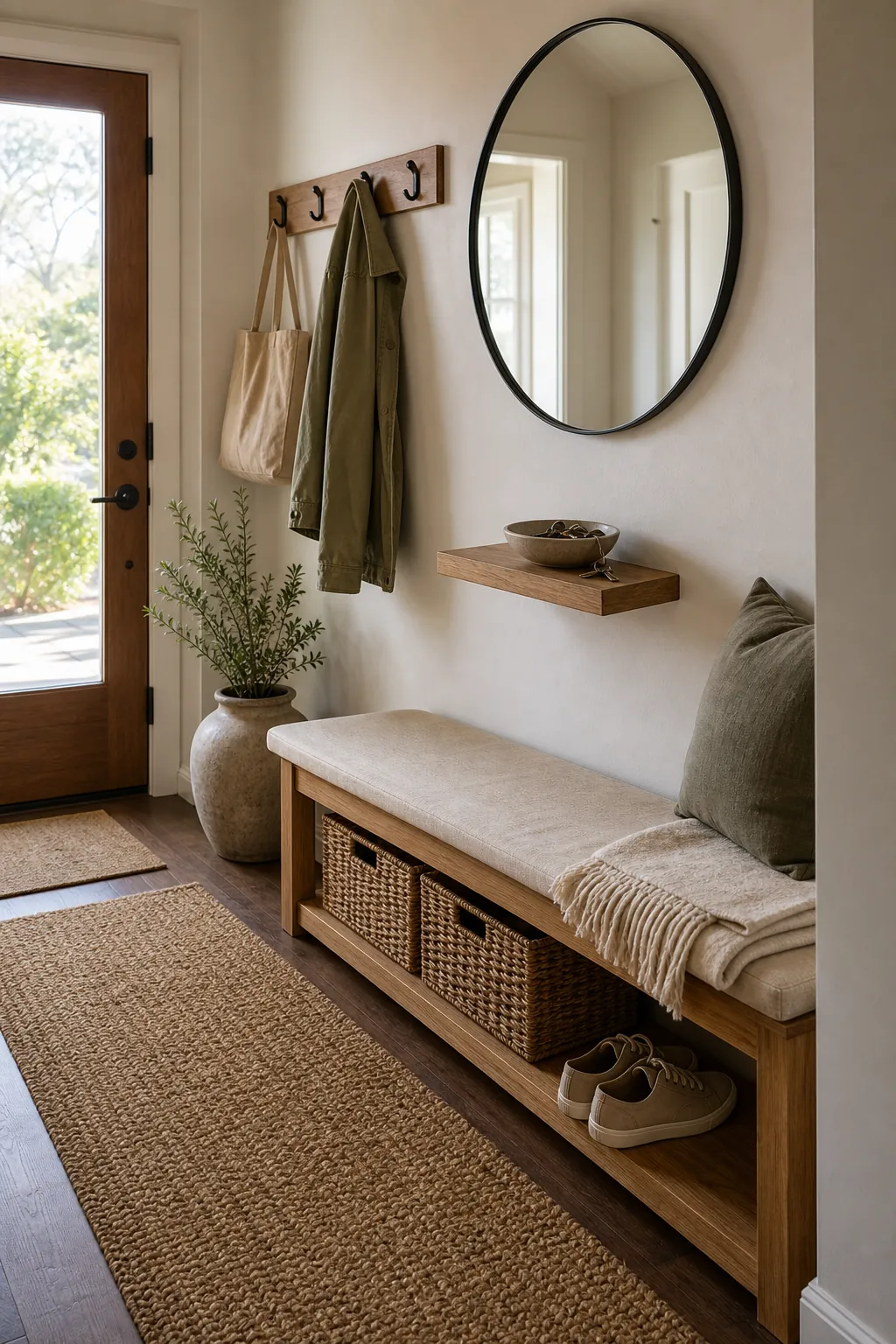
An entryway bench has to do more than look nice in a photo. It has to hold shoes, catch bags, give someone a place to sit, and still make the first view of your home feel calm. That is why the best entryway bench styling starts with function first, then adds the pretty layers only after the everyday mess has a place to go.
The common problem is not that the bench is wrong. It is that the bench is asked to be furniture, storage, hallway decor, a drop zone, and a decorative moment all at once. Use these ideas to make that mix feel intentional instead of crowded.
Choose a bench size that keeps the entry useful
Before pillows, baskets, or art, check the actual walkway. A useful entryway bench should leave enough room for the door to swing, for a person to stand with a bag, and for shoes to come on or off without blocking the path. In a small foyer, a shallow backless bench often works better than a deep storage bench because it gives you the sitting spot without swallowing the hallway.
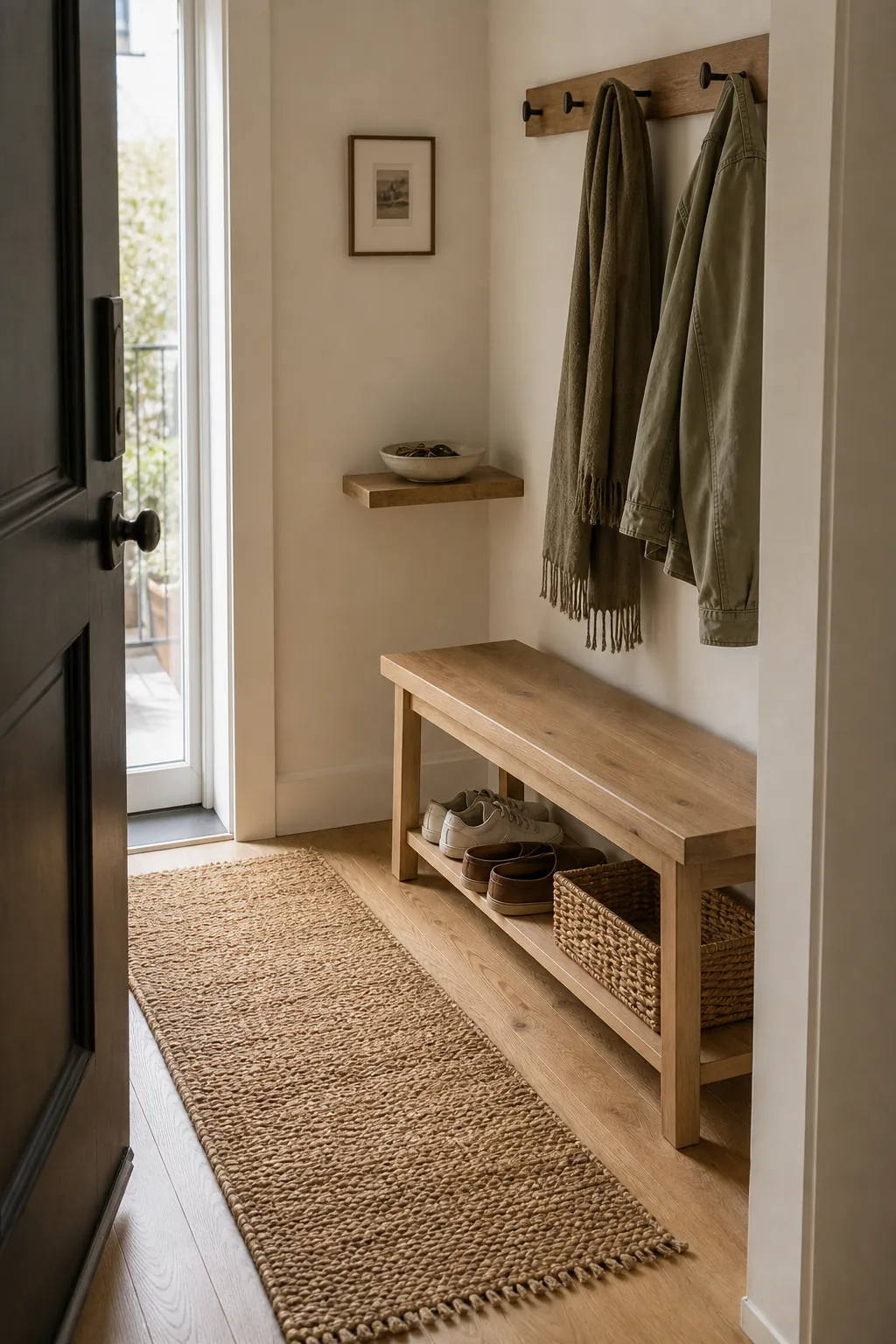
A simple rule helps: keep the bench inside its own footprint. Shoes, baskets, and trays should tuck under or beside it instead of spreading into the walking lane. That one decision makes small space decor feel calmer because the bench looks like part of the room, not an obstacle you have to work around.
Give shoes and loose items a real home
The prettiest bench will fail if shoes, leashes, gloves, and shopping bags have nowhere specific to land. For everyday home organization, use the underside of the bench first. Baskets, cubbies, and low trays are easier to maintain than a bare floor where everything becomes visible clutter.
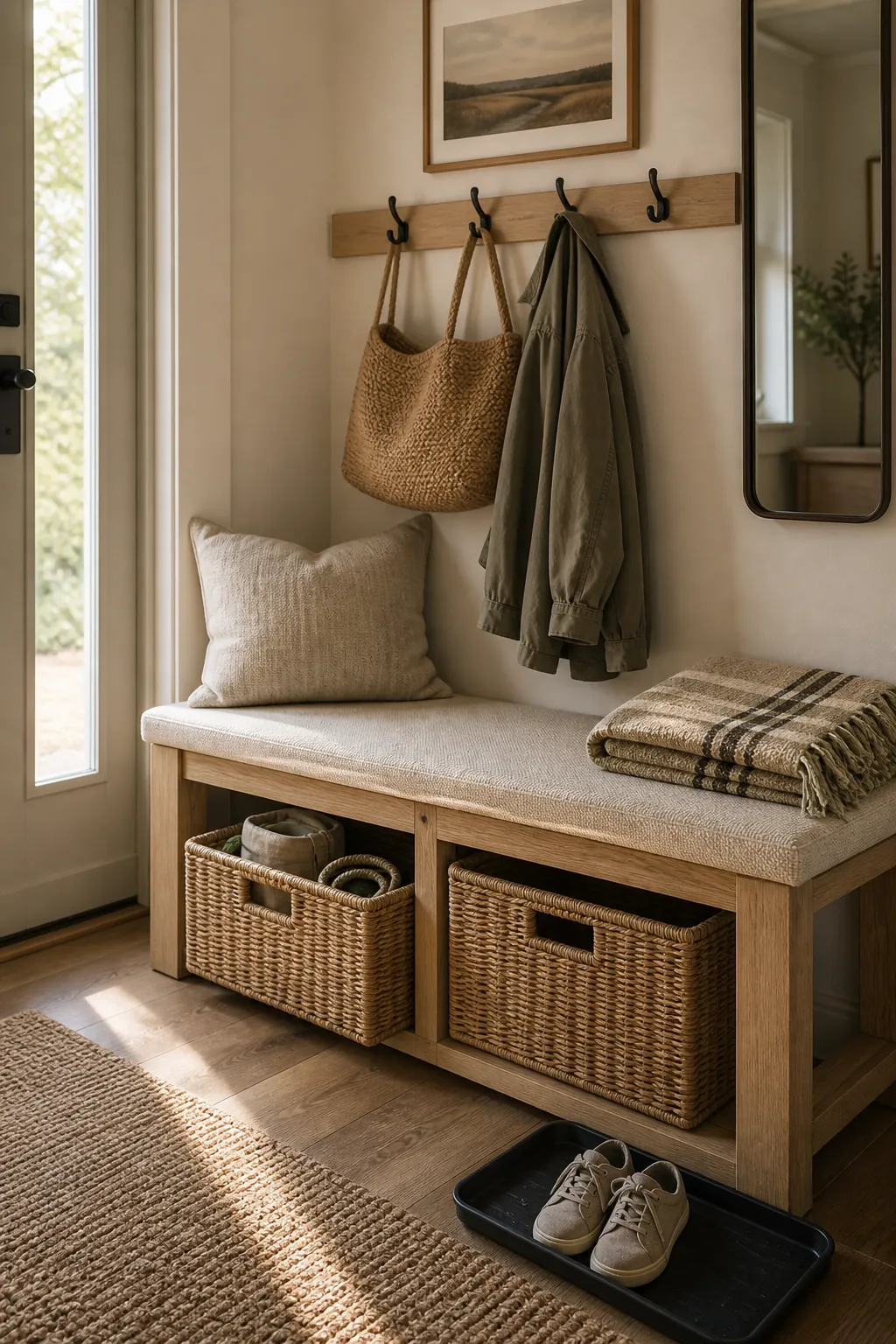
Closed storage is helpful, but it should still be easy to use. If a basket needs to be pulled out with two hands or a lid has to be removed every time, people will stop using it. Choose open woven baskets for daily items and reserve closed boxes for seasonal pieces. The goal is not to hide every object; it is to make the useful objects look contained.
Pair a mirror and bench without crowding the wall
A mirror and bench combination works because it solves two entryway needs at once: a quick check before leaving and a place to sit when arriving. The mistake is filling every inch around them. If the mirror is large, keep the bench styling quiet. If the bench has texture or a cushion, let the wall stay simpler.
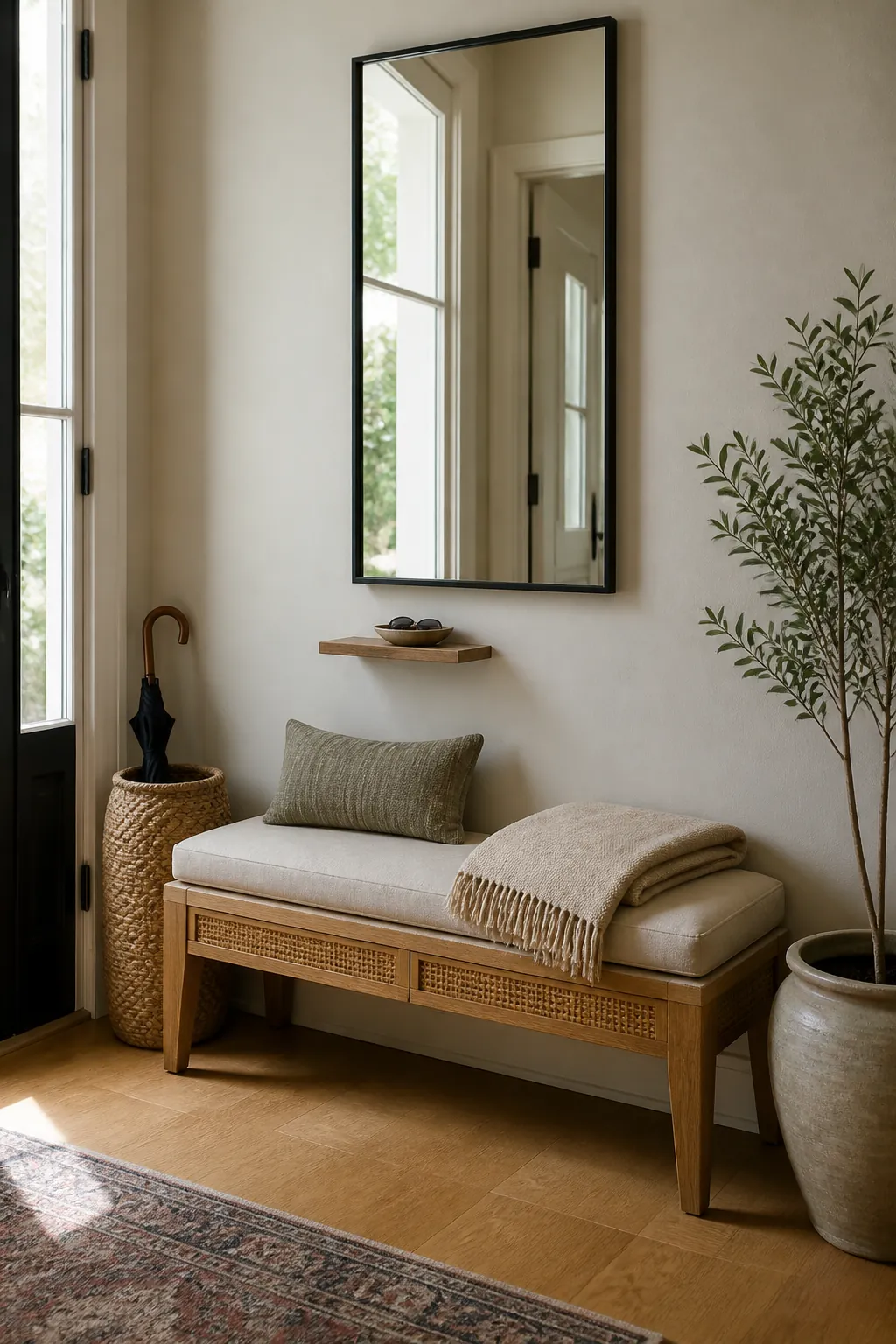
For balanced foyer ideas, align the mirror with the bench and leave breathing room on both sides. Add only one small ledge, dish, or hook rail if you need a place for keys. That keeps the wall useful without turning it into a crowded command center.
Use a runner rug to make the bench feel intentional
Runner rugs are especially helpful when the bench sits along a hallway wall. Without a rug, the bench can look like a random piece of furniture pushed to the side. A runner gives the entry a direction, softens the floor, and visually connects the bench to the rest of the hallway.
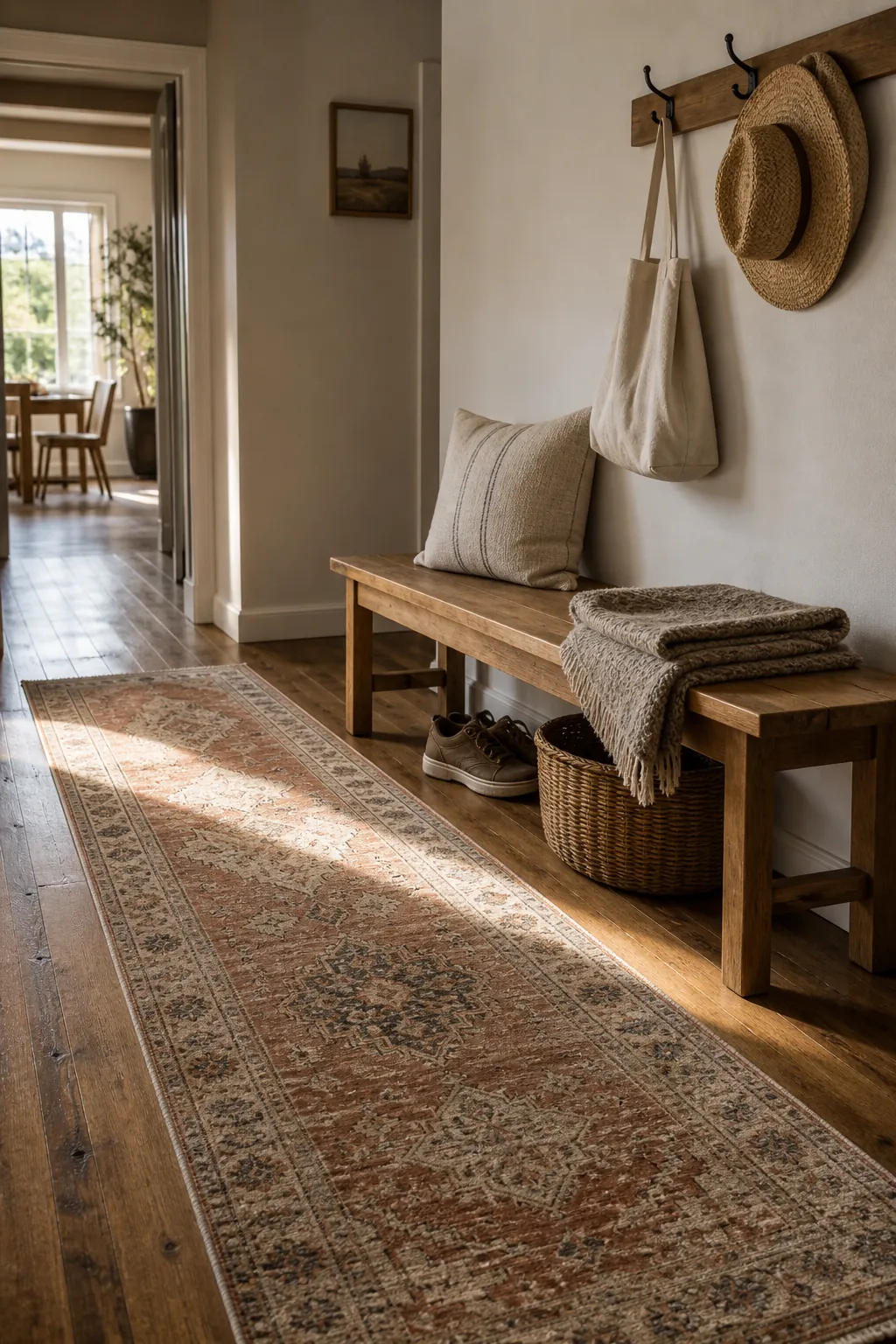
Pick a rug that is narrow enough to show some floor on both sides and flat enough for doors to clear. Subtle pattern is useful because it hides daily wear, but avoid a rug so busy that the shoes, baskets, and bench all fight for attention. In practical entryway decor, the rug should support the bench, not compete with it.
Edit hooks and trays before they become clutter
Hooks are useful until they become a wall of coats. Trays are useful until they become a permanent mail pile. The fix is to style your entryway bench like a working drop zone with limits. Leave at least one empty hook visible, choose a tray that is small enough to force editing, and keep only the items that are used daily.
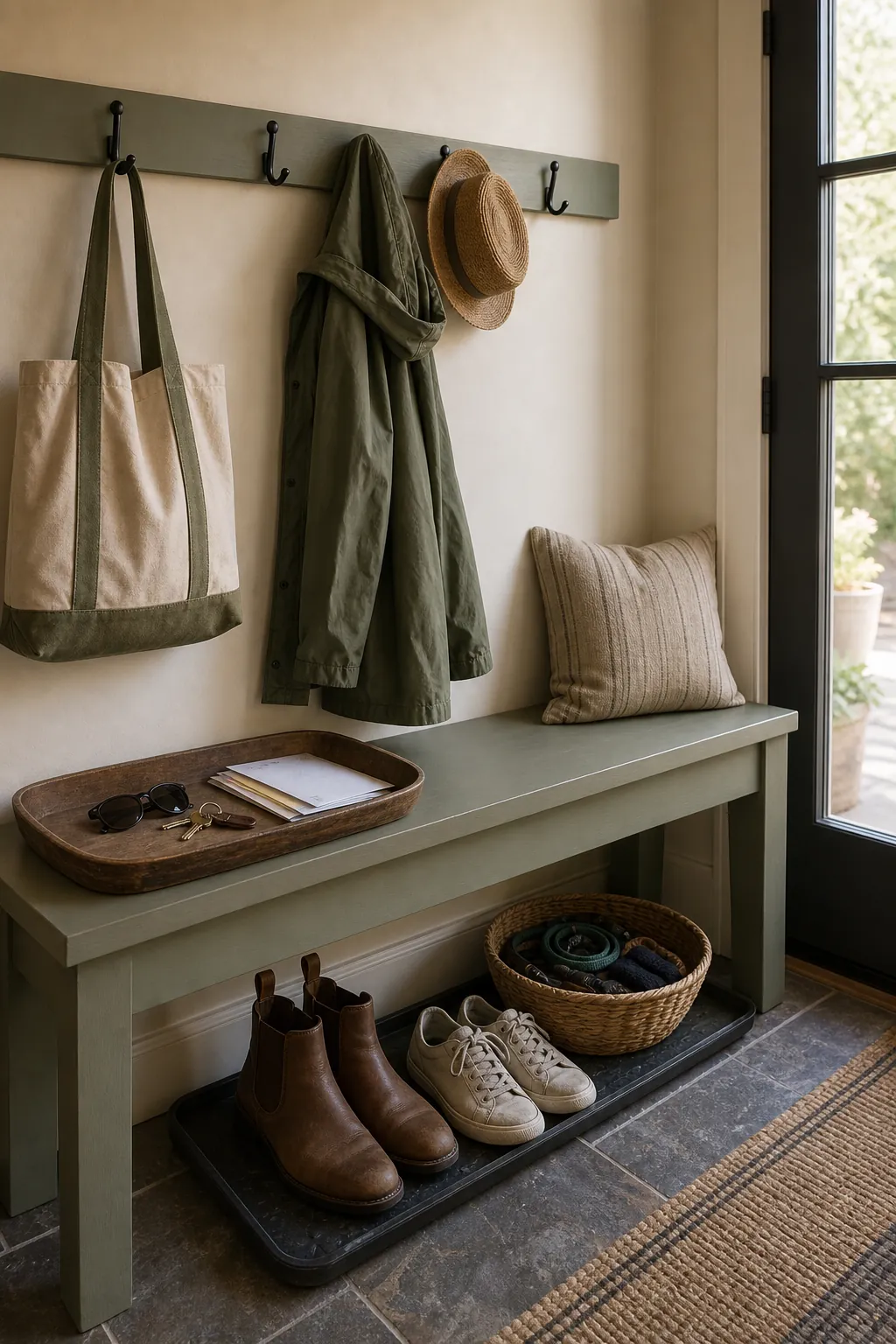
This is where useful can still look pretty. A canvas tote, one jacket, a key tray, and a small boot tray all make sense in real life. They only start to look messy when there is no edit. If the bench area cannot be reset in two minutes, the system is too complicated.
Borrow mudroom ideas when the entry gets heavy use
If your front door is also the family drop zone, lean into mudroom ideas instead of pretending the space is purely decorative. Cubbies, baskets, hooks, boot trays, and durable cushions can still feel warm when the materials are natural and the layout is consistent.
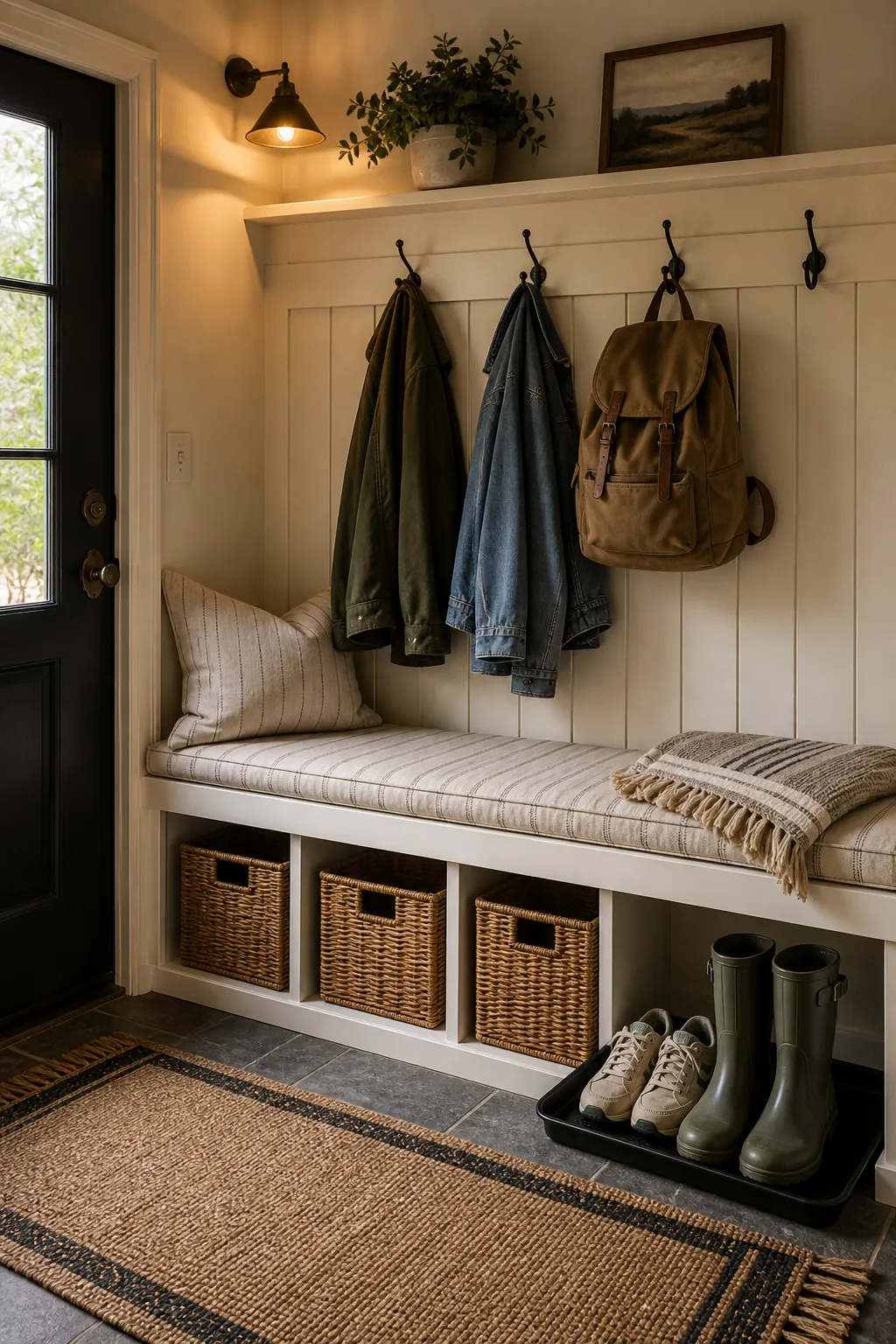
The trick is repetition. Use matching baskets, matching hooks, and one durable cushion fabric so the practical pieces read as a design choice. A mudroom-style entryway bench does not have to look heavy or utilitarian. It just needs enough structure that bags, jackets, and shoes stop floating around the floor.
Finish with texture, light, and one living detail
Once the function is handled, the pretty part becomes simple. Add texture before adding more objects: linen, wood grain, jute, woven baskets, ceramic, or a soft throw. Then add one living detail, such as a plant or clipped branch, and one warm light source if the entry feels dim.
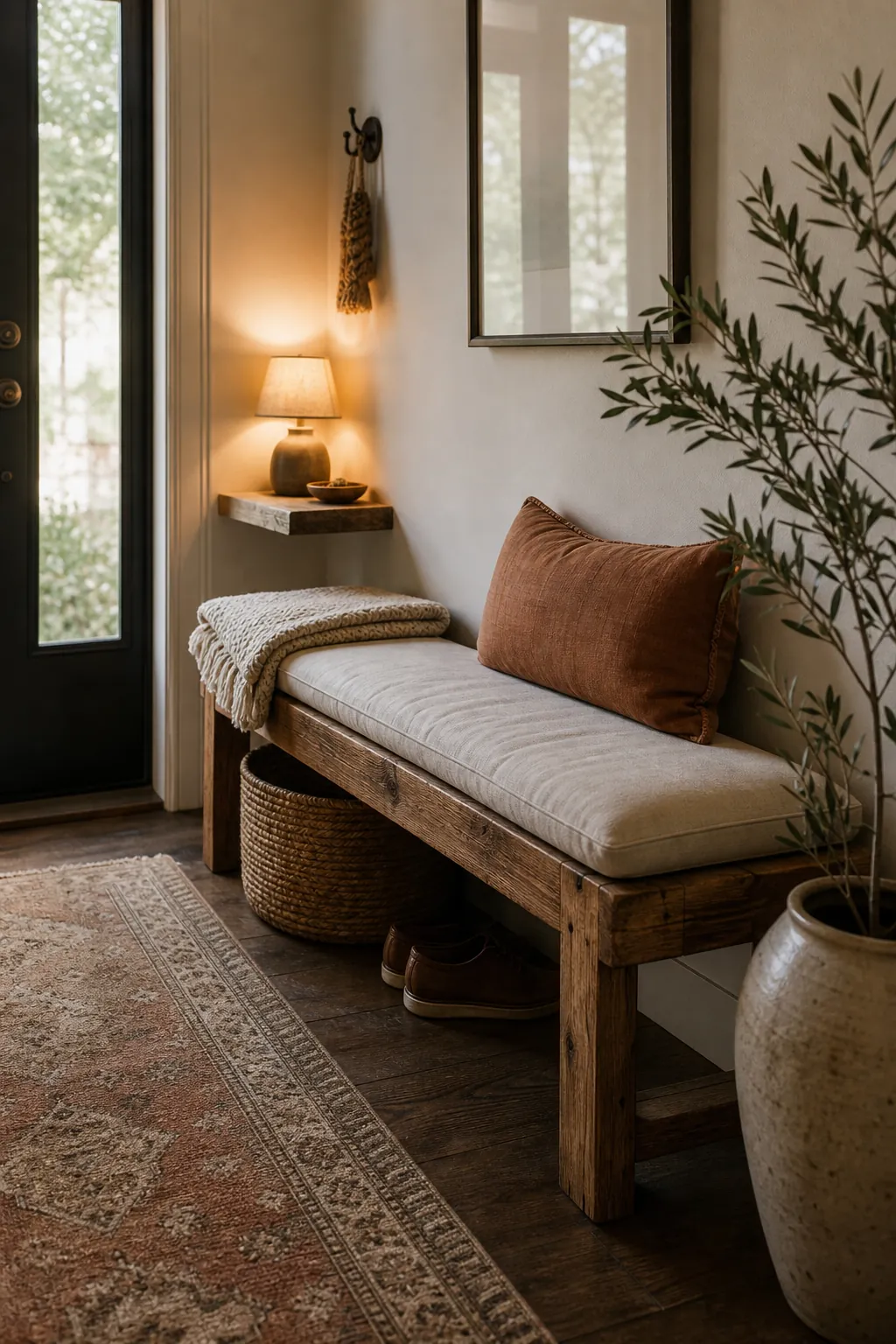
Do not cover the bench so much that nobody can sit on it. One pillow is enough. One throw is enough. One plant is enough. The strongest bench styling leaves space for real life, which is why it looks better over time than a fully loaded decorative vignette.
A useful bench should make leaving easier
The best entryway bench is not the one with the most accessories. It is the one that makes the daily routine smoother: shoes are easy to find, keys have a home, bags do not land on the floor, and the first view of the house still feels pulled together. Start with the mess you actually have, build storage around it, and then add the softer layers that make the space feel welcoming.