
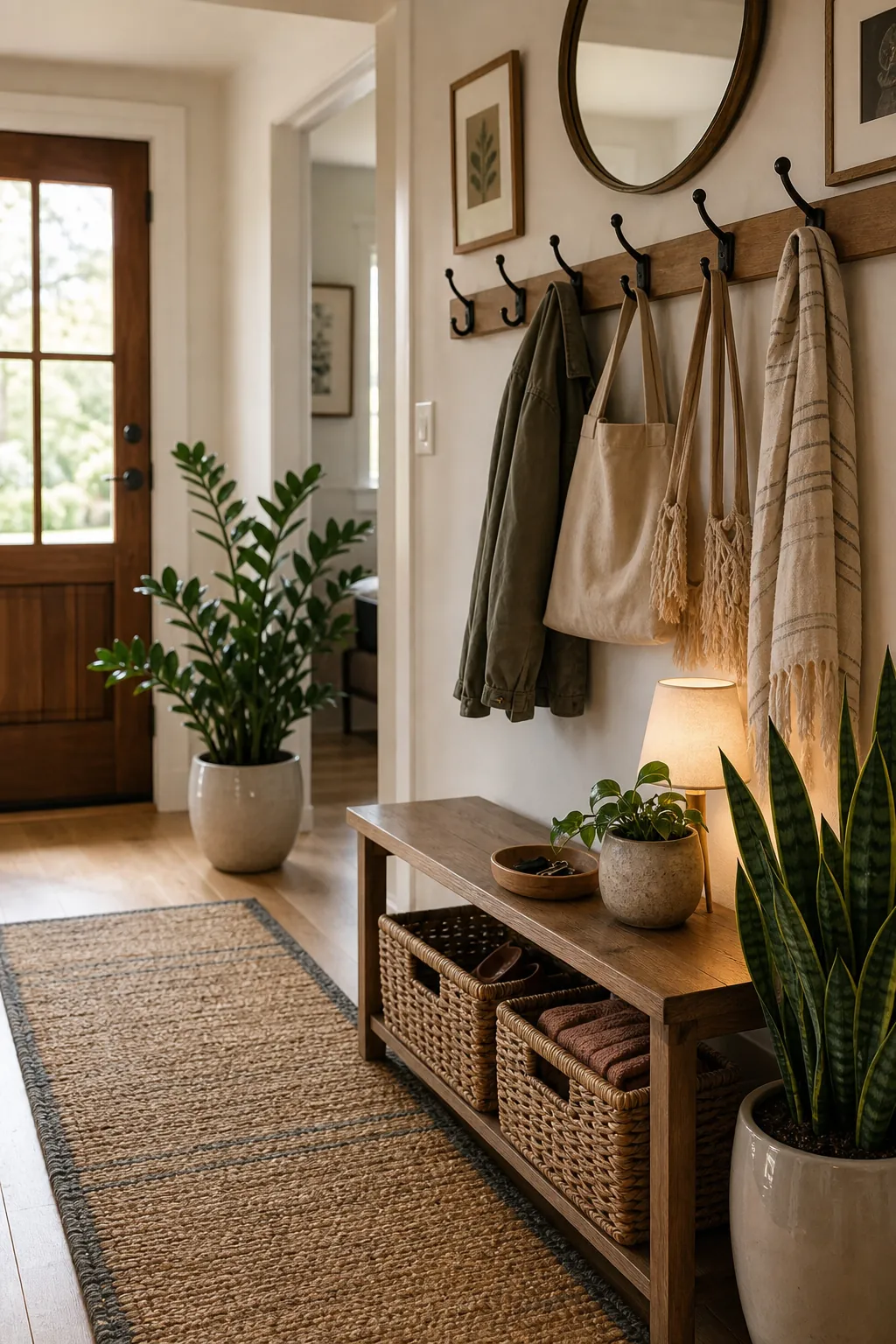
The entryway gets blamed for clutter, but the real problem is usually a missing system. Plants, baskets, and hooks work best when they are not treated as decoration first. They should answer three everyday questions: where do shoes go, where do bags land, and what makes the first step inside feel calm?
That is the thread that kept showing up in homeowner conversations: tiny foyers that open straight into the living room, hooks that turn into a messy wall of coats, low-light corners where plants struggle, and families who need storage that children can actually use. The best entryway ideas do not try to hide real life. They give it a better place to land.
Start With the Daily Drop Zone, Not the Decor
Before buying anything pretty, decide what the first five minutes at home look like. Shoes come off. Keys need a bowl. A bag gets dropped. A coat needs a hook. Maybe a dog leash, umbrella, stroller blanket, or reusable tote joins the pile. Your entryway should be designed around those repeat actions, not around a perfect photo of an empty foyer.
For a small entryway, a slim bench is often the most forgiving starting point. It creates a place to sit, a surface for packages, and a natural boundary between the front door and the rest of the room. Choose a bench shallow enough to preserve door swing and walking space, then tuck baskets underneath so loose shoes do not become the first thing people see.
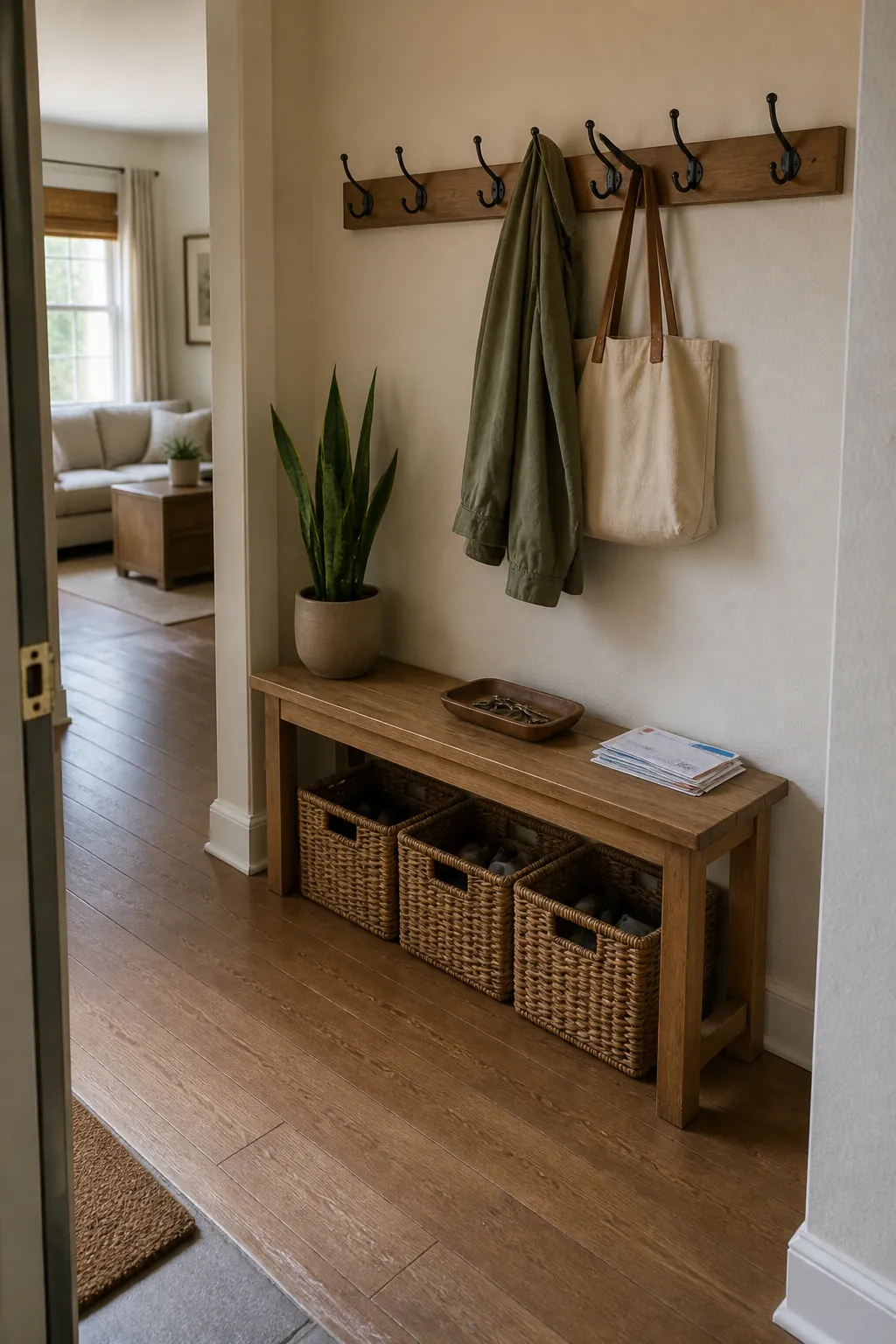
A strong drop zone only needs a few parts: a landing surface, closed or semi-closed storage, hooks for daily items, and one natural element. A plant does more than soften the space. It keeps the entry from feeling like a storage corner with a door attached.
Use Baskets for the Mess You Actually Have
Basket storage works because it gives clutter a soft edge. Shoes, gloves, hats, pet supplies, and extra totes can all look calmer when they are contained. The mistake is using one giant basket for everything. That usually becomes a black hole by the end of the week.
Use smaller baskets by category. One for everyday shoes. One for seasonal accessories. One for dog gear or umbrellas. One for kids’ items if the entryway also acts like a mudroom. The goal is not to hide a mess forever; it is to make the reset easy enough that people will actually do it.
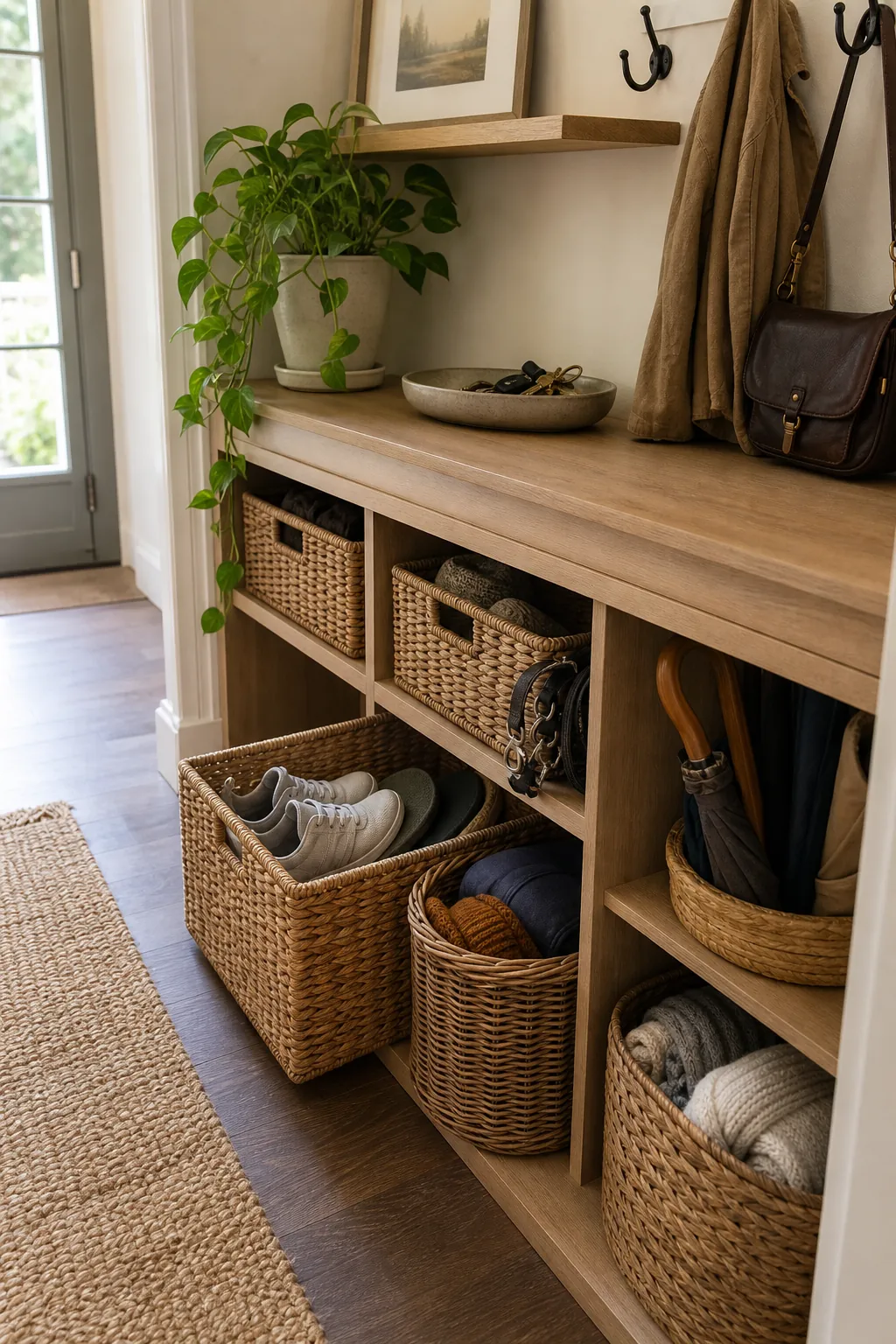
If your foyer opens into a living room, baskets are even more useful because they reduce visual noise without requiring built-ins. Woven seagrass, rattan, jute, or cane adds warmth to hallway decor while still doing real work. Keep the finishes coordinated so the storage reads as intentional entryway decor, not emergency cleanup.
Make Wall Hooks Look Intentional
Wall hooks are one of the most useful entryway ideas, but they also create one of the biggest risks: a hook wall can look messy fast. The fix is restraint. Leave breathing room between hooks, choose sturdy hardware in one finish, and avoid filling every hook every day.
For a cleaner look, mount hooks on a rail, peg strip, or simple board-and-batten panel. This gives the wall a frame and makes the hooks feel designed rather than random. If the entryway serves children, add a lower row so backpacks and jackets do not end up on the floor. Empty hooks are not wasted space. They are what keep the system from looking overloaded.
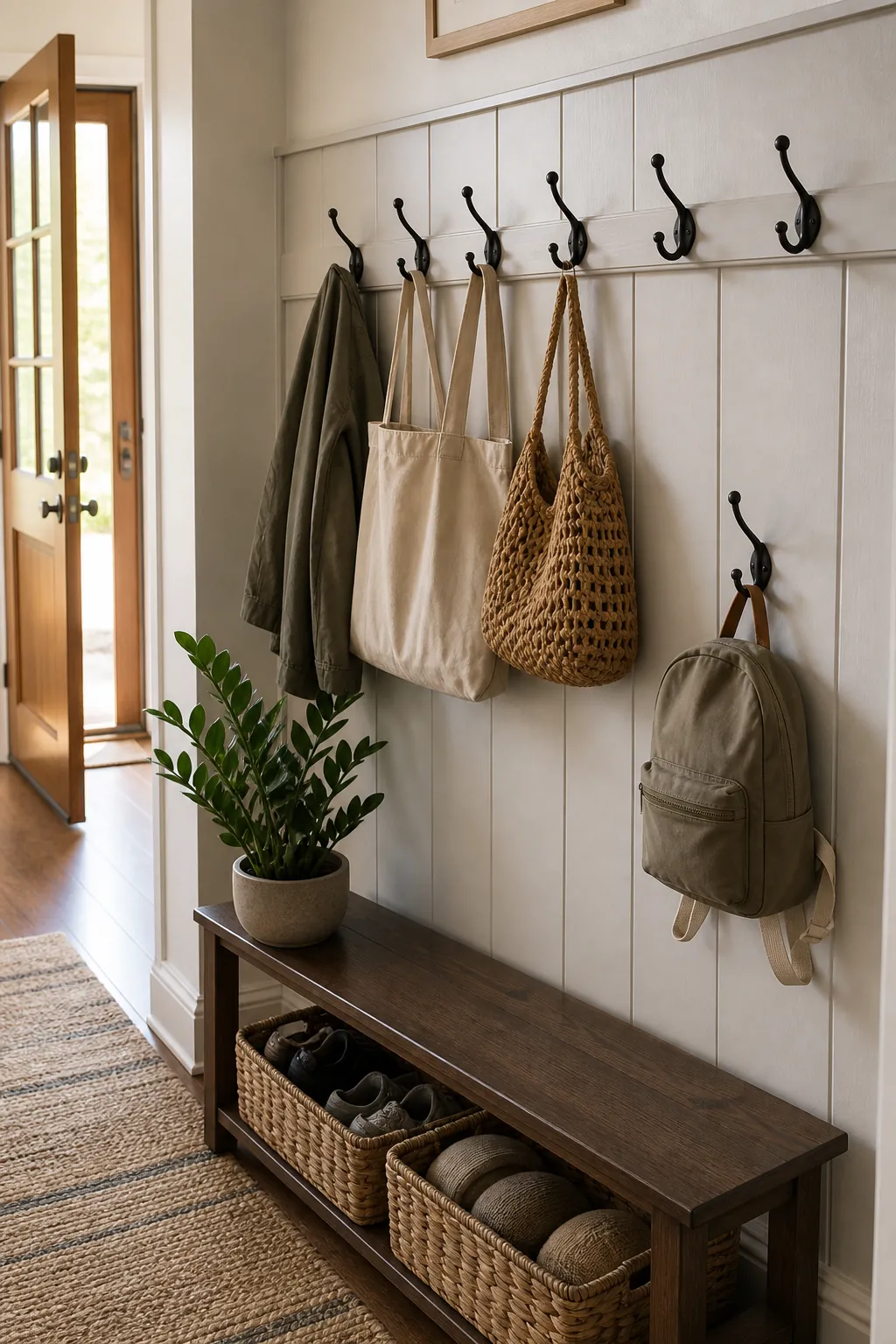
Hooks are best for daily-use pieces: one coat, one tote, one dog leash, one hat. Bulky seasonal coats belong in a closet if you have one. If you do not, use a closed cabinet or basket overflow nearby so the wall does not become the whole storage plan.
Choose Entryway Plants That Can Handle Hallway Light
Entryway plants need to be tougher than living-room plants. Many foyers get reflected light, short bursts of sun, or no direct window at all. That does not mean the corner has to stay bare, but it does mean you should choose plants for the actual light you have.
ZZ plants, snake plants, pothos, cast iron plants, and some Chinese evergreen varieties are common choices for lower-light entryways. A snake plant gives upright shape beside a bench. A ZZ plant looks polished with glossy leaves. Pothos can trail from a shelf without taking floor space. If the plant is there to make the entry feel alive, pick one that will still look good on an ordinary Tuesday.
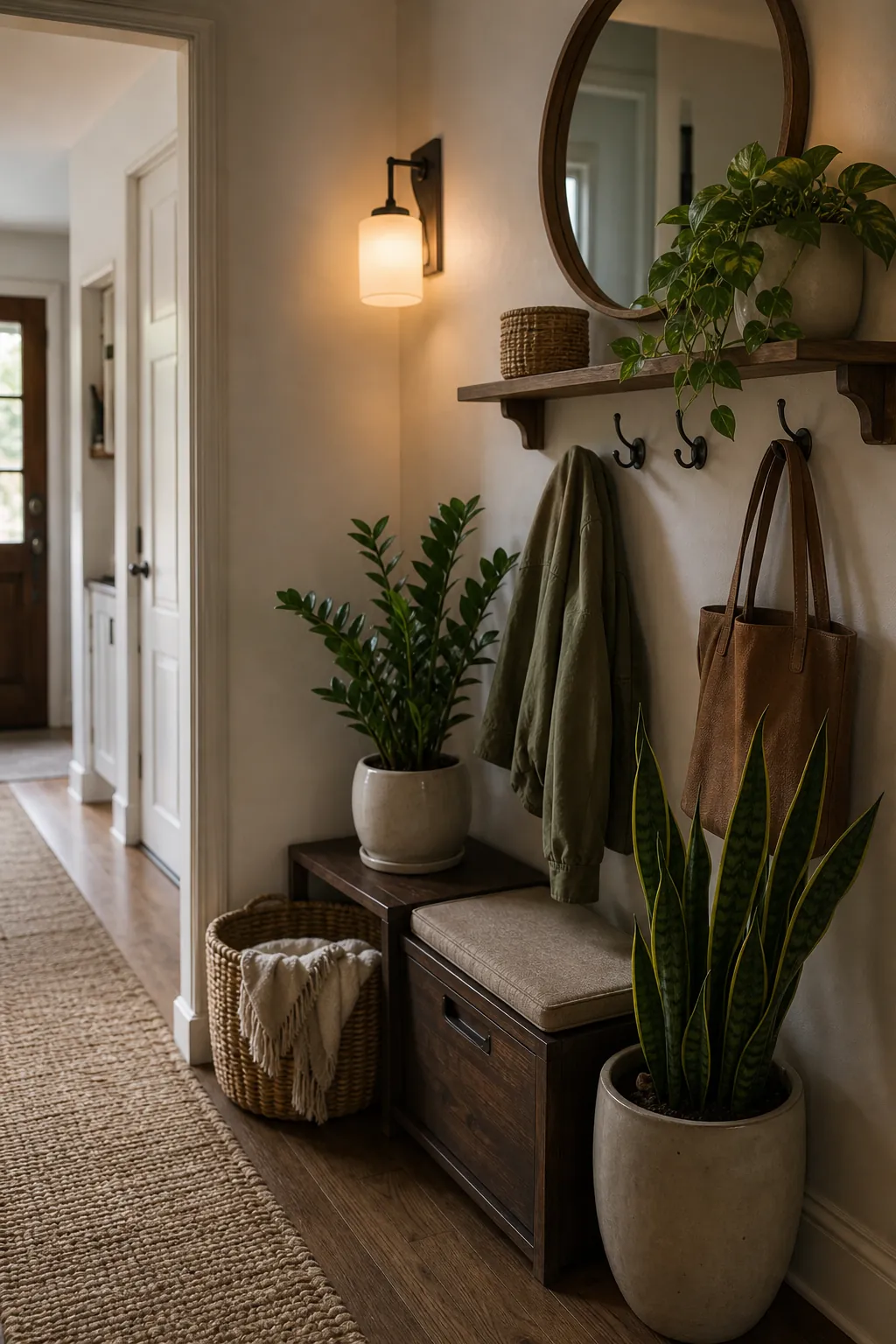
Use plant placement to solve proportion problems. A tall plant can fill an awkward blank corner. A small trailing plant can soften a shelf above wall hooks. A ceramic planter can echo the color of a runner rug or woven baskets. If the entryway is too dark for real plants, use dried branches or a realistic faux plant sparingly rather than fighting the room.
Layer a Runner Rug, Mirror, and Warm Light
Plants, baskets, and hooks handle function. A runner rug, mirror, and warm light make the space feel finished. This is especially important in a narrow hallway where the entryway can otherwise feel like a pass-through instead of a room.
A runner rug defines the route from outside to inside and protects the floor from daily wear. Choose a pattern forgiving enough for dirt and a low pile that will not catch on the door. A mirror bounces light and gives people a useful last check before leaving. A lamp or sconce adds warmth when the entryway has no window. These layers turn home organization into a welcoming first impression.
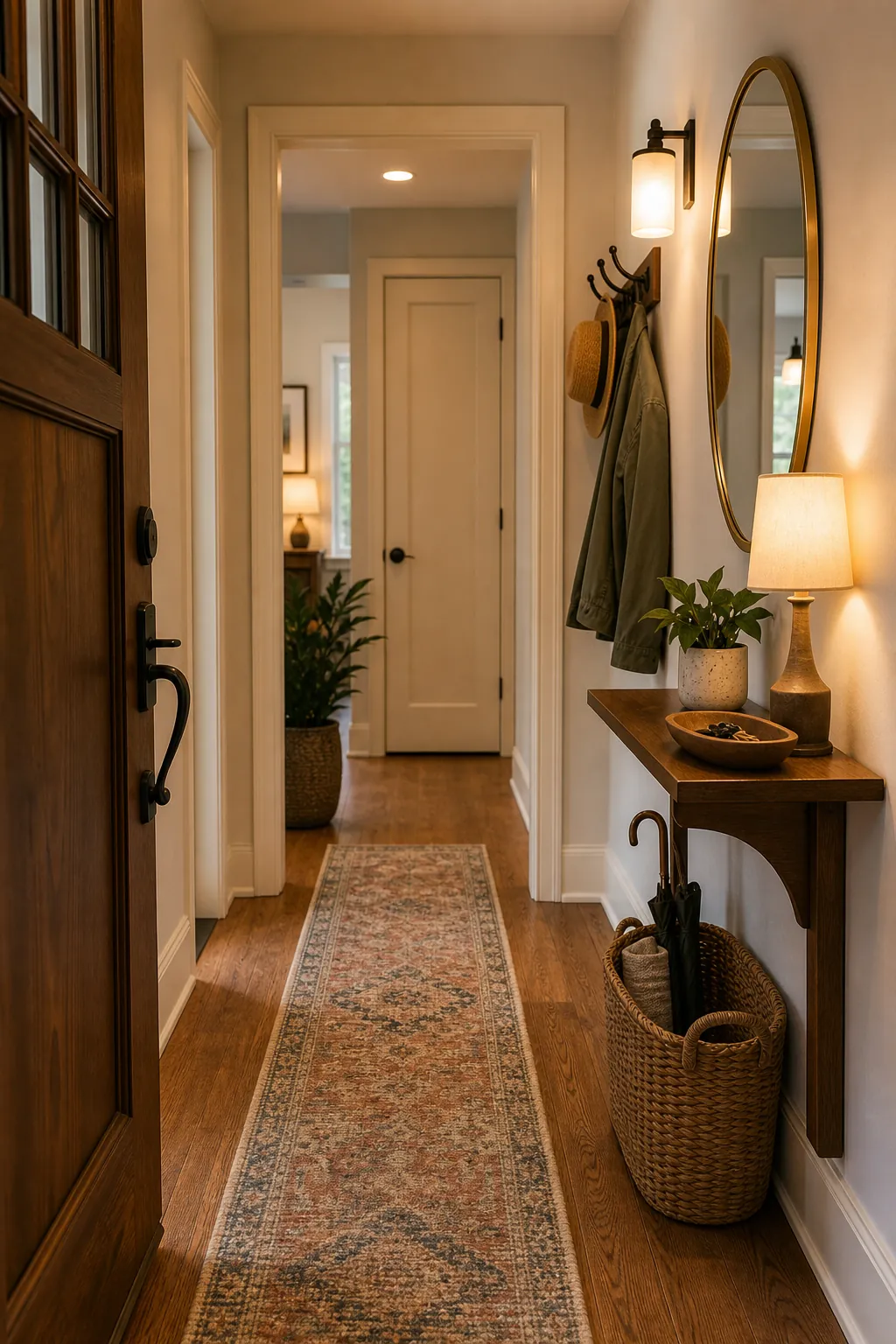
If your entry is very small, resist the urge to add a console that blocks the walkway. A shallow shelf, wall-mounted organizer, or tiny ledge can hold keys and mail without stealing floor space. In a rental, consider freestanding storage, over-the-door options, or removable hooks rated for the actual weight you need.
Keep the System Resettable for Busy Days
The most beautiful foyer ideas fail when they depend on perfect behavior. A busy household needs a system that still works when someone comes home tired, when kids drop bags fast, or when guests arrive with coats. That is why the best entryway setup has visible rules without feeling strict.
Give each person a hook or basket. Keep the daily shoes near the door and move rarely used pairs elsewhere. Use one tray for keys instead of scattering bowls across every surface. Keep one open basket for temporary items that need to leave the house again. A calm entryway is not the one with the least stuff; it is the one where the stuff has an obvious next move.
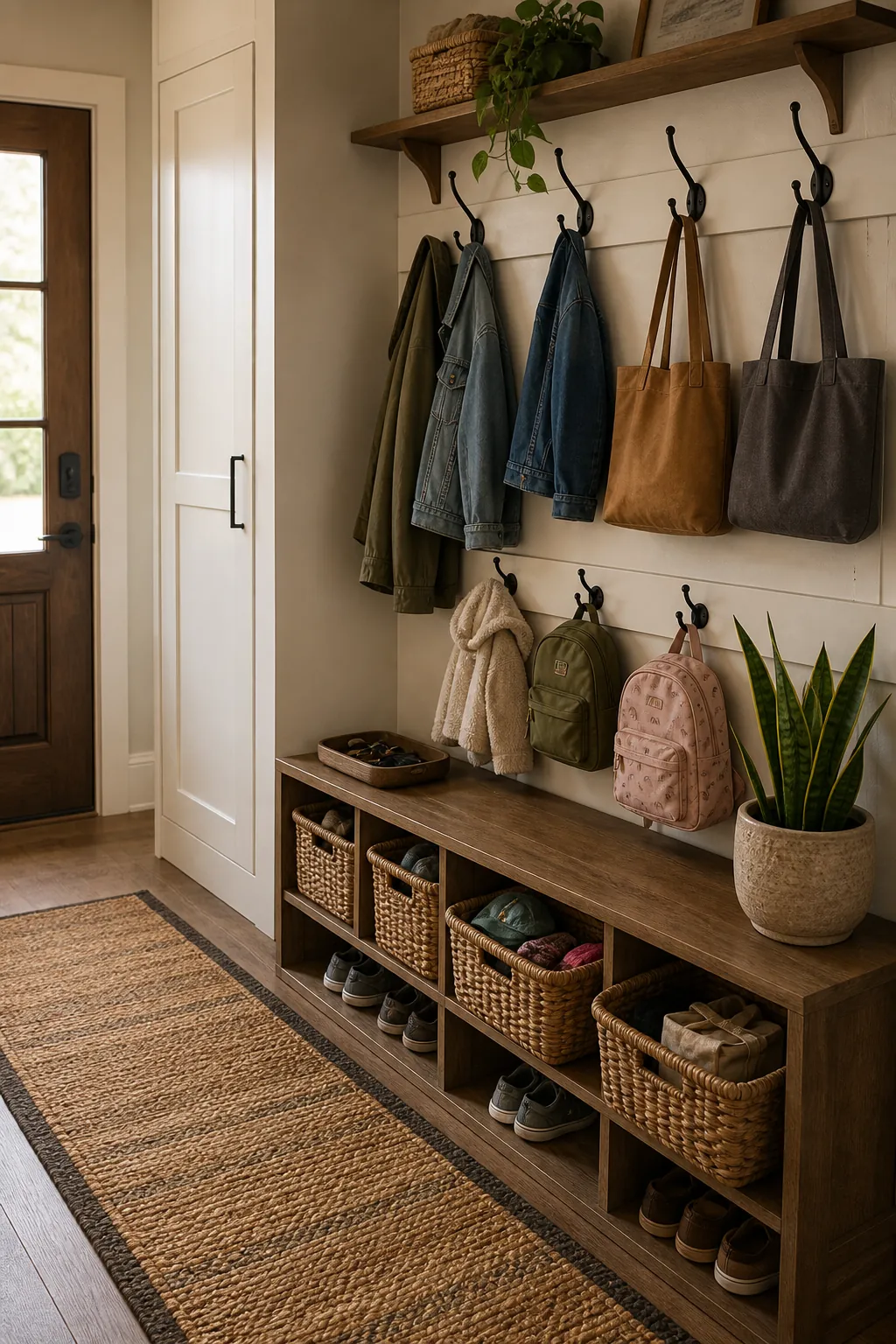
For a small space, review the entry every season. Winter coats, summer sandals, school bags, and garden supplies should not all compete for the same hooks and baskets at the same time. Rotate what stays in the entryway so the area keeps doing its real job: helping people leave and come home with less friction.
A Simple Formula for Plants, Baskets, and Hooks
If the entryway feels unfinished, use this formula before adding more decor: one landing surface, one basket system, one hook system, one plant, one rug, and one light source. That combination covers the practical needs while giving the space texture, height, and warmth.
Keep the walkway open. Let baskets hide what does not need to be seen. Use wall hooks for daily items only. Pick entryway plants that match the real light. Then let the runner rug, mirror, and warm lighting make the whole space feel deliberate. That is how a hallway, foyer, or compact mudroom becomes more than a pass-through.