
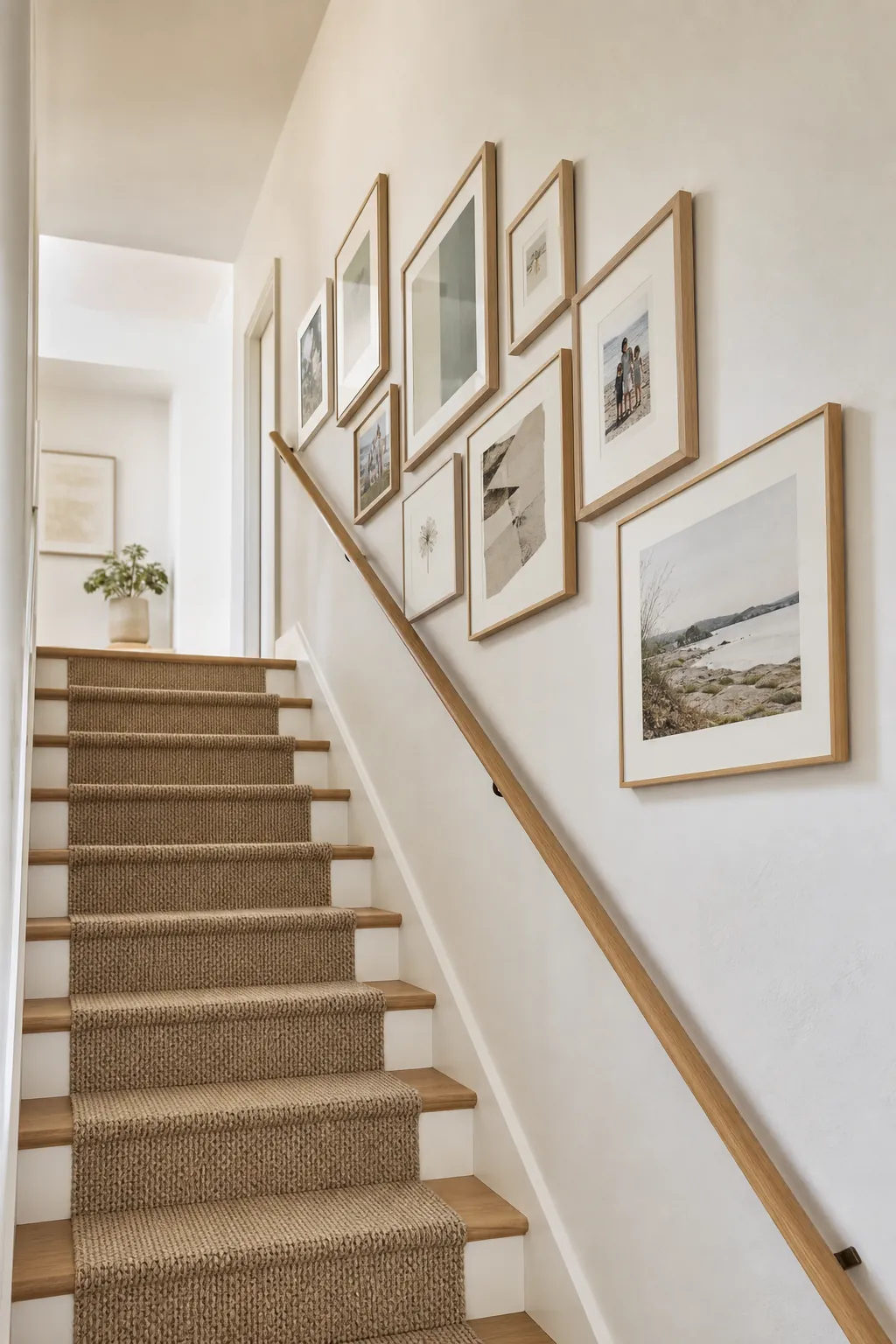
A narrow staircase can make a gallery wall feel risky. Too many frames can close the space in, but one lonely print can look accidental. The better approach is to treat the staircase like a moving hallway: every piece has to respect the angle, the walking path, the light, and the view from both ends.
These gallery wall ideas for a narrow staircase focus on layouts that look intentional without adding bulk. Use them for family photos, framed art, a stairway gallery wall, or a mixed frame wall that still feels open in a small space.
Follow the stair angle with one clean centerline
The most reliable narrow staircase gallery wall starts with a diagonal guide, not with the frames. Run painter’s tape along the wall so it mirrors the stair slope, then place the center of each frame on or near that line. This keeps the display from looking like it is sliding, even when the art sizes vary.
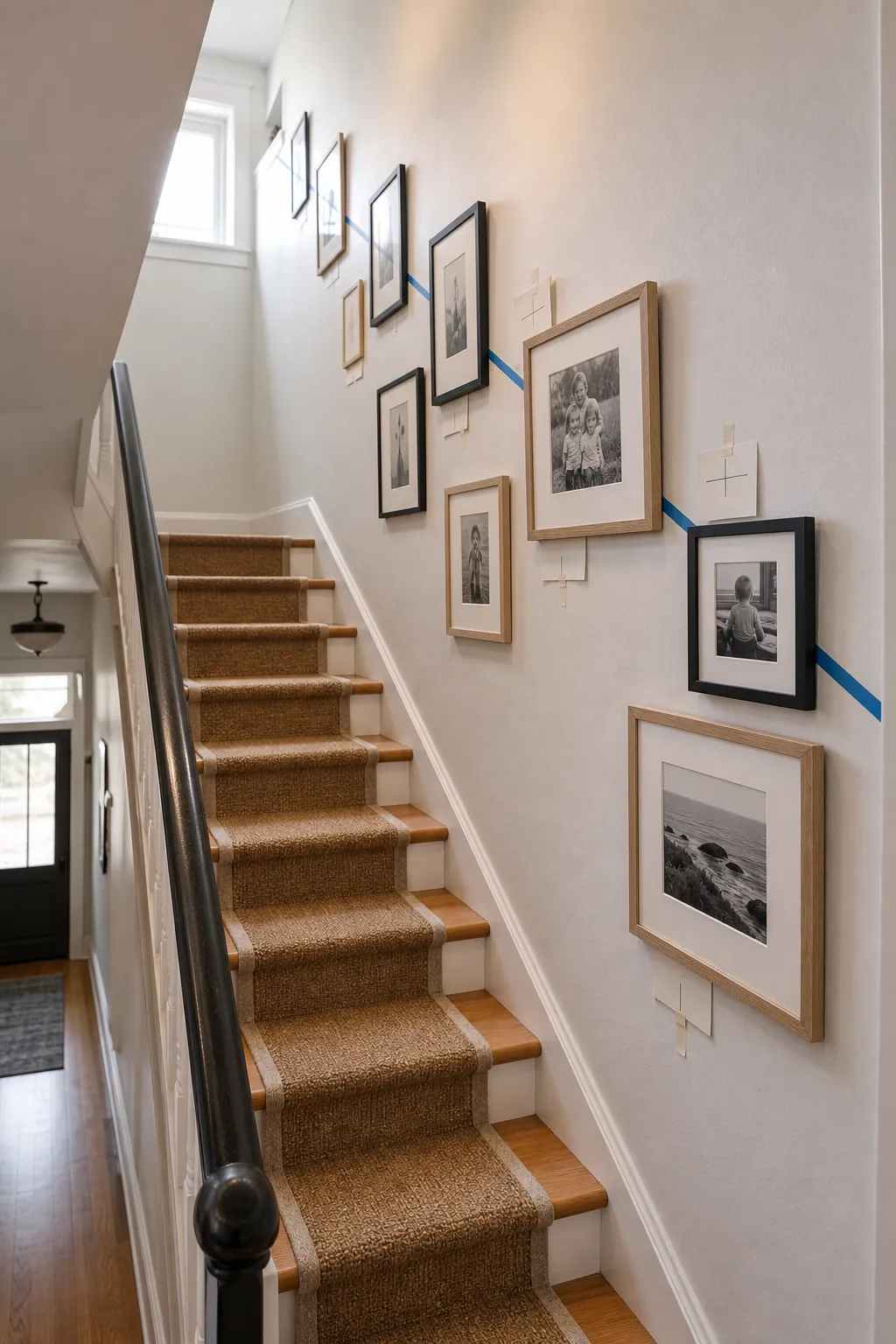
For a tight stairwell, keep the arrangement to one side and leave the opposite wall quiet. That negative space matters. It gives the eye somewhere to rest and prevents the wall decor from making the passage feel narrower than it is.
- Use 2 to 3 inches of space between frame edges for a crisp, collected look.
- Let the frame centers climb with the stairs instead of creating a literal step pattern.
- Keep the lowest pieces high enough that shoulders, bags, and hands do not brush them.
Use matching frames when the staircase already feels busy
If the narrow staircase has a runner, railing spindles, strong trim, or a view into another room, matching frames are the easiest way to make the gallery wall feel calm. Black frames with white mats look classic, light wood frames soften a white wall, and slim brass frames add warmth without visual weight.
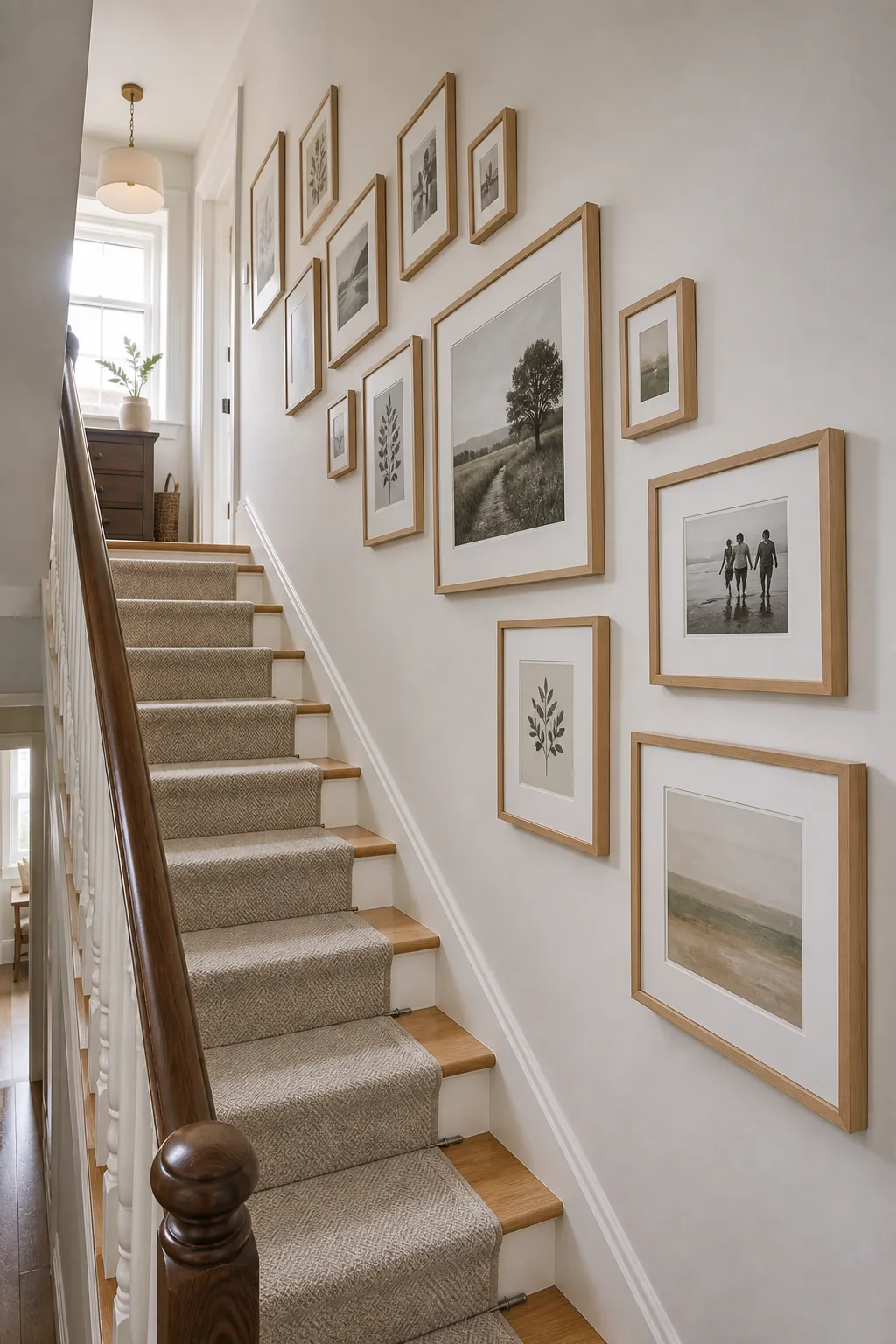
The art inside the frames can still vary. Mix family photos, small sketches, travel prints, and quiet abstract pieces, but repeat at least one element: the frame finish, the mat color, or a restrained palette. In a small space decor plan, repetition does more than decoration. It makes the staircase feel designed.
A simple rule: if the photos are colorful, make the frames consistent. If the frames are mixed, keep the art palette tighter. Avoid mixing both busy photos and busy frame styles on a wall that people pass closely every day.
Build a landing moment before the diagonal starts
A landing gives a narrow staircase gallery wall a natural pause. Use that flat wall for one larger piece, then let smaller frames continue along the angled stair run. The landing piece becomes the anchor, so the diagonal display feels connected instead of scattered.
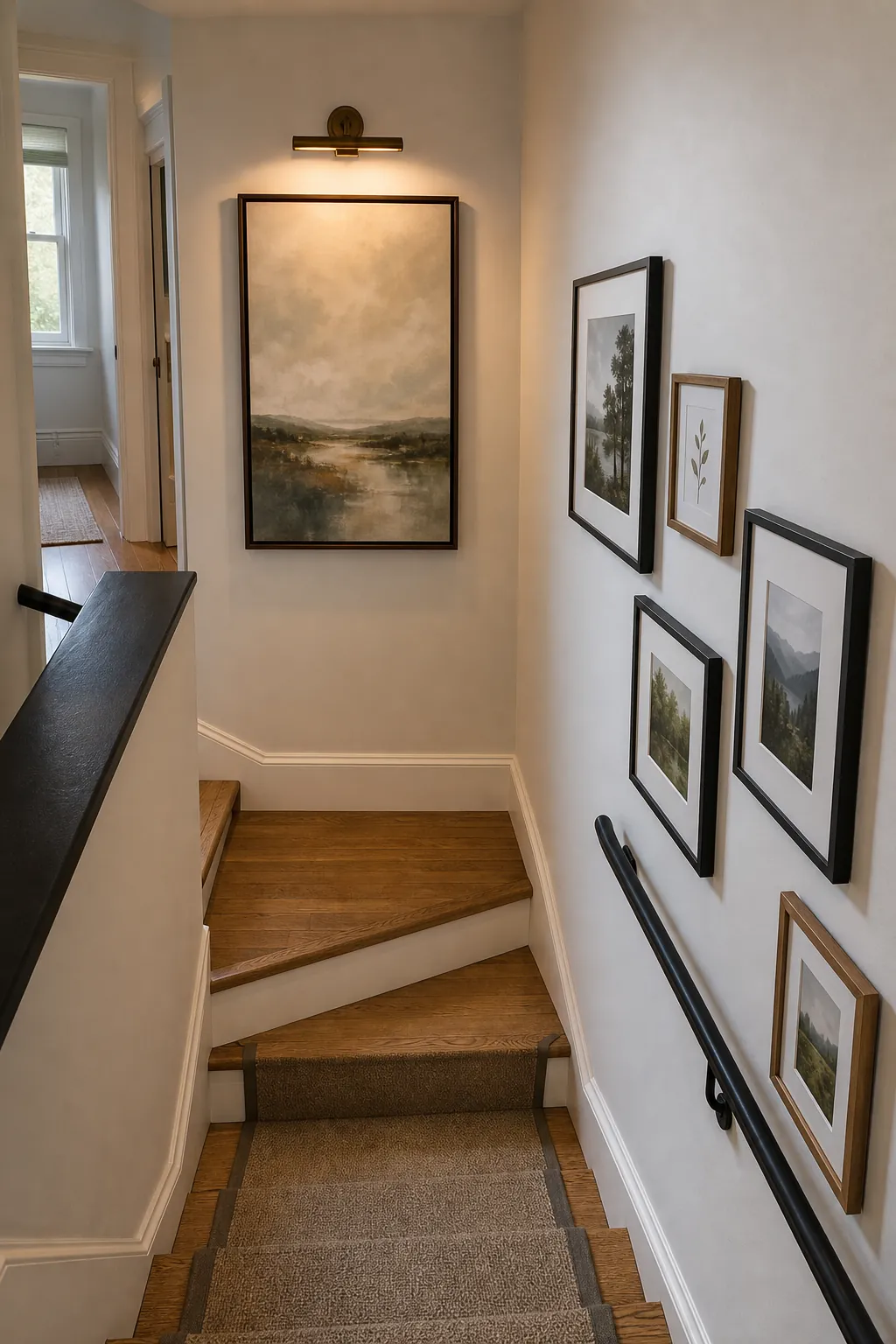
This works especially well when the staircase turns, when the ceiling is tall, or when the wall visible from the entryway needs a stronger focal point. Choose one vertical art print, a framed textile, or a favorite oversized photograph for the landing. Then use supporting pieces that share its colors or subject matter.
Keep the landing frame centered from the flat floor view, then restart the stair angle after the first step. Trying to force one continuous diagonal through a turn usually makes the stairway gallery wall look awkward.
Keep the wall shallow with small and medium art
Large frames can be beautiful, but they are not always kind to a narrow staircase. When the walking path is tight, use small and medium pieces with thin profiles. A mix of 8-by-10, 11-by-14, and 12-by-16 frames gives enough rhythm without making the wall feel heavy.
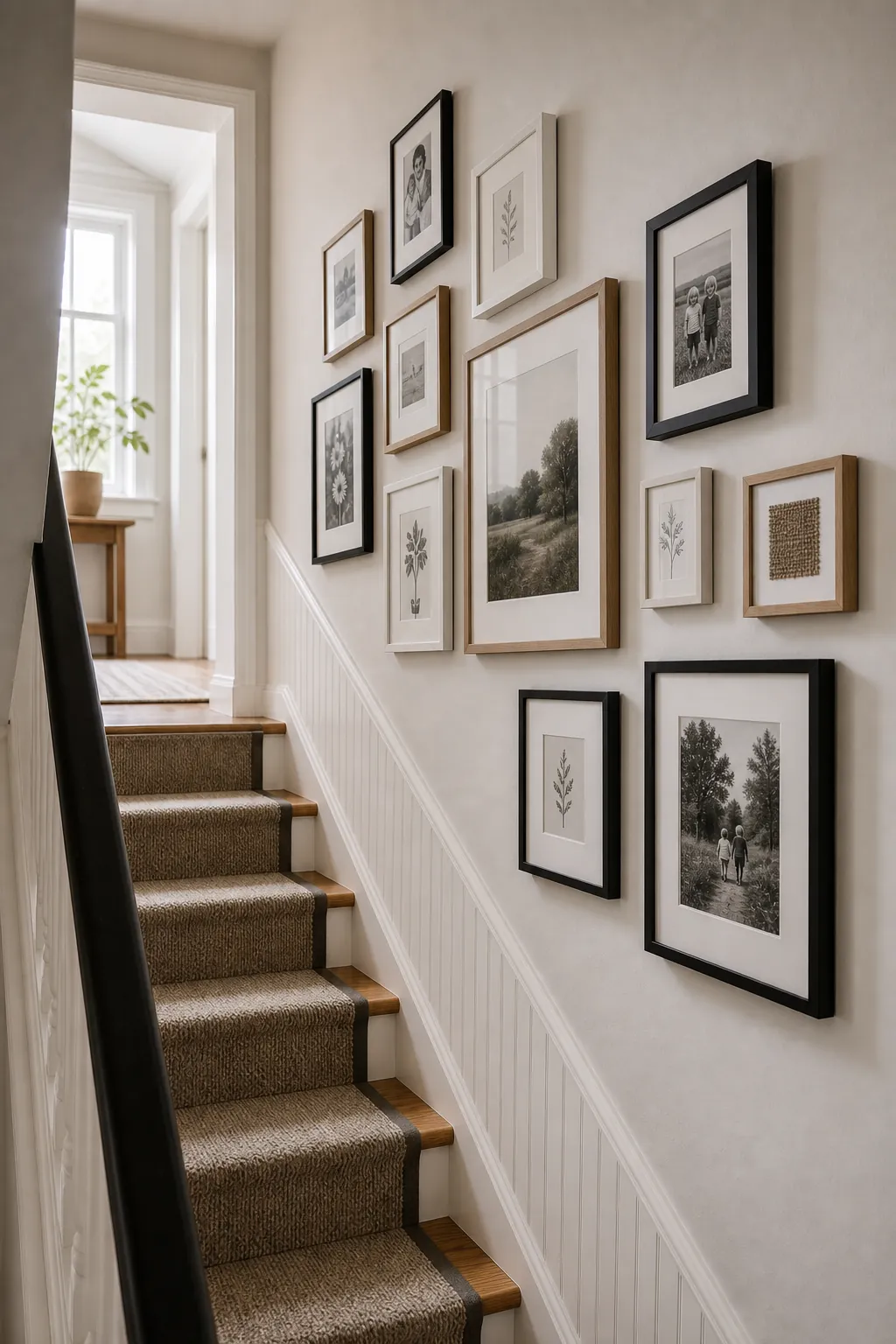
For a collected frame wall, place the largest piece near the visual center, then build out with smaller pieces above and below the diagonal. Do not let every small frame sit directly above a large one. Interleave the sizes so the layout moves naturally up the stairs.
In a very narrow staircase, skip deep shadow boxes and chunky ledges unless they are above shoulder height and out of the traffic path. Flat frames are usually safer, easier to dust, and better for everyday hallway decor.
Add light and reflection instead of more frames
Sometimes the best gallery wall idea is to leave a little room in the gallery wall. A slim mirror, a picture light, or warm wall washer can make a narrow staircase feel brighter without adding more rectangles. This is useful when the stairwell has no window or the wall color absorbs light.
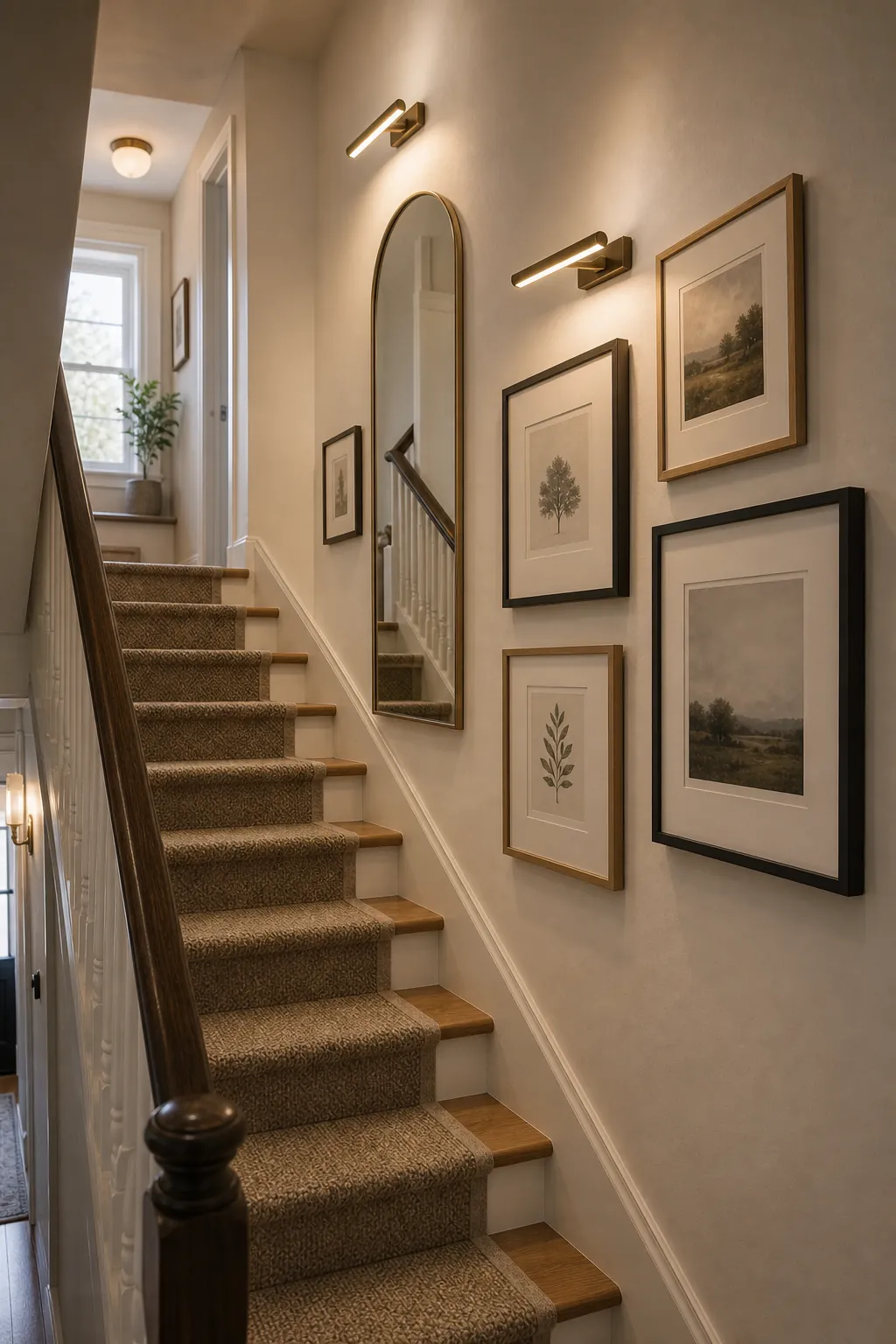
Use reflection carefully. A long mirror on a stair wall can feel disorienting if it catches too much movement. A smaller arched mirror at a landing, a narrow vertical mirror near the bottom, or a single reflective frame can open the space without turning the staircase into a mirrored corridor.
If you add lighting, choose a low-profile fixture and warm bulbs. The goal is to highlight the wall art, not create glare on glass. Matte prints, non-glare acrylic, or deep mats can help the display read clearly from below and above.
Mock up every frame before you make holes
Narrow staircase walls are unforgiving because small mistakes are visible from multiple angles. Before hanging anything, trace each frame onto kraft paper, mark the hanger point, and tape the templates to the wall. Step back from the bottom, the top, and the landing before deciding the layout is finished.
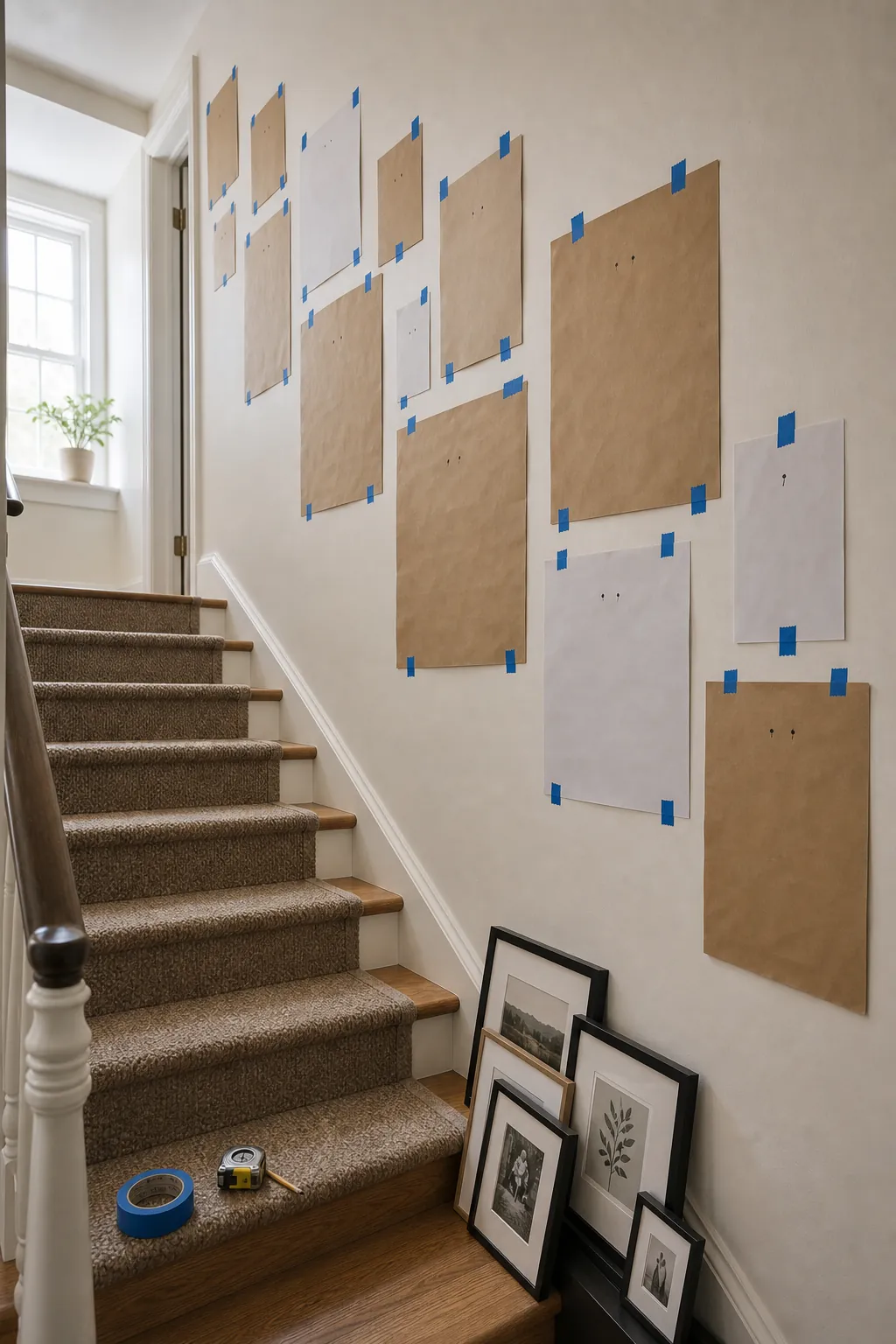
This is where the gallery wall becomes practical instead of stressful. Templates let you adjust the top and bottom endpoints, widen cramped gaps, and check whether the composition still feels parallel to the stairs. They also reveal whether the display blocks a switch, thermostat, railing bracket, or door trim.
When the templates look right, hang the center or anchor frame first, then work outward. Check level and spacing every few frames. A narrow staircase gallery wall does not need to be mathematically perfect, but it does need one clear rhythm, enough breathing room, and a point of view that matches the rest of your home styling.