
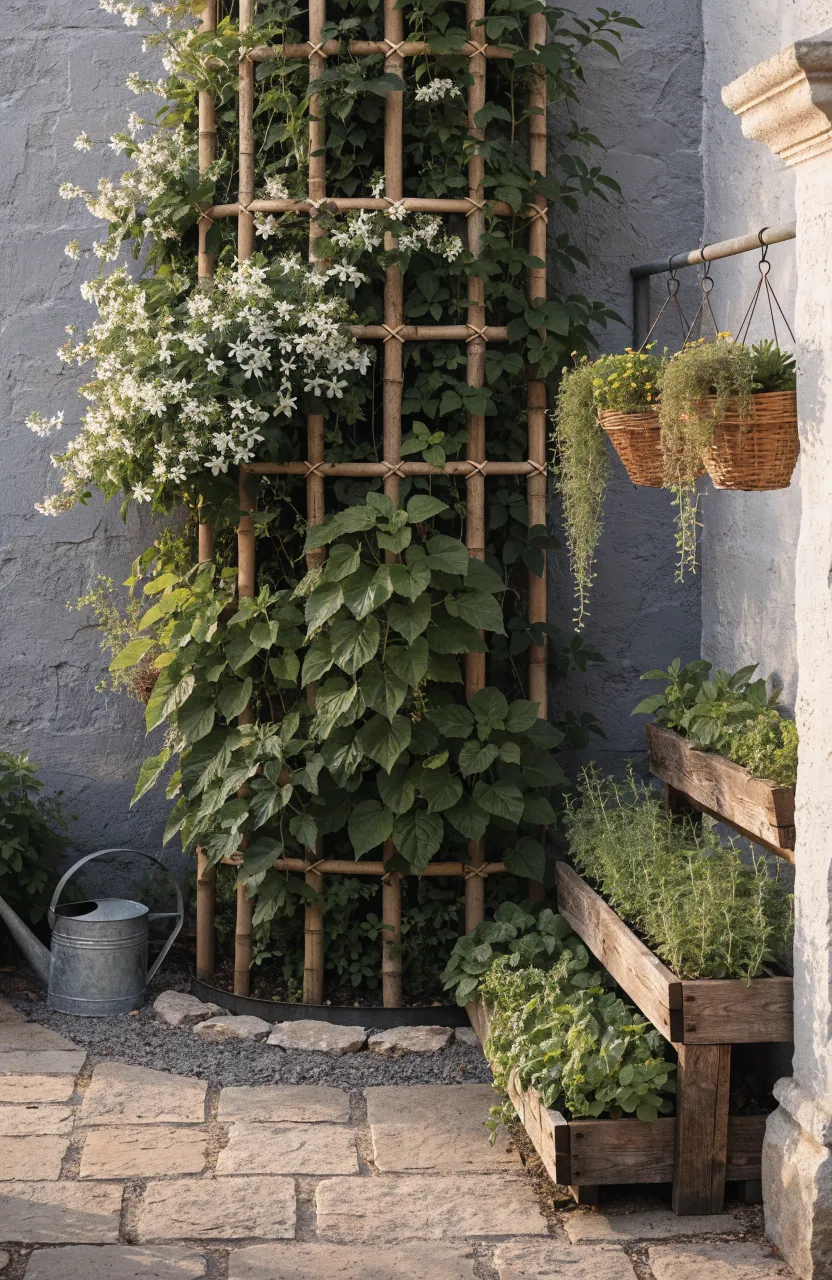
The strongest garden plant wall ideas start with the wall’s real conditions: sun, reflected heat, wind, water access, drainage, and root space. A vertical wall can save floor area and make a small garden feel layered, but it only works when the plants have enough soil and the water has somewhere safe to go.
Think of the wall as a growing structure first and a decorative feature second. Trellises, troughs, hanging baskets, vertical planters, and base planting can all work, but each one solves a different garden problem.
Use A Trellis Before You Cover The Wall
For many wall garden ideas outdoor, a trellis is more practical than pockets fixed directly to masonry. It gives climbing plants support, keeps stems off the wall, and leaves airflow behind the foliage. That air gap matters because wet leaves and trapped moisture can mark paint, timber, or render over time.
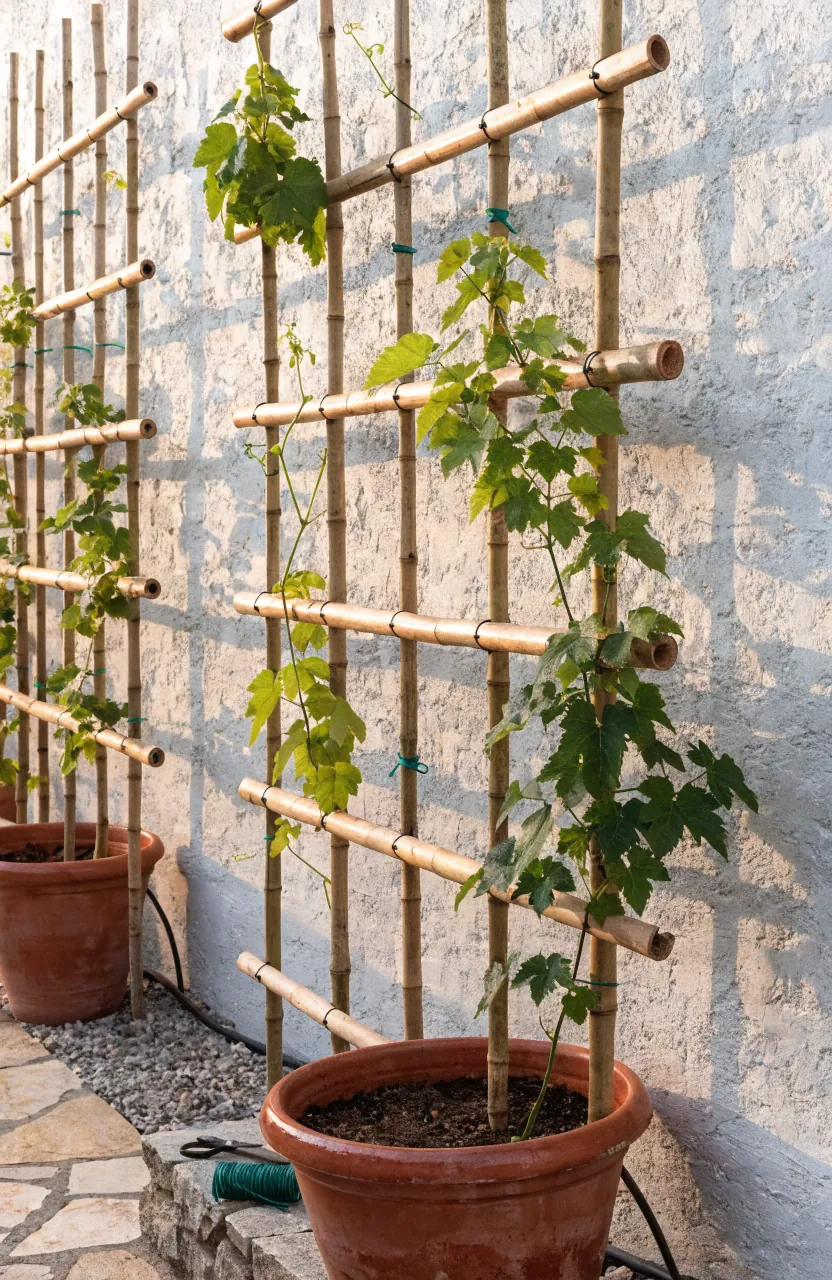
Choose climbers for the light you actually have. Sunny walls suit flowering vines, grapes, beans, and trained fruit in the right climate. Shadier walls need more selective planting, and some may be better used for a bench, shed, or textured wall finish instead of forcing a high-maintenance living wall.
Build A Wall Herb Garden With Real Drainage
A wall herb garden outdoor is one of the most useful vertical garden projects because herbs stay compact and are easy to harvest. The mistake is making troughs too shallow or letting water run straight down the wall. Use deep enough boxes, drainage gaps, and a gravel or planted strip below the wall to catch runoff.
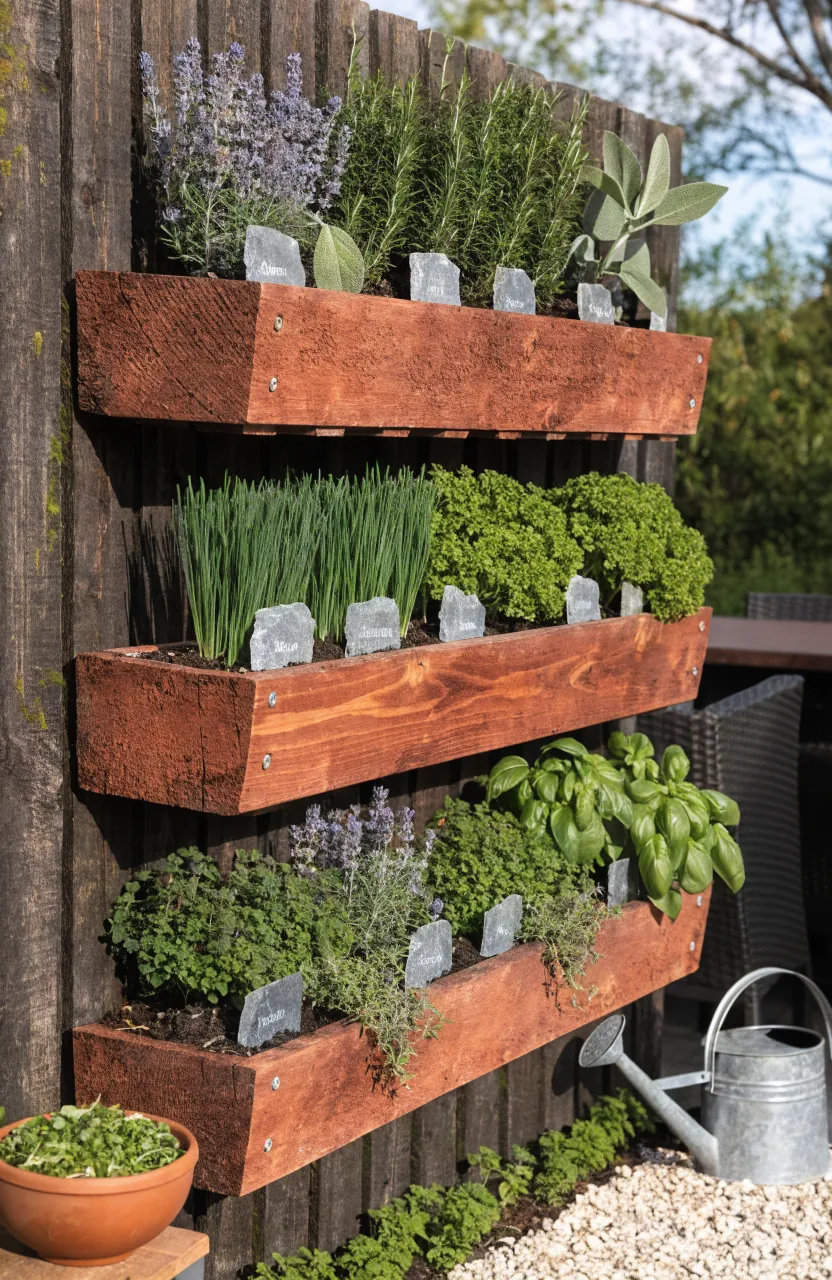
Put trailing thyme and oregano lower, compact chives and parsley in the middle, and taller rosemary, sage, or lavender higher where they will not shade everything below. Keep mint in its own container; it is too vigorous for a shared trough.
Use Deep Vertical Planters For Vegetables
Vegetable garden ideas need more root room than a decorative pocket wall usually provides. If you want lettuce, strawberries, peppers, beans, or leafy greens on a wall, use a freestanding vertical planter with deeper cells, a stable base, and a watering plan you can test before planting heavily.
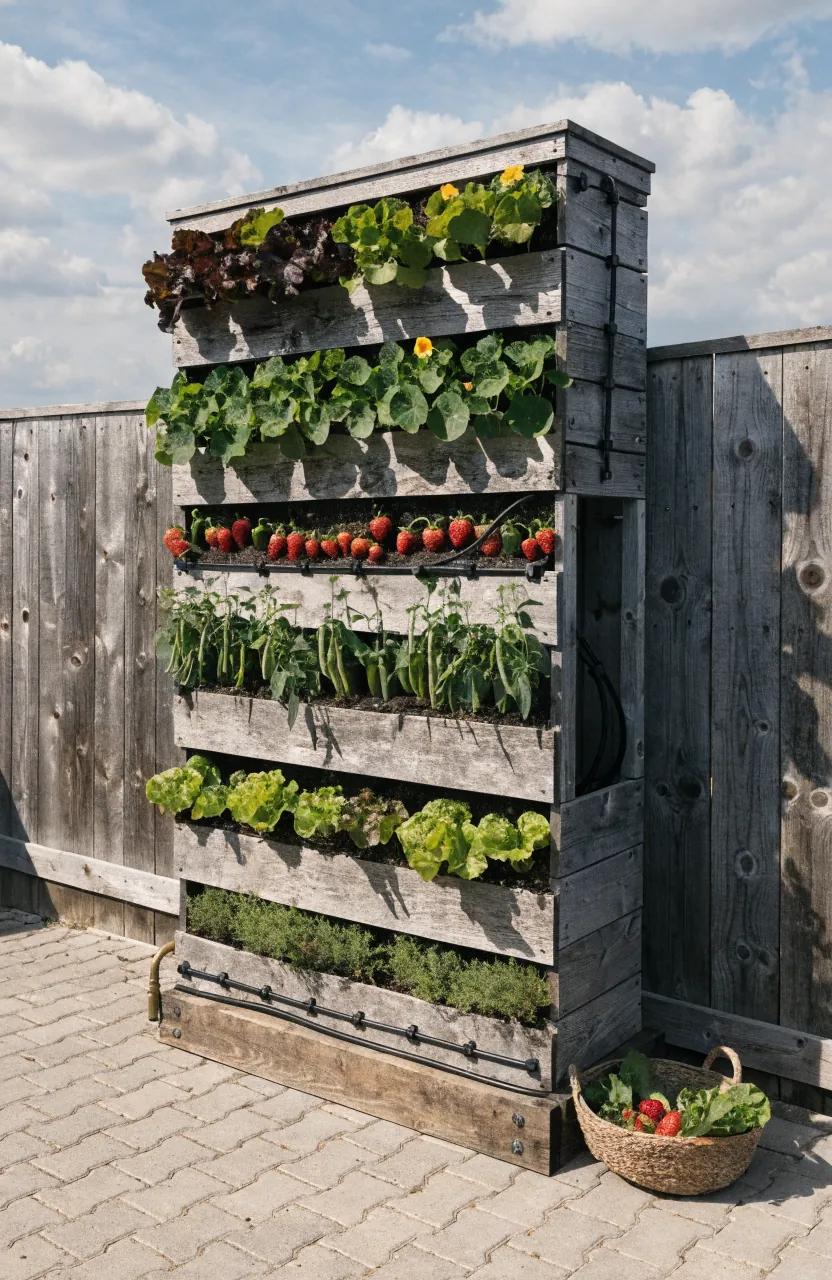
Shallow containers dry fast and cannot support larger root systems for long. A DIY vertical garden wall for food should be boringly practical: deep pockets, lightweight but rich growing mix, drip or careful hand watering, and access to harvest without knocking plants loose.
Soften Hard Walls With Hanging Plants
Hanging plants outdoor can soften a fence, patio wall, or pergola edge without loading the whole surface with soil. Use brackets, rails, or overhead wires that are rated for wet basket weight, then vary the hanging height so the display looks layered instead of lined up.
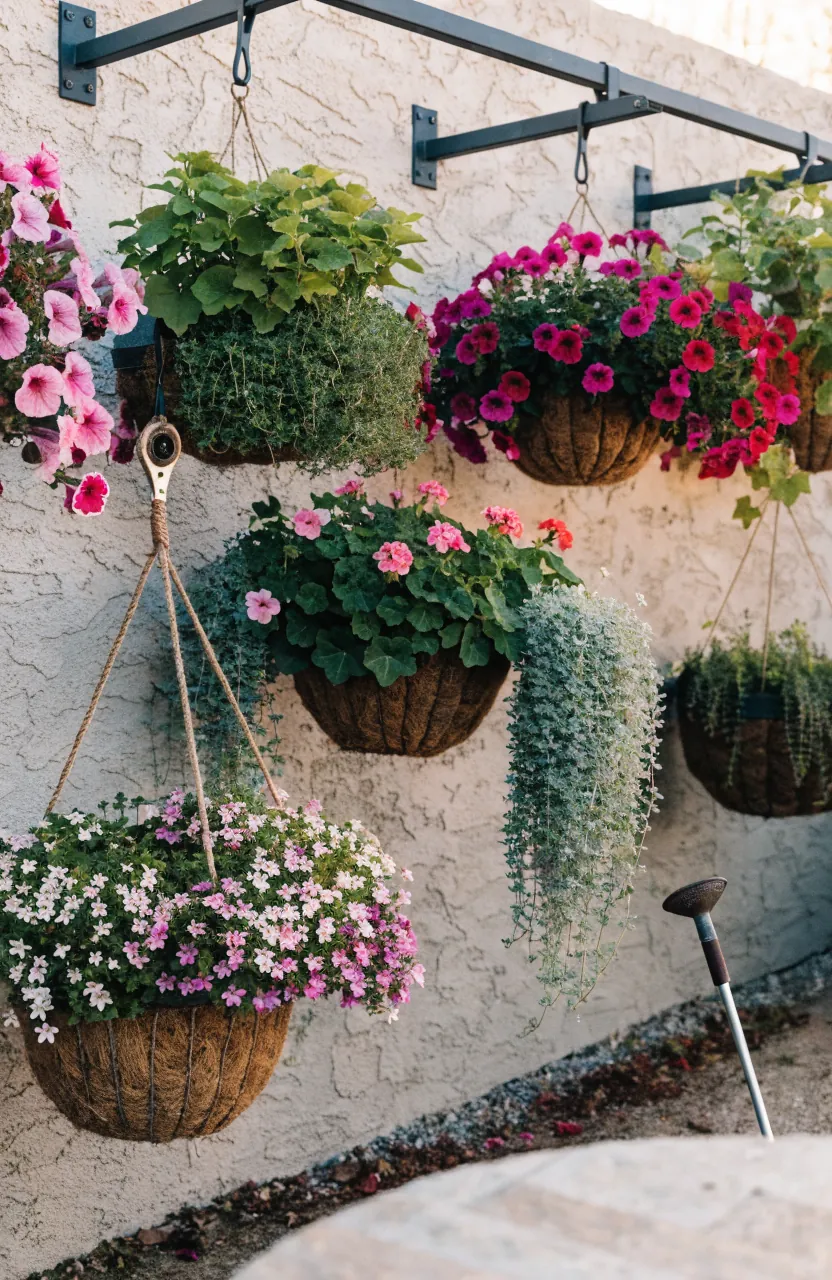
Hanging baskets dry quickly, especially near warm masonry. Use larger baskets, water-retentive but free-draining mix, and a pulley or reachable height if the wall is tall. The easier the baskets are to water, the better they will look in late summer.
Create A Moodier Witchy Garden Wall
A witchy garden wall can be subtle rather than theatrical. Use dark foliage, herbs, weathered wood, black metal brackets, mossy stone, and low amber lighting. The goal is an atmospheric garden wall that still grows well, not a collection of props that block sun and airflow.
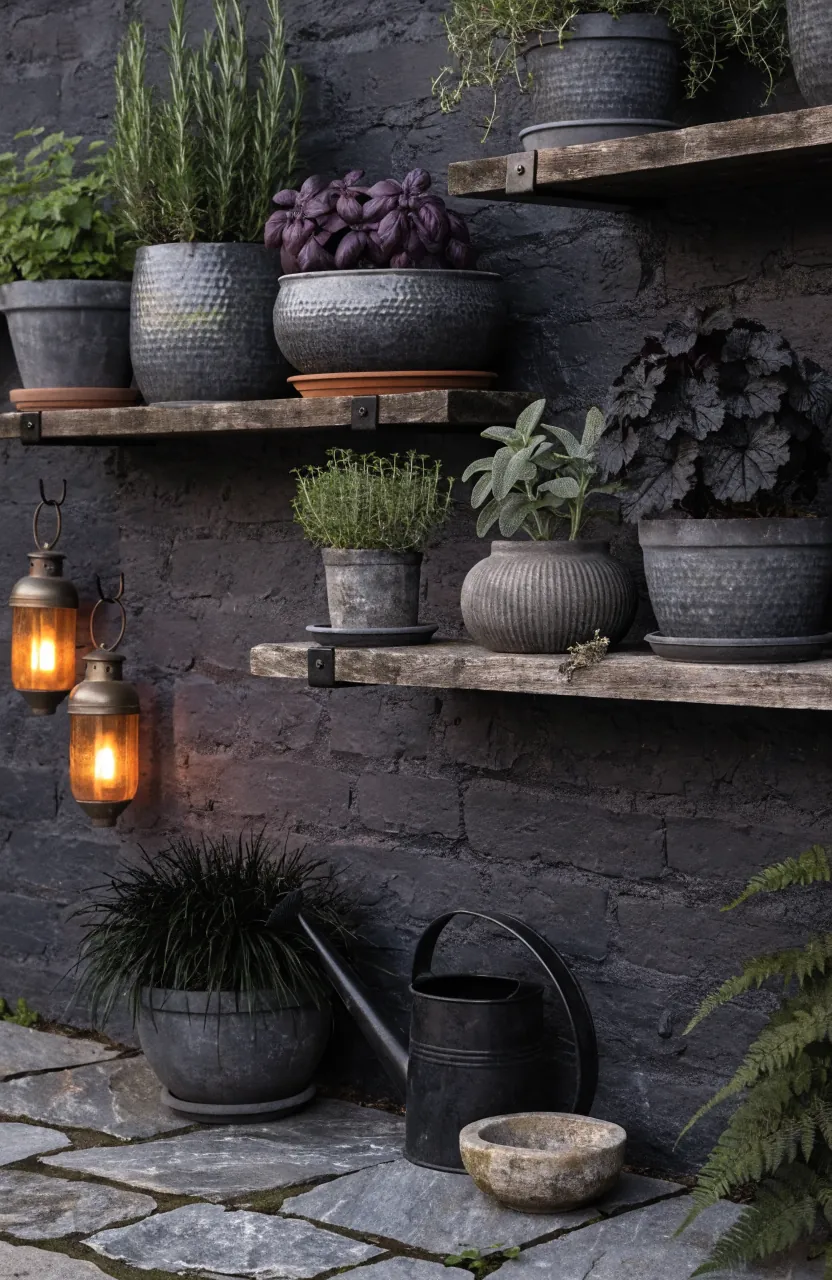
Try purple basil, dark-leaved heuchera, rosemary, thyme, sage, ferns for shade, and trailing ivy alternatives suited to your region. Keep aggressive vines away from fragile walls, and give every plant enough room to be pruned without dismantling the whole display.
Finish The Base With Garden Edging
A plant wall looks unfinished when the base is bare. Garden edging ideas help connect the vertical planting to the ground plane. Use brick, stone, corten steel, bamboo edging, or low herbs at the base so runoff is handled and the wall feels rooted in the garden.
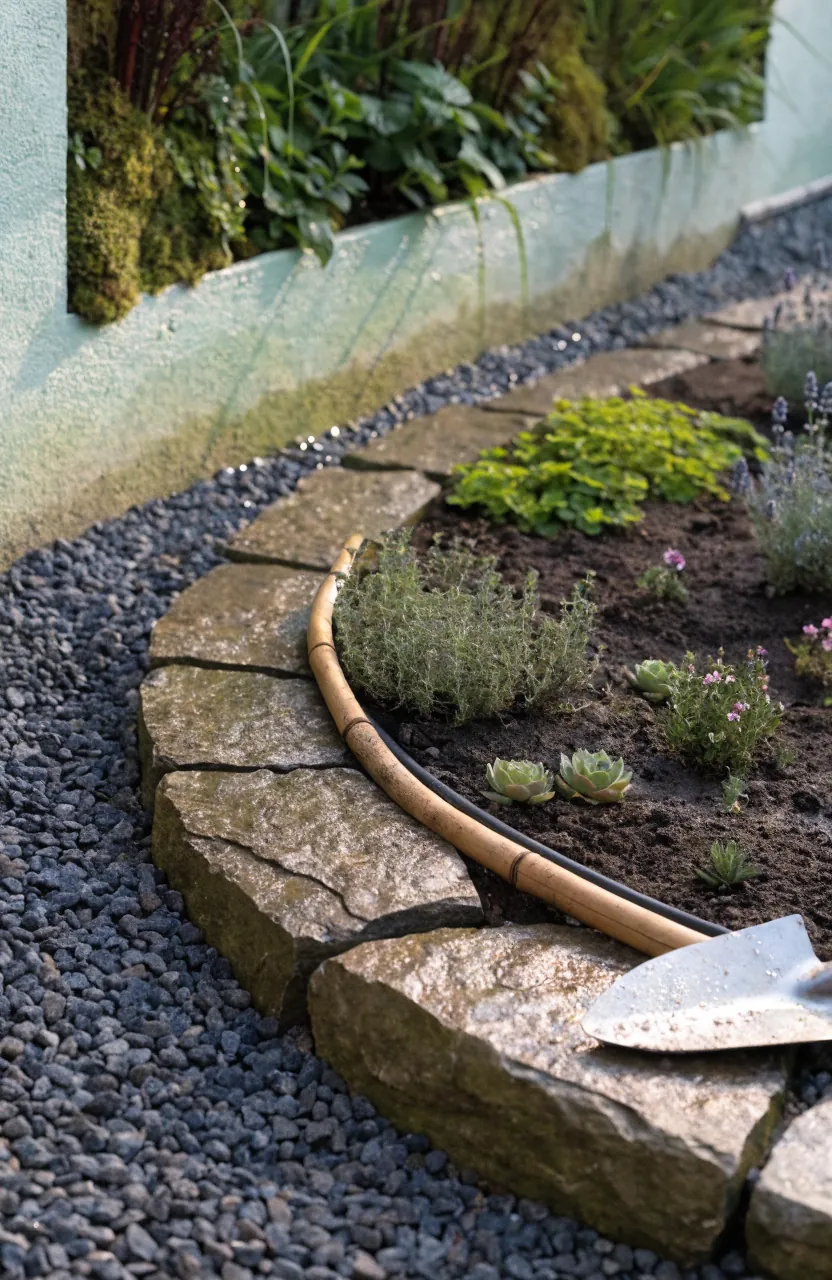
That base strip can catch drips, hide irrigation tubing, and make maintenance easier. It also gives you a place for pollinator flowers, low herbs, or groundcovers that tie the wall into the rest of the outdoor room.
- For sunny walls: consider grapes, beans, flowering vines, herbs, and trained fruit where climate allows.
- For hot masonry: use larger containers, mulch the soil surface, and water more consistently.
- For shade: choose ferns, shade-tolerant foliage, or a decorative trellis with fewer plants.
- For food crops: prioritize root depth and irrigation over the thinnest possible planter.
A good garden wall design outdoor should look better as plants mature. Give the wall structure, give the roots space, and give the water an exit path before you worry about filling every vertical inch.