
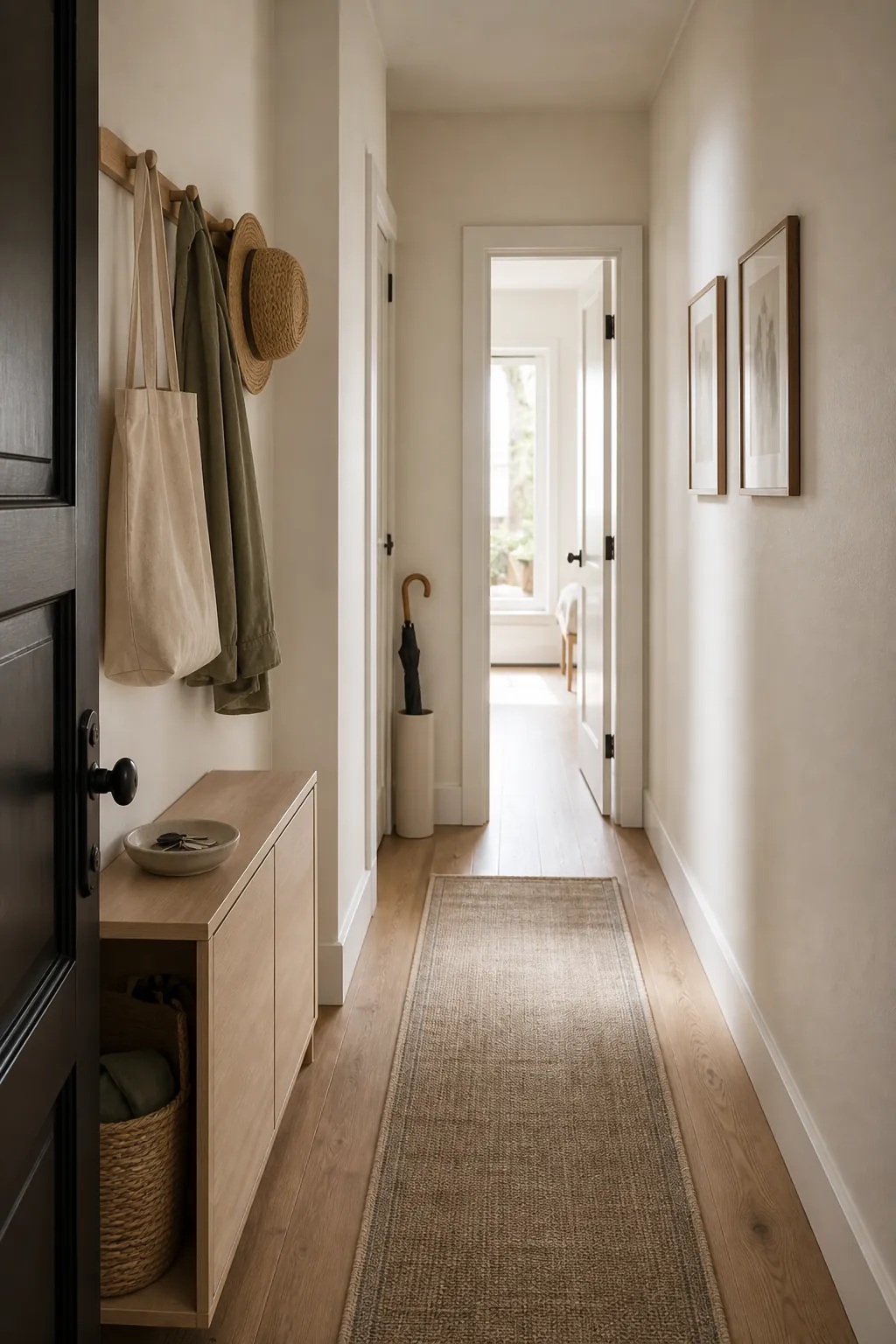
A hallway with no natural light has one unfair job: it has to welcome people before it has a window, a view, or even much breathing room. That is why the best dark hallway ideas do not start with one magic paint color. They start with a simple question: what would make this space feel safe, intentional, and easy to use the moment you step inside?
After looking at real homeowner complaints and forum discussions, the same frustrations keep showing up. People paint the hallway white and it still feels gray. They add one ceiling light and it feels harsh. They buy pretty hallway decor, then the space turns cluttered because shoes, bags, keys, and mail still need somewhere to land. The fix is not more decoration. It is a better system: layer the light, bounce it, give the eye a destination, and control the everyday mess.
Start With Layers Of Hallway Lighting, Not One Brighter Bulb
The fastest way to make a windowless hallway feel better is to stop asking one overhead fixture to do every job. A single bright bulb often creates a hot spot on the ceiling and shadows along the walls, which makes the hallway feel flatter and narrower. Instead, think in three layers: overhead light for general brightness, wall light for shape, and a small lamp or low glow for warmth.
Use warm-white bulbs in the 2700K to 3000K range so the space feels welcoming rather than clinical. If the hallway is long, repeat slim sconces or picture lights so the brightness continues down the passage. Near the entry, a small lamp on a narrow console can do more for mood than a high-watt ceiling fixture. Good hallway lighting should make the walls visible, the floor safe, and the entryway calm.
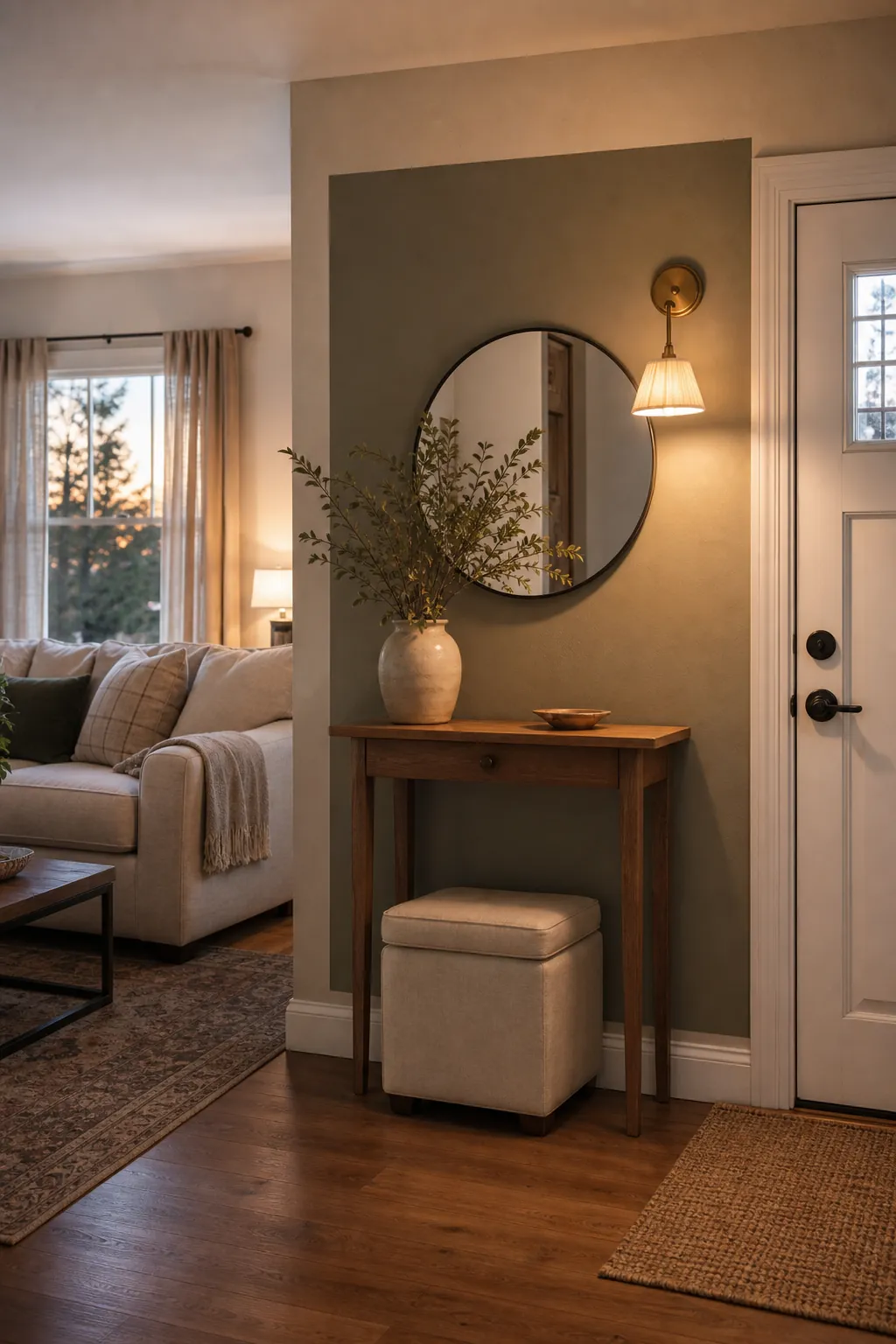
Use Rental-Friendly Lighting If You Cannot Rewire
Many homes and rentals have the same problem: the hallway needs more light, but adding electrical boxes is not realistic. That does not mean you are stuck with a gloomy entry. Plug-in sconces, rechargeable picture lights, battery wall lights, and cordless table lamps can build a surprisingly polished lighting plan when they are used deliberately.
The trick is to make temporary lighting look planned. Choose fixtures with similar finishes, hide cords in straight paintable cord covers, and place each light where it solves a job. A picture light can turn art into a focal point. A rechargeable sconce near a mirror can soften faces before guests leave. A low LED strip under a bench can make a dark entry safer at night. Rental-friendly does not have to look improvised.
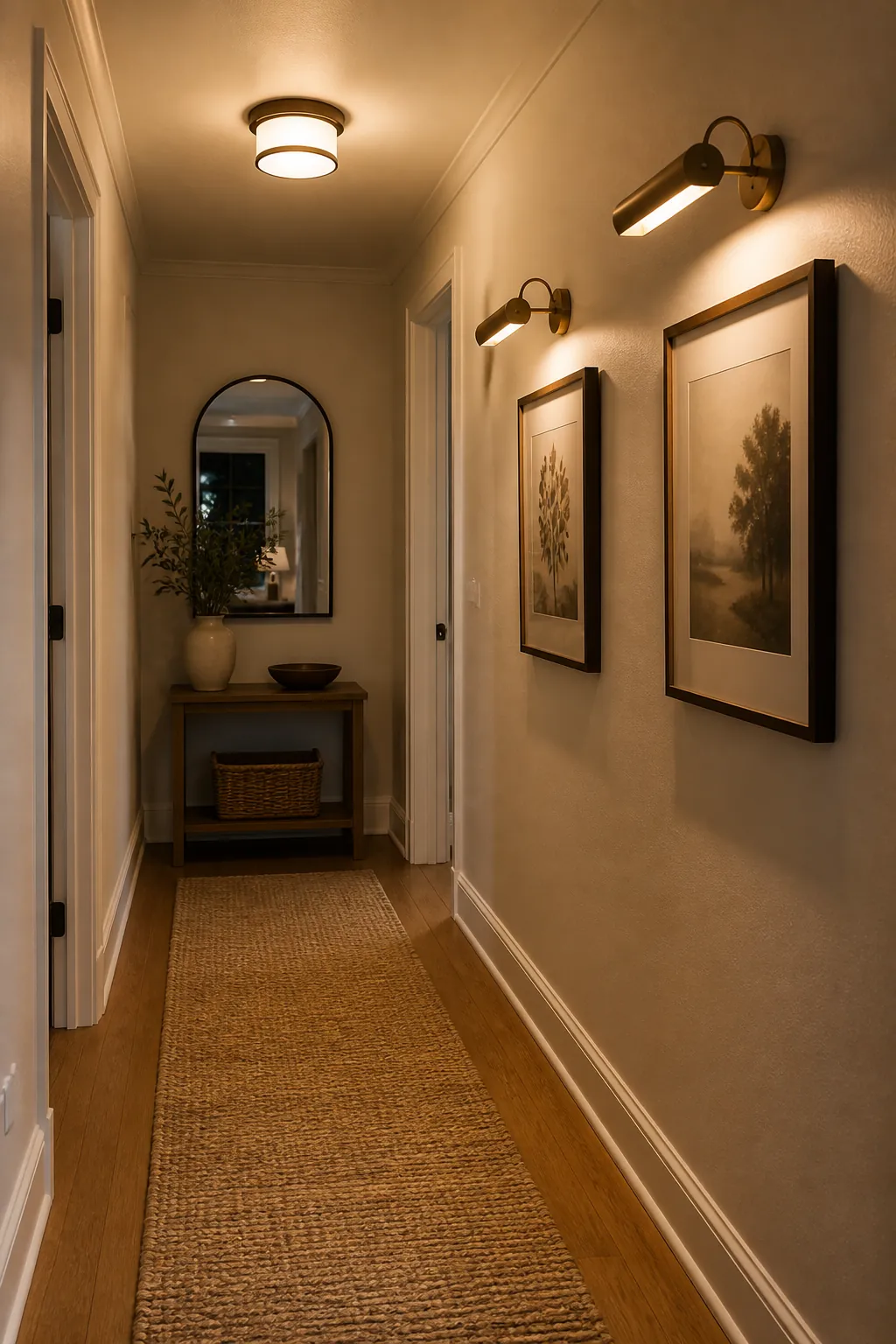
Choose Paint And Finishes That Bounce Light Back
White paint can help a dark hallway, but only if it works with the light you actually have. In a no-window hall, cool whites often turn dull or blue-gray. Warmer whites, soft greige, light mushroom, pale beige, and creamy off-white usually feel more forgiving because they flatter artificial light. A subtle eggshell or satin finish can also bounce more light than a chalky flat wall, especially in a tight passage.
Do not stop at the walls. Mirrors, framed glass, satin trim, brass details, pale wood, and a lightly reflective ceramic lamp base can all move light around. This is where bright entryway design becomes less about “make everything white” and more about controlled reflection. The goal is a hallway that glows softly, not one that glares.
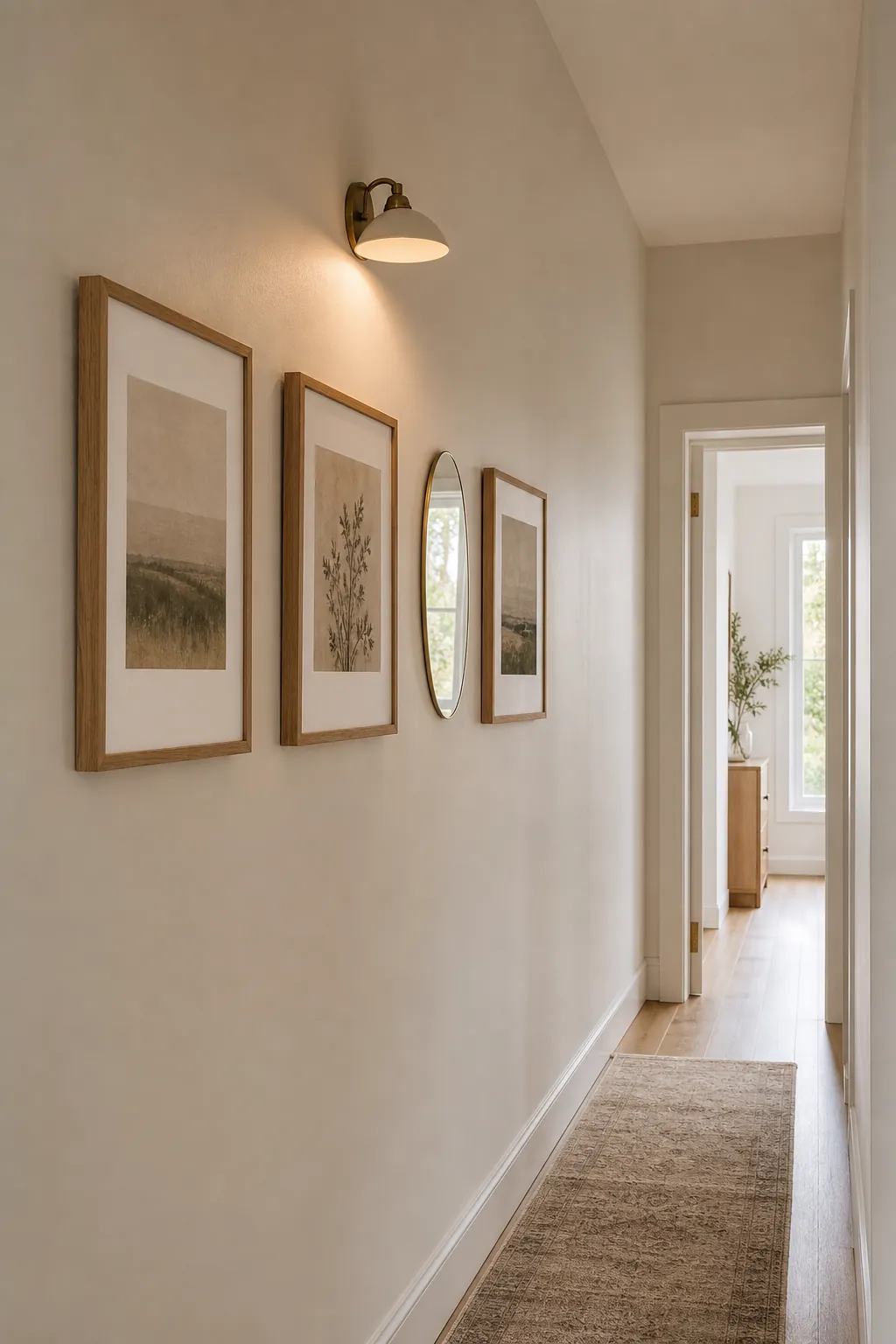
Consider A Moody Color If You Can Make It Intentional
Not every dark hallway needs to become a pale hallway. Sometimes the better move is to accept the lack of natural light and create a cozy, dramatic foyer. Deep green, charcoal, mushroom brown, navy, or muted plum can work beautifully in a windowless space when the lighting, trim, rug, and art provide contrast.
The mistake is painting a hallway dark and then leaving it underlit. If you go moody, add warm sconces, keep the ceiling lighter, use a runner that lifts the floor, and hang one pale or reflective focal piece. A mirror at the end of the hall can create depth, while bright trim keeps doorways readable. A dark hallway feels stylish when it looks chosen; it feels gloomy when it looks forgotten.
Let A Runner Rug Pull The Eye Forward
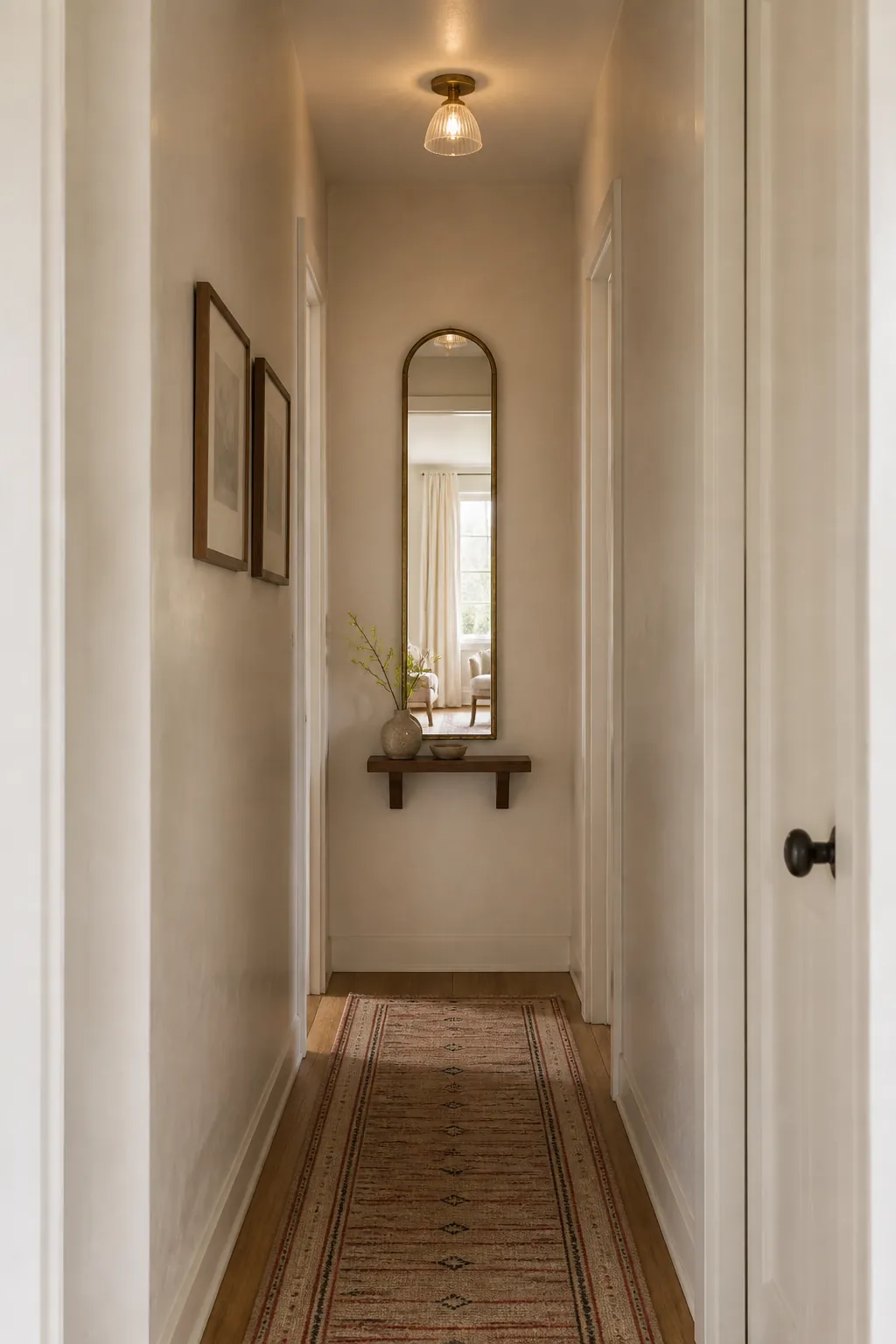
A hallway without daylight can feel like a tunnel because there is nothing naturally drawing the eye forward. A runner rug solves that visually and practically. It gives the floor pattern, softens footsteps, protects high-traffic areas, and adds color without crowding the walls.
For narrow hallway decor, look for a low-pile runner that leaves several inches of floor visible on both sides. Muted patterns are especially helpful because they hide dirt while adding movement. Then give the runner a destination: art at the end of the hall, a picture light, a small console, or a mirror. The rug is not just decoration; it is a visual path.
Build Storage Into The Entry So Decor Can Breathe
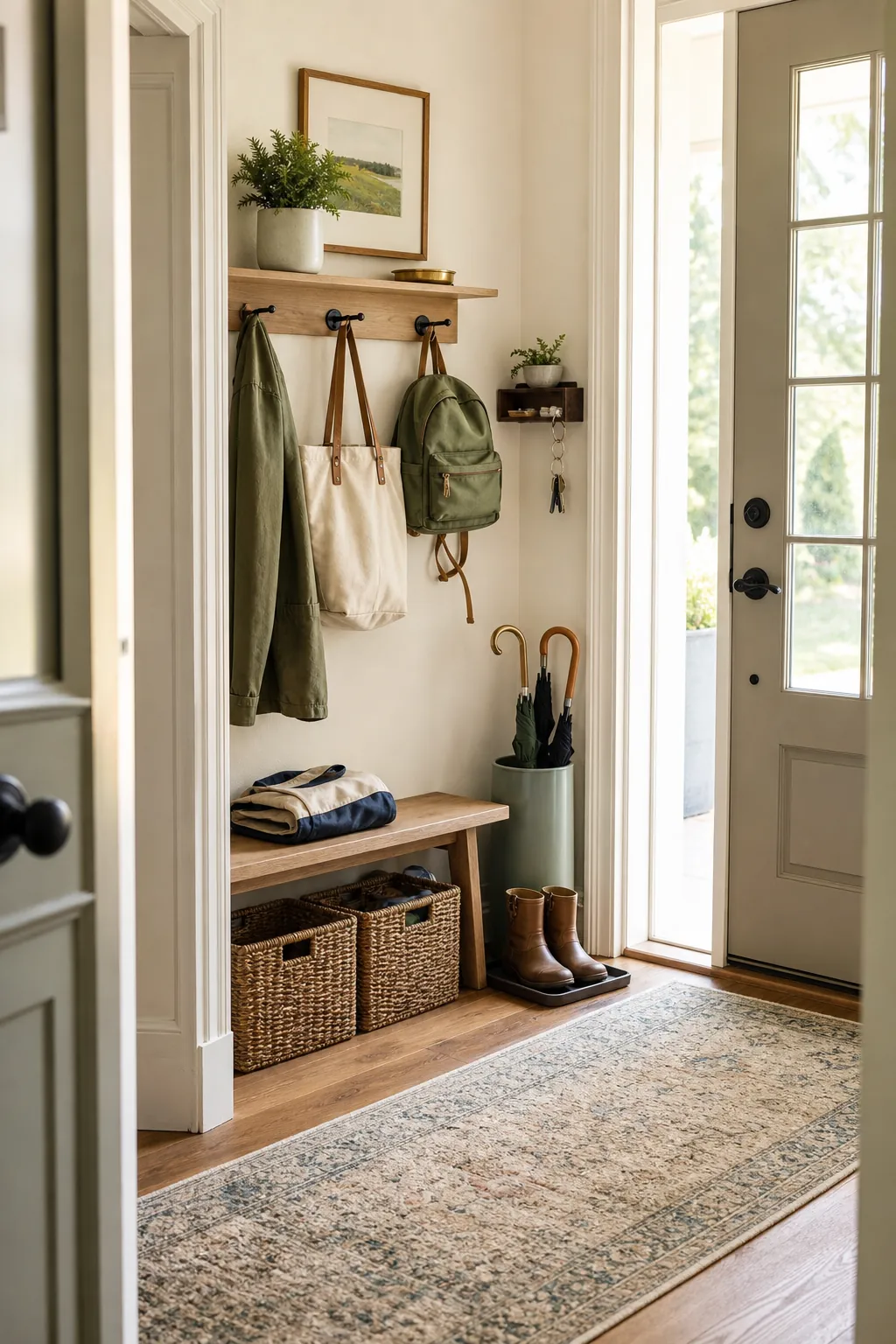
A dark entryway feels worse when it is also chaotic. Shoes on the floor, bags on the knob, keys on the nearest ledge, and mail stacked on a console all make the space feel smaller. Before adding more entryway decor, give the hallway a few strict landing zones.
A shallow bench, closed baskets, a slim shoe cabinet, hooks, a key tray, and a small mirror can turn a pass-through into a mini mudroom. Closed storage matters because open piles absorb light and create visual noise. If the hallway is very tight, use wall-mounted hooks and a floating shelf instead of deep furniture. Home organization is part of the styling plan, not a separate chore.
Finish With One Strong Foyer Moment
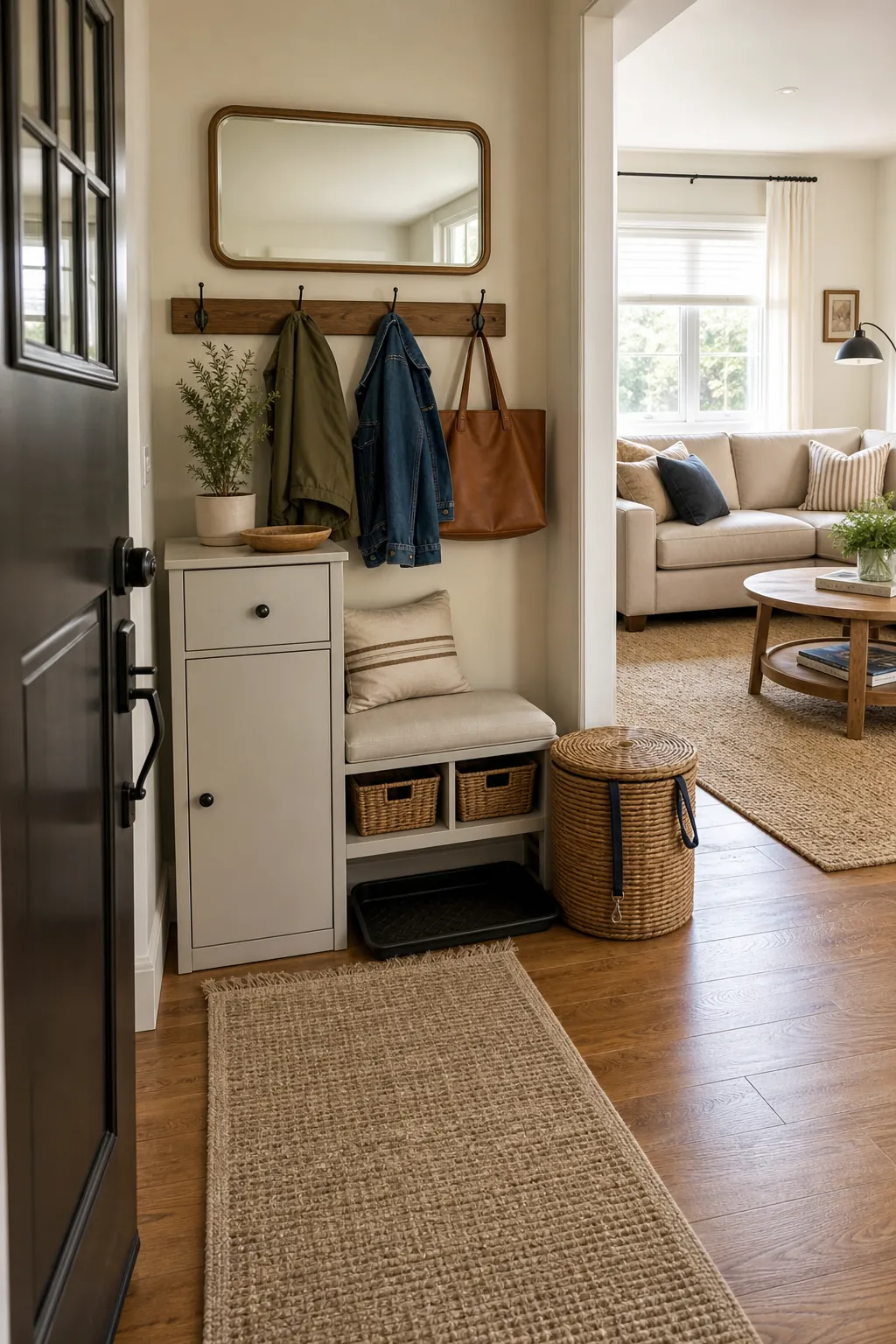
The most successful foyer ideas for no-natural-light homes usually have restraint. They do not fill every wall. They choose one moment that says “this is the entry”: a mirror over a narrow console, a beautiful runner, a lamp, one piece of art, and a couple of hidden storage pieces. That is enough.
If your hallway still feels off, edit before you buy more. Remove tiny scattered items, match bulb temperatures, raise art to a consistent height, and make sure the first thing you see from the front door is intentional. A windowless hallway can feel bright without pretending it has daylight. It just needs light in the right places, surfaces that help, and decor that earns its space.