
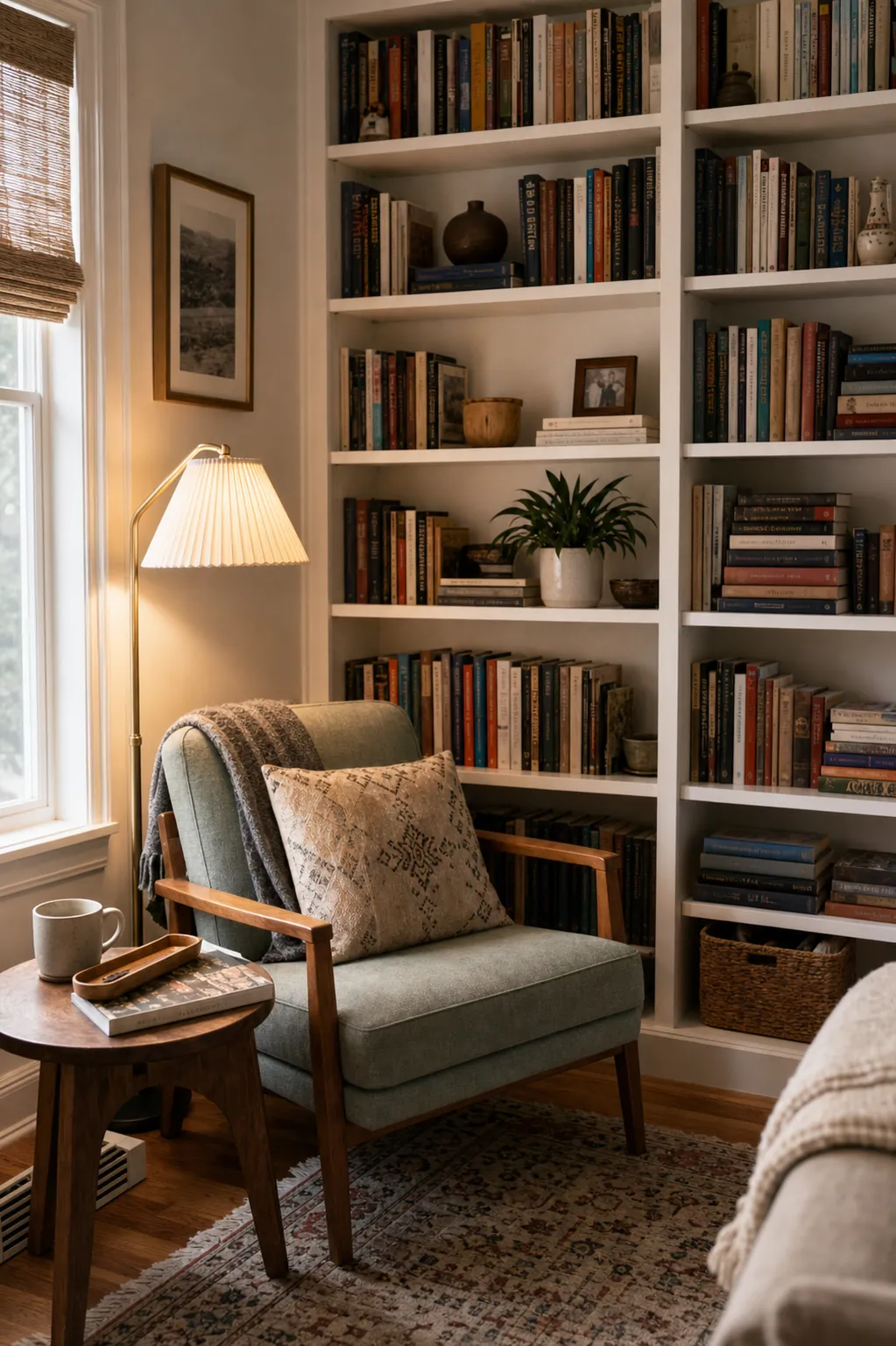
A home library does not need a spare room, a rolling ladder, or wall-to-wall built-ins. Most normal houses have a more realistic opportunity: one unused corner where books, a chair, light, and a small surface can work together.
The best home library corner ideas start with use, not fantasy. Where do books naturally collect? Where is there a quiet wall? Where can a lamp plug in? Where can someone sit for twenty minutes without blocking the room? Once those questions are answered, the corner starts to feel like part of the house instead of a decorative scene.
Pick The Corner That Already Wants Books
Before buying another bookcase, watch where books already land. They may gather beside the sofa, near a bedroom chair, close to a home office desk, or in a hallway outside the kids’ rooms. That is usually a better starting point than the most photogenic empty wall.
A small home library works when it removes friction. If books are already used in that zone, adding book storage there will feel natural. If the corner is beautiful but far from where people read, it may become another styled area that nobody touches.
Use One Tall Bookcase Before Adding More Furniture
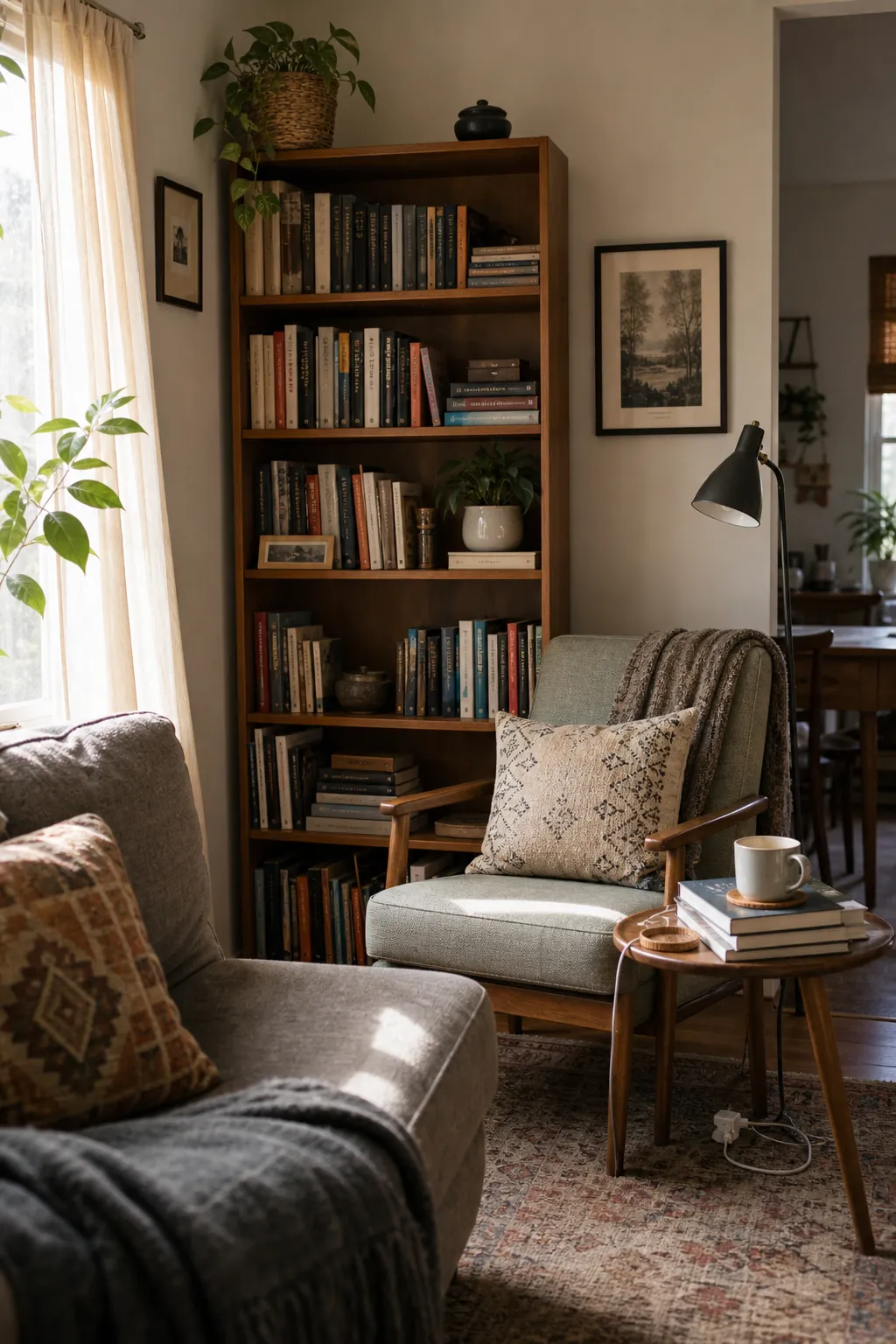
In a normal house, floor space is usually more precious than wall space. One tall bookcase can often do more than two short shelves because it uses vertical height and keeps the footprint tight. It also gives the corner a clear library feeling without needing a full library room.
Choose a bookcase that nearly reaches the ceiling if the room can handle it. Keep heavier books low, daily reads around eye level, and decorative pieces near the upper shelves where they do not interrupt access. If the bookcase feels too skinny, anchor it with a chair, plant, art, or floor lamp instead of adding another shelf immediately.
Mix Open Shelves With Hidden Storage
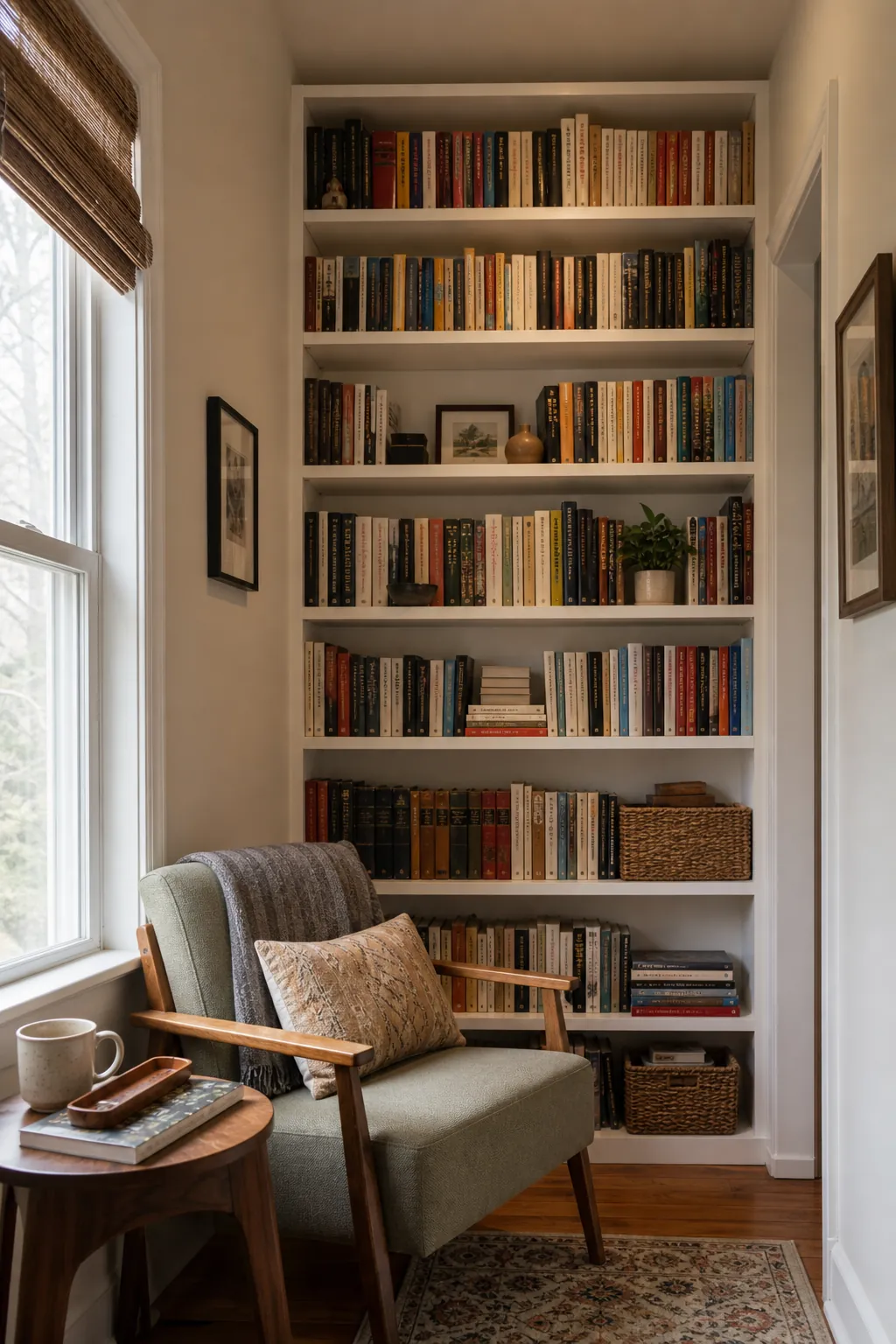
Open shelves are good for books you want to see and reach. Closed storage is better for the things that make a reading nook look messy: chargers, notebooks, library receipts, headphones, craft supplies, extra blankets, and children’s paperbacks that are used constantly.
If your corner has room for a cabinet-style base, use it. If it does not, add two baskets on the lowest shelf. Book storage looks calmer when not every item has to be displayed. The goal is not to hide personality. It is to hide the visual noise that keeps a corner from feeling restful.
Borrow A Window Instead Of Building A Room
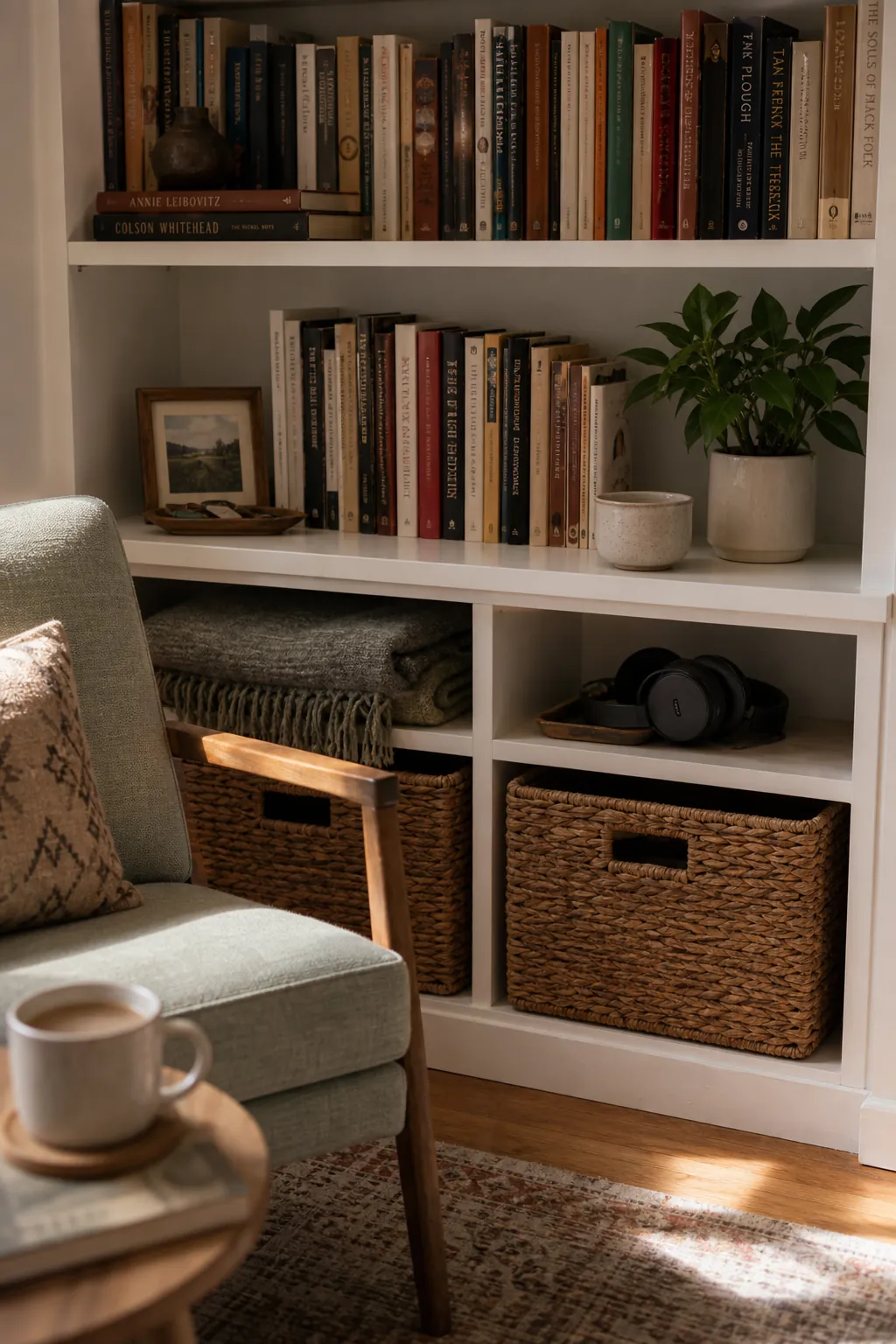
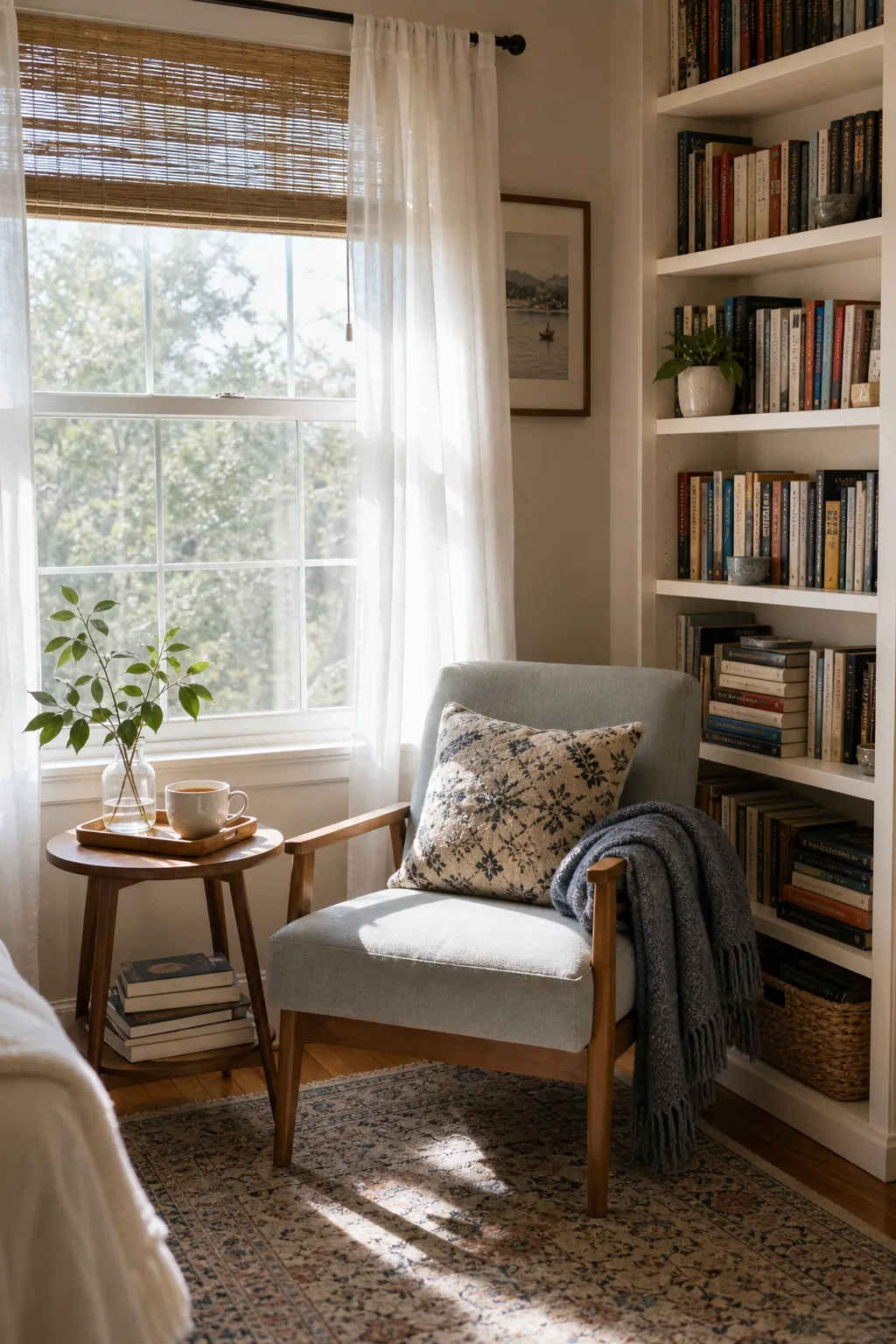
A window can do half the work of a library room. It gives the corner a destination, adds natural light, and makes a chair feel intentional. If the window is low, use a small chair and side table. If the window is tall, a bookcase on one side and a lamp on the other can frame the spot without blocking light.
Do not force the bookcase directly in front of the window unless you have no other wall. A small home library feels better when the shelves support the window instead of competing with it. Let daylight fall across the chair, then add a lamp so the corner still works at night.
Turn A Hallway Wall Into A Passing Library
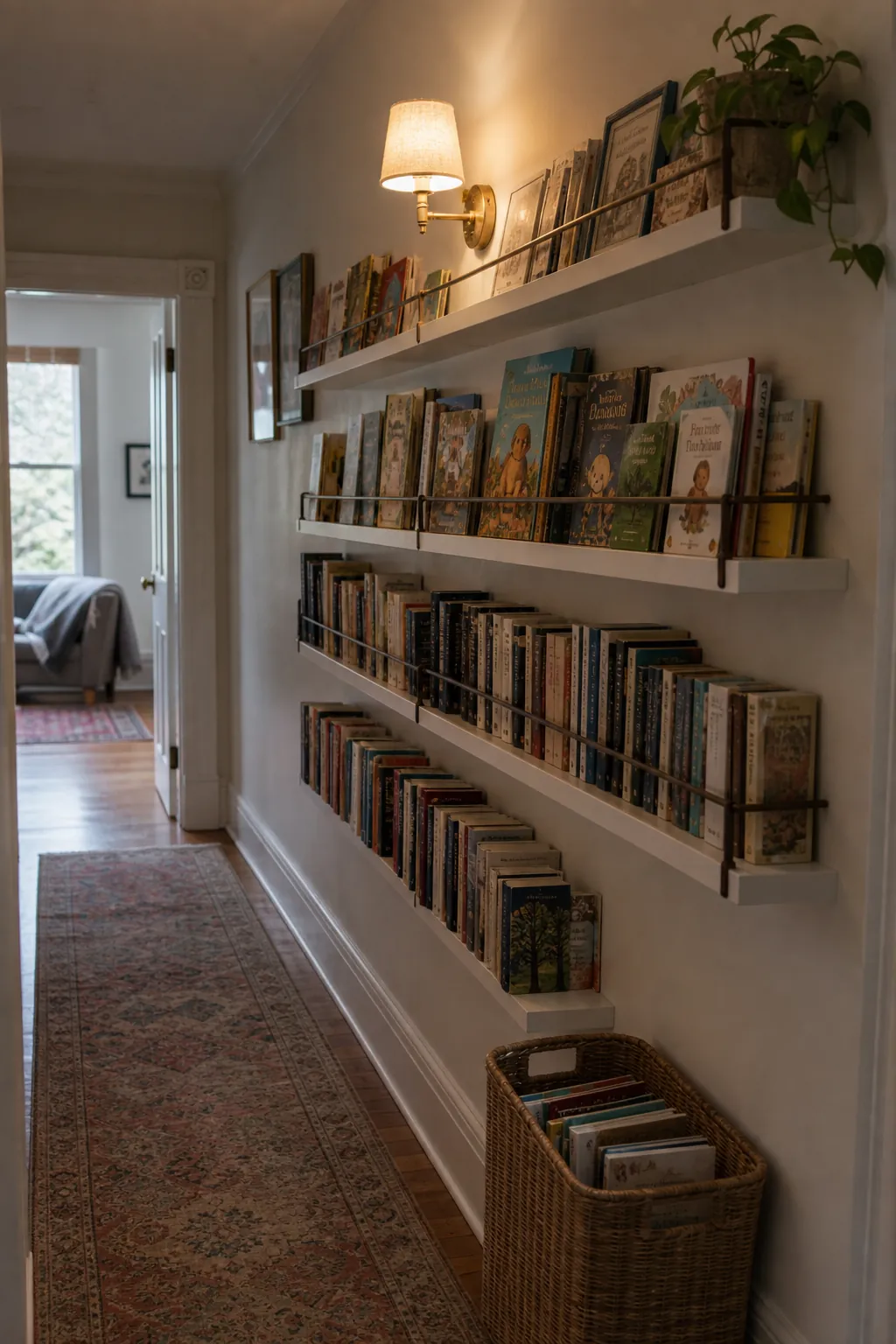
Not every library corner needs a chair. A hallway, stair landing, or wide entry can become a useful book wall if it has enough clearance. This is especially good for families because books stay visible and easy to grab without taking over the living room.
Keep hallway shelves shallow and secure. Use lower shelves for children’s books, middle shelves for everyday reads, and upper shelves for less-used titles or baskets. A small wall sconce or picture light can make the area feel intentional without turning it into a full room.
Make The Chair Comfortable Enough To Keep
A chair corner only works if the chair is comfortable. Many reading nook photos fail in real homes because the chair is pretty but too upright, too deep, too slippery, or too far from a table. If you already own a comfortable accent chair, start there before shopping for the perfect library chair.
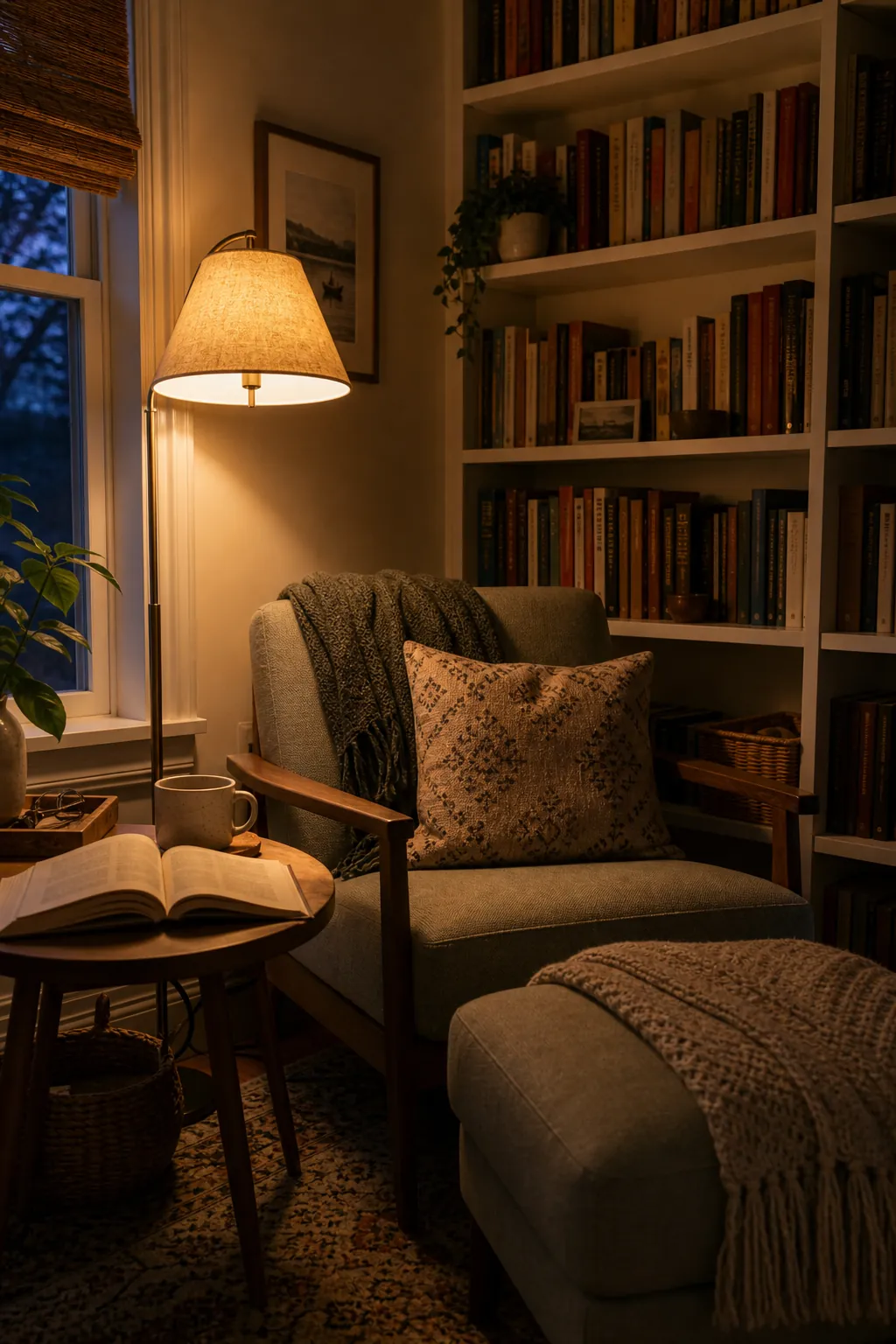
Give the chair three things: light, a landing place, and foot comfort. That can mean a floor lamp, a small table, and a low ottoman. It can also mean a wall sconce, a stool, and a soft rug. When those basics are present, even a plain corner begins to feel like a small library.
Use Night Lighting To Make It Real
A home library corner that only looks good during the day is unfinished. Reading happens early in the morning, after dinner, and on quiet weekends when the rest of the room is dim. A shaded lamp, plug-in wall sconce, or small picture light can change the whole feeling of the corner.
Avoid lighting that shines straight into your eyes from the shelf. Put the light beside or slightly behind the chair, and keep the switch easy to reach. The most convincing library corners are the ones that make it easy to sit down without rearranging the room first.
Let It Look Like A Corner, Not A Set
The point of a living room library or small home library is not to fake a grand library room. The point is to make books easier to live with. Let the corner hold the books you actually read. Let a blanket stay on the chair. Let a mug sit on the table while the tea cools.
Normal houses become more personal when their corners do real work. A bookcase, a comfortable chair, practical lighting, and a bit of hidden storage can turn unused space into a home library that feels natural every day.