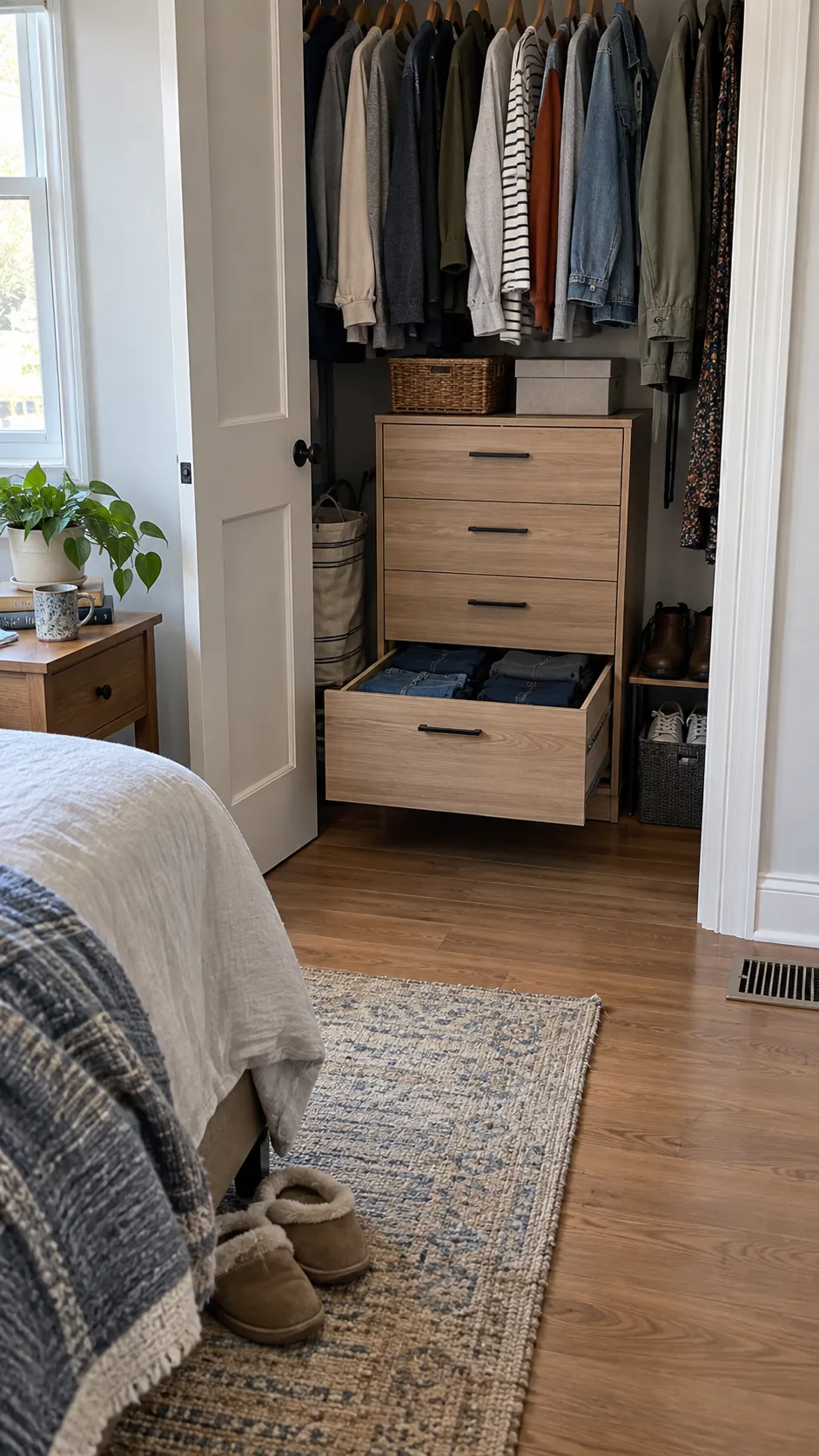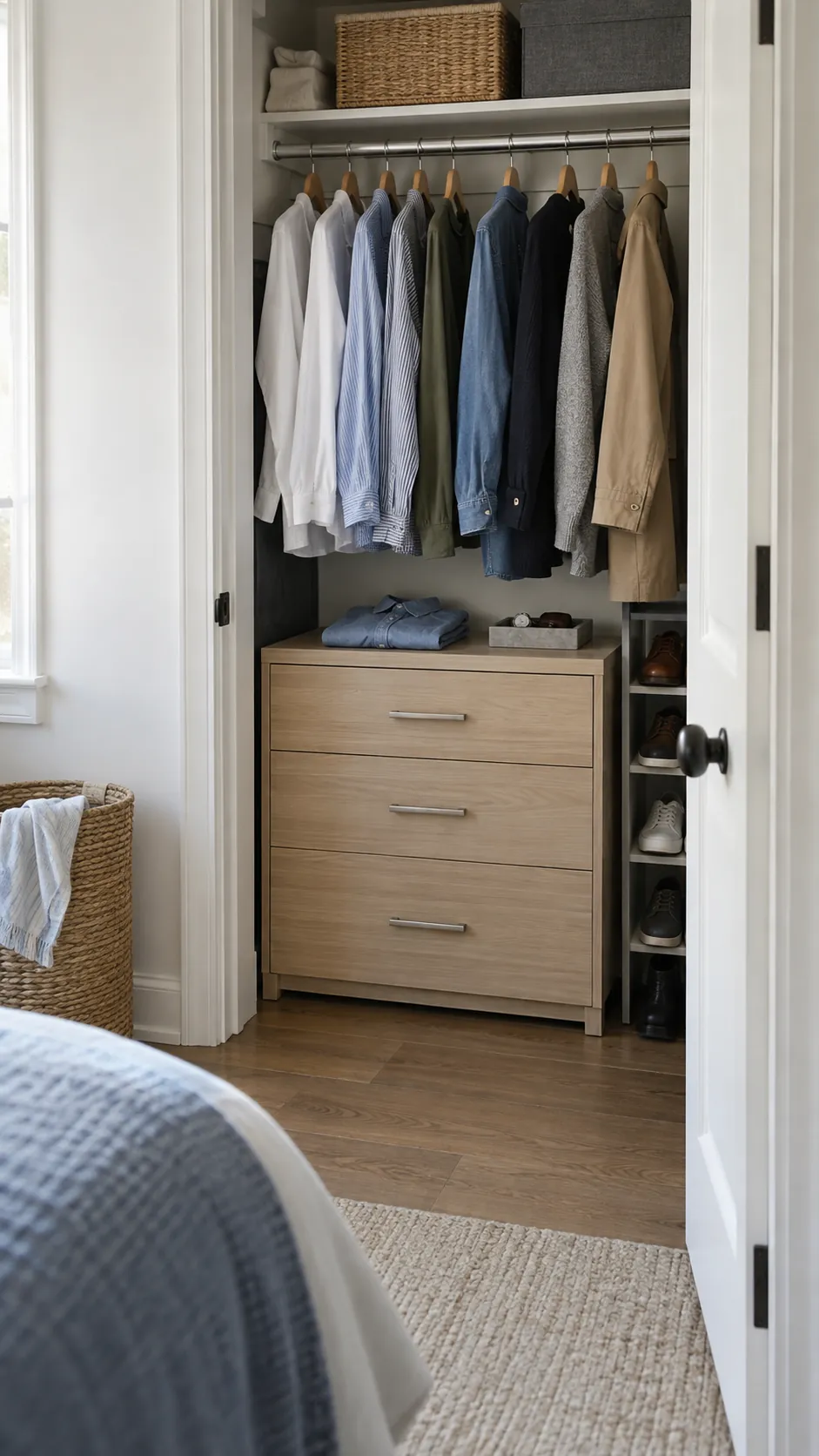
A closet can look full while the space below the hanging rail does very little. Before buying a cabinet, work out where a drawer can open, what clothes need a home, and how the door moves. Those small checks prevent a bulky unit from making an already tight bedroom harder to use.
Measure the space drawers actually need
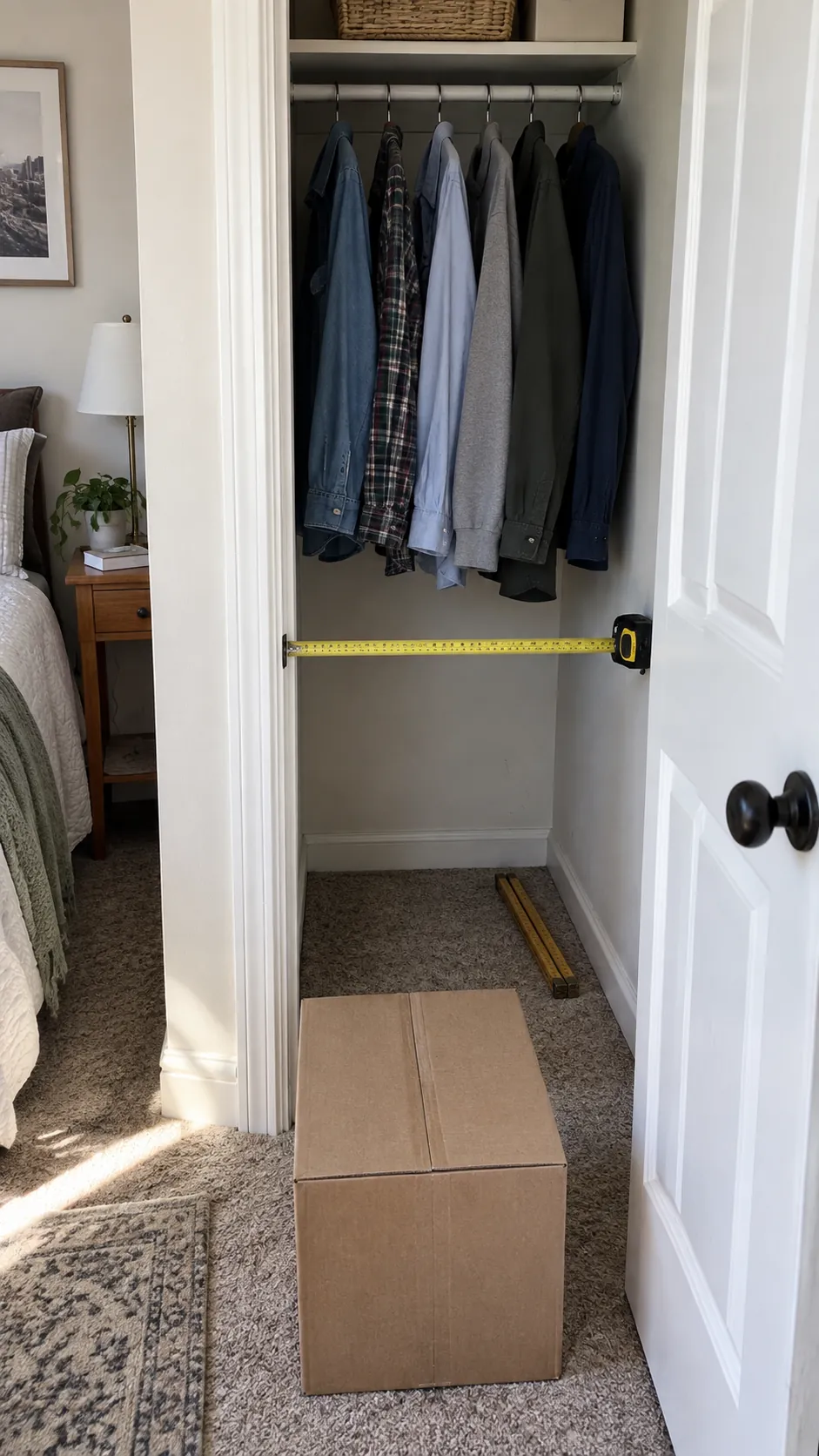
A drawer needs more room than its closed footprint suggests. Measure the clear width between the closet walls, the depth to the back wall, and the height below the hanging clothes. Then open the closet door fully and measure how far a drawer can travel before it meets the door, jamb, or your body.
Look for baseboards, sloped walls, floor vents, and the arc of a hinged door. A unit that fits between two walls can still fail when its top drawer strikes a hanging coat. Leave a little breathing room around the unit so fabric does not snag and you can lift it out for cleaning.
Choose a drawer unit for the clothes you own
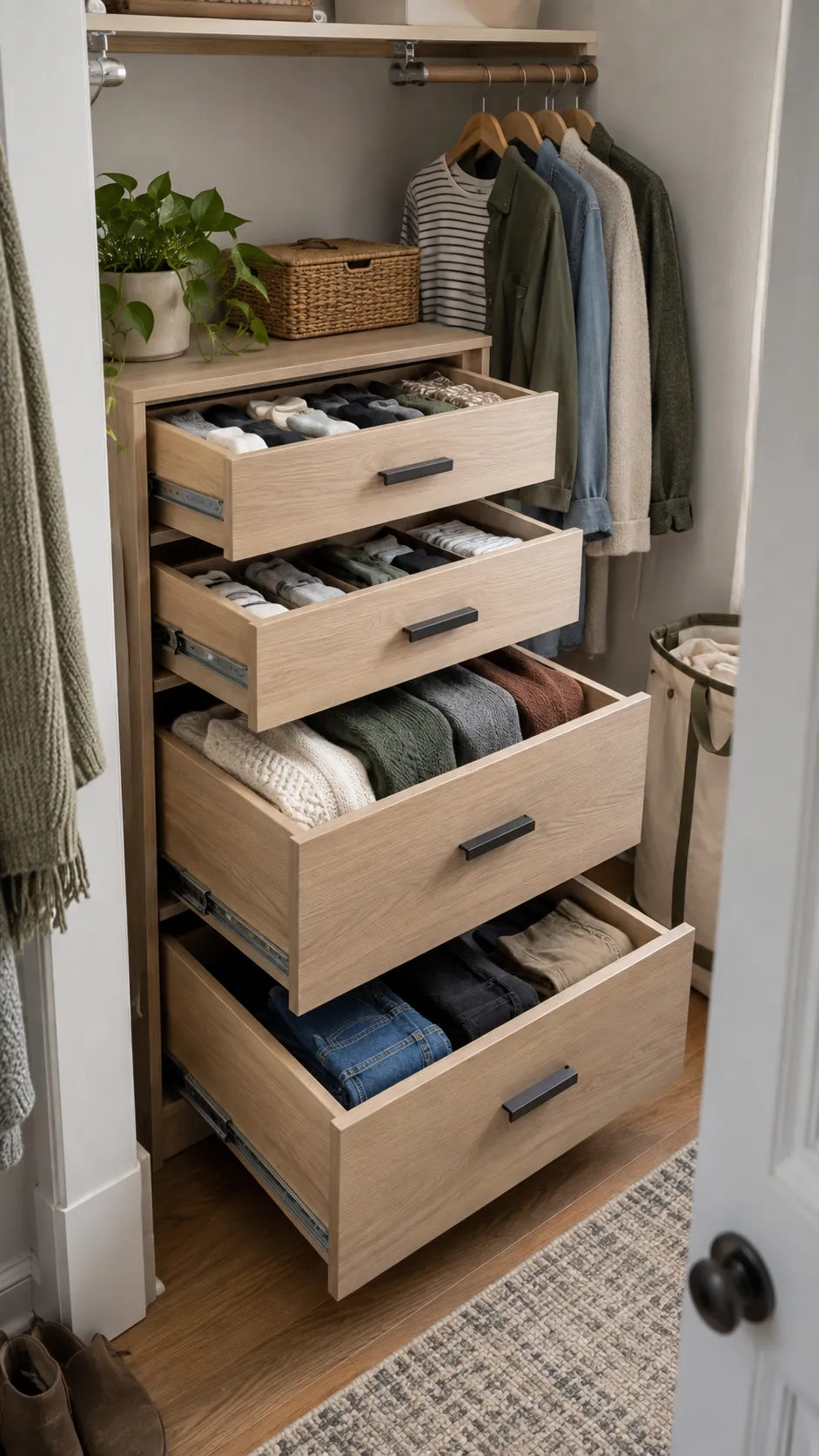
Start with categories rather than the largest cabinet that will fit. Shallow drawers make socks, underwear, and accessories visible. Deeper drawers suit folded sweaters or workout clothes, but they become awkward when filled with tiny items. A mix of depths usually works better than matching drawers.
Open and close a display drawer before buying when you can. Check that its runners feel steady, the handles are easy to grasp, and the unit will not tip when more than one drawer is open. If it is tall or heavy, follow the maker’s anchoring instructions and use a wall fixing suited to your wall.
Use the floor beneath short hanging clothes
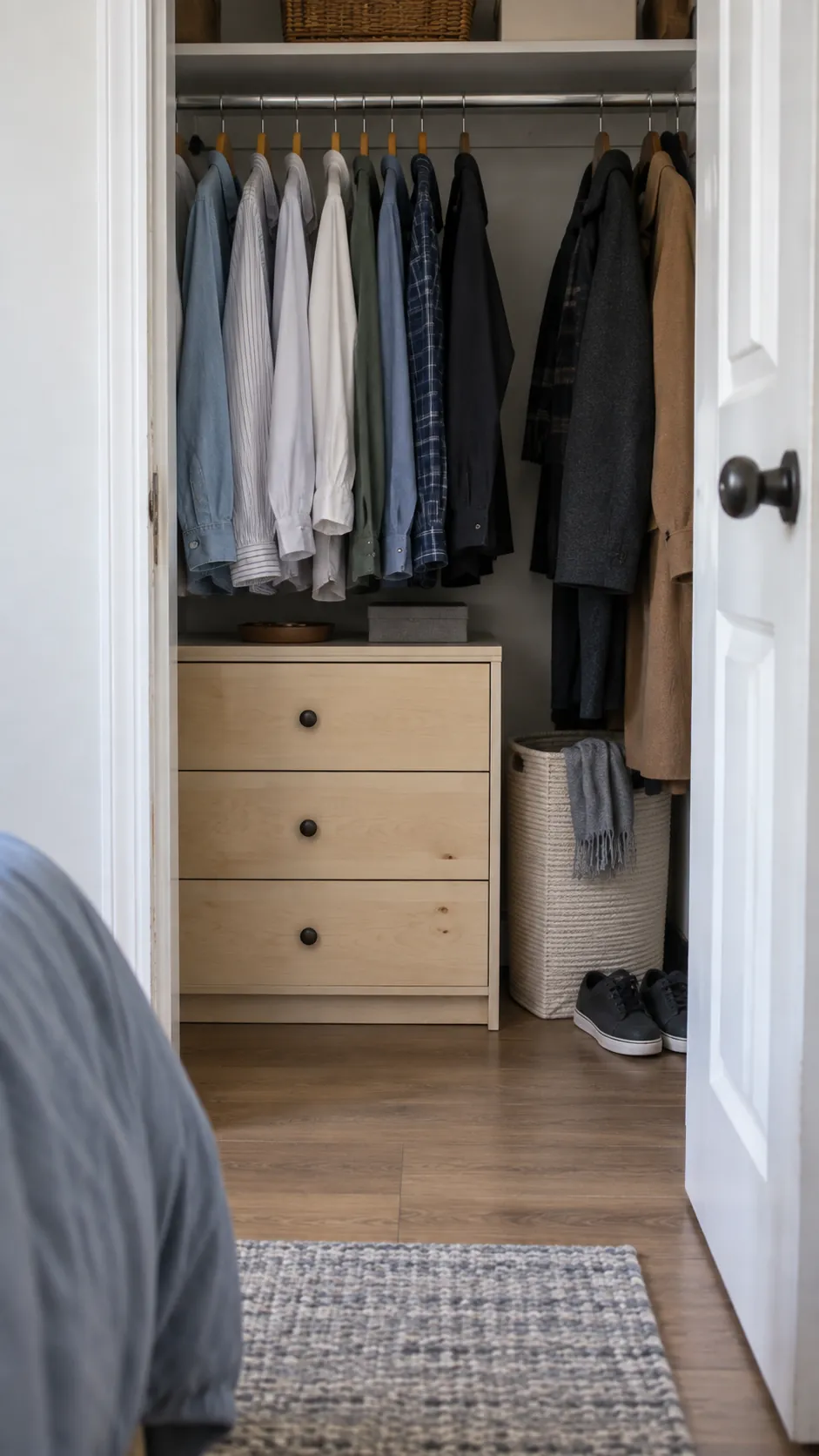
The space below shirts and jackets is often the safest first place to add drawer storage. Move long dresses and coats to one side, then put a low drawer unit beneath the shorter garments. Keep enough vertical clearance to slide hangers along the rod without dragging hems across the top.
A narrow chest can leave a useful lane for shoes or a hamper. Put the items you reach for most often in the top drawer, and reserve lower drawers for less frequent clothes. This simple arrangement keeps daily wardrobe organization within easy reach.
Make a shelf work like a drawer
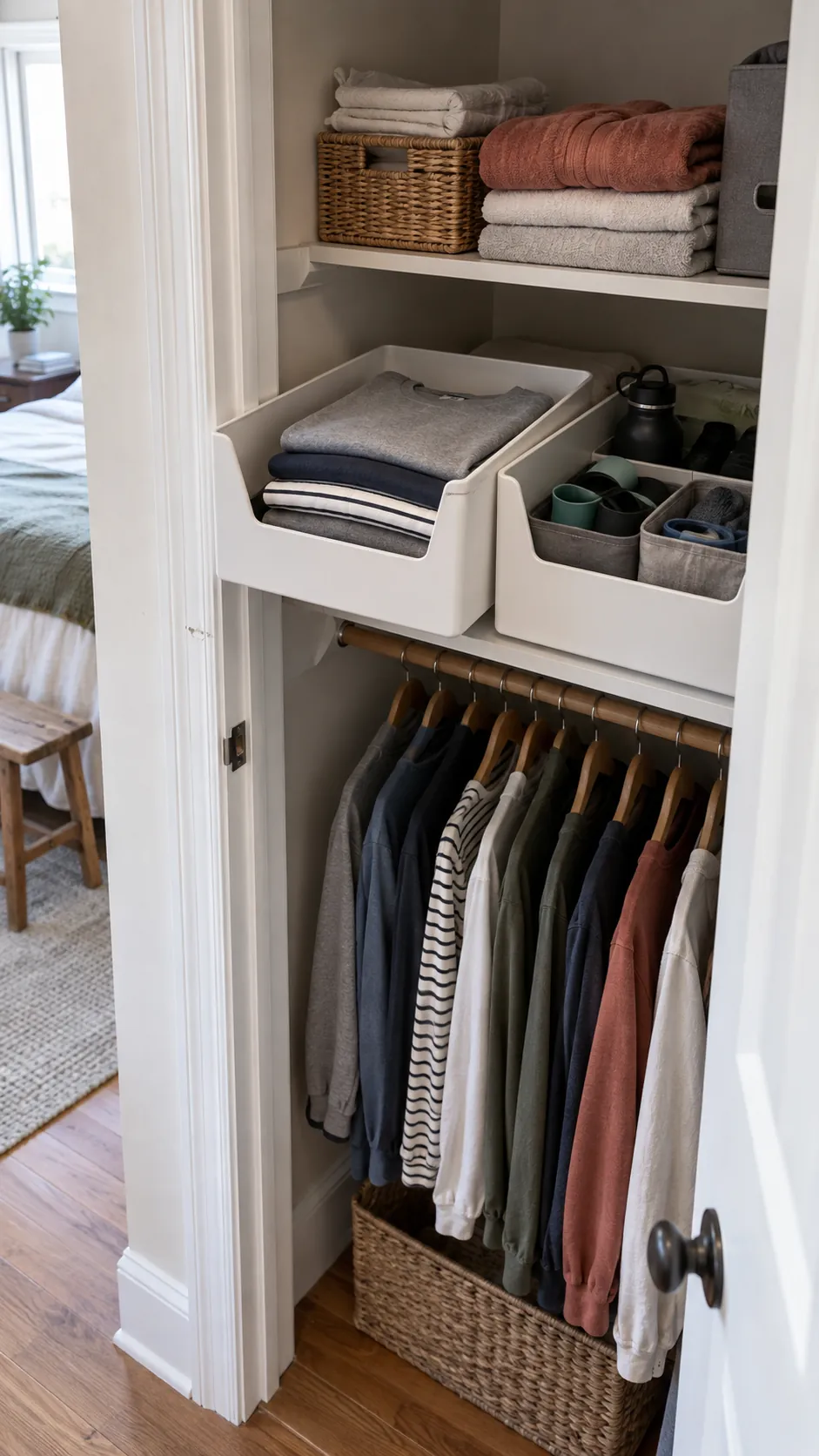
When a cabinet will not fit, a pull out basket or rigid storage bin can give an existing shelf a drawer function. Choose a container with a firm front grip and leave enough space above it to lift folded clothes out. Test it while full, since a basket that glides when empty may catch on a shelf lip later.
Do not stack loose bins so high that retrieving the bottom one becomes a chore. A shallow shelf divider can hold two small bins side by side. For a rental closet, removable bins also let you improve clothes storage without drilling into the wall.
Give every drawer a useful job
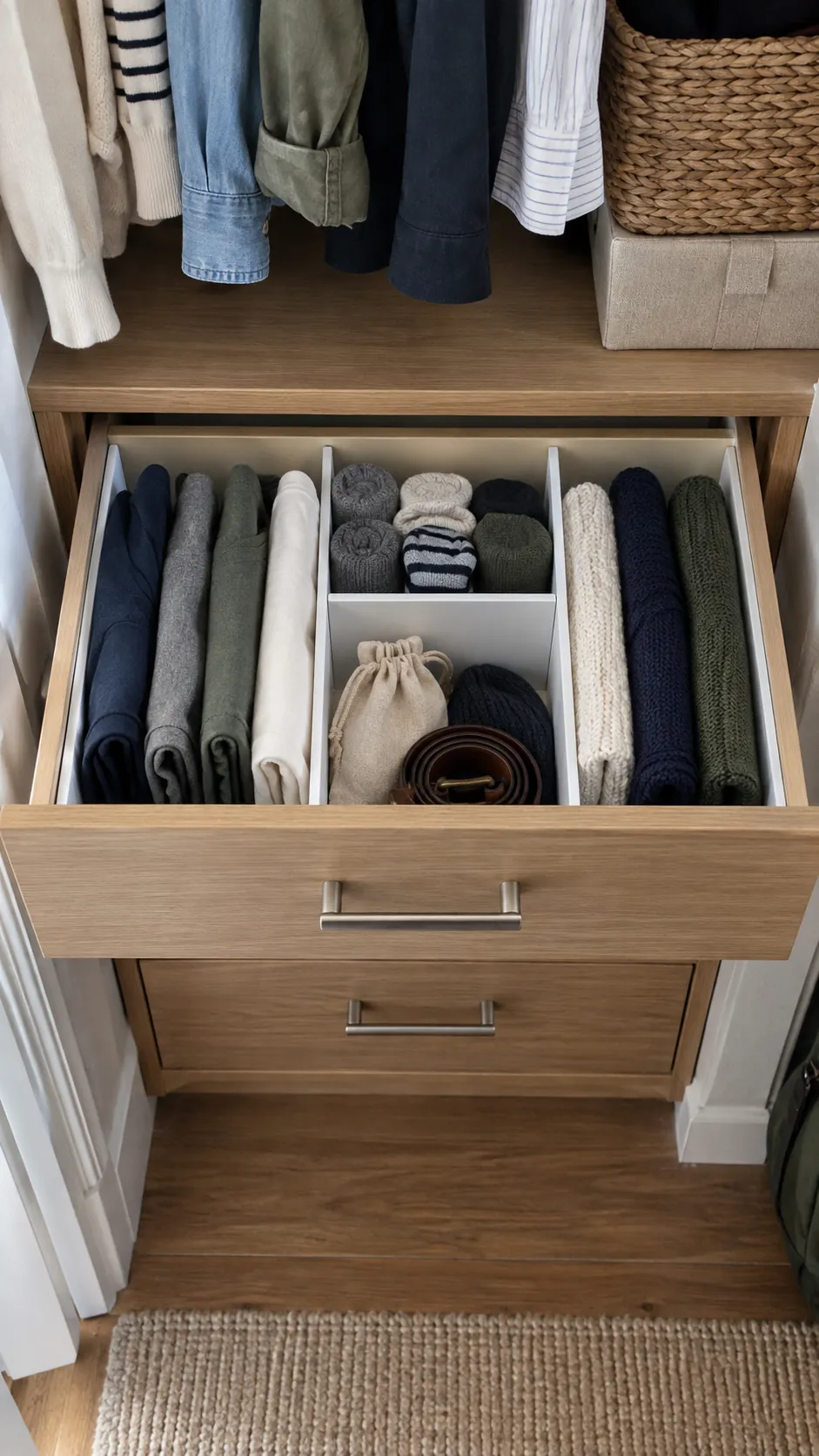
A drawer only saves time when you can find things inside it. Fold clothes upright when the fabric allows, then use small dividers to keep narrow categories from mixing. Avoid packing a drawer so tightly that it pushes against the face of the unit.
Label the front discreetly if several people share the closet. Check the arrangement after a week of use. If you keep putting an item on top of the unit, that category may need a more accessible drawer rather than another storage bin.
Keep access and safety in the plan
Stand in front of the closet and pull the widest drawer all the way out. You should still be able to step aside, remove an item, and close it without shifting a bedside table. In a very tight bedroom, a shallower unit can be more useful than a deeper one with more theoretical capacity.
Keep heavy items low and follow the furniture maker’s stability guidance. Leave airflow around damp shoes and avoid blocking electrical outlets or ventilation. The best small closet idea is the one you can use comfortably every morning.