
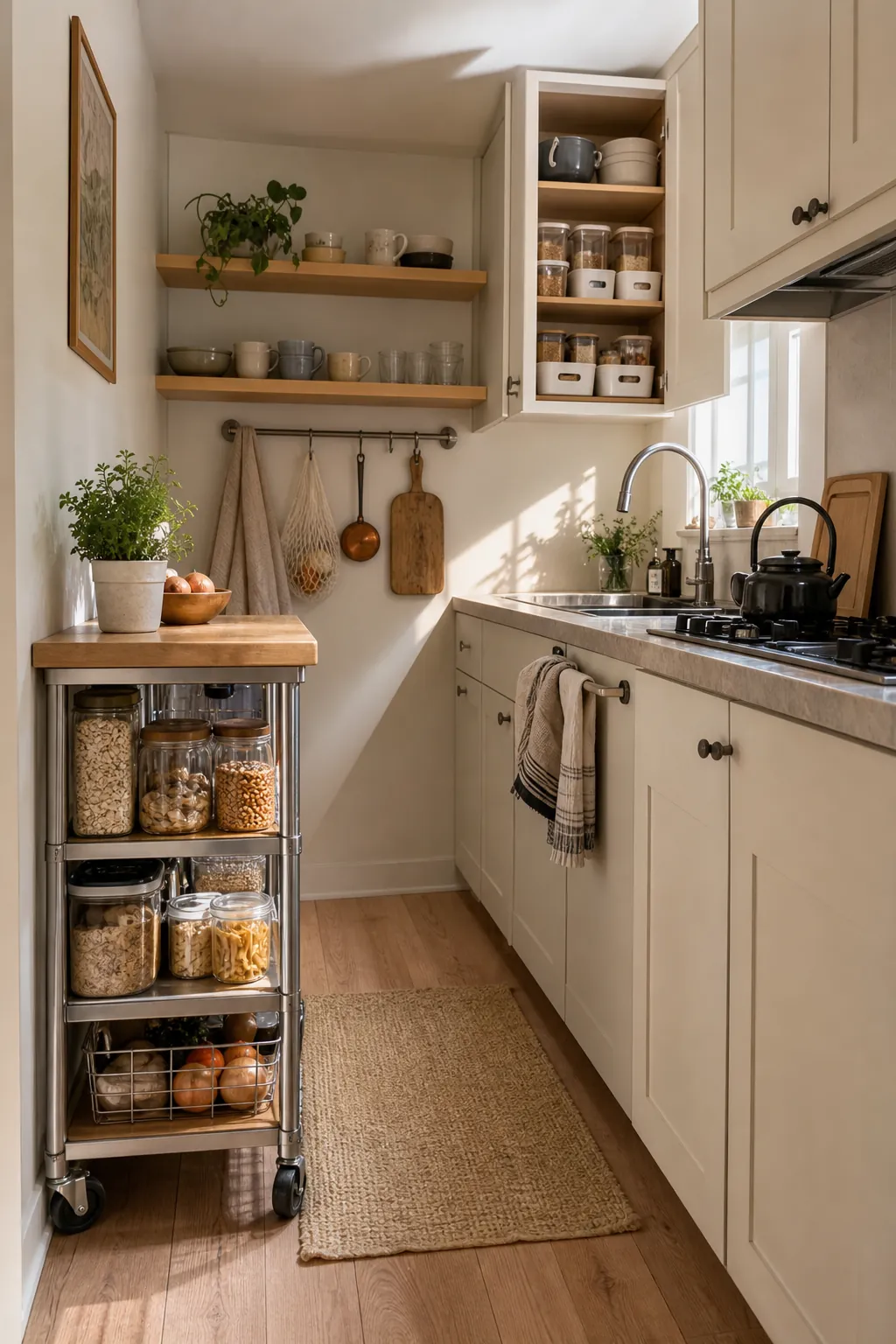
A small kitchen usually does not need a remodel first. It needs a better storage map. If every cabinet is packed, every counter corner is working too hard, and cooking means moving three things before you can chop one onion, the problem is not just lack of space. The problem is that the kitchen is storing everything in the same few zones.
The best small kitchen storage plan spreads the load: walls hold light daily items, cabinets hold grouped supplies, hooks rescue awkward tools, and one mobile piece adds prep space only when you need it. This is especially useful for a no remodel kitchen, a rental, or a compact kitchen where drilling, new cabinets, and construction are off the table.
Start With the Storage Audit Most People Skip
Before buying shelves or carts, pull everything out of the worst two zones: the most crowded cabinet and the counter area that always becomes a landing pad. Sort items into three groups: used daily, used weekly, and rarely used. This one step prevents the classic small-kitchen mistake: adding organizers that simply make clutter look more official.
Daily items deserve the easiest reach. Coffee supplies, the pan you use every morning, cutting boards, oil, salt, and the bowls you reach for constantly should live between shoulder and knee height. Holiday platters, backup mugs, bulk pantry overflow, and the bread maker you use twice a year can move higher, lower, or outside the kitchen.
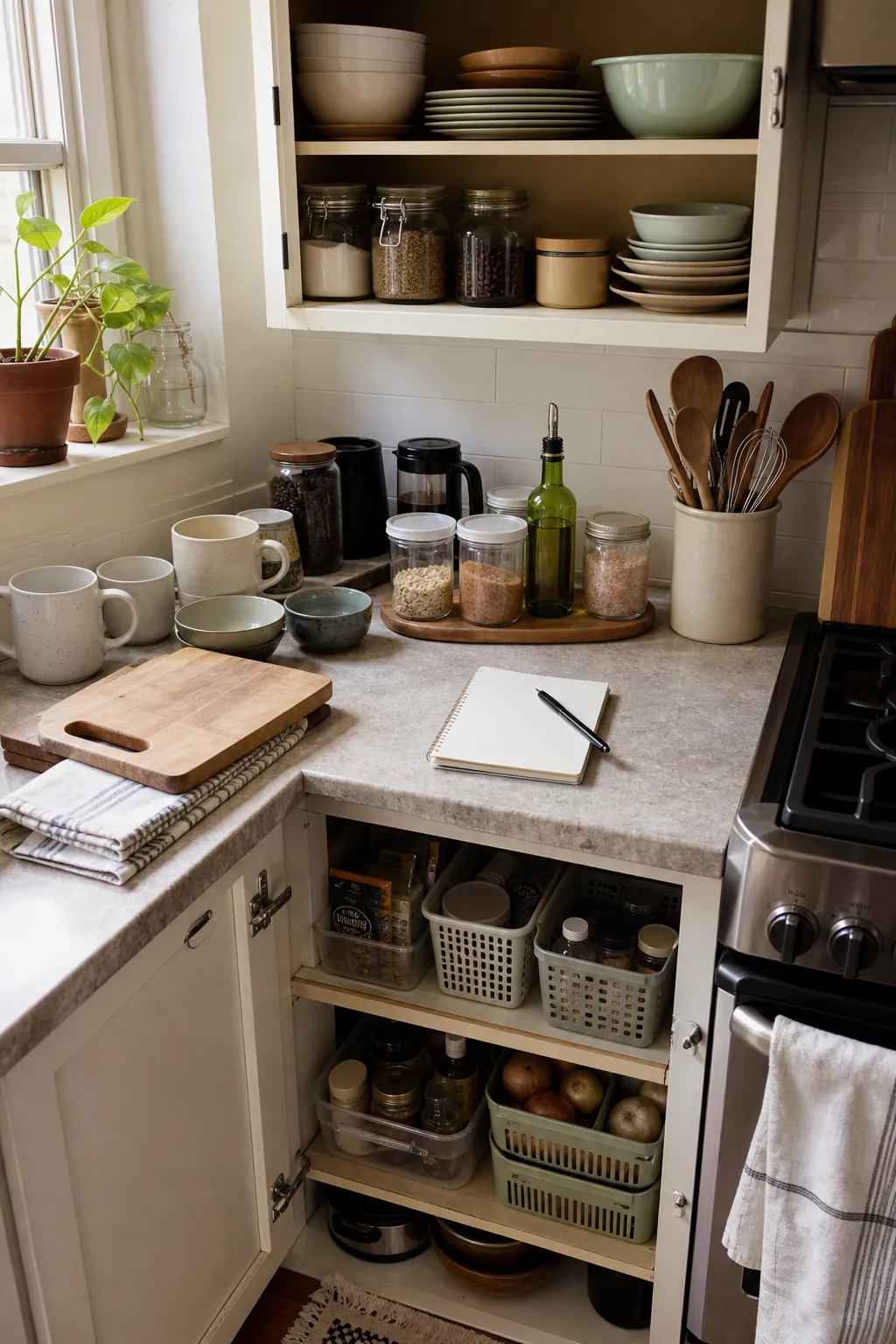
The goal is not minimalism for its own sake. It is friction removal. If you cook in a small kitchen, every extra motion matters. A good setup lets you make dinner without emptying a cabinet, balancing groceries on the stove, or pushing mail out of the way to open a drawer.
Use Wall Shelves for Light, Repeatedly Used Items
Open wall shelves can be brilliant in a small kitchen, but only when they are narrow and intentional. Deep shelves look tempting because they promise more storage. In a tight kitchen, they often become head-bumping ledges and visual clutter. A shallow shelf for mugs, small bowls, spices, tea, or cooking oils usually works better than a bulky unit that steals breathing room.
- Use the first shelf for items you touch daily. If it is hard to keep neat, it should probably be behind a cabinet door.
- Keep heavy items low. Cans, glass jars, and appliances belong in cabinets, carts, or freestanding pieces, not high on a wall.
- Leave negative space. A shelf that is 80 percent full looks useful; a shelf that is 120 percent full makes the kitchen feel smaller.
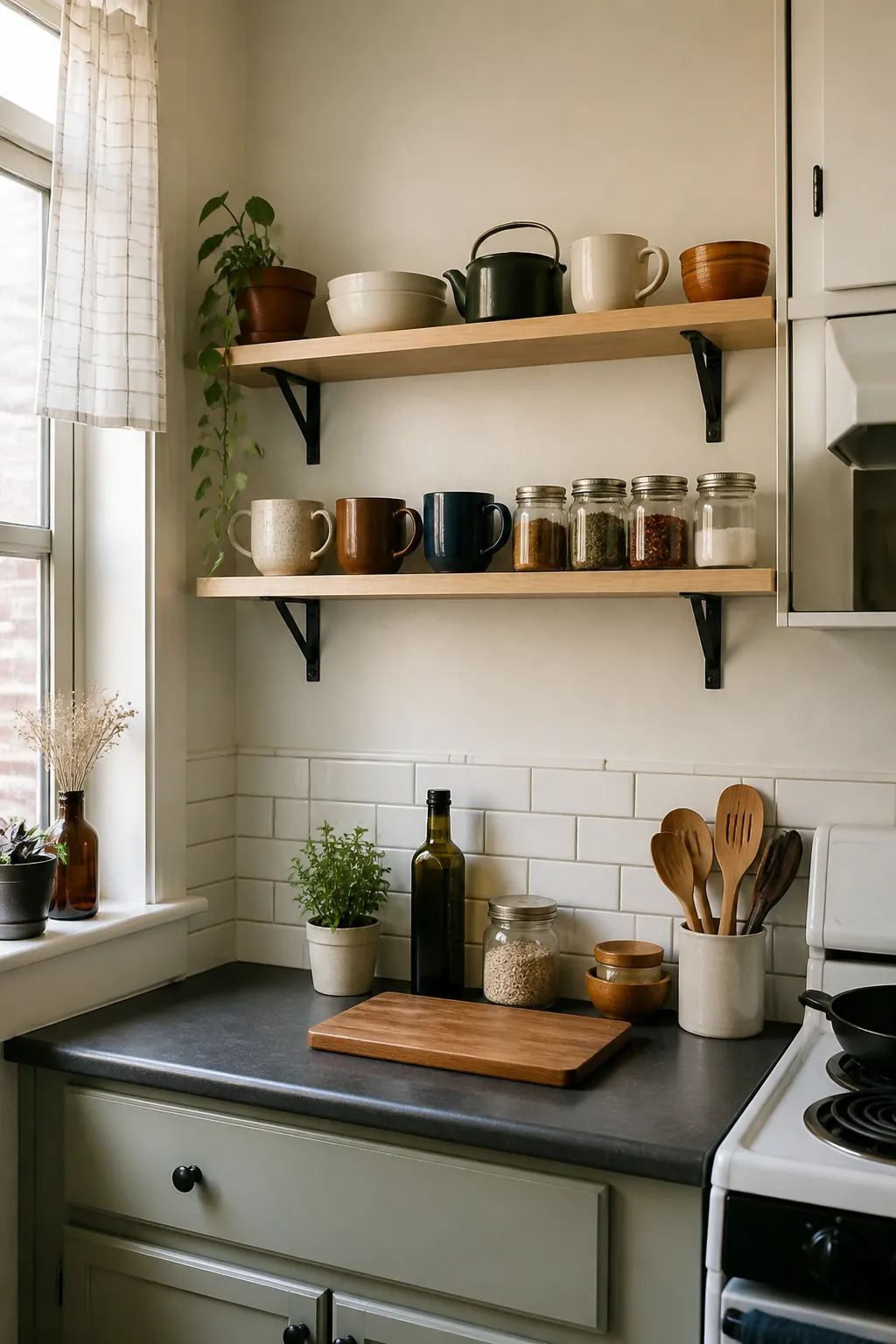
Renters can still use this idea carefully. If your lease allows small holes, mount shelves into studs or use the right anchors for the wall. If it does not, skip wall-mounted shelves and use a freestanding baker’s rack, slim bookcase, or tension-style storage system instead. The storage win is the vertical zone, not the drilling.
Turn Cabinet Doors Into Useful Storage
Cabinet doors are some of the most overlooked storage surfaces in a compact kitchen. They are perfect for measuring spoons, lightweight lids, wraps, cleaning gloves, small cutting boards, pot holders, and spice packets. This is where cabinet storage gets more practical without adding a single cabinet.
The trick is weight and clearance. Use adhesive hooks, over-door racks, or slim door-mounted baskets only for items that will not make the door sag or stop it from closing. Test before committing: tape the organizer in place, close the door slowly, and check whether shelves, plumbing, or stored items collide with it.
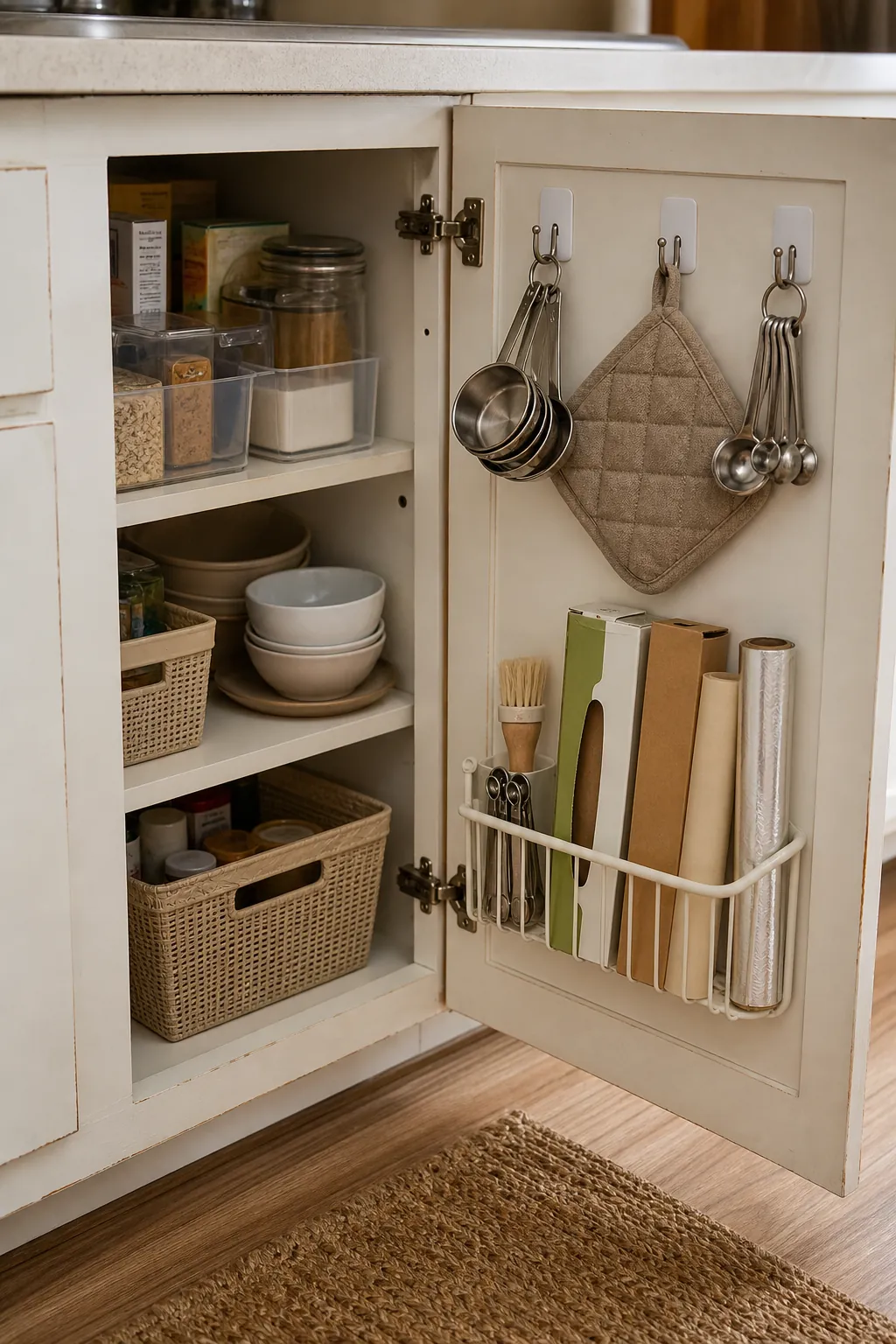
Do not use door storage as a junk drawer extension. Give each door one job. One door can hold measuring tools. Another can hold wraps and bags. The sink cabinet door can hold cleaning gloves and a small brush. When each door has a category, you stop losing tiny tools in the back of deeper storage.
Add Hooks Where Tools Already Want to Land
Kitchen hooks are not just decorative. They are a pressure valve for crowded drawers. The best place for hooks is not always a blank wall; it is the place where the item naturally gets used. Hang oven mitts near the stove, mugs near the coffee station, measuring cups inside the baking cabinet, and a dish towel near the sink.
For a renter kitchen idea, adhesive hooks can work well for light items, but prep the surface first. Clean the area, let it dry fully, follow the cure time, and avoid hanging heavy pans from adhesive products unless the manufacturer clearly allows it. For heavier cookware, a freestanding rack or rail attached with permission is safer.
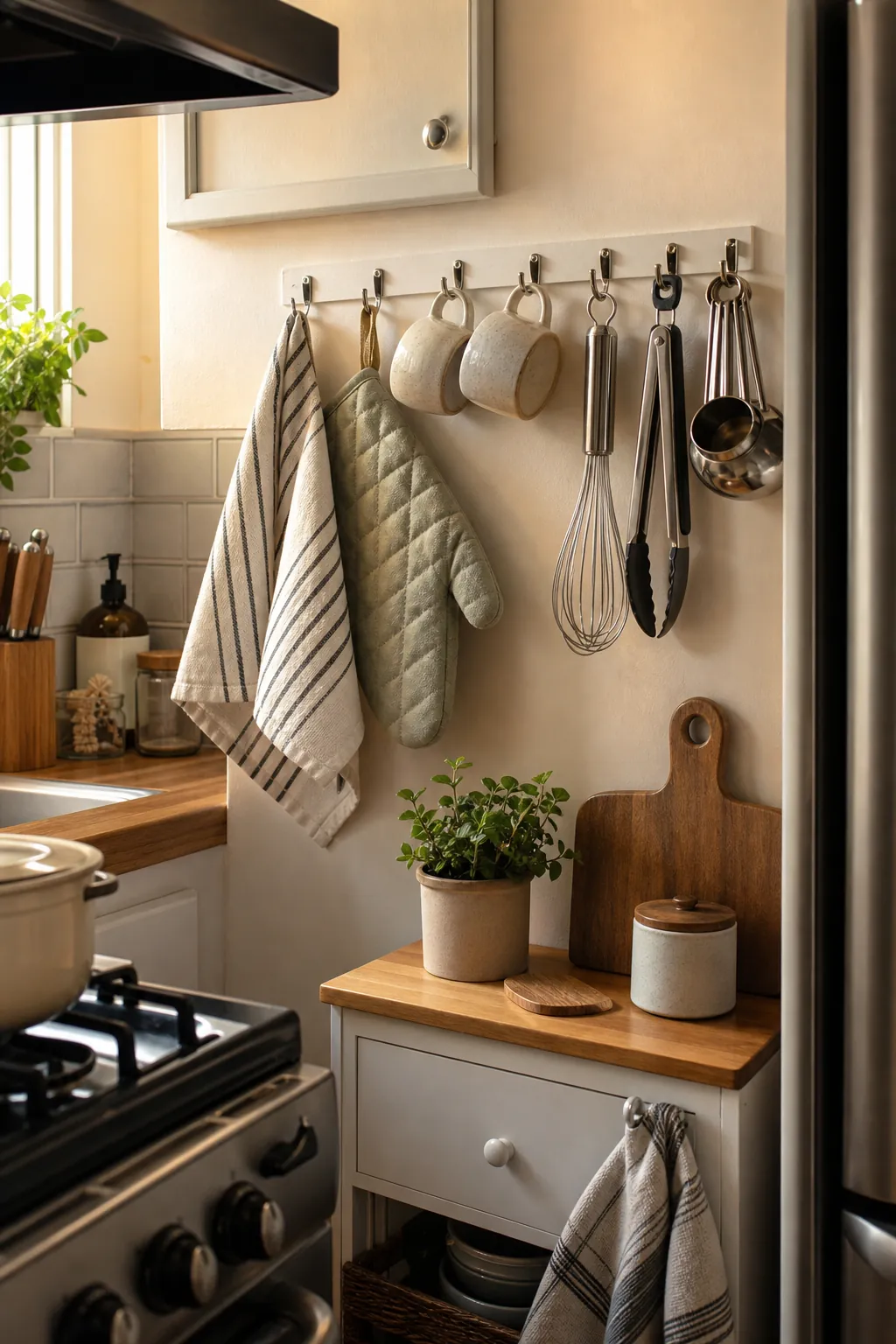
Hooks work best when they reduce a real daily annoyance. If your spatulas are fine in a drawer, leave them there. If your drawer jams every time you need tongs, hang the tongs. Small kitchens improve when every visible item earns its place.
Use a Rolling Cart as Flexible Counter and Pantry Space
A rolling cart is one of the fastest ways to add storage to a small kitchen without remodeling because it solves two problems at once: not enough storage and not enough work surface. Park it at the end of a counter for coffee, baking supplies, produce, lunch boxes, or dry goods. Roll it beside you when you cook. Move it away when the kitchen needs to open back up.
Choose the cart by the job, not by the prettiest photo. A narrow three-tier cart is useful for pantry overflow and snacks. A cart with a solid top can become a temporary prep station. A cart with drawers hides visual clutter. If you have children or pets, pick one with locking wheels and avoid storing breakable glass on open lower shelves.
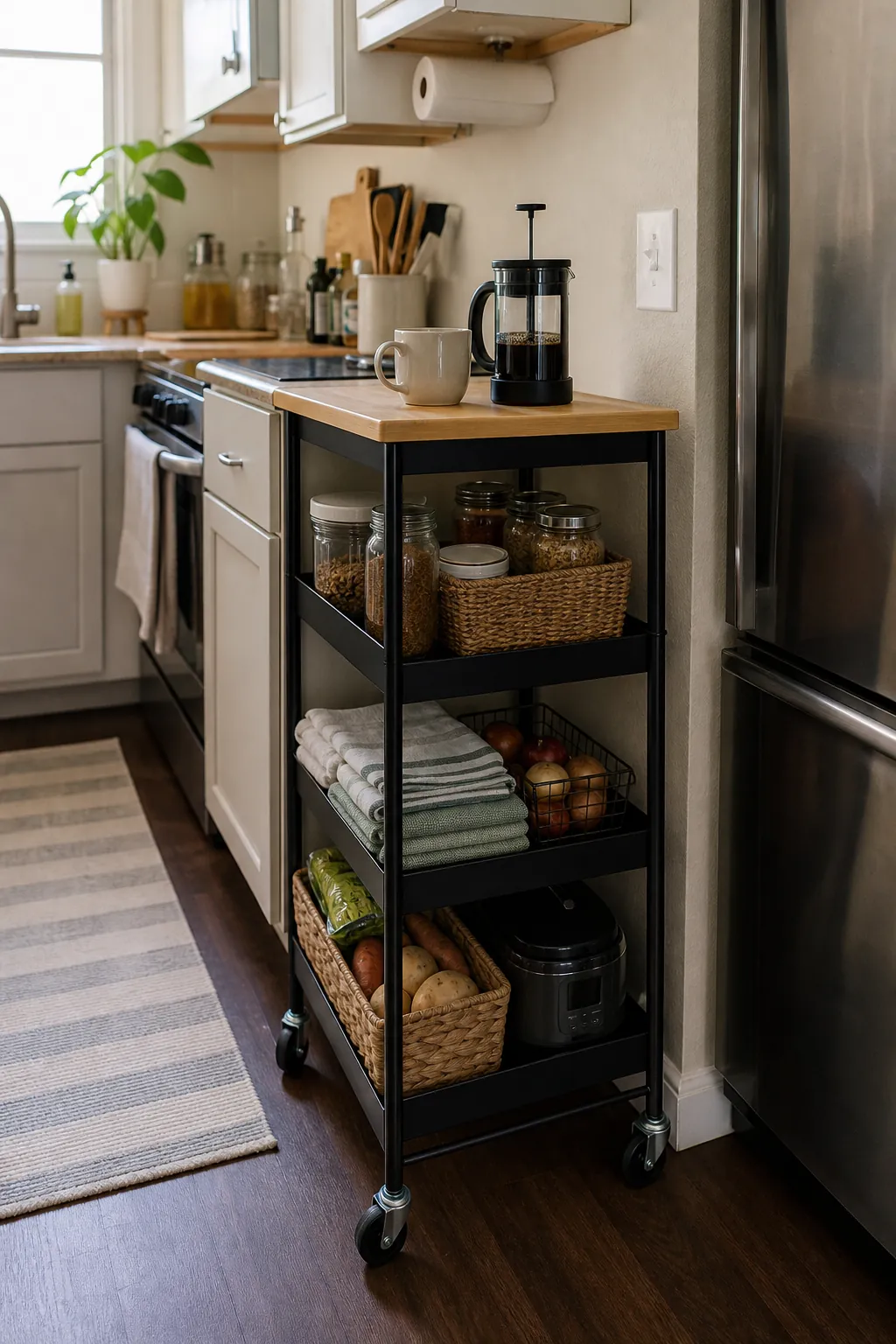
The cart should have a parking spot. If it floats around without a home, it becomes another obstacle. Measure the gap beside the fridge, the end of the cabinet run, or the wall near the dining area before buying. In a compact kitchen, two inches can decide whether a storage solution feels smart or irritating.
Fix the Inside of Cabinets Before Adding More Furniture
If your cabinets are tall, deep, or awkward, you may already have more space than you can reach. Shelf risers, clear bins, turntables, pull-out baskets, and simple dividers can make the same cabinet hold more while making it easier to use. This is the quiet part of kitchen organization that often matters more than a new shelf.
Use risers for dishes and cans, bins for packets and snacks, vertical dividers for baking sheets and cutting boards, and a lazy Susan for oils or sauces in a corner. Under the sink, use stackable drawers or a pull-out caddy around the plumbing so cleaning supplies do not collapse into a dark pile.
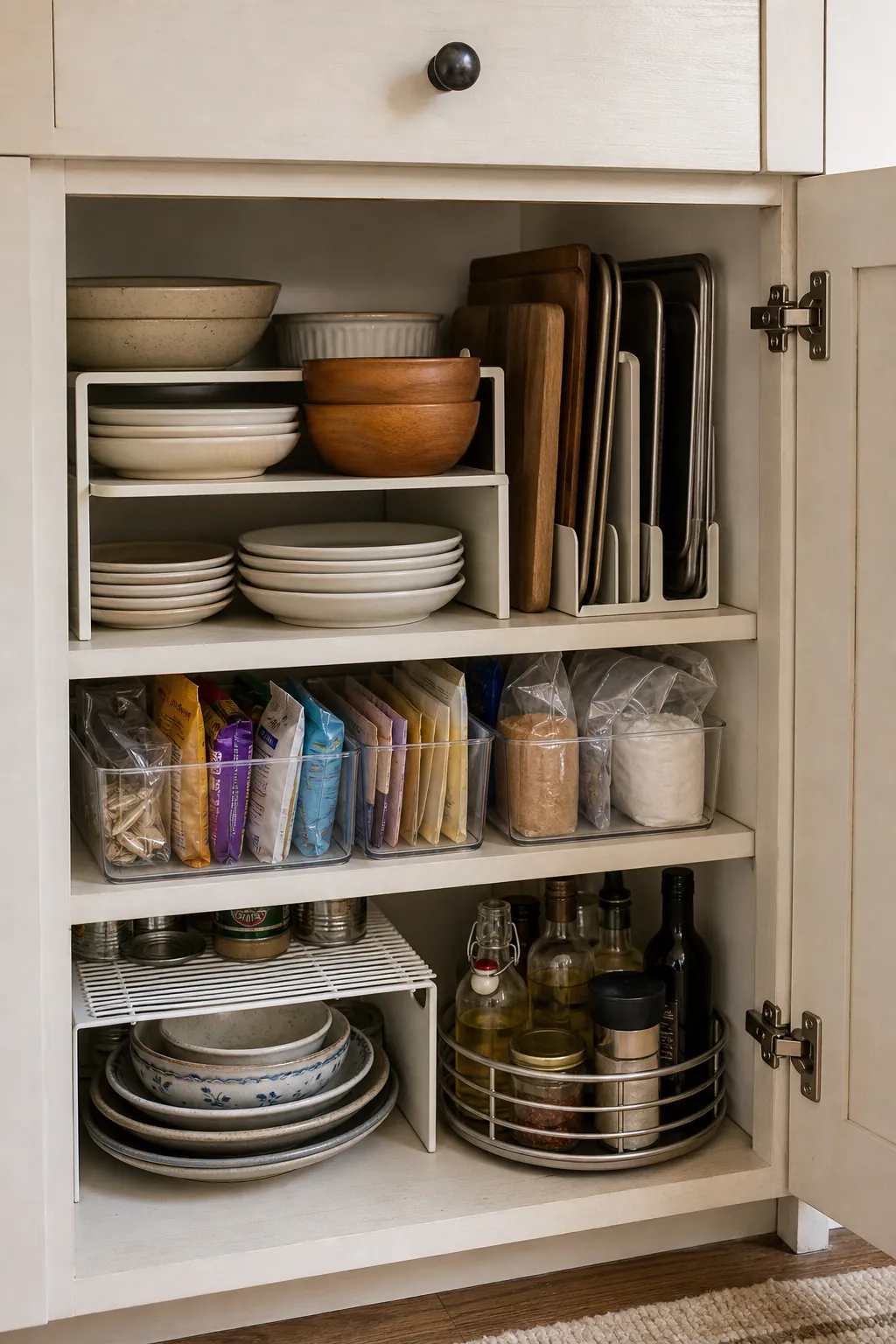
Contain categories before you label anything. Labels are helpful after the system works. They are not a cure for overstuffed bins. If a bin needs force to close or holds five unrelated categories, split it or remove something.
Create an Overflow Pantry Outside the Kitchen
Many small kitchens fail because every pantry item is forced into the kitchen, even when there is no pantry. If you have a nearby coat closet, dining nook, entry cabinet, sideboard, or bookshelf, use it for overflow. Keep daily food in the kitchen and store backup pasta, paper towels, extra cans, party supplies, and bulk snacks nearby.
This works because small kitchens need speed more than total containment. You do not need every bag of rice beside the stove. You need the open bag beside the stove and the backup bag somewhere you can find it. A compact kitchen feels bigger when the kitchen stores the active set and another zone stores reserves.
A Simple No-Remodel Storage Plan
If you want a practical order of operations, start here:
- Remove anything you rarely use from prime cabinet and counter space.
- Add shelf risers, bins, or dividers inside the worst cabinet.
- Use cabinet doors for light tools that currently get lost.
- Add hooks only where they solve a daily reach problem.
- Add one vertical storage zone: narrow wall shelves, a freestanding rack, or a slim cart.
- Create an overflow pantry outside the kitchen if food storage is still tight.
The best small kitchen ideas are not the ones that pack the most items into the room. They are the ones that make the room easier to use tomorrow morning. Give every solution a job, keep the daily path clear, and your small kitchen can gain storage without losing the calm that makes it usable.