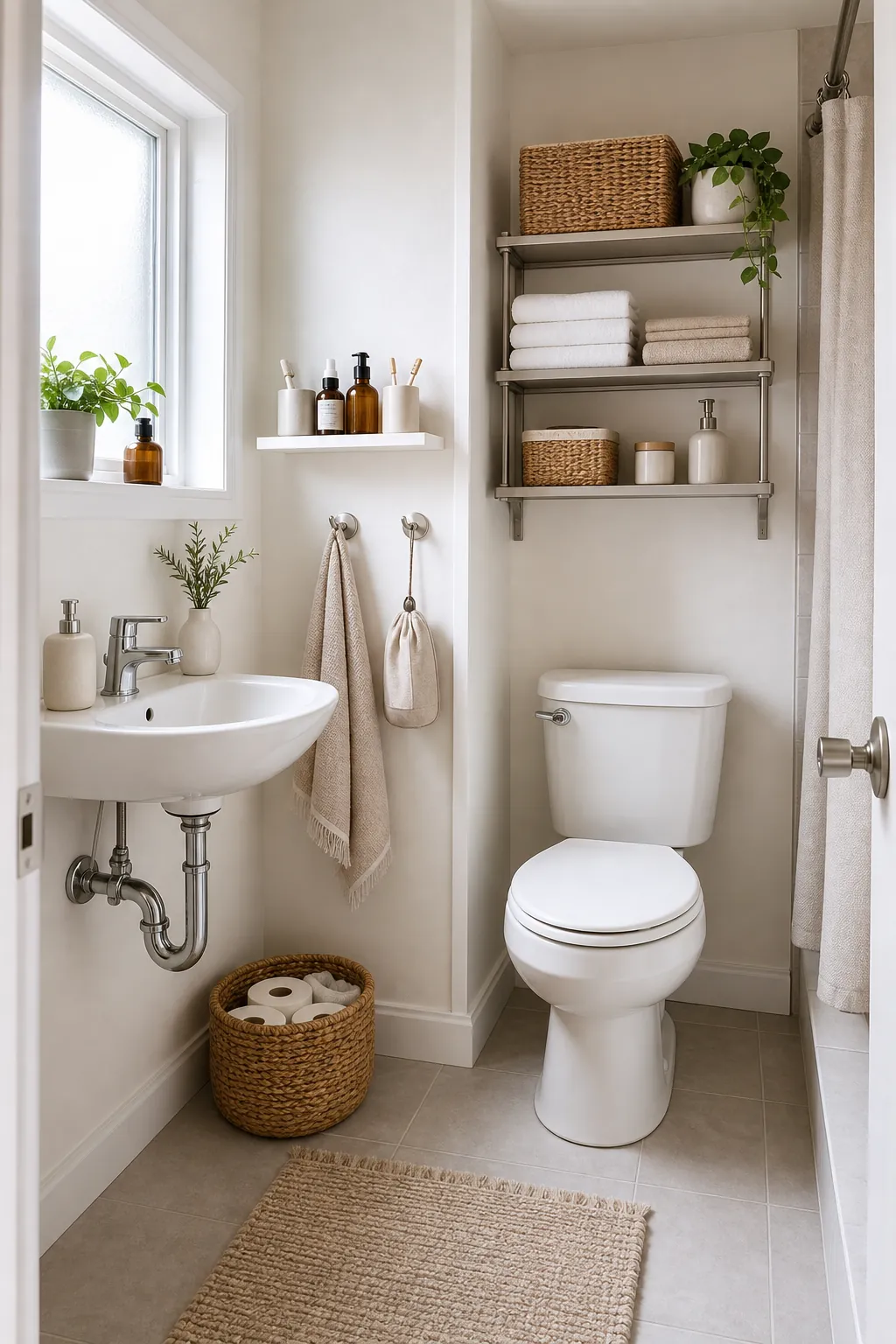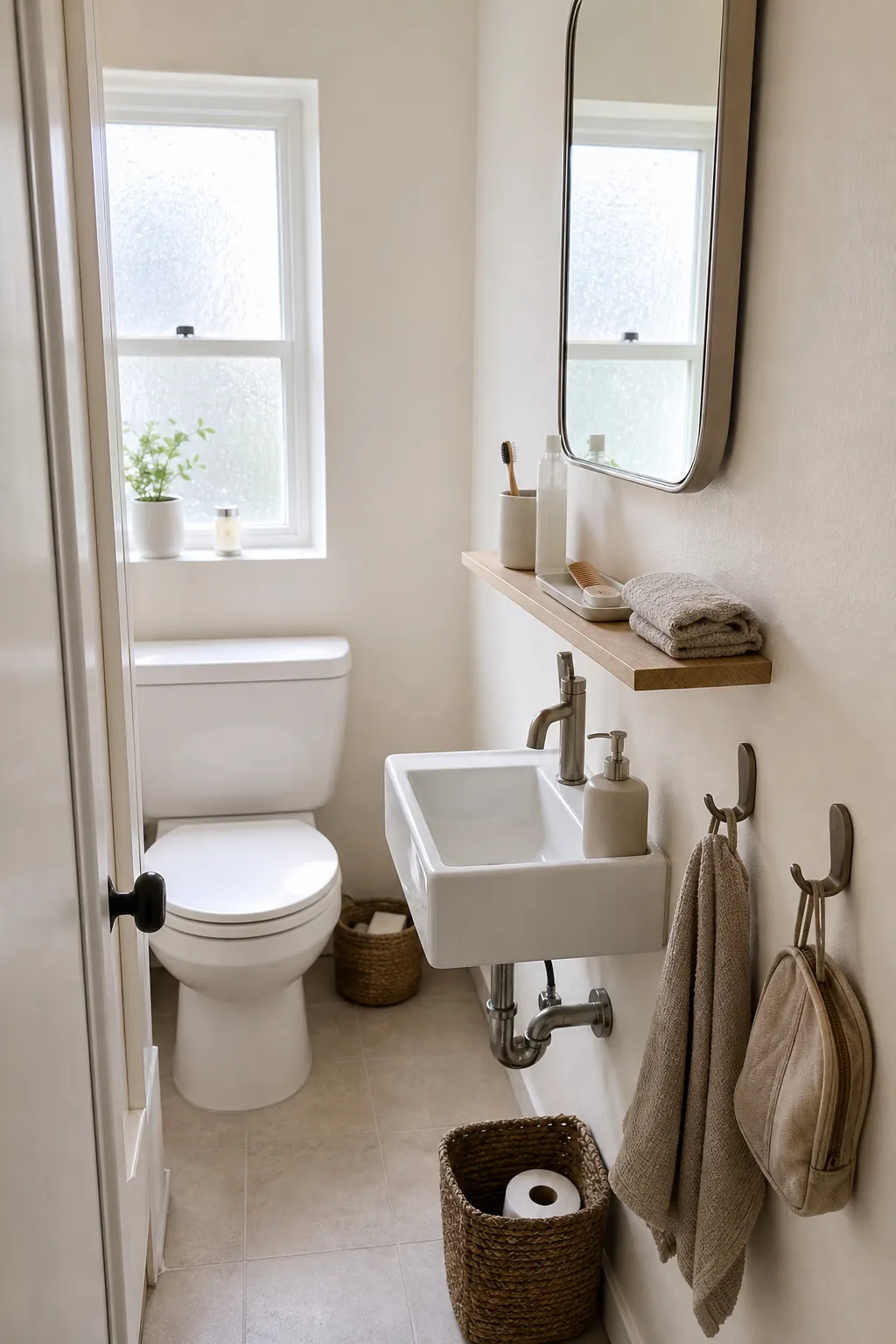
A tiny bathroom without cabinets has no patience for “just in case” storage. Every bottle, towel, brush, roll, and cleaning spray has to earn its place because there is no closed door hiding the overflow. The good news is that no cabinet storage can still feel calm, intentional, and easy to use if you stop trying to replace a vanity and start building smaller storage zones.
The mistake that makes a small bathroom feel worse is adding one bulky thing and hoping it solves everything. A tall cabinet, deep hamper, or crowded shelf can technically hold more, but it also steals floor space and makes the room feel tighter. A better plan is to use shallow wall mounted storage, over toilet storage, basket storage, bathroom hooks, and a small daily reset system so the room works without feeling packed.
Start With the Things You Actually Use in the Bathroom
Before buying a shelf, empty the room mentally. A tiny bathroom should hold the things you use when your hands are wet, when you are half awake, or when you cannot reasonably walk somewhere else. Toothbrushes, hand soap, daily skincare, toilet paper in use, a hand towel, shower products, and a few cleaning basics make sense. Bulk towels, backup shampoo, extra paper goods, hair tools used once a week, and medicine that does not need to live in humidity can usually move out.
This matters because tiny bathroom storage is not only about finding more space. It is about reducing the number of decisions the room asks you to make every morning. If every shelf has daily items only, open storage looks purposeful instead of chaotic.
- Keep one backup toilet paper roll in the bathroom, not the whole pack.
- Keep one active towel per person, with extras stored outside the room.
- Move duplicate bottles, travel sizes, and expired products out before adding new storage.
- Give each remaining category one visible home.
Turn the Sink Wall Into a Shallow Storage Zone
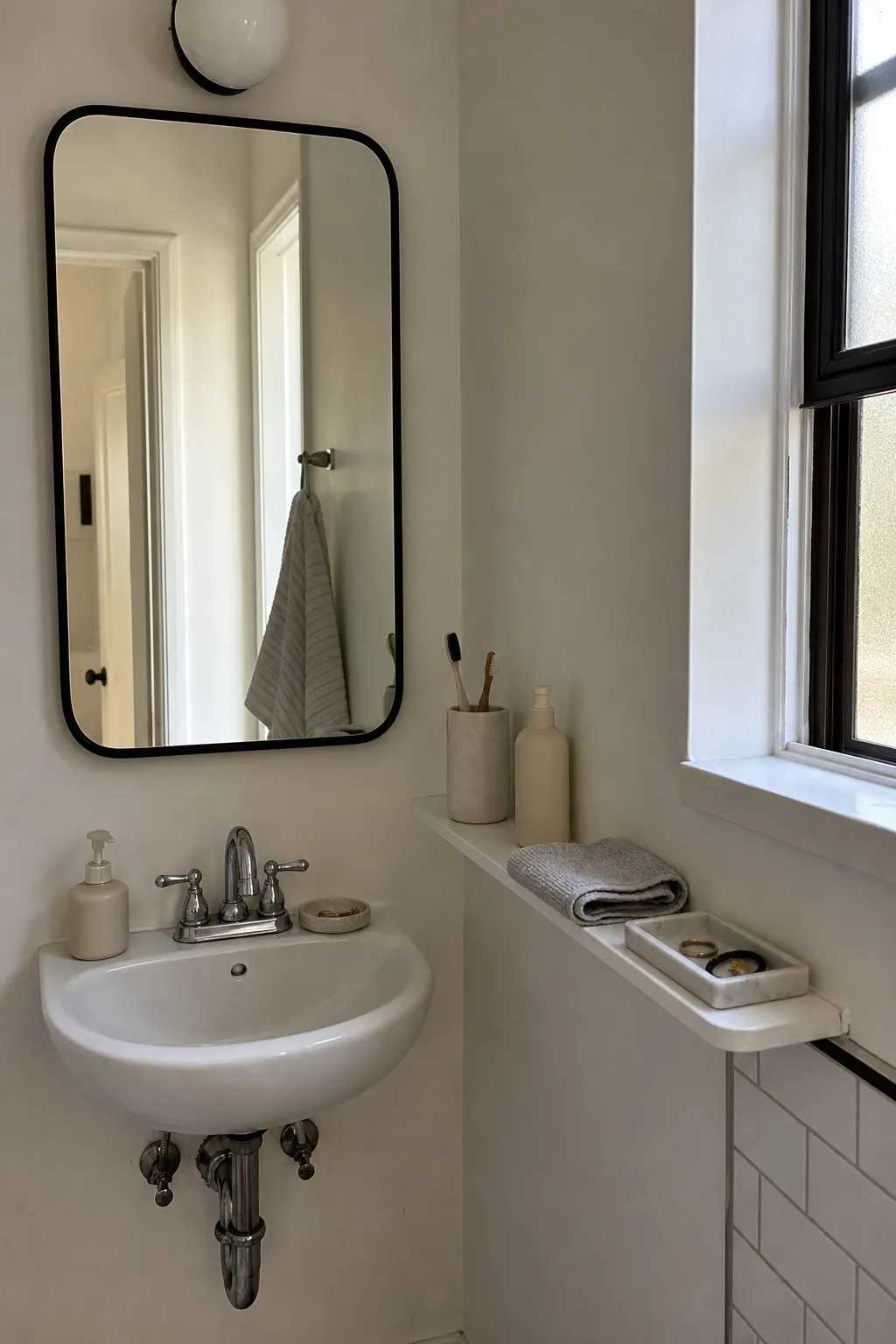
A sink without a vanity usually creates the most visible mess: toothbrushes, face wash, hand soap, razors, and small tubes gather around the basin because there is nowhere else to put them. The fix is not a deep cabinet beside the sink. It is a shallow zone that keeps daily items within reach without blocking elbows or making the sink feel squeezed.
Look for bottle-depth storage first. A narrow ledge, slim wall shelf, surface-mounted medicine cabinet, or small rail shelf can hold the daily set without projecting far into the room. If you rent, choose adhesive shelves only for light items and use freestanding pieces for anything heavier. If you own, anchor shelves properly and keep them shallow enough that no one bumps into them while washing their face.
The sink area works best when it has a simple rule: counter space is for use, not storage. A soap pump can stay out. Everything else should live on the wall, in a cup, in a tray, or in a narrow shelf close enough to grab.
Use Over Toilet Storage Without Making the Room Feel Heavy
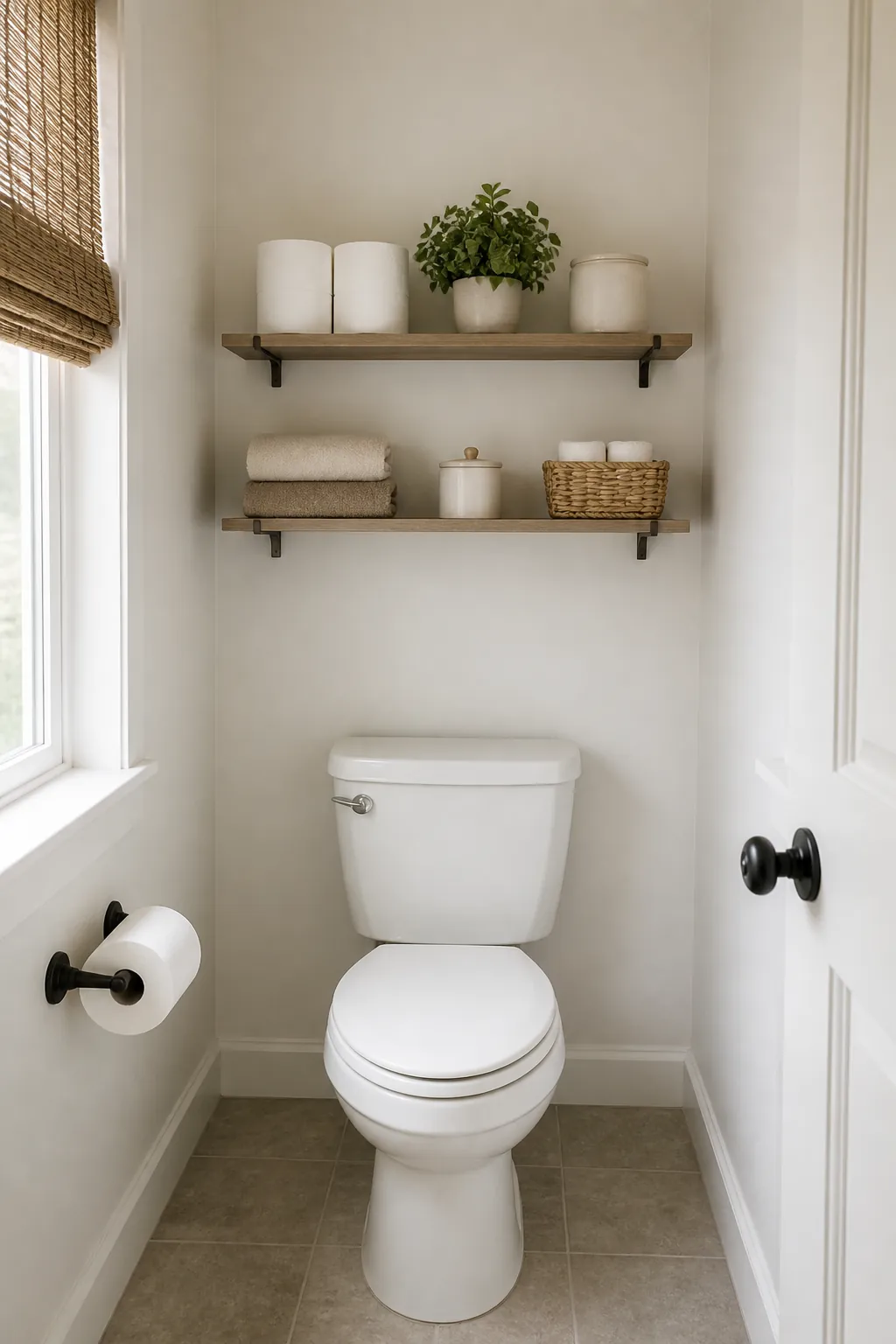
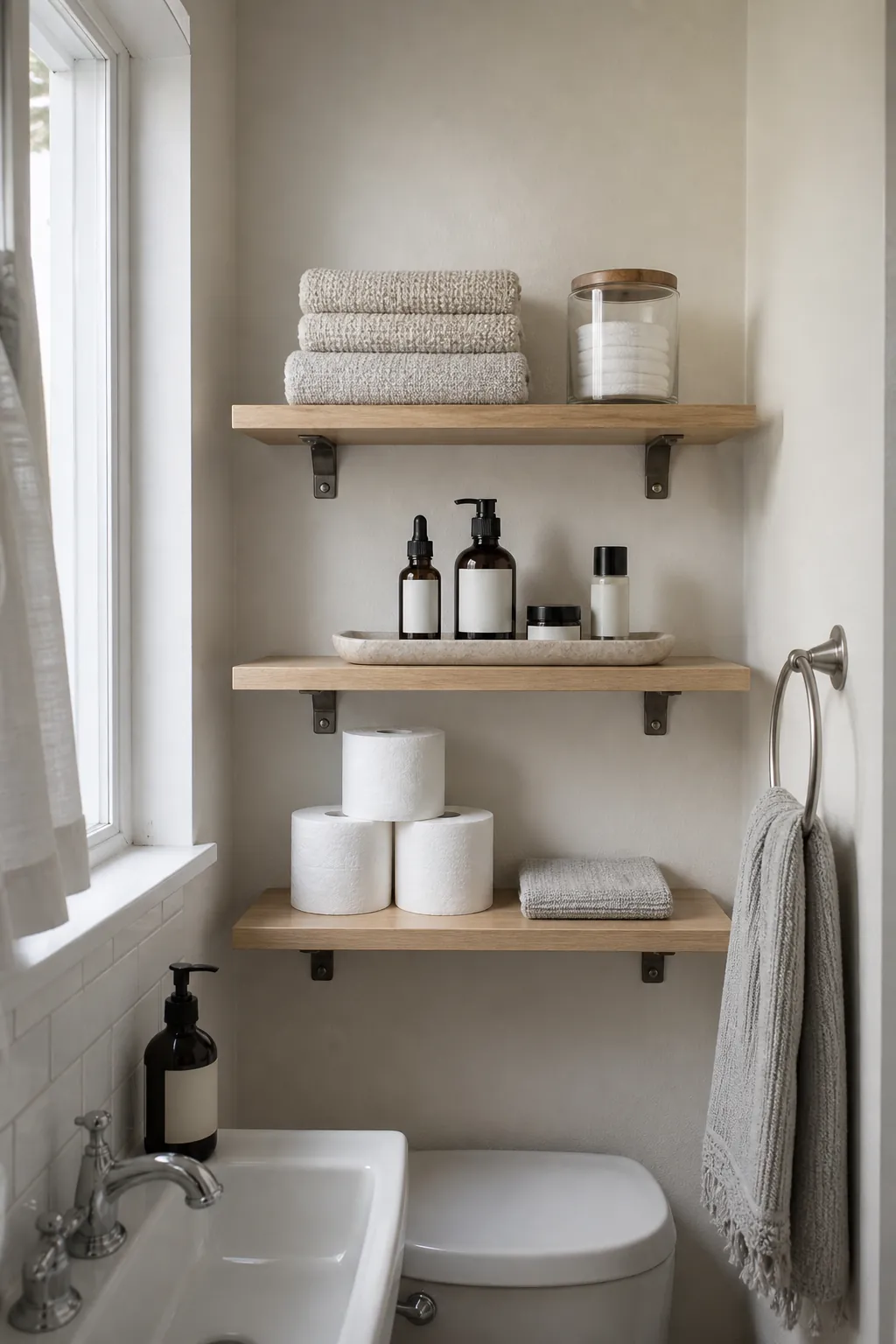
The space above the toilet is often the most useful vertical storage in a small bathroom. It is also easy to get wrong. A bulky closed unit can make the toilet wall feel crowded, while an unstable rack can feel temporary and annoying. The best over toilet storage is slim, anchored if possible, and visually lighter than a cabinet.
If there is a window, pipe, radiator, or awkward wall angle, do not force a standard rack. Try a single floating shelf above the tank, a narrow wall cabinet mounted higher, or two separate shelves that leave the obstruction alone. If you use a freestanding unit, check that it does not wobble when towels are removed. Stability matters more than capacity.
Use this zone for items that are light, clean, and predictable: toilet paper, folded hand towels, a small basket of guest basics, or a lidded container for backup soap. Avoid loading it with every product you own. Over toilet storage should solve the bathroom’s backup problem, not become a display of clutter.
Make Bathroom Shelves Hold Categories, Not Random Objects
Open bathroom shelves can look beautiful for one day and messy by the end of the week. The difference is whether each shelf has a job. Do not mix skincare, toilet paper, hair tools, cleaning cloths, and decor on the same little ledge. In a tiny room, visual order matters as much as storage capacity.
Give each shelf one category. One shelf can hold folded washcloths and a small jar of cotton rounds. Another can hold daily face products in a tray. A top shelf can hold spare rolls or guest towels. If you want decor, keep it functional: a small plant that tolerates humidity, a candle you use, or a simple dish for rings.
The easiest shelf styling rule is this: leave at least one third of every shelf empty. Empty space is what makes small bathroom storage feel designed instead of desperate. If a shelf is full from edge to edge, it is not a shelf problem. It is an editing problem.
Use Baskets Like Drawers You Can Lift Out
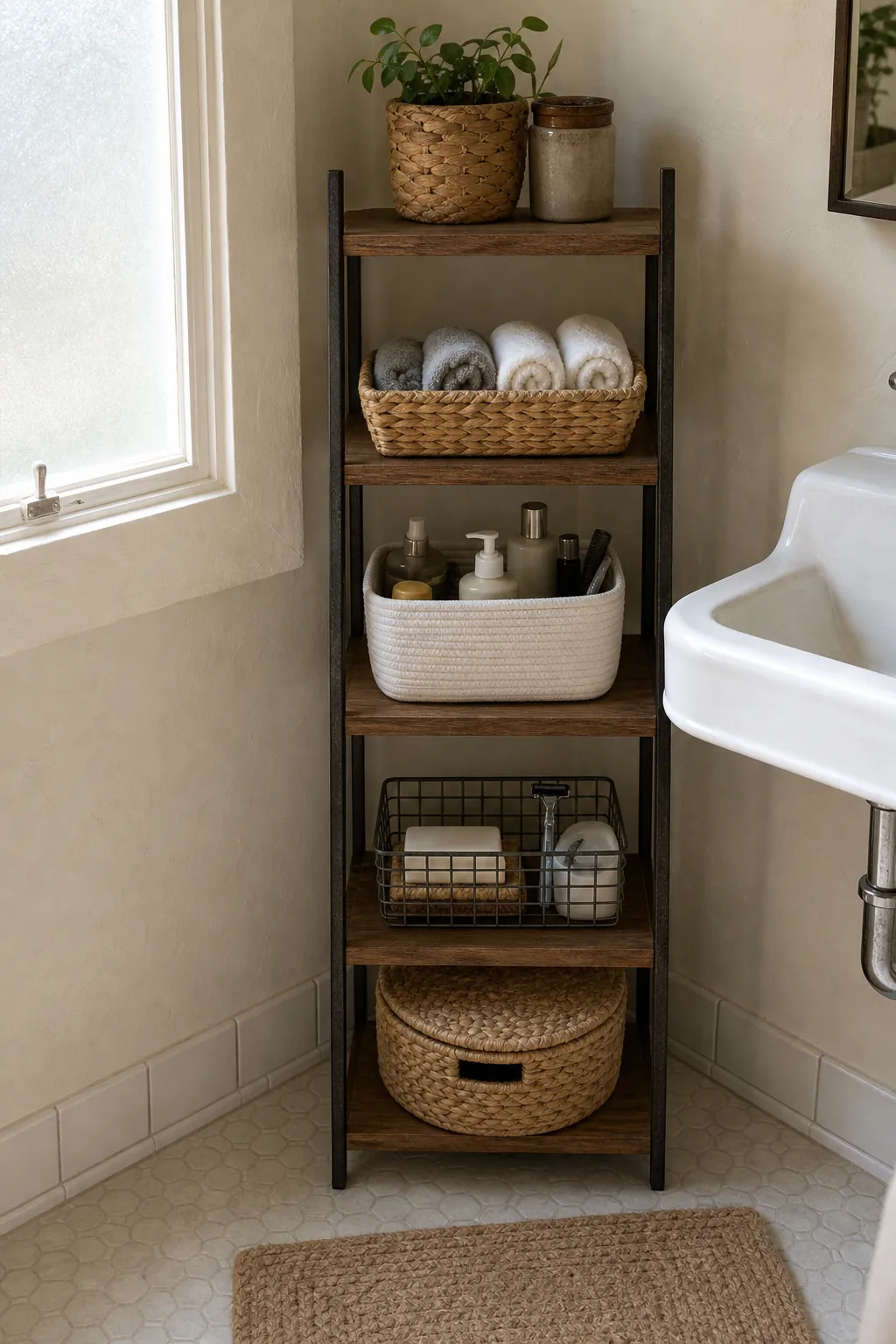
Basket storage is useful in a no cabinet bathroom because it gives open shelves a closed-storage habit. Instead of seeing ten small products, you see one basket. Instead of reaching behind bottles, you pull the whole category forward. This is especially helpful for hair care, extra soaps, cleaning cloths, period products, first-aid basics, and guest supplies.
Choose baskets by function, not just style. In a humid bathroom, washable plastic, wire, seagrass with a liner, or coated metal usually works better than fabric that stays damp. Use low baskets for shelves at eye level so you can see inside. Use taller baskets only on lower shelves where they will not visually crowd the wall.
Labels can help, but the real trick is size. A basket should be small enough that it cannot become a junk drawer. If the basket is too big, it will collect duplicates, half-used products, and things you meant to decide about later.
Put Hooks and Rails Where Things Already Land
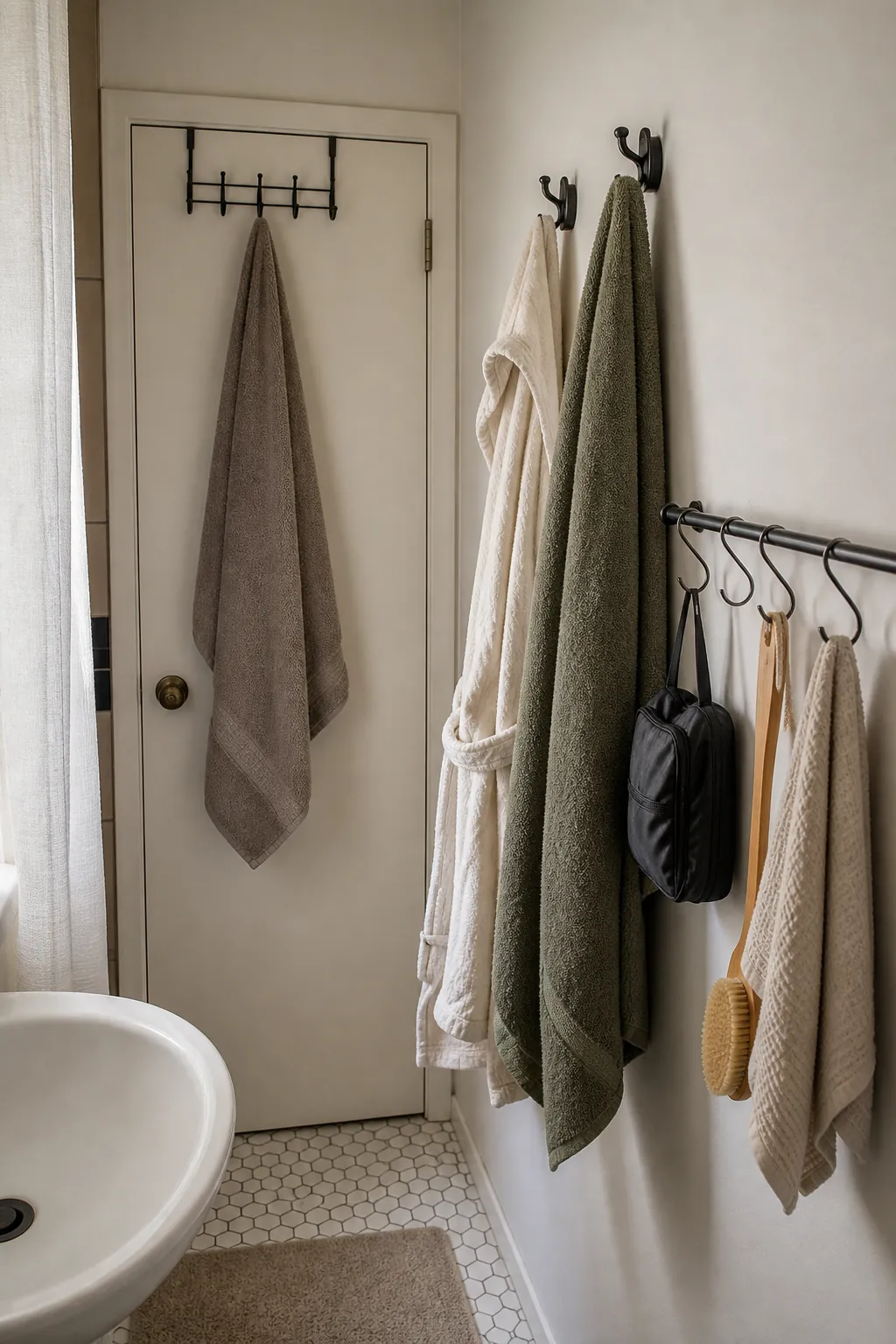
Bathroom hooks are small, cheap, and often more useful than another shelf. Towels, robes, shower caps, toiletry pouches, washcloths, and even a hanging caddy can live on hooks if the placement matches the routine. The best hook is not always centered or symmetrical. It is where the wet towel actually lands when someone steps out of the shower.
Use the back of the door for towels or a narrow pocket organizer if the door can still open fully. Use a wall hook near the shower for the towel in active use. Use a small rail with S-hooks near the sink for brushes, a hand towel, or a hanging cup. If you rent, adhesive hooks can work for light items, but heavy wet towels need a stronger solution.
Hooks also protect your shelf space. Anything that can hang should not be stealing a flat surface. In a tiny bathroom, that one rule can clear the sink, the toilet tank, and the edge of the tub.
Add One Movable Piece Only If It Has a Clear Job
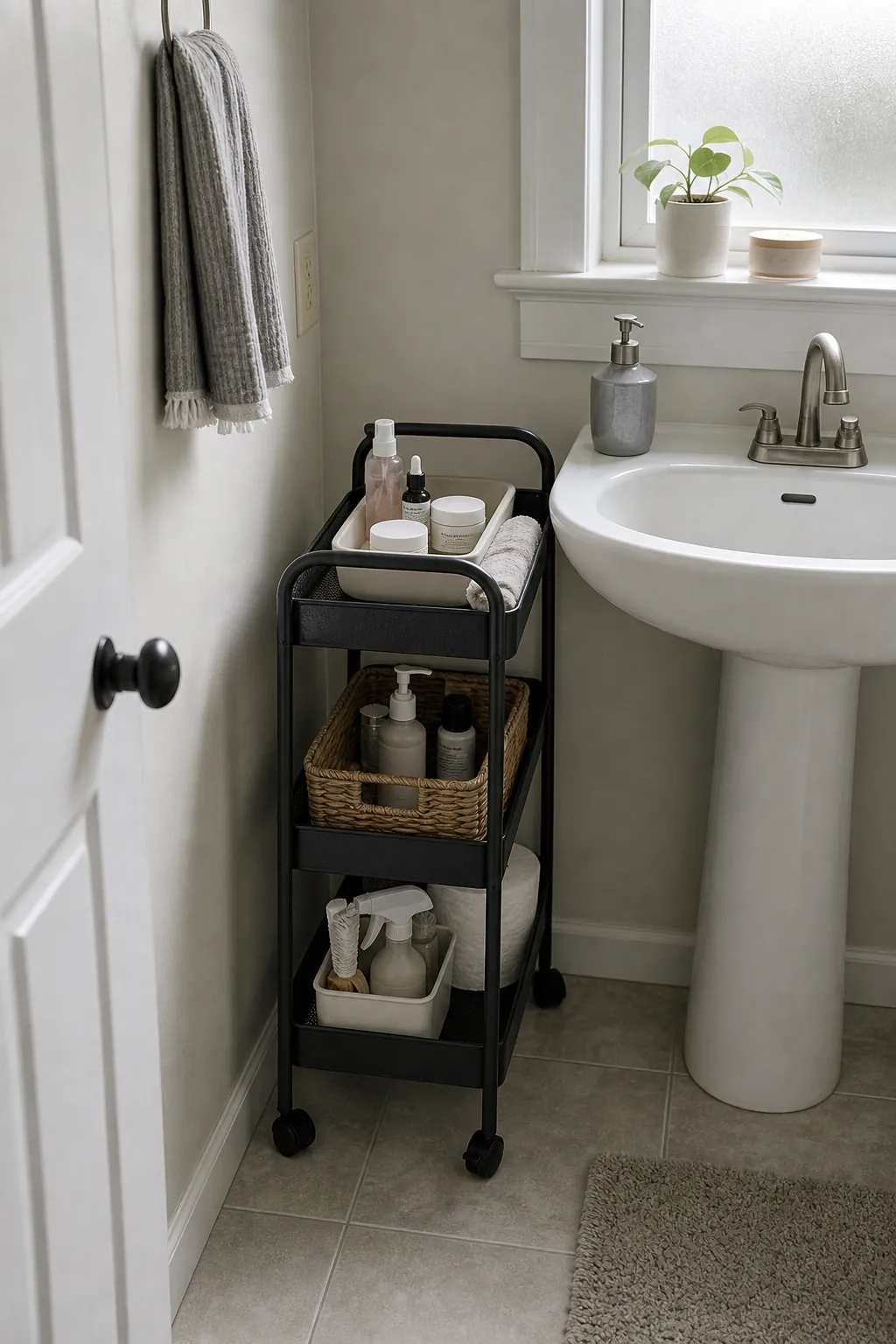
A slim rolling cart, narrow ladder shelf, or small storage rack can be helpful when the walls are awkward or you cannot drill. But movable storage can also become floor clutter with wheels. Before adding one, decide exactly what it will hold and where it will park.
A cart beside the sink can hold cleaning spray, extra hand soap, hair products, or guest supplies. A ladder shelf can hold towels when wall shelves are not possible. A narrow three-drawer organizer can sit beside a pedestal sink if there is enough clearance. The key is to keep the footprint narrow and the contents consistent.
Do not use a movable piece to avoid editing. If it starts as a home for daily items and turns into a place for every loose product, remove it or shrink the categories. Small bathroom storage works when every piece has a job description.
Give Cleaning Supplies a Hidden or Low Zone
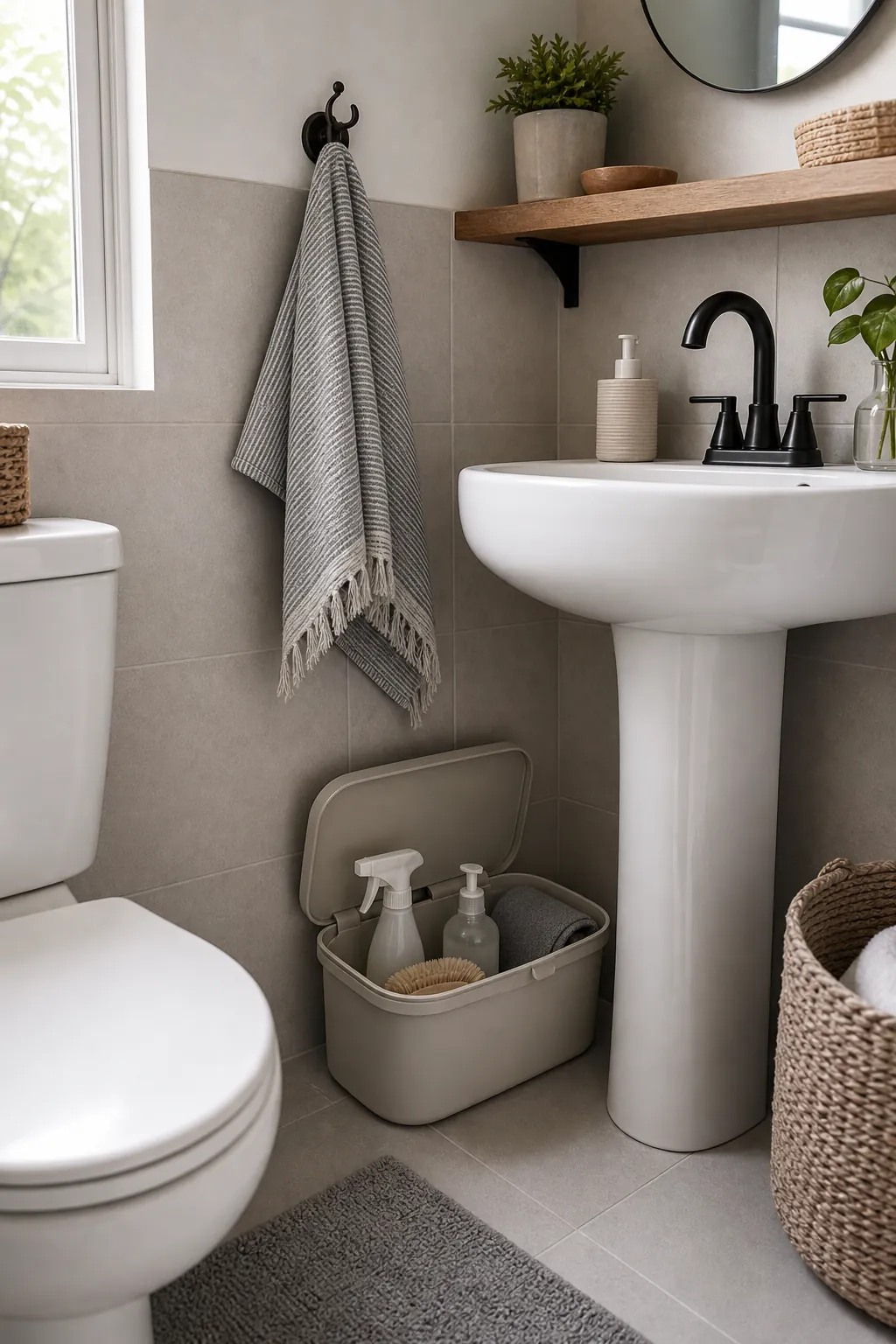
Cleaning supplies are one of the reasons no cabinet storage gets messy fast. Spray bottles and brushes are useful, but they do not need to be the first thing you see. If there is no vanity, give cleaning items a low zone: a lidded basket, a narrow cart shelf, a small caddy behind the toilet, or a washable bin just outside the bathroom.
Keep only the bathroom-specific basics here. One spray, one cloth, one brush, and one backup hand soap may be enough. Bulk refills and extra cleaners can live under the kitchen sink, in a laundry area, or on a utility shelf. This keeps the bathroom from becoming a storage closet it was never built to be.
The visual rule is simple: daily personal items can be visible if they are neat, but cleaning supplies should feel tucked away. That single distinction makes bathroom organization feel more intentional.
Build a Reset Routine So the Storage Stays Useful
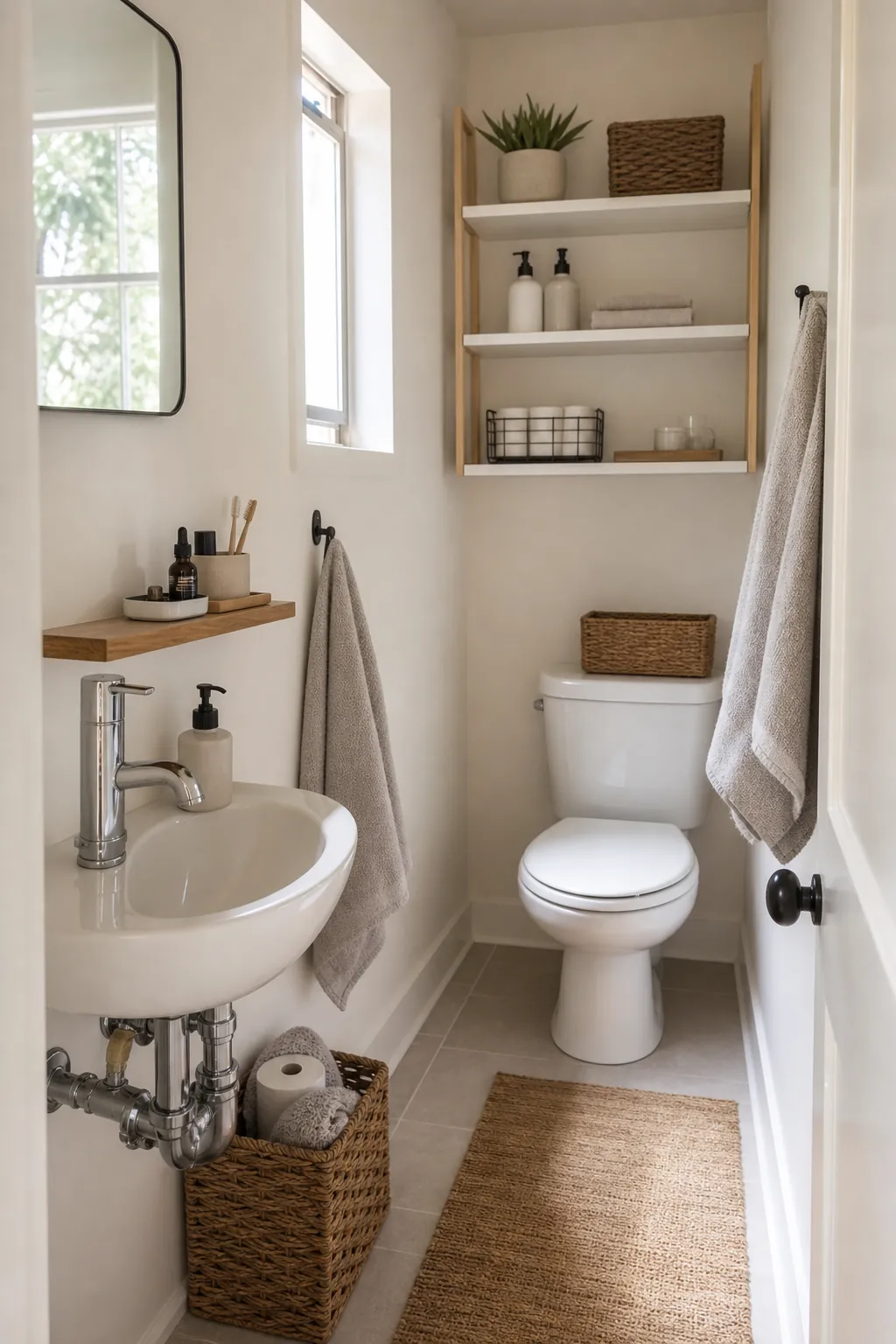
The final step is not another product. It is a reset routine that keeps open storage from sliding back into clutter. Once a week, check the sink shelf, baskets, hooks, and over toilet storage. Throw away empties, return overflow to its outside storage spot, and wipe the shelves before putting items back.
Use a simple test: if an item has not been touched in two weeks and is not an emergency or backup supply, it probably does not need prime bathroom space. If a basket is too full to lift easily, split the category or remove duplicates. If a hook always has three things on it, add another hook nearby or move one category elsewhere.
A cabinet can hide clutter for a while. A tiny bathroom without cabinets cannot. That is why the best tiny bathroom ideas are not about squeezing in the biggest storage piece. They are about making the room honest: only what belongs, stored where the routine already happens, with enough empty space to breathe.