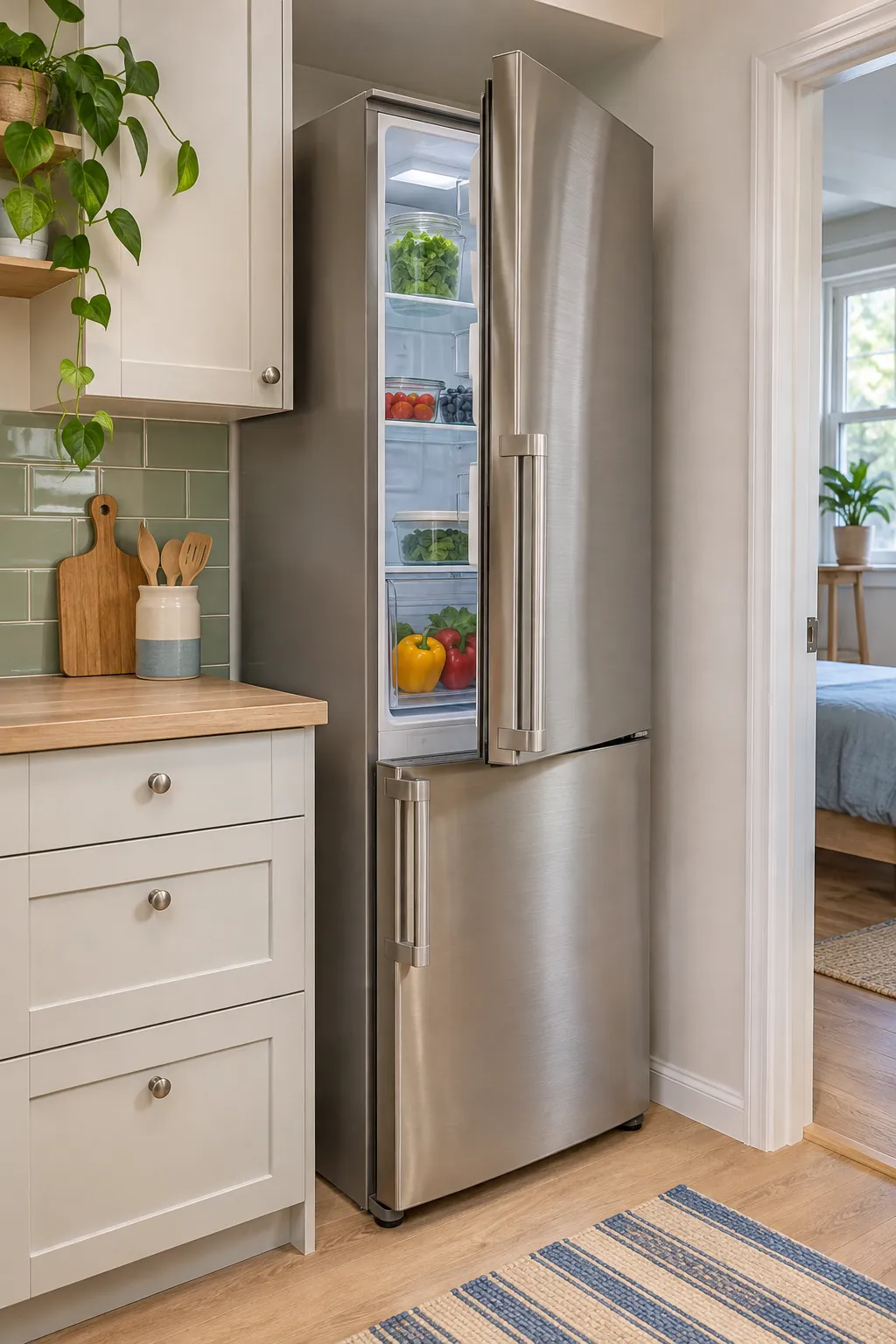
A refrigerator can fit inside an apartment alcove and still fail in daily use. The cabinet may clear the opening while the door hits a wall, the handle enters a doorway, or an interior drawer remains trapped behind a partly open door. Choose the appliance by its moving envelope, not only its closed dimensions.
The safest process is to measure the room, check the exact installation guide, and test the door and drawers as one system. A reversible door can solve some layouts. A hinge that keeps the door close to the cabinet can solve others. Neither feature helps if the handle, drawer, or delivery path still collides.
Map the full opening path
Measure the alcove width, height, and depth at several points. Walls and cabinets are not always square. Record the narrowest width and lowest height. Then note every nearby obstacle: wall return, counter edge, pantry handle, baseboard, radiator, doorway trim, and island.
Add the refrigerator door to the plan. The door may swing outward as it turns, so a box that fits with room to spare can still need extra side space. The handle can strike before the door reaches the angle needed for drawers. Use the maker’s installation drawing for the exact model rather than a store listing alone.
Test drawer access at the real door angle
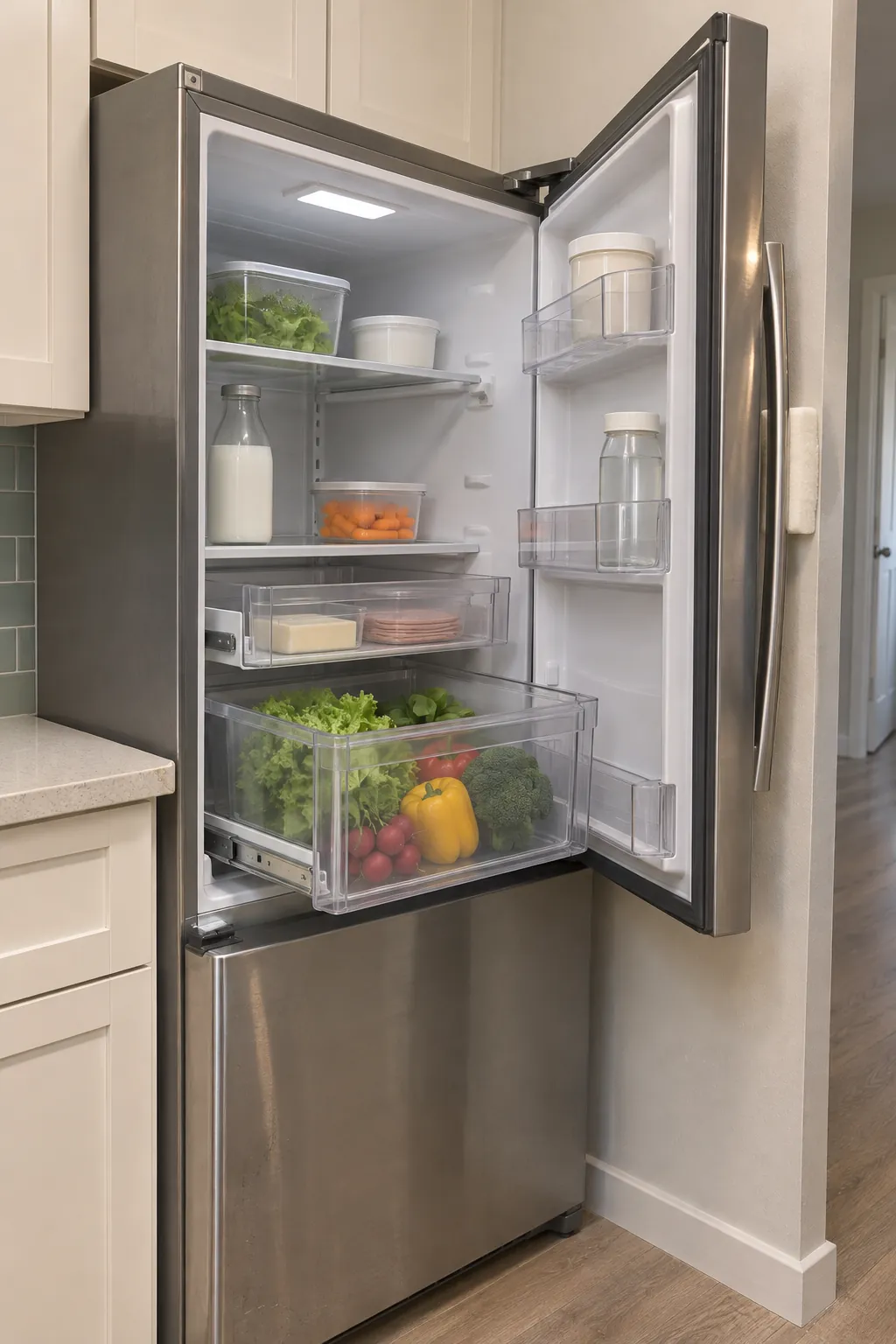
A door that opens far enough for shelves is not always open far enough for produce or deli drawers. Wide drawers may need the door to move beyond a right angle. French door models can also trap a full width drawer when one side sits against a wall.
Ask a showroom to place the door at the maximum angle your kitchen allows. Pull every drawer out fully. Remove shelves and bins as you would for cleaning. Check whether the door bin or gasket blocks the path. If you cannot test the model, request a clear interior drawing and written guidance from the maker.
Choose the hinge side and door style
For a single door refrigerator beside a wall, the hinge usually works better on the wall side. The handle then moves toward the open room and food is easier to transfer to the counter. Confirm that the door is truly reversible and that the service can change it before delivery.
French doors reduce the width of each swinging panel, but they do not remove clearance needs. Check both hinges, both handles, and any full width interior drawer. Bottom freezer drawers need clear floor space in front. A top freezer single door may be mechanically simpler in a tight wall location.
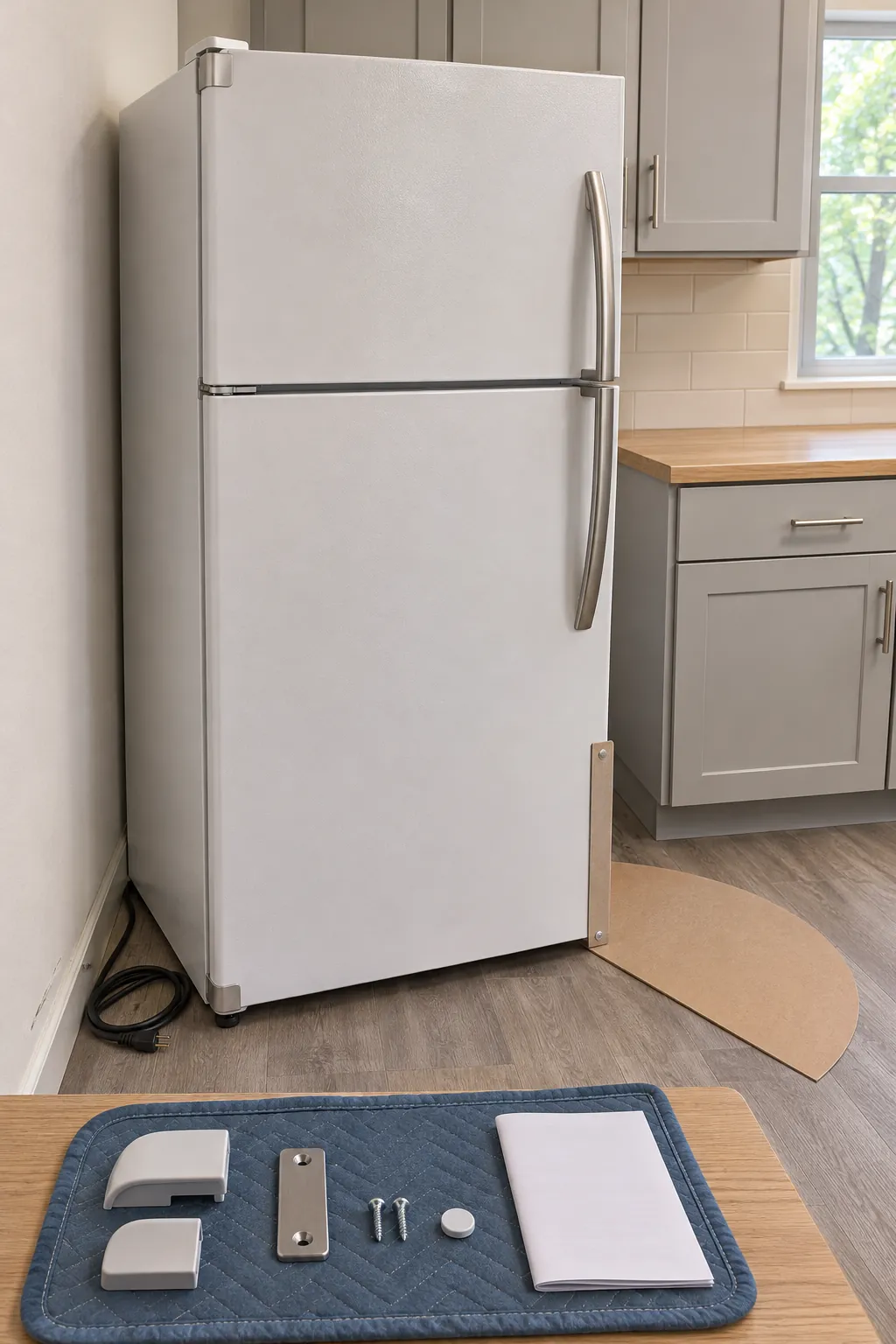
Separate cabinet depth from usable depth
Counter depth does not guarantee wall clearance. It describes the cabinet position more than the hinge path. Some doors must project beyond the adjacent cabinet face so they can turn. Measure the case, doors, handles, rear connections, and required ventilation as separate parts.
Leave the clearances stated in the installation guide. Do not push the refrigerator deeper to hide the door if that blocks airflow, pinches a water line, or prevents the hinge from moving. Confirm whether published depth includes the handle and whether the rear spacer is mandatory.
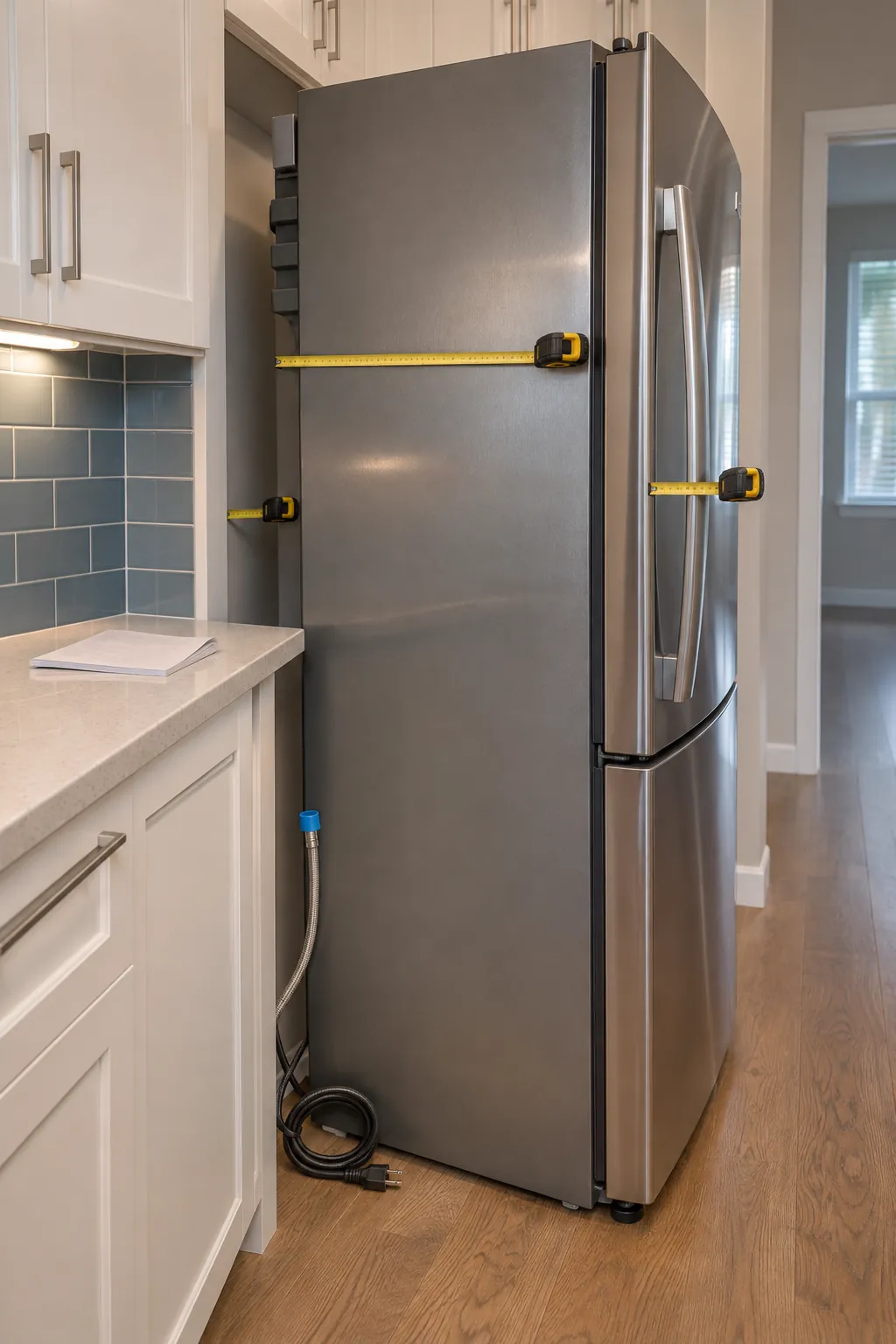
Build a simple full size mockup
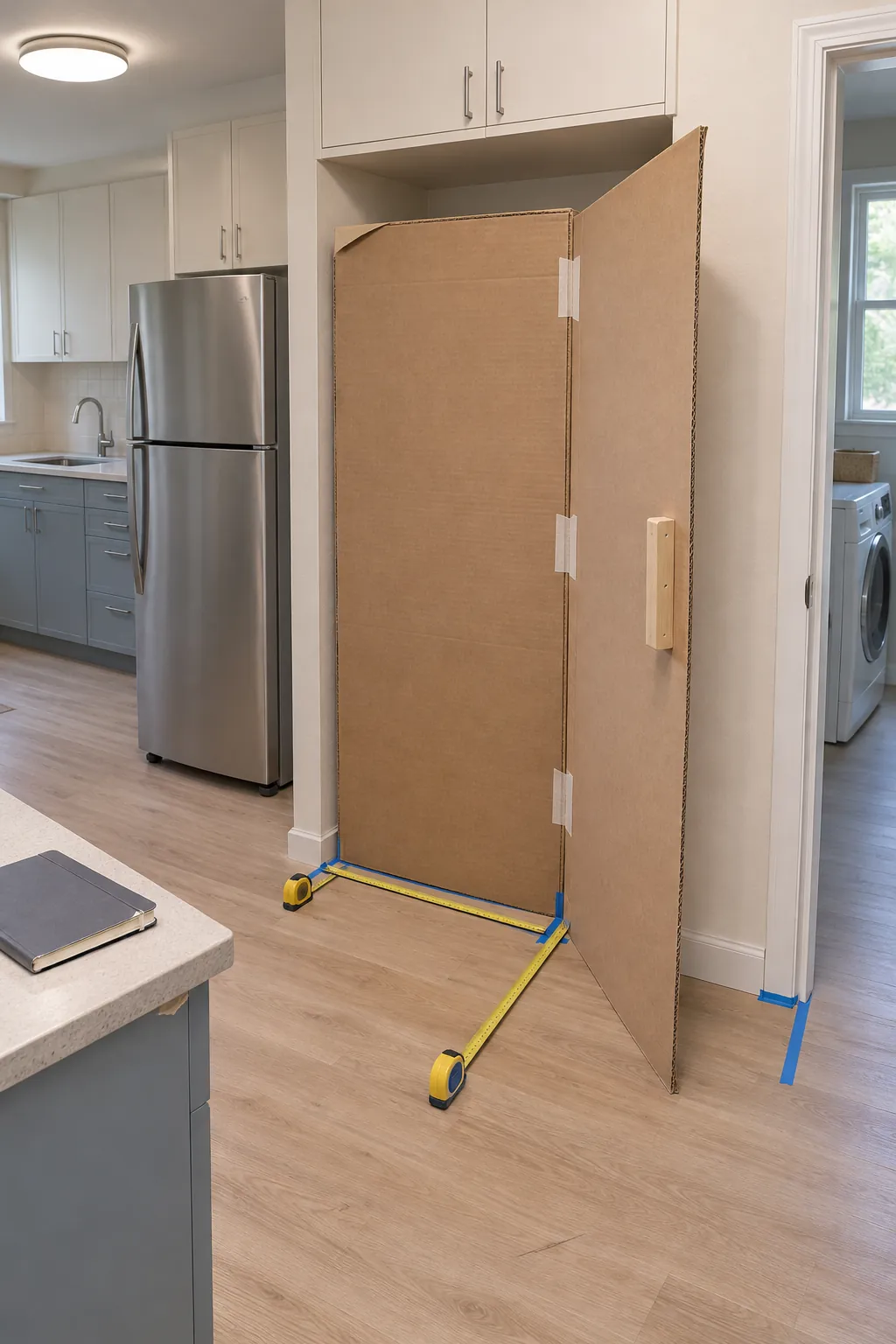
Mark the case footprint on the floor with removable tape. Use cardboard to represent the closed door and handle. Pivot it from the proposed hinge point through the available angle. This quick test reveals contact with a wall, island, doorway, or pantry handle.
Do a second test at drawer height. Hold a cardboard rectangle where the produce drawer would travel. Make sure a person can stand beside the open door and move food to a counter. Include the baseboard because it can keep the case farther from the wall than the upper measurement suggests.
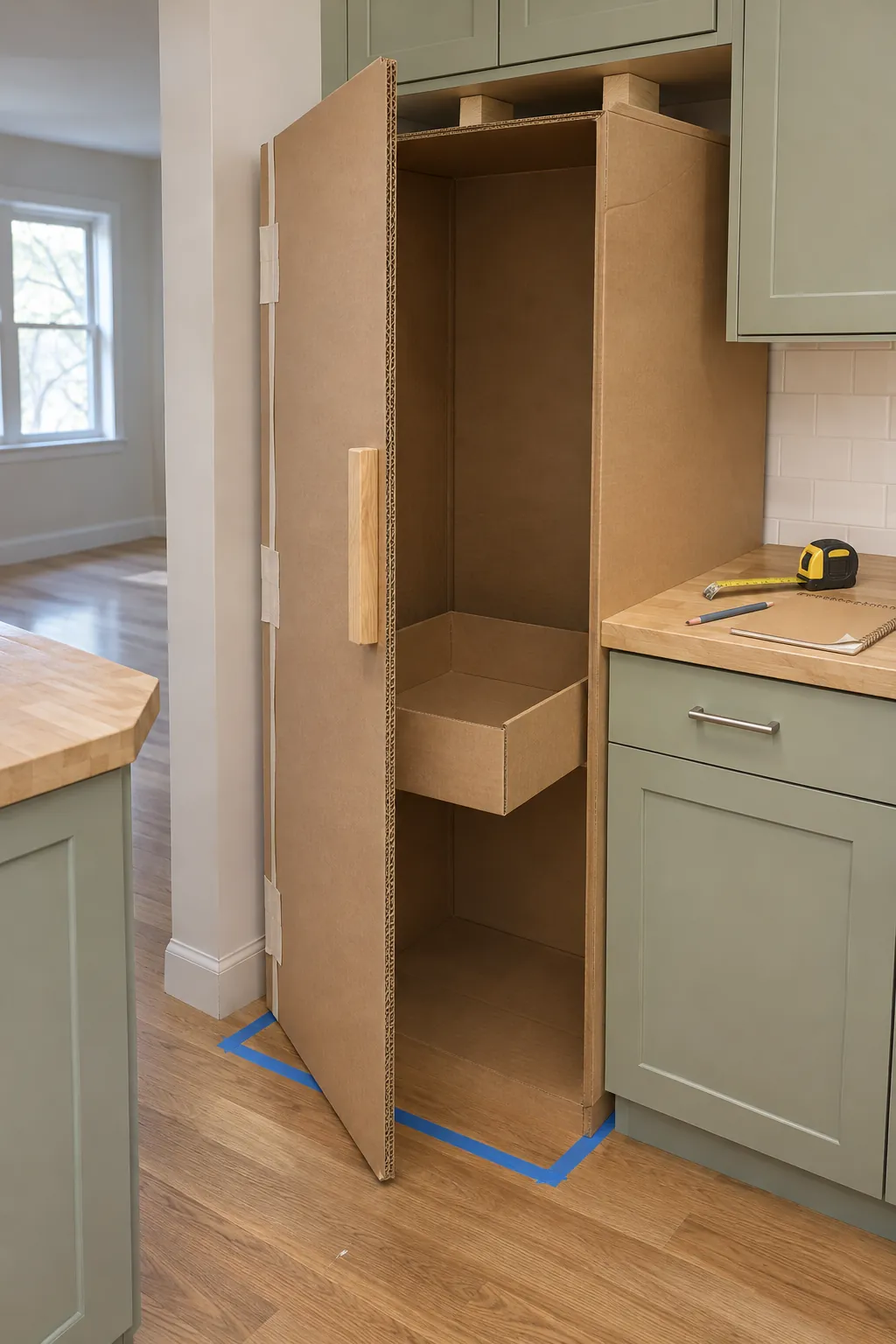
Check delivery and final setup
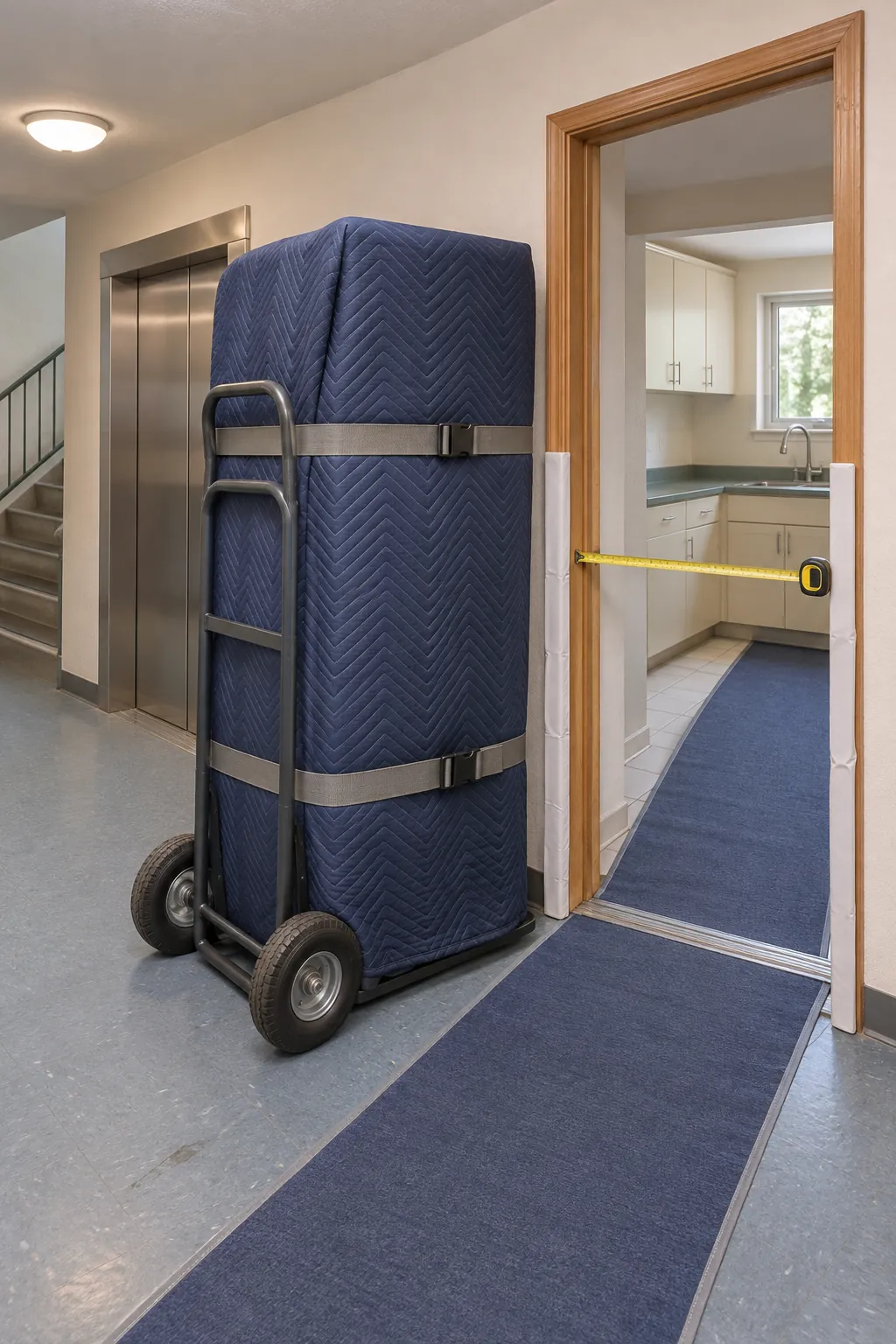
Measure the building entrance, elevator, stair turns, apartment door, and kitchen approach. Compare those openings with the delivery dimensions, not only the installed dimensions. Ask whether the crew may remove refrigerator doors and whether building rules limit delivery hours or elevator use.
Before accepting the appliance, place it at the planned depth and test every door, shelf, bin, and drawer. Confirm that the unit is level, the gasket seals, ventilation remains open, and any water line moves without a sharp bend. Protect the wall with a suitable stop only if the maker permits it and the required opening angle still works.
The best apartment refrigerator is not the largest one that enters the alcove. It is the model whose door, drawers, handle, ventilation, and delivery path all work in the real room.