
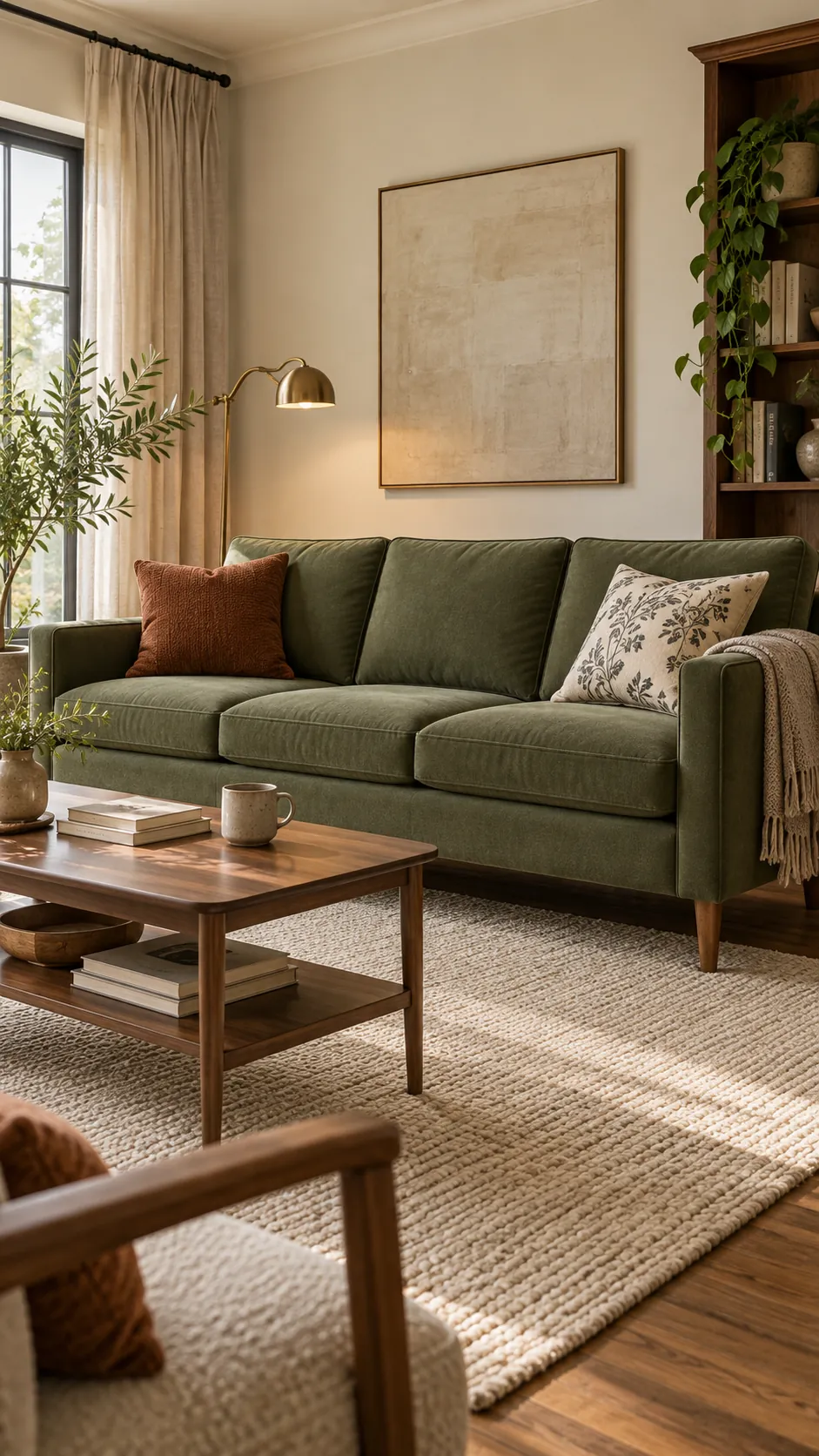
A green sofa can carry an entire living room, but colour alone does not make it a good purchase. The best choice fits the room, supports the way you sit, survives your household, and still looks right in the light you actually have. Treat the green as one decision within a larger comfort and durability test.
Measure the room and the route
Mark the sofa footprint on the floor before comparing shades or fabrics. Check that doors can open, people can pass, and the coffee table remains within comfortable reach. Measure the doorway, stairs, lift, and tightest corner on the delivery route as carefully as the final wall.
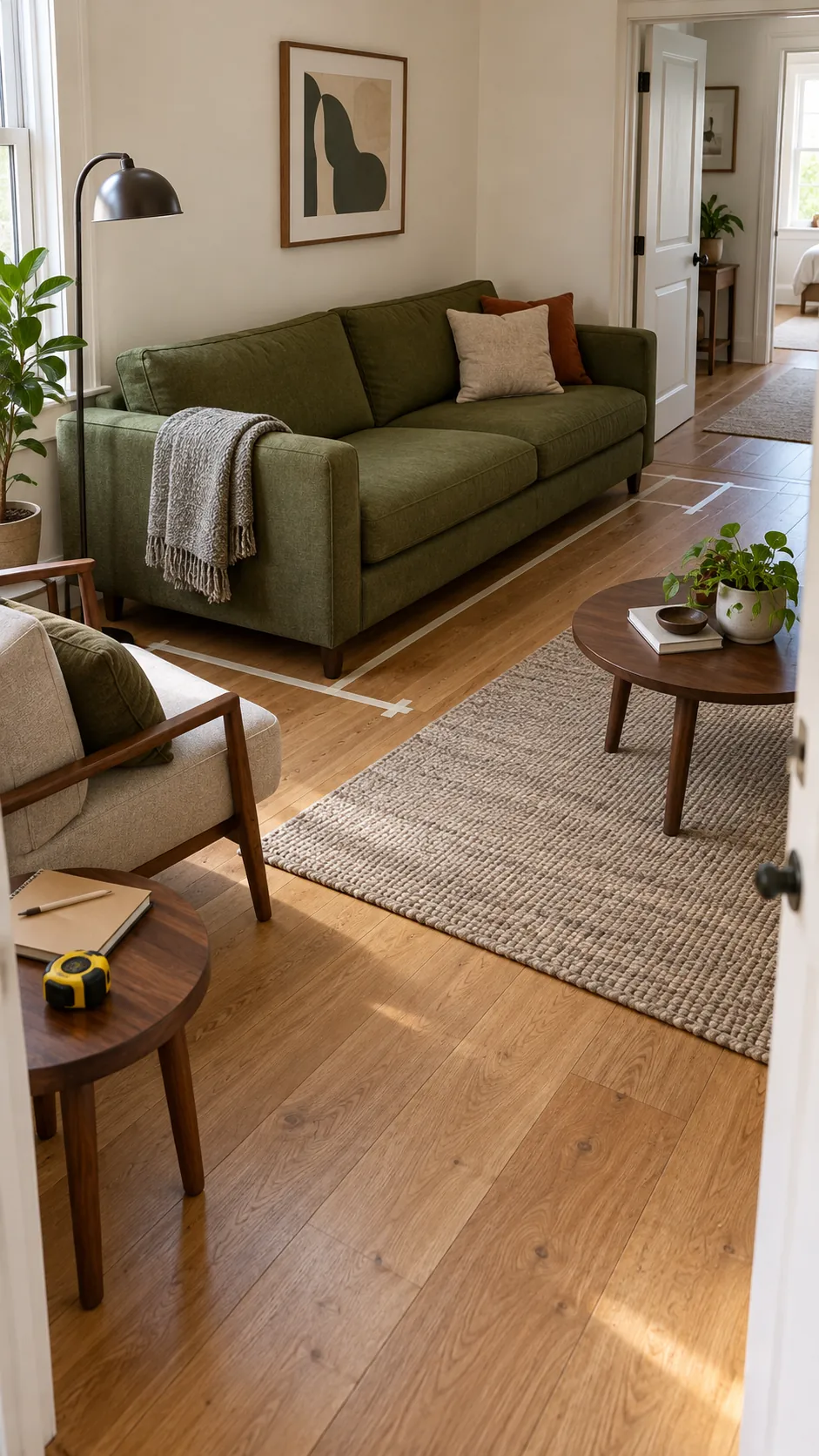
A deep sofa can overwhelm a narrow room even when its width looks reasonable. Slim arms preserve more seating space within the same overall size. Raised legs reveal more floor and can make a compact room feel lighter.
Choose the green in your own light
Order the largest available fabric samples and move them around the room for several days. Olive and moss often feel grounded beside warm wood, while emerald creates more contrast and blue green can feel cooler. Check every sample in morning daylight, evening shade, and lamplight because the undertone can shift dramatically.
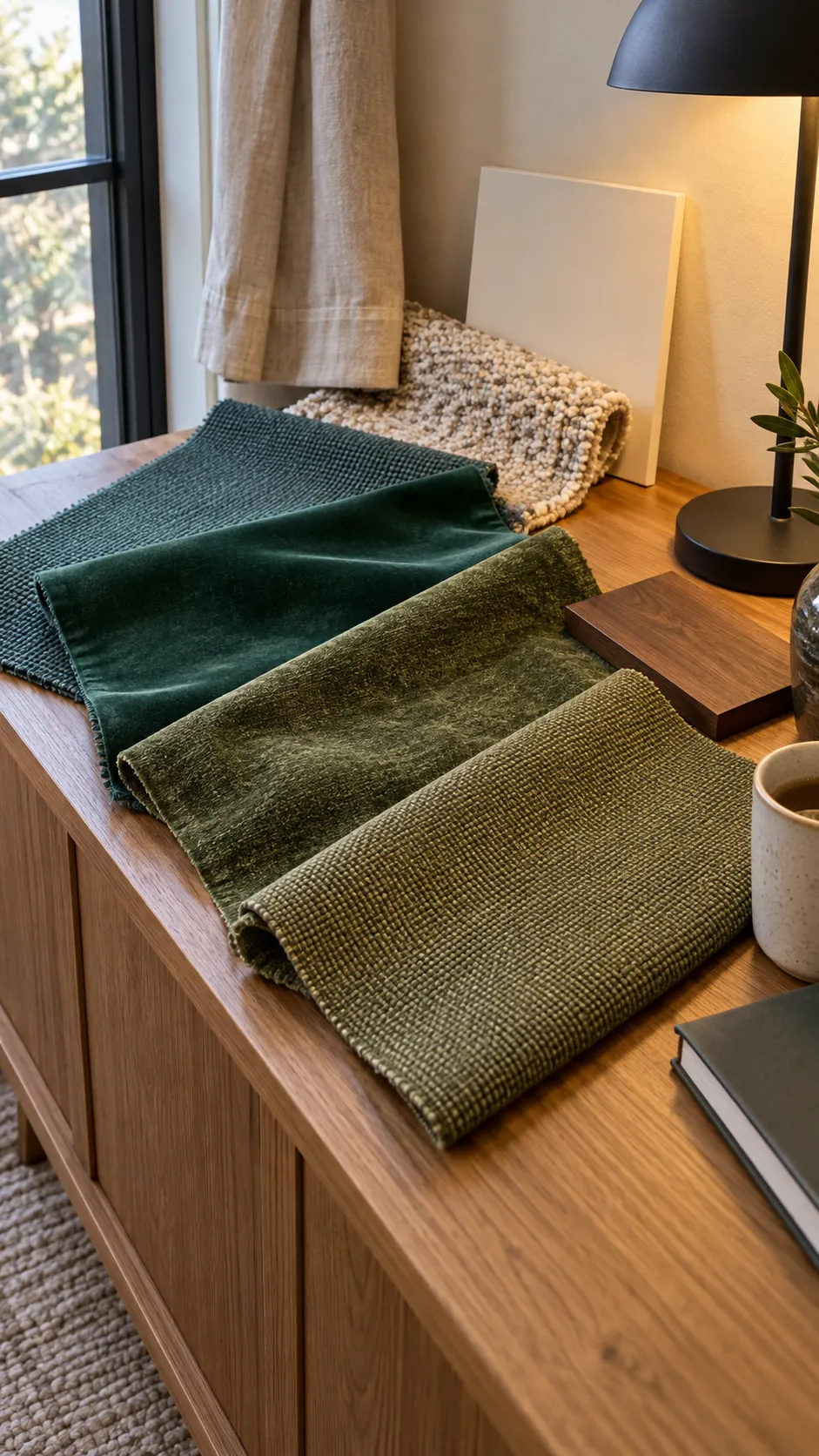
Place samples beside the rug, curtains, wall colour, and largest piece of wood furniture. A green that looks rich on a screen may turn grey or yellow beside those fixed finishes. Choose the sample that stays balanced through the hours when you use the room most.
Match the fabric to daily life
Velvet gives green depth, but its pile changes with touch and light, so decide whether that movement will please or bother you. A tightly woven performance fabric is often easier for children, pets, and frequent meals. Ask about abrasion testing, pilling, cleaning codes, removable covers, and whether sunlight can fade the colour.
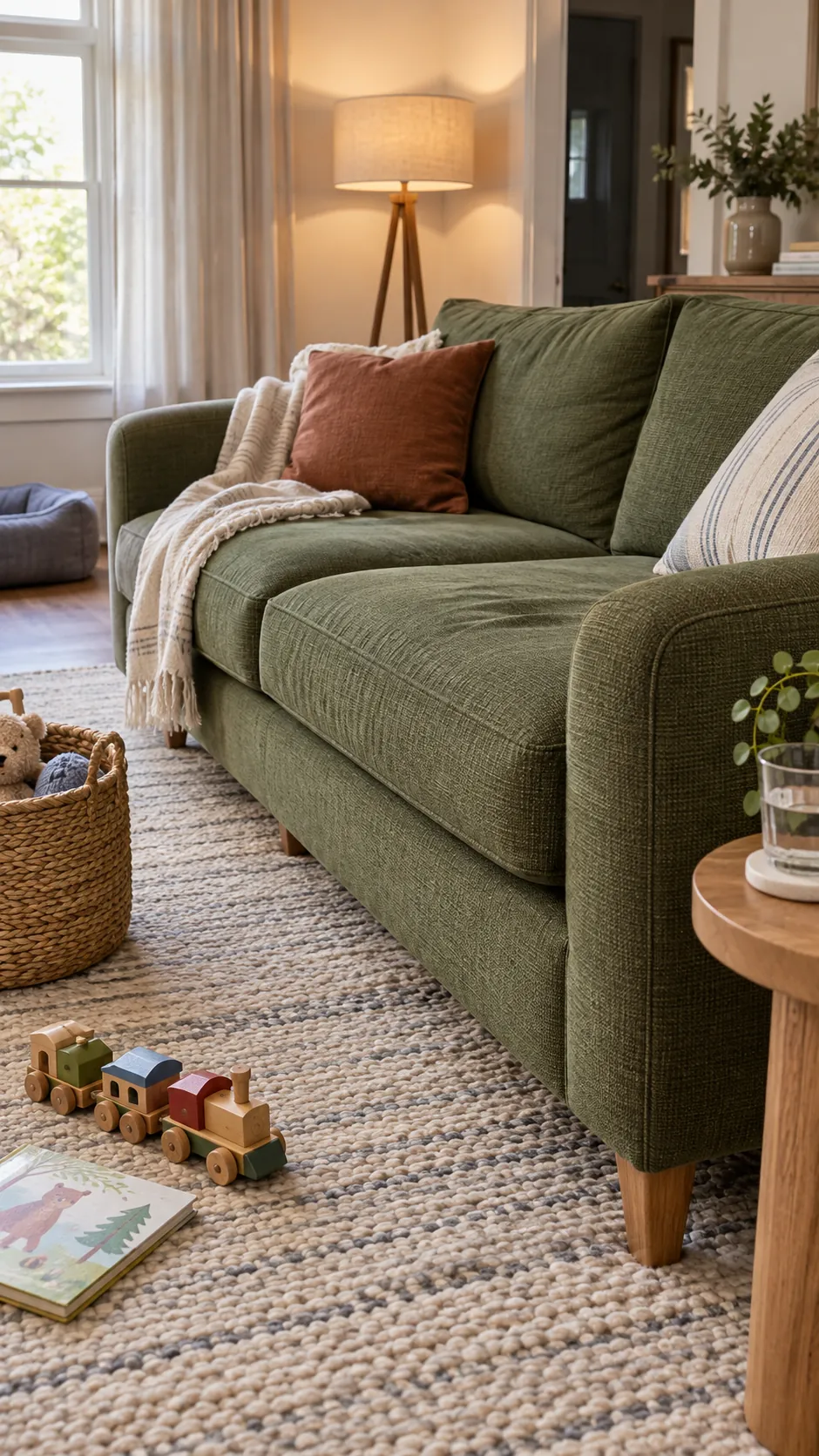
Request care instructions before ordering and test any cleaner on the sample. Textured mid tone green can disguise small marks better than very pale or very dark cloth. If the sofa will face strong sun, compare the manufacturer warranty with the actual exposure in your room.
Test the seat rather than the silhouette
Sit as you normally relax, not as you would for a brief showroom test. Your feet should either reach the floor or the seat should be deep enough for the way you curl up. Check whether the back supports your shoulders, whether the arms suit reading, and whether the cushions recover after you stand.
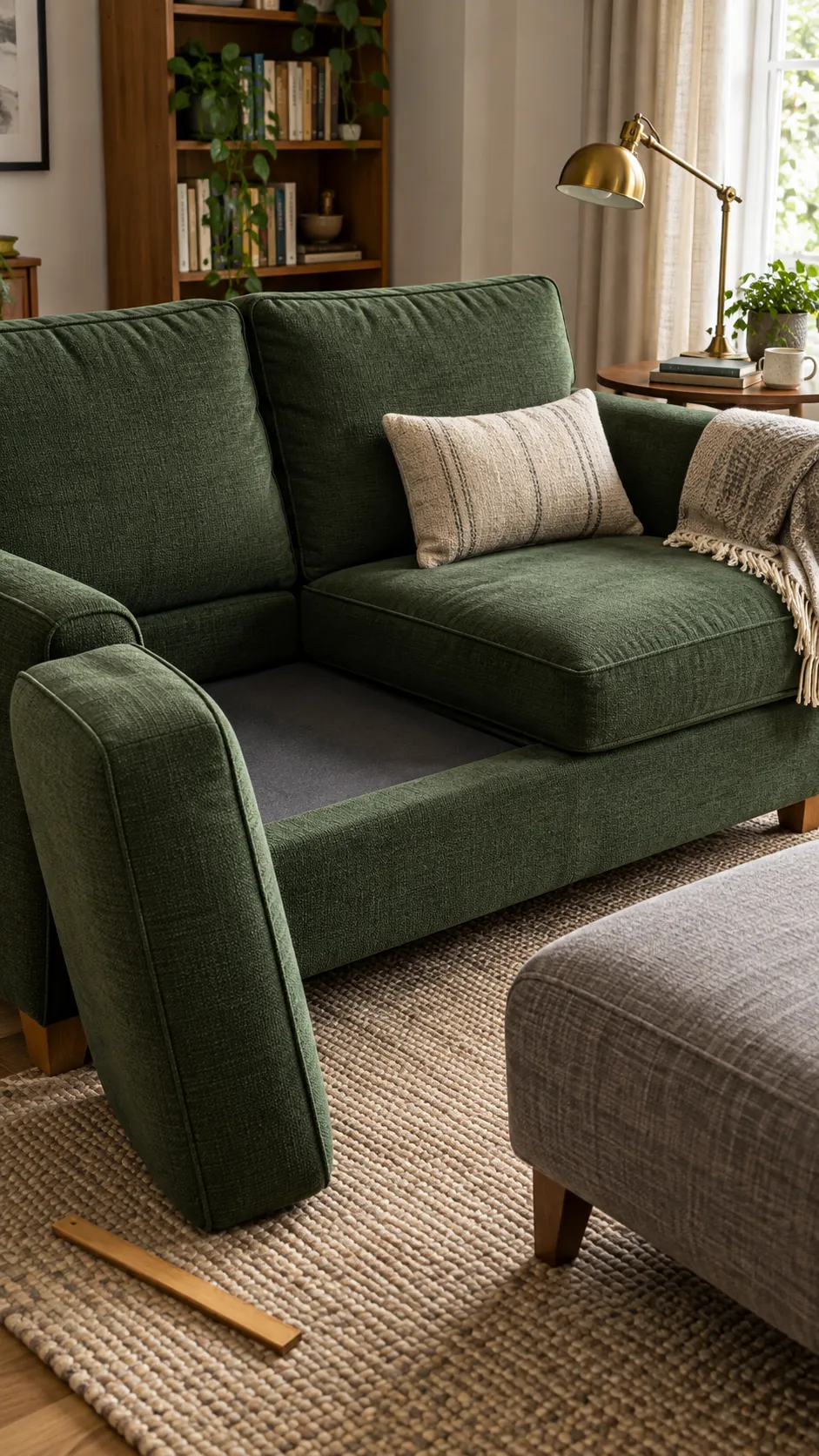
Ask what is inside the seat and back cushions because appearance does not reveal how they will age. Firmer foam usually holds shape better, while softer fills need more turning and plumping. A removable cushion lets you rotate wear and may extend the useful life of the sofa.
Build a flexible colour palette
Green works well with warm neutrals, natural wood, black, brass, rust, muted pink, and many blues. Let the sofa be the strongest colour, then use the rug and curtains to create a calm background. Pillows can carry smaller accent colours and are easier to change than a large upholstered piece.
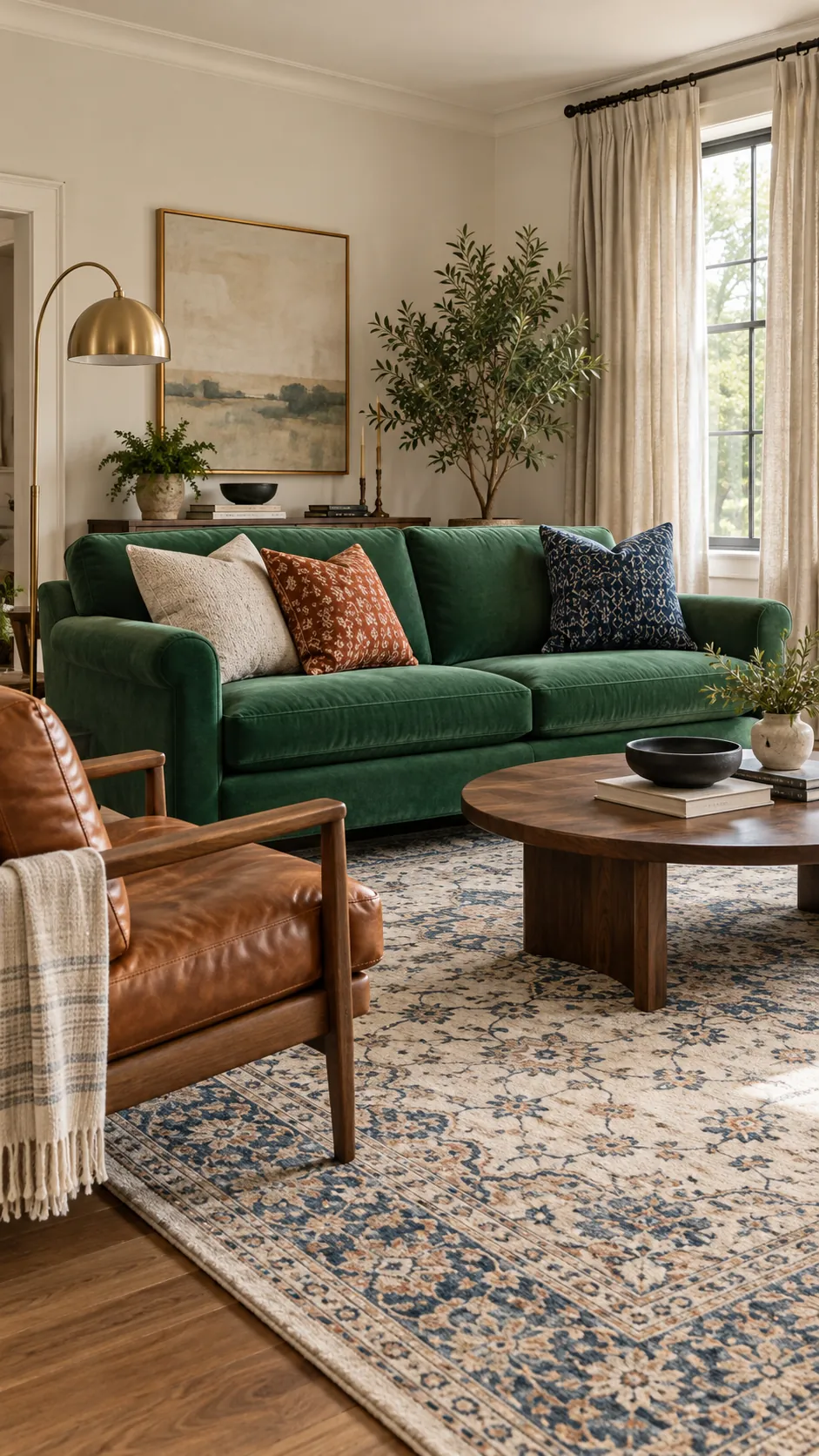
Choose a rug large enough for at least the front sofa legs to rest on it. Repeat the green once elsewhere in a smaller, slightly different tone rather than trying to match it exactly. This makes the palette feel connected without looking like a furniture set.
Inspect construction and purchase terms
Ask about the frame material, joinery, suspension, cushion replacement, and fabric warranty. Lift one front corner in the showroom to notice whether the frame twists, then listen for creaks as you change position. Read the return terms for custom upholstery because the green shade may make the order final.
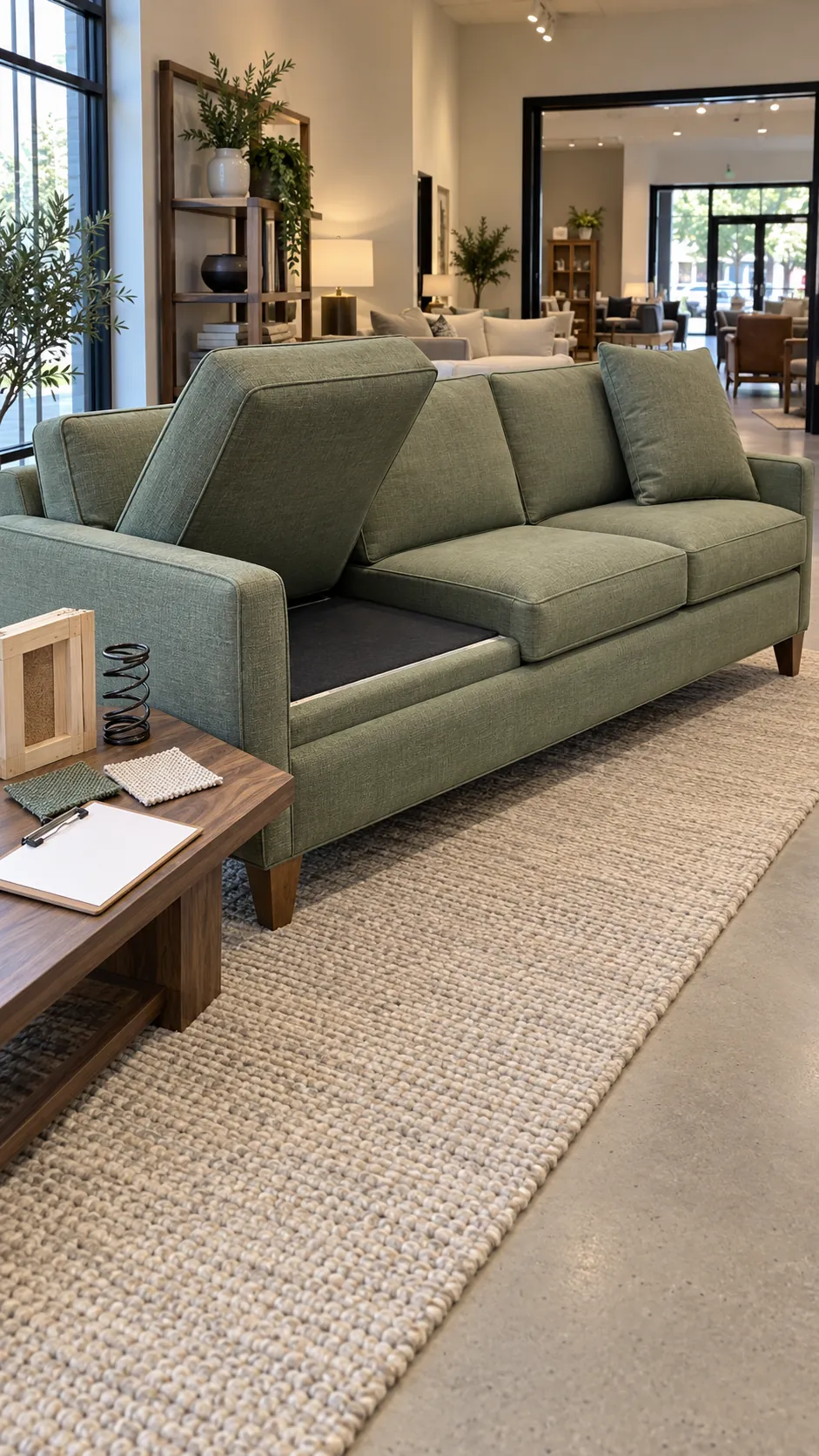
Confirm the full dimensions, delivery method, lead time, and responsibility for access problems in writing. Keep the approved fabric sample until the sofa arrives so you can compare the colour and texture. A green sofa earns its place when the frame, comfort, fabric, and scale are all as convincing as the colour.