A basin pushed to one end of a vanity makes a simple shopping decision surprisingly awkward. Centering a mirror on the cabinet can look balanced from the hall yet serve the person at the tap poorly. The answer depends on which view matters most and how much wall the room actually gives you.
Start with the person at the basin
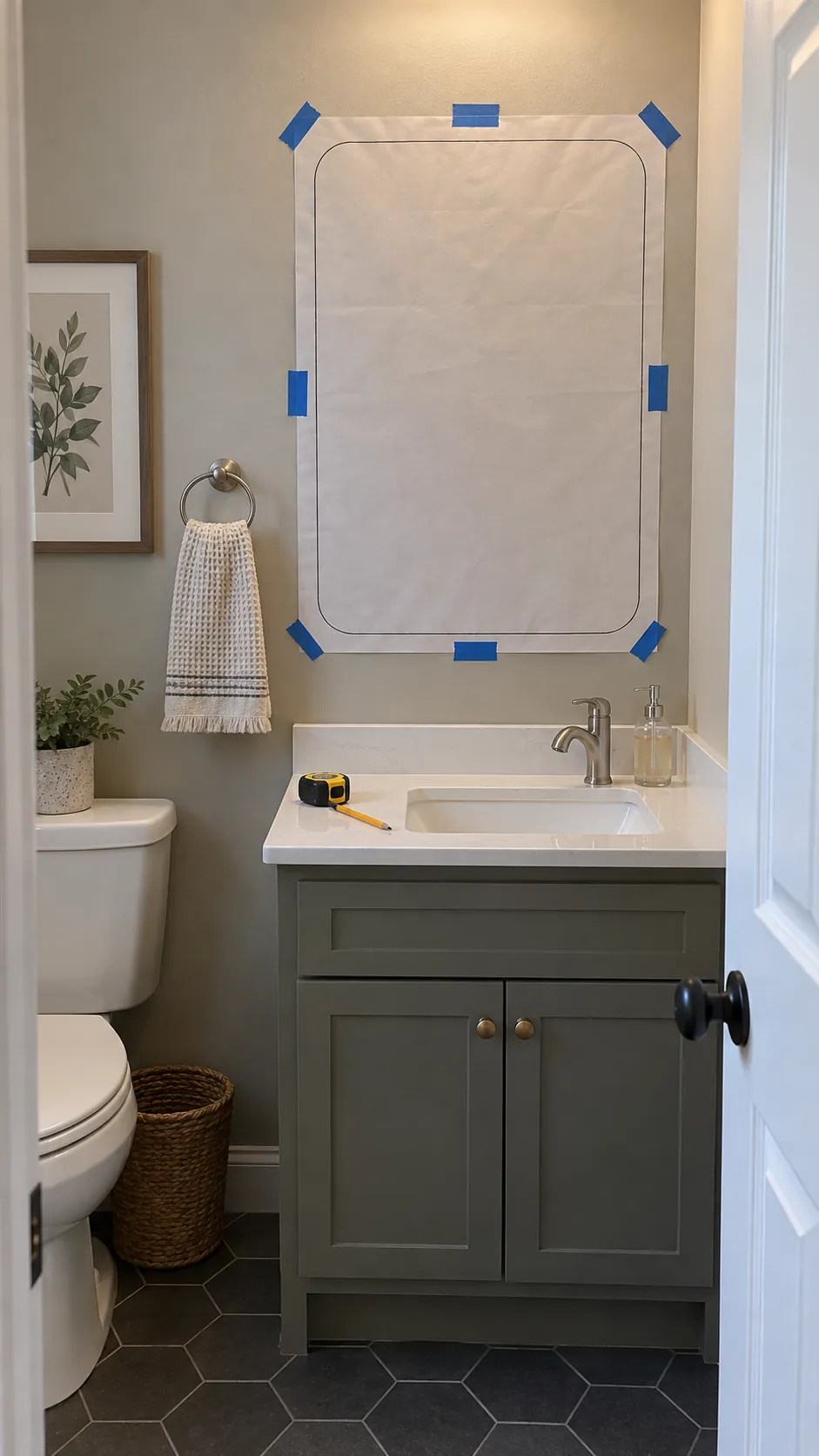
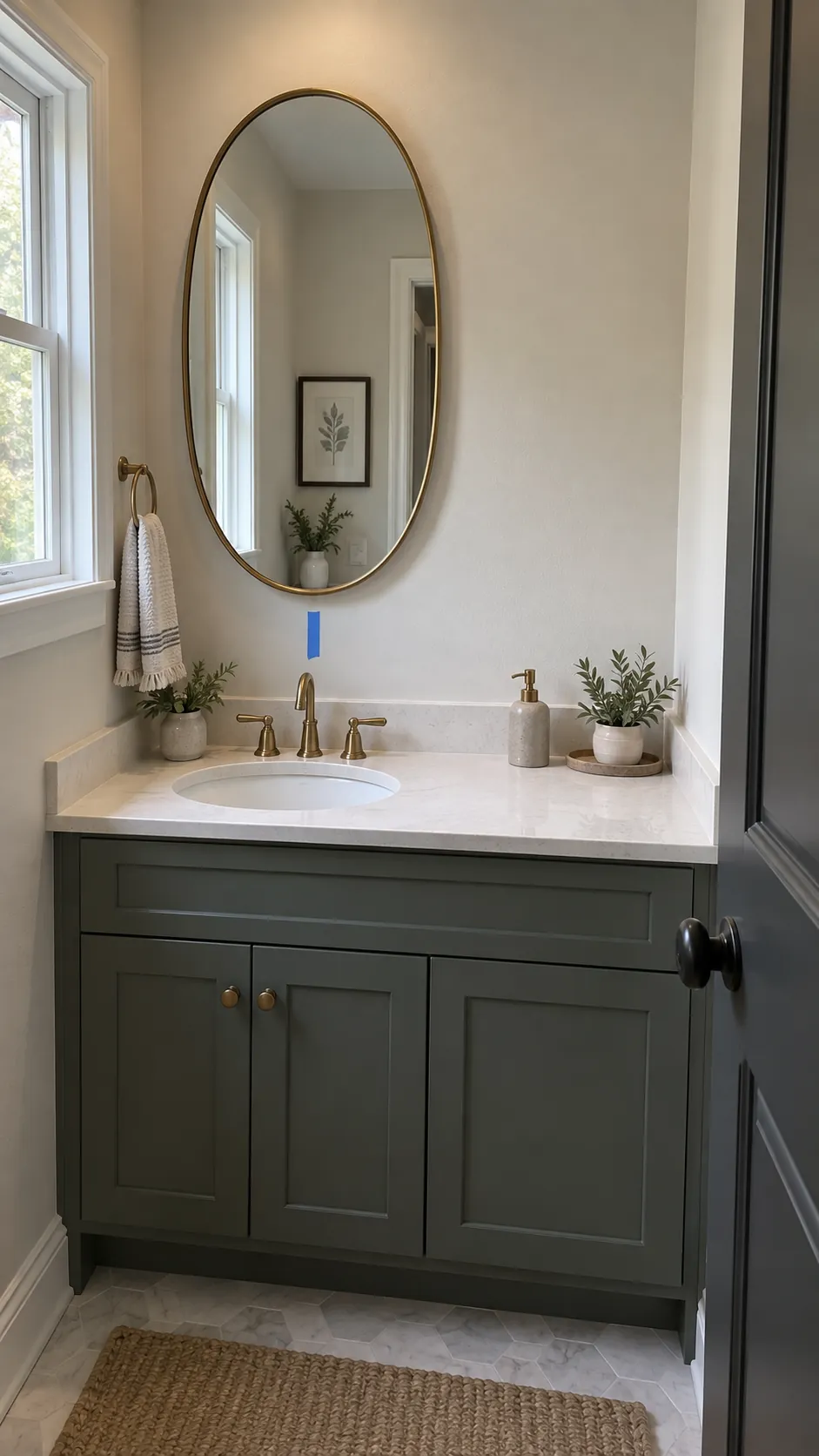
Stand at the sink as a guest would and look straight ahead. The useful part of the mirror must include the face and shoulders at that position, even when the vanity is much wider than the basin. Mark the faucet center on the wall with removable tape, then have another person check the view from the doorway.
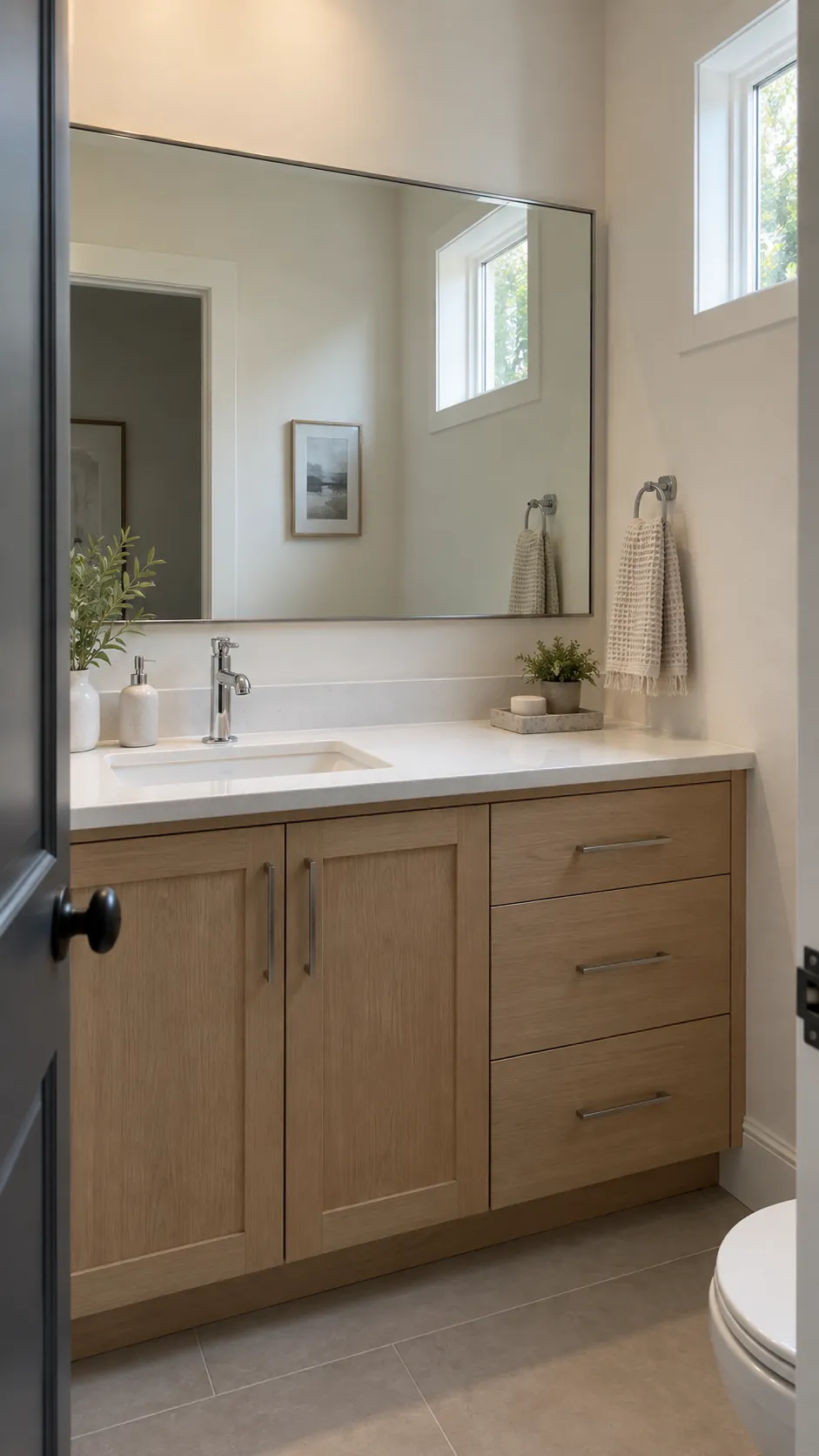
A mirror centered on the vanity can work if its reflective area still reaches far enough across the basin. If it leaves the user staring at a frame edge, the apparent symmetry is not worth keeping. Use the sink position as the functional test before judging the wall as a composition.
Decide what should look centered from the doorway
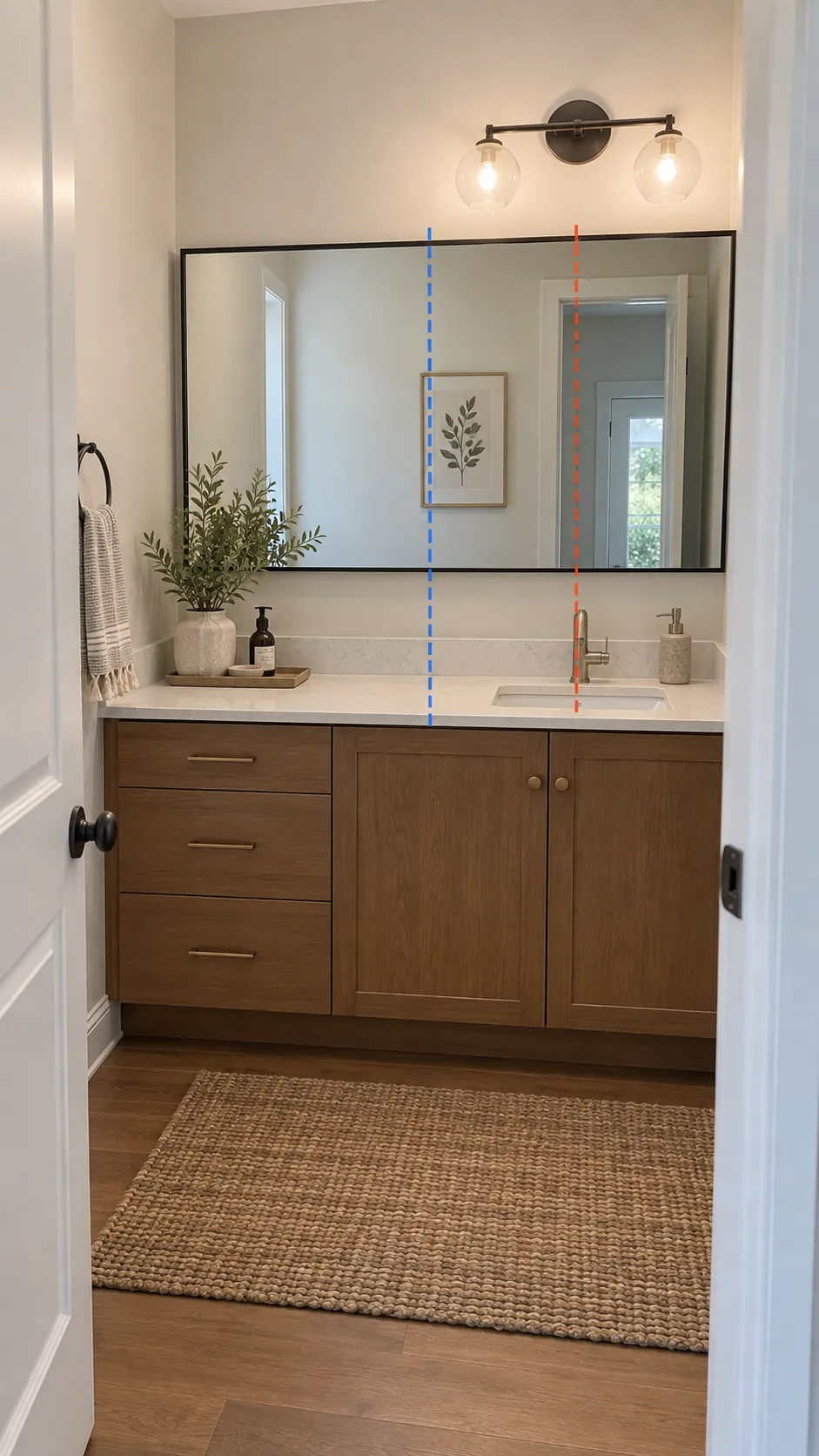
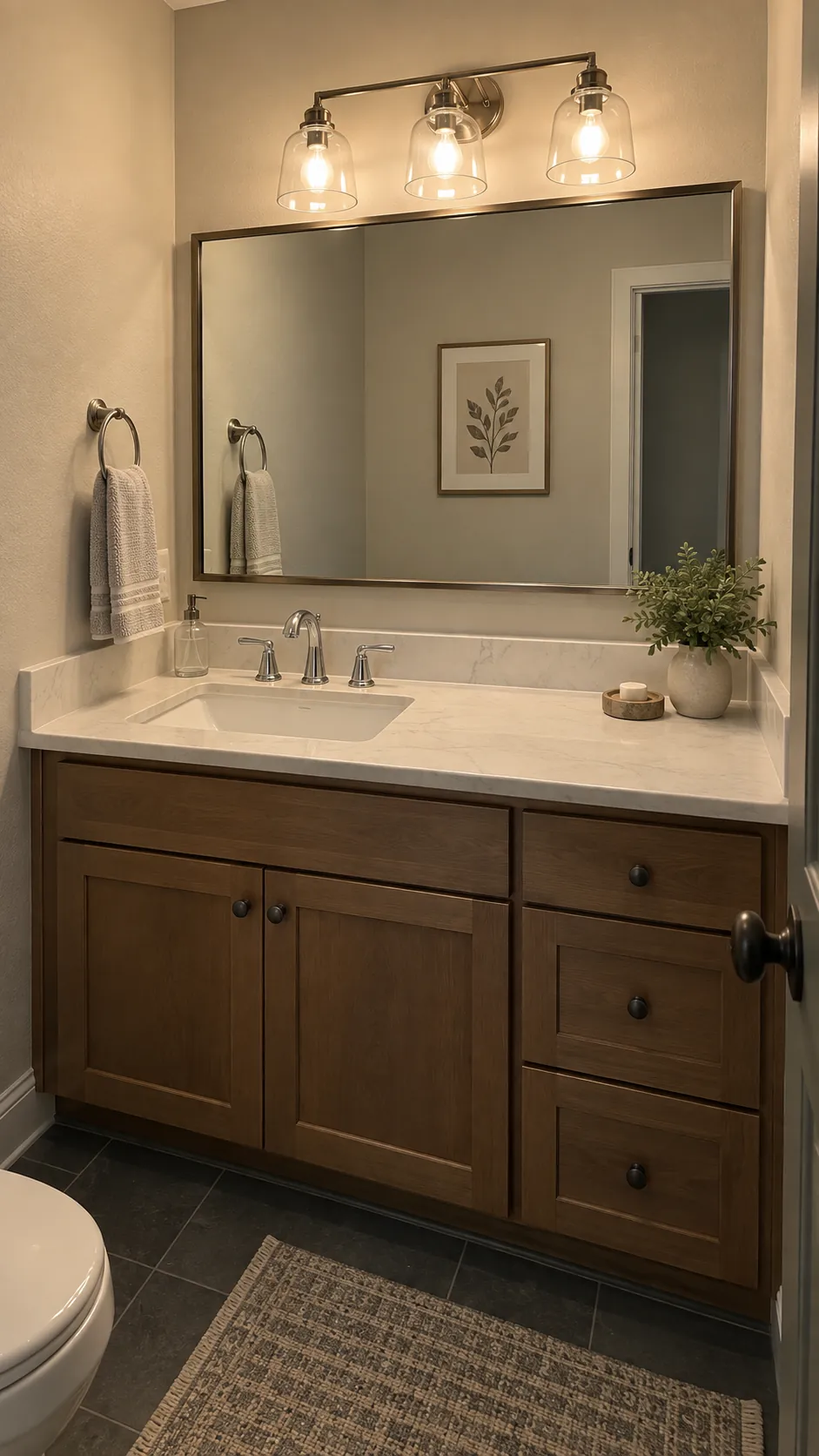
The first view into a powder room is often diagonal, so the wall may read differently from a drawing. A small mirror aligned only to an offset sink can leave a broad blank patch that looks accidental. In that case, a wider mirror centered on the vanity may calm the whole elevation while still serving the sink.
Photograph both taped outlines from the doorway before buying anything. Pay attention to the visual gap at each side, the faucet line, and the space occupied by a sconce or window. The better layout is the one that works from the basin and from the room’s most common viewing angle.
Choose width from usable wall and counter space
Measure the wall from corner to trim, then subtract the clearance needed for lights, outlets, and cabinet doors. Compare that span with both the vanity width and the sink center. A mirror that nearly touches a return wall can make a narrow room feel pinched even if it technically fits.
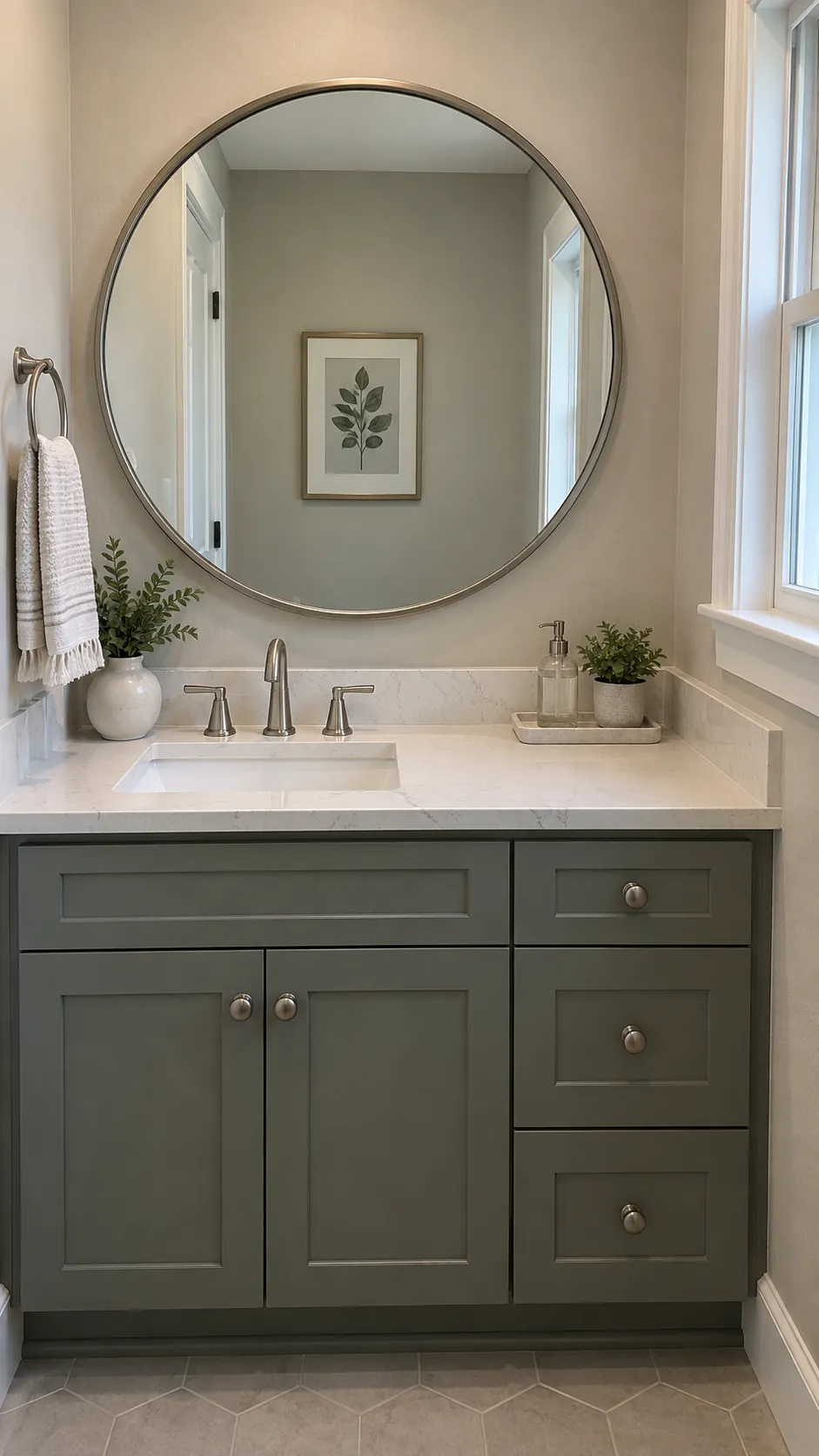
For a round bathroom mirror, check the widest point as well as the height above the faucet. A generous circle can bridge an offset basin and an empty counter area without pretending the sink is centered. If the circle cuts into a sconce or window, a slim rectangle may be more practical.
Set height for real users
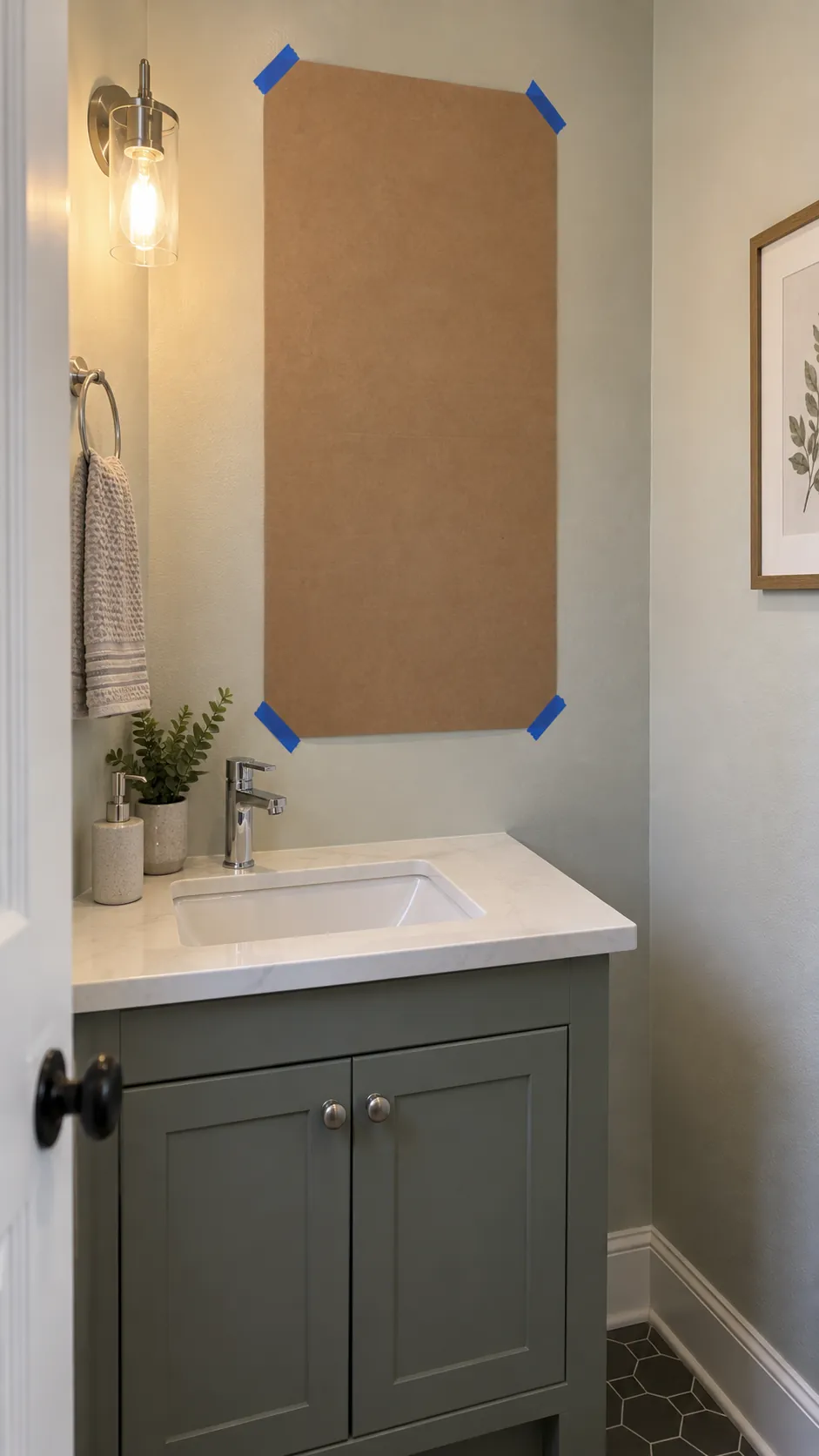
Height matters more than a fashionable mirror shape. The lower edge should sit high enough above the faucet to avoid splashes but low enough for shorter guests to see comfortably. Hold a cardboard outline against the wall and test it with people of different heights in the household.
Check the top edge against the ceiling line and any light fixture. A tall mirror can add visual lift, yet it should not crowd a low sconce. Mark the proposed mounting points only after the viewing height works at the basin.
Make the lighting and mirror act together
A light centered on the vanity can feel disconnected from a narrow mirror centered on the basin. First check whether the light gives an even view of the face at the actual sink position. If it does not, change the mirror width or light layout rather than forcing a tidy line in a drawing.
Two small sconces can frame a wide mirror if there is safe wall space and suitable wiring. Where rewiring is outside the project, a larger mirror that catches the existing light is often the simpler answer. Avoid placing a bare bulb where it reflects directly into a guest’s eyes.
Test the outline before drilling
Cut paper or cardboard to the proposed mirror size and tape it to the wall for a day. Use the sink, open the door, and look at the arrangement in morning and evening light. This quick mockup reveals awkward gaps that a product photo cannot show.
Check stud locations, suitable anchors, and the mirror’s actual weight before mounting. Follow the manufacturer’s hanging method, especially for a heavy framed piece. If the first outline feels off, adjust its position now; patching a few pieces of tape is easier than repairing new holes.