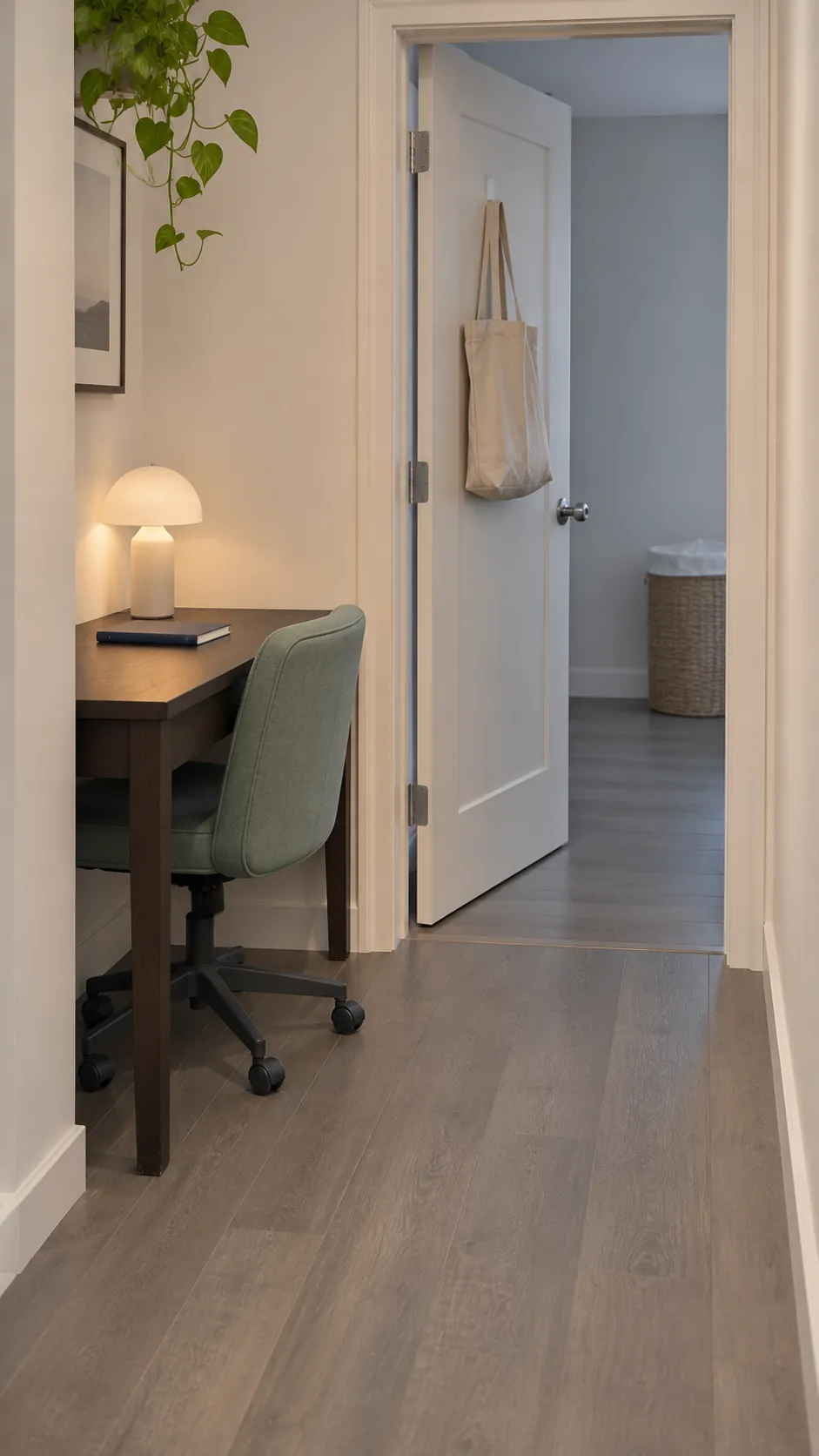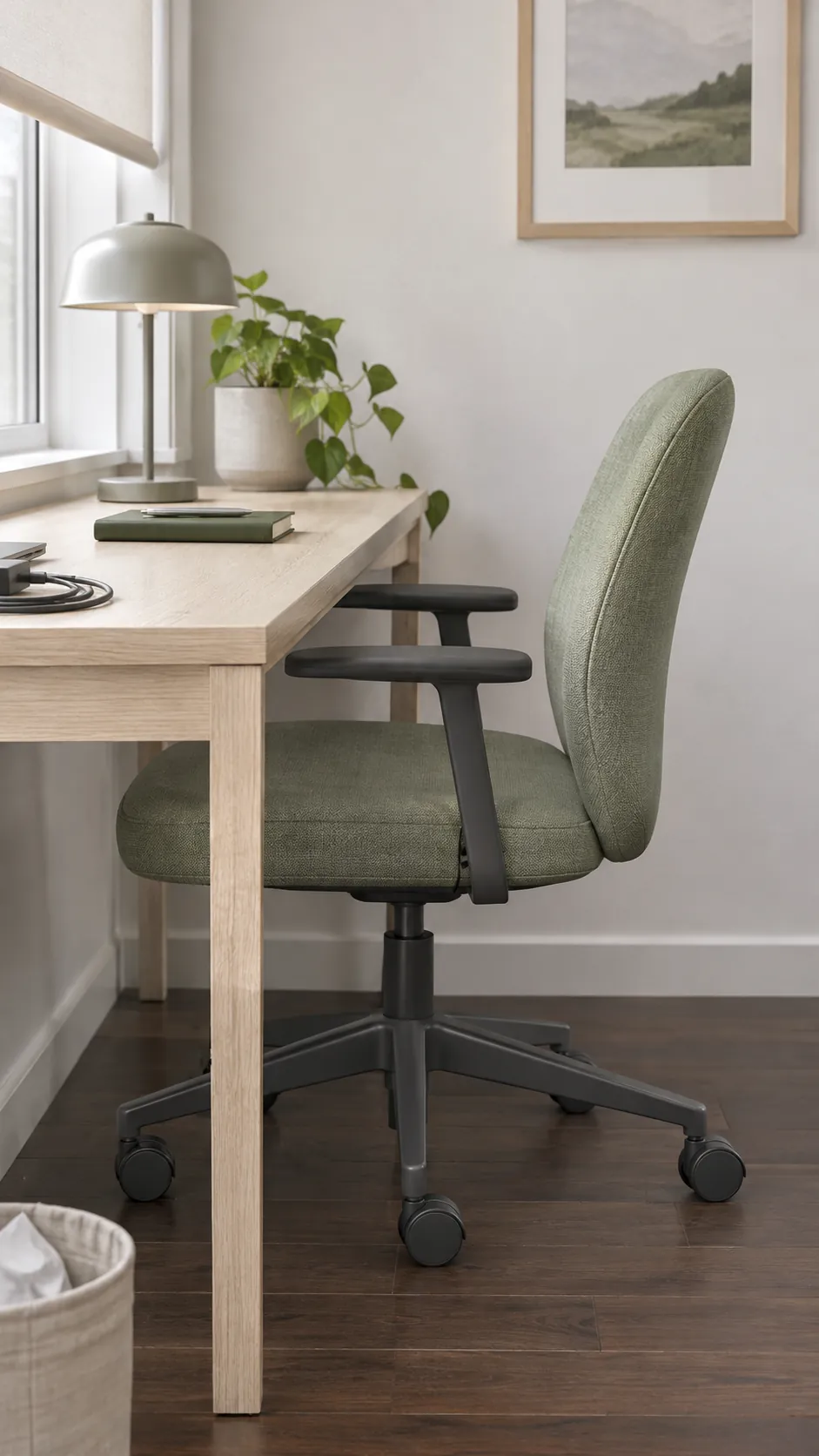
The chair can fit the desk opening on paper and still hit the drawer on the way in. The armrests meet the desk higher up, the wheels need a wider path along the floor, and the seat has to work for your body at the height you actually type. Measure the desk at all three levels before you compare chairs.
Measure the lowest point under the desk
Start at the front edge with a tape measure. Measure from the finished floor to the underside of the desk, then repeat under any drawer, apron, or rail that sticks down. Follow the route the armrests will take as you push the chair in. The smallest reading along that route is the one to use.
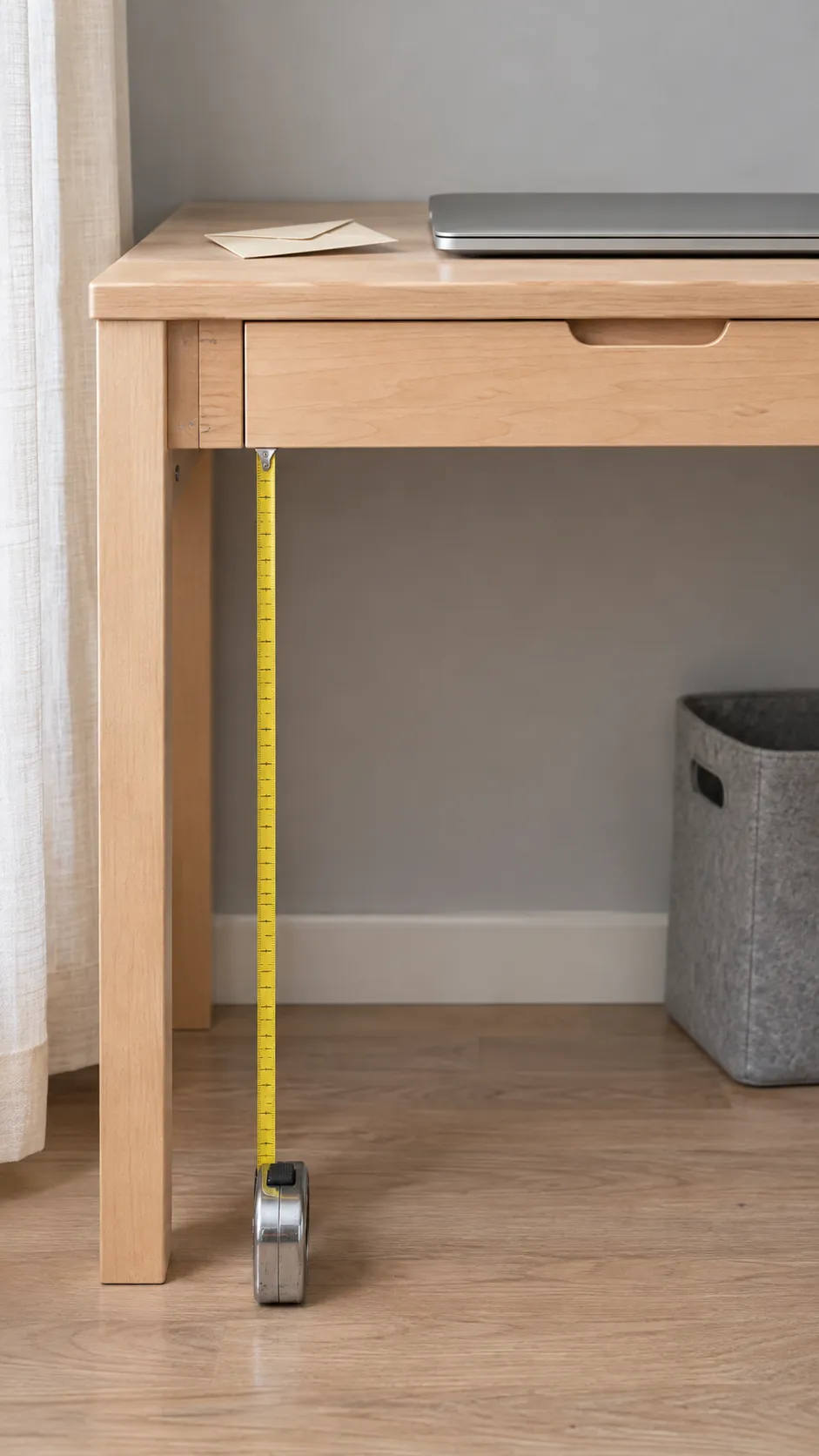
On a rug, measure from the surface where the chair wheels will sit. If the back wheels stay on the rug while the front wheels roll onto bare floor, test the whole motion before relying on a tight fit.
Compare armrest height at your working seat height
A spec sheet may list the lowest possible armrest height with the seat cylinder fully lowered. If you type with the seat higher, that number can be misleading. Ask for the floor to armrest measurement at your working seat height. If the seller gives a height measured from the seat, ask where on the seat the measurement starts before adding it to your seat height.
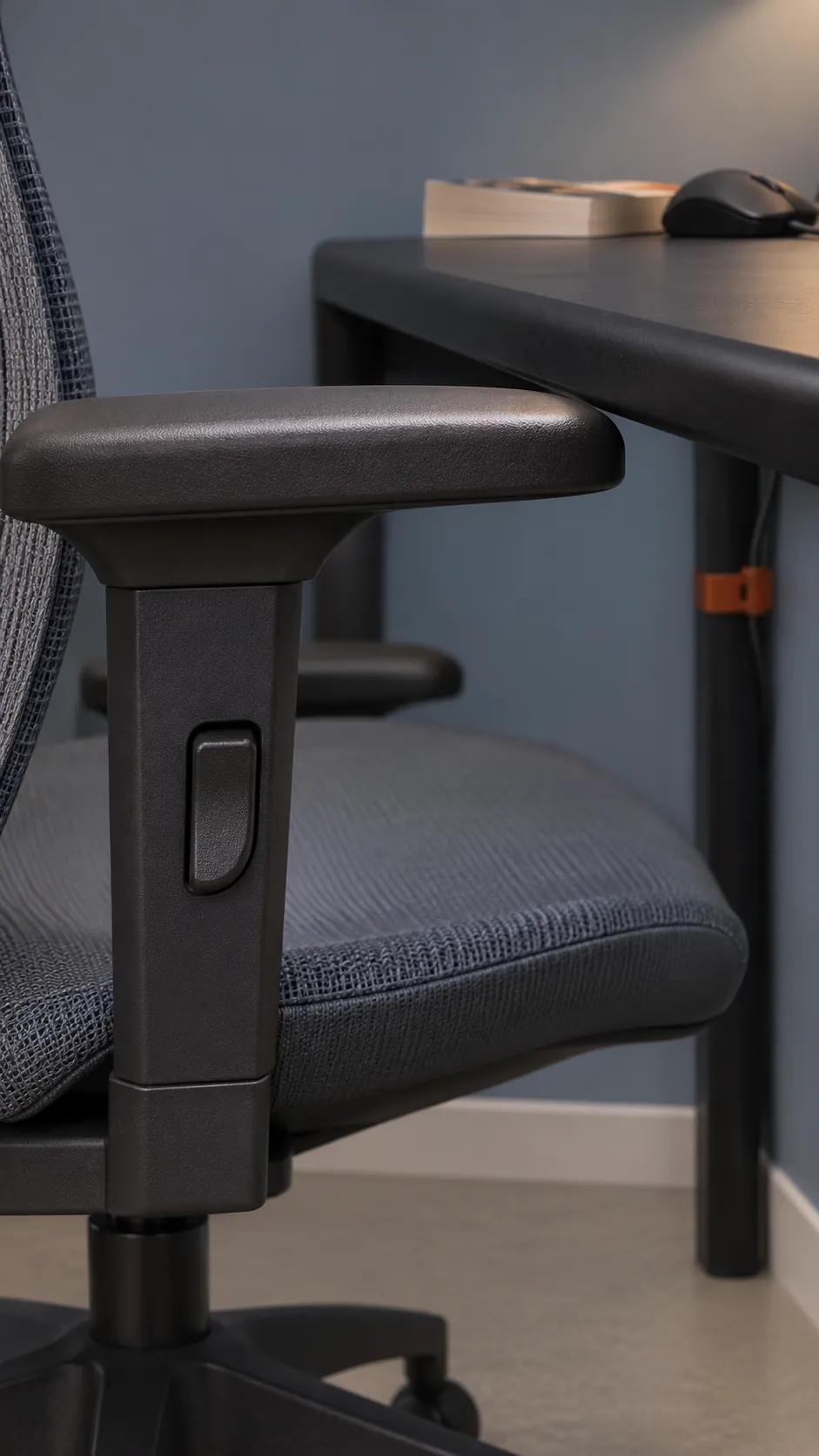
Say a drawer leaves 25 inches of clearance and the armrests sit 26 inches off the floor when you type. The pads need to drop more than an inch to pass freely. An equal measurement gives you no room for a rug edge or a slight tilt as the chair rolls. Height adjustable arms help here. Flip up arms can also work if the hinge and folded pads clear the front edge. Check the width across the outside of either set of arms against the narrowest part of the desk opening.
Check where the wheels go
Measure between the desk legs at floor level, including any feet that project inward. Then check the chair base width across the widest part of the wheels. A five spoke base changes the shape it presents to the opening as the chair turns and the casters swivel. Check the width through the turn if you need to angle the chair into place.
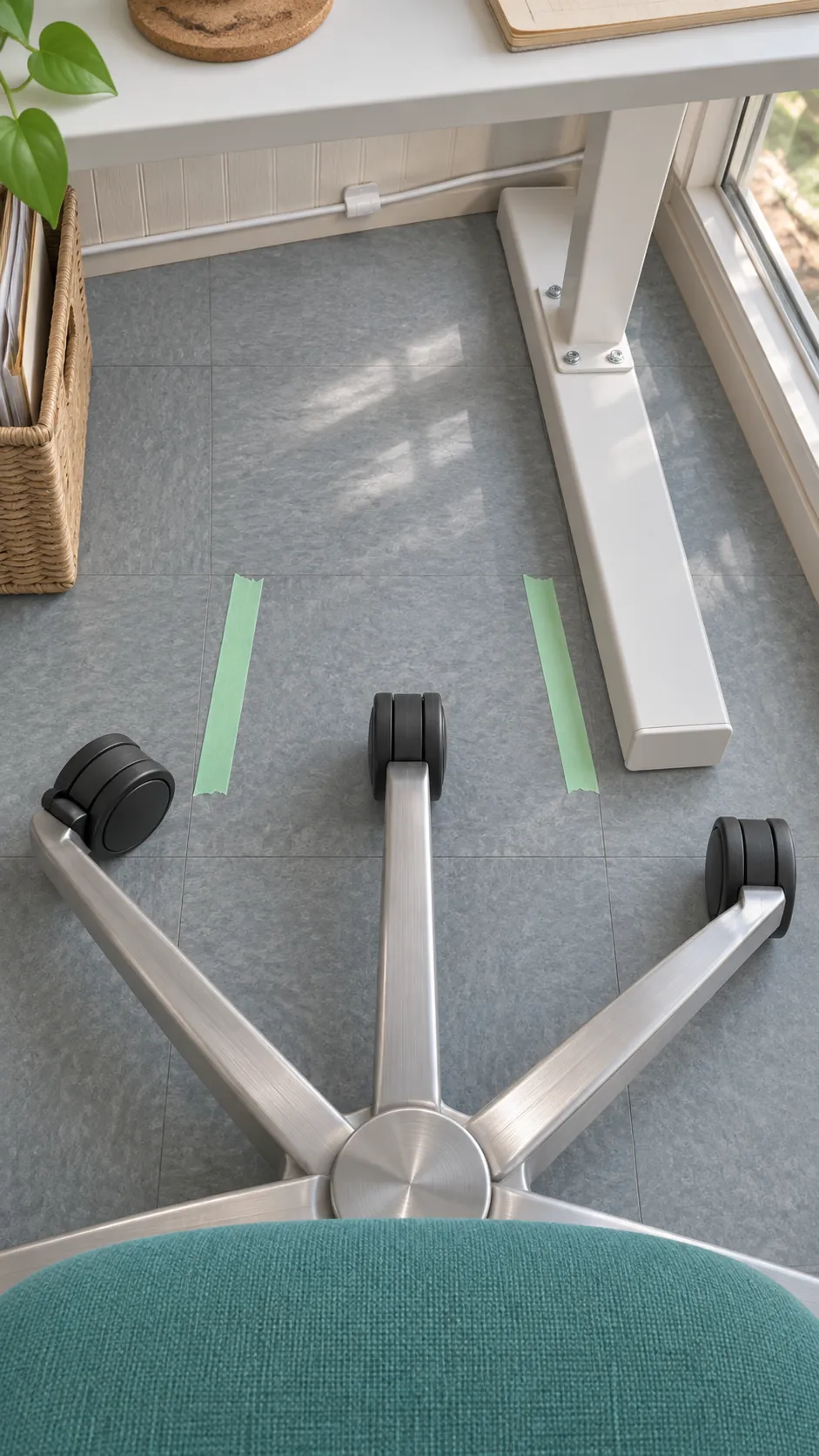
Mark the base footprint on the floor with painter’s tape if the chair is still in the store. Use the model’s actual base dimensions, including the wheels. The tape can also show whether a file cabinet or a power strip will block the last few inches of travel.
Leave room for your knees and feet
Measure from the front edge back to the first obstacle at knee height, then check again at foot height. A cable basket may sit above your shoes but catch your knees. A low brace can leave space for your thighs while taking away the spot where your feet would naturally rest. Sit at the desk with your feet supported and see where your legs land before buying a chair.
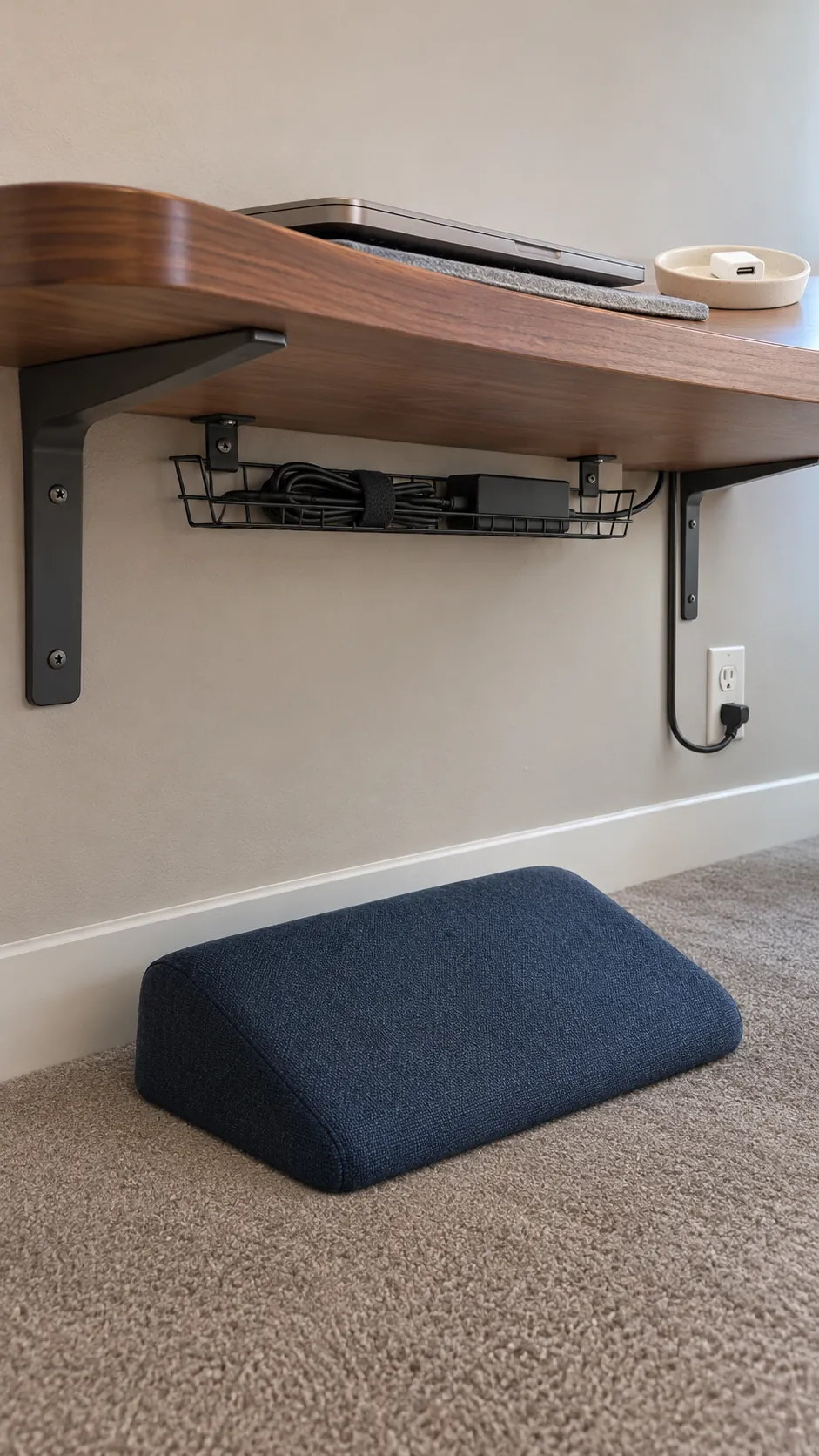
Check seat depth before you buy
With your back against the backrest, you should be able to plant your feet on the floor or a footrest and leave a small gap behind your knees. If the edge presses into your legs or you have to perch forward to reach the floor, try a shallower seat or a seat with a depth adjustment. Compare the usable distance from the backrest to the front edge. The listing’s overall chair depth can include the back shell and base. The specific dimensions sought in this chair discussion show why asking for actual minimums is more useful than shopping by a label like compact.
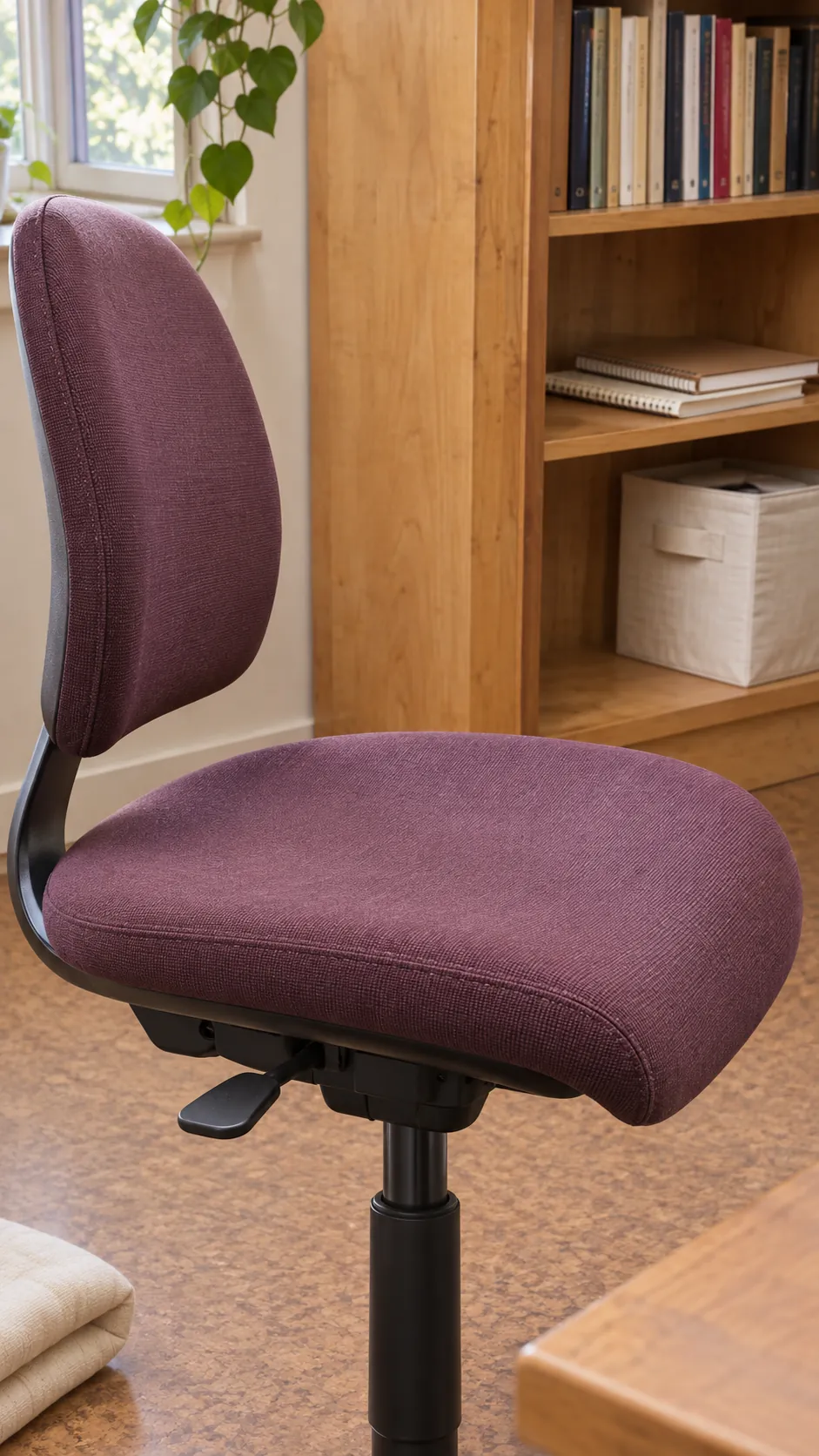
Set the seat for your legs first, then check whether you can reach the keyboard with relaxed shoulders. If you raise the seat to reach a high desk, retest arm clearance at the new height and check that a footrest fits under the desk.
Test the spot where the chair will park
Pick where you want the chair back to stop when the desk is out of use. In a room with a narrow walkway, getting the armrests under the desk may still leave the backrest in the path. Roll the chair in at its daily settings, then walk past it and open any nearby door or drawer. If you have to lower the seat every time, decide whether that extra step works for you before the return window closes.