
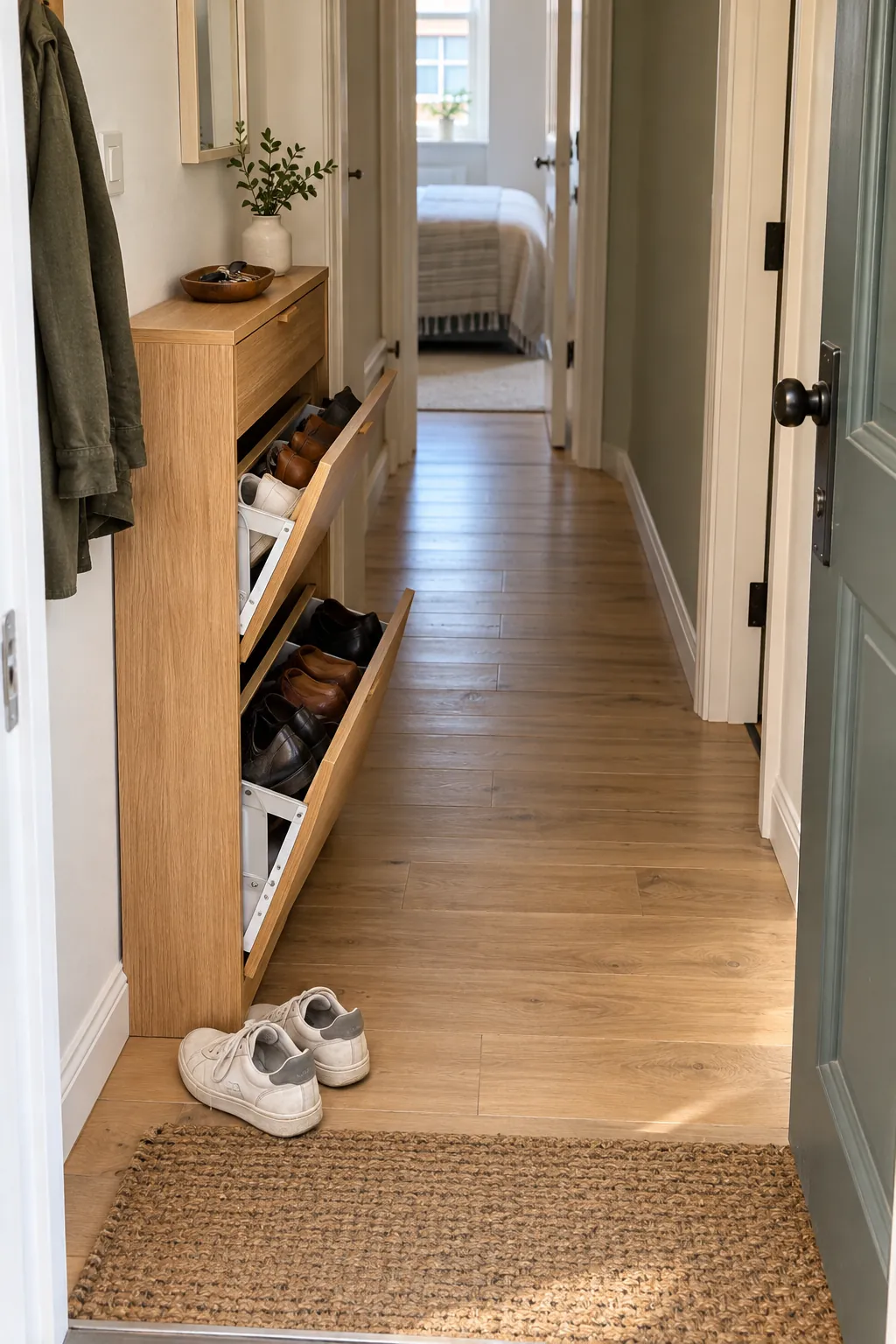
A slim cabinet can still make a hallway frustrating when its door opens into the only walking line or its top catches every carried bag. The right depth comes from the room, the footwear, and the opening mechanism together. Product depth alone cannot answer the question.
Plan with the route in use, not with the hall empty. Measure the tightest point, protect the clearance your household needs, and test the full volume before purchase. This turns an uncertain narrow entrance layout into a decision you can verify.
Map the Narrowest Point
Measure between the true opposing surfaces, including baseboards, trim, radiator valves, and door hardware. A hallway that changes width must be planned around its tightest useful point, not the most generous section. Record the clear width with every nearby door both open and closed.
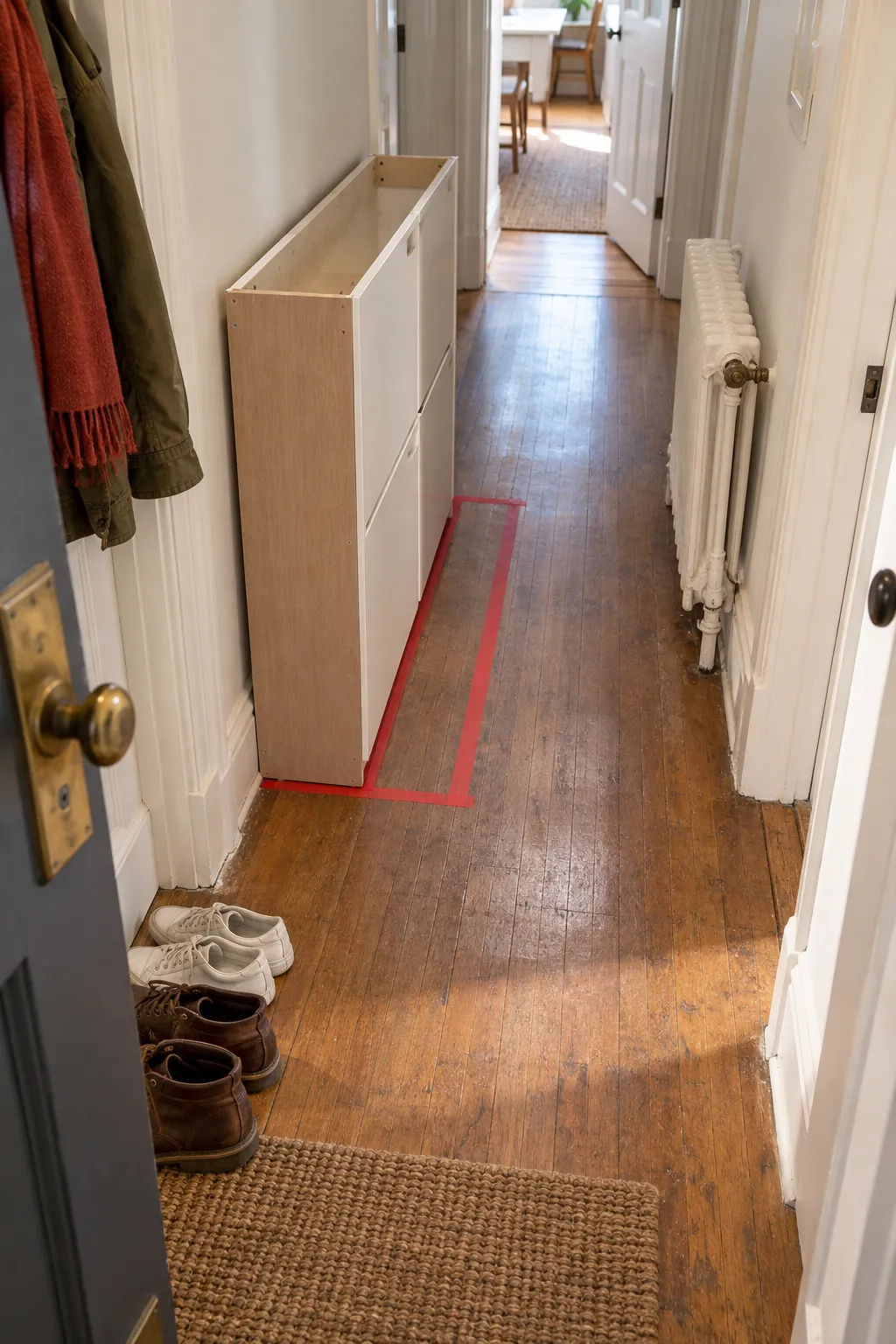
Set a Clear Walking Target
Subtract the walkway you need from the narrowest measured width, and treat the remainder as the maximum cabinet projection. Test the route with a laundry basket, grocery bags, and two people passing. If shoulders or carried objects touch the cabinet zone, the proposed depth is too large.
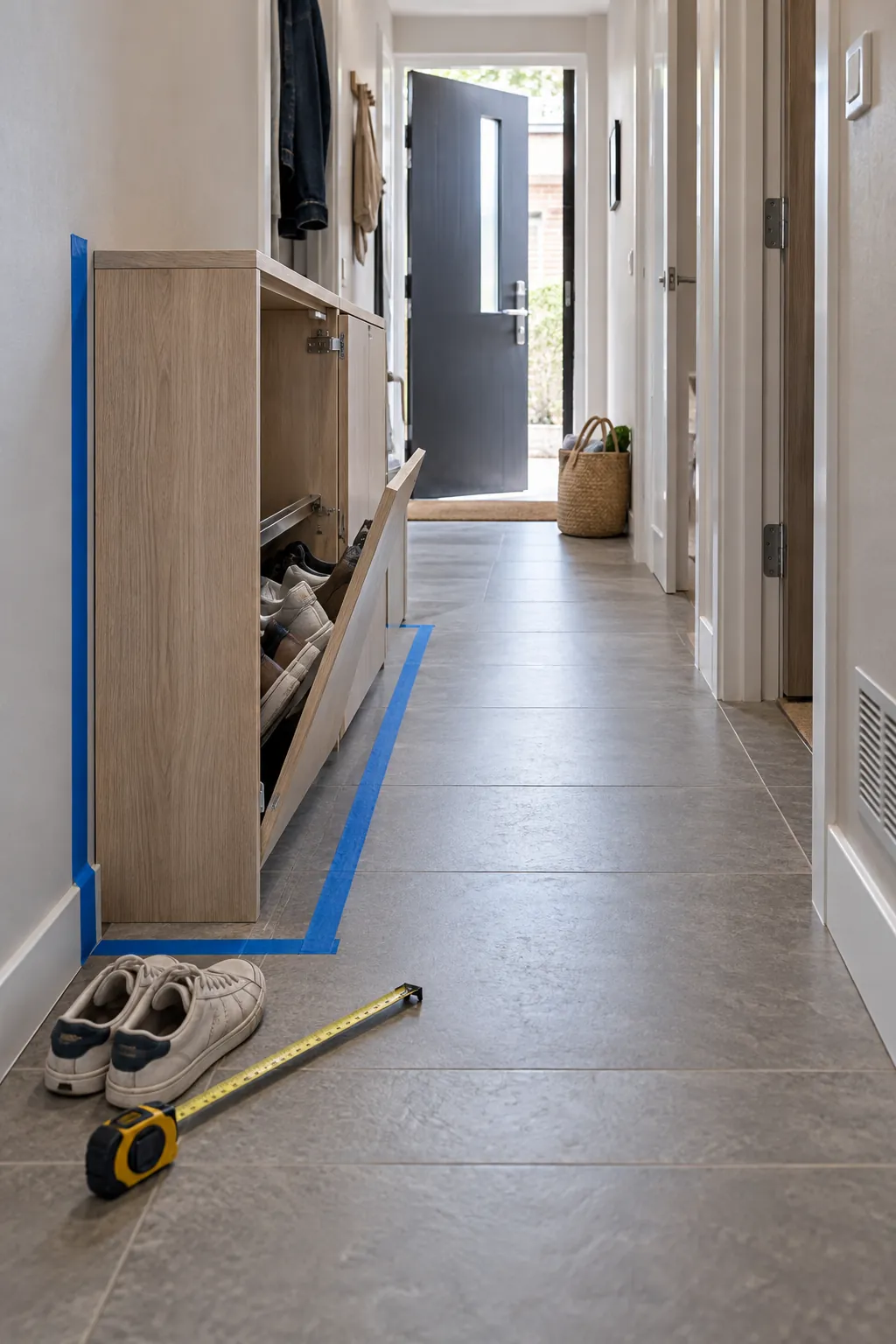
Measure the Largest Daily Shoes
Measure the longest and widest pair that truly needs to live at the entrance. Straight shelves usually need more depth than angled shelves or tilt compartments, while tall boots need height and ventilation. Do not size the cabinet around occasional footwear that can stay in another closet.
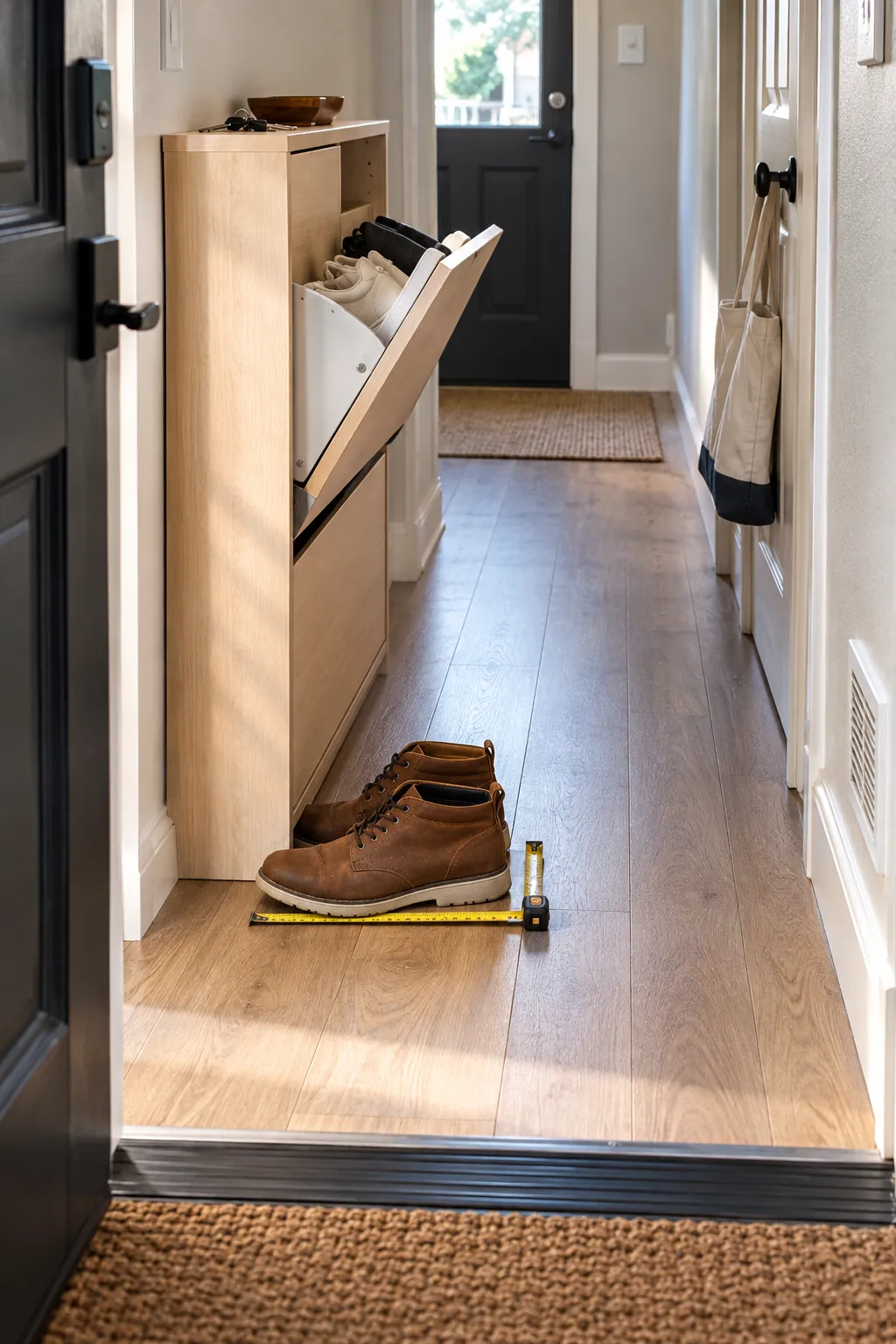
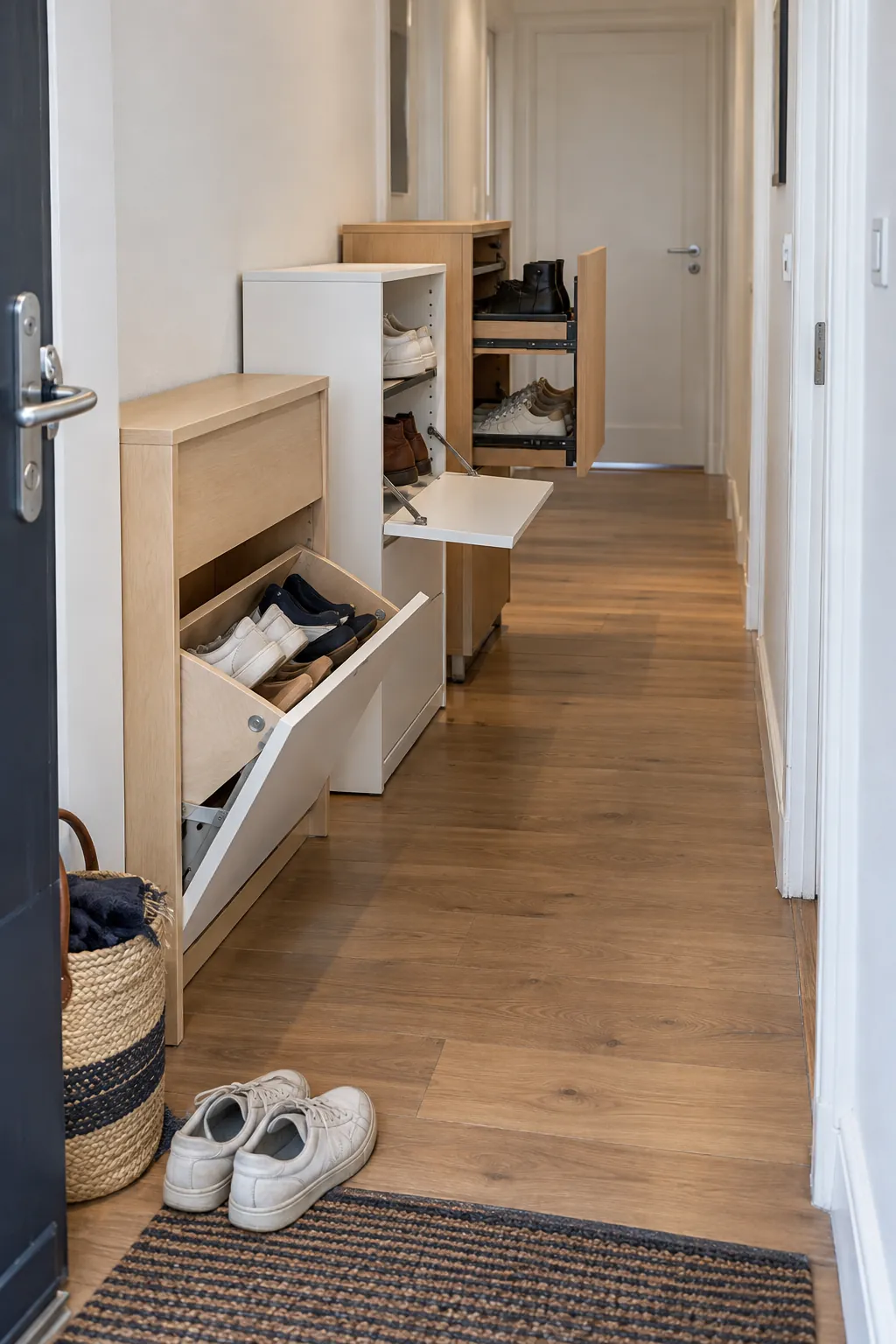
Compare Door and Drawer Movement
Cabinet depth is only part of the footprint because doors, tilt bins, and pullout drawers occupy space while open. Trace the moving panel through its full arc and stand where someone would load shoes. A shallow body can still fail when its mechanism blocks the hall.
Build a Full Size Cardboard Test
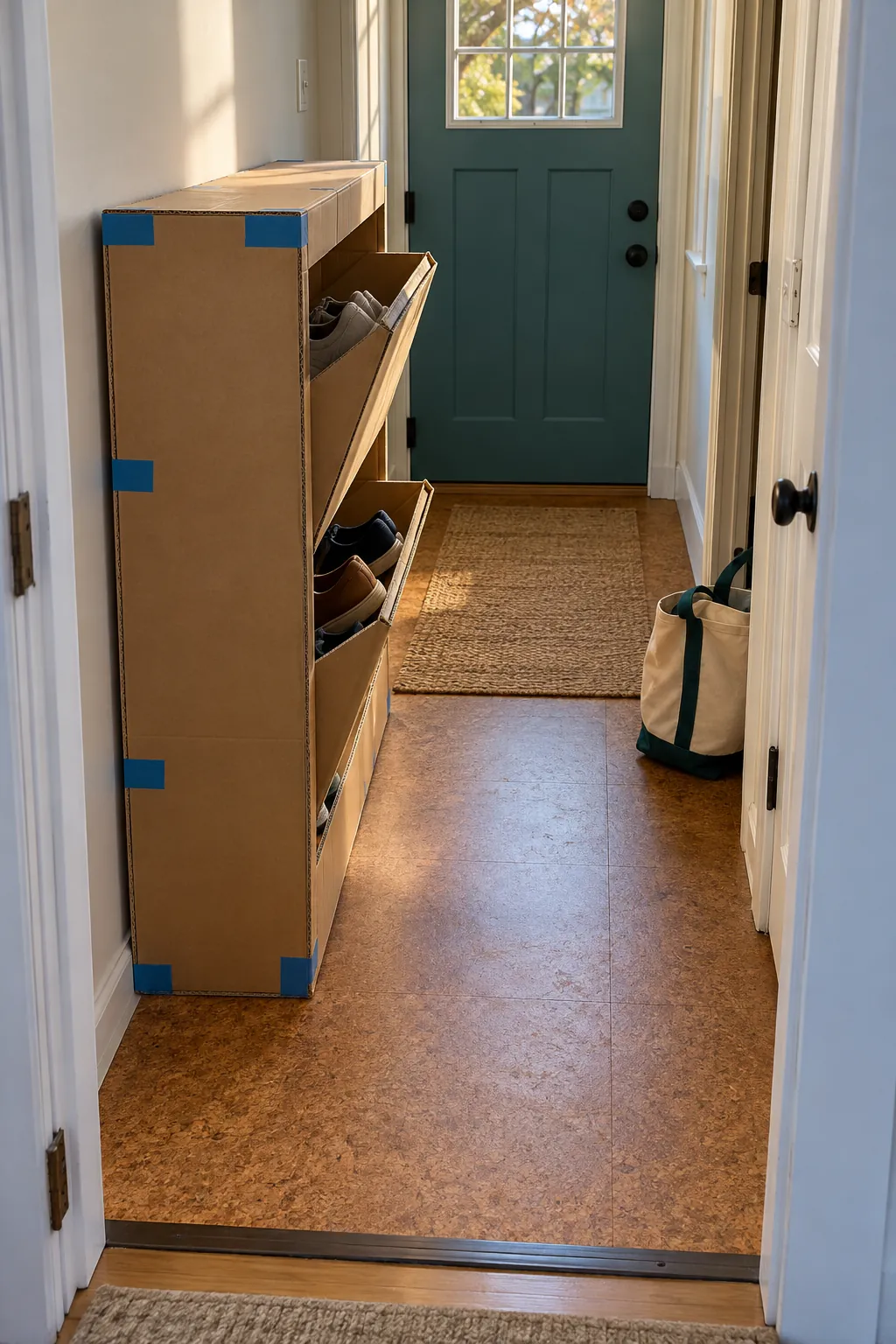
Tape together a box at the exact planned width, height, and depth, then leave it in place for several days. Walk past it during real departures, vacuum around it, open every door, and carry normal bags. This cheap trial reveals annoyances that a floor measurement cannot show.
Choose the Shallowest Cabinet That Works
Select the mechanism that holds daily shoes at the smallest proven projection, then anchor tall or narrow furniture to suitable structure. Keep ventilation gaps clear and place wet footwear on a separate washable tray. Recheck the route after loading the cabinet because empty furniture understates its real footprint.
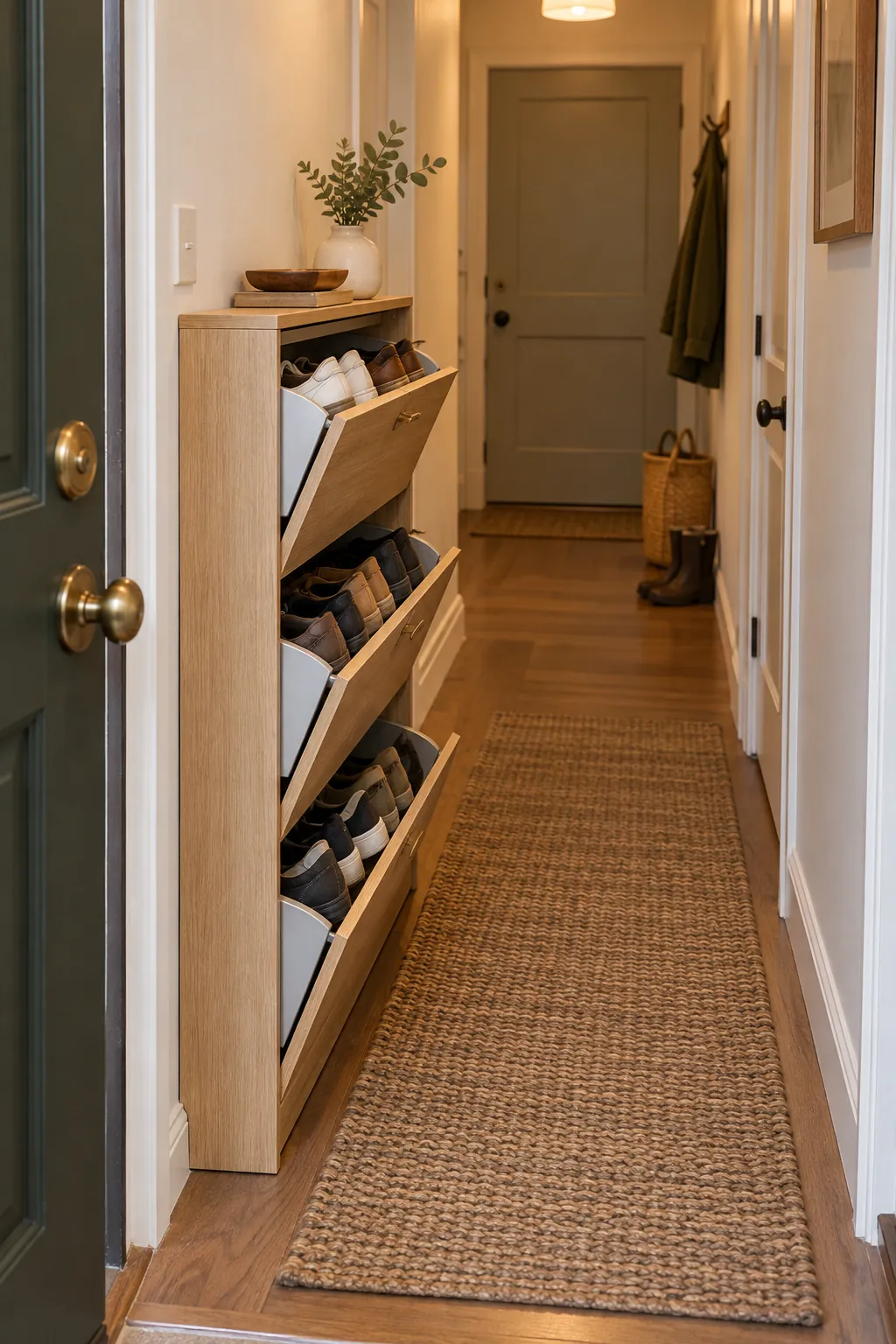
Load the cabinet with the pairs that will actually stay near the door. Walk the hall again at the busiest time of day and confirm that the mechanism still opens comfortably. The best shallow entryway cabinet is the one the household can pass, clean, load, and close without a daily negotiation.