
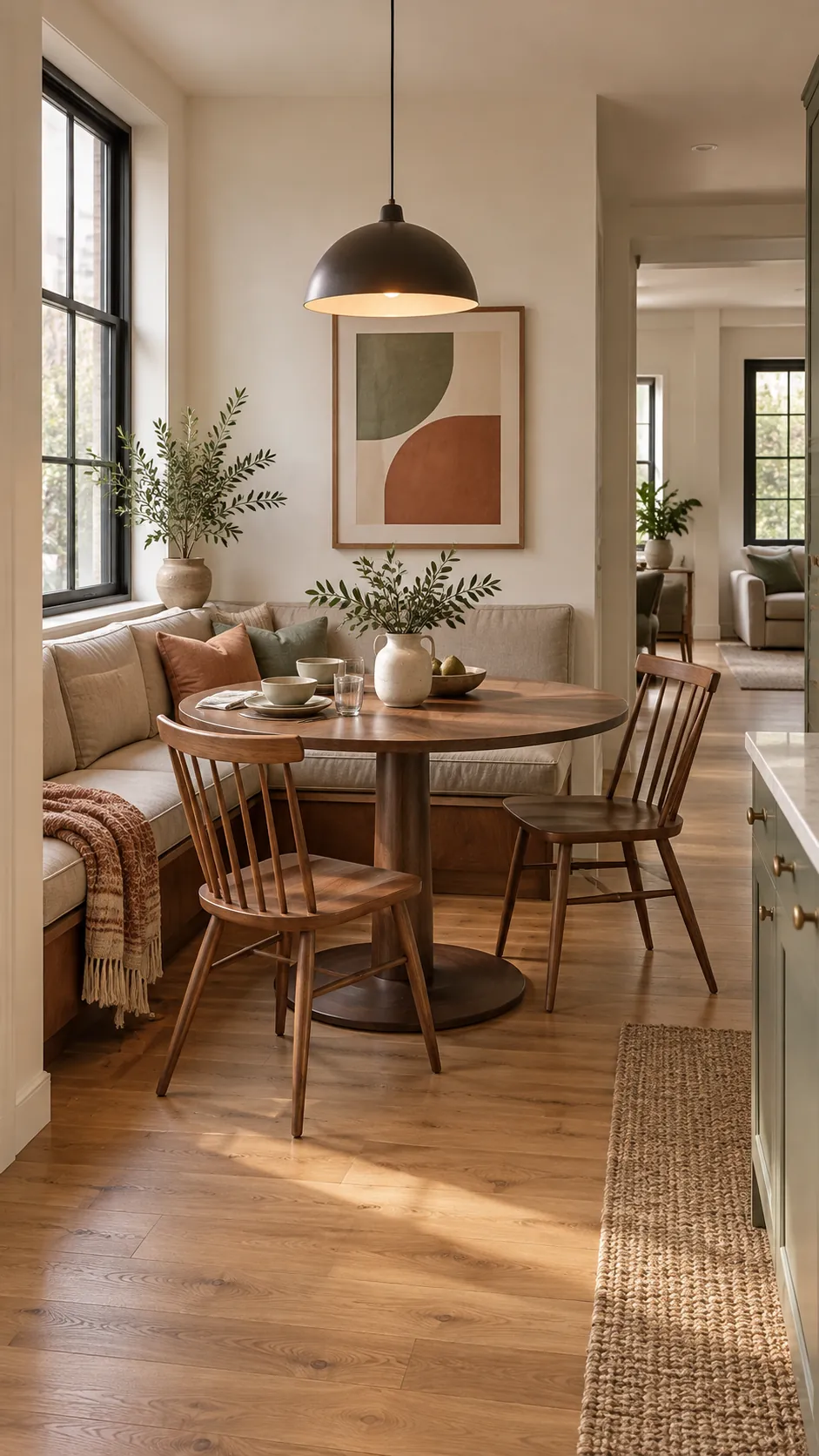
A dining corner can look inviting in a photograph and still feel awkward every morning. The chair catches the wall, the table narrows the walkway, and the pendant hangs over empty air instead of the meal. Comfort starts with fixing those practical frictions. Once the route through the room, the seat depth, and the table position work, soft light and tactile details can make the same few feet feel calm and generous.
Measure the daily path before buying furniture
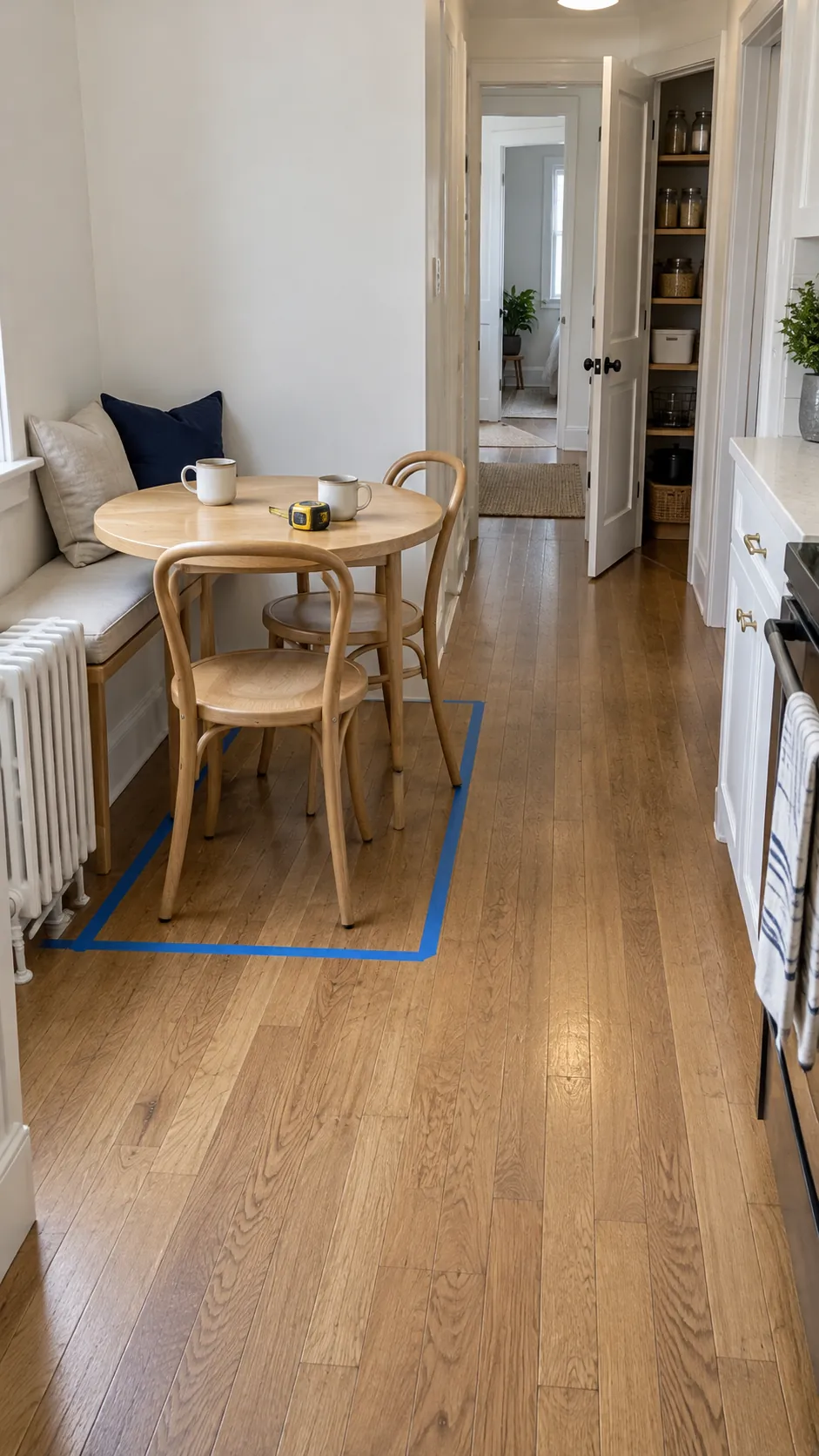
Start with the route people use most often. Walk from the kitchen to the back door, pantry, or living room while another person pretends to sit at the table. Mark the part of the floor that must stay clear with removable tape. This simple test reveals whether a chair can slide out without stopping everyone else.
Measure the usable corner, not just the distance from wall to wall. Include baseboards, radiators, window trim, cabinet handles, and the full swing of nearby doors. A comfortable passage usually matters more than squeezing in one extra occasional seat. Plan for the two people who eat there every day, then keep a light spare chair elsewhere for guests.
Choose a table that releases floor space
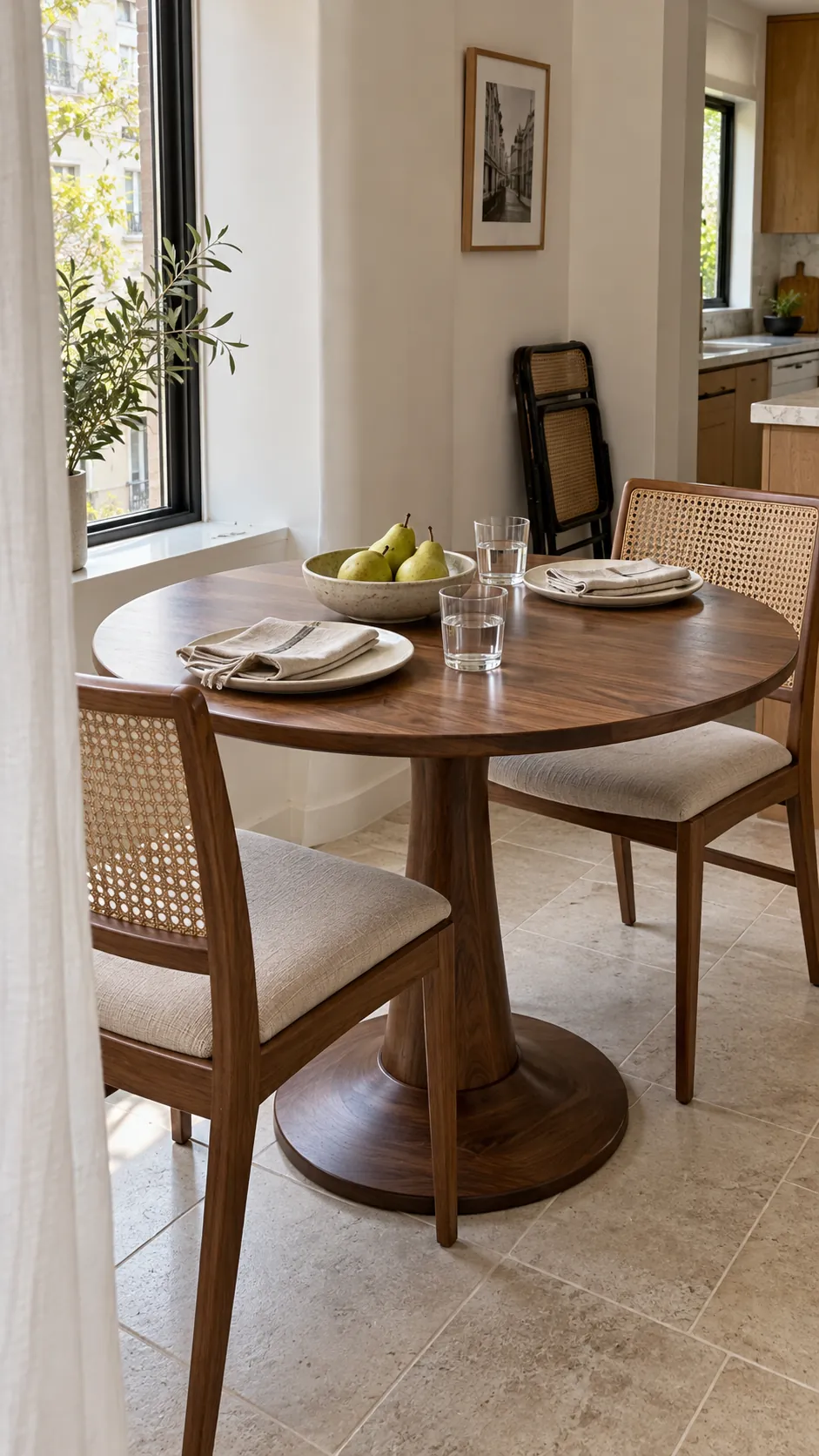
A small round dining table is often forgiving in a tight corner because it has no sharp corners to interrupt movement. A pedestal base also gives knees and feet more freedom than four legs placed near the seats. For a narrow wall, an oval table can offer the same gentle edges while providing a little more surface for serving dishes.
Test the real footprint with cardboard before ordering. Cut or tape the tabletop outline on the floor, then place chairs where they would sit when occupied. Set a plate, glass, and serving bowl on a similar surface so you can judge usable depth. A compact table that supports an ordinary meal is better than a larger one that becomes a landing place because nobody can sit comfortably.
Build comfort into the seating
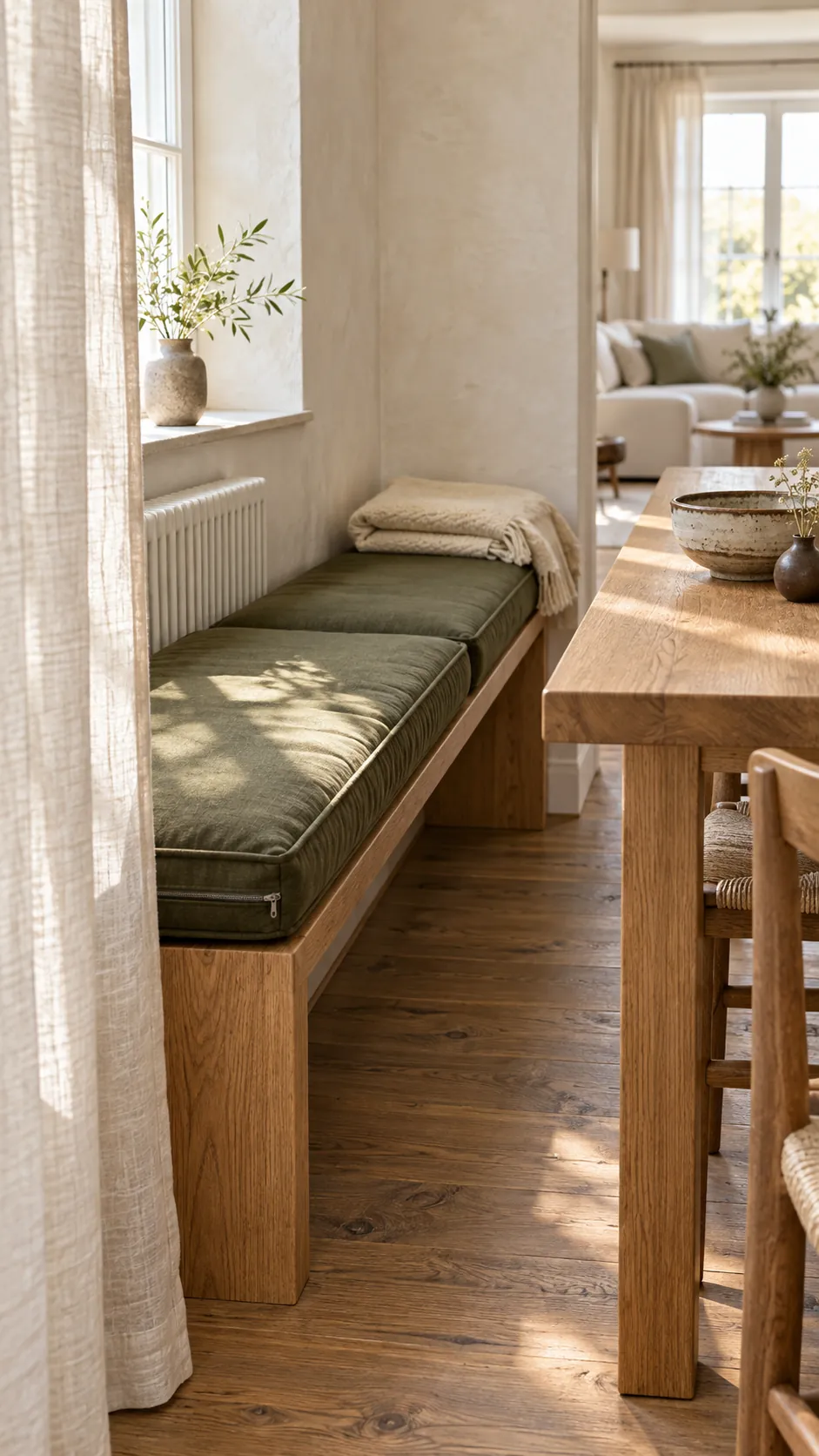
A corner dining bench saves space only when people can enter and leave without climbing around each other. Keep the easiest exit available to the person who moves most often. If the corner seat will be used every day, pair the bench with a table base that does not block the route for knees.
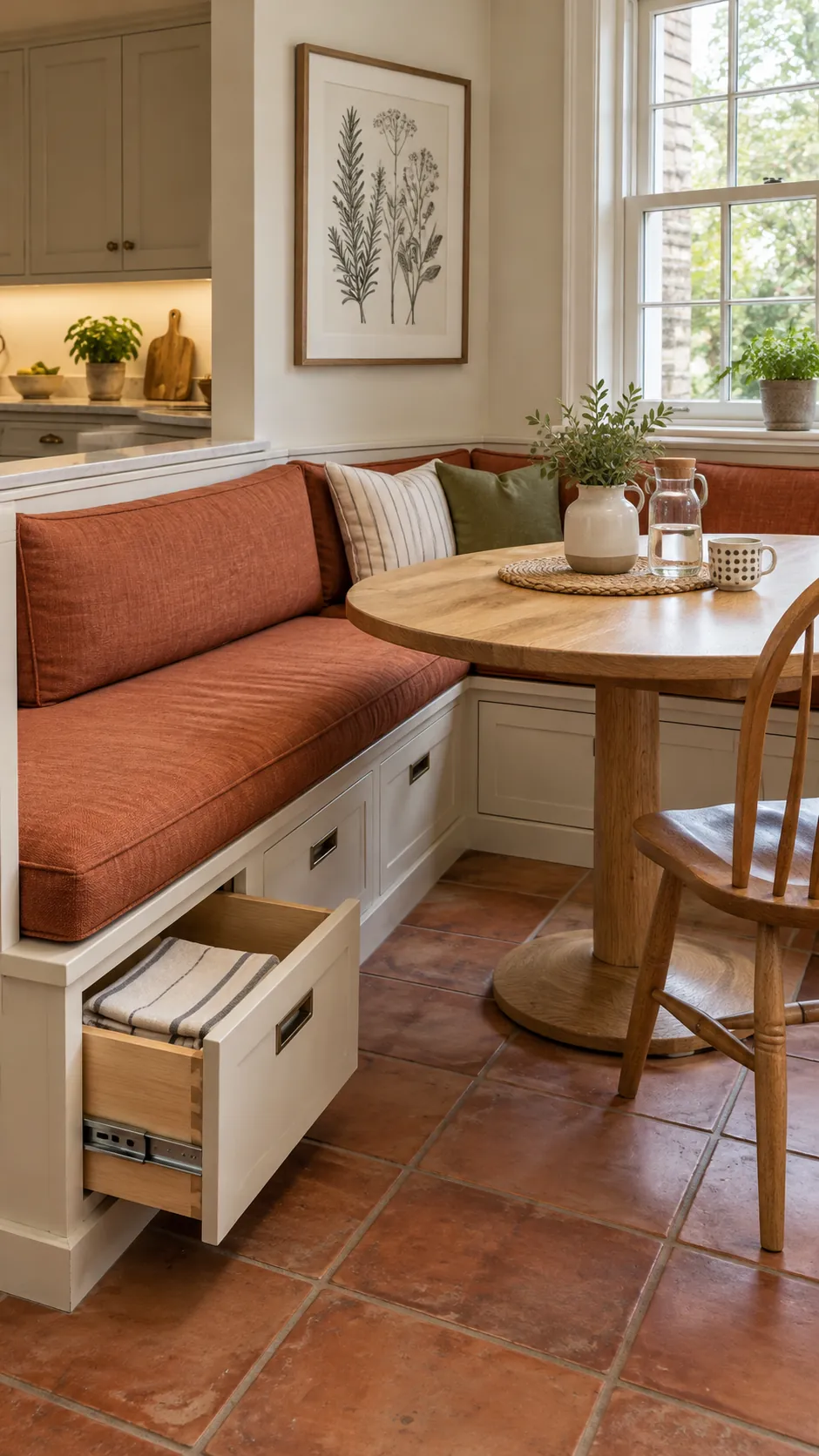
Seat comfort depends on proportions as much as softness. A bench that is too deep encourages slouching, while a thick breakfast nook cushion can raise a diner too close to the tabletop. Test the finished seat height with the actual cushion thickness. Add a firm back cushion only if there is still enough seat depth for an upright posture.
A built in banquette can include storage, but the lid must open without moving the table every time. Drawers at the front are easier for frequent items. A lift top works better for seasonal linens or serving pieces. In a rental, a freestanding storage bench can provide the same function without permanent construction.
Put light where the meal happens
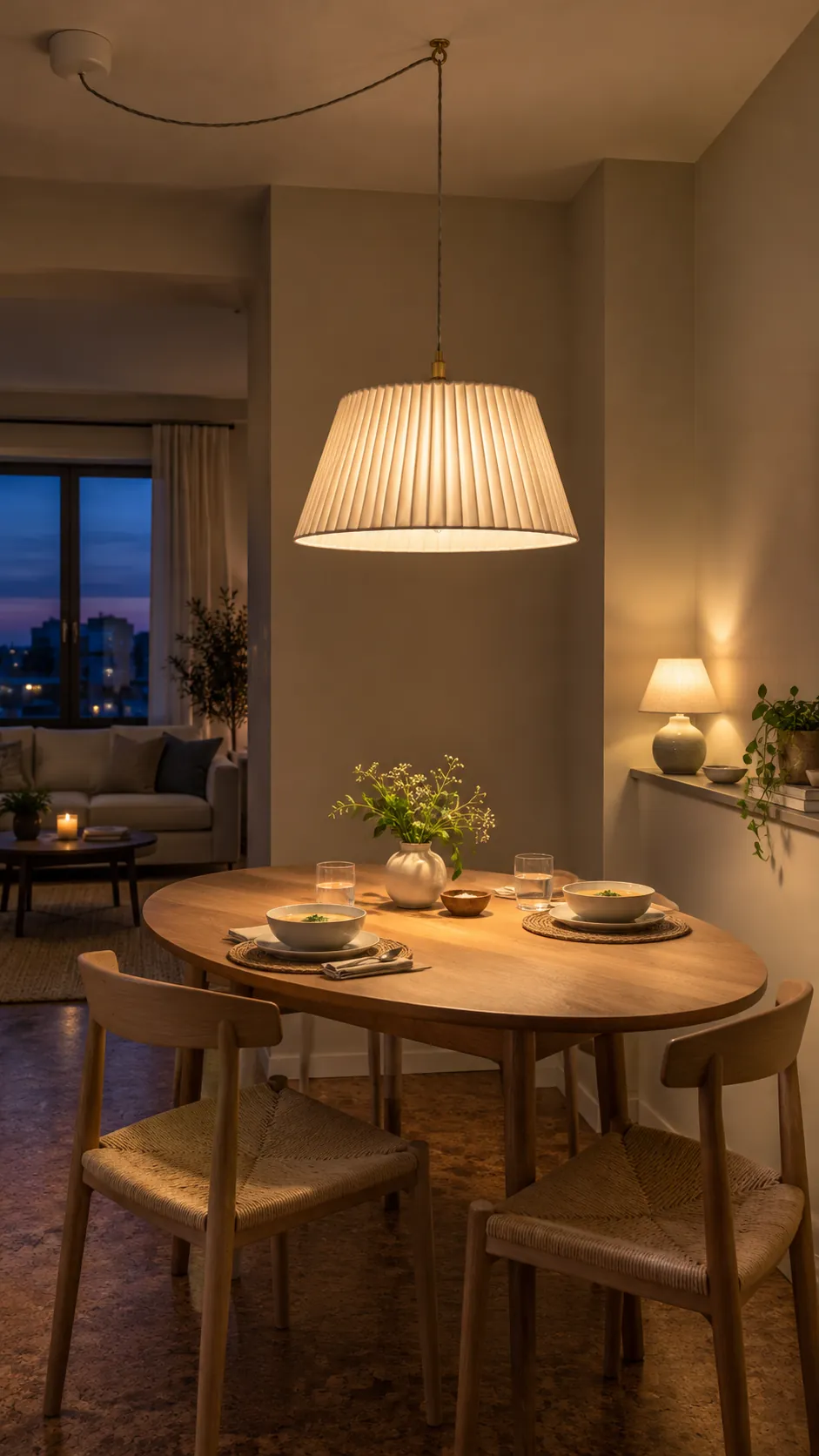
Dining nook lighting should define the table without making the corner harsh. Center a pendant over the tabletop rather than the room if the electrical point allows it. When the ceiling box is off center, a corded pendant with a secure ceiling hook can bring the shade into alignment. A renter can use a plug in wall light or a slim floor lamp instead.
Choose a shade that directs a warm pool of light downward while letting faces remain visible. The bottom should sit high enough that seated diners can see one another across the table. Add a dimmable bulb when possible, since breakfast needs clearer light than a quiet evening meal. A small lamp on a nearby ledge can soften the contrast after dark.
Use texture without crowding the corner
Cozy does not require many accessories. It comes from a few surfaces that feel pleasant at close range: washable woven cushions, a cotton curtain, warm wood, and a simple ceramic bowl. Repeat one or two colors from the adjoining room so the nook feels connected rather than visually fenced off.
A rug can soften sound and establish the dining zone, but every chair should remain on it when pulled back. If the corner cannot fit a rug large enough for that movement, leave the floor bare and invest in better cushions or curtains. Choose fabrics with removable covers, especially where crumbs and morning coffee are part of daily life.
Give the walls one clear job
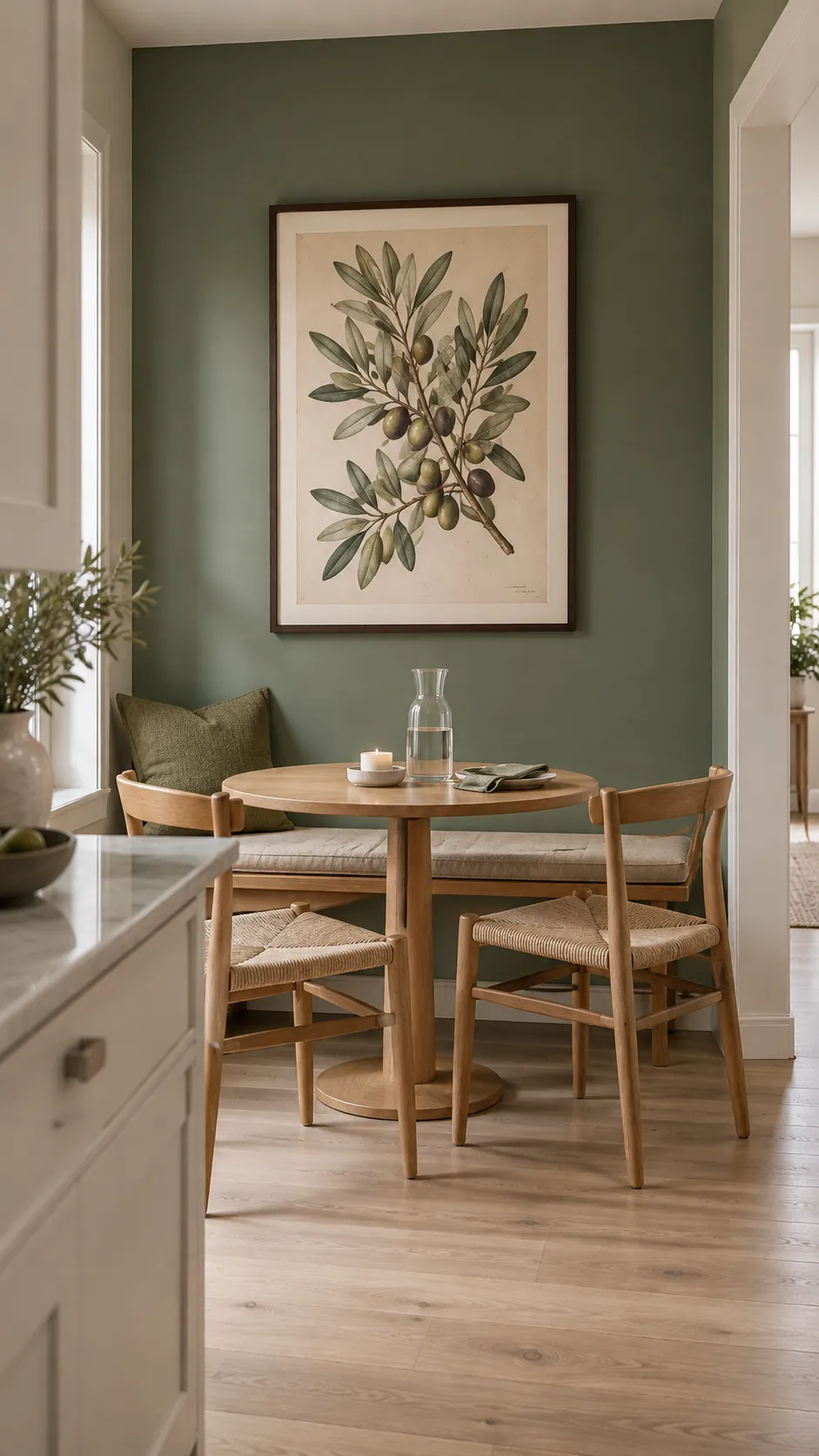
Walls can make the nook feel held without taking any floor space. Paint the recess in a color already present nearby, or use one framed botanical study to create a focal point. A mirror can brighten a dim corner, but position it so seated diners see a calm view rather than a busy doorway.
Keep wall pieces away from shoulders and from the path of a rising diner. One substantial piece usually looks calmer than many tiny frames in a very small space. If you rent, removable picture strips and a painted freestanding panel can create definition with less risk to the wall.
Finish with a real meal test
Before adding more decor, use the nook for several ordinary meals. Notice where a bag lands, whether a chair scrapes, where a serving dish needs to sit, and whether anyone reaches for a brighter light. Move only the element that causes the problem. A dining nook becomes cozy when it supports an unhurried routine, not when every visible surface is filled.
Keep the final tabletop simple. A low bowl, a small vase, or a candle holder is enough if it can stay in place during dinner. Leave room for elbows and conversation. The quiet space around useful objects is what lets the corner feel settled.