
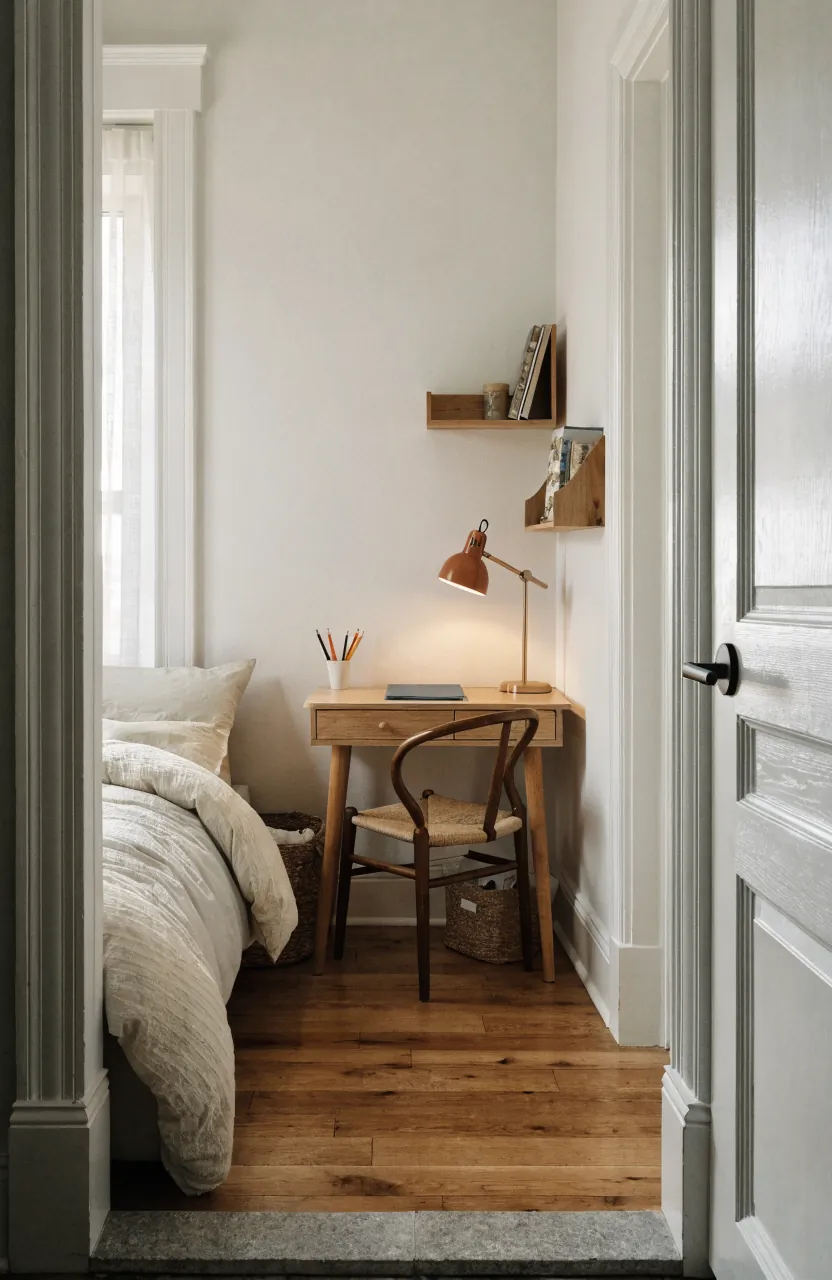
A homework corner in a small kids room does not need to look like a mini classroom. In a tight bedroom, the best study nook is usually quiet, compact, and easy to reset in under two minutes.
The goal is not to fit the biggest desk possible. The goal is to give your child one clear place to sit, write, read, and keep school supplies from spreading across the bed, floor, dresser, and closet. When the homework corner has a defined job, the rest of the small room can still breathe.
Start With the Corner’s Real Job
Before buying a desk, decide what actually happens there. A young child may only need a surface for worksheets, coloring, reading logs, and a small tray of pencils. An older child may need space for a laptop, workbook, lamp, and headphones. Those are different homework corner plans.
In a small kids room, this decision matters because every inch has to earn its keep. A wide desk that becomes a toy shelf will make the room feel more cluttered. A narrow desk with the right wall storage can feel calmer because it protects the floor and gives school items a home.
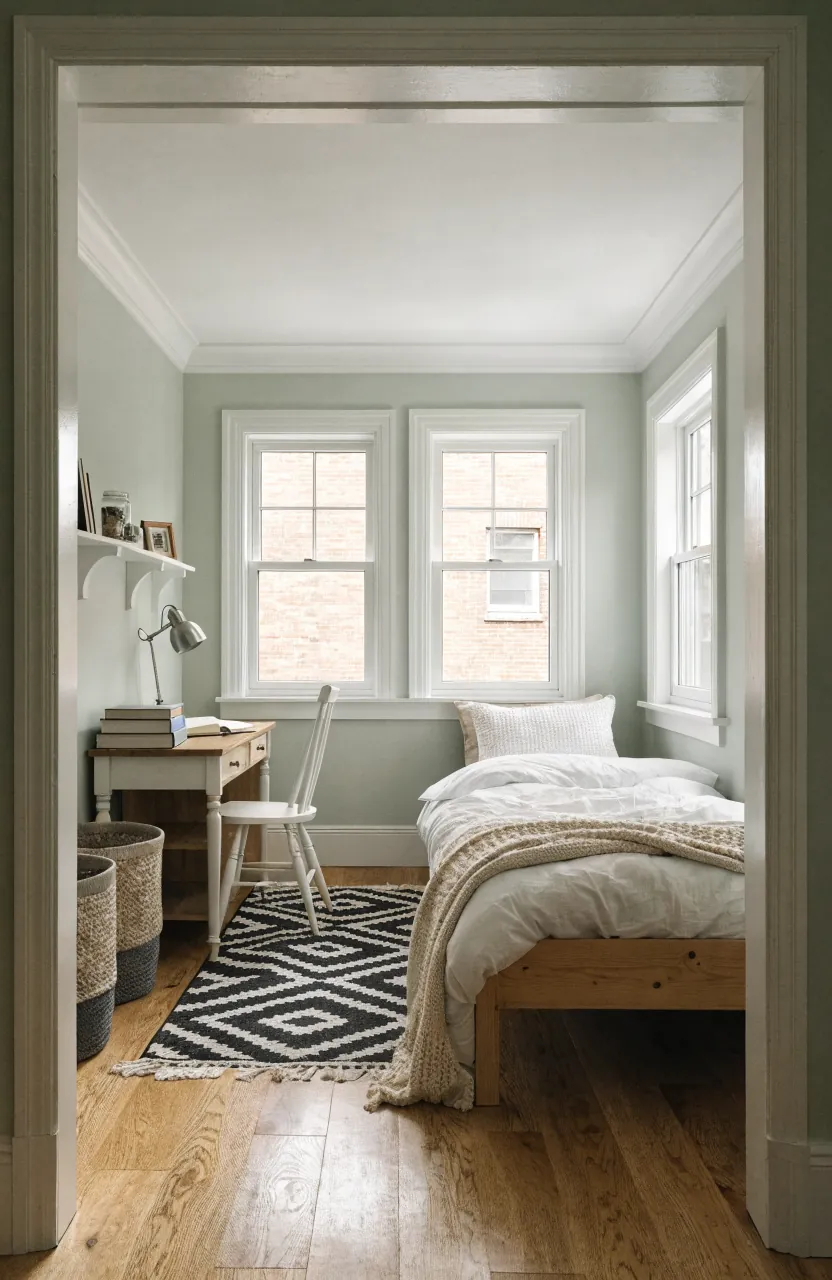
Choose the Smallest Desk That Still Works
A homework corner does not need a deep office desk. For many small kids room layouts, a shallow writing desk, wall-mounted desk, corner desk, or small table works better. Look for enough depth for an open notebook, not enough depth for piles.
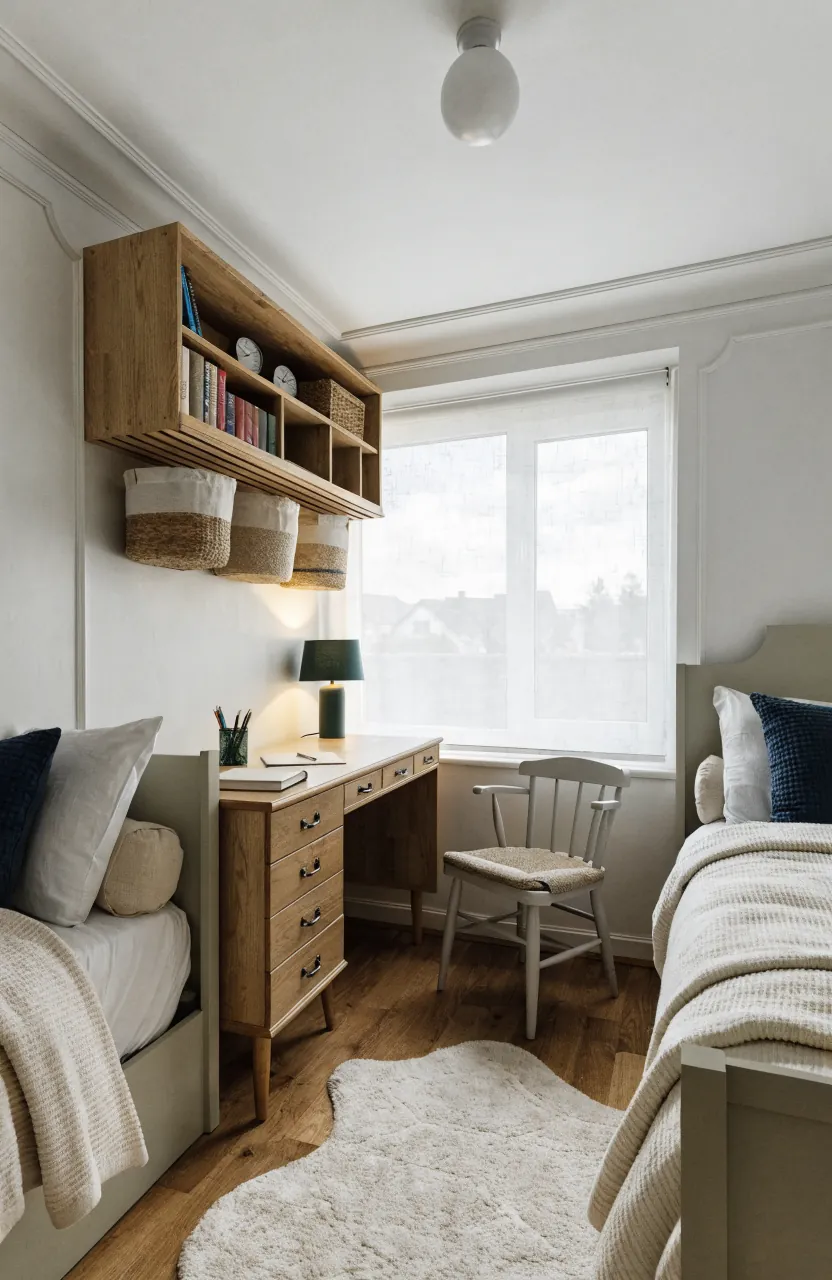
If the room has a clear wall beside the bed, place the desk there and keep the chair tucked in. If the only open spot is near a closet or dresser, choose a desk with legs that do not block drawers. If the room is shared, a slim desk between beds or under a lofted bed can create a study nook without taking over the play area.
The chair matters as much as the desk. A child should be able to sit with feet supported, shoulders relaxed, and elbows close to the tabletop. If the chair is too low, homework feels harder than it needs to. A simple footrest or sturdy storage box under the desk can solve that without adding another piece of furniture.
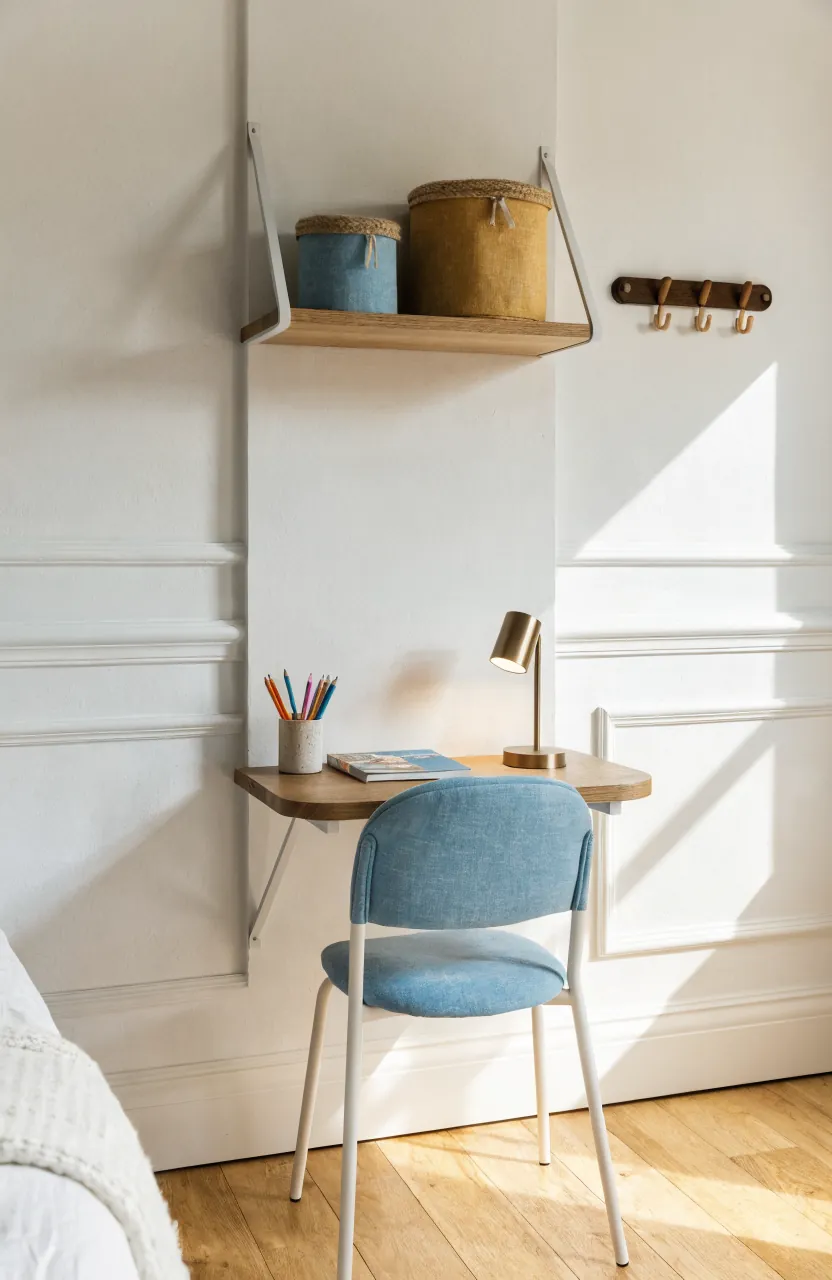
Use the Wall Before You Use the Floor
Wall storage is what makes a small homework corner feel intentional instead of squeezed in. A narrow shelf above the desk can hold workbooks. A peg rail can keep scissors, headphones, and a pencil cup off the desktop. A small bulletin board can hold the school calendar without covering every surface in paper.
Keep the wall setup simple. Too many baskets and labels can make a tiny study nook look busy. One shelf, one light, and one supply zone is enough for most kids desk ideas. The easier the system is to read, the more likely a child is to use it without being reminded.
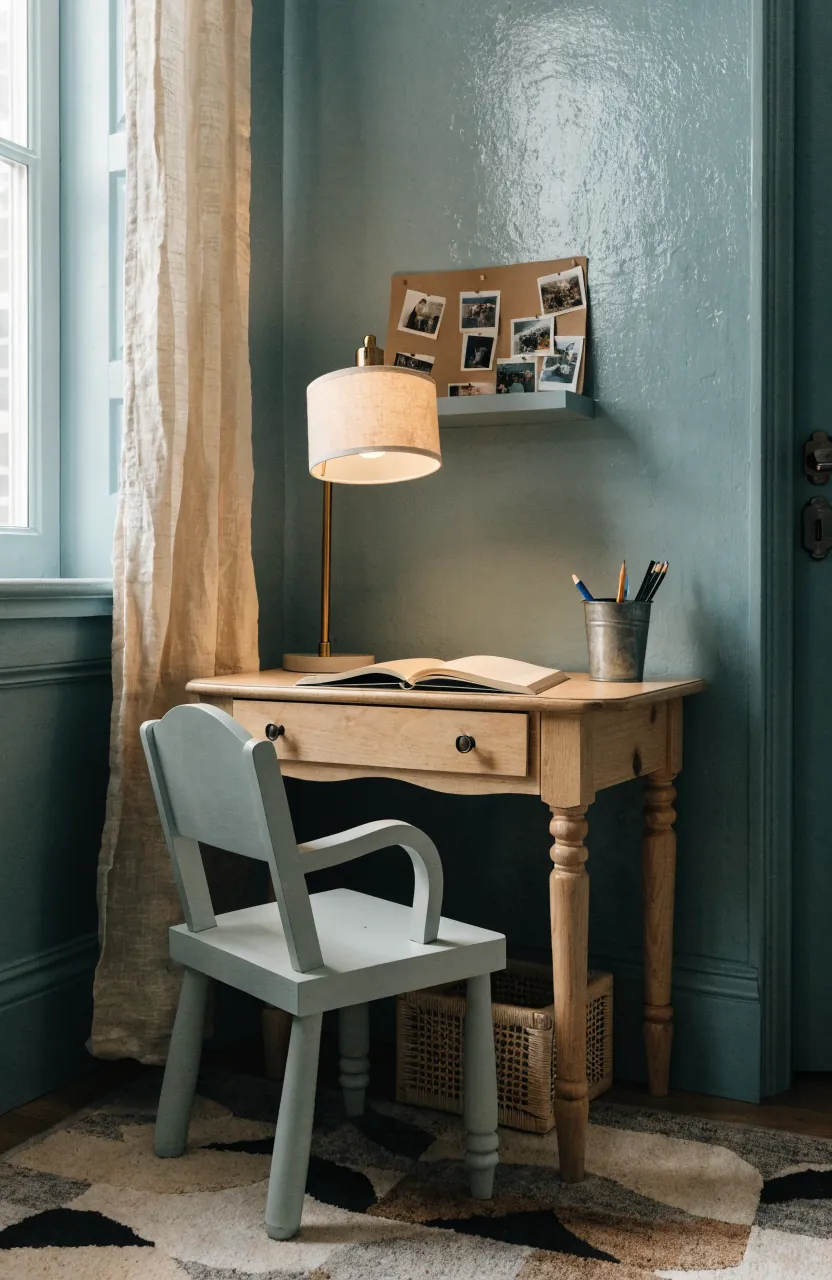
Give School Supplies a Tiny Boundary
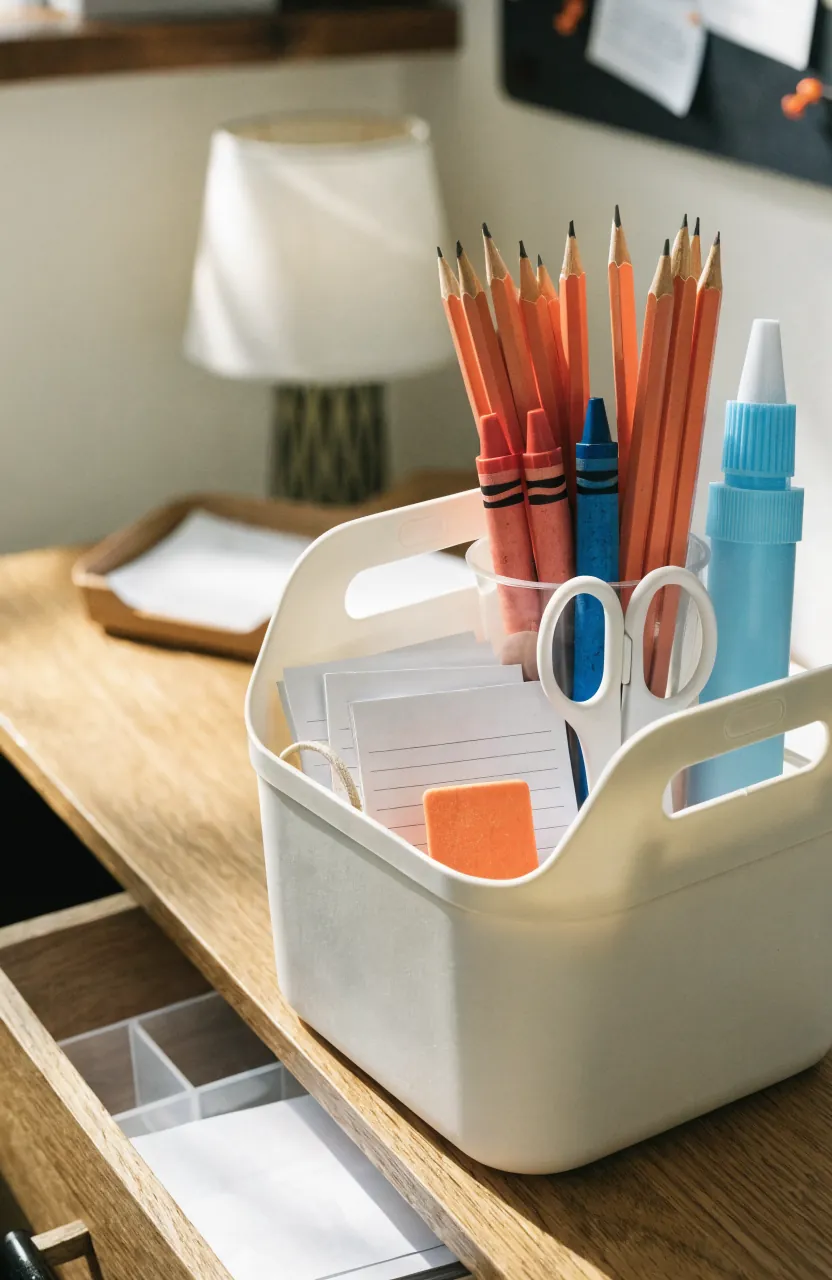
School supplies are small, but they are often what make a homework corner look messy. The fix is not more storage. It is a tighter boundary. Use one desktop caddy, one drawer divider, or one small bin for pencils, erasers, glue, scissors, sticky notes, and flash cards.
If your child likes to work at the desk sometimes and the kitchen table other times, use a portable homework caddy. It keeps the small kids room from becoming the only place school supplies live, while still giving every item a home at the end of the day.
A good rule is simple: if it is not used during homework, it does not stay on the desk. Toys, art projects, trophies, loose books, and random treasures can have another shelf. The desk should signal “start here,” not “sort through this first.”
Protect the Play Area
A small kids bedroom usually has to work as a sleep space, play area, storage zone, and study nook. If the homework corner steals the only open floor space, the room will feel frustrating even if the desk looks nice.
Leave a clear path from the door to the bed and keep at least one open floor patch for play or getting dressed. This is where vertical storage helps again. Books can go on wall shelves, a rolling cart can slide beside the desk, and a narrow drawer unit can sit under the desktop if it does not block the chair.
Make the Corner Easy to Reset
The reset is the part many small room plans forget. A homework corner only works long term if a child can return it to normal quickly. Keep a small trash bin nearby. Add a folder tray for papers that need a parent signature. Put only daily tools within reach and move extra supplies higher or inside a labeled box.
At night, the desktop should be almost empty: lamp, pencil cup or caddy, and maybe the next day’s folder. That visual quiet helps the bedroom feel calm again after schoolwork is done.
Best Spots for a Homework Corner in a Small Kids Room
- Beside the bed: Works well when a narrow desk can double as a nightstand, but keep bedtime items separate from school items.
- Under a loft bed: Good for older kids if the lighting is strong and the area does not become a dumping zone.
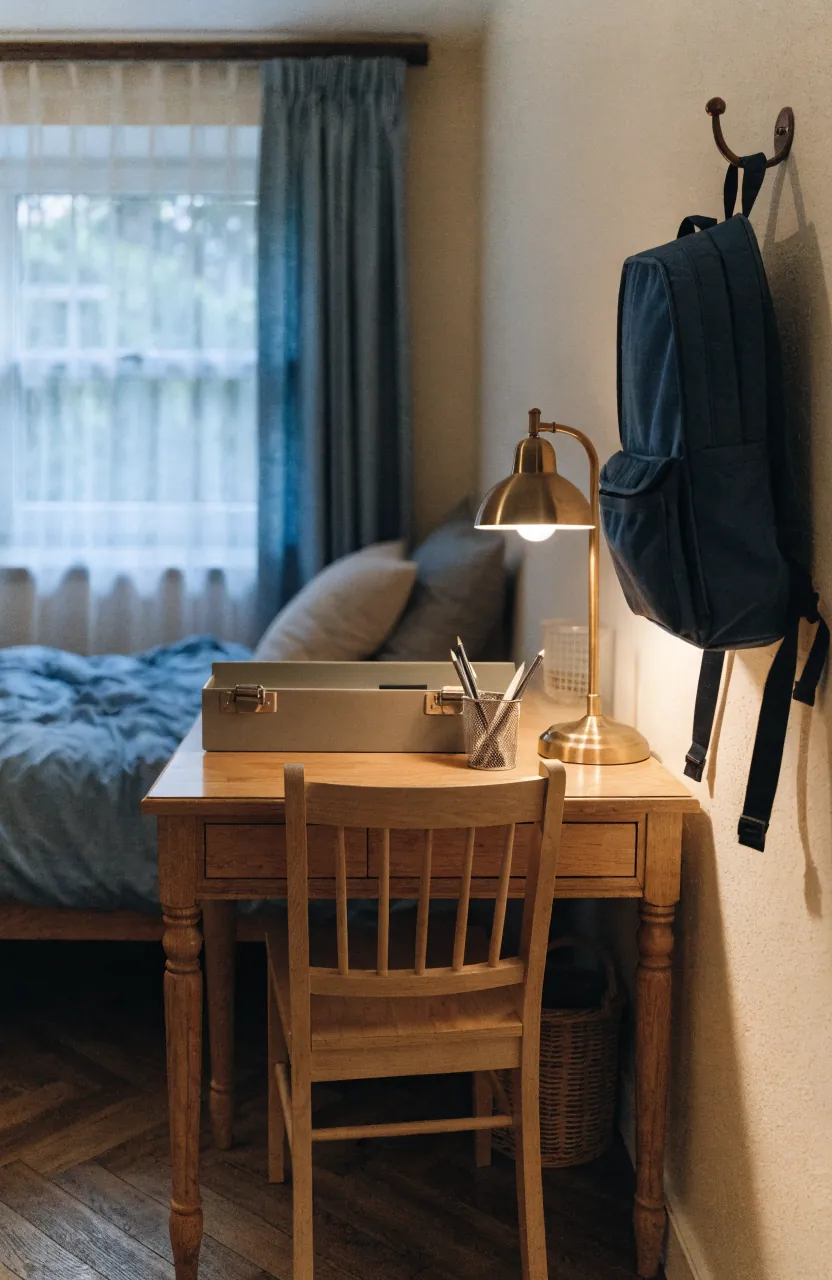
- Near a window: Natural light helps, but avoid glare on screens and keep cords controlled.
- Inside a closet nook: Useful when clothing storage is already handled elsewhere, but add a lamp and shallow shelves.
- Between two storage pieces: A slim desktop between bookcases or wardrobes can create a built-in study nook without a full desk footprint.
What to Avoid
Avoid oversized desks, rolling chairs that bump into furniture, open shelves packed with colorful clutter, and storage bins that are too high for the child to reach. Also avoid placing the homework corner directly in the busiest play zone if you can. A child should not have to clear toys from the chair before sitting down.
The best small kids room homework corner is not the most decorated one. It is the one your child can use, leave, and reset without the whole bedroom turning into a school supply pile.
A Simple Setup Formula
Use this formula if you want the easiest starting point: slim desk, supportive chair, wall shelf, small lamp, one supply caddy, one paper tray, one trash bin, and one clear rule about what belongs on the desktop. That is enough to create a homework corner that supports schoolwork without crowding a small kids room.