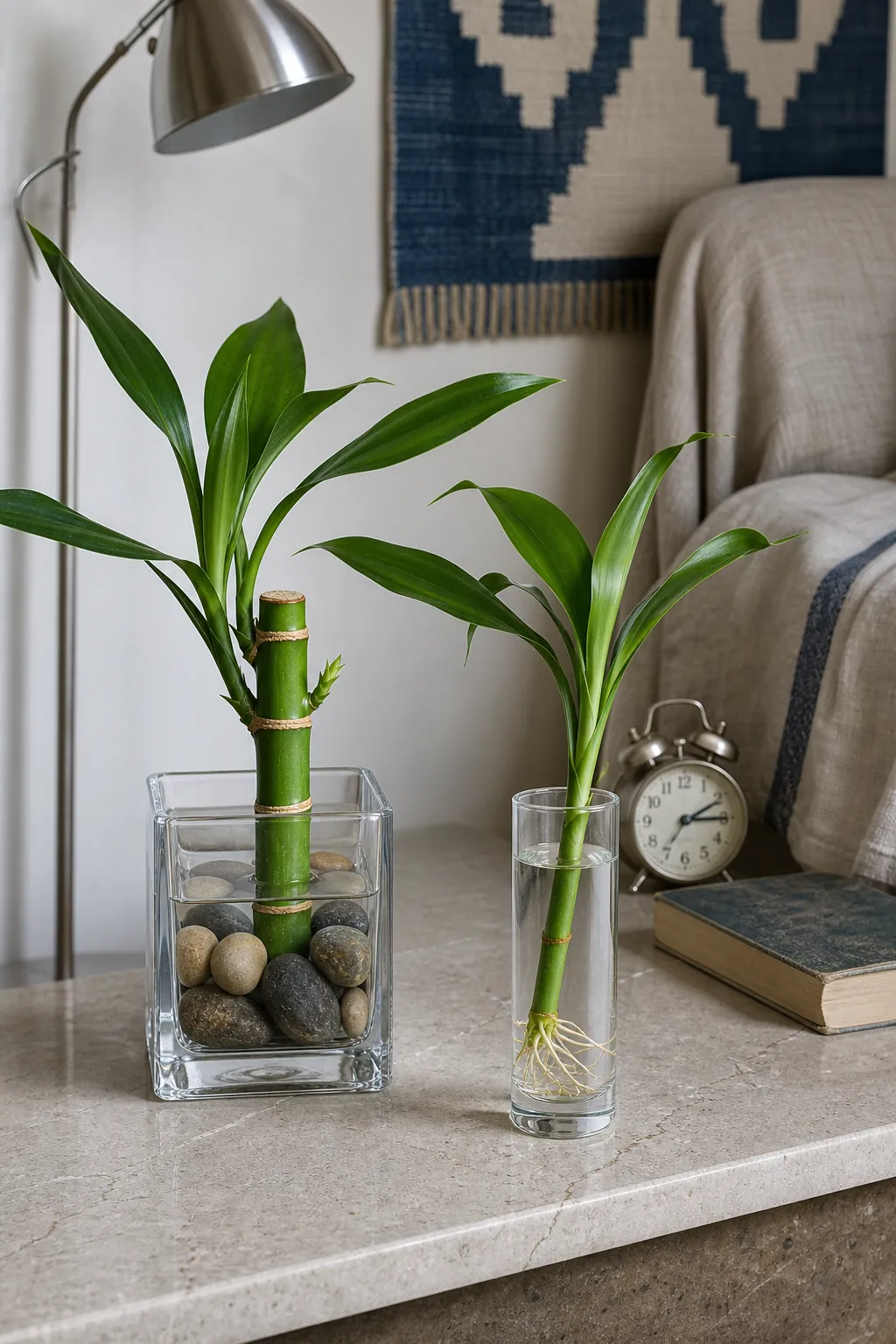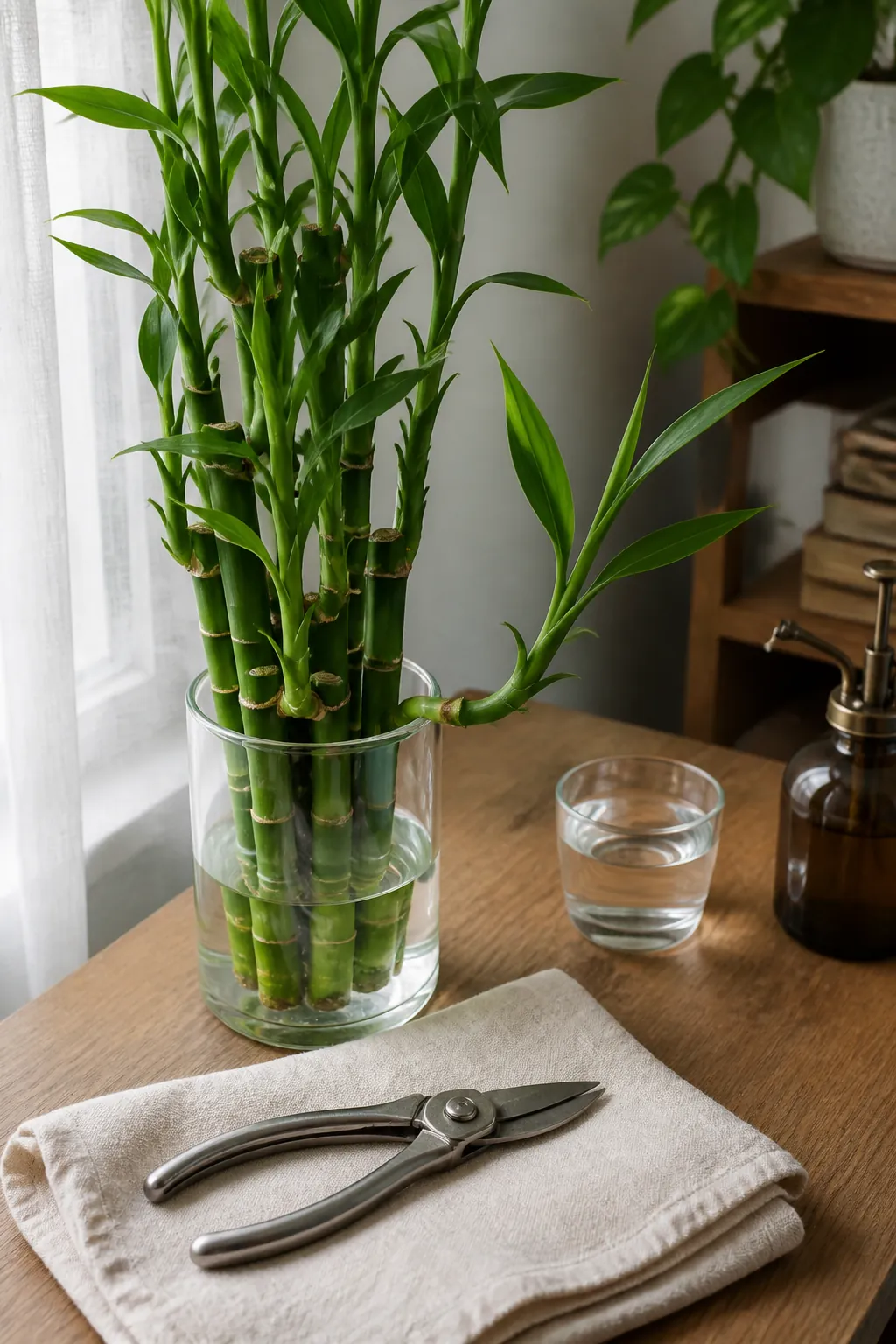
A single cut can make an overgrown lucky bamboo easier to manage, but the wrong cut can remove the very growth point you hoped to save. The safest approach is to decide first whether you want a neater parent plant, a shorter cane, or a new rooted plant. That choice determines which stem to cut and where the blade belongs.
Lucky bamboo is actually Dracaena sanderiana, so it responds more like a cane forming houseplant than a true bamboo. Healthy green stems can produce new side growth after pruning, while leafy cuttings can form roots when given clean water and gentle light. The method below keeps those two outcomes separate so you can work with confidence.
Choose the Result Before You Make the Cut
For simple shaping, remove a leafy side shoot close to the main cane without slicing into the cane itself. To reduce the height of a long green cane, cut the cane just above a healthy node and expect future growth to emerge from a lower node rather than from the severed tip. For propagation, keep a healthy upper section or side shoot that includes usable nodes and enough stem to stand securely in water.
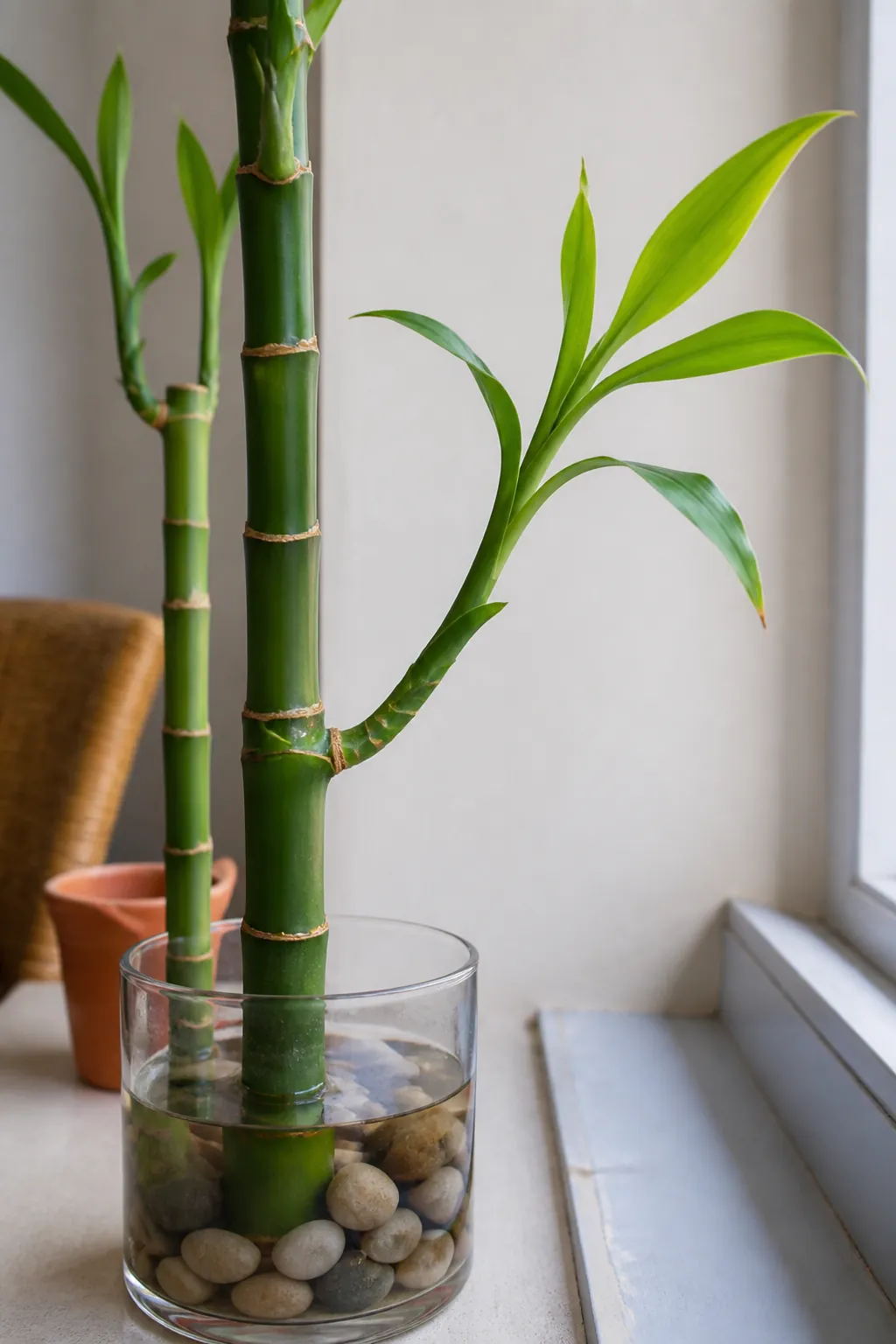
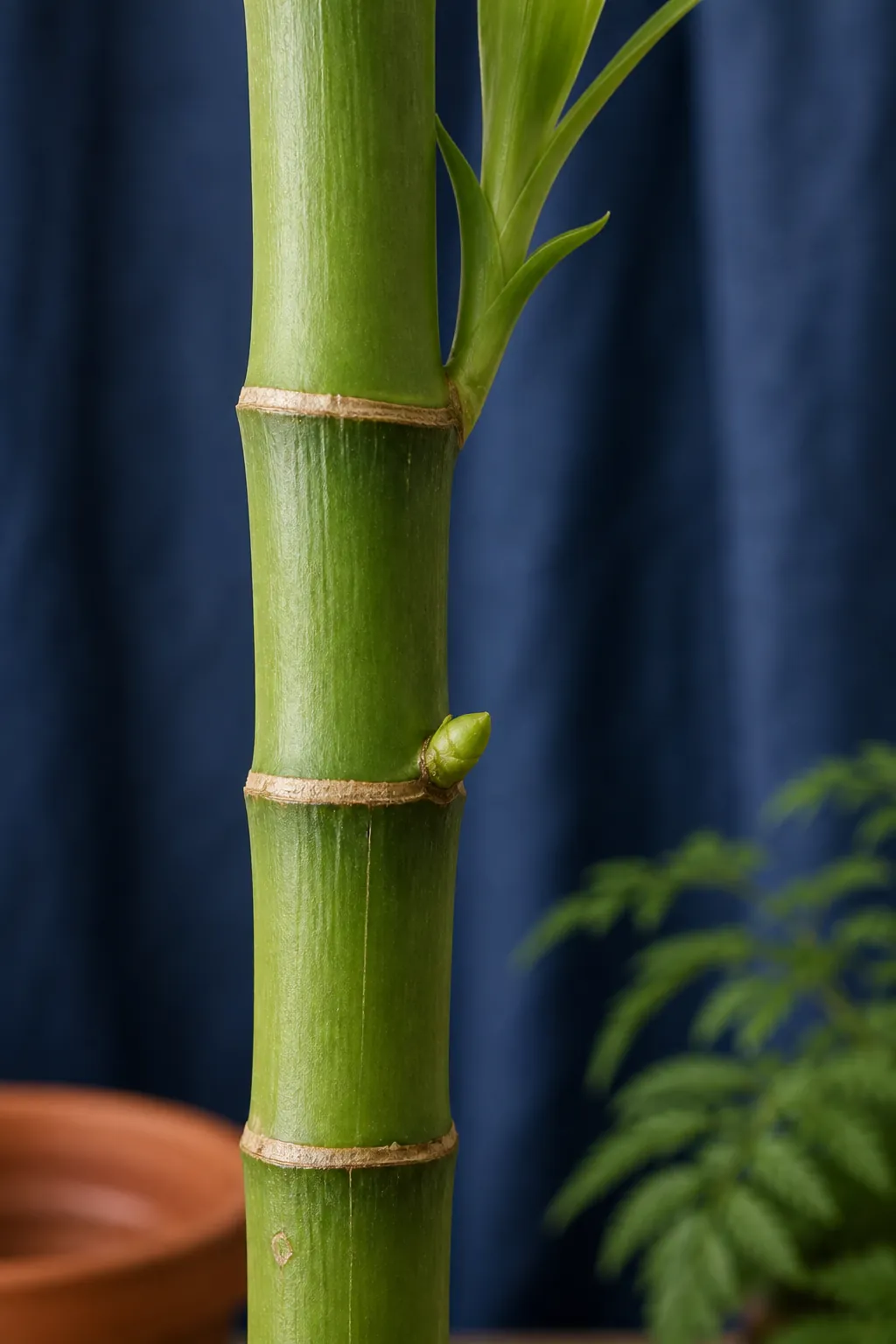
A node is the slightly raised ring or joint on the stem where leaves, shoots, or roots can emerge. Do not split a node with the blade because that damages the active tissue a cutting needs. If the plant is rare, sentimental, weak, or represented by only one surviving cane, waiting for stronger growth may be wiser than making an experimental cut.
Check That the Plant Is Healthy Enough
Cut only firm green tissue. A yellow cane, mushy base, sour smelling water, or spreading brown area signals stress or rot, and routine trimming will not correct the underlying problem. When damage is advancing, a healthy green section above it may be worth rescuing, but the blade must pass through clean tissue with no tan or soft center.
Postpone cosmetic pruning if the plant was recently moved, repotted, chilled, or exposed to harsh sun. Give it stable bright indirect light and confirm that new growth looks normal first. Spring and early summer often support faster recovery indoors, although a vigorous plant in steady household conditions can be cut at other times.
Clean and Prepare the Cutting Tools
Use narrow bypass pruners, sharp scissors, or a clean knife that can pass through the stem without crushing it. Wash away sap and soil, then disinfect the blade with rubbing alcohol and let it dry. A dull blade bruises the cut edge, which leaves more damaged tissue where decay can begin.
Prepare the receiving container before cutting if you plan to propagate. Use a clean glass or vase and fresh filtered, distilled, or rain water when local tap water causes leaf tip damage. Keep a clean towel nearby so the fresh end never rests on a dirty counter.
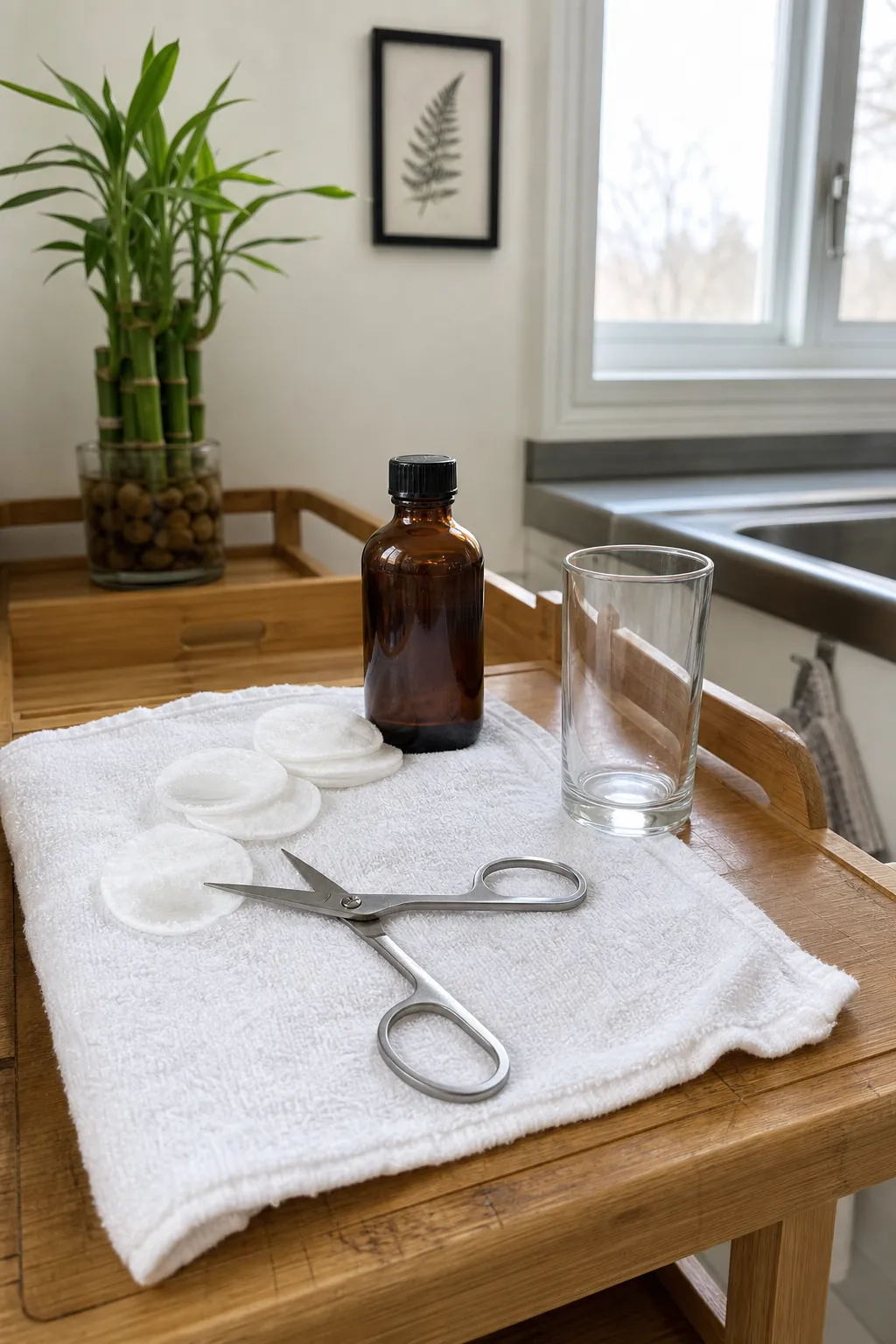
Find the Nodes and Mark the Cutting Point
Trace the stem with your eyes before placing the blade. The nodes appear as horizontal rings, slight ridges, or junctions where a leafy shoot meets the cane. On a side shoot, several smaller joints may sit beneath the leaves and later become rooting points.
When shortening the mother cane, place the cut a small distance above the node you want to preserve. When preparing a cane cutting, retain at least two sound nodes so one can support rooting and another can support a shoot. Keep track of which end was originally lower because an upside down cutting is unlikely to establish properly.
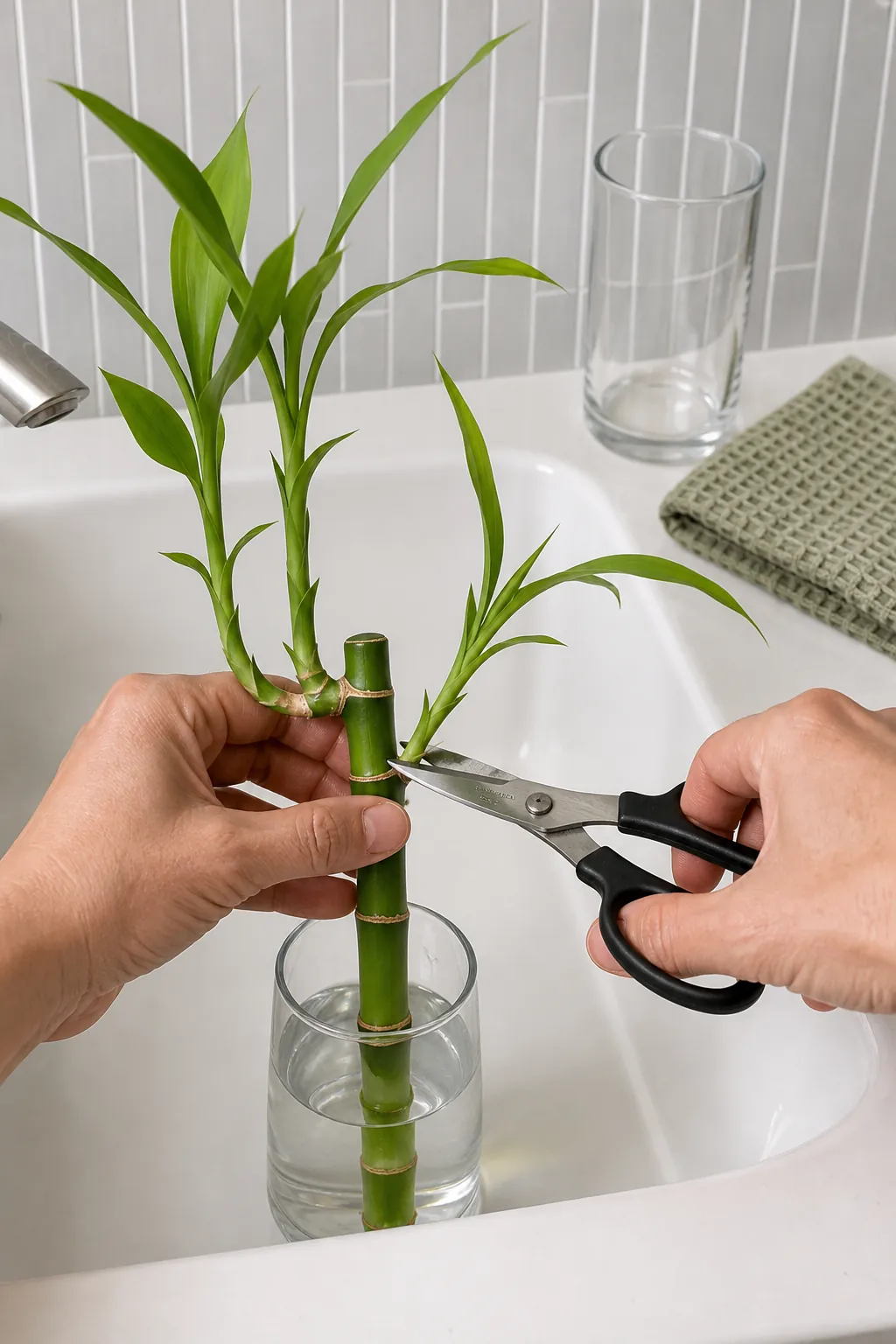
Trim a Leafy Side Shoot for a Neater Shape
Support the shoot with one hand and cut it close to the main cane in one deliberate motion. Avoid gouging the cane or leaving a long ragged stub. If you only want to control foliage, remove selected shoots instead of cutting every leafy branch at once, since the remaining leaves continue to power recovery.
The removed shoot can become a lucky bamboo cutting if it is green and firm. Strip only the lowest leaves that would otherwise sit in water, leaving the upper foliage intact. Set the cutting aside in the correct upright direction while you finish tidying the parent plant.
Shorten a Tall Cane Without Damaging a Node
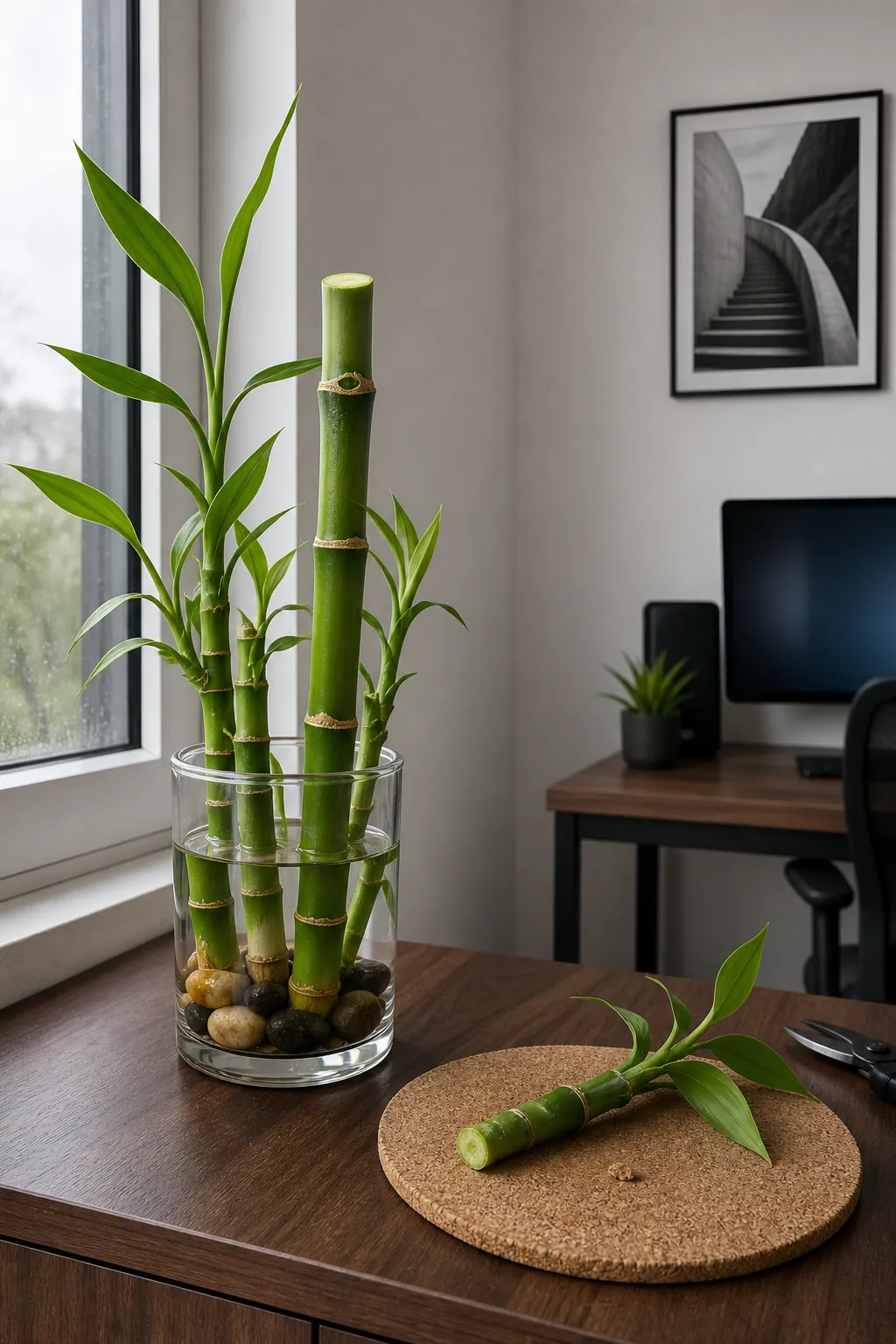
For a top heavy plant, select a healthy node below the height you want to remove and cut through the smooth internode just above it. Make a level, clean cut without sawing. The remaining cane will not continue upward from the cut surface, but a dormant bud below it may develop into a new side shoot.
Commercial lucky bamboo canes sometimes have sealed tops, and growers also use wax on fresh cane cuts. A small amount of plain, plant safe wax can help keep water off a broad cut surface, but cleanliness and healthy tissue matter more than a decorative seal. Never smear wax over a node or over the lower end that you intend to root.
Root the Healthy Cutting in Fresh Water
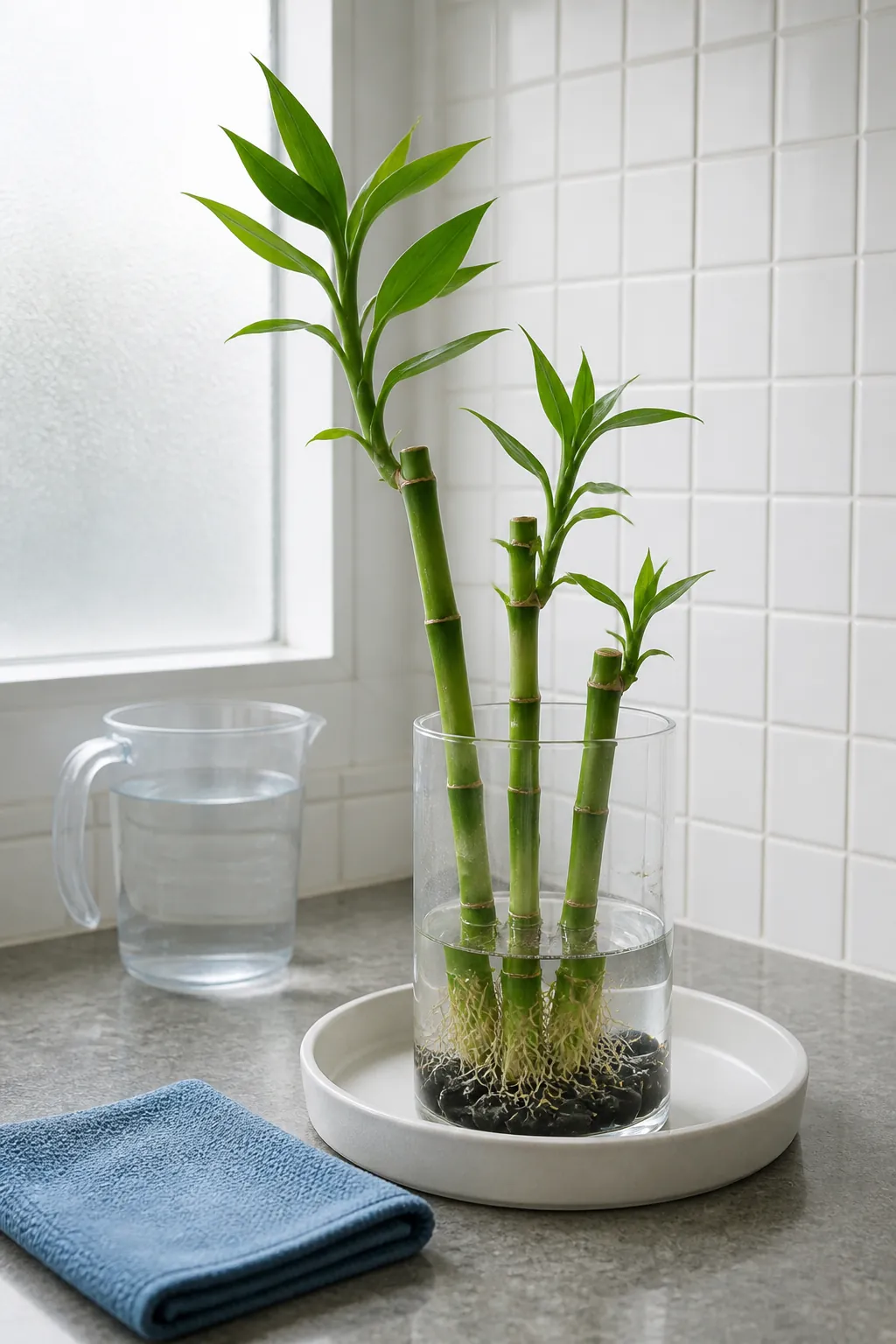
Place the lower end of the cutting in a clean container with at least one lower node under water and all leaves above the surface. A narrow vessel helps the stem remain upright without packing it tightly among stones. Set it in bright indirect light, away from hot glass, cold drafts, and direct afternoon sun.
Refresh the water regularly and rinse the vessel when it feels slippery. Evaporation can expose the lower node, so check the level between changes. Rooting speed varies with warmth, light, and the condition of the cutting, so judge progress by firm green tissue and emerging pale roots rather than by a fixed deadline.
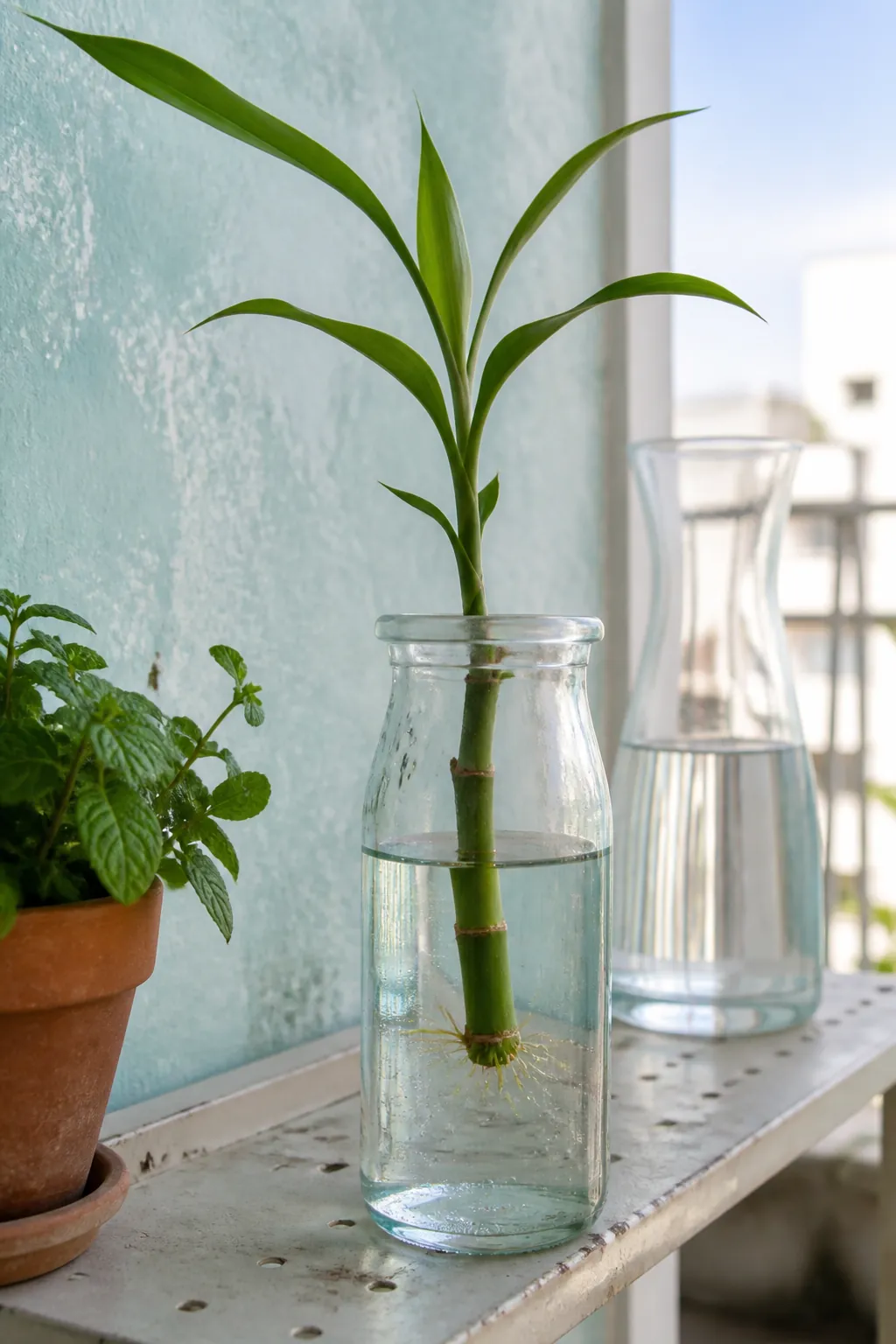
Watch the Parent Plant and Cutting for Trouble
Keep both pieces in stable bright indirect light after cutting and avoid fertilizer until active growth resumes. Remove standing water from the cut surface of the parent cane, and keep the propagation vessel clean. A firm cut end may dry slightly, while spreading yellow color, softness, or an unpleasant smell calls for immediate inspection.
If rot appears on the cutting, disinfect the blade again and recut above the damaged tissue only if enough healthy stem and a viable node remain. Separate new cuttings from a container with decaying stems so one failure does not contaminate the others. Patience is part of Dracaena sanderiana care because a healthy cane may sit quietly before roots or a new side shoot become obvious.