
Decluttering a small bedroom can go wrong fast. One drawer becomes five piles. The bed disappears. The floor gets blocked. By bedtime, the room is not cleaner; it is just a different kind of stressful.
The fix is not a more dramatic cleanout. It is a tighter method. Small bedroom decluttering has to protect your sleep surface, your floor path, and your decision energy. If those three things stay intact, you can make real progress without making a bigger mess.
This routine is built for a room where clothes, dishes, mail, chargers, bags, bedding, and random personal items all compete for the same few square feet. It works especially well if you have tried to organize before, got overwhelmed, and ended up moving clutter from one place to another.
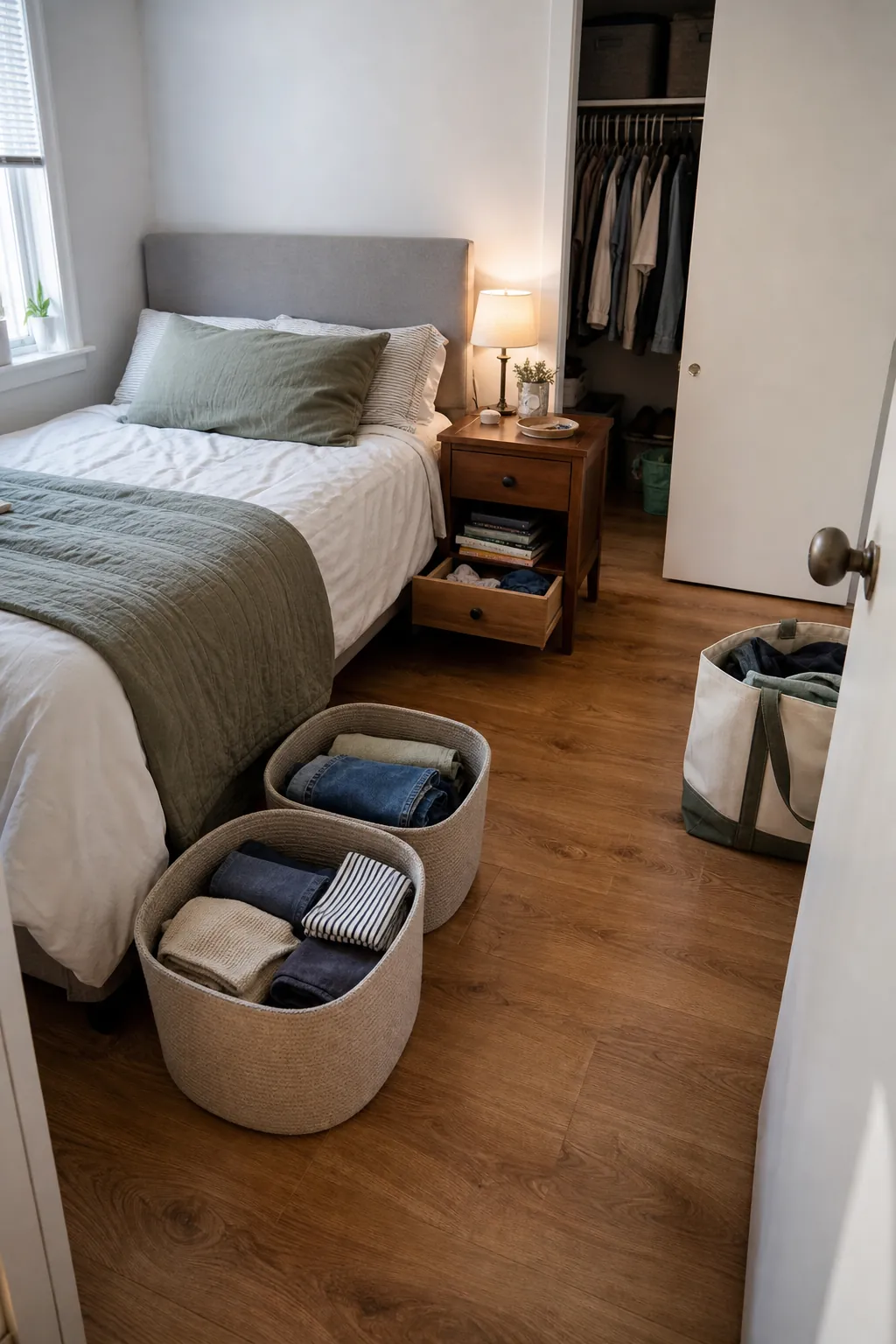
Start by protecting the bed and one clear floor path
Before you touch a drawer, make the bed. Not because a made bed magically fixes the room, but because it gives you one clean visual anchor and stops you from using the mattress as a giant sorting table. In a small bedroom, once the bed becomes a pile, the whole room feels lost.
Next, choose one walking path that must stay open: door to bed, door to closet, or bed to dresser. This is your no-clutter lane. Every bag, basket, and decision pile has to stay out of that lane. If the path closes, the session is too big.
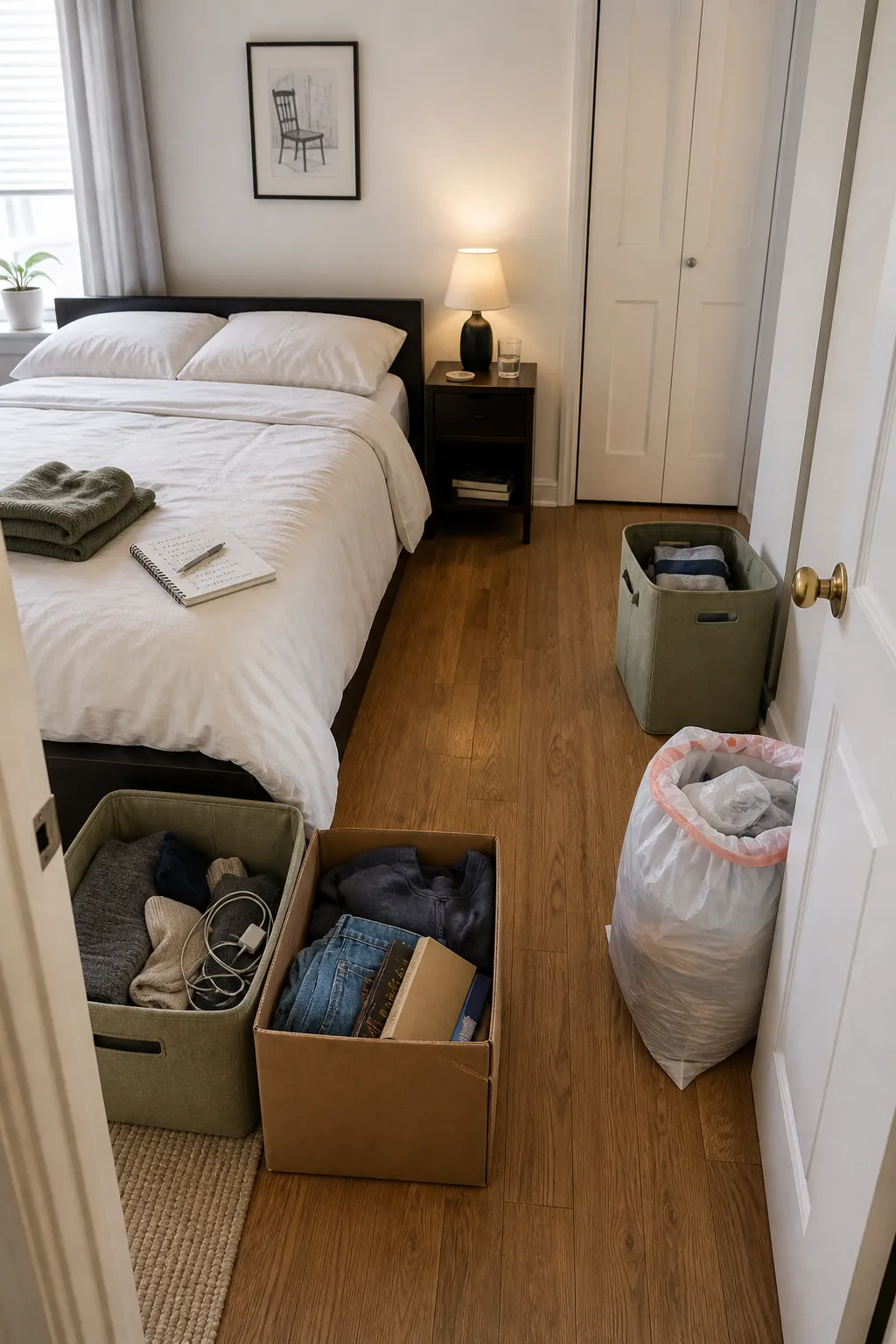
Use containers that limit the size of the job. One trash bag, one donation box, one relocate basket, and one keep-in-room basket is enough. Avoid making a separate pile for every possible category. Too many categories create the bigger mess you are trying to avoid.
Do the obvious exit pass before any emotional sorting
The first pass should be boring. That is the point. Pick up trash, dishes, empty packaging, receipts you do not need, laundry that clearly belongs in the hamper, and items that belong in another room. Do not debate sentimental things yet. Do not redesign your closet yet. Do not start with the drawer that scares you.
This quick pass gives you visible progress without forcing hard decisions. It also removes the objects that make a bedroom feel grimy instead of merely cluttered. Trash and dishes should leave immediately, not wait in a new pile. A relocate basket can wait until the end of the session, but it should stay contained.
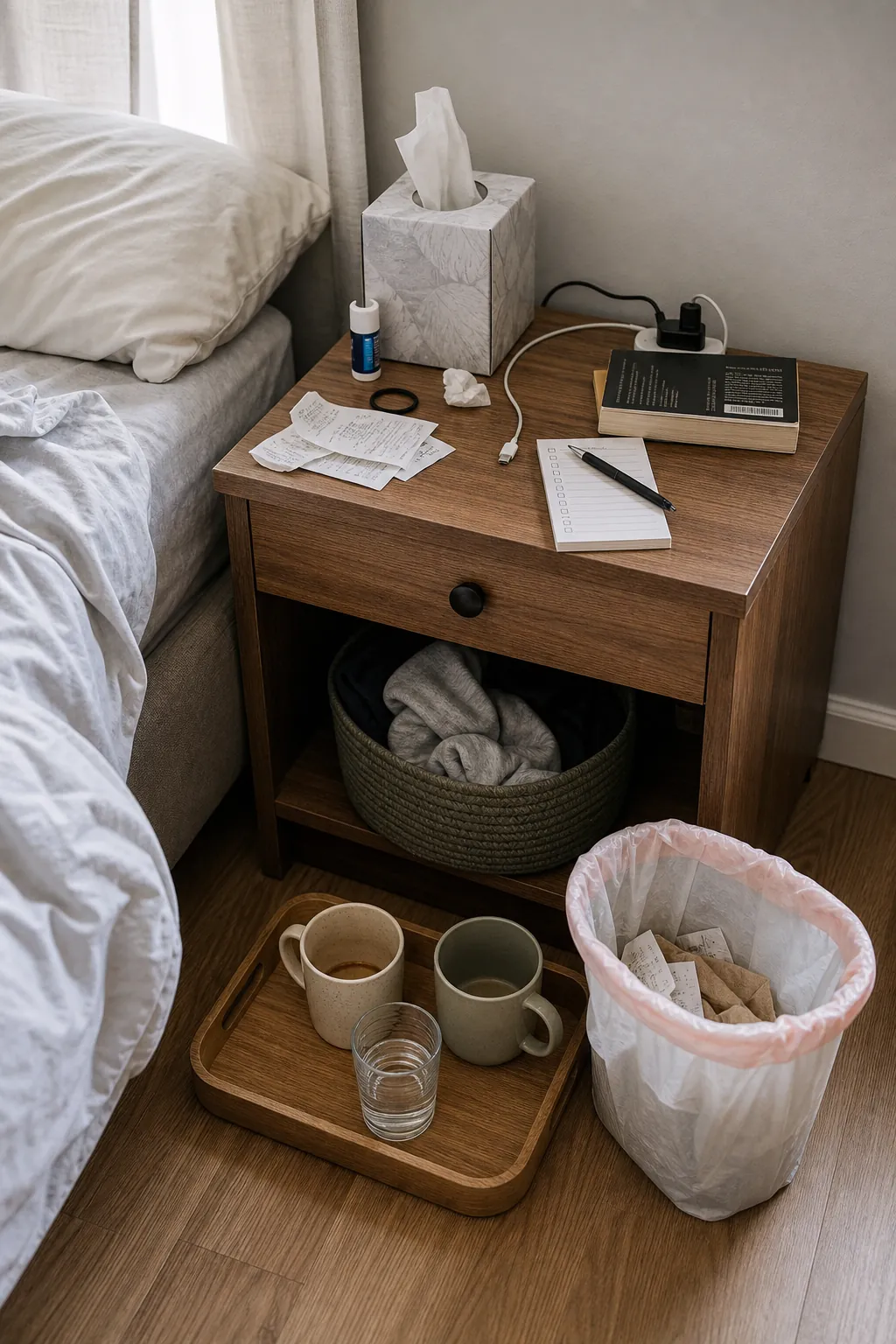
If you only have ten minutes, stop after this pass. Tie the trash. Carry dishes out. Put laundry in the hamper. A short cleaning routine that finishes cleanly is better than a huge decluttering session that leaves the room unusable.
Use the one-drawer rule for clothes storage
Clothes are where bedroom decluttering usually explodes. The common mistake is pulling everything out because you want to see what you own. That can work in a large room with a free afternoon. In a small bedroom, it often creates a laundry mountain with no exit plan.
Open one drawer, shelf, bin, or hanging section. Only one. Remove the items that clearly do not belong in your current life: damaged pieces, uncomfortable clothes, duplicates you always skip, and things you would not choose even if they were clean. Then put the keepers back with breathing room.
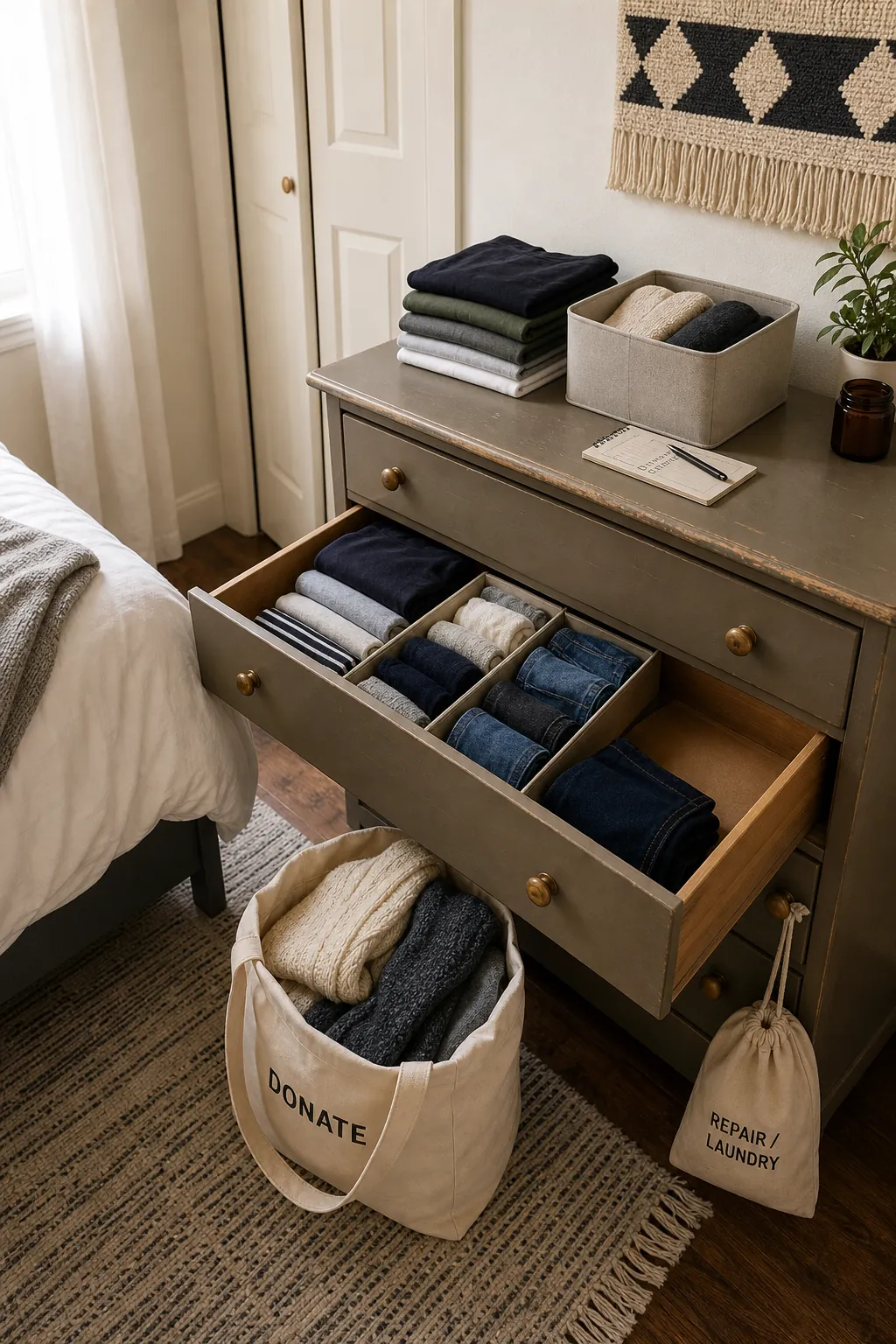
The goal is not a perfect capsule wardrobe. The goal is a drawer that opens, closes, and accepts clean laundry without a fight. If putting clothes away feels annoying, you probably need less pressure inside the storage, not a more complicated folding system.
Keep a small maybe container if you need one, but give it a deadline. A maybe box with no deadline is just clutter with better manners. For a small bedroom, the best test is simple: would you rather have this item, or would you rather have the space it is taking every single day?
Move seasonal and low-use items out of prime space
A tiny room becomes hard to keep tidy when every item wants daily access. Off-season sweaters, extra bedding, occasion shoes, spare bags, keepsake papers, and rarely used accessories should not compete with the clothes and objects you touch every week.
Use under-bed storage, a top closet shelf, or one labeled fabric bin for low-use categories. Keep it boring and specific. One bin for winter knits. One shallow drawer for spare bedding. One box for occasion wear. Hidden storage only helps when you can name what is inside without opening it.
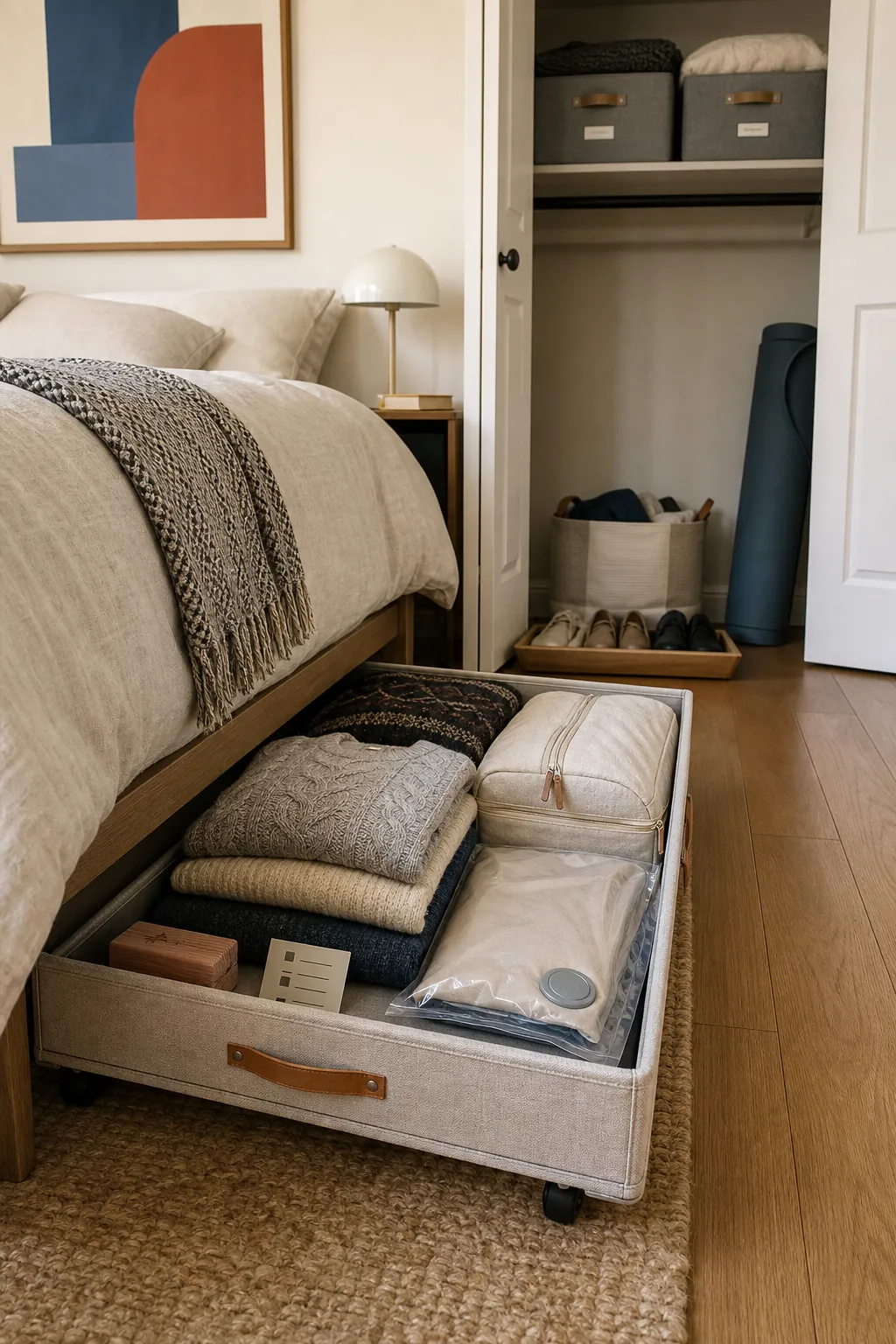
Do not use under-bed space as a guilt drawer for everything you could not decide on. That just delays the mess. Under-bed storage works best for categories with a clear season, purpose, or quantity limit.
Finish every session with an exit route
Decluttering is not finished when the donation bag is full. It is finished when the donation bag leaves the bedroom. If the bag sits beside the dresser for three weeks, the room is still storing clutter. The same is true for trash, returns, laundry, and items that belong in the kitchen, bathroom, entryway, or home office.
End the session ten minutes before your energy runs out. Use that time to close the loop: trash out, dishes out, donation bag by the door or in the car, laundry in the hamper, relocate basket emptied into the correct rooms. The final ten minutes are what keep decluttering from turning into a bigger mess.
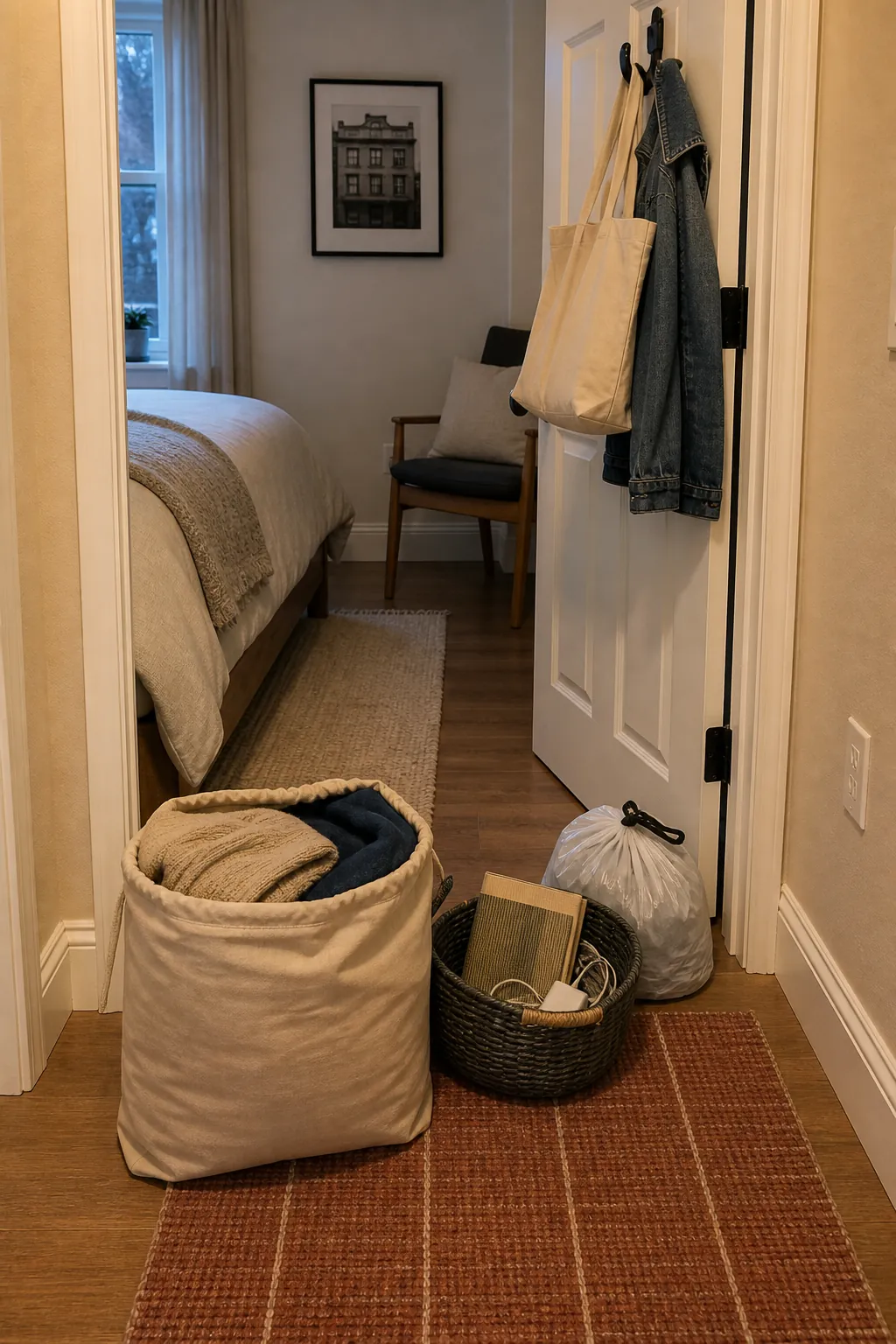
If you are tired, do not start a new zone. Reset the surface you opened, make sure the bed is usable, and move exit items out. A small finished session builds trust with yourself. A huge unfinished session makes the next start harder.
Create one landing zone so clutter does not rebuild
A decluttered bedroom will not stay tidy if your daily items still have nowhere to land. Most bedroom clutter comes from repeat objects: phone charger, glasses, water glass, book, hair ties, laundry, receipts, and the clothes you might wear again.
Give those items a tiny system. A tray for bedside essentials. One hook for the sweater you will wear tomorrow. A small basket for not-quite-laundry clothes, with a limit. A charger clip that keeps the cord from living on the floor. A rule that the nightstand holds one book, not a stack of eight.
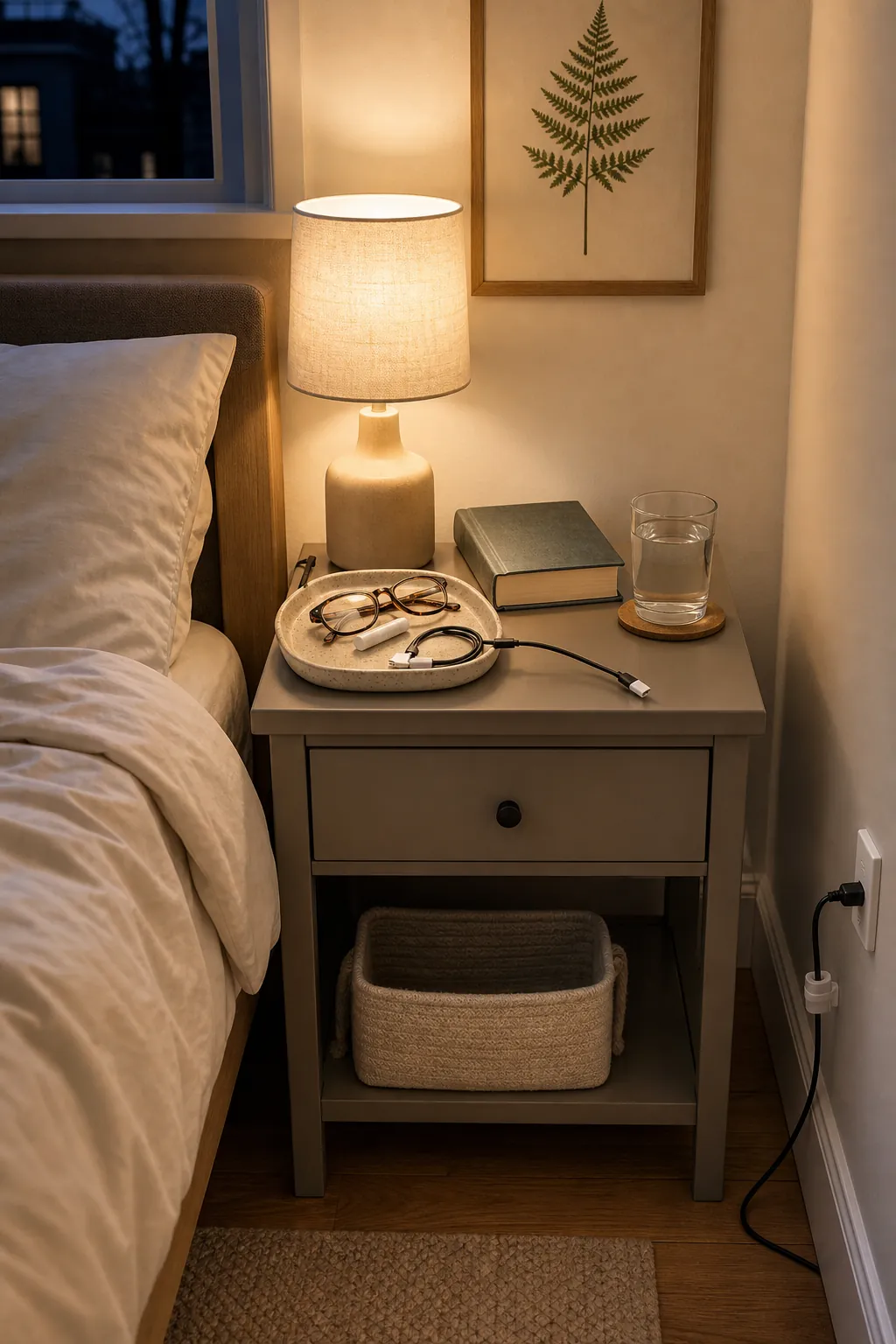
The system should match what you already do. If you always drop jewelry beside the bed, put a small dish there. If you always leave worn-once clothes on a chair, use a hook or a narrow basket with a strict limit. Bedroom organization works when it catches real habits, not imaginary ones.
What to do when the room still feels too full
If the room still feels crowded after trash, dishes, laundry, and obvious donations are gone, the problem may be volume. Small space cleaning can only do so much when the room is holding more than it can comfortably store.
Use the container test. If all your T-shirts do not fit in the drawer without force, the drawer is the limit. If the nightstand tray overflows every night, the tray is the limit. If the under-bed bin cannot close, the bin is the limit. The container is not being mean; it is telling you what the room can realistically support.
- Keep what fits easily. Daily storage should not require pushing, balancing, or hiding.
- Remove what causes repeated friction. If an item makes laundry, sleep, cleaning, or dressing harder every week, question it.
- Stop before the room collapses into piles. Small, finished passes beat heroic unfinished cleanouts.
A small bedroom does not need a perfect makeover to feel better. It needs fewer open decisions, clearer exits, and storage that is not packed to the edge. Protect the bed, protect the floor path, work one container at a time, and finish by moving things out. That is how you declutter without making a bigger mess.