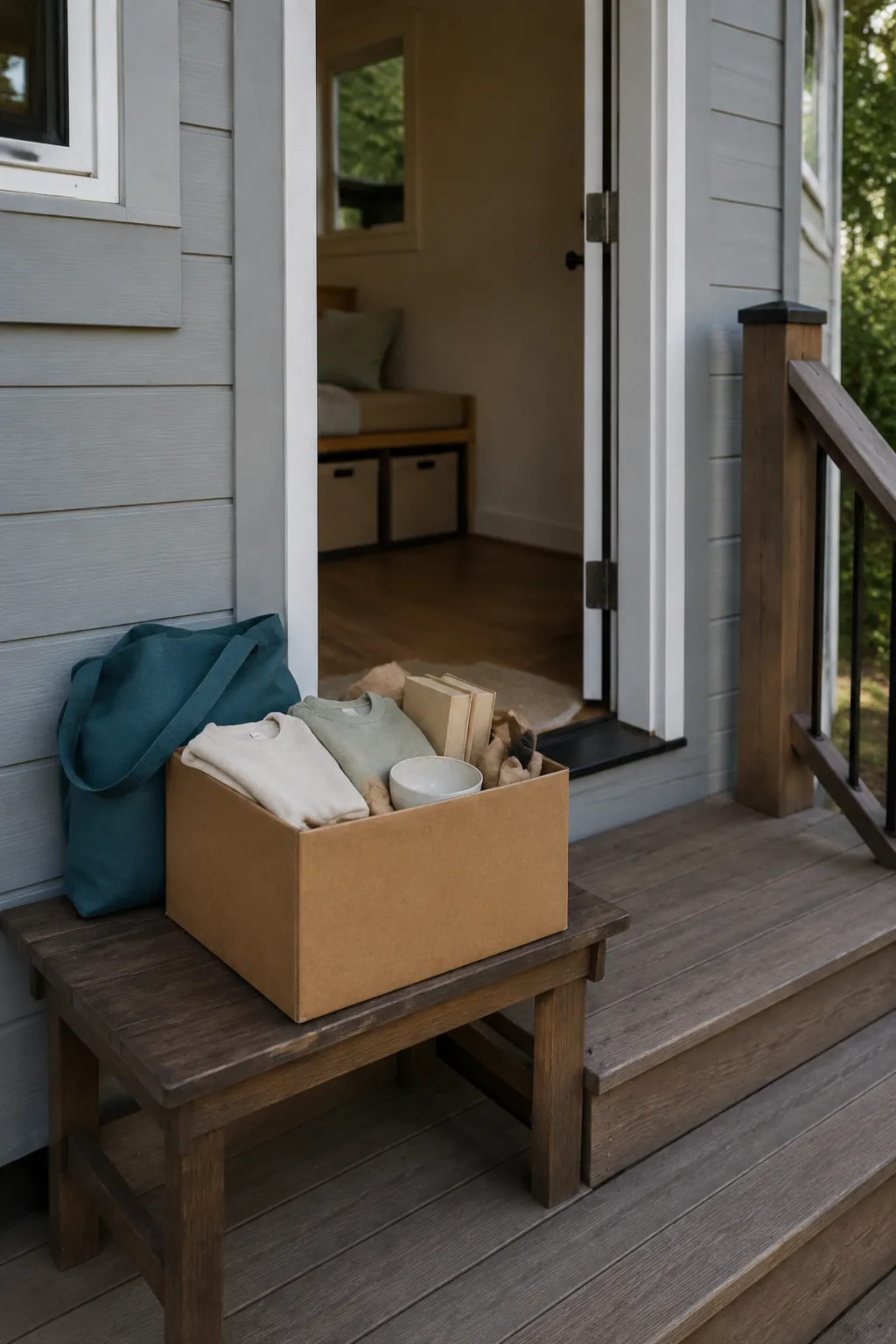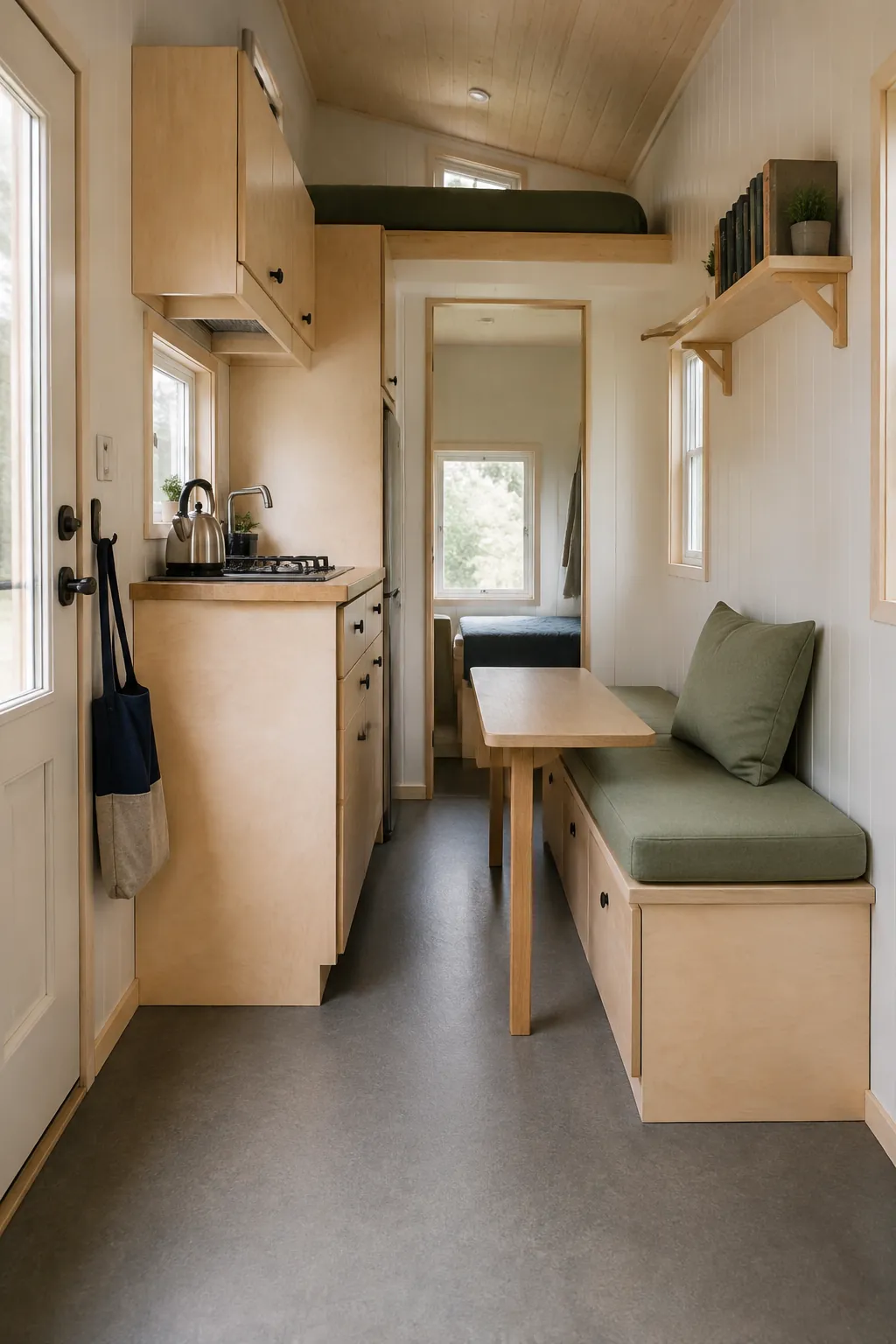
When the table is also your desk and the walkway is also your dressing space, a few extra belongings can interrupt the whole day. Start with the area that is hardest to use, reduce one category at a time, and choose storage only after deciding what stays. The aim is to make your routines easier while keeping the things that earn their space.
Protect the space you need to live in
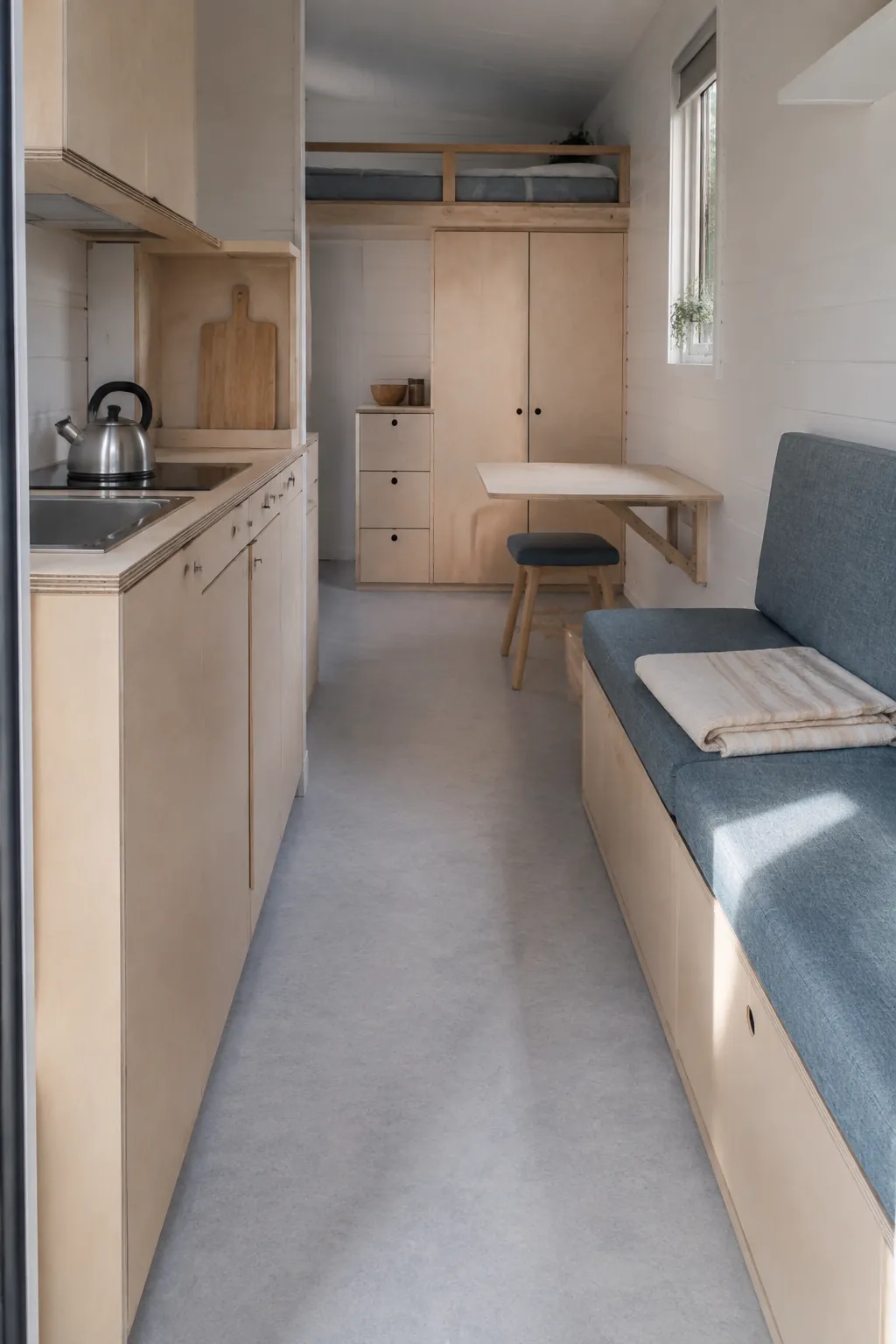
Before opening a cupboard, name the activities your home must support every day: cooking, dressing, sleeping, working, and moving safely between them. Clear the route to the door and the space needed to use the bed, table, or cooking area. A folding table is not useful if you have to relocate three storage tubs to open it. Choose one small zone that can be sorted and restored in the time you have.
Avoid emptying every cabinet onto the floor at once, especially when that floor is also your walkway. Start with one drawer, one shelf, or the objects covering your meal preparation space. Put anything you are keeping back before beginning the next zone. Tiny house decluttering works better when the home remains usable throughout the process.
Gather one category and remove the unnecessary duplicates
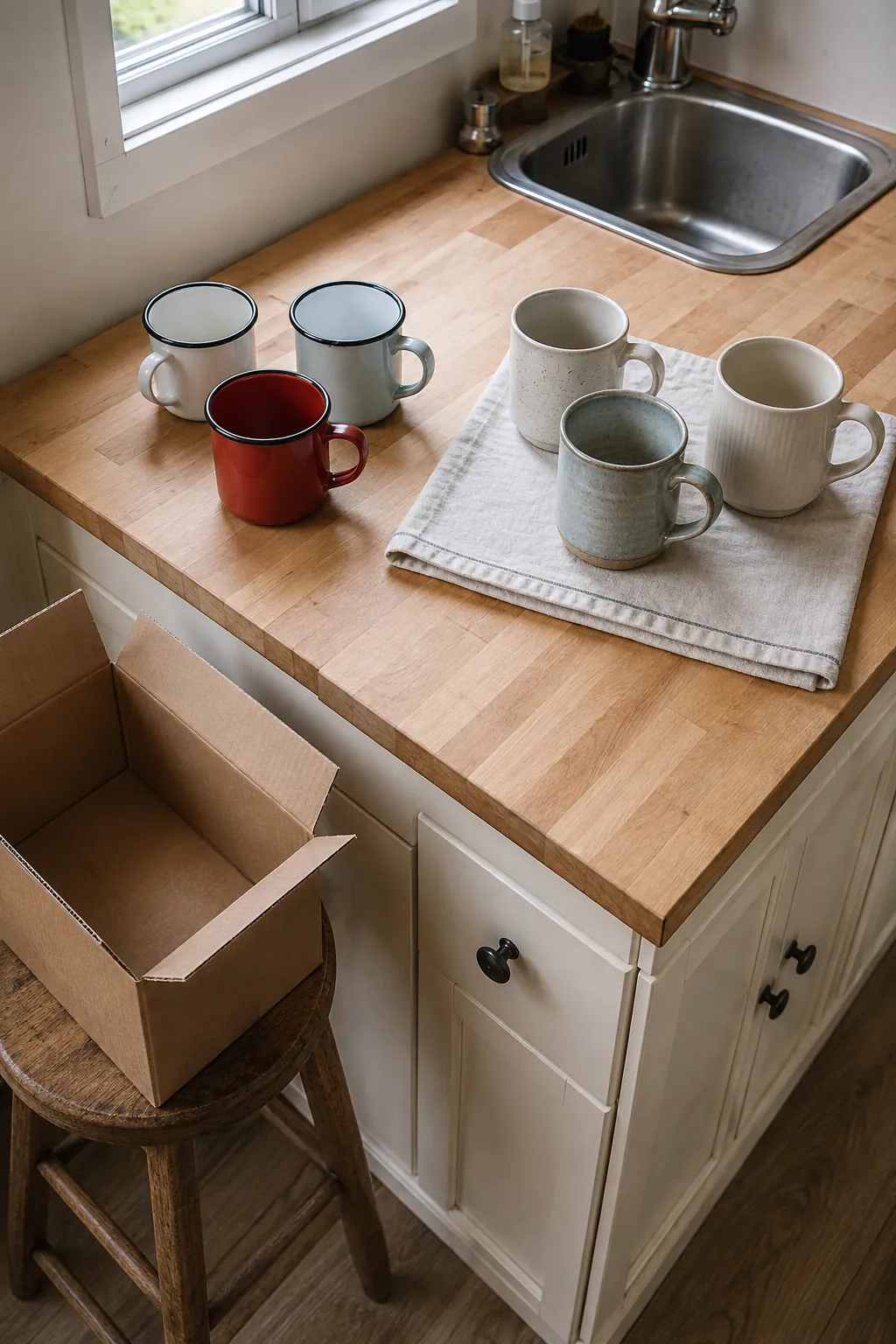
Bring together one manageable category, such as mugs, cooking utensils, or charging cables. Seeing the whole group helps you notice duplicates that were hidden in different places. Keep the number that supports your household, laundry or washing routine, and actual guests. Capsule home essentials should reflect how you live, not a rule that every household must own the same number of plates.
Test uncertain equipment and separate broken items for appropriate repair or disposal. Keep a useful backup when replacing it would be costly or difficult, and give it a deliberate home. Seasonal clothing, medical supplies, and emergency equipment deserve consideration beyond whether you used them last week. Reduce easy duplicates before making difficult decisions about meaningful possessions.
Let the available shelf set the storage limit
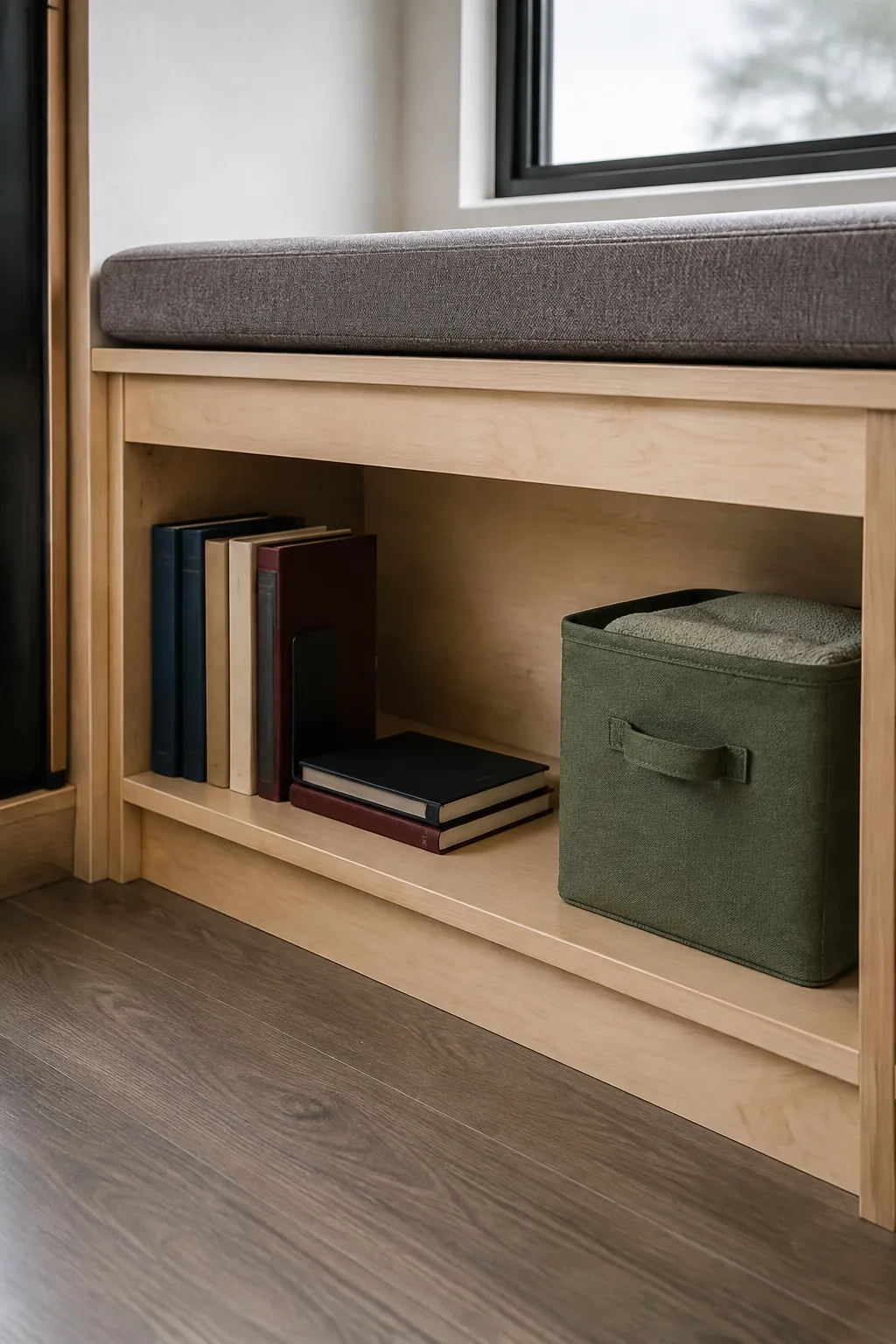
Choose a real storage boundary for each category: a drawer for stationery, a shelf for books, or one bin for spare linens. Fit the items comfortably enough that you can remove one without dismantling the others. When the container is full, review the category before adding another box. Buying extra organizers too early can preserve the excess while consuming the room you wanted to regain.
Measure any organizer after you have reduced the contents and selected its location. Account for the door opening, handles, and the space needed to lift a lid. Among tiny home storage solutions, shallow accessible storage often works better for daily items than a deep stack. Put heavier belongings low and follow furniture load and anchoring requirements.
Keep sentimental decisions separate from the easy ones
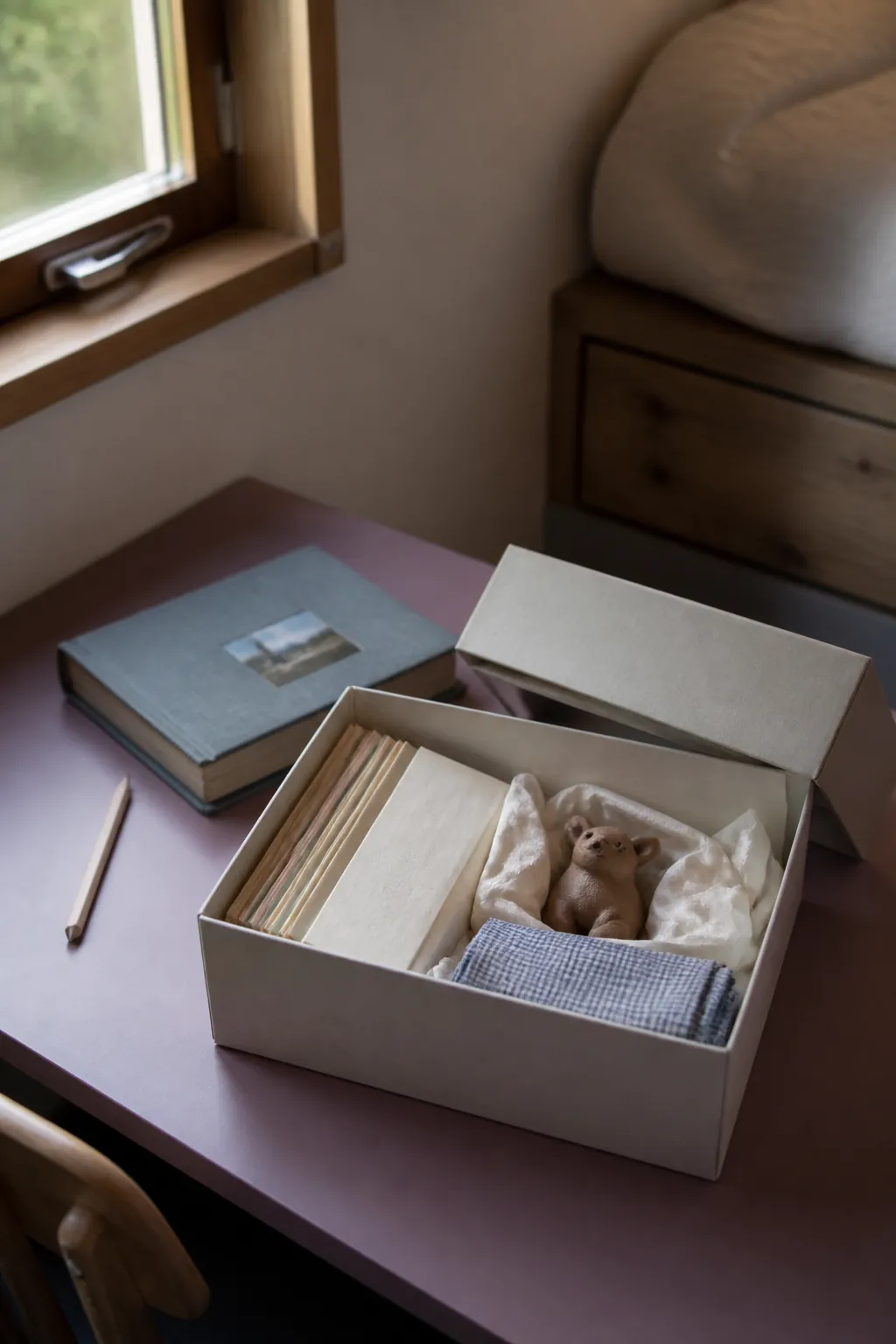
Set aside a small keepsake area so sentimental objects do not halt every practical decision. You might keep a few favorites in a protective box or display one object where you can enjoy it. Photograph an item if the image preserves what matters to you, but do not assume a photograph replaces every meaningful original. There is no need to discard something irreplaceable simply to finish a session quickly.
For uncertain nonessential items, use a modest review box with a date you will revisit. Do not place medication, legal documents, or equipment you rely on into a casual discard experiment. Discuss shared belongings with the people who own or use them rather than making unilateral decisions. A minimalist tiny home can still contain memories, hobbies, and different preferences.
Store daily belongings where you use them
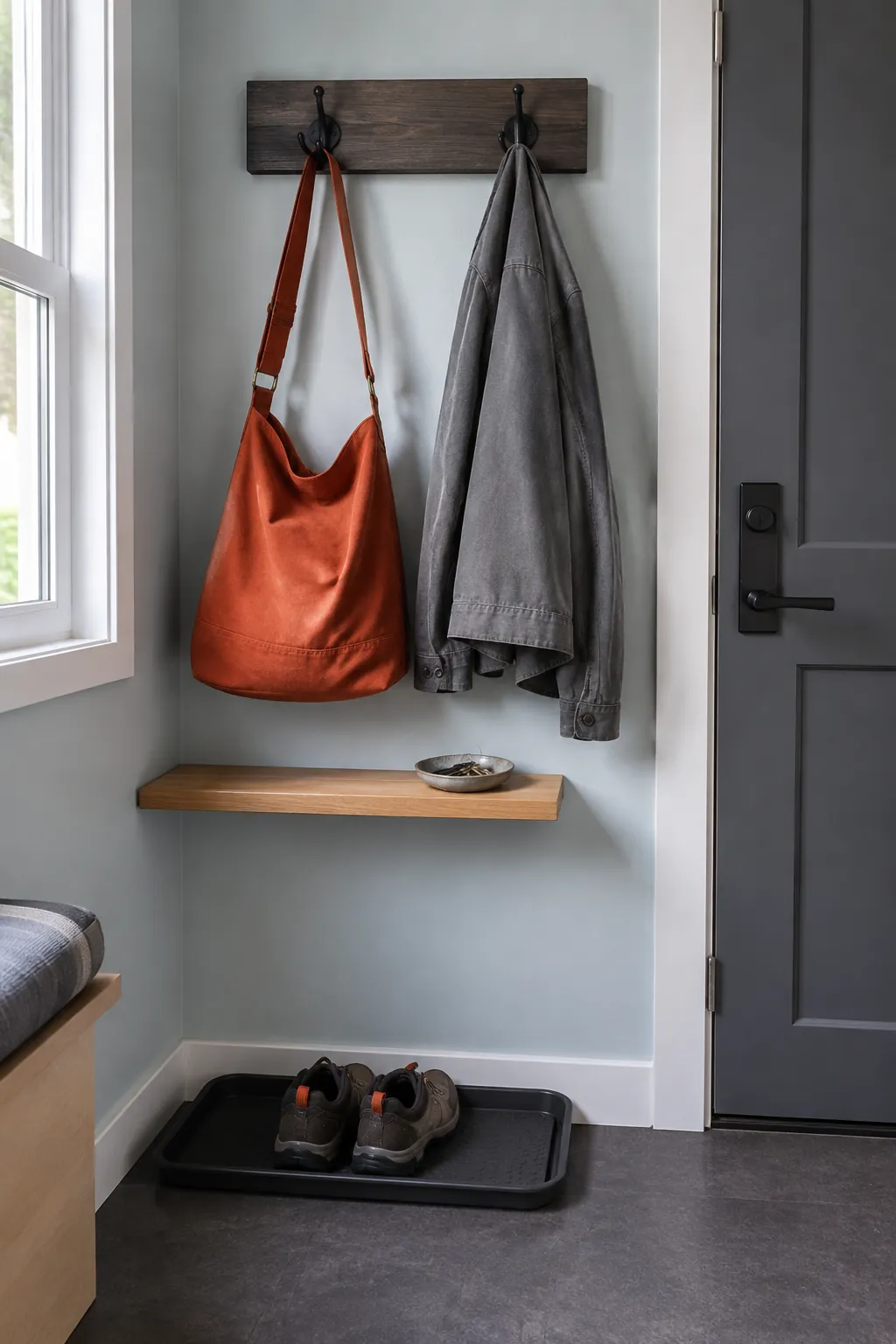
Place the things you reach for most where you can retrieve and return them in one easy movement. Keep cooking tools near the preparation area, keys near the entrance, and current clothing at a comfortable height. Save awkward corners for belongings you need less often. If a storage bench requires unloading a cushion pile each morning, it may be better suited to spare bedding than your daily work bag.
Give possessions a specific home rather than relying on a general basket for everything. A shallow tray can contain keys, while a small hook can hold the bag used each day if the mounting is suitable for its load. Keep vents, heaters, exits, and access to utilities unobstructed. In a home that travels, secure stored items for movement and follow the vehicle or structure’s load limits.
Finish the outgoing items and control what comes in
Move donations to an agreed collection point or arrange a drop off, checking what the recipient accepts first. Give sale items a realistic deadline so they do not occupy your living space indefinitely. Recycle or dispose of unusable materials according to local requirements. A box marked for donation still takes up space until it leaves your home.
Use a one in one out rule for categories that are already full, such as mugs or everyday shoes. Before a purchase, identify exactly where it will live and whether you can reach the items around it. Review the places that fill up again, because repeated clutter may reveal an inconvenient storage spot or a household need you have not accommodated. Your next success is not an emptier photograph; it is making dinner, finding your bag, and getting to bed without moving the same pile again.