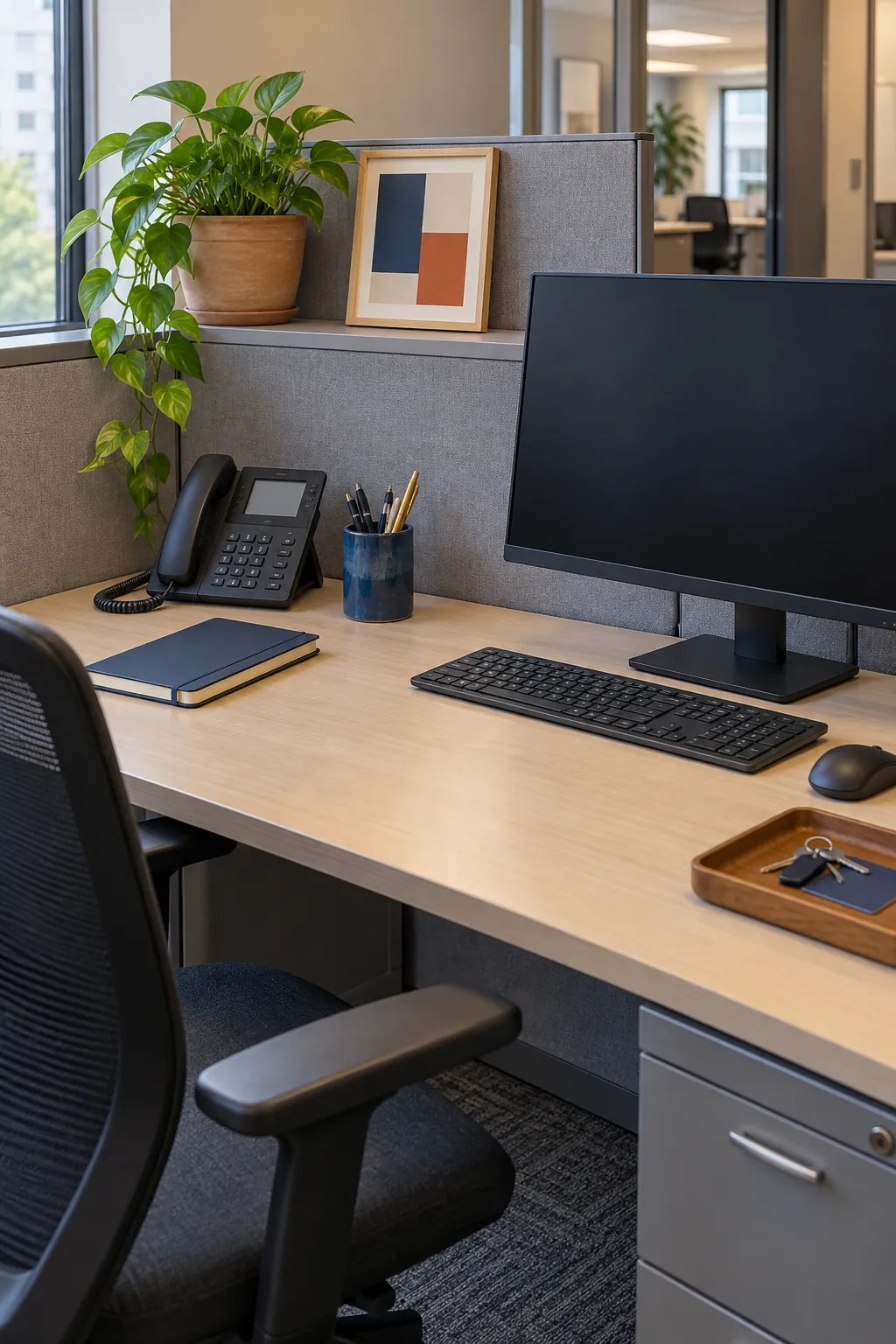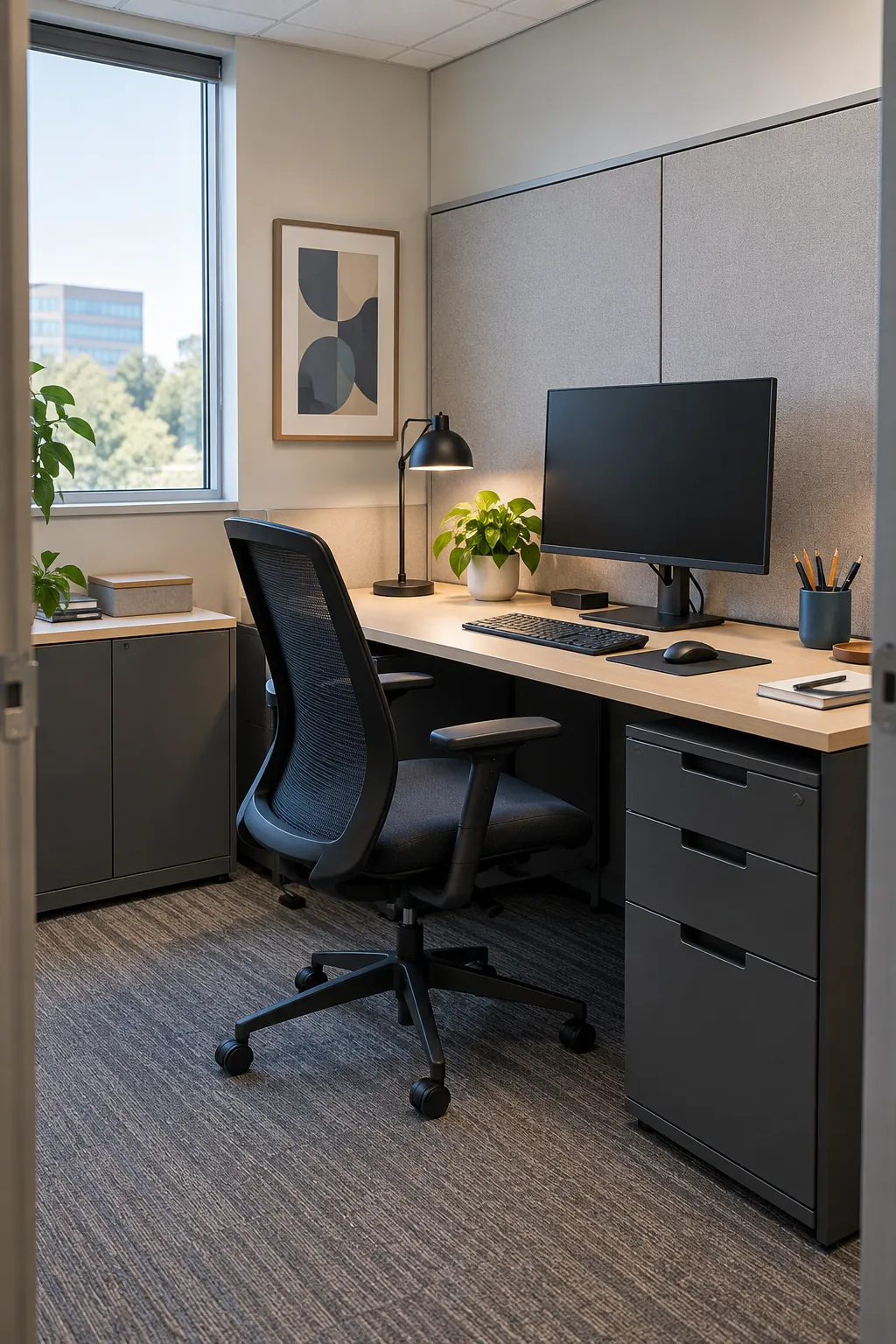
A small workplace feels better when it supports focus before it displays personality. The best office decor keeps the desk usable, respects shared space, and adds a few calm details that can be removed without damage.
Begin with workplace rules, equipment, and daily tasks. Then decorate the space that remains, rather than asking decorations to compete with monitors, files, calls, and colleagues.
Check the Rules and Fixed Equipment
Ask what can be attached to walls or cubicle panels, whether personal lamps and plants are allowed, and which items must stay visible. Fire safety, cleaning access, and confidential work take priority over appearance.
Measure the compact work desk after every required device is in place. Keep vents, power controls, and shared paths clear. Choose removable additions that can leave with you if the team changes desks.
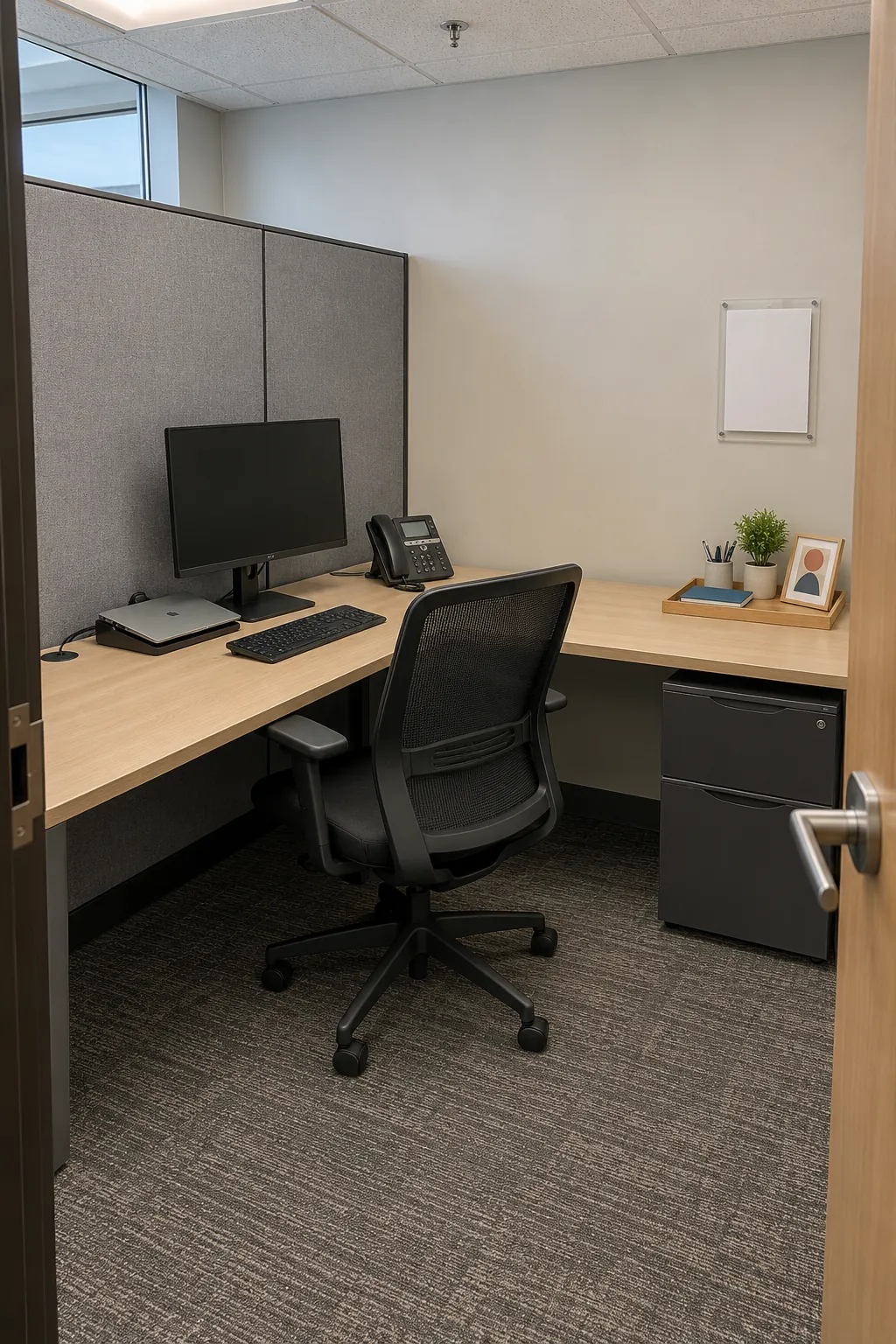
Clear the Main Work Surface
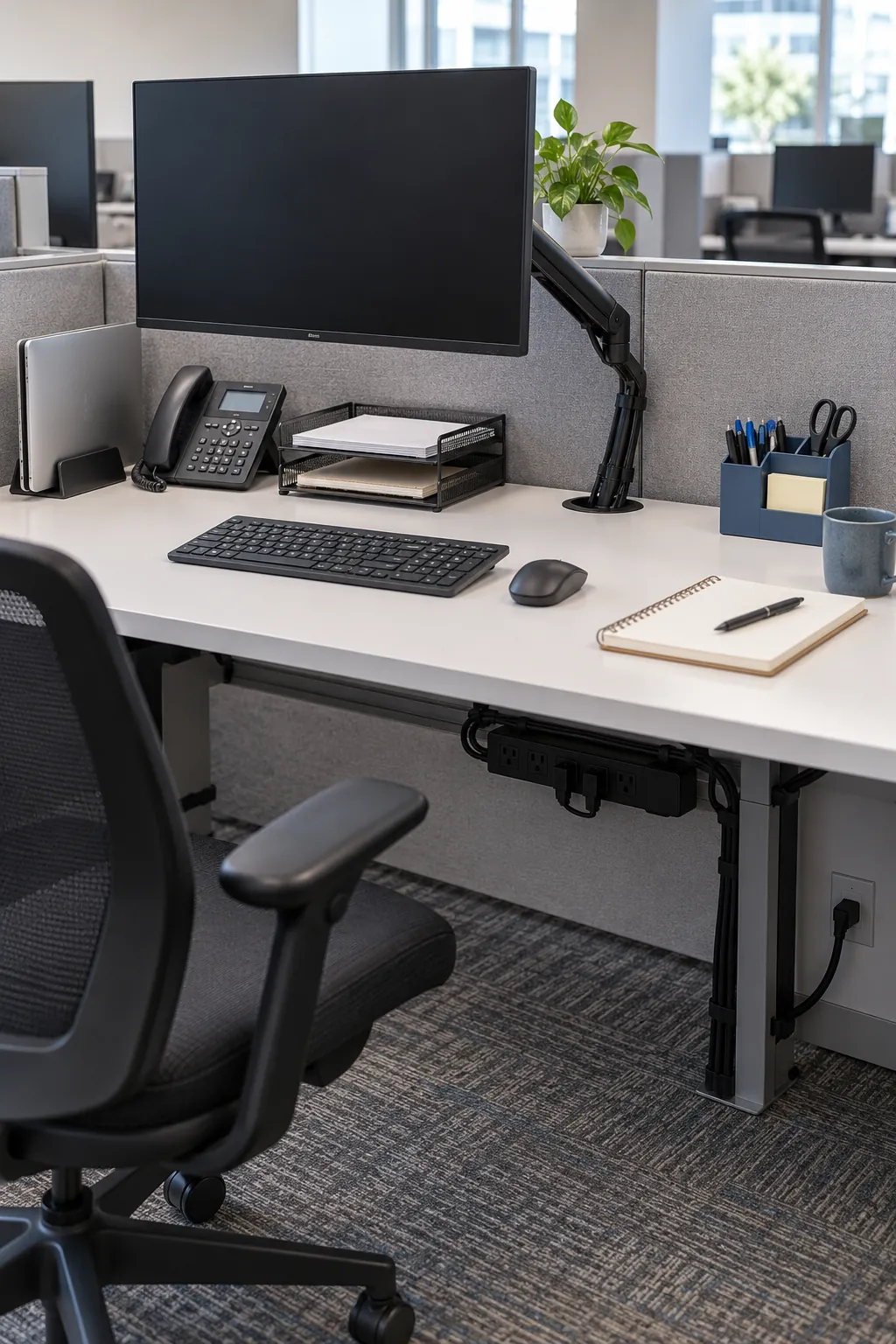
Desk decor for work should not occupy the area used for typing, writing, or reviewing papers. Route cables through the existing grommet, mount the power strip where policy permits, and give small supplies one contained home.
A monitor arm can free space when it suits the desk and equipment rules. Keep only the tools needed each day within reach. Store occasional items in a drawer or closed box so the desk can reset quickly.
Choose a Calm Office Color Palette
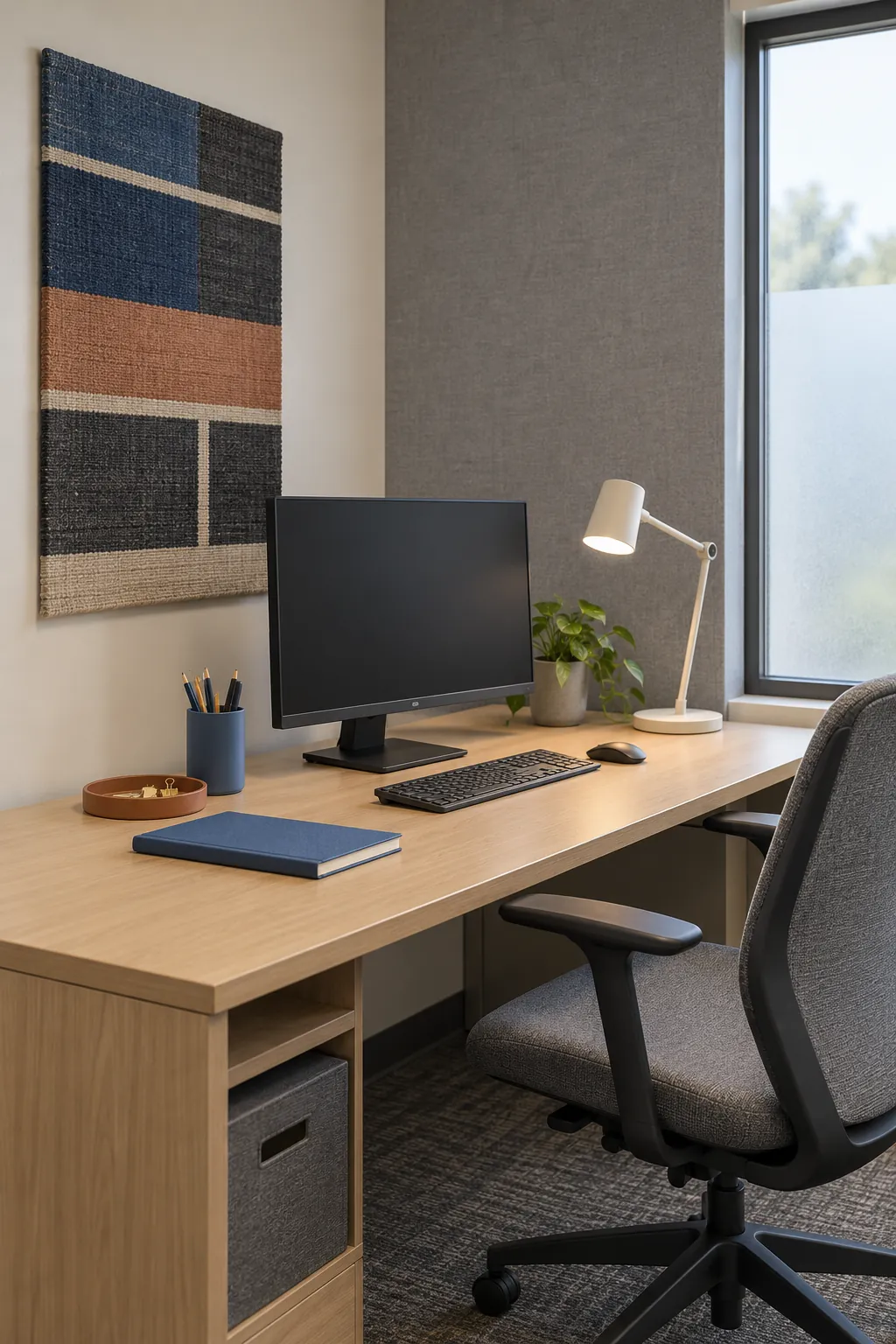
A calm office color palette can connect mismatched equipment and furniture. Start with the existing gray, black, white, or wood tones, then add one main accent and one smaller supporting color through useful objects.
Muted blue, green, clay, or plum can feel personal without dominating a professional small office. Repeat the accent in a pencil cup, notebook, and small textile panel. Avoid covering every divider with a pattern, because large busy surfaces can make the space feel tighter.
Use Vertical Storage Selectively
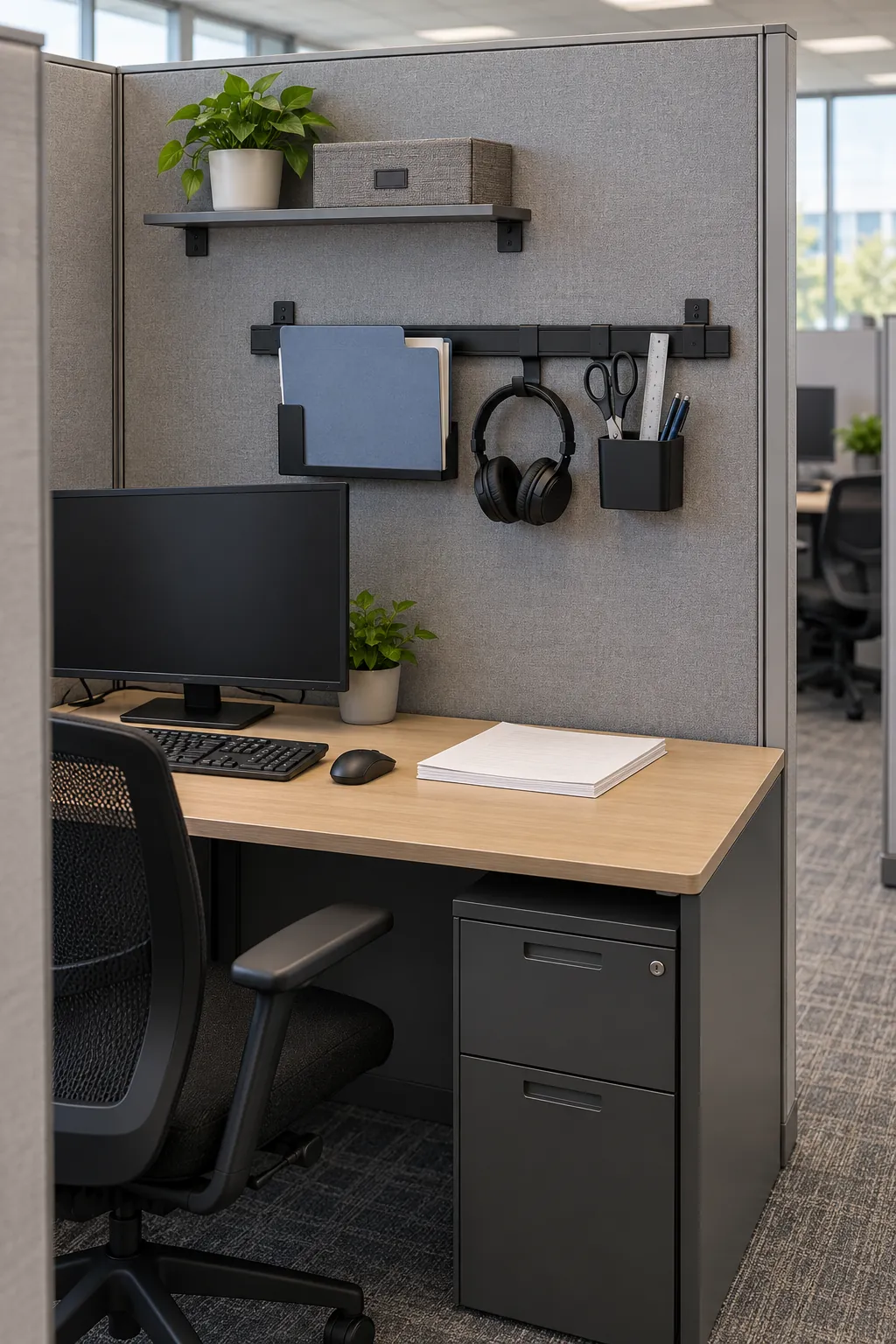
An office wall organizer can hold a current project, headphones, and a few tools without filling the desktop. Use only approved hooks, rails, or panel accessories. Place frequent items between seated shoulder and standing eye height.
Vertical office storage should not become a display of every supply. Keep archives and extra stock in closed storage. Leave open panel area around the organizer so labels, documents, and decorations remain easy to distinguish.
Improve Light Without Adding Glare
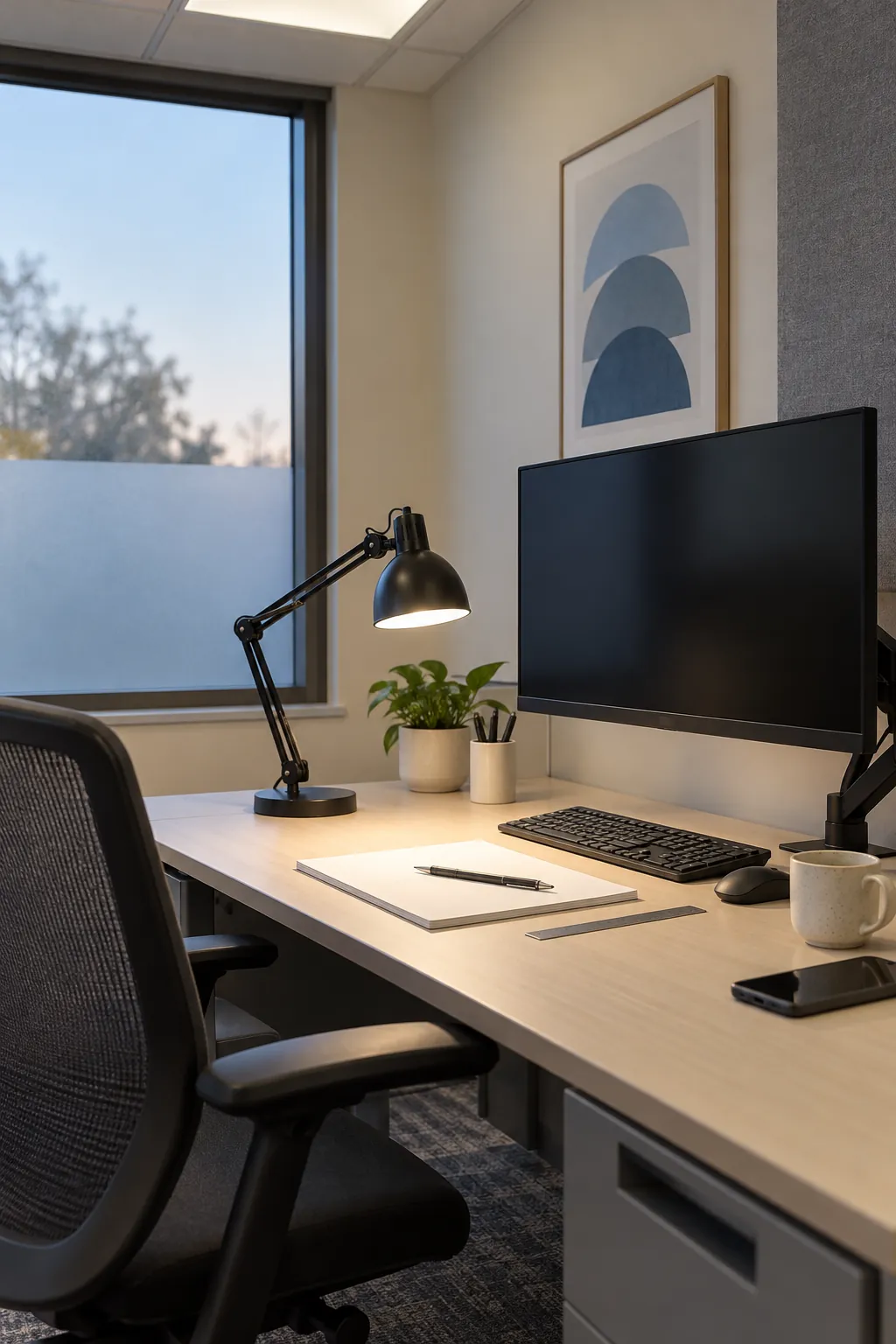
Place the monitor so windows and ceiling fixtures do not reflect directly on the screen. If a personal task lamp is allowed, choose a compact shaded model with adjustable direction. Aim it at papers, not toward coworkers or the display.
Use a neutral bulb that works with the office lighting. A small lamp can make the space more inviting, but it should not create a warm pool surrounded by dark corners. Keep brightness comfortable for long work periods.
Add a Few Personal Details
Minimal workspace styling can still feel human. Choose one small plant that suits the available light, one framed image or postcard, and one useful object with a color or texture you enjoy. These details are enough to distinguish the space without turning it into a shelf of keepsakes.
Keep private photographs and valuable objects away from public sightlines if that suits your role. Clean leaves, frames, and containers when you wipe the desk. A professional workspace feels personal when its details support the work and remain easy to maintain.