
A modern front yard is more than just a patch of grass; it is a deliberate extension of your home's architecture. By focusing on clean lines and high-quality materials, you can create a space that feels both organized and welcoming. This approach moves away from cluttered traditional gardens and focuses on structure, symmetry, and a curated selection of textures that make a strong first impression.
Key takeaways from this guide include the importance of using geometric shapes in your walkways, selecting a limited but impactful plant palette, and using materials like natural stone and bamboo to provide both style and privacy. You will learn how to balance hard surfaces with soft greenery to achieve a sophisticated look that requires less maintenance than a standard lawn.
Using Geometric Hardscaping to Define Your Space
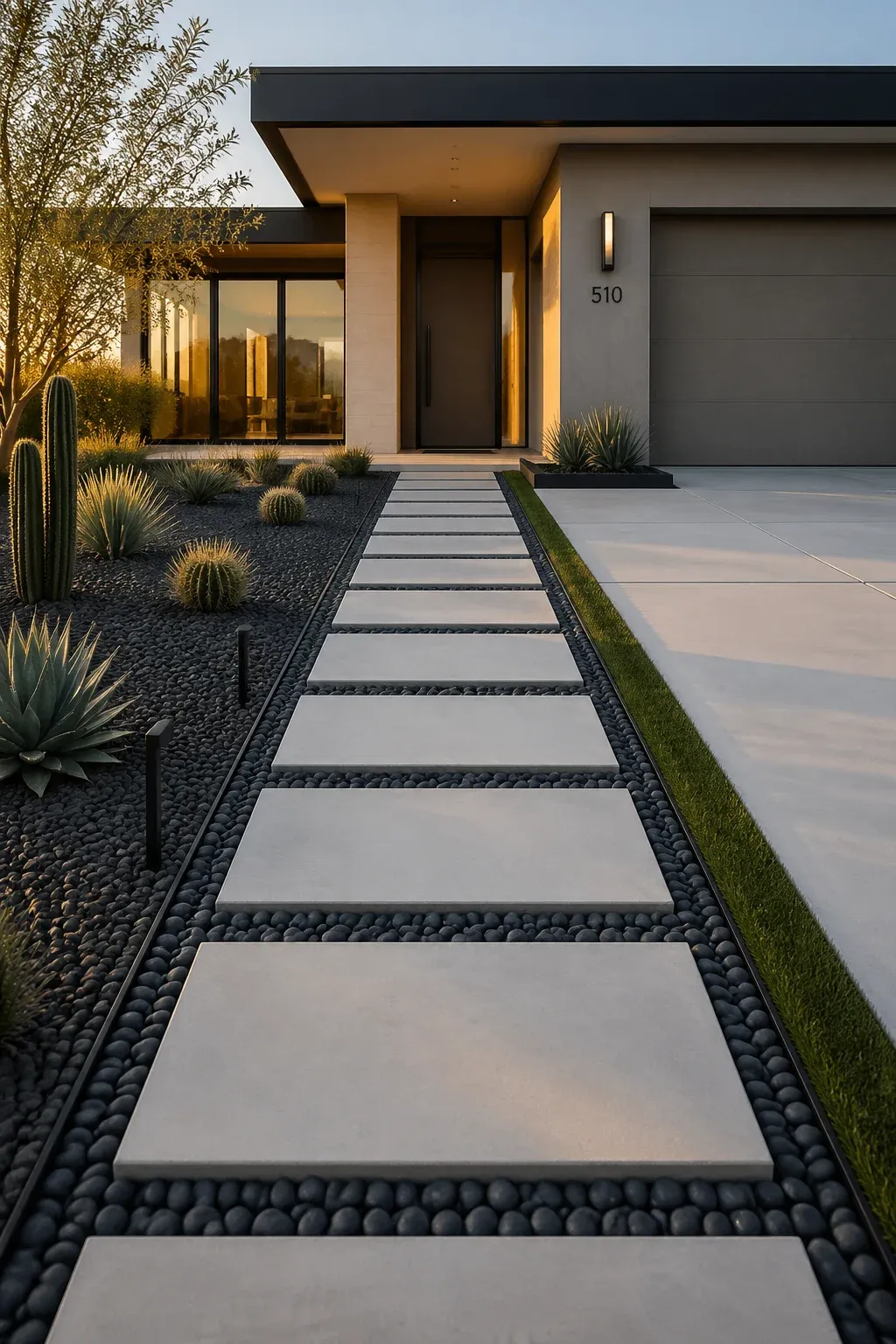
The foundation of modern design lies in geometry. Instead of curved, wandering paths, use straight lines and right angles to direct the eye. Large rectangular concrete pavers or oversized stone slabs are common choices for modern walkways. When laying these out, consider leaving uniform gaps between them. You can fill these spaces with small pebbles or ground cover like moss to emphasize the grid pattern.
This structure provides a sense of order. It tells visitors exactly where to go while framing the different zones of your yard. If you have a driveway, try to align its edges with your entry path. Consistency in these lines creates a cohesive look that feels architectural rather than accidental.
Selecting a Minimalist Plant Palette for Visual Impact

In a modern yard, less is usually more. Instead of dozens of different flower species, choose three or four types of plants and repeat them in clusters or rows. This repetition creates a rhythm and keeps the landscape from looking chaotic. Focus on plants with strong shapes, such as ornamental grasses, agaves, or boxwoods kept in tight spheres.
Greenery should complement your hardscaping, not hide it. Use plants with different heights to add layers. For example, a low-growing sedum can sit in front of mid-sized horsetail reeds. Stick to a consistent color scheme, such as various shades of green with occasional pops of white or silver. This keeps the focus on the textures and forms of the foliage.
Integrating Natural Stone and Gravel for Texture

High-end materials like slate, basalt, or granite bring a premium feel to the front yard. Using these stones in different formats—such as large slabs for steps and crushed gravel for drainage areas—adds visual depth without needing extra color. Gravel is particularly useful in modern design because it provides a permeable surface that looks clean and stays level.
When choosing stone, look for finishes that are matte or honed rather than polished. These look more natural and provide better grip when wet. Use darker stones like Mexican beach pebbles to create contrast against lighter concrete. This play between light and dark materials highlights the clean lines of your hardscaping and makes the entire design feel more intentional.
Installing Architectural Lighting to Highlight Structural Features
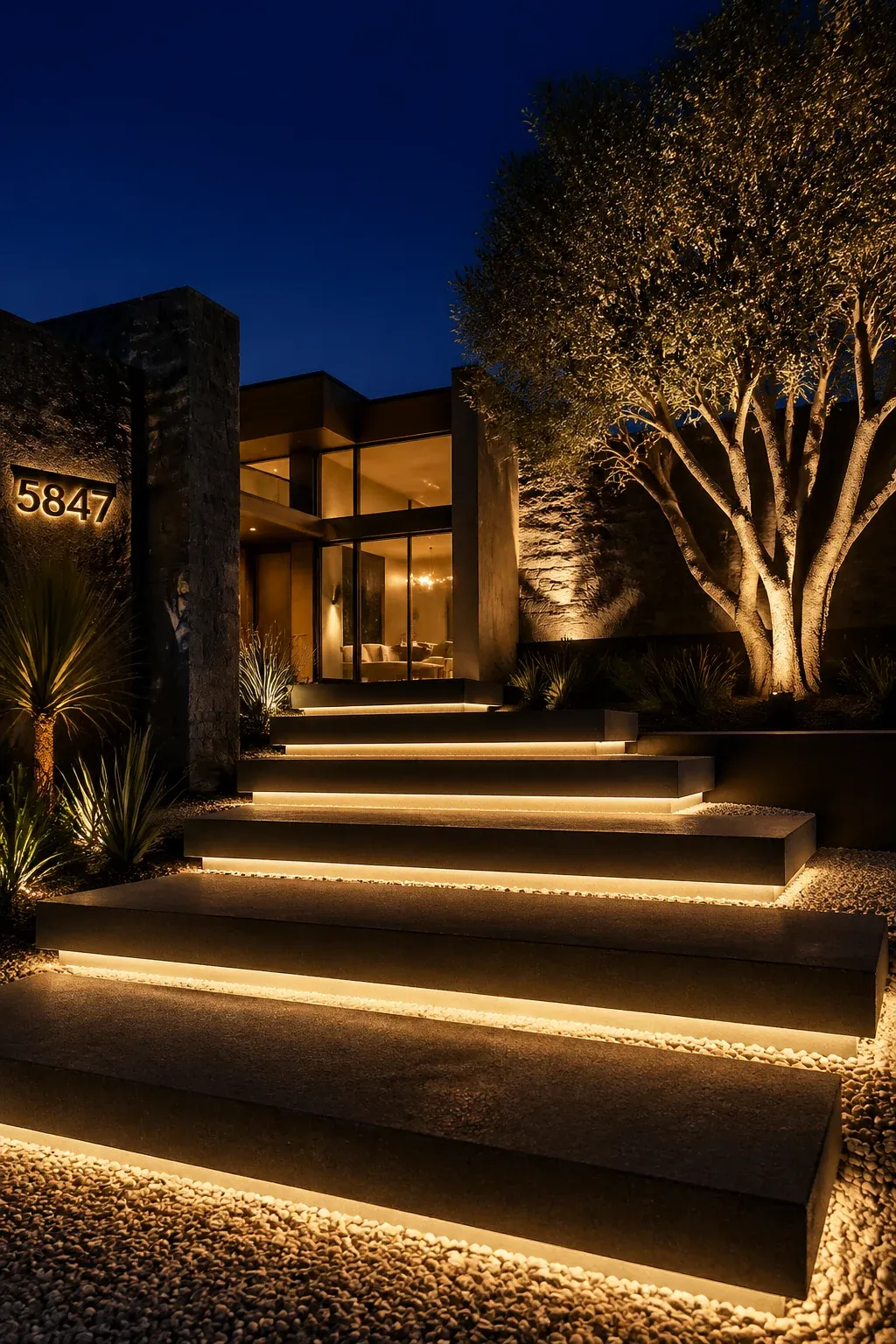
Lighting should be subtle and integrated into the landscape rather than being an afterthought. Use recessed lights along walkways or hidden spotlights at the base of a featured tree. The goal is to highlight the shapes of your plants and the texture of your stone walls without seeing the light fixtures themselves.
Linear LED strips tucked under the lip of a concrete step or a retaining wall can create a floating effect at night. This emphasizes the horizontal lines that are so important in modern aesthetics. Avoid bright, blue-toned lights; instead, choose warm whites that make the materials look rich and inviting. Good lighting ensures the yard looks just as sophisticated after the sun goes down.
Adding Privacy and Structure with Bamboo and Modern Fencing
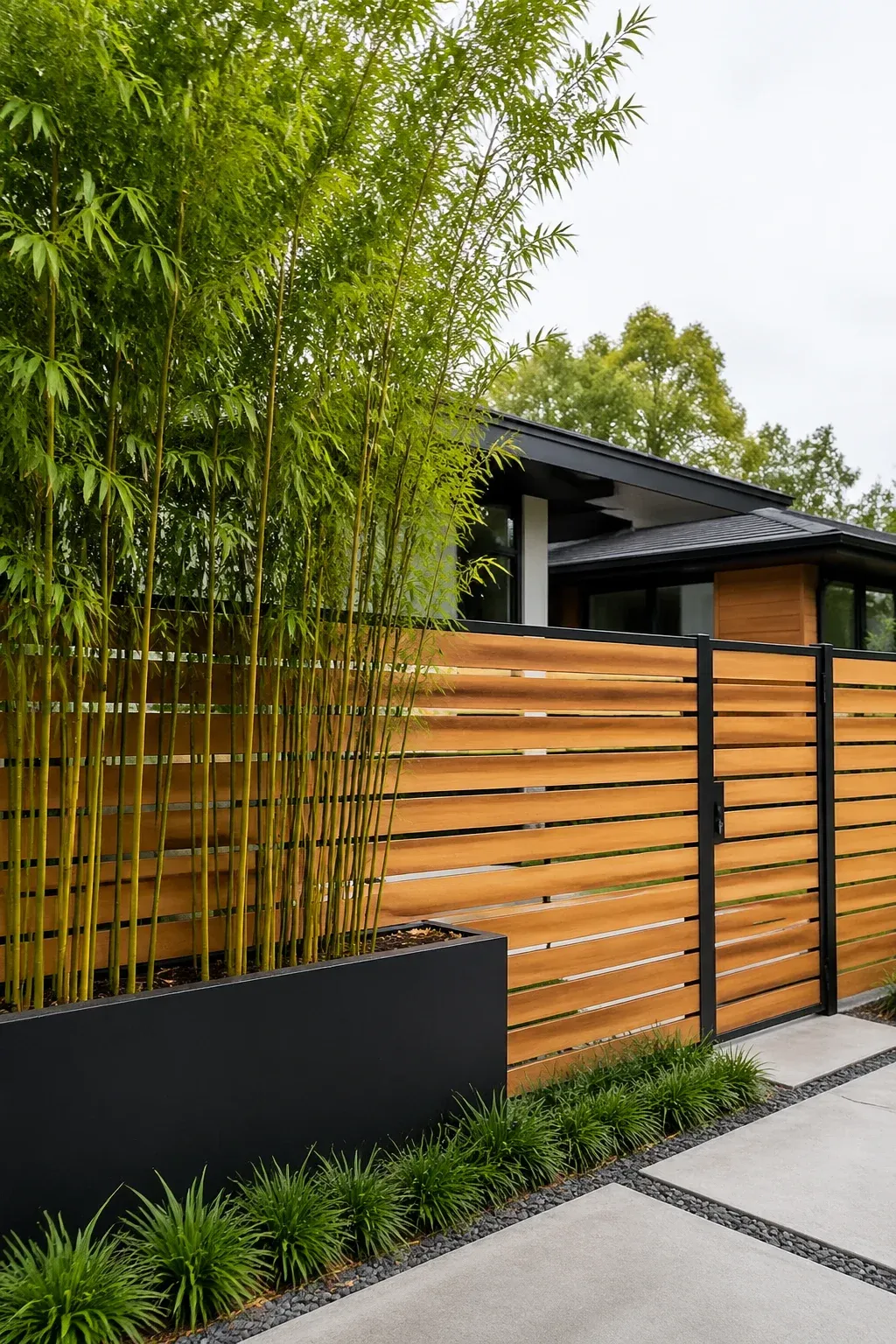
Privacy is a luxury in many neighborhoods, but traditional tall fences can feel heavy. Bamboo is an excellent modern alternative because it provides a vertical green screen that takes up very little ground space. When planted in narrow, built-in planters, clumping bamboo varieties create a living wall that sways in the wind, adding movement to an otherwise static design.
If you prefer a physical fence, look for horizontal slat designs made from cedar or composite materials. The horizontal orientation of the boards makes a yard feel wider and aligns with the modern focus on linear shapes. Combining a dark metal frame with light wood slats provides a high-end look that offers both security and style.
Creating Visual Interest with Water Features and Focal Points
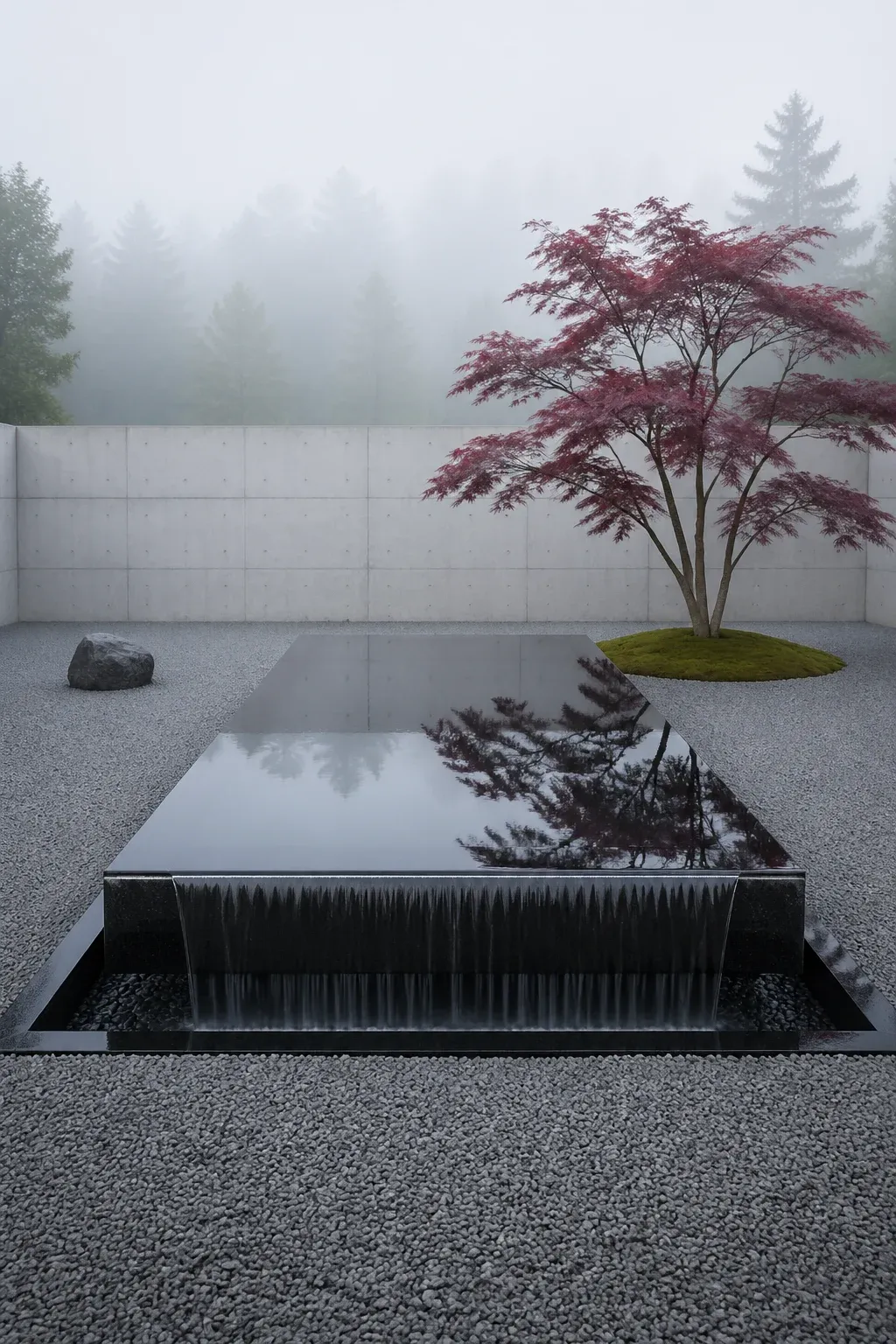
A single, well-placed focal point can ground the entire design. This might be a large basalt stone fountain, a minimalist metal sculpture, or a single specimen tree like a Japanese Maple. The key is to give the object space to breathe so it doesn't compete with other elements.
Water features in modern yards should be simple. A low, rectangular reflecting pool or a sheer descent waterfall into a gravel-filled basin works better than a traditional rock pond. The sound of moving water adds a sensory layer to the yard, making the space feel like a private sanctuary. Keep the fountain's pump and hardware hidden to maintain the clean, uncluttered look of the landscape.
Designing a modern front yard is about choosing quality over quantity. By prioritizing clean lines, geometric hardscaping, and a few high-end materials like natural stone and bamboo, you can create a striking entrance that stands the test of time. Start by mapping out your main walkways and selecting a few key plants to build your foundation. Once the structure is in place, add lighting and water features to bring the space to life. Take a look at your current yard today and see where a few straight lines could make a big difference.