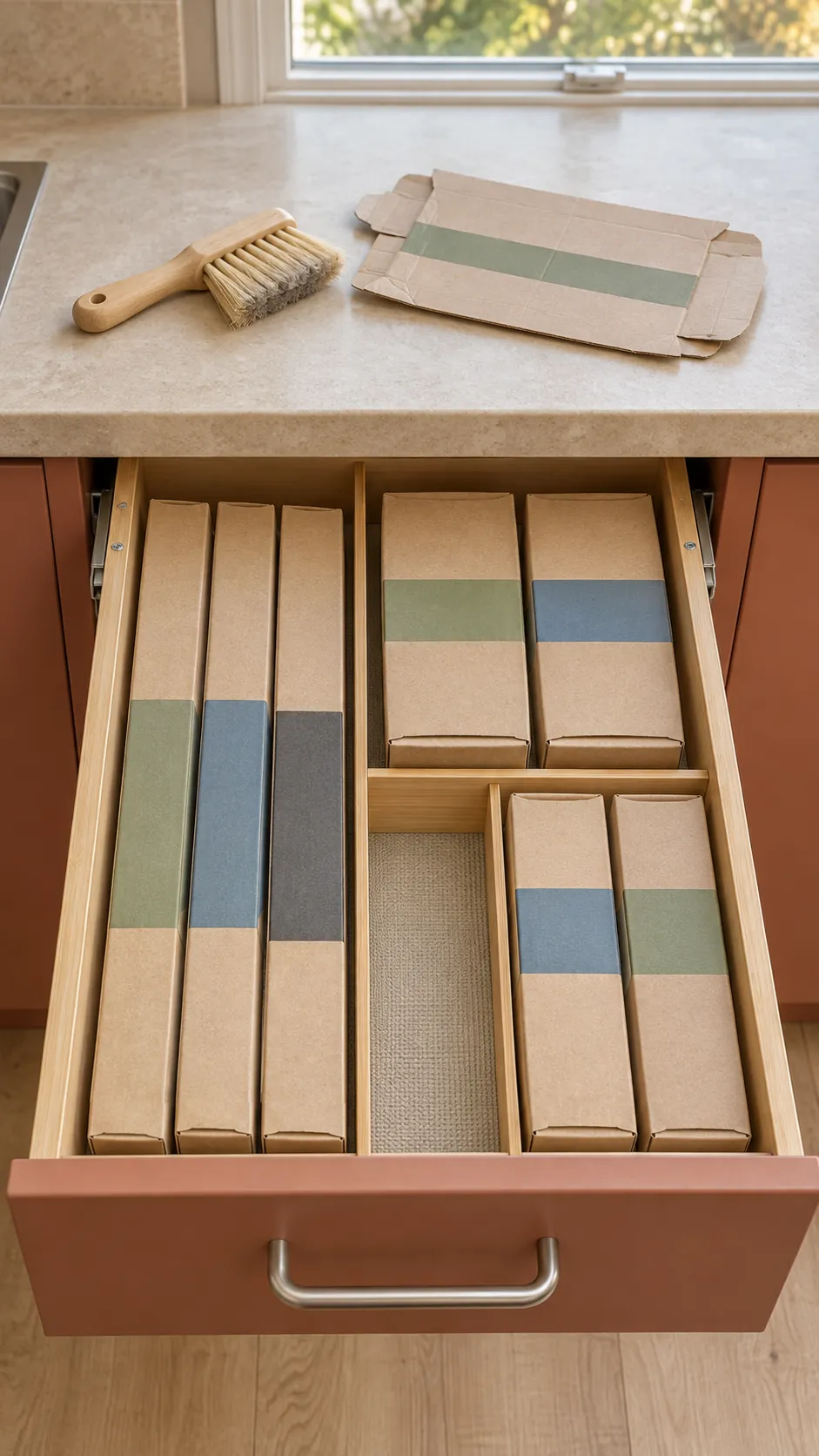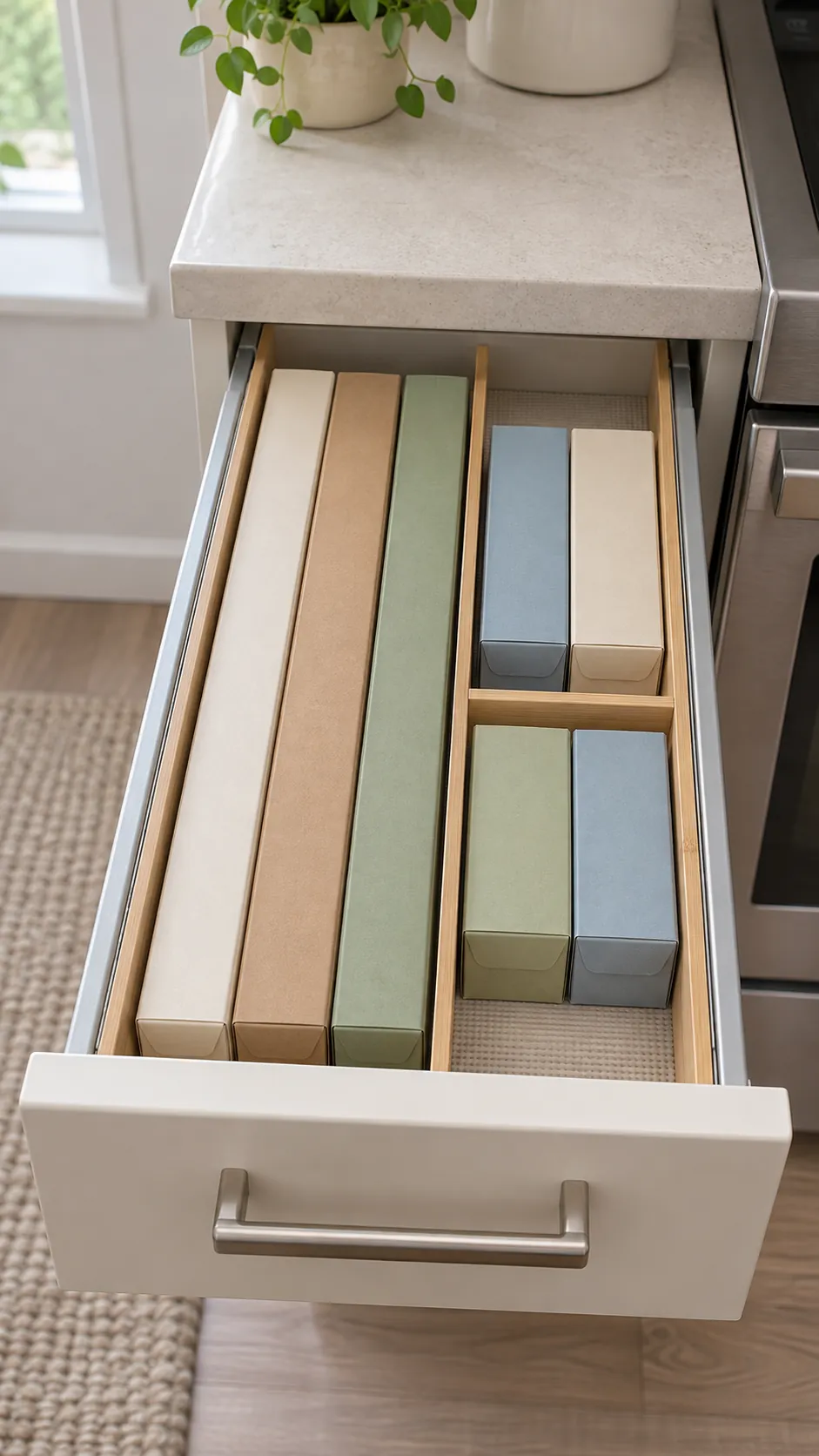
A narrow drawer can hold foil, parchment, plastic wrap, and food bags, but only when the packages match the drawer. The common failure is to add an organizer before measuring the boxes, then discover that the organizer consumes the width needed for the supplies.
The useful goal is not to fit every possible roll and bag size. It is to give the most frequently used supplies a stable position, a clear cutting path, and enough top clearance for the drawer to close without catching a lifted box flap.
Measure the real drawer opening
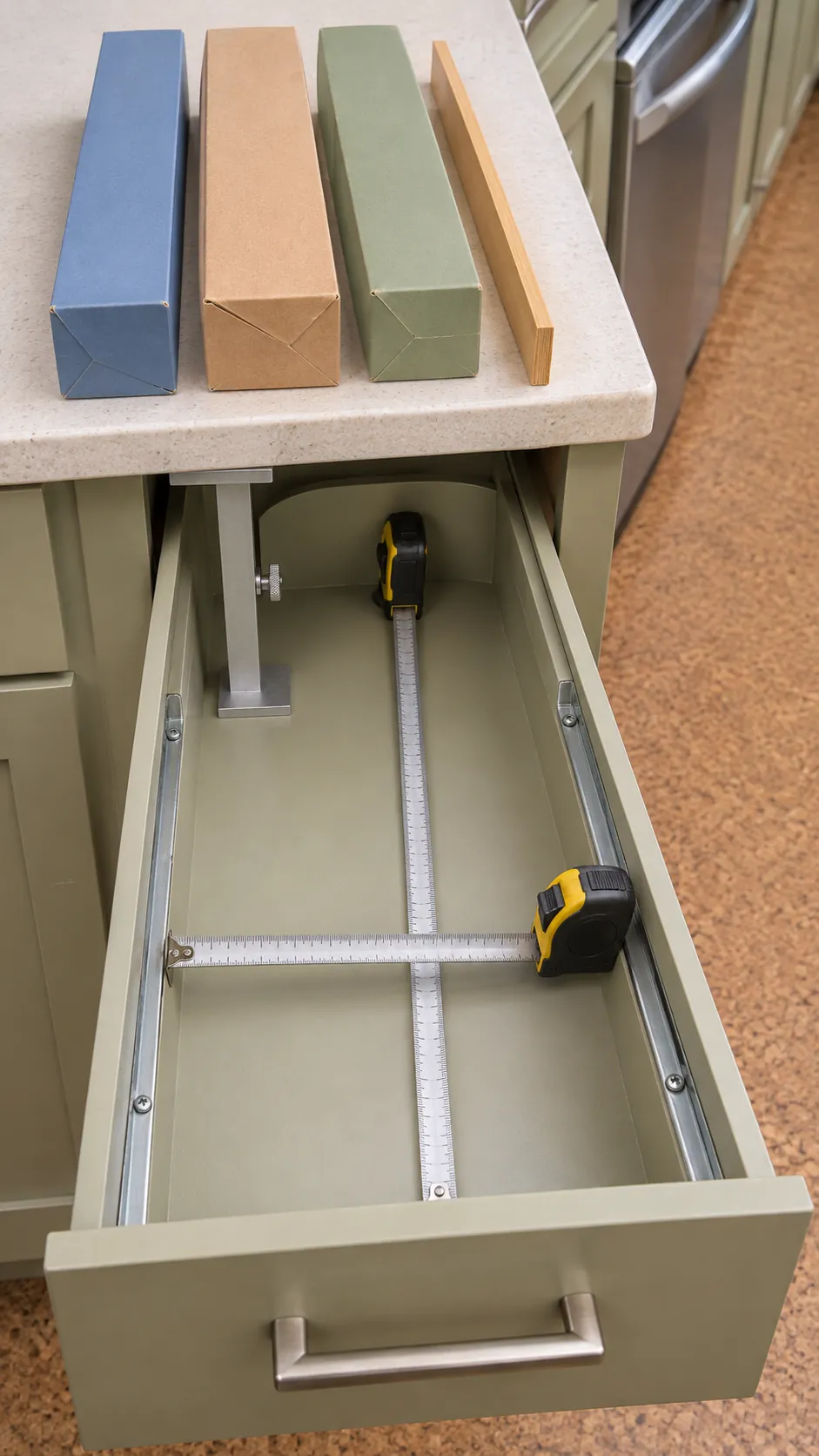
Measure the clear internal width, length, and height. Include any screw heads, side rails, rear curves, and the lower edge of the counter that enters the closing path. Measure the packages too, since a box can be longer than its roll and a bag carton can have a raised dispensing flap.
Test the tallest package by placing it in the empty drawer and closing the drawer slowly. If it rubs, catches, or forces the package to tilt, move that item elsewhere or choose a smaller refill. Do not rely on a flexible cardboard box becoming flatter after repeated crushing.
Keep only package sizes that fit
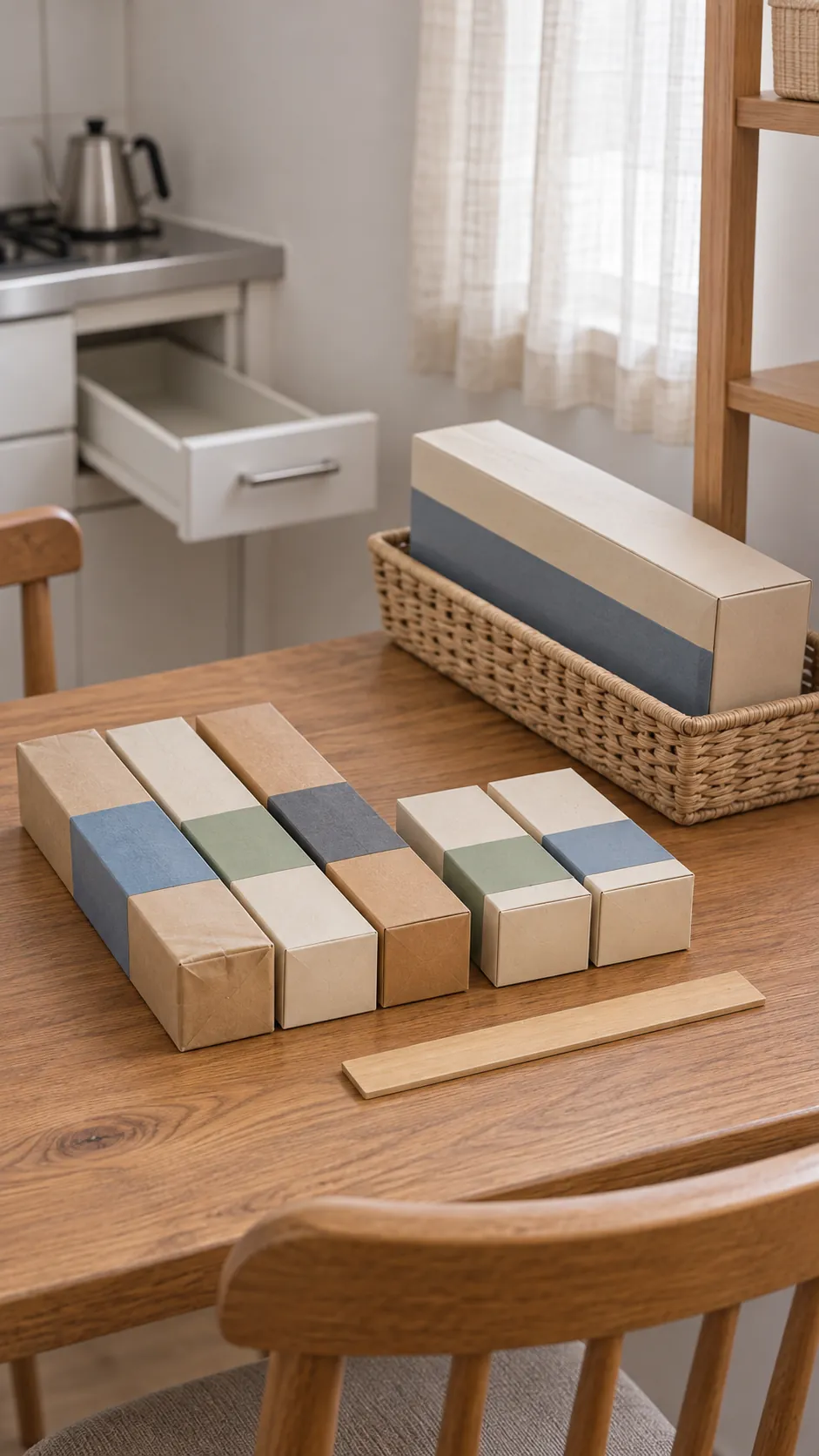
Standard household rolls often fit where oversized rolls do not. Compare the total box dimensions before buying a replacement, not only the roll length printed on the front. A slightly smaller box that opens freely is more useful than a bulk package that jams the only available drawer.
Remove empty cartons, duplicate partial rolls, and damaged boxes with unsafe cutting edges. Combine food bags only when they are the same type and size, and keep the original safety and use information available. Store uncommon supplies in a secondary location instead of forcing them into the daily drawer.
Create one lane for long rolls
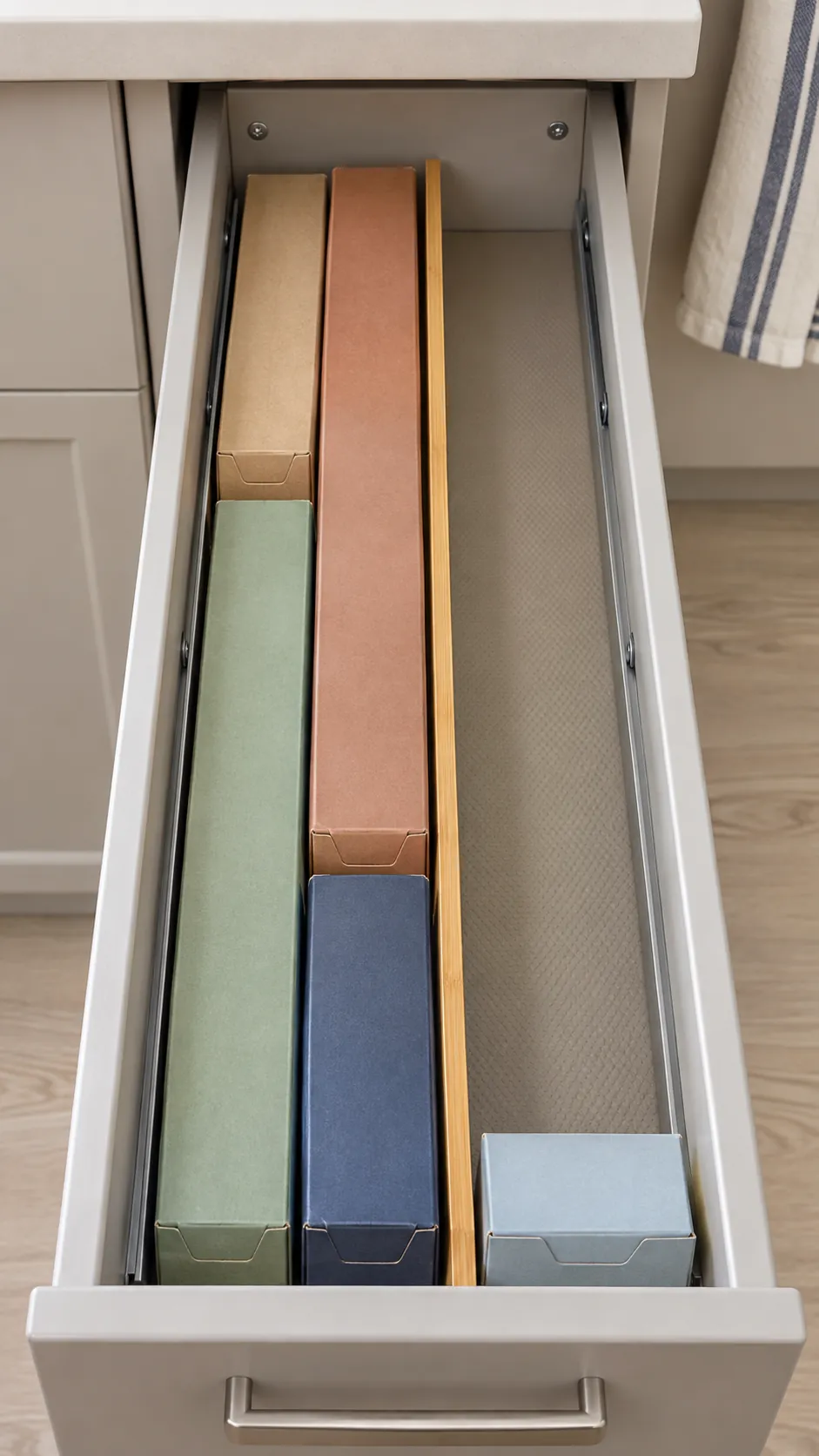
Place foil, parchment, wax paper, and plastic wrap lengthwise in one side of the drawer. Arrange them from most used at the front to least used at the back, or place all cutter openings in the same direction if the drawer allows the material to be pulled while the box remains inside.
A thin divider can stop long boxes from sliding into food bags, but it should not be wider than necessary. Leave enough finger space to lift one box without removing the entire lane. If the drawer is very narrow, skip a bulky dispenser and use the sound original cartons.
Sort food bags by size and use
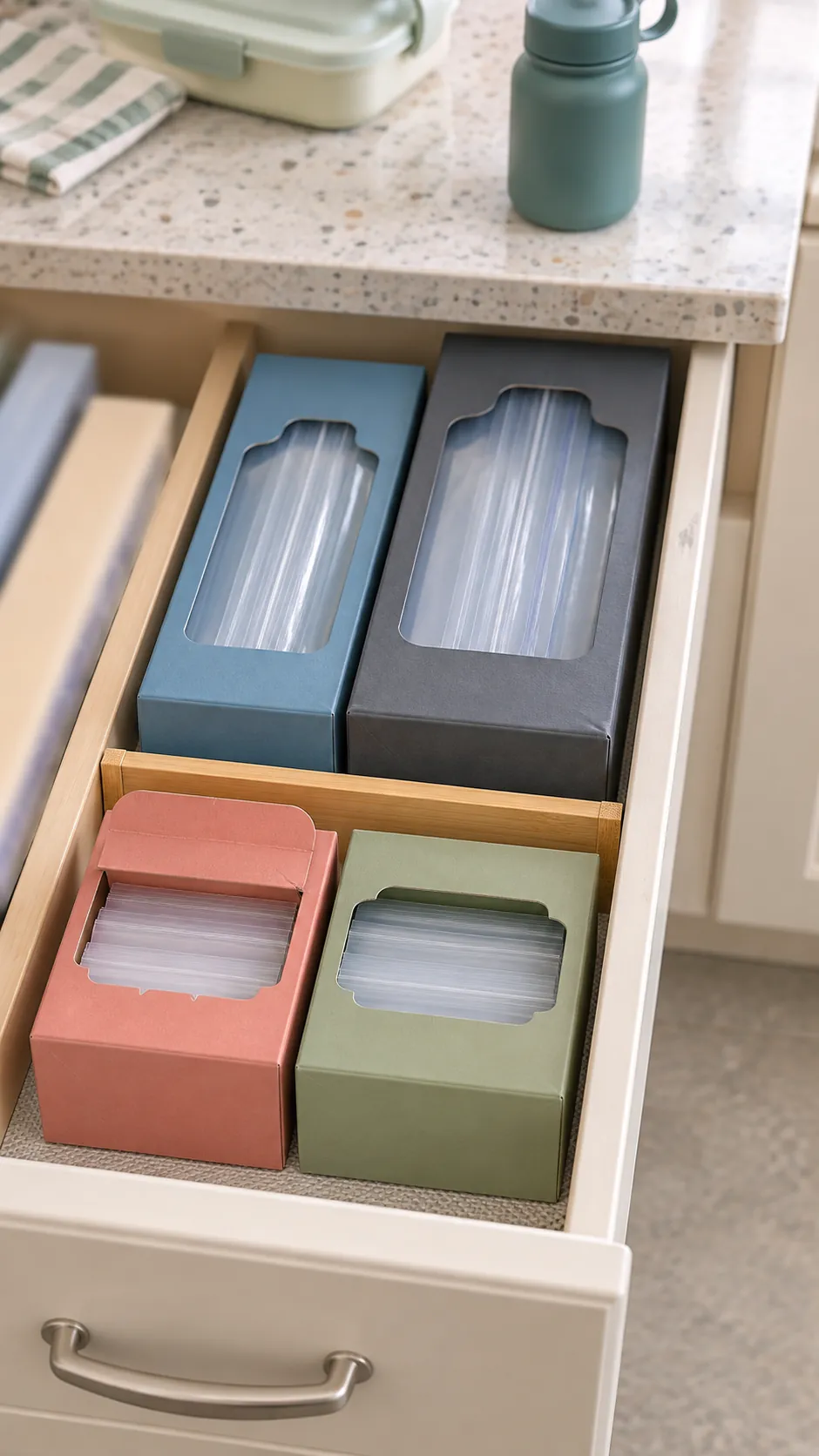
Food bag cartons are shorter than wrap boxes, so they can occupy the remaining width in two short rows. Put snack and sandwich bags at the front if they are used daily. Place larger storage and freezer bags behind them, with carton openings facing upward and clear of the drawer edge.
A shallow bag organizer can work when its outer dimensions truly fit, but individual cartons are often more flexible in a very slim drawer. Choose the method that leaves visible categories and usable finger space. Avoid decanting bags into an unlabeled mix where size and intended use become difficult to identify.
Protect the drawer closing path
Close every carton flap after use and return each box flat to its lane. A raised flap, loose bag, or torn cardboard corner can catch the cabinet frame and stop the drawer. Keep package cutters facing away from fingers that reach into the neighboring lane.
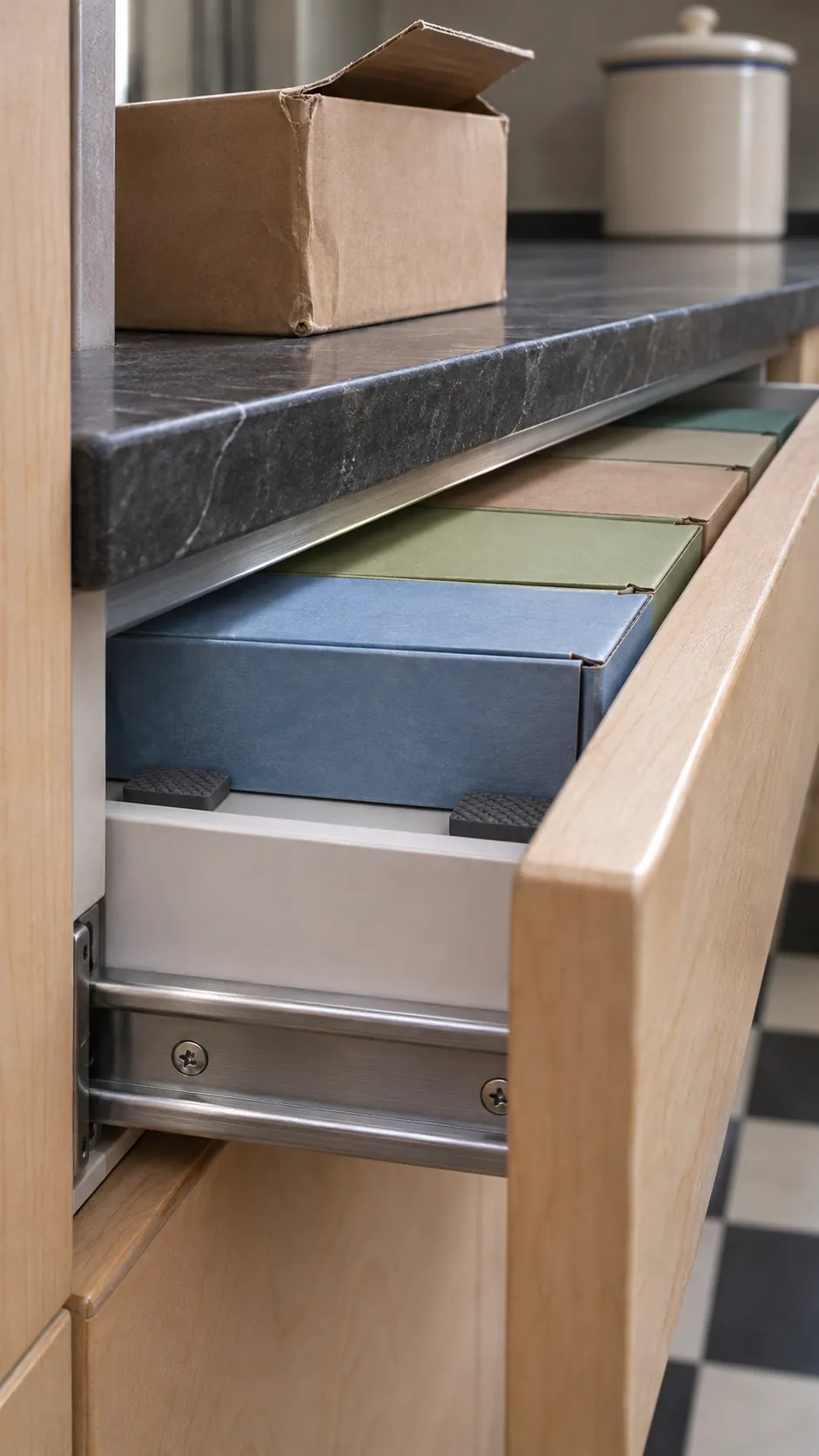
Use small nonslip pads or a fitted base liner when boxes slide forward during closing. Do not stack cartons unless the combined height remains below the lowest obstruction. The drawer should move with one hand and no downward pressure on the contents.
Reset the drawer when a roll is replaced
Check the drawer whenever a new roll or carton arrives. Confirm that the replacement has the same outer size, remove the empty package, and wipe away paper dust or loose bag tabs before returning the supplies. This brief reset prevents gradual crowding.
Keep one open space for the item currently in use rather than filling every centimeter. If a product repeatedly remains on the counter, its drawer position may be too tight or too far back. Move that daily item forward and relocate the least used supply instead of adding another layer.